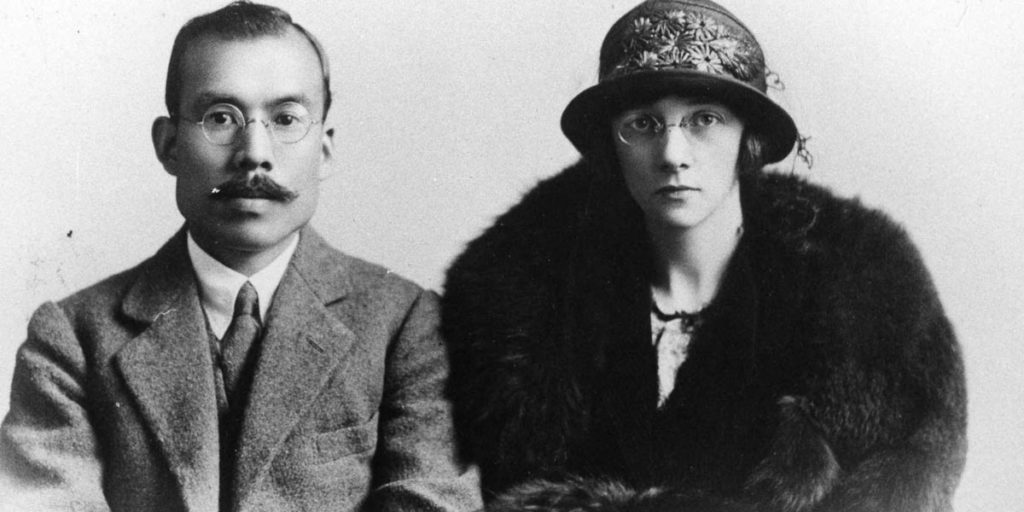
“Masataka Taketsuru… ended up in late 1918 at the University of Glasgow, where he studied organic chemistry under Thomas Stewart Patterson, before seeking work experience at distilleries in Campbeltown, Strathspey and Bo’ness. He also fell in love with Jessie “Rita” Cowan, a doctor’s daughter from Kirkintilloch, who he met after she asked him to teach her younger brother judo. The couple were married in 1920, shortly before they left for Japan, where Rita had promised to help her new husband make ‘real whisky.'”
Over All the Anime, I investigate Japan’s relationship with whisky, in relation to the new anime film Komada: A Whisky Family, showing at Scotland Loves Anime in November.
The crew have plenty of stories to tell about the hotel. Frances the producer spent most of the night in a stand-off with a giant spider. The director found two rats in his room. I merely had to contend with a blocked plughole, which hardly compares.
The new drone operator is very keen to tell everybody that he is ex-military, that he has studied at the People’s Liberation Army College, and that he did time in the army. He keeps mentioning this to everybody he meets, even though it is plain to see that he is a drone operator, so probably not a future general in the making.
Little Fish the sound guy is also oddly performative, claiming to have once been a pop star, a hairdresser and a wedding planner, and yet also very keen to tell everybody how much he likes girls with big tits. I just write this down. The director thinks he is trying too hard.
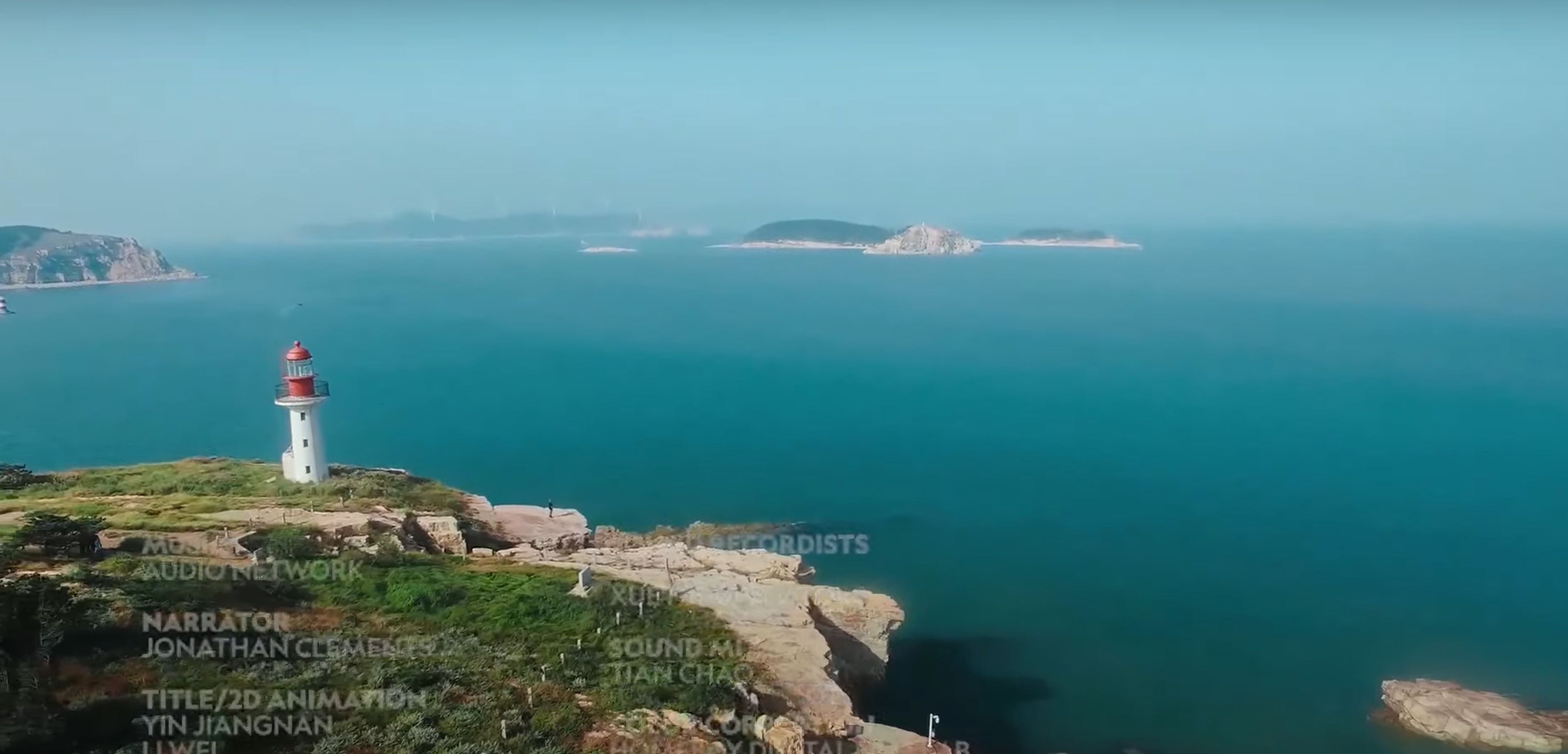
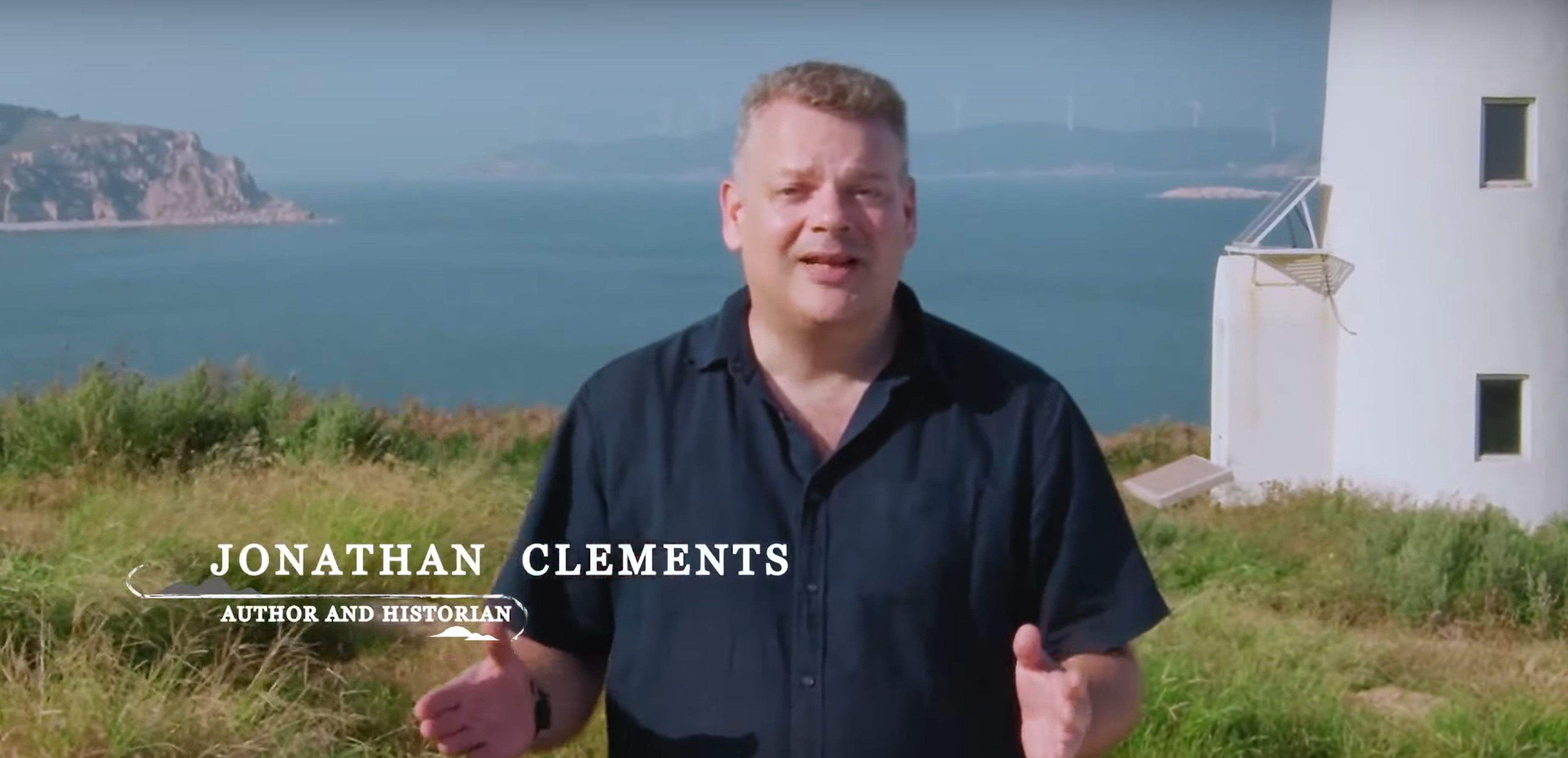
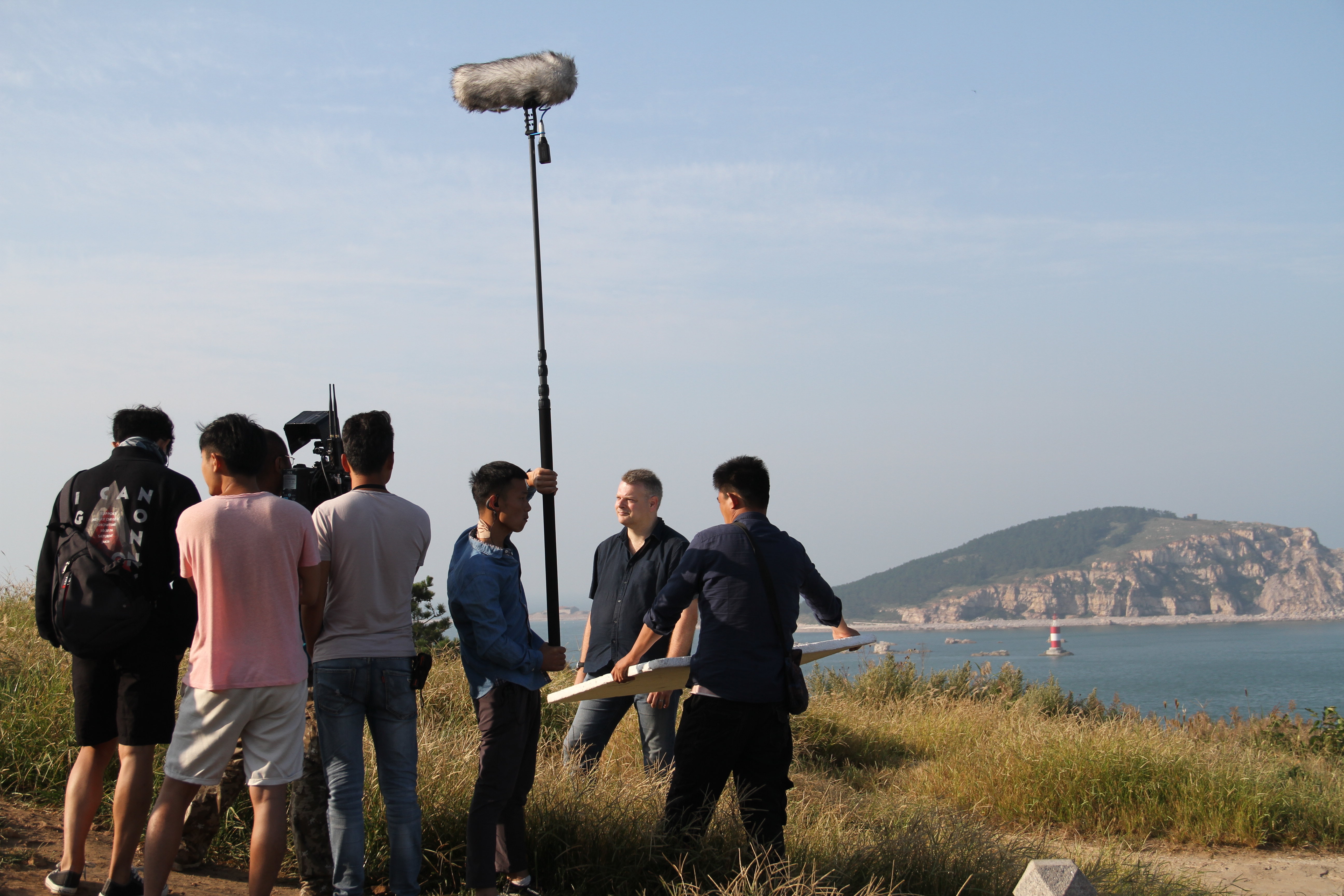
For the first time in a week, I wake up before my alarm. But the morning call is still 0630, ready to film on the very edge of the coast, at a little lighthouse on the cliffs above the island. Here, I have to do the speech that will close the whole programme, somehow summing everything out without making any mistakes, tying up the producers’ desires and the directors’ imagery, without mis-stating any facts or making any mistakes.
It’s a good reminder to me of what I am being paid for – having a Confucius quote ready to hand, remembering to qualify those elements that are somewhat questionable historically, and trying to keep a programme that has been veering rather a lot towards the spiritual, rooted in the prosaic and the material. And then remembering it all and yelling it into a camera on a clifftop, while gawping tourists file pass and point their phones at me from behind the camera.
“Confucius, the man from Shandong, once said: ‘I hope that the old have a life free of cares, that my friends have faith in me, and that the young remember me when I am gone.’ And he’s got his wish. Here, in the place the modern Chinese call the Isles of the Immortals, there are figures who have achieved some form of immortality. Like Mazu and Laozi, Confucius is still celebrated hundreds of years after his death. And through him, for the last two and a half millennia, his homeland of Shandong has come to shape the history and culture of all of China.”
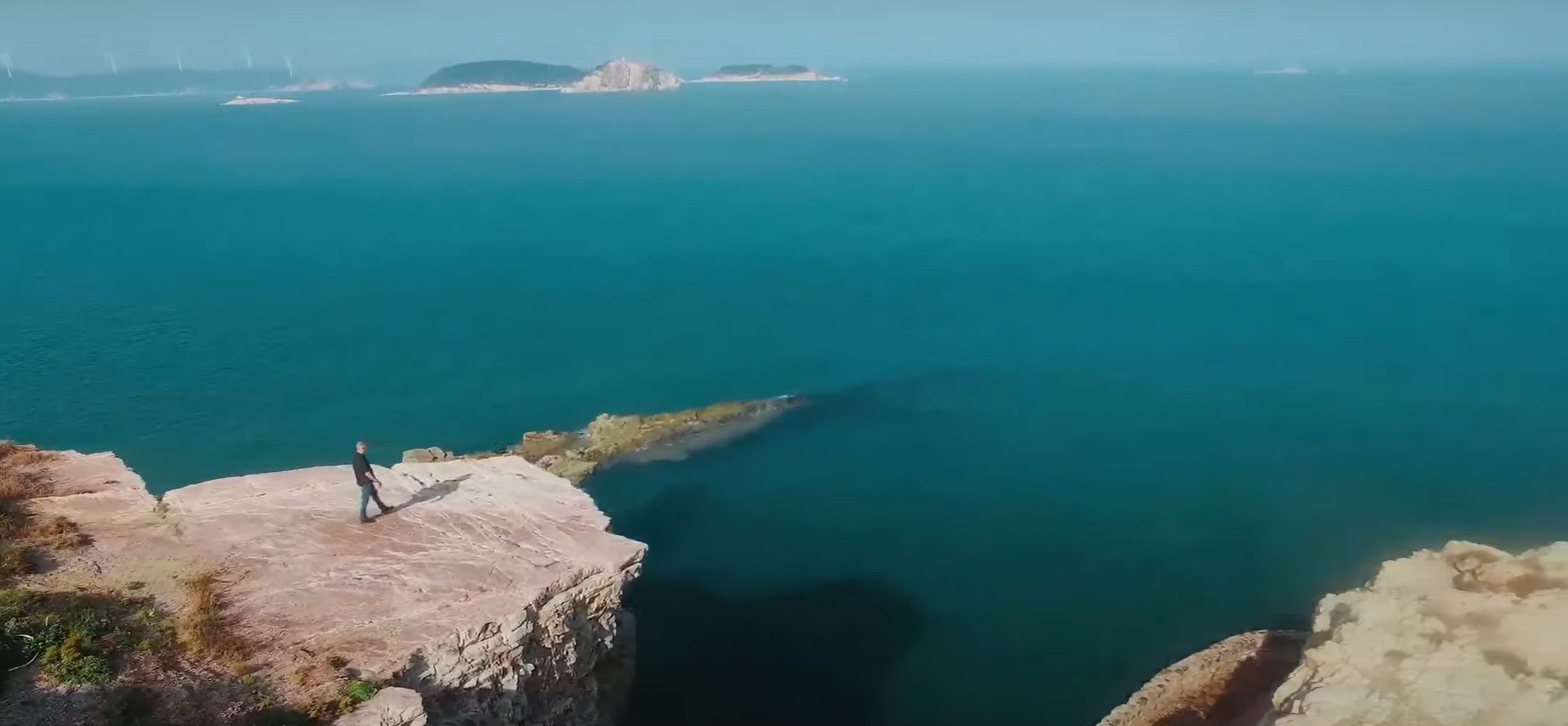
Bosh. Done. And our new military drone pilot wrestles his machine against the strong sea winds, straining to keep it in place while Jiuqing the producer operates the remote camera onboard, filming me as I stand at the cliff edge, looking out to a seascape dotted with tiny islands, fading into the haze.
He’s good. Any drone pilot I had previously worked with would have crashed three times before we got the shot, but I think it helps that the camera is not his problem, merely holding the drone steady.
Back to the mainland ferry, with a new van driver. It’s Li Tao, who I haven’t seen since the first day, seconded from the Ghost Crew, which has a new role as a sump of spare talent to bring in when people brain themselves on shop signs. Only partly in jest, the grips have set about the restaurant sign with gaffer tape and pennies, rendering it ostentatiously safe should anyone else be quite so clumsy.
Seven hours follow on the road, beginning with the customary silence as the occupants of the bus phub with their phones. One by one, their power runs out, and they take to staring at their fingernails. I watch The Shadow Line until my laptop gives out, and then wade through some podcasts, but eventually a conversation breaks out.
Jiuqing the producer is trying to explain what her name means. Unfortunately for her, jiu means “Long Time”.
Qing means “celery”.
“It’s a kind of grass, you see,” she explains. “I was born in the Year of the Snake, so they wanted to give me a name for the kind of places where my zodiac animal was most likely to live.”
“Thank God,” I observe, “you weren’t born in the Year of the Pig.”
“Although the manga creator Osamu Tezuka is best remembered for Astro Boy, and is celebrated at this festival for his early Metropolis, his true life’s work was the sprawling and unfinished Phoenix saga.”
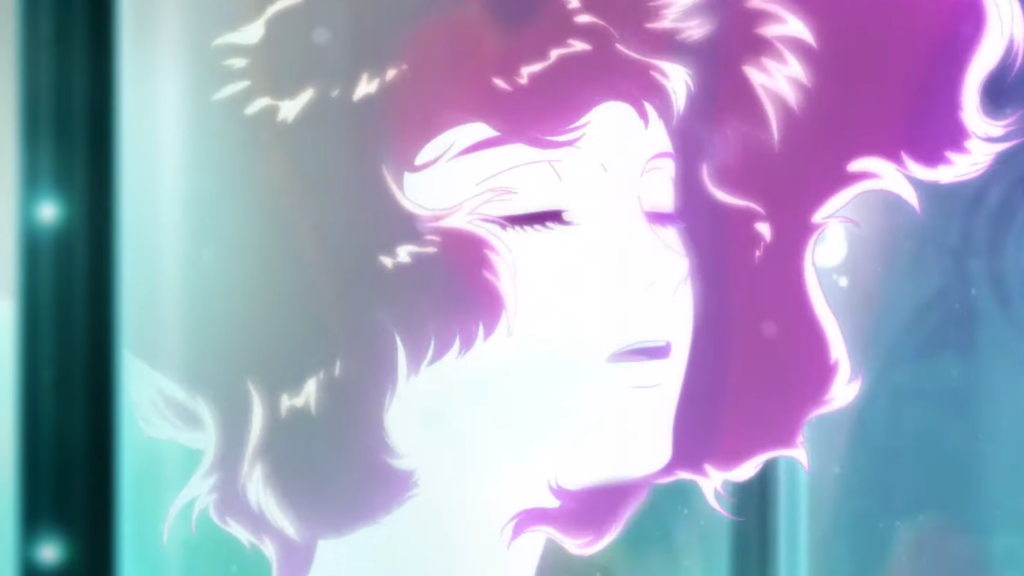
Over at All the Anime, I discuss the latest movie version of Tezuka’s Phoenix.
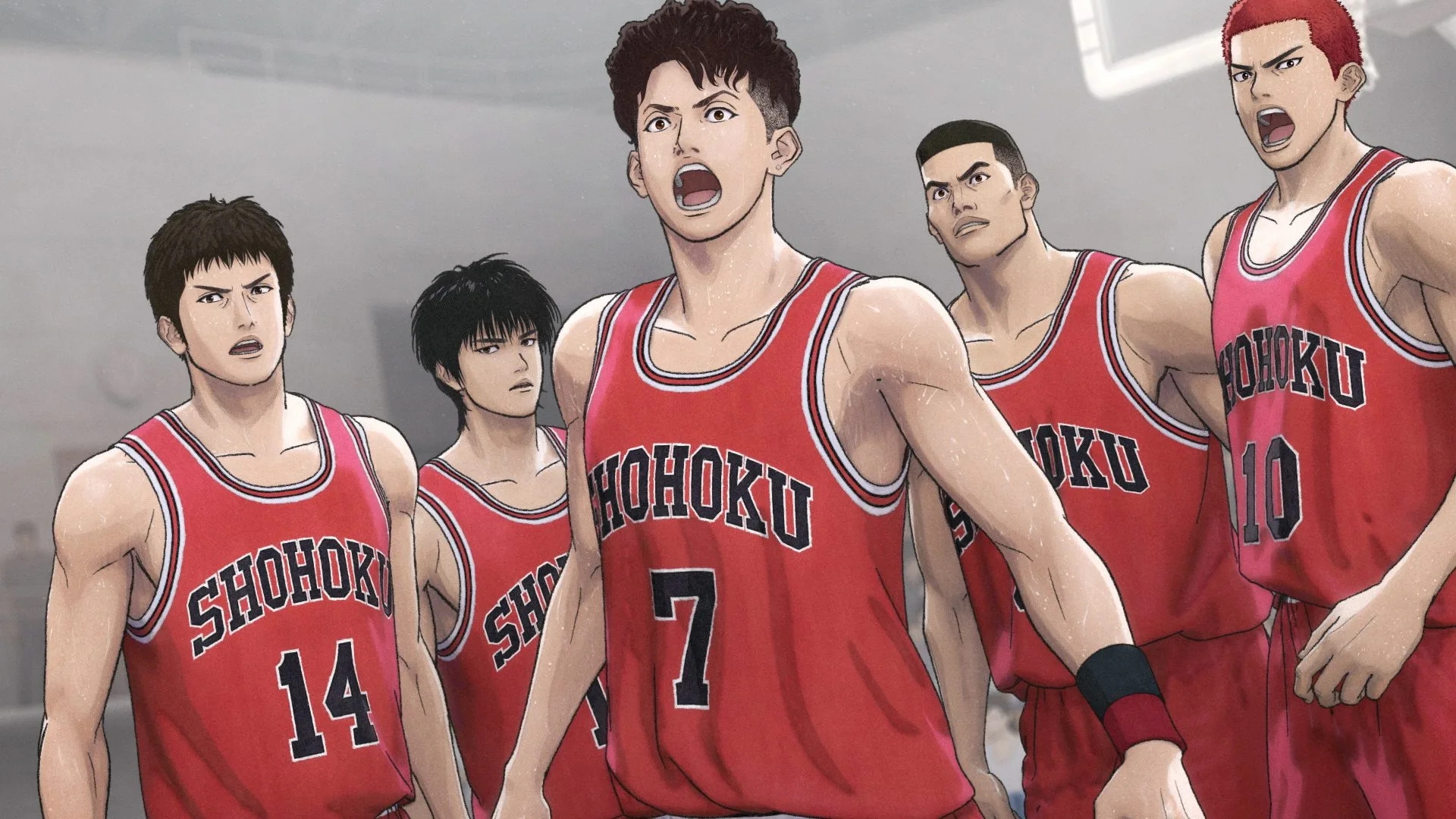
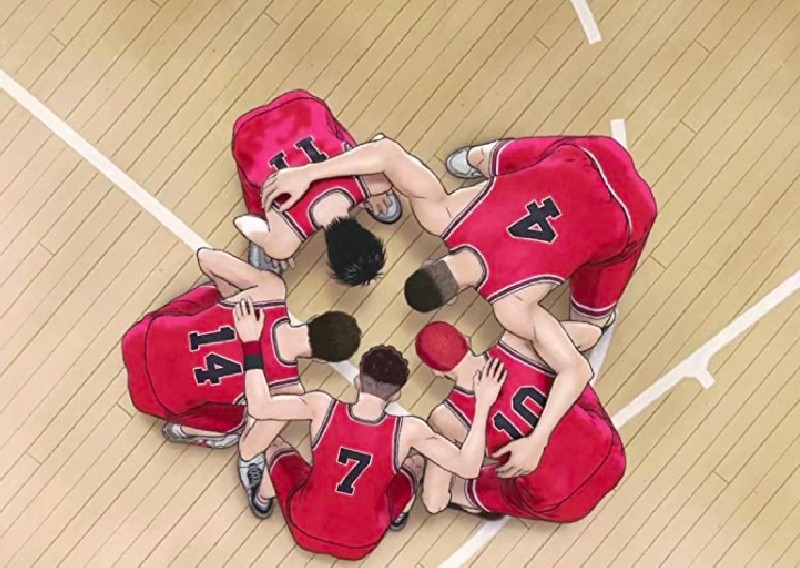
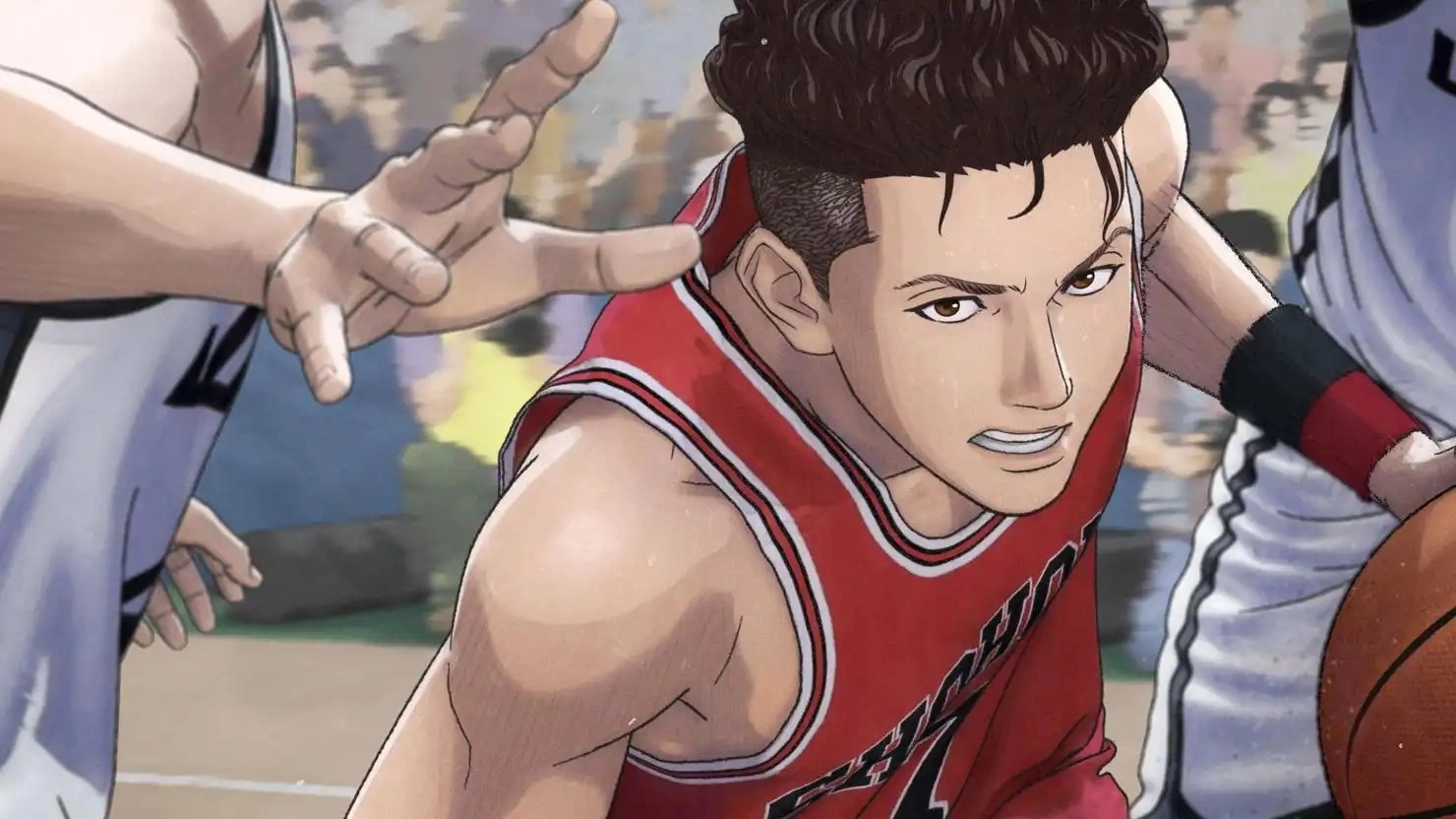
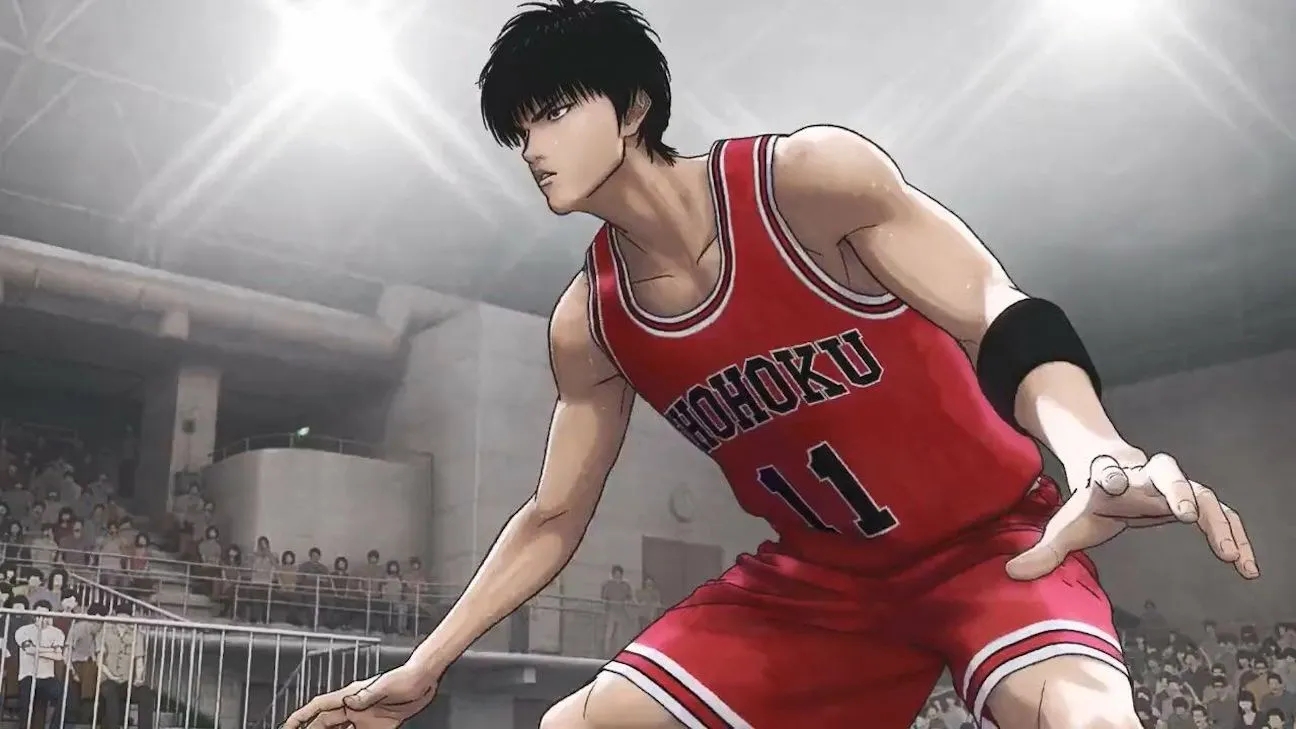
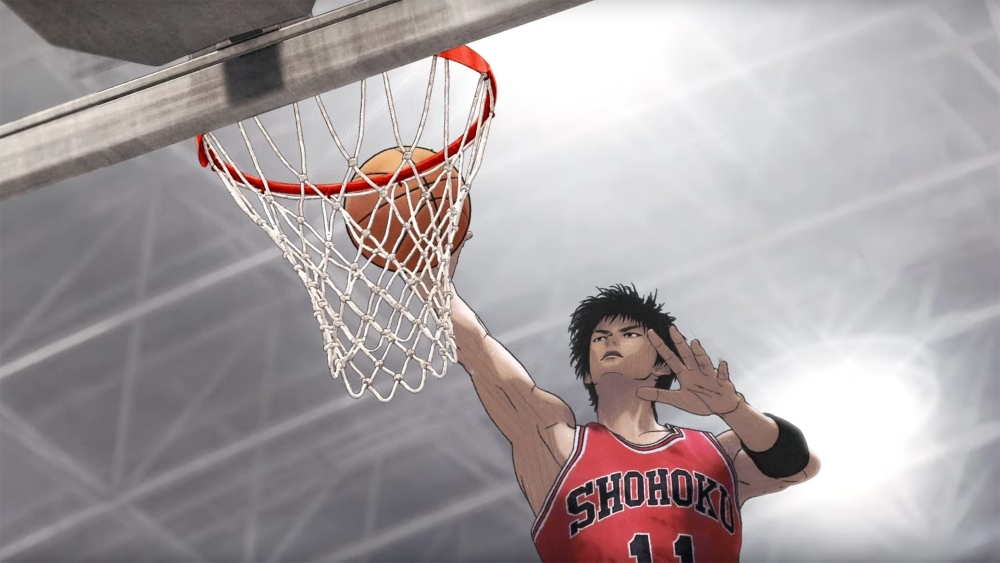
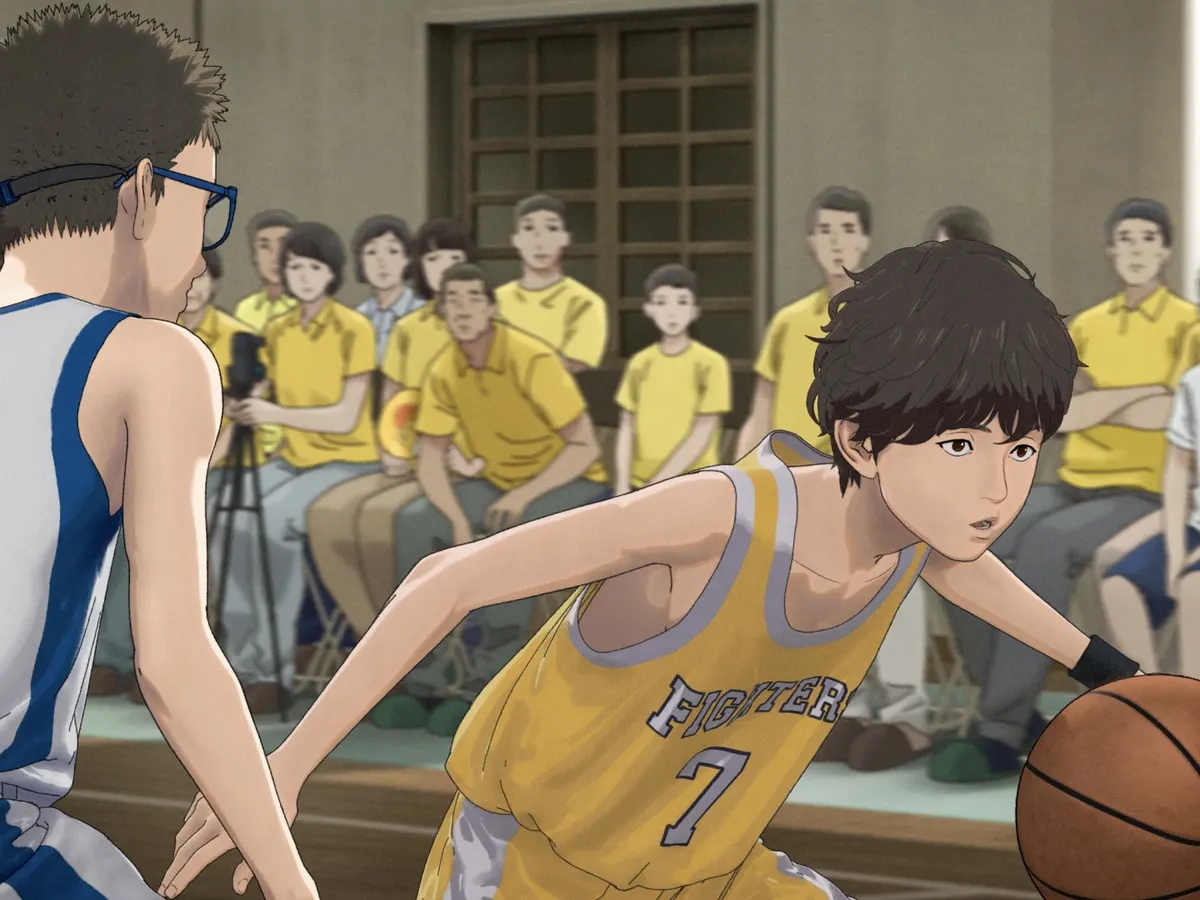
It’s the moment of truth for the under-dog basketball team from Shonan North High School – a stand-off against the highest rated school team in Japan, the fearsome Sannoh Industrial. The most visible Shonan players are the seniors (soon due to graduate), and the red-haired wild-man Hanamichi Sakuragi, but instead we are drawn into the backstory of the team’s “speedster”, the short-statured point guard Ryota Miyagi. How did he get here…?
By May 2023, The First Slam Dunk had been playing in Japanese cinemas for half a year. In that time, it had steadily climbed into the top ten all-time anime at the Japanese box office, just a shade behind Makoto Shinkai’s Weathering with You, but gaining on it fast. It was a triumphant return to the media for a much-loved sports franchise, one of the tent-pole manga titles of the 1990s, and a 101-episode anime series. But as its name implies, The First Slam Dunk was no tardy cash-in on an old show, but a deft reimagining of the same material, a film designed to be accessible to newcomers, without alienating the fans.
The opening shot of the movie immediately wrong-foots old-time fans by swooping down on a coastal town that isn’t the basketball players’ Kanagawa seafront. Instead, we find ourselves at a distant port in Okinawa, home to Ryota, the boy who is fated to grow up to be the team’s point guard. A supporting cast member in the original manga and anime, Ryota is upgraded to central status, announcing to fans that this is the story they already know, but not as they know it – the tale of how a small-town kid from Japan’s southernmost islands ended up in a Kanagawa high-school team, scrabbling against the nation’s best. A lesser anime might have started with Ryota as the clichéd transfer student, but although he does indeed become the new kid in town, the film takes 23 minutes to get him there. Long-time fans already know who he is. By the time he arrives in Shonan North (“Shohoku”) to join the high-school team, even complete newcomers do, too.
For a story that places so much value on stances and angles, there are plenty of wonderful touches off the court, starting with Ryota’s bereaved mother in the pre-credits sequence, slumped in silent grief in front of the family altar, not kneeling in the traditional poise. The glowing sunsets remain, but Shonan is an unforgiving concrete jungle for the island boy, berated by his high-rise neighbours for playing with a ball in the street.
SCORE BIG
This is and isn’t the Slam Dunk story. The original manga in Shonen Jump magazine in the 1990s concentrated on the rapid rise of Hanamichi Sakuragi, the hulking beanpole with the dyed-red hair, who only joined the team in the first place to impress a girl, but slowly developed a greater love for the sport itself. Sakuragi is still there, still bullying Coach Anzai, still fluking his way into the “genius” shots that made his fame on the school court, but he is very much a supporting character now for Ryota’s story – Ryota’s struggles with bullying and ostracism; Ryota’s adoration for Ayako the team manager, and the way he finds a place for himself as the smallest but fastest member of a team of giants.
But Slam Dunk was also a manga that evolved over six years, along with its young artist Takehiko Inoue, starting off with one foot still in the recently-ended 1980s, with high-school beefs and sudden shifts into cartoonish comedy. The First Slam Dunk is a far more solemn retelling, focussing on the artists’ style in the later issues of the story, as he came to concentrate increasingly on the serious drama of the basketball court.
The former captain of his high-school basketball team, Inoue dropped out of college when he got a chance to become a manga artist. He started out as an assistant to Tsukasa Hojo on the 1980s classic Cityhunter, quitting when he was offered a serial contract for Chameleon Jail, drawing the artwork for Kazuhiko Watanabe’s script about high-level trouble-shooters in espionage and law enforcement. That, however, was cancelled after just twelve weeks, causing the deflated Inoue to put his all into a grand idea for Shonen Jump: a story about a bad boy who is reformed by his love of basketball.
Many of the tropes and traditions of sporting manga were established before Inoue was even born, in the game-changing Star of The Giants, which also ran in Shonen Jump magazine. Focussing on the drama on and off the pitch of a high-school baseball team, the manga was outrun by its own anime adaptation, causing screenwriters of the 1968-71 cartoon series to come up with ever-more innovative means of stretching out the action to play for time. One legendary episode was devoted to the throwing of a single ball, its first half tracking the progress of the ball from pitcher to batter, its second half following the ball from bat to fielder to base. Meanwhile, the action was leavened with slow motion and freeze-frames, cutaways and flashbacks. Five decades on, The First Slam Dunk riffs on many of Star of the Giants’ most successful tricks, including a career-threatening injury and a high-stakes match, but conspicuously luxuriates in the ability of 3D computer graphics not to deform reality, but to capture it. The imaginary camera whirls around the players as they duel, while Inoue’s script delves into the past of Ryota – the double bereavement that dominates his childhood, even as the ghost of his elder brother seems to haunt a school basketball match.
HUSTLE TO THE TOP
Inoue drew the Slam Dunk manga throughout his mid-to-late twenties, bringing it to an end on a high note in 1996. “Ending the story in the way I did was what I’d planned,” he said in an interview in the Slam Dunk ‘making of’ book, “That much is true. But for various reasons, as far as the readers were concerned, that final episode just came out of the blue, without any warning, with a final page that just said ‘End of Part One’. So, naturally they were, like: ‘we want to know what happens next’ and ‘there’s going to be more, right?’”
In 2004, feeling that, in some way, he’d let his readers down, Inoue staged a public event when the manga reached total sales of 100 million volumes. He published a celebratory announcement in six national newspapers, and drew the epilogue Slam Dunk: Ten Days After, not on paper, but on the blackboards of Kanagawa’s Misaki High School. “At the Misaki High event,” he remembered, “I was standing back, watching as the readers came up close to the manga I’d drawn in chalk. Seeing their enthusiasm, I felt once more what a huge presence they were within me.”
Inoue also set up a Slam Dunk fund – a basketball scholarship that would send a Japanese player to an American college for a year to learn English while preparing for the professional try-outs. To hear Inoue talk in interviews about America, where he lived for a while spending his Slam Dunk royalties, it could sound like an alien world – something he allegorised in his online comic Buzzer Beater, about an Earthling team that competes on a galactic level with opponents from other planets. In the Slam Dunk heyday, Inoue also worked on the two-part manga Hang Time, based on Bob Green’s The Michael Jordan Story.
Repeatedly in the years since the Slam Dunk manga and its anime adaptation came to an end, Inoue was approached about resurrecting the franchise, but refused. Instead, he threw himself into two acclaimed follow-ups. The first, Vagabond, was as far from Slam Dunk as he could get, a manga retelling of the life of the samurai Miyamoto Musashi. He sneaked back into the basketball world with Real, serialised in Young Jump, a magazine for older readers, to which many of the teens who read Slam Dunk had migrated. Its story, of a wheelchair-bound athlete determined to play basketball from his chair, might well have been inspired by events in Slam Dunk, but was an altogether different tale.
GO HARD OR GO HOME
Toshiyuki Matsui, the producer who would eventually scoop up the Grand Prize at the Fujimoto Awards for The First Slam Dunk, first approached Inoue in 2003, with a proposal to continue his storyline in movie form. “I was not up for it at the beginning,” confessed Inoue. “I didn’t think it would be possible. More than anything else, I didn’t think it would be possible to convey the reality of a basketball game.”
It took six years for Inoue to concede he might be interested in hearing more, leading Matsui to start assembling test footage to deal with the elephant in the room – how to properly evoke in animation the bustle and darting of basketball. Unsurprisingly, the timeline of Slam Dunk’s movie development is tied directly to technology, as increasing computer power and falling computer costs made digital animation a more attractive proposition. By 2014, with the dogged Matsui’s third set of pilot footage, Inoue saw something he had not seen before.
“The pilot version included draft shots,” he said. “Among them was the face of Hanamichi, who stared out of the screen, just the way I drew him in the final chapter [of the manga]. The moment I saw it, I felt the power of the drawing… I wouldn’t forgive myself if I didn’t get involved.”
The First Slam Dunk was simply impossible to make with the animation tools of 2003. Today, it is state-of-the-art. We also get to see the full effect of two decades of ever-improving CG backgrounds – luscious sub-tropical beaches lapped by waves; schoolyards in the sunset and anime’s ever-present surfeit of hyper-real skies, here dotted with scudding and drifting clouds.
It is also very much an auteurist work, with the original creator onboard not only as the screenwriter, but as the director. Inoue’s agreement to return to Slam Dunk is also tied to his own sense of time passing – he has lived a whole life again since he was the 23-year-old artist who started work on Slam Dunk in 1990, and as shown in his work on Real, was now more interested in sporting terms in how players pushed through pain and adversity. There was, he thought, a new angle on the old story, but how to tell it.
“Looking back on my artwork, I was simply running uphill because I was so young back then. My focus was just on pushing ever forward, with a simple set of values like winning versus losing. It meant that I’d missed other viewpoints within the work. I realised there were many areas where the light had not been shone, and I strongly felt that those were what I wanted to show now. [The original manga] came out when I had yet to experience adversity. This time, I wanted the weak and the hurt to come through, in spite of their experience. They move on by overcoming their pain. I decided that would be the theme of this film.”
LEAVE IT ALL ON THE COURT
Inoue chose to spare Slam Dunk fans the misery of a straight reboot or a chapter-by-chapter retelling. Instead, he zeroed in on a story that would be familiar enough to old-time fans to entertain them, but could also lure in new audiences with no experience of the anime or manga. He drew on a pre-existing manga story, the 1998 one-off “Pierce”, in which he had experimented with telling Ryota’s story as if he were the protagonist.
Ryota had originally been inspired by a 1980s media storm, when teenagers from Okinawa’s Hentona High School made it to third place in the national inter-school championships, despite their relatively short stature. Inoue resolved to include a short Okinawan player on his team, but Ryota Miyagi had always been literally dwarfed by his team-mates. Now, Inoue placed him front and centre.
“I combined a single basketball match with his 17 years of life. I would use an already depicted match, so in the draft I put together Ryota’s life drama from his birth to that point.” Provocatively, as if resetting everybody’s expectations back to zero, he called it The First Slam Dunk, but focussed on the storyline that closed the original manga – the Shohoku team’s showdown with Sannoh, the best school team in Japan.
And you thought a basketball match only lasted for 40 minutes! The Shohoku team’s match against Sannoh, from their nervous previewing of match tapes, through the nerve-wracking four quarters and time-outs, to the final buzzer, originally took over a year to play out in the pages of Weekly Shonen Jump – a full quarter of the total page-count. For its animated incarnation, as the Sannoh and Shohoku teams charge around the court in the film’s opening reel, the viewer entertains the prospect that we might really be watching an entire animated basketball match in real time. But already Inoue is compressing and finessing, dropping out of the action to comments (and Easter eggs) from the courtside crowd, as well as back in time to explain how one player in particular got where he is today.
The movement on screen is seamlessly motion-captured, crunching huge numbers of data-points to create a dozen figures jostling for control of the ball. It’s almost as if writer-director Inoue seems obliged to remind the viewer that this is all based on drawn artwork, with an opening sequence that celebrates the materiality of its creation by drawing each main character in turn, in pencil, before they are made to move. On the court, Inoue gleefully switches between the realist and “dragonfly-eye” filming modes, sometimes placing his camera in impossible locations, sometimes getting so close to the action that the lens is shunted aside by one of the players. Blink and you’ll miss them, but all around the edge of the court are figures with cameras of their own, the onscreen analogues of the animators themselves. Among the characters, only the portly coach Mitsuyoshi Anzai retains any of the cartoonish qualities of the early chapters of the original manga. Everybody else is as real as they can be.
The slingshot ending catapults us beyond the end of the original (in which Ryota became the captain of the school team), into a new realm, and an old rivalry, with the promise of a new story…
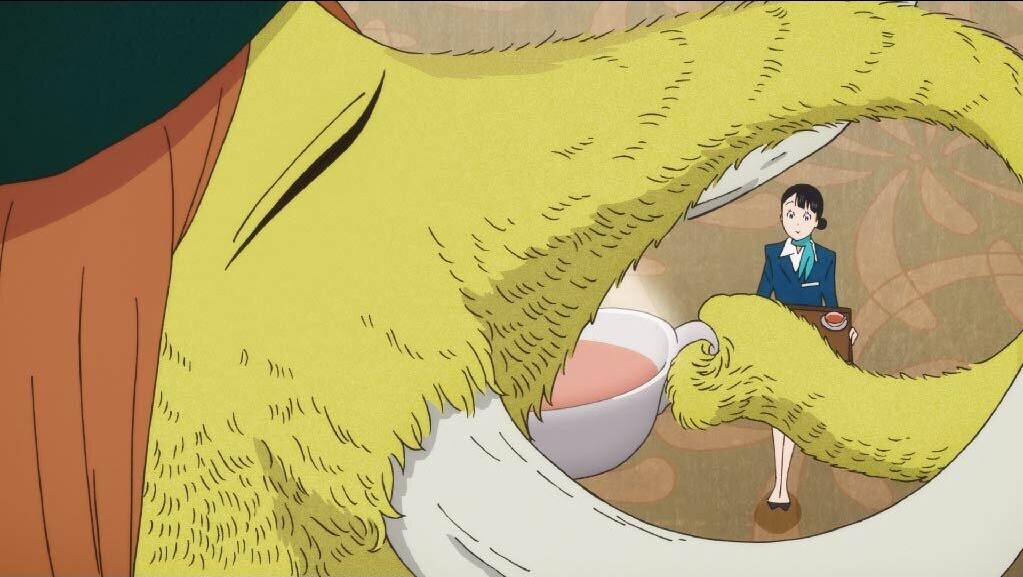
“A pair of sloths are comparing handbags; a raccoon is trying perfume; a pig is buying lipstick; a lion is thinking about getting some aftershave. On Akino’s first day at work, she is rebuffed by a rabbit who doesn’t want her help, and then accidentally steps on a duck. We’ve all been there.”
Over at All the Anime, I discuss Yoshimi Itazu’s The Concierge at Hokkyoku Department Store, which has its UK premiere at Scotland Loves Anime in November.
The Chinese director seems oddly solicitous with me today. I think he has worked out that although I appear to be lurking, silently like an idiot, at the edge of all negotiations, when my time comes, I am ready to go. It makes a huge difference to him, when his crew take two hours to set up a shot, that I can get it done in five minutes.
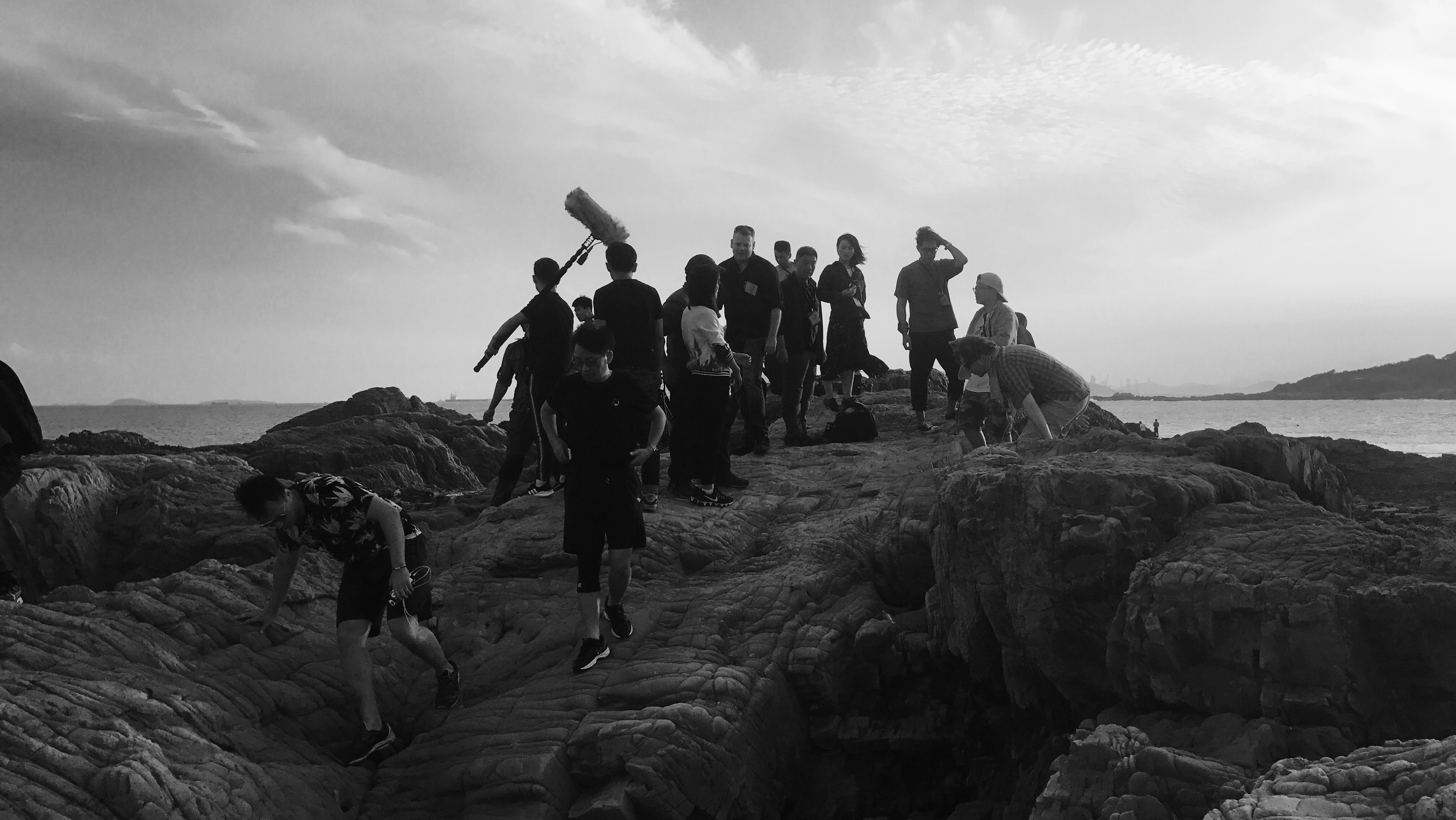
We end the day down on the rocky coast at Qingdao, catching the sunset behind the old colonial buildings from the days of the German concession, and across the shining buildings of the modern city. The film-makers are somewhat demob-happy after thirteen hours at work (in fact, the day starts at 0530 and I do not get to type this in a hotel until 2345), and we giggle at the sight of the sound crew trying to lug their hostess trolley across three hundred yards of boulders.
Jiuqing the producer dips her hands into a rock pool and shows me what she has caught.
“I have a shrimp,” she says, before carefully returning the small creature to its home.
The A-crew and the B-crew both have their respective cameras pointed in different directions. The C-crew with the drone lurk in the van, secure in the knowledge that it is too windy for them to fly their machine, particularly after its sojourn in a temple tree-top for two hours.
Our American producer, Mitch, is very impressed with Jiuqing, a lithe girl whose job as assistant director extends to keeping everybody on schedule, fixing and refixing our hotels and breakfasts and routes to location, and chivvying everybody along. During the long drive to the Qingdao beach, when he isn’t trying to teach Ruby the Interpreter how to sing Goodbye Ruby Tuesday, he discusses with Jiuqing the various options for the days ahead, and tells me that he suspects she will be managing a film company sooner rather than later. He is particularly impressed when he asks a question about a particular location, and she has a picture of the beach there in live time, within minutes.
“We have a D-crew,” she confesses. “They’re the clean-up men. They tail behind or go up ahead and snatch the sunsets and time-lapses we don’t have time for, or the magic-hour dawn material we can’t get to. They’re the ghost crew. We’re not supposed to admit they exist, but they are shooting everything we only remember to do after we’ve got back on the bus.”
And so we perch on the rocks in the wind as the sun sets over Qingdao. Someone has the bright idea of positioning a couple of marine items in the foreground on the rocks, as the sun sets behind them, and Jiuqing dashes off excitedly, returning with her hands gently cupped over two critters.
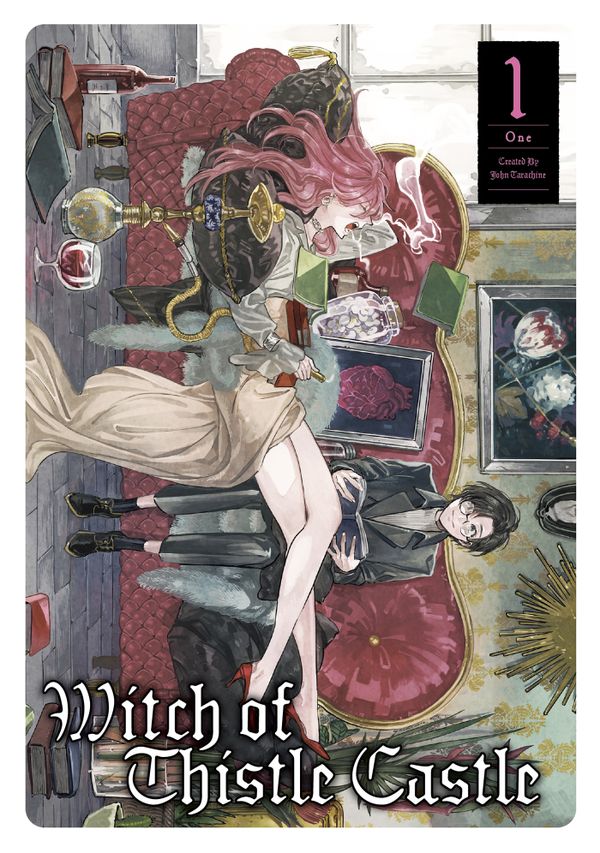
Spirits and magic are everywhere in the streets of Edinburgh – if only you dare to see it! Dive into this heartfelt manga about a witch and her apprentice as they try to find their place in a world that hates their very existence.
The last in a long line of Witches of the Black Wood, Marie Blackwood lives a quiet life in Edinburgh – away from the scrutiny of the Church. But when the Church thrusts 13-year-old Theo into her hands for safekeeping, Marie suddenly gains the responsibility not just of taking care of a teenager – but protecting the world, and Theo himself, from the amazing power that lives inside of him.
Out now from Titan Manga, John Tarachine’s Witch of Thistle Castle, with an English script translated by Motoko Tamamuro and me. Over at All the Anime, a Scottish-based blog, there’s already much love for it’s magical Edinburgh. Although not for the landscape-format front cover to the first volume, which even I find annoying.
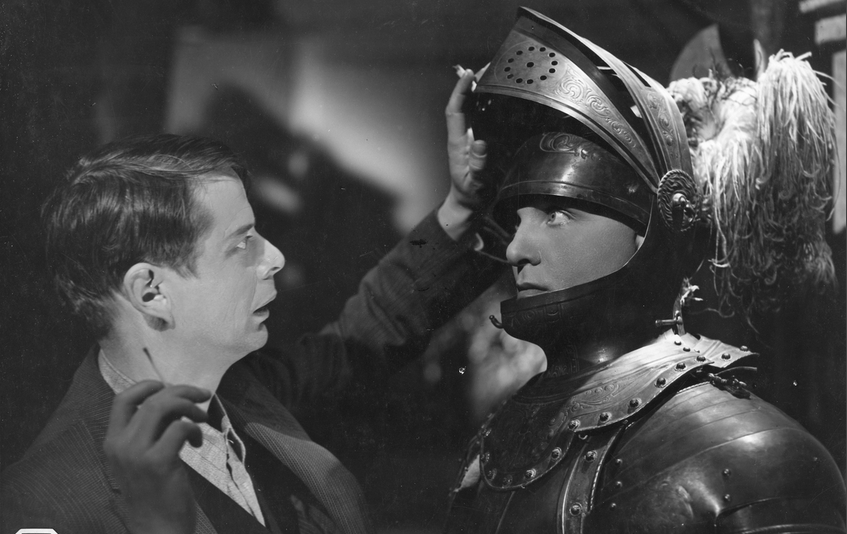
On his way to the engineers’ club masquerade ball, Volmari (Leo Lahteenmäki) wanders into a deserted museum and is locked inside. Spooking the janitor, he escapes into the street wearing a suit of armour, where he is arrested by the police, who think he is Armand (Lauri Kyöstilä), a trumpet player from the circus, who is out on a drunken binge while also inexplicably wearing a suit of armour.
Purportedly “high” jinks ensue, as a man in a suit of armour who may or may not be Volmari, cavorts on the dancefloor with Volmari’s would-be girlfriend Raili (Laila Rihte), only to be fondled by Bertha (Siiri Angerkoski), the circus’s singer, who wants “Armand” for herself. The armour turns into the film’s McGuffin, with Armand brow-beaten into handing his own suit “back” to the museum, while Volmari has to buy his own suit back to sneak it back into the museum, only to freak out when he finds Armand’s suit has already been “returned” in its place.
This blog has noted before how unfunny the “comedies” of Agapetus can be, and it seems that the Finns were finally bold enough to mention this themselves. Leading man Lahteenmäki himself would later describe it as a childish “emergency” project designed to fill cinemas in wartime, and Toini Aaltonen in Suomen Sosiaaldemokraati archly praised Suomen Filmiteollisuus for “adding to the number of bad Finnish films.” Olavi Vesterdahl in Aamulehti warned that Finnish cinema might be approaching an unsustainable tipping point of disappointed audiences, and that Tottinen Torvensoittaja was so bad it was almost impossible to review, “a pointless, aimless meander, with a hard-to-see plot and almost nothing worth watching.” The press reserved particular ire for the closing dream sequence, which numerous journalists familiar with the original 1933 novel correctly identified as nothing but filler designed to bulk out a script that had jettisoned an earlier part of the story – a boat trip that was presumably discarded due to the likely expense.
When shown on Finnish television in 1992, Antti Lindkvist in Katso magazine derided it as “a completely thoughtless car-crash that belongs among the weakest products of Finnish cinema.” Yes, Antti, but did you like it?
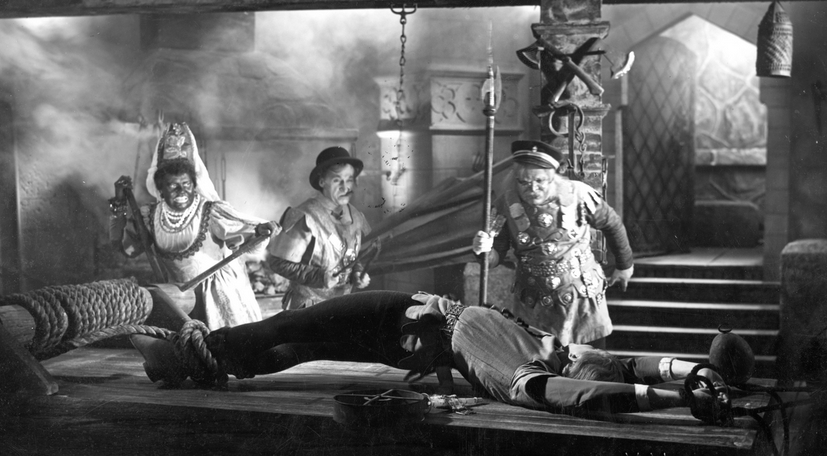
Remarkably, none of the reviewers seem to have mentioned the thing that renders this film truly toxic to modern audiences. The use of the term “black” (mustalainen) to mean “gipsy” in Finnish also rather obscures what I suspect to be the real reason for the absence of this film from the online Elonet repository – Siiri Angerkoski is not playing a gipsy, but a negro singer in outrageous blackface make-up, which might have been all right in Finland in 1941, but cause for torches and pitchforks outside the cinema today.
This is the last Finnish film to bear the name of Kaarlo Kartio in the credits; he was supposed to play Armand, but died before filming could commence, although presumably the credits were already printed and nobody could be bothered to change them.
Jonathan Clements is the author of A Short History of Finland. He is watching all the Finnish films, so you don’t have to.
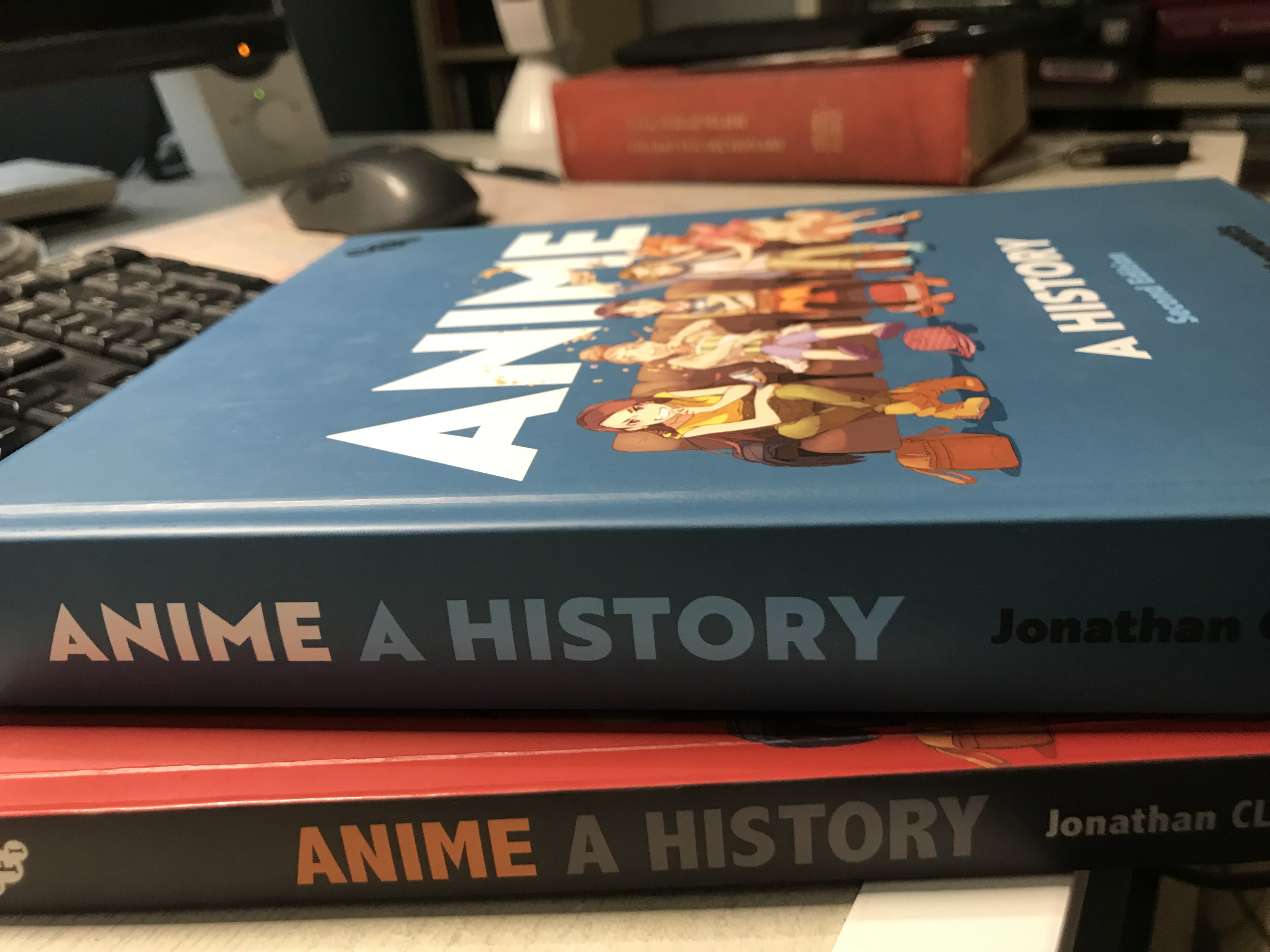
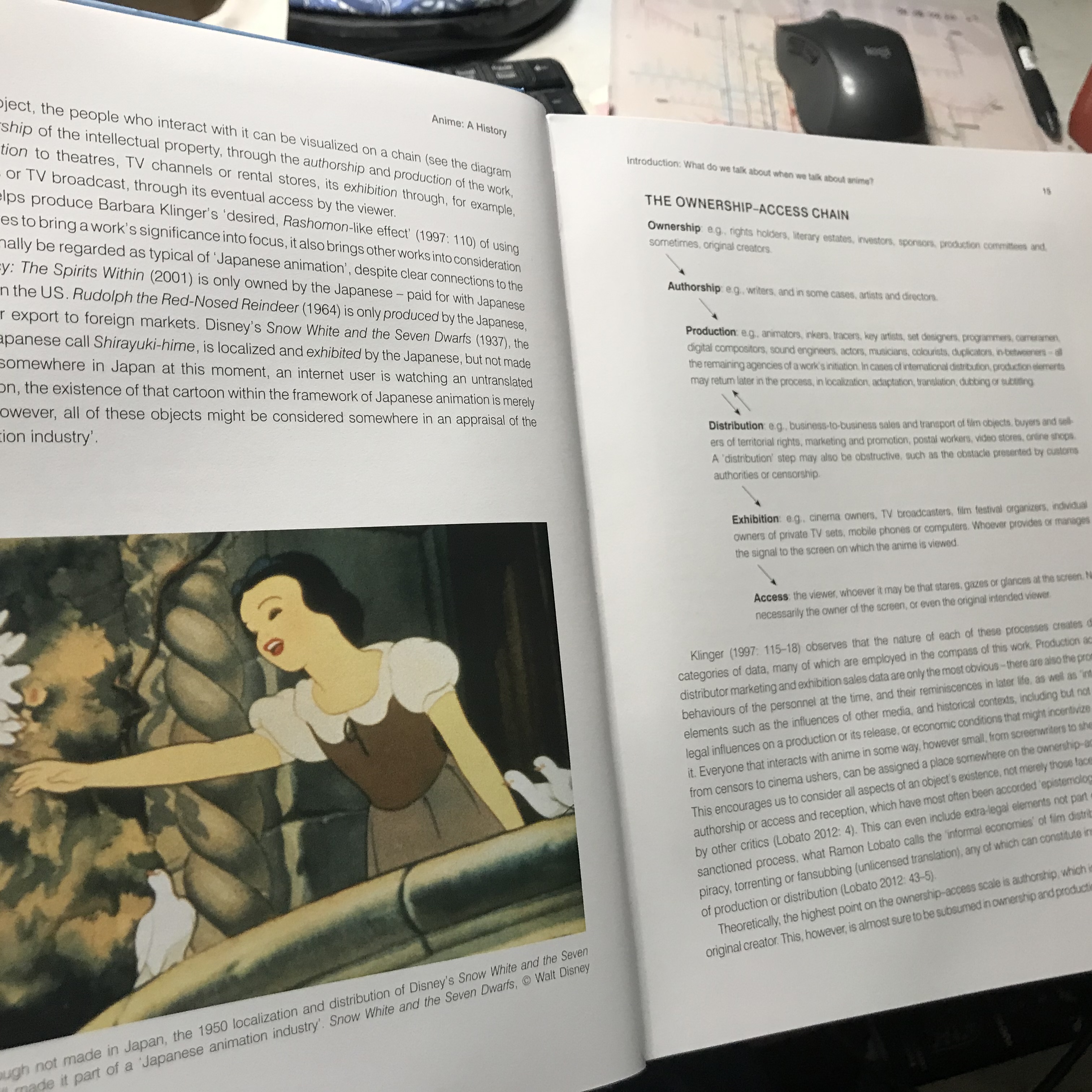
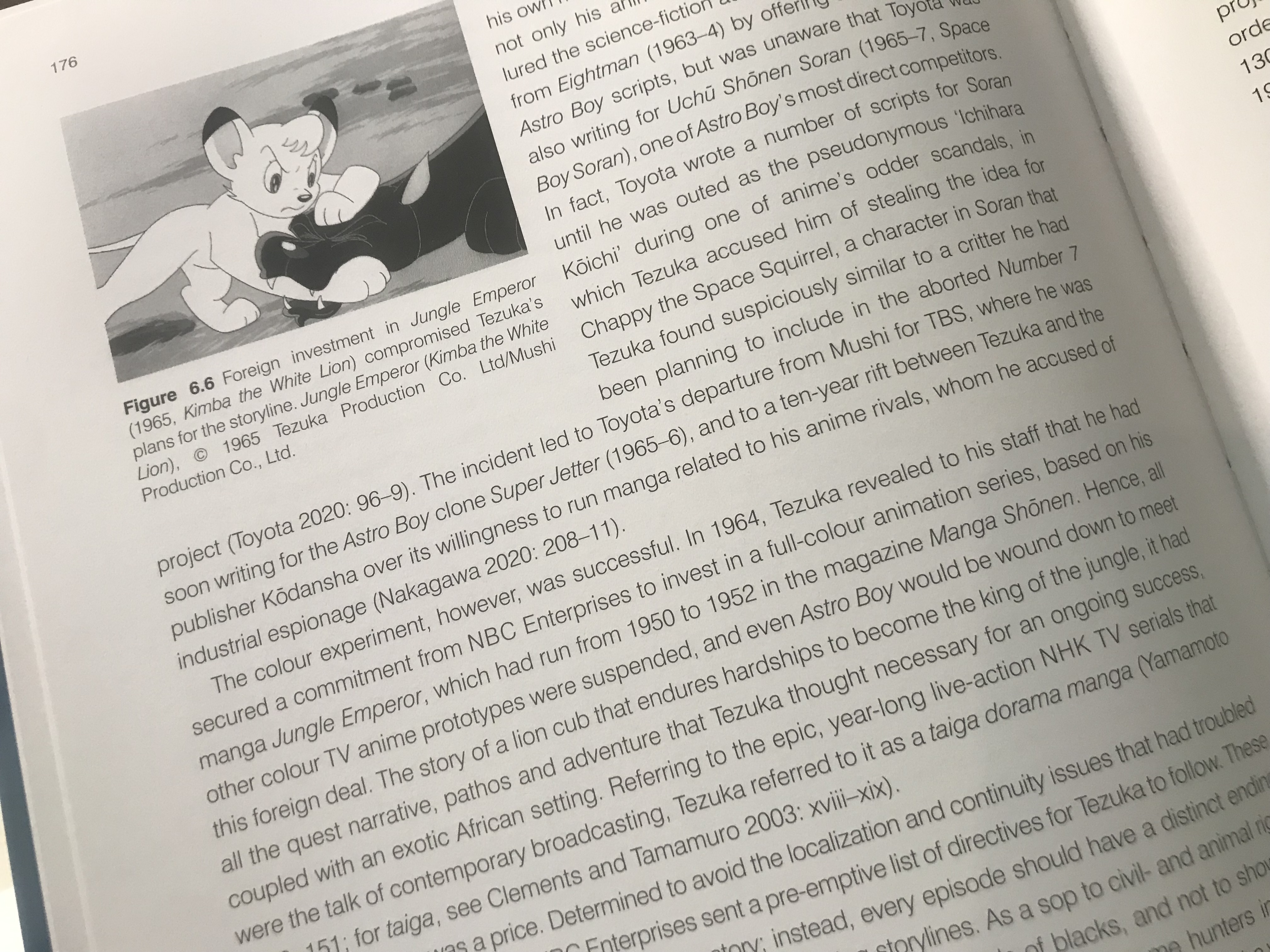
In case you’re wondering, it never gets old. It’s been thirty years since I opened the package containing my first book, and it’s just as exciting to open a package containing my umpteenth. Anime: A History is particularly dear to me because it was built around my doctorate, and represents the culmination of probably thirty years in and around the anime industry.
At 430+ pages, the 2023 edition is twice the size of its predecessor.
I fretted that everyone asked if they would prefer it to be in full-colour throughout just nodded and said that sounded nice, instead of considering what that would do to the price. But Bloomsbury assured me that they would keep the cover price down, and indeed they did.
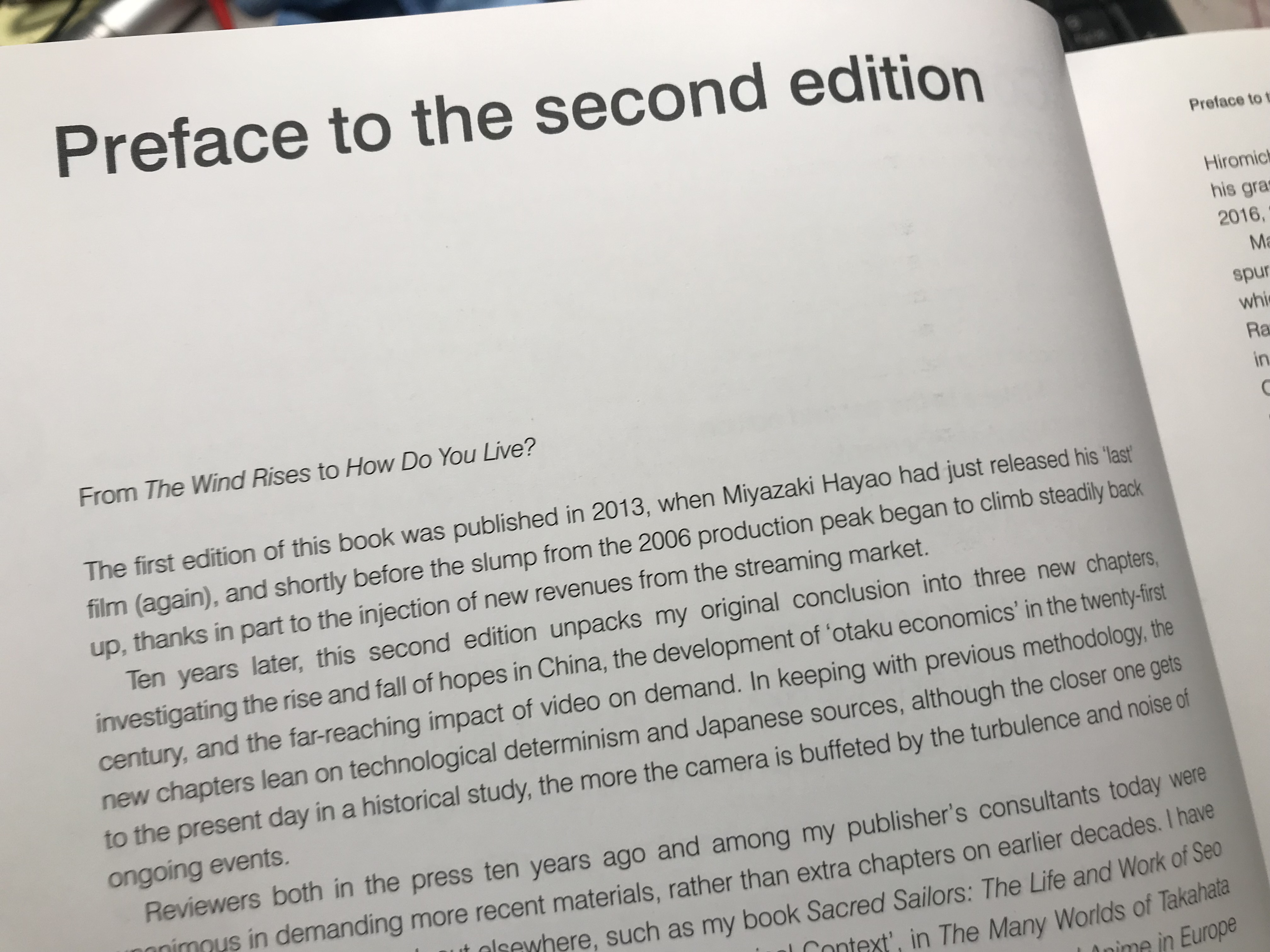
Here and there in the earlier chapters, there are little shunts and upgrades, such as the saga of Chappy the Space Squirrel, the Nagasaki Flag Incident, and Justin Sevakis on the horrors of digipaint.
And then there are three new chapters, focussing on new developments in the anime industry.
Keidanren, the Japanese business association, is muscling in on the manga business, with an enthusiastic report suggesting that manga should become a cornerstone of Japanese economic policy, and that Japan should aim to quadruple its manga exports within ten years.
Pundit and scholar Roland Kelts has already pointed out that this could be less of a case of the Japanese waking up to manga (to which they are already awake), but of a generation of public officials who have grown up in the 1990s, and hence lack any of their predecessors’ qualms about pop culture – long-term readers all of Slam Dunk and Demon Slayer.
Bolstered by… something, manga sales in the US have gone up 171% in the last year, quite possibly as a result of the ease of access offered by online sales, and an increased acceptance of e-books after a two-year pandemic. A cynic might suggest that the US comics market was less manga’s to win than it was DC’s and Marvel’s to lose, and that manga are flourishing in an environment short on much interesting competition, irrelevant to many Zennials.
I am more sceptical about the nature of this four-fold expansion, which has all the bold, nation-building gumption of one of Chairman Mao’s grand national projects. It’s true enough that there are a few areas of the world that have yet to be saturated with manga and anime, and there might be a little bit of a push there. But it’s also true that, as reported in this column (NEO #215), the translation business is almost at breaking point. Streamers are snatching so many translators, and squeezing so tightly on margins, that there already aren’t enough to go around. And funnily enough, a lot of people don’t like to put in the hours on a four-year degree just to earn McDonald’s money.
So, who’s going to do it? One could suggest that a bunch of this expansion will have to creatively frack away at what’s already been done, such as, for example, using the English language as a “pivot” and translating the English version of the Doraemon manga into Swahili or Polish. Or you could look at the ominous website of Mantra, a Japanese start-up offering machine-translated manga services using artificial intelligence.
And yes, we are back to another of our age’s recurring topics – the rise of AI, which we’ve already seen poking at the jobs of animators (NEO #227) and voice actors (NEO #229). Translators, too…? You’d better hope that readers are safe from digital competition…
Jonathan Clements is the author of Anime: A History. This article first appeared in NEO #231, 2023.








 The Official Schoolgirl Milky Crisis Blog