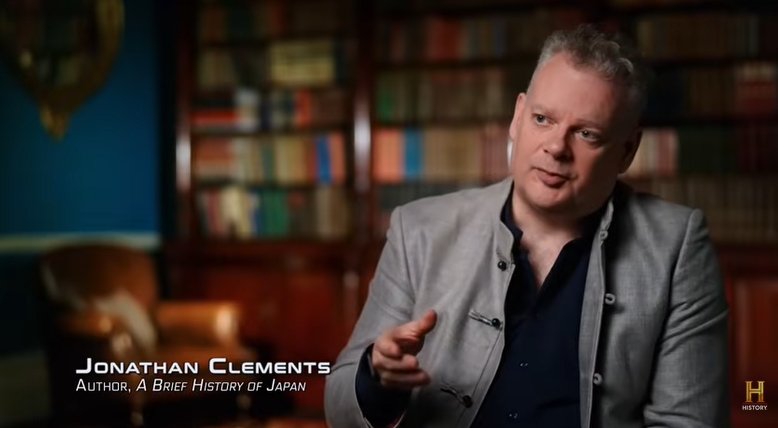
The History Channel’s Ancient Aliens series gets to Japan, which means I get to sound like the voice of reason when discussing the possibility that the Japanese imperial family’s ancestors came from space. It’s all in my Brief History of Japan.

The History Channel’s Ancient Aliens series gets to Japan, which means I get to sound like the voice of reason when discussing the possibility that the Japanese imperial family’s ancestors came from space. It’s all in my Brief History of Japan.

After fourteen years in a sinecure job at his father-in-law Johan’s company, Tommi (Antti Luusuaniemi) needs a raise in order to afford his dream house. His neighbour Juhis (Kari Ketonen) suggests that he gets involved in the boss’s birthday parachute jump – a family affair since Tommi’s pilot wife Harriet (Maria Ylipää) is flying the plane. But this is not the first time that Juhis, Harriet’s former Gulf War comrade, has dragged Tommi into trouble, and when faced with the half-mile drop to the land below, Tommi loses control of his bladder.
Harriet lands the plane on a pretext, and the men arrive at the party being thrown for Johan (Taneli Mäkelä). Tommi tries to give a resounding speech about how Johan has inspired him to be bold, unaware that the entire company of guests, including the fuming Johan, has just seen video footage of him pissing himself on a plane.
Without any hope of a promotion, Tommi resorts to cryptocurrency investment in order to scrape up the money, betting his house on a swift return. As he goes “all-in” on a life-changing risk, his business rival Patrick (Olavi Virta‘s Lauri Tilkanen, having a ball playing the bad guy again) sets up a series of situations that Johan can use to convince Harriet that Tommi is cheating on her.
The crypto company turns out to be a scam, and Tommi loses everything, including Harriet, who takes their daughter off to her father’s summer cottage, where Patrick commences a louche attempt to woo her. Discovering that the crypto company is run by Johan’s wayward brother Göran (Lasse Karkjärvi), Juhis and Tommi blag their way into prison posing as his lawyers, and persuade him to retrieve the money and hand it to Tommi, purely to spite Johan.
Juhis proves to Harriet that Tommi was set up, Tommi gets his money back, and all is well again, in this feature follow-up to the comedy series Luottomies (2016-21). The original series was an absolute joy – comprising 10-minute online shorts in which Juhis inevitably led the ineffectual Tommi into compromising situations reminiscent of Victor Meldrew’s misfortunes in One Foot in the Grave. This movie outing often feels lost in a longer format, and lacks the swift set-ups and slapstick pay-offs of the series that birthed it. Crucially, it leaves Juhis out of the action for long stretches – presumably because the actor who plays him is also the director, and has more to do on a film production. In the original, it was always Juhis whose well-intentioned schemes landed Tommi in deep water. Here, Tommi falls for the for the crypto scam all by himself, while Juhis dolefully observes that he only comes to him for help after secretly plotting to move away from the neighbourhood.

Finnish critics largely agreed, variously noting either that they missed the ten-minute set-up/joke of the originals, or that there was little point in a movie that didn’t go big. But for his feature, writer-director Kari Ketonen instead homes in on a different form of comedy tension, often invisible to outsiders: the cultural stand-off between Finns and Swedes. Tommi is repeatedly emasculated by the attitudes and expectations of his Renwall in-laws, who have all the money, sophistication and business smarts. He has even taken his wife’s surname, as Tommi Mäkinen-Renwall – in one of the film’s best gags, his angry father-in-law tells him to hand back the Renwall in the divorce settlement, “but you can keep the hyphen as a reminder.”
Despite the carping from the press, the movie also keeps to the spirit of the original in the sense that Juhis really is Tommi’s misguided guardian angel (luottomies, or literally “trust-man”). Although Juhis repeatedly creates difficulties for Tommi, he is also unfailingly there when he really needs him, and ultimately manages to save the day, in a successful reset-to-zero that allows the cast to all be in place ready for the next movie follow-up, Wingman: Sabbatical (2026), which takes the cast off to Spain. What could possibly go wrong?
Jonathan Clements is the author of A Short History of Finland. He is watching all the Finnish films so you don’t have to. Wingman: All-In is streaming with English subtitles on YLE Areena.
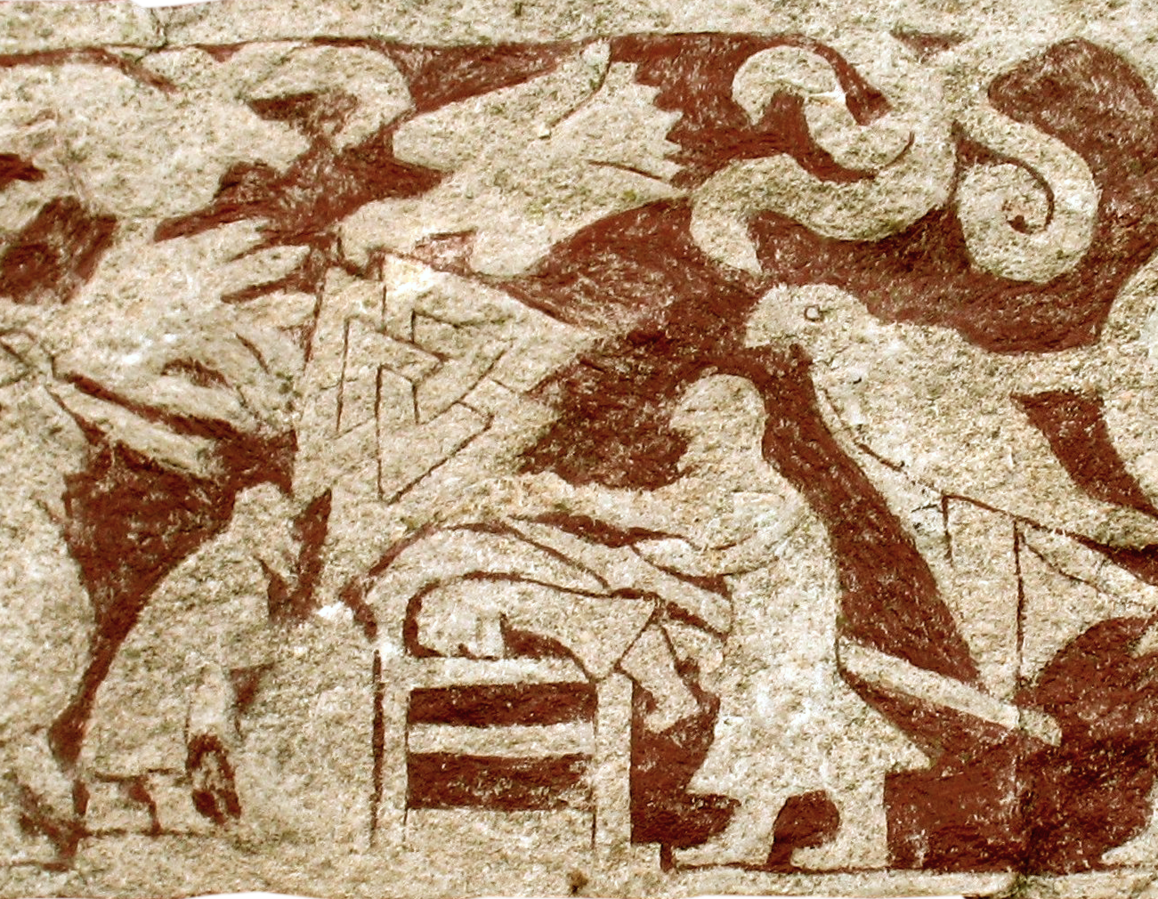
“In the Viking Age and the centuries that preceded it, northern Europe’s unpredictable climate periodically forced barbarian tribes to go in search of new resources. In our supposedly enlightened age, the search for such resources has been sublimated, corporatised, sanitised perhaps, but it has not receded.
“You did not, I hope, steal this book from someone else. The clothes on your back were not snatched from Irish monks, and you did not appropriate your money by smashing up priceless holy relics, but there is still a perilously thin line that separates you from the hungry and the cold, and from the need to secure food and warmth. Few of us are more than a few months away from bankruptcy. We hand over new forms of manngjöld, hoping to shield ourselves against misfortune by paying tax and insurance. Our faith in our governments and welfare systems keeps us from having to consider what we would do if they were not there.
“While the Vikings are inhabitants of the past, the forces that created them are not. Ours is still a world with famines, floods and incidents of over-population. Our battles over resources are fought by proxy in distant lands, but they are still fought. You do not lead a band of men to take from those less able to protect themselves, but somewhere far away, others do on your behalf. It takes only the tiniest turn of fate, the slightest lapse of law, to make Vikings of us all.”
From A Brief History of the Vikings by Jonathan Clements.

A story pitch familiar from many a twentieth-century potboiler, including The Universal
Soldier and Akira, takes on a new, family-oriented tone in a 2020s media
landscape dominated by streamers providing movies direct to home cinemas.
Over at the Encyclopedia of Science Fiction, my write-up of the comedy action movie Playdate. Discussing its science fictionality requires a discussion of the ending, so there are spoilers galore.
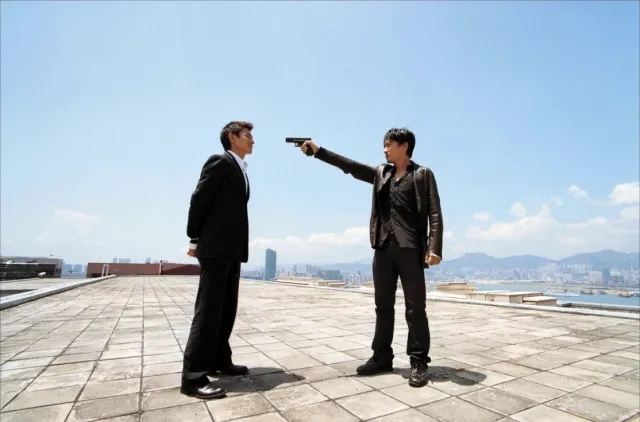
Reporting on Triad activities in the 1990s took on a new cross-border tone, as new arrivals from the People’s Republic refused to play by the carefully negotiated “rules” of Hong Kong’s local criminals. Even as the movie business struggled with the implications of complying in advance with likely post-1997 censorship restrictions, the criminal world, too, faced the possibility of an invasion by a different kind of gangster.
Hong Kong was stuck in the middle, its 1997 change in sovereignty described as a grudging “Handover” by the British media, as if London was being mugged for its lunch money, and an exuberant “Return” in China, as a long-lost sibling returned to the Beijing family. But by this time, Hong Kong had spent 150 years under British rule. Could there ever be any going back? Could it just revert to being “fully” Chinese, whatever that meant, as if it had simply been undercover on enemy turf for a long, long time? As Chan (Tony Leung) comments: “Everything will be okay after tomorrow,” but the idea comes loaded with misplaced optimism, and is repeated on several occasions in the series.
Excerpted from my sleeve notes to the new 4K Blu-ray release of Infernal Affairs by Umbrella Entertainment (Australia), which goes deep into the shadow line of different kinds of gangster operating in 1990s Hong Kong. I’m so pleased that Umbrella continues to recognise the value of meaningful extras, while so many other video labels are succumbing to the false economies of bare-bones releases.
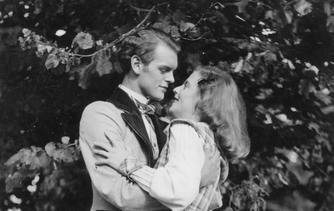
Count Mauritz Armborg (Leif Wager) is packed off to Rome to study the violin, in a devious gambit by his family to keep him away from his true love, the butler’s daughter Katariina (Regina Linnanheimo). He stops just long enough to impregnate Katariina in a roadside inn, and Katariina throws herself off a cliff in grief, only to be rescued by her suitor, the honest fisherman Elias (Eino Kaipainen, formerly a leading man good enough for any red-blooded Finnish woman, now reduced to the supporting cast).
Seven years later, Elias handily dies from the plague (or something), freeing Katariina to dump her son Mauritz Junior (Marjo Kuusla) on a grieving mother, who whisks the boy off to Rome, where he is reunited with his father, who recognises the necklace he gave Katariina. He brings his long-lost son back to the manor in Finland, where his mother (Elsa Rantalainen) confesses to her machinations, all is forgiven, and the lovers are reunited.
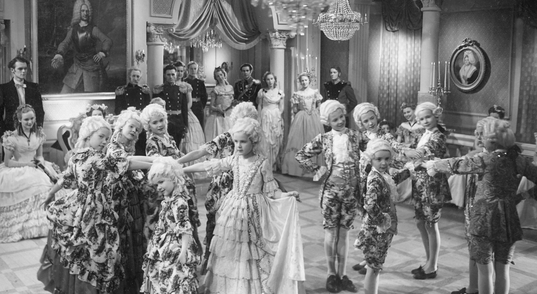
Katariina ja Munkkinienen kreivi had a convoluted path to the screen, beginning as a last-ditch effort to salvage the costs sunk into an abortive historical drama about Karin Månsdotter (1550-1612), the queen consort of Sweden’s mad king Erik XIV. With the royal movie project shut down for reasons unclear, the Suomen Filmiteollisuus company was saddled with an entire warehouse full of costumes, and thrashed around in search of a story that would justify them. Eventually, a ready excuse was found in the form of a romantic novel, serialised in the Oulu local paper Sirpale from 1939-1940, by the same Kaarina Kaarna who had penned the earlier success Beautiful Regina of Kaivopuisto (1941). Nisse Hirn’s script adaptation was deftly polished by Toivo Särkkä with some smart changes for the change in medium – a dinner scene was transformed into a glittering dance, and Mauritz’s desire to be a painter, switched for the more soundtrack-friendly violinist.
And then the whole thing sat in limbo for a year, upended by the Winter War, losing its original director and stars, and finally flung together under Ossi Elstelä, with new face Leif Wager in the male lead. It was Elstelä who called the lyricist Reino Hirviseppä in Viipuri and asked for a “quick fix” – the result, dashed off in the following fifteen minutes, would become the film’s break-out song “Romanssi,” one of the most popular hits of Finland’s war years.
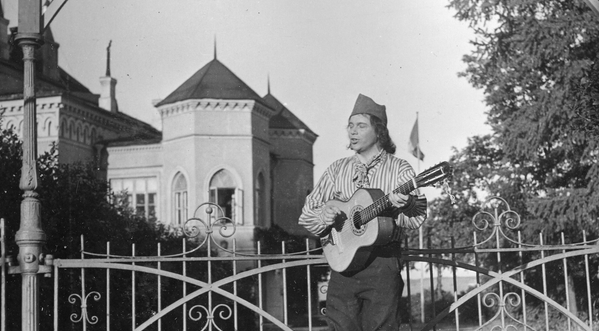
Buildings in Helsinki were found to stand in for the supposed globe-trotting scenery in Italy and Denmark, and the result was the box office smash of 1943, although the critics were less impressed. Hans Kutter in the Swedish-language Hufvudstadbladet ridiculed the novelist’s staple elements of “a man of high birth, a woman of the people, and the obligatory illegitimate child.” Olavi Vesterdahl in Aamulehti was similarly snide, calling it a “worthless pastime” fit only for “soppy schoolgirls and dreamy women.” Paula Talaskivi, the unshakeable oracle of Helsingin Sanomat, lamented the fact that anyone ever bothered to make such drivel any more. Toini Aaltonen, in the Suomen Sosiaalidemokraati was oddly aggressive, in what seemed to be a town-and-country stand-off, lampooning the “naïve” readers of Sirpale for falling for it all, and blaming them for the fact the film got made at all.

The press was more forgiving of leading man Wager, cooing enthusiastically about his chiseled good looks and gentlemanly manners. Talaskivi chided the film-makers for putting the 28-year-old Regina Linnanheimo in the role of a virginal teenager, and smartly suggested that the film might have made more sense if she’d swapped places with Sirka Sipilä, the 23-year-old actress who played Ingeborg, the spinster with whom Mauritz is forced into a loveless marriage. With the Finnish film industry now twenty-some years old, aging stars were becoming a thing – as noted up-blog in The Toilers of Rantasuo (1942), former male lead Eino Kaipainen was now in his forties and here, it seems, finally accepting the move into character roles with a degree of grace, albeit with a distractingly wispy beard.
Also popping in for long-term readers, the radiant Elsa Toivonen as a countess who encourages Katariina to marry for love: “I was sixteen when I was wed; seventeen when I had my first child, and my husband was twenty years older than me.” Elsa Rantalainen as Mauritz’s mother, trying to corner all the Scheming Old Bag roles, is, as ever, oddly persuasive in her arguments for Mauritz to Do the Right Thing.
Shunted onto television in a different era, the film was battered for the unintentional humour provided by all the histrionics. This viewer was left more curious about the implications that the costumes intended for a Karin Månsdotter drama set in the late 16th century should somehow be appropriate for a Finnish movie set in the 1860s. Maybe fashions don’t change so fast in the far north? The film’s finale is set in the year 1867, which is also the year that Månsdotter’s sarcophagus was renewed in Turku cathedral, so possiby the Månsdotter film had an 1860s framing device that would account for a bunch of the costumes.
Jonathan Clements is the author of A Short History of Finland. He is watching all the Finnish films so you don’t have to.

It doesn’t look like I am going to China in 2026, so I am unable to fully update my popular article series on Surviving in Cashless China. But I do want to offer one note of warning, which is that WeChat (Weixin) is becoming increasingly difficult for foreigners to use.
I just tried to move my apps onto a new iPhone, only to discover that WeChat now has a ridiculously intricate system of verification and validation, that makes it nigh-on impossible to retrieve a forgotten password, and just as hard to set up a new account. I’ll leave it to this article at China Talk to explain the ins and outs of it, but the bottom line for me is that even though I managed to get back into my WeChat account for a whole minute, when I tried to change my Settings, it decided that, too, was “suspicious” and locked me out again, brightly advising me to rustle up three more friends with WeChat of their own, who didn’t mind being unpaid admin supports, to vouch for me.
One of them duly sent me the passcode they were asked to, only to receive a reply from WeChat that my account was no longer in use, even though I had wasted a busy hour trying to use it!
Another commented: “Once you have fully set WeChat up (again), make sure that you use it semi-regularly when not in China, i.e. – post the occasional photo on moments, chat with friends, or use related apps. WeChat accounts that are left inactive for long periods often suffer what is known as ‘digital death’ where the account is deactivated and the user can no longer login, but their friends still see that user in their contacts list, thereby causing much confusion. This has happened to many contacts of mine who left China during the pandemic and ceased using WeChat, then found they could no longer access their accounts months later when wanting to catch-up with friends.”
I will, at some future point, attempt once more to get back into the account that WeChat is telling my friends I am not using. In the meantime, I need to deal with the prospect that travel in south China, in particular, is going to be significantly harder for me when I can’t use the most popular payment app there. AliPay still works just fine, but not everybody takes AliPay.
I hope very much to update this article sometime with news that WeChat has stopped being an impossible torment. For those of you planning to go to China in 2026, be advised, as per the China Talk article, that setting up WeChat, with all its whistles and bells and grace periods, can take days, and requires access to a bunch of people who already have WeChat and don’t mind behaving “suspiciously” by vouching for you. So if you want to set it up on your phone, do so a good month before you travel.
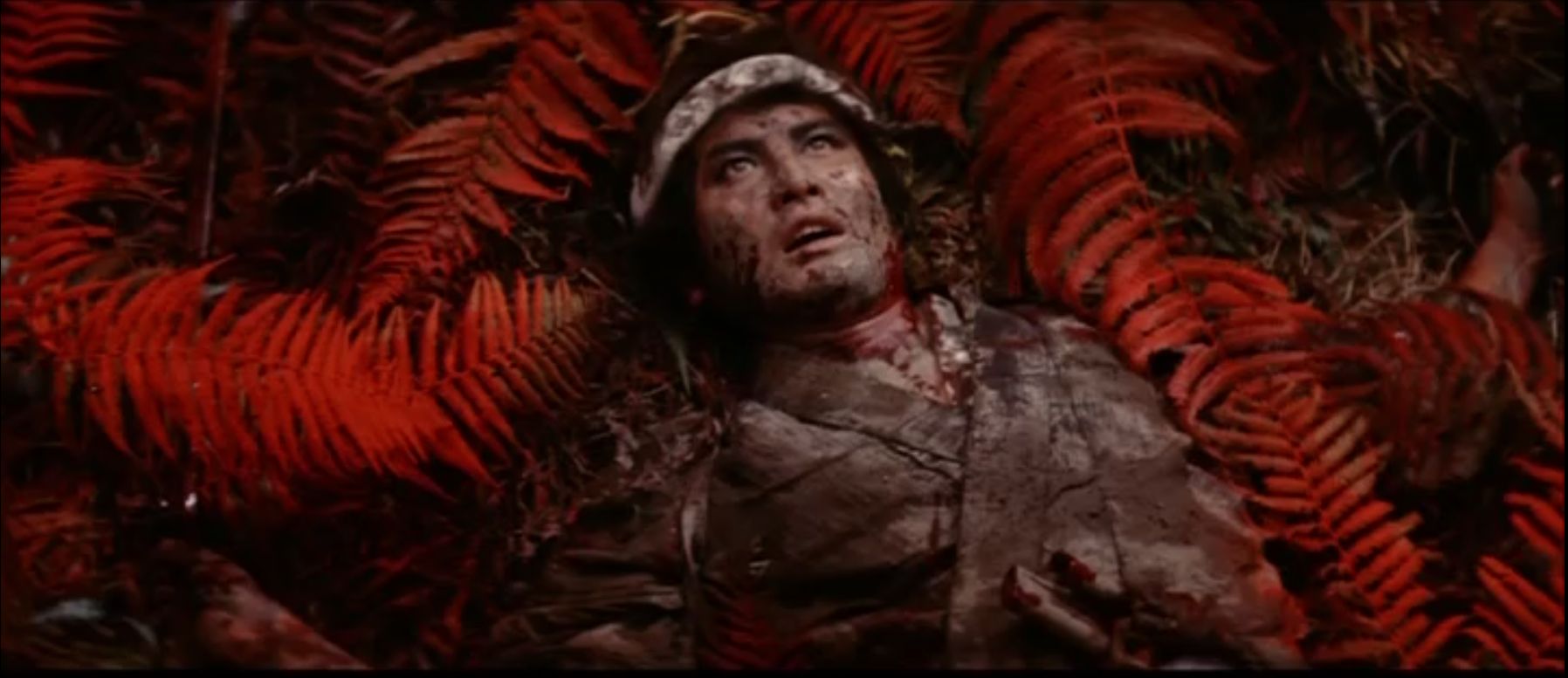
Something I stumbled on while researching a script for Eureka’s Zen and Sword extras: a meeting between the historical novelist Eiji Yoshikawa, and Tomu Uchida, the director who was adapting his Musashi novels for the screen.
—
Last year [c.1962 – JC], I visited Eiji Yoshikawa at his villa in Karuizawa to ask his opinion on the second part of Miyamoto Musashi for my film adaptations. He was in the middle of writing the final part of the Ashikaga chapter of his Private Taiheki…. I had heard that he was in poor health, so I intended to limit my talk to the main issues, but he suddenly held out his hand.
“As the days of the Ashikaga come to an end,” he said bitterly, “I feel as though my family will die, and my hand will rot as it holds the writing brush. You can sing the story of the tragic end of the Heike clan at Yashima and Dannoura, but I don’t like the stories of the Ashikaga clan. It’s a path of power and famine. There are no people there.”
He spoke in a low voice but with a strong tone, and looked at us with sharp eyes, as if to express a writer’s anger towards the rotten history of humanity…. It was only later that I finally grasped the meaning of what he said at the time.
One was the spirit of his anger about writing a history of a corrupt era. The other was: don’t start a song you can’t sing.
From Tomu Uchida’s posthumously published memoir, Fifty Years a Film Director (1999). Jonathan Clements is the author of A Brief History of the Samurai.
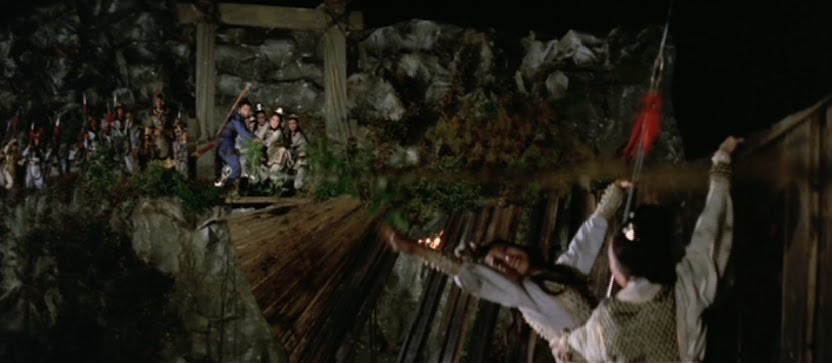
“And this is not the last time that a film with strong Chinese opera connections is prepared to drag itself out any sense of naturalism, away from any shadow of realism, and instead into a world that is evocative, and allusive to the world of the stage.
“For example, if you look at 8 Diagram Pole Fighter, the entire opening sequence depicts a clash of cavalry forces with no horses, and a massacre of Song loyalists presented in a format that seems designed to line them all up, as if facing an audience beyond a proscenium arch. And that’s because 8 Diagram Pole Fighter, like 14 Amazons, is associated so strongly in the Cantonese mind with these opera performances, that one almost expects such distractions, in much the same way, that people seem to be more forgiving, of cartoonish action in films based on comics.
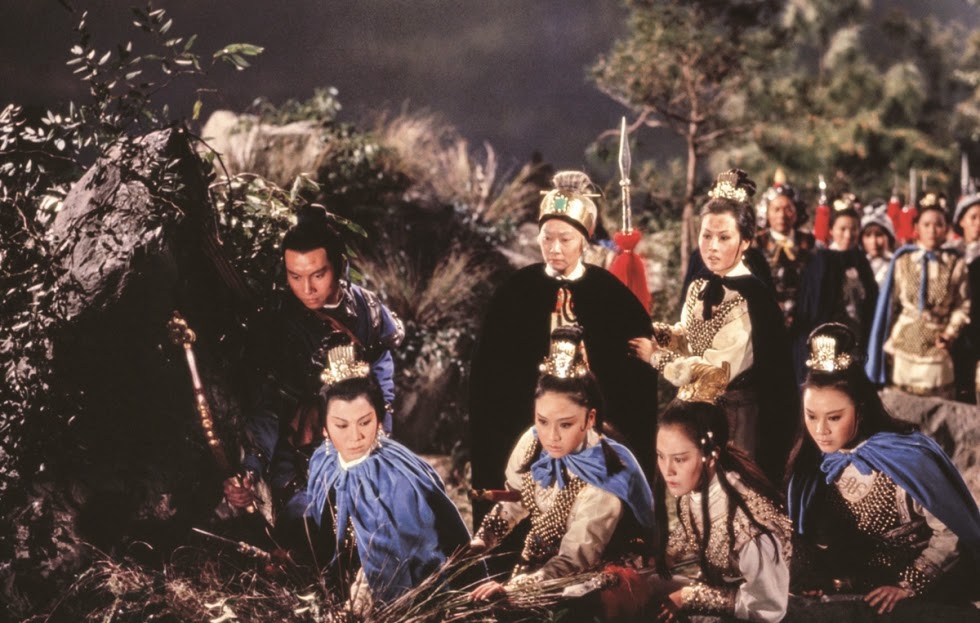
“‘A bridge of human bodies’ is a phrase I have heard before in Chinese military history, and it tends to be used in a much more prosaic fashion, much as Henry V ‘blocks up the walls with our English dead.’ As far as I can remember, I can’t actually recall exactly which author it originates from, or even if it is an official proverb, but I do recall seeing it referring to siege warfare where a pile of bodies becomes the ramp by which a victorious army descends.
“So this sequence frankly carnivalises it, turns it into a literal bridge, of living bodies, who somehow perform the function of allowing all the Amazon’s army to cross this ravine, and it’s, for me, at least, it’s a low point in the film, because it throws realism completely out the window. Not naturalism, because this is clearly a fictionalisation of events, but true realism, adhering to the rules that the text has set for itself. But I think I’m in a minority here, because everybody else thinks this is just bonkers, and suitably entertaining for the cheap seats.”
From my commentary track to 14 Amazons, found in Arrow’s Shawscope #3 box set.

“…he leaned on different sporting allusions, particularly a fusion of pilot and mecha evocative of equestrian sports or bicycle racing – where Gunbuster imagined the machines as fighter jets, Diebuster reconceived them as more like living mounts with wills of their own. They were not so much vehicles now as participants in school life, organic personalities that invited a form of cross-species bonding, like a young girl befriending her pony, which can fly, and shoot things.”
From my essay in the sleeve notes to Anime Limited’s release of Diebuster.
 The Official Schoolgirl Milky Crisis Blog