Chasing Waterfalls

While reading about the botanists of the early twentieth century, I stumble across a reference in the works of Joseph Rock, a man whose prose is described by his own biographer as “brutally unreadable”:

“Between Dü-gkv and Nvlv-k’ö is a meadow called Mbamä. Here a large spring called Bao-shi gko-gyi issues from the mountainside under a grove of century-old maples where Na-khi sorcerers perform Zä-mä, a ceremony for the propitiation of the Llü-mun (Serpent spirits).”

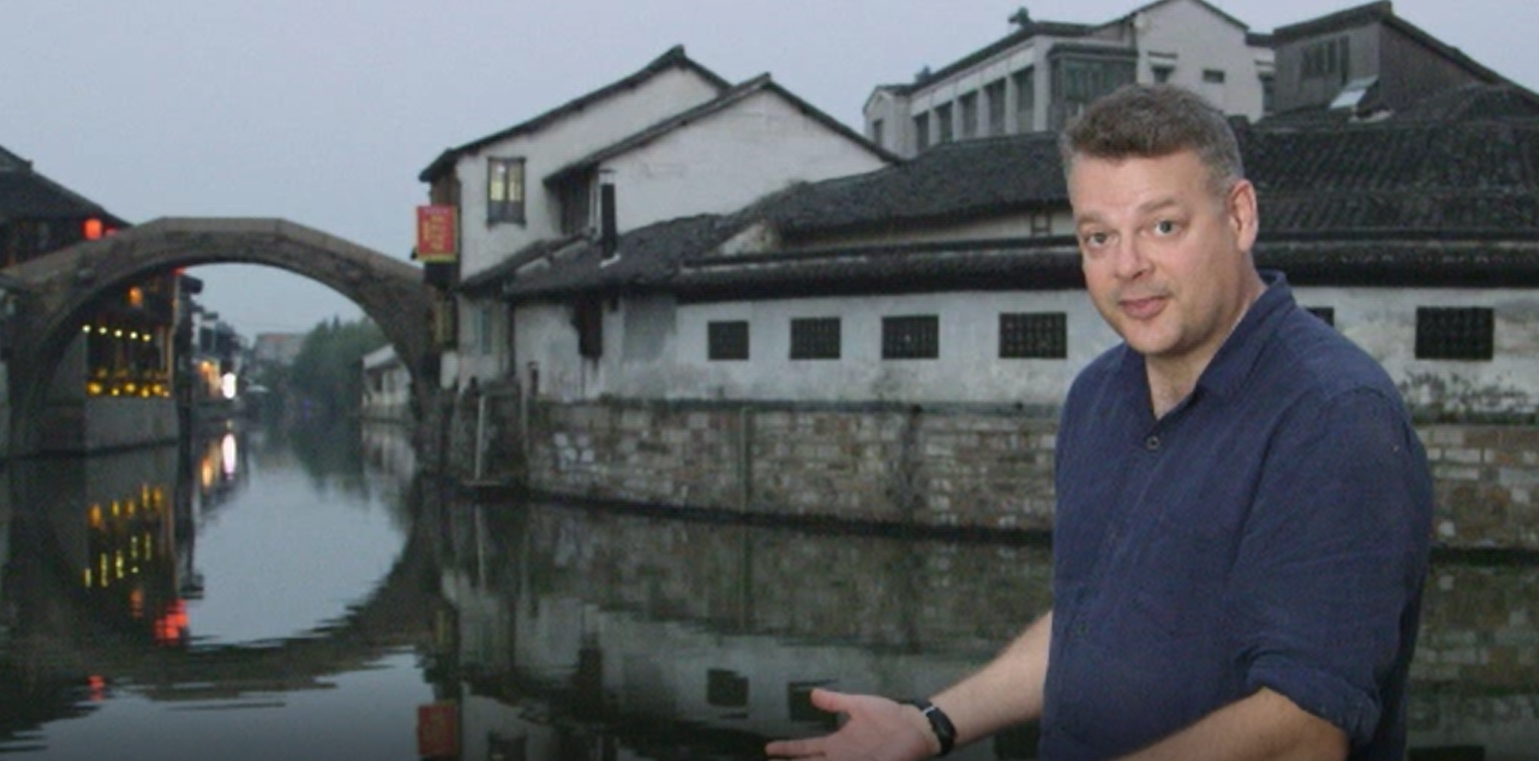
The ceremony in question supposedly grants fertility to those who drink from its waters. Mack the fixer and I puzzle over the quasi-Tibetan Romanisation, and eventually work out that the place in question is now called Xuesong – the Snow Pines. Since we have nothing better to do, and any mention of “fertility” is a step closer to successfully completing the episode, we drive over to the spring, which is now an area of sheltered parkland, in the grounds of a temple.

We walk through shady forest paths around ponds and lakes of a clarity I have never seen before. The carp in the pond seem to be floating in mid-air, and the waters are crystal clear all the way down, linked by a series of bubbling waterfalls. The park is remarkably quiet and peaceful, thanks largely to the fact that there are hardly any Chinese people in it, and we climb mossy stone steps to a little shrine in the hillside. Here, between a golden statue of the Goddess of Mercy, and a stone statue of the Earth Mother, there is a hole in the rock where the spring of the Crown Prince God bubbles to the surface, watched over by the fat effigy of a young naked boy, swaddled in red ribbons. From here it cascades down the hillside, through several ponds, around a water wheel, and then into a fountain in the temple grounds, where locals can be seen filling up with buckets. This is an ideal place to film… and it is locked.

“GO AWAY,” shouts a horrible old lady through the grille. “WE’RE CLOSED.”

You can’t be closed, reasons Mack. This shrine is the focus of the entire park and we’ve all paid twenty kuai each to get in. What time do you close if the gate is still open at the front…?

There is a long pause while the old lady thinks through the ramifications of her various possible answers, any one of which requires her admitting that her daily routine comprises of knocking off early and putting her feet up. But we have filming permission from her boss at the front gate, who plainly expects the shrine at the top of the ridge to be open for another hour, otherwise he wouldn’t have let us carry our gear up the mountain.

In a great sulk, she lets us in and then hunches over the balcony, fuming at having been caught out. I dash off a piece to camera about the spring, and we are gone. It could have been a substantially more sedate piece, with me walking in the picturesque surroundings and talking about Naxi culture, but the hostility of the “caretaker” has kind of put us off.

I wish I’d taken a picture of those fish, seemingly hovering, so you would believe me. But there is rarely time or opportunity for me to point a camera, or even carry one. I am in the car feverishly revising Mandarin technical terms for an interview, or swotting up on the next location. I am pacing up and down in a forest, trying to parse my lines. I am in a hotel room carefully trying to make sure my face and hair and clothes all look the same from day to day. Or I am thousands of miles away, trying to remember it all before it fades.

Jonathan Clements is the author of A Brief History of China. These events featured in Route Awakening S03E05 (2017).

Charlie Reads The Emperor’s Feast

“Clements has an engaging and chatty writing style, and knows his audience: Liu Bang has a ‘frenemy’, Confucians are a ‘bunch of whiners’, we encounter a ‘Chinese Basil Fawlty’. I was rather surprised when, discussing the ‘world’s largest turnip’, he passes over the opportunity to make a Blackadder reference.”

A pleasant surprise over at the book blog Charlie Reads China, as the erudite Charlie encounters my history of Chinese Food, The Emperor’s Feast.

Xiang Kairan (1889-1957)

Marvellous Gallants of the Rivers and Lakes (1923) focused on Xiang’s lifelong obsession with ‘rarity’ in fiction, which here manifested itself as a concentration on the pseudoscience of martial-arts super-powers. Ridiculed by leftist authors such as Lu Xun for its quixotic and regressive reliance on magical solutions, it nevertheless became immensely popular. Its 65th chapter formed the basis for The Burning of the Red Lotus Temple (1928) a watershed work in the history of martial arts film, in which magical forces were represented with early special effects, spawning seventeen sequels.”

Over at the Encyclopedia of Science Fiction, I write up the influential author Xiang Kairan, a.k.a. Pingjiang Buxiaosheng.

Missing Xi’an

This picture was taken five years ago a conference/knees-up to celebrate twenty years of the faculty at Xi’an Jiaotong University. I’m pretty easy to spot in the front row, since I am the only white face present. I’d flown in to deliver a lecture about “The British Perspective on the Belt and Road”, which was something of an eye-opener for the audience, as I delved into the history of other nations’ outreach initiatives, and some of the likely unwelcome consequences. I predicted, accurately as it turned out, that Gwadar in Pakistan would prove to be one of the more obvious flashpoints, and that the Balochi independence movement would soon start targeting the Chinese. For saying so, I was reprimanded by an earnest Party member who didn’t think I should be rocking the boat.

The next day, I hang out with my friend Dr Qiao Zhilin, who has been racking his brains in search of a historical site in Xi’an that I had yet to see. We wander up to the city museum and then along to the Blue Dragon Temple, sited on a shoulder of land a couple of storeys above the surrounding terrain – Tang dynasty maps tend not to have contour lines, so the fact that medieval Chang-an was not as flat as a pancake often eludes scholars. The view from one of its halls would have rivalled that from the Great Goose Pagoda itself, and you would have seen the whole checkerboard of Chang-an stretching out to the north and west.

Zhilin is irritated that the view now looks like everything else. Climb the hundred or so steps to the gate, and all you can see is skyscrapers all around. The temple sat in ruins for centuries, until the place was mobbed by Japanese tourists in the 1980s. It turned out to be the place where Kukai, one of the most famous Buddhist missionaries in medieval Japan, had studied. He would return to Japan and establish the Shingon sect.

Never ones to look a gift horse in the mouth, the Chinese bodged the temple back together again, and in 1985 the people of Shikoku (Kukai’s birthplace) donated an entire forest of cherry trees, so it would look suitably Japanese every spring. Online information about the precise place where he studied is very confused. Wikipedia thinks that almost everything of any note in Buddhist history happened at the Ximing Temple, which I have never heard of, and seems to be a confused conflation of a bunch of institutions in the shadow of the Great Goose Pagoda. But Buddhist temple tourism is a fierce competition for the attention of tourists to go to a bunch of places that are all effectively the same, so the ability to say “Famous Monk Slept Here” is worth something, as is an entirely arbitrary forest of cherry trees, that only looks good for two weeks a year but is all any visitor seems to talk about.

The park is full of Chinese dicking around with badminton racquets and shuttlecocks, and a troupe of Uyghur dancers doing their hand-wavy dance thing. Nobody pays any attention to the museum in the inner temple area, although it fast becomes apparent why, as the guards have installed a loud alarm that beeps constantly if there is anyone inside. This helpfully tells them if anyone is on the premises, but makes it incredibly difficult to examine exhibits about enlightenment and harmony if you are actually there. It’s as if Westminster Abbey hired a clown with a bullhorn to stand next you and go HONK-HONK every time you looked at something.

We retreat to a sutra room near the back of the temple, where we are waylaid by a crazy-eyed security guard who wants to talk about Buddhism. Mr Yang has an odd aura about him that I remember all too well from the clientele at a religious bookshop where I once worked. He asks me “What sutras you have in England?” Diamond, I tell him. “Awesome,” he replies, “that’s my favourite sutra” and launches into a diatribe about how all religions are the same beneath the surface, and anything was okay except atheism, which was plainly a poison on the face of the Earth.

I think, I observe to Zhilin as we leave, that we’ve just met someone whose parents said he couldn’t be a Buddhist priest.

But he is just a security guard, protests Zhilin.

Is he, though? Is he?

Clinging by his fingertips to any reason not to be at the conference, Zhilin insists on accompanying me to the bullet train station, and pads after me all the way to the security gates.

“I really have nothing else to do!” he says, staying until I disappear up the escalators and he can no longer see me. At least, I assume he went home after that. Maybe he is still there.

I haven’t seen him since. Filming on the fifth season of Route Awakening did not take me to Xi’an. An invitation for a speaking gig in Japan lured me away in the autumn when I would have otherwise dropped by. And then there was a pandemic, and one thing led to another…. My six-year visiting professorship officially lapsed, since it is the sort of thing that is renewed in person at a conference banquet. The postgraduate faculty has moved twenty miles west, so not even the buildings are the same. And the people I knew have gone.

For five years, Xi’an was a huge feature of my life. The overnight plane became as commonplace as a bus. I got to see several intakes of students come and go — for many of them, my family being the first foreigners they had met. But the five years since means almost everybody has gone — the newly arrived bachelor’s students who sat in the front row of my lecture, would have graduated two years ago. If I turned up on their doorstep tomorrow, maybe only a couple of postgrads would even know who I was, and even then only vaguely. All those many dinners and outings and lectures and encounters are all lost, like tears in rain. Three different professors at that December 2017 banquet suggested I might like to be a visiting lecturer at their universities, too, but these things take time, and application, and will, and more than anything else, legwork. It took years to build the trust of the faculty at Xi’an, to prove that promises to return were not empty platitudes. Qiao Zhilin and I still wave at each other occasionally on social media, and tell each other that someday soon normality will be restored, but we can never really go back.

My son, who grew up surrounded by an adoring cloud of Chinese girls, has pre-teen schooling obligations that mean he can’t just wander away to China for three months anymore. His mother, who was the reason we went to Xi’an in the first place, is not my wife any more, and she is also struggling with the logistics of returning to a place that is no longer the same place, with people who are no longer the same people, and is now lacking a free spousal interpreter.

As of this week, I have been gone for as long as I was there. The last time I was in Xi’an, the deputy mayor offered to make me an honorary citizen of the city. The next time I go, I expect I will just be another tourist.

Jonathan Clements is the author of A Brief History of China and The Emperor’s Feast: A History of China in Twelve Meals.

Chinese Food on Taiwan

Photo: Nick Kembel — 20 Best Night Markets in Taiwan

Some years ago, I walked into a new “Taiwanese” restaurant in London’s Chinatown with my friend Andy. The waitress shuffled over and imperiously announced that Taiwanese food wasn’t like any other food we had ever had.

“I doubt that,” said Andy to her in Mandarin. “We both lived in Taipei when we were students.”

The waitress visibly blanched and called over her colleague.

“We’re both from Shanghai,” she confessed, huddling closer. “We don’t know what any of this stuff is!”

She could have used a copy of Steven Crook and Katy Hui-wen Hung’s A Culinary History of Taipei: Beyond Pork and Ponlai, a truly exhaustive account of the multiple cuisines not just of the city, but of the entire island, from the various delicacies of its aboriginal peoples, through the foods and crops brought in by various settlers – including the Dutch, Spanish, Cantonese, Fujianese and Hakka – and local food’s many modern transformations. Their book takes in the powerful, enduring influence of Taiwan’s fifty years as a Japanese colony, as well as the austerity era of the mid-twentieth century juan cun emergency housing, when Taiwan was flooded with refugees from the mainland, and the modern logistics of everything from pork transportation to convenience-store microwave cookery.

“Those who live in the mountains eat what they can find in the mountains; those who live by the sea eat from the sea.” Crook and Hung begin with subsistence foods, before delving deep into indigenous folklore in search of reasons for multiple conflicting tribal taboos. When the Chinese first arrived on the shores of Taiwan, they were disgusted at the natives’ penchant for deer’s intestines, while the aborigines were aghast that the Chinese ate chicken. They are nicely focussed on etymologies, including a long discourse on why the humble frog became known as the “water chicken.” The natural assumption, they suggest, is that it is a euphemism designed to conceal the origins of an icky food from disapproving diners. But Taiwanese diners love frogs’ legs – it is far more likely that the new name arose to get around a Song-dynasty government ban on killing frogs, not because they were taboo, but because they were of higher value in eating insects in the rice paddies.

Of particular interest is the sudden rediscovery of indigenous dishes in the 1990s, after the rise to power of the nativist Democratic Progressive Party pushed the mainland-focussed Chinese agenda aside. At the inauguration banquet of president Chen Shui-bian, diners were treated to milkfish ball soup and óaⁿ kóe (“bowl pudding”), a savoury porridge. Both were common dishes in Chen ‘s hometown, and the president would go on to troll his guests in later dinners by pointedly serving taro to represent those who were not native to Taiwan (i.e. the descendants of 1940s refugees), and sweet potatoes to represent the Chinese who had lived there for hundreds of years previously.

Except, of course, the sweet potato is itself a new arrival, only showing up in south-east China in the 16th century, a New World food arriving via the Spanish Philippines. It, along with hundreds of other foodstuffs, was entirely alien to the island, but now forms part of Taiwan’s vibrant food culture, which incorporates vast swathes of Cantonese and Fujianese foodways, but also vestiges of the home cultures of multiple groups of refugees. Crook and Hung explain why Taiwanese bread is often so sweet – the predominant style arrived with the Japanese, who tended to regard it as a dessert rather than staple. They detail the menu of a standard military breakfast, the transformations of sushi brought about by the availability of local fresh fish, and the impact of Western food franchises in the late twentieth century.

They are also fantastically informative on the metadata of Chinese food. When Taiwan joins the World Trade Organisation in 2002, one of the unexpected fall-outs is a sudden, five-fold leap in the price of cooking wine, an entirely benign and vital condiment, now classed as an alcoholic beverage and subject to a tax hike. Crook and Hung chronicle the ripple effect this has, not only on the family kitchen, but on the black economy, as gangsters and spivs rush to fill the hole in the market with ersatz replacements. Similarly, the authors devote an impressive page-count to the multiple puns and euphonies of festive dining, explaining just why certain foods are popular with superstitious locals on particular family occasions and festivals.

Jonathan Clements is the author of The Emperor’s Feast: A History of China in Twelve Meals. Steven Crook and Katy Hui-wen Hung’s A Culinary History of Taipei: Beyond Pork and Ponlai is published by Rowman and Littlefield.

God’s Storm (1940)

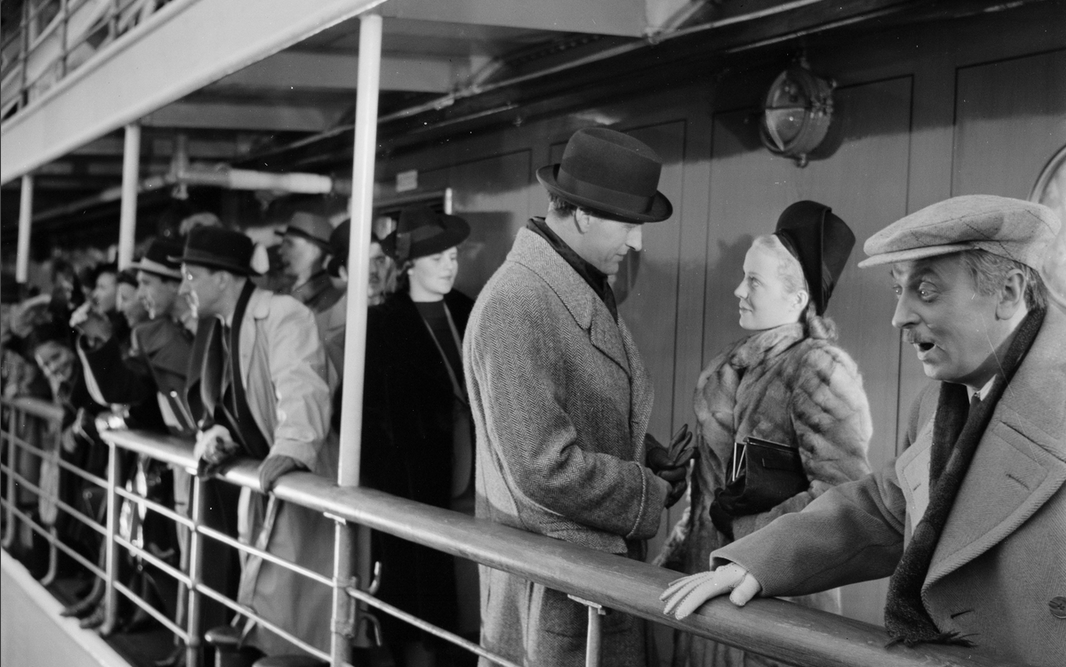
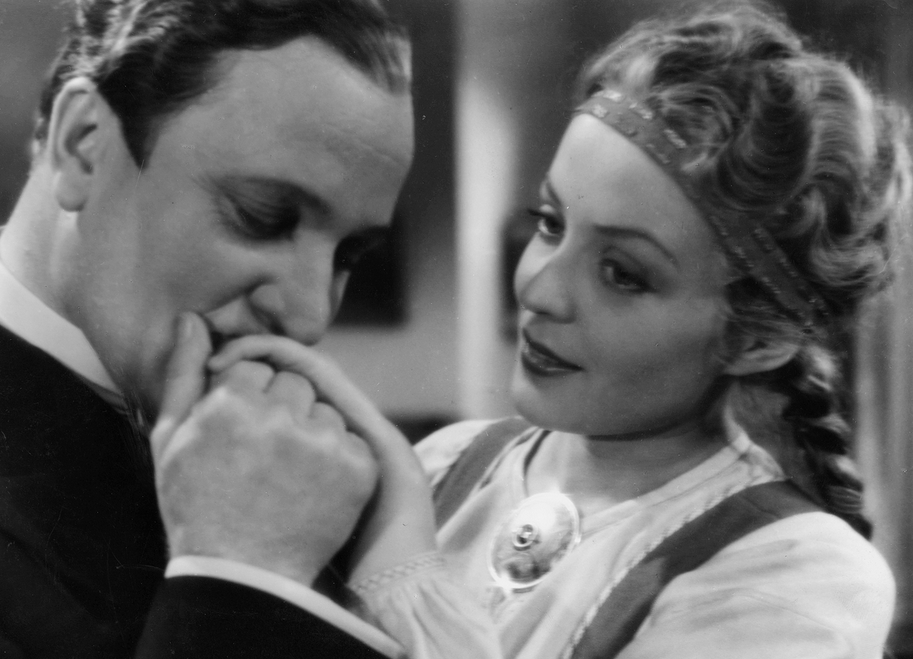
In something of a structural innovation, Valentin Vaala’s film begins where so many might end, on someone’s wedding day. But all is not as it seems at the nuptials of Kilian (Olavi Reimas) and Elisa (Kaija Rahola), a chain of escalating disasters soon revealed in a series of flashbacks.

Two years earlier, Kilian was a happy-go-lucky philosophy student, forced to retrain as a lawyer after the sinking of a lumber transport placed his father’s business in jeopardy. Putting a brave face on corporate brinkmanship, Kilian is dispatched to a remote region to turn around a small business, only to find a bunch of surly locals who rightly do not trust him. But the good-hearted new trouble-shooter makes friends after saving the life of a young boy, and falls for local girl Hanna (Irma Seikkula). That might have been the beginnings of a happy ending, but Kilian is obliged to marry for money, not love… which brings us back to where we came in, a wedding tinged with tragedy, and just about to be tinged with a load more.

The screenplay for this film was written by Turo Kartto, an actor last seen on this blog being entertainingly dickish as a reluctant British tourist in All Kinds of Guests (1936). He does a nice job hammering Lauri Haarla’s 1937 novel into a movie, to the extent that the TV reviewer in the Helsingin Sanomat a generation later commented that the only thing wrong with it was the occasions where it had to adhere to the “pompous and pathetic” dialogue from the original book. That’s a little economical with the truth – Kaija Rahola sports an utterly ridiculous hat that is liable to be the most memorable thing about this film, while the gorgeous Kirsti Hurme is forced to wear a costume that makes her look like a fondant fancy, and not in a good way.

Haarla purportedly based this 1890s melodrama on an incident from the history of his own extended family, and one gets the sense that its adaptation in 1940 was intended to impart a little allegorical message of the necessity of self-sacrifice on a nation still reeling from the Winter War. The film took several years to earn back the cost of its production, although once the Continuation War was underway, it did get a little boost from being released in Germany, inexplicably with Uuno Klami’s stirring score ripped out and replaced by that of a German composer.

For reasons unknown, the film was premiered in November 1940 not in That Fancy Helsinki, but hundreds of miles to the north in Oulu, despite featuring location work shot on the shores of lake Päijänne in the middle of Finland.

Jonathan Clements is the author of A Short History of Finland. He is watching all the Finnish films so you don’t have to.

A Short History of Finland (2022)

‘Highly entertaining’ – Nordic Reach

‘Written in a lively and humorous style, including many personal anecdotes, this book would be a good introduction to Finland’ – Scandinavian Journal of History

The modern nation of Finland is the heir to centuries of history and heritage, as a wilderness at the edge of early Europe, a borderland of the Swedish empire, and a Grand Duchy of Tsarist Russia. From prehistoric reindeer herders to the creators of Angry Birds, medieval barons to the rock band Lordi, Finnish history is rich with oddities and excitement, as well as unexpected connections to the outside world – the legendary English bishop who became its first Christian martyr; the Viking queen who hailed from the wastes of Lapland; the bored country doctor who helped inspire The Lord of the Rings; and the war heroes who held off the Soviet Union against impossible odds.

Jonathan Clements examines Finland’s public artworks and literary giants, its legends, folktales, and its most famous figures, building an indispensable portrait of this fascinating nation. This updated paperback edition includes expanded coverage on WW2 and new sections on Finns in America and Russia, as well as the centenary of the republic, taking Finland’s history up to its battle with COVID-19 and its historic application to join NATO.

And if you’re wondering where the awesome cover image comes from, you can read all about it here.

Appleseed: Alpha

The Appleseed franchise has ever been the Cinderella at the anime ball, never quite making the right connections to realise its potential. It was a state-of-the-art cel anime in the year before Akira wiped the floor and changed the rules. It was a forerunner in CG animation before getting bogged down in an acrimonious fight between its producers, some of whom wandered off to make Vexille, while others stayed around for Ex Machina. Despite having the potential to pack similar punch to its sister title Ghost in the Shell, it has been defeated in the past by a series of naff scripts and gung-ho interpretations, hobbled by the limitations of under-funded CG.

Shinji Aramaki’s Appleseed: Alpha is a marked improvement on previous Appleseed CG features, although the bar has been set so incredibly low that that in itself is not much of an achievement. Set before the opening of the manga, in a post-apocalyptic New York and the Wild West desert that is apparently nearby, it plumps for an intriguing zombie aesthetic in its cyberised goons, mixing biomechanic textures, chrome implants and carbon patches with distinctive camo-influenced body art. The film’s design excels at showing rather than telling, hinting at the messy clean-up after a high-tech war, and offering a world in which Deunan Knute appears to be the only unaugmented human – at least, the only one we see.

With a series of box-ticking MacGuffins, wandering-monster encounters and vaguely defined side missions, Appleseed: Alpha feels all too often like one is watching someone else playing a computer game, not the least because several crucial moments are bodged or oddly framed, so that it is not always clear what’s going on. A series of level bosses have convenient Achilles heels, and a series of coincidences serve to impart the feeling of playing on rails, even with the whole of the American wilderness to explore. The plot is so bonkers that even the cast seem incredulous at some of its twists, while there are some odd slips of logic – like a kingpin who is prepared to leave his office to do his own grunt work and a vaccine that nobody seems to actually need.

The script itself is one of the greatest mysteries, packed with redundancies, half-hearted exposition and a series of quips that are less dialogue than they are “barks” – one-liners yapped at one another by sprites in a game when someone presses a certain button or stands on a certain place. The notable exception to this is Chris Hutchison as Dr Matthews, who imparts real meaning and character to his clichéd dialogue. The other voice actors do their best with their one-dimensional material, but are infected with a Marvel Comics virus that forces them to repeatedly think of something witty to say in the middle of every strenuous fight. Credited to a non-Japanese writer, it appears to be the “original” language of this Japanese film, with lip sync matching English words, much as the characters in Resident Evil added a cosmopolitan cachet by speaking English even in the Japanese game.  

Oddly, the smart decision to make this latest film a prequel to the action of the original is undermined by the inclusion of a plot device that earlier versions have used at least twice before – a rogue robot tank. The comedically indestructible gang leader Two Horns blunders through the story like an NPC with a malfunctioning loyalty algorithm, sometimes threatening to kill everybody, sometimes lending a hand, accompanied by random bodyguards who forget to leap to his defence when he is threatened, allow armed enemies to walk into his office, and turn out not to be able to shoot straight, even when they open fire. He is involved in his own private war with the rival cyborg Talos and a sleek lady-android, who turn up late to the party like dinner guests who couldn’t find anywhere to park.

Many elements of the film recall 1980s cyberpunk, with several shots recalling iconic moments from James Cameron movies. But this could easily be another design decision, recalling the inspirations that were so obvious in Masamune Shirow’s original manga.  Appleseed: Alpha is a step closer to the idealised Appleseed franchise that producers and fans undoubtedly dream of, but one wonders how many more missteps it will take before it actually delivers the goods. For the crowd at the screening I attended at Glasgow’s Scotland Loves Anime, much of the film’s shortcomings were taken on the chin and greeted with increasing, good-natured hilarity, as if we were watching a much-loved cheesy action movie from our childhood, complete with quotably corny dialogue and a plot written by a teenage dungeon master who just wanted to get to the fight scenes.

Jonathan Clements is the author of Anime: A History. This article first appeared on the Manga UK blog in October 2014, and is reprinted here after the disappearance of that website.

Hybrid Products

“Although Ichikohji relentlessly focusses on the big picture, his narrative implies the existence of actual personalities who must have had some blistering complaints to voice. He alludes, for example, to the difficulties of implementing software updates when a company is trying to work 24-hour days on two simultaneous productions, which made me feel for Toei’s anonymous I.T. managers.”

Over at All the Anime, I review Takeyasu Ichikohji’s new book A Development Strategy for Hybrid Products: The Case of the Japanese Animation Industry.

The Mile-High Club

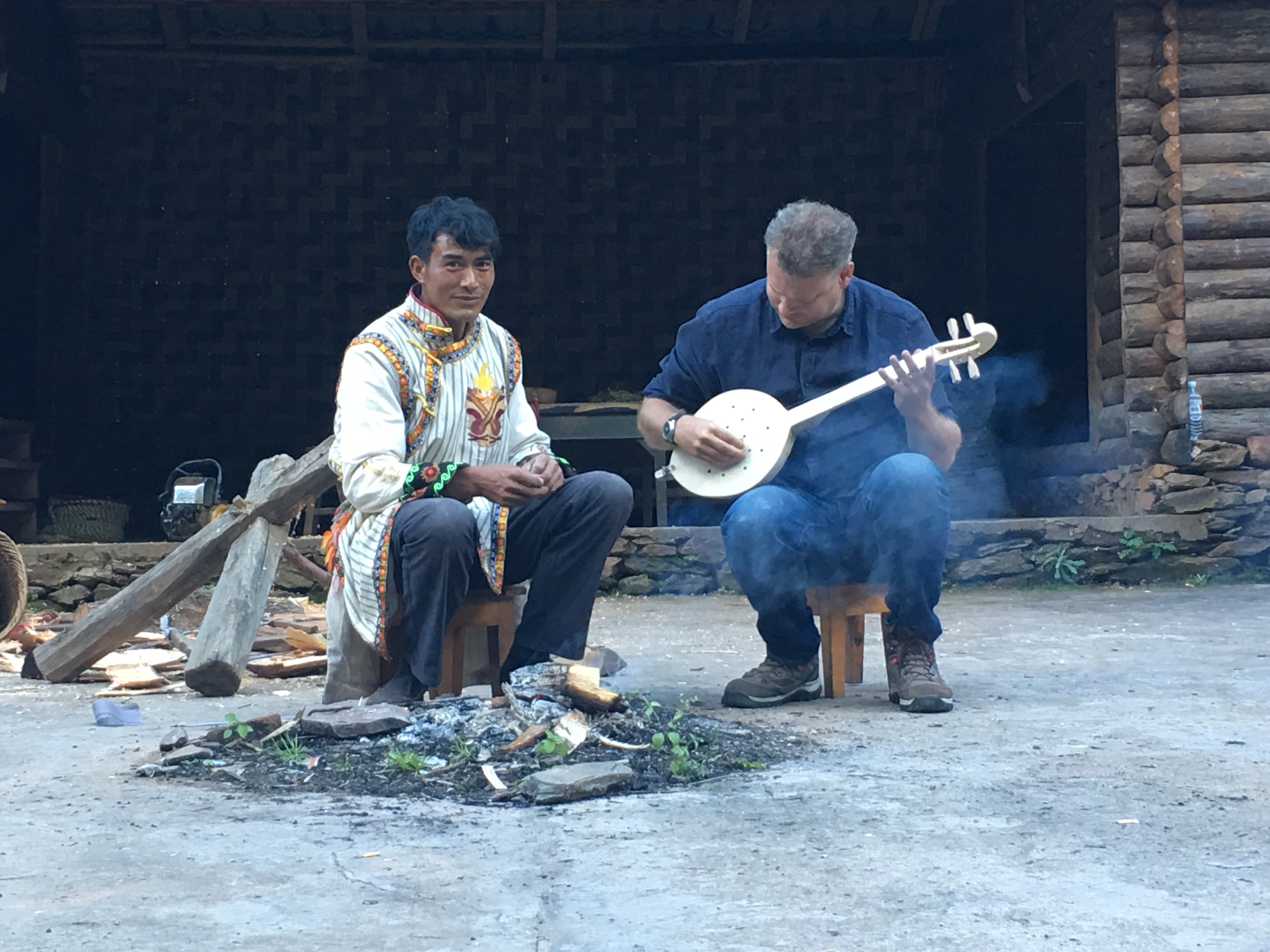
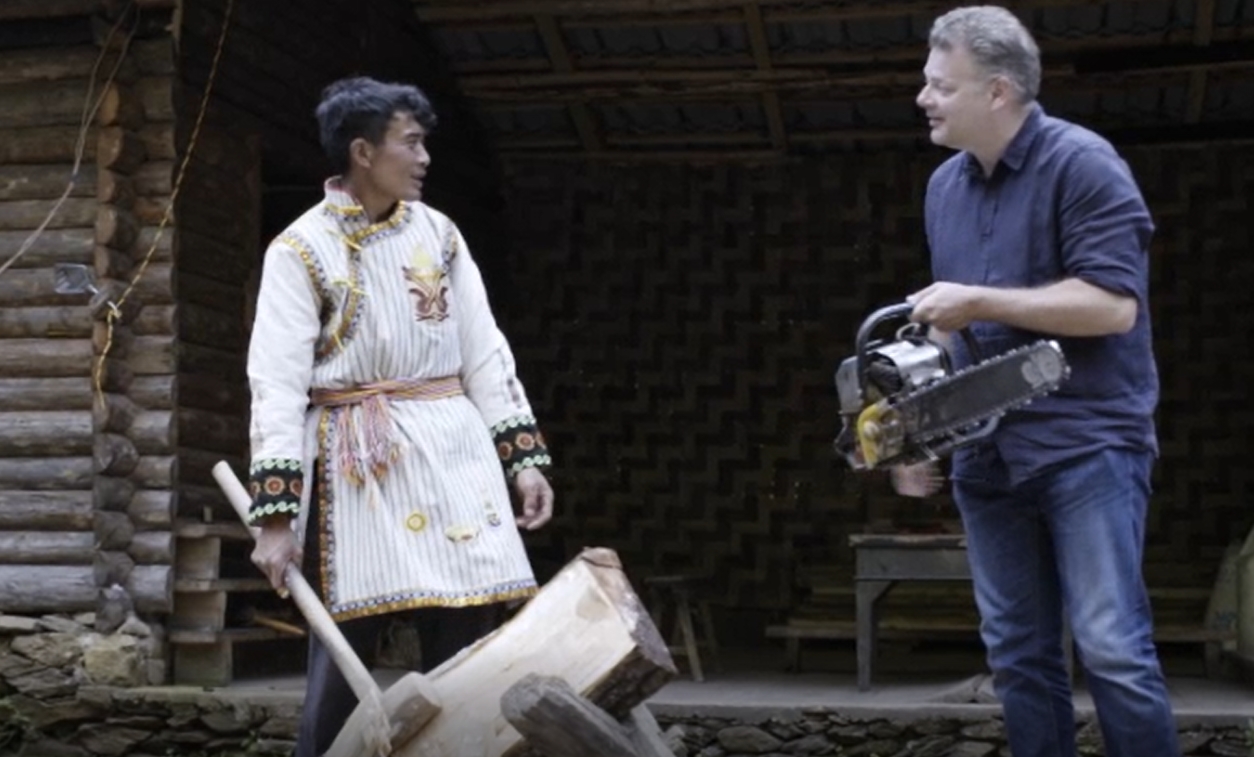
We are off to Lijiang, home of the Naxi people, regarded in China as the cherries on the cake of nutcases, a quasi-Tibetan tribe famous for believing that they are descended from the survivors of the war with the snake people from space. Their God of Pestilence is depicted holding a steaming, fresh turd in his hand, and their shamans like to dip their hands in oil and set light to them so they can run around indoors throwing fire at people. They have the world’s only living pictographic language that causes all their sacred texts (and they have 20,000 sacred texts) to read like comic books, and their panoply of ceremonial artefacts includes “sacrificial puppets”. Their God of Banging is called Dsu, and the Ho-bpo ceremony involves praise to the Lord of Spunk. 150 years ago, they were still cannibals, although supposedly they have stopped doing it now. I am not making this up.

I try to interest the crew in my study of Naxi pictograms, but they display little interest in the symbols for “wizard” and “vaginal discharge.”

I am having trouble catching my breath today. It is after lunchtime before the director reveals that we are more than a mile above sea level, in the foothills of the Himalayas. So it is not my imagination; the air is thinner. Lijiang is nestled inside a curve of the “Golden Sands” river – it is 25 miles to the east, and also 25 miles to the west, and eventually it changes its name to the Yangtze. But here we are high, high up. Shangri-la, or rather, the town that purports to be Shangri-la, is only a few miles north of here. Peter Goullart, who was the local consul here in the 1940s, wrote in his autobiographical Forgotten Kingdom that matters get worse another mile up, where the thinner air makes it difficult to get a good night’s sleep, leaving all the Tibetans and related tribespeople permanently irritable.

The history of Lijiang is difficult to reconstruct, but a few historians have read between the lines of the Dongba recitations and the chronicles of the locals, and come up with the following. The Naxi themselves were once nomads on the desolate northern plains – this we can deduce from references in their most ancient funeral rituals to yurts and herds. This area was not even considered part of China until the Mongols conquered it. When Khubilai Khan’s troops arrived, a family of Naxi chieftains in Lijiang swiftly saw which way the wind was blowing, and willingly collaborated. They were instrumental in the Mongol conquest of the area, and maintained a constant war footing thereafter. Long after the Mongols packed up and went home, the Mu clan were sending raiding parties into the mountains and valleys, demanding tribute from the locals and proclaiming themselves as the rulers of everywhere from here to Tibet.

The Chinese hated Yunnan. The air was too rarefied, and the locals too odd, and they very happily left the Mu clan to it. The Mu chieftains, soon rebranded as princes, were sure to send some appropriate gifts to the coronation of each new emperor, and were thanked in turn by the conferral of official titles. When the Mongols retreated before the resurgent Ming dynasty, the Mu chieftains clung onto their power, for the same reason, which was that the Chinese really couldn’t stand the idea of such a desolate place, and were happy to leave the locals to it.

The Mu did not die; they faded away. In the 18th century, the Chinese reverted the Mu’s status as hereditary leaders, and instead incorporated them into the magistrate system of appointed governors. A few generations later in 1729, when the time came to appoint the next representative, Beijing surprised everybody by not appointing a Mu man at all. The princes had been dethroned, although apparently overnight, their demise had been coming for decades. Early in the 20th century, the consul Peter Goullart reported a banquet in Lijiang where the head of the Mu family was not even afforded a place at the high table. Instead, this shrunken, opium-addled old man was left to eat with the B-list. Now there is little to remind us of the Mu, apart from the stone bridge in Lijiang old town that was supposedly built at their behest, and a couple of mansions and monasteries endowed with what had once been their wealth.

Every conquest of territory downhill pushes other people further into the heights. The Kam once lived in the lowlands, but were shunted into the hills by the Mu conquest – the word for Kam in Chinese is Dong, and originally meant Good for Nothing, or perhaps The Hidden – the former definition has been deviously removed from modern dictionaries. Their famous songs sidle shame-facedly around the fact that they cannot read – a fact which we regularly encountered when filming there, when some of our interviewees were unable to write their own names on their release forms.

But as the Naxi pushed the Kam, the Kam pushed the Miao, who were driven even further into the heights, often living without fire or fresh water. But if the Miao were shunted, they also displaced someone. At the scrag end of history are the Yi, a people who even today have a fearsome reputation.

And then there are the amazonian Hlihin, reported in the diaries of Peter Goullart from the 1940s, when their brash, tough womenfolk would swagger into town with a couple of their husbands meekly in tow, on the search for new bridegrooms. Goullart treated several of them in his clinic, and reported that they were invariably suffering from advanced syphilis. We’re not going to visit them, either – in fact, I have seen no mention of the Hlihin in modern accounts, and wonder if they even exist anymore.

When the Red Army came through Lijiang on the Long March, the locals asked them who the emperor was these days. They had literally had no news from the outside world for fifty years.

Jonathan Clements is the author of A Brief History of China. These events featured in Route Awakening S03E05 (2017).