And while the rest of you were sleeping, I was on a train from London, where I interviewed the directors of ChaO and All You Need is Kill this weekend, to Edinburgh, where tonight there is a second bite of the ChaO cherry with director Yasuhiro Aoki, and later in the week I will be interviewing Baku Kinoshita about his gentle movie The Last Blossom, a love letter to the mid-1980s before everything fell apart. For Japan, not for me.
And I’m off again, this time to That Fancy London for a weekend at the Picture House Central, which features two director Q&As. I shall be onstage interviewing Yasuhiro Aoki, whose new movie ChaO (pictured) is the tale of an arranged marriage in Shanghai between a man and a mermaid, and Kenichiro Akimoto, whose All You Need is Kill adapts the same original novel as was turned into Tom Cruise’s Edge of Tomorrow, this time in anime form.
On Sunday, I introduce the last film of the London leg, and get straight on the sleeper for Edinburgh, where ChaO gets its Scottish premiere on Monday evening, with the director present once more at the refurbished Film House. The rest of the Edinburgh film week, including an onstage interview with Baku Kinoshita, director of The Last Blossom, is being hosted at the Cameo Picture House.
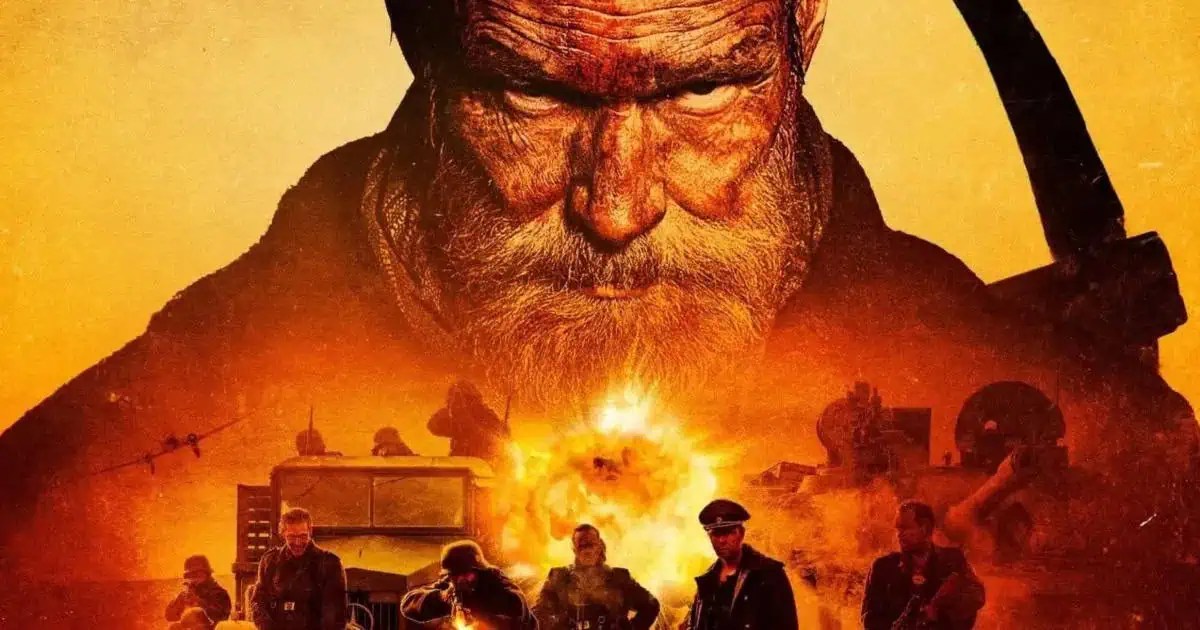
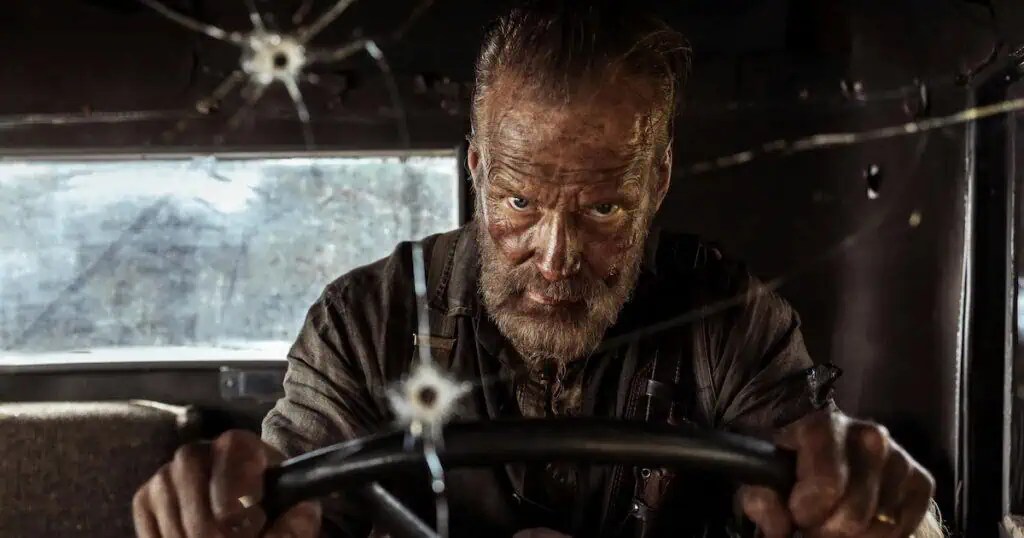
A year after he massacred a bunch of smug Nazis who tried to steal his golden nuggets, retired Finnish commando Aatami Korpi (Jorma Tommila) drives over the newly drawn border with the Soviet Union in to the lost land of Karelia. It is revealed that he is one of the 420,000 Finns who fled Karelia when it was ceded to Russia in 1940, but that he intends to dismantle his old homestead, drive it back to free Finland, and rebuild in memory of his late wife and children.
Oh yes, about that… “Meanwhile, in Siberia” discredited Soviet death squad commander Igor Draganov (Stephen Frame) is sprung from prison and given a mission he can’t refuse. As he is the man whose atrocities drove Korpi to become the unstoppable “immortal” soldier, he should be the man to destroy him. Draganov sets off in pursuit of Korpi, who is doggedly driving a battered old truck across Karelia.
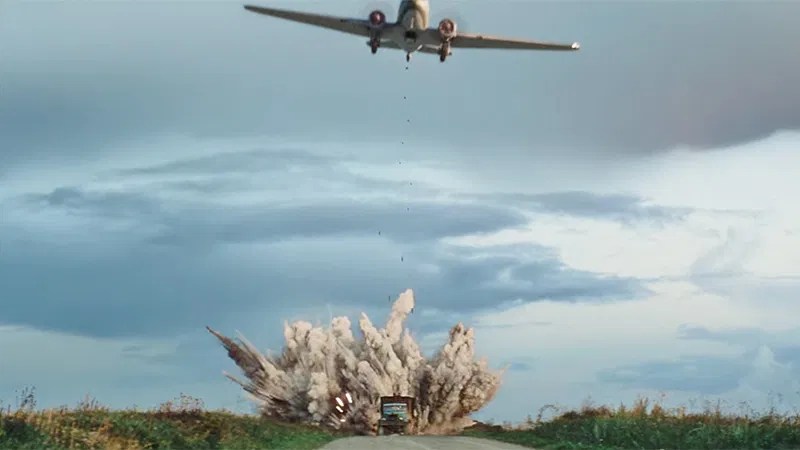
In my review of the first Sisu film, I speculated about the Mad Max: Fury Road and Indiana Jones image board that director Jalmari Helander might have in his office. This time, with Sisu 2: Road to Revenge, I would add a few choice moments from a bunch of other films, including William Friedkin’s truck-in-jeopardy movie Sorcerer, tips of the hat to the original Die Hard, and even Tom & Jerry. This over-the-top saga of Lumber in the Tundra sees Korpi dispatch an entire division of hapless Russian soldiers, with everything from his bare hands, to a handy missile, several useful poles, a bit of bent piping and a winch – I was the lone laugher in the Finnish cinema, while the locals around me seemed to be largely taking notes.
Some of the set-ups prove to be unnecessary dead ends – there’s a whole bit with a puukko knife that goes nowhere, and there are some odd anachronisms, like a Russian banquet that comprises crab sticks and Soave – and I felt that Helander missed a real trick by not featuring an onscreen massacre in which Korpi murders a bunch of Soviets with, say, a hammer and a sickle.
Helander also returns to what I’ve previously called his “Finland of the mind”, not only in terms of redressed Estonian locations, but of the very idea of Karelia as a liminal, thinning fairyland – a place that was once home, but is now seen slowly drowning in red weed. As I have mentioned before on this blog, 12% of the population of Finland were Karelian refugees in the 1940s, and that has translated in modern times to, at a rough guess, one in four of everybody’s grandparents. There is an overwhelming sense of melancholy and loss in Korpi’s return to his former homestead, and a gritty determination to repatriate it far in excess of the passion with which he went after his Nazi tormenters in the first film.
In a moving sequence of a talkoot, Korpi finds himself unexpectedly and briefly among friends. As an immigrant who has also been accepted by Finland after my homeland sold me out, I seemed to be the lone crier in the cinema, too.
“With the heart of a serpent and the nature of a wolf, she gathered sycophants to her cause and brought destruction to the just. She slew her sister, butchered her brothers, killed her prince, and poisoned her mother. She is hated by men and gods alike.”
I am back on the wonderful Subject to Change podcast to talk about my book on Wu Zetian (portrayed here by Fan Bingbing in the infamous TV show), the only woman ever to rule China in her own name. Rising from lowly concubine/chambermaid to God-Emperor, she outmanoeuvred courtiers, generals, monks and poets alike – sometimes with charm, sometimes with a knife — and ruled over the empire at the height of the Silk Road.
I describe Wu’s ascent through the Tang court: a place of whispered plots, divine omens, and women struggling to survive. Along the way we encounter girls on top, a boob-shaped tomb, a harem of 120 pretty boys, dogs on sticks, a honey-trap gone wrong, and an inadvisable attempt to train a cat not to eat a parrot.
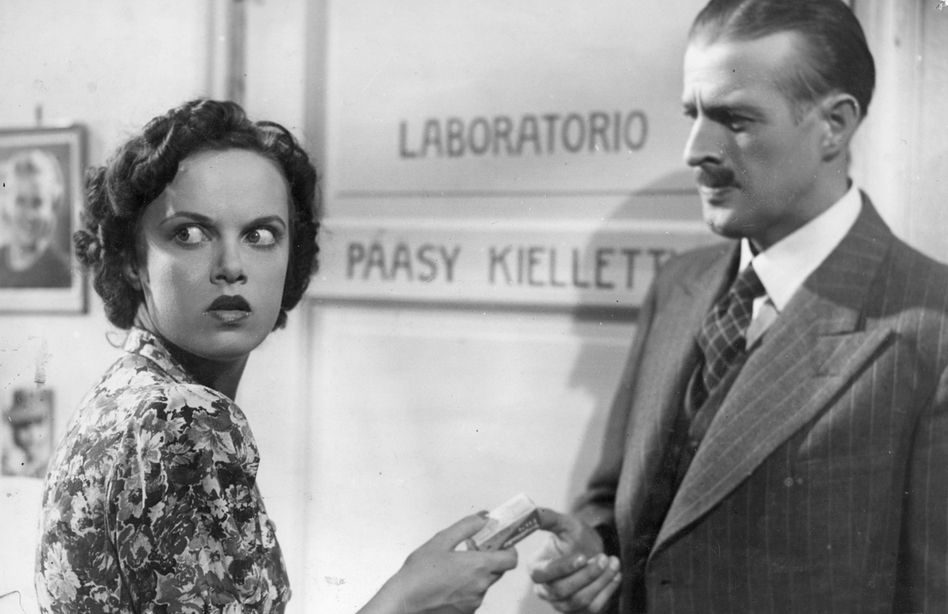
Tanja Bulkova (Eija Karapää) arrives in Finland on a fake British passport, and reports to Mr Rosenberg (Ensio Jouko), a spy-master who operates out of a Helsinki photo shop. Her path crosses repeatedly with Erkki Kari (Joel Asikainen), a newspaper reporter chasing down leads concerning a murder and an arson attempt at the Finnish Wood Export Company. Now calling herself Toini, Tanja is working as a secretary to the industrialist Rautavuori (Arvi Tuomi), from which position she hopes to acquire money, blackmail influence, and access to more factories for her associates to bomb. Unfortunately for her, it doesn’t take long for Erkki to realise that she is the same “English Lady” he took a shine to on the train from Turku, now operating under a different name and with a different hair colour.
There was a new kid in town in January 1943, with the sudden arrival on the scene of Fenno-Filmi, an upstart studio to compete with the big boys. Lauri Pulkilla was a former sound engineer and Theodore Luts was an Estonian-born cinematographer, who had worked for both Suomi-Filmi and Suomen Filmiteollisuus in the 1930s. They were soon joined by Yrjö Norta, another refugee from the majors who had to pay “protection money” to his employers to free him from his existing contract.
Fenno-Filmi had hoped to come up with a stirring war movie for their first production, but were kept waiting for weeks while their application to shoot near the front line sat, unopened, on the desk of Gustaf Mannerheim, who had other things on his mind. Eventually, they pivoted to their second script idea, a spy thriller more ideally suited to low-budget shooting in urban settings. And budgets don’t come much lower than working under austerity conditions in the summer of 1942. Real-world locations saved money on sets, but presented the film-makers with a new logistical problem for moving their equipment around town. They eventually accomplished this with a home-made handcart, which the grips had to wheel manually from street to street to set up each shot.
But what a story. Eija Karapää has a part that most actresses would dream of, or possibly have nightmares about, switching identities and allegiances several times in the film, transitioning in the course of the film from dastardly enemy spy, to long-lost sister, Finnish patriot, double agent and love interest! Meanwhile, a script written with input from a real-world counter-espionage operative shines a light on petty propaganda coups and nuisance operations – many of the espionage and sabotage jobs we see Tanja’s associates carrying out are relatively simple monkey-wrenching, seemingly in the hope that enough spanners thrown into the works of wartime Finland will accumulate to have an adverse effect on national morale and performance.
Salainen Ase was by no means the first film of its kind in Finland – we’ve already seen similar materials on show in The Last Guest (1941) and The Dead Man Falls in Love (1942). But with a cast and crew eager to make their mark, it is a breath of fresh air in this chronological trawl through Finnish cinema history, complete with arty compositions, dastardly deeds and daring, and some wonderful scene-stealers like Liisa Tuomi (previously seen as the lead in The Silver Betrothal Anniversary), who lights up the screen with her flirtatious, sassy scenes as “Olly”, the brisk and cheeky lab assistant at Rosenberg’s photo studio.
If there is anything that hobbles this film with the weight of Finnish cinema tradition, it’s a plot that somehow makes the steely enemy spy also the long-lost sister of one of the heroes, and a narrative arc that has her switching sides and turning on her own people. But the press of the time (and me, right now) were happy to forgive that in the light of the film’s many other redeeming features. Its archive review coverage is full of words like fast-paced, cinematic, fresh, new, action-packed and captivating. “The Secret Weapon does not shine with star names,” wrote the critic for Uusi Suomi, “but it is all the more pleasant to get to know the new faces and to note that there are discoveries among them who probably still have a lot of work to do on the big screen.”
Nobody knew, at the time, that this first movie for Fenno-Filmi would also be its best received. Although the company would go on to make seventeen other movies, none of them would quite capture the shock of all these new faces and new ideas, which surely must have given Suomi-Filmi and Suomen Filmiteollisuus a bit of a wake-up call. The company would be back that October with Mascot (1943) and a month later with another spy thriller, Shadows Over the Isthmus (1943). I can only imagine the panic at the Big Two, where producers had spent many years happily waving through rural melodramas and prim romances. Surely there was at least one meeting about it? Surely the next year’s slate of Finnish movies would be new and exciting…? Right…?
Jonathan Clements is the author of A Short History of Finland. He is watching all the Finnish films so you don’t have to.
The latest issue of the Journal of Anime and Manga Studies reprints some of the papers from this summer’s Lancaster University symposium on “Transnational Perspectives on Anime”, including my speech on anime in the People’s Republic. I don’t think I’ve ever seen a journal move so fast — sometimes you wait years, but JAMS have really kicked it out.
——–
The history of anime in China is a roller-coaster ride of diplomatic boondoggles, under-the-radar industries, unsanctioned releases and censorship scandals. Jonathan Clements investigates the fluctuating fortunes of Japanese animation in China, not only in terms of its reception among audiences, but of its hidden impact in the production sector, the politics of its distribution and exhibition, and the effect of recent government backlashes and clampdowns as the People’s Republic seeks animation autarky.
Singapore once grew riches from gambier, nutmeg and rubber – yet today, not a trace remains. Lost Plantations reveals a Singapore few remember – when gambier, nutmeg and rubber covered the land, and fortunes rose on the backs of bold planters and backbreaking labour.
—
I make a couple of sneaky audio cameos in this new documentary from Sitting In Pictures, my former employers on Route Awakening.
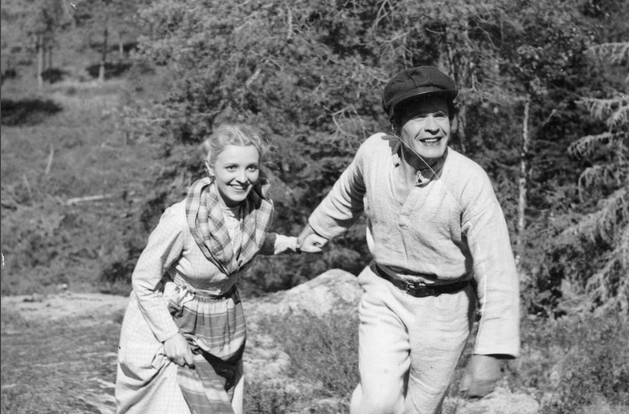
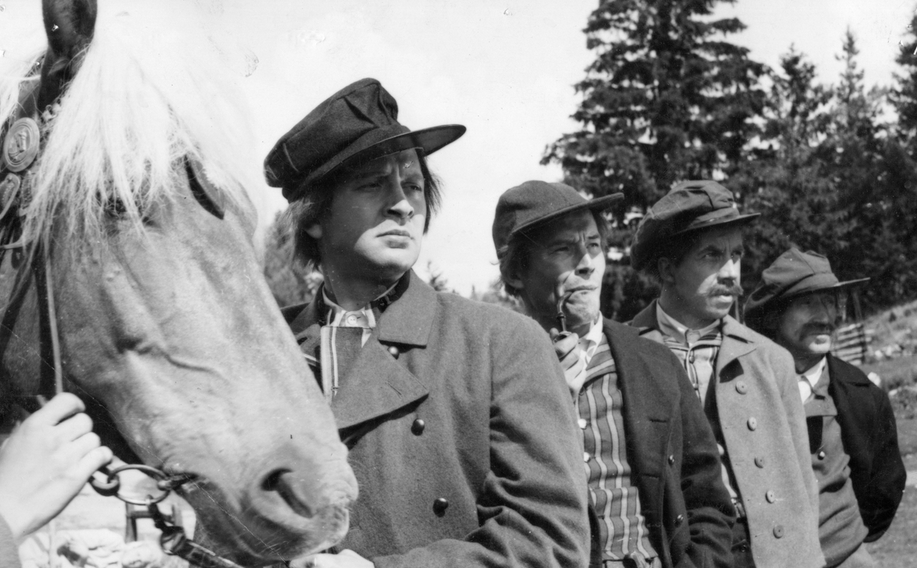
In rural Finland in the 1860s, the young, handsome Taavetti (Eino Kaipainen) takes over his father’s struggling croft, and hopes someday to get himself a wife. He is too proud to sell his prize mare to the landlord Isoaho (Toppo Elonperä) but manages to win the hand of Maija (Ansa Ikonen), a spunky girl from the neighbouring farm at Töyrylä. It later transpires that local boy Jussi (Pentti Viljainen) had rather hoped to marry Maija himself, and regards himself of having been swindled out of a deal that was all but done.
Taavetti and Maija are made an offer they can’t refuse by the logger Veijonen (Veikko Linna), who is prepared to hand them a tidy sum for the lumber from 500 trees on their land. But Veijonen has dastardly deeds in mind, and persuades the locals who witnessed their deal to lie about it. Taavetti ends up getting into a fight over it, and must suffer through a court case in which he is accused of assault and of welching on a deal he never made. He is sentenced to 26 months in prison, where he unexpectedly bonds with his cellmate Antti (Edvin Laine), and becomes an accomplished carpenter.
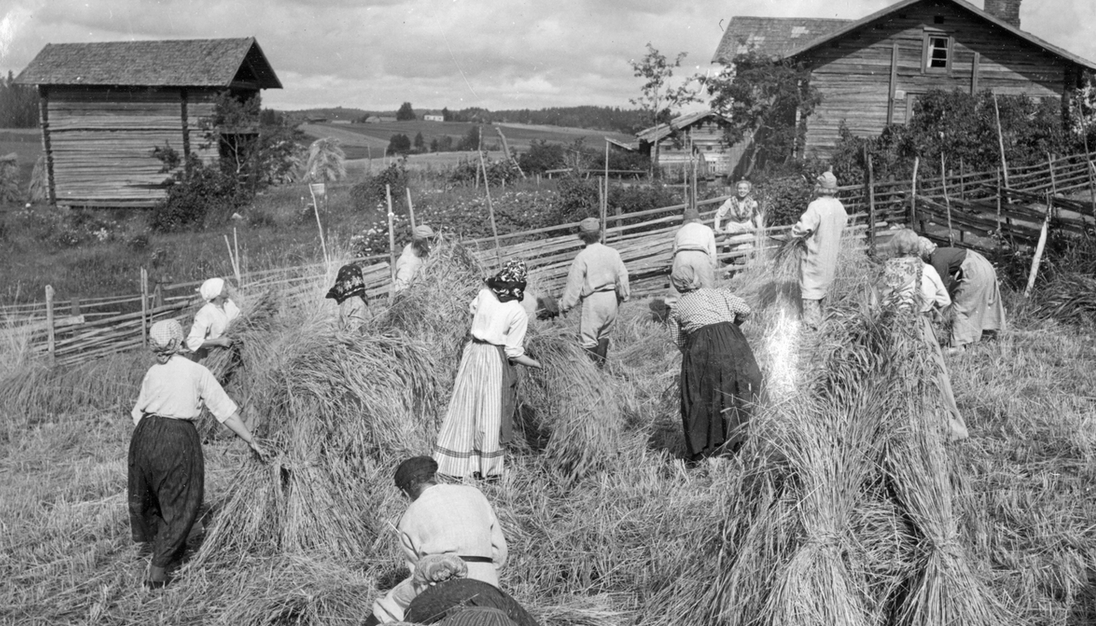
Maija, who is predictably pregnant, struggles with getting in the crops at Rantasuo farm, grateful for the customary shared-harvesting tradition of talkoot, when everybody pitches in. Old Isoaho comes to her rescue when money-lenders try to foreclose on the farm, and when Taavetti finally comes home, having paid his unwarranted debt to society, all is well, the farm is flourishing, Isoaho has got the mare’s foal in payment for his help, and Maija and the child are waiting for him on the porch.
“Finally,” blurted the advertising copy for this adaptation of Urho Karhumäki’s 1923 novel, “we have a film with a strong Finnish spirit, a story of a Finnish forest ranger’s giant battle against vicious nature and malicious mankind – a struggle for which the prize is his own land and his own wife!” There are, after all, many ways to distract a nation at war. Rantasuon raatajat was released on the same day as its studio stablemate That’s How It is, Boys! (1942), but whereas Eino Ketola’s barrack-room comedy made light of war and duty, Toivo Särkkä’s script wades knee-deep into the fertile swamp of nationalism and local pride.
Shatneresque leading man Eino Kaipainen has been here many times before, most notably in Finland, Our Dear Native Land (1940). Here, he is reunited with co-star Ansa Ikonen from The King of Poetry and the Migratory Bird (1940), in an uplifting tale of struggle against adversity that pretends it is about tough times in the Great Famine, but is really all about maintaining a stiff upper lip in the midst of the Continuation War. As Taavetti, Kaipainen is a wronged hero who nevertheless wins through, a model citizen and even a model prisoner, who emerges from incarceration with a new skill and a best friend. Unlike the milksops of many a romantic comedy, he has an unreconstructed masculinity that is unafraid to fight for what he believes in, and a touching faith in the support of his loved ones.
I am particularly taken with the depiction of the talkoot in this film, because such communal mucking-in remains a feature of Finnish life today. They might have all come off the farms two generations ago, but twice yearly in my old street, all the plumbers and computer programmers, schoolteachers and car salesmen still got together to clear the leaves and trim the bushes until we’d filled a massive skip and could sit back for a coffee and a sausage. I once spent a happy day with my neighbour, Seppo, industriously digging a hole, until we were informed by another neighbour that we were supposed to be filling it in. Seppo made time pass, for him at least, by ceaselessly recounting everything he could remember about the songs of Whitney Houston, which was not a lot, because he couldn’t speak English, and I was obliged to translate each one for him. But I digress.
The press loved the film, describing it as a glorious “Christmas gift” from the Suomen Filmiteollisuus studio, and gracefully ignoring the fact that it often played like an obvious retread of Eino Kaipainen’s break-out picture, The Ostrobothnians (1936). At 42, in fact, Kaipainen was now a little long in the tooth to be playing a youthful lead, but he was not yet ready to slip into character work, and his public was not ready to let him. Ansa Ikonen, at 29, can just about get away with it, but the real-world Kaipainen was old enough to be his character’s Dad, and such cragginess can be distracting in a story that is supposedly about two youngsters barely out of their teens.
As ever, it was Paula Talaskivi in the Helsingin Sanomat who was best able to assess the film in both the context of its time, and its likely reception to posterity. “The plot itself,” she wrote, “with its relatively few turns of events and one-dimensional action, is not an exemplary film subject, but as a beautiful, devout film depiction of Finnish rural life, it defends its place well.” In its way, it is just as much as prisoner of its era as That’s How It Is, Boys!, fraught with what now seems to be overblown histrionics and intense passion, which are far more understandable in the context of film-makers and audiences who were facing the beginning of a fifth year of war and uncertainty.
Jonathan Clements is the author of A Short History of Finland. He is watching all the Finnish films so you don’t have to.
The other Jonathan Clements, who died on Sunday of complications from lung cancer, served for twenty years as a finance journalist for the Wall Street Journal. In semi-retirement he embarked upon a new career as an internet guru, dispensing monetary advice through his website Humble Dollar.
People often used to get us mixed up. We were both authors, both born in Britain, although he had lived in America for so long that his speech had drifted into a sort-of midlantic twang. But whereas I wrote about Japanese cartoons and Chinese history, he wrote about finances, investments and pensions.
Invariably, we would get each other’s mail. I would get occasional requests to address learned audiences about handy hacks for the American tax system, something about which I knew absolutely nothing. He would get asked to show up at a convention where people dressed as anime elves. Only last year, I found him angrily haranguing my US publicists for Rebel Island, after they had hash-tagged him in on the release of a history of Taiwan, to which he reacted like an old man exhorting them to get off his lawn. The publishers of my Empress Wu audio book also refused to admit that he hadn’t written it in their publicity tweets, leading him to spend much of his final months on Twitter shouting at them: “For the umpteenth time, you’ve got the wrong Jonathan Clements.”
In the strangest cross-Clements incident, I was left flustered and speechless when an elegant Japanese lady tried to pick me up in a Swiss cinema, assuming that I was him. “That never happens to the real me,” he fumed.
At one point in our correspondence, we embarked on a wacky quest to find the other other Jonathan Clements, a now-deceased author of 1960s erotica, whose Keep it Kinky and Dearest Mummy, I’ve Been Ravaged have repeatedly skewed our online search results, and continue to do so. Finance Jonathan would eventually publish the results on his own website as a page called Imposters, listing people like me who claimed to be him. Back when I had a website of my own, I had a reciprocal imposters page, decrying him for impersonating me.
In May 2024, he was eating his breakfast when he suddenly felt off-balance. A trip to the doctors for what was presumed to be a routine issue, turned out to be serious. He had lung cancer, which had already metastasised to his brain.
“What would you do if you were told you might have just 12 months to live?” he wrote. “For me, this isn’t a theoretical question.” He immediately began retooling his website, shutting down its donations function, and setting up as a slower, but more targeted series of updates about estate management and legacy planning.
“Cancer is obviously not what I want,” he told me. “But I have the privilege of knowing roughly how much time I have left, and that time offers the chance to get a few last things done that are important to me.”
His final months saw some of his best ever work – a detailed account of estate planning and “sadmin”, by a man making the very best of the knowledge that his days were numbered. He got married to his long-term partner, and wrote a thoughtful piece about how long he would have to stay alive for his bride to benefit from his pension. He left behind deeply useful columns about how to make life easier for the people we leave behind. This included obituarists, for whom he wrote a detailed farewell elegy on his website, leaving an account of his life as he would like it to be remembered.
““I want to take the time that I have left,” he said, “and squeeze as much happiness out of those days as possible.”
Jonathan Clements is the author of A Brief History of China. Other Jonathan Clementses are available.
Over at Kenny Smith’s Power of Three podcast, “the most lovely journalist in Britain” interviews me about Kingmaker, my unproduced script for the short-lived Richard E. Grant animated Doctor Who series, which was eventually put into production as the Paul McGann story Immortal Beloved for Big Finish.
I show up 40 minutes in, after Kenny has marshalled a bunch of readers to perform the original pitch, something that I haven’t even thought about for nearly twenty years. The interview takes in the story’s incredibly convoluted path to release, beginning with two men in a Brixton pub, trying to come up with a Strontium Dog script for Sanjeev Bhaskar, which somehow turns into Ian McNiece threatening to kill people, and Elspet Gray channelling my grandmother.










 The Official Schoolgirl Milky Crisis Blog