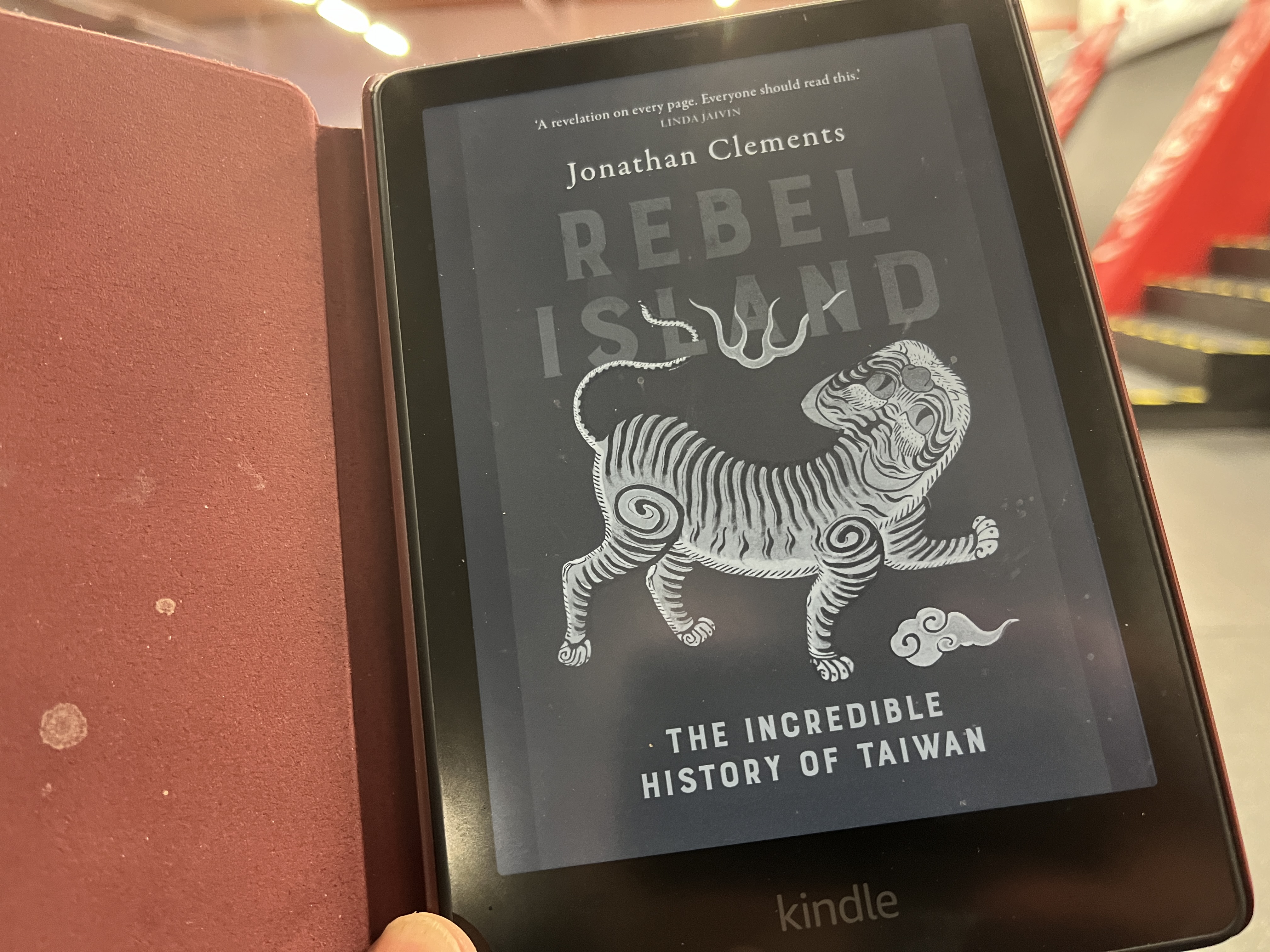
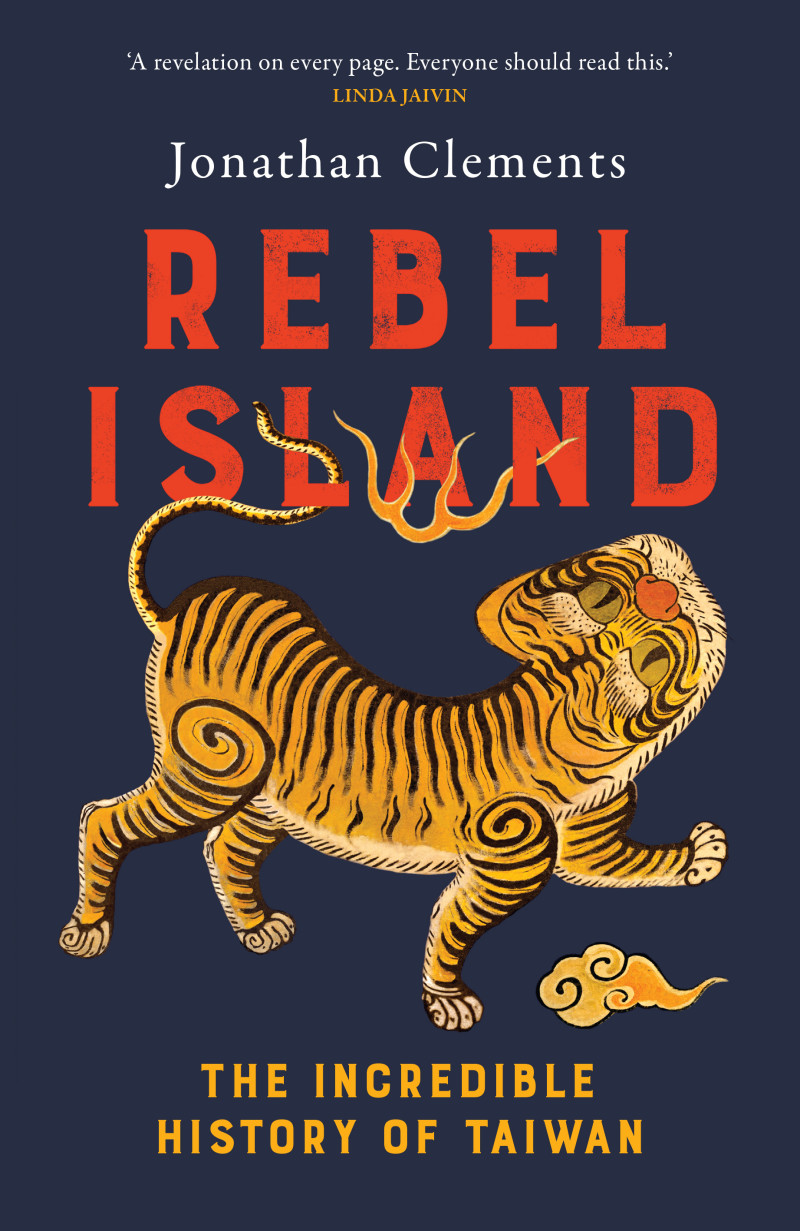
Over at the Irish Times (paywalled), Oliver Farry calls my book Rebel Island “…a brisk narrative… related with style and brio… a splendid portrait of the layers of identity and resistance in what is no less a settler society than the United States, Australia or Argentina.”
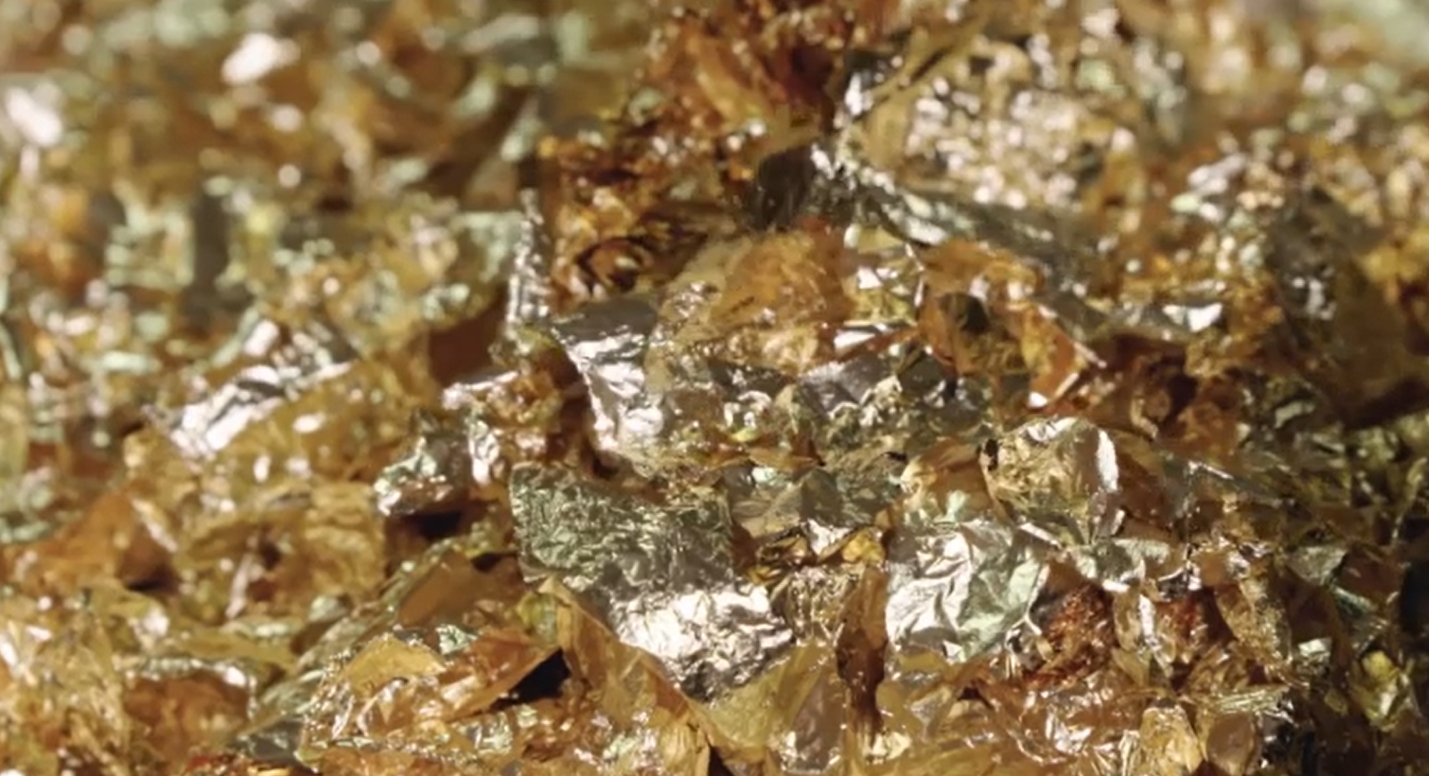
The gold ingots are roughly the size of iPhones, and the company gets them from the Nanjing bank. Then then put them through a machine that hammers them, repeatedly, until one gold ingot is nine metres long and as thin as a sheet of paper. Then they hammer them again, and again and again. And when they are small CD-sized roundels of thin gold, they cut them into squares and cut the squares into smaller squares, and then they hammer them again, until they are literally as thin as a cicada’s wings.
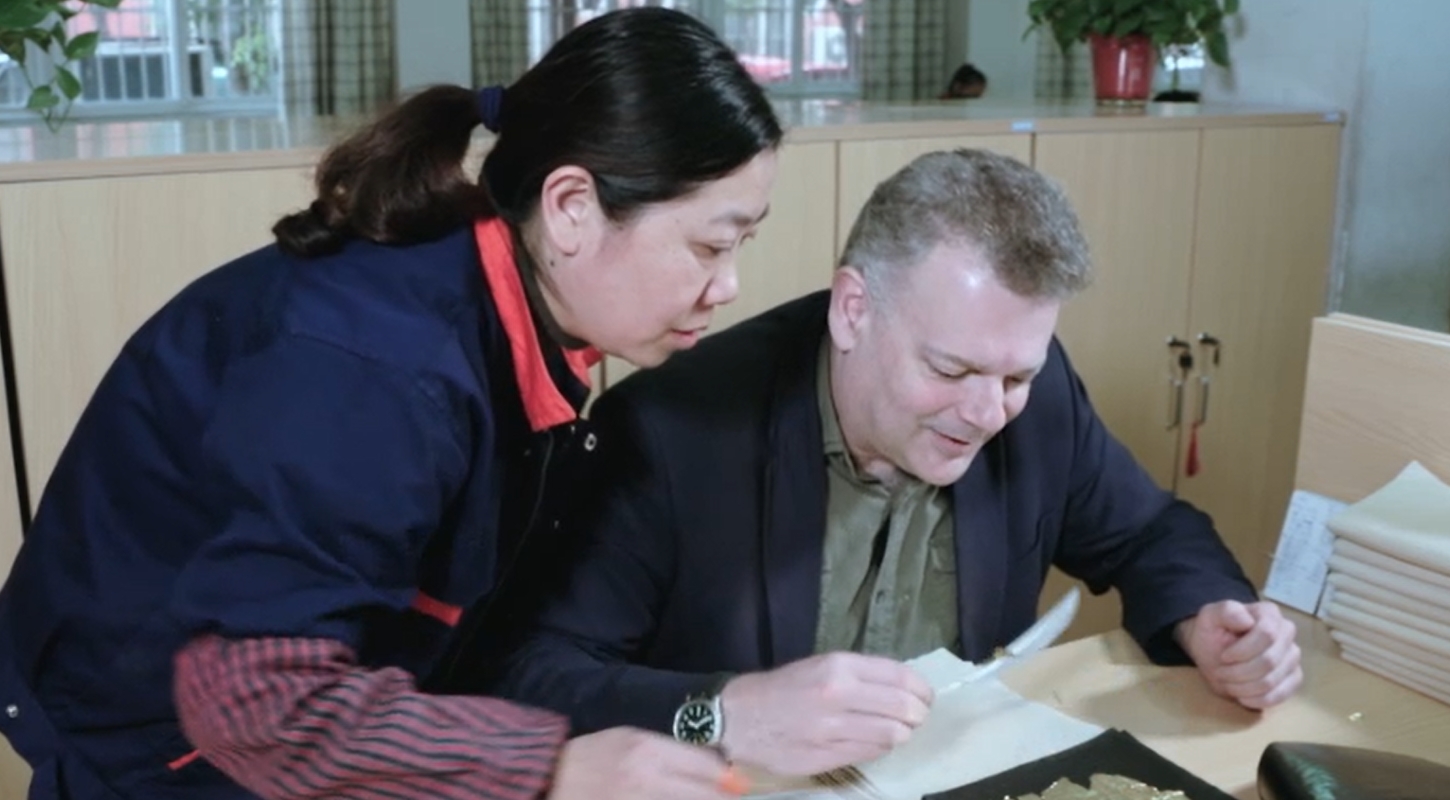
Miss Li is part of the process. She has to take a roundel of beaten gold, tease it gently off the paper with a goose feather, and then move it onto a new piece of paper, blowing gently on it to flatten it and move it around.
“It is very difficult training,” she says. “You have to pass exam where you blow middle candle out of three, without blowing out other two. Training for blow job took me eighteen months.”
I nod sagely.
Nanjing used to be called Jinling (Gold Hill), so the gold foil company based here couldn’t resist calling itself Jinling. Mr Ge, who is the sixth generation of his family to oversee Miss Li and her colleagues, takes me around the factory, and we have fun banging on an anvil with hammers, which was the way things were done before they automated so many elements of the process.
He takes me to the showroom, which is a Trumpish extravaganza of gold leaf on everything – gold leaf pianos, gold leaf Buddhas and other tat. Waiting for us there, unexpectedly, is his foreign liaison Viviana, a young Italian artist of some renown, who works with gold leaf in some of her paintings, and has ended up as a part-time greeter for foreign bigwigs who come to talk about painting their toilets gold, or something.
Viviana is very easy on the eye, and I think she would make a striking interviewee as both artist and employee, a welcome change from our usual run of middle-aged men, but the director immediately assumes that she works in another capacity and shouts at me to “stop chatting up the Russian” and to get on my marks ready to interview Mr Ge. He talks for a while about the history of gold leaf in Nanjing, and delicately describes his customers as devout religious believers, and not, say, ghastly billionaires. And that is another day done.
This isn’t the first time I have boggled the people at History Hack with tales of Taiwan. You can also hear my archived interviews about The Pirate King of Taiwan and the historical importance of two obscure shipwrecks.
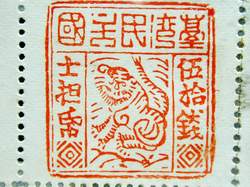
The picture shown is one of the hastily created Republic of Formosa postage stamps: “whether it represents a dragon or a squirrel or a landscape or anything else or even which is the right way up we have not been able to discover,” according to the Stanley Gibbons Monthly Journal. It is, of course, the tiger of the republican flag.
In 886, during the last days of the Tang dynasty, the poet Wei Zhuang dropped in on Nanjing, once a great capital, now a forgotten backwater, its walls in disrepair, and its canals choked with weeds. He wrote:
Drizzle on the river, and the reeds grow high / The Six Dynasties are but a dream, and the birds call in the sky / Cares not the willow by the walls / Ten leagues around in the smoky mist.
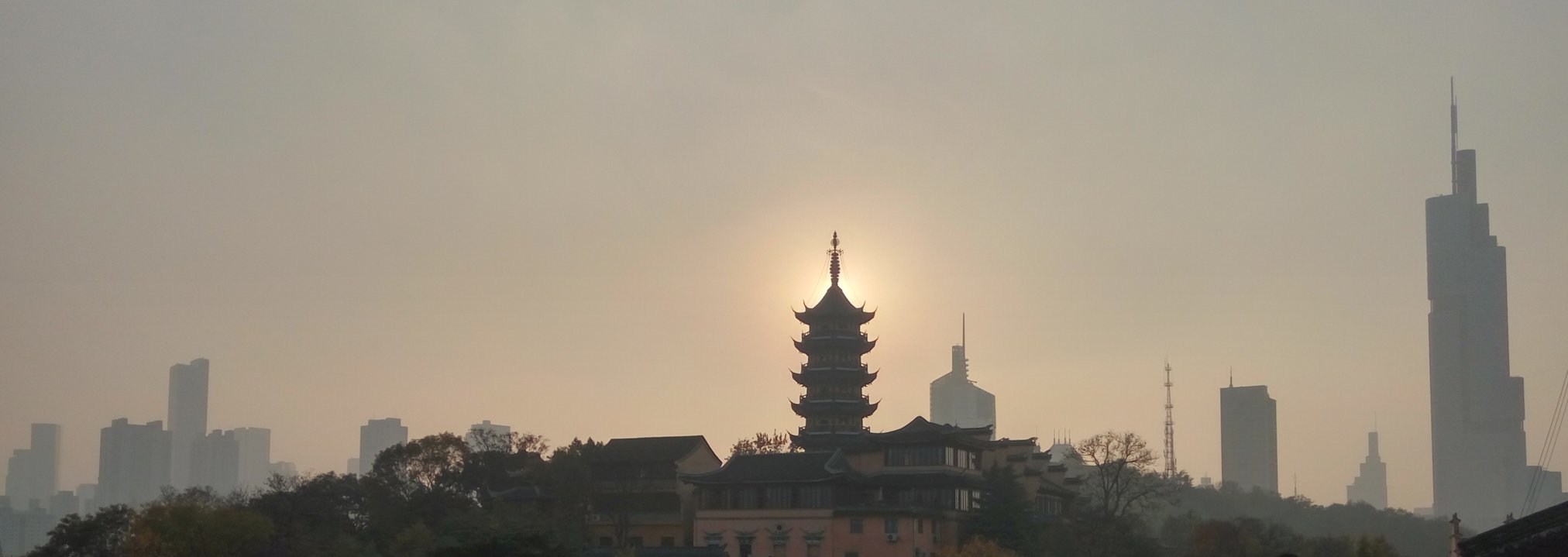
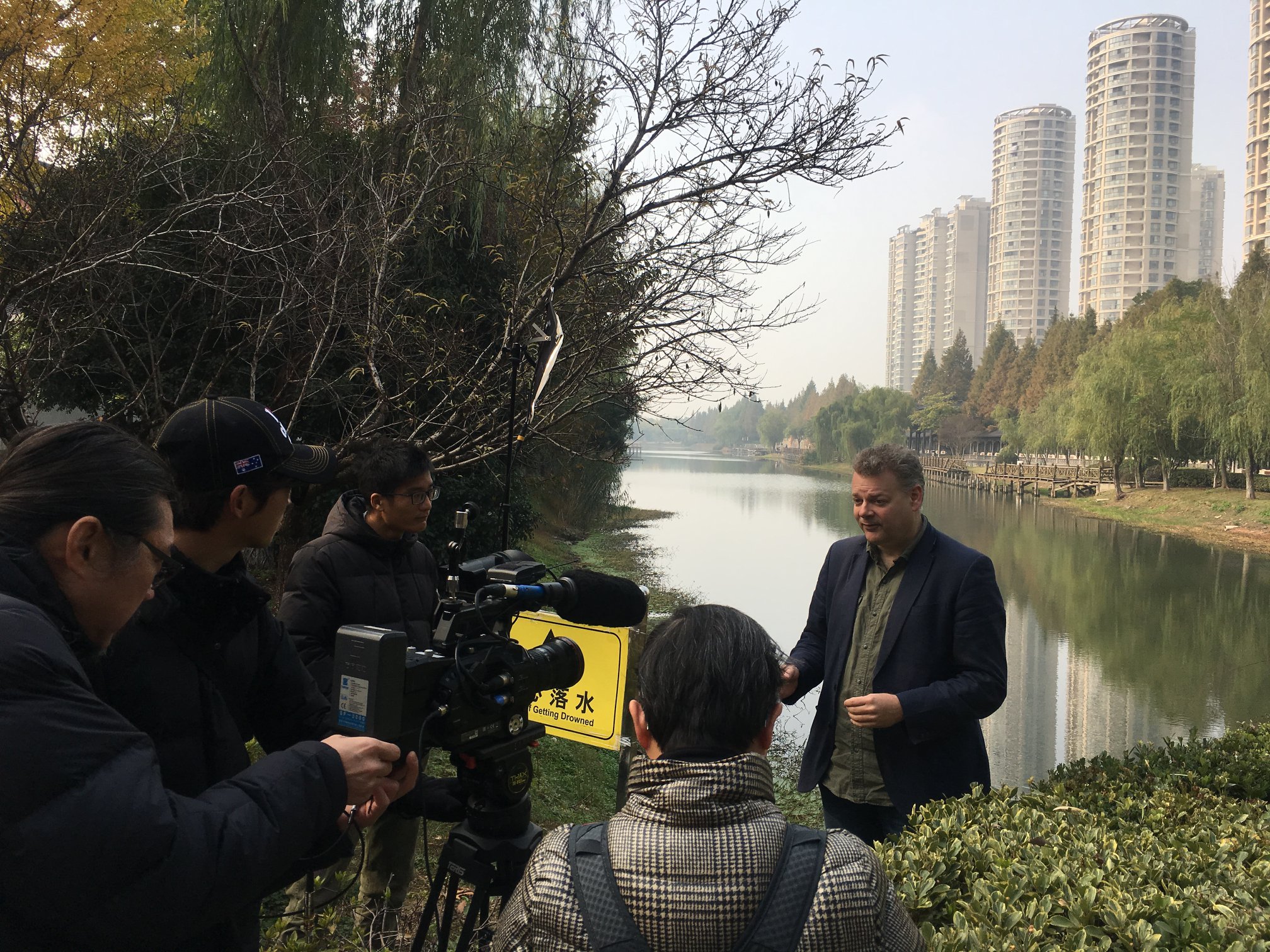
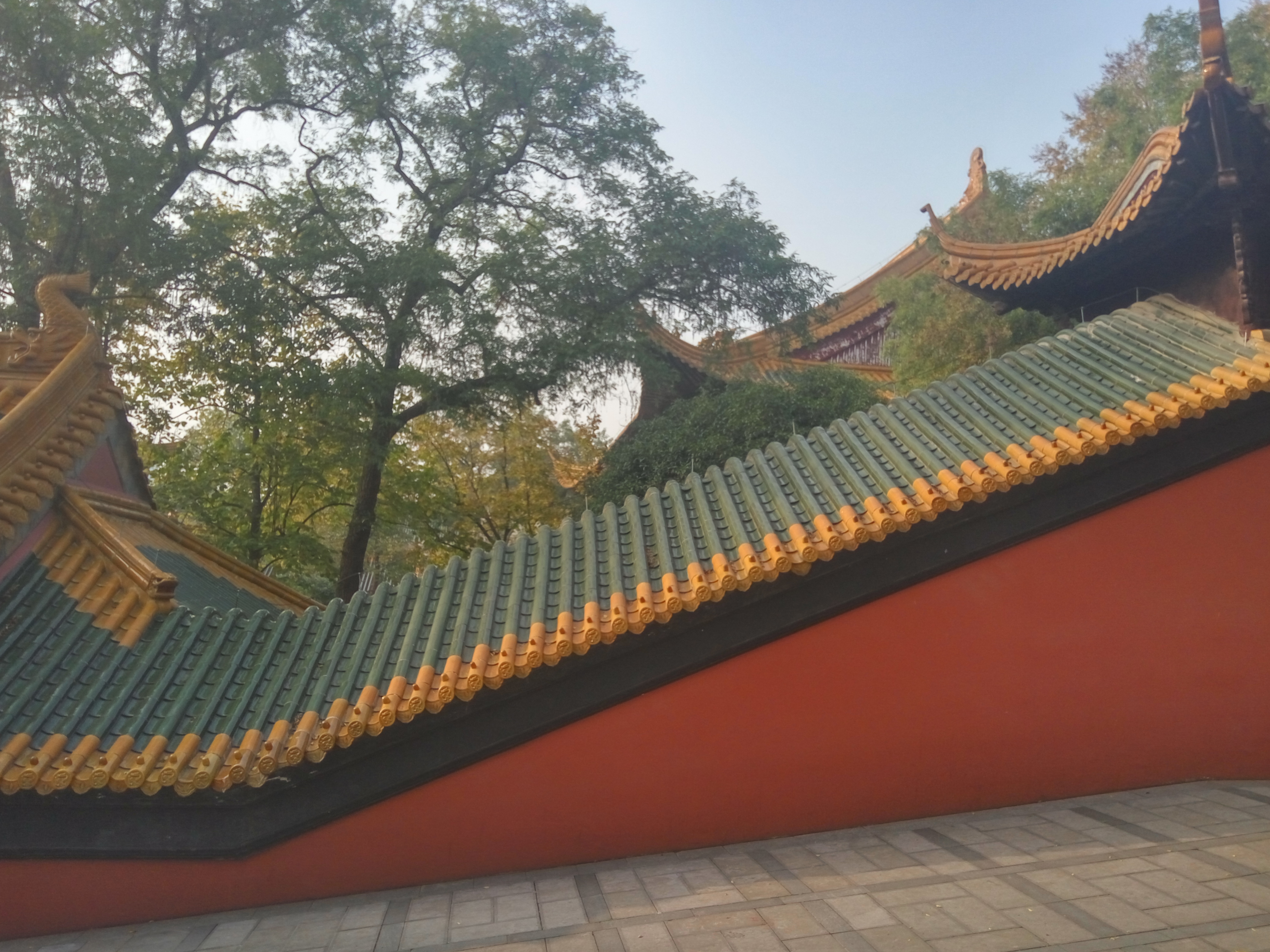
Nanjing has improved a lot in the sun. The remains of the walls still bracket a sizeable chunk of Xuanwu Lake, just to the north of the old city, and are dotted with Ming- and Qing-era cannons poking from the crenellations. The park is nice with autumn trees and the Jiming temple looms above outside the city walls. So we ought to get some nice shots that make Nanjing look less like an urban jungle in the rain, and more like a pleasant bit of park life. The Propaganda Bureau should be pleased, as well they should be when the woman who mans the gate to the city walls insists on taking a photograph of us filming the sign so she can send it to her boss.
We put on the most ridiculous charade of setting up a shot by the sign, with me not bothering to take off my sunglasses, Mickey the sound man not bothering to boom, and Eric the cameraman not even starting the camera.
“Are we rolling?” calls the director.
“Nope!” says Eric, with a thumbs-up.
“Action!”
“I’m standing here next to a sign,” I say earnestly, “while a woman in a mustard yellow puffa jacket films me with her phone.”
“And cut!”
Michelle rushes in with her clapperboard and brightly says: “Waste of Time Fake Thing, Take One!”
We lurk around the walls for a while, which are picturesque but thick with flies, and then head off to the Longjiang Shipyard Ruins.
The layout will be familiar to anyone who has been to London Docklands. Three long strips of water, each the size of an airport runway, run in parallel through what is now billed as a park. But this park was the site of the Ming-era shipyards where the Treasure Fleet was built, and from where it set sail, down the Yangtze and as far as Africa. The lakes are all that remains of docks four, five and six. One, two and three, of similar size, are buried somewhere under the nearby housing estate.
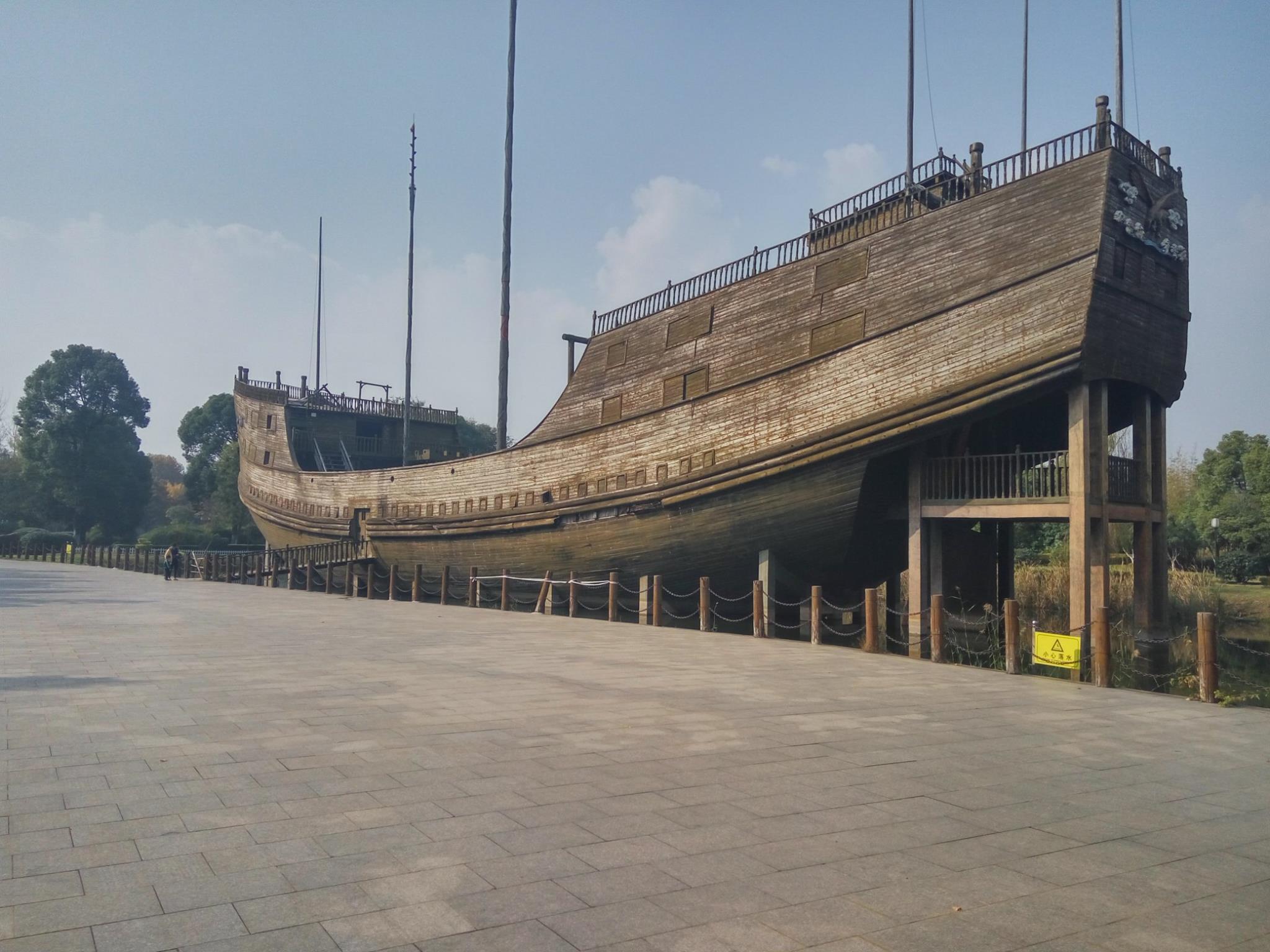
Everybody knows the story of Zheng He, or at least thinks they know: the boy captured at the fall of Yuan-era Yunnan, castrated and shipped off to Beijing aged ten as a slave to the Yongle Emperor. Originally named Ma, short for Mohammed, for he was a Muslim, he was renamed Zheng in honour of his spirited defence of the Zhengcunba reservoir during the dastardly Yongle’s grab for power. Eventually put in charge of the Treasure Fleet, he set sail for the south and the west in 1405 on the first of what would become seven voyages, designed to tell all the natives in far-flung kingdoms just how awesome China was. When he came home, he turned up with a giraffe, so everybody was happy. Just for kicks, I pace out the rudder in the museum, which is 14 metres long, with a flappy bit that comprises the bottom six metres. The people from Propaganda, ever willing to say no to everything, have told us that we can film in the dockyards but that we can’t film the replica ship at one end of it, because it might be moved by the time our film broadcasts. Or it might not.
Suspicious, I pace out the length of the ship and find it to be 73 metres – a perfectly reasonable size for a Chinese trading galleon, but nothing like the aircraft-carrier sized behemoths claimed by some of the world’s more breathless popular historians. The shipyards are very long indeed, but even the artists’ impressions in the nearby museum show several ships being built at once in any single dock. They were not, and never were intended to hold single giant galleons. If they were, there would not have been enough turning space to get them out of the gate and into the Qinhuai River to sail down to the Yangtze and out to sea.
Christopher Harding in The Telegraph is first off the blocks with a newspaper review of my new book, Rebel Island: The Incredible History of Taiwan, calling it “a compelling portrait of a perennially fragmented place.” Article here (paywalled).
On 8 February 1644, the first day of the Chinese New Year, the ministers of the Emperor of Lofty Omens woke before dawn and journeyed through the streets of Beijing. At the break of day, in keeping with tradition that stretched back for centuries, they would greet their 33-year-old ruler, whom the gods had selected to reign over the entire world. Then, the assembled throng would welcome in the new year, the 4341st since China’s first, legendary kings, and entreat the gods and ancestors to bring them good fortune.
The city, however, was quiet. Many of its inhabitants had succumbed to a harsh outbreak of disease the previous year, and according to one diarist, ‘no babies had been born in the city for the previous six months.’ Not all the ministers arrived at the palace on time. Those that did found the gates jammed shut, and were only able to open them with some difficulty. Eventually, they found the Emperor of Lofty Omens, in the Hall of the Central Ultimate. He was weeping.
China was doomed. The Dynasty of Brightness, the Ming, which had ruled the world’s largest nation for centuries, had lost its hold on power. A Confucian scholar would have been scandalised at the low attendance that morning; without a full complement of ministers, how could they perform the necessary ceremonies? But not even the Emperor himself bore a grudge against the absentees, or those who arrived late, wheezing breathless apologies. No amount of prayers and ceremony would change the inevitable, and no sacrifice, however elaborate, would attract the ancestors’ attention from the afterlife.
Besides, the Emperor could not afford it. Ever since the disastrous reign of his father, the nation’s budgets had spiralled wildly out of control. Attempts to curtail imperial luxuries were not enough, fundamental cornerstones of civilization had gone to ruin. The Grand Canal to the south was falling into disrepair, and the postal system had been shut down. Smallpox had wrought havoc among the farming communities, who struggled in vain to tease crops from the earth – though few realised at the time, the middle of the 17th century gripped the world in a mini-ice age. The same weather conditions that were then freezing over the Thames in London were also bringing deadly cold to the lands north of the Great Wall.
The Emperor was fated to fall. While the Great Wall still held, a new enemy struck from within. Starved of food and decimated by disease, a distant inland province rose up in revolt. An army of disaffected soldiers and peasants, began to march on the capital city, led by the rebel Li Zicheng.
Li Zicheng, formerly one of the post-riders who delivered mail along China’s once-great roads, had been obsessed with seizing control of the Empire from his youth. Not even losing an eye in battle dimmed his ardour, as one old prophecy had predicted the Empire would fall to a man with only one eye. His previous dealings with other members of the imperial family had been less than favourable. During his campaigns, he not only killed the Emperor’s uncle the Prince of Fu, but drank his blood, mixing it into his venison broth. Li Zicheng was the leader of a horde of almost 100,000 soldiers, boiling across the country towards Beijing, gathering still greater numbers as peasants flocked to its tax-free banners.
On New Year’s Day, as the Ming Emperor sat sobbing in his palace, Li Zicheng announced his intention to found a new dynasty. The Dynasty of Brightness, he said, had fallen. Long live the Da Shun, the Dynasty of Great Obedience.
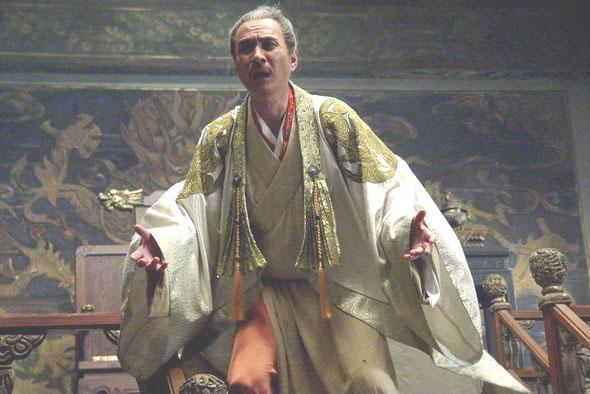
With the usurper Li Zicheng advancing ever closer to Beijing, the Emperor of Lofty Omens knew it was time for drastic measures. Drunk and disoriented, he ordered for the Ming Heir Apparent to be smuggled out of the city. He gathered the rest of his family about him and informed them that it was time to die. Some of his wives and concubines had already committed suicide, and were found hanged or poisoned in their chambers. Others had fled. There was no such option for the immediate family of the Emperor, who attacked his own children with a sword. The 15-year-old Princess Imperial held out her right arm to stay his attack, and the Emperor hacked it off. The maimed girl fled screaming through the halls, leaving a trail of blood. Her younger sisters were not so lucky, and both died where they stood, stabbed by their own father. The Emperor then went to the base of nearby hill, where he wrote a final message in his own blood, before hanging himself as Li Zicheng’s army drew closer. Later writers would claim the Emperor’s last words blamed his ministers and his own ‘small virtue’ for the collapse of the Ming Dynasty, and exhorted the rebels to spare his people from suffering. In fact, the Emperor’s bleeding finger simply traced the plaintive, spidery characters ‘Son of Heaven.’ His body lay undiscovered for three days.
Extract from Coxinga and the Fall of the Ming Dynasty, by Jonathan Clements, available in the UK and US.
After successfully chasing the Mongols out of China, the first emperor of the Ming dynasty, Hongwu, tried to erase his humble, rebellious origins by aspiring to be the perfect ruler. And the perfect emperor needed an ideal capital, so he planned one out in Nanjing. The Nanjing Museum is set in the grounds of his palace, a Forbidden City manqué climbing up the side of a hill with a view of the city walls. And since it’s Monday and the museum is closed to the public, we have it to ourselves except for the fidgeting security guards, and a man from the propaganda office, who is putting a brave face on the fact that he is incredibly bored.
Nanjing’s history goes back to the Stone Age, although the museum concentrates on those moments in Chinese history when it was a capital. When the Han dynasty fell in 220 AD, China spent 350 years in a state of disunity, and Zhuge Liang, a ministerial adviser to one of the upstart kingdoms, recommended Nanjing as the ideal location for capital. It had, he said, mountains around it like a crouching tiger and a coiling dragon, and the river Yangtze acted as a natural moat. When northern China fell to barbarian invaders, the nomads couldn’t make it south of the Yangtze, turning Nanjing into a bastion of old culture and a guardian of Chinese heritage.
I have to do pieces to camera in front of the museum’s various displays – Nanjing has been a sort of capital of China for several cumulative centuries, but for most of those times, it was in one of the squib dynasties of the Dark Ages, when it was only really the capital not of an empire, but of a glorified kingdom in the lower Yangtze area. When even educated foreigners are unlikely to be able to name half a dozen major Chinese dynasties, it is tough to run through the likes of the Liu Song, the Chen and the Southern Qi, none of which lasted for more than a few decades, but all of which were centred on Nanjing, quite probably the greatest city in the world at the time. I pick a giant stone pixiu, a chimera-like mythological beast from the squib emperors’ tombs, as a means of pointing out that they achieved some big things and had an enduring culture, even if the family at the top switched around a few times.
I am actually a huge fan of the Six Dynasties — I love it as one of those neglected periods in Chinese histories, and I am a sad enough Six Dynasties nerd that I could indeed be found on the day of the release of the Cambridge History of China: Six Dynasties, waiting outside the Cambridge University Press bookshop for it to open. Good job, too, because they only had one copy in stock of their new £115 monster, so I got in there ahead of the rush.
We point the camera at ceramic, open-mouthed rhinos, made as bespoke piss-pots for Six Dynasties emperors, as well as fragments of Nanjing’s famous Porcelain Tower, a diorama of the old Yuecheng (Fortress of the Viet) built on the future site of Nanjing by the king of Wu to watch over the conquered 5th century BC kingdom of Yue. The security guards lurk glumly, ordered to be on their feet whenever we are around, and hence forced to be on their feet all day.
A bunch of them sit around in their office smoking fags, leading to the fantastically Chinese moment when their closed circuit TV monitors show our director lighting up behind the toilets in the park, and they rush out to tell her that the whole facility is Non-Smoking. Except, apparently, their office, which has so much smoke billowing out of it that you would be forgiven for thinking it was on fire.
The curator Wu Tian starts off a little timid and unsure of himself. But we get him to show us some of his favourite pieces in the museum, and he starts talking with true passion and excitement about truly weird items. One is a bit of road with ruts worn by four hundred years of ox-carts. Another looks like a mini bedpan, but turns out to be a Six Dynasties iron for smoothing clothes flat. Another looks like half a toilet seat on legs, but is instead a sort of arm rest for people on divans in a culture that has yet to invent the chair.
“I suppose not,” I wonder aloud, “because after all, the chair is a Song-dynasty innovation.”
Mr Wu stands bolt upright, as if poked with a cattle prod. Not for the first time on this shoot, the fact that I am not only listening, but can say something relevant in Chinese makes his eyes stick out on stalks, and suddenly he is twice as animated and excited. The interview goes swimmingly well, since he has worked out that I am not some fat white sock puppet, but an actual historian who knows his Han from his Ming. So he chats excitedly about Dark Age hairstyles and roof tiles, and saves the best till last.
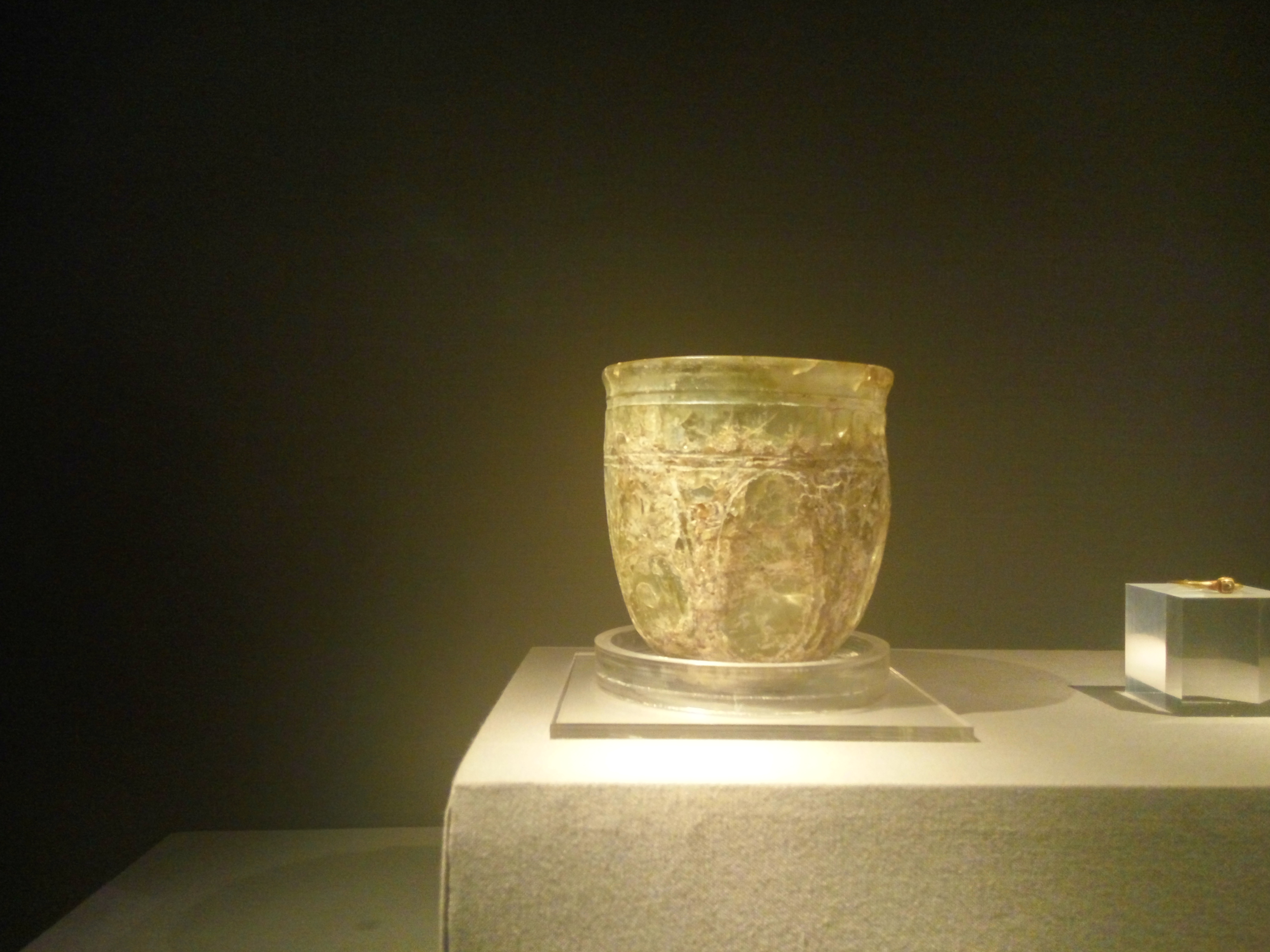
“Now this, he says, “is my favourite. We found it smashed into a hundred pieces in a Nanjing grave, and we put it back together. It’s a glass cup, from a time when China didn’t have any glass blowers. We think it came from the Eastern Roman Empire, by sea, and ended up in Guangzhou, from where it made its way north to Nanjing as some sort of curio to impress visitors. The grave was a wealthy merchant’s, but this isn’t the only Roman glass we’ve found in Nanjing. It’s actually the twelfth.”
Camera A on the interviewee, B-roll on the interviewer, me interjecting with actual questions that make it clear we are not some bored school party fubbing with our phones, but a bunch of people who have come to Nanjing specifically to talk about the Six Dynasties, the squib dynasties that everybody usually ignores. Mr Wu is very pleased, and thanks us profusely for actually knowing what he is talking about. I get the feeling it’s a rare occurrence.
“A revelation on every page. Everyone should read this.” – Linda Jaivin, author of The Shortest History of China
“Rich with fascinating details, Jonathan Clements’ Rebel Island is an engaging introduction to the complicated and astonishing history of Taiwan.” – Shawna Yang Ryan, author of Green Island
“Taiwan has become a stresspoint of global geopolitics, and Jonathan Clements has done the world a favour with his indispensable account of its complex history. This illuminating and endlessly fascinating book can’t help but change the way we see the Taiwanese people and what they have built.” – Clive Hamilton, author of Hidden Hand
“Rebel Island narrates the long arc of Taiwan’s history in vivid prose and with admirable sensitivity to contemporary views regarding the island’s politically charged past. Clements provides an even-handed treatment of controversies old and new, while engaging readers with revealing anecdotes and his trademark wit.” – Paul D. Barclay, author of Kondo the Barbarian
Once dismissed by the Kangxi Emperor as nothing but a ‘ball of mud’, Taiwan has a modern GDP larger than that of Sweden, in a land area smaller than Indiana. It is the last surviving enclave of the Republic of China, a lost colony of Japan, and claimed by Beijing as a rogue province — merely the latest chapters in its long history as a refuge for pirates, rebels, settlers, and outcasts.
Jonathan Clements examines the unique conditions of Taiwan’s archaeology and indigenous history, and its days as a Dutch and Spanish trading post. He delves into its periods as an independent kingdom, Chinese province, and short-lived republic, and the transformations wrought by 50 years as part of the Japanese Empire. He examines the traumatic effects of its role as a lifeboat in 1949 for two million refugees from Communism, and the conflicts emerging after the suspension of four decades of martial law, as its people debate issues of self-determination, independence, and home rule.
On 15th May 2022, a sixty-eight-year-old man turned up late for a church service at the Geneva Presbyterian Church in Laguna Woods, California, and sat through the ceremony conspicuously reading a newspaper at the back. When the service ended, he chained and glued the doors shut. He then pulled out a gun and started shooting into the crowd of aging Taiwanese people, in the middle of a church luncheon. One man, Dr John Cheng, heroically charged the shooter, but was shot dead. Having run out of bullets, the gunman paused to reload, at which point pastor Billy Chang hit him with a chair. Several other attendees then piled onto him, holding him down while he was restrained with an extension cord.
The incident was swiftly over, with one death and five people with gunshot wounds. The shooter was subsequently indicted on 98 federal charges, including murder, attempted murder with intent, weapons charges, transporting explosives (he had brought a bunch of Molotov cocktails) and hate crime.
Media reporting on the incident was confused and multi-faceted. Some outlets justifiably termed it a “hate crime” – an act by an individual who had singled out a group of victims specifically on the basis of their ethnicity or beliefs. But the shooter was himself a “Taiwanese” man, David Chou – born in Taiwan to parents who were refugees from the mainland. He had a master’s degree from an American university, and a former career as a translator. In later life, he had suddenly become an outspoken critic of “Taiwanese people”, referring not to his own kind, who were simply born there, but specifically to those who rejected the notion of themselves as “Chinese”. Earlier that year in Las Vegas, he had unfurled a banner calling for “ERADICATION OF PRO-INDEPENDENCE DEMONS.” Before embarking upon his shooting spree in Orange County, he had posted a manifesto to a Chinese-language newspaper, titled Diary of the Independence-Slaying Angel.
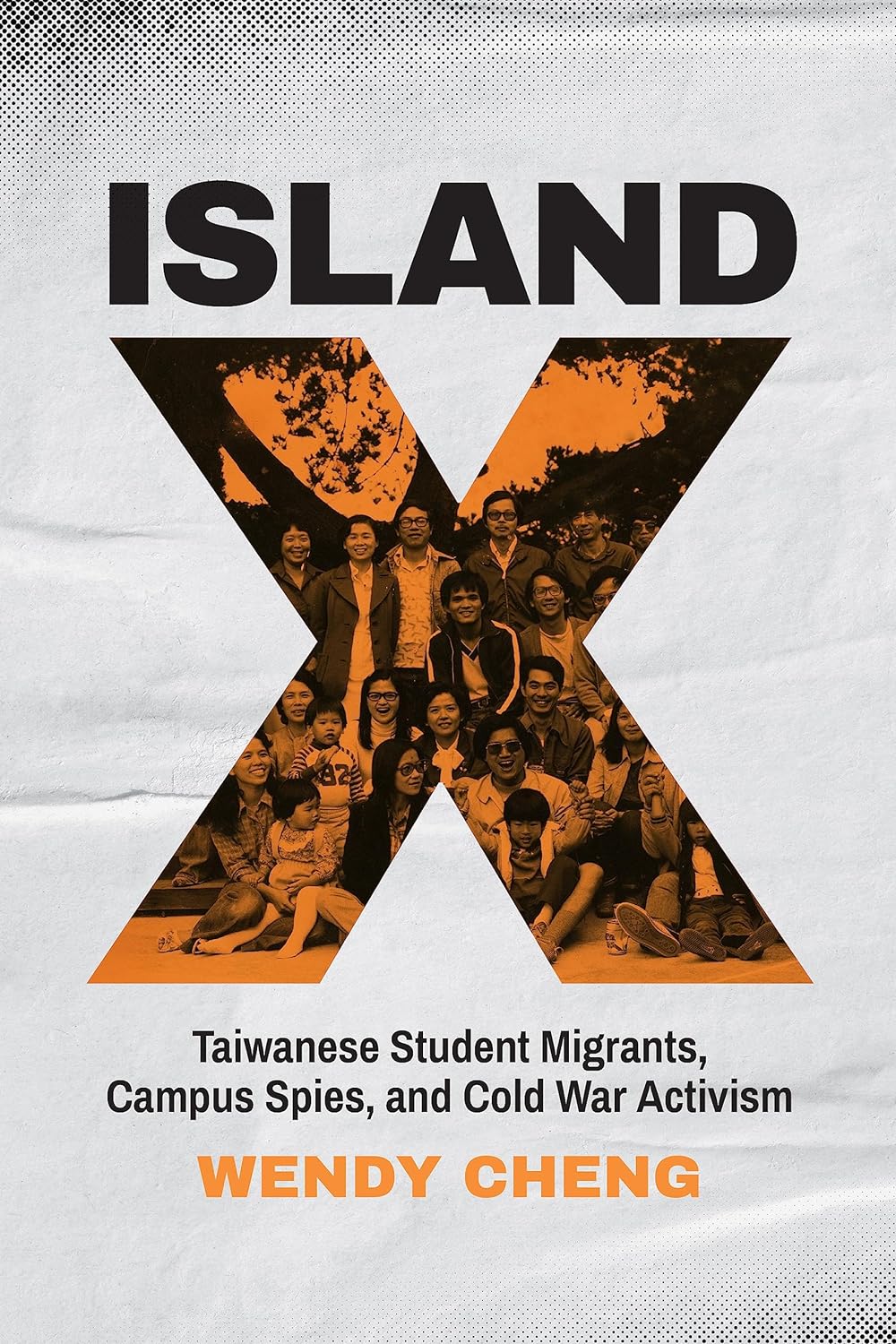
The incident was a shocking example of the way that foreign politics can suddenly manifest overseas, the playing out of decades of East Asian history in what first appears to be yet another crazy guy with a gun on the American news. Chou was, indeed, yet another crazy guy with a gun – but saw himself as the tip of the spear for a struggle that has played out in Taiwan for the last seventy years. As Wendy Cheng argues in her book Island X, it was also nothing new. Since the 1950s, America has been a crucible and a cradle for Taiwanese politics, and a battleground between its factions.
The name “Island X” derives from the codename given to Taiwan in the wartime training programme run by George Kerr, preparing a group of Allied officers for the island’s invasion and takeover. Cheng employs it in a broader sense, discussing the way in which the Nationalist government on Taiwan was so beholden to America that its very education system fatefully funnelled its best students towards the American university system. “English was taught beginning in junior high,” she writes, “and students were taught to ‘specialise in skills needed in the American job market’.”
A 1949 report by the US National Security Council suggested that the “indigenous population has a strong sense of regional autonomy… The Formosans are anti-Chinese, as well as anti-Japanese, and would welcome independence under the protection of the United States or the UN.” However, it went on to point out that fifty years of suppression under the Japanese, as well as the savage purges of the Nationalist government in the late 1940s, has left any potential independence movement rudderless, leaderless and “politically inarticulate.” Intentionally or otherwise, the United States then spent a generation nurturing not only the future leaders of the Taiwanese establishment, but their future opposition.
It was the hope of the American advisers on Taiwan that sending students back to the States would inculcate them with liberal values and support for the Free West. In some cases, this is what happened. In others, a sojourn in the US exposed Taiwanese scholars not only to life in America, but America’s own political turmoil, and the right of Americans to freely speak up about their misgivings. Like many other political movements both within the US and overseas, they were inspired by the United States’ own origin story – as a revolutionary democracy, taking a stand on broad philosophical issues, and demanding release from the bonds of colonial or imperial rule. As one student put it, it gave her “opportunities [to] actually identify myself as Taiwanese.”
They also became painfully aware that the Nationalist government on Taiwan was entirely buttressed by the United States. “They reached the island aboard American transports,” she quotes George Katsiaficas, “and American arms and subsidies enabled them to stay.” Such observations led activists to question the degree to which Taiwan was anything but an American airstrip in the Cold War.
To describe things in cheekily Maoist terms, America itself was in a state of “permanent revolution”, ready to self-correct and self-criticise, amending its own Constitution to reflect changing attitudes, and with a populace not above taking to the streets to protest about civil rights or the war in Vietnam. Many Taiwanese students were caught up in such protests, what Cheng calls a “contradictory but fantastic thing,” only to discover that their involvement in left-wing activism would lead to their cards being marked back home. Cheng’s own father was one such student, told that there would be no professorial job for him when he returned to Taiwan. Effectively blacklisted, he chose to remain in the United States. Another student observed that it took just six to eight hours’ informed conversation after arriving in America for him to cast aside “twenty-four years of Chinese education,” and to become an ardent supporter of Taiwanese independence.
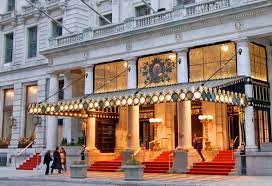
Such activism could take extreme forms on both sides. In 1970, the Taiwan-born PhD student Peter Huang attempted to assassinate Chiang Kai-shek’s son, Chiang Ching-kuo, at the lavish Plaza Hotel in New York. Shoved aside by a bodyguard, he succeeded only in shooting the hotel’s revolving doors, shouting: “LET ME STAND UP LIKE A TAIWANESE!” as he was dragged away.
Cheng’s book chronicles the aftermath of the White Terror on Taiwan, and the undeniable fact that the surveillance and control of Chinese citizens extended far beyond the island itself, under martial law from 1949-87, to the activities of Chinese people abroad, particularly in the United States of America. For if you were a Taiwanese exchange student at an American university in the third quarter of the twentieth century, you were subject to the unwelcome intrusions of a party cadre, not from the Red Book-waving People’s Republic, but from the “free” government of the Republic of China on Taiwan.
These paid informants or “professional students” were the strongmen (and women) of Taiwan’s “Rainbow” project, so named because the word for rainbow, caihong, is also a homonym for “destroy the Reds.” And by “Reds”, they did not merely mean the proportion of students who were taken in by the rhetoric of the PRC – some did indeed embrace the ideals of the mainland regime, even in the midst of the Cultural Revolution – but anyone challenging the one-party rule of the Kuomintang on Taiwan.
In 1971, the American hosts let down their Taiwanese guests in a spectacular fashion, by proposing to hand over the Diaoyu (Senkaku) islands off the coast of Taiwan to Japan. This has famously become one of the few issues that unites both Communist and Republican China, both of which regard the islands as Chinese. Such a betrayal was soon followed by Nixon’s famous visit to China, which set the United States on the path of recognising Beijing, not Taipei, as the rightful government of the country. And it was not merely the Americans who swung towards Beijing – the news propelled a bunch of Taiwanese students in America to give up on Taiwan as well.
Someone participating in the “Protect the Diaoyu Islands” movement, or Bao-Diao turned out to be super-triggering for the Nationalists, who instituted a new “blacker blacklist” that not only barred people from certain jobs or positions in Taiwan, but rendered them stateless. In several case studies, Cheng chronicles the persecution of students on trumped-up charges, their arrests on returning home for having merely participated in a discussion on Taiwanese independence, the removal of their civil rights and the harassment of their families. She also notes a “rash of bombings” in 1979-80 by WUFI, the World United Formosans for Independence, which led to WUFI being added to the State Department’s list of terrorist organisations.
The Taiwanese authorities fought back, also on American soil. In the most infamous incident in 1984, Henry Liu, a naturalised American journalist who had published a biography critical of Chiang Ching-kuo, was murdered in his own driveway in Daly City, California. He was shot by members of the Bamboo Union Triad, who had been working under orders from Taiwanese military intelligence – a fantastic jackpot of dodgy deals, which, as Stephen Solarz noted, amounted to “frightening examples of the long arm of Taiwanese martial law tearing at the fabric of American democracy.”
Cheng’s book is a fascinating exercise in, as she puts it, “locating Taiwanese-Americans in global history”, and reclaiming the lost stories of a generation of activists and students before it fades away and takes it memories with it. One would be forgiven for thinking that the lifting of martial law on Taiwan, and the subsequent swift rise of the Democratic Progressive Party, moved much of the action back to its homeland, but as the murderous act of David Chou demonstrates, there is no “over there” for Americans of Taiwanese origin if they are not safe in their own churches. The tensions in the Taiwan Strait, over whether Taiwan is part of China or a sovereign island, reach far beyond the local, and indeed, still threaten to engulf us all.
Peter Huang’s words as he was dragged out of the Plaza Hotel would become a touchstone of Taiwanese independence activism. Their most conspicuous appearance is in “Supreme Pain for the Tyrant”, by the death metal band Chthonic, which ends with the words “Let me stand up as a Taiwanese” repeated several times, like a mantra of resistance.




 message in his own blood, before hanging himself as Li Zicheng’s army drew closer. Later writers would claim the Emperor’s last words blamed his ministers and his own ‘small virtue’ for the collapse of the Ming Dynasty, and exhorted the rebels to spare his people from suffering. In fact, the Emperor’s bleeding finger simply traced the plaintive, spidery characters ‘Son of Heaven.’ His body lay undiscovered for three days.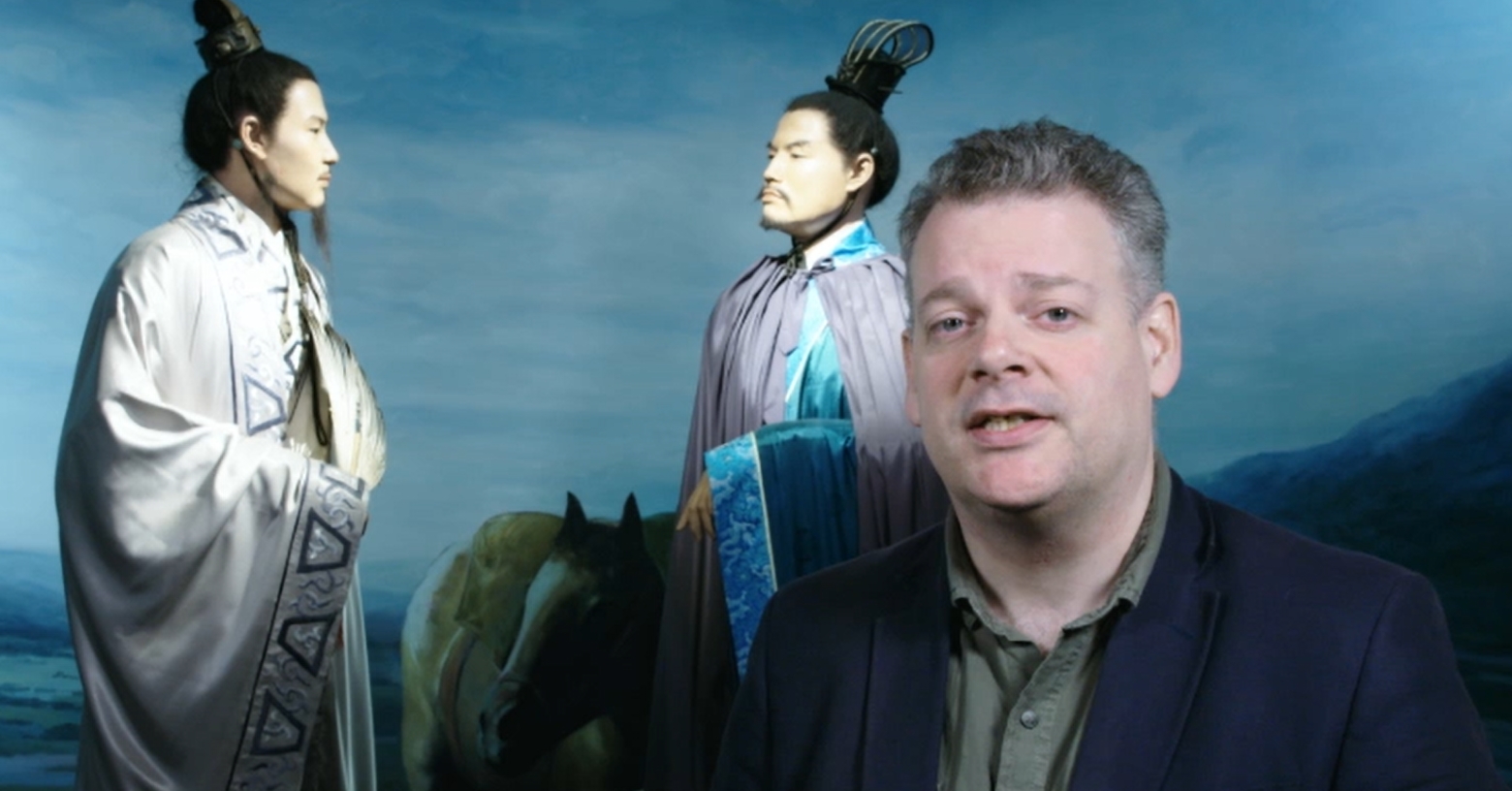



 The Official Schoolgirl Milky Crisis Blog