The Bachelor Patron (1938)

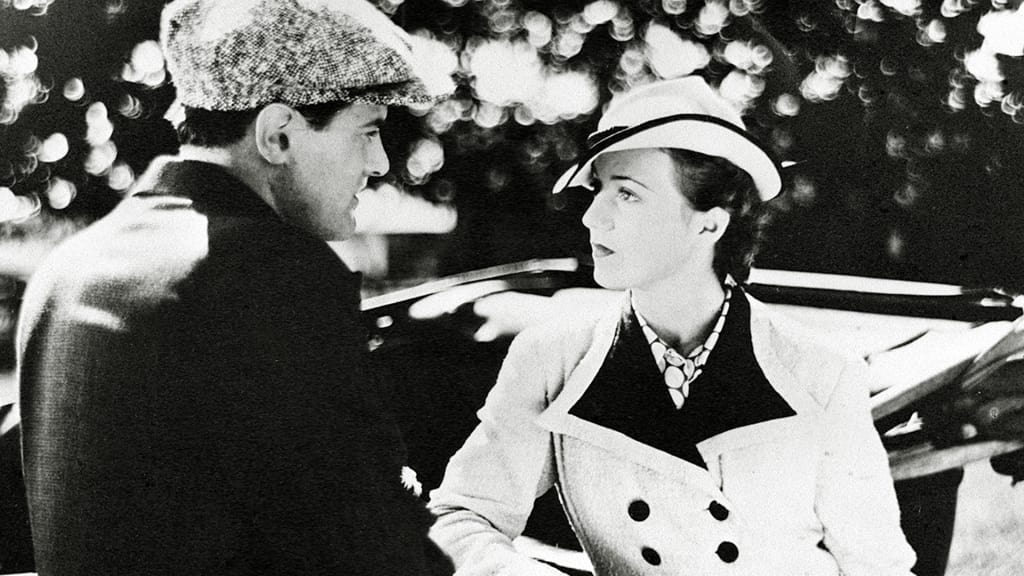
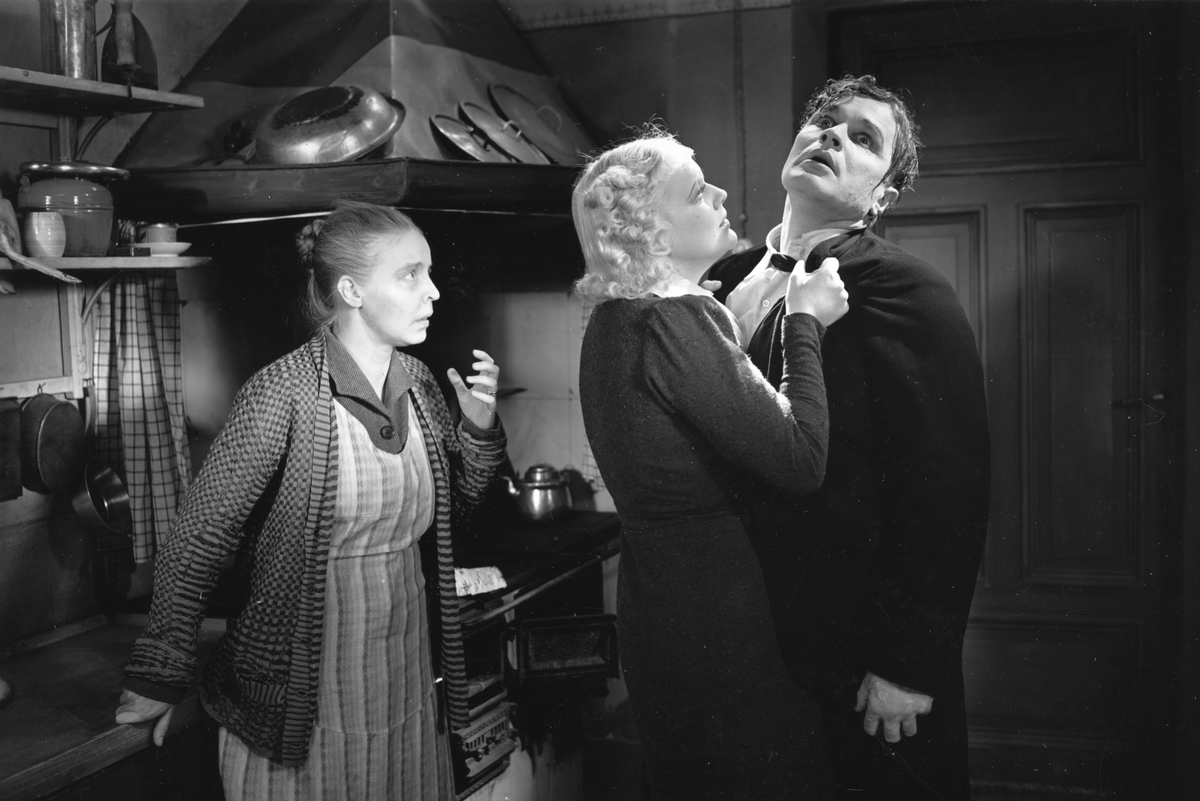
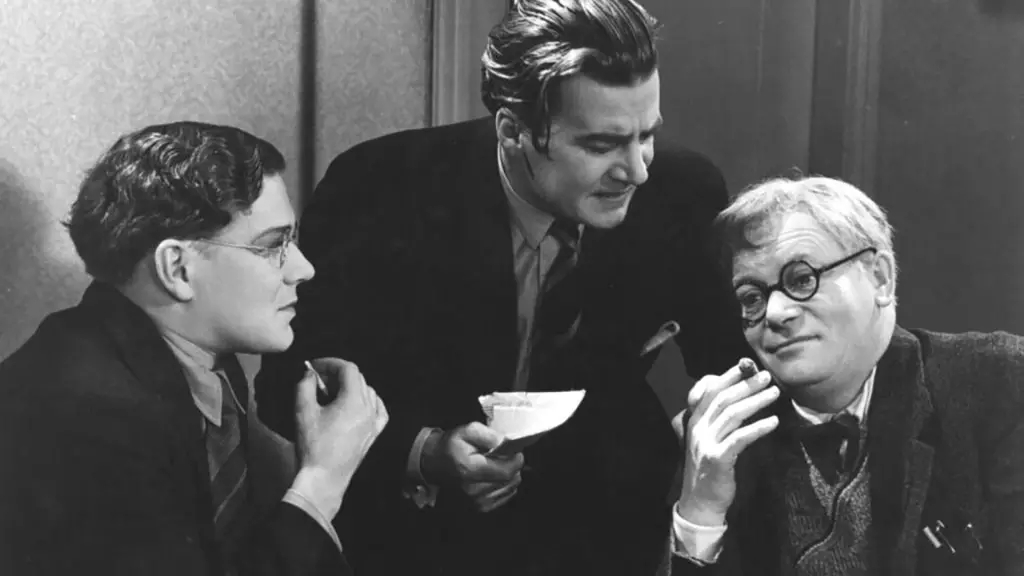
Katariina (Helena Kara), “call me Kati”, is an orphan teenager sent away from Oulu to Helsinki to be raised by Mauri (Tauno Majuri) a friend of her late father’s, appointed as her guardian. I think you can probably imagine what’s going to happen, as do all of Mauri’s friends, who tut in disapproval when he announces that he’s going to get a barely-legal ward. The housekeeper Mrs Simola (Aino Lohikoski) does her best to put a brave face on the arrival of a vivacious young girl in the house of a confirmed bachelor.

Directed by Orvo Saarikivi for Suomi-Filmi, Poikamiesten holhokki was based on a novel, originally set in England, by one “Denys Aston”, which turned out to be a pen-name for the Finnish author Anni Inkeri Relander. In other words, the original was a comedy of manners that turned upon a very British set-up. Etiquette in Finland is a somewhat bipolar issue – much like Mauri and Kati, there is an unspoken stand-off between “Swedish” self-declared urban sophistication, and a homespun, folksy charm born of the Finnish countryside.

In the lead role, Helena Kara is a luminous presence a generation ahead of her time, whose mannerisms and carriage could easily mark out her out as a time traveller from the 1950s. She had, legendarily, been spotted by director Risto Orko when working as an usherette in a Turku cinema in 1937, and appears here, just a year later, with palpable star quality.

“Wotcher, Mauri!” says Kati, blundering into his all-boys salon and heartily shaking everybody’s hand. In a subtle audio touch, she speaks at all times at a volume a couple of notches above everybody else, even supporting characters to whom she is supposedly deferent. She puts her feet up on the furniture and invites Mauri’s doctor friend to have a look at her feet, eagerly accepting a cigarette from a cavalryman. Neither of them are getting what they bargained for, and it’s unclear on their first encounter who has the upper hand – is Kati a breath of fresh air, or a wayward wild-child in need of some discipline? One is reminded, immediately, of the strong woman of Juurakon Hulda, but the emphasis with Kati is more that she is a free spirit. Perhaps unsurprisingly for the first country in Europe to give women the right to vote, Kati is by no means the first female lead in Finnish cinema to represent everything that is modern and progressive.
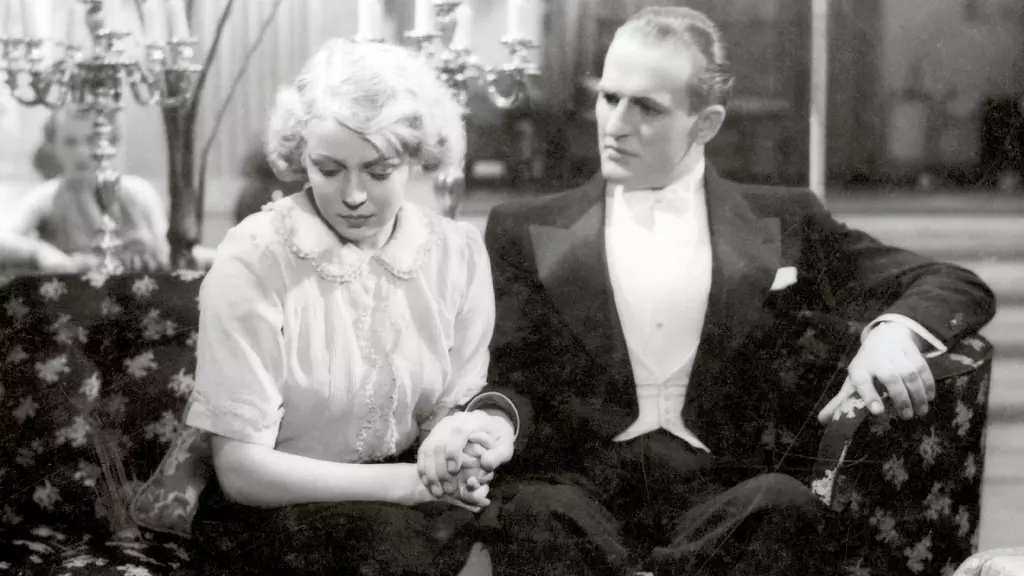
She bounces on the bed, she sings in the shower… it’s hardly smoking crack on the stairs, is it? Mauri tuts and frets about her dangerous ways, but without any real understanding of why he is so morose and snappy, it is difficult to know if he wrestling with problems of his own or just a git. He stuffily suggests that she should take up embroidery or singing, and she giggles that girls her age are more into smoking fags and riding horses. Their encounters become increasingly wearing, as the script demands that Kati repeatedly behave like a pouty ingénue, and Mauri frowns at her like she’s just farted. One is tempted to suggest that Helena Kara’s naturalist verve becomes increasingly trammelled and hesitant the more she is pushed upon to actually act. Meanwhile, the film itself seems unsure how to fill its middle section, bogging down in a long soirée in which Kati (and the audience) must sit fidgeting through two musical numbers, and then packing her off on a bus to get a job in shoe shop, as if even the script writer has grown bored with the previous set-up.

The shoe shop is initially a fascinating glimpse of 1930s Finnish life, lined with anonymous boxes as if the notion of customer choice is still a distant dream. Visitors creep in and speak in hushed tones as if they are in the Church of Footwear.

“I would like some brown shoes,” intones the first customer, as if he is participating in some arcane ritual.

“What size are you?”

“Forty-four.”

Such inadvertent entertainments, however, soon turn just as dreary as Mauri’s distant lounge. Comedy is supposed to derive from the fact that five boxes are hard for a small woman to carry.

With only twenty minutes to go, the film reluctantly gets around to its central romance, with all the insouciance of a surly teen getting out of bed. Jaska (Ossi Elstelä) the chauffeur has bonded with Kati over horse-care, but has been forgotten for half the film. Kullervo Kalske, one of the most impossibly handsome men in Finland, fresh from charming the ladies in the same year’s For the Money, parachutes into the story to wow Kati’s fellow shop-girls as Baron Klaus von Bartel, a wealthy man of the world. He asks Mauri for Kati’s hand, and Mauri is suddenly reluctant to divest himself of the tearaway teen.

With all the enthusiasm of a man ticking the No Junk Mail box on an email subscription, Mauri suddenly confesses that Kati has brought magic into his life and he doesn’t want her to go. It is a truth universally acknowledged, that a single man in possession of a good fortune must be in want of a wife, as someone once snarked.

Damning it with the faintest of praise in Aamulehti, journalist Orvo Kärkinen noted that it “met its most significant requirements.”

Jonathan Clements is the author of An Armchair Traveller’s History of Finland. He is watching every Finnish film ever made, so you don’t have to.

For the Money (1938)

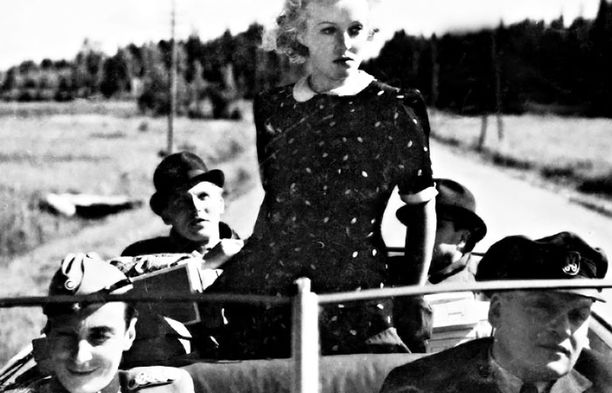
The title of this comedy from Suomi-Filmi is a pun – “For the Marks”, i.e. something along the lines of “One for the Money”, but also “For (Mr) Markka”, the stuffy old bachelor (Uuno Lakso) whose mansion is just about to be invaded by a cast of rude mechanicals. Released in October 1938, and clearly filmed at the height of the Finnish summer, it makes much of the sunshine and sporting opportunities of the Finnish riviera – the opening sequence bathes in the heady life of the Hanko peninsula, all beach balls, water slides, and games of leapfrog. In strangely timeless encounters that would not look out of place 80 years later, the menfolk conspire over how to chat up girls, not that the impossibly handsome Kullervo Kalske, last seen here in The Jaeger’s Bride (1938) needs to do anything more than snap his fingers. While there are several male leads, however, the film belongs almost entirely to the two ladies who variously pursue them or are pursued by them.

Gym teacher Ritva (Irma Seikkula) is looking for her sister Irmeli (Birgit Kronström) in Hanko, because she needs her for a fashion show… no, I don’t know why, either. But Ritva can’t find anywhere to stay, until she is offered a crash-space by Tilda (Aino Lohikoski), the maid at a rich man’s house. In an echo of the confusions of All Kinds of Guests (1936), she is ordered not to let anyone but the owner in, only to find the house besieged by a bunch of unexpected visitors, including the two lounge lizards that her sister Irmeli has met out on the town. If the plot device of random visitors descending on a house seems tired already, I would argue that it is emblematic of the limitations not of Finnish film, but of the Finnish theatre repertoire from which so many Finnish films then derived.

Although Markan Tähden was based on a play script, Hilja Valtonen’s Day of the Heiress (Päivä perijättärenä, 1932), it seems that the play version was never staged. Instead, it forms the latter acts of a movie that begins with vivacious outdoor location scenes, luxuriating in the opportunities presented for comedy business and Finns in swimsuits. It is, in fact, something of a let-down when the film grudgingly gets around to its actual story, tramping off to the real-world location of a Kulosaari mansion (supposedly just off the beach, but actually a hundred miles away in Helsinki, in what is now the embassy district), in order for a bunch of would-be couples to get bogged down in a series of misunderstandings, accidents with soda canisters, mistaken identities and pratfalls.

Comedy, such as it is, is expected to derive from wide-boys trying to scam a posh restaurant, and social climbers attempting to marry into money. Irmeli inveigles a stranger into pretending to be her Dad in order to throw off an unwelcome suitor, only to find that she has inadvertently charmed a man with loads of money. Seikkula, most memorable for her turn as the titular Juurakon Hulda (1937), wanders through each scene in a slight daze, as if the whole thing is beneath her, while Kronström, a multi-talented Swedish-Finn blessed with comic timing and musical skills, shines here in what would become the first of several flapper roles that would make her a wartime star. She certainly lights up every scene she’s in, and that’s before she sits down at the piano and starts belting out songs live.

The Finnish press criticised the film for some “somewhat unnecessary scenes”, although one wonders what that was supposed to mean. Frankly, the entire plot is unnecessary, and regardless of the critical reception at the time, the film’s value in 2020 comes from the wonderful glimpses it offers of Finland in the summer of 1938, before giving way to another dreary farce. As the two wayward sisters, Kronström and Seikkula are also hypnotically watchable when in individual scenes (including Seikkula in a bare-backed bubble-bath moment that was surely testing the bounds of 1930s respectability), but clunkily lacking in rapport when they are together. As the Finnish papers noted at the time, it created an odd situation whereby they were only believable as siblings went they weren’t in the same room.

Jonathan Clements is the author of An Armchair Traveller’s History of Finland

The Heath Cobblers (1938)

Cobbler’s son Esko (Unto Salminen) is excited about his forthcoming wedding to Kreeta (Ester Toivonen), but even as he delivers a monologue to thin air in his father Topias’s forest shack, he is clearly a few logs short of a sauna. Esko is a simpleton, kind-hearted but hapless, and his parents are trying to marry him off quickly before their foster daughter Jaana (Laila Rihte) gets hitched and qualifies for a long-coveted inheritance – I have no idea why the inheritance is contingent on two unrelated people racing to get married, but that’s the least of this film’s problems. Jaana has eyes for Risto (Vilho Ruuskanen, one of the worst actors I have ever seen), and the race is on to get to the church on time.

Originally written in Finnish by Aleksis Kivi, the stage version of Nummisuutarit won a national award in 1865, setting it up as one of the early examples of Finnish entertainment for the Finns, as opposed to art and literature forced on them in Swedish or Russian. I suspect that its pioneering role in Finnish-language drama left local audiences rather more forgiving of its clunky plot, but Toivo Särkkä’s dramatization for Suomen Filmiteollisuus does itself no favours by clinging to the small sets of the stage play without exploiting much of the potential of the camera. Instead, he acknowledges the power of cinema simply by zooming in on the leads’ faces while they declaim their lines. As the money-grabbing parents, Aku Korhonen and Siiri Angerkoski do their best with thin material, but it is difficult to love a “comedy” that derives its humour from the confusions of a retarded man and the lick-spittling greed of a pair of social climbers.

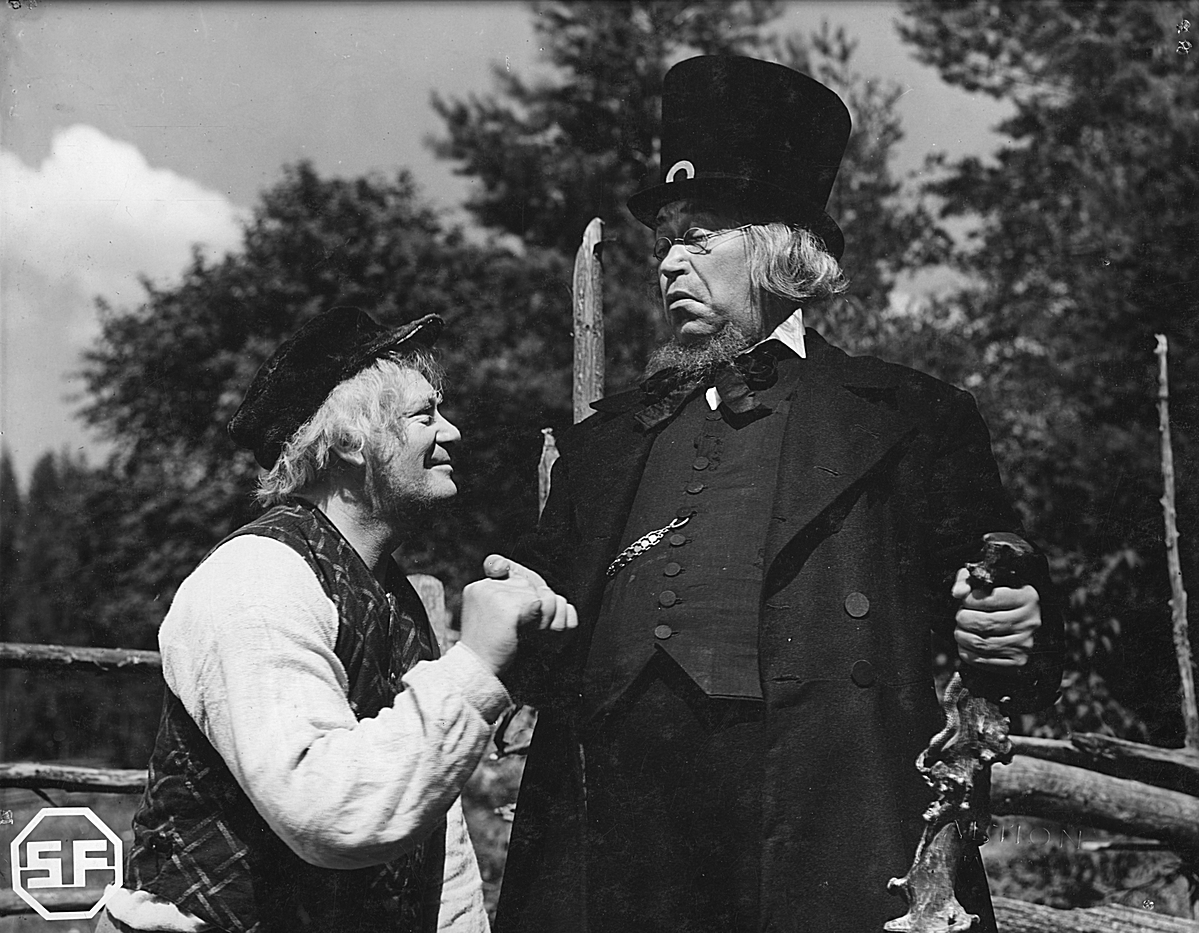
Aku Korhonen, however, steals every scene he is in, with Särkkä’s camera lingering lovingly on the gentle, sincere love he has for his son. Times change, and there was presumably nothing untoward about the characterisation of Esko as some sort of Holy Fool. Drunken old men witter about their plans for trading in young women, while as Septeus the sacristan, Eino Jurkka blunders through all the scenes wearing a ridiculous top hat like the king of the Oompa Lumpas. This, however, is not the most laughable headgear on show, since Ester Toivonen dons a massive spangly crown for her wedding (not to Esko, as it scandalously turns out), transforming herself into a human chandelier for a large chunk of the film.

I presume that the whole thing is supposed to be a celebration of Finnish culture and country life, but the whole thing seems like a ham-fisted school play, not the least when the big wedding scene turns out to be a half-hearted dance sequence to the music of an off-key fiddler.

All’s well, after an interminable series of delays, that ends well, with Jaana’s dad Niko (Yrjö Tuominen) turning out not to have been lost at sea after all, but blundering his way on a drunken journey (everybody is drunk) from Turku to Hämeenlinna. If this were the only artefact of Finnish culture to survive the apocalypse, you would be forgiven for thinking that Finland was a dismal backwater populated by addled old alcoholics and sulky ingénues, where the main topic of interest was who was going to marry whom, or who they really should have been marrying. It is difficult to imagine anyone liking this film, even the people who made it. What a load of cobblers.

Jonathan Clements is the author of An Armchair Traveller’s History of Finland

Master Cheng (2019)

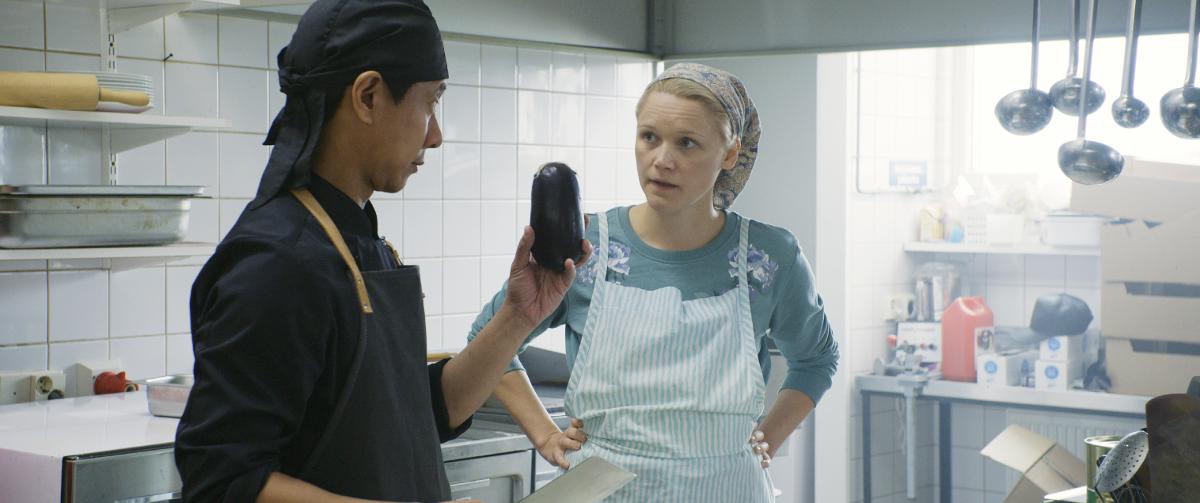
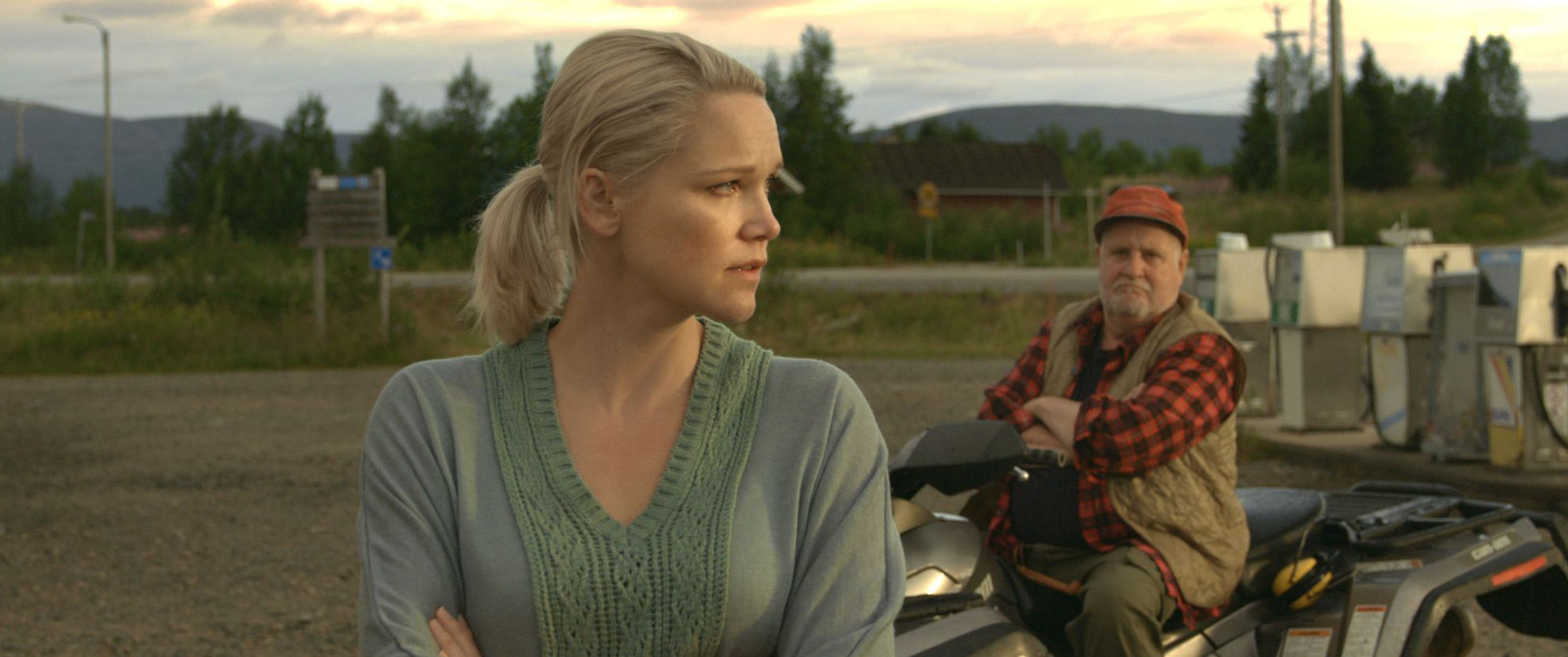
Dour, widowed Shanghai chef Mr Cheng (Chu Pak Hong) comes to the one-horse Lapland town of Pohjanjoki in search of a mysterious person called “Fong Tran”. Marooned 40 kilometres from the nearest hotel, he lodges with Sirkka (Anna-Maija Tuokko), a divorcee trying to make a go of it at her late aunt’s roadside diner. But when a coach party of Chinese tourists is horrified at the mere thought of a Finnish buffet lunch, Cheng comes to the rescue, whipping up Chinese food in Sirkka’s kitchen.

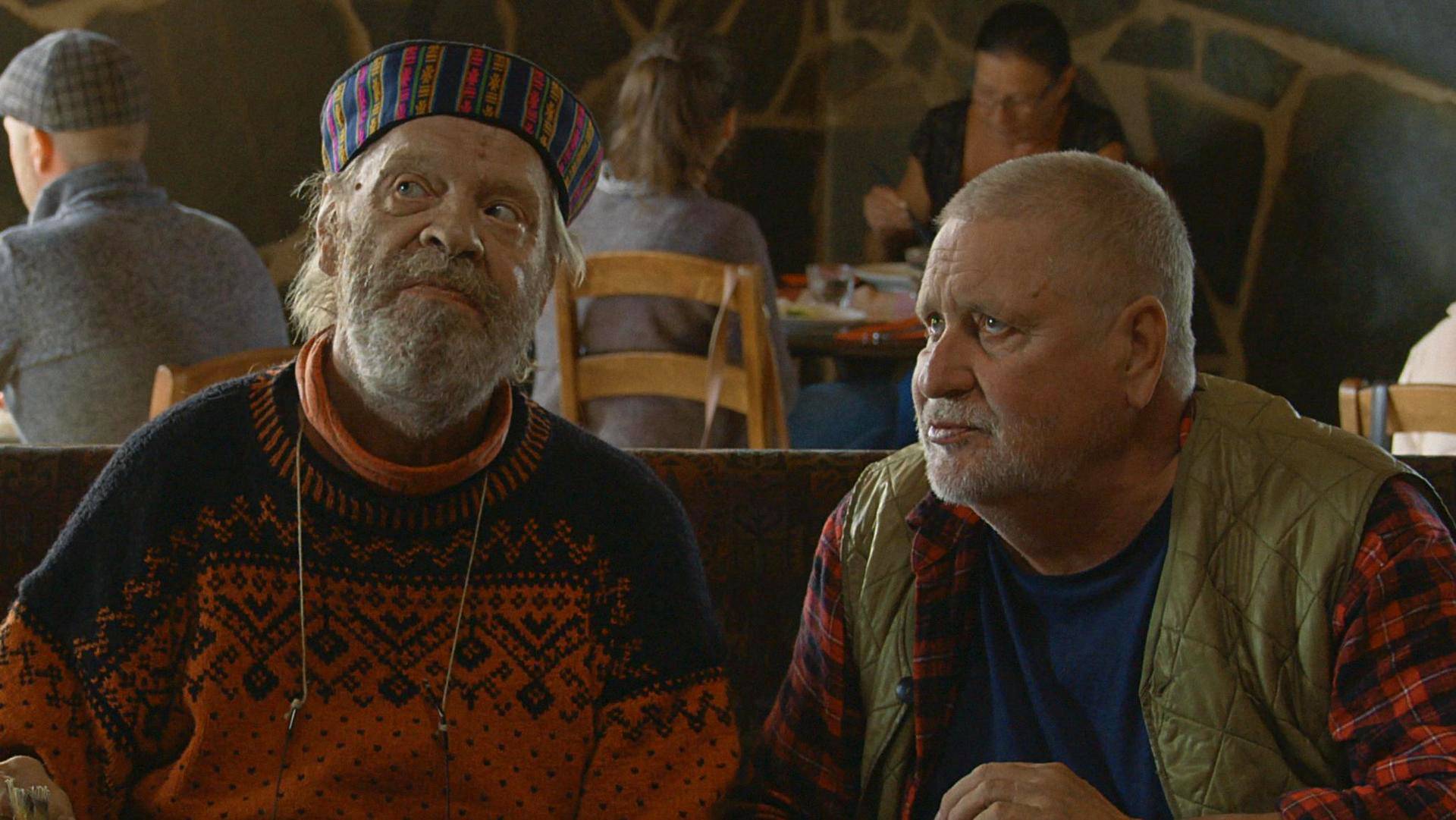
Cheng’s ability to cook edible food brings more visitors, including a gaggle of feisty pensioners from the old people’s home hoping for a Daoist pick-me-up, and a crocodile of children from the local school, who inevitably have a catalogue of allergies and intolerances longer than the menu. He befriends local old fogies Romppainen (Kari Väänänen) and Vilppula (Vesa-Matti Loiri), who drag him fishing and subject him to a sauna, and his son Niu Niu (Lucas Hsuan) slowly comes out of his shell.

Stick with this one-film-a-month blog of every Finnish movie ever released, and Mestari Cheng will swing around again some time in the early 2040s, when I am probably long gone and the automated updates merely look like I am still there. But since I saw it at the cinema today, I might as well write it up out of order, as a fascinating glimpse of where the Finnish film industry is fated to end up eight decades after the most recent entry in my chronological watchathon, which is currently at the cusp of 1939. Mika Kaurismäki’s little Lapland romance is a carefully constructed advertorial that pretends to sell Chinese food to the Finns, but is really intent on selling Finland to the Chinese.

“IT’S SAUSAGE DAY!” proclaims the sign outside Sirkka’s café, leaving me the lone giggler in a midday cinema full of baffled Finns. Because every day is sausage day in Finland, particularly in the sort of joyless canteen that Sirkka runs. Some suspension of disbelief is required, not that Cheng can acquire ingredients from a Lapland super market, but that the effort will not bankrupt him. One of the spin-offs of having my every purchase logged by the local supermarket chain is that I get sent Statto-the-Statman reports about my purchases, and I can tell you that a household in Finland that tries to cook Chinese food every night ends up spending double the local average on its food budget.

I have sometimes succeeded in getting Finns to eat Chinese food. My finest moment was on Hainan island a few years ago, when I was the Pied Piper that led a dozen disbelieving conference-goers to a restaurant where they had what several proclaimed to be the best meal of their lives, and drank the entire local supply of Tsingtao. But all too often, it has been an uphill struggle that comes with a checklist of intolerances real and imagined, kvetching about spice and mewling about dessert.

“There’s a new Chinese restaurant in town,” my girlfriend has been heard to say. “Let’s go there soon before the Finns ruin it.”

Kaurismäki’s film also requires the audience to believe that Finns presented with fish in mandarin sauce or sweet and sour vegetables will not recoil in horror. I once cooked a green curry for a bunch of Finns, and was forced to dilute it so much that it ended up more like a watery coconut soup. For reasons not worth going into here (but discussed at length elsewhere), Finns often scrimp on the correct ingredients, struggle to get the right heat on an electric hob, and fail to patronise higher-end restaurants, leaving much of the hinterland mired in buffets of grim 1950s gruel. But Kaurismäki still has a faith that was bludgeoned out of me long ago: that Finns fed good food will clamour for more, and not simply throw it down their gullets and ask if there’s ice cream for afters.

Offered perch soup, Romppainen is initially sceptical.

“Is it Finnish perch?” he asks, suspiciously (again, I was the lone laugher in the cinema).

When he is assured that, yes, the perch is not an immigrant, he quaffs it down with gusto, becoming one of Master Cheng’s first and most enthusiastic converts, along with the local womenfolk, who find that Cheng’s soup is a good remedy for period pains. Thanks, Finland.

Romppainen later reveals that he is dying of cancer, but that Master Cheng’s dishes have changed his life. He is still going to die, but Master Cheng’s food has given him hope. In a discovery not unfamiliar from many Chinese foodie films, what he means is that the food has brought him joy.  Some might find this claim rather patronising, and admittedly, it wouldn’t play so well if, say, a bunch of German tourists descended on a French town, proclaimed the local food crap, and demanded that a German chef prepare their favourites. But there is an unsurpassed bliss in Chinese food, that I fell in love with when I was a child and that I have never shaken off, and when I am as old as Romppainen, I expect I shall feel the same. And while cultural relativism has its place, some cuisines are just better than others.

The film bears some comparison with Naoko Ogigami’s Kamome Shokudo (2006, Seagull Diner) a similar hands-across-the-water film about a bunch of Japanese nutters who decide to open a café in Helsinki. But, conspicuously this is not an Asian director trying to get to grips with a Finnish subject, but a Finnish director trying to flog Finland abroad, so we are consequently staring up the microscope in the other direction. Kaurismäki and Hannu Oravisto’s script has a handful of missteps that betray their origins – Cheng bows to everyone like a stereotypical Japanese tourist, and is momentarily taken aback by the prospect of eating reindeer, as if, in the words of famed diplomat Prince Philip the Duke of Edinburgh, the Chinese wouldn’t eat anything with four legs that wasn’t a chair. More tellingly, a school teacher blunders into Sirkka’s café proclaiming that her pupils have no experience of Asian food, which is plainly not true, because several of them are Asian. Then again, as the unnamed teacher, Helka Periaho only has a couple of scenes to establish whether or not her character is a blinkered mentalist, and the jury’s still out on that.

Cheng teaches the Finns to live again, but they do the same for him. Distracted and driven since his wife’s death in Shanghai, he finds in Lapland a place of exultant quiet and calm, vistas of endless fells, and reindeer loping through the mists of ancient forests.

“There’s so much space here,” he comments to Niu Niu. And I would add that you can see it, too. Finland doesn’t have smog, and in a scene liable to cause a lot of upset tourist stomachs over the next few years, Sirkka even demonstrates that you can just scoop up and drink a handful of water from the lake. Any lake…? I’m sure we are about to find out.

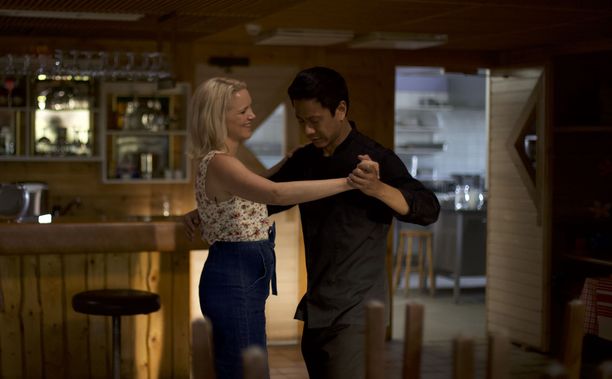
The East-meets-West theme is signified even in the opening shots, as an erhu and an accordion sound complimentary notes. We might forgive it a plot so thin that it only stretches out for movie length because nobody bothers to have a proper conversation about Cheng’s backstory. Despite this, the film contains such multitudes that it could easily form the basis of a TV series. Apart from the obvious scope for Cheng’s past (and Sirkka’s future, as hinted at in a closing coda), a longer, episodic running time would have allowed the main characters more time to develop their chemistry. As it is, the Cheng-Sirkka romance kicks off in a perfunctory fashion, as if they are last two standing in an onscreen game of musical chairs, although as their relationship develops, the two actors do get have some moments of believable affection.

As Sirkka, Anna-Maija Tuokko is a tad under-written, or perhaps just realistically Finnish, shouting a lot about the stupidity of men and hectoring Cheng about the need to speak up and be blunt about it. In a naturalistic touch, it’s not necessarily the love of a good woman that perks Cheng up, but the acceptance of a wider community. The septuagenarian Vesa-Matti Loiri, once a rotund, operatic singer, now a lithe little twig like a deflated Falstaff, has a melancholy moment that will mean more to Finns than foreigners, mournfully singing his own “Lapland Summer” as if delivering his own elegy – it is a song about the transience of happiness and the brevity of life, “Mut pitkä vain on talven valta” (But oh so long is the power of winter). Master Cheng counters with a song of his own, “In a Distant Place” (在那遙遠的地方) one of the best-known songs in China, written by Wang Luobin in 1939 to a Kazakh folk melody, and loaded with a similar elegiac quality.  But if Mestari Cheng is a last hurrah for Loiri and Kaurismäki-stable regular Väänänen, it’s also a noteworthy appearance by Lucas Hsuan as the sulky Niu Niu, who manages the rare feat for a child actor of not acting like a child actor.

The closing credits feature a smorgasbord of beautiful shots of high-end Chinese food, which even Master Cheng would have trouble whipping up with three packets of instant noodles and some condemned chicken from R-Kioski. It is, indeed, technically possibly to cook Chinese food using Finnish ingredients, although one wonders what digital tech wizardry Kaurismäki had to employ to stop the aubergines browning within seconds of being sliced.

Jonathan Clements is the author of The Emperor’s Feast: A History of China in Twelve Meals. He has likened getting Finns to eat real Chinese food to teaching Irish ducks how to read Jivvanese.

A Stranger Came to the Manor (1938)

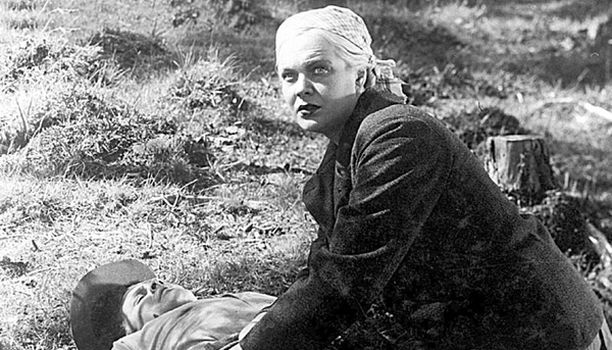
Someone has been shot on the Jönsson farm, and the farmer’s wife Astrid (Kaisu Leppanen) sits in a court-room, watching the proceedings with hollow eyes. A police officer enters an old rifle and a hatchet as exhibits in what appears to be a murder case, and a series of participants are sworn in…

In flashback, Jonni (Eino Kaipainen) arrives at the Jönsson farm in search of work. He’s plainly desperate, as no sane person would want to spend more than ten minutes in the company of Astrid’s shouty, boozing husband Alfred (Kaarlo Angerkoski), a self-styled engineer who thinks that farm work is beneath him. Inevitably, Astrid seeks comfort in Jonni’s arms, and drama ensues.

Annoyed with some of the critical reaction he was getting for his urban tales and historical novels, the author Mika Waltari (see The Unruly Generation) decided to pull a fast one in 1937 by submitting this rural melodrama, Vieras mies tuli taloon, to a writing competition under a false name. His usual haters largely ignored it, although there were plenty of complaints about its moral turpitude, and a film version was swiftly rushed into production the following year, drawing both on the original and on Waltari’s sequel Jälkinäytös (Posthumous, 1938), a novella written in part to assuage critics who were annoyed at the unjust ending.

If it wasn’t shot on a staggered schedule on several occasions, then it makes masterful use of locations to imply that its outdoor scenes cover a farming year from the late days of winter to the collection of the harvest in the autumn. But the entire production seems to struggle with the degree of social realism it wants. Angerkoski is grimy and clammy-faced as befits his character, but Kaipainen and Leppanen both exhibit their usual movie-star good looks, all chiselled features (for him) and radiant skin (for her), which might be said to create a degree of audience sympathy — they look like a pair of romantic leads, so of course they are going to get off with one another.

Meanwhile, a palpable lack of incidental music in the early scenes plays up the loneliness and isolation of the remote farmhouse, only for the orchestra to suddenly strike up after twenty minutes, as if they were caught outside having a fag and are tardily grabbing their instruments. In what could have easily been a kitchen-sink playlet that never left the claustrophobic farmhouse, Waltari’s own adaptation of his stage script spends a conspicuous amount of time outside, chronicling the bright sun and rainy days of forest life. One scene brings a dose of unintentional humour, as the two would-be lovers try to have a romantic picnic in a birch grove, and Astrid visibly struggles to break a hard Finnish rye loaf in half. Her character yearns, constantly to make the best of the situations she finds herself in, pointedly noting when it is a nice day, bullishly insisting on a swim in a bracing lake, and sprucing up her horse with a sprig of flowers. But as the film progresses, these incidents take on an anxious tone, revealing that Astrid’s constant looks on the bright side of life are the symptoms of a woman at the end of her tether.

A stand-out character, largely through not standing out at all, is Aku Korhonen as Hermanni the forester, his usual loquacity dialled down to almost zero, and his features hidden so completely behind a bushy beard that I didn’t recognise him, even though he is a major presence in the whole film. In one, rare, comic scene, he slaps Angerkoski with a fish, so there’s that to look forward to.

Drinking and drunkenness is a recurring obsession in Finnish films of the period, in part because alcohol genuinely was a social problem, but also because of the fascination brought about by a more than a decade of Prohibition, which only ended in 1932, and hence remained a subject of interest years later, not only for authors but for the films that tag along behind their books like a delayed sonic boom. Whispered in the background as well is the matter of women’s rights, particularly after Jonni pulls a drunken Alfred away from an incident of attempted spousal rape.

Despite beginning after the events have happened, the film waits until the last ten minutes to reveal exactly what transpired — is it a double murder? Was it self-defence? Did anyone walk away to turn up as a last-minute witness for the defence…. or the prosecution? Of course they did!

Jonathan Clements is the author of An Armchair Traveller’s History of Finland

The Women of Niskavuori (1938)

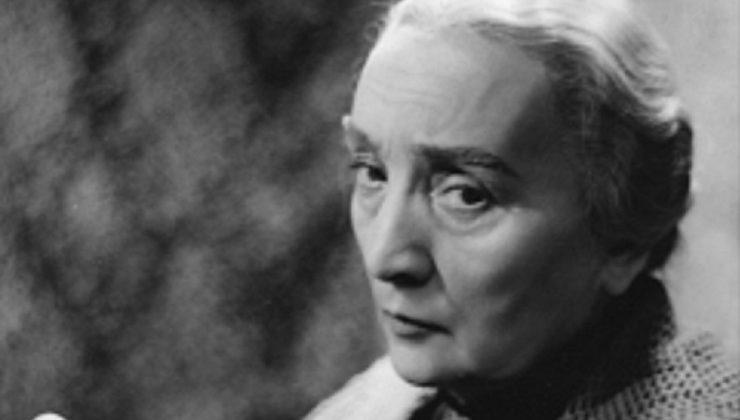
Suomi-Filmi’s reliable director Valentin Vaala helms another script based on a play by Hella Wuolijoki, after the success of his earlier Hulda Juurakko (1937). Niskavuoren naiset is a fire-cracker of a story about another of Wuolijoki’s independent, disruptive female characters. The year is 1931 (so says Wikipedia, although people are seen drinking cognac, in contravention of that period’s Prohibition, still in force until 1932). Aging lady of the manor Loviisa Niskavuori (Olga Tainio) is trying to hold her village together in changing times, enduring with implacable stoicism the petty dramas of her heirs, particularly her performatively consumptive grand-daughter-in-law Martta (Irja Lauttia).

Farm life is presented not as a happy idyll, but as a complex, modern industry; the womenfolk discuss fat percentages and crop yields on their way to the store. This is no clueless place in the sticks –  the council is quarrelling over the appointment of a teacher qualified to keep up with the times, and the menfolk have settled on Ilona Ahlgren (Sirkka Sari), a city girl who has “studied more than knitting patterns,” who arrives on the train with her fashionable hat at a jaunty angle.

The locals are relying on Ilona for more than schooling; the priest wants her to help out at Sunday school, the craft circle wants her helping out with the home economics, and even the drama club expects her to take a turn on the stage. They expect her to be a Jill of all trades, a vital contributor to all aspects of village life. She is excited to be in town, not the least because with Woolfian connotation, she has been yearning all her life for “a room of my own.”

Martta’s husband Aarne Niskavuori (Tauno Palo) falls for Ilona, obviously and hard, in a stirring dance sequence in which the camera intercuts extreme close-ups on the band’s musical instruments with the whirling faces of the would-be lovers. But the script keeps us guessing, cutting immediately from breathless flirtations at a summer ball, to a midwinter card game six months later, leaving us to guess what has transpired in the interim.

“Telephone” Sandra (Aino Lohikoski) is the local operator, constantly complaining that the schoolboys have damaged the overhead wires, but also sneakily eavesdropping on everybody’s conversations. It’s she who first suspects that Aarne and Ilona are having an affair, and spearheads the gossip. By the time their trysts are the talk of the town, Ilona is already carrying Aarne’s child. Aarne’s wife, Martta rages against That Woman, refusing to let her in “her house”, a house that as Loviisa dolefully reminds her, is not yet fully hers to rule.

Over a tense coffee conversation loaded with agricultural allusions, Ilona breathlessly talks of spring storms blowing down trees with giddy disregard, while Loviisa sternly reminds her that the men of Niskavuori have deep roots, and that she is a new transplant. Money, in terms of Martta’s wealth, is going to talk much louder than whatever feelings Aarne and Ilona have for each other, but even as the two women glare at each other over their cups and saucers, Aarne arrives with his friend Simola, and the foursome are forced to play along in a forcibly light-hearted conversation about the joys of marriage.

Loviisa has a plan, to marry Ilona to the less well-to-do Simola, avoiding a scandal, or at least squaring off a lesser one by suggesting that Mr Simola and Ilona are facing a shotgun wedding. Ilona’s own vague plan, to run away with her lover, seems thwarted by Aarne’s tardy realisation of his duty to his home manor.

The Women of Niskavuori was the debut role for Sirkka Sari, a young actress with a tragically short career ahead of her. However, ungallant though it may sound, on the basis of this performance, I assume that the ink spilled elsewhere as if she was some great lost talent was a commemoration error, as obituarists struggled to find nice things to say about a frankly unremarkable teenage ingénue, who met with a grisly end while completing her third film, Rich Girl (1939). Naturalism in dialogue is still uncommon in Finnish films of the period, but Sari comes across as an actress out of her depth, too busy trying to remember her lines to really put much effort into delivering them. If she were a star in the making, she seems miscast, here. She was barely eighteen years old when this film was shot, even though the character she is playing must surely be at least five years older, if not ten.

The script is open to multiple interpretations – depending on the way that Ilona’s actress delivers her lines, she could come across either as a fiercely progressive modern woman, or a home-wrecking hussy unheeding of the damage she has done, or a deluded innocent, humped and dumped by a local scoundrel. But Sari persists in staring into the middle distance and softly speaking to nothing, as if she is in a dialogue with the voice of angels and not anyone around her. Meanwhile, Olga Tainio, as the no-nonsense matriarch, runs rings around her with a truly nuanced performance, empathetic with her condition, but steely in her prioritisation of the life and future of the manor.

Loviisa looks down at the old tome we have seen her reading in the opening scenes. It is the Bible, open to the Song of Solomon: “Many waters cannot quench love; rivers cannot sweep it away. If one were to give all the wealth of one’s house for love, it would be utterly scorned.”

The film ends with a tense parlour trial, in which Ilona refuses to name the man whose skis were seen outside her bedroom, while the townsfolk line up a parade of witnesses in order to force her confession. Martta and Loviisa already know who it was, of course, as do we, imparting an element of suspense as we wait not to find out who it was, but what will happen…

“Perhaps,” says Martta hopefully, “we can blame the women for this.” But it was the men of Niskavuori, at the beginning of the film, who were seen guffawing over the prospect that the new teacher might be a bit of hot stuff, deftly illustrating a systemic assumption that makes this film’s concerns ardently up-to-date, even 81 years after its release. As for what happens next, you will have to wait for the belated sequel, Aarne of Niskavuori (1954), although there would be several more films in the Niskavuori series, including the prequel Loviisa: Young Mistress of Niskavuori (1946), in which Palo would return to play his own grandfather. We’ll get to them eventually, although it might take years…

[Note – uncharacteristically, this film came with English subtitles on the DVD.]

Jonathan Clements is the author of An Armchair Traveller’s History of Finland

The Regiment’s Tribulation (1938)

New recruit Hemminki Aaltonen (Kaarlo Angerkoski) over-sleeps at reveille, he is late for drills, and he brings up the rear on speed-marches, complaining about his rheumatism. During training at a forest camp, he takes the delicate academic Lauri Auermaa (Leo Lähteenmäki) under his wing, inadvertently blundering into a burgeoning romance between the soft-spoken professor and the Captain’s daughter Elli (Ansa Ikonen).

Rykmentin Murhenkryyni (1938) began as a 1933 stage play by “Topias” (Toivo Kauppinen) but benefits greatly in cinema form from its real-world location work, affording valuable glimpses of the men and materiel of the Finnish army just before the outbreak of the Winter War. Most striking for me is the degree to which horses still form the engine of the army, with nary a tank or armoured car in sight. This is certainly a military tale as told by a generation that hasn’t seen any real conflict. The sergeant major who turfs the young recruits out of their bunks is ridiculously nice and soft-spoken, while the drill sergeant who berates Aaltonen for being late is a cartoonish caricature; this is more Stripes than Full Metal Jacket.

A cynic might suggest that this is all part of the plan in increasingly tense times, softening the image of military service until it looks less like a dangerous job, and more like a summer camp with some outdoor sports, a bit of marching and some hearty grub. These are not the men that, barely a year later, would be slitting the throats of Russians in their sleep, and dynamiting icy lakes to drown tank divisions. Instead they are friendly guardsmen standing behind rickety barriers and indulging in gentle banter with passing carters, while the daffy cadet Auermaa prances around the parade ground with a butterfly net, and asked if he can have a spin on a cavalry horse. With that in mind, remarkably little happens in the film, with the plot often playing second fiddle to prolonged scenes of marching, swimming, training and goofing off – not since Our Boys in the Air (1934) has the Suomen Filmiteollisuus company spent quite so much time poking around the everyday life of military personnel.

Despite being a comedy, this is the first time that Suomen Filmiteollisuus has had to face issues common to dramatic war films, too – once they’re in uniform, all the men look the bloody same. Unless some is shouting or malingering, it’s often difficult to work out which of the bumbling soldiers is which. Aku Korhonen, his head shaven like a billiard ball, is all but unrecognisable as Captain Routanen, and I wasted a whole minute trying to remember which soldier was the one in glasses in the mess hall, until I realised that it was Auermaa with his jacket off.

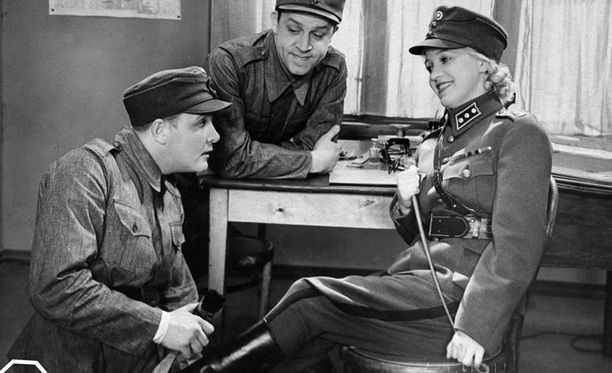
It takes twenty minutes before Ansa Ikonen suddenly appears as the love interest, trilling a jaunty song at the piano. Ikonen has been a regular feature in the last year or so of films from the company, but here seems ill at ease as the comedy ingénue, barking her lines at her fellow actors as if comedy is determined solely by volume, and seemingly blocking herself so that her face is perpetually ill-framed by the camera. She also wanders around in silly jodhpurs and a distractingly shiny satin blouse, but at least it’s obvious who she is! This, perhaps, is part of the plan, as half an hour later she dresses up as a captain herself, and manages to fool her suitor that she is a shouty male officer. Well, I did say that the uniforms made everyone look the same, and in Auermaa’s defence, without his spectacles on the, newly arrived “captain” is just a blur to him, and it is presumably not all that unusual in Finland for a deep-voiced woman in uniform to demand that snivelling underlings clean her jackboots.

Eventually, the comedy is shut down by the arrival of the Major-General (Jalmari Rinne), a dour and authoritative figure who cuts through the various knots into which the cast have got themselves, and gets to yell the big punchline: “What kind of garrison is this? The Captain is a girl and the sergeant-major is mad!” This presumably had a whole extra level of fun for Finnish audiences at the time, since actors Rinne and Ikonen were conducting a scandalously public affair. Barely a year later, Rinne would get a hasty divorce, and with presidential permission, eschew the usual legally-mandated delay to marry Ikonen before her pregnancy bump really began to show.

But I digress. It takes another twenty minutes of running around in the forest before Auermaa proposes to Elli. He is so shy that he only achieves this with Aaltonen standing behind him in the guise of a drill sergeant, commanding: “KISS NOW! KISS NOW! KISS NOW!” You might think Finland is still like this, to a certain extent, but I couldn’t possibly comment.

A final coda shows Aaltonen in happy domestic bliss with his own love interest, Mimmi (his real-life wife Siiri Angerkoski), heartily singing a military tune as he toils in the field, all malingering gone. The message is two-fold, that military life is good for you, and one day all this will be over – stirring stuff considering what was lurking just around the corner for Finland. The Winter War would break out thirteen months to the day after this film’s premiere.

Jonathan Clements is the author of An Armchair Traveller’s History of Finland

The Culprits? (1938)

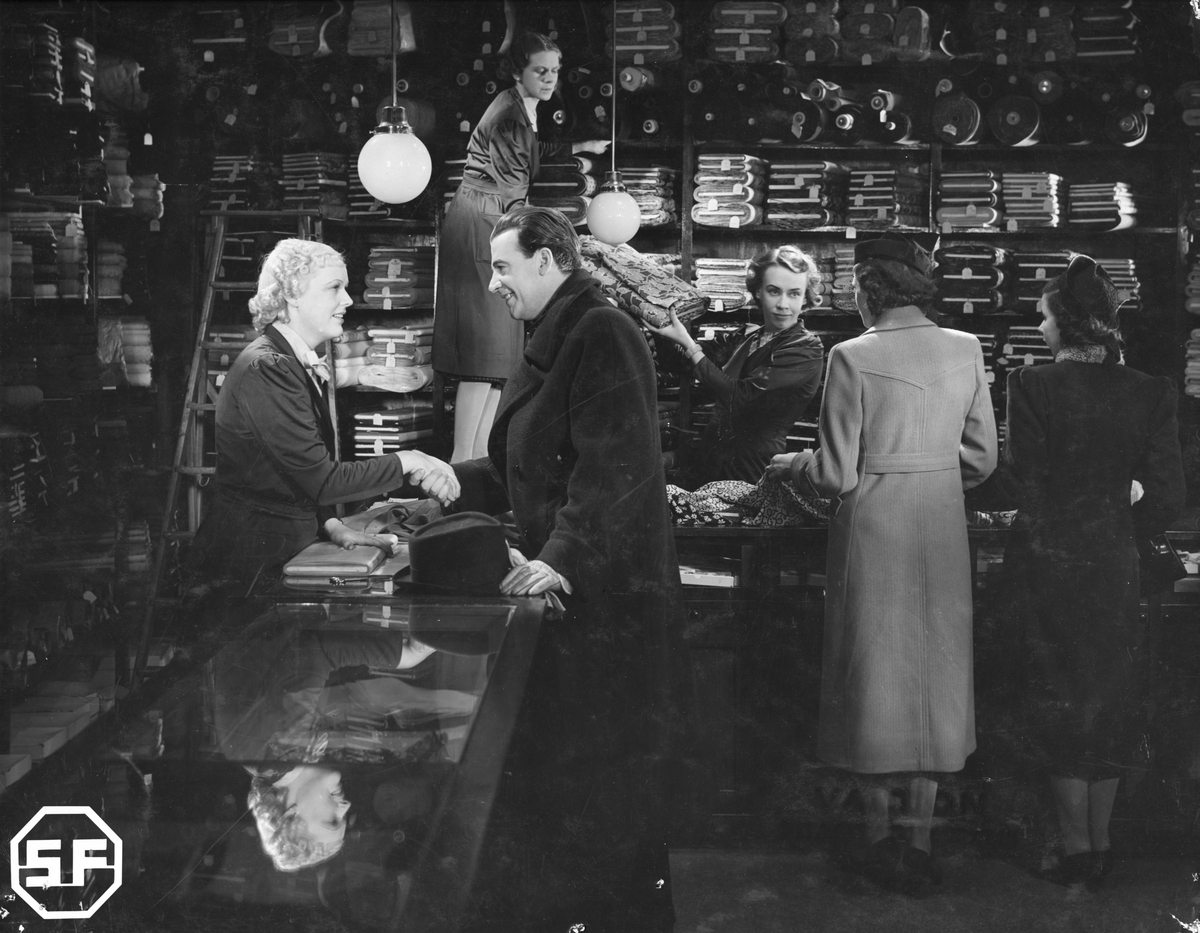
In an unnamed coastal town, college lecturer Aare (Joel Rinne) is sweet on haberdashery assistant Emmi (Kaisu Leppänen), walking the street hand-in-hand, and taking bracing hikes in the woods. You might be forgiven for thinking that you had already walked in on a happy ending, but the townsfolk do not agree. Already in the opening scene, a passer-by scowls at the backs of the loving couple. Aare’s boss at the college hems and haws about “suitable companions”, and the women at a swish dinner party are aggressively flirtatious with a man who is supposedly spoken for, as if they regard him as their rightful property and his paramour as a risible diversion.

Aare has broken the rules, falling in love with a woman on the other side of the class divide, although as with the earlier The House at Roinila (1935), the nuances in behaviour and language are difficult for a foreigner to spot. Much of the storytelling is conveyed by the sets, contrasting the well-appointed society lounges of Aare’s circle with the grim, rooming-house clutter of the bedsit Emmi shares with her time-worn family, including brother Erkki (Eino Kaipianen).

The script for Syllisiäkö? is based on a 1933 play by Toivo Pekkanen, written and directed for the screen by former actor Jorma Nortimo, who makes a notable effort to push into the action, not only with the commonplace and distracting close-ups of his fellow Finnish directors, but with more intimate, over-the-shoulder angles, rather than a locked-off camera recording a play like so many Finnish films of the preceding decade. Although often defeated by the distractingly inexact jiggles of his focus-puller, Nortimo tries for literal kitchen-sink drama, contrasting Erkki scrubbing his face at a basin with Aare relaxing in an honest-to-goodness bath – more of a rarity in Finnish homes, which even today are more likely to use the same household space for a sauna.

The storyline’s 1933 origins are betrayed in part by some odd staging in a bar that suggests that Pekkanen’s original made more of flaunting the rules during Prohibition, although much of the scandal is diminished in a film version made six years after booze was legalised in Finland. In fact, since a fight at a drunken dance is what precipitates Aare’s fall from grace, we might argue that the entire drama somewhat misfires when restaged in an era when being drunk is no longer a crime. The preoccupations of the previous decade are also suggested when, 25 minutes into the film, Emmi suddenly starts singing to her mirror about her predicament, as if this were supposed to be a musical but someone had lost the memo until that moment. Kaarlo Kartio, as usual, criminally underused, turns up in a brief cameo as a shifty sailor selling stolen goods, another allusion that seems more suited to post-war 1920s austerity than the time in which the film is purportedly set.

“He’s a young man, and she’s a nice girl,” shrugs a gentleman at the ball-room, as if to ask if his dining companions if it’s really any of their business. In this case, it’s the womenfolk who tut and scowl about Emmi, although soon after, Emmi is harassed by men who presume she’s a part-time hooker. Putting a brave face on the trouble, she drags Aare away from the waltz to a working-class knees-up, only for the locals to similarly hiss behind their hands about her inappropriate choices.

The Culprits? is a departure from the Suomen Filmiteollisuus company’s contemporary run of a light-hearted comedies, pushing instead for an element of social realism and chin-stroking speculation. Its question mark is an integral part of the title and the poster design, challenging the audience to consider who is truly to blame for the drama that unfolds. Is it the snooty Finnish middle class, themselves unlikely to be more than a generation off the farms, or the sneering shop-girl frenemies who imply that Emmi has ideas above her station? Or is it the lovers themselves, pursuing a doomed romance despite “obvious” warning signs? Pekkanen’s original theatre script was called Siblings, suggesting a focus more on Emmi’s pugnacious brother Erkki (Eino Karpanen), whose confrontation with Aare at a dance makes it into the local newspaper, and takes the scandal public.

Meanwhile, there are a couple of noteworthy names among the faceless students in Aare’s class – a first appearance on camera for future film star Hannes Häyrinen, and a walk-on for Unto Kumpulainen, then a teenage camera assistant, but destined to become a cinematographer himself in years to come.

The Culprits? is a refreshing change from the norm in the chronology of Finnish cinema. Nortimo’s pursuit of realism is also a welcome innovation, not merely in his camerawork but in the presentation of a conflict that is relatively mundane and hence easy to identify with. That is, at least, until the final 20 minutes, when everybody starts to act as if another forgotten memo has been retrieved, telling them that everything is the end of the world, and nothing will ever be the same again, and the likelihood swiftly escalates that someone is going to get stabbed.

Jonathan Clements is the author of An Armchair Traveller’s History of Finland

Have I Arrived in a Harem? (1938)

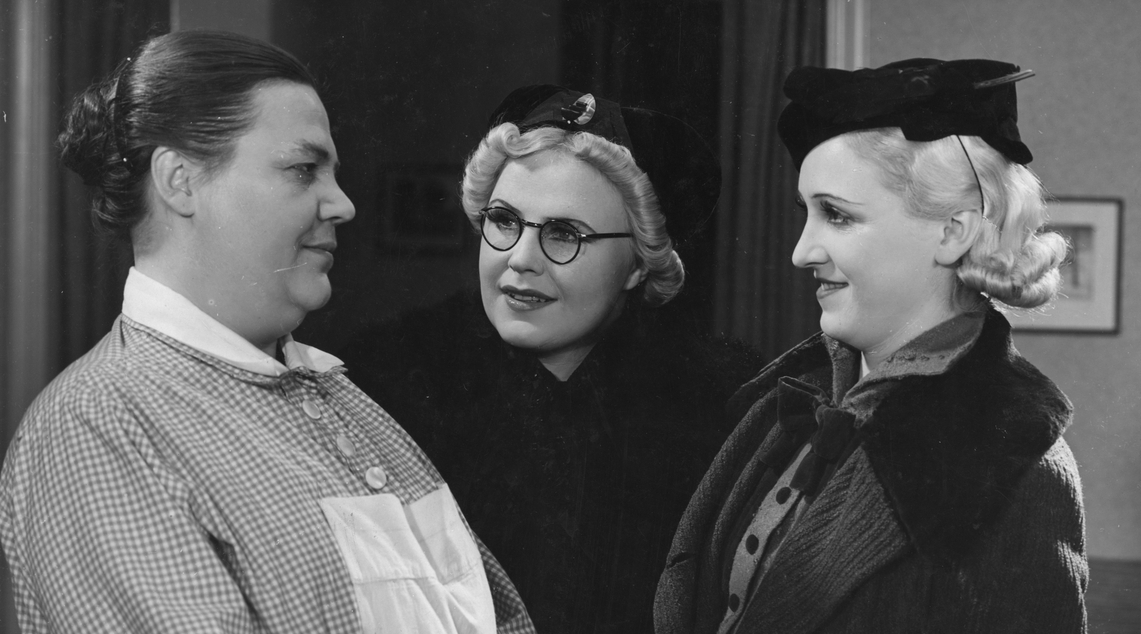
Admitting that their Helsinki apartment is in a terrible mess, three bachelors agree to hire some domestic help. Arvi the engineer (Joel Rinne) is struck dumb by the glamorous appearance of Helvi (Ansa Ikonen), the first girl to ring the doorbell, and agrees on the spot to whatever salary she demands. His flatmate Martti (Unto Salminen) is less easily impressed, turning away one flighty applicant before succumbing to the icy charms of the severe, English-competent Aili (Laila Rihte). Their journalist companion Salomon (Aku Korhonen) is counter-intuitively charmed by the bellowing, matronly Manta (Siiri Angerkoski), leading all three women to be hired as maids.

With a strong cast and a high concept that even the unfunny Agapetus would struggle to cock up, Oletko minä tullut haremiin? was based on his 1927 stage play, and had already been filmed once before by Suomi Filmi, in 1932, with Joel Rinne in the same role. I presume that since the 1932 version was directed by the late Erkki Karu, who would split from Suomi Filmi to found Suomen Filmiteollisuus in 1934, that the rights to this property rested with him, and not the company that he left behind. This remake initially received enthusiastic reviews in the Finnish press. Audiences, however, were less impressed, and its box office performance was low, quite possibly because the comedy relies not only on the usual cartoonish misunderstandings common to farce, but on sexist assumptions that belittle both men and women.

This is not even the first time that an Agapetus-derived script has tried to make comedy currency out of domestic service. The previous year’s The Assessor’s Woman Troubles had similarly tackled the dissonance between home and The Help, with many of the same cast. Comedy is supposed to derive from the utter inability of men to cope with household chores, and the fact that of the three maids, only Manta is the real deal – the others are a couple of rich girls slumming it for a laugh, hence Helvi’s inability to work out what the going rate is for a servant’s wages. Apart from a scene in which Manta mistakes Helvi for a fast lady who scandalously has her own key to the bachelors’ apartment, the film does not take a predictable route into workplace romance, since the girls already have suitors, and indeed, derive situational comedy from entertaining them in the freshly scrubbed apartment while the owners are out. The sauciest moment, at least from where I was sitting, was the sight of the girls leaving their shoes outside their doors, which in 1938 Helsinki seems to have carried the erotic charge of a belly-dance.

Before long, the hapless bachelors have been drafted in to help Helvi embark on a pointless deception aimed at her family, leading to the cringe-worthy moment when Salomon introduces himself to a scowling woman (Eine Laine) as Helvi’s father, only for her to archly introduce herself as Helvi’s mother. All’s well, inevitably, that ends well, with two of the bachelors getting brides, although one can hardly call it workplace harassment, since neither Helvi nor Aili appears to have actually done any work, instead leaving it all to the dour Manta.

Toivo Särkkä and Yrjö Norta return to an odd directorial affectation of some of their previous adaptations from the stage, cutting to shots in which actors directly address the camera, as if delivering the viewer literally into the middle of conversations that were previously only viewed from the other side of a proscenium arch in a theatre. There are some momentary glimpses of Helsinki life, but none of the extended location work that made the earlier Agapetus adaptation Scapegoat (1935) so alluring to the modern viewer.

At least the film is mercifully short, but at 58 minutes it barely qualifies as a feature, whereas the 1932 version ran for 93 minutes. The modern viewer is left wondering what cataclysm of budget, or censorship, or scheduling, caused it to be so drastically truncated, particularly when an overture and opening song delays the start of the film proper for two full minutes. Two minutes before the end, everything stops for a sing-song around the piano, followed by a prolonged musical coda over a blank screen, reducing the effective running time of this light-hearted farce to a mere 53 minutes. Possibly it was this that put 1938 audiences off, as it hardly constituted an “evening” at the cinema.

Jonathan Clements is the author of An Armchair Traveller’s History of Finland

The Jaeger’s Bride (1938)

1916: and a battalion of German soldiers are off to fight on the Eastern Front. Wait. German? No, these are Finns, trained in Germany as elite “jaeger” fighters, although if the opening scenes are anything to go by, they certainly haven’t learned any manners. Somewhere in Latvia, the dancer Sabina (Tuulikki Paananen) is struggling to board the jaeger train. Her new-found guardian, the monocled Baron Lichtenstein (Erkki Uotila) gets into a fight with the young jaeger officer Martti (Kullervo Kalske), which leads to Martti being carted away to the brig.

In nearby Libau, Martti languishes in jail, singing interminably all the while and drawing a picture of Sabina on his cell wall. He has, inexplicably, fallen in love. Sabina, meanwhile, dances at the Golden Anchor restaurant, a rowdy ale house frequented by the jaegers, as well as Isak (Sasu Haapanen), a Suspicious Jew. The talk of the town is “Merovich”, a Russian super-spy who is ruining the Germans’ chances on the front. Except we have already seen the Baron passing a coded message to Isak at the train station – the Baron is Merovich, and we have to sit through a bunch of songs and half-hearted dance routines while waiting for the Finns to work this out. Martti is an odd protagonist in that he spends most of the film in prison, singing about a girl he has only just met.

Risto Orko’s Jääkärin morsian is a notorious film in Finnish cinema history. It lionises the German-trained jaeger battalion that was fated to swoop into Finland after the Russian revolution and play a vital part in the liberation of the country from the Communists. As a result, by 1948 it was regarded as dangerously anti-Soviet propaganda, and after protests from Moscow it was effectively banned for the next four decades. Yes, it was a problematic film because it was anti-Russian, and not because of the shameful portrayal of Jews as craven, hunched, swarthy traitors. Your mileage may vary.

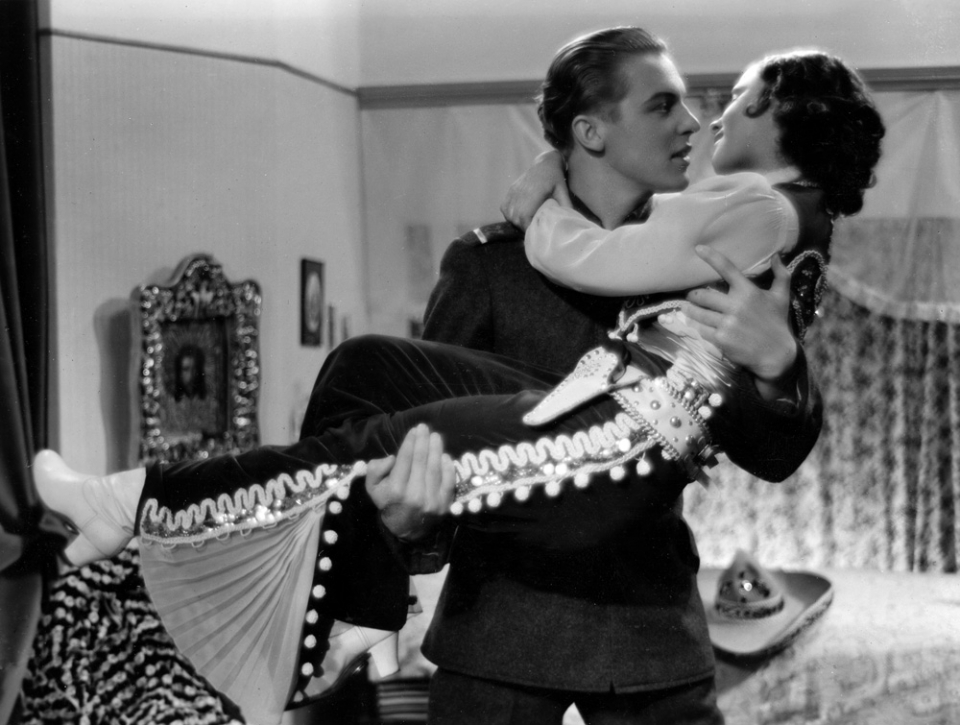
Baron Lichtenstein is clearly marked as the master-spy Merovich from the opening scenes, turning the film into a waiting game as we twiddle our thumbs through all the pointless singing, as his local paramour Sonja (Ritva Aro) fumes that he has found a younger woman, and the merry Russian serving wenches flirt and banter with the raucous Finnish soldiers. Eventually, the Finns work out who has betrayed them, and there is a horseback chase, a bomb rigged to blow up a manor house, and a bunch of people shot off-screen. In the role of the fiery Sabina, Tuulikki Paananen gets to show off the skill that first brought her to the attention of directors from Suomi-Filmi, which was apparently her party-piece of dressing up as a Mexican bandit and dancing to a tune that only she could hear, while the soundtrack plays something entirely different.

The fascinating thing about this film is the Eastern European world it depicts, thrice-destroyed in the twentieth century by the First World War, the Second World War and then a generation under the Warsaw Pact. Prussia just isn’t a thing any more, but here we see its restaurants, manors, peoples and fashions. There are foreshadowings here of some alternate-universe Casablanca, perhaps titled “Everybody Comes to Sonja’s”, in which the German dastards are here switched into heroes, and songs are clumsily integrated into the narrative while a pretty girl wanders through the action in a sombrero.

Although her dance sequences are ruined by a poorly synched soundtrack, Tuulikki Paananen smoulders impressively as the innocent dancer Sabina. The child of a Finnish father and an American mother, Paananen was raised in the United States and would return there soon after the outbreak of the Winter War in 1939. Local rumour in Finland held that she has been arrested as a spy, but in fact she was trying to carve out a career in Hollywood. In the 1950s, she moved to Honolulu, where she ran a hula school. You really couldn’t make this up.

Jonathan Clements is the author of An Armchair Traveller’s History of Finland