The Lord of Mice in the Year 2600

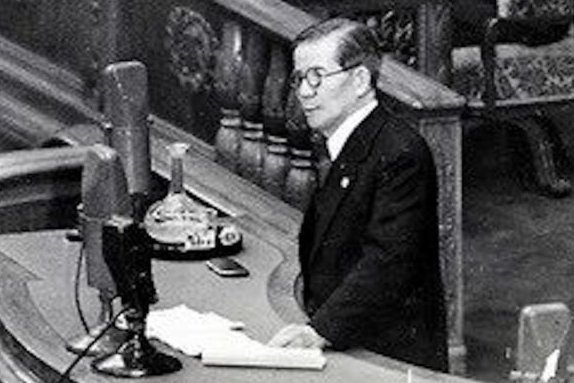
On 2nd February 1940, a frail old man rose to his feet in the Japanese Diet and commenced a ninety-minute speech. Saitō Takao was seventy-one years old, an obscure politician who only occasionally spoke out on controversial issues, leading to one cartoonist to call him “the Lord of the Mice.” But today, he could reasonably be said to have had enough. Saitō was no pacifist – he was a conservative, broadly supportive of Japan’s expansion into Korea and Manchuria. The problem was, he began, that the stated aim of securing Japan’s resources and materials had been accomplished. He simply couldn’t see the point of the latest adventures in China, which were a costly and endless money pit.

Saitō’s problem was with a revolving-door of governments that seemed to think that their responsibilities were discharged by resigning at the first sign of trouble. A million Japanese men had been sent overseas; a million more faced the same fate. A hundred thousand Japanese had died, and all for what? Saitō took apart the government’s directives and policies, pointing out that they were riddled with contradictions. How could they claim to support China, while also trying to undermine it with rival regimes? Were they going to save China by destroying it? Is this what they meant by the “New Order in Asia,” some misguided rip-off of what Hitler was doing to Europe? How could the Prime Minister embark on a costly war in Asia, while also promising that he would demand no indemnity from the Chinese if they surrendered – who was going to pay for all this?
“If we ignore this reality, or camouflage it with the words ‘holy war,'” he said, “pointlessly neglecting the people’s sacrifices for an array of elusive pretexts such as ‘international justice’ or a ‘moral foreign policy,’ or ‘co-existence and co-prosperity’ or ‘world peace,’ and thereby lose a rare opportunity and thereby end up ruining the great state plan of the century… today’s politicians will commit a crime that we cannot compensate for with our deaths.”

Saitō had witnessed the Army coming to his own district near Kobe, and ripping up the local railway tracks, taking them away for some unspecified industrial venture in South-East Asia. How was this helping the Japanese? In what possible situation could the Japanese be compensated for the sacrifices they had already been called upon to make?

He conceded that there were exceptions: not all Japanese were being crushed by austerity. There were “boom firms” that were making a killing supplying the war effort, gobbling up military contracts.

“I do not understand the cause of this war,” he said. “I do not understand why we are at war. I do not know. Do you gentlemen know? If you have it figured out, then explain it to me.”

Saitō was heckled throughout by his fellow politicians, and much of the latter part of his speech was cut from the official record at the instigation of the Army’s observer in the council chamber. Politicians and the press derided him as a blasphemer against Japan’s “holy war,” and he received death threats and hate mail. He resigned from his party and was ejected from the Diet – his speech marked the moment when any further criticism of Japanese militarism was purged from the government.

And yet, there were still glimmerings of hope. Among the letters calling for him to do Japan a favor and kill himself, accusing him of being anti-war or anti-military, or even of being a British or American stooge, there were letters of support, thanking him for standing up for the common Japanese people. Despite a smear campaign in the media, he would later win re-election as an independent, although the Diet he re-entered was little more than an echo chamber for propaganda by that point.
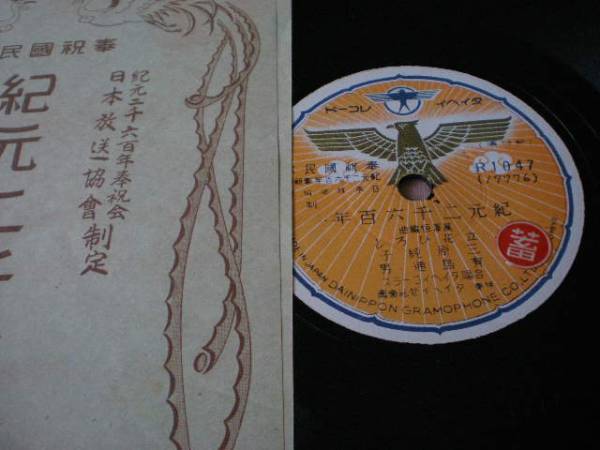
At one point in his speech, Saitō referred to his belief that the China Incident was the largest war that Japan had fought with China in 2,600 years. His choice of numbering was quite deliberate, since the year 1940 in the Christian calendar had been determined by the Japanese government to mark a momentous occasion – the 2,600th anniversary of the legendary coronation of Japan’s first-ever ruler, the Emperor Jinmu. Jinmu’s very existence was a matter of unsubstantiated myth, while the dating of his enthronement to 660 BCE was the vague pronunciation of a medieval chronicle, but ever since 1873, his achievements had been celebrated in National Foundation Day, which fell on 11th February. This, in turn, might sound at first like harmless legend, except it had already been used as a further argument for the superiority of the Japanese race. Ōkawa Shūmei (1886–1957), a former South Manchuria Railway employee, now a university professor, only released in 1939 after serving time in prison for his involvement in some of the attempted coups of the 1930s, had written a much-reprinted book arguing that since Japan was the oldest state in the world, it was its destiny to rule it.

1940 was hence a year of grand ceremonial importance to Japan’s state Shintō religion. On New Year’s Day, the people not only of Japan, but also of Japan’s empire overseas, had been ordered to bow, at precisely 9am, in the direction of the imperial palace in Tokyo, and to shout: “Long Live His Majesty the Emperor.” There was no possible way that anyone could claim not to know their duty – the directive was printed in newspapers and broadcast on the radio. It was also written into neighbourhood round-robin newsletters, which could not be passed on between households until the head of each family had affixed his seal. This was merely the first of a dozen timed mass rituals that would unite the Japanese in 1940, including moments of silence to mark Army Day, Navy Day and the anniversary of the Marco Polo Bridge Incident, and the twice-annual days when the Emperor conducted ceremonies for the war dead at the Yasukuni Shrine.

The state broadcasting corporation, NHK, held a competition to come up with a “national song” to mark the occasion. Masuda Yoshio beat 18,000 contenders with his stirring lyrics for “The Year 2600” (Kigen Nisen Roppyaku-nen), which were set to music by Mori Yoshihachirō, and began with a reference to the Golden Kite of Japanese legend, which blinded the enemies of the Japanese, and settled on the bow of the legendary Emperor Jinmu.

Our bodies receive the divine light of the glory of Japan

Shining from the Golden Kite

We pray at the dawn of the Year 2600

A hundred million breasts swell with pride.

Standing firm on the jubilant earth

We await the imperial decree in the Year 2600

The clouds clear after the founding of our nation

Growing up in a fractious world Our gratitude burns with a clean flame, in the Year 2600.

The conflict in China, however, had been limping along for almost a decade, leading several satirists to come up with parody versions. Some of the most enduring refashioned Masuda’s lyrics so that instead of declaring the divine providence of the Japanese Empire, they complained about the rising prices of cigarettes – not the free Onshino packs handed out to military men, but the everyday brands on sale to the general public. These included the super-cheap Golden Bat (Kinshi) brand produced by Mitsui, renamed Golden Kite in 1940 to reflect rising patriotic fervor. At the former price of 4 sen a packet, smokers had previously been able to buy 500 cigarettes for just one yen.

[A pack of] Golden Kites is 15 sen

It’s 30 for a pack of Glorys.

These days, prices are going up

In the year 2600

100 million people weep.

An extract from Japan at War in the Pacific: The Rise and Fall of the Japanese Empire in Asia (1868-1945) by Jonathan Clements.

New Book

A surprise Fedex delivery tonight — the book that is likely to ruffle a lot of feathers, a history of Japan for the era of Brexit and Trump.

‘I was drawn to see different parallels, not only to the sight of a nation readily destroying itself while moderates looked on aghast, of robber barons making a killing while the weak suffered, of oligarchs and billionaires rushing through new laws while hoping to remain beyond their reach, and of political opportunists ready to use extremist violence to either assert or combat “the will of the people,” but also of a movement that sought to reclaim the agency and power of an entire race from its oppressors.’

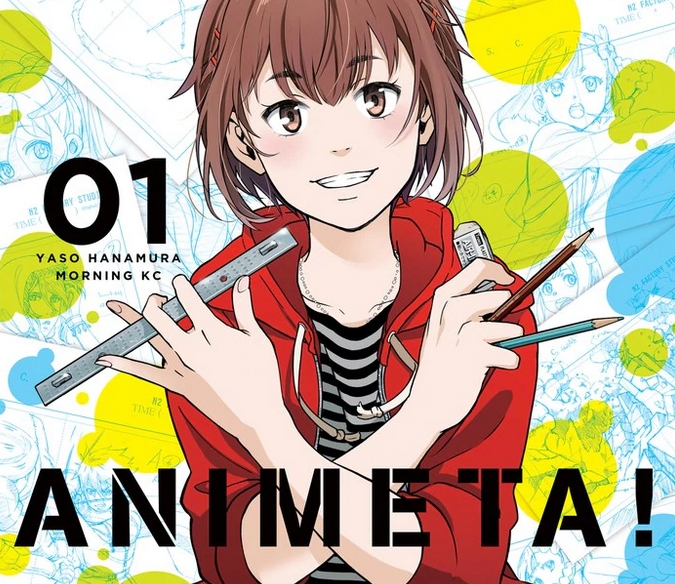
Animeta

Animeta is a fascinating worm’s-eye view of the animation business in Japan, happy to spend a chapter literally focussing on the way to draw a line, drawing the reader into the physicality of working in an anime company. Hanamura covers everything from finger cramps to the studio canteen, the differing ranks of various workgroups, all in the process of assembling a cartoon from the first pencil to paper to the final broadcast product. It is no surprise to me that the book has become mandatory reading at Studio Trigger, recommended to new staff as a glimpse of the horrors that lie ahead.”

Over at All the Anime, I review Yaso Hanamura’s manga about the anime business.

Thursday 11am (UK time)

Jonathan Clements will examine the life and achievements of one of Japan’s first modern international celebrities, Admiral Togo Heihachiro (1848-1934), from his teenage participation in the “Anglo-Satsuma War” of 1863, through his youth as a student at a British maritime school, and his long career in the Imperial Japanese Navy. In 1905, after Tōgō’s defeat of the Tsar’s fleet at the Battle of Tsushima, he was hailed as the “Nelson of the East” and an honorary Englishman; his flagship, the Mikasa, can still be found at the Yokosuka dockside.

Jonathan Clements is the author of many books on Asian history and culture, including Admiral Togo: Nelson of the East, Japan at War in the Pacific: The Rise and Fall of the Japanese Empire 1868-1945 and A Brief History of Japan. He has presented three seasons of Route Awakening, a TV series about icons of Chinese history and culture for National Geographic. After speaking to us last year about the samurai, Dr Clements returns to YCAPS to discuss the famous “silent admiral” who charmed the British, sank the Russians, and scolded Theodore Roosevelt for inadequate care of a samurai sword.

Eavesdropping on the Emperor

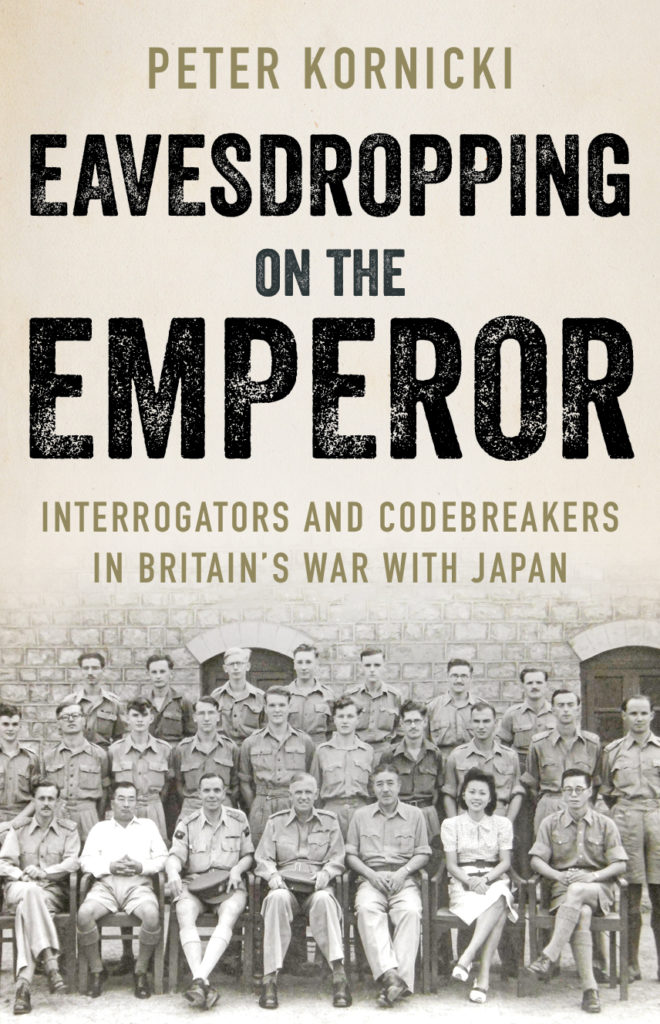
‘In the first 23 years of its operation, the institution then known as the London School of Oriental Studies (today’s SOAS) only produced two graduates in Japanese. This was despite repeated pressure from policy wonks like one Colonel Grimsdale, begging the establishment to have a ready supply of linguists to hand in case of any trouble in the East. The problem was, Grimsdale noted, “a number of chaps just can’t take these languages, and either take to drink or go a bit potty.”’

Over at All the Anime, I review Peter Kornicki’s Eavesdropping on the Emperor.

Easter 1638

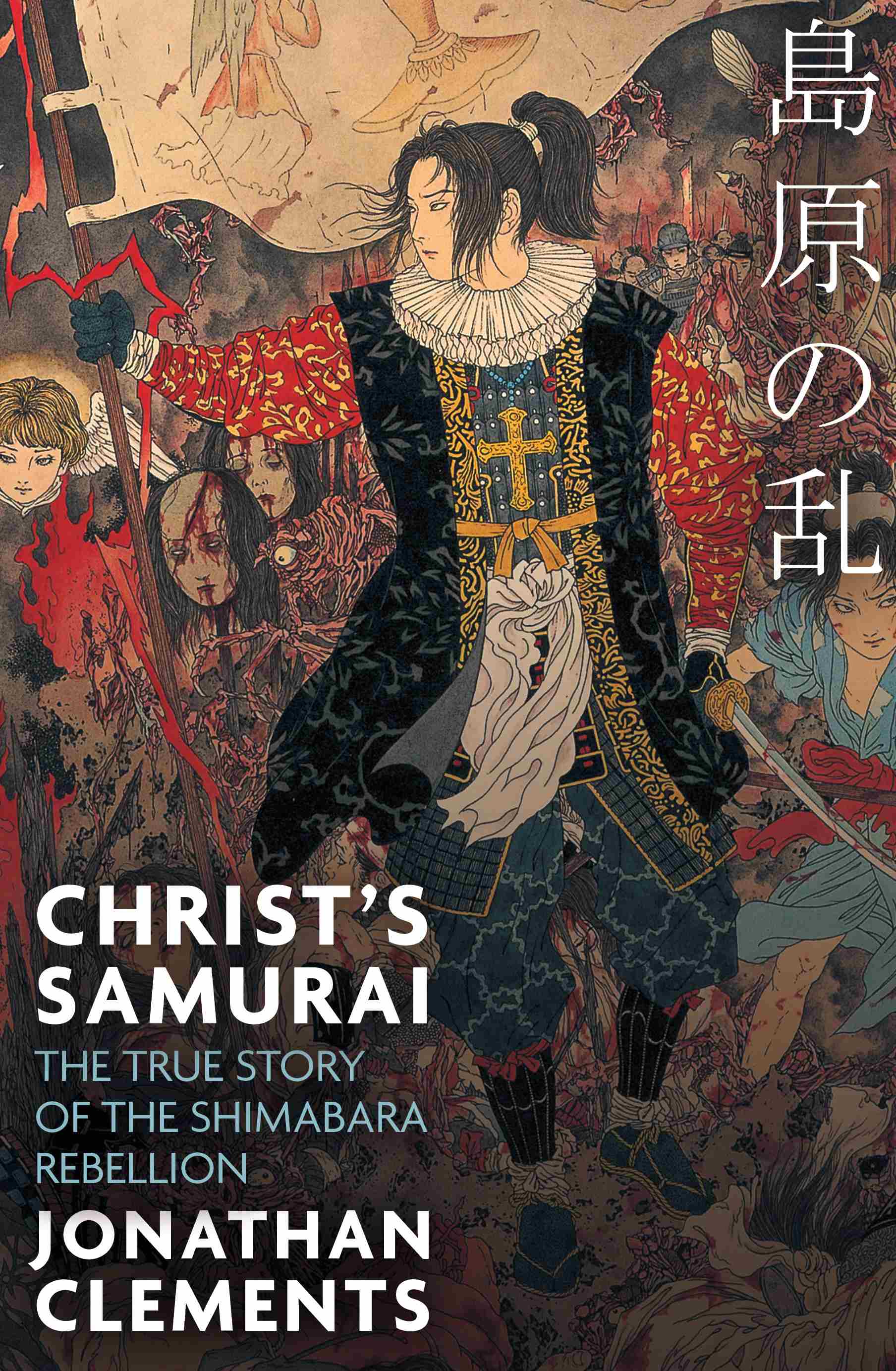
“Vital documents about the rebel state of mind were ignored until after the Rebellion because they used terms in Latin, the secret cant of the Christians, unintelligible to non-believers. Biblical allusions in rebel correspondence and rhetoric sailed completely over the heads of their enemies. Jerome Amakusa held his army together through a long siege that lasted through Lent 1638, only to discover that his most trusted lieutenant was plotting to betray him on Easter Sunday. This irony escaped the notice of the government troops, who did not know what Easter Sunday was.”

From Christ’s Samurai: The True Story of the Shimabara Rebellion.

Tenpu Abu (1882-1928)

“Fritz becomes actively involved in espionage, scuttling a freighter to block the Panama Canal and hobble the US naval response. It is Fritz’s execution by the vengeful Americans that leads to an outright declaration of war by Germany. Japan frees India from British oppression, in part owing to the Nitahara-class aerial warships able to cross the Himalayas in a surprise attack…”

Over at the Encyclopedia of Science Fiction, I write up the author Tenpu Abu (1882-1928), part of the spinoffery from my work on my new book, Japan at War in the Pacific.

Conan & the Ratings

In a tongue-in-cheek reminiscence, Yasuhiko Tan, the NHK producer who greenlit Future Boy Conan over dozens of other possible projects, wrote of his interest in the show as if it were a deluded romance. Bewitched by the charms of the original offer, and over-awed by the appearance of the pilot episode, he alluded to the progress of his “relationship” as he continued to throw support behind a project that fell behind and became too big to fail, only to snatch disappointing ratings on broadcast.

“These days,” he wrote to Conan as if it were a fondly remembered ex, “people talk about you like you are the great anime masterpiece, but back then, your reputation, to be honest, wasn’t so good. The audience share didn’t meet up with people’s expectations, and I heard all sorts of stories. You know how difficult it is to hear bad things about the one you love, don’t you?”


Over at All the Anime, there’s an extract from Future Boy Conan: Miyazaki’s Directorial Debut, the book I’ve written with Andrew Osmond to accompany the UK release of the 1978 TV series.

Shattered Jewels

Over at the History Hack podcast, I talk to Alex and Zack about the role of music and songs in the rise and fall of the Japanese Empire, drawing on my new book, Japan at War in the Pacific.

Some of the songs mentioned include “Miya-san, Miya-san“, the revolutionary anthem of the Meiji Restoration, and “Miya-sama, Miya-sama“, its surprise reappearance in Gilbert & Sullivan’s The Mikado, as well as “Myriad Enemies“, the stirring naval march that spent decades drumming the idea of “shattering like a jewel” into the minds of young recruits, and “Qing Lai“, the song about Chinese conjurors that the Japanese Imperial Army bulk-bought in thousands and scattered all over China six months after the Rape of Nanjing in a misguided effort in cultural outreach.

Paws for Thought

As a parent, one of the surprising things about my daily life is how many cartoons I end up having to sit through. I know, right? The irony. And I’m wondering what it is that is the cartoon of choice among the kids at Mamoru Hosoda’s house.

“Oh,” he says, “they are mad for PAW Patrol. It’s PAW Patrol all the time at our place.”

Blimey, I say to the director of Summer Wars and Belle, that must be awful.

“Oh no, it’s great,” he says graciously. “All these little dogs and it’s kind of like a sentai show. They love it.”

I personally can’t imagine the horror of being a world-class animator, who comes home after a tiring day making films to discover that your kids are obsessed with Canadian cartoon dogs, but Hosoda is determined not to be That Kind of Animator.

“I don’t make a big deal about being The Guy Who Made the Films,” he says, despite literally being the guy who made the films. “I did take my daughter to see Belle at the cinema, and there was one of those UFO Catcher machines at the cinema, which had Belle dolls in it. She was keen enough on the film to ask me to win her one. I must have put three thousand yen [£20] into that machine!”

At this point, I have to point out to him that he wrote and directed Belle and owned all the licences. If he wanted a box of Belle dolls dropped on his doorstep that night, he only had to make a phone call.

“Yes,” he says shyly, “but I’m not the kind of guy who says I directed the film. I’m the kind of Dad who wants his daughter to see him win something.”

It’s a lovely little window into his character, and into how sweetly he puts family ahead of work. But with the sight of both Belle and PAW Patrol: The Movie on the Oscars Best Animated Feature longlist, will there be a ceremonial burning of doggie merchandise at the Hosoda home?

“I think if my kids were voting members of the Academy, they would be voting for PAW Patrol without a second thought,” he grimaces. “But luckily, they’re not.”

[Peace was preserved when neither film made the shortlist] Jonathan Clements is the author of Anime: A History. This article first appeared in NEO #217, 2022.