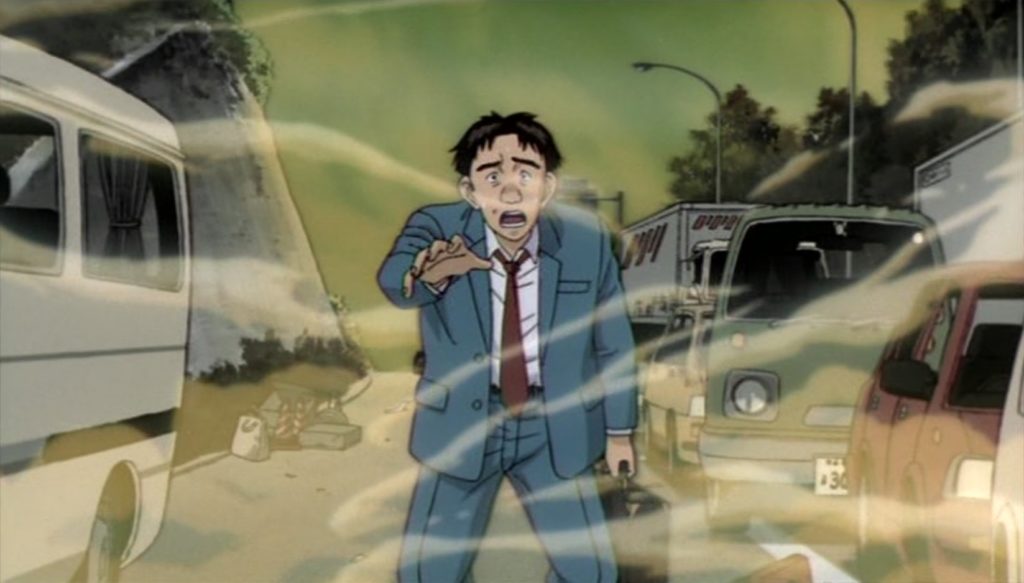
“Revisiting the film in the middle of the COVID-19 pandemic, it’s surprising how many resonances seem very much of our time. Stink Bomb begins in a doctor’s surgery, as the sniffling Tanaka gets his flu jab, and locals grumble about the virus that’s going around. He walks out into the snowy streets wearing a face mask – an entirely everyday sight in 2022, but something of an Asian peculiarity in 1995. The custom of wearing a medical mask when ill to protect others, was commonplace in Japan, China and South Korea, but had yet to spread around the world.”
Over at All the Anime, I cover “Stink Bomb”, the often-overlooked second story in Katsuhiro Otomo’s Memories anthology movie.
“The original novel of Bullet Train was itself a distaff sequel to Isaka’s earlier Grasshopper (2004), which has only this year been translated into English as Three Assassins. The fact that the plot relied on incidents and connections in a separate work may have skewed some of its flashbacks in all-new directions, leading to stand-offs in South Africa, South America and Mexico, and further dragging its events away from the original.”
Over at All the Anime, I write about the stories behind the story of Bullet Train.
“There is an outside world, but they don’t get to see it. In fact, as one of their minders reveals, the outside world is awful. The outside world is hell. And if the kids know what’s good for them, they should stop wondering about what’s outside… even if some of them seem haunted by apparitions that seem to come from there.”
Over at All the Anime, I review Masakazu Ishiguro’s manga Heavenly Delusion.
“…this is a book that not only gives the reader a fair impression of the world of voice acting, but also serves of something of a crash-course in being an actor-memorialist. Hayashibara excels at giving back, and her 258-page memoir is unexpectedly suffused with life advice, meditations on her career, and you-had-to-be-there anecdotes about the life of a recording artist.”
Over at All the Anime, I review the memoirs of voice actress Megumi Hayashibara.
“Russell T. Davies, in fact, introduced me to a useful term in modern criticism – the ‘heterosexuality’ of mainstream drama, in which is it assumed that if a woman and a man are onscreen together, there needs to be some acknowledgement of chemistry (or lack of it) between them. In other words, it’s Chekhov’s Gonads, and if people have got them, popular tradition demands that they must be used.”
Over at All the Anime, I write up Erica Friedman’s landmark history of lesbian anime and manga.
“Matsuda’s rags-to-riches tale is a quiet protest about, well, the whole idol singer industry. Everywhere in the modern world, but particularly in Japan, the politics of mass media entertainment favours the sort of algorithm-based dole that works enough to make money for corporations. Matsuda uses manga and talento, two of the most commodified and over-saturated media ever, to mount an argument for better things.”
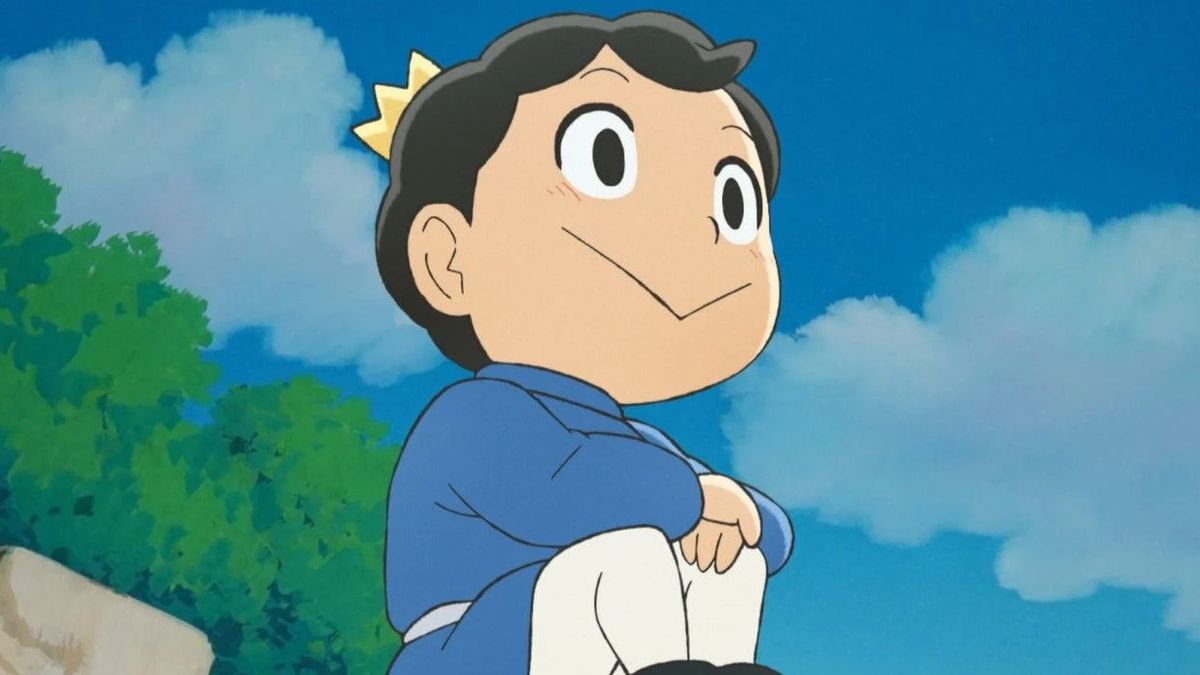
Claiming that “readers” had pointed out typographical errors and issues, the e-publisher BookLive suspended its ongoing translation of the manga Ranking of Kings. There was, however, somewhat more to it than that. This wasn’t a case of a few commas in the wrong place and a quibble about whether to keep an honorific in the dialogue.
And it was one “reader” in particular, Katrina Leonoudakis, herself a professional translator of some years’ standing, who had brought the case to light by tweeting a damning multi-part analysis of the Ranking of Kings English version. In it, she demonstrated that the script, provided to BookLive by an outsourcing company called Dragon Digital, had lifted huge chunks of an unofficial fan translation.
Now, in terms of criminality, a “ranking of crims” if you like, complaining about this is a bit like a burglar complaining he’s been shot while invading your home. The fan translation is itself an infringement of the Ranking of Kings copyright, and some might think that nicking it was a bit of canny move on Dragon Digital’s part, stealing from the stealers. Except they hadn’t been paid to do that, they had been paid to produce a professional translation.
This has happened many more times than people are prepared to admit. In fact, I vaguely remember the first cases, in the late 1990s, dropping the going-rate so low that companies were only paying peanuts, and ultimately getting monkeys. What this has meant, over the years, is that translation has either become a labour of pure fannish love, or a grim, business-like triage as a minion tells themselves that they will need to turn around x episodes per day in order to make a living wage. Yes, quality suffers. No, I am not surprised.
The act of lifting scanlations has also been substantially more widespread than people care to admit. It wasn’t that long ago that I caught a well-known publisher blatantly lifting a scanlation for something they charged money for in English. When I innocently asked who had translated it for them, they hemmed and hawed and muttered something about bodging something together from “French and German sources.”
I lacked the time or energy to get as forensic as Leonoudakis about it, but it’s safe to say that her discovery has opened a can of worms that is going to wriggle all over the manga industry for some time.
Jonathan Clements is the author of Anime: A History. This article first appeared in NEO #220, 2022.
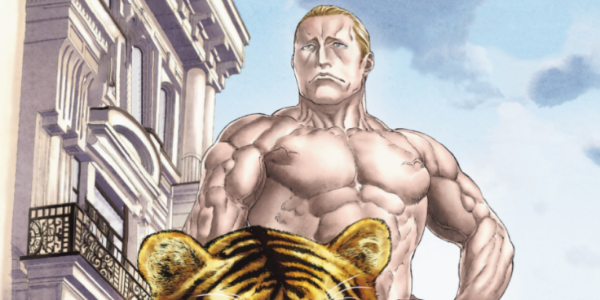
Ride-On King by Yasushi Baba is properly mental. No teenage boys letching after a bunch of witch-girls here. Instead, our leading man is Alexander Plutinov, president-for-life of the small Central Asian “Republic of Prussia”, who is transported to another world one day when he is crushed by a falling chunk from a massive statue. And in this new fantasy kingdom, Plutinov has magic powers, can ride around shirtless on a wyvern, and put his martial arts skills to a new and noble use, saving a bunch of teenage girls from marauding orcs, wild boar and dragons or something. It is, for the world-weary politician, something of a holiday in a fantasy realm, an extended tour of an absurd fantasy realm accompanied by jailbait half-elves.
No, no, wait for it. There’s more. Because your correspondent had to scurry off to double-check that Ride-On King didn’t have a Russian-language Wikipedia page. Fortunately, it doesn’t, because if it did, I think there would be tanks in Tokyo by tomorrow morning – in case you didn’t already guess from the synopsis above, this manga epic is nothing less than “In Another World with Vladimir Putin,” its protagonist a cheeky allegory for Russia’s favourite shirtless martial-arts-loving president-for-life. I just loved the premise of this ridiculous manga, not so much for its off-the-peg D&D adventuring, but for the sheer gumption of casting an older man in the role so often snagged by ungrateful teenagers who, frankly, never make the most of it. The whole thing is a refreshing change from the norms of the so-called isekai genre, and makes me think about all the wonderful possibilities for similar celebrity spin-offs: Is it Wrong to Try to Pick Up Girls in the White House?, That Time I Got Reincarnated as Michael Gove, or Sorcerous Stabber Joanna Lumley. Admit it, you would read all of those.
Jonathan Clements is the author of Anime: A History. This is an excerpt from the Manga Snapshot column on Sirius magazine that appeared in NEO #217, February 2022.
To Dublin, the one in Georgia, not the one in Ireland. That’s Georgia, the one in the United States, not the one on the Black Sea. Okay, to America, where a man has been sentenced to three years in prison for using a COVID relief loan to buy a $57,000 Pokémon card.
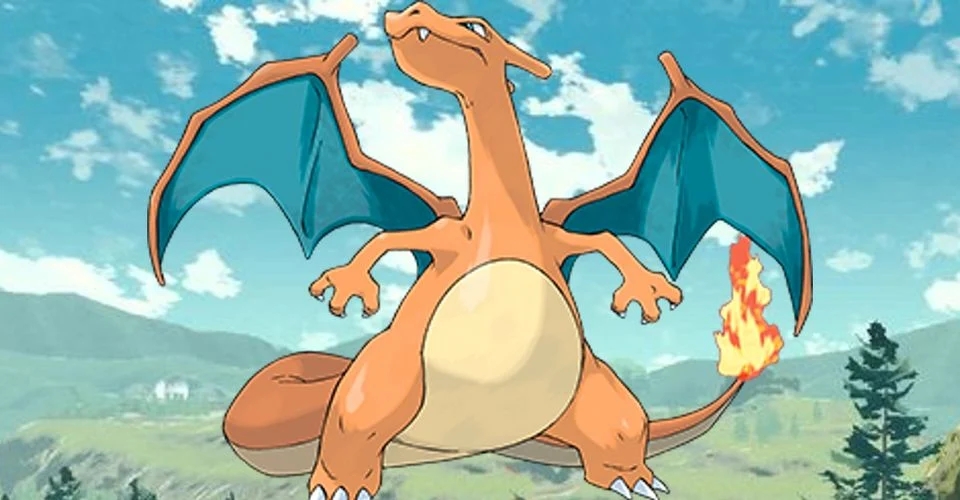
Vinath Oudomsine had told the Small Business Administration last year that he owned an “entertainment services” company with a high turn-over and a growing staff, and pleaded for $85,000 to keep things going during the pandemic. Then, he spent two thirds of the money nabbing himself a highly collectable Charizard card.
This was not what the Small Business Administration had in mind, and Oudomsine was obliged to hand over the ridiculously high-priced card, which I can only assume was one of the ultra-rare, first-printing Japanese basic sets from 1996. So, unlike the 1999 Holographic Charizard #4 ($36,000) or the 1999 Shadowless Holographic #4 Charizard ($25,500), the first-printing lacks a rarity symbol, because it was printed in the first two weeks of the existence of the game, before anyone thought rarity symbols would be necessary. It would have been literally one of the first Pokémon cards ever printed, which is apparently worth something to someone.
The issue of trading cards is even a matter of some academic speculation, as covered in Gilles Brougère’s “How Much is a Pokémon Worth?” in Pikachu’s Global Adventure (2004, you’re welcome, media students). Back in NEO #165, this column expressed my doubts about the collectability of many collectables. But Oudomsine’s case demonstrates that there was at least one person in the world prepared to assign such a value to a “trading” card.
Oudomsine wasn’t sent to jail for placing notional value on a rare Charizard – that is still not a crime. He was sent to jail for defrauding the US government to be able to afford one, so don’t worry, the Poké-police will not be knocking on your door any time soon. But what I want to know is what happens to that card now? Will the Small Business Administration will be trying to sell it off to get its money back, and if so, does it come with a new bill of provenance, increasing its value even further by noting that it was that card, from that case, that got all the international press coverage?
Jonathan Clements is the author of Anime: A History. This article first appeared in NEO #219, 2022.
“Pompo is an unapologetic cheerleader for B-movies, cranking out Asylum-level nonsense with scream-queens and scary monsters. But she has a mindset that is vital in producers (and in critics, and indeed on festival juries) – she loves each of her films for what it is. She assesses her films on the basis of how they can be the best type of that film that they could be, and it soon becomes obvious that she has a similar attitude towards people.”
Over at All the Anime, I write up Pompo the Cinephile, coming to UK cinemas in June.