Sing Anime!

I’m one of the interviewees over at the BBC website for Arwa Haider’s deep dive into the boom in anime music. As ever, only a couple of soundbites made it in, so here are my original answers in full.

  • Astro Boy‘s 1960s “Atom March” is often cited as the original anime anthem; would you say that’s true, or do you feel anime music’s roots lie elsewhere?

Yes, the Astro Boy theme was one of anime’s big successes, but the real hit came a couple of years later, when Jungle Emperor (a.k.a. Kimba the White Lion) was released. Slowly warming to the idea of spin-off merchandise, the producers put out anime’s first full-length 15-track LP, which sold 100,000 copies in short order. It made a lot of money for the composer, but created friction at the company when the musician’s union came looking for the lyricist, in order to hand him his royalty cheque. The lyrics to the Jungle Emperor theme had been dashed off by one of the animators, Eiichi Yamamoto, in his lunch-hour, leading to a fierce argument at the studio as to whether he had performed the task on “company time.” The studio eventually won, and Yamamoto forfeited his royalties.

By the 1970s, anime had settled into a groove whereby the ownership of the IP was often split between a manga company, a TV station, and a bunch of other interested parties in the production committee. Music companies got involved as a means of piggy-backing their records into what amounted to a weekly advert on primetime.

  • What qualities would you particularly associate with anime music, given its themes incorporate such a huge range of styles?

Some anime themes are entirely incongruous, wedged in by a music company on the production company desperate to get airplay for one of their new starlets or band signings. Some are ridiculously heavy-hitters, such as songs by the likes of Oasis or Franz Ferdinand, which can create legal nightmares outside Japan when the rights have to be renegotiated for overseas territories. But anime also has some absolutely superb composers, like Yoko Kanno, who produces fantastic orchestrations, with weird instruments and world-class soundtracks. Someone to watch out for is Kensuke Ushio, whose attention to detail and realism is truly astounding. On The Colours Within (2024) he had to come up with the sound of the in-film garage band, carefully crafting electronic pop inspired by the early days of Joy Division. He even went as far as recording ambient sound in Japanese church halls, in order to ensure that the onscreen rehearsal sessions had the right room tone.

  • I’m intrigued by Spotify’s stats reflecting that anime music global streams increased by 395% between 2021 and 2024 – what factors do you think have fuelled its modern surge in popularity?

I can only guess, but the strange attractor in all that is surely Covid. For a year, people were trapped in their houses, leaning on the internet. I had many parents coming to me and asking what streamer they should buy to keep their kids quiet watching anime. You’re looking at a massive spike in the availability of anime to new fans, and the time they had on hand to watch it. And in the four years since, a bunch of young fans have become consumerist teens with a love of anime.

Companies are also keener to monetise music, as well, because sometimes the music is merely the advert for the live event, which is an experience that can be sold, but more importantly, can’t be pirated.

  • International versions of seem to be an increasing range of international artist anime collabs (eg, this track by UK rapper Che Lingo for a Crunchyroll season trailer); do you feel the overall sound of anime is changing, or has this music constantly been in a state of flux?

Anime music has always striven to be globally appealing, and it has dragged in non-Japanese performers and composers for decades. In the last decade the rise of streaming has been likened by Japanese producers to the coming of the “Black Ships” of the US Navy in the 19th century. Netflix, Amazon, HBO… these companies are arriving with massive budgets and a desire for a global footprint, although that’s not always worked to the Japanese music industry’s advantage. When Netflix bought Evangelion, for example, they stripped out the multiple different versions of “Fly Me to the Moon” from the closing credits, because most people on Netflix skip the credits anyway, and the international rights would be so much wasted money. There was a sudden flurry of anime musicals in order to find somewhere for the music companies to put their tracks, if they couldn’t get any attention as the credits rolled.

But such companies also have big budgets available to bring in big names, and post Covid, everybody in the arts is more readily hired remotely. Meanwhile, the Japanese are more than happy to work with overseas artists if they like their work. Ludwig Göransson and Rasmus Faber, for example, have a rack of anime credits to their names.

  • Finally, do you have a favourite anime theme, or are there just too many to choose from?

My childhood joy was the theme from Science Ninja Team Gatchaman, which I first heard only in an instrumental version on what was known abroad as Battle of the Planets. When I went to Japan, I heard the lyrics for the first time: “That shadow dancing in the sky / the white wings of Gatchaman,” and the haunting refrain: “Earth is alone, Earth is alone.”

I think it’s hard for today’s youth to understand that there was a time before the connectedness of all things, when simply hearing Japanese music would require a long customer journey. I have several albums by Dragon Ash on my car stereo to this day, but I would never have heard of them in the 1990s if they hadn’t provided the soundtrack to the anime Virus Buster Serge. Today, you can find out about them just by asking your phone or your laptop.

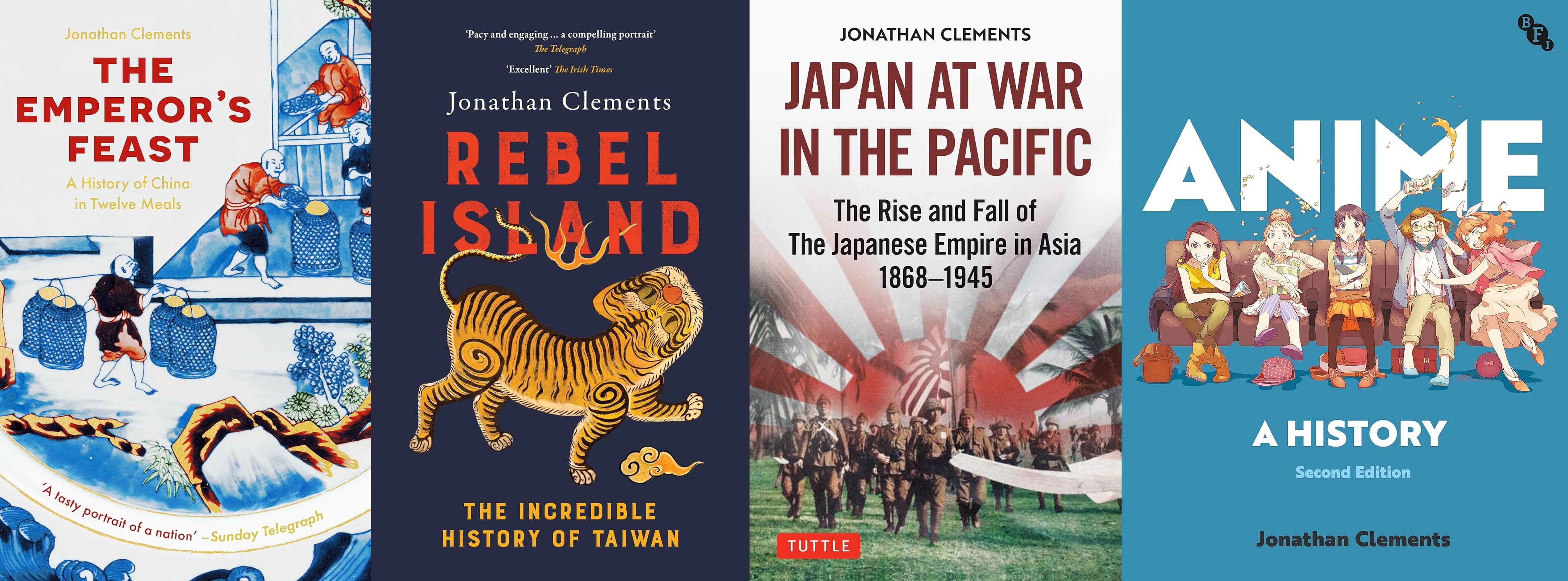
Jonathan Clements is the author of Anime: A History.

Transnational Perspectives on Anime

Today I am off up north, ready to give my keynote address at the University of Lancaster’s symposium on Transnational Perspectives on Anime this Friday.

“The history of anime in China is a roller-coaster ride of diplomatic boondoggles, under-the-radar industries, unsanctioned releases and censorship scandals. Jonathan Clements investigates the fluctuating fortunes of Japanese animation in China, not only in terms of its reception among audiences, but of its hidden impact in the production sector, the politics of its distribution and exhibition, and the effect of recent government backlashes and clampdowns as the People’s Republic seeks animation autarky.”

100 Million Shattered Jewels

Over at the Subject to Change podcast, we reach the third and final part of our deep dive into my book Japan at War in the Pacific, as the months of “running wild” come to an end, and the Allies grow ever nearer.

Includes the pernicious propaganda of Alexander’s Ragtime Band, the reasons why cops find a gold-painted human skull in an American lake, creepy casting decisions for Hamlet, and the dramatic gunfight at the imperial palace as extremists tried to prevent the broadcast of Hirohito’s surrender address.

An Alien Game

Over at the Subject to Change podcast, I discuss the history of Japan in the late nineteenth century in the first of three episodes based on my book, Japan at War in the Pacific. Includes China and Japan compared to two tramps fighting over a cardboard box in a skip; the false imperial proclamations of the Meiji Restoration; the sing-along revolution, and the scandalous story of the murder of the Empress Myeongseong, so-called vampire queen of Korea.

Band of Assassins

“It is a typical case of ninjutsu fake news, citing a historical incident, shoving ninja into it, and shrugging if no-one was left alive to confirm the claim. Shinobi no Mono demands that the viewer accept its central conceit – as if a newly made Robin Hood movie wanted everyone to agree he was also a vampire.”

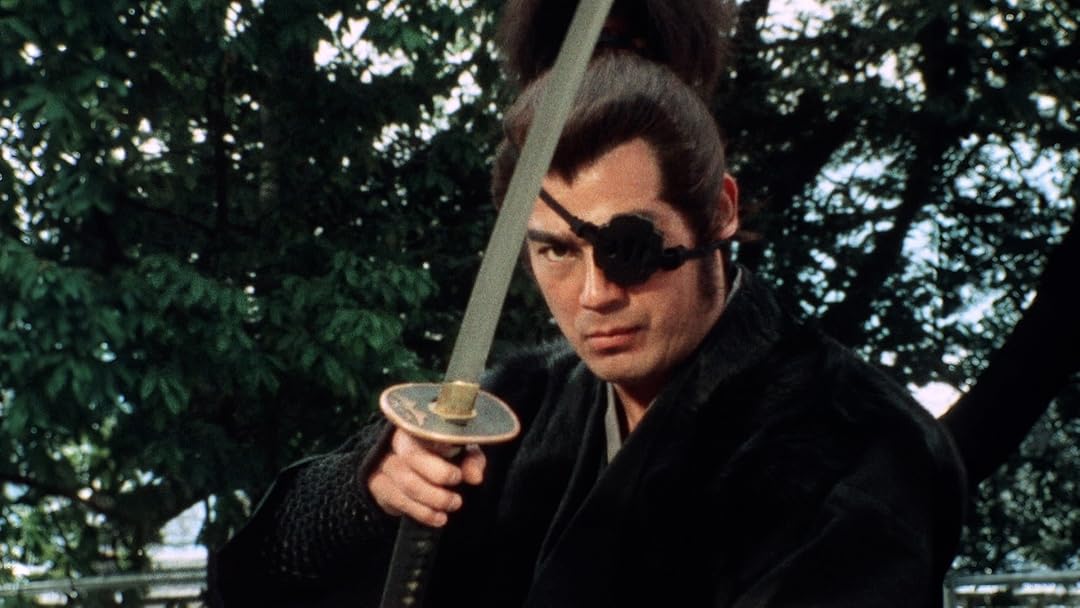
Over at the Radiance Films substack, they have reprinted my booklet essay on the Shinobi no Mono films from the now unavailable collectors edition.

The Invisible Swordsman

“On top of the usual information about cast and crew, Clements provides useful historical and cultural context to the film and its setting. It’s a wonderfully informative and engaging track. Clements is becoming one of my favourite commentators, and I hope to see him get the opportunity more often.”

David Brook at Blueprint review goes looking for The Invisible Swordsman from Arrow Films.

Bullets and Betrayal

“Every title in the set includes some kind of extra content, and they are all very good. I found them fascinating; I particularly adored the video essay by Jonathan Clements for Carlos, especially his breakdown of the film’s title.”

Robert Ewing at The People’s Movies pokes around the extras on Arrow’s V-Cinema Essentials box set, which is loaded with heavy-hitters in the world of Japanese pop culture, including Samm Deighan, Patrick Macias, Tom Mes, Mark Schilling and a dozen others. And me. I haven’t actually got to my copy yet myself, but it looks to me like the video essays and creator interviews are easily the length of one or two whole extra movies.

As for what I said: “There are plenty of Portuguese names that are easily pronounced by a native Japanese speaker. Carlos isn’t one of them. Japanese has trouble differentiating the letters R and L, and doesn’t end naturally on a sibilant. The title KARUROSU is hence a deliberate, rather malicious tongue twister for the Japanese, accentuating its alien nature.”

Project A-ko

‘Can it be a coincidence that the girls’ schoolteacher, Miss Ayumi, has a hairstyle recalling that of the magical girl Creamy Mami? Is it possible that Mari, the hulking warrior-schoolgirl, is a feminised take on Kenshiro, the titular Fist of the North Star? Is that Captain Harlock’s vessel, the Arcadia, stuck to the prow of an alien battleship? When the girls go to the cinema, are they watching a pastiche of the recent hit Harmageddon? And when they leave the cinema, do we get a momentary glance of the words “Spartan X-ko” on the marquee, referring to Spartan X, the Japanese title of Jackie Chan’s Wheels on Meals? Yes, yes, yes, yes and yes.’

Almost a year after I handed in my 12-page article on Project A-ko, the Anime Limited collectors edition of the Blu-ray that contains it is finally coming out.

The City of God in Asia

I’ve deliberately chosen this hotel in Zhuhai because it is in walking distance of Gongbei, the massive border crossing to Macao. I join the dawn hordes streaming towards the border, across the wide expanse of its square out in front. There are men in hi-viz jackets and schoolgirls in uniform, many of them joining the “Macao Residents” line – so, in fact, not Macao residents at all, but actually living over the border and commuting every day.

The kettling is designed for thousands of people, but there is only one person in front of me at the Foreigners line to leave China, and again at the line to enter Macao. I am through in fifteen minutes, and at first glance, I might as well be back in Hong Kong again. But the streets are narrower, there is more tiling on everything, and the first shop I see is St Mary’s Bakery.

In the course of my day in Macao, I manage to somehow walk across the entire old town, from the northern warren of tower blocks, past yet another statue of Lin Zexu, hero of the Opium Wars, through the tunnel that passes under Guia Hill, around the empty mall at Fisherman’s Wharf, and all the way to the statue of the Goddess of Mercy that faces the casino-riddled island of Taipa. The signage is all bilingual in Portuguese and Chinese, but while I hear Mandarin, Hakka and Cantonese spoken around me, I do not hear a single word of Portuguese all day.

Macao’s signature location is the Ruins of St Paul’s, a towering church façade at the top of steps in the old town, a magnet for hordes of selfie-taking influencers and girls who think that a V-sign, jumping in the air, or pointing poutily makes their photos more interesting. Google Macao, and the Ruins of St Paul’s is among the first images that show up. People show up, take their picture and then sod off back into the maze of side-streets, where pushy hawkers try to get them to buy Macao fridge magnets and pork cakes.

St Paul’s is not the name of the church. The church is called the Church of the Mother of God. St Paul’s is the name of the college complex that it was part of, founded in 1573 by the Italian Jesuit Alessandro Valignano. Valignano will be a name familiar to many in this parish, because he is a major character in my book Christ’s Samurai. Horrified that missionaries in Japan didn’t speak Japanese, he set up a Japanese-language boot camp in Macao, which he intended as “the City of God in Asia” – the centre of all Jesuit activities. St Paul’s College was the result, the site of Macao’s first printing press, which churned out Japanese learning materials and… Bible stuff. In the 1630s, it became a training ground for Japanese priests (exiles and the children of exiles) ready to undertake the one-way clandestine mission to enter Japan and administer to the underground Christian communities.

In fact, so many exiled Japanese were in Macao at the time that locals mistook them for the advance party of a Jesuit scheme to invade China, with their churches assumed to be forts and their seminaries taken for barracks. The church façade was partly built by Japanese masons, living in exile as their country turned increasingly anti-Christian. This has turned the extant stonework into one of the only surviving examples of what some have called “Japanese Baroque”, with a quirky take on Christian themes, and multiple appearances of Japanese chrysanthemums. The Virgin Mary is depicted subduing a seven-headed dragon, and a skeleton exhorts passers-by in Chinese: “Remember death and do not sin.”

The seven-headed beast of Revelation 17 is supposedly ridden by Babylon the Great, the Mother of Harlots and the Abominations of the Earth, so quite possibly the legend next to it that reads “The Virgin Mary Tramples on the Dragon’s Head” is a desperate attempt to explain why she’s there, which only muddles thing further, because there is an image of another woman on the dragon, and an image of Mary next to the dragon, and I sense we are looking at the 1630s equivalent of an argument between rival commenters in Google Docs as a priest frantically tries to stop Dave the Japanese Stone Mason from accidentally committing any further carved heresies.

An inscription on a cornerstone reads: “Virgini Magnae Matri Civitas Macaensis Libens Posuit an. 1602”[The City of Macao built this Church in honour of the Great Virgin Mother in the year 1602]. By the “City of Macao”, it refers to the Christian inhabitants, who were persuaded by the incumbent Captain-Major to donate a half percent of their earnings to build a church if the ship they were waiting for turned out not to have been destroyed in a storm as expected. It was the first wager in Macao’s long gambling history, and paid off a few days later. But work on the building continued until 1640, leaving ample time for new Japanese workers to flee their homeland and to work on the façade.

The interior was also once a triumph of oriental artistry, although we can only imagine the decorations as reported by Peter Mundy in 1637: “Carved in wood, curiously guilt and painted with exquisite collours, as vermillion, azure, etts., Devided into squares, and att the Joyning of each squares greatt roses of Many Folds or leaves one under another, lessning till all end in a Knobbe.” There were also numerous pictures, now also lost, thought to have been made by Japanese students of Father Giovanni Nicolao, who formerly taught painting in Arima and Nagasaki, but arrived in Japan, with his students, in 1614 following the latest anti-Christian prohibition.

At least one painting by Nicolao’s students is known to have survived the fire that destroyed the building in 1835. It now hangs in St Joseph’s Seminary, nearby, and is an image of St Michael, drawn as only a Japanese painter would imagine him, clad in samurai armour, wielding a katana, his helmet decoration a ring of bursting rays. Takashi Miyanaga, in a 1995 article, determines that it must have been part of a roof image above the “Altar of St Michael” where several prominent Japanese Christians were buried, which would imply that there was, at very least, a second panel depicting the dragon that Michael is supposed to be fighting, although in the extant image, there are only a few of its flames landing near his foot.

Jonathan Clements is the author of Christ’s Samurai: The True Story of the Shimabara Rebellion. You can hear him talking about Japan’s Christian Century on the Subject to Change podcast.

Calling Occupants

“Swept up in the UFO fervor of the era, aviation journalist Yusuke Matsumura derived a strong inspiration from the flying-saucer cult of George van Tassel in the United States, suggesting that aliens could be contacted through telepathy by chanting the mantra ‘Bentra, Bentra.'”

Over at the Encyclopedia of Science Fiction, I write up the Cosmic Brotherhood Association, a Japanese saucer cult that cast a long shadow in popular culture.