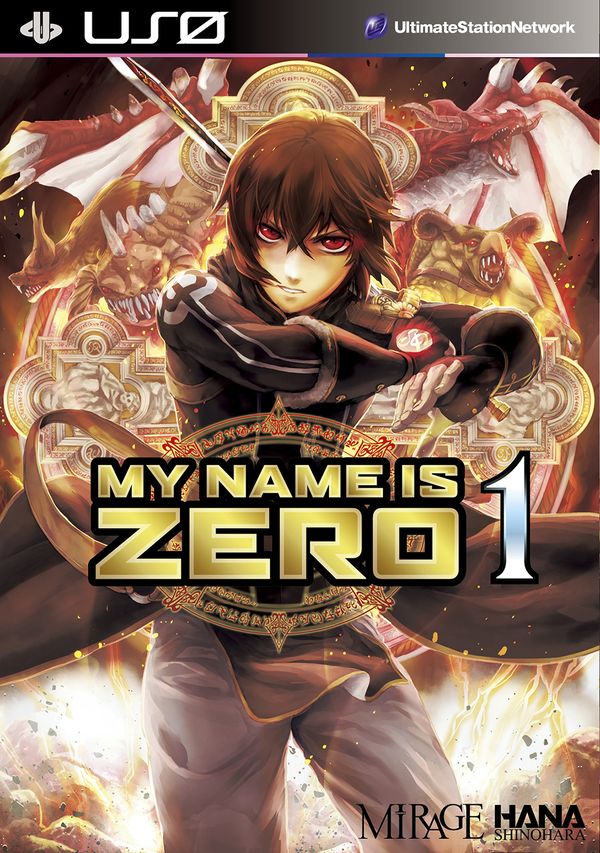
Kanzaki Rei is an avid gamer, but his debts are mounting up as the expensive medical treatments for his sister don’t come cheap… in a fit of desperation he follows a link in a mysterious email promising help only to find him transported into the dangerous world of his favourite videogame. For each boss he kills he earns money, keeping his sister safe, but he risks death with each confrontation!
Out tomorrow from Titan Manga, according to the trades, volume one of Hana Shinohara’sMy Name is Zero, translated by Motoko Tamamuro and me.
“What we actually know about him could be written on the back of a beer mat.”
There’s been some kind of hooha in the gaming world regarding the appearance of Yasuke, the “African samurai” in the new Assassin’s Creed. Five years ago, on the All the Anime blog, I wrote up the work of historical reconstruction that was likely to have inspired his appearance.
No, you probably weren’t expecting a picture from Dune to grace the inner pages of NEO magazine. But it’s been on my mind a lot recently, because of the backstory, largely obscured in Denis Villeneuve’s version, of the Butlerian Jihad, an ancient war against artificial intelligences, inspired by the quote in the Dune universe’s pimped-up bible: “Thou shalt not make a machine in the likeness of the human mind.”
Artificial intelligence, or to be more correct, machine learning, is already seeping into many aspects of our lives, including anime. In this very magazine, (NEO #227), we reported on Yuhei Sakuragi’s reliance on “human fallback” to prompt his crowd animations into better realism, and on the developments at Mantra (NEO #231) to create an automated manga translator. Japanese animators are testing A.I. to replace inbetweeners, Midjourney has already drawn a whole comic for ROOTPORT, and now streamers are “testing” A.I. subtitling.
The thing is, the streaming world is already knee-deep in machine translation, whether the streamers admit it (or know it) or not. Time and again, watching mainstream telly, I’ve winced at auto-generated subs from English, that mishear dialogue and have gone uncorrected. Someone, no doubt, is being paid to edit such errors, but they, like the now-replaced human translators who have been ditched, isn’t being paid enough to give things more than a cursory glance. When even YouTube and Subtitle Edit have auto-translation options, who can blame a media corporation from wondering whether this will help them cut even more corners? As this column predicted in NEO #215, the expansion of streaming threatened to overwhelm human translators, making robot assistance an inevitability.
I remain resolutely analogue for now… until the day that my translation clients stop paying me a living wage, and I resort to robot minions.
Now, you might think this all sounds a little paranoid. It seems churlish to complain about robot labour when so many aspects of our lives are already delegated to machines. If you met your spouse through a match on Bumble; if you bought an anime Blu-ray that was recommended to you by an Amazon algorithm; if your last holiday was booked and steered by a travel app like Trip, then machines are already helping out in your daily life. Yesterday in the supermarket, I realised I didn’t know the local word for sourdough bread, and pulled out my phone to ask Siri.
“I don’t speak Finnish,” said Siri, apologetically. Which makes Finland the ideal place for humanity’s last stand.
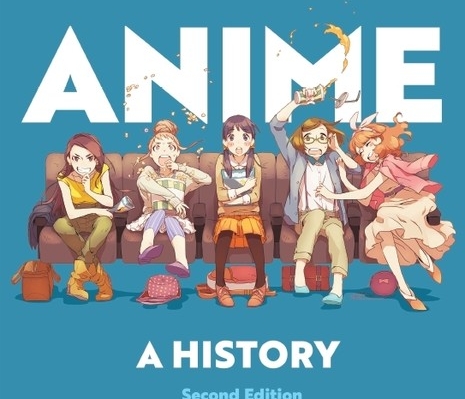
Jonathan Clements is the author of Anime: A History. This article appeared in NEO #240, 2024.
Culinary student Takeru’s life takes a sudden turn when he crosses paths with Jo, an ace sharpshooter, and the kind-hearted Meg. The dynamic duo run a ‘Jack of all trades’ service, which sees them thwart criminals, recover stolen treasures, and battle formidable opponents to pay the bills. Takeru is inspired by his new friends and finds courage in the face of adversity, proving that overcoming fears can lead to unexpected heroism.
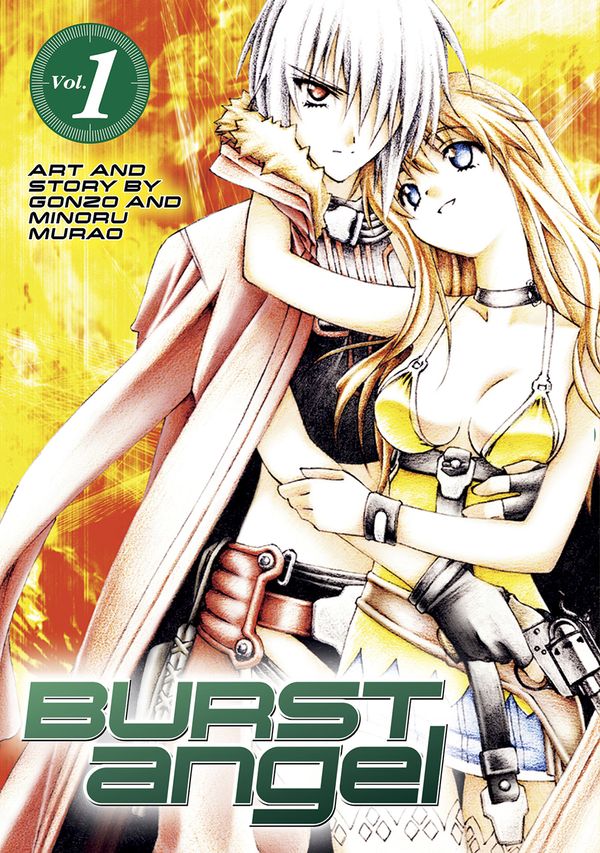
Out tomorrow, according to the trades at least, the first volume of Minoru Murao’s manga adaptation of the fan-favourite anime Burst Angel. Motoko Tamamuro and I worked on the translation of the English script.
Ayumu Mashiro has given up on his dream of being a hero and settled down into the mundane life of a police officer… until one day he transforms into the legendary villain known as Zero! Now a mysterious voice is guiding him as he’s thrown into the battle between good and evil!
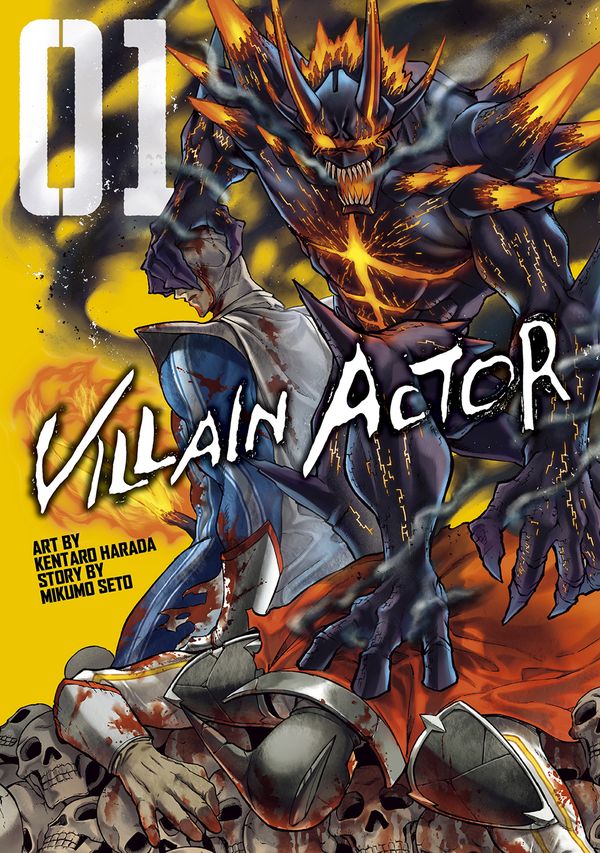
Out today, I believe, from Titan Comics, the first volume of Kentaro Harada and Mikumo Seto’s Villain Actor, a very Japanese take on superheroes and conspiracies. Motoko Tamamuro and I worked on the English script.
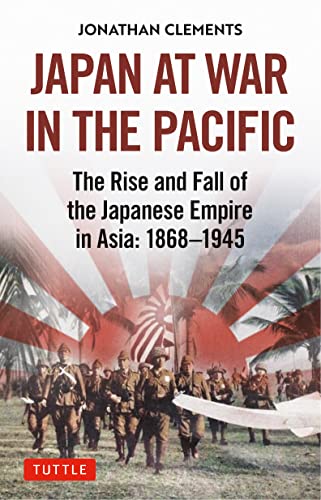
“The strength of this book, and its contribution to military history, does not lie in its periodisation scheme, nor in its assignment of various causes and motives to Japan’s military leadership and citizens. Rather, it is author Jonathan Clements’s flair for rendering complex ideas into readable prose, coupled with his eye for little-known historical details that are relevant to the story of World War II, that make this book an apt introduction to the Asia-Pacific War, or a fascinating read for those who consider themselves to be experts.”
Meanwhile, Ales Kotva in the West Bohemian Historical Review also writes a long and thoughtful piece on the book, placing it in the context not only of what has past, but what might be to come.
Back in March, Mark Schilling interviewed me as part of a piece he was writing for Variety. As ever, a long answer gets distilled into a couple of soundbites, so here is the unexpurgated version of my replies.
Deals are being signed between Japanese companies and their Korean and Chinese partners, but I’m hearing the pace is slower that might be expected due to everything from structural barriers (the Japanese production committee system) to political and cultural issues (Japanese fan criticism of Japanese anime adaptation of the Korean web novel “Solo Leveling” due to latter’s supposed anti-Japanese bias).
Ten years ago, Chinese investment was looking like it was going to be a game-changer in Japanese animation. We had Chinese companies bailing out troubled productions and snapping up ailing studios, and the potential market for Japanese animation in China was conservatively estimated at twenty times the size of that in Japan.
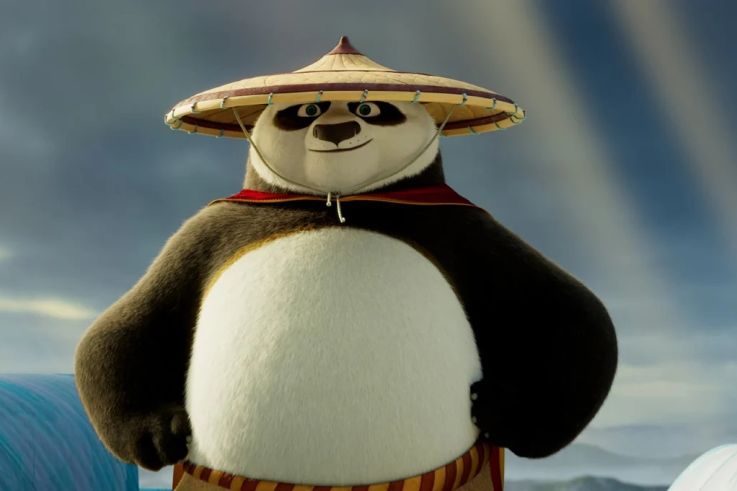
But China has become increasingly restrictive for foreign media. There was a lot of celebration in the foreign press about the likes of Kung Fu Panda and Mulan making it through to Chinese audiences, but they have come to be derided in China as unwelcome distortions of Chinese culture. The People’s Republic is becoming increasingly bullish about “cultural security” and there are calls in recent Five-Year Plans for it to become a “strong film nation”, in control of its own cultural content rather relying on whatever leaks in from overseas.
In 2020 China introduced the new Law on the Protection of Minors. There were a whole bunch of clauses in that law that gutted the potential for anime in China, including the banning of ownership of a streaming account for anyone under sixteen, and the forbidding of “obscenity, pornography, violence, cults, superstitions, gambling, inducements to suicide, terrorism, separatism, or extremism” for any viewers under eighteen. Now, of course, not all anime is sex and violence, but a good half of modern productions are aimed a late-teen demographic sweet-spot that is now forbidden.
That doesn’t destroy Chinese investment by any means, but it heavily skews the willingness of Chinese corporations to get involved in Japanese production. Pre-COVID, many were happy just to throw in some cash and distribute the result in their home territory. Now, they are well aware that if they pay out for the wrong sort of anime, their investment is worthless in the Chinese market. So, we get an increased focus on “anime with Chinese characteristics,” which won’t necessarily play well in Japan.
That’s the politics. Structurally, I think the real issue that we’re facing (and this applies to both Korea and China as outside investors) is an incredible choke-point in labour flows at the moment. There isn’t just the ongoing aftermath of COVID; there’s the fact that the big streamers like Amazon and Netflix have booked some studios up years in advance.
Meanwhile, Japan has introduced the new Work-Style Labor Reforms. These were actually passed six years ago, but they only phased in during 2020-1, and they severely curtail the amount of overtime that companies are allowed to authorise. Anime companies used to work miracles by working around the clock, but now they have their hands tied. They could bring in more freelancers, but freelancers are hobbled by changes to Japanese tax law (October 2023), which obliged them to collect sales tax on all their invoices. So, if you are a Korean or a Chinese company hoping to lean on Japanese labor, you have all these issues to contend with before someone’s even picked up a mouse.
It’s only then that we get to the content issues. Anime has been through many transformations in the last few decades, with a widely fluctuating relationship to overseas demand, or rather to the degree to which the producers were ready to acknowledge it. There was a point in the 2010s where it was all about making local, domestic content for Japan, and if foreigners liked it, too, that was gravy. Now anime companies talk about foreign investors as the “Black Ships” – comparing them to the American gunboats that rammed open the doors to Japan in the 1850s, imposing an international outlook on a nation that was trying to stay shut away in its own little world.
People are drawn to anime because it’s different. But so many overseas investors are trying to use anime talent to make shows that are focus-grouped to within an inch of their life to appeal to audiences in 70 countries at once. And if you are trying to please viewers in London and New York, Nairobi and Dubai, Buenos Aires and Beijing it can be incredibly limiting, artistically.
I don’t know if I want to get involved in the hoo-ha over Solo Leveling. Because you have people online getting offended at a hand gesture that they think means animators are making insinuations about Koreans having small penises, even though the studio that made the opening animation was Korean…. I mean, I am already boring myself. One of the corollaries of truly international, immediate streaming productions is that you now have the chance to offend several million people at once, and that they have the ability to make a stink about it in real time. Companies can be quick to pivot, not only in how they steer their content in production, but also in reaction to such drama after broadcast before their share prices drop. That’s the problem when everything is connected: everything is connected.
Do you consider Japan’s production committee system a co-production barrier? Or have foreign partners learned to live with it and even use it to their advantage?
In my experience, it is often a terrifyingly tedious chicane of obstacles, particularly with old shows where things that you could once agree with a handshake and a whisky now have to be run past a group of disparate strangers, some of whom are inheritors or purchasers of someone else’s intellectual property, with no real interest in making useful decisions. It’s one thing to be dealing with the original manga creator and the woman who runs the studio. It’s another to have to track down the dead producer’s ex-wife and the venture capitalist who accidentally purchased a dormant animation company.
I suppose the one way in which foreigners were able to use the production committee system to their advantage was by buying into one as a means of securing overseas rights without having to get into a bidding war. Manga Entertainment did that with Ghost in the Shell in 1995 in order to head off local competition in UK and European markets, and there were some similar shenanigans recently over who got to own the new Shinkai. So, in that sense, the ability to buy into the “ownership” of a new anime while it is being made can save a canny investor hundreds of thousands of dollars at the distribution end.
This interview with me by Shelley Pallis about my book Anime: A History was conducted for the Anime Limited blog, but got bumped and re-bumped and re-re-bumped as more pertinent topics got placed before it, until there was nowhere for it to go. I reprint… well, print it here with permission.
I want to talk about those moments in the book when you “break character” as a historian and talk about stuff that’s happened to you, in the context of anime history.
You mean Kyoto Animation?
Sure, that’s one.
That’s from the otaku economics chapter, where I talk for several pages about the particular way that Kyoto Animation was run as a studio, and the way in which it encouraged interactions with fans, offering the chance to be creators. Of course, that backfired terribly when one self-styled would-be creator burned the studio down.
I had to go on stage at Scotland Loves Anime to introduce a screening, I think it was of A Silent Voice, and I had no idea how I was going to do one of my usual stand-up routines about such a serious subject. So instead, I just explained that usually Andrew Partridge would introduce the final film of the festival, but he just couldn’t face talking about people that he knew personally in such a dire situation… and then I decided to read out the names of the people who had had died. I didn’t explain that was what I was going to do, I just said: “And so we’re going to do this…” and started.
You got this ripple through the audience as people realised at different times what I was doing, who these seemingly random names were. But also, the list goes on and on, and on… it takes a long time to read out all those names, and that starts to add real weight to the sense of loss in the business. So, yes, I kind of break the fourth wall in the book to talk about that, because these were real people, and we knew some of them, and someone killed them because they didn’t rush to adapt his isekai novel or something.
Your book is dedicated to Andrew Partridge, is that why?
It’s dedicated to him because he has so consistently put me in the middle of anime history to observe it. We’ve been all over the UK shilling for anime, and it’s put me into some situations that come back to form data in a history book. Scotland Loves Anime is hard work, but it also puts me in a room with some of anime’s movers and shakers. Ryosuke Takahashi takes me to one side to gossip about Sunrise. Mamoru Hosoda sits across from me at an Indian restaurant and reminisces about Gunbuster. Naoko Yamada needs someone to subtitle Garden of Remembrance in a hurry, and starts crying when I read out my translation. I don’t directly quote any of these incidents in the book, but you can bet that they inform so much of what I say, and the directions I choose to investigate.
You also drop in a mention of your Death Note audio drama.
I think it’s a really good example of “post-anime”, where the licensors rake off 5% of something someone else is doing in another medium. Lübbe hired me to write a ten-episode adaptation of Death Note, and said they wanted to go slowly, and to get the first two episodes to the Japanese for approval. When the notes came back from the licensors, they said that there were elements in the script that had clearly derived from the manga.
“Yes,” I said. “You hired me to adapt the manga of Death Note into an audio drama.”
“No,” they said. “The licence we granted was to adapt the anime of Death Note into an audio drama.” Which was something that Lübbe had neglected to mention, because like a lot of mainstream producers, the difference between anime and manga wasn’t something they really appreciated.
As it happens, it took about ten minutes to change my scripts. I think there were two scenes or something in my first two episodes that derived solely from the manga. After that, the licensors were super-happy, and let me get away with all sorts of stuff.
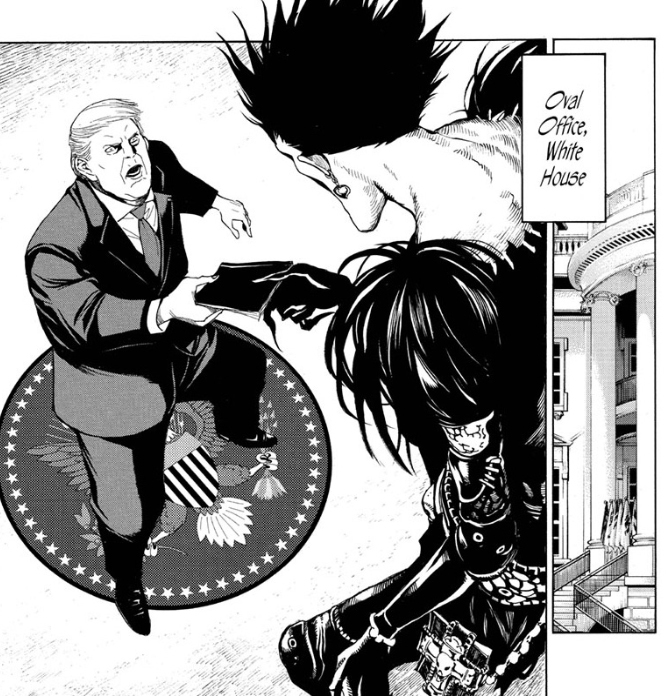
Like making the American president Donald Trump?
I didn’t do that. America did that. In the original, the American president is just an anonymous, patrician white man. But if Hillary Clinton had won, I would have totally made it about her. Instead, we were stuck with Trump, so I thought: how would someone like him react to this kind of weaponised curse, to the revelation that magic existed, and that demons did, too? How would he try to steer it to his own advantage? How would he let it affect US foreign policy?
Did that date the show? I mean, he’s not president any more.
I have often wondered if that’s the reason it never got picked up for an English-language broadcast. It was released in German and in French, and Audible contacted me to ask for casting suggestions for an English-language version, but I never heard anything more about it. I was writing Death Note as a contemporary drama, in the year 2017, and that’s what the American president looked like then. [Subsequently, a Trumpalike president also appeared in the 2020 one-shot Death Note spin-off a-Kira, pictured].
It was very important to me that I wrote Death Note in the context of the new times, not simply repeat what the anime people came up with in 2006. There were new factors to consider, like social media, metadata and privacy, #MeToo, and I threw all those in.
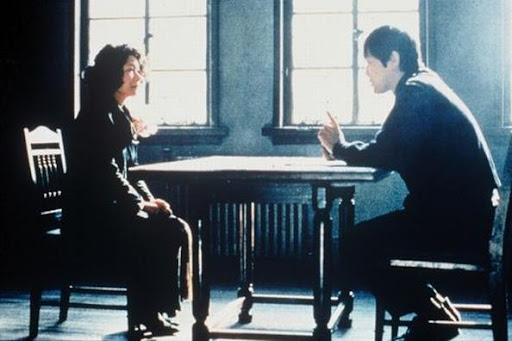
Your Death Note deviates considerably from the original by the end, particularly by keeping L in it all the way through. There’s a really goose-bumpy scene where he has that interview with the counsellor…
That was a total rip-off from Hirokazu Kore-eda’s After Life. The film starts off with this entirely everyday, bureaucratic person-to-person interview, with a guy going through someone’s papers, and checking date of birth, and name-spelling or whatever. And then he says, very matter-of-factly: “And just to be clear, do you know you’re dead?” And the person he’s talking to nods in a similarly matter-of-fact way.
And this is going to sound super-weird, but the other thing that inspired me was the last-ever episode of One Foot in the Grave, where we all know that Victor Meldrew is going to die, and [the writer] David Renwick completely wrong-foots the audience by beginning with him already dead.
And so, when we reach the episode where L dies, I figured that in the world of this story, death is no obstacle. Things just keep on rolling, and L gets to comment upon and steer the action back in the real world, like a kabuki ghost. And that starts to push things off kilter in a way that I thought was interesting.
Did the listeners in Germany agree?
Most of them!
You seem a bit bitter in your materials section, when you talk about Funimation taking over Manga Entertainment.
Well, I think it’s an interesting element of the “archive” of anime studies. Over the years, Jerome Mazandarani spent about £17,000 of the company’s money on articles about its products and anime in general, for the blog. When Manga Entertainment was acquired by Funimation, they also acquired all this third-party comment – reviews, obituaries and commentary – and it clearly didn’t fit their idea of what sort of sticky content a website should have. The rights situation was unclear, there was clearly nobody at Funimation who wanted to curate it, and so they just erased it from the web. I guess some of it might be on the Wayback Machine, but that’s a lot of content to suddenly disappear. And of course, if you can do that with some article I wrote about Yoshiyuki Tomino, you can do it with an entire anime series as well, as many fans are observing today.
You think streaming is vulnerable?
Sure it is. If you want to be sure you can watch your favourite anime whenever you want, you need to keep investing in Blu-rays.
Anime: A History by Jonathan Clements is published by Bloomsbury.
To America, where Robert Woodhead and Natsumi Ueki, owners of the fan favourite video label AnimEigo, announce that they are selling their company and retiring. This would usually be where fandom clutches its pearls in horror and starts bemoaning the fate of a good company snapped up by some conglomerate, but this time the buyer seems ideally suited.
Founded in 1988, AnimEigo were the people who first brought Urusei Yatsura, Bubblegum Crisis and Otaku no Video to the west, initially as a subs-only boutique distributor – their titles first made it to the UK under the aegis of their sub-licensee, Anime Projects.
Justin Sevakis, whose disc-mastering company Media OCD is responsible for many of the Blu-ray presentations that eventually show up in the UK, has offered to take AnimEigo off its owners’ hands, kiting it along for another generation. Somewhat appropriately, the story broke on Anime News Network, the website that Sevakis founded back in his student days, long since sold on to other owners. The deal was done some time ago, but the parties involved first wanted to do a grand tour of all the anime companies in Japan, introducing the new boss and pleading for the change in ownership not to shut down contracts that dealt specifically with Woodhead and Ueki, rather than whoever it was that would take over their company.
So, this is no leveraged buyout or corporate takeover. Instead, it’s two much-loved fans-turned-pro, gently handing their company over to another fan-turned-pro, and sticking around to ease the transition along.
Sevakis announces that he intends to continue the AnimEigo policy of crowd-sourcing bespoke collectors’ editions of niche titles. Woodhead and Ueki will guide him through to the completion of whatever projects they had underway at the time of the sale, but I suspect that once Sevakis is fully in charge, the acquisition of his own distributor is sure to tempt him with new prospects. If you suddenly found yourself with a Blu-ray label, what would your dream acquisitions be…?
Of course, it might also Turn Him to the Dark Side. Watch out for the sudden appearance of a Mirror-Universe goatee, and a sudden desire to dub everything with silly voices and swearing. I suspect, however, that AnimEigo is in safe hands, and this is one acquisition that fandom won’t decry as the worst evarrr.
Jonathan Clements is the author of Anime: A History. This article first appeared in NEO #239, 2024.
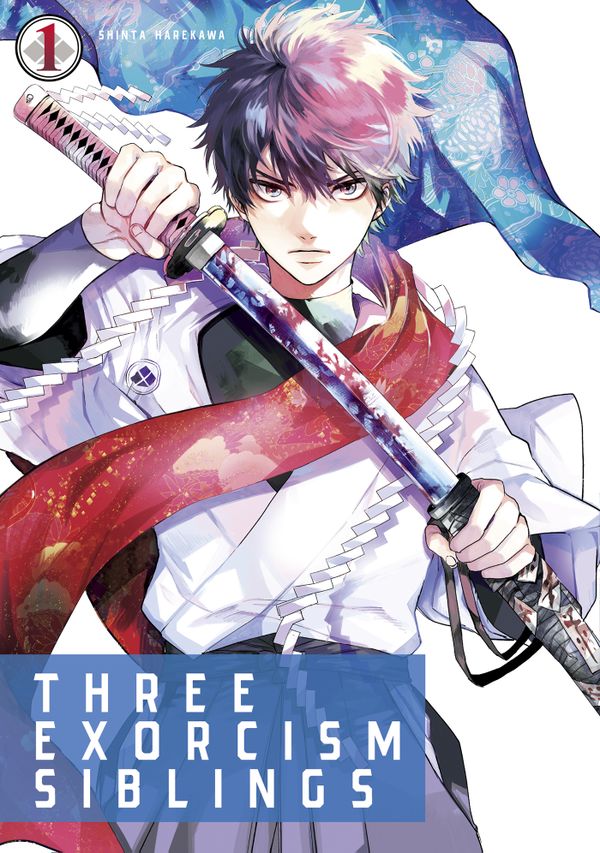
In the Japanese mountains, Mamoru Yamaemori spends his days tending to his family shrine, fighting Tengu — monsters who feast on human flesh— and, making sure his two younger brothers will never have to pick up his mantle. Unable to escape the life forced upon him by his parents and a dark ritual involving Tengu blood, all he knows is that his existence is a curse: he is destined to die young in the service of others.
But to fight monsters, Mamoru must dance that line between loving older brother and mindless beast – or else he risks becoming that which he is sworn to destroy.
The first volume of Shinta Harekawa’s Three Exorcism Siblings is out from Titan Manga. Motoko Tamamuro and I translated the English script.








 The Official Schoolgirl Milky Crisis Blog