Docklands

In 886, during the last days of the Tang dynasty, the poet Wei Zhuang dropped in on Nanjing, once a great capital, now a forgotten backwater, its walls in disrepair, and its canals choked with weeds. He wrote:

Drizzle on the river, and the reeds grow high / The Six Dynasties are but a dream, and the birds call in the sky / Cares not the willow by the walls / Ten leagues around in the smoky mist.

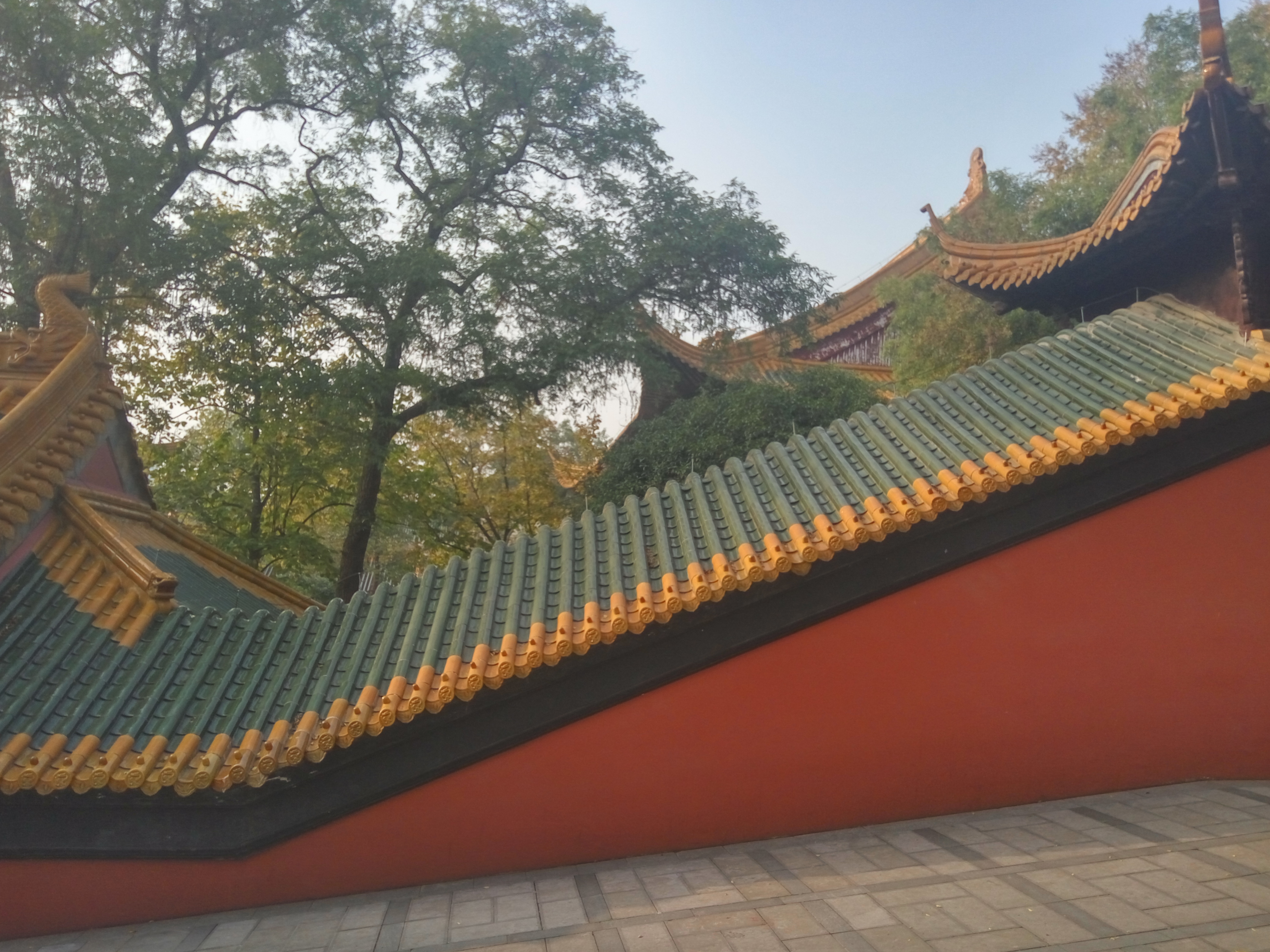
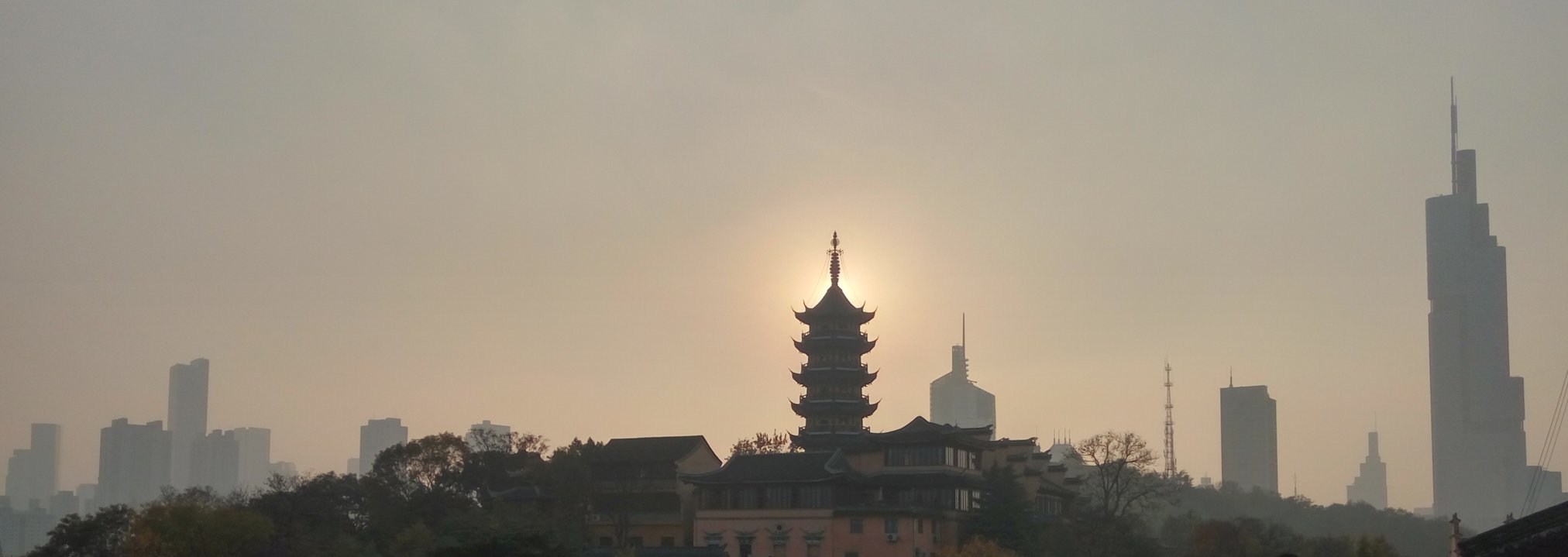
Nanjing has improved a lot in the sun. The remains of the walls still bracket a sizeable chunk of Xuanwu Lake, just to the north of the old city, and are dotted with Ming- and Qing-era cannons poking from the crenellations. The park is nice with autumn trees and the Jiming temple looms above outside the city walls. So we ought to get some nice shots that make Nanjing look less like an urban jungle in the rain, and more like a pleasant bit of park life. The Propaganda Bureau should be pleased, as well they should be when the woman who mans the gate to the city walls insists on taking a photograph of us filming the sign so she can send it to her boss.
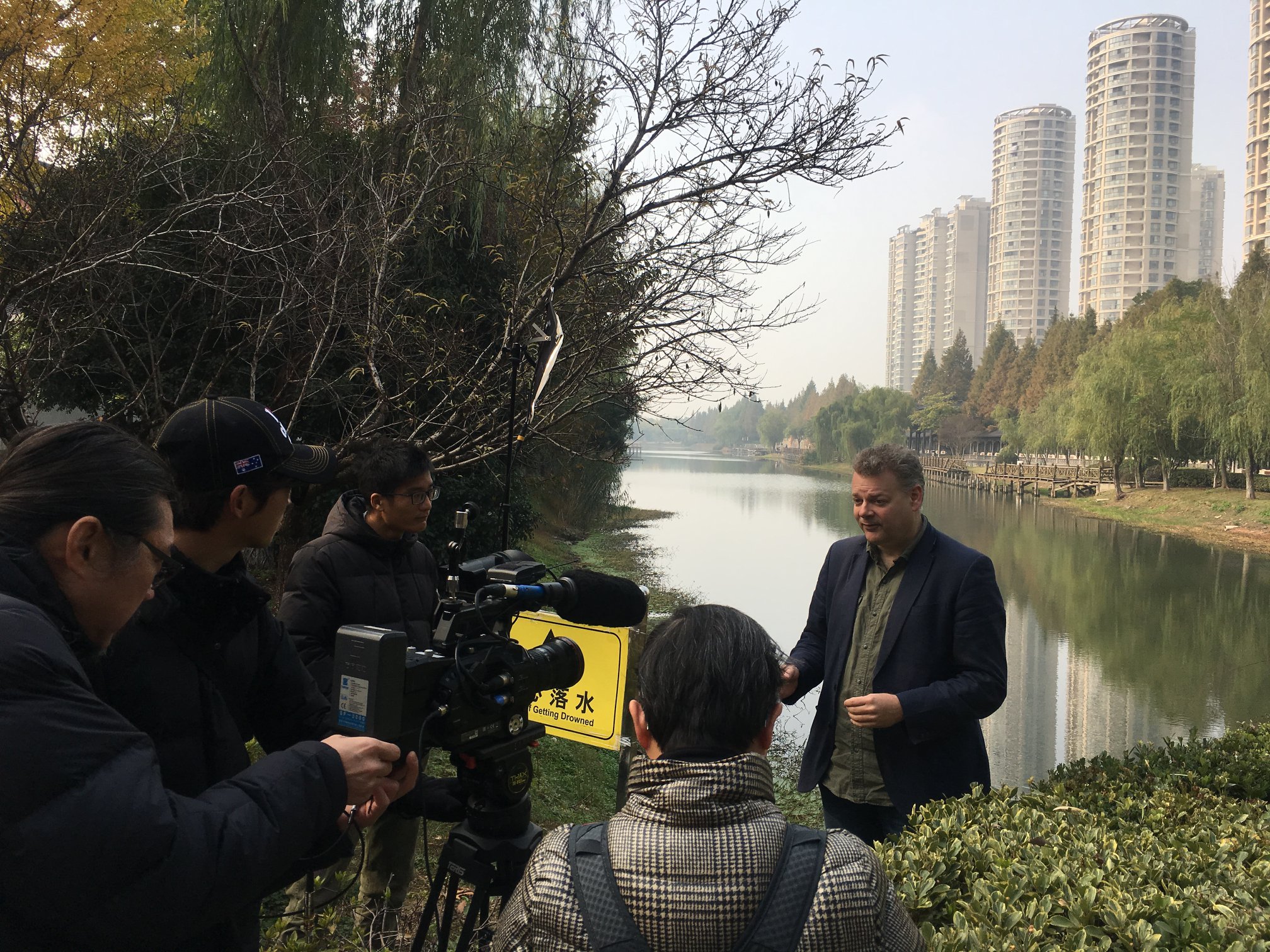
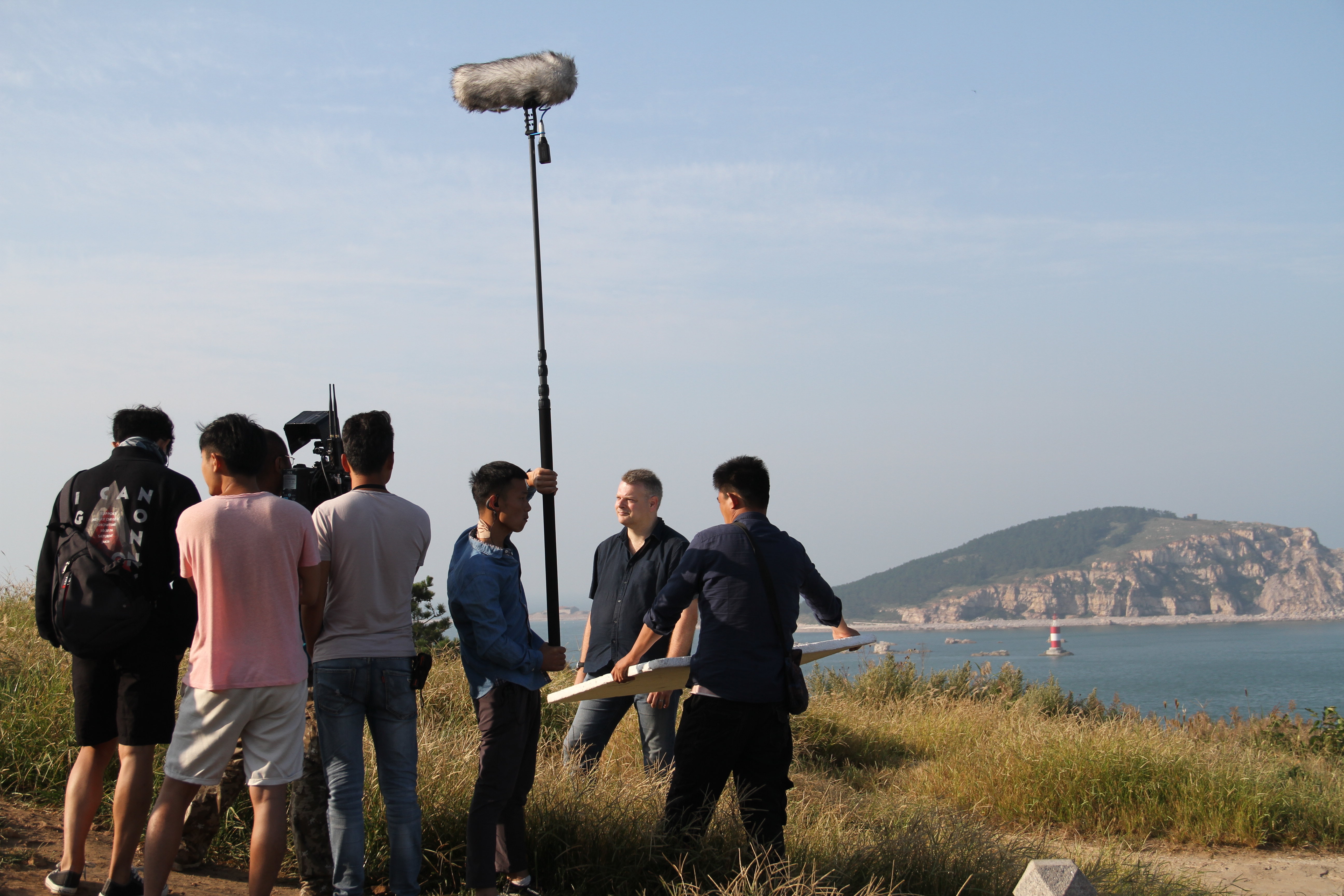
We put on the most ridiculous charade of setting up a shot by the sign, with me not bothering to take off my sunglasses, Mickey the sound man not bothering to boom, and Eric the cameraman not even starting the camera.

“Are we rolling?” calls the director.

“Nope!” says Eric, with a thumbs-up.

“Action!”

“I’m standing here next to a sign,” I say earnestly, “while a woman in a mustard yellow puffa jacket films me with her phone.”

“And cut!”

Michelle rushes in with her clapperboard and brightly says: “Waste of Time Fake Thing, Take One!”

We lurk around the walls for a while, which are picturesque but thick with flies, and then head off to the Longjiang Shipyard Ruins.
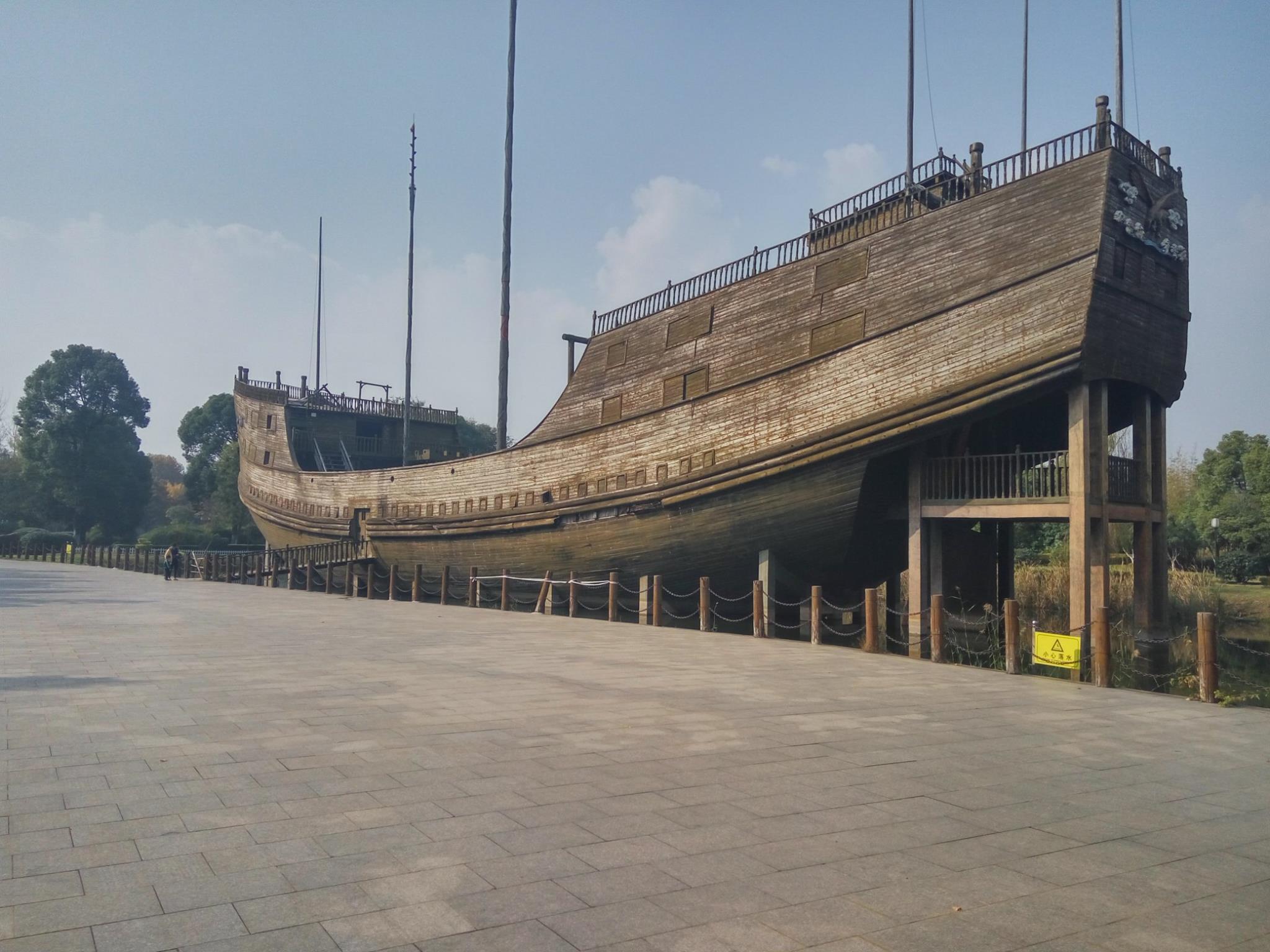
The layout will be familiar to anyone who has been to London Docklands. Three long strips of water, each the size of an airport runway, run in parallel through what is now billed as a park. But this park was the site of the Ming-era shipyards where the Treasure Fleet was built, and from where it set sail, down the Yangtze and as far as Africa. The lakes are all that remains of docks four, five and six. One, two and three, of similar size, are buried somewhere under the nearby housing estate.

Everybody knows the story of Zheng He, or at least thinks they know: the boy captured at the fall of Yuan-era Yunnan, castrated and shipped off to Beijing aged ten as a slave to the Yongle Emperor. Originally named Ma, short for Mohammed, for he was a Muslim, he was renamed Zheng in honour of his spirited defence of the Zhengcunba reservoir during the dastardly Yongle’s grab for power. Eventually put in charge of the Treasure Fleet, he set sail for the south and the west in 1405 on the first of what would become seven voyages, designed to tell all the natives in far-flung kingdoms just how awesome China was. When he came home, he turned up with a giraffe, so everybody was happy. Just for kicks, I pace out the rudder in the museum, which is 14 metres long, with a flappy bit that comprises the bottom six metres. The people from Propaganda, ever willing to say no to everything, have told us that we can film in the dockyards but that we can’t film the replica ship at one end of it, because it might be moved by the time our film broadcasts. Or it might not.

Suspicious, I pace out the length of the ship and find it to be 73 metres – a perfectly reasonable size for a Chinese trading galleon, but nothing like the aircraft-carrier sized behemoths claimed by some of the world’s more breathless popular historians. The shipyards are very long indeed, but even the artists’ impressions in the nearby museum show several ships being built at once in any single dock. They were not, and never were intended to hold single giant galleons. If they were, there would not have been enough turning space to get them out of the gate and into the Qinhuai River to sail down to the Yangtze and out to sea.

Jonathan Clements is the author of The Emperor’s Feast: A History of China in Twelve Meals. These events featured in Route Awakening S05E06 (2019).
Squib Dynasties

After successfully chasing the Mongols out of China, the first emperor of the Ming dynasty, Hongwu, tried to erase his humble, rebellious origins by aspiring to be the perfect ruler. And the perfect emperor needed an ideal capital, so he planned one out in Nanjing. The Nanjing Museum is set in the grounds of his palace, a Forbidden City manqué climbing up the side of a hill with a view of the city walls. And since it’s Monday and the museum is closed to the public, we have it to ourselves except for the fidgeting security guards, and a man from the propaganda office, who is putting a brave face on the fact that he is incredibly bored.

Nanjing’s history goes back to the Stone Age, although the museum concentrates on those moments in Chinese history when it was a capital. When the Han dynasty fell in 220 AD, China spent 350 years in a state of disunity, and Zhuge Liang, a ministerial adviser to one of the upstart kingdoms, recommended Nanjing as the ideal location for capital. It had, he said, mountains around it like a crouching tiger and a coiling dragon, and the river Yangtze acted as a natural moat. When northern China fell to barbarian invaders, the nomads couldn’t make it south of the Yangtze, turning Nanjing into a bastion of old culture and a guardian of Chinese heritage.

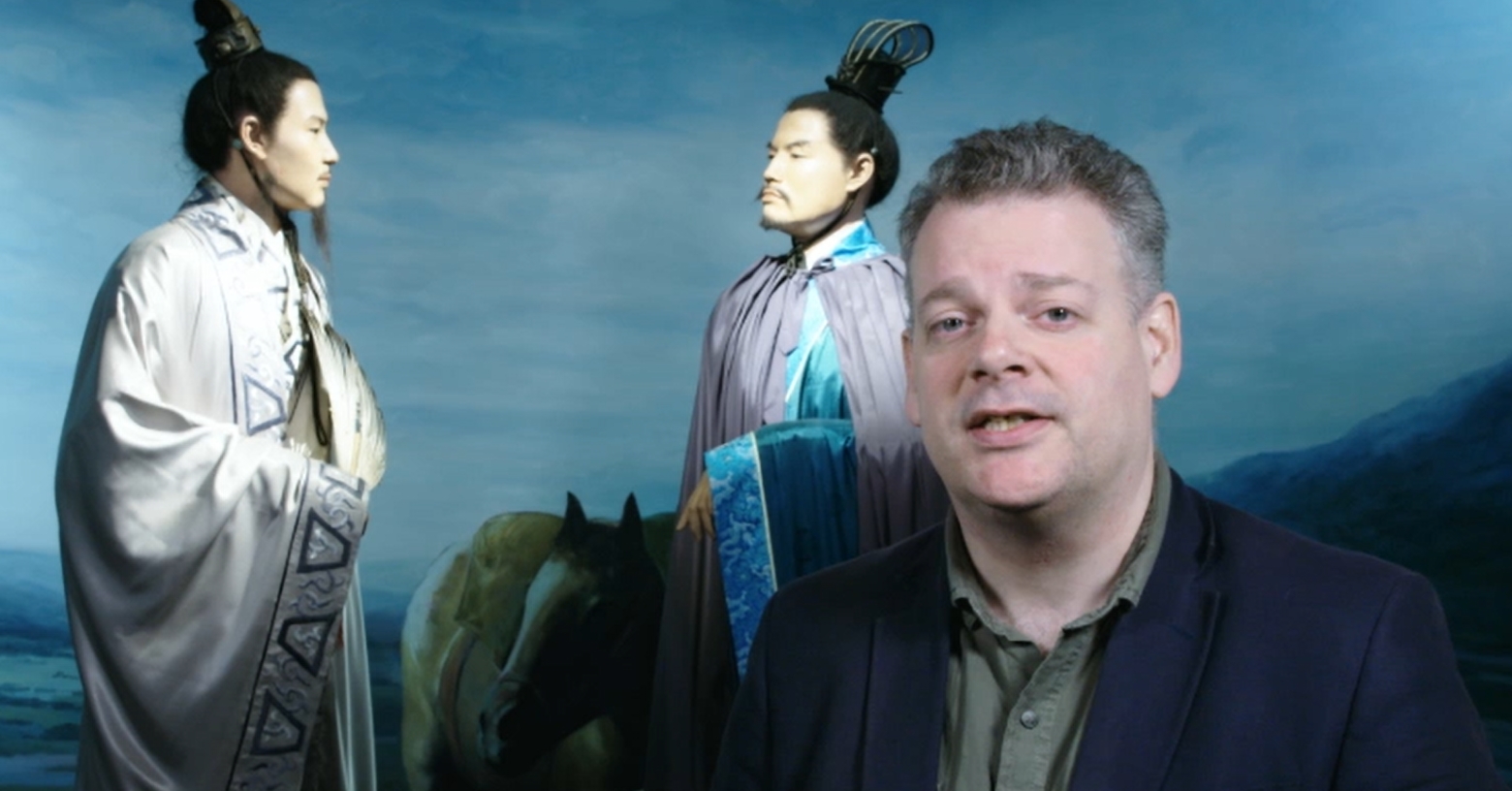
I have to do pieces to camera in front of the museum’s various displays – Nanjing has been a sort of capital of China for several cumulative centuries, but for most of those times, it was in one of the squib dynasties of the Dark Ages, when it was only really the capital not of an empire, but of a glorified kingdom in the lower Yangtze area. When even educated foreigners are unlikely to be able to name half a dozen major Chinese dynasties, it is tough to run through the likes of the Liu Song, the Chen and the Southern Qi, none of which lasted for more than a few decades, but all of which were centred on Nanjing, quite probably the greatest city in the world at the time. I pick a giant stone pixiu, a chimera-like mythological beast from the squib emperors’ tombs, as a means of pointing out that they achieved some big things and had an enduring culture, even if the family at the top switched around a few times.

I am actually a huge fan of the Six Dynasties — I love it as one of those neglected periods in Chinese histories, and I am a sad enough Six Dynasties nerd that I could indeed be found on the day of the release of the Cambridge History of China: Six Dynasties, waiting outside the Cambridge University Press bookshop for it to open. Good job, too, because they only had one copy in stock of their new £115 monster, so I got in there ahead of the rush.

We point the camera at ceramic, open-mouthed rhinos, made as bespoke piss-pots for Six Dynasties emperors, as well as fragments of Nanjing’s famous Porcelain Tower, a diorama of the old Yuecheng (Fortress of the Viet) built on the future site of Nanjing by the king of Wu to watch over the conquered 5th century BC kingdom of Yue. The security guards lurk glumly, ordered to be on their feet whenever we are around, and hence forced to be on their feet all day.

A bunch of them sit around in their office smoking fags, leading to the fantastically Chinese moment when their closed circuit TV monitors show our director lighting up behind the toilets in the park, and they rush out to tell her that the whole facility is Non-Smoking. Except, apparently, their office, which has so much smoke billowing out of it that you would be forgiven for thinking it was on fire.

The curator Wu Tian starts off a little timid and unsure of himself. But we get him to show us some of his favourite pieces in the museum, and he starts talking with true passion and excitement about truly weird items. One is a bit of road with ruts worn by four hundred years of ox-carts. Another looks like a mini bedpan, but turns out to be a Six Dynasties iron for smoothing clothes flat. Another looks like half a toilet seat on legs, but is instead a sort of arm rest for people on divans in a culture that has yet to invent the chair.

I suppose not,” I wonder aloud, “because after all, the chair is a Song-dynasty innovation.”

Mr Wu stands bolt upright, as if poked with a cattle prod. Not for the first time on this shoot, the fact that I am not only listening, but can say something relevant in Chinese makes his eyes stick out on stalks, and suddenly he is twice as animated and excited. The interview goes swimmingly well, since he has worked out that I am not some fat white sock puppet, but an actual historian who knows his Han from his Ming. So he chats excitedly about Dark Age hairstyles and roof tiles, and saves the best till last.

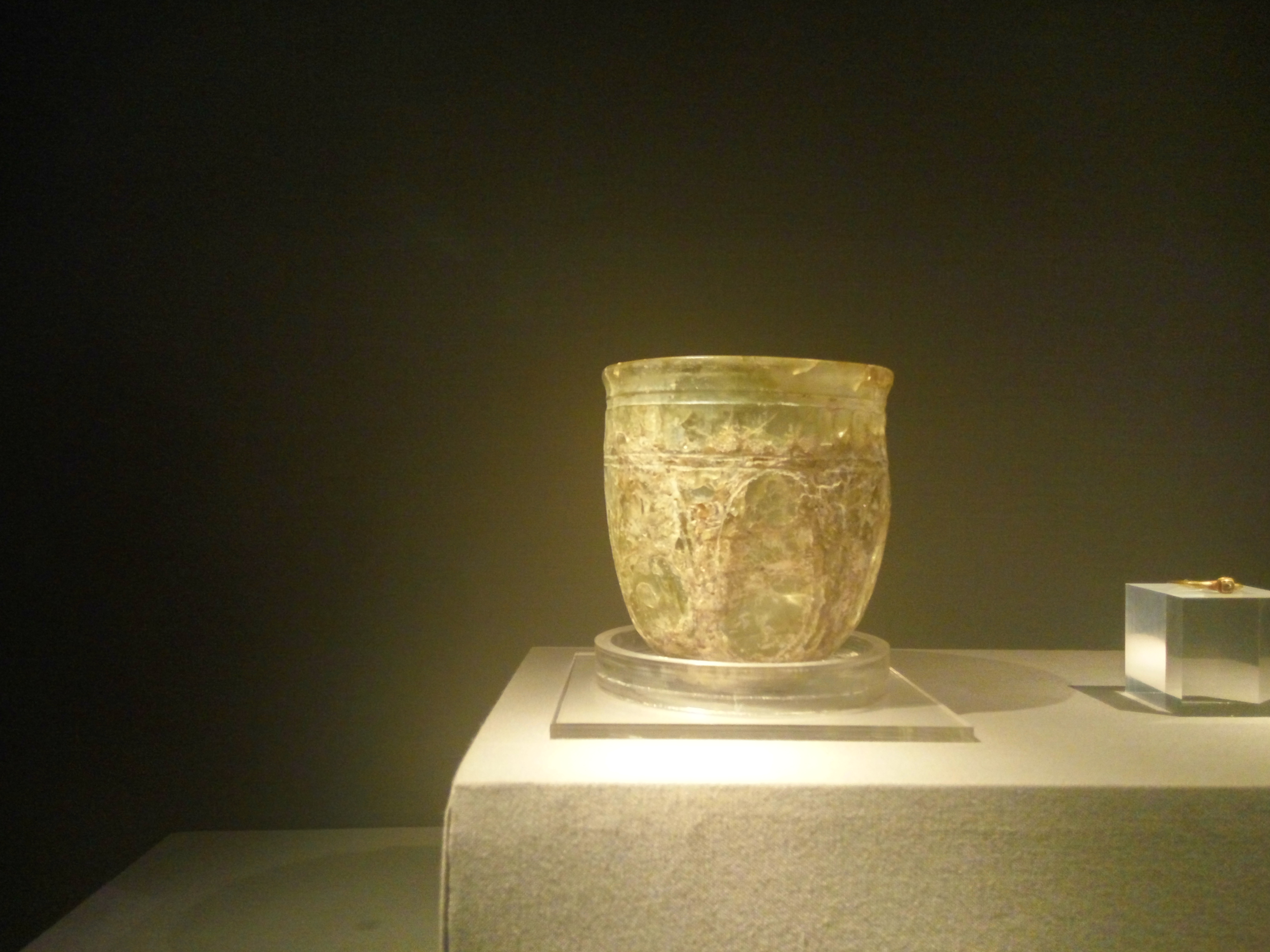
“Now this, he says, “is my favourite. We found it smashed into a hundred pieces in a Nanjing grave, and we put it back together. It’s a glass cup, from a time when China didn’t have any glass blowers. We think it came from the Eastern Roman Empire, by sea, and ended up in Guangzhou, from where it made its way north to Nanjing as some sort of curio to impress visitors. The grave was a wealthy merchant’s, but this isn’t the only Roman glass we’ve found in Nanjing. It’s actually the twelfth.”

Camera A on the interviewee, B-roll on the interviewer, me interjecting with actual questions that make it clear we are not some bored school party fubbing with our phones, but a bunch of people who have come to Nanjing specifically to talk about the Six Dynasties, the squib dynasties that everybody usually ignores. Mr Wu is very pleased, and thanks us profusely for actually knowing what he is talking about. I get the feeling it’s a rare occurrence.

Jonathan Clements is the author of A Brief History of China. These events appear in Route Awakening S05E06 (2019).
Drama Queen

Frances has egg in her pants. It turns out that the one our producer took from the pile near the toaster in the hotel was not hard-boiled at all, a fact she only realised when she put it in her pocket and then accidentally sat on it 20 minutes later. She’s washed her clothes in a bucket and is hanging them out to dry in the van. Now we look like a proper Chinese film crew, with laundry drying on the equipment.

Today we are in Linyi, a town I have never heard of, where there is apparently a standing film set. I was looking forward to doing a walking shot in a traditional Chinese town, only to walk around a corner to reveal that all the buildings are two-dimensional flats, and to reveal the whole crew standing there with their boom mikes and fags. But we have been warned that the film set is infested with professional spanners, who make it their life’s work to wander into shot and then demand reimbursement to leave. So instead we are sticking to the main plan, which is to film Luqin opera.

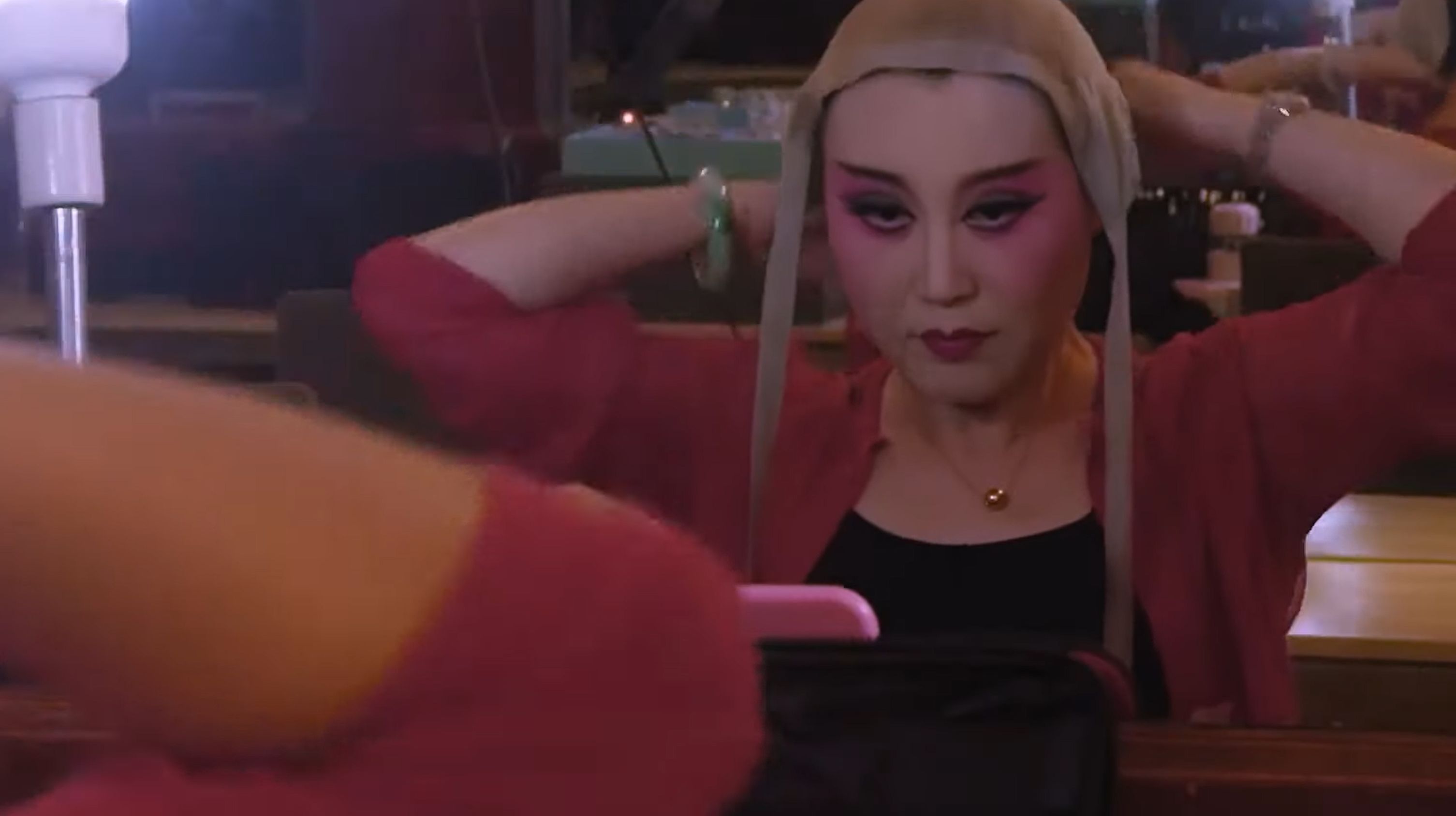
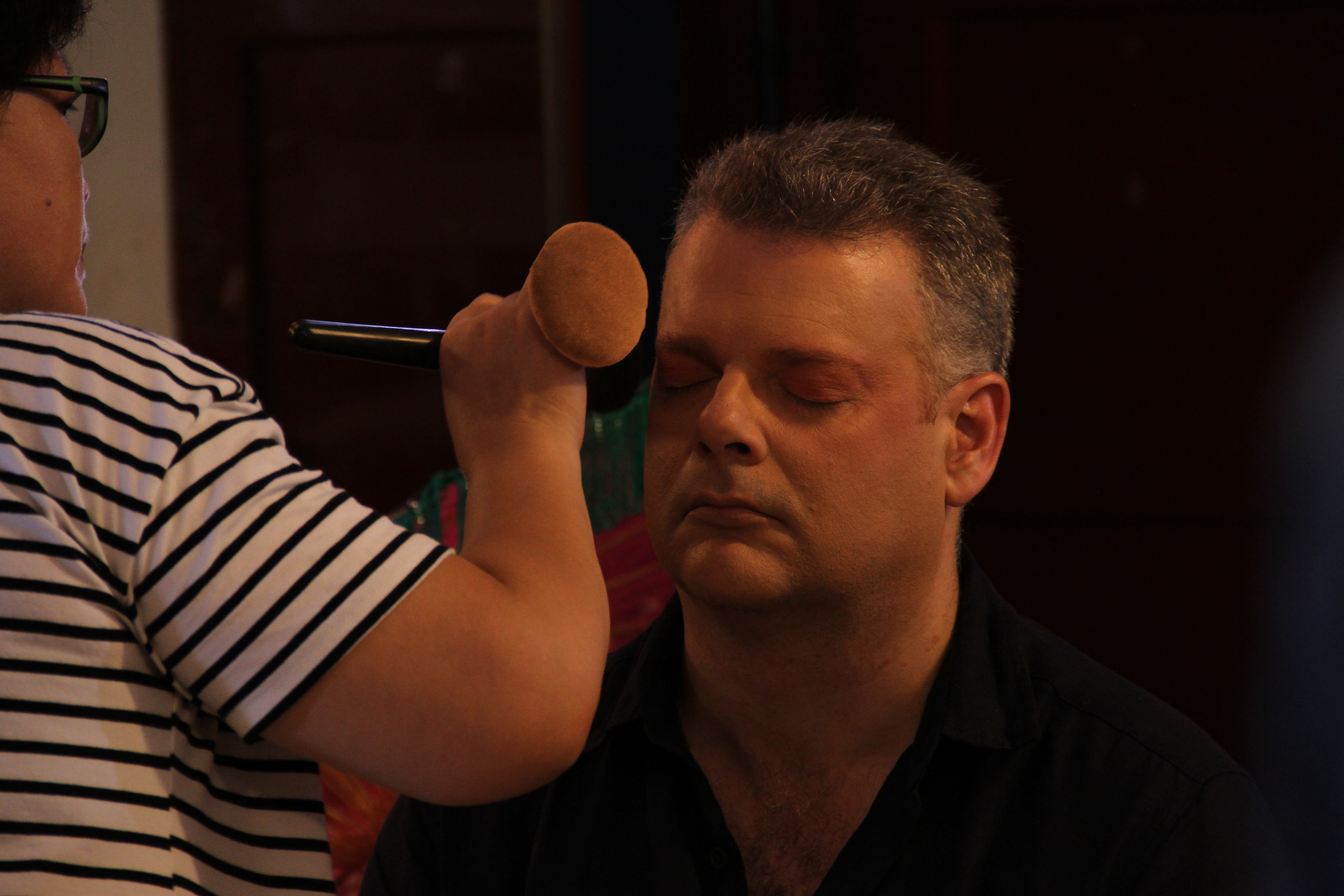
None of us are all that clear about what Luqin opera is. It is something specific to Shandong, but nobody was sober enough last night to Google it. Liu Lili is the perky actress who will explain it all to us, but she doesn’t have a whole lot to say about it, and any goodwill is soon squandered by the crew. I ask her if she has any experience with filming rather than stage acting, and she claims to know the score, but she becomes plainly frustrated when her 90-minute make-up regime is constantly interrupted by lighting changes and backtracks. Nor is she all that keen on putting make-up on me, for that is the sort of job they give to the interns, not the star of the show.

Her dresser arrives at 11 in the morning, striding into the backstage area and asking: “Have you finished yet?” We have barely started, and Miss Liu is already in a strop. I try to draw her out about the pieces of hair she sets on her head, her adornments and her make-up, but she has already retreated into snappy monosyllables.

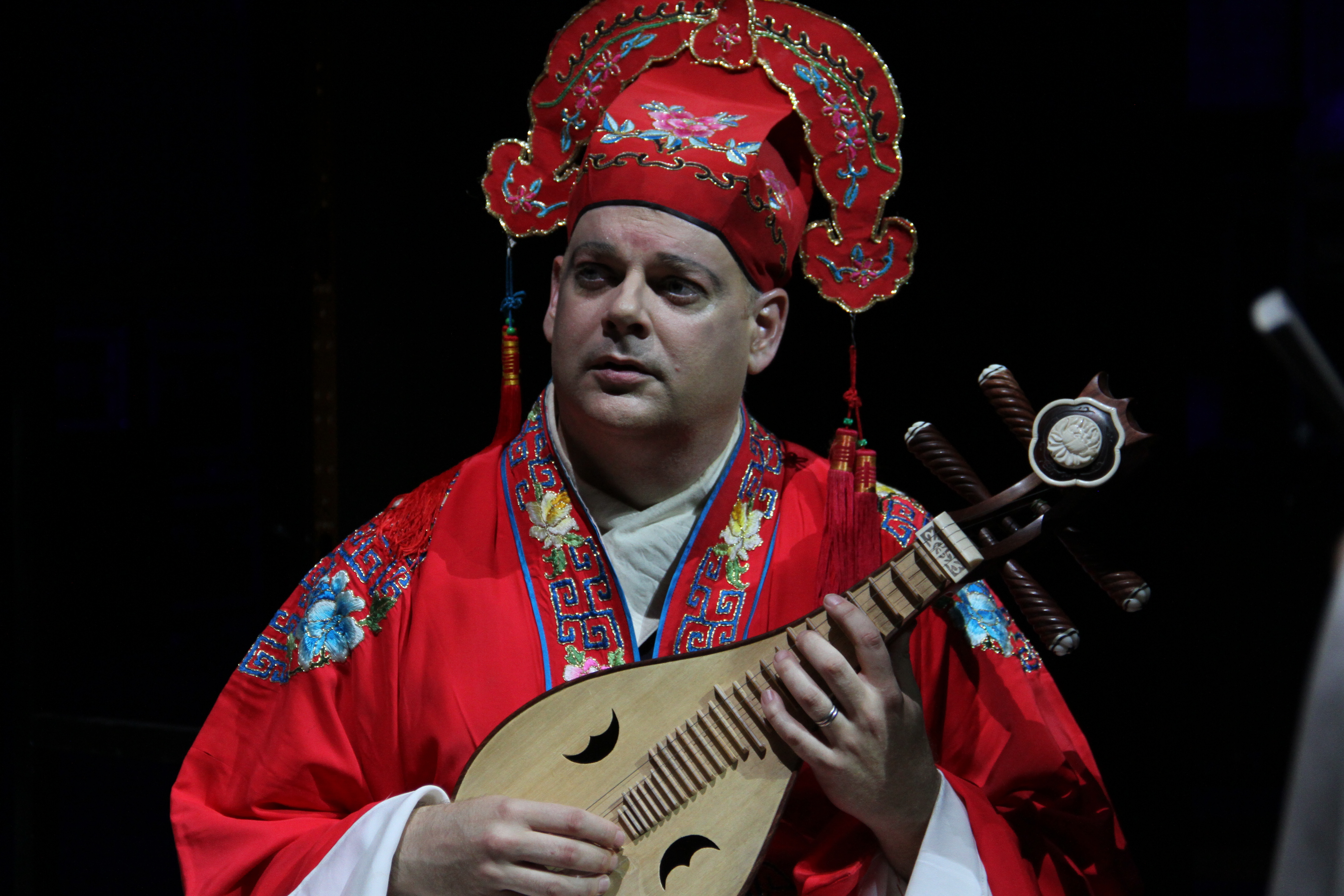
There has been a distinct lack of communication all round. The theatre band arrives ready to play along with Wedding at a Funeral, only to discover that she plans to sing an aria from Meeting My Mother-in-Law. So we have to resort to her miming to a backing track of her own voice as she jauntily rides an imaginary donkey to the tune of an off-key rendition of Knees Up Mother Brown. Then she stuffs me into a bright scarlet scholar’s robe, gets the lippy girl to put on almost all of my make-up, and deigns to be on camera for ten seconds at the end putting the finishing touches to my rouge.

Filming in theatres always seems to go wrong. I blame the clash of two entirely different production regimes in a confined space. The opera troupe have just got back yesterday from a four-province tour, and they are all exhausted. I ask Miss Liu if provincial audiences are well behaved, hoping to hear a diatribe about twats with mobiles, but all I get is an affirmative grunt.

She gives me a line to sing: “Young lady / Thank you for your hospitality / Tiying is a gentleman / Please give him your consent” or something like that. I am able to memorise the line itself and the tune very fast, but once the band get involved there is a whole set of alien meters and pauses that interfere. Sometimes a line begins on the beat. Sometimes it begins half a beat behind it, seemingly at random. The band’s job in Chinese opera is to follow the singers, not the other way around, so a gaggle of musicians with pained expressions struggle to work out where I am going with my lyrics. I keep my eyes fixed on the lady who smacks the little harpy thing with hammers, because she is mouthing along with the words, and I can take a few cues from her.

It’s enough. We get something in the can, which we can stretch with a sarcastic voice-over. I am fighting impossible conditions, done up like Julian Clary in a pair of bathroom curtains, wailing what appears to be two different tunes at once, in Chinese, while two cameramen circle around me and a bunch of musicians make a noise like a piano falling down some stairs.

We chat to the band and Miss Liu introduces the musicians, including the man who plays the Luqin, a supposedly unique instrument in Shandong that looks like a cross between a lute and a mandolin. He hands it to me to twang, and I say to the camera. “I can’t actually play any instruments. You might as well give a computer to a monkey.”

And cut. That’s my last shot of the production. Although the crew are filming tomorrow morning at the Jinan fish market, I am done. Tomorrow, I can put on a clean, non-continuity shirt for the first time in two weeks, and wait for the evening train to Beijing.

There is no soap in the bathroom. I get as much of the make-up off as I can, but it’s difficult around the eyes.

“You’re less Julian Clary now,” says the director. “More Gary Numan.”

Jonathan Clements is the author of Confucius: A Biography. These events occurred during the filming of Shandong: Land of Confucius (2018).

Charmingly Moist

I don’t know what day it is. Last time I looked, it was Sunday, and now it isn’t. We are only a couple of days away from wrapping, but we have some tough things ahead, mainly in story terms as we try to work out where to fit them. Today is one such question mark, as we are obliged to somehow fill five minutes of screen time with a piece on Heze, a town known only for its peonies.

In the time of Confucius, this was the state of Cao, where Confucius had a run-in with local temple heavies who mistook him for a vagrant. But there’s nowhere really appropriate to talk about that, so we are standing in Zhao Xinyong’s shed. He grows flowers there. Then he sells them… it’s hardly fun TV.

“Do you do… anything else?” asks the director warily.

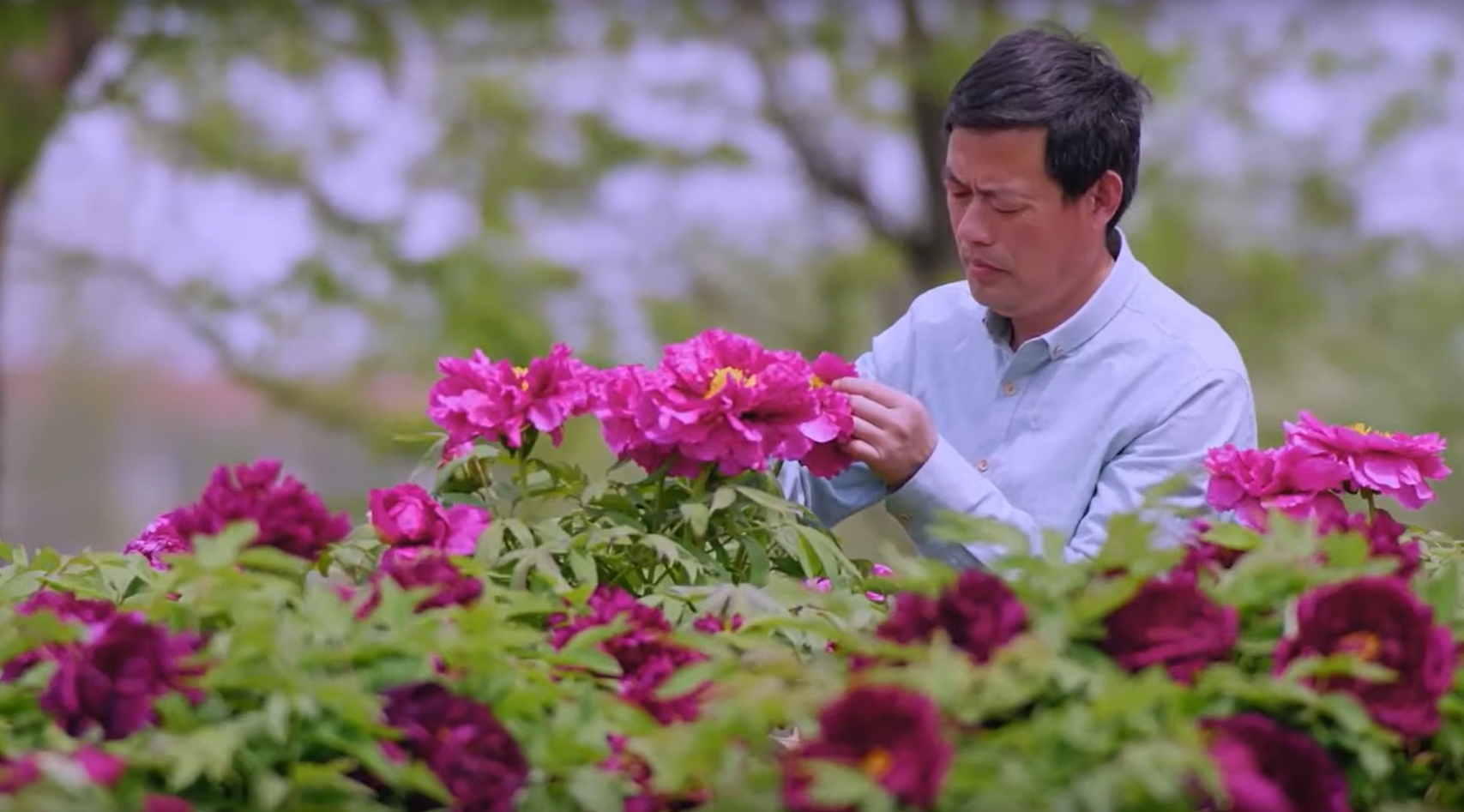
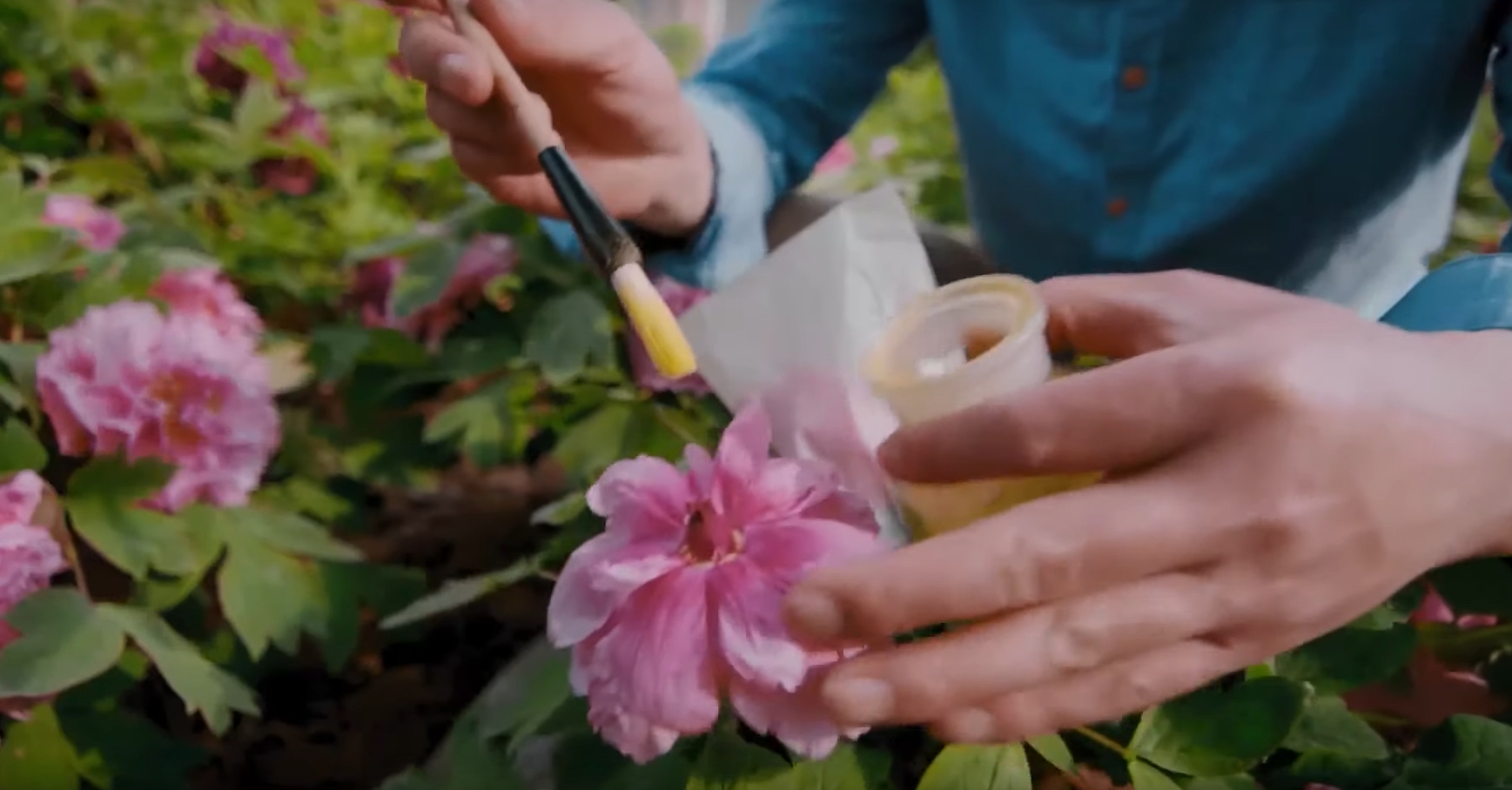
Mr Zhao explains that he plants the peony flowers, then they grow in the greenhouse… and then ten years later they turn out different or the same. Luckily, there is a statue on the grounds of the Peony Fairies from an old folk tale, so I am able to walk around explaining that the first two varieties of peony were born from the unexpected union of two fairies and two brothers from Luoyang. Mr Zhao explains to me how nervous he was when the government assessors turned up after a ten-year wait, and told him that he had indeed created a dozen new varieties of peony.

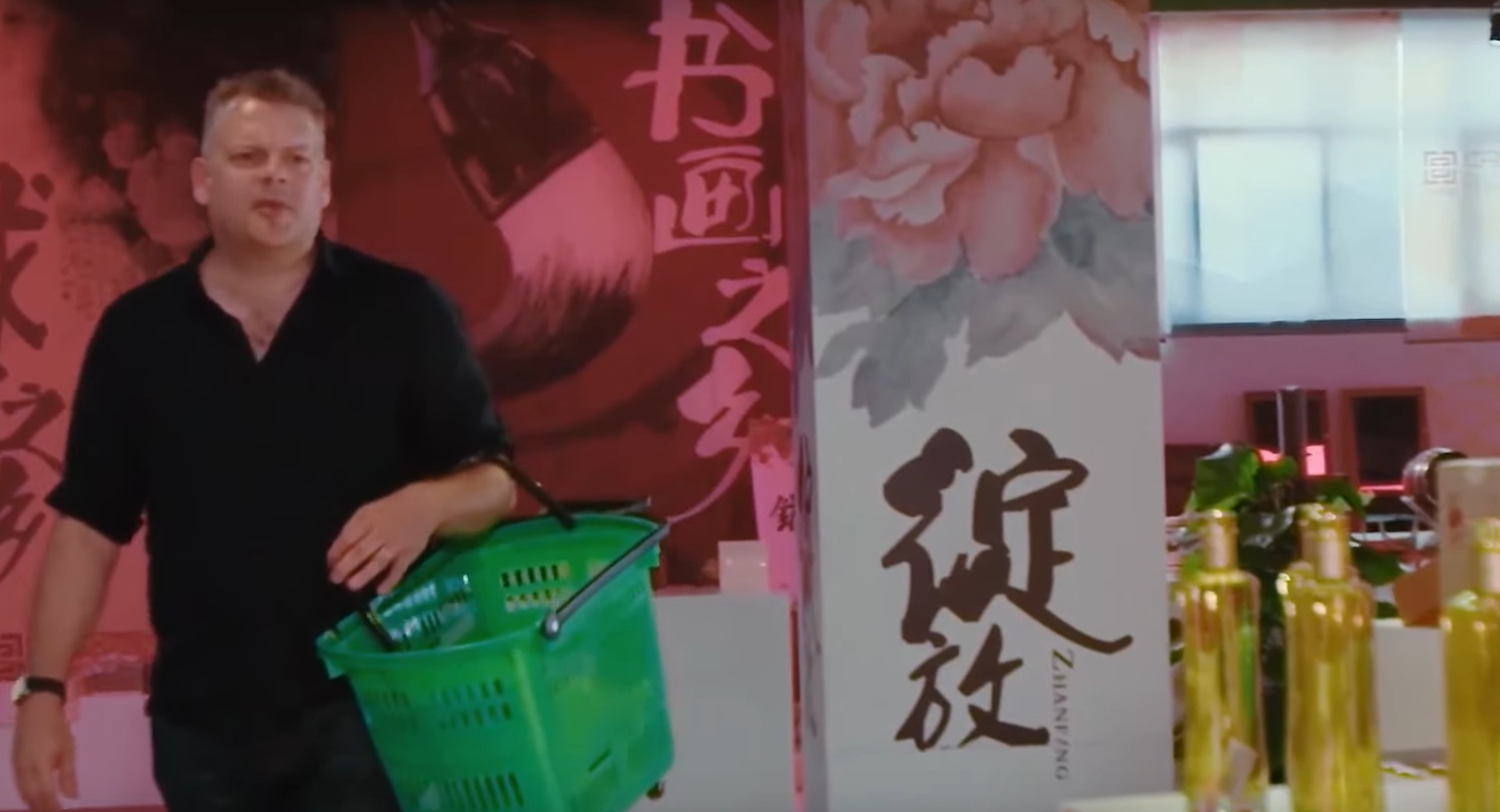
With time to fill – we need to somehow spend five minutes of the show in this city – we head down to the local business centre, where I ransack a display of peony-related products while making sarcastic comments to the camera.

“Ooh, peony tea, good for the prostate. Ooh, peony toothpaste, for people with flowery teeth. Here’s some peony morpholift emulsion. I’m often told that my morphs need lifting, so I will get some of that.”

I end up examining peony-based face masks, and deciding that the one that is “charmingly moist” is probably the best for me. It’ll do. Honour is served; we’ve managed to make a silk purse of the sow’s ear that is Heze, and it should be on to the next destination. Except we are delayed for thirty minutes while the Chinese director has a massive row with Jiuqing the producer in front of the whole crew, which ends with him yelling at her: “I don’t care what van you ride in. You can ride with the gear if you don’t hurry up.”

The problem, as best I can work out, is that we need to be in Taierzhuang tomorrow to film the sing-song girl. Ideally, we should be somewhere else doing something about Chinese opera, but the opera singer is only available the day after tomorrow, so we will have to drive for four hours to get there, and then two hours back the following day. It seems like such a minor issue, but we are only a couple of days away from finishing the shoot, and nerves are fraying.

Partly, this is my fault. The crew are shooting such a punishing schedule because I am only available for two weeks. This places huge pressure on Jiuqing to get everyone moved around the province in time, and it will mean we are further away from the bullet train station on the last day than we really ought to be. Telling Jiuqing to ride with the gear means she will have to spend four hours with the grips, also known as the Garlic Boys because they walk around with a sack of raw garlic to insulate their stomachs against dodgy food. You can imagine how they smell, or perhaps you can’t.

Nobody is impressed. Confucius said: “When you are poor, it is often hard to keep a smiling face. But when you are rich, it costs nothing to be polite.” Which is pretty much how I feel about the director. He will go on to apologise profusely over the next two days for being such an arse, but there was no real reason for him to shout so much at Jiuqing after she has put in so much hard work.

We reach the next location minutes after midnight. It seems to be a charming old town, festooned with red lanterns. But we are all too tired to look around us.

Jonathan Clements is the author of Confucius: A Biography. These events occurred during the filming of Shandong: Land of Confucius (2018).

Smiley’s People

Duan Yanping is waiting at the gate and smiling like a loon. He smiles all the time. I never see him not-smiling, although sometimes he crinkles up his face even more until his eyes are scrunched into little dots. He is the principal of an exclusive private school in Qufu, home town of Confucius, which purports to raise children in the Confucian way. The boarders are as young as five, and I watch them stopping to bow to their teachers as they walk across the playground. Since the teachers are arriving for the day, there’s a whole string of them across the courtyard, and for anyone, child or adult, to get across the open space takes a quarter of an hour, since they keep stopping and bowing at one another.

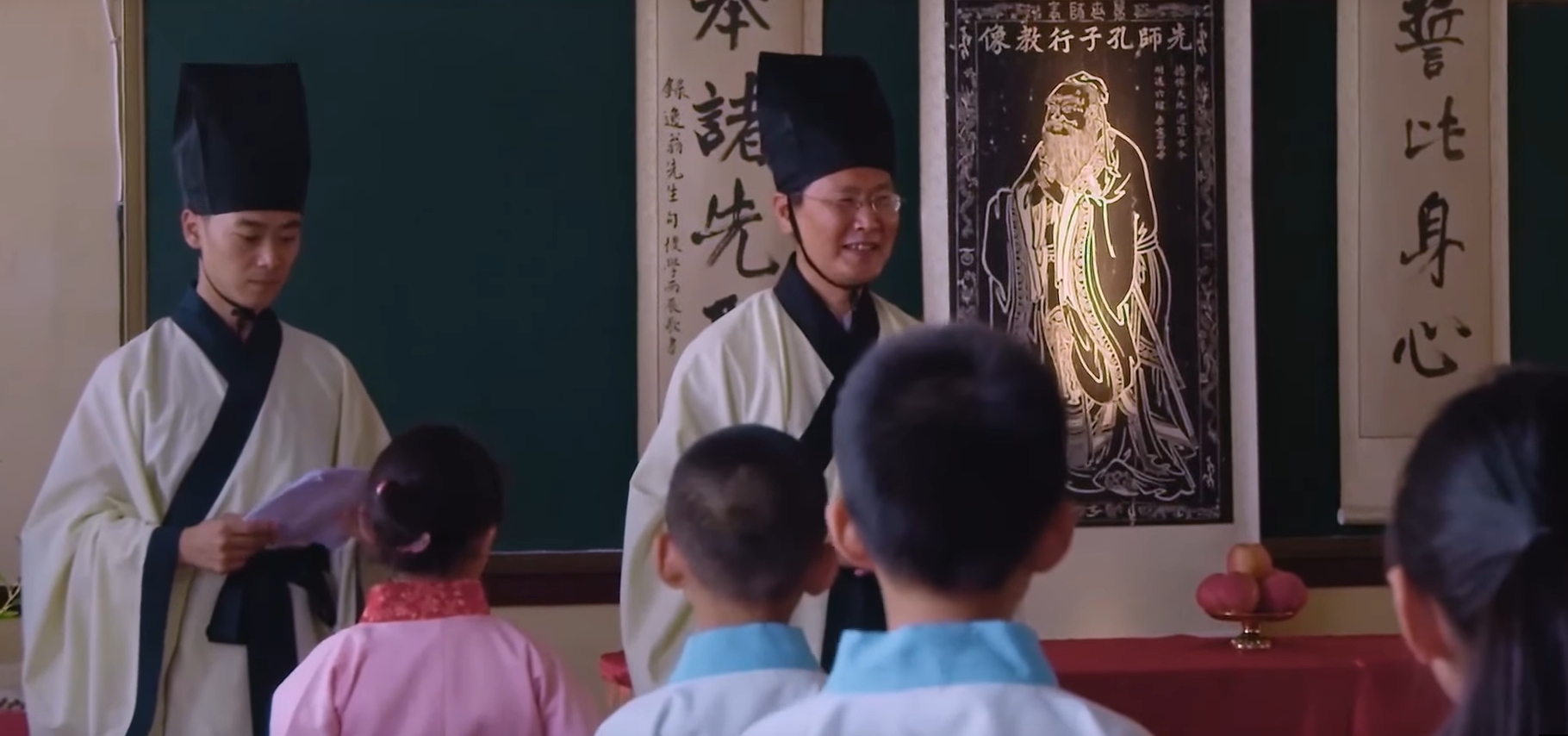
Today we are here for the Opening Brush ceremony, in which a bunch of six year olds will have red dots painted on their foreheads and then commence a series of “Confucian” rituals to mark the beginning of their education. We’ll see about that, as I say to camera: “I’m curious to see how many of these rituals will turn out to come from later dynasties.”

Most of them, as it turns out. The ceremonial presentation of tea to one’s teachers is all very well, but there was no tea in China in the time of Confucius. Nor were there robes in the style demonstrated by the pupils and teachers, all of whom are attired in the fashion of the Song dynasty. Pupils are presented with a pair of dates each as a symbol of the 00 that goes after a person (1) in order to make the top exam mark, but the very nature of this requires Arabic numerals, which didn’t arrive in China until a thousand years after Confucius.

The children are still children. After being exhorted to write their first symbolic character, ren or person, the kids are asked to hold up their papers (paper, also not around in the time of Confucius). The fat kid at the back has got bored and drawn two persons, and then half a wall around them, thereby turning his character into something different. I look up along the long line of diligent students holding up their papers and see: person, person, person, person… MEAT.

The kids plainly love Mr Duan. His constant smiling even puts me at ease, and the only time I see him stern is when he reminds Jiuqing the producer not to bugger about too long changing batteries, because she is effectively asking a bunch of six-year-olds to stand still behind their desks for an hour, while the crew huddle outside in the corridor staring at their monitors.

I ask Mr Duan what he thinks Confucius would make of the ceremony, and he crinkles his face and tells me that he would be most chuffed. I am not so sure. The younger Confucius, certainly, would have been aghast at so many anachronisms and what, to him, would be regarded as foreign customs. The older, wiser Confucius would have appreciated the effort, but still scandalised at the sight of himself worshipped as a sage, and women in the role of teachers. But I decide not to press Mr Duan too much on that point, because he seems so nice. His school teaches the kids all about The Analects, but also a bunch of musical instruments, the Chinese tea ceremony, meditation (which Confucius abhorred), and a number of other subjects which seem to come under a catch-all sense of Chinese classiness. Send your kid to Mr Duan’s school, and he or she will be spat out the other end able to offer a welcome whiff of refinement to any large Chinese gathering, which is likely to otherwise comprise pig farmers playing with their phones.

Confucius’s grave is empty. In fact, nobody knows where Confucius’s actual burial site was. In the Han dynasty, 500 years after his death, a rising trend in Confucianism demanded a place to pay respects, and some bright spark decided that the best thing to do would be to dump a pile of earth next to the grave of his son Top Fish and stick up a memorial tablet there. But if you really wanted to see the spirit of Confucius, Mr Duan’s school has it up and running, warts and all.

We are treated to lunch in the dining hall, only to discover that, true to Confucian principles, no talking is allowed. Jonathan the director and I have an intricate sign-language conversation about the possibilities of getting a drone up above the temple, while Ruby the Interpreter chomps her way through many scallops that she ends up invisible behind a towering midden of shells.

Yu the Chinese director tells a horror story about the last he had to work with a foreign presenter, on some sort of coproduction between CCTV and the BBC. Whoever this man was (the director wouldn’t say), he insisted that his Korean mistress be officially taken on in a sinecure position, and then proceeded to bang her so hard every night that he wasn’t up until ten the next day. He also insisted on clocking off at precisely 6pm, a state of affairs that endured for ten days before he was fired. So, I must look like a properly diligent pro by waking up when told to, and volunteering to work through till late each night as long as the cameramen don’t mind holding their gear up for longer. Jonathan asked me why I do this job…. Incredulously, like only a moron would sign up for it.

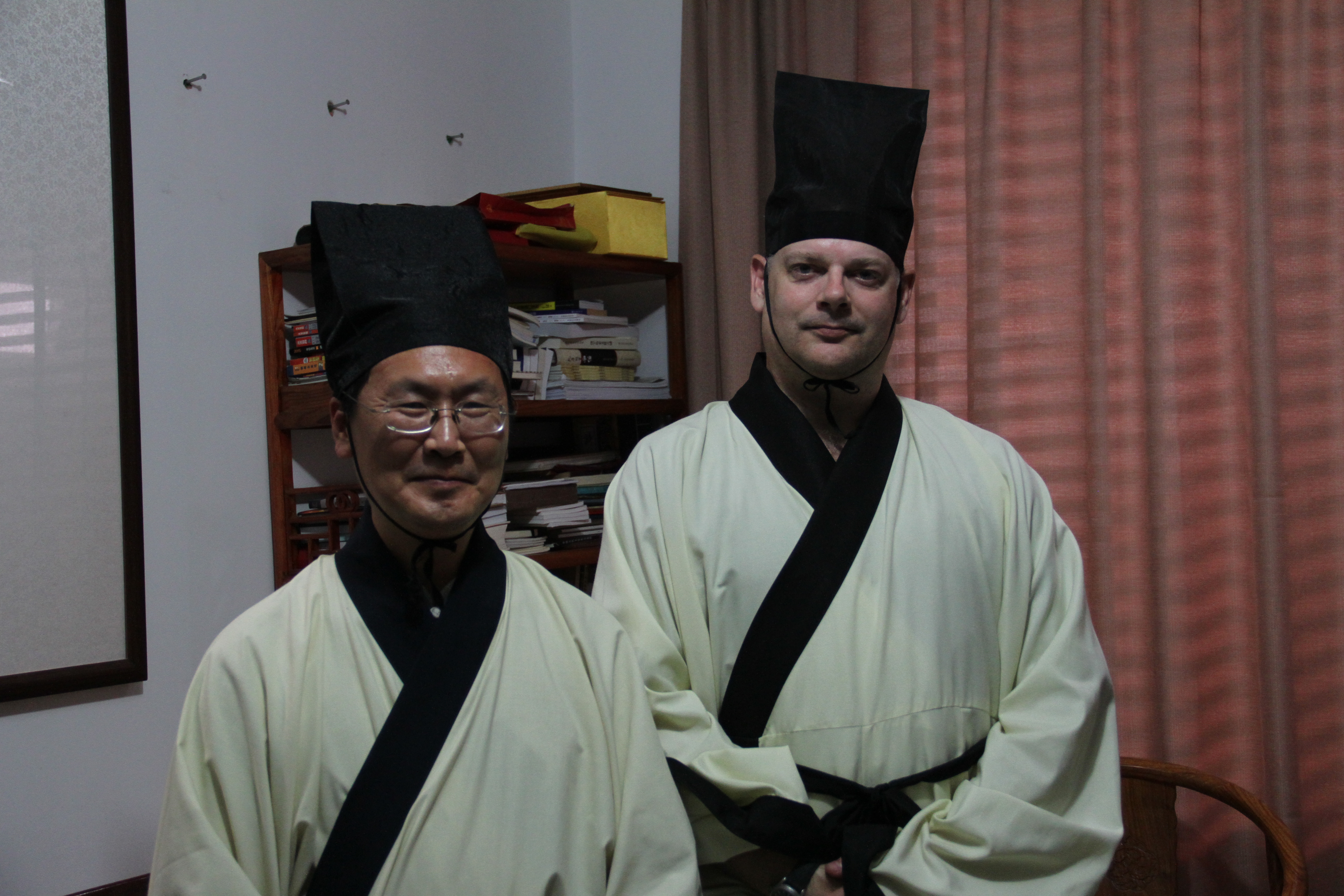
Mr Duan hands me a set of Confucian robes, and we have a fun half-hour trying to tie the strings and put the belt on the right way. I then interview him in the robes, thereby successfully ticking the box for any film shoot that a Clements must be put into a silly hat.

Jonathan Clements is the author of Confucius: A Biography. These events occurred during the filming of Shandong: Land of Confucius (2018).

Mount Tai Crumbles

For several days now, Jonathan the director and I have been trying to get a straight answer out of the Chinese about why we aren’t filming on Mount Tai. It is, after all, the most sacred mountain in China, and the site of the ancient ritual in which the First Emperor climbed to heaven and announced to the gods that he had created China. So if one were, say, writing a documentary about Shandong, it might be nice to begin with a nice aerial around the peak soaring above the clouds, with a few stories about how it was the place where China itself was born.

In more recent times, it was the site of a fateful visit by a young-ish Jiang Zemin, who was told by a local soothsayer that he would become an “Emperor”. Since he went on to become the president of China, it has been the site of many a middle-management boondoggle, by politicians hoping to get a similar nod. This has given the municipality of Tai’an, where Mount Tai can be found, ideas above its station, and when our production company came calling to set up a documentary to promote Shandong, the Tai’an government told them to get lost.

Tai’an refused to cooperate, claiming that they needed no further tourists nor foreign patronage, and although we could easily nab some archive footage, our production company has ruled that it would be unfair on the counties that are paying if we included materials from a county that was not. So now we will not even mention them in the documentary.

This is, as Jonathan observes, something of an own goal, since Shandong means “East of the Mountains”, and at least half the time, the Chinese assume that it means East of that Mountain. Take out Mount Tai, and you take out the Shan, leaving only a dong… if that makes sense. “Mount Tai crumbles,” as Confucius once lamented. We have to pretend it isn’t there.

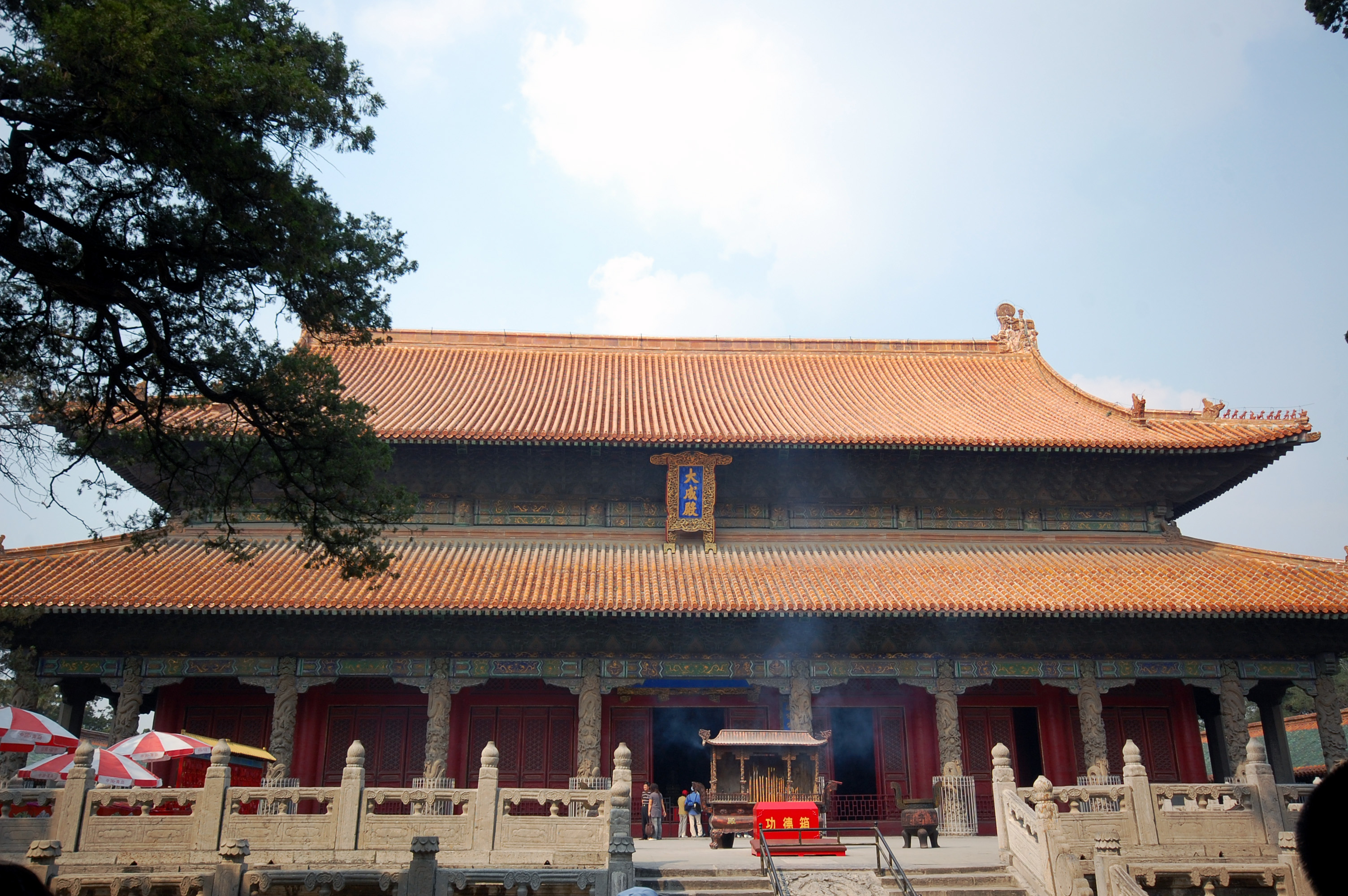
Today we are in Qufu, once the capital of the ancient state of Lu, and the birthplace of Confucius. Here, the main attractions are the Temple of Confucius, the mansion of Confucius’s descendants, and the grave of Confucius himself. It seems to be full of people whose idea of a pilgrimage to the home of China’s most famous philosopher seemingly involves turning up at the front gate, buying a fan and a plastic crossbow, tramping pointlessly around the courtyard for a while taking selfies, then buying some tat in the inner sanctum.

I am quite livid at the sight of hawkers in the very holy of holies trying to push Confucius comics, simplified versions of the Analects, and a bunch of “History of Your Surname” posters at passers-by. Could they really not find a better quality of souvenir?

I find the Lu Wall, and round up the crew to do a piece to camera about the workmen in 154 BC who found copies of the Confucian classics bricked into a wall on that spot. The books found therein are the oldest and most complete version of The Analects, and the ancestors of all modern versions. They had been hidden there in 213 BC by Confucius’s 9th generation descendant, during the First Emperor’s Burning of the Books.

The graves of the Kong family are situated in parkland a mile away. Among the many little hummocks of grass, there is the larger grave mound of Zisi, the grandson of Confucius, and of Top Fish, the son of Confucius. And then there is the grave of Confucius himself, its forward-facing stele a patchwork of fragments held together with steel pins, after the Red Guards tried to destroy it in the Cultural Revolution. There is a scrum of tourists around it, and I sneak into their midst, turning to the camera amid the clamour to say: “People come from all around the world to see the last resting place of Confucius. But guess what, he isn’t here…”

Jonathan Clements is the author of Confucius: A Biography. These events occurred during the filming of Shandong: Land of Confucius (2018).

To the Lighthouse

The crew have plenty of stories to tell about the hotel. Frances the producer spent most of the night in a stand-off with a giant spider. The director found two rats in his room. I merely had to contend with a blocked plughole, which hardly compares.

The new drone operator is very keen to tell everybody that he is ex-military, that he has studied at the People’s Liberation Army College, and that he did time in the army. He keeps mentioning this to everybody he meets, even though it is plain to see that he is a drone operator, so probably not a future general in the making.

Little Fish the sound guy is also oddly performative, claiming to have once been a pop star, a hairdresser and a wedding planner, and yet also very keen to tell everybody how much he likes girls with big tits. I just write this down. The director thinks he is trying too hard.

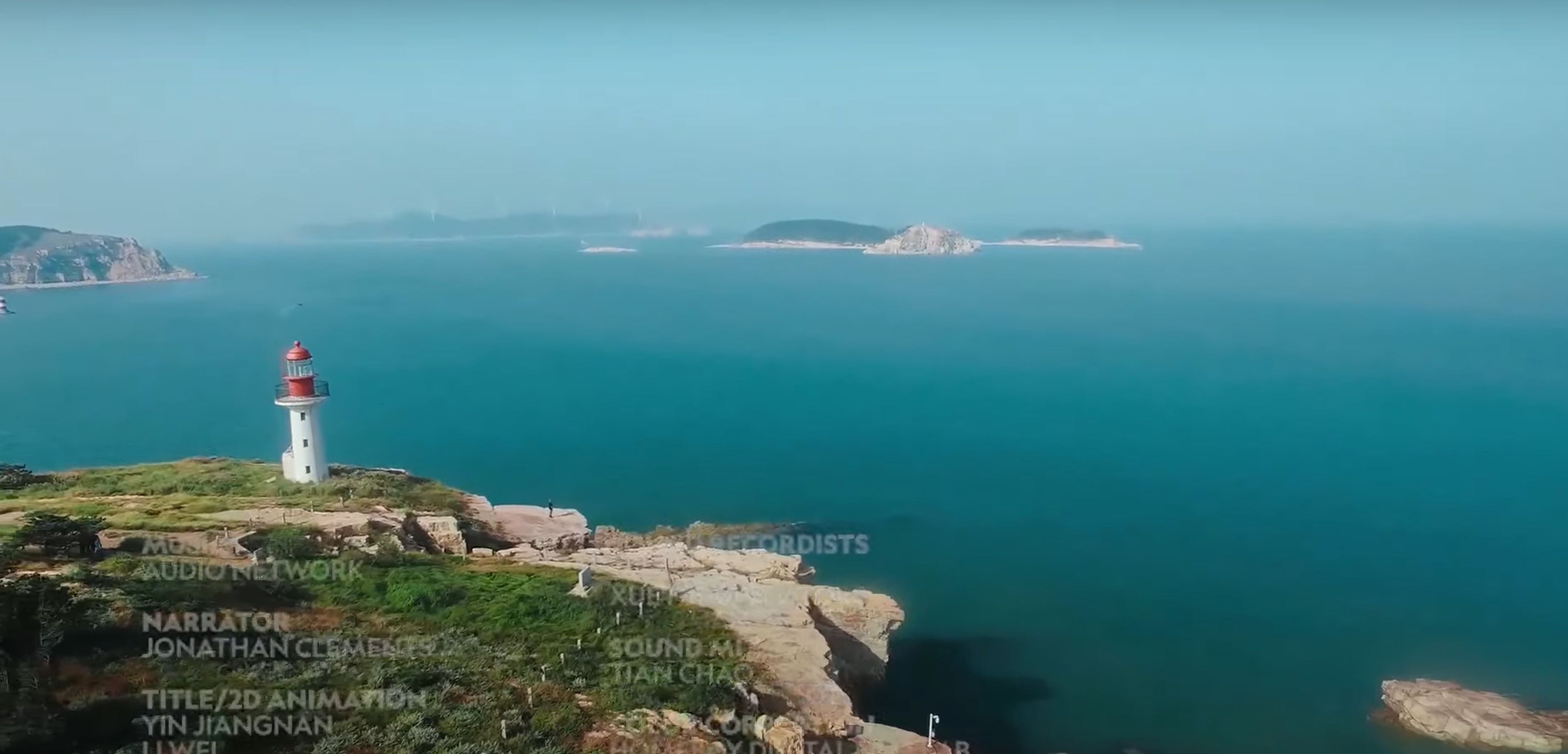
For the first time in a week, I wake up before my alarm. But the morning call is still 0630, ready to film on the very edge of the coast, at a little lighthouse on the cliffs above the island. Here, I have to do the speech that will close the whole programme, somehow summing everything out without making any mistakes, tying up the producers’ desires and the directors’ imagery, without mis-stating any facts or making any mistakes.

It’s a good reminder to me of what I am being paid for – having a Confucius quote ready to hand, remembering to qualify those elements that are somewhat questionable historically, and trying to keep a programme that has been veering rather a lot towards the spiritual, rooted in the prosaic and the material. And then remembering it all and yelling it into a camera on a clifftop, while gawping tourists file pass and point their phones at me from behind the camera.

“Confucius, the man from Shandong, once said: ‘I hope that the old have a life free of cares, that my friends have faith in me, and that the young remember me when I am gone.’ And he’s got his wish. Here, in the place the modern Chinese call the Isles of the Immortals, there are figures who have achieved some form of immortality. Like Mazu and Laozi, Confucius is still celebrated hundreds of years after his death. And through him, for the last two and a half millennia, his homeland of Shandong has come to shape the history and culture of all of China.”

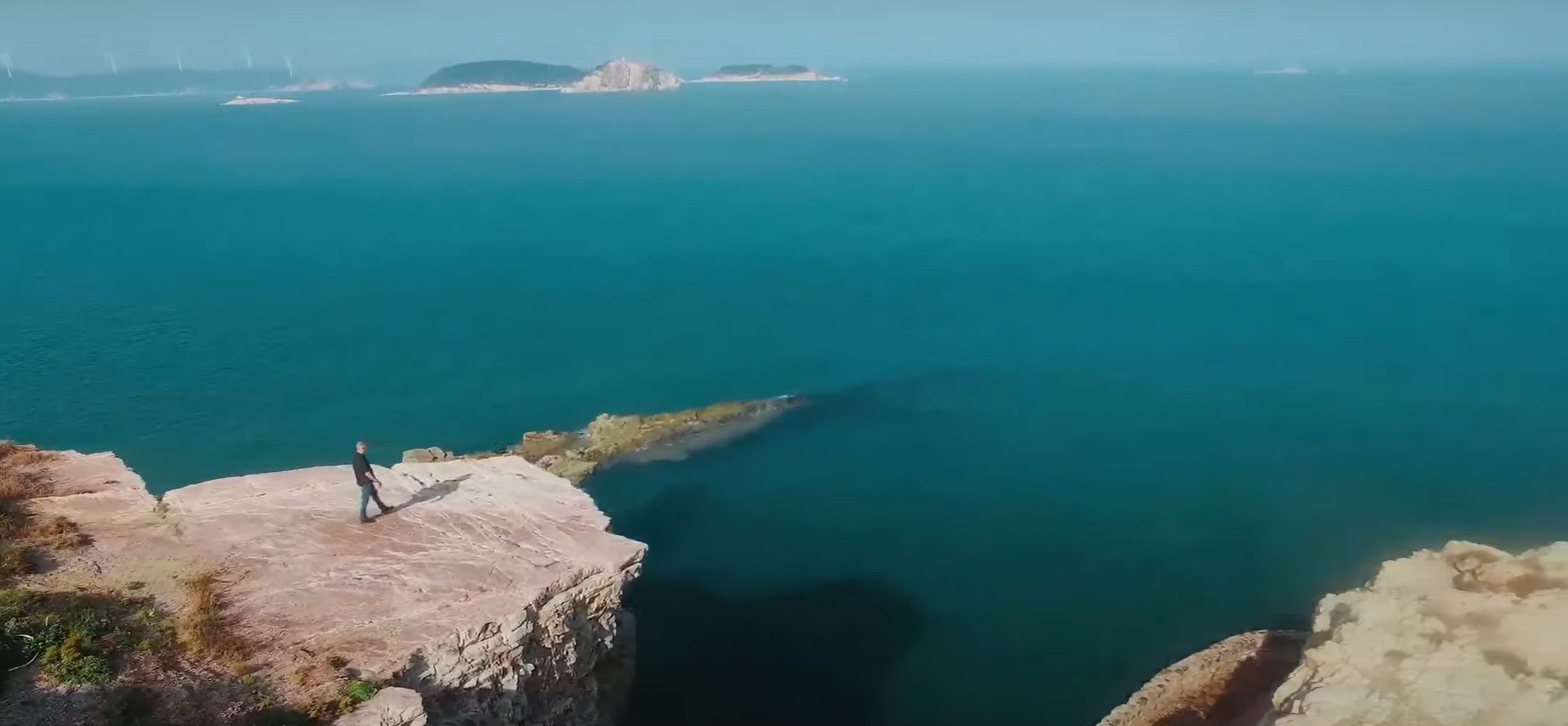
Bosh. Done. And our new military drone pilot wrestles his machine against the strong sea winds, straining to keep it in place while Jiuqing the producer operates the remote camera onboard, filming me as I stand at the cliff edge, looking out to a seascape dotted with tiny islands, fading into the haze.

He’s good. Any drone pilot I had previously worked with would have crashed three times before we got the shot, but I think it helps that the camera is not his problem, merely holding the drone steady.

Back to the mainland ferry, with a new van driver. It’s Li Tao, who I haven’t seen since the first day, seconded from the Ghost Crew, which has a new role as a sump of spare talent to bring in when people brain themselves on shop signs. Only partly in jest, the grips have set about the restaurant sign with gaffer tape and pennies, rendering it ostentatiously safe should anyone else be quite so clumsy.

Seven hours follow on the road, beginning with the customary silence as the occupants of the bus phub with their phones. One by one, their power runs out, and they take to staring at their fingernails. I watch The Shadow Line until my laptop gives out, and then wade through some podcasts, but eventually a conversation breaks out.

Jiuqing the producer is trying to explain what her name means. Unfortunately for her, jiu means “Long Time”.

Qing means “celery”.

“It’s a kind of grass, you see,” she explains. “I was born in the Year of the Snake, so they wanted to give me a name for the kind of places where my zodiac animal was most likely to live.”

“Thank God,” I observe, “you weren’t born in the Year of the Pig.”

Jonathan Clements is the author of Confucius: A Biography. These events occurred during the filming of Shandong: Land of Confucius (2018).

The Ghost Crew

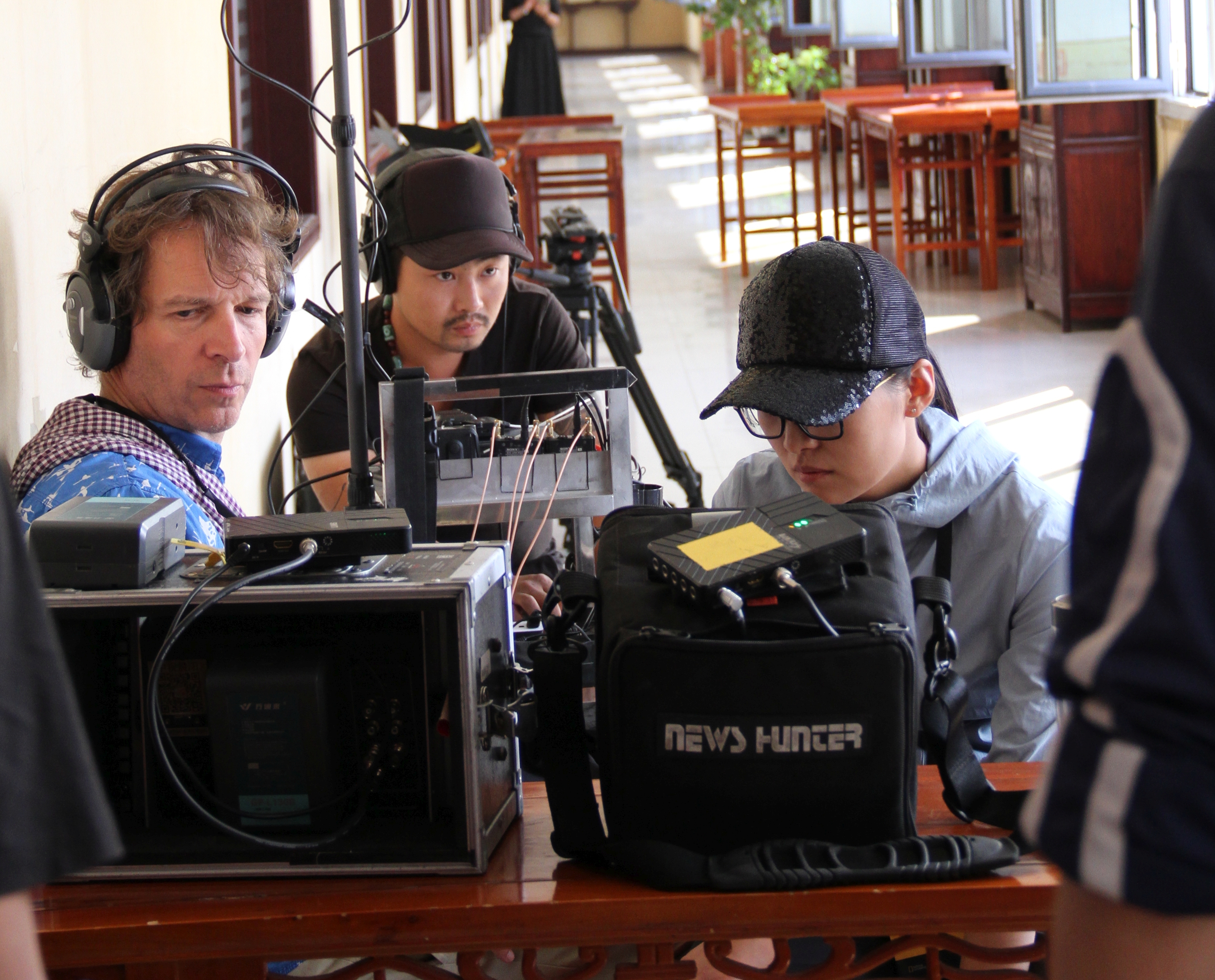
The Chinese director seems oddly solicitous with me today. I think he has worked out that although I appear to be lurking, silently like an idiot, at the edge of all negotiations, when my time comes, I am ready to go. It makes a huge difference to him, when his crew take two hours to set up a shot, that I can get it done in five minutes.

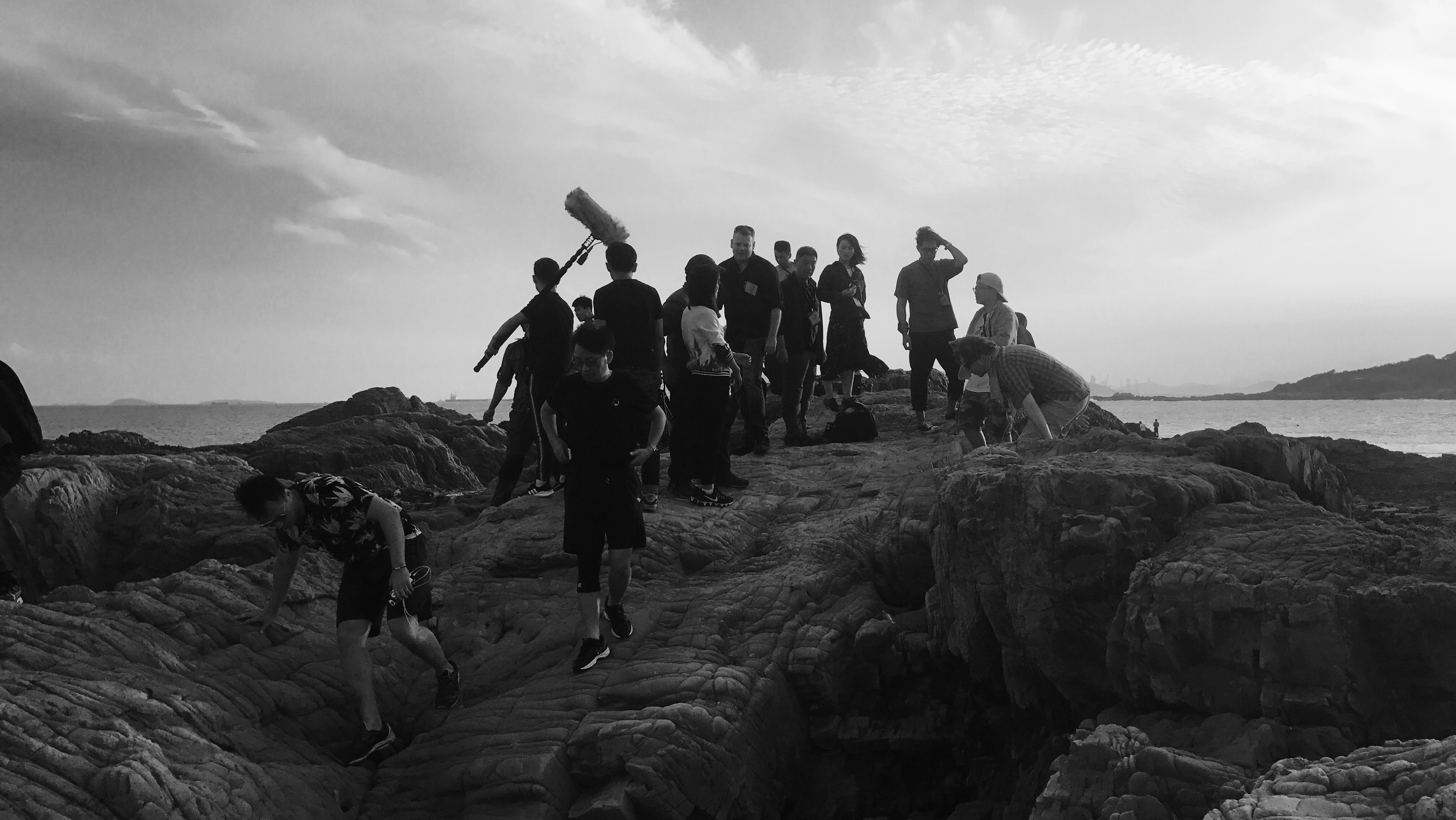
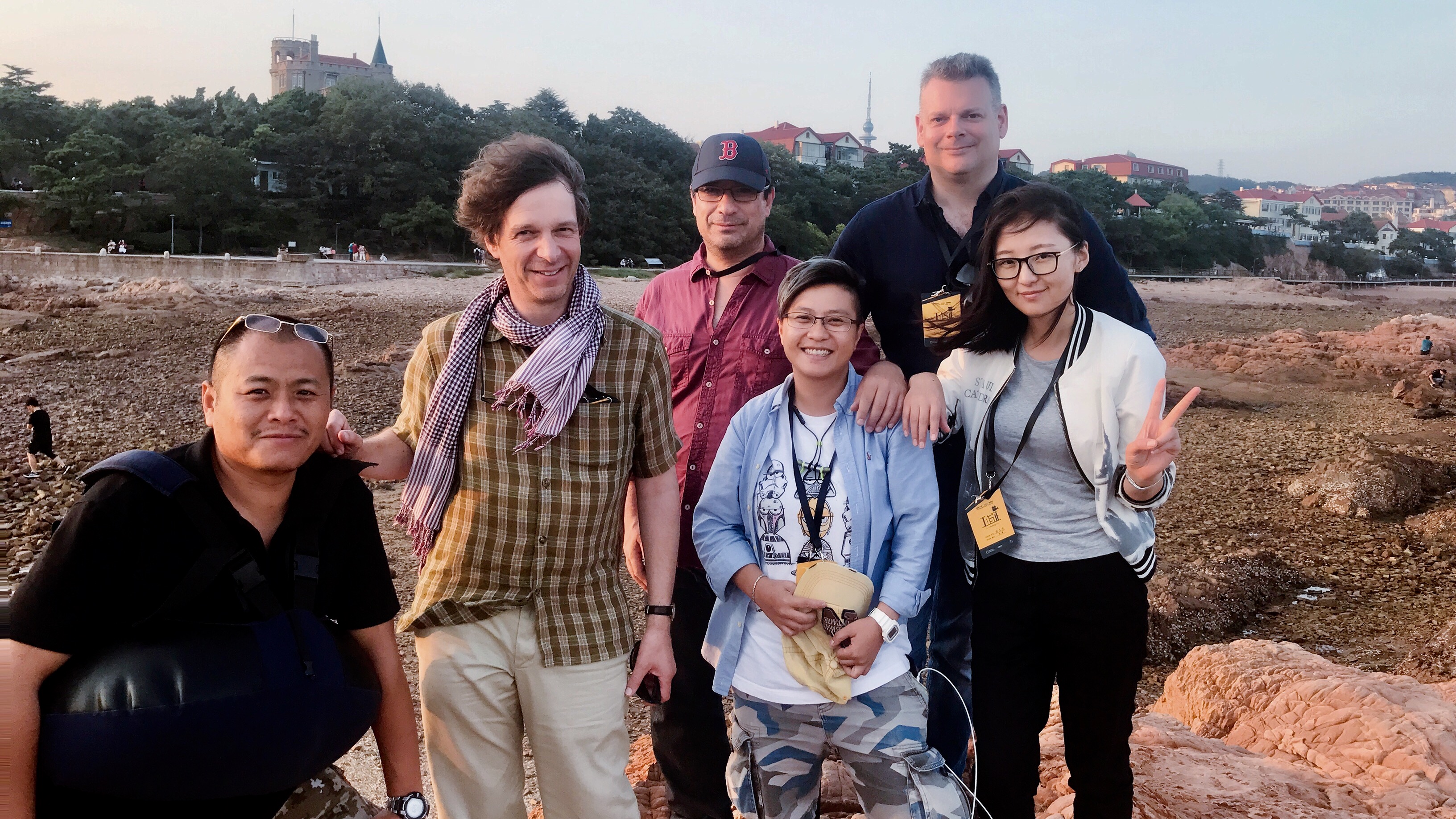
We end the day down on the rocky coast at Qingdao, catching the sunset behind the old colonial buildings from the days of the German concession, and across the shining buildings of the modern city. The film-makers are somewhat demob-happy after thirteen hours at work (in fact, the day starts at 0530 and I do not get to type this in a hotel until 2345), and we giggle at the sight of the sound crew trying to lug their hostess trolley across three hundred yards of boulders.

Jiuqing the producer dips her hands into a rock pool and shows me what she has caught.

“I have a shrimp,” she says, before carefully returning the small creature to its home.

The A-crew and the B-crew both have their respective cameras pointed in different directions. The C-crew with the drone lurk in the van, secure in the knowledge that it is too windy for them to fly their machine, particularly after its sojourn in a temple tree-top for two hours.

Our American producer, Mitch, is very impressed with Jiuqing, a lithe girl whose job as assistant director extends to keeping everybody on schedule, fixing and refixing our hotels and breakfasts and routes to location, and chivvying everybody along. During the long drive to the Qingdao beach, when he isn’t trying to teach Ruby the Interpreter how to sing Goodbye Ruby Tuesday, he discusses with Jiuqing the various options for the days ahead, and tells me that he suspects she will be managing a film company sooner rather than later. He is particularly impressed when he asks a question about a particular location, and she has a picture of the beach there in live time, within minutes.

“We have a D-crew,” she confesses. “They’re the clean-up men. They tail behind or go up ahead and snatch the sunsets and time-lapses we don’t have time for, or the magic-hour dawn material we can’t get to. They’re the ghost crew. We’re not supposed to admit they exist, but they are shooting everything we only remember to do after we’ve got back on the bus.”

And so we perch on the rocks in the wind as the sun sets over Qingdao. Someone has the bright idea of positioning a couple of marine items in the foreground on the rocks, as the sun sets behind them, and Jiuqing dashes off excitedly, returning with her hands gently cupped over two critters.

“I HAVE CRABS!” she shouts to the world.

Jonathan Clements is the author of A Brief History of China. These events occurred during the filming of Shandong: Land of Confucius (2018).

When the Boat Comes in

Everybody on the crew has a job that is as tough as mine, in their own little field, and everybody just gets on with doing it, from Little Fish, the whippet-thin soundman with his little hostess trolley of nobs and dials, to Boomer, who balances his fluffy boom mike on his head, to our angry driver Hooty, who is only happy when honking at any car in the vicinity. We’re still not sure what some of the crew do. The man who took my bag at Jinan station was called Li Tao, but I haven’t seen him since, so I assume he is part of the Ghost Crew. And there is an elegant lady we call Purple, because of her punky hair rinse, whose name tag reveals her job title as GL8. It turns out that she is the driver for the advance team, part of our crew who arrive in every location an hour ahead of any general call-up time, ready to smooth feathers and buy sandwiches.

We all have lanyards bearing a bright yellow laminated card, giving our names and positions. I always keep mine on when we reach a new location, because the security guards have often been told to wave through anyone displaying such credentials, and it saves me being mistaken for an American tourist.

Today we suddenly gained a new Drone Team, the former Drone Team having been fired for crashing their drone into a tree. We catch the ferry across the water to Changdao, Long Island, the first of the island chain that the modern Chinese tourist board has sneakily rebranded as the Isles of the Immortals. They are not the Isles of the Immortals; nobody knows where the Isles of the Immortals actually were, but now everybody with Google Maps thinks I am an idiot when I say this, because clearly they are here, near the Immortals Theme Park, and somewhere on the Immortals Island Cruise.

The ferry takes half an hour, most of which is the three-point turn required to get it out of the harbour. Honestly, I’ve taken longer in the past getting across the QE2 bridge. On the Changdao shoreline, we rustle up a fisherman, Mr Lin, who will poke around some clam pots or something. I don’t know because I am surplus to requirements, and I know the last thing that the director needs is a spare body in the fishing boat getting in the way.

The next crew member to disappear is Hooty, who walks straight into the sharp edge of a restaurant sign at lunch. The director comes out of the toilet to find the room in chaos and blood spattered across the floor, and lets out a long sigh.

We clamber into three souped-up speedboats for the short, nerve-wracking hop to Shrine Island, home to a temple to Mazu the Goddess of the Sea. It is a dilapidated disappointment, literally signposted as a “third-rate cultural monument”, and lacking the Goddess of the Sea gift shop where I had hoped to spend a bunch of the money still in my wallet.

For a day that began at 0530, I don’t stand on my mark before 1600, when the tired crew finally get around to pointing the cameras at me to ask a couple of questions of Mr Lin the fisherman, like why do you pray to Mazu? I also deliver my 20-second speech about the historical origins of the Goddess of the Sea, which goes like this:

“The legend says that she was a fisherman’s daughter, Lin Moniang, the Silent Girl. The villagers believed that she could heal the sick, see the future and even make it rain, but she seems to have thought her main duty was to protect her brothers’ fishing boats. She would put on a bright red dress, carry a lantern and stand on the clifftops like a human lighthouse, guiding them home at night. One evening, one of the boats didn’t return, and she thought it was her fault. She was last seen wading, weeping into the sea… and then the boat returned, although she never did. Since that day, Chinese sailors and fisherman have prayed to Mazu for protection.”

We’re supposed to record my speech for the end of the show here as well, except we are losing the light, and the speedboat captains want to get home for dinner. So that’s now been bumped to another day, and since we have missed the last ferry back to the mainland tonight, I am typing this to you in a third-rate Chinese hotel room, where the staff complain all the way up the stairs about how heavy our luggage is, even though they’re the ones who have a hotel with no elevator.

0630 call tomorrow, and I am in bed at nine. Such luxury.

Jonathan Clements is the author of A Brief History of China. These events occurred during the filming of Shandong: Land of Confucius (2018).

Rescue Archaeology

I am driving He Yuling to the dig site, because it gives us the chance to put the car in shot for a few seconds.

“Any problems with grave robbers?” I ask, idly using my term of the week, daomu.

“Oh yes, lots,” he says. “And they’re usually local. Sometimes I wonder with this lot if we’re paying them to dig up something they’ve already worked over on their own time, if you know what I mean.”

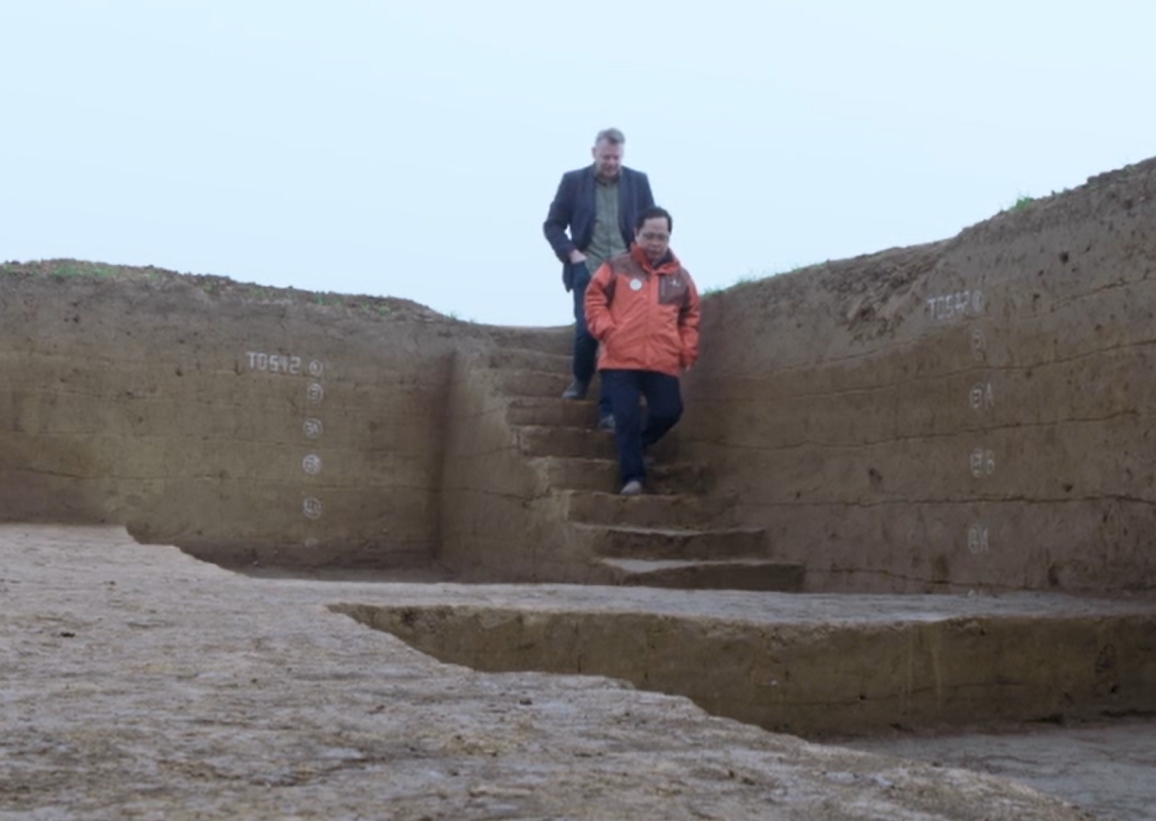
The dig site is a pit in a field somewhere on the edge of town. Dr He’s team have been digging it up in sections each year, working through the spring and summer when the earth is soft, and packing up each winter when it hardens. Each year, they pick an area the size of a couple of tennis courts, dig it down ten feet or so to the Shang era, and see what they can find.

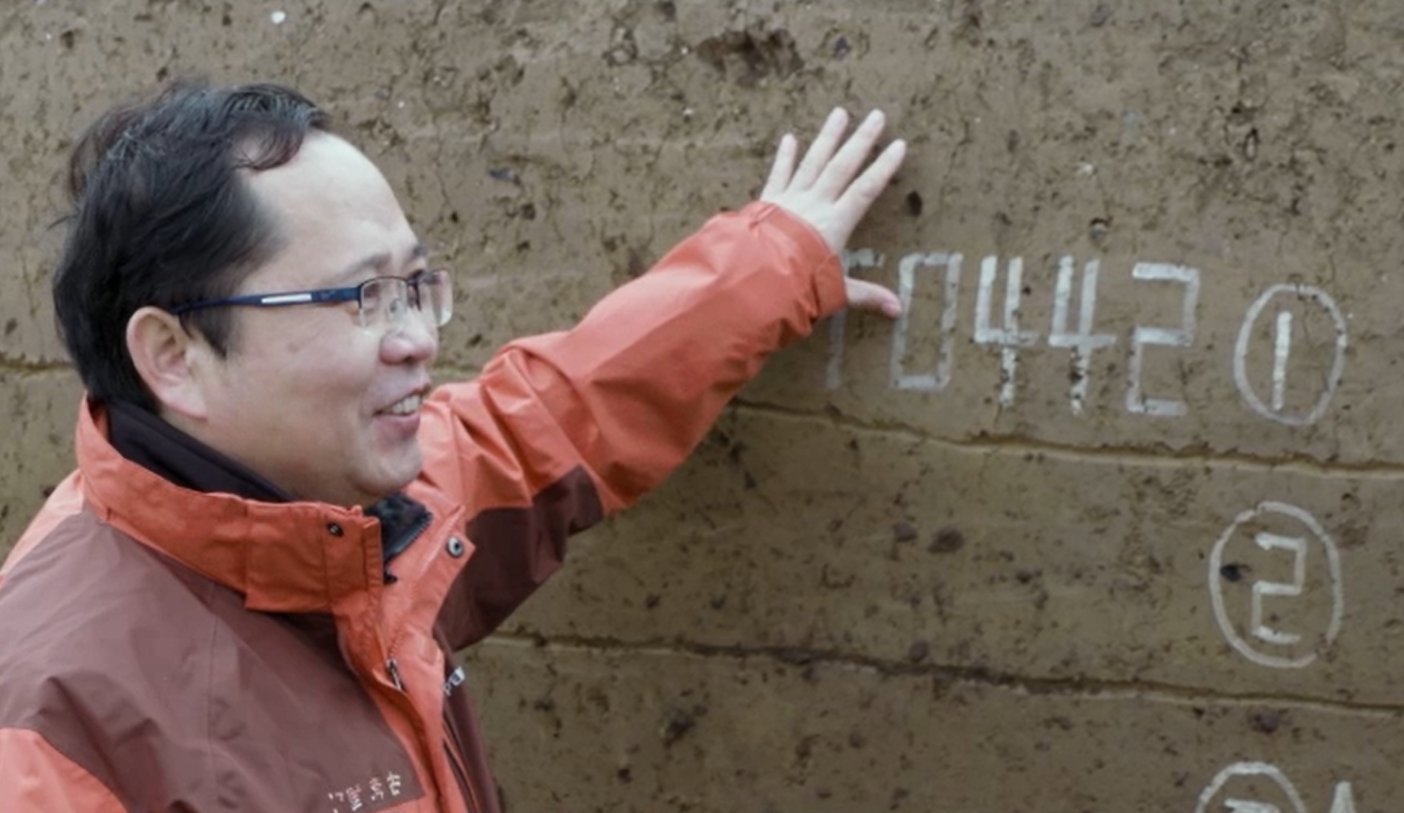
In section T0442, where they are working today, they have found a Song-era grave, which they are obliged to carefully tag, catalogue and investigate before they can poke any deeper in search of anything from the previous three thousand years.

“Archaeology was so much easier thirty years ago,” sighs Dr He. “These days, there’s so much diversification – forensic archaeology, environmental archaeology, social archaeology, animal archaeology… but the one that’s become such a growth area is rescue archaeology. China today has so many new roads, new railway lines, new shopping centres, so of course they are going to run into a grave or a temple or something underground. It’s not like the Terracotta Army site, where they build a museum over it. Most of the time you just have a set amount of time to sift what you can, and then it’s a Starbuck’s.”

T0442 is in the middle of farmland, so the soil will be backfilled once they’re done, and the following year it will be growing cabbages again. The farmers don’t mind because there’s digging work for them on the site.

Dr He is such an easy interviewee. We just rattle through the questions, and his answers usually turn into five-minute rants, usually with a chance for me to interject something so it all seems natural and conversational. We joke about the likelihood of Tang dynasty archaeologists complaining that the Shang dynasty archaeologists are ruining their patch by digging right through it to the earlier strata. He talks about soil colours and Luoyang shovels, and we are done before lunch.

“You can see the level of topsoil,” he says. “The first half metre or so is modern. You find iPhones, computer chips, lots of shihui.”

Shihui?” I look over at Michelle, the assistant producer from Singapore.

“Semen,” she declares.

“I don’t think that’s likely…” I begin gingerly.

“CEMENT!” shouts the director. “Speak properly, Michelle!”

Jonathan Clements is the author of A Brief History of China. These events featured in Route Awakening S05E02 (2019).