Grave Goods

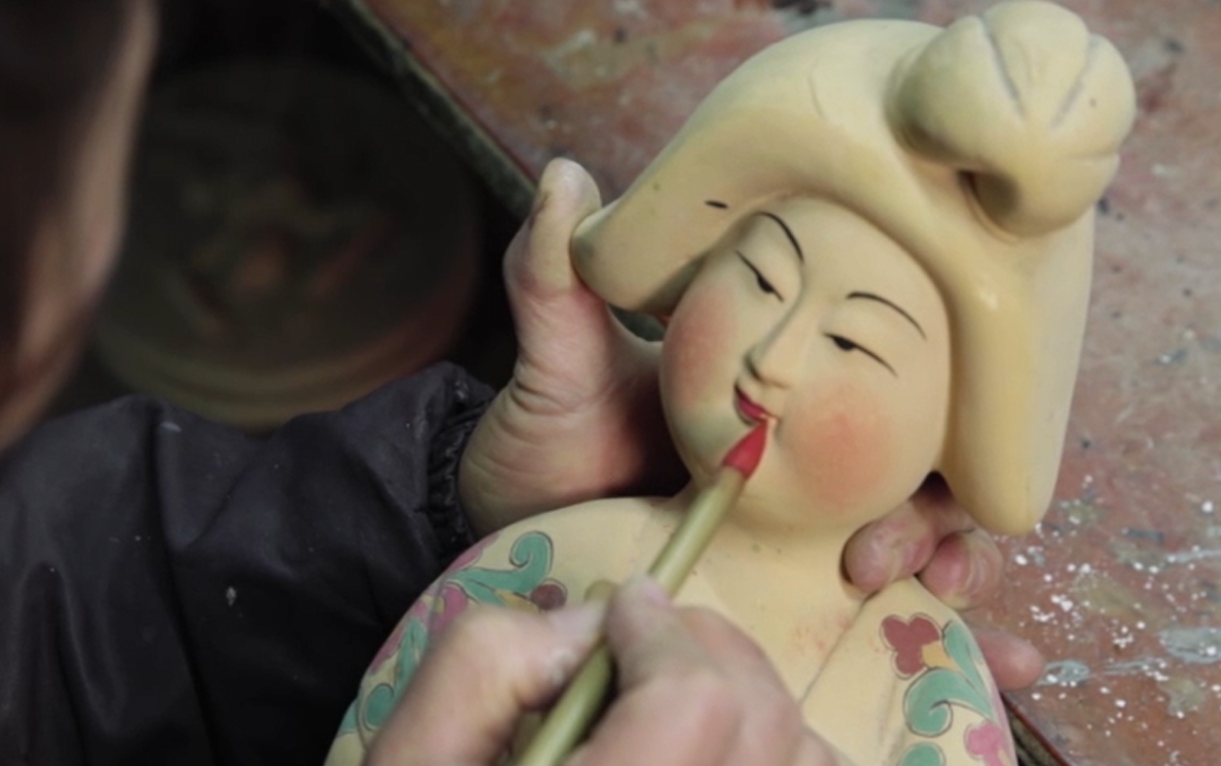
Sancai is the spinach-and-egg colouring to be found in a lot of Tang dynasty pottery. Or at least, it is today. In fact, although sancai as a technique spread as far as Italy in the late Middle Ages, it was over-written in China by later porcelain firing methods with higher temperatures and different glazes. It was practically forgotten in modern China until 1905, when workmen digging railway cuttings near Luoyang started uncovering buckets of the stuff in old tombs.

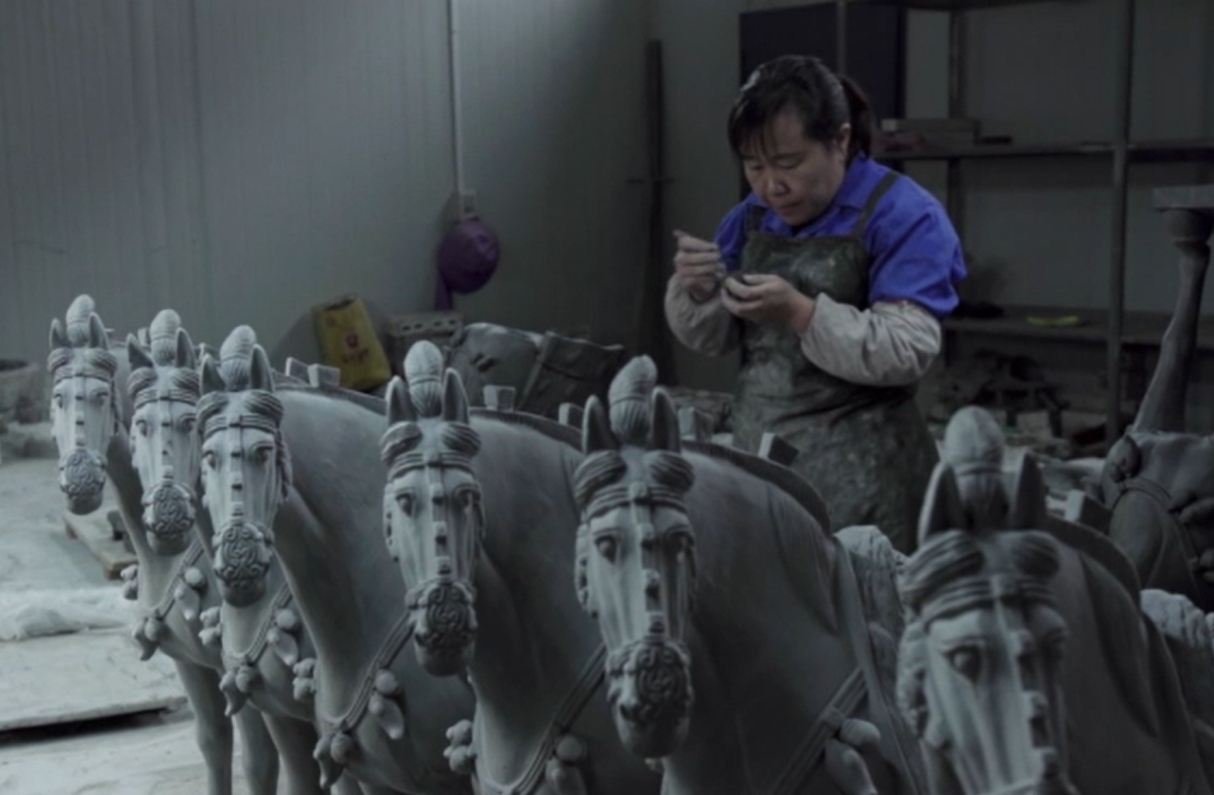
Archaeologists took it to the nearby village of Nanshishan, where they asked local tilers to come up with ways to restore it, leading to a transformation of their lifestyle. Nanshishan is now a centre for modern sancai production, practically an entire village of over a thousand people, devoted to making pottery.

I’ve never liked sancai. Five years coming and going to Xi’an and I have never once been tempted to buy any of it. Horses are a speciality, but I have never thought of getting a sancai horse for my horse-crazy mother. Nor have I ever been all that tempted by a sancai camel or a sancai fat girl (the ideal body shape in the Tang dynasty). Eric the director of photography is not a fan, either.

“I hate it,” he says. “It’s evil. It’s all for dead people. I would NEVER have it in my house.”
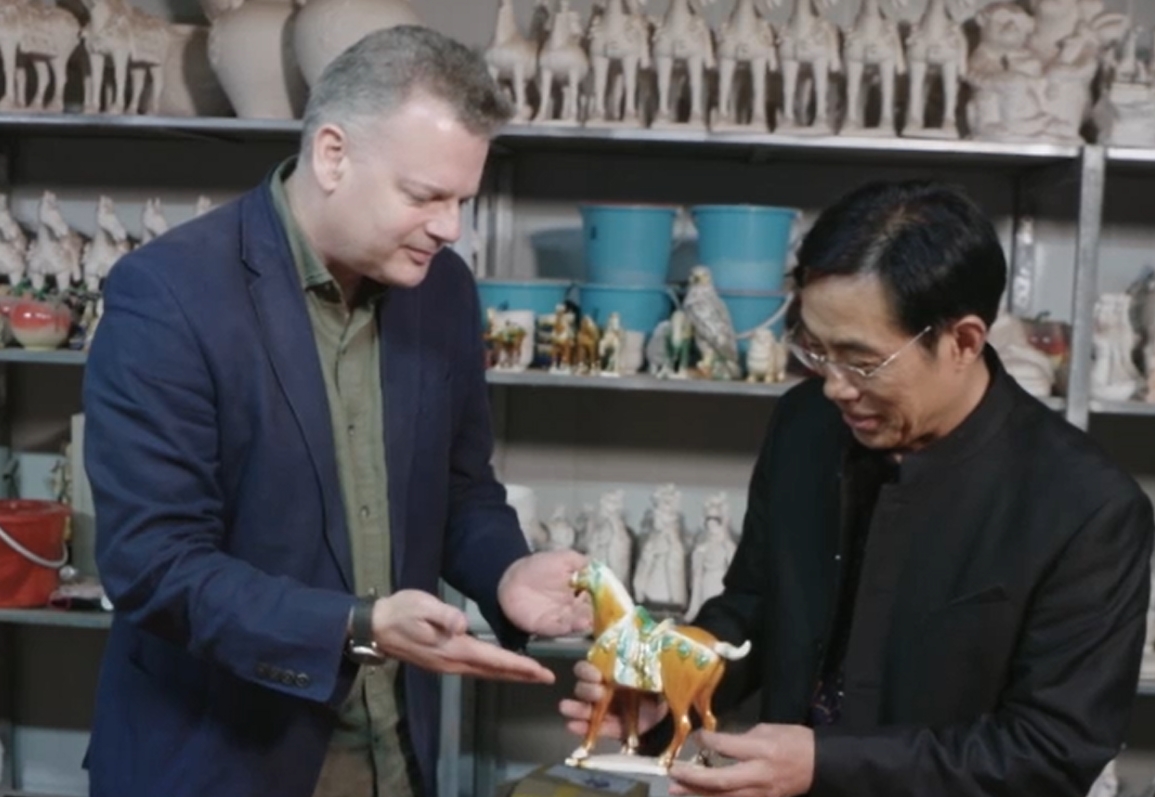
Gao Shuiwang, a relative of the original Gao who became the first restorer, has a swish workshop where they make the sancai. He has a sonorous 40-cigarettes-a-day voice, and is witty and chatty when discussing the question in advance. When he asks what the questions will be, the director jabs me in the ribs, and I say: “The first one, I guess, is what kind of relationship the people of Nanshishan have to the discovery of sancai.” (Wo renwei diyige shi Nanshishan cunmin dui sancai de faxian you shenme guanxi?) He’s ignored me until this point, assuming I am some kind of puppet, and his eyes pop out on stalks when he hears Mandarin coming out of my mouth. After that, things speed up a whole lot, and we are all laughing and joking about the story of sancai since 1905, the problems the villagers had experimenting with glazes and firing temperatures, the health and safety restrictions on wood-burning furnaces, and the difference made by cobalt, newly arrived in the Tang dynasty from Persian merchants along the Silk Road, and vital in the composition of new blues and blacks.

– cobalt. A word I learned at six this morning while revising the vocabulary that was likely to come up, lest anyone think this is easy.
Filming time comes, and suddenly Mr Gao clams up. He assumes a rigid, upright position and starts declaiming at me as if addressing an assembly hall. He thinks that interviews have to be staid and staged, and the director pleads with him to go back to the chatty, smiling, witty man he was only minutes earlier. It takes a while to drag him back out of his shell, and convincing that, yes, it’s okay to have fun. Eventually, we drag it back out of him, I signal for Clarissa the fixer to stand behind me so he has a prettier face to look at while he answers, and before long we are back to normal.

As soon as the interview is declared over, he is back to his previous, bounding self, and the director keeps the camera running in secret while I get him to show me around his favourite exhibits in the gallery, all the better to hear his enthusiasm come through. He then takes me down to his lab, where we see the plain white horses painted with three different kinds of red – all the glazes are oxides, and only change from reddish colours when they are fired in the kiln. Until that point, they all look almost the same.
“It’s a right bugger telling them apart,” says Mr Gao. “You wouldn’t believe the number of times I’ve had a brush for red-which-turns-into-green and gone and put it into the red-which-turns-into-white bowl by mistake.”

Mr Gao is effusive with praise for us for giving him such a good time and a good laugh, and is dismayed we can’t come to dinner. He stops us at the door to announce that he wants to give us a little present. A real sancai horse, like something you’d want in your tomb.

“Eric!” I shout. “Mr Gao has a present for you.”

Jonathan Clements is the author of A Brief History of China. These events featured in Route Awakening S05E01 (2019).
Barbarian Garb

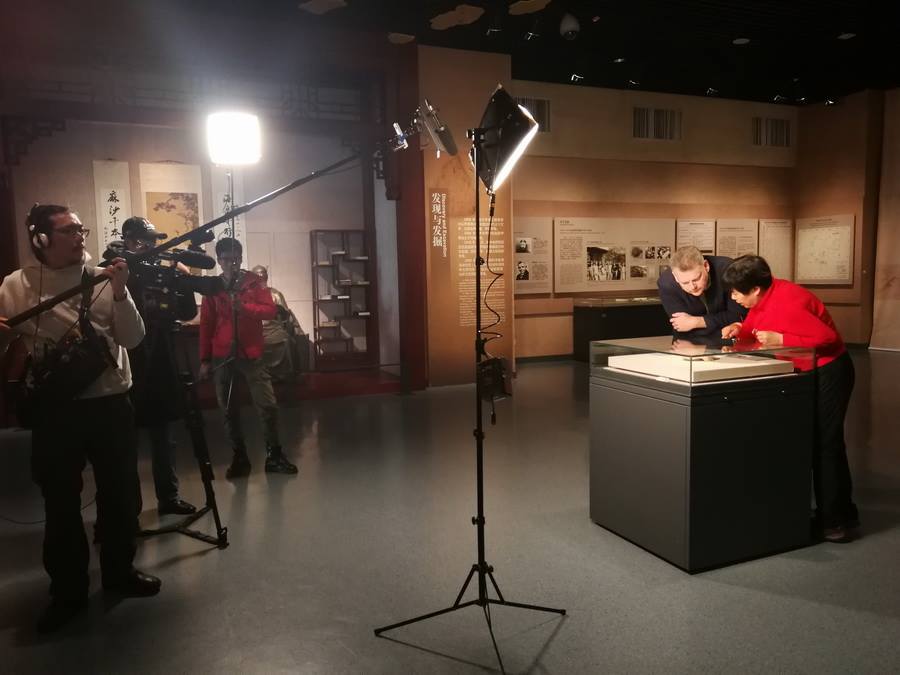
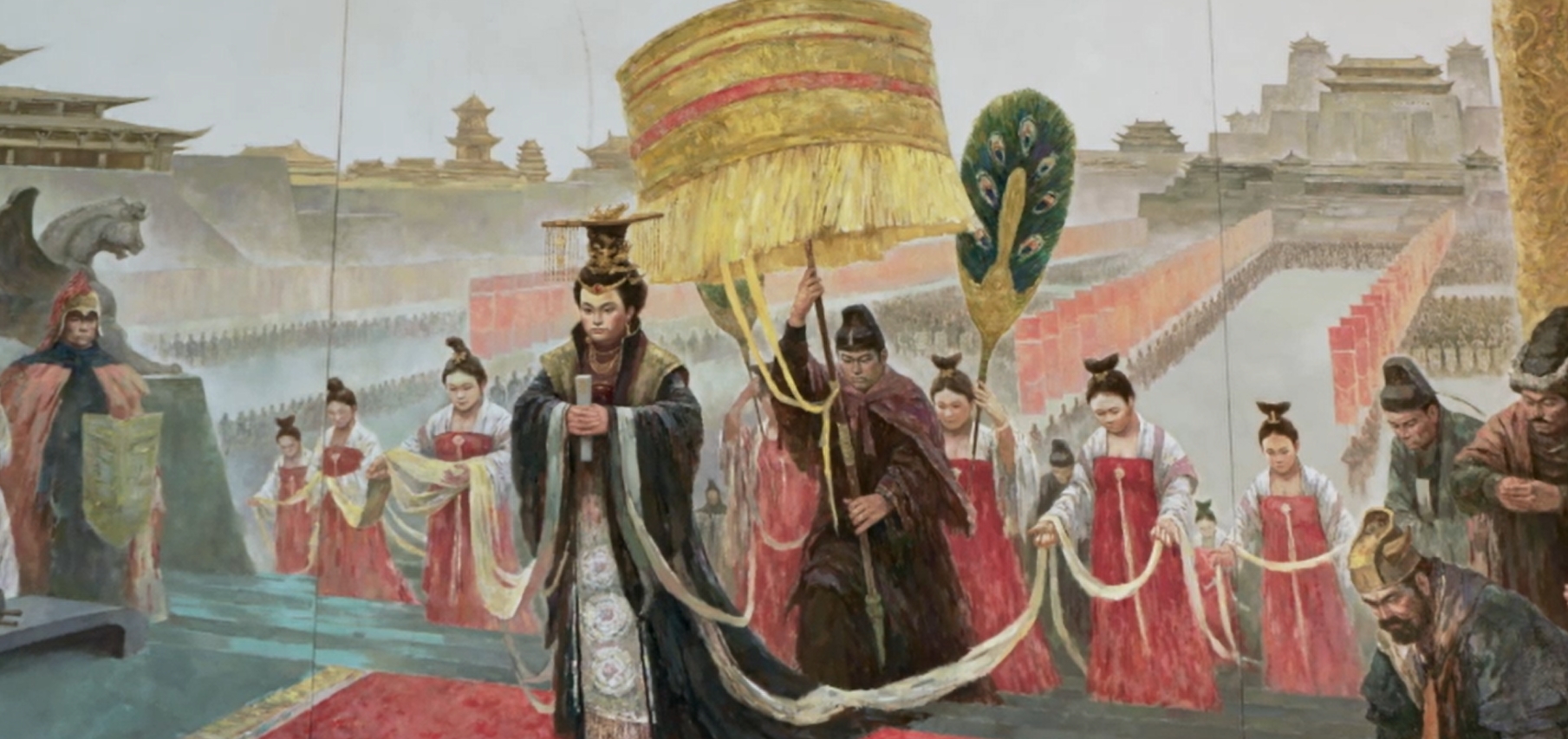
The Luoyang Museum, an inverted ziggurat at the edge of town, deliberately designed to evoke the shape of a ding – the ancient sacred tripods that once marked the capital of the ancient kings. It’s packed with relics, but also with surprisingly cool oil paintings of key moments from ancient Chinese history, painted by a local artist with a real eye for both historical accuracy and alluring, pulp-fiction moments of iconic action. Others might scoff, but I found them to be very helpful in illustrating interesting moments like the coming of the Xiongnu nomads to Luoyang, or the fall of the Shang dynasty, or Empress Wu on tour, which are otherwise conveyed through wandering long halls of pots in cabinets.

Luoyang tourist literature makes a big deal about how it was the capital of “thirteen dynasties”, but that is rather economical with the truth. A lot of the time it was merely one of the capitals of those dynasties, like the Tang, that were obliged to shuttle up and down the Yellow River in order to allow the trees to grow back elsewhere – Xi’an had to be periodically evacuated when it became too difficult to get lumber nearby for building and fuel. Some of the other dynasties for which Luoyang was a capital were relatively minor ones that only laid claim to parts of China during periods of unrest. Still others were historical dead-ends, like the ten years that Wu ruled from Luoyang in her self-proclaimed “Zhou” dynasty. That’s not to say that those dynasties weren’t fascinating in their own right – most of you know all about Wu, but the Northern Wei, whose scandals make Game of Thrones look like the Tellytubbies, were also based here.

But they aren’t the big-picture dynasties like the Song or the Ming or the Qing. Empress Wu’s Luoyang wasn’t actually finished in the Tang dynasty. The Western part of the planned city was never built, the encircling wall never completed, as everything went into decline before they could get there. Regardless, you can’t dig a hole in Luoyang without finding some ancient junk. Two miles from our hotel, workmen digging the foundations for a new shopping mall have just hit into a tomb from the Eastern Han dynasty, and the 24-hour metro construction keeps running into temples and palaces from times gone by.

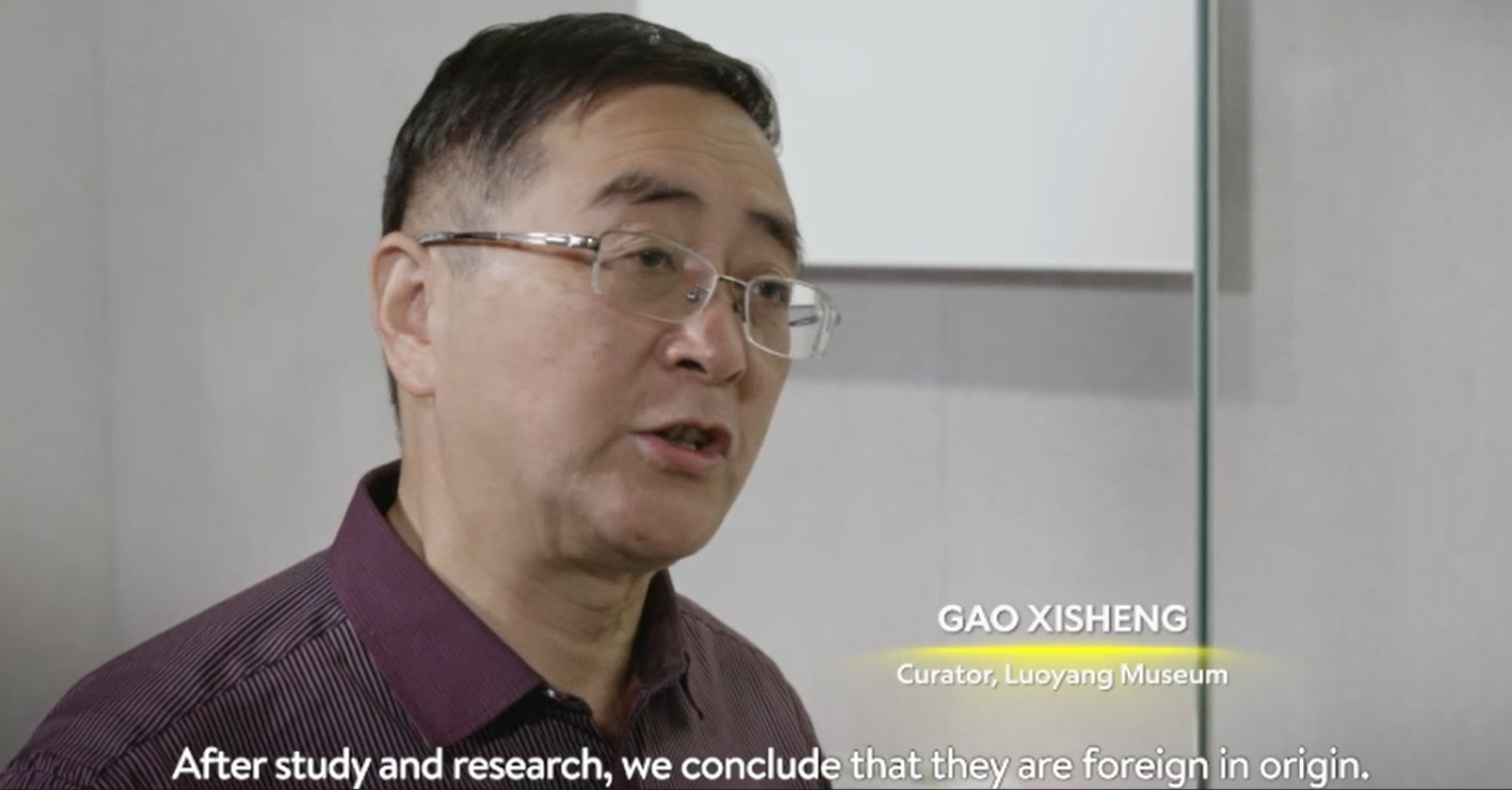
Today I am interviewing Gao Xisheng, the curator, about the arrival of the Sogdians (the Greek-influenced Persians on the very western edge of China), who were the middle men of the Silk Road, and responsible for a lot of the cultural and culinary imports of the cosmopolitan Tang era. My job here is to keep him talking, and to keep his eyes on me, not on the camera; to interject at regular intervals with signals that I understand, which usually take the form of extra questions about fire-worshipping customs.

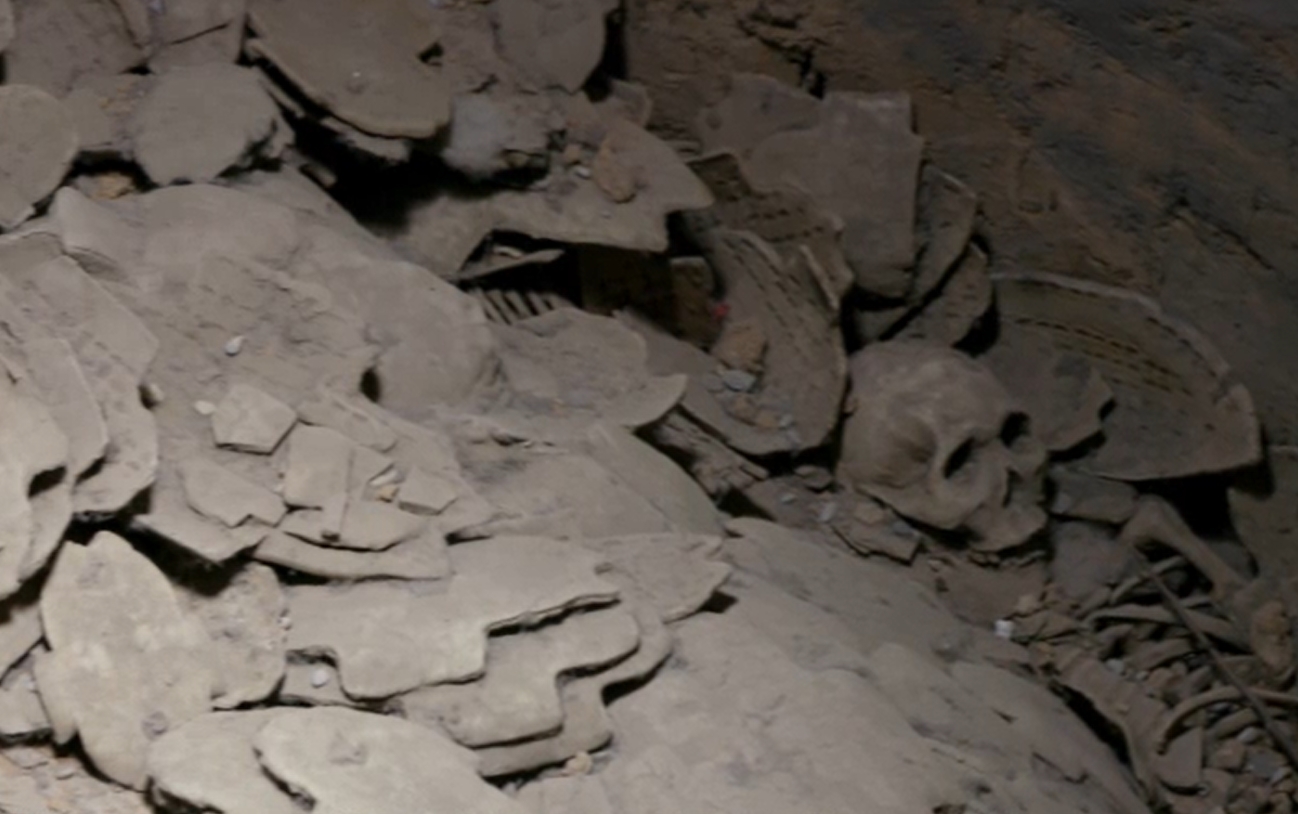
Mr Gao is very keen on metadata, pointing out that the Sogdian tombs in Xi’an and Luoyang suddenly arrive around the 7th century, as if out of nowhere, thereby demonstrating that as one might expect, Tang China suddenly became the sort of place that could end up with a community of immigrants that stayed around long enough to start dying there. He has similar things to say about the sancai pottery, noting that it was a tiny flash in the historical pan, and is only really found in the Xi’an-Luoyang area, and only in the Tang dynasty. New commodities from along the Silk Road, particularly cobalt from Afghanistan, transformed Chinese pottery with far more interesting blues in the late Middle Ages, causing everybody to give up on crappy brown-spinach-cream combinations.

He also points out to me a pattern of turquoise pebbles, once inlaid into a staff or similar symbol of power, now with the wood rotted away, delineating a sinuous pattern in the ground like an elephant’s trunk, topped by an abstract square head. “I mean,” he says, “it might be an elephant’s trunk, but we think it’s probably something much cooler – China’s first dragon.” It’s 3,000 years old, so those are probably fighting words in Anyang, where we are going next week.

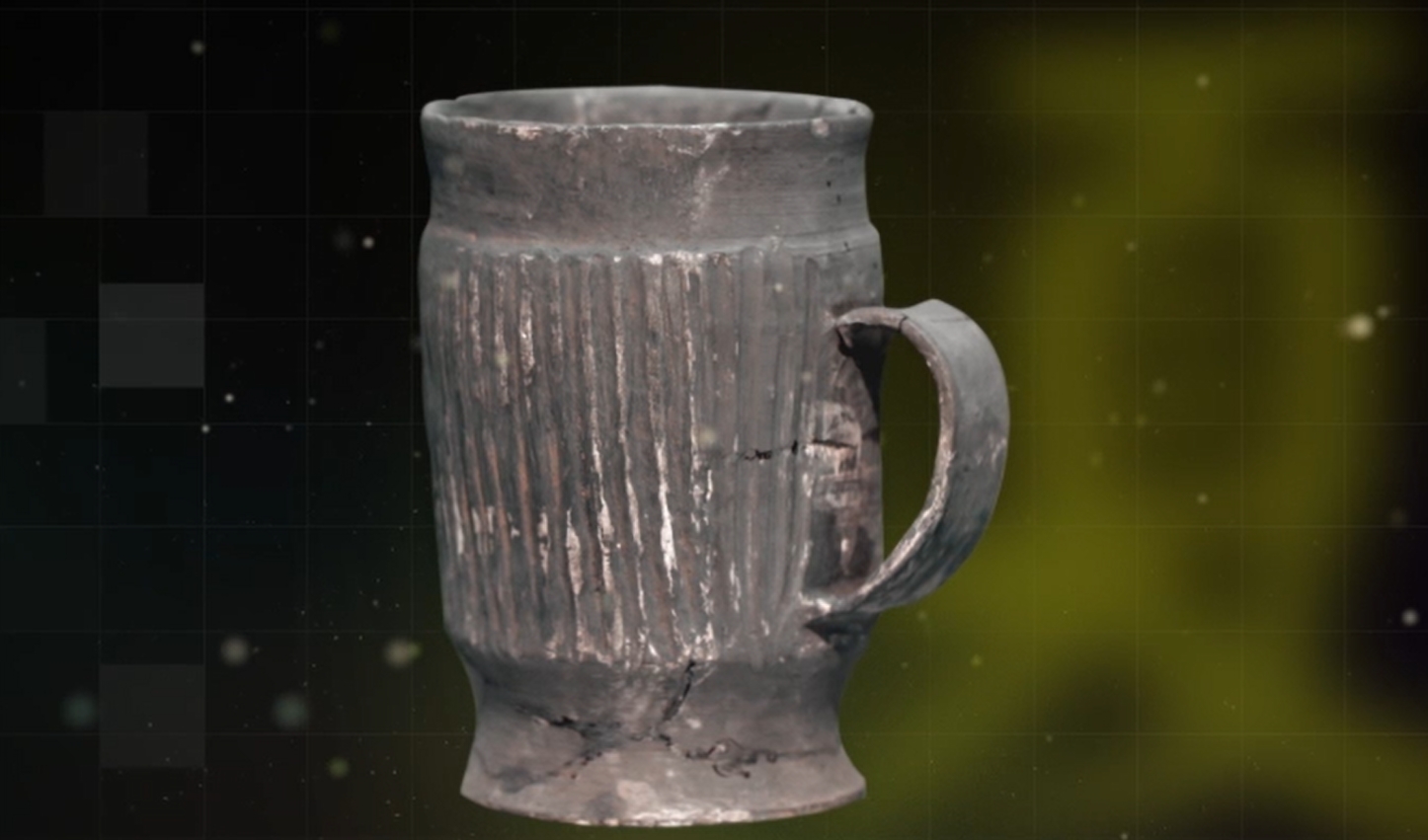
I have developed a sixth sense with interviewees. I can tell the moment I look at them if they are going to be a garbage fire or a fun time, and it’s never about what they know. It’s more about the degree to which they are prepared to say what they don’t know, and thereby allow us to discard pointless questions and spare them the nerves generated by lying and bullshitting on camera. Mr Gao was chatty charm on a stick with me, to the extent that when he showed me an entirely mundane-looking, modern looking mug and told me it was 3,000 years old, I was able to tell him he was trying to fool me, and get a laugh instead of a slap.

“I know,” he says. “It looks like something you might find in Starbucks. But people get fixated on all the weird-shaped ceremonial vessels used by the ancient aristocracy. The common people drank out of mugs. Just like us.”

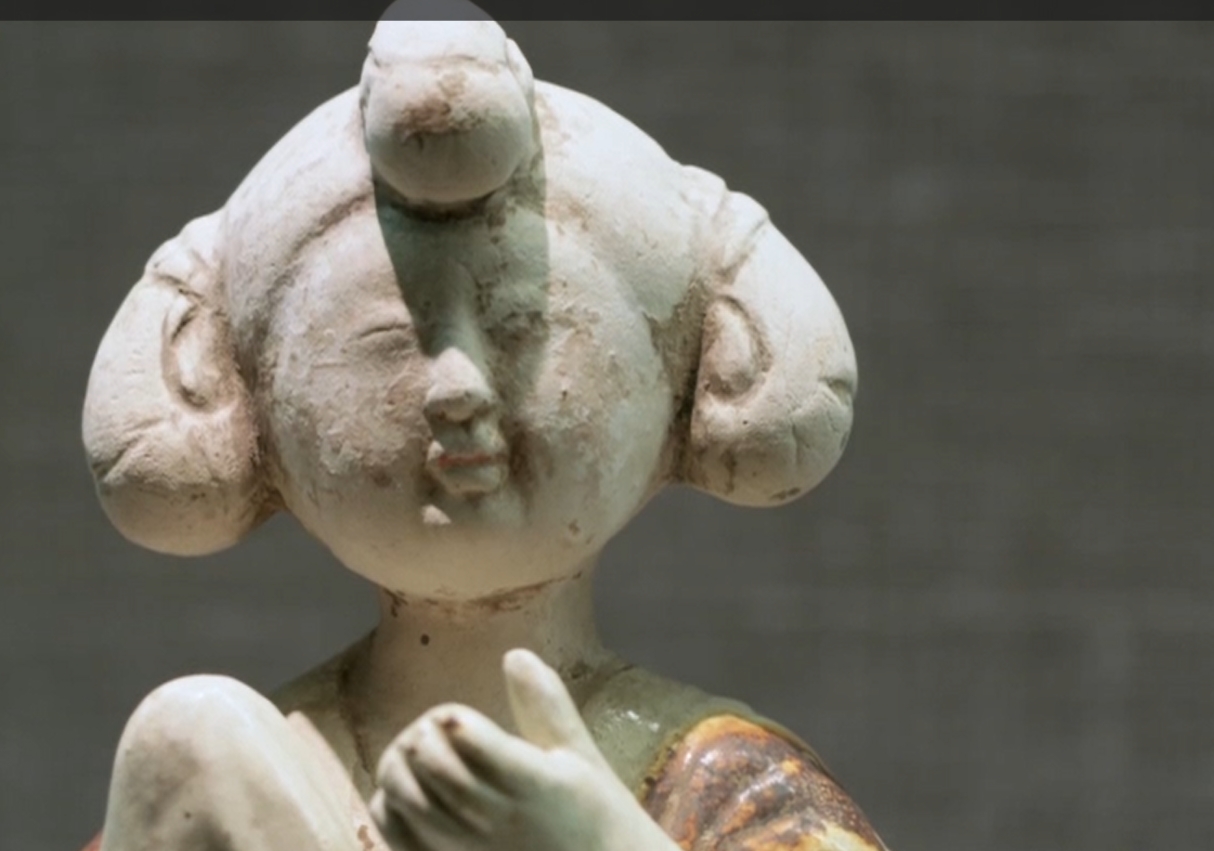
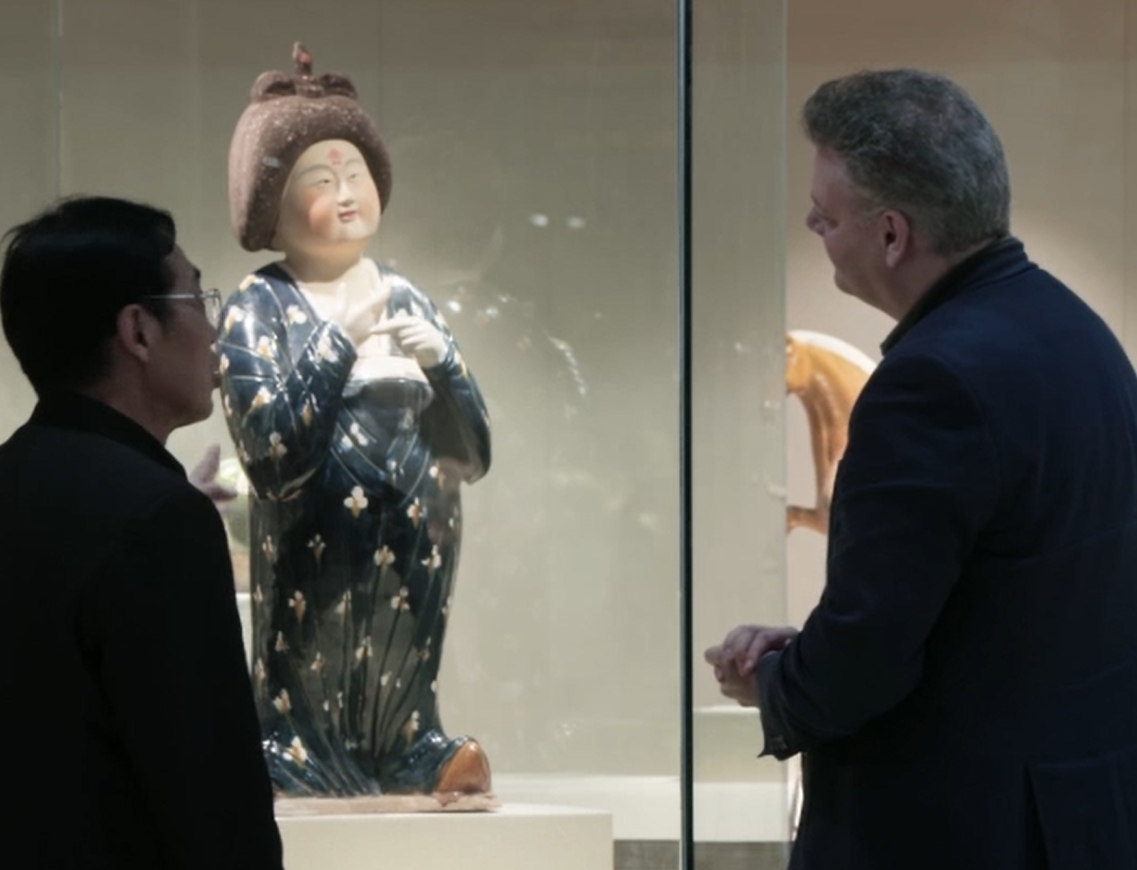
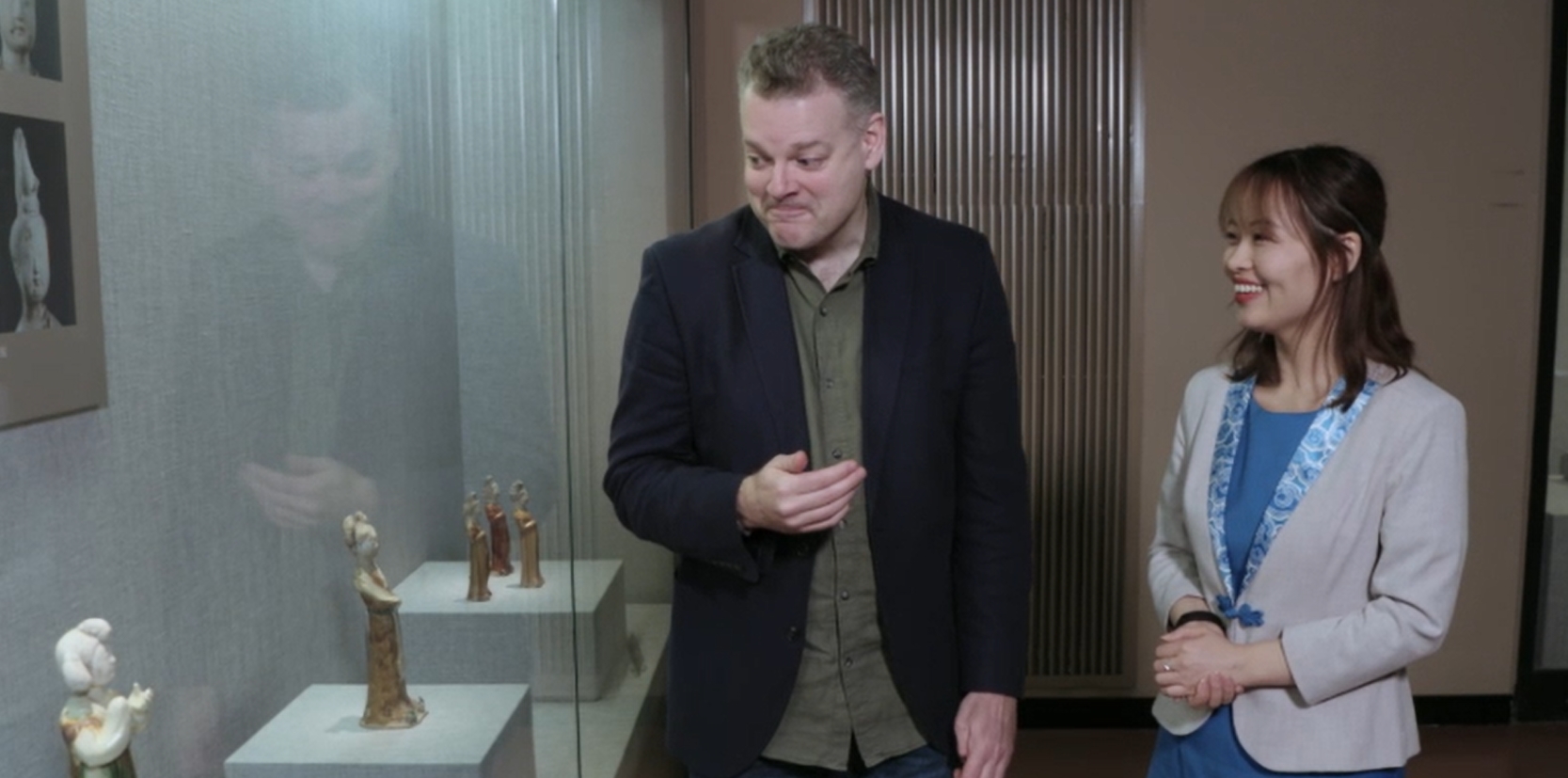
It’s more of the same after lunch with Li Ying, who proves to be a coquettish and chatty historian when engaged about her subject. I get her to talk me through beauty tips for Tang women (always paint red stripes on your face… try to be as fat as possible) as well as elaborate Tang hairstyles like the Parrot, the Cocoon (a swept-up bun modelled on a silk-worm’s) and the Knife. There’s only one that she can’t give me the etymology for, which is the Treasures – a sort of forward-drooping rolled top knot, flanked by two lateral buns.

“The thing is,” I whisper to the director afterwards, “I think it’s a reference to the Three Treasures, pickled and retained by eunuchs to keep themselves whole in the afterlife. In other words, the Treasures hairstyle is a giant stylised cock and balls, resting on a lady’s head.

But it’s all fascinating stuff, not the least because the Luoyang Museum has dated the development of hairstyles, which means to a certain extent, they can roughly gauge the era of tomb decorations simply by the hairstyles on display. There’s even some fun to be had about the Hufu (literally Barbarian Garb) tomboys of Wu’s era, who would exude cool by wearing narrow-sleeved jackets with lapels and trousers.

I won’t lie, it was a gruelling day. It’s taken a while for my Chinese to grind back into action, and I made the rookie error of not sitting down whenever the opportunity arose, thereby ending up on my feet practically all day. The museum was a riot of phones going off, and shouty visitors, nosey passers-by and cacophonous audio-visual displays. A new Chinese habit, of loudly playing phone games or faffing with the internet while having a dump, has turned any nearby toilet into an echo chamber of shitty pop music and beepy bang-bang noises, accompanied by the occasional cough and plopping sound. But I have been earning my money today in subtle ways, such as the moment when the director made me stand beside a statue of a man with a beard, and told me to come up with a 30-second piece to camera about the historical relevance of the Sogdians. I can do that. It’s what I do.

Jonathan Clements is the author of A Brief History of China. These events formed part of Route Awakening S05E01 (2019).
The Shape of the Turtle

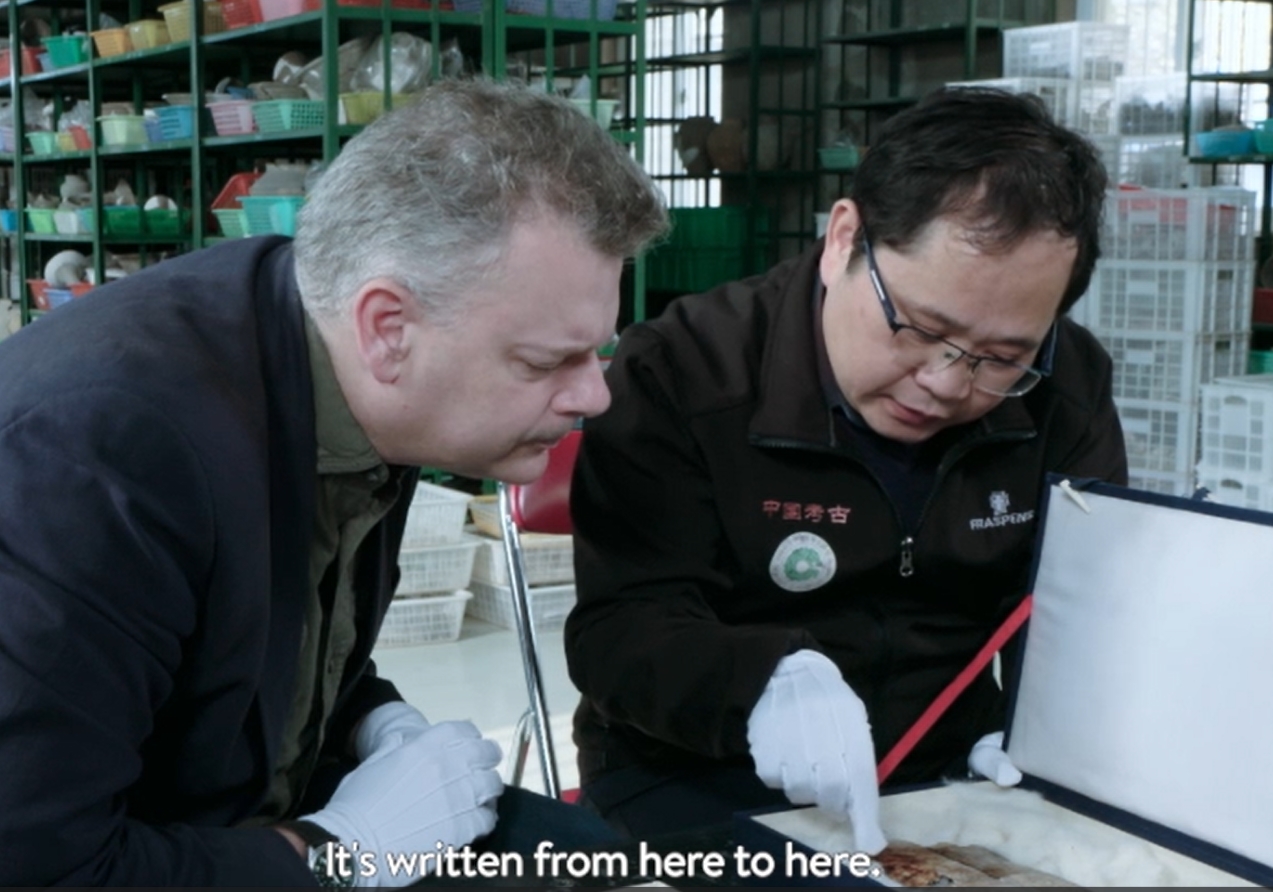
I must be getting good at this. Driving back to the Wastes of Yin, I know more about the site than the crew, because I already shot here once before. So I can direct the car and the van to the right institute, and point out Dr He, because I’ve met him before, and I can tell them that the meeting room is not the ideal place, because there is a warehouse upstairs full of relics that is more photogenic. I can also point out that if they want to get the lens really close to an oracle bone, Dr He has a bunch in a box that he will literally hold up to the camera.

Dr He remembers me from the Chinese chariot shoot a couple of years ago, and so he is immediately at ease and merry. When it comes to the interview, in front of boxes marked HUMAN TEETH, DOG BONES, HUMAN BONES, COW HORNS etc., we rattle through in a single long take. I quiz Dr He about the problems of reassembling oracle bones, and the fun he had tunnelling through a Sui dynasty tomb and a Han dynasty tomb in order to get to the Shang stuff two metres down. He tells me that the size of the turtle plastrons used in divination usually suggest that they came from the river, but some of them were so big that they were liable to be sea turtles, thereby suggesting that the Shang dynasty had trade links as far away as Malaysia.

Of course, that doesn’t mean that there was some Malaysian Marco Polo who travelled all the way to Anyang. These things might have taken decades to drift from village to village until they ended up in the Shang capital. Dr He rattles on non-stop for 45 minutes, which delivers us 90 minutes of footage on two cameras. Time for the pick-ups and then we are out, as if we knew what we were doing.

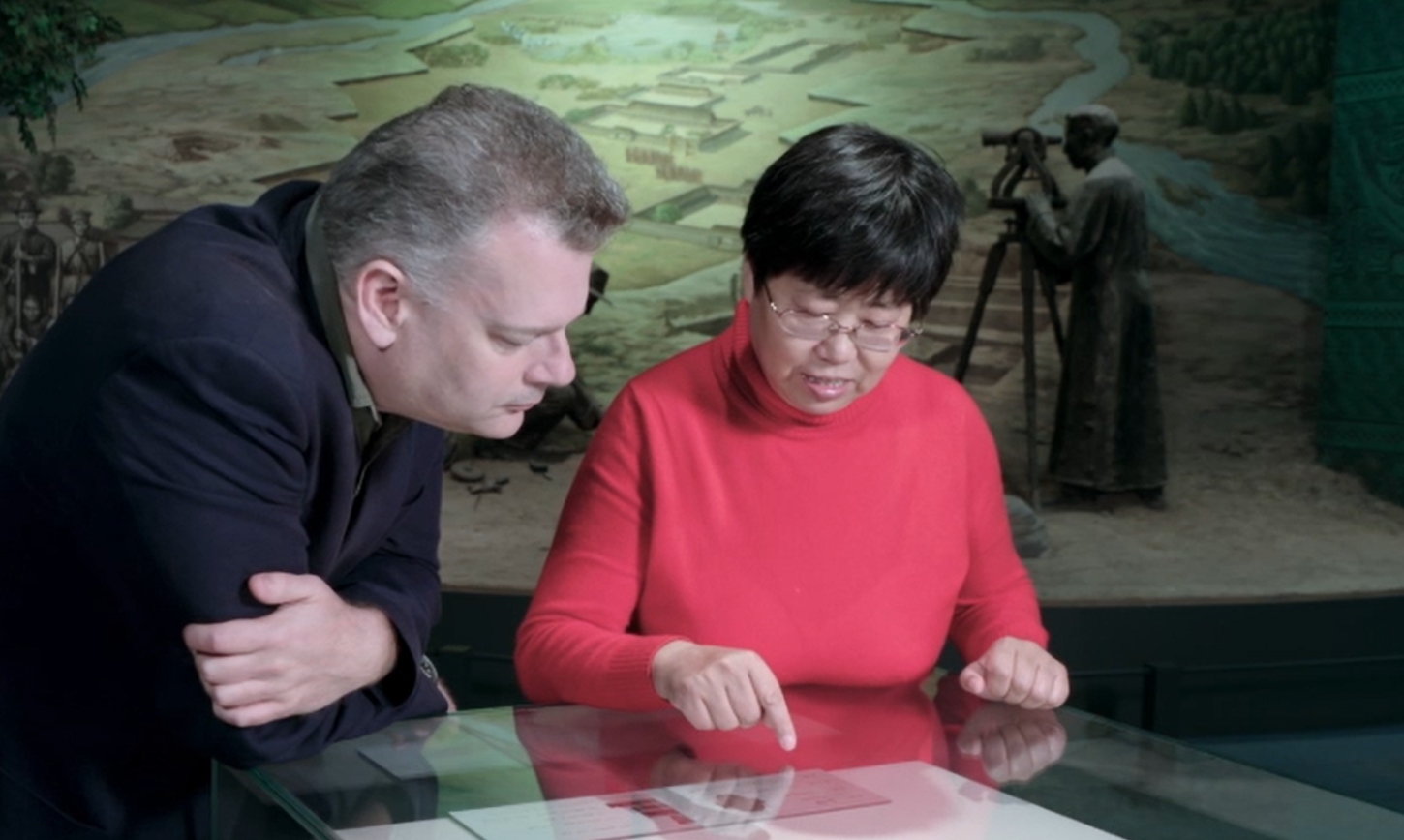
Turtles are important, says Dr He, because they lived so long, but also as Sarah Allan has argued in The Shape of the Turtle, because they may have signified the shape of the cosmos to the ancient Chinese – a north, south, east and west around a central plain, and in the sky, a big dome overhead.

The Shang people were a bloodthirsty bunch. The Shang dynasty is the most popular topic among Chinese heavy metal groups, because after you hear about all the incest, human sacrifice and torture of the Shang kings, biting the head off a bat looks a bit everyday and soft. The on-site museum has trouble skirting around the fact that their royal graves are full of dead children, chucked in to keep them company in the afterlife, along with dismembered dogs and the usual dead horses, and a special ceremonial axe used for beheading enemies. I’ve read the oracle bones, so I know already about the boiled heads, burned slave-girls and other atrocities littering their tombs.

We finish up in the tomb of Lady Fuhao, the female general who led the armies of the late Shang, wife, or possibly sister, or possibly both to the king Wuding, who entirely by chance turns out to be the guy we know most about because Anyang was the site of oracle bone pits dating from his era. Fuhao’s tomb was miraculously undisturbed; she was buried not only with her signature C-shaped dragon rings and a gaggle of dead slaves, but a collection of bronzes that were already quite ancient when they went into the ground. Some of Fuhao’s bronzes were specifically cast as grave goods (we know this, because they included her posthumous title), but others were seemingly part of what today we would have to call her antique collection.

I felt today that I was really earning my money, and that the crew were really on top form snatching footage, sometimes, when the drone was up, with three cameras running at the same time. What with all the shooting on 4K resolution, as future-proofing against TV channels that might insist on higher quality film in future, we are generating two or three terabytes of data every week. Michelle the assistant producer has to stay up each night uploading it to a server in Hong Kong so the editors can get to work.

Jonathan Clements is the author of A Brief History of China. These events featured in Route Awakening, SO5E02.

The Sea of Words

The National Museum of Chinese Writing looks like a newly landed alien spaceship, decked out with golden animal totems shining in the sun, and supported by striking red columns, the fabled taotie mythical beast that shows up on so many Shang-era cauldrons. The museum is in Anyang, of course, because Anyang was where archaeologists uncovered vast pits of broken turtle shells, inscribed with questions to the gods for the Shang dynasty rulers – a peek inside their archaic Google history, if you like.

It’s also closed today, so we technically have the place to ourselves, although a bunch of surly cleaners and key-jangling security guards seem keen to ruin any quiet moments that we might have. The director films me walking among the oracle bones, and I manage a couple of relatively long pieces to camera about the story of the discovery of the Wastes of Yin, and how Chinese history got 600 years added to itself practically overnight in 1928 after the discoveries in Anyang proved that the ancient stories were actual history and not a myth.

Ms Han is a happy lady who seems very animated and passionate about oracle bones, and subjects us to a 45-minute salvo of words about the meaning of the 150 most easily identifiable characters. She doesn’t seem to have been interviewed on camera before, and is fretful about “saying the right thing.” We have to explain to her what an interview is, which is to say that I will ask her questions, which she will answer. She seems to think that we will want her to give a one-hour lecture to the camera about her work. No, we insist, I will just ask her about stuff.

On several occasions, Clarissa the fixer has to practically walk her through the answer that we expect before she will deliver it, even though she just delivered it, word-perfect, off camera. Like a lot of Chinese academic interviewees, she has trouble understanding that we are supposed to be having a conversation, and it becomes easier to just mike her up, not tell her the camera is running, and let her talk away without the chance to get nervous. By the end, the director just wants us to walk through the museum gallery talking, but we keep stopping at displays to talk about the origin of the various characters, and the director shouts at us to keep bloody walking instead of finding out about things.

“Jonathan, stop being interested!” she yells from the other end of the gallery.

But I think Ms Han is enjoying herself. After previously saying that she could only fit us in on Monday afternoon, she has suddenly freed up all of tomorrow morning to invite us over to her college to sit in on a class, so I think she is starting to feel like a bit of a celebrity.

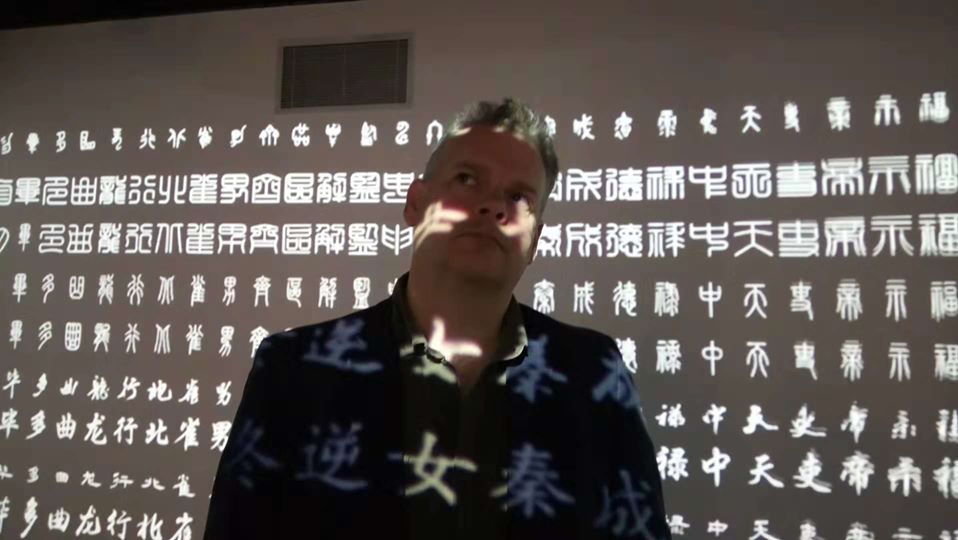
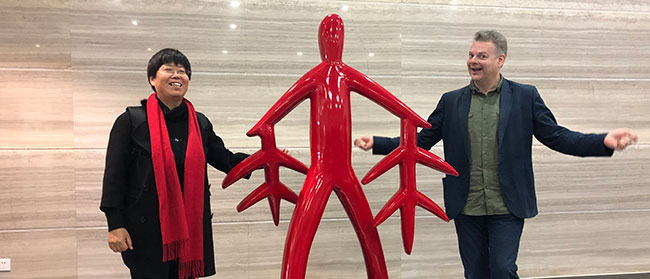
Ms Han’s faculty at Anyang Normal University is built around another museum of Chinese writing, which is far more immersive and engaging than yesterday’s. It’s got all sorts of fun art installations, including a four-wall display of animated characters that can be filmed playing across my face and surrounding me like a veritable sea of words. There are even life-sized statues based on ancient Chinese writing, such as the stick figure holding two oxtails that was the origin of the Chinese word for “dance”.

The Sea of Words, for those not part of the Chinese community, is the name of a famous dictionary of Chinese characters. I have a copy that used to belong to “Uncle” Don Rimmington of the Leeds University Department of East Asian Studies, although I am not sure he knows it ended up with me.

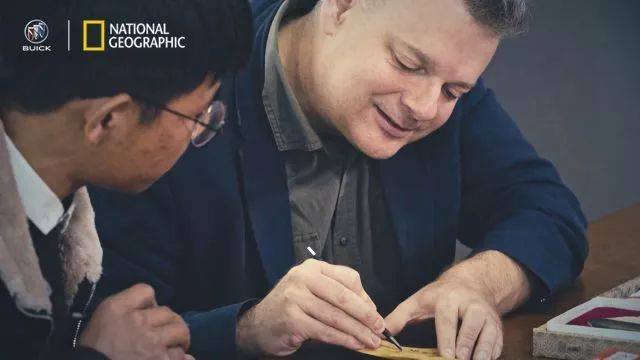
The university also have a little area where students can carve their own oracle bones, leading me to have a nice half-hour with a guy called Zhang, who patiently talks me through the process. He is very excited to see that I am deliberately getting things wrong so that he can correct the way I hold my chisel and the way I hold the bone. Unlike his teacher, Ms Han, he comes to realise that I am doing it to make him look smarter, and not that I am just irredeemably stupid.

Ms Han talks me through the simplest of characters from the Shang dynasty, the most basic 150 of which are simply pictograms.

“The Shang people tried to tag the simple points of difference between similar objects,” she explains. “So what is it that makes a cow different..?”

This is a difficult question to answer in Chinese when I don’t know the word for udders.

“The… nipples?” I suggest.

“No, you stupid boy. Everything has nipples. Cows have horns and a long face. Not like the goat, which has different horns, but still has nipples.”

All right, then. And the horse has a mane and a tail, and a tiger has a stripe. I get her giggling about some of my weirder guesses, and she gets so excited that she starts shouting “NO!” in English every time I get something wrong.

Jonathan Clements is the author of A Brief History of China. These events featured in Route Awakening, S05E02.

Death in the Afternoon

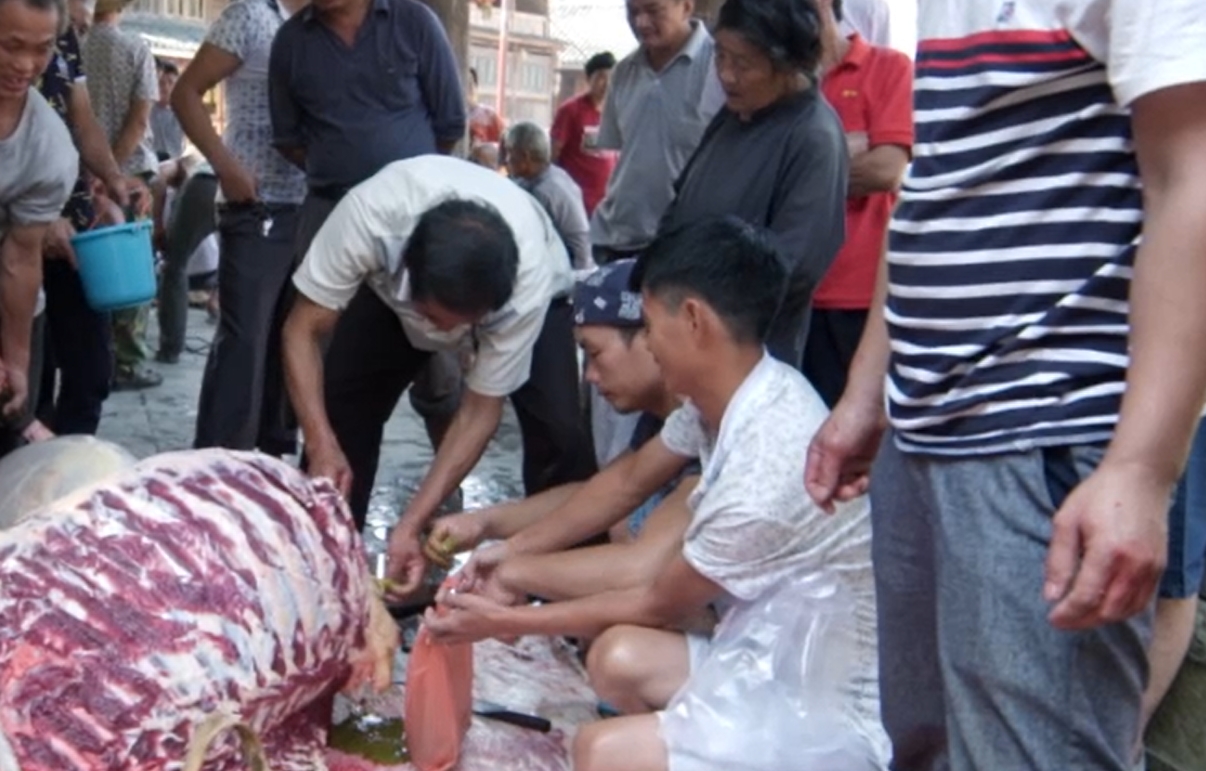
By the time we reach the drum tower, the men underneath are on their second bull. They have slit its throat and are bleeding it from its carotid artery into the skin of its own neck, scooping out cup after cup of warm blood and throwing it into a basin with peppers and coriander. The bull’s feet are tied but still twitching spasmodically, a spray of warm shit spattered across the flagstones. Before long, the men with cleavers have set about the carcass, skinning it and hacking out gobbets of meat. Villagers are waiting nearby with carrier bags, ready to take home something to cook for tomorrow’s festival.

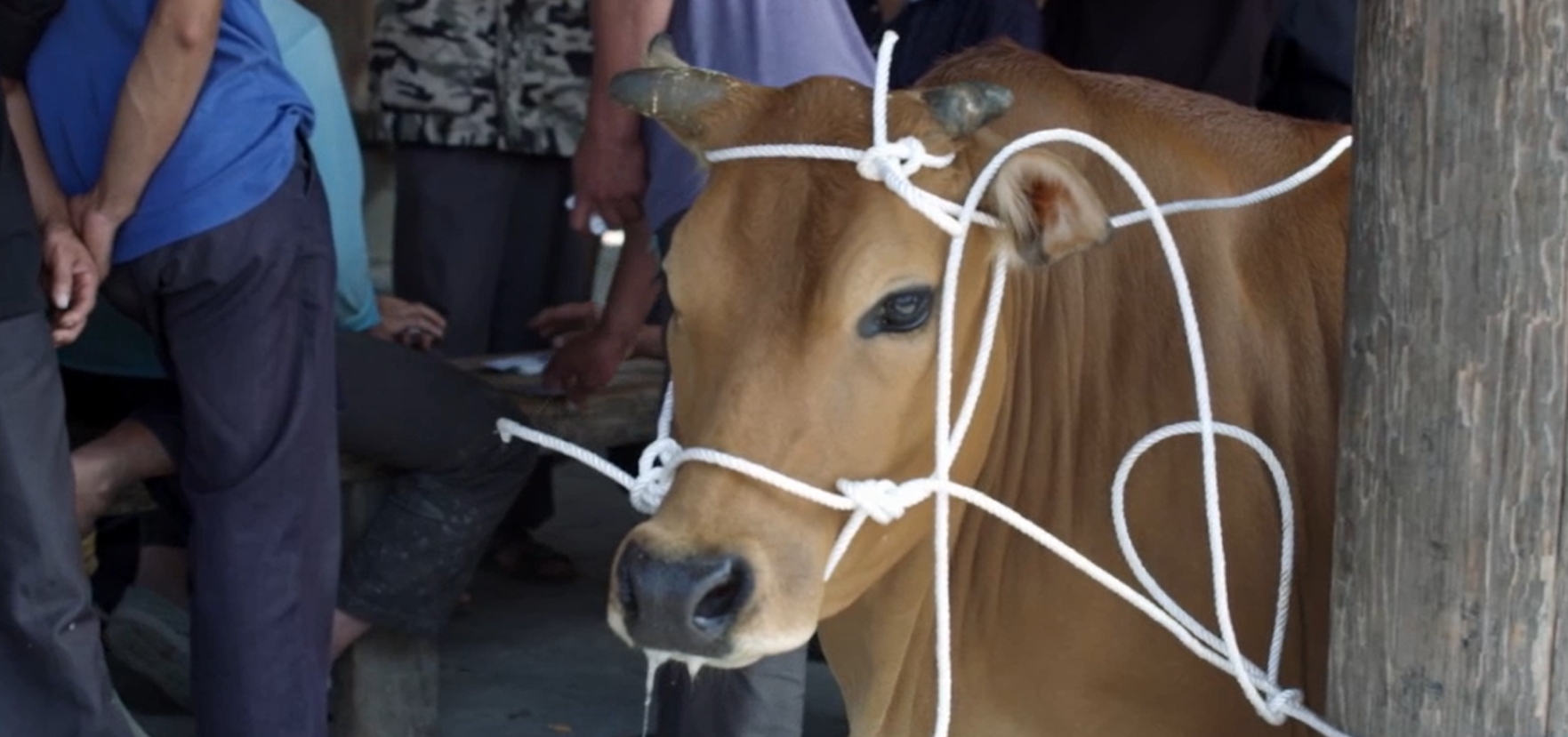
A cow is up next, tied to a pillar for safe-keeping. When her time comes, the men tie her feet to poles so she can’t struggle, and then smack her three times in the top of the head with the back of an axe. This is where we came in, as with the bull from before, her carotid artery is slit and the blood scooped out.

What everyone is really waiting for are the intestines. The Kam, for reasons known only to their selves, regard niubie, the half-digested grass of the cow’s last meal, to be a true delicacy, and they are soon fighting over it. The smell is appalling, but our fixer Pan doesn’t seem to mind, and has managed to grab a fistful of the stuff that will apparently be sufficient to feed seven tomorrow. Lucky us.

The director has unfortunately mixed up the words for intestine and pizzle, and consequently tells Pan’s shocked uncle that she would be interested in nibbling on a bull’s penis, “just for the experience.”

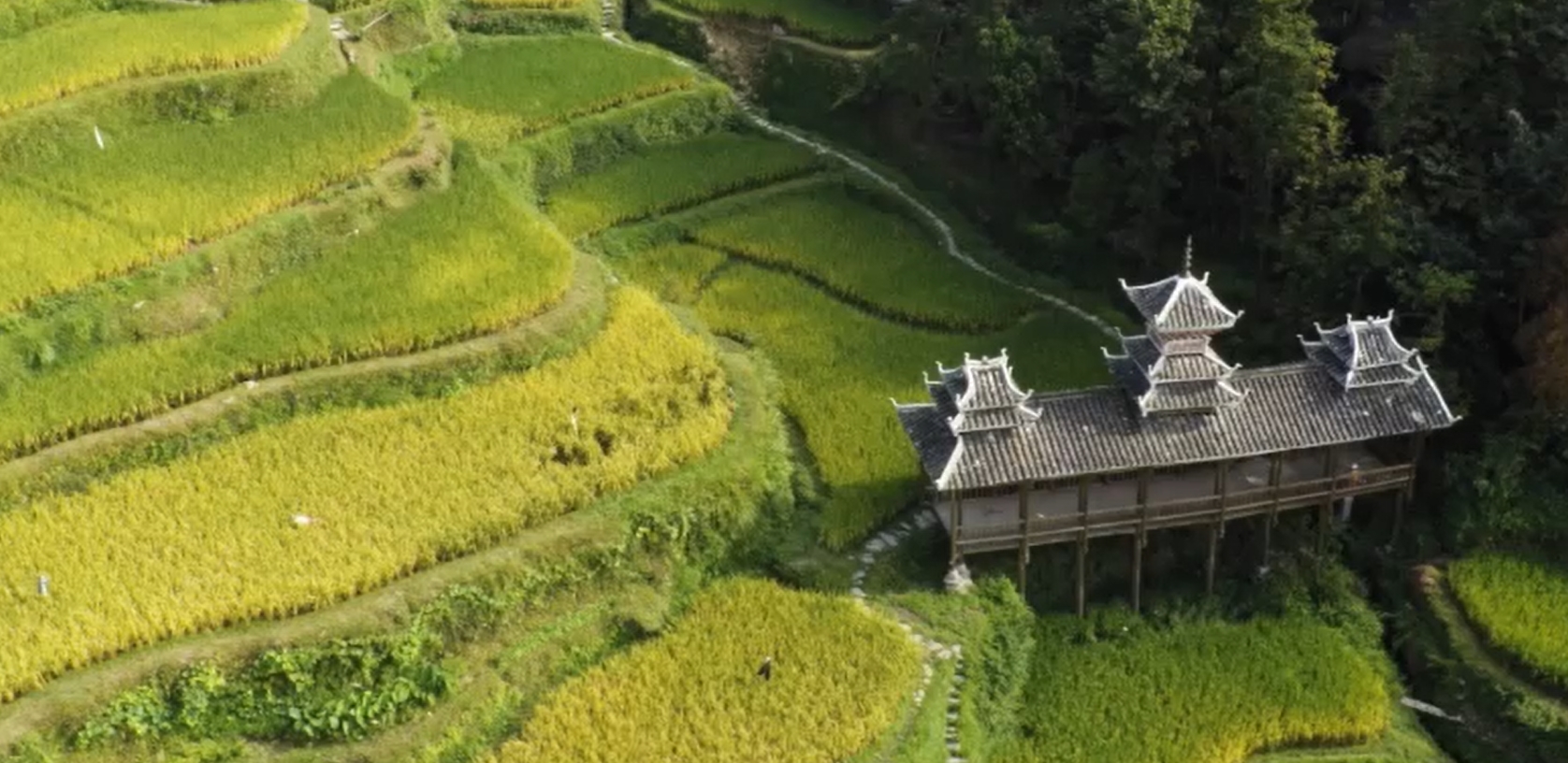
We drive down into Zhaoxing, the largest concentration of Kam people, and their de facto capital – a township that boasts five drum towers and three Wind and Rain bridges. The idea is for me to do a piece to camera about what a quiet sleepy place it is, but although the town is still mercifully traditional in appearance, it is packed with roaming Chinese gawping at everything, as well as a musical garbage truck that insists on barging back and forth along the main street.

Meanwhile, as I am attempting a piece to camera for the tenth time, an old lady half my height rushes up and starts plucking at the hairs on my arm, leading to piece that goes something like this:

“I’m in Zhaoxing, which has been the spiritual and cultural capital of the Kam people for centuries, but today it – OW! – what are you doing? You take as much hair as you like, love, I’ve got plenty. OW!”

She then wipes my body hair from her hands onto my shirt, and starts trying to fish in my pocket, while I go on. By this point, even the cameraman, who pretends that his digital camera is still running film stock and refuses to shoot anything that is not vital to the production, has turned his camera back on while I am molested by this ancient crone. The director claims that the encounter will never make it into the final series, but she said that last year, and ended up using a bunch of my outtakes in the trailer. Thanks to our height difference, it looks like I am being assaulted by an Ewok.

Jonathan Clements is the author of The Emperor’s Feast: A History of China in Twelve Meals. These events featured in Route Awakening S03E01 and E02.

Fish Cam

Today, we will log five minutes of footage. The day starts at 0500 and finishes for me at 2200. Every single moment takes a million negotiations, as the English director struggles against jet lag, and the Chinese director, who looks 12 but is actually 34, struggles to continue to make the documentary that he has been unchallenged about for the last few weeks before the foreigners arrived.

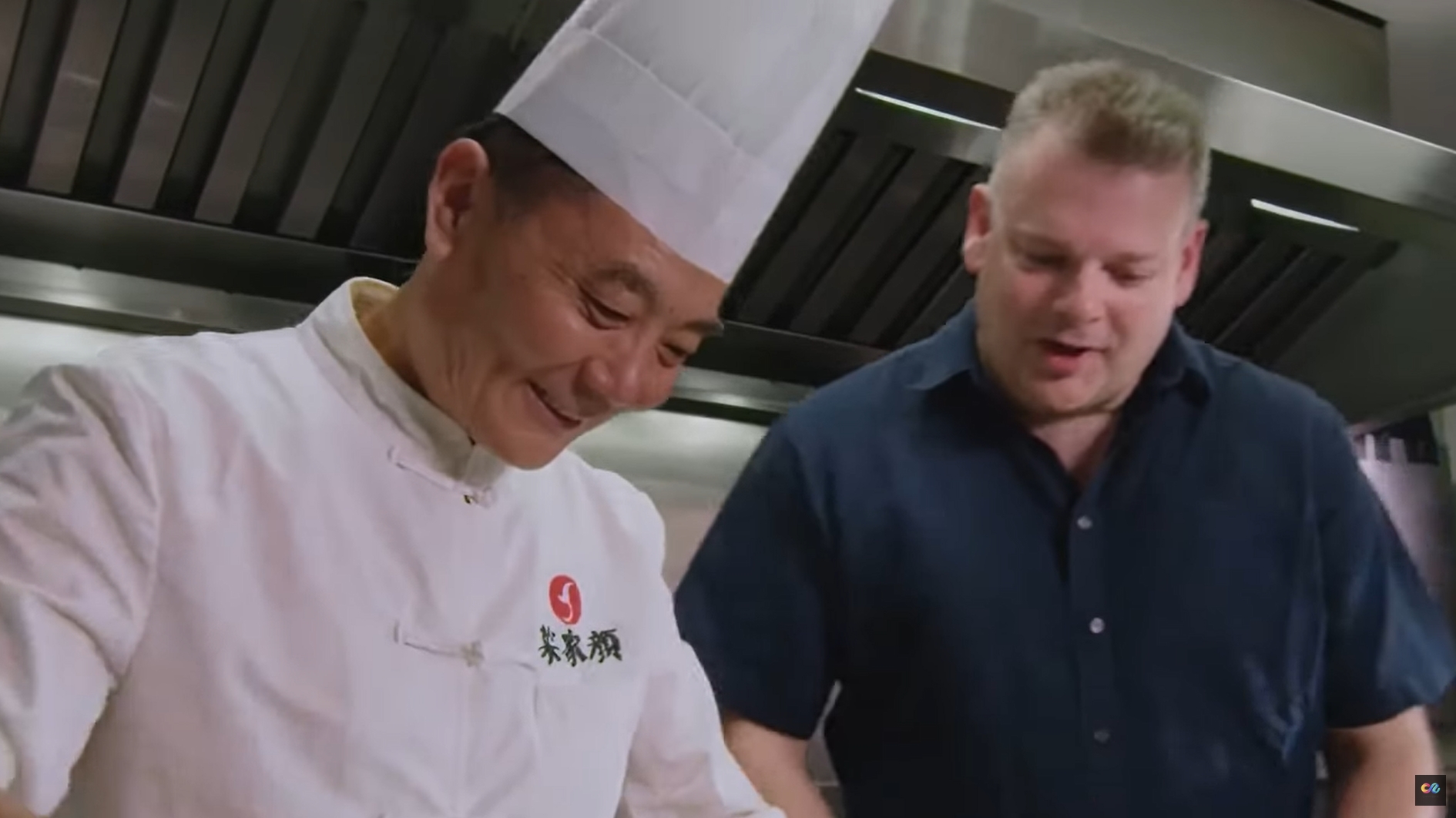
Today, all we have to do is film Yan Weixing, who looks uncannily like George Takei, make a deep-fried sweet and sour fish in his kitchen. But the lights have to come from the van, and the sound man has to mic me up, and then the director wants me to change my shirt, and then the B cameraman needs to change his battery, and the filmic world’s ever true cliché of Hurry up and Wait comes true again and again. I read the entire works of Confucius while waiting for my next call on the sheet, and Mr Yan smokes his way through an entire packet of Nanjing fags.

Meanwhile the Chinese director has his own ideas of what things should be, and really doesn’t want foreigners to interfere. Mr Yan and I are in the kitchen, and he is scraping the scales off a carp and slicing a series of incisions into it before rubbing it with salt. The heat in the kitchen is ridiculously high, and the sweat is pouring off us. He makes a batter for the fish and a delicate sweet and sour sauce. This is Lu-cai, one of the “Eight Great Cuisines of China“, and while Cantonese, and Sichuan and the like have made it abroad, nobody really knows much about the delicate flavours of the land of Confucius. Lu-cai used to be all the rage in Beijing until the 1950s, when Mao’s fetish for chilis and an entrepreneur’s willingness to open a Sichuan restaurant in the capital changed the world of Chinese cooking.

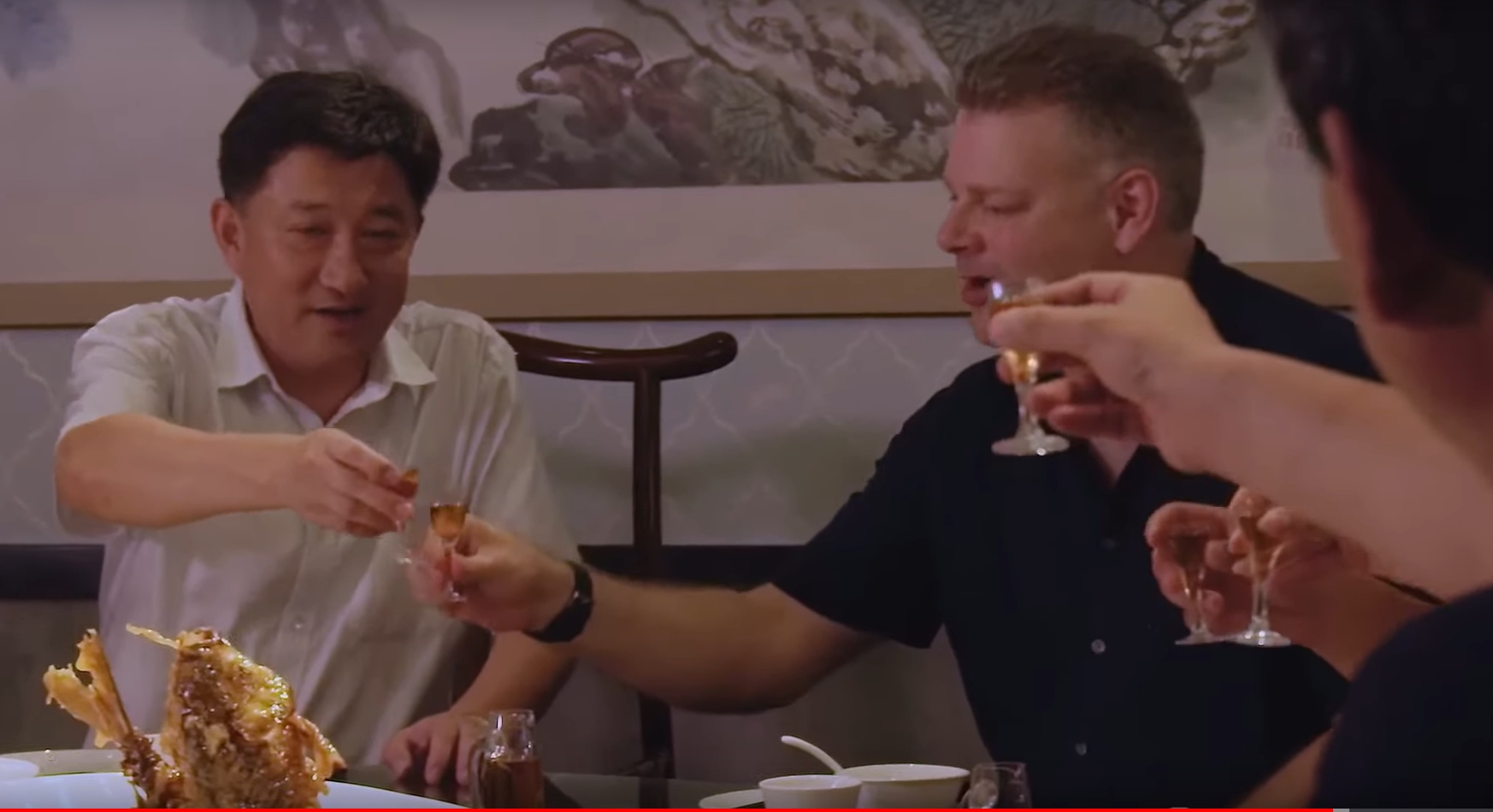
A bunch of diners are waiting for us to bring the fish. They have been waiting for three hours. They want to put a mini GoPro camera on the fish as I bring it into the restaurant so that we get a fish-eye view. I open the door and enter, proclaiming in Chinese to much applause: “Here is your Yellow River Carp!” The director makes me do it another six times. Then we have to do the sitting with the diners, six times. Then me asking about the seating arrangements six times. Then they offer me some Sea Cucumber Liqueur. We need to film it again, six times. I have drunk half a liquidised sea cucumber by this point.

We need to shoot the whole scene again, without lights, because the drone team will shoot it from outside the window in the dark. We have a drone team? Yes, they are three guys who have been sitting outside all day waiting for their moment to shine. We drink more sea cucumber liqueur and the drone crashes into a nearby balcony. But they have the shot.

It is 2200. Tomorrow’s call is 0515. I am in a hotel where prostitutes put business cards under the doors. Tomorrow I will be somewhere else by dinner time.

Jonathan Clements is the author of Confucius: A Biography. These events appeared in Shandong: Land of Confucius (2018).

Hot Blobs

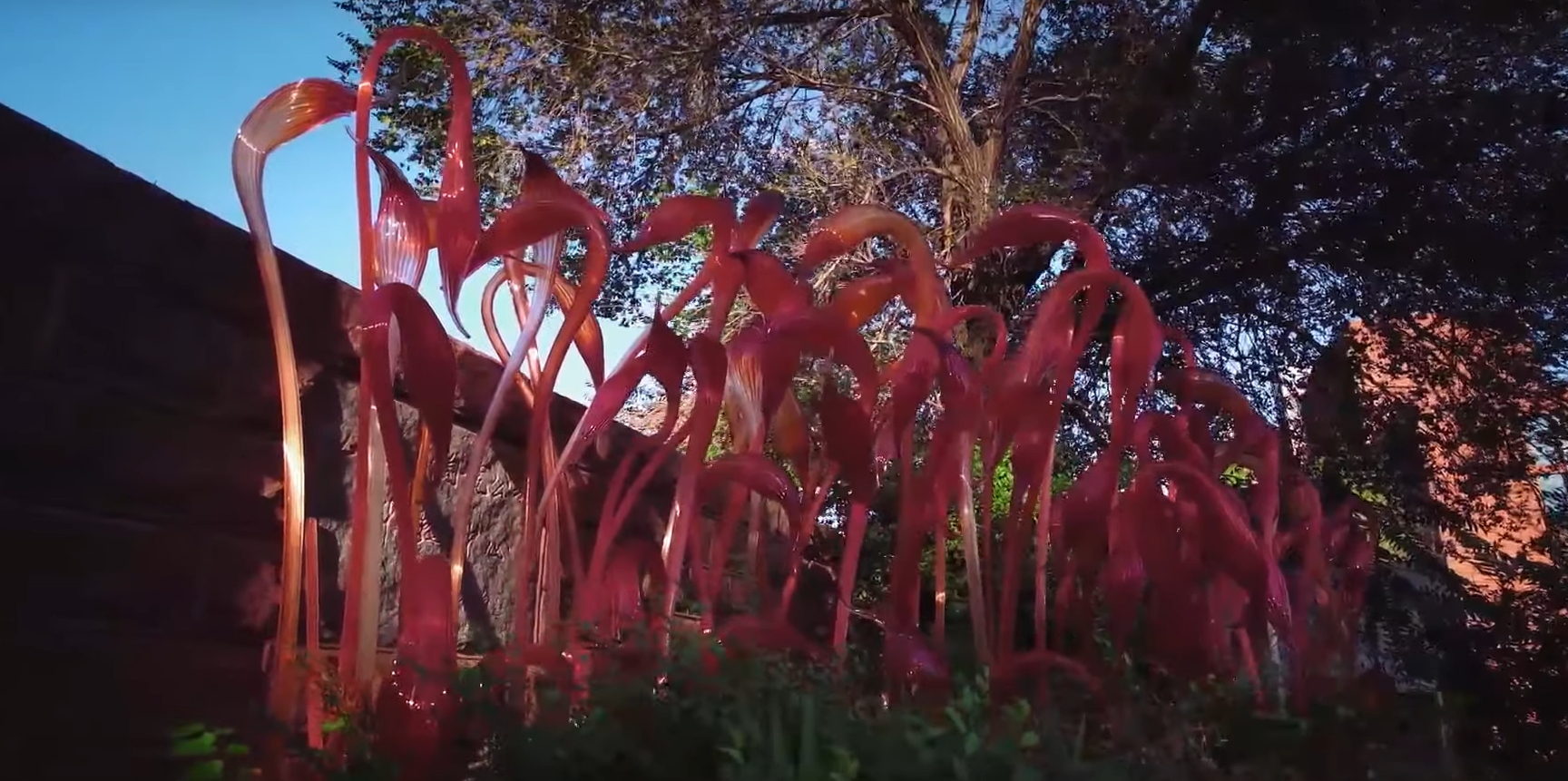
Zibo is famous for glass. It’s where they make the glass vases with paintings on the inside, and the ones with the different coloured coating that’s carved into the outside. The glass flowers that form vast corporate installations, and the horrible little paperweights and dust-collectors beloved of many a mad old lady.

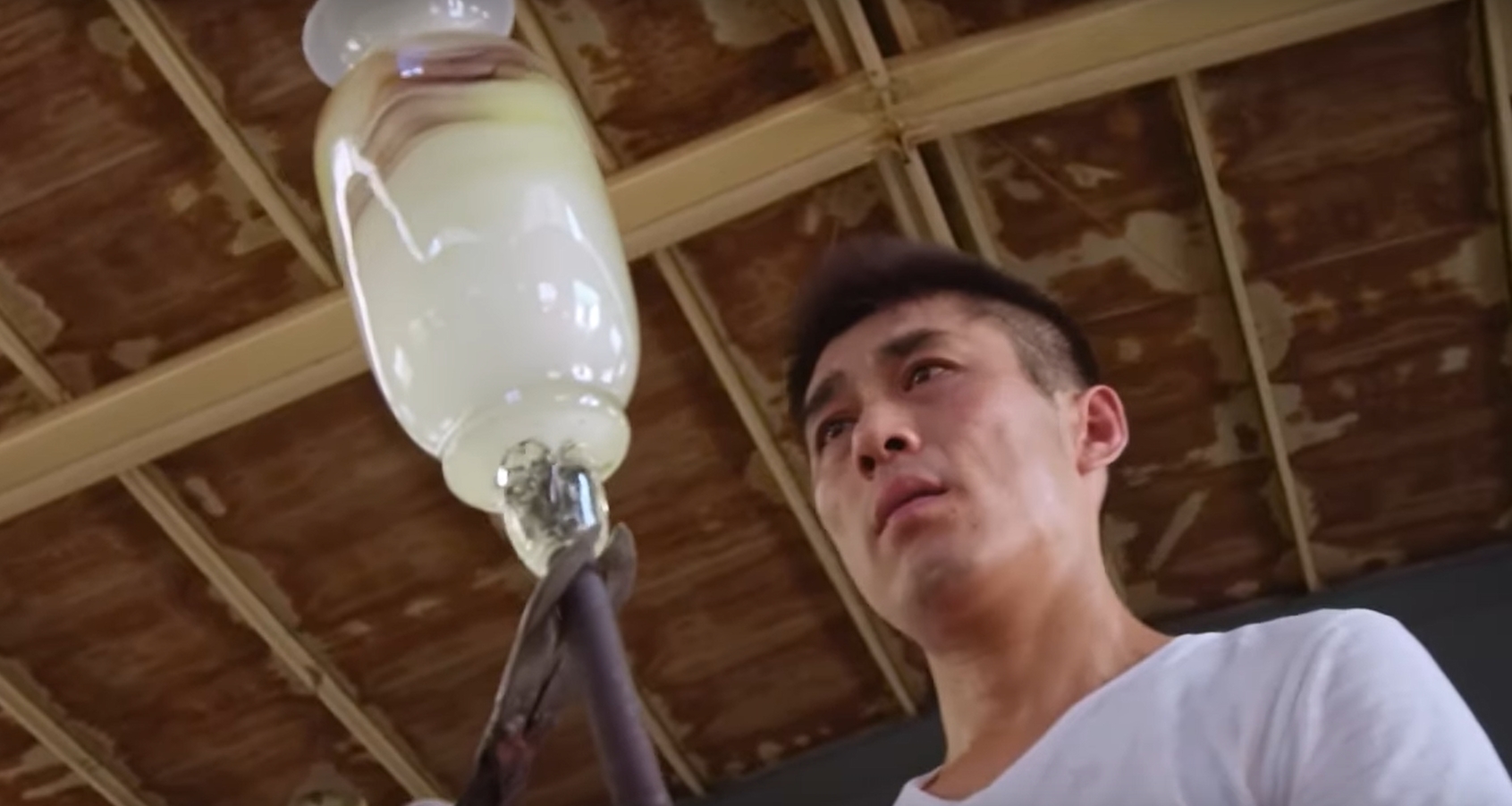
Li Daxi loves glass. He loves its malleability and the speed with which he can put together a vase or a figurine. This wiry, friendly man shoves a metal pole into a furnace at 1400 degrees, withdrawing it with a hot blob at the end, and he sits at a chair made of scaffolding where he can roll the blog and pat it with a trowel, where he can blow into it and tap it.

“Today,” he says, “we’re going to make a fish.” He taps and rolls the first blob, and as it cools to 800 degrees, the white hot gunge congeals to a bright red. Belatedly, I see the signs that hang on each of the furnaces – “Tea”, “Red”, “White Jade.” The true colours only manifest as it cools, but while the red blob is still too hot to touch, he dunks it into another molten bucket marked as Transparent.

I roll the hot blob for him on the scaffold chair while he sets about the clear outer layer with tongs and clippers, teasing it into fins, shaping a fish’s head and poking two little eyes into it. It’s done in less than five minutes, and yours for thirty pounds. He lets me have a go and my first fish looks more like a dinosaur. The second is more like a teapot. The third is a fish.

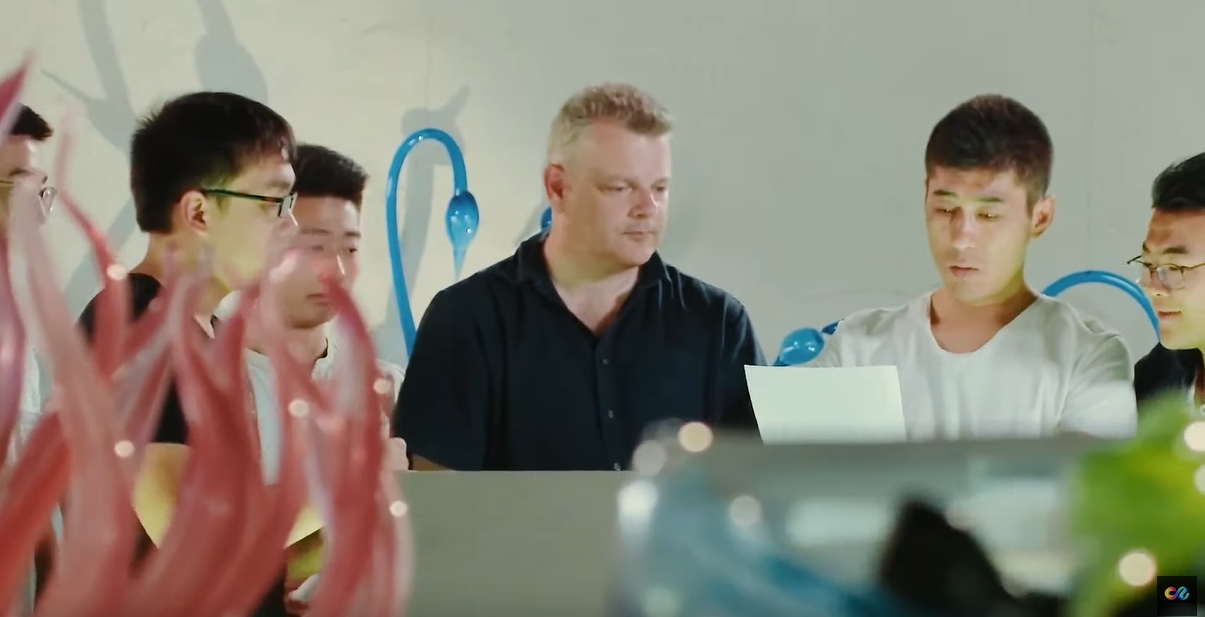
Li Daxi is a certified master of glass, and he leads me around the gallery in the factory, in the company of four eager students. They have been scooped up from the local polytechnic, and arrived unaware that they were going to be on television. It’s only as we stand there waiting for a lens change that I decloak as a Chinese speaker, and they suddenly burst into animated conversation about what this show is, and why we’re here. Belatedly, they realise that Li Daxi’s comments on their hand-drawn designs, and my tin-eared questions about them, are going to be broadcast in 30 countries. Everybody is very excited, and intrigued by the process of television, and boggled to discover that their taxes are being funnelled by their local government into putting a film crew in their factory to make a five-minute advert for it.

“Your job is so hard,” says Li, whose arm I have just watched tan in front of me as he holds his pole in the furnace for slightly too long. “So much standing up, and repeating yourself, and running backwards and forwards.”

But his job is hard, too, as he attests, revealing that the youngest student he has is in his thirties.

What about those nice young men this morning, I ask.

“Oh, they were all designers. They come with ideas for vases and jugs, but they still expect someone else to make them. They come to me and I tell them the handle won’t support the weight, or that the whole thing will have to be exterior-cut or interior-painted, but they won’t do any of that themselves. Nobody wants this job. The heat is incredible, every day. We wear asbestos gloves, we’re throwing around molten glass…”

The day started at 0530. By sunset, we are filming the pick-ups of me arriving at the factory and doing a rushed piece to camera in front of a sunset that we are hoping will pass for a sunrise. Then it’s back indoors after the light fails, to film me and Mr Li looking around the gallery and talking about his favourite pieces. We wrap at 1830, then there’s just time for a rushed dinner before the four-hour drive to Qufu, the home of Confucius.

Jonathan Clements is the author of A Brief History of China. These events appeared in Shandong: The Land of Confucius (2018).

Coin Toss

This morning, all I have to say is this: “Because of its proximity to large bodies of water, Nanchang became a vital centre for inland shipping. One of the most important commodities was porcelain, as reflected in the design of this shopping mall. But in recent years, Nanchang has become the focus of a massive archaeological dig that has uncovered one of the most complete finds of Han dynasty relics. I’m going to the provincial museum to find out more.”

The wording is very precise. I cannot make definite pronouncements without two printed sources, so every word is carefully chosen, but it’s carefully chosen by a director from Singapore who has changed her mind three times about the precise speech, even as I am trying to learn it.

If you want a taste of the presenting life, I’ll give you two minutes to memorise the above. But then you need to get in a car and drive down a public street, with cars overtaking from both sides, mopeds illegally flying in the face of the traffic, and gaggles of women in mustard yellow puffa jackets blundering blindly into the road, sometimes at the zebra crossing, sometimes not. And then deliver the speech while operating heavy machinery.

Every time someone beeps a horn, you have to start again. Every time you stop, you have to start again. Every time you overshoot the shopping mall you are supposed to be pointing at, you have to start again, which involves making a semi-legal U-turn and repositioning the car at the other end of the road.

Congratulations, you got it right first time. Except there is no memory card in the audio deck, so you need to go back to the hotel, pick up a memory card, and do it again. And the grips are at the side of the road, wildly gesticulating at you to turn your lights on, because Buick didn’t give you a stand-out red car, but a pointlessly drab brown one and it’s difficult for the B-camera to pick you out from the traffic.

Start again.

Today’s main event is a trip to the Coin Museum, which is a tough sell. Coins can present fascinating data about past times – they are little nuggets of crystallised history, imparting details of everything from the date something was put in the ground, to the image of an emperor, to the aspirations of that emperor, to the economic conditions at the time it was minted. In some cases, like the Greek heirs of Bactria, numismatics is the only clue we have to the names of the kings and their likely reign periods. But if you fill up room after room with the same bloody things, it is very difficult to make it look like fun on camera.

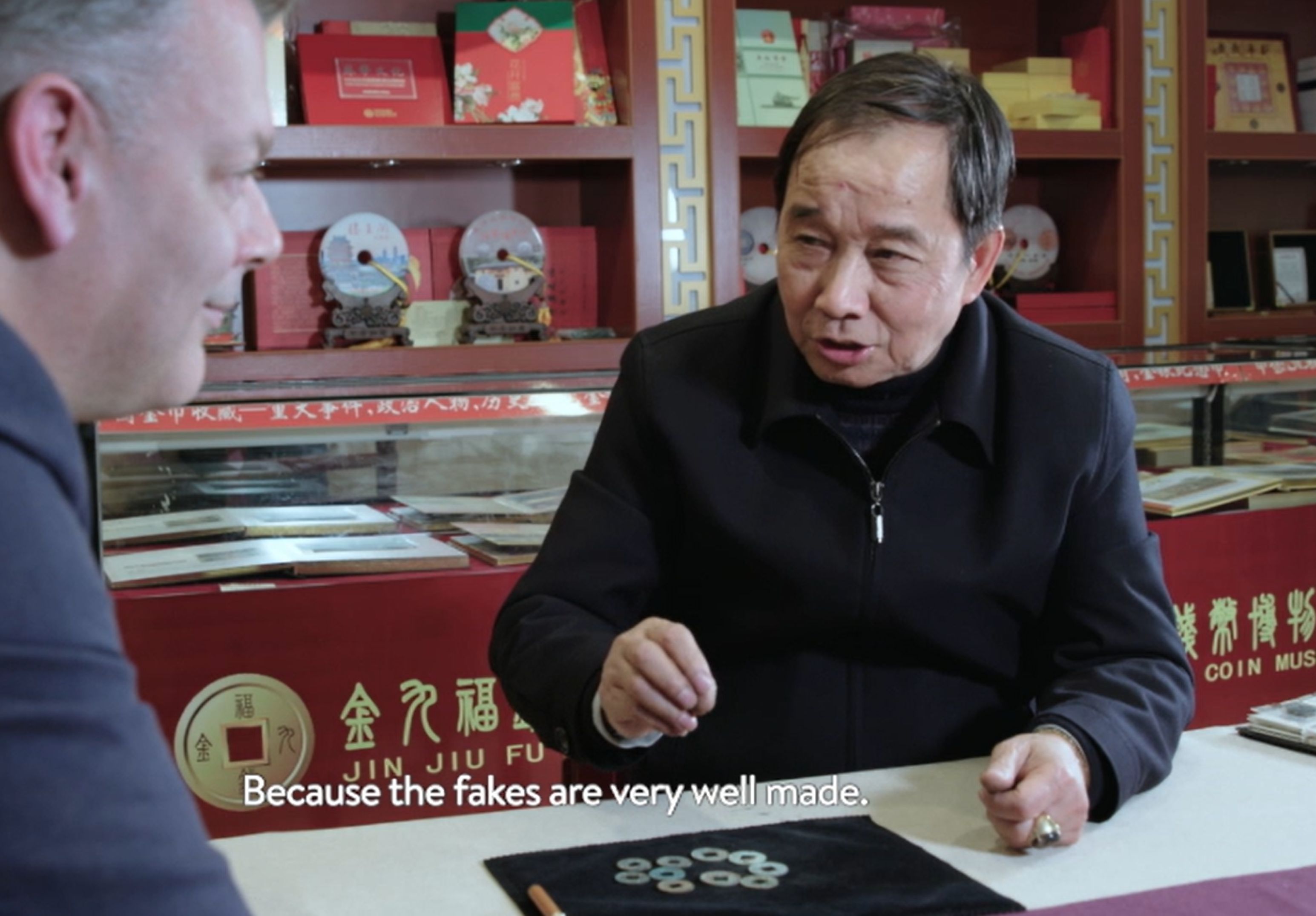
Mr Jin doesn’t pay much attention to me until we are shooting a pre-amble around his museum, and I ask an innocent question about Wang Mang spade money. Like the metadata around a coin, it tells him a bunch of things all at once – that I know who the hell Wang Mang was, which means I understand the politics of the switch between the Eastern and Western Han dynasties, occasioned by a cousin-usurper.

Suddenly, he is much more animated, dragging me over to show me the tiny “goose-eye” coins. I say they remind me of Ancient Greek obols, and I think he is ready to kiss me.

In fact, we have trouble shutting Mr Jin up. He mentions that Jiangxi TV have offered him a 26-episode TV show, called something like Fun With Coins, and the director archly suggests that they asked him a single question and were obliged to split his answer across thirteen hours. From the way he seems chronically unable to hold anything so that the camera can see it, I suspect that he doesn’t really have much of an audience for his coin fetish, and it takes multiple efforts to get him to understand the nature of a drop-in close-up to explain something that he has already said.

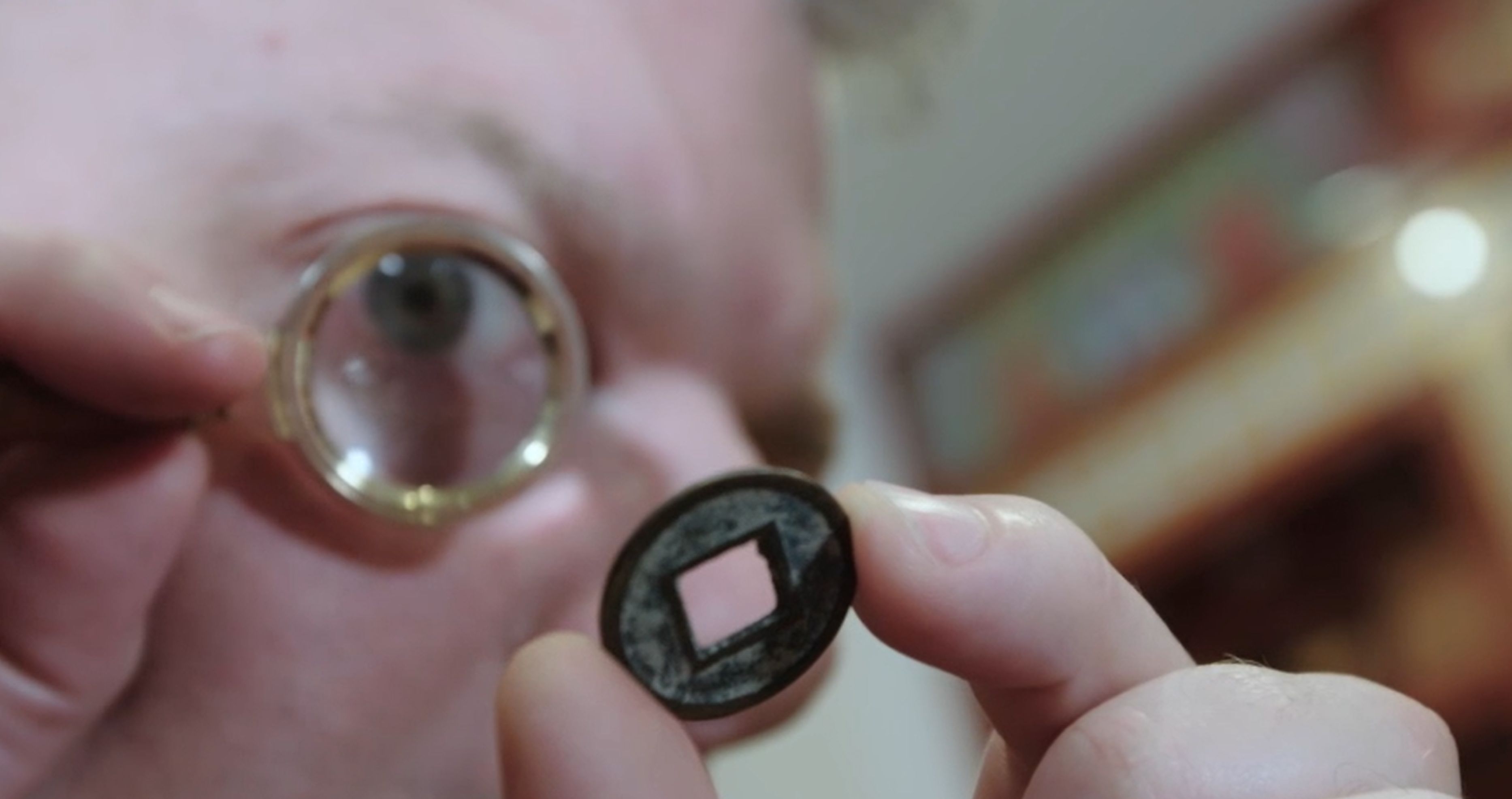
It takes some wrangling and multiple explanations, but eventually the director gets him to understand that she wants him to test me by handing me a bunch of genuine and fake coins. So fun is finally had, as I try to work out which coins have been buried in soil with north Chinese acidity, which in soil with south Chinese acidity, and which have been artificially defaced with artificial oxidising agents. Which ones are too thin, or two thick, which ones have unfiled edges, which ones have the characters in the wrong place. I successfully identify three out of five fake coins, although in my defence, after talking for three hours about the Han dynasty, he showed me a haul halfly comprising coins from the post-Han period.

Jonathan Clements is the author of A Brief History of China. These events featured in Route Awakening S05E04 (2019).

The Two Du’s

The torments of a Chinese breakfast – a big band version of Hark the Herald Angels sing, and the constant hilarity that Chinese newsreaders derive from Brexit. Today, Theresa May (Teleisha Mei – Special Thunder Insect Plum) witters away, and Jeremy Corbyn (Jielimi Ke’erbin – Outstanding League Rice Branch Seoul Guest) plainly and clearly calls her a “stupid woman.” The first true words spoken in parliament in months.

We are in Jingzhou, where once was the capital of the ancient kingdom of Chu. Conquered by the First Emperor, its soldiers and surviving nobles came within a hair’s breadth of inheriting the ruins of his short-lived dynasty in the turmoil that followed his death. They lost, of course, to the people of Han, but it was such a close call that the conflict is replayed in every Chinese chess game, in which the sides are named Han and Chu. Nobody knows which one is which until the end.

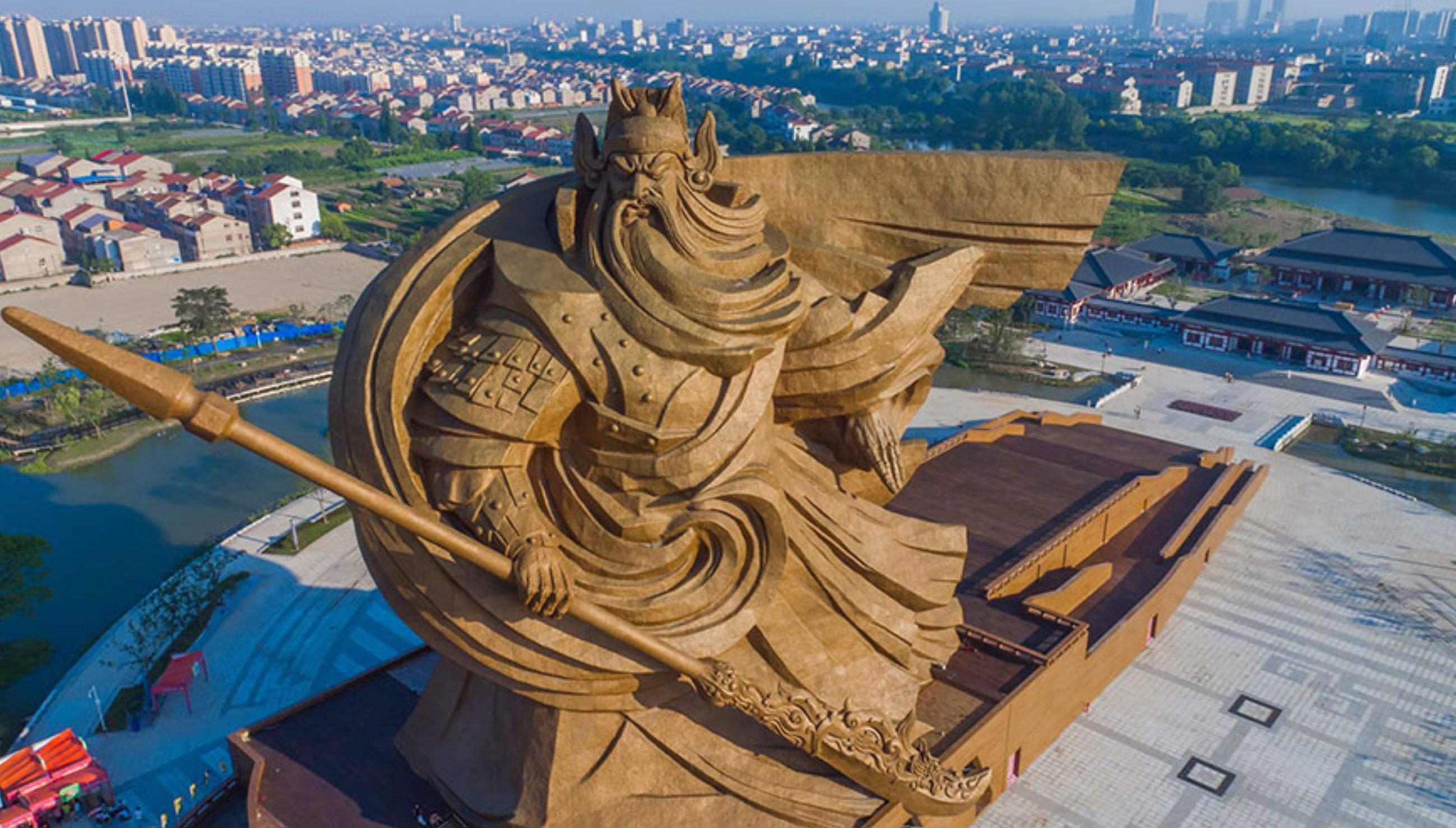
Jingzhou was also a major player in the Three Kingdoms era, and power base of Guang Yu, the red-faced warrior whose life has attracted so many tall tales that he was deified in the middle ages, and is now the Chinese god of war. A massive statue of him, and I mean massive, at 190 feet, looms over the town, wielding his famous Green Dragon Crescent Blade.

I would like to see a bit more of Jingzhou, but we have only stopped here on towards the end of our thousand-mile drive across China. Our fourth episode takes place in Nanchang, six hours to the east, but part of it will involve discussion of antique restoration, here at the national centre for lacquer repair.

They don’t just do lacquer. They also do silk, bamboo and wood, but we’re here to talk about lacquer because that will somehow be the capstone to a storyline that I have yet to film. The institute’s director, chemistry graduate Mr Feng, is oddly cagey about being interviewed, but after lunch suddenly announces that he is ready. He chats to me about Vindolandia, the place on Hadrian’s Wall where archaeologists unearthed letters from Roman soldiers, thanking their mums for sending them warm socks, and talks me through the process of preserving ancient artefacts. The basement of the institute is a shallow swimming pool, used to keep precious items away from oxygen until they are ready to be fixed and dried.

The lacquer restoration is in the hands of the two Du’s, a father and son team of artists, who wasted their lives getting fine art degrees, and then discovered a rich, salaried gravy train repairing and restoring two-thousand-year-old lacquer ware. Their black and red Han dynasty cups, tables and bowls are truly beautiful, and their studio is scattered with replicas that they have knocked up experimentally, to work out precise paint compositions and the number of likely lacquer coats required. One rather nice box turns out to be made from a base of hemp cloth, shaped and then coated with ten layers of lacquer.

Outside, there is a lake like glass, which makes the Buick look good driving along beside it. We film me in the car, talking about how I have come to Jingzhou looking for answers, although since I have come from Nanchang, where we don’t actually go until tomorrow, I am yet to work out what the questions are.

Jonathan Clements is the author of A Brief History of China. These events featured in Route Awakening S05E04 (2019).

Walking the Pattern

Nuo opera, claims the ebullient Qin Falai, has been around for 6,000 years. It is a theatre that has grown out of shamanic dances, maybe of the ancient Ba people who once lived in Sichuan, and preserves many elements of ancient culture, quite possibly the Yelang culture that once flourished in ancient times in what is now Guizhou, where we are today.

Or quite possibly not. He talks me through a long mural detailing the greats of the tradition, and his own ancestors, and it becomes plain that whatever Nuo used to be, it has undergone cataclysmic transformations over the centuries. Originally a ritual pattern of steps designed to cast out demons in the New Year, it was changed beyond recognition by its encounters with Daoism and Buddhism, which dumped a whole load of new stories and concerns on top of it. The Tang dynasty, notably the age of Empress Wu, threw in female practitioners for the first time, and may have been when Nuo was exported to Japan as No, with which it has many striking similarities. In the Ming dynasty, it supposedly became more theatrical, incorporating skits and stunts, and thereby becoming so intertwined with the usual Chinese opera that my bumper Dictionary of Chinese Theatre doesn’t actually have an entry for it.

The last figure on the mural is a wizened old man blowing a cow-horn trumpet, and Mr Qin’s breezy lecture falters. “This is my father,” he says. “He was my father and my teacher, and he suffered so much. In the Cultural Revolution, they broke into our house and destroyed everything we had spent three hundred years trying to preserve. We were beaten and we were persecuted.”

Tears begin to roll down his face as he recounts his family’s sufferings for being regarded as religious or superstitious in a time when China crusaded against the “Four Olds”. I pat his arm in vain as he weeps.

“I put him here, on this wall of gods,” he says, “not because he was my father. Not because he was my teacher. But because of everything he went through.”

I console him in the shadows and see that we are still filming. But the director is shaking her head. There is no way we will be allowed to broadcast much of this footage, mainly because it soon becomes clear that the most recent attacks on the QIn family were in the supposedly enlightened 1980s.

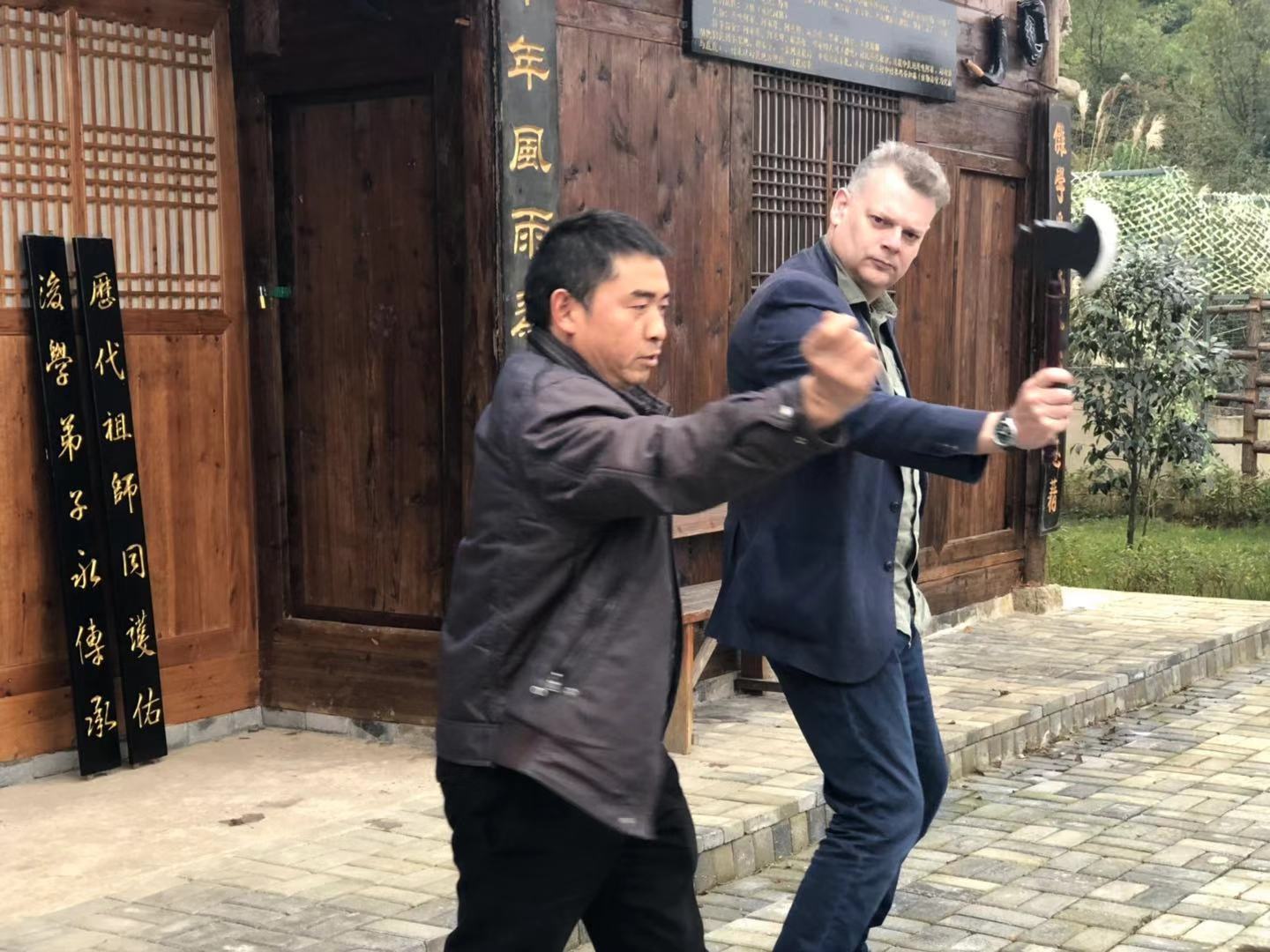
Mr Qin wants to teach me the Pattern of the Eight Directions, a mystic dance of footsteps designed to lock a shaman in some sort of protective force-field. You must enter from the north, step to the middle, then the south, then north, then east, then west, then… maybe the middle again, then diagonally to the… I already forget. But this goes on for a while, and once you have started into the Pattern, you can’t stop, and you can’t get down.

Oh, right, I forgot to mention that. In order to train pupils to step at the correct length of pace, the training for the Pattern of the Eight Directions is conducted on top of a set of nine stubby pillars, so the crew have a good laugh watching me teeter and trip, while Mr Qin stands at the side with a pointy stick, shouting “NOW LEAP TO THE PILLAR OF THUNDER! LEFT, YOU IDIOT! NOW LEAP TO THE PILLAR OF WIND. NO! NOT THAT, THAT’S THE PILLAR OF FIRE!”

Having thus had my brain thoroughly scrambled, we move onto a performance, which is apparently is the World-Creating Dance of Kaishan, Divider of Mountains. This involves donning a mask unsurprisingly like that of a Noh demon, waving an axe around and proclaiming that one is going to Open the Mountains in various directions, and possibly fly about a bit. Mr Qin confuses things a bit by dropping into Guizhou dialect on occasion, but the text seems confused already. “Opening the Mountains” (kaishan) is sometimes a reference to the Pangenitor deity of Chinese folk religion, and sometimes a reference to the arrival of Buddhism in the sticks, but sometimes also a reference to Yin Kaishan, one of the faithful lieutenants who supported the grab for power of the first Tang Emperor, and whose alleged grandson was the famous Tripitaka. So we’re mixing two religions and one historical figure, while spinning in circles and pretending to be a bird. It’s all in a day’s work for a Clements. I’ve had weirder Tuesday afternoons.

“You’ll stay for dinner, of course,” he says. “I’ve already killed a chicken.”

Jonathan Clements is the author of A Brief History of China. These events featured in Route Awakening S05E05 (2019).