The Exorcists

Buick want us to showcase their latest model on this trip. I should be able to tell you all about it, but all I can say for sure is that it will be released in America in 2017, and that it is a red one. And the one we have been supplied by the Songyuan Buick dealership unhelpfully has National Geographic decals plastered all down the sides, having previously been part of this year’s journalist junket convoy. So the director orders a trio of idiots (me, the fixer and the D.O.P.) to take it out and get it cleaned, preferably in such a manner as to generate some interesting footage that will also fill up this episode’s quote of product-placement car shots.

She is hoping for an automated car wash, so she can get a sequence of me glumly sitting behind the wheel while big spongey rollers splash on the windscreen. My colleagues and I unanimously decide that what we really need is a Bikini Car Wash, where they can photograph me trying to look glum while perky Chinese girls rub their soapy boobs on the windscreen. This turns out to be a non-existent service in arctic Songyuan (or indeed, anywhere in China, indeed possibly in the world… I might have dreamt it). The best we can hope for is two men with low-hanging trousers and a high-pressure hose, blowing hot water on it in a garage. This, however, fogs up the lens every time he gets close, so we are getting very little footage.

The fixer’s phone rings. Even I can hear the irate voice yelling at him from the speaker. It is the manager of our hotel.

“What the fuck are you doing? Your wizards are out of control!”

We are, indeed, currently in charge of an octet of shamans, who are supposed to be setting up in one of the hotel’s dining rooms. It is an opulent, pointlessly baroque Chinese suite, decorated with pictures from the life of Khubilai Khan, overstuffed sofas, and for reasons that only a Mongol can explain, an astroturf pasture scattered with one-quarter-scale models of goats. And apparently, the shamans are “smoking and spitting on the floor.”

I find this hard to believe, not the least because there are eleven ashtrays in the suite, which seems to imply that smoking isn’t that big a deal. Indeed, even though smoking indoors is now at least officially illegal in Beijing and Shanghai, up here in the frozen north the people of Manchuria can regularly be seen chuffing indoors, in the warm. In fact, back at the room, a forensic investigation confirms that only one person, our liaison Mr Bao, has lit up at all, on the basis of his girly Huang Shan fag-ends in the ashtray. Even the director has not smoked anything while we were away. But the hotel’s complaint isn’t really about alleged smoking and notional spitting. It is about the presence of eight shamans on the premises, plainly up to no good.
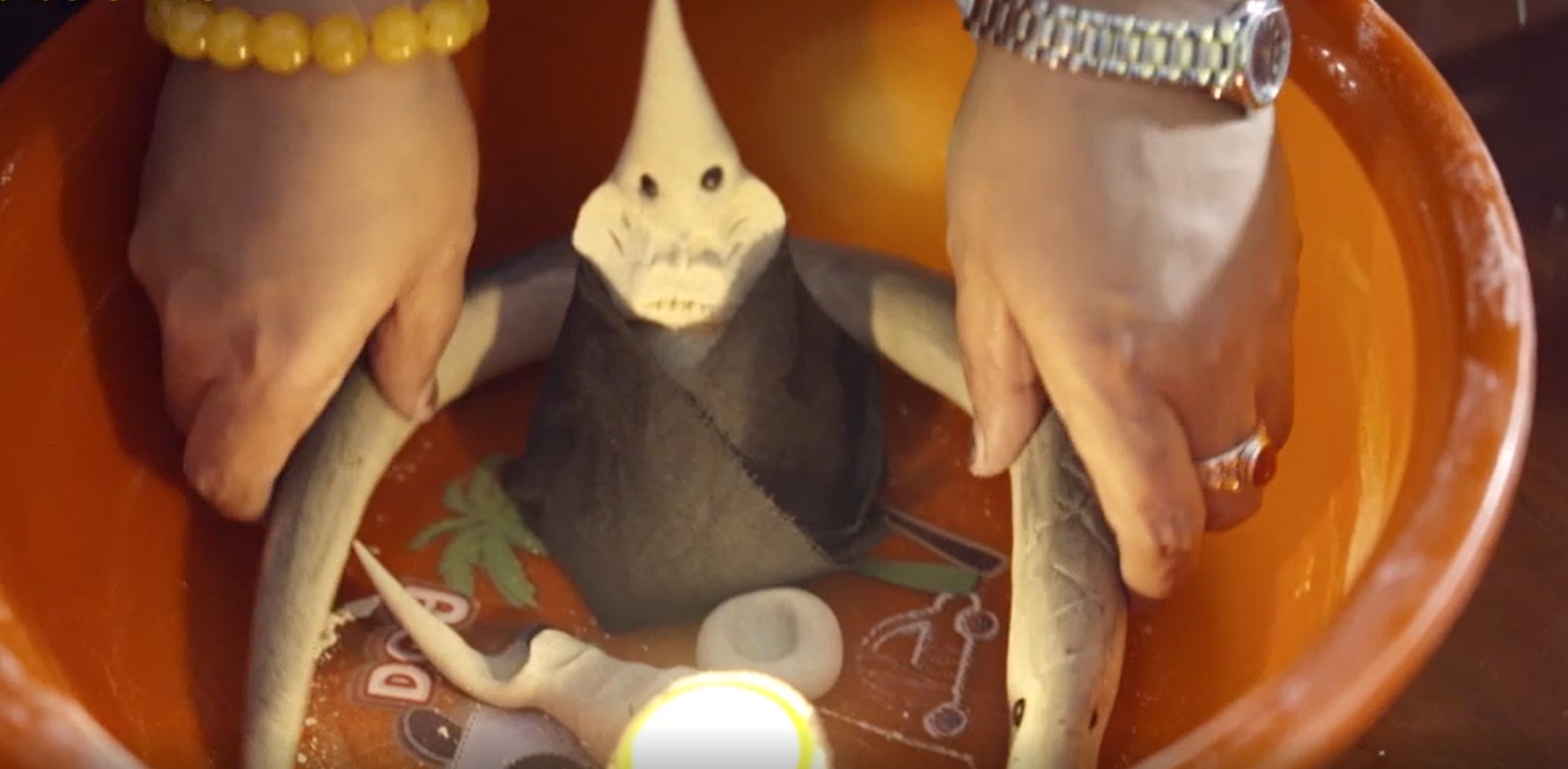
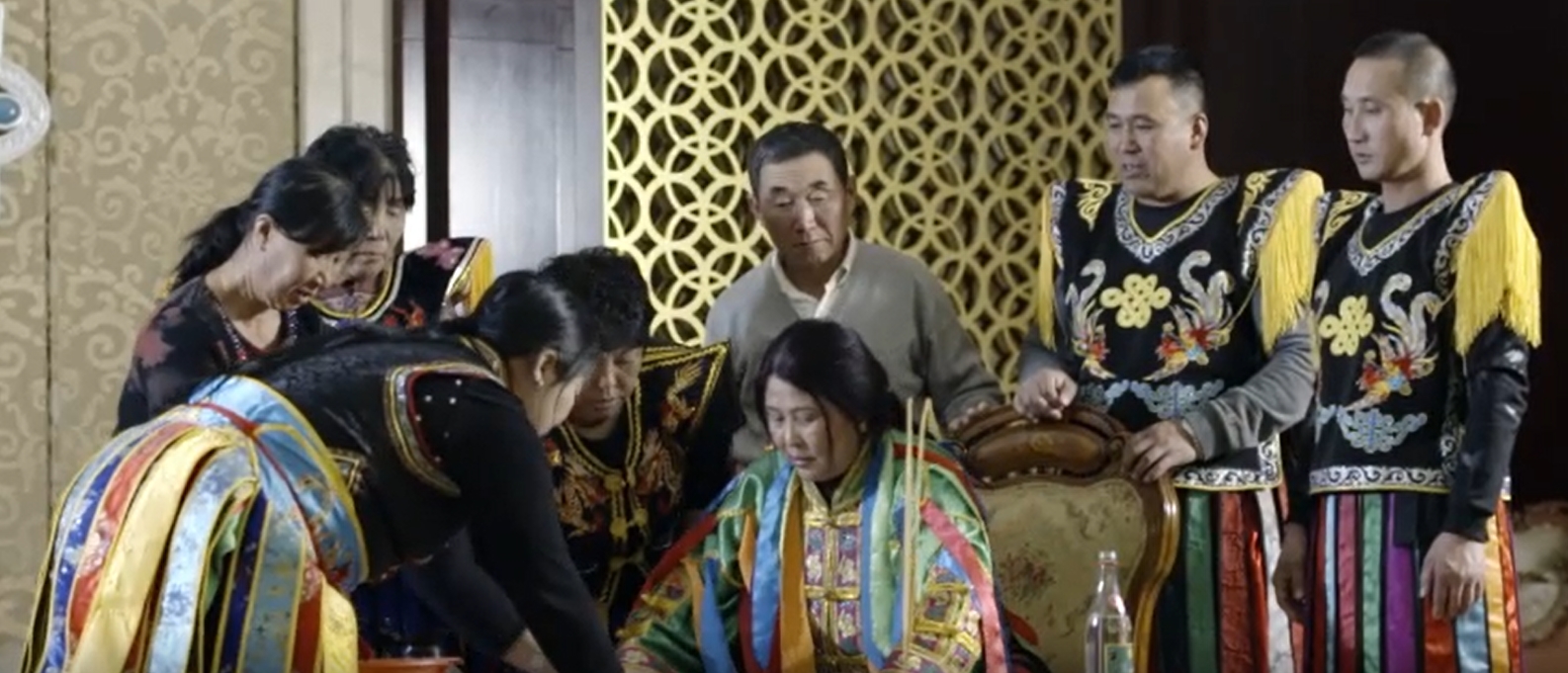
Tonight they are performing an exorcism ritual, or chu gui, which requires them to dance in circles with drums and tambourines, chanting spells in Mongol, while the central shaman, a lady called Furong, whirls and hyper-ventilates while setting fire to a small doll that looks like My Little Ku Klux Klansman.

In order to hang onto the suite, we have had to order dinner, which sits untouched on the Lazy Susan in the dining area while the ritual continues. The waitresses stare in stony disapproval, and tut as the sofas get moved. “We don’t care for their sort,” mutters one.

“‘Their sort?’” snarls Coral Red, a poet who happens to be sitting in. “THIS IS YOUR CULTURE, YOU STUPID HUSSY.” After that, the waitresses leave us alone, and when we need water, I have to go outside to the shops.
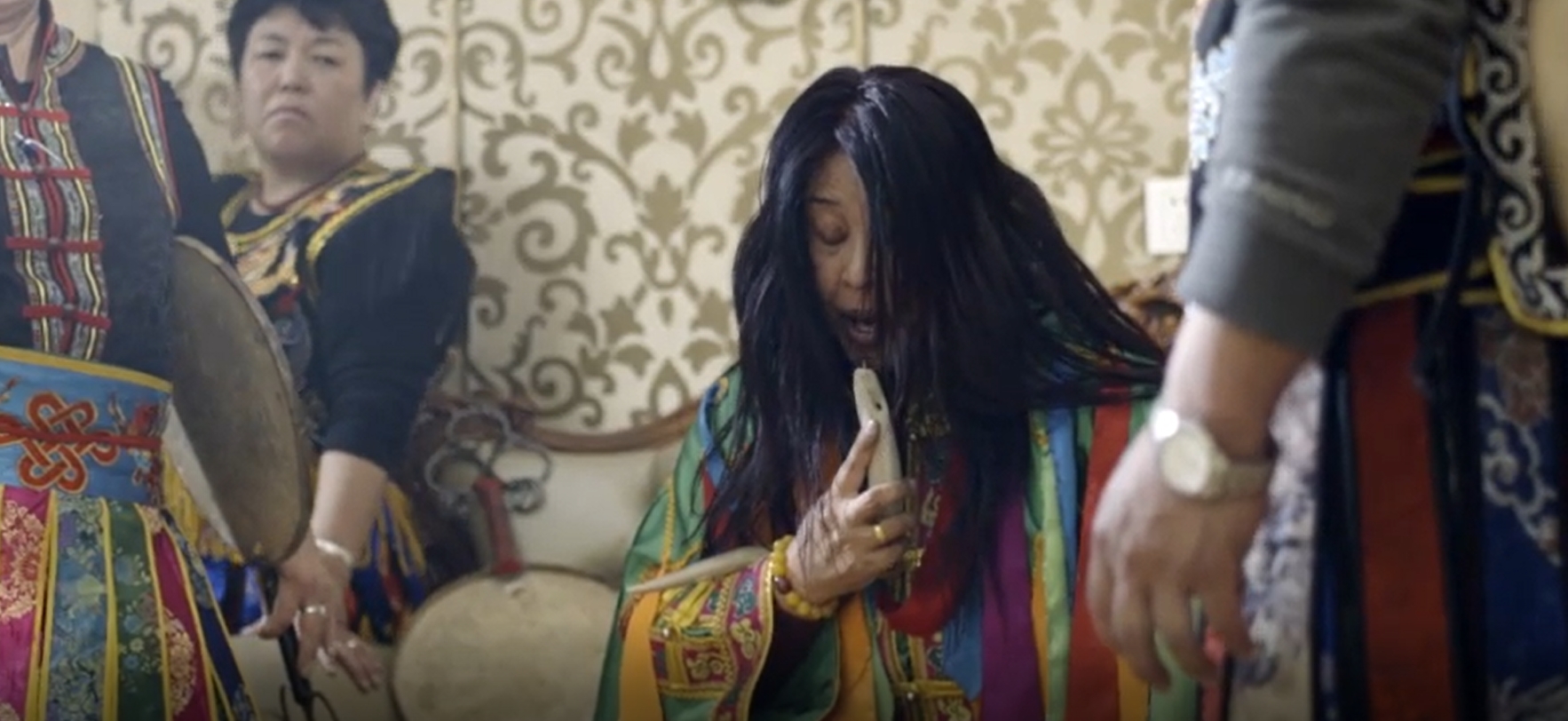
Meanwhile, the chanting and drumming reaches a crescendo. Furong’s long black hair now surrounds her face, completely obscuring it, and she is panting and muttering, her eyes rolling. She eats the embers from the fire she lit around the Ku Klux Klan doll, and is drooling black gunge from her mouth. She collapses onto the sofa and is fed 60% proof Mongol booze, which she spits across the room, muttering to herself in Old Mongol, a language that she has never learned.

“WESH!” she shouts hoarsely, “WESH!” She is drooling more black slime, and spitting out more firewater, her eyes wide, and staring at me across the room. “WESH!” she shouts. “WESH!”

Suddenly Furong’s henchman shouts at our assistant producer, who is standing by the exit, clutching at her head.

“OPEN THE DOOR! OPEN THE DOOR! IT’S TRYING TO GET OUT!”

She opens the door, and suddenly there is silence.

Jonathan Clements is the author of A Brief History of China. These events featured in Route Awakening S03E03 (2017).
The Cold Light of Day

I am awake for dawn in Songyuan…. It is a city spattered with ice and snow and wreathed in poisonous mist. Identical breeze-block, seven-storey buildings stretch away into infinity, as if the entire city has been dropped out of the sky by God’s cloning tool. As a river confluence and the crossing point for five railways, Songyuan has been a hub of sorts for the last century, but it still seems odd to imagine that anyone would want to live somewhere so crushingly dull, where the boulevards are glum corporate landscapings, and the houses seem designed for people who never look up from their phones. This is a city of 2.8 million people, half the size of Finland.

I keep telling people I am in Inner Mongolia, but that is not true. I am actually in the Front Gorlos Mongol Autonomous County, which is in Jilin, just over the border from Inner Mongolia.

“Our ancestors had to move,” says Mr Bao, the cultural attaché, a chubby, avuncular man, who is very excited to have a film crew in town. “They picked a fight with Genghis Khan when he was a youngster, and their shamans told them: ‘this guy is going to be the king of the world; you’d better run. So we left Mongolia and took ten towns from the Manchus here. Then the Mongols took over the whole of Asia, and we were absorbed into one of the banners of the army. We are the Front Gorlos, who fight in the vanguard. There are Rearguard Gorlos as well, somewhere.”

My first meeting with Mr Bao is in our residence, The Gorlos Hotel, which is riddled with Mongol motifs, curlicues crawling up the pillars and thunderbolts in the walls. The gift shop sells horse-headed erhus and little Mongol dolls, and the convenience store has lots of yoghurt.

Today, we are filming a welcoming ceremony in the local park, next to the windswept waters of the icy Songhua river, dominated by eleven massive Mongol stupas. Each has a base of a circular stone cairn, topped by a flower bed planted with fir trees, superseded by a pole that holds aloft a sort of sacred umbrella, itself surmounted by a shamanic trident. Each takes on a writhing cone-shape, caused by all the flapping prayer flags that stream from the top like a multi-coloured rainbow.

It is cold. Our oh-so-high-tech thermometer broke after counting down to minus five degrees, and I suspect we are looking closer to minus ten.

“Stop complaining,” scoffs the cameraman. “You live in Finland.”

“Yes,” I point out, “but we don’t stand around in the fecking cold all morning.”

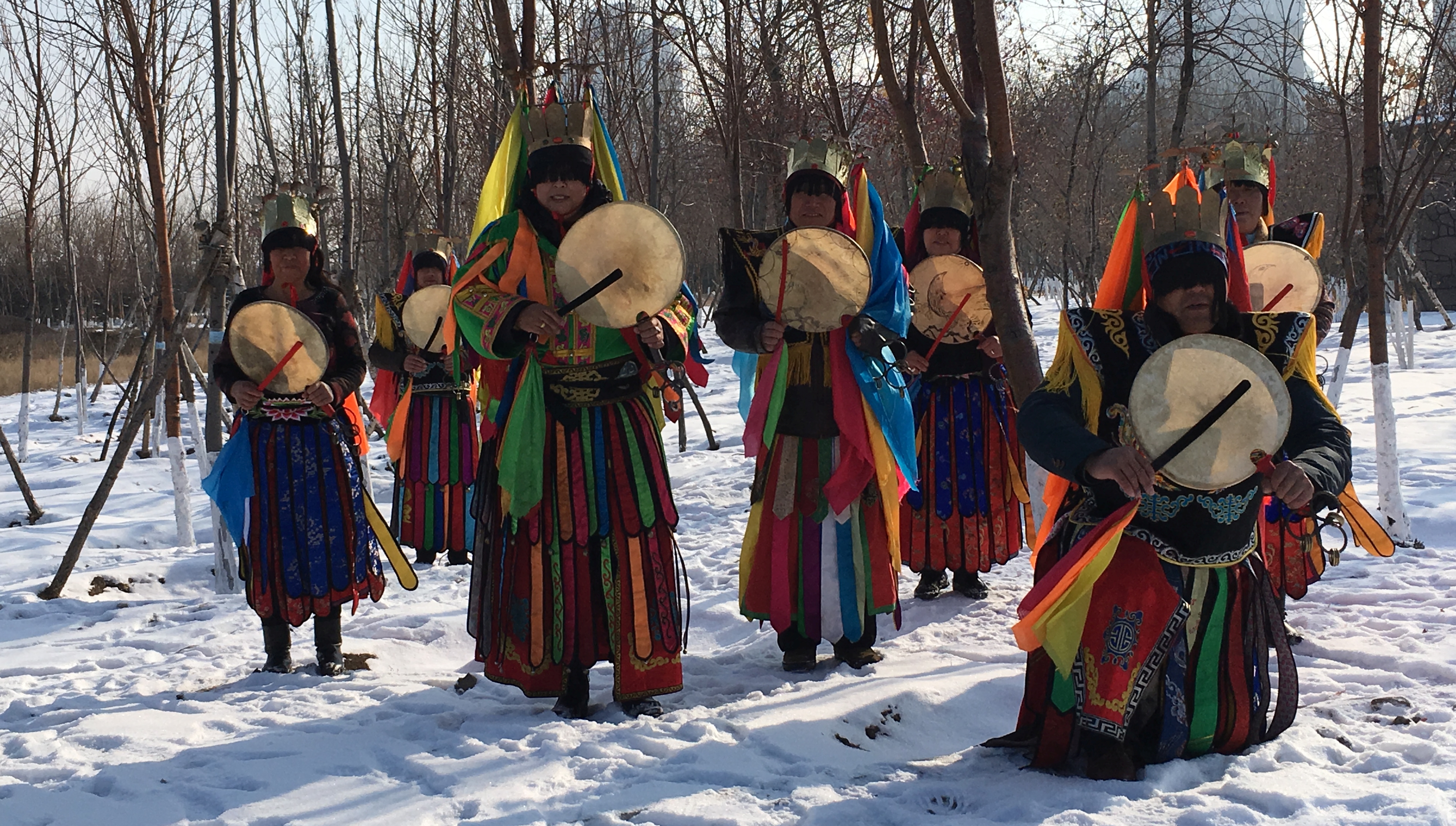
Mr Bao has gone full-on Mongol gangster. He turns up in an ankle-length dun-coloured robe with Vulcan shoulder pads and a Russian style furry hat. But he is veritably under-dressed when compared to the eight shamans he has brought along. Each has a skirt of rainbow ribbons, from which dangle jingly bells. Each has an embroidered tunic with twisting dragons on it, with shoulder pads that reach out for half a foot on each side, and a golden crown topped with metal butterflies, from which rainbow streamers depend down their backs like kabuki battle-flags. And to complete the ensemble, each wears a fringe of black beads that hangs down to their nose, completely obscuring everything above their upper lips.

For some reason, people stare. We are trying to film the shamans banging their tambourines and shouting at the gods, but the producer has to keep dragging gawpers away by the scruff of their necks. One particularly irritating passer-by has a camera that goes BING-BONG every time he tries to sneak a photograph, and lacks a telephoto lens, which means he keeps wandering into shot.

A far more sinister rubber-necker is a woman in a white snood who is nonchalantly toting a Canon 5D with massive grey telephoto lens, which the director identifies from 100 paces as a ten-grand EF200-400mm f/4L IS USM Extender 1.4x. Snood Lady then proceeds to spend the next two hours pointing it at us from the shrubbery, making her the most obvious tail we have ever had. Even Mr Bao eventually tires of all the attention, and gently admonishes her that she is wasting her time, as we have all the correct papers. She pretends to be photographing a bench for a few minutes, and then returns to her old ways.

Mr Bao and his eight wizards, men and women, dance around the stone cairns and burn incense, chanting in Mongol while the icy wind flaps at their prayer flags. The director hopes to get some aerial footage of them twisting and jiving on the brown grass in front of the stupas, but we discover after thirty minutes of false starts that the cold has done for the drone batteries. It takes a long while for the drone pilot to even get his phone to turn on, but by the time he has calibrated the drone software and launched it into the air, the drone’s own batteries are already flashing alerts, and it has to come down before it can shoot a scrap of footage.

The cinematographer reveals that his camera is similarly hobbled, and that he has somehow got through two batteries this morning. But at least we have the Welcoming Ritual in the can from the ground. What’s next?

“Next,” beams Mr Bao, “we need to find somewhere indoors to shoot the exorcism ritual. People get possessed, you know, and their bones ache, and they come to a shaman looking for help. And it’s from the ranks of the possessed that the shaman will select his future pupils. You don’t choose to be a shaman, shamanism chooses you, and you will dream of your master and seek him out. If he won’t teach you, then you will bleed to death from all seven of your holes.”

Nervously, the director asks him if he has a candidate for exorcism handy.

“Oh yes,” says Mr Bao. “His name is Ping. Can I bring him to your hotel this afternoon? We’ll need a room big enough to light a fire in, preferably with washable carpets.”

Jonathan Clements is the author of A Brief History of China. These events featured in Route Awakening S03E03 (2017).
Mud Fight

The area around the drum tower is thick with people. Tourists from all over the province, Kam youths and twentysomethings on vacation from their urban jobs – hipster girls from Canton pretending that this is all jolly larks, and their boyfriends in basketball shirts and baseball caps, like inflatable gangsters that have yet to be attached to a pump nozzle. All are clustered around the carp pond in the village centre, munching on melons and chanting the Chinese equivalent of Why Are We Waiting, while old men chuff on cheroots and the grannies wonder if anyone is coming in for lunch.

If you wish to hold a Kam fishing competition, you will first require a rancid area of water the size of a tennis court. Be sure to throw all your trash in it through the year, and for extra fun, try slaughtering half a dozen cattle the day before and hosing their terrified bowel evacuations into the water.

You will then need to get drunk. I mean, really drunk. I mean, try to make sure you can barely stand, and that the only thing which can hold you upright is the possibility that one of your mates is leaning in the opposite direction and you can cancel out each other’s collapse.

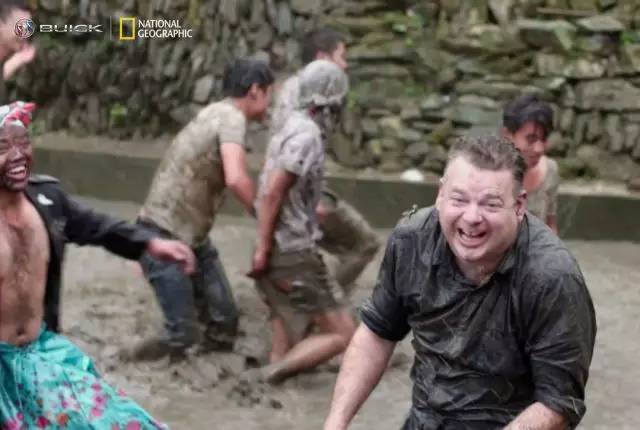
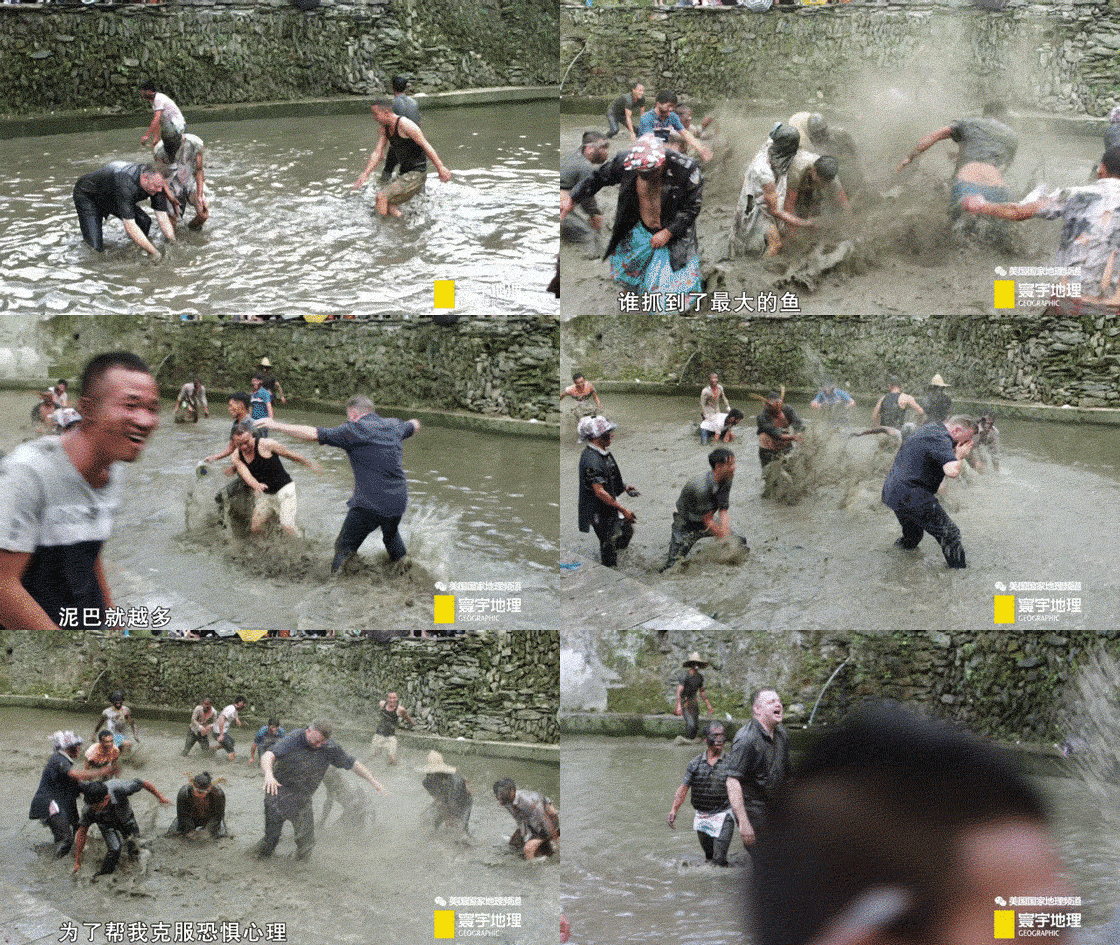
Smear mud on each other’s faces, then dress up. Leaders might like to wear a nice blue ballgown, others might prefer an Indian feather headdress, a policeman’s uniform, or perhaps a comical construction worker’s outfit. Because this is rural, tribal China, absolutely nobody will draw the obvious conclusion that you have just turned yourselves into a blackface parody of the Village People, accompanied for some reason by Jason from Friday 13th and a bunch of men banging gongs and letting off firecrackers.

Then jump in the pond, and RELEASE THE CARP!

The village men completely ignore the carp, and instead turn on each other in a free-for-all, splashing each other and the crowd, dumping mud on each other’s heads, and occasionally paying a vague homage to the idea that they are supposed to be feeling in the water for fish, in the manner that Pan taught me up in the rice paddies the other day.

Some of the observers, not dressed as the blackface Village People, but certainly locals, also jump in. Then, two of the locals grab one of their friends and push him in. I look around me to see if we are filming, and see instead Pan, our local fixer, sprinting straight for me. I turn with him and we jump together into the pond, whereupon everybody starts splashing us and whooping.

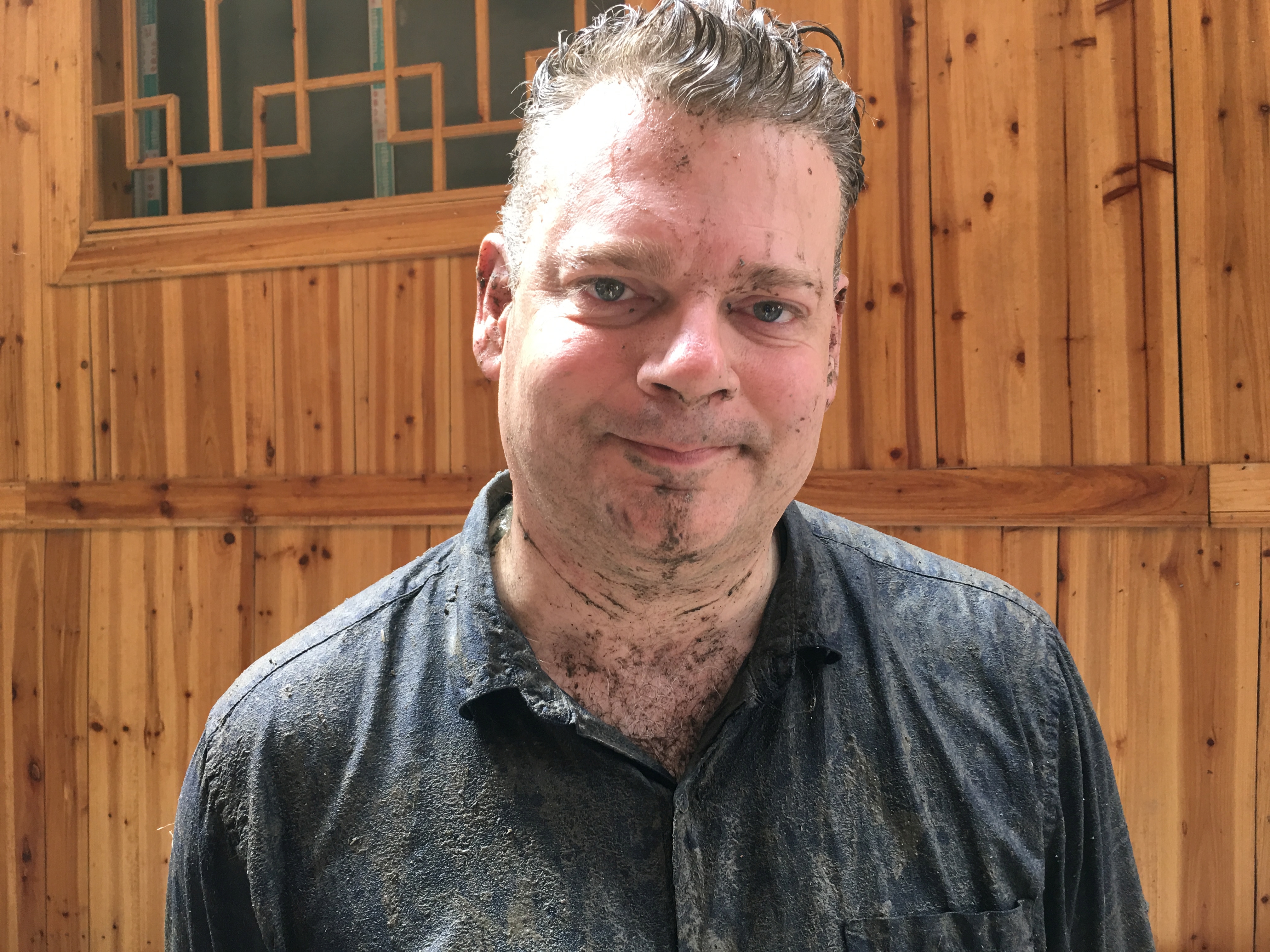
This is, it turns out, what happens. All new arrivals are thoroughly drenched by everybody else for a while, until people get bored and return to the job at hand, which is supposedly looking for the carp. At the time, however, I don’t know this, and presume simply that the entire nation of the Kam has turned on me and flung gritty, muddy water into my eyes. Somebody dumps mud on my head, and I chase around after Pan like a big muddy bear.

I am sure it all looks quite spontaneous to the crowd, although I have been preparing for this for weeks. I have arrived at the pond wearing my aqua shoes, not my boots, and although I look no different to an outside observer, I am actually wearing old clothes from last year’s shoot – one of the advantages of having five identical outfits. I am not wearing my watch and my pockets are empty, and I know I have a complete set of fresh clothes waiting down at the hostel.

Pan, however, hasn’t thought this through quite so hard, and sloshes over to the edge of the pond to dump a muddy confection in the director’s hand, which turns out to be his wallet, phone and keys.

The Village People Construction Worker has caught a fish. He brandishes a golden carp to the cheering crowd, and then flings it at them, eliciting squeals of delighted anguish from the Cantonese hipsters. Behind me, I hear girlish shrieks, and see that a trio of mud wrestlers have leapt out of the water and grabbed our Camera Assistant, who is protesting in terror as they threaten to throw him and the priceless lens bag into the water. Luckily his pleadings fob them off just before the filming would have been prematurely ended by the ruining of half our equipment.

The fight continues, with further findings of carp. I, however, come out with little more than a pencil, two empty bottles and a soggy cigarette packet. When the director adjudges that I look sufficiently ridiculous, I slosh out of the water and stand in front of the camera to do a piece to camera about tribal traditions. I then slosh off through the crowd down to the hotel.

Mr Wu is deep in his cups with his drinking buddies, who have also discovered the joys of the director’s French menthol cigarettes. They are off their faces by the time I reach the hostel, and he looks up to see me standing outside the terrace like a mud-spattered spaniel. I salute him.

“Ah,” he says in the best English he can manage, “gooder.”

Jonathan Clements is the author of The Emperor’s Feast: A History of Chinese Food in Twelve Meals. These events features in Route Awakening S03E01 (2017).

A Spoonful of Vomit

“I don’t think I want you to go in the mud fight,” says the director. “Or rather, I think contractually I can’t make you do it. The pond looks disgusting. I wouldn’t get in there. And production-wise, if you get tetanus or ringworm or something, or a rash, it will compromise the rest of the shoot.”

Yes, I say, but if National Geographic send me to the Kam mud fight and I stand at the back reading a newspaper, you might as well not have sent me at all. Isn’t this what a presenter is for? Looking like an idiot?

“We’ll talk about this later,” she says. “In the meantime, I’ve found you this nice apron with puppies on it.”

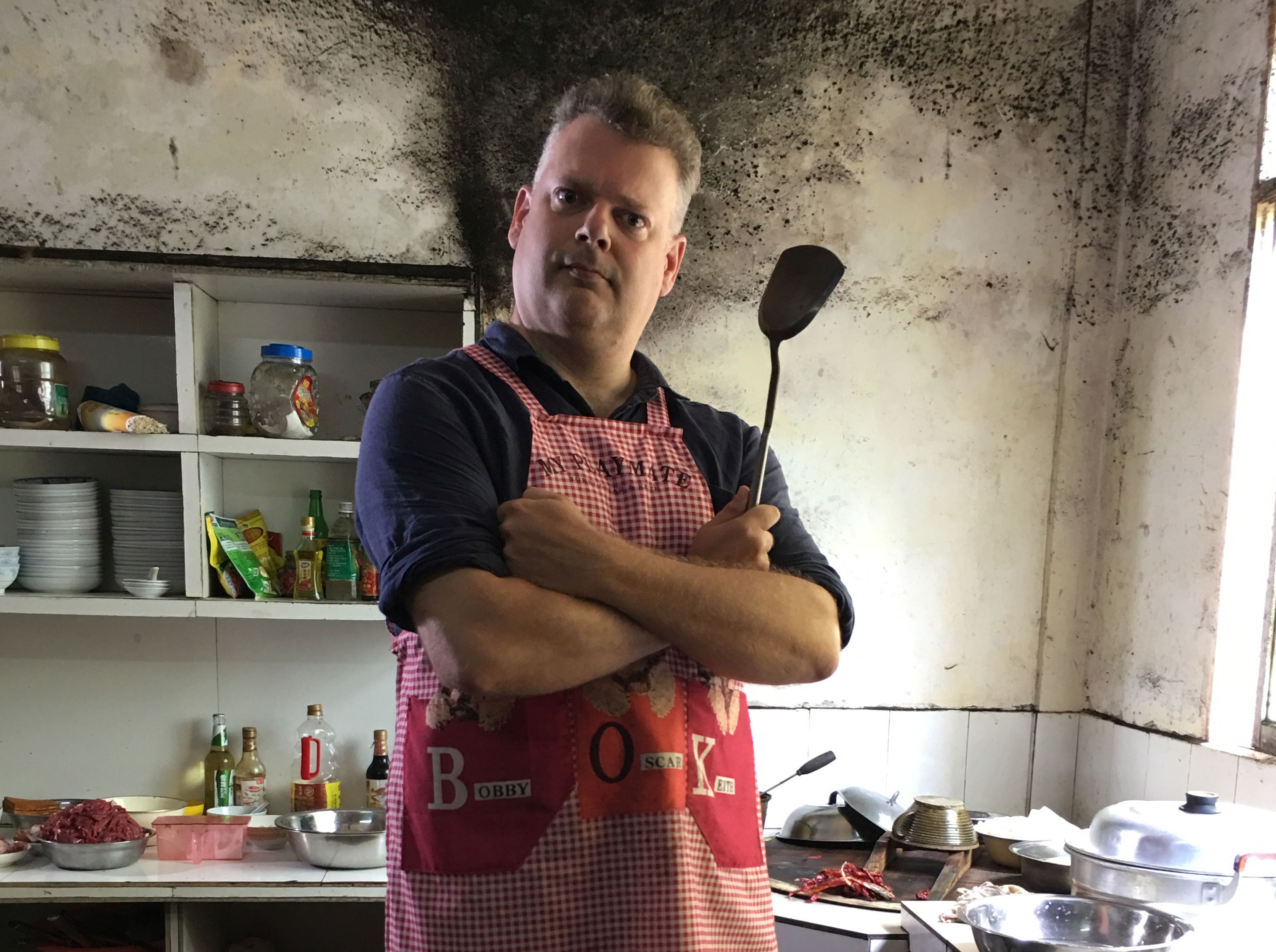
Mr Wu has fired up the stove, and thrown extra wood into the oven. The oil is crackling in the wok, and I am wearing a fetching gingham apron that has the words MY PLAYMATES written on it in large, friendly letters, above a picture of three puppies whose names are apparently Bobby, Oscar and Keith. I’m just saying: somebody had a meeting about that.

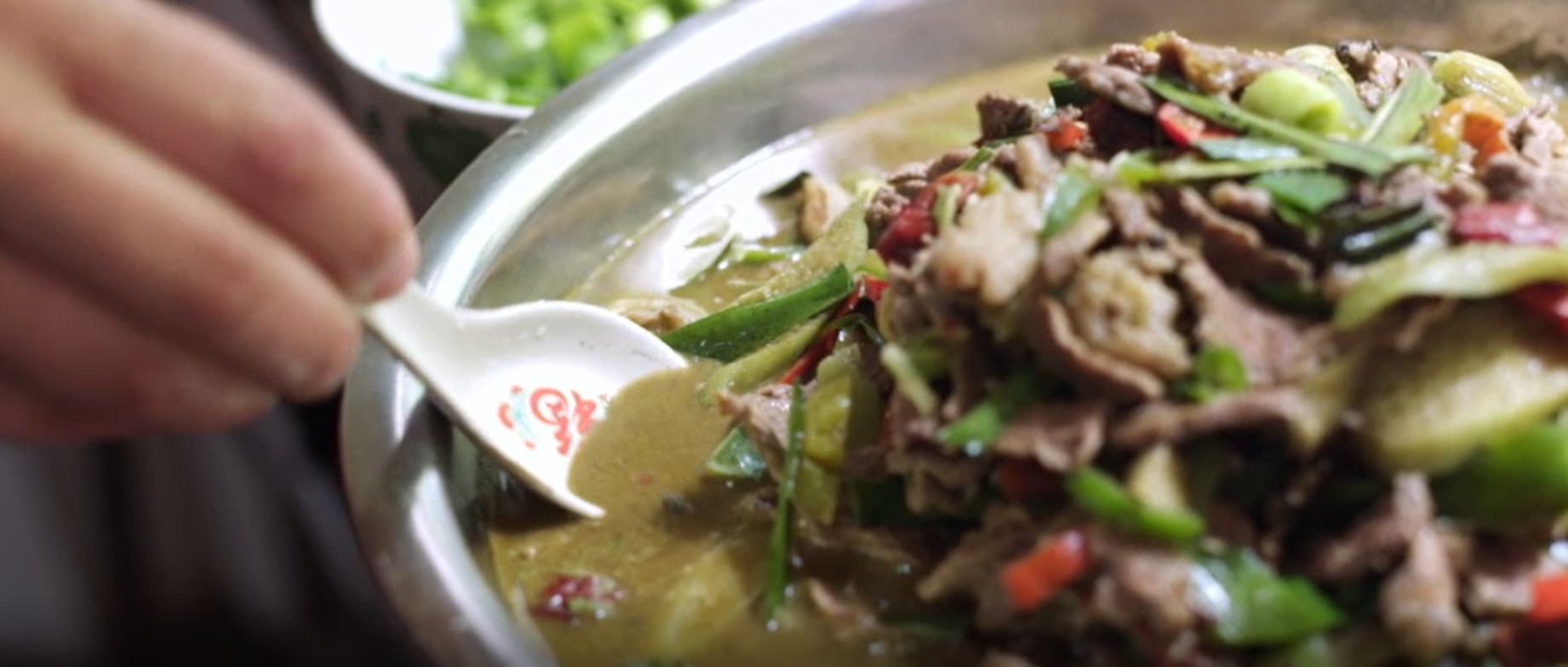
Today we shall require some roughly chopped red and green chilies, some ginger, some leek leaves, and some cubes of beef, as well as our magic ingredient: the intestinal juices of a recently slaughtered cow, wrung out from the grass of its last meal, itself ripped from the intestines in the middle of a tribal free-for-all. If you can’t find a recently slaughtered cow, feel free to use the intestinal juices of any creature in your vicinity, particularly one that eats grass, as it’s a good way to get that lovely green colouring. And I thought they only smelt bad on the outside.

Mr Wu boils up the niubie in his wok, then sets it to one side while he fries up the beef in the chilis. Then he pours the niubie over the top and dumps it all in a bowl. He offers me a spoon and I gingerly take a sip… It tastes like a soup made with chili and pepper and… oh, wait, there’s that burning aftertaste at the back of your throat like you just threw up a little bit in your mouth.

The director glares at me and I think of something else to say, vaguely suggesting that there is a Joycean uric tang.

It is only then that Mr Wu realises that he can’t find his blood.

“Where’s my blood?” he bellows?

“What blood?” squeaks Mrs Wu, who is trying to wok up a lunch for a group of eight tourists in the restaurant.

“The big bowl of blood with all the spices in it. We only scooped it out of the cow yesterday. I was going to cook xiehong for the foreigners.”

“Oh that,” says Mrs Wu, the dim dawn of realisation starting to glimmer on her face. “I thought that was waste, so I threw it out.” Mr Wu goes ballistic, since now he has to go and find some blood from somewhere else, like a five-foot vampire on a charity mission.

Jonathan Clements is the author of The Emperor’s Feast: A History of China in Twelve Meals. These events were filmed as part of Route Awakening S03E01 (2017).

Mixed Media

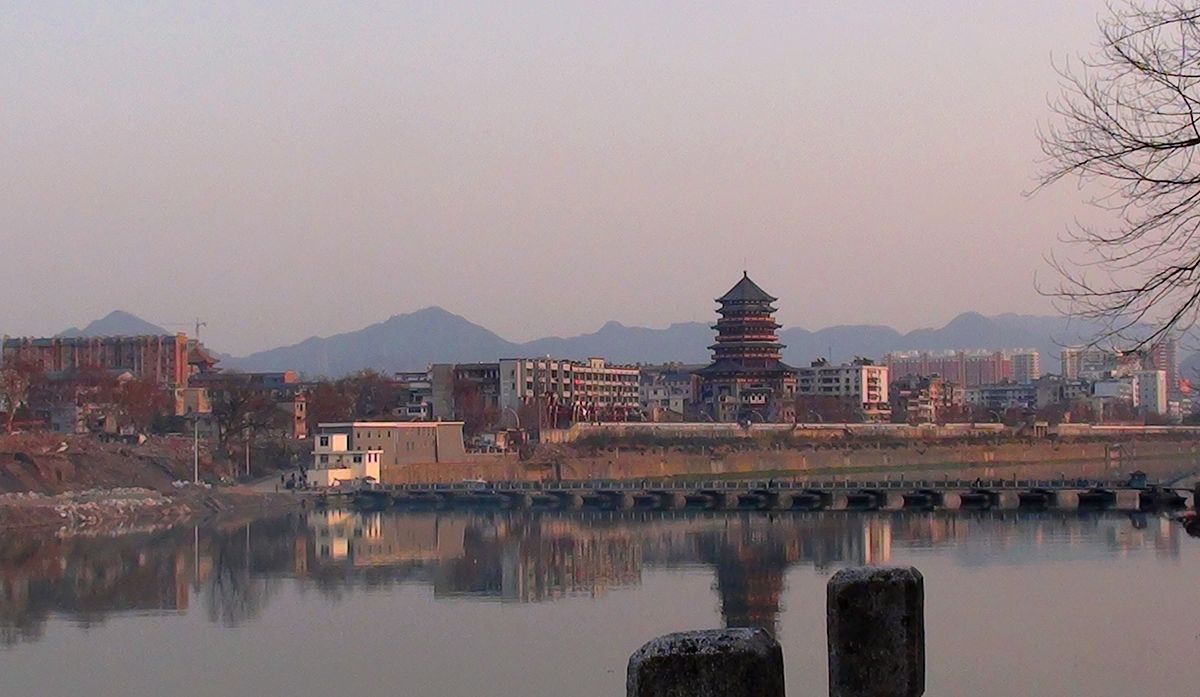
Jingdezhen was, for many centuries, the world capital of porcelain. The local clay and glaze were what’s known as “cousin materials”, with an affinity that would fuse them at an atomic level. Jingdezhen porcelain didn’t just comprise baked clay with a shiny glaze. The two would vitrify under extreme heat, creating translucent, beautiful colours and clear, ringing tones. Europeans would spend decades trying to work out the secret of porcelain, unaware that at least part of the secret was Jingdezhen itself. It was the source of much of the imperial tableware for several dynasties.

Jingdezhen also suffered from immense fluctuations in fortune. The Mongol conquests gave it access to both Middle Eastern markets and Afghan cobalt, creating a new industry in blue and white tableware – the Chinese of the 14th century thought it was vulgar, but it found a ready export market. There were riots among the labourers in the early 1600s over poor conditions and pay. In 1675, a generation after the Manchu conquest, the town fell to Wu Sangui’s forces during the Revolt of the Three Feudatories. Jingdezhen was almost totally destroyed, and for many years afterwards, canny managers at the kilns fired pots and plates without a Manchu emperor’s reign date on them, in order to avoid any more iconoclasm in the event of another revolt. It suffered again with the influx of foreign competition, forced to modernise and downgrade its principles when facing an influx of imports from Industrial-Revolution Europe.

In 1911, the final entry in the porcelain ledger of the Forbidden City details a command by the Last Emperor to send a certain kind of tableware to Beijing. The potters’ reply is a blank refusal, confessing that they have forgotten the skills required. They could knock him up some plates with dragons on them, if he liked, but the glory days were gone.

Somewhat counter-intuitively, Jingdezhen’s fortunes revived after the Revolution. Somebody had to make tea sets for the Communist Party grandees, and Jingdezhen seemed like the perfect place for workers’ crockery and porcelain statues of Chairman Mao.

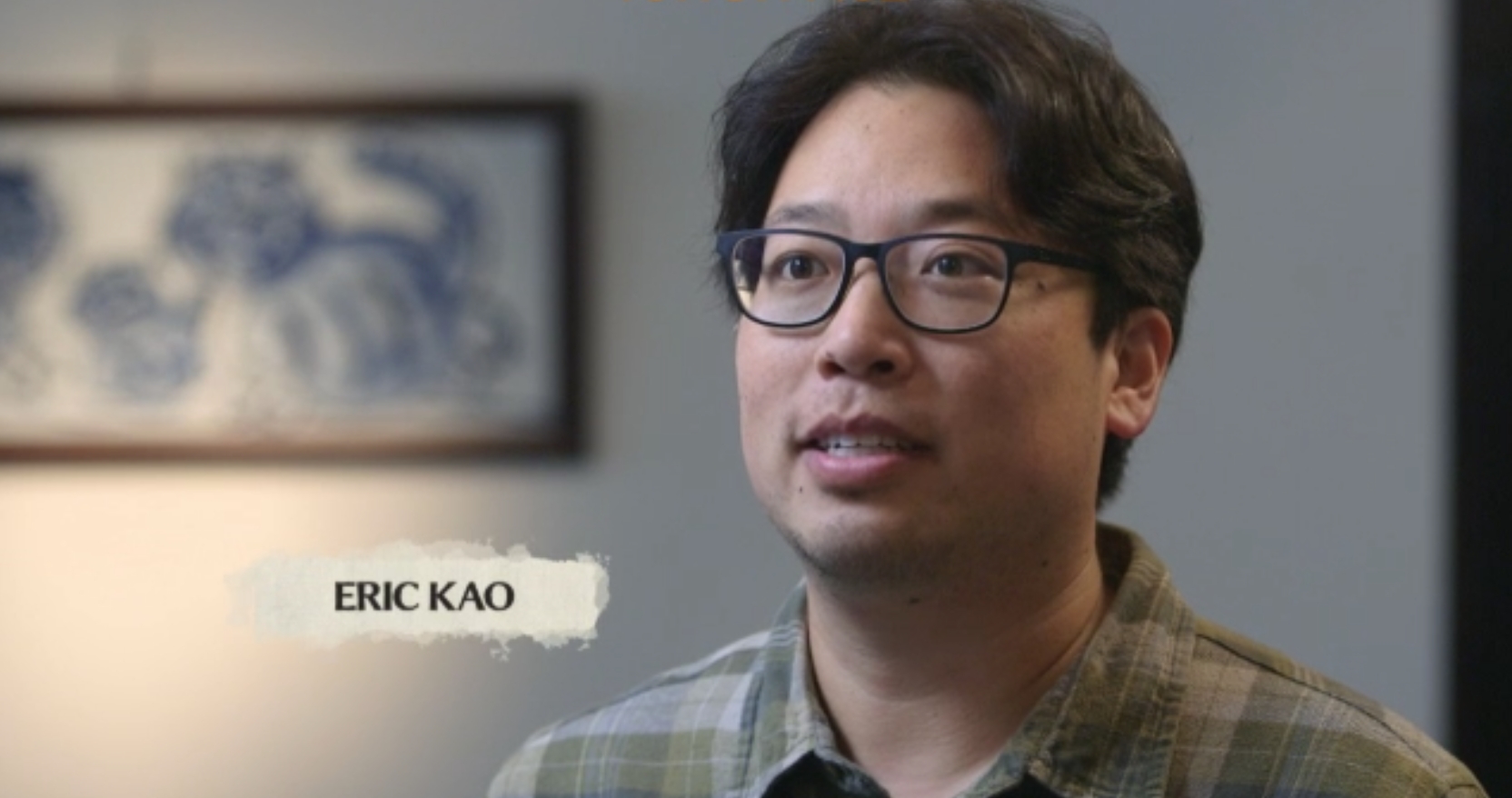
“They were lucky during the Cultural Revolution,” says Eric Kao, the American who has been the director here for six years. “Not because it didn’t do terrible damage to their livelihood, but because it only lasted ten years. When it was all over, some of the artisans were still alive. They could come back. They could teach a new generation.”

Eric surprises me by revealing the thing that almost killed Jingdezhen for good – capitalism.

“When Deng Xiaoping’s reforms came in in the late 1970s, there was a real boom. They weren’t making ceramics for the Emperors any more, or for the Party. They were making it for private clients, for commissions, for hotels and restaurants. There was a huge surge in interest and business, but then the potters started competing. I’ll charge a hundred, so you charge 90. So I charge 80, so you charge 70. By the time we’re down to 50, I can’t actually afford to live off the proceeds unless I downgrade the quality of my work. The output turned sloppy. It turned unreliable. The Chinese want a bargain, and if they get a bargain, they’ll put up with the fall in quality. By the 1990s, Jingdezhen was a wasteland. We couldn’t give the pots away. The rent here was minimal because nobody wanted to be here. That’s where The Workshop came in.”

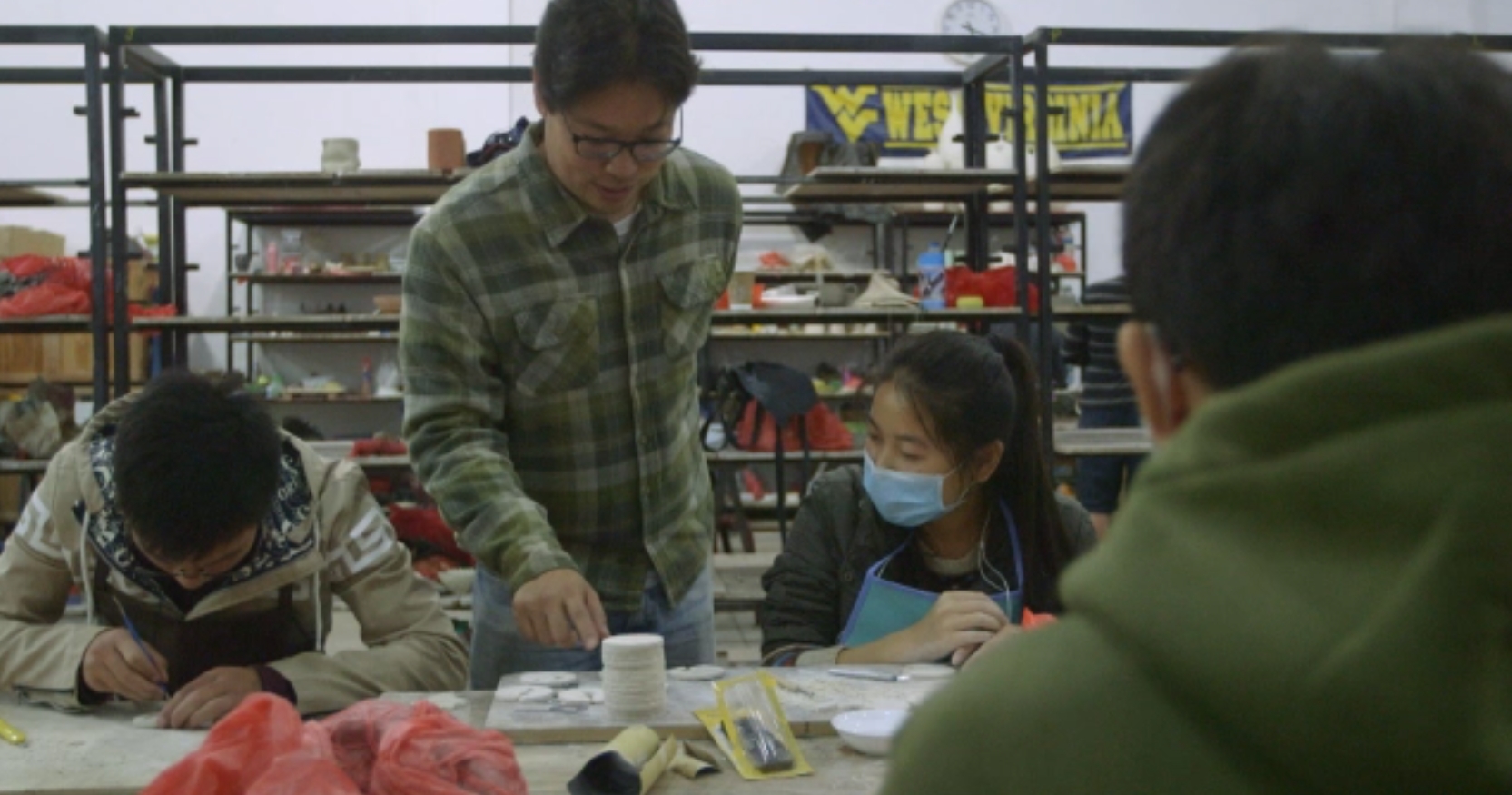
Eric was hired because he had two degrees in ceramics, and spoke both Chinese and English. His work is on display in the showroom, but he’s really here about the message – and the message has been written by Caroline Cheng, another overseas Chinese who first started the cooperative in Shanghai in 1985. The Pottery Workshop has only been in Jingdezhen for the last ten years. The more Eric tells me, the crazier he sounds, but in a good way. We walk through a market of little stalls selling bespoke pottery products. There are sublime, teardrop-shaped tea-pots; little bowls decorated with cute animals; vases with real leaves under their glazing.

“We hold this market every Saturday, from nine till twelve. That’s it. We won’t run it for longer or for more often, because we want to maintain the quality of the goods on sale. This is a juried marketplace. There is a waiting line to get in to one of the 80 stalls, and Caroline checks their material every month. If they don’t meet the right standard, or the quality of innovation slips, they’re out.”

The market shoppers are obvious potters from abroad – women in Doc Martens with flashes of garish hair; intense, smouldering boys with ponytails and smocks; wiry, white-haired old ladies in sensible sweaters. There are a bunch of loud students from West Virginia, and nervy-looking girls who seem to have have found a sensual fulfilment in kneading mud. Meanwhile, the Chinese are a breed apart – girls in trilbies and thigh-boots; boys in waistcoats, conspicuous yuppies and hipsters. They move among the Chinese-owned stalls that sell not only ceramics, but also handbags and bracelets, trays and purses, cutlery and coats.

“Oh, you mean the other media,” laughs Eric, using media in an entirely proper but rather unexpected way. “We introduced that strand last year. Ceramic is just a material. It’s just a way of making an object and fulfilling a purpose. But part of what we do here is exposing students to each other’s work, and the work of local craftsmen. Our Residency programme doesn’t just put foreigners here to use our facilities, it gives them an interpreter and lets them wander the city. We want everything to cross-pollinate. So we thought: let’s bring in the guys who sell copper spoons; let’s bring in the wood-carvers. Let’s see if they don’t spark some sort of new solution to a problem for the potters. Mixing the media.”

I ask the price of a bowl on one of the stands. The answer is so mind-blowingly low that there is the sound of a palpable scramble as the rest of the crew run to get their wallets. The students are practically giving these pieces away.

“We encourage them to get their work out there,” says Eric. “They spend the week making these items, and make a subsistence income, but those items are then spread as far as possible.”

I note that all the students have QR-codes on their stalls, allowing passing trade to instantly get their online contact details.

“We’re very big on social media, too,” says Eric. “We make them have properly up-to-date resumés, proper online contacts. These are apprentice pieces that get them recognised, and we make sure that they have portfolios to hand for commissions and repeat business.”

“We’re under pressure to expand, but we want to maintain the quality of the goods. There have been weeks where Caroline doesn’t let the market to happen at all if the students’ work isn’t up to scratch. But we’re asked if we can make it all-day Saturday, all weekend, all week. We won’t do it. The quality of the work won’t take the strain.”

I try to get as much of his business model on tape because it is so madly and beautifully counter-intuitive. It’s like he is actively trying to lose money, but also to create an entire generation of master potters.

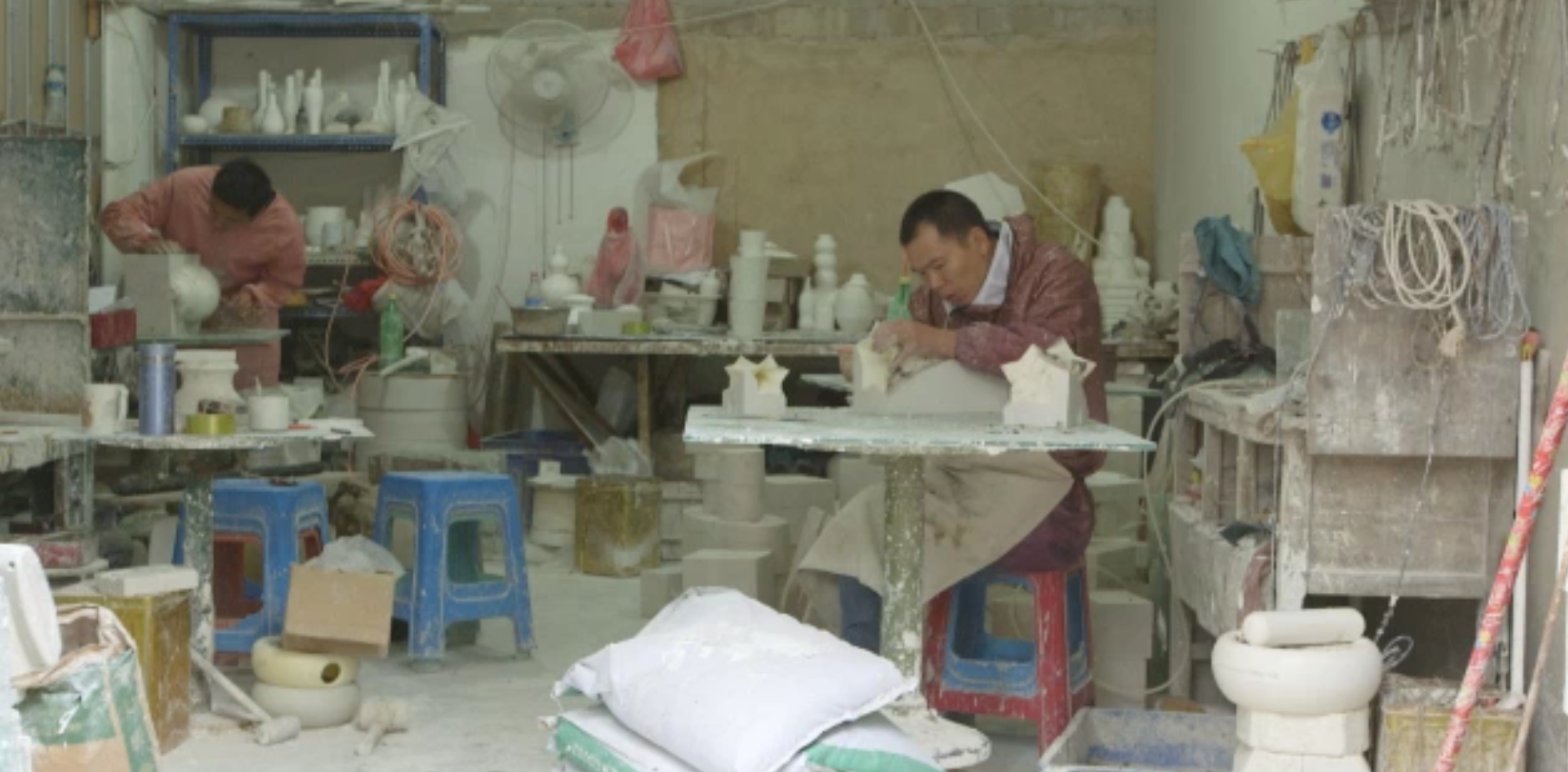
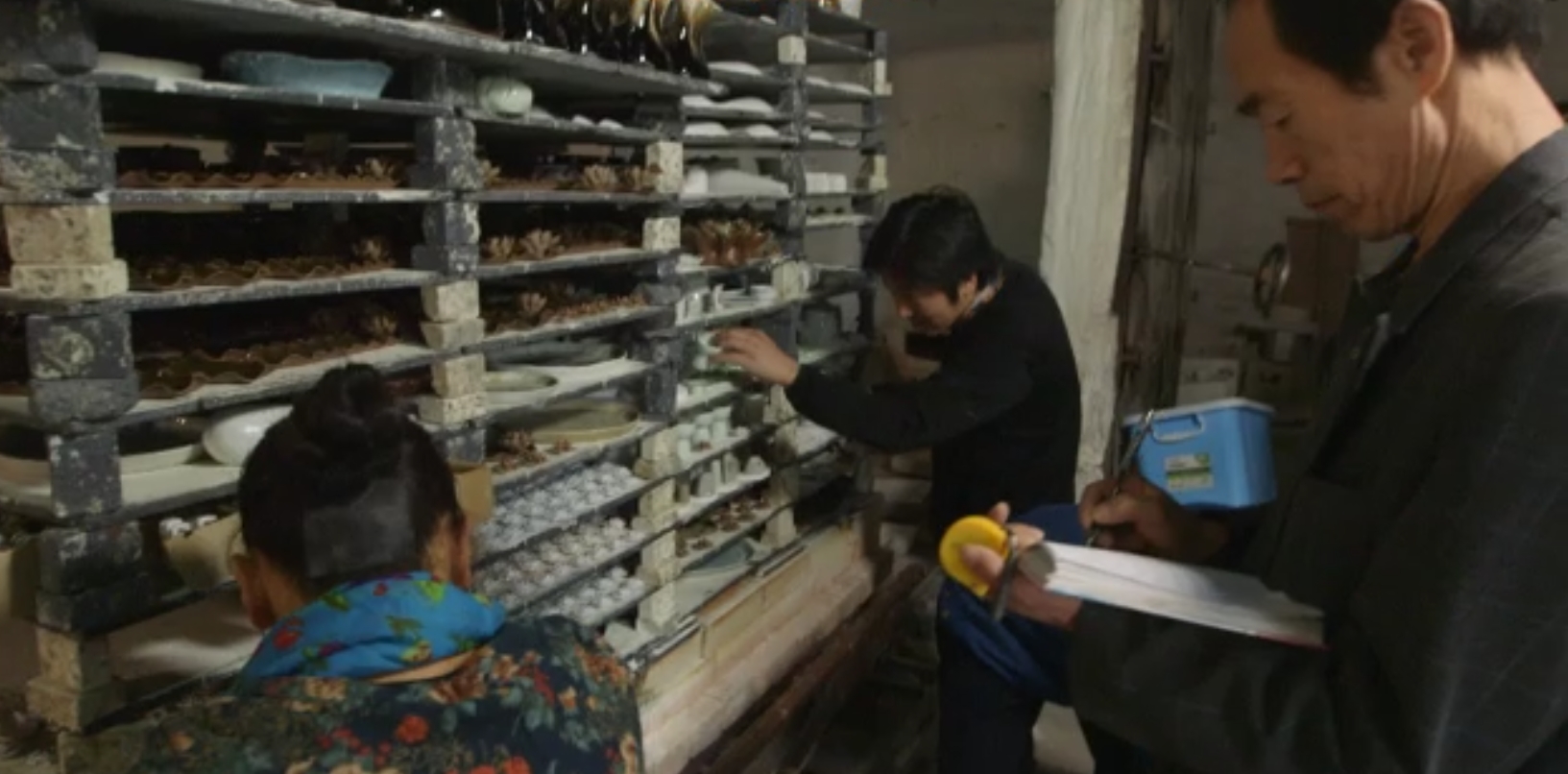
Eric shows me the public kilns, communally-owned ovens where the locals have always been over to rent space for their own firing, even back in the imperial days.

“You don’t need your own kiln,” he explains. “You don’t need to wait until you have 200 bowls to fire. You can just buy a square foot on one of our firings, and we’ll cook them out every day.”

I touch the side of the kiln, which looks almost exactly like half a transport container with metal tubes leading into it. It is not hot at all, even though inside the temperature is 600C and climbing to the required 1300C.

“Oh, we’ve lined the inside with ceramic fibre,” Eric says. “It’s the same stuff they use on the space shuttle. We crash-cool this kiln: we fire it until it’s done, and then we just turn off the gas and open the doors. That would crack the glaze on a lot of ceramics, but not Jingdezhen. It’s different in the big industrial factories. There, they have tunnel kilns that are 70 metres long. The pots go through on a conveyor belt, and the centre is firing 24 hours a day. They heat up gradually, get to the hottest point, and then cool down by the time they get out the other end. That’s where they make all the Starbucks mugs.”

As we leave the compound, I see another kiln, made of simple brick, set on a patch of grass near the exit. I wonder if it’s some sort of traditional construction from previous dynasty.

“Oh no,” says Eric. “that’s for pizza.”

Jonathan Clements is the author of A Brief History of China. These events featured in Route Awakening S02E06 (2016).

Glorious Mud

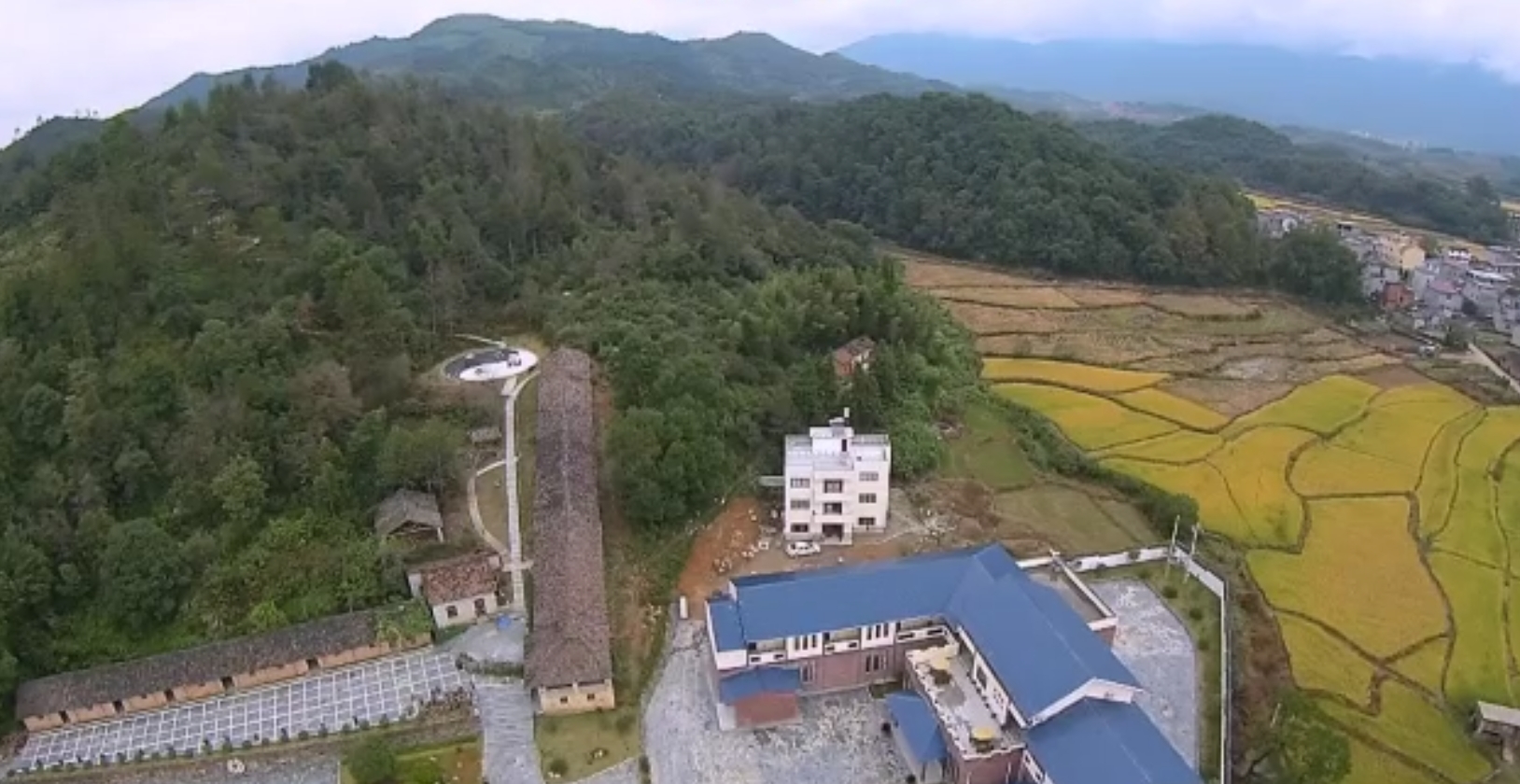
Out to the countryside, amid the rice paddies in the foothills, to visit Master Jin, another potter, who apparently makes “big pots.” The implications of this aren’t immediately clear until we pull into his compound, and I see what first appears to be a roofed funicular railway running up the side of the hill. But it is not a funicular railway. It is a long shed, the length of a football field, which shields the kiln below from the elements. Big pots and other large objects need to be fired in a dragon kiln, which is a long tube, as large as a metro tunnel, running the length of the hillside, pocked at regular intervals by chutes in which to drop more fuel. It must take an incredible amount of wood (or coal), but it makes it possible to fire the kind of vases that you can hide inside.

“This dragon kiln is quite new,” says Master Jin, an affable, mumbly old man whose face seems permanently creased in a rictus of laughter. “We built it in the 1970s. There was a Qing-era one over there beforehand, but someone built a house on the site. The dragon kilns were built here because of the logistics. We can get the clay right out of the fields in front. There’s a road right past the house, and there’s a jetty into the river just over there. You can load the pots up here and get them all the way to Jingdezhen, and from there to the rest of China, and the world.”

Jiangxi people seem somewhat slow of speech. It takes a couple of takes before I realise that Master Jin specialises in Pinteresque silences between sentences, and that if I just wait, he will keep going.

“I mean, we used to. There used to be a bunch of dragon kilns here, but you can do it all industrially now. This one is more used for education than anything else, when the pottery students come up to see how things were done. People keep coming here and buying the land for building houses. I mean, this is good clay. But they are building houses on it.”

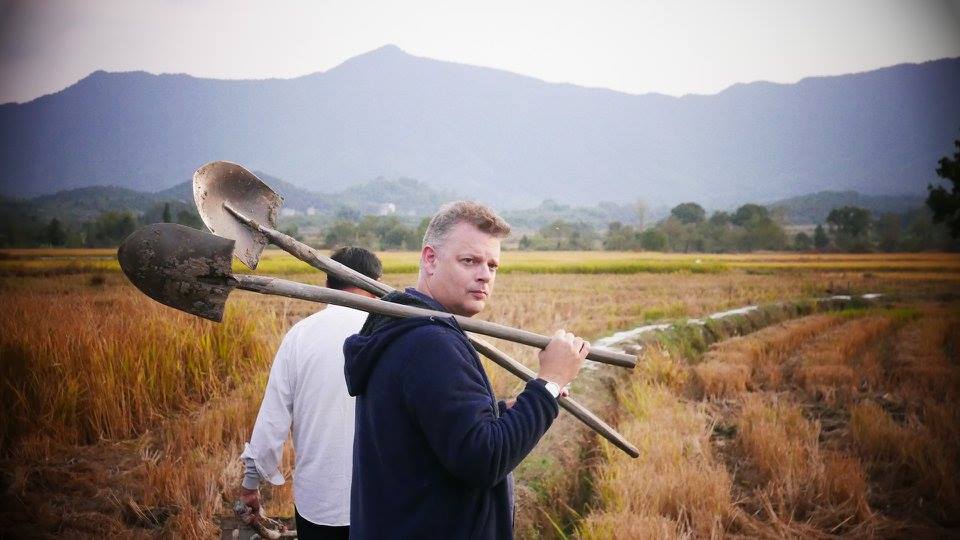
In the afternoon, Master Jin takes a wheelbarrow, hands me two shovels, and leads me out into the rice fields. We wind along a track that has been paved with broken slabs of pottery, until we come to the centre

“There’s the clay,” he says.

“But that’s just a field.”

“That’s where the clay is.”

“We just dig it up out of the field?”

“Yes.”

“Where you grew your lunch?”

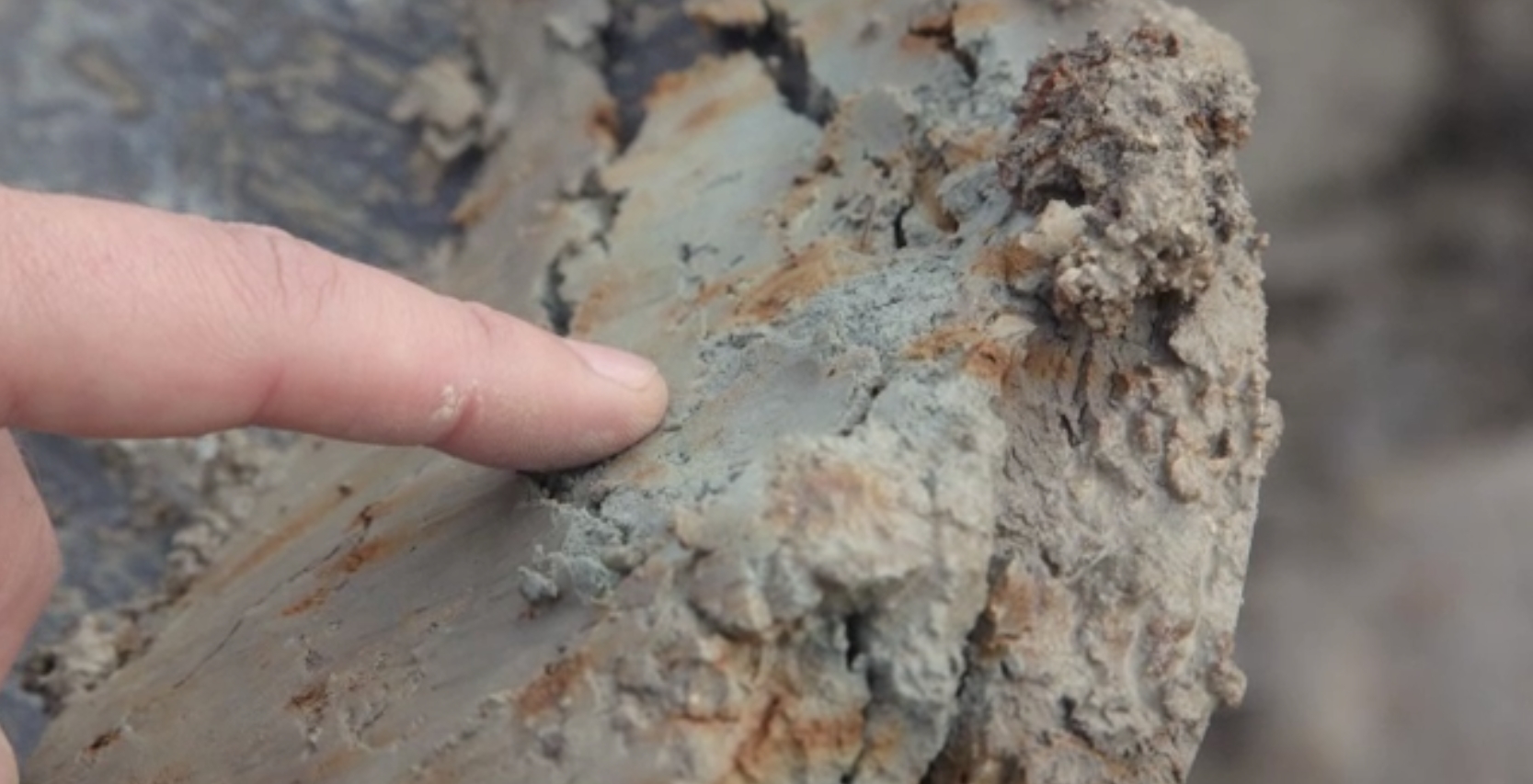
“Yes,” he says, and he starts to dig. There is a thin surface layer of gravel and other detritus, but right below the surface is a beautiful, pliable, shiny layer of cool grey mud, which briefly holds its shape after I shovel it onto the pile, and then slowly, gracefully collapses. Even I can see that it is perfect for pottery. There are a few flecks of red in it, which Master Jin says is naturally-occurring iron.

“That’s not the good stuff, though,” he mumbles. “There. That’s the good stuff.” A few inches below the surface there are patches and seams of an altogether different mud, strikingly blue-green in colour, like jade. It only comprises maybe 5% of the spadefuls I bring up, but that’s still quite a surprising amount to find in someone’s back garden. No wonder they built the kilns here.

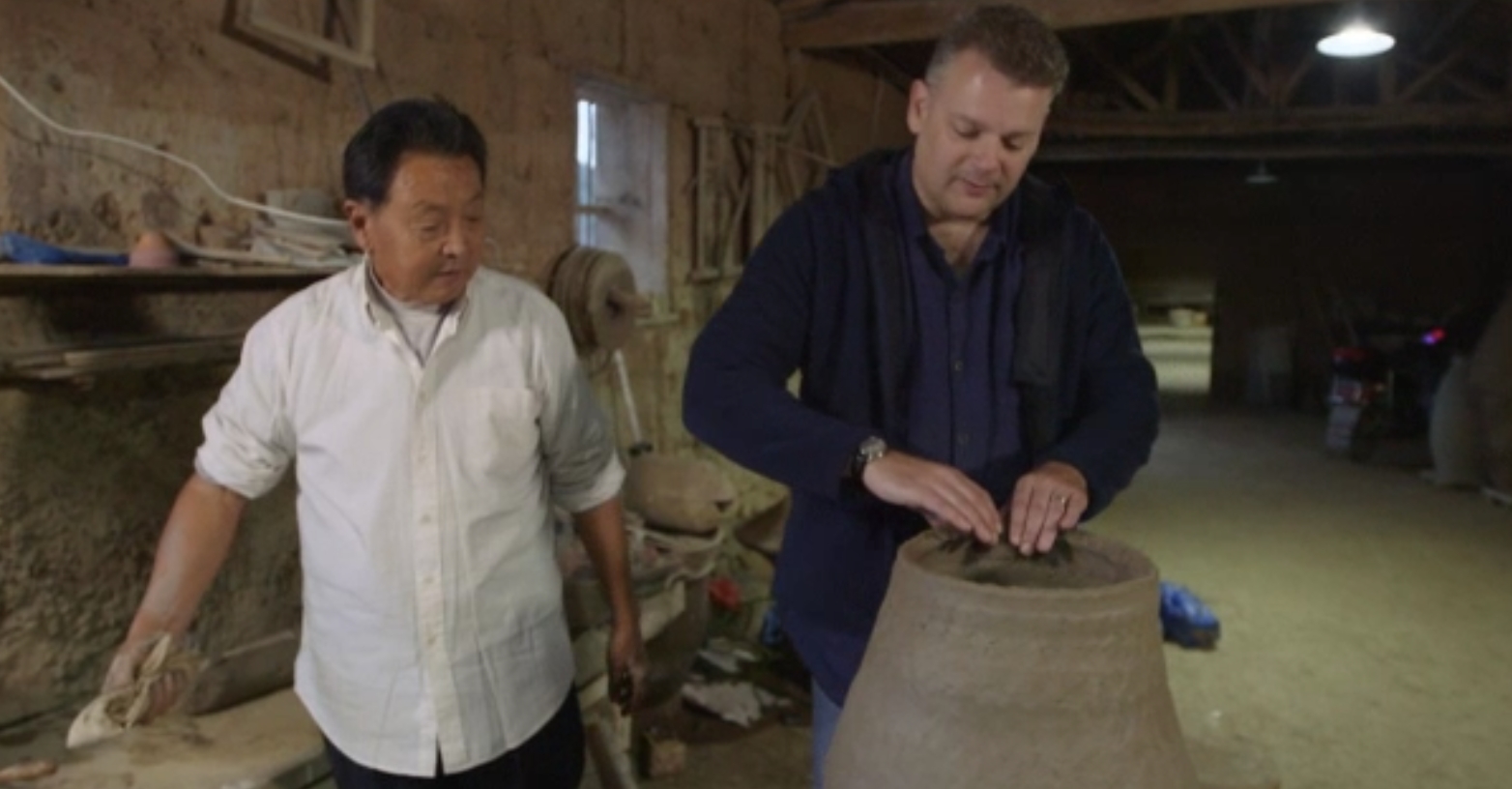
He takes me to a shed where he shows me a pot he is just finishing. The vessels he makes are too big to turn on a wheel. Instead, he turns around them himself, kneading in coil after coil of clay like a human 3D printer, carefully building it up one inch at a time. He shuffles around the lip of the ever-growing pot, pinching and kneading. I shuffle across from him, observing at all times. Alvin the cameraman is obliged to shuffle around between us, in a ludicrous circular waltz.

Master Jin finishes off the top with a wet cloth, once again in a comical, rotational shuffle. It is still glistening in the sunset as I turn to the camera and say: “It might not look like much: some guy in his garage, making a pot with some mud that he found in his backyard, but this item opens a whole new range of possibilities. This can carry other commodities, across China and out to the rest of the world. In some ways, this transformed lump of clay is the origin of the maritime trade routes.” I manage this despite the council of cockwhisks who have assembled in the doorway, determined to see what is going on, and to talk about what might be going on, and to giggle at the possibility that a foreigner who might conceiveably be able to use chopsticks is standing in front of a camera with lights in his face, trying not to say anything that is factually inaccurate or legally actionable.

We are a week away from finishing now, and no single episode is yet fully in the bank. There are pick-ups and location shoots we still need to do. Very soon, we should be able to start ticking off footage as having been completed for each of the six. Already, we are only one scene away from signing off on the Theatre episode, Rice, and Tea… quite possibly also from Ceramics. There’s still a fair way to go on Grains, though, and we’ve barely begun on Booze. I am not sure that putting all the Booze shooting into the last three days is going to work out for us, but it is sure to be a happy shoot.

Jonathan Clements is the author of A Brief History of China. These events were featured in Route Awakening S02E06 (2016).

Stuck in the Millet with You

There is some discussion in the car as to what the name Zhangye actually means. In a regrettable error of interpretation, our fixer suggests that it means “armpit.” This turns out not to be true, but we are referring to the city as Armpit hereafter. It is the site of the largest reclining Buddha in Asia, the birthplace of Khubilai Khan, and the Xixia National Temple. The crew are baffled as to what the Xixia are, and I explain that they are the Tanguts – a society that once ruled this part of Asia as their own little mini-empire. They flourished in the late Middle Ages, and then were massacred in a genocidal assault by a Uyghur army. The Uyghurs having joined the Mongol hordes, they attacked the Tangut realm and killed most of them on the Mongols’ behalf – not a subject that the Uyghurs like to bring up. The province next door is still known simply as Ningxia, “the Tanguts quelled.”

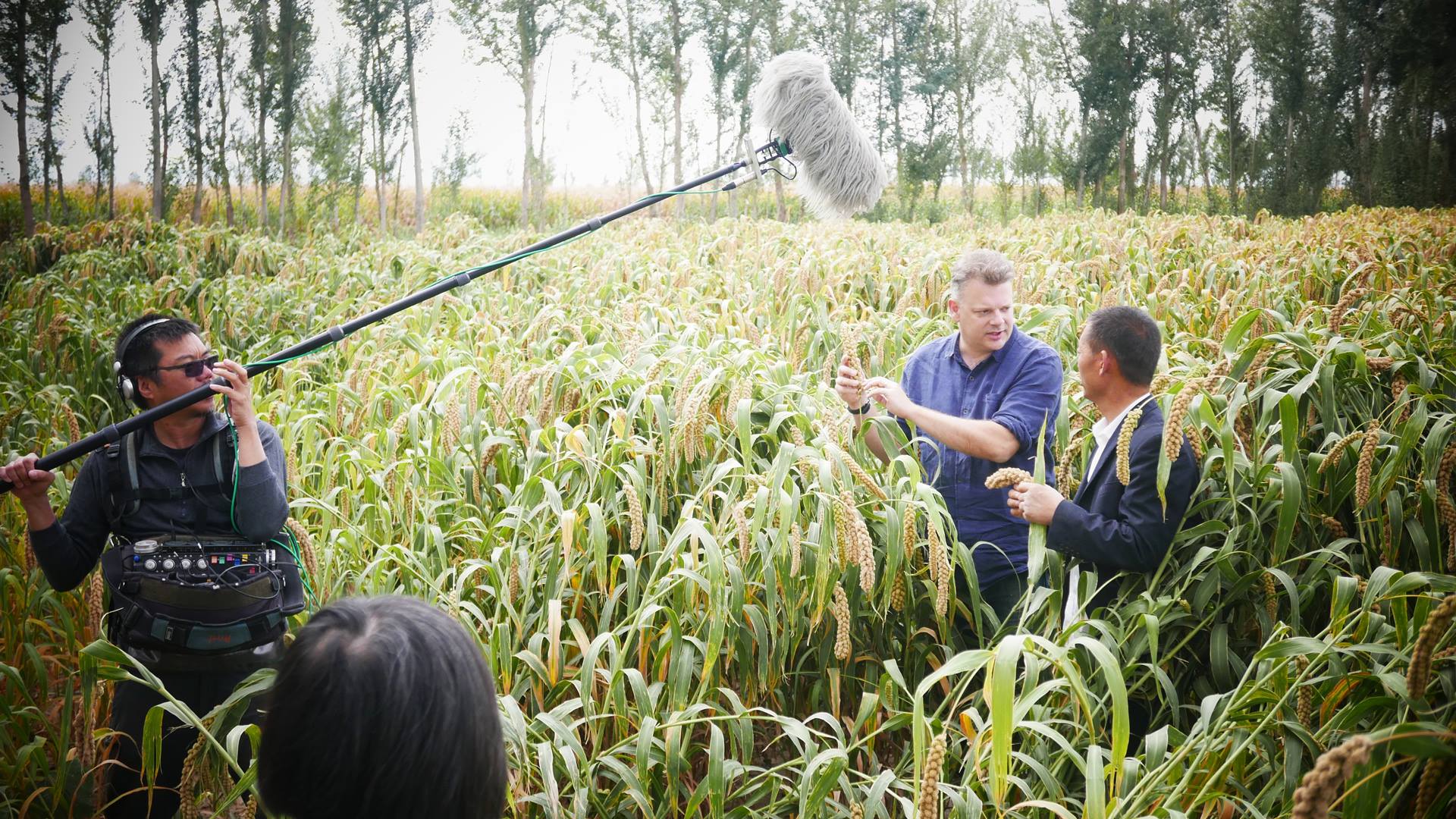
Mr Ma is a 23rd generation descendant of Genghis Khan (like 16 million other men across Asia, according to the American Journal of Genetics). His name means “Horse”, although his family drifted into farming a few generations ago, and thence into traditional medicine. His big thing is black millet, which is supposedly good for the kidneys, and which he grows on his farms and witters about incessantly, like a religious zealot. Unlike most Chinese medicine, which might as well be eye of newt and toe of bat, his black millet comes with a chemical breakdown, which allows me to report that its primary ingredient is that a single dose delivers 652% of the body’s daily requirement of selenium. So if selenium is what you need, then it’s black millet porridge for breakfast for you.

He is animated and talkative, which is a blessing after some recent interviewees, and drags me around the millet fields to talk about his experiments in propagation. He’s trying to get his millet to two metres tall, because the stalks and leaves also function as animal feed, and that gives him more. He is also aiming at increasing the yield in the grains by 25%, which would be enough selenium to kill a horse.

It is a frustrating day because Mr Ma lives only four kilometres from the airport, and the local air force squadron are flying their Hawk trainers relentlessly in circles. Four planes roar past, each augmenting the other’s noise, leaving barely 20 seconds out of each two minutes in which to record sound. This places immense pressure on everybody, most of all me, to gabble my pieces to camera into incredibly limited slots. One fluff, and we are all standing around for another two minutes, waiting for the planes to pass, and hoping that the sun doesn’t come out from behind a cloud, or go back behind a cloud, or whatever it was the sun was doing last.

We finish at six-ish, but it is 90 minutes back to the hotel, and our liaison has determined that we will not be eating right away. Utterly convinced he is doing us a favour, he claims he knows a “good place” and leads us through the streets for another 20 minutes, when all we wanted was noodles outside our hotel. When we eventually find the restaurant he wants, they turn out only to serve warm, watery Xuehua beer, which none of us can stand.

The usual Chinese entertainment ensues, in which I manage to steer the menu through some edible choices, only for our nameless host to “help” by ordering a bunch of other things that we don’t want. I haven’t eaten for seven hours, I am tired after a long day, and all I want is some food that will not make me retch.

“Try the pig’s ears!” he says, in a reasonable imitation of my ex-mother-in-law, who is always confident that I will wake up one day and suddenly like rubbery rye bread. “Just try them.”

“If I wanted them,” I say, “I would have ordered them.” Today, I feel a certain degree of sympathy for Jeremy Clarkson, who punched a producer over the non-availability of hot food after a long day. Not that I condone the punching of producers, but there comes a point when shooting chips away at the most basic elements of one’s hierarchy of needs.

Jonathan Clements is the author of The Emperor’s Feast: A History of Chinese Food in Twelve Meals. These events featured in Route Awakening S02E03 (2016).

Gone to Pot

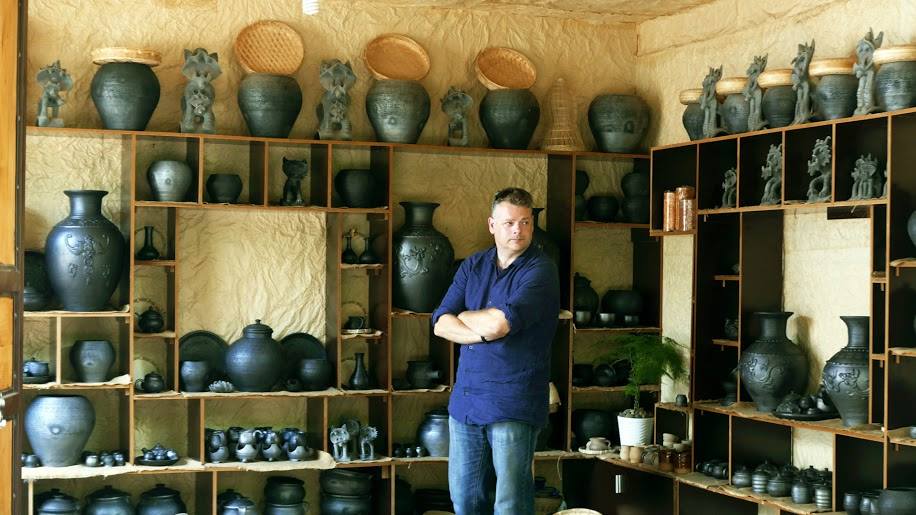
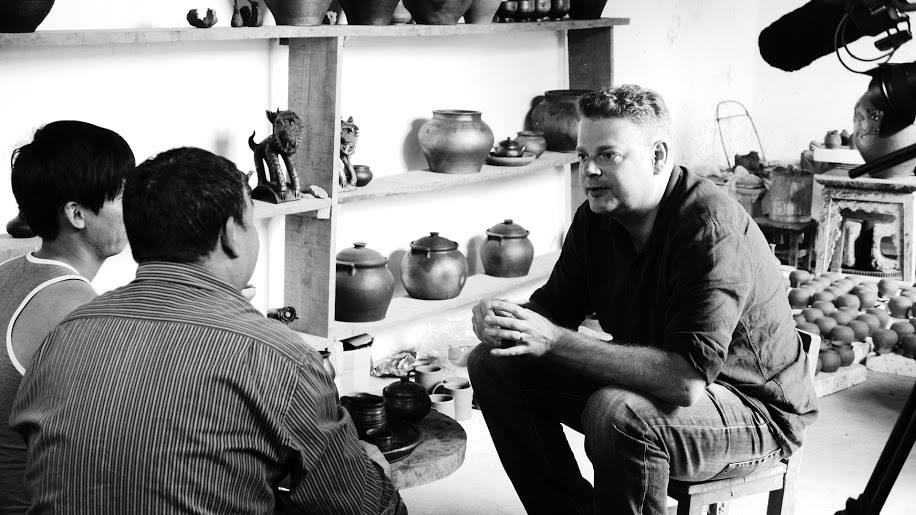
I haven’t seen a map for a week. I am not entirely sure where I am, but it is Jianchuan, another picturesque village in another mountain valley, green hills topped by wind turbines in the distance. This is another Bai area (they are the dominant minority in this region), where the Dong family make old-style black pottery. They dig clay from the mountainside and leave it to bake in their courtyard for a year, before breaking it up with a hammer, sieving it and wetting it, to make their sludge. Then they fashion it into pots, and throw in charcoal that bakes in a black or silvery-grey finish. Their specialities include wamao – a fearsome tribal totem cat with an open-mouthed roar that makes it look like a triffid, used as a roof guardian. And pots and cups and the usual ceramics.

The potter is in his fifties and only speaks halting Mandarin. His son trained as a woodcutter, but then went back into the family business because he feared his Dad was lonely. Since it is too familiar to address them by their given names, and “Master Dong” doesn’t make it clear which one I am talking to, I resort to addressing them as Big Dong and Little Dong.

Big Dong has been chatty and affable all the way through the morning. He has been trying to push pungent Yunnan cigarettes on the crew, and boiled tea in the Yunnan manner, heating the pot rather than the water, until the water fizzes on contact with the ceramics. But the moment the camera is on him, and the light is on his face, and he is being urged to look at me and not the director, and the sound guy is rolling and the clapper loader is snapping a board, he clams up in stage fright. He swallows, he stammers, he offers one-word answers and looks nervously around him. It’s almost impossible to get a clean sentence out of him, and he knows this isn’t how it is supposed to be, so he starts to sweat. This means more dabbing, more light changes, and more faffery, and it just becomes a vicious circle of bad takes.

People feel the camera lens staring at them; they feel the weight of the attention of the crew suddenly focussed on them; they feel the importance of this moment, above all the other moments they have lived that day, and a relay blows somewhere in their brain. Some interviewees turn into emotionless robots, declaiming facts at the camera, purged of all personality and humour. Others become hyper-conscious of every word they utter, double- and triple-thinking every sentence until they clam up. Some, like Big Dong, suffer from a different kind of panic – the sudden realisation that they are talking not to my smiling, nodding, solicitous face, but to millions of people in thirty different countries. At times like this, we have to cheat their brains back into forgetting that fact.

The director puts Little Dong on camera instead, with Big Dong nodding assent at his side. Little Dong is at ease and chatty, knowledgeable about his people’s heritage and the history of pottery. He laughs and jokes, and delivers a far better set of responses, sufficient for Big Dong to come back on camera and ape some of his son’s answers.

We sit and drink bitter Yunnan tea from little thimble-cups as the crew faff around. The director of photography sneaks some shots of Big Dong laughing and joking in an attempt to find footage to cut in that doesn’t look like he is being interrogated by the Gestapo. Little Dong reveals that he is a graduate of a Xi’an polytechnic – where he learned wood-carving – and I start to suspect that the fluency of his answers reflect academic study rather than traditional artisanal knowledge. Whatever, the director just wants to get something in the can.

The trick has worked. Both Dongs are now happily chatting away to me. I sneak a sideways glance at the camera, and see the Record light is back on, but Big Dong has been ushered back to normal by the simple expedient of not being reminded that this is his big moment.

Jonathan Clements is the author of The Emperor’s Feast: A History of Chinese Food in Twelve Meals. These events featured in Route Awakening S02E06 (2016).

Iron Goddess of Mercy

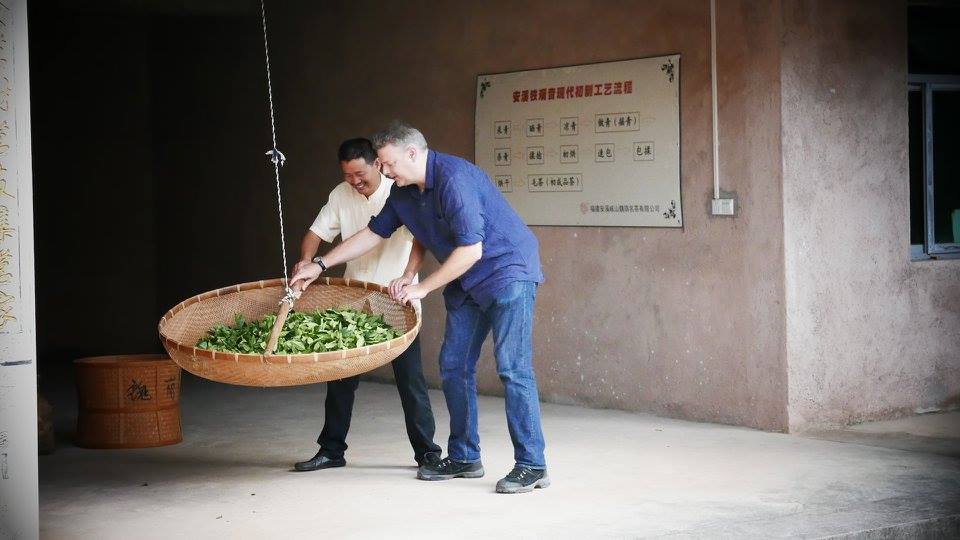
Anxi is a mountain village, sitting on top of hills that have been entirely carved with tea terraces. There’s not a lot else you can do with the mountains in Fujian, as they are too steep for any other kind of cultivation. So it’s lucky they can grow tea.

The director has spent the last two days hectoring me about the difference between the languages of south Fujian (Hokkien) and north Fujian, around Fuzhou (Hokchew). It often sounds like a real-ale drinker buttonholing one in the pub about the differences between the dialects of Norfolk and Suffolk, but it’s a big deal for her, and supposedly for the locals, too. She is particularly pleased because her own native dialect, Teochew, is cognate with Hokkien, and so she can rocket off in conversation with the locals.

Hokkien is a big deal because in the local language the word for tea is not the Chinese chá, but . Or in Hokchew, t­ē. I think you can see where this is going; when the drink was first exported, it was shipped by Hokkienese, who told the English and the French how to pronounce it.

Being in a warm place with pointy roofs, while a bunch of people yell at each other in Hokkien all around me feels oddly like being back in Taiwan. We are in what was once a plush 19th century farmhouse with upswept Min eaves, now converted into a centre for tea excitement. You may wonder what is exciting about tea, and I am still wondering myself, but the manager, Jasen Lim, is an affable former designer who has made tea his new tourist mantra. Visitors can come and sample the varieties of Iron Guanyin, which happens to be my favourite Chinese tea.

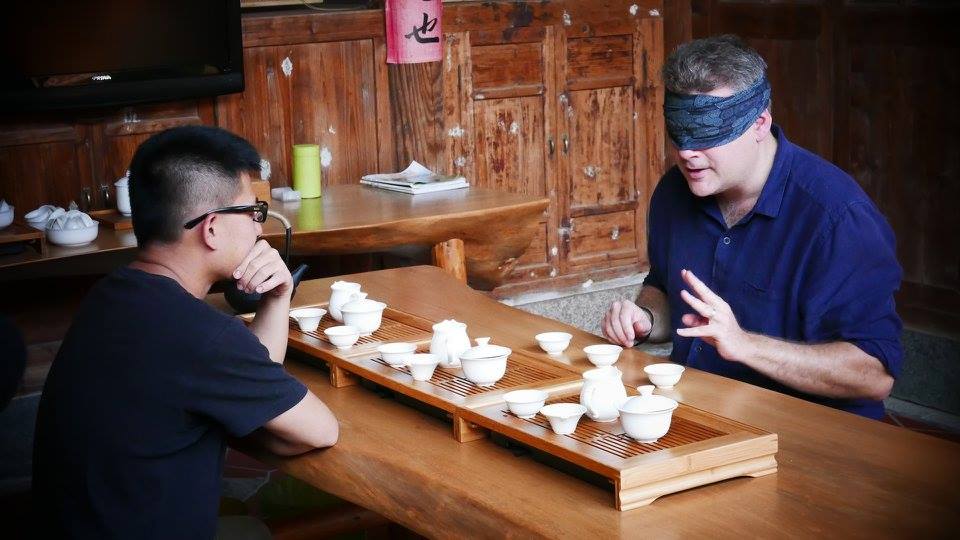
He sets out three bowls in front of me. One is Iron Guanyin made from one-year-old leaves, and tastes faintly of orchids. At least that is what he tells me – never having tasted an orchid, I can neither confirm nor deny. The second is from three-year-old leaves, and has a smokier aftertaste. The third is from five-year-old leaves, and has a darker, brownish colour, looking more like oolong. I obligingly sip and comment, and only choke a couple of times when I am exhorted to suck and gargle with it like a wine connoisseur.

“You are the first English person I have met,” Jasen says. “Although not the first English person to try this tea. That was Queen Victoria, back in the days when the English drank real tea.”

Half an hour’s drive further up the mountain, we come to Wei Yuede’s compound. Master Wei is such a tea celebrity that he only has two hours to shoot with us before he rushes off to a tea conference in Beijing. One wonders what they serve in the breaks. He is clad in Qing-style silk and is an ideal interviewee. I have a set of questions to ask him, but when I ask him the first, he launches into a ten-minute soliloquy about the meaning of tea, answering with a series of four-character phrases, each one of which is unpicked into a series of poems about the wondrous properties of tea, particularly Iron Guanyin. I ask him how it differs from Pu’er, and he goes into one.

“Pu’er is rubbish! They don’t know what they’re doing. They roast it too much. They use the wrong trees. They’re all idiots. There’s a poem that says…” And off he goes for another ten minutes, until I ask him what he thinks of English tea.

“English tea!? Ha! That Indian crap! They steal our tea and plant it somewhere foreign, and then they leave it in the hands of lackwits who don’t know how to bruise it, don’t know how to roast it, don’t know how to store it and don’t know how to ship it. They cart it ten thousand miles on ships damp with saltwater, and they hand it over to a bunch of foreigners who don’t know how to make it. It turns out brown! We have a poetic saying that goes…” And he’s off again.

Usually, our problem with Chinese interviewees is that they don’t know anything. Master Wei knows everything, and is determined to preface any statement with a nine-point rebuttal, in blank verse, of any likely dissent. I just wind him up and watch him go. When he finishes, with an appeal to the peanut gallery about the future of tea, there is applause from the assembled visitors.

“My ancestor,” he says, “discovered Iron Guanyin tea. He was visited in a dream by Guanyin herself, the Goddess of Mercy, who told him how to make it.”

Master Wei has half a dozen children. This is somewhat in contravention of the one-child policy, but he makes so much money from selling tea that he just pays the fine and keeps on trucking.

“My most expensive tea,” he says, “is £36,000 a kilogram. It is so pure that it actually GETS YOU HIGH. And hard. All night.” There is a long pause, which segues into a Pinteresque silence. “Do you want some?”

I confess that I have little need for any of these benefits right now, particularly since the director and our fixer have each taken the bedrooms on either side of mine, in order to protect me from what they believe to be an army of prostitutes converging on the hotel. I have seen no evidence of this, but I appreciate their concern. As for Master Wei, he is living proof of his beverage of choice’s medicinal benefits.

Jonathan Clements is the author of The Emperor’s Feast: A History of Chinese Food in Twelve Meals. These events featured in Route Awakening S02E01 (2016).