Message From Space

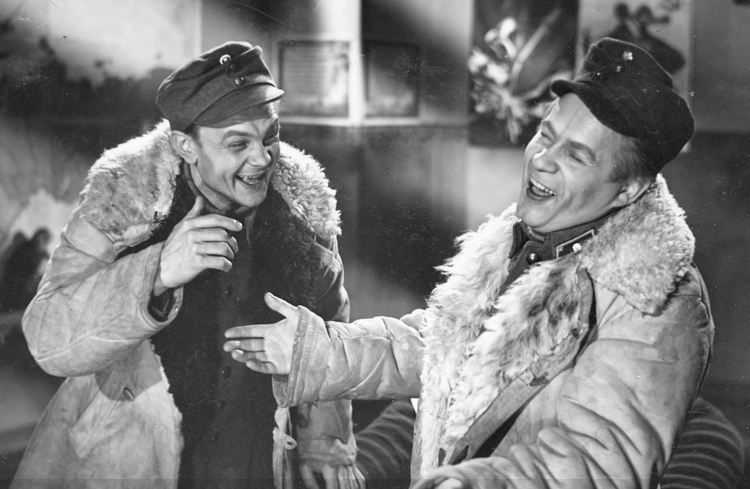
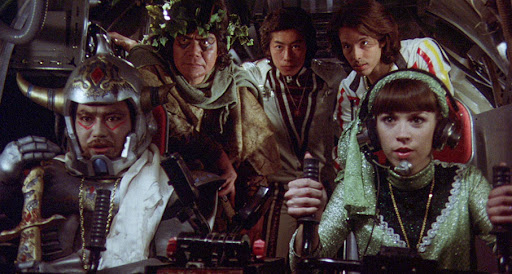
Despite lacklustre reviews from the American press, Message from Space endured far beyond what might have been expected, buried in the children’s slots at American theatres, paired on a double bill with Luigi Cozzi’s Star Crash (1978). Message from Space might have sunk below the radar of mainstream film, fading into the background noise of Saturday morning screenings for the next decade, but that gave it an oddly broad footprint with an audience of 1970s and 1980s children.

To put such American numbers in context, the smash-hit Pokémon – the First Movie (1999), was shown on a mere 3,041 screens, although that was a first-run record in the United States. The cross-over hit Shall We Dance? (1997) barely managed 268 screens. Kurosawa’s acclaimed samurai epic Ran (1985) was shown on a mere 30 screens. Unloved and largely unappreciated, Message from Space ultimately ran in over 17,000 theatres, where adults left their kids for a couple of hours’ respite, unaware that they were watching a fantastic swordfight finale between Shinichi Chiba and Mikio Narita, or the height of Tōei’s SFX work onscreen.

From my sleeve notes to Message from Space (1978), released by Umbrella in Australia as part of their Out There by Toei collectors’ box.

AnimEigo Interview

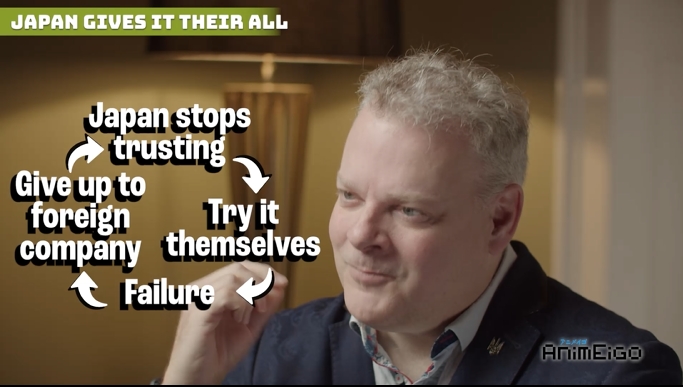
Justin Sevakis’ oral history of the anime industry gets around to interviewing me about the development of anime in the UK, the philosophy of memorabilia, “a bunch of women called Glenda,” the agonies of Dark Myth and the concept of Silver Otaku.

There’s also a bonus for AnimEigo subscribers, with further footage in which I discuss the logistics of festival guests and interviews, gossip about Leiji Matsumoto, Naoko Yamada, Mamoru Hosoda and others, the creation of Smith Toren and foreigners in the anime business.

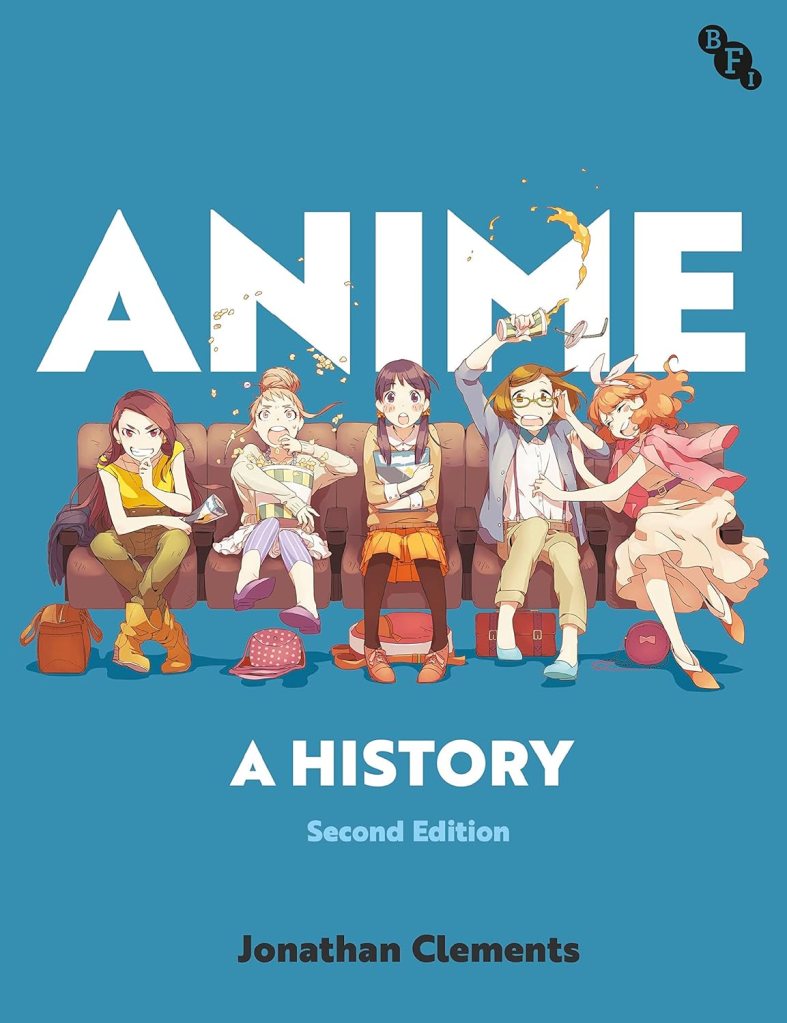
Further details of the anime business from the inside, of course, can be found in my book Anime: A History.

Wingman: All-In (2024)

After fourteen years in a sinecure job at his father-in-law Johan’s company, Tommi (Antti Luusuaniemi) needs a raise in order to afford his dream house. His neighbour Juhis (Kari Ketonen) suggests that he gets involved in the boss’s birthday parachute jump – a family affair since Tommi’s pilot wife Harriet (Maria Ylipää) is flying the plane. But this is not the first time that Juhis, Harriet’s former Gulf War comrade, has dragged Tommi into trouble, and when faced with the half-mile drop to the land below, Tommi loses control of his bladder.

Harriet lands the plane on a pretext, and the men arrive at the party being thrown for Johan (Taneli Mäkelä). Tommi tries to give a resounding speech about how Johan has inspired him to be bold, unaware that the entire company of guests, including the fuming Johan, has just seen video footage of him pissing himself on a plane.

Without any hope of a promotion, Tommi resorts to cryptocurrency investment in order to scrape up the money, betting his house on a swift return. As he goes “all-in” on a life-changing risk, his business rival Patrick (Olavi Virta‘s Lauri Tilkanen, having a ball playing the bad guy again) sets up a series of situations that Johan can use to convince Harriet that Tommi is cheating on her.

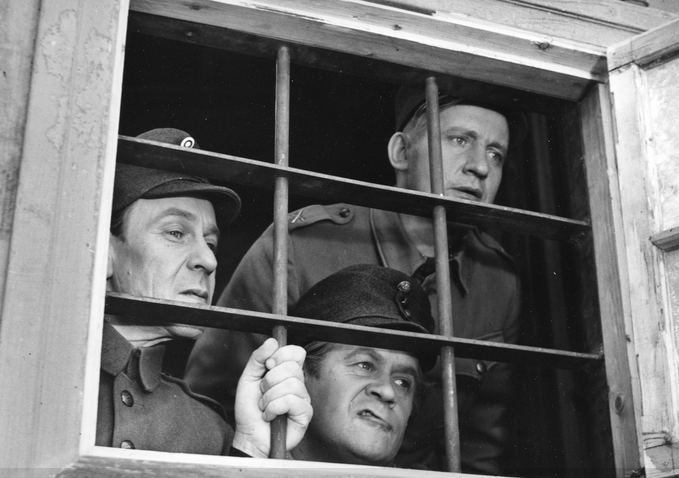
The crypto company turns out to be a scam, and Tommi loses everything, including Harriet, who takes their daughter off to her father’s summer cottage, where Patrick commences a louche attempt to woo her. Discovering that the crypto company is run by Johan’s wayward brother Göran (Lasse Karkjärvi), Juhis and Tommi blag their way into prison posing as his lawyers, and persuade him to retrieve the money and hand it to Tommi, purely to spite Johan.

Juhis proves to Harriet that Tommi was set up, Tommi gets his money back, and all is well again, in this feature follow-up to the comedy series Luottomies (2016-21). The original series was an absolute joy – comprising 10-minute online shorts in which Juhis inevitably led the ineffectual Tommi into compromising situations reminiscent of Victor Meldrew’s misfortunes in One Foot in the Grave. This movie outing often feels lost in a longer format, and lacks the swift set-ups and slapstick pay-offs of the series that birthed it. Crucially, it leaves Juhis out of the action for long stretches – presumably because the actor who plays him is also the director, and has more to do on a film production. In the original, it was always Juhis whose well-intentioned schemes landed Tommi in deep water. Here, Tommi falls for the for the crypto scam all by himself, while Juhis dolefully observes that he only comes to him for help after secretly plotting to move away from the neighbourhood.

Finnish critics largely agreed, variously noting either that they missed the ten-minute set-up/joke of the originals, or that there was little point in a movie that didn’t go big. But for his feature, writer-director Kari Ketonen instead homes in on a different form of comedy tension, often invisible to outsiders: the cultural stand-off between Finns and Swedes. Tommi is repeatedly emasculated by the attitudes and expectations of his Renwall in-laws, who have all the money, sophistication and business smarts. He has even taken his wife’s surname, as Tommi Mäkinen-Renwall – in one of the film’s best gags, his angry father-in-law tells him to hand back the Renwall in the divorce settlement, “but you can keep the hyphen as a reminder.”

Despite the carping from the press, the movie also keeps to the spirit of the original in the sense that Juhis really is Tommi’s misguided guardian angel (luottomies, or literally “trust-man”). Although Juhis repeatedly creates difficulties for Tommi, he is also unfailingly there when he really needs him, and ultimately manages to save the day, in a successful reset-to-zero that allows the cast to all be in place ready for the next movie follow-up, Wingman: Sabbatical (2026), which takes the cast off to Spain. What could possibly go wrong?

Jonathan Clements is the author of A Short History of Finland. He is watching all the Finnish films so you don’t have to. Wingman: All-In is streaming with English subtitles on YLE Areena.
Vikings of Us All

“In the Viking Age and the centuries that preceded it, northern Europe’s unpredictable climate periodically forced barbarian tribes to go in search of new resources. In our supposedly enlightened age, the search for such resources has been sublimated, corporatised, sanitised perhaps, but it has not receded.

“You did not, I hope, steal this book from someone else. The clothes on your back were not snatched from Irish monks, and you did not appropriate your money by smashing up priceless holy relics, but there is still a perilously thin line that separates you from the hungry and the cold, and from the need to secure food and warmth. Few of us are more than a few months away from bankruptcy. We hand over new forms of manngjöld, hoping to shield ourselves against misfortune by paying tax and insurance. Our faith in our governments and welfare systems keeps us from having to consider what we would do if they were not there.

“While the Vikings are inhabitants of the past, the forces that created them are not. Ours is still a world with famines, floods and incidents of over-population. Our battles over resources are fought by proxy in distant lands, but they are still fought. You do not lead a band of men to take from those less able to protect themselves, but somewhere far away, others do on your behalf. It takes only the tiniest turn of fate, the slightest lapse of law, to make Vikings of us all.”

From A Brief History of the Vikings by Jonathan Clements.

Playdate

A story pitch familiar from many a twentieth-century potboiler, including The Universal
Soldier
and Akira, takes on a new, family-oriented tone in a 2020s media
landscape dominated by streamers providing movies direct to home cinemas.

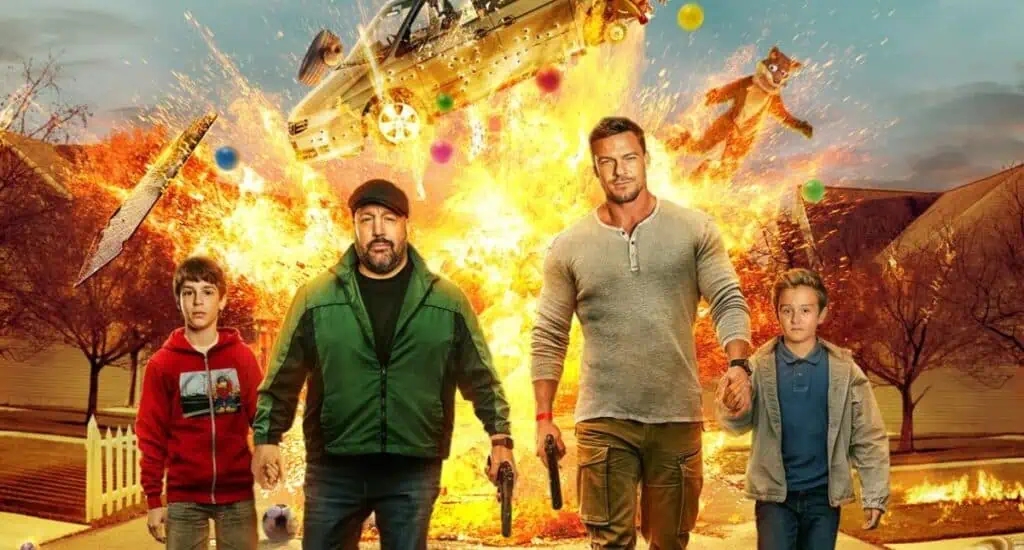
Over at the Encyclopedia of Science Fiction, my write-up of the comedy action movie Playdate. Discussing its science fictionality requires a discussion of the ending, so there are spoilers galore.

Infernal Affairs

Reporting on Triad activities in the 1990s took on a new cross-border tone, as new arrivals from the People’s Republic refused to play by the carefully negotiated “rules” of Hong Kong’s local criminals. Even as the movie business struggled with the implications of complying in advance with likely post-1997 censorship restrictions, the criminal world, too, faced the possibility of an invasion by a different kind of gangster.

Hong Kong was stuck in the middle, its 1997 change in sovereignty described as a grudging “Handover” by the British media, as if London was being mugged for its lunch money, and an exuberant “Return” in China, as a long-lost sibling returned to the Beijing family. But by this time, Hong Kong had spent 150 years under British rule. Could there ever be any going back? Could it just revert to being “fully” Chinese, whatever that meant, as if it had simply been undercover on enemy turf for a long, long time? As Chan (Tony Leung) comments: “Everything will be okay after tomorrow,” but the idea comes loaded with misplaced optimism, and is repeated on several occasions in the series.


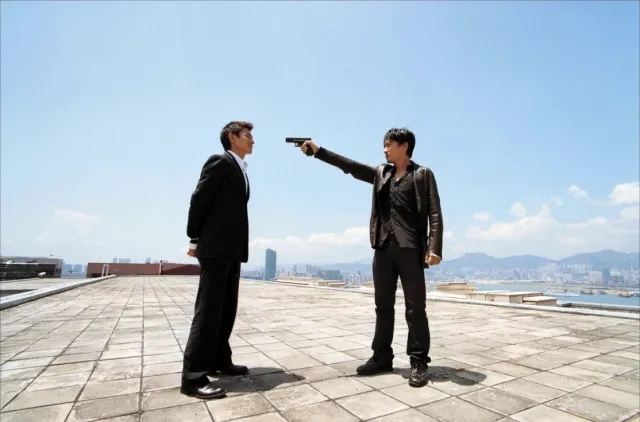
Excerpted from my sleeve notes to the new 4K Blu-ray release of Infernal Affairs by Umbrella Entertainment (Australia), which goes deep into the shadow line of different kinds of gangster operating in 1990s Hong Kong. I’m so pleased that Umbrella continues to recognise the value of meaningful extras, while so many other video labels are succumbing to the false economies of bare-bones releases.