“Jonathan Clements, author of Anime: A History, cautioned that over-production of films could unpleasantly shock studios and investors. ‘Animation consumers are themselves a resource that needs to be carefully managed,’ he said.”
Over at CNBC, I’m one of Evelyn Cheng’s interviewees as she ponders the success of Ne Zha 2, officially the biggest selling animated film in history, although most of those sales are in a single territory, its Chinese homeland. She came to me because of the chapter on the relationship between anime and China in my book, which predicted the shedding of Japanese links as China pursued cultural and industrial autarky in the animation sector.
Ne Zha 2 marks the culmination of the 2020 “Five Year Plan for the Film Industry”, which proclaimed a demand for a “strong film nation” (dianying qiangguo), all the better to aid “digitial ingestion, cloudification and intelligent upgrading of the entire film industry chain.” This doesn’t just mean the movies themselves, but the vertically integrated media mix (as the Japanese call it), of merchandise, spinoffery and cultural tourism. For a long time, in this regard, as I said in 2017, China was “rediscovering the wheel while ignoring the cart.” When your film is entirely made in-country, is about a Chinese subject, features Chinese locations and Chinese products, that entire chain is folded in domestically. It helps if your market is so heavily protected that foreign films don’t get much of a look-in.
Although there’s a lot of vainglorious talk of Ne Zha taking the world by storm, so far this is the very antithesis of the former bold plans for globalisation of Chinese film. Someone has worked out that you don’t need a hallowed world-beating franchise; in a market as big as China, you just need to find your local audience. Cheng’s article contains some interesting comments in the ongoing argument about film culture, including a production house in Beijing that ignores the vast size of China’s domestic potential market, and instead targets specific audiences of a mere 30 million people…. so…. trying to appeal to a footprint roughly the size of Saudi Arabia or Peru or Australia, not the whole massiveness of Chinese society.
After the surprise news that I had inadvertently contributed to a three-part podcast about Chairman Mao last year, I also show up in Noiser’s Real Dictators series talking about General Tojo.
I vaguely remember that when I was recording the Mao interview on camera ten years ago, in a whirlwind day in which I was only above ground in London for 90 minutes or so before I was on the Tube back to the airport, the director asked me for a soundbite about Tojo. I said something vaguely related to Japan at War in the Pacific and thought no more of it. Presumably, I then showed up in a docuemntary I have never seen, and a decade later, the audio was repurposed for a podcast I didn’t know about.
When signing contracts for TV interviews, one does tend to agree that the company can do whatever they want with the material, and I think it’s quite nice that the work can be repurposed so long after the fact. It wouldn’t have killed them to let me know, though.
“Do not open your mouth,” hisses Clarissa the fixer at the director, whose Teochew-accented Chinese sometimes risks getting us into trouble. “The man we are going to meet is Mr Lŭ, third tone.”
“Mr Lú,” says the director.
“That’s second tone,” says Clarissa. “You just said ‘Mr Donkey’. Just call him Professor, for Christ’s sake.”
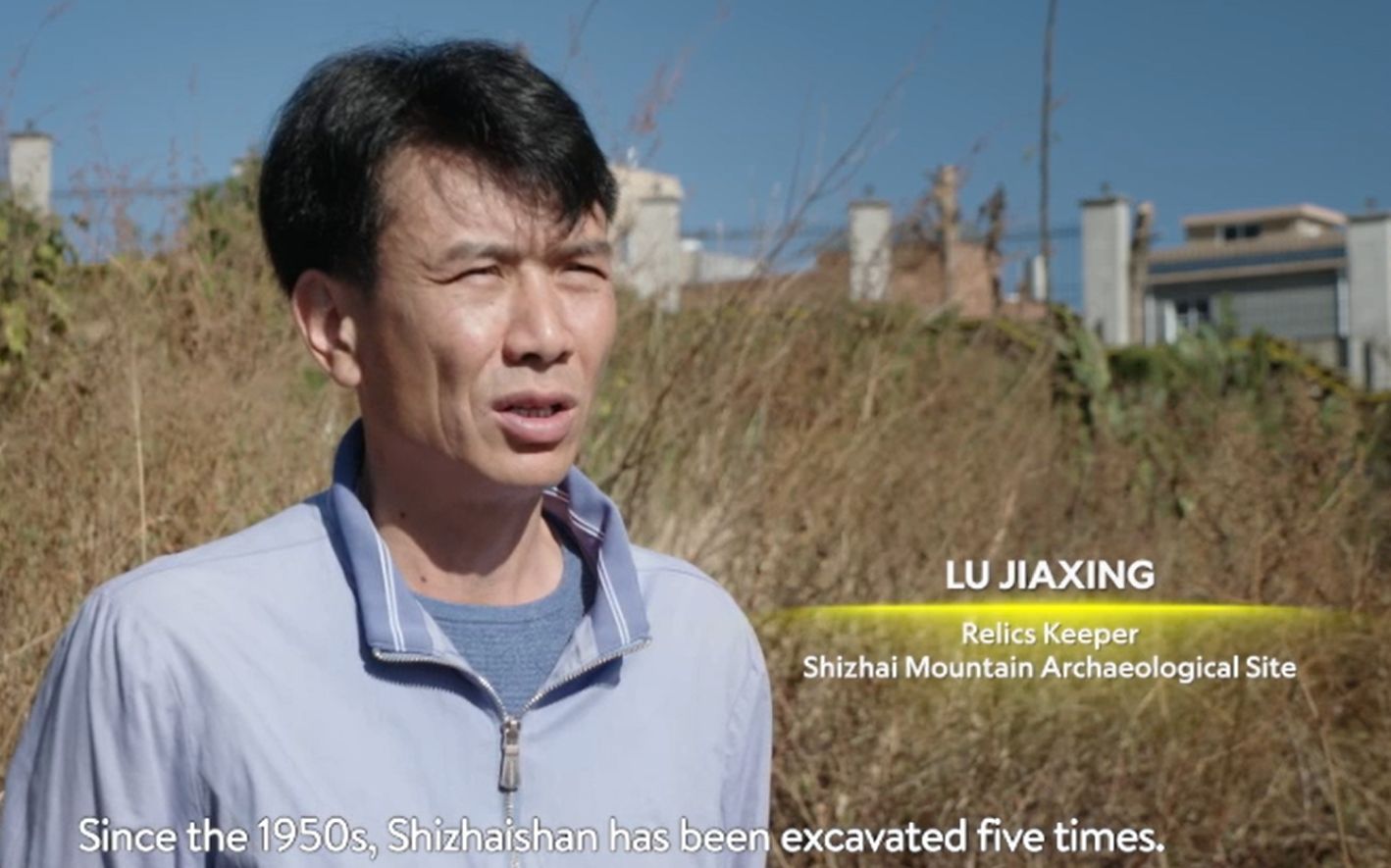
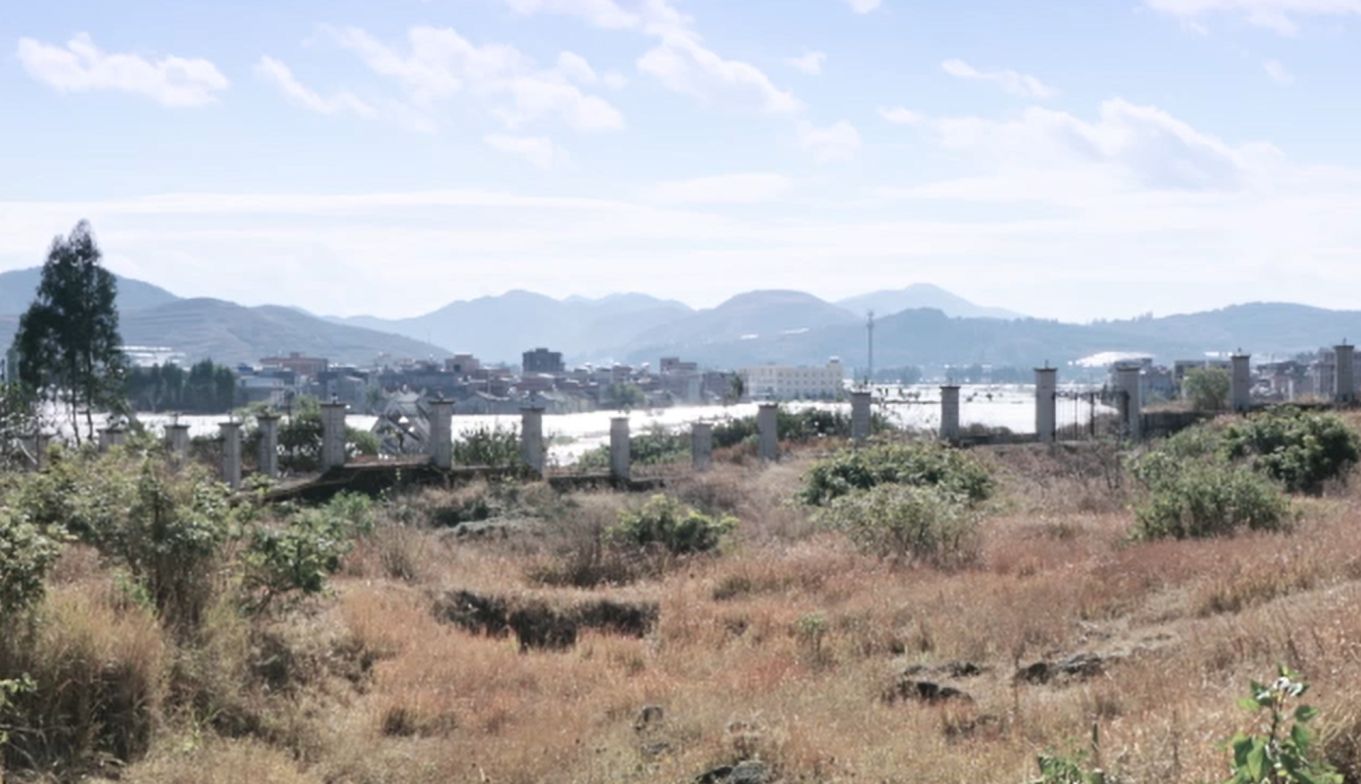
We are interviewing Mr Lu at Shizhaishan, a desolate hillside in Yunnan that once would have had a commanding view of Lake Dian below. These days, it’s blocked by high-rise buildings, and the hillside is walled off by an imposing fence, because it is one of the most important sites in Dian history.
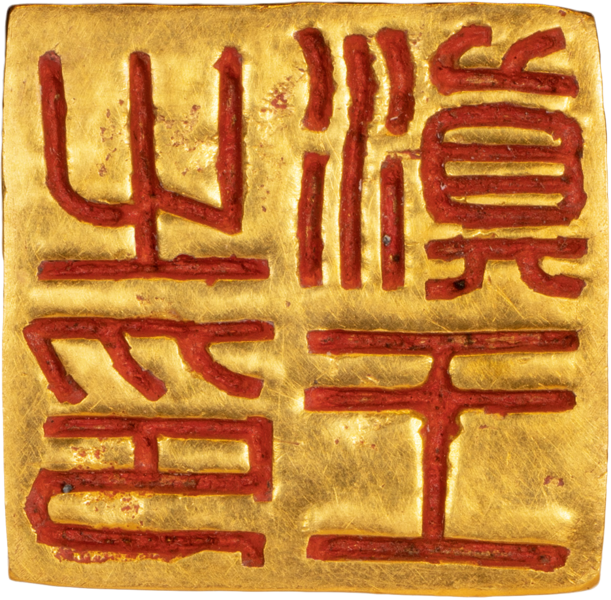
In 1954, archaeologists at Shizhaishan uncovered dozens of graves of the Dian nobility, including one containing a golden seal that bore the Chinese words: KING OF DIAN. A similar seal, denoting the KING OF NA, turned up long ago in Japan, where locals claimed that it had been conferred upon a barbarian kingdom by the Han Emperor Wudi. Nobody took this seriously until the Shizhaishan find, when it became apparent that Wudi had indeed had uncharacteristic gold seals made for the kings of borderland regions that had recognised his authority.
The King of Dian’s seal is in the national museum in Beijing – it officially marks the moment when Yunnan became part of China. The locals in Yunnan have to make do with a replica; just one of several political issues that clearly still needle Mr Donkey.
It is a difficult interview. Our arrival is bodged, because it takes us half an hour longer than planned to negotiate the tight, winding rural roads, and Mr Lu has been waiting by a dunghill with a nameless woman from the Propaganda bureau whom we soon dub the Jawa. Her facial features are entirely covered by a hoodie, mirrored sunglasses and a full-face breathing mask, which is oddly sinister, and turns out to be because she has a streaming cold, and keeps coughing during the interview and ruining the takes.
When we arrive, the director isn’t sure who this odd couple are, and entirely ignores them, and we only identify Mr Lu when I walk up and introduce myself. But that’s only the beginning of our problems, because he is everybody’s second choice. The archaeologist who actually led the 1954 dig, and a subsequent find in 1999, has refused to talk to the media, because of a bad experience with an earlier crew, and Mr Lu is reluctant to discuss several important issues.
Interviewees have to be managed, anyway. It’s part of my job to come in at the start, speak Chinese like a performing dog, and make it clear that I am not some clueless puppet, but someone who has read the Grand Scribe’s Records, knows my Han dynasty from my Tang dynasty, and is here to make the interviewee heard and understood. As regular readers of this parish will already know, it can be discombobulating to have an English-speaking film crew unload a literal tonne of gear in a remote village, and start pushing them around, hectoring them to stand on various unsteady hillocks, and badgering them to repeat themselves, answer leading questions, and film things out of order. I am quite used to having the director yelling at me to take three paces forward and stare into the sun, but the people I have to put at their ease are often facing a camera for the first time.
The Jawa doesn’t help by lurking at the sidelines with a camera of her own, documenting our visit for official reports and local media. When the director jokingly suggests that somebody cooks a nearby yappy dog to shut it up, Clarissa rails at the crew to stop laughing, “because someone from Propaganda is pointing a camera at us, and I don’t want them to think we are not taking this seriously!”
“So,” I say, “are there still artefacts buried here?”
“I don’t want to answer that question,” he says, reddening, because the last thing he wants is literal gold-diggers breaking in with shovels. He knows we don’t have time to explain that an “artefact” is just as likely to be a midden or a cow bone as “treasure”, and that’s all some viewers will hear. Nor does he really want to talk about the progress of the site, because funding is not forthcoming. The site has fallen into disrepair, the duckboards around the edge are rotting, and the “guard house” is staffed by a gurning old lady and the aforementioned yappy dog.
Media people refer to “sit-up-and-beg questions” – simple, rather vague queries designed to give the interviewee the chance to say whatever they feel like. But Mr Lu is deeply cagey about his site, and reluctant to describe “his” discoveries in the first person because he is a stand-in for the real boss. I try to get him to talk about simple issues, like backfilling the soil (in Chinese hui tian, literally “returning the field”), but this is a touchy subject for him, because they only backfilled the site because their funding has ended, on what appear to be five stops and starts, including the 1950s dig curtailed by the Great Leap Forward, and the 1990s dig funded by a relics bureau that lost interest once they’d airlifted the gold seal to the capital. I have mentioned before the intricate politics of the Terracotta Army site, where the archaeologists are deliberately taking years to poke around the edges, because if they dig out the central mound and don’t find buried treasure, their gravy-train funding will be over. Shizhaishan seems to prove my point for me.
Eventually, he relaxes. I assure him that “I don’t want to answer that question” is a valid response, and that we will just ask him something else, but we do run into a large number of dead ends with him, and it’s difficult to get anything out of him. We eventually get enough to fill a segment, and by the end he is starting to enjoy himself.
As so often happens, we film our “first meeting” last of all, by which time he is all smiles, and he doesn’t blink at the fact that we do it in reverse order. On the final cut, he will greet me at the Buick, lead me up the hill and through the gate, and down into the pits of the dig site, while the drone soars up above over our heads. But on location, where we are moving the gear back down the hill to the van in stages, we first film us walking into the pit, then walking through the gate into the site, then up the hill to the gate, then meeting each other at the car, and then the drone shot.
The crew’s behaviour can look weird to an outsider. Just because we correctly walk up a hill, it doesn’t mean that a farmer hasn’t wandered into shot behind us, or the sun has gone behind a cloud and ruined the continuity for the lighting, or the cameraman has forgotten to run the film. We take our positions for a third take, and the director nods to begin.
“You can start walking,” I hiss to him out of the corner of my mouth.
“But the director hasn’t said ‘Action’,” he points out.
While we get our drone footage, Mr Lu smokes fag after fag by the cars, and jokes with the crew. Our driver starts chatting up the Jawa, whose mask turns out to hide an attractive and friendly young girl ready to discuss the pitfalls of local television, and not the terrifying figure we had assumed her to be.
Our backwards shooting schedule continues as the sun climbs. I am dragged off to film an even earlier shot, of me driving through the village to meet him in the first place, and by the time I come back, he and the Jawa have gone. I got the impression with him, as I do with many interviewees, that by the time he came round to appreciating that he was going to be on telly showing off about his life’s work, it was all over.
Spooling through the footage six years later for this article, I realise that Mr Lu didn’t even get his fifteen minutes of fame. There was so little material we could work with that he’s there and gone in thirty seconds, just long enough to point across some waste ground at the place where they found the gold seal.
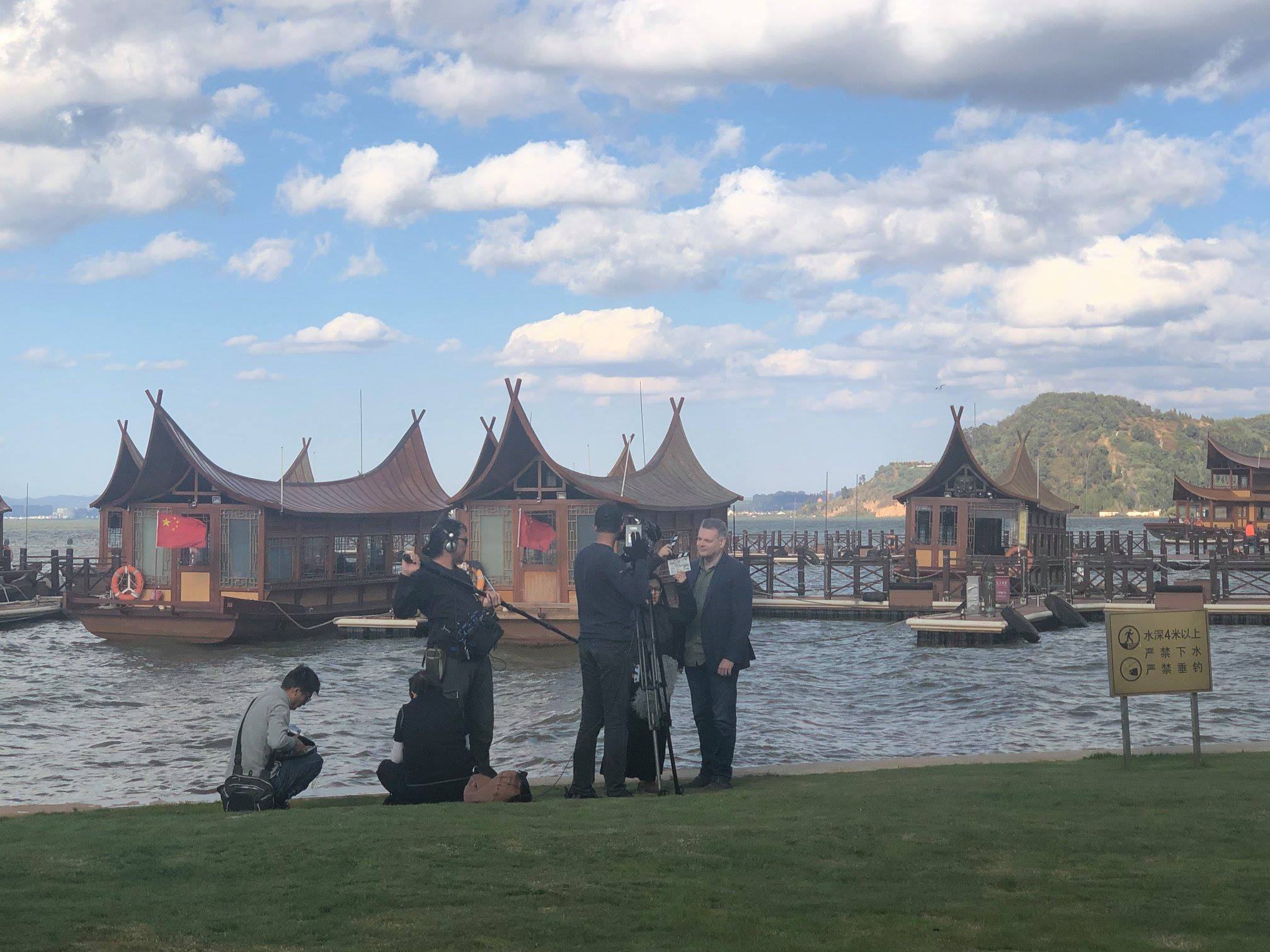
The afternoon is spent filming the modern legacy of the Dian kingdom. Remember that we knew almost nothing about it until the 20th century. But the archaeological evidence uncovered in the last 60 years has allowed us to discover their clothing, their architecture and their bronzes, enough to supply suitable material for an entire Dian Kingdom theme park by the side of the lake, complete with houseboats, statuary, and a Ferris wheel. I yell a piece to camera in the wind by the lakeside, surrounded by screaming seagulls, and observe that the Dian warriors of old would be aghast at such a use of their culture, particularly since the theme park seemingly lacks a Human Sacrifice Experience.
Somewhat to my surprise, I show up on the Noiser Real Dictators series talking about Chairman Mao, across three podcasts, here, here and here. My appearance is actually repurposed audio from a TV interview I did ten years ago — contractually, World Media Rights can do whatever they want with the material, and some bright spark there has realised that the world is better served by being unable to see my face.
It was a bit of shock when someone on Facebook told me they enjoyed my “Mao thing”, because it took several minutes to work out how I could have recorded three podcasts without realising it. As long as it keeps shifting copies of A Brief History of China for me, I suppose I don’t mind!
I have developed a new-found respect for Michael Wood, who I have always liked, but whose Story of China I have been looking at again recently. His episodes on the early dynasties found him visiting not only the same places as us, but interviewing some of the same people in Luoyang and Anyang, but what’s striking is how hard he tries to get the grass-roots opinions of the common folk. Always one for social history, Wood happily hangs out with a bunch of farmers’ wives, and asks them what they think of the discoveries at Erlitou or the Wastes of Yin. History has long been divided between the approaches of the high-brow Thucydides, who wants everything cross-checked and assessed, and the low-brow Herodotus, who doesn’t mind repeating gossip as it is a fair reflection of what people believed to be true. Herodotus is often more fun.
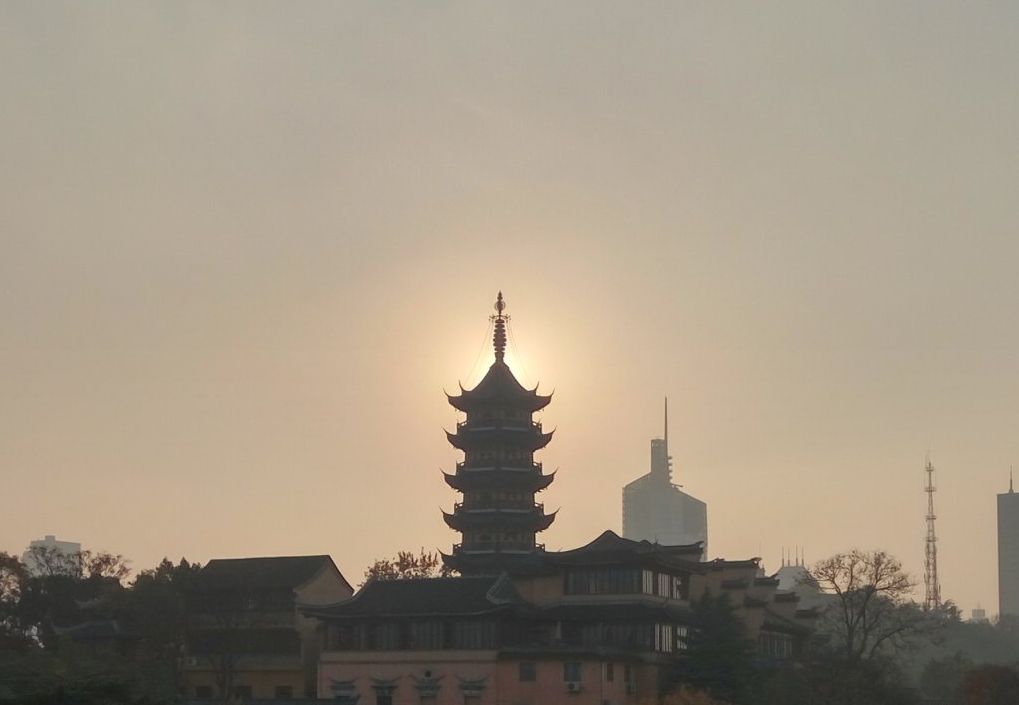
It is cold and damp today. Raining. Almost impossible to film anything, and we can’t get indoors at the museum until tomorrow. And so the director half-heartedly rules that we will try to get some footage at the Jiming-si (Temple of the Crowing Rooster), one of the oldest temples in Nanjing, founded in the Middle Ages, destroyed before the Ming dynasty, destroyed in the Taiping Rebellion, and rebuilt once more. It is the location of the Rouge Well, so named because concubines of the Southern Tang emperor hid from rebels during the fall of that short-lived dynasty, and left traces of their make-up smeared on the sides.
Unlike many other temples, a trio of incense sticks is part of the admission fee, leading to baffled crowds of Communist-era Chinese, bumping into each other and squinting at the instructions posted on the wall that tell them how to pray. I light my sticks at the votive candles, blow them out so they start to smoke, and then bow to the four directions before placing them in the censer. That’s more than we can say for The Human Torch, a woman in a mustard yellow puffa jacket who lights her large incense sticks, doesn’t blow them out, and then wanders aimlessly around the courtyard like a roving fire hazard, flames rising a foot into the air.
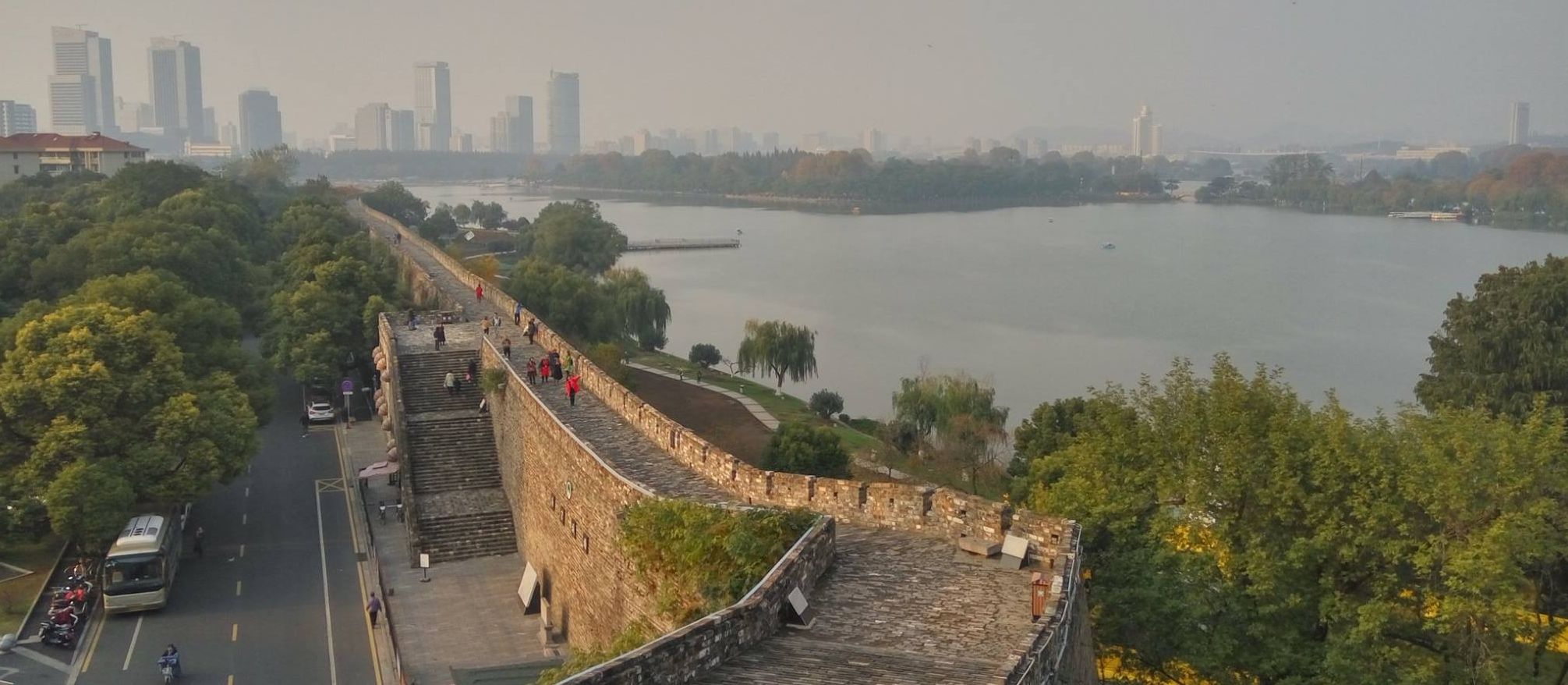
The director tries to film at the city wall and at the nearby “old” town, which, as ever, is chock full of snack stalls and little else, but the rain is pretty miserable. I spend less than five minutes on camera today, and even that is just walking from point to point through crowds. So an easy day to me, although we will have to make up for it later in the week.
The people in room 1806 are having very athletic sex. Clarissa the fixer and I, whose rooms are on either side, are scoring them on WeChat for volume and achievement.
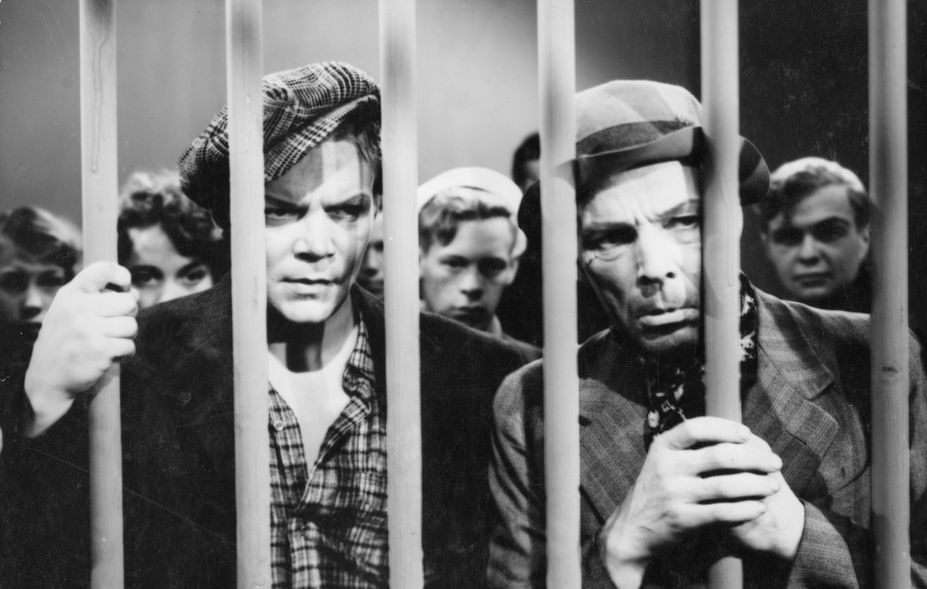
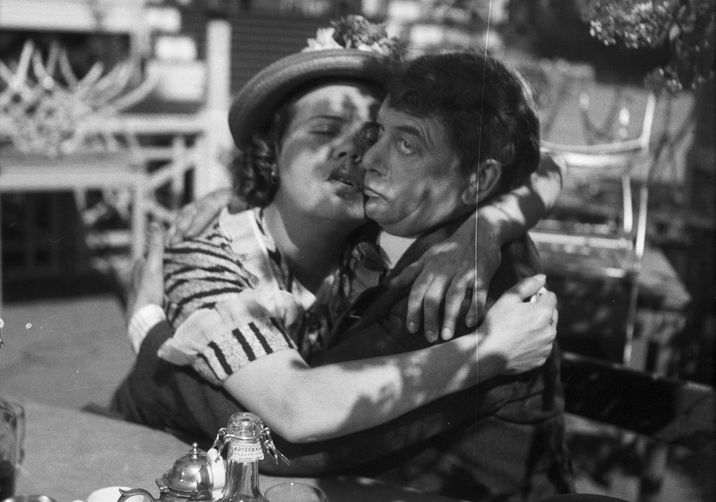
Fugitive Niilo Nurmi (Unto Salminen) is languishing in a San Francisco jail when he is mistaken by the local consul for Yrjö Sahlberg, a Helsinki rich kid who has been missing for years. That is enough to secure him passage home, but whereas Niilo expects to ditch his new benefactors on arrival in Helsinki, he is instead blackmailed into continuing the pretence that he really is the long-lost heir to the Sahlberg fortune. His old criminal buddies, watch-thief “Kello-Kalle” Karlsson (Aku Korhonen – the nickname translated roughly as Charlie Clock, compare to his earlier role as Charlie China in Off with the Shirt and Vest) and kingpin Einari Oksa (Ossi Elstelä) threaten to out him unless he keeps up the act, hoping thereby to secure access to the rich pickings at the Sahlberg mansion.
Welcomed as a prodigal son on his return to the Sahlberg household, Niilo soon discovers that someone is already robbing the family. A thief set to catch a thief, he soon works out that they are being embezzled by their shop manager Kapperi (Yrjö Tuominen), and wrests a confession from the flustered employee. The Sahlbergs are even more pleased with their “long-lost son”, although Niilo must fight off the continued predations of Oksa, who is fobbed off with the wrong keys to the safe, and Karlsson, who wins the heart of the mansion’s cook Tekla (Siiri Angerkoski) and has to be given a job at the company to keep him quiet.
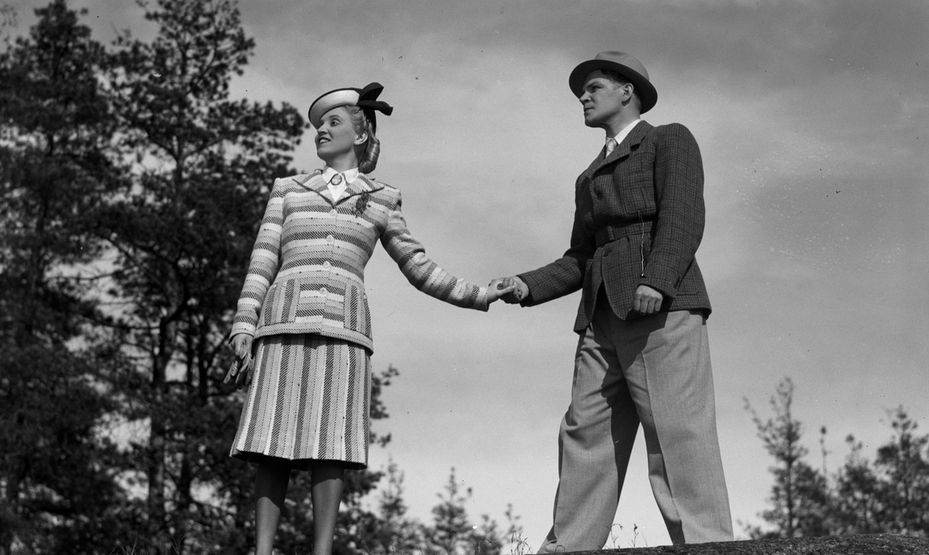
Falling for his “cousin”, Annikki (Ansa Ikonen), Niilo resolves to tell her the truth. She confesses that she, too, has feelings for him, and persuades him to turn himself in, although when he tries to do so, the police inform him that the statute of limitations has run out on all his old crimes, and he has failed to commit any new ones. That’s more than can be said for Karlsson, who is caught stealing the police inspector’s watch, and has to be bailed from prison so he can live happily ever after with his own betrothed, the entertainingly snuggly Tekla.
All’s well that ends well, although when the aged Grandma Sahlberg (Anni Hämäläinen) announces that she will never let Niilo go “again”, the viewer is left pondering if she really is aware, as she has formerly claimed to be, that he is not her beloved Yrjö at all, and that Finland really isn’t just about to see yet another set of cousins get married.
Freely adapted from the Swedish film Like a Thief in the Night (1940, Som en tjuv om natten) Uuten elämään features an oddly post-modern moment in which the writer-director Toivo Särkkä could not decide himself whether Niilo would hand Oksa the right keys, giving into his threats, or the wrong keys. Consequently, he shot both versions, and only decided at the editing stage that Niilo would swindle the swindler.
The film begins with a whole two seconds of stock footage of San Francisco harbour, before switching to a dive bar packed with an unconvincingly “American” crowd listening to a woman singing a torch song in English with an entertainingly German accent – several obviously Finnish women, a Chinese guy, and what appears to be Swamp Thing in an undertaker’s suit. This was clearly shot back home in Helsinki, although in order to distract us, the director executes a 360-twirl around the pub, which only serves to make it look as if the cameraman is drunk.
As so often happens in romantic comedies, the supposed leads are a pair of insufferable drips, and what little entertainment that can be wrung from it comes in the form of the supporting cast. Aku Korhonen puts on a spirited turn as Karlsson the inveterate pickpocket, and is as charming as ever in his interactions with Siiri Angerkoski – I have actually lost count of the number of times these two have ended up as a second-string romance in the background of the A-plot. None of this, however, would save it from the knives of Finland’s critics.
“There has never been a film on the big screen as clumsy,” wrote the reviewer for Uusi Suomi, “The plot of the film is psychologically impossible, and when, in addition, the audience was forced to endure outright indecencies along the way, the viewer left the show disgusted.” I actually read this review before I saw the film, and was all prepared to enjoy some outright indecency, but found it sadly lacking in this department. Other newspapers were similarly damning, with the Ilta Sanomat declaring it to be: “An out-of-date, thoroughly melodramatic and preachy film story presented with a tasteless sentimentality that is suspiciously reminiscent of ‘true stories’ from weekly newspapers.” When the Ilta Sanomat thinks you’re downmarket, you know you’re in trouble.
The two heavyweights of 1940s Finnish film criticism, Paula Talaskivi in the Helsingin Sanomat and Toini Aaltonen in the Suomen Sosialidemokraatti, both tried to make positive noises about it, but had to concede it was hackneyed. Only the writer for Savo magazine, out in the sticks where people were more easily pleased, came to its defence as a welcome relief from war and strife, noting: “Despite its naivety and lack of realism, My New Life will gain the support of our film audiences, because it has so much of the warmth and beauty that is needed as a counterbalance to today’s harsh and serious reality. And perhaps that was the main purpose of this film.”
Jonathan Clements is the author of A Short History of Finland. He is watching all the Finnish films, so you don’t have to.
Some interesting comments over on Reddit over one of the last paragraphs to be written in my book Rebel Island, itself a response to the publisher’s sensitivity reader about whether or not I should refer to the place on the opposite side of the Taiwan Strait as “China.”
This is the passage in question:
Over the years, particularly after my time in Xi’an in the 2010s, my own Taiwanese accent faded away almost completely. Every now and then, something still sneaks in, such as my habit of referring to dalu (‘the mainland’ or ‘the continent’), which continues to give me away as someone who learned his Mandarin in Taipei. The term is so common on Taiwan because referring to the land across the Strait as ‘China’ would rather imply that Taiwan was not-China.
And this is the comment from Lonely-Variation6940 that accurately carbon-dates my time in Taiwan — I was sent there to learn Mandarin in 1991, shortly after martial law was lifted, but when a lot of its cultural policies were still in force.
The 1980s was the era of Chiang Ching-kuo. I grew up in that era. The book you mentioned is generally correct. In school we were taught to use “mainland” or “mainland area.” When I was in high school, if I used words like CCP, Mainland, and China randomly in the essay questions on the Three Principles of the People, I would not only fail the test but also be called in for questioning by the instructor. That was a term used in the era of the Kuomintang’s ideological control before Taiwan’s democratisation. It remains in our current constitutional system. For example, the government department in the Executive Yuan that handles Chinese affairs is called the “Mainland Affairs Council.”
You can hear me talking in greater depth about some of the linguistic politics at work here in my recent interview on Late Night Live.
It is the afternoon and I am in a fallow field an hour outside Luoyang. I kneel down in the grass in front of what appears to be a large, football-sized pile of firm turds and announce that I am on an archaeological quest. I then pick up one of the turds and start breaking it apart with my hands.
They are the core samples from a Luoyang Shovel, a device originally developed by medieval grave-robbers for testing the land beneath their feet in search of treasure. Guo Zhenya’s is a three-metre pole, terminating in a long, curved trowel. You push it into the ground, wiggle it around, and withdraw a sausage-sized cylinder of earth, before plunging it in for another go, pushing deeper and deeper.
Mr Guo has an eye for subtle changes in colour. One trowel down, he is pointing to loose yellowish earth that is nothing but common topsoil, churned over every year by the plough. Another trowel down and we’re in darker more compacted earth, backfilled after the local archaeologists had finished excavating Erlitou. Another trowel down, and the backfilled earth reaches a line of sand, which marks the lowermost point of the dig. After this point, we are looking at terra incognita.
“The soil is turning reddish,” he observes. “We could be looking at a Han dynasty tomb. Yeah, this looks like shentu – disturbed ground.” Another few trowels, and we are almost all three metres of the Luoyang Shovel into the ground.
“No,” he says with a shrug. “False alarm. This darker soil is undisturbed. No human being has dug this deep in the last few thousand years. Nothing to see.” Mr Guo was one of the excavators in the Erlitou excavation that stripped this entire field wide open, uncovering a city from some 2,800 ago, laid out in a familiar square pattern, with a royal enclosure, a bronze foundry, and a temple. This was, people still believe, the likely site of the capital of the Xia, the earliest known Chinese dynasty, a people who had only just discovered bronze and seemed to lack any real writing. All we know about them we have got from legends collected in ancient Chinese classics.
Although the Erlitou site was discovered in 1959, excavation there was shut down a few years ago, one suspects because it failed to yield anything as photogenic as the Terracotta Army. It did produce “China’s First Dragon”, a staff or ceremonial item, the wood long rotted away, but retaining an intricate mosaic of turquoise stones, curling like an elephant’s trunk and terminating in a square, symbolic head. I’ve seen a picture of it, but the dragon is in Beijing, propping up an exhibit of ancient Chinese culture in the capital.
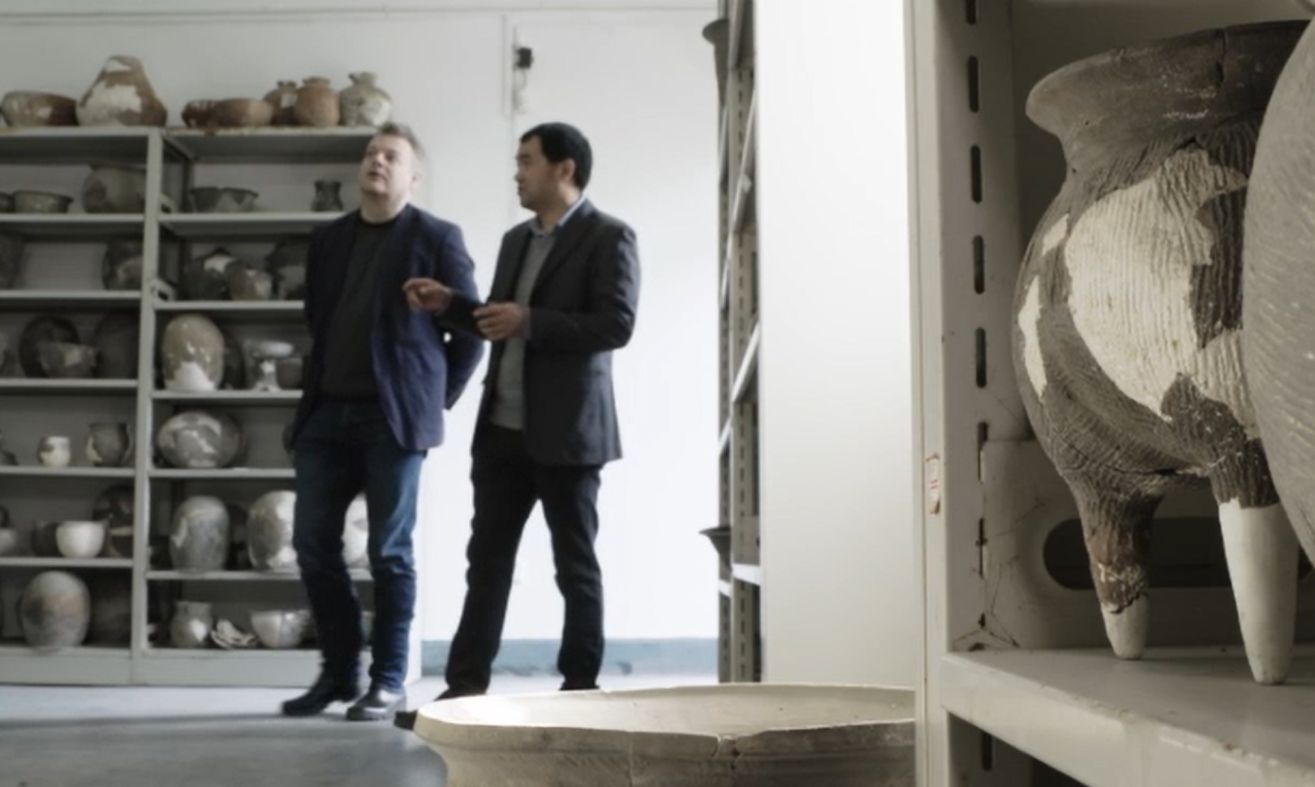
At the research institute, an army of workers are poring over the crates and crates of shards from the site, piecing together its pots, and trying to work out the nature of the bronze ceremonial artefacts that Erlitou seems to have supplied to the rest of the Yellow River floodplain. I’m here to interview the second most important man in Erlitou archaeology, the foremost authority having sworn off television appearances after a bad experience on someone’s late-night comedy chat show.
Zhao Haitao is soft-spoken and twitchy. It takes a while for me to draw him out of his shell, by asking questions about the site that make it clear I know what I am doing – the apparent trade value of turquoise, and the mystery that they have found cart tracks at Erlitou, but no evidence of horses.
“If you ask me,” says Dr Zhao, “the chariots here were pulled by slaves,” thereby literally putting the cart before the horse. I get him talking about pseudomorphs on Erlitou pottery, the potential for other finds on nearby sites, and the likely damage done to the north of the site by a shift in the flow of a nearby tributary of the Luo river, until he is laughing and joking, and holding out ancient ceremonial pots for me to touch.
I’ve noticed several times already on this trip that this is a new and unexpected service that I now perform – simply making it clear to the interviewees that there is someone on the other side who is listening to them and understanding what they are saying. That we are not a gaggle of uncaring camera-pointers with a fat white sock-puppet, but an award-winning crew with a public face who know the difference between the Sui and Tang dynasties; who understand the problems with rescue archaeology, and who don’t blink uncomprehendingly when hit with Chinese terms like liusongshi (turquoise) or renlache (man-pulled cart). I know these things because I was up at 4am reading the Erlitou chapters in the Cambridge Introduction to Chinese Archaeology on my Kindle, but that’s what I am paid for.
Another long day that comprises standing around for interminable hours, before being dragged by a shouty director to stand in front of a tree and extemporise a 30-second piece to camera about sustainability in the Tang economy. But I am doing my job, and coming up with several ideas for actual bits, including a semi-jokey bit where Mr Guo and I take the Luoyang Shovel out of the back of the Buick, its three-metre length seemingly never-ending, like people leaving a clown car.
Jonathan Clements is the author of A Brief History of China. These events formed part of Route Awakening S05E01 (2019).
Jan Willem Pieneman, “De zelfopoffering van predikant Hambroeck op Formosa” (1810)
Anthonius Hambroek was a Christian minister on Taiwan, who fatefully became embroiled in the negotiations between the besieged Europeans in Fort Zeelandia, and the Chinese who surrounded them. In a moment celebrated in paintings and plays, he returned to deliver bad news to the “pirate king” Koxinga, sure in the knowledge that he would be executed. Despite his daughters’ pleading, he went back to Koxinga and was never seen alive again. Later on, his daughters were among the Dutch girls handed out to Koxinga’s men as part of the spoils of war – one of them allegedly serving briefly as Koxinga’s own bedmate.
Pastor Hambroek’s sacrifice was one of the most iconic moments in the siege of Fort Zeelandia, an event already riddled with high drama and cinematic spectacle. It’s also become the lynchpin of many a fictional account, beginning with a Dutch stage play by Johannes Nomsz, Anthonius Hambroek, or the Siege of Fort Zeelandia (1775).
Dominicus Anthonius Peduzzi “Hambroeks zelfopoffering te Formosa” (1859)
Its most recent manifestation in popular culture is as the background to Yao-cheng Chen’s historical novel A Tale of Three Tribes in Dutch Formosa. Before he turned to fiction in his long retirement, Chen was a pioneering Taiwanese specialist in bone marrow transplants – a background that surprisingly produces one of the most gripping passages in his book. On hearing that one of the legendary ancestors of his own clan was a Dutch woman, he counts the incidences of ankylosing spondylitis (a type of arthritis), and determines that 4% of modern Taiwanese have a north European ancestor somewhere in their genes.
This is what inspired him to write his story, which comes deeply invested in the interlocking politics and tensions of the Dutch, Chinese and indigenous Formosans in the 17th century. They are, supposedly all given equal weight, although that Hambroek girl inevitably takes centre stage.
Who was she? In Nomsz’s play her name was Cornelia. In Joyce Bergveldt’s novel Lord of Formosa, her name is Johanna. In Chen’s book, her name is Christina, although her fate is kept discreetly off-stage, and instead we focus on her sister Maria, who may, or may not be, Chen’s own distant ancestor.
Chen realises that there’s a whole rack of Iliad allegories to be had, with a long siege, a vainglorious enemy and even a last-ditch hoped pinned on a ship called the Hector. His heroine, Maria Hambroek, archly observes that she is a bit like Cassandra, the seer cursed to always be ignored. I would suggest that there might have been more poetic currency to be had with her similarity to Briseis, the captive concubine whose fate is deeply entwined with that of the heroes.
One of the most compelling elements of the story of Koxinga’s invasion of Taiwan, for me at least, is the treatment of the Dutch women, a number of which were parcelled out among the Chinese. Modern authors seems to shy away from what this might have really meant; Bergveldt concocts a subplot in which Koxinga merely pretends to ravish a Hambroek girl as part of a bigger scheme; Chen is delicately coy about the sexual politics at play here, limiting himself to mentioning a few inter-racial “marriages”. Contemporary documentation, however, is considerably more forthcoming about it, particularly Frederik Coyett’s Neglected Formosa (1675), in which he mentions a number of Dutch girls returned pregnant to the East India Company at the final hostage exchange, as well as their widely varying reports of their treatment at the hands of the Chinese.
Dutch girls handed to soldiers who already had Chinese wives were often put to work as skivvies and slaves, complaining about months of hard labour under fierce mistresses. But this is where Chen’s Mills & Boon romanticism finds a legitimate purchase, since Coyett also reported that the Dutch girls who found themselves berthed with unmarried soldiers were “considerably caressed” and “did not complain too loudly, despite having half a Chinese in their belly.” He adds, in an arch footnote, that: “Those who had been kept honest by the ugliness of their faces, those were the women who were the loudest of all and who accused their companions of whoring and merry-making with the Chinese.”
I don’t know what really happened to that Hambroek girl. But I bet she had a story to tell.
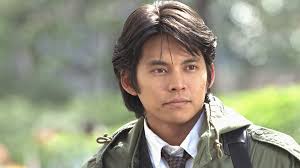
Disaffected computer salesman Shunsaku Aoshima (Yuji Oda) changes careers at the ripe age of 29, becoming a detective at the Wangan police station. Though he is initially ignored by most of the officers, he demonstrates an early skill for empathising with victims and is able to draw important evidence out of uncooperative interview subjects. His chief nemesis is Shinji Muroi (Toshiro Yanagiba), a self-made man from Akita, who has fought his way up through the Police Board Criminal Council despite snobbish opposition from the Tokyo University graduates who make up most of its numbers. Though the two men are permanently at odds, the emotional Shunsaku and the logical Shinji eventually form an uneasy partnership
Their friendship flourishes in the course of several episodes that introduce other members of the team. Old hand Heihachiro is due for retirement but trying to settle some of his outstanding cases. One comes back to haunt him, when an old adversary sends him a booby-trapped office chair, forcing him and Shunsaku to stay completely still while the rest of the office try to defuse the bomb—a steal from a similar setup in Lethal Weapon 3. Sumire is Shunsaku’s would-be love interest in the Department of Theft, whose cold exterior hides an abused past. She attracts a stalker who is convinced that she is the earthly incarnation of the anime character Pink Sapphire (a thinly veiled homage to Sailor Moon) whom Shunsaku and Shinji must stop before he turns into a killer.
Bayside Shakedown is one of the landmark Japanese TV shows of the 1990s. Though the high concept is nothing new, it struck a chord with the Friends and Ally McBeal generation, offering last-chance wish fulfilment for twentysomething viewers that there was still a possibility to change careers and start afresh. The glossy production values and pop video sensibilities glamorised the world of police work— the officers try very hard to play it young and cool. They achieve this through an unobtrusive anti-intellectualism that derides academic achievement in favour of simple attitude and instinct. When a team of criminal profilers arrive at Wangan, they are depicted as hapless college boys whose charts and graphs are no substitute for door-to-door enquiries and knowledge of the streets. There is similar comedy bungling from the Three Amigos, a group of unashamedly brown-nosing seniors who preside over the younger officers with an air of benevolent incompetence.
The series aims several pop culture references squarely at anime fans, including an arrest at an Image Club where visitors can hire prostitutes dressed as famous characters, and the regular recurrence of music from Shiro Sagisu’s soundtrack to Evangelion. Viewers are also advised to keep an eye out for each episode’s token foreigner, including ending-theme song collaborator Maxi Priest, though our personal favourite remains the suspect who can be heard loudly protesting, “But I am from Finland!”
Later episodes adopt a more serious tone, as the team go on the trail of a cop killer who has also seriously wounded police chief’s son Masayoshi Mashita, as well as with the promise of future collaboration between the lowly Shunsaku and the fast-tracking Shinji as he rises through the ranks.
The series stayed in the public eye through a novelisation and several seasonal TV movies, as well as a number of cinema spin-offs that kited it far into the 21st century. Twenty-eight years after it first appeared, it is fated to return yet again with leading man Oda now nearing sixty, cast in the upcoming Bayside Shakedown N.E.W. And for some utterly baffling reason, it has suddenly sidled onto Netflix, where its 4:3 screen size, predating the rise of the widescreen, and its leeched digital-video palette, make it look like what it is: an artefact from a bygone age.
But Bayside Shakedown was huge in its day – a hopeful second-chance for late twenty-somethings that propelled it into the status of a national phenomenon. With a peak audience share of 23.1%, its cinema adaptation was sure to be a hit, with the first movie becoming the third most high-earning domestic movie in Japanese cinemas. But although it was screened overseas on expat TV, and had its following among dorama fans in south-east Asia, it never seemed to attract the attention of the English-speaking world.
Twenty-five or so years ago, I went along to a London screening of the first Bayside Shakedown movie, put on for exhibitors ahead of the big buying frenzy at the upcoming MIP-TV in Cannes. A friend in the business said he’d add me to the guest list as a favour, so it’s not like I was sneaking in. It was a joyous continuation of the series, beginning with a wonderfully evocative depiction of contested jurisdiction, as police units on either side of a canal each try to prod a floating corpse over to the other side so it’s somebody else’s problem. It continued with a comedic account of class differences and office politics within a struggling police station, and finished with a sly reference that replayed the ending of Akira Kurosawa’s High & Low (1963).
The film was only marred for me by the occasional sound of seats flipping up, as one-by-one, the various exhibition reps decided the film wasn’t for them, and got up to leave. When the lights came up, I was alone in the theatre. I walked over to the distributor to confess that I was not a buyer for a video company.
“You are Jonathan Clements,” he said with a smile. “I know because you laughed at the Kurosawa gag. And you stayed to the end.”











 The Official Schoolgirl Milky Crisis Blog