“So much of what we know today about 1960s anime – anecdotes, scandals, gossip and all – derives from Yamamoto’s book. It is Yamamoto we have to thank not only for the assessment of Mushi as a ‘dangerous business model,’ but for ample evidence as to why.”
Over at All the Anime, my obituary for the writer and director Eiichi Yamamoto.
Out to the countryside, amid the rice paddies in the foothills, to visit Master Jin, another potter, who apparently makes “big pots.” The implications of this aren’t immediately clear until we pull into his compound, and I see what first appears to be a roofed funicular railway running up the side of the hill. But it is not a funicular railway. It is a long shed, the length of a football field, which shields the kiln below from the elements. Big pots and other large objects need to be fired in a dragon kiln, which is a long tube, as large as a metro tunnel, running the length of the hillside, pocked at regular intervals by chutes in which to drop more fuel. It must take an incredible amount of wood (or coal), but it makes it possible to fire the kind of vases that you can hide inside.
“This dragon kiln is quite new,” says Master Jin, an affable, mumbly old man whose face seems permanently creased in a rictus of laughter. “We built it in the 1970s. There was a Qing-era one over there beforehand, but someone built a house on the site. The dragon kilns were built here because of the logistics. We can get the clay right out of the fields in front. There’s a road right past the house, and there’s a jetty into the river just over there. You can load the pots up here and get them all the way to Jingdezhen, and from there to the rest of China, and the world.”
Jiangxi people seem somewhat slow of speech. It takes a couple of takes before I realise that Master Jin specialises in Pinteresque silences between sentences, and that if I just wait, he will keep going.
“I mean, we used to. There used to be a bunch of dragon kilns here, but you can do it all industrially now. This one is more used for education than anything else, when the pottery students come up to see how things were done. People keep coming here and buying the land for building houses. I mean, this is good clay. But they are building houses on it.”
In the afternoon, Master Jin takes a wheelbarrow, hands me two shovels, and leads me out into the rice fields. We wind along a track that has been paved with broken slabs of pottery, until we come to the centre
“There’s the clay,” he says.
“But that’s just a field.”
“That’s where the clay is.”
“We just dig it up out of the field?”
“Yes.”
“Where you grew your lunch?”
“Yes,” he says, and he starts to dig. There is a thin surface layer of gravel and other detritus, but right below the surface is a beautiful, pliable, shiny layer of cool grey mud, which briefly holds its shape after I shovel it onto the pile, and then slowly, gracefully collapses. Even I can see that it is perfect for pottery. There are a few flecks of red in it, which Master Jin says is naturally-occurring iron.
“That’s not the good stuff, though,” he mumbles. “There. That’s the good stuff.” A few inches below the surface there are patches and seams of an altogether different mud, strikingly blue-green in colour, like jade. It only comprises maybe 5% of the spadefuls I bring up, but that’s still quite a surprising amount to find in someone’s back garden. No wonder they built the kilns here.
He takes me to a shed where he shows me a pot he is just finishing. The vessels he makes are too big to turn on a wheel. Instead, he turns around them himself, kneading in coil after coil of clay like a human 3D printer, carefully building it up one inch at a time. He shuffles around the lip of the ever-growing pot, pinching and kneading. I shuffle across from him, observing at all times. Alvin the cameraman is obliged to shuffle around between us, in a ludicrous circular waltz.
Master Jin finishes off the top with a wet cloth, once again in a comical, rotational shuffle. It is still glistening in the sunset as I turn to the camera and say: “It might not look like much: some guy in his garage, making a pot with some mud that he found in his backyard, but this item opens a whole new range of possibilities. This can carry other commodities, across China and out to the rest of the world. In some ways, this transformed lump of clay is the origin of the maritime trade routes.” I manage this despite the council of cockwhisks who have assembled in the doorway, determined to see what is going on, and to talk about what might be going on, and to giggle at the possibility that a foreigner who might conceiveably be able to use chopsticks is standing in front of a camera with lights in his face, trying not to say anything that is factually inaccurate or legally actionable.
We are a week away from finishing now, and no single episode is yet fully in the bank. There are pick-ups and location shoots we still need to do. Very soon, we should be able to start ticking off footage as having been completed for each of the six. Already, we are only one scene away from signing off on the Theatre episode, Rice, and Tea… quite possibly also from Ceramics. There’s still a fair way to go on Grains, though, and we’ve barely begun on Booze. I am not sure that putting all the Booze shooting into the last three days is going to work out for us, but it is sure to be a happy shoot.
In 1942, Soviet agent Kerttu Nuorteva (Maria Heiskanen) parachutes into Finland on a secret mission. Injured from a bad landing, she rings the doorbell of a mansion, and presents herself to the lady of the house looking for work as a maid. When they are alone, she reveals her true identity, and announces that she is looking for The Poet – the codename of a Soviet spy, the wealthy industrialist and author Hella Wuolijoki (Tina Weckström). Yes, says the lady of the house, that’s me.
Here, says the spy, I’ve brought you 100 grand spending money…
Wow, what a way to begin a film. Except that’s not how Hella W (2011) begins at all. It takes half a laborious hour to get to that scene, the real-life scandal that would ultimately land Hella Wuolijoki in prison, just missing the death sentence for treason by a single vote on a judicial appeal.
“What went wrong?” asked Tuomas Riskala in Iltalehti: “The editing is choppy and the narrative is disconcertingly fragmentary. Overdramatic music blows non-stop in the background. And why is a completely useless narrator’s voice glued on top? It is as if there is not enough trust placed in the story itself and its subject matter.”
Speaking as an author myself, particularly in the history field, even non-fiction works require a story – an elevator pitch, a grandstanding appeal to the cheap seats like the very best of book-jacket blurbs. I can spend years walking around a subject, examining it from different angles trying to work out where to start, where the story is. And so, I feel a certain degree of sympathy for veteran screenwriter Outi Nyytäjä, who not only seems to visibly struggle with finding a feature-length plot, but leaves all her abortive attempts to start on-screen until it feels like we are watching the first pages of a dozen discarded drafts.
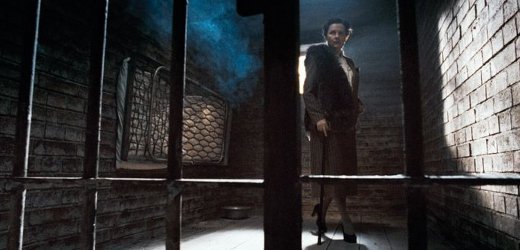
In 1943, disgraced Finnish industrialist Hella Wuolijoki is sentenced to life in prison after a captured Soviet spy accuses her of two decades of subterfuge and espionage. She is stuck in a cramped cell with a chirpy, possibly-lesbian black-marketeer, and the two unlikely cellmates slowly become friends. Hella works on her appeal, and movingly pleads with a court martial that she only intrigued with the Russians to save Finland from a disastrous pact with Nazi Germany. When the Finns’ own government turns on the Nazis in 1944, Hella is suddenly released from prison.
No? Okay, how about…
In 1929, the onset of a global recession financially cripples the Finnish industrialist Hella Wuolijoki. Out of desperation, she turns to authorship, cranking out novels and plays under a variety of pseudonyms – she is unable to publish under her real name, because she is a known socialist in a country still smarting from its civil war. The Women of Niskavuori is performed in a left-wing theatre so impoverished that Hella has to lend the production her own furniture to use onstage. But the play is a rip-roaring success, and soon it, along with her later Juurakon Hulda, Forward to Life, and Green Gold are being adapted for the Finnish cinema…
No? Okay, how about…
1904. Estonian student Ella Murrik comes to Helsinki with little more than a suitcase, where she witnesses the upheavals of Russia’s defeat in the war with Japan, and marries a Mr Wuolijoki, a close friend of Lenin. Despite being a committed Marxist, she never joins the Communist party, being advised that she is of better use to the Bolsheviks as a wealthy aristocrat. Her house becomes a salon for left-wing thinkers, and an underground escape route for revolutionaries and spies…
Are you not entertained? All righty, then…
1944. Embittered landholder Vappu Tuomioja (Matleena Kuusniemi) struggles to keep the family estate functioning while all the men are off at war. She confronts her mother, Hella, who is in prison convicted of treason, over a life spent supposedly committed to socialism, whereas all Vappu can see is a soulless woman repeatedly, and vainly, trying to buy love with hard cash.
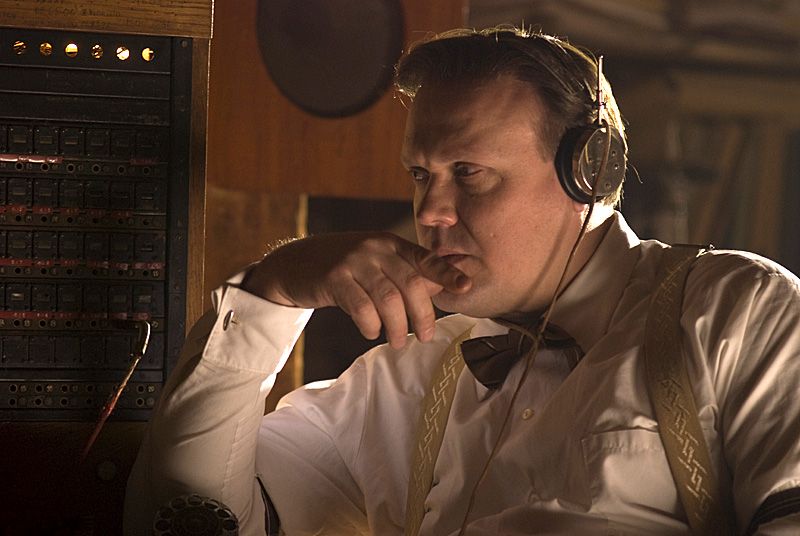
1945. Okay, in a tense Cold-War Helsinki, pardoned spy Hella Wuolijoki turns out to be the ideal choice to run Finland’s national broadcaster. Hijinks ensue as she tries to heal the wounds of the war and keep her former Soviet allies from invading again…
1943. An unnamed Finnish intelligence officer (Hannu-Pekka Björkman), has 24 hours to get a confession out of Hella Wuolijoki, a famous author whom he believes to be a Soviet spy. Unfortunately, he has yet to apprehend her contact, Kerttu Nuorteva, and must bluff his way through their interviews…
Amazingly, I could go on, and on, but that’s the problem with Hella W, a film directed by Juha Wuolijoki, a relative of its subject, and possibly too invested in telling everything. Nor was he the first to grapple with her amazing life; her grandson Erkki Tuomioja, wrote a joint biography of both Hella and her equally story-packed sister, under the title A Delicate Shade of Pink: The Lives of Hella Wuolijoki and Salme Dutt in the Service of Revolution, not long before he became Finland’s Foreign Minister. No, you really couldn’t make this up.
Hella Wuolijoki’s name has shown up several times in this blog of Finnish film history, and will show up several times again, since her Women of Niskavuori (performed in England as Women of Property – HG Wells went to the opening night, you know) would spawn several sequels, the most recent of which was a TV series in 1987. But sadly this bio-pic does not truly engage enough with any of the dozen possible angles that might have made it compelling. I was fascinated, for example, at the idea of a woman turning to writing to escape poverty, and the possibility that her theatrical success was buoyed up by aristocratic or revolutionary connections. And I was drawn to notes of ambiguity already present in the film, to the question of how Marxist Hella was when she was a sawmill magnate defaulting on her invoices, and how Marxist she was when a spy rang her doorbell and she essentially threw her out. And I was equally intrigued by the kind of shenanigans that must have gone on when she was appointed, presumably, as a Stalin-approved stooge to run Finnish media, so soon after being sprung from jail.
Instead, Juha Wuolijoki’s film admirably stretches its €1.7 million to the limit with lavish manor settings and country piles like some Finnish Downton Abbey, smoke-filled rooms and coldly-lit prisons, making the very best of the “found” architecture that still endures in modern-day Helsinki. One lovely scene, as Wuolijoki is arrested with a manuscript of one her plays, covered in invisible ink, is shot in Helsinki’s train station, right in front of where the Burger King is now. But it ends up feeling like a bunch of scenes from a dozen different films, leaving little space for any single one of them to shine.
Japanese Cinema in the Digital Age deftly avoids the error of many other works on the subject, by realising that ‘digital’ technology does not merely apply to production. Digitisation has affected everything from the ease with which cinemas can add extra screens, to the access of fans to obscure movies, to, well, me telling you this. If you are reading this, you are two clicks away from buying Mitsuyo Wada-Marciano’s book for yourself, an immense change to modern consumption, whereas previous generations would have had to resort to a long tramp down to the library or bookstore.
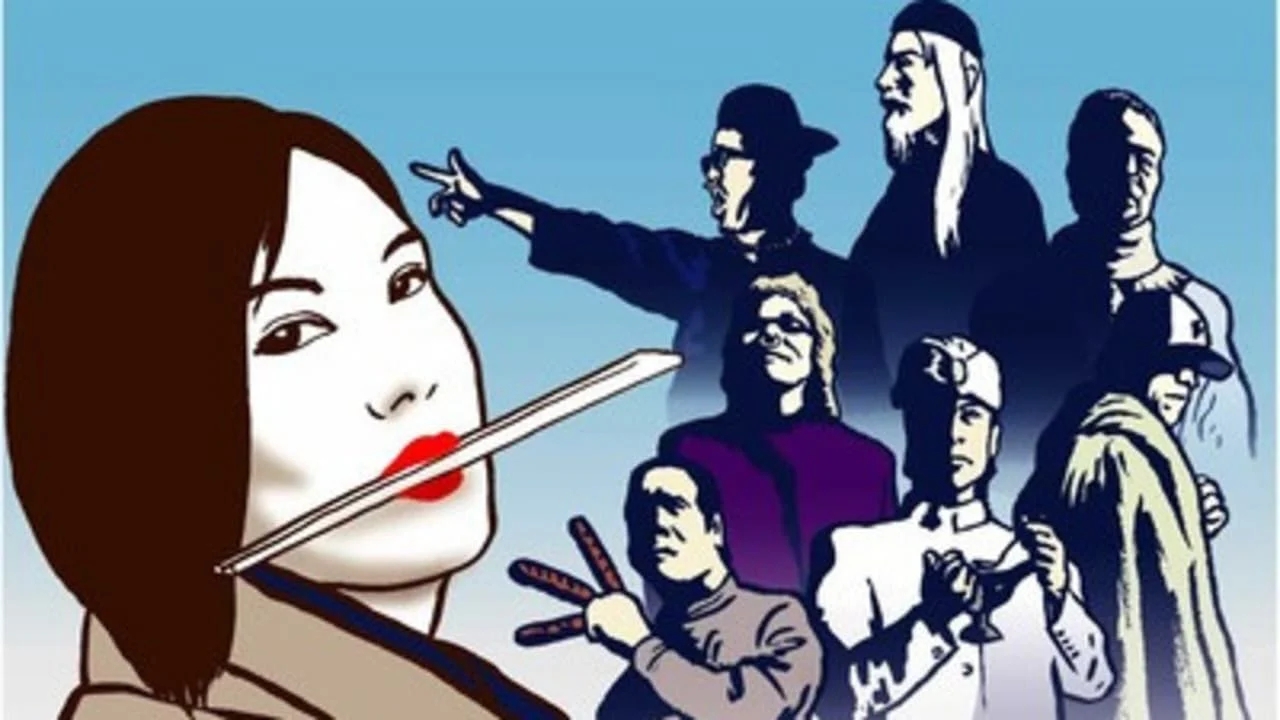
One of her five chapters is devoted entirely to Japanese animation, in recognition of its vital role in taking Japanese culture to the rest of the world. She fixes her focus on several intriguing creators, in particular Makoto Shinkai, whose Voices of a Distant Star, made in his lounge, distributed by internet mail order, is surely the epitome of the digital transformation. But she also examines Koji Yamamura, the Oscar-nominated animator whose short films constantly re-assert a ‘Japanese’ quality, seemingly with an eye on the international market, as well as Mamoru Oshii, not for his big-name anime movies like Sky Crawlers, but for his experimental hybrid film Amazing Lives of the Fast-Food Grifters.
Wada-Marciano is intrigued by the modern buzzword ‘transnational’, but unlike many of her colleagues, she does not blindly accept it as an example of a Japanese culture taking the world by storm, but rather as an element within a global culture. This attitude is particularly noteworthy in her other chapters, in which she delves into Japanese film abroad, including an entire chapter on J-horror, and its relationship to the rise of the DVD. Here, she engages with the simple fact that so-called V-cinema broke the log-jam of films awaiting a theatrical release, freeing young creators to experiment in what used to be called B-movies, but also confronting consumers with alternate entertainments. Some, she points out, such as the chilling Ring, were arguably even better viewed in your home, on the TV, where some of the more iconic moments might have had a greater, more immediate impact. More importantly for anime, DVD allowed what she calls a preservation of ‘cultural authenticity’, allowing for the presence of Japanese-language tracks, even on DVDs that would largely be watched by dub fans.
If I have any quibbles about the book, it is that it is merely the opening preamble of a much larger, longer argument for the impact of digitisation. Wada-Marciano makes a strong case for considering ‘industrial strategies’ rather than the usual guff about fan receptions and subcultures, but seemingly lacks the space to truly dive feet-first into what that might mean. In the case of anime, for example, digitisation has been part of industrial discourse since as early as 1974, when Toei first began consultations on a computerised production system. Digital storage, computerised camera tracking, Avid editing and scanned images have all formed a major part of anime’s development, as has the sudden immediacy afforded to overseas subcontractors by the invention of the ISDN, and the simple ability of online fans to gripe, moan and proselytise to each other about new shows. Most notable among such omissions is any mention of Celsys, the company whose RETAS Pro animation software has become an industry standard, and arguably as influential a template for style and art as Tezuka’s limited animation revolution in the 1960s. Nor is there much discussion of what Ramon Lobato calls the ‘informal economies’ of piracy and torrenting, which have had a world-shattering, and possibly terminal effect on Japanese cultural production, even as they carry it to more viewers.
But it’s unfair to dwell on the things that aren’t in a book when there is so much of value between its pages, not the least its insightful discussion of the live-action Initial D movie, a ‘Chinese’ film made in Japan for the largely Cantonese-speaking overseas market, based on a Japanese manga and anime, but tied just as heavily into the consumption of customisable cars for boy-racers. If that’s not ‘transnational’, I don’t know what is.
Jonathan Clements is the author of Anime: A History. This review first appeared on the now-defunct Manga Entertainment blog in September 2013.
“Unlike Shirobako, which prides itself on a realistic depiction of the nuts and bolts of making an animated film, Pompo is more interested in creating the impression of working on live-action movies. It approaches film-making with a relentless, infectious optimism, almost as if a bunch of downtrodden, underpaid Japanese animators have fixated on Nyallywood as an idealised dream factory, where true talent wins through, the show-runners (well, most of them) can spot a rookie’s potential in the raw and train them for success, and everybody gets their just desserts.”
Over at All the Anime, I write up Pompo the Cinephile, a film that glorifies B-movies, from the man who made that thing about the robot sharks.
There is some discussion in the car as to what the name Zhangye actually means. In a regrettable error of interpretation, our fixer suggests that it means “armpit.” This turns out not to be true, but we are referring to the city as Armpit hereafter. It is the site of the largest reclining Buddha in Asia, the birthplace of Khubilai Khan, and the Xixia National Temple. The crew are baffled as to what the Xixia are, and I explain that they are the Tanguts – a society that once ruled this part of Asia as their own little mini-empire. They flourished in the late Middle Ages, and then were massacred in a genocidal assault by a Uyghur army. The Uyghurs having joined the Mongol hordes, they attacked the Tangut realm and killed most of them on the Mongols’ behalf – not a subject that the Uyghurs like to bring up. The province next door is still known simply as Ningxia, “the Tanguts quelled.”
Mr Ma is a 23rd generation descendant of Genghis Khan (like 16 million other men across Asia, according to the American Journal of Genetics). His name means “Horse”, although his family drifted into farming a few generations ago, and thence into traditional medicine. His big thing is black millet, which is supposedly good for the kidneys, and which he grows on his farms and witters about incessantly, like a religious zealot. Unlike most Chinese medicine, which might as well be eye of newt and toe of bat, his black millet comes with a chemical breakdown, which allows me to report that its primary ingredient is that a single dose delivers 652% of the body’s daily requirement of selenium. So if selenium is what you need, then it’s black millet porridge for breakfast for you.
He is animated and talkative, which is a blessing after some recent interviewees, and drags me around the millet fields to talk about his experiments in propagation. He’s trying to get his millet to two metres tall, because the stalks and leaves also function as animal feed, and that gives him more. He is also aiming at increasing the yield in the grains by 25%, which would be enough selenium to kill a horse.
It is a frustrating day because Mr Ma lives only four kilometres from the airport, and the local air force squadron are flying their Hawk trainers relentlessly in circles. Four planes roar past, each augmenting the other’s noise, leaving barely 20 seconds out of each two minutes in which to record sound. This places immense pressure on everybody, most of all me, to gabble my pieces to camera into incredibly limited slots. One fluff, and we are all standing around for another two minutes, waiting for the planes to pass, and hoping that the sun doesn’t come out from behind a cloud, or go back behind a cloud, or whatever it was the sun was doing last.
We finish at six-ish, but it is 90 minutes back to the hotel, and our liaison has determined that we will not be eating right away. Utterly convinced he is doing us a favour, he claims he knows a “good place” and leads us through the streets for another 20 minutes, when all we wanted was noodles outside our hotel. When we eventually find the restaurant he wants, they turn out only to serve warm, watery Xuehua beer, which none of us can stand.
The usual Chinese entertainment ensues, in which I manage to steer the menu through some edible choices, only for our nameless host to “help” by ordering a bunch of other things that we don’t want. I haven’t eaten for seven hours, I am tired after a long day, and all I want is some food that will not make me retch.
“Try the pig’s ears!” he says, in a reasonable imitation of my ex-mother-in-law, who is always confident that I will wake up one day and suddenly like rubbery rye bread. “Just try them.”
“If I wanted them,” I say, “I would have ordered them.” Today, I feel a certain degree of sympathy for Jeremy Clarkson, who punched a producer over the non-availability of hot food after a long day. Not that I condone the punching of producers, but there comes a point when shooting chips away at the most basic elements of one’s hierarchy of needs.
Time was, back in the eighties, when anime cels were literally regarded as industrial waste. Some, it was true, were “banked” to use on later episodes of the same show, but when a show was over, they were thrown away. Thanks to increasingly strict laws on plastics and polymers, they had to be expensively disposed of, leading to one notorious incident in which a studio was caught burying their old cels in a hole in the backyard.
Anime cels were pointless fragments of an image, the building blocks of filming, their purpose fulfilled the moment they were composited together and photographed to make a particular frame of actual animation. When Carl Macek asked for all the old cels from Akira, the film-makers gleefully threw them into a shipping container and packed them off to California, as if they’d just sold him London Bridge. But Macek also ran an art gallery, and he saw the value of cels as industrial artwork, and as freebies he could give away with the Akira VHS, in order to encourage people not to settle for pirate copies.
And so, there is a certain irony in this month’s news that an anime cel, which would have once been something the studio literally couldn’t give away, has sold for a record-breaking price of 26.4 million yen – that’s £173,625.00 to you.
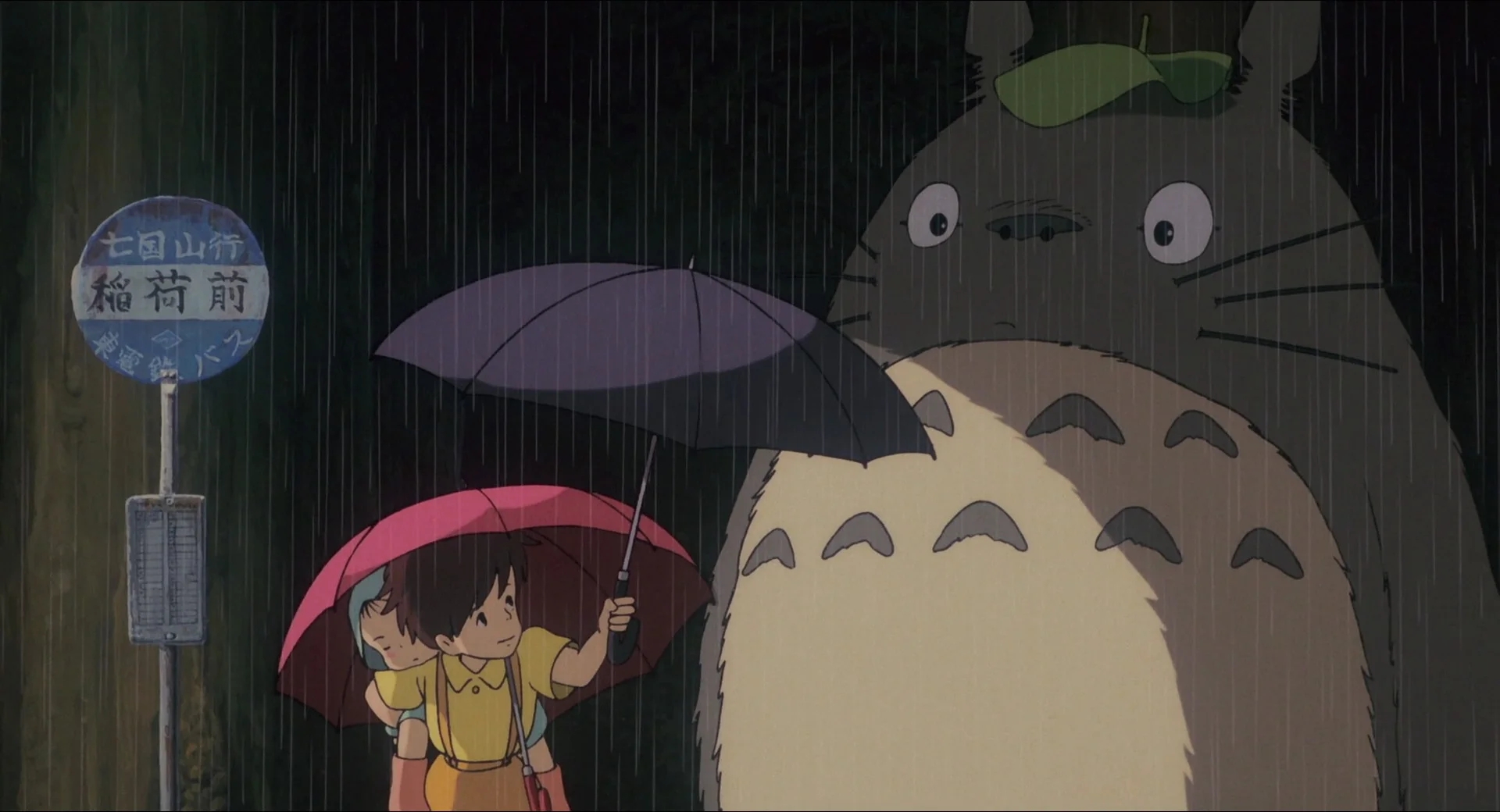
The online auction in Japan became headline news for the smug-factor it is sure to instil in any fan with a couple of souvenir cels. But, of course, it’s never that simple. Because the cel in question is an image from My Neighbour Totoro, and Miyazaki is such a notorious control freak that it, like all the other cels, is liable to be touched by his own hand. Heritage Auctions (HA.com) have hosted a number of similarly high-value sales in the last few weeks, including other iconic images from Akira and Studio Ghibli works – all titles sure to be known in the mainstream and to retain their value.
Then again, there’s another irony, since this month’s anime news also features a spat over at Mappa regarding the super-low pay now being offered to animators as the studio scrambles for as much of that Netflix dosh as possible. Yesteryear’s anime is being valued ever higher. Today’s barely pays a living wage.
Jonathan Clements is the author of Anime: A History. This article first appeared in NEO #211, 2021.
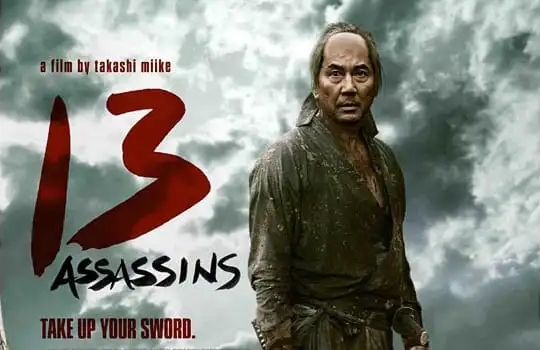
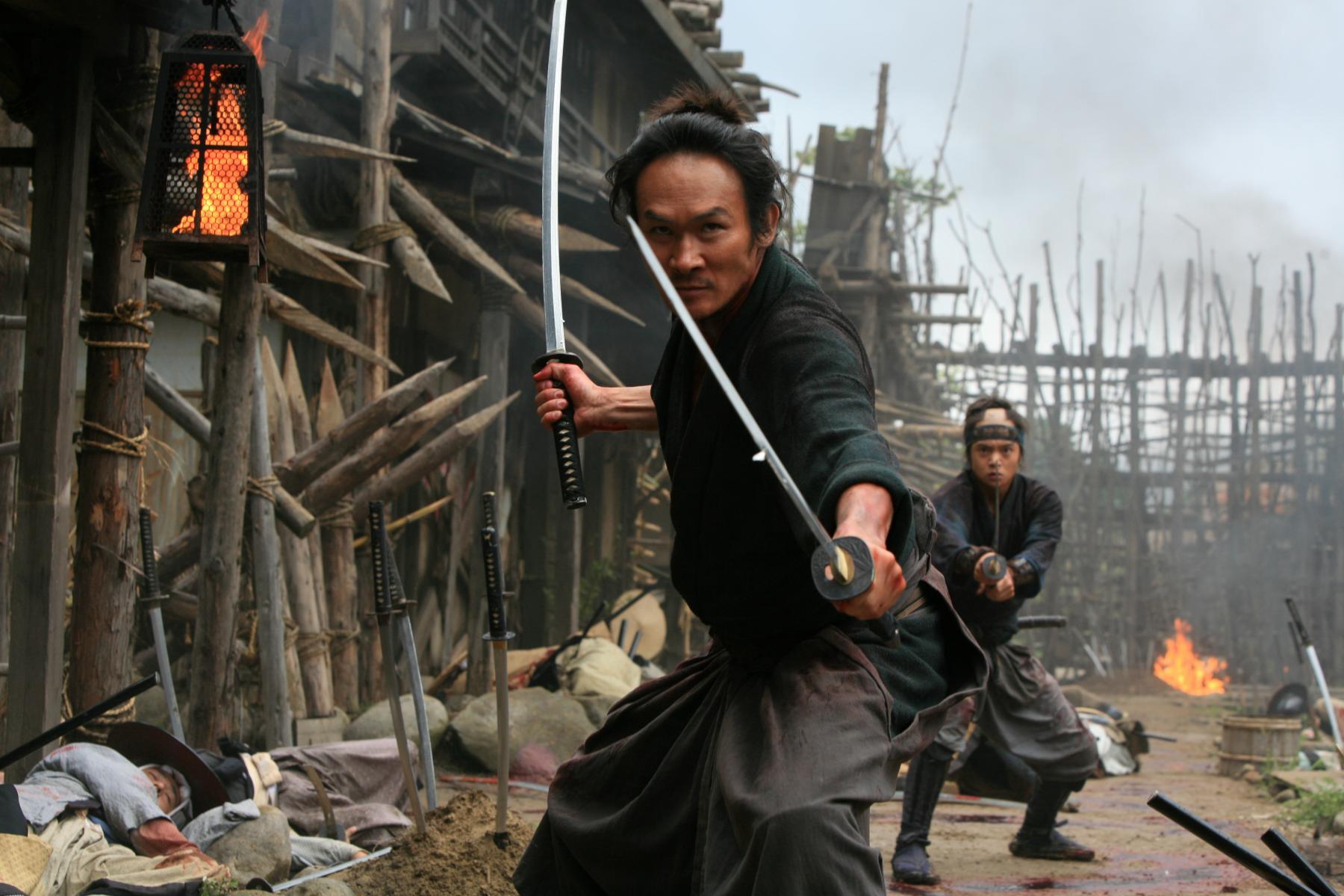
It is a matter of honour – the young Lord Naritsugu (Goro Inagaki) has a terrible reputation for rape, murder and unspeakable cruelty. But he is a relative of the Shogun, and hence beyond the reach of the law. Behind the scenes, twelve loyal samurai assemble to mete out justice off the books. They are led by Shinzaemon (Koji Yakusho), an aging samurai who knows there is little chance that he will return alive from his mission. But he still accepts his fate, in a gleefully suicidal rush for glory that sees his dirty dozen plotting a fiendish ambush, ending with an explosive 45-minute battle scene.
Twelve…? There might be twelve samurai, but there is a bonus extra to make up the baker’s dozen – mountain man Kiga (Yusuke Iseya), a grubby force of nature who offers to lead the men on a decisive short-cut, as long as there is money it for him.
In a refreshing change from the norm, these samurai are the masters of their own fate. They willingly embrace dirty tricks and battlefield engineering, and never stoop to blaming their deceptions on non-existent ninja. There are sly nods to earlier samurai stories – not merely the rain-soaked struggles of Kurosawa, but the flame-maddened cattle of the Tale of the Heike, and mid-air arrow cutting of many a Japanese fireside saga. Miike plays to unexpected strengths, including a marvellous score by his long-term collaborator Koji Endo, and punchy sound design, not just on swords and arrows, but on horse’s hooves on muddy roads and the thump of socked feet on mansion floorboards.
13 Assassins is not based on a true story, although it is inspired by true events – not the least the infamous misbehaviour of the historical Lord Naritsugu, who became lord of a feudal domain while still a teenager, and seems to have let the power go to his head. There is also a suspicion among some Japanese historians that the sudden, unexplained death of the historical Naritsugu smelled of a Shogunal cover-up. But 13 Assassins is also steeped in unquestionably real issues from the twilight years of the samurai. This is not a fairytale Japan of geisha and cherry blossoms; it’s an unfamiliar, alien place where a smile means distress and the triple hollyhock emblem of the Shogun is a sign of fearsome repression. Takashi Miike’s samurai throw dice in the company of tattooed gangsters and rheumy-eyed, pockmarked whores. It has been two centuries since Japan’s last full-scale war, leaving many of the samurai class swordsmen in name only. As one of the assassins notes: they have had nothing but books and plays to tell them how battle really was, and the reality comes as an exhilarating, deathly shock.
With nobody for the samurai to fight but each other, stern codes of honour and obligation are supposed to keep them in check, but have instead led to scheming and corruption. Miike’s film, like the 1963 original directed by Eiichi Kudo and indeed like Mamoru Oshii’s Sky Crawlers, is a film made for a generation that has grown up without war or danger, repulsed but also oddly hypnotised by the spectacle of violence.
Miike’s samurai are trapped in a poisonous system that kills all attempts at reform. It confines its characters in the traditional stand-offs between duty and honour, and in the endless arguments about loyalty that define every period of samurai history. In doing so, 13 Assassins can be seen as a Japanese variant on Apocalypto: a glimpse of the last, rotten days of a dying regime, shortly before unwelcome Europeans toppled the old order for better or worse. It is set in 1844, the year that the King of the Netherlands wrote an ominous letter to his unseen Japanese allies, warning them that the world was changing fast. Japan was no longer a year away by sailing ship; it was within reach of ever-faster, coal-fired steamships. In 1851, Herman Melville would predict in Moby Dick that the American demand for coaling stations and markets would smash open the gates to that “double-bolted land” of Japan.
The Shogun Ieyoshi, whose honour the 13 Assassins give their lives to preserve, would lay dying in 1853 as the infamous “Black Ships” of Commodore Matthew Perry dropped anchor in Japanese waters and demanded an end to Japan’s centuries of isolation. The Shogunate fell soon afterwards.
Jonathan Clements is the author of A Brief History of the Samurai.This article first appeared on the now-defunct Manga Entertainment website in April 2011.
It was a good day at Central Park Media. After several months of sneaking around and clandestine meetings, they sent in the heavies. A bunch of New York policemen and a lawyer from CPM kicked in the door of a warehouse to find thousands upon thousands of VHS tapes, stacked from floor to ceiling. Many were CPM anime products. All were pirated.
Quite by accident, I was talking to one of CPM’s staff back in 1999 when the news broke, which meant I got to hear the euphoria and excitement close at hand. Jeff the marketing guy confided to me that this was by no means the first time they had uncovered such a duplication ring. They just hadn’t told anyone. Following negative publicity in the late twentieth century, when any anime industry initiative to crack down on criminals was met with internet bleating and self-entitled trolling, the US anime business had, ironically, begun to conduct its piracy enforcement below the radar. The seizure of thousands of dollars’ worth of counterfeit tapes was a matter of private celebration, but it was not widely reported.
Piracy, as Ramon Lobato notes in his book Shadow Economies of Cinema, is as old as cinema itself, with Georges Melies’ Voyage to the Moon (1902) widely ripped off all over the world. But nobody has devoted quite the attention or academic rigour to piracy as Lobato. Lobato doesn’t merely rehash tired arguments of ownership and access, industry’s speculative (and to him “dubious”) logic of loss or fandom’s recurring doctrine of lapse; he provides hard data and persuasive models about those areas of the film world that are usually ignored. His interest is not merely in illegal activities in the film business, but in completely legal elements that rarely get any attention. He notes that 59% of the American film market alone is “straight-to-video”, arguing that while much of this material might be crap, it’s still relevant, and forms the “invisible bulk” of the global industry. As they might say on the street – traditional film distribution is the 1%, but that leaves 99% of other stuff, that doesn’t get the newspaper coverage or the academic examination. It doesn’t qualify for the Oscars and it doesn’t get reviewed in Sight & Sound. But its fans love it just the same. Or at least endure it.
In fact, as Lobato argues, “informal” networks (legal and illegal) can offer distribution of films and subjects outside the mainstream – for ethnic minorities otherwise unserved, for interests not quite mainstream enough, and… well, anime. Bleach and Naruto are heavy hitters in modern UK anime, but neither of them is actually on British television. The hundreds of thousands of discs they have shifted have been largely “invisible” to the TV-watchers of Britain, even though both were “television serials” in their native Japan. If you’re a British fan of these shows, you are watching another culture’s television below your own culture’s radar. You’re part of what Lobato calls “informal distribution.”
Statistics, of course, can be misleading. If we take just two films from the US market, we can soon see why. Katsuhiro Otomo’s Akira did very nicely for itself on American cinema screens, generating a million dollars for Streamline Pictures. But Pixar’s Toy Story did a million dollars’ business every week, for six months. Lobato’s argument that something like Akira is just as important as Toy Story will be welcome news to anime fans, although straightforward financial statistics tell us that Akira’s footprint in the marketplace is nowhere as big as Toy Story’s. But sometimes that doesn’t matter. Of the cinema-goers who loved Akira. 100,000 of them came back and bought it on tape. And Carl Macek, who claimed that Akira was once one of the most pirated tapes ever, fought back against the thieves with added value, giving away a free cel with every purchase. Ironically, the cels had been earmarked for disposal by Akira’s production company – regarded as industrial waste in Japan, they were bonus assets in the American market.
Sometimes, the formal networks still have the big bucks, although not always, as the shadowy returns from pornography seem to suggest. Film scholars like to write about the legitimate institutions, at least in part because some of them, at least, can provide actual data. Pirates don’t pay tax or publish their sales figures, and legitimate media companies are not above massaging the figures, bigging up their sales to journalists and underplaying them to the taxman. All of which makes Lobato’s book a deeply helpful account of how the shadow economy of film actually works.
Lobato notes that the phenomenon we call “piracy” has many different flavours, and investigates the implications of them all: piracy as free enterprise, as theft, as authorship, as free speech, as resistance, and as access. All of these modes have come up over the last twenty years in discussion of anime, used as justifications by criminals and consumers alike. In the case of Central Park Media’s take-down, this wasn’t a couple of students with linked video recorders. The pirates they busted were a massive industrial operation that also extended to a shadow-line of distribution. Men hawking bogus wares would drive to remote service stations and video stores, representing themselves as the legal salesmen for a number of video companies. The mom-and-pop store owners would take them at their word and buy tapes to rent out locally, unaware that they were actually buying stolen goods. Criminal money was efficiently laundered in these hand-shake deals, with the store owners assuming that the tapes they were selling were entirely legitimate.
And so, when an ex-girlfriend gleefully reported that she found one of my anime translations on sale in Botswana, my first thought was not a happy one. Did they even speak English in Botswana? (Apparently, they did) Or was my name still visible on the box because a video pirate had copied the cover without understanding its meaning? Piracy is big business, but it’s only part of Lobato’s shadow economy, which also incorporates discussions of torrenting, downloads, cam copies, video hosting and cyberlockers. And jackrabbiting, which is apparently the term for what those travelling salesmen were doing – passing off illegal access as legal access, a practice that has also been prevalent in cinema since its earliest days. Back in olden times, it ran to outlying cinema owners putting on screenings of films without telling the distributors, and thereby relieving them of their legitimate cut.
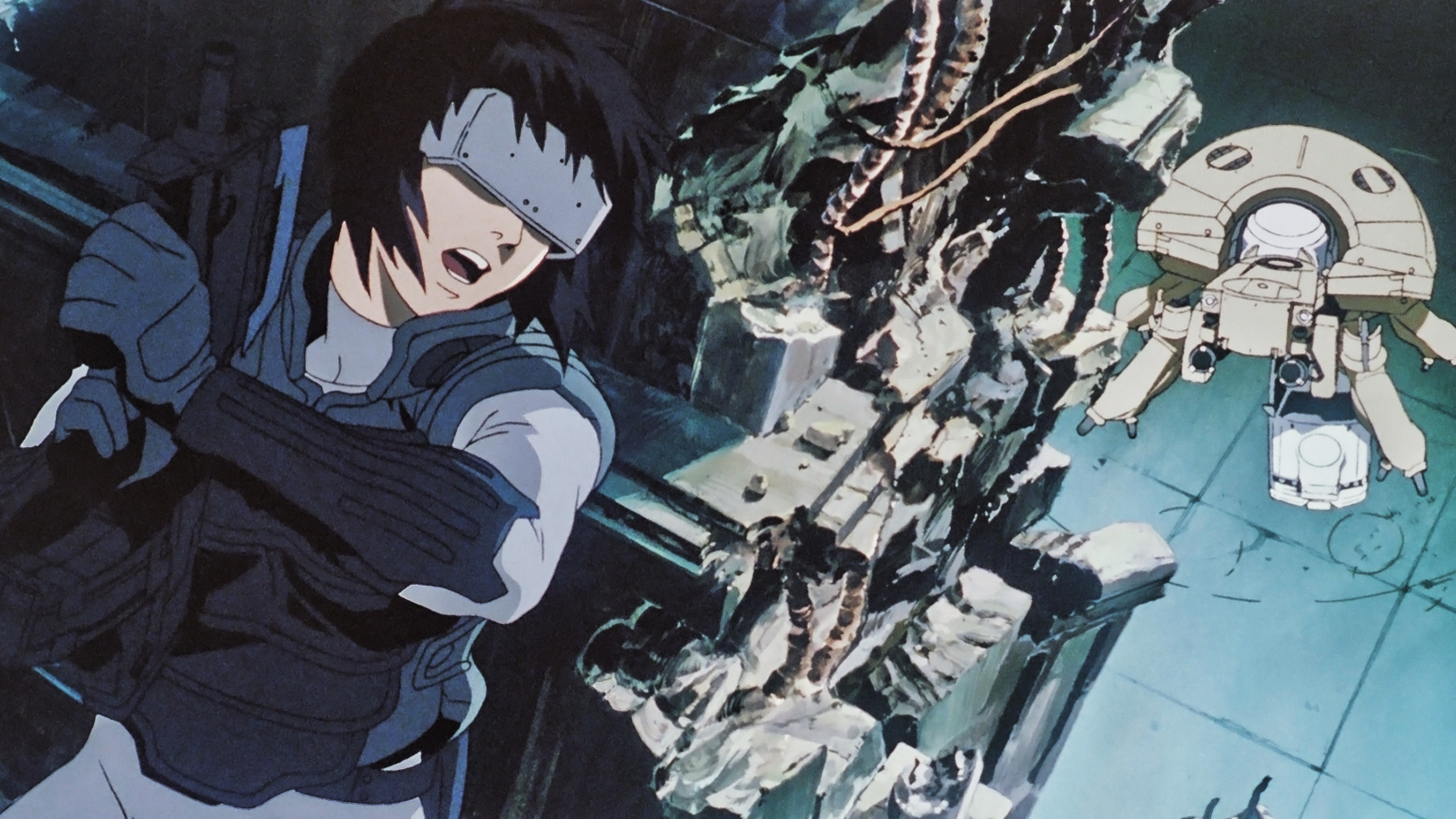
During the Gulf War, two UK anime companies made a habit of sending free tapes out to army bases – Kiseki had ex-military men on staff who wanted to do their mates a favour; Manga Entertainment just wanted to do something for the troops. It tells you something about how good-intentioned this was that neither company ever tried to make marketing capital out of it. They just did it; once again, behind the scenes, below the radar, not part of the ongoing public conversation with fans. I have no idea what all the paratroopers and snipers made of Ghost in the Shell. The mind boggles. Anyway, inevitably, some of these cassettes ended up in the wrong hands, and contributed to a thriving piracy business in the Middle East. A couple of years later, a baffled producer from Manga Entertainment showed me the weirdest fan letter he’d ever seen, from a viewer in Iran asking where he could buy legitimate tapes, as the quality of the pirate videos he’d been watching was awful. It’s anecdotes like these that the industry largely avoids mentioning, because rhetorically, it suggests that a preview medium, even an illegal one, can help establish legitimate sales. However, current research suggests there is only a fractional, barely relevant increase in likely sales from free previews versus an unknown quantity of lost sales through theft, which means “free” media has to find some other means of getting its income — from toy tie-ins, or collector’s editions, or…. something. The flipside, of course, is that if consumers stop being consumers altogether, and just leech, it makes a product impossible to manufacture at a profit. As the late Noboru Ishiguro once noted, if absolutely nobody (fans, TV stations, video stores, whoever) will pay for anime, anime companies won’t make it any more.
Lobato places piracy as just part of “informal film distribution”, a model of the film world that cheekily and productively turns everything on its head. What if, Lobato asks, “traditional” cinema is the exception, and most of the film business might be said to operate in rental stores and on laptops? Not merely here, but in Mexican slums and Nigerian souks? Lobato argues that traditional institutions of film, such as cinema theatres and film studios are accorded a form of “epistemological authority”, but that there is no reason not to treat “informal” distribution networks with the same importance. After all, as one wag put it, if you’re going straight-to-video, you’re either on the way up or on the way down. That obscure 1980s “straight-to-video” cartoon, Warriors of the Wind, was a legal release, yet is treated like toxic waste by its director, who fashioned it as a bespoke, theatrical feature, only to see the informal economy turn it into bargain-bin junk. Then again, that director, Hayao Miyazaki, would eventually win an Oscar, so might arguably be said to have had the last laugh.
In a recent interview with Colony Drop, I said that Studio Ghibli’s absence from English video distribution for much of the 1990s might have been a blessing in disguise. Miyazaki was so incensed by the butchering of Nausicaa into Warriors of the Wind, that he made it impossible for anyone but a real film studio to afford the rights to his subsequent movies. As a result, his later films were arguably spared similar desultory treatment, and not permitted to wither and die in the hands of the “wrong” distributor. But that’s the kind of backwards reasoning that Lobato encourages. Can there be advantages to informal distribution, even if, as in the case of Miyazaki’s (entirely justifiable) decade-long strop, they are structuring absences that are only valuable in hindsight?
Lobato’s book doesn’t mention anime all that much, but so much of what he has to say is directly relevant to countless fights and spats at conventions, in podcasts and online, between anime fans and the industry that wants their money. Lobato challenges people who write about film to think about films as objects of distribution, not merely as texts to be appreciated. In doing so, he opens up all sorts of cans of worms about the way that films get made. And he tells some fantastic stories; such as the tale of Spike Lee, who decided to take enforcement into his own hands after the release of Malcolm X, by wandering the streets of Harlem with a baseball bat, looking for pirate vendors.
Shadow Economies of Cinema is a fascinating book that will help place anime in its historical context, not only as part of a medium hidden in the shadows of the mainstream, but also as the innocent victim of a “black and grey” economy run by spivs, shysters and thieves. I don’t agree with everything Lobato says, but possibly he doesn’t either — he is honourably careful to present both sides of every story, however unpalatable. He makes some very good cases about copyright enclosures and the fact that there can be such a thing as “too much” formality, literally making it impossible for consumers to legally buy the products they want. It’s a fascinating distribution- and exhibition-led study of modern media, with much relevance to the anime world.
Jonathan Clements is the author of Anime: A History. This article originally appeared on the Manga Entertainment blog in March 2012, and is reprinted here after that site’s disappearance.
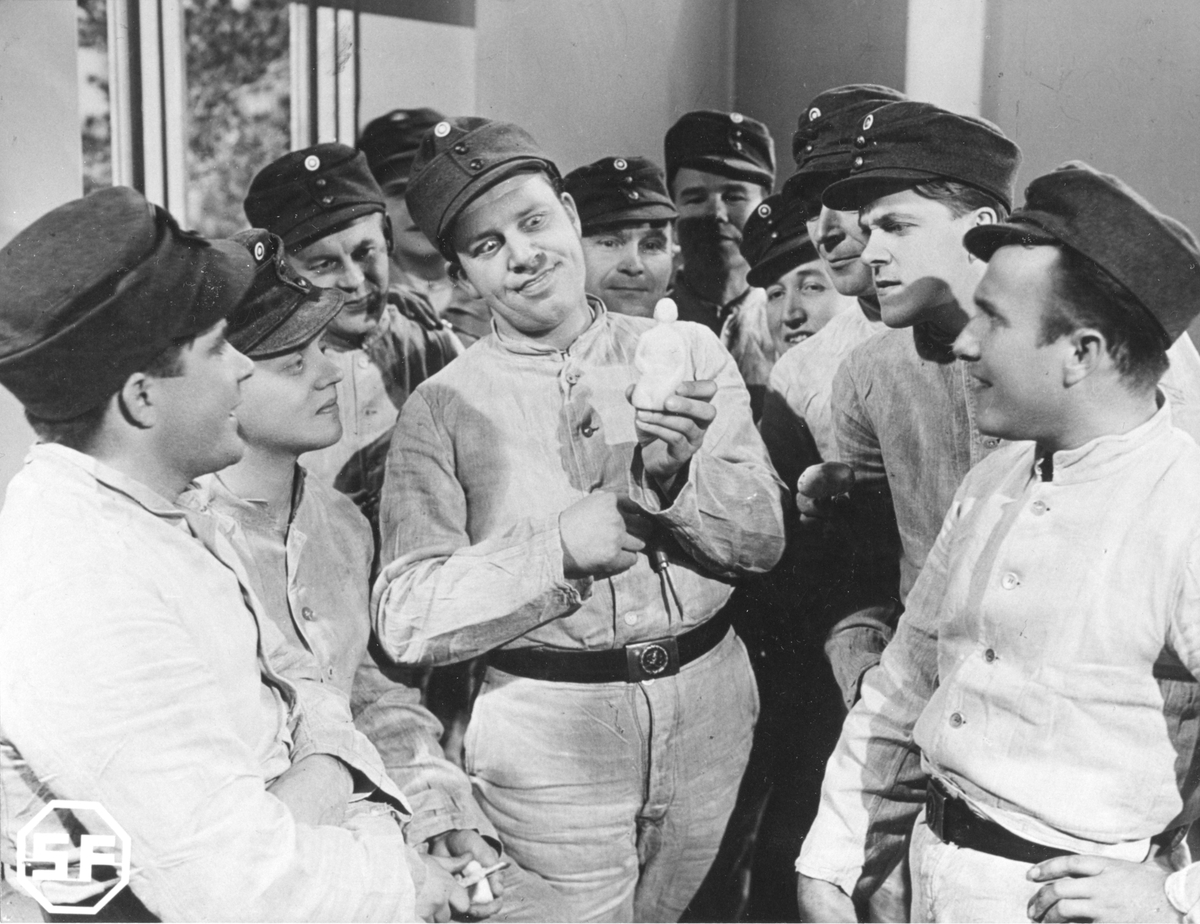
Cheeky soldier Malakias Paavonen (Kaarlo Angerkoski) is supposed to be peeling potatoes but is caught sculpting one, instead, into the image of a woman. The angry Sergeant Tiainen (Ossi Elstelä) orders him confined to kitchen duties for the duration of the ongoing military manoeuvres, which are just about to be thrown into chaos. Battalion commander Major Harteinen (Tauno Palo) insists on conducting the military exercise on the grounds of the Mäkipalo estate, chiefly because he has designs on the lady of the manor, Oili Mäkpalo (Ansa Ikonen).
For reasons that defy understanding, an earlier Suomen Filmiteollisuus military farce by “Topias” (Toivo Kauppanen), The Regiment’s Tribulation (1938), was one of the biggest successes of the decade at the Finnish box office. This half-hearted respray, which crams many of the same actors into similar roles and situations, was intended to rake in more money from the punters, but failed to garner quite the ticket numbers as its predecessor, both in the theatre in 1938 and at the cinema the following year. Notably, the outdoor location shots were all completed first to make the most of the short Finnish summer in June and July 1939. The interiors, comprising the bulk of the footage, were shot in September, when the decline in good weather would not be an issue. The film was planned for a national release in November, but was held up by the outbreak of war. A few scattered provincial screenings did occur before the official Helsinki opening night on 1st January 1940, which is why I, along with the Finnish film archives, continue to list this film as a 1939 release.
As with The Regiment’s Tribulation, (and indeed its 1939 imitation Kalle Kollola, Cavalryman) the most interesting element of Serenaadi Sotatorvella is the primitive nature of the military equipment. Paavonen’s mess unit entirely comprises horses and carts. The sergeant tries to interfere with Paavonen’s cooking of that old military staple, pea soup, which ends with a bag of salt dropped into the pot and a ruined meal. Paavonen falls for local milkmaid Sandra (Siiri Angerkoski), providing a rare element of meta-textual comedy, in which Kaarlo Angerkoski is obliged to woo the actress that everybody in the audience knew to already be his wife.
Unfunny comedy business is provided by Korni-Mikko (Toppo Elonperä), a venerable veteran of the Turkish Wars, determined to befriend the young Finnish conscripts and lead them in a bunch of hearty shanties – as with Our Boys in the Air (1934), the film that began this watchathon, the script repeatedly calls for the cast to burst into song in precisely the same way that Finns don’t.
Misunderstandings and hijinks subsequently ensue, the Major loses his trousers and mistakenly believes that Oili doesn’t love him, and all’s well that ends well in a war game that entirely downplays the vicious conflict that Finns were already knee-deep in by the time this film actually saw the light of day. In theatrical exhibition, it laboured under the unfortunate alternate title of Soldier Paavonen’s Lucky Pants.
Perhaps luxuriating in the fact they got to see the film before all those hipsters in Helsinki, the provincial press acted like it was the best thing since non-stick frying pans. “A great stimulant to the mind” wrote an anonymous local critic in Vaasa, where people are apparently easily impressed. “Vigorously and briskly performed,” wrote some toady in Tampere. It may well be that they were moved to give the film more credit than it deserved because like the same year’s Rich Girl, it was tinged with tragedy. Leading man Angerkoski died shortly after filming was completed, suffering a heart attack in Kotka at a stage performance of The Jäger’s Bride. He died in his wife’s arms, and the Finnish media made much of the punishing hours of Finnish film-making, and the toll they had taken on him in late-night shoots, coffee and cigarettes.
















 The Official Schoolgirl Milky Crisis Blog