There will, I am sure, be no change at all at NEO magazine, as the lunatics are already in charge of the asylum. But for much of the rest of the British press, the onset of summer sees the beginning of “silly season.” The media slows down, even more than it has in pandemic times. There are less product launches, less premieres, less new books. Half of the world goes on holiday, and the people covering for them might let a few things through that might not otherwise
All of which goes to say that the media might get even weirder for the next month, and you’ll have to do a double-take at some of the stranger sounding stories that make it past sub-editors. But June’s Guardian piece on the imminent danger prevented by “racoon-dogs” was not part of silly season at all, but another dire addition to our annus horribilis.
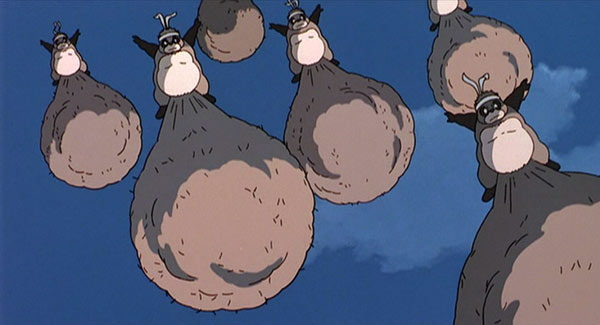
Native to China, Siberia and Japan, and better known to any anime fan as tanuki, the raccoon-dog is “an exotic member of the fox family,” and notoriously skillful at escaping from cages. Introduced to Soviet-era fur farms in eastern Europe, the species has been inexorably working its way across the continent, and constitute one of the most potentially dangerous “invasive non-native species.”
Now, zoologists are clutching their pearls in horror because one was caught in the wild in Wales last year. Another was seen near Lincoln, and another was reportedly stolen from an illegal back-garden cage in Oldham. The Mammal Society (of whom, I confess, I have not heard until today) is warning members of the British public to stay vigilant, because raccoon-dogs will eat anything, breed like, well, like raccoon-dogs, and pose a clear and present danger to voles, frogs, other small mammals and ground-nesting birds. Oh, and they are also riddled with a number of diseases that can be passed on to humans. Because the last year hasn’t been surreal enough already. Isao Takahata has passed away, so he’s not around to defend the loveable trickster tanuki made famous by his Ghibli feature Pom Poko. There was not a word in the Guardian of their shape-shifting powers, their ancient wisdom or their entertainingly magical testicles. They are, it turns out, bad news, as unwelcome as Japanese knotweed and murder-hornets, and not the least bit like the fun-loving furries depicted in the anime classic. Maybe it’s time to watch Pom Poko just once more, before the real world ruins the fantasy.
Jonathan Clements is the author of Anime: A History. This article first appeared in NEO #210, 2021.
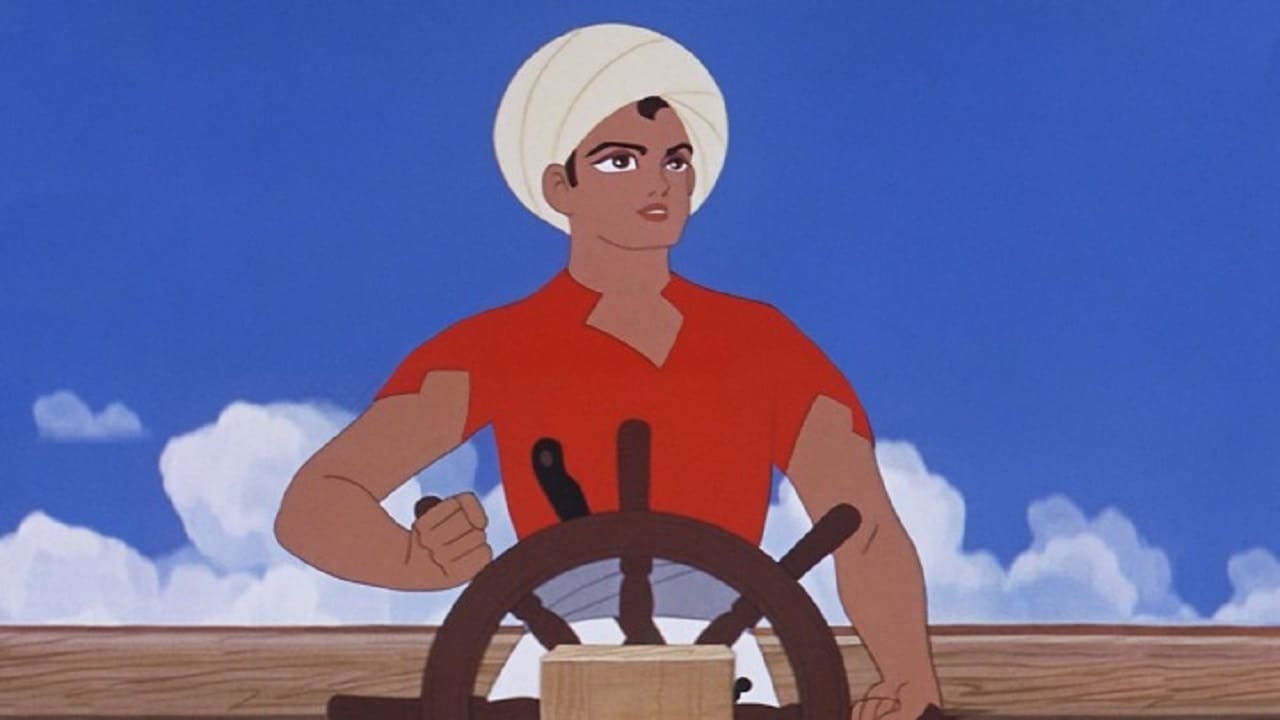
“In search of muscular realism, animators on Toei’s Arabian Nights’ Sindbad the Sailor brought Chiba in to generate footage of the actor running, jumping, fighting and rolling. The film was them rotoscoped to create some of Sindbad’s action scenes, although the role of Sindbad in the anime was credited only to his voice actor, Hideo Kinoshita.”
Pretty sure my obituary of Sonny Chiba over at All the Anime has a number of things in it you won’t see anywhere else, including his secret anime role and his pirate musical.
“Lu makes fluent and enlightening use of Chinese resources to show just what a mess kung fu legend really is. In particular, he patiently outlines the massive shift in allegiances that accompanied the regime-change from Qing to Republic, with novelists of the 1930s suddenly declaring that the many Shaolin Temple bad-guys of 19th century fiction were in fact heroes whose true nature had been reversed to elude the censor, as if Star Wars were remade with Darth Vader as the hero.”
Over at the Martial History Team blog, I review Lu Zhouxiang’s history of the Shaolin Temple.
“When I try to develop a character, the first thing I think about is the pose, how I’m going to represent it and how to get the most out of the character, it’s from this line that I start creating it.” Such a comment rather downplayed his own undeniable talent in animating his characters, too, but helps explain how he could be the figure behind so many icons whose physicality and character can be revealed in a single image.
Over at All the Anime, I write an obituary for the anime artist Masami Suda.
Anxi is a mountain village, sitting on top of hills that have been entirely carved with tea terraces. There’s not a lot else you can do with the mountains in Fujian, as they are too steep for any other kind of cultivation. So it’s lucky they can grow tea.
The director has spent the last two days hectoring me about the difference between the languages of south Fujian (Hokkien) and north Fujian, around Fuzhou (Hokchew). It often sounds like a real-ale drinker buttonholing one in the pub about the differences between the dialects of Norfolk and Suffolk, but it’s a big deal for her, and supposedly for the locals, too. She is particularly pleased because her own native dialect, Teochew, is cognate with Hokkien, and so she can rocket off in conversation with the locals.
Hokkien is a big deal because in the local language the word for tea is not the Chinese chá, but té. Or in Hokchew, tē. I think you can see where this is going; when the drink was first exported, it was shipped by Hokkienese, who told the English and the French how to pronounce it.
Being in a warm place with pointy roofs, while a bunch of people yell at each other in Hokkien all around me feels oddly like being back in Taiwan. We are in what was once a plush 19th century farmhouse with upswept Min eaves, now converted into a centre for tea excitement. You may wonder what is exciting about tea, and I am still wondering myself, but the manager, Jasen Lim, is an affable former designer who has made tea his new tourist mantra. Visitors can come and sample the varieties of Iron Guanyin, which happens to be my favourite Chinese tea.
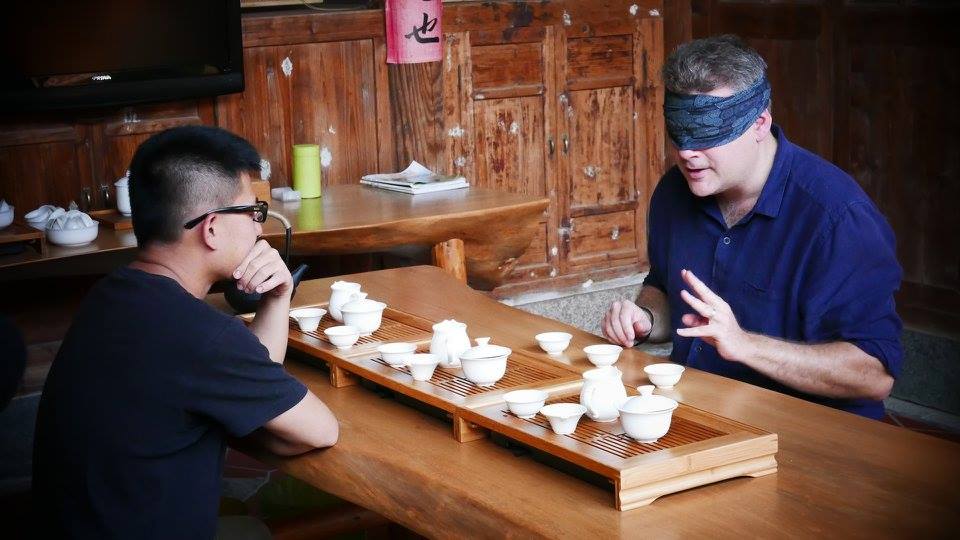
He sets out three bowls in front of me. One is Iron Guanyin made from one-year-old leaves, and tastes faintly of orchids. At least that is what he tells me – never having tasted an orchid, I can neither confirm nor deny. The second is from three-year-old leaves, and has a smokier aftertaste. The third is from five-year-old leaves, and has a darker, brownish colour, looking more like oolong. I obligingly sip and comment, and only choke a couple of times when I am exhorted to suck and gargle with it like a wine connoisseur.
“You are the first English person I have met,” Jasen says. “Although not the first English person to try this tea. That was Queen Victoria, back in the days when the English drank real tea.”
Half an hour’s drive further up the mountain, we come to Wei Yuede’s compound. Master Wei is such a tea celebrity that he only has two hours to shoot with us before he rushes off to a tea conference in Beijing. One wonders what they serve in the breaks. He is clad in Qing-style silk and is an ideal interviewee. I have a set of questions to ask him, but when I ask him the first, he launches into a ten-minute soliloquy about the meaning of tea, answering with a series of four-character phrases, each one of which is unpicked into a series of poems about the wondrous properties of tea, particularly Iron Guanyin. I ask him how it differs from Pu’er, and he goes into one.
“Pu’er is rubbish! They don’t know what they’re doing. They roast it too much. They use the wrong trees. They’re all idiots. There’s a poem that says…” And off he goes for another ten minutes, until I ask him what he thinks of English tea.
“English tea!? Ha! That Indian crap! They steal our tea and plant it somewhere foreign, and then they leave it in the hands of lackwits who don’t know how to bruise it, don’t know how to roast it, don’t know how to store it and don’t know how to ship it. They cart it ten thousand miles on ships damp with saltwater, and they hand it over to a bunch of foreigners who don’t know how to make it. It turns out brown! We have a poetic saying that goes…” And he’s off again.
Usually, our problem with Chinese interviewees is that they don’t know anything. Master Wei knows everything, and is determined to preface any statement with a nine-point rebuttal, in blank verse, of any likely dissent. I just wind him up and watch him go. When he finishes, with an appeal to the peanut gallery about the future of tea, there is applause from the assembled visitors.
“My ancestor,” he says, “discovered Iron Guanyin tea. He was visited in a dream by Guanyin herself, the Goddess of Mercy, who told him how to make it.”
Master Wei has half a dozen children. This is somewhat in contravention of the one-child policy, but he makes so much money from selling tea that he just pays the fine and keeps on trucking.
“My most expensive tea,” he says, “is £36,000 a kilogram. It is so pure that it actually GETS YOU HIGH. And hard. All night.” There is a long pause, which segues into a Pinteresque silence. “Do you want some?”
I confess that I have little need for any of these benefits right now, particularly since the director and our fixer have each taken the bedrooms on either side of mine, in order to protect me from what they believe to be an army of prostitutes converging on the hotel. I have seen no evidence of this, but I appreciate their concern. As for Master Wei, he is living proof of his beverage of choice’s medicinal benefits.
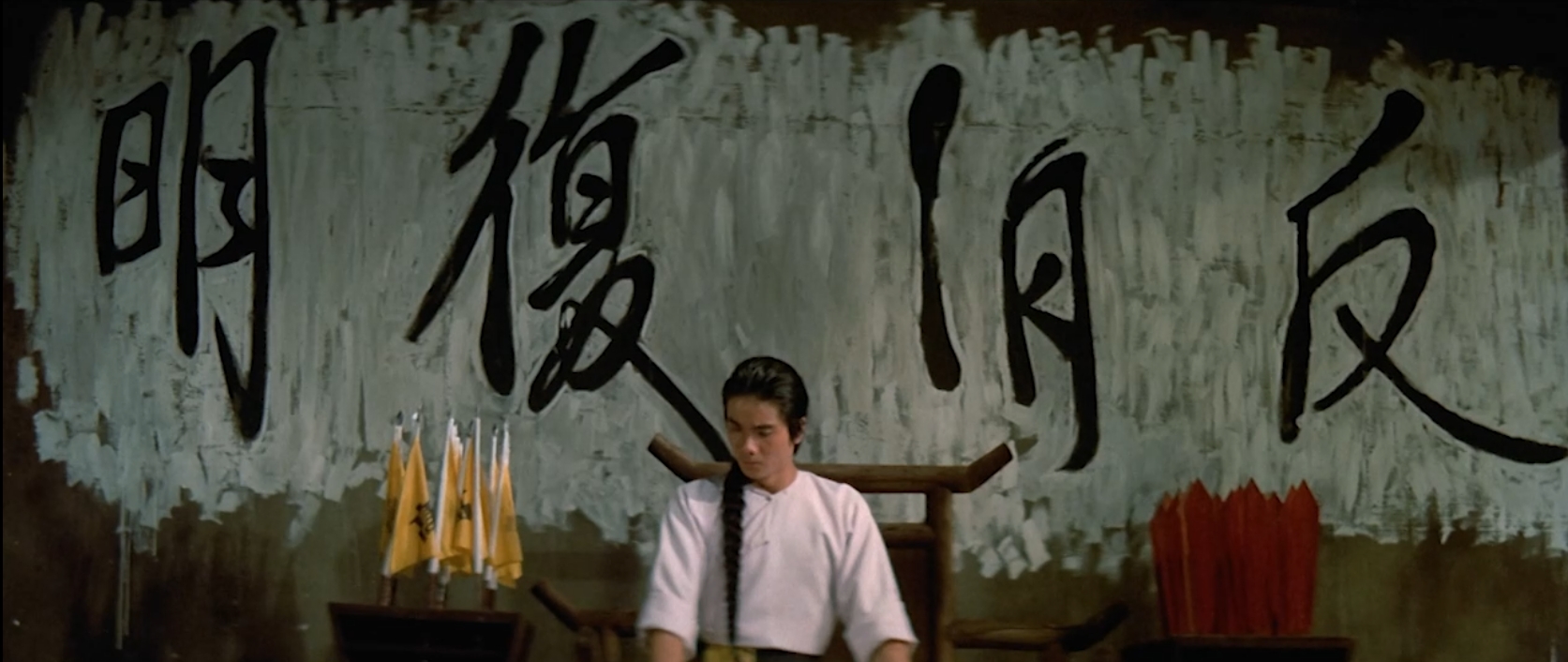
Checking some of the subtitles for Arrow’s forthcoming Shaw Brothers box set, pausing to admire this lovely moment from Five Shaolin Masters, where a former rebel, chastised for becoming little more than a mountain bandit leader, sits in shame beneath a grand banner that calls for the downfall of the Manchus and the restoration of the Ming dynasty. The shot comes and goes in just two seconds.
As all you Chinese linguists will have surely noticed, the second character from the right is a deliberate mis-spelling of 清 Qing, leaving off the “master” radical from the name of the Manchus’ dynasty in a pointed political comment.
The film is packed with subtle call-backs to the Manchu invasion, and occasional references to Zheng Chenggong (Coxinga), the unseen resistance leader whose son continues to oppose the Manchus from off the coast of Fujian. The rebels in the film use the secret code 319 to signal their allegiances, a reference to the 19th day of the third lunar month in 1644, when the last Ming emperor took his own life.
I once sent a BBC researcher away with a flea in her ear, after she asked me if I’d like to appear on a documentary about SEX. Oh yes, she said, it’s all going to be very exciting. We’re going to talk about all those schoolgirls in Japan who’ll bang old men for money. Do you know anything about them?
No, I replied. Although I’m pretty sure that there are “schoolgirls” in Manchester who’ll bang old men for money as well, and I’m guessing that’s nowhere near as photogenic or titillating for you.
She wasn’t very happy to hear that, although I suggested that if she really wanted to find out all about schoolgirl prostitutes, she should give Sharon Kinsella a call, as she loved talking about them. That may have been the unkindest cut of all, as I’m sure if the Beeb did call Dr Kinsella, she would have given them a tongue-lashing that made mine look like a fireside chat with tea and cake.
It’s a truism widely acknowledged in the anime world that so many Japanese cartoons are obsessed with fantasy figures of fifteen-year-old schoolgirls because they are aimed at audience of desperate teenage boys. But Sharon Kinsella’s book, Schoolgirls, Money and Rebellion in Japan, points to a wider media malaise, rising to fever pitch during the 1990s, based on a fervid, prurient obsession on the part of newspapers and TV programmes, determined to uncover a nest of vice and corruption that, frankly, wasn’t there. Drawing on the media research of Stuart Hall, Kinsella points to hidden subtexts of patriarchy, ownership and control. “Our” women are being corrupted. What can “we” do about it? And can we watch…? How much do they charge…?
Drawing on articles, TV coverage, novels and films, but also a timeline of changes in law and demographics, Kinsella talks us through the rise and fall of the enjo kosai (“Compensated Dating”) furore, and sets it within the ongoing narrative of the media’s obsession with teenage girls, as models, muses and commodities.
Kinsella pokes around in the archives to work out just who was quoting whom in the original scare-mongering articles, and soon discovers that absolutely nobody had any firm data to go on. Foreign newspapers quoted posh-sounding statistics, themselves harvested from “academic” articles that, on closer examination, she finds to be grounded in a few vox-pop surveys conducted by gutter-press journalists in Shibuya. This is a little like standing in front of a row of drunken Black Sabbath fans at an Ozzy Osbourne concert and asking if anyone likes eating bats. The answer you receive will more reflect peer pressure and jollity than actual truth. And nobody in their right mind would expect a foreign newspaper to extrapolate such a response into a commentary on bat-eating habits in Birmingham. And yet, it seems, this is what happened with compensated dating.
Kinsella breaks the politics of such interviews right down to their bare bones, and paints a picture of bolshie, amped-up soubrettes, bragging that they’ll do anything for 50p and a bunch of grapes, as long as they are talking to dorky researchers who look shockable. No-nonsense female researchers got immensely more sensible and demure replies, and handsome male researchers got hardly any replies at all, because their interviewees were suddenly bashful and giggly. Meanwhile, an entire slew of schoolgirls, wandering through the middle of Tokyo, had never even heard about prostitution until a bunch of journalists rounded them up and asked them if they’d ever consider trying it.
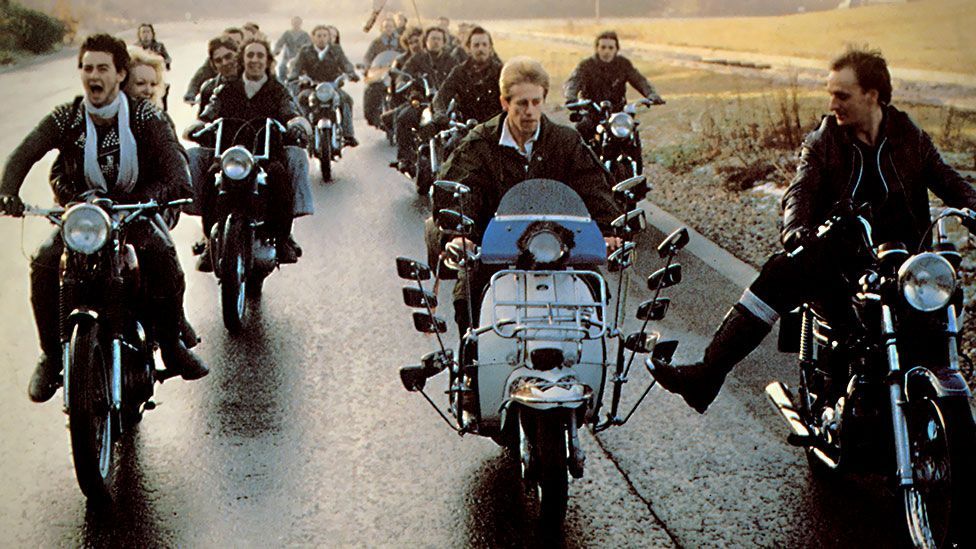
Kinsella smartly relates all this to earlier media panics, such as the British obsession with Mods in the 1960s, which similarly saw a prominent thoroughfare (Piccadilly Circus) jammed with reporters on a Bank Holiday hoping to see something kick off, and eventually outnumbering their interviewees. But she is more interested in precedents for a male-run, male-focussed media getting worked up about the activities (or alleged activities) of women, such as Japan’s 1920s media kerfuffle over the scandalously short-skirted, bob-haired “modern girls” of the flapper era. She also offers an entertaining aside about the conniptions of feminists, wringing their hands and entirely unsure whether they should be tutting with the men or cheering from the sidelines about females who take control of their own fate.
A common criticism of modern, Foucauldian discourse is that it chases its own tail for so long that it forgets about the issue at hand. But this is one of Kinsella’s points, that the entire media “issue” of Japanese schoolgirl prostitutes was built on phantom foundations, and amounted to a man in the pub fulminating to the Japanese equivalent of the Daily Mail that girls today were a bunch of slappers, dressed like hookers, and would probably sit on his lap for a fiver. Three or four repetitions of the story, and some random chats with passing teenagers, and suddenly respectable foreign newspapers like the Guardian are reporting schoolgirl prostitutes as an empirical reality, despite no actual evidence. Kinsella doesn’t say that there is no such thing as a teenage prostitute in Japan, but she challenges anyone who wants to talk about them to actually stump up some meaningful data.
I’ve got nothing. In twenty years dealing with Japan and the Japanese, the only time I have ever knowingly encountered a prostitute was at a London convention in the late nineties, when a large Welsh woman in a micro-skirt landed on top of some producers from Pioneer in the hotel bar, was mistaken for an Armitage III cosplayer, and plied with drinks until she revealed her true colours and scared them all away. And there are anecdotes, of course, most memorably the encounter recorded in Donald Richie’s memoirs, when he runs into two schoolgirls who offer to fellate him for “pocket money.” Barking up the wrong tree, there, dears.
Kinsella notes that for certain listless teens lurking around Tokyo, the easiest source of income was not “pocket money” from sugar-daddies and aging film critics, but appearance fees and consultation bonuses from over-eager journalists, who inadvertently created a new class of “professional schoolgirls,” who would show up at teen magazines armed with stories of scandal. If their lives were disappointingly secure and middle-class, they’d simply make something up.
True to her title, Kinsella also follows the money, coming up with some interesting statistics about the way that the girl-focused industry rakes in its cash. She supplies, for example, the magic sales figure, above which a manga magazine is regarded as “popular” enough to be stocked in convenience stores (25,000), as well as the real reason that Sega made so much money out of photo booths (they’re also the sole supplier for the printing paper, and hence have operators over a barrel).
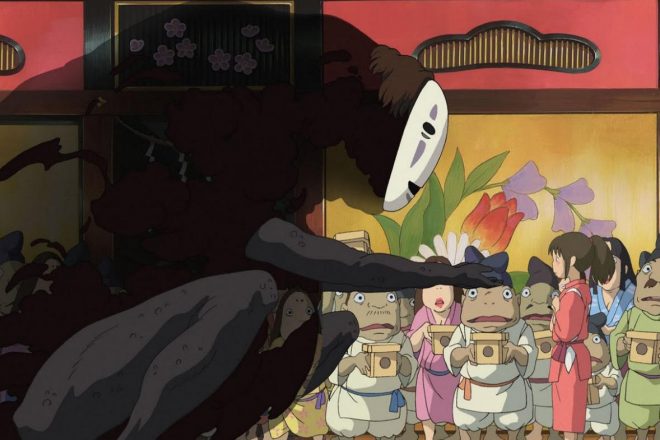
As part of an industry that glamorises and fetishes young girls, anime is, of course, part of this. Kinsella’s grasp of the medium is second-hand and wonky – she confuses Wicked City with Twin Dolls, and at one point appears to be suggesting that San in Princess Mononoke wears half a school uniform – but hits the crucial points where relevant. She alludes to the brothel subtext in Spirited Away – once a controversial assertion, now widely accepted – and to the psychosocial moratorium of modern otaku, drawing on her own earlier research into infantilism in Japanese media. Which is to say that nobody is all that surprised if a fifteen-year-old boy thinks that a fifteen-year-old girl is the most exciting thing in the world; it’s just a bit creepy if a thirty-year-old man agrees.
Unlike the hack journalism it uncovers, Schoolgirls, Money and Rebellion is richly referenced and meticulously cited, and will form a strong, robust foundation for further research into Japanese media, gender and issues of race. Race? Oh yes, for Kinsella’s closing chapters outline the various ways in which Japanese teenage girls respond to their characterisation in the media, including the grotesque blackface make-up that came into vogue at the turn of the century. It is, to be sure, no weirder than the young ladies of my native Essex painting themselves so orange that they look like they have been rolled in Wotsits. But it has become iconic of modern Japanese youth, and that’s what Kinsella has always pursued and analysed, to our great edification.
Jonathan Clements is the author of Anime: A History. This article originally appeared on the now-defunct Manga Entertainment website in March 2014.
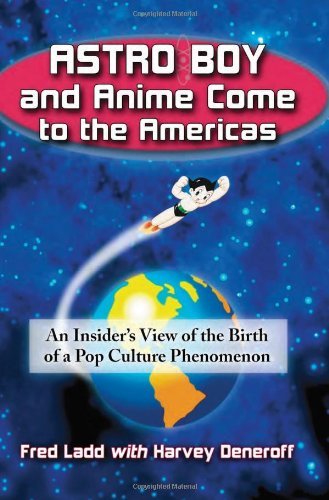
Like its title, Astro Boy and Anime Come to the Americas: An Insider’s View of a Pop Culture Phenomenon is a game of two halves. The first is a riveting first-hand account of life in the broadcast media by the producer who stumbled from radio into television just in time to be part of the scramble for syndicated content in the 1960s. Fred Ladd (1927-2021) was a man with many irons in the fire, hacking together Eastern bloc hokum to make throwaway six-minute sci-fi serials, tinting monochrome movies to meet the demands of the gaping maw of colour television, and repurposing old wildlife documentaries to make cheapo jungle stories. He also carefully rewrote and cut up a black-and-white cartoon show from Japan, inadvertently becoming one of the pioneers of the modern anime business. This book is the closest thing we will get to his autobiography, and presents a gripping account of forgotten technologies and faded films.
More than aware of the cheap nature of the visuals, Ladd deliberately pepped up the soundscape on Astro Boy with traffic noises and offstage business in order to create a busier illusion of action – I don’t doubt this claim for a moment, but note that Astro Boy’s creator, Osamu Tezuka, said that he did similar things at the Japanese end: was this something that Tezuka learned from Ladd, like the idea to have lyrics to the Astro Boy theme? With a budget of $1800 per episode for dubbing, Ladd hothoused his staff until they could do an episode a day, running two projectors in tandem in order to scrape vital minutes when film would otherwise be loaded by union jobsworths while the actors wait. Ladd also saw Tokyo and Seoul for himself, delivering invaluable slice-of-life accounts of the Asian animation industry at home.
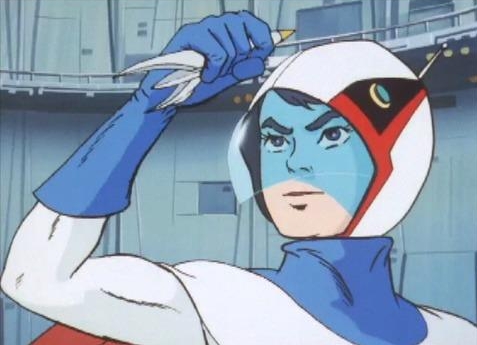
This was the age when foreign cartoons were so much ballast – often literally, since they were bartered in lieu of hard currency, which some foreign countries were unable to export, in return for American TV programming. We get Ladd’s first-hand perspectives of the birth of Gigantor, Battle of the Planets, Kimba the White Lion, and Marine Boy, each arriving in a chaotic whirl of meetings and negotiations, compromises and disasters, skulduggery and gazumping. Although modern anime fans might reel in horror at Ladd’s attitude towards the original Japanese, he was still a master of his craft, and a loving shepherd of these shows into their English-language forms. Like Carl Macek in the generation that followed, his invasive rewrites are what made the broadcast of the English versions even possible in the first place. Nowhere is this more apparent than in Ladd’s face-to-face crisis meeting with Osamu Tezuka himself, where he talks Astro Boy’s creator through the changes that have to be made in dubbing and editing in order to get around the American censor. Here we hear not only of the notorious unbroadcast episodes, but of several others that would have been banned without Ladd’s careful attention.
It’s fascinating to see Astro Boy’s story told from the American end of production, particularly in the form of US issues over censorship and technology, which would end up steering Tezuka’s production thousands of miles away. Ladd is a witty and lucid memorialist of anime’s first steps into foreign broadcast media, aided by his amanuensis Harvey Deneroff, who pops up occasionally to offer crucial notes on context. It’s Deneroff, one presumes, that we have to thank for many of the incisive asides that correct common fallacies about the international animation business, including the vital semantic distinction between Astro Boy’s widely reported sale to NBC, and its actual sale to the very different entity NBC Enterprises. Sometimes, however, one gets the feeling that genuine recollections have been spruced up with unwelcome trivia from doubtful sources. Someone, for example, has added the notion that Nippon Sunrise sprang up in the 1960s amid the first flush of Astro Boy’s success, which Ladd cannot possibly remember, since Sunrise wasn’t founded until 1972, after the collapse of Tezuka’s studio. Similarly, entertainingly lively accounts of certain events come with problematic dates – why does Ladd claim to be sorting out the first 12 episodes of Astro Boy in Japan in mid-1964, when they had surely already been broadcast in America almost a year earlier? And although there is much information in this book that will surprise readers even in Japan, the authors’ linguistic knowledge is wanting – throughout the text, they consistently fail to spell Astro Boy’s Japanese title correctly.
The book is published by McFarland & Company – an outfit with academic aspirations that even extend to the paperback cover price. But Ladd’s reminiscences are so essential to understanding the 1960s anime business, it is well worth it for those alone. Unfortunately, Ladd’s contribution appears to comprise a novella-length 100 pages, and Deneroff’s additions, while genuinely useful as a focus for Ladd’s early testimony, also bulk it out with pointless padding for the latter half of the book, seemingly salvaged from a bunch of old articles. Far from presenting an “insider’s view of a pop culture phenomenon”, the back-end is more like a baffled description from the sidelines, reeling off names and brief synopses of dozens of newer shows simply, it seems, because they are there. Present-day errors reach far greater proportions: The Girl Who Leapt Through Time is inexplicably included in a run-down of Korean films, and the outrageous claim is made that animation in Japan was “virtually dormant for almost half a century” after 1918. But this should not detract from the undeniable value of Ladd’s horse’s-mouth reminiscences, or Deneroff’s efforts in guiding them into print: an irreplaceable narrative of anime in the 1960s.
Jonathan Clements is the author of Anime: A History. This article originally appeared on the now-defunct Manga Entertainment website in November 2011, and is reprinted here following the news of Ladd’s death, aged 94.
“Osamu Tezuka was… well, ninety-nine percent of the time he was a nice guy. At Mushi Production he’d say to us: ‘You’re creatives! Go and create, draw your hearts’ desire.’ So we’d draw whatever we wanted and we’d be nearly finished, and then he’d say: ‘No! Do it again!’
“We worked so hard. There would be times when we wouldn’t even go home. But we all had footrests under our desks, and you could put your coat on it and use it as a pillow. There was one time when I crawled under my table, just to get a little nap. I opened my eyes, and saw that Tezuka was sleeping under the next desk.
“Tezuka was the life and soul of Mushi. Mushi without Tezuka was like North Korea without Kim Jong-il. It fell apart.
“I wasn’t there, though, not then. I’d fallen in with Juro Kara, a playwright who’d briefly worked at Mushi Production as a scriptwriter. But whenever Tezuka asked him to change something, he would just glare back at him, and after a while, I think Tezuka was scared of him.
“Anyway, Kara and his wife were also avant-garde theatre performers, and they would be onstage with a bunch of dancers, painted gold. After the show, they would all jump in the bath together and scrub each other down naked, to get all the paint off. I realised that if I joined the troupe, I would have to jump in the bath with all the actresses. So I volunteered for that and ended up on a European tour, although nothing came of it. By the time I got back to Japan, Mushi Production had collapsed.
“But it wasn’t long before other companies started up using people from the old studios. Most of the managers at the newly established Sunrise had been lower down the pecking order at Mushi. This meant they could learn from their former bosses’ mistakes.
“The Sunrise studio was founded by people who had been middle managers at Mushi, who’d seen what went wrong. At Mushi Production, the animators were on a salary; in a sense, it didn’t matter if they worked or not and many abused that system. A lot of them had no sense of loyalty; they’d be freelancing for Toei under the desks, and at Toei, they’d be freelancing for Mushi! At Sunrise, everyone got paid for what they did.
“You ask me what the difference was between Mushi and Sunrise. Largely, it was that Tezuka wasn’t there. He had a real faith in artists and animators. The trouble with artists and animators, is that they often don’t like to work! Artists weren’t salaried at Sunrise. They had to produce work in order to get paid, and that made a big difference. All the companies in the 1970s were set up, to some extent, in reaction to the failure of Mushi, but it was only Sunrise that perfected it.
“Toy tie-ins were important to them. They had Yoshiyuki Tomino working on Gundam. If Tomino is a star, then I’m… well, I guess I’m just a street lamp! They said to me: ‘Gundam has done well for us; we want something like Gundam, but different. We don’t much care what it’s about, just make sure there are robots in it!’
“Gundam had robots fighting, but they were in space. They didn’t really have to touch the ground. My earlier Fang of the Sun Dougram had robots fighting on the ground, but they were big, stompy, slow machines. For Armored TrooperVotoms, I wanted something faster. I made them smaller. I put skates on their feet. That wasn’t about budget; that was so they could really zip around. Then one of my animators suggested that we could get them to slalom, like they were skiing… and we were off!
“Of course, toys became even more important. In the 1990s, a lot of the founders of Sunrise were approaching retirement. In order to protect their staff, they sold their interests in the company to one of their clients: Bandai. It kept everyone out of trouble.
“The ‘Japanese’ animation business today sustains maybe seven thousand employees in Japan, but maybe another fourteen thousand outside it, in Vietnam, Taiwan, China and other places. I teach three days a week, at the Osaka University of Arts. I teach the students how to make entertainment animation. By which I mean commercial stuff. Not art-house cartoons, but animation that they can actually make a living on: anime that can actually help them survive! I don’t have time to write a book. I am sixty-eight years old and professors retire at seventy. Maybe then I’ll write down my experiences in the industry. Maybe…
“I’ve got a place in the countryside. It’s a little house out in the middle of nature. What do I do there? Absolutely nothing! Drink a little whisky, walk around dressed like a British gentleman… Play golf. I look out in the garden, and I think it could do with a little statuette of a nature spirit. A Moomin or something like that. Yes, I worked on TheMoomins, too.
“Why did I do it? I did it to survive!”
Jonathan Clements is the author of Anime: A History. This article originally appeared on the now-defunct Manga Entertainment website in January 2012, and was based on Takahashi’s onstage interview at Scotland Loves Anime 2011.
This year sees the thirtieth anniversary of one of the most influential companies in the history of Japanese animation. Despite being a fundamental part of modern Japanese media, the name Celsys is largely unspoken among anime fans, unless those anime fans happen to be historians or professional animators.
Celsys was founded in May 1991 to make the digital animation software package that would come to be known as RETAS Pro. Within a year, timid animators working on a Fist of the North Star game at Toei would try out this “Revolutionary Engineering Total Animation System,” a basket of programs including Stylos, for creating digital “pencil” images, Traceman for in-betweening, Paintman for colouring and Core RETAS for integrating all the other elements. The Windows version also added Movie Edit Pro, which allowed for the addition of limited special effects.
RETAS was released at a watershed moment in the history of computing, as the falling costs of hardware made mass adoption of software a possibility. By 1997, Toei had begun phasing out its analogue animation units – Dr Slump and Spooky Kitaro, despite continuing to look like analogue animation, were soon created solely inside computers. As the Pokémon boom led to a surge in animation contracts, overseas studios were increasingly able to integrate their work down a phoneline, and multimedia operations were thrilled at the chance to have all their assets digitised from the outset.
Celsys’ own publicity has boasted that up to 90% of all modern anime “use RETAS Pro” in their production, although I suspect what that means is that they use RETAS Pro in part of their production. Some companies may work solely in RETAS, but others still just use it for Paintman these days. Regardless, the Celsys name is something you will find associated with vast numbers of modern anime, and as the price of the software dropped during the noughties from £4,000 to £240, suddenly the world was full of have-a-go-heroes like Makoto Shinkai, who’d worked out that you didn’t need a studio of 200 people anymore, you just needed a big desktop machine and lots of time. In 2013, even Sazae-san, the last anime to be made in the old-fashioned way, gave up and became an all-digital operation.
Celsys went on to be similarly ubiquitous in the worlds of e-book readers (CLIP STUDIO READER) and digital manga production (Manga Studio). In other words, their engine is chugging away behind almost all the electronic, streaming or downloadable light novels, cartoons and comics consumed in modern Japan. Happy birthday to them.
Jonathan Clements is the author of Anime: A History. This article first appeared in NEO #209, 2021.









 The Official Schoolgirl Milky Crisis Blog