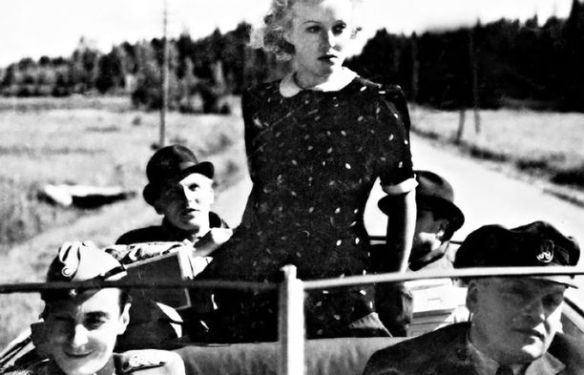
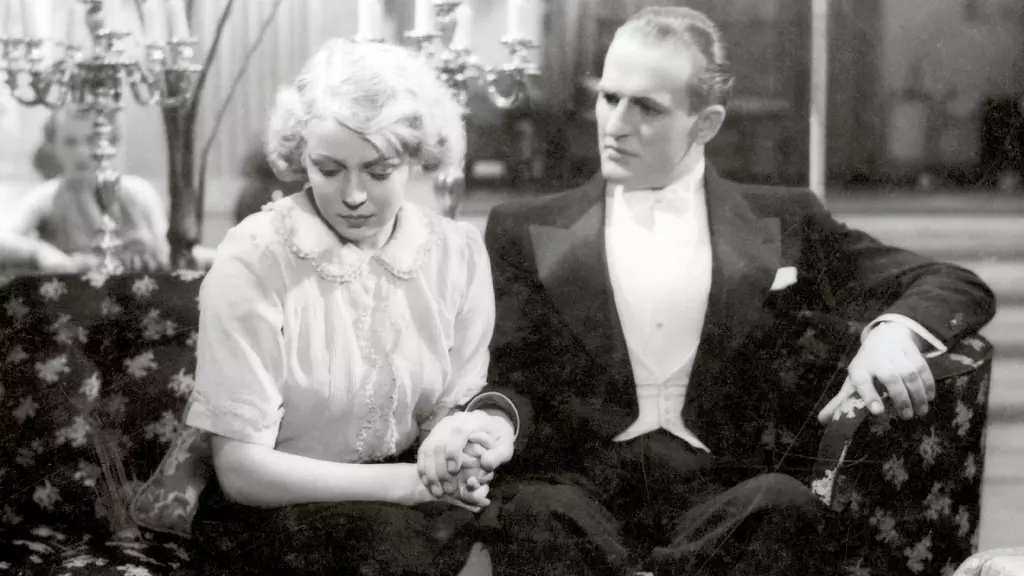
 Katariina (Helena Kara), “call me Kati”, is an orphan teenager sent away from Oulu to Helsinki to be raised by Mauri (Tauno Majuri) a friend of her late father’s, appointed as her guardian. I think you can probably imagine what’s going to happen, as do all of Mauri’s friends, who tut in disapproval when he announces that he’s going to get a barely-legal ward. The housekeeper Mrs Simola (Aino Lohikoski) does her best to put a brave face on the arrival of a vivacious young girl in the house of a confirmed bachelor.
Directed by Orvo Saarikivi for Suomi-Filmi, Poikamiesten holhokki was based on a novel, originally set in England, by one “Denys Aston”, which turned out to be a pen-name for the Finnish author Anni Inkeri Relander. In other words, the original was a comedy of manners that turned upon a very British set-up. Etiquette in Finland is a somewhat bipolar issue – much like Mauri and Kati, there is an unspoken stand-off between “Swedish” self-declared urban sophistication, and a homespun, folksy charm born of the Finnish countryside.
In the lead role, Helena Kara is a luminous presence a generation ahead of her time, whose mannerisms and carriage could easily mark out her out as a time traveller from the 1950s. She had, legendarily, been spotted by director Risto Orko when working as an usherette in a Turku cinema in 1937, and appears here, just a year later, with palpable star quality.
“Wotcher, Mauri!” says Kati, blundering into his all-boys salon and heartily shaking everybody’s hand. In a subtle audio touch, she speaks at all times at a volume a couple of notches above everybody else, even supporting characters to whom she is supposedly deferent. She puts her feet up on the furniture and invites Mauri’s doctor friend to have a look at her feet, eagerly accepting a cigarette from a cavalryman. Neither of them are getting what they bargained for, and it’s unclear on their first encounter who has the upper hand – is Kati a breath of fresh air, or a wayward wild-child in need of some discipline? One is reminded, immediately, of the strong woman of Juurakon Hulda, but the emphasis with Kati is more that she is a free spirit. Perhaps unsurprisingly for the first country in Europe to give women the right to vote, Kati is by no means the first female lead in Finnish cinema to represent everything that is modern and progressive.
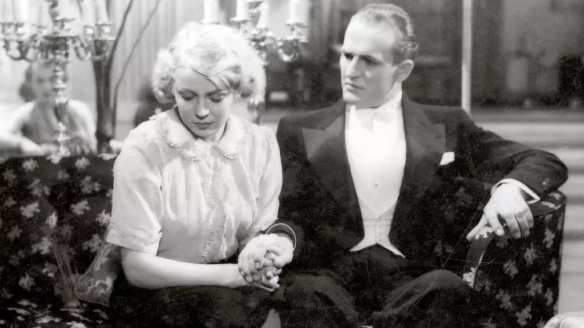 She bounces on the bed, she sings in the shower… it’s hardly smoking crack on the stairs, is it? Mauri tuts and frets about her dangerous ways, but without any real understanding of why he is so morose and snappy, it is difficult to know if he wrestling with problems of his own or just a git. He stuffily suggests that she should take up embroidery or singing, and she giggles that girls her age are more into smoking fags and riding horses. Their encounters become increasingly wearing, as the script demands that Kati repeatedly behave like a pouty ingénue, and Mauri frowns at her like she’s just farted. One is tempted to suggest that Helena Kara’s naturalist verve becomes increasingly trammelled and hesitant the more she is pushed upon to actually act. Meanwhile, the film itself seems unsure how to fill its middle section, bogging down in a long soirée in which Kati (and the audience) must sit fidgeting through two musical numbers, and then packing her off on a bus to get a job in shoe shop, as if even the script writer has grown bored with the previous set-up.
The shoe shop is initially a fascinating glimpse of 1930s Finnish life, lined with anonymous boxes as if the notion of customer choice is still a distant dream. Visitors creep in and speak in hushed tones as if they are in the Church of Footwear.
“I would like some brown shoes,” intones the first customer, as if he is participating in some arcane ritual.
“What size are you?”
“Forty-four.”
Such inadvertent entertainments, however, soon turn just as dreary as Mauri’s distant lounge. Comedy is supposed to derive from the fact that five boxes are hard for a small woman to carry.
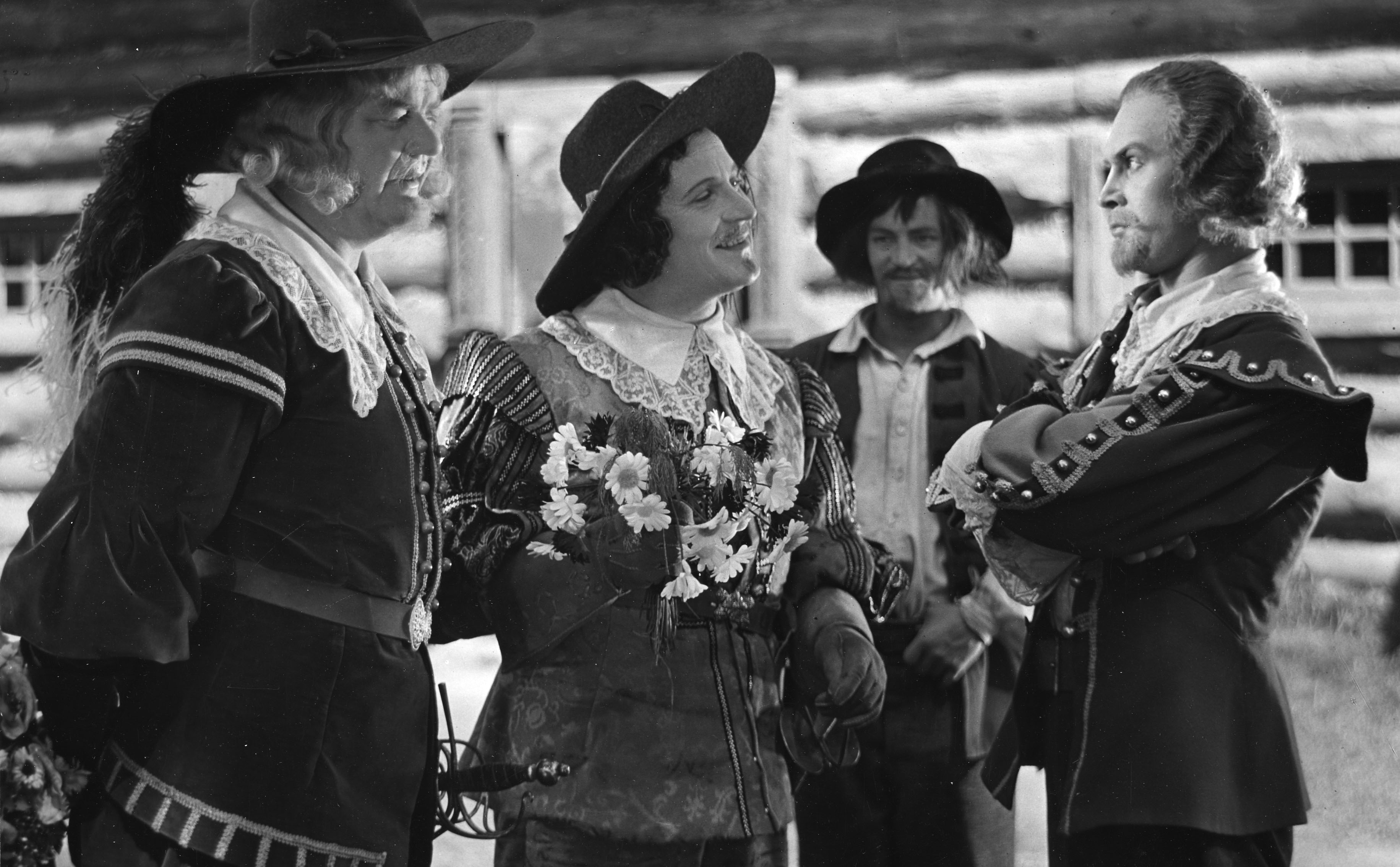
With only twenty minutes to go, the film reluctantly gets around to its central romance, with all the insouciance of a surly teen getting out of bed. Jaska (Ossi Elstelä) the chauffeur has bonded with Kati over horse-care, but has been forgotten for half the film. Kullervo Kalske, one of the most impossibly handsome men in Finland, fresh from charming the ladies in the same year’s For the Money, parachutes into the story to wow Kati’s fellow shop-girls as Baron Klaus von Bartel, a wealthy man of the world. He asks Mauri for Kati’s hand, and Mauri is suddenly reluctant to divest himself of the tearaway teen.
With all the enthusiasm of a man ticking the No Junk Mail box on an email subscription, Mauri suddenly confesses that Kati has brought magic into his life and he doesn’t want her to go. It is a truth universally acknowledged, that a single man in possession of a good fortune must be in want of a wife, as someone once snarked.
Damning it with the faintest of praise in Aamulehti, journalist Orvo Kärkinen noted that it “met its most significant requirements.”
Jonathan Clements is the author of An Armchair Traveller’s History of Finland. He is watching every Finnish film ever made, so you don’t have to.

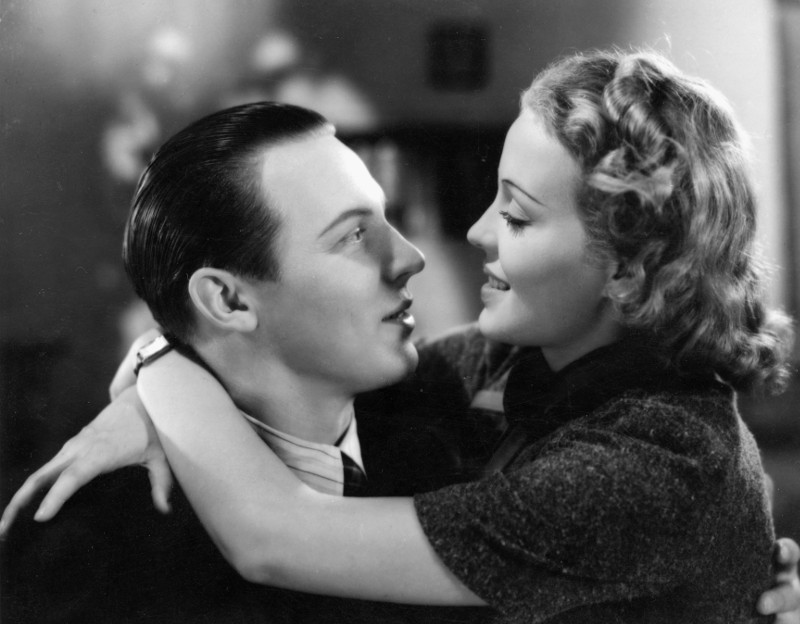 Suomi-Filmi celebrated its twentieth anniversary with this film, which plays with the concept of time from the moment that a bored schoolteacher decides to push the hands of his clock forward so he can sound the closing bell five minutes early. Priest’s daughter Vappu (Helena Kara) falls for college boy Jalmar “Jali” (Kullervo Kalske), a determined social climber who has eyes only for rich-girl Elina (Nora Mäkinen). When Elina ditches Jalmar for someone else, Vappu offers consolation, but several years later, when they meet each other as grown-up workers, they half-heartedly agree to marry each other.



 As an antique-dealer’s son, I have long been used to the world where loveable rogues wheel and deal over flintlock pistols and meerschaum pipes, and occasionally solve crimes and/or bed baronesses. Everything you see in Lovejoy is true; just ask my Dad, but stand well back when you do. My Dad, meanwhile, as the father of an oriental linguist, has gained a new-found second-hand ability to make sense of Chinese in later life, and whenever I drop by his stall at Portobello Road, I am beset with exhortations to date Kangxi pottery or read the inscriptions on opium scales.
 The Official Schoolgirl Milky Crisis Blog