Blood Will Tell

The nosebleed, long a sign of suppressed lust in manga, has taken on a whole new meaning, in a controversy that has now been running for five years, and left a stain on what should have been the triumphant ending of a successful series.

Tetsu Kariya’s Oishinbo (“The Gourmet”) has been running for three decades in the pages of Big Comic Spirits, drawn by Akira Hanasaki. “Thirty years,” wrote its author ruefully, “is long enough for anything,” and there were rumours afoot that with failing health and entirely reasonable weariness, he was planning on bringing the story to a close. However, Oishinbo bowed out suddenly and unexpectedly, after a May 2014 storyline about reporters covering the nuclear accident at Fukushima.

Oishinbo was one of the most successful manga in Japan, running to 111 compilation volumes, every one of them a million-plus best-seller. It is one of the last hold-outs of the “gourmet” trendiness of Japan’s 1980s bubble era, and an encyclopaedic introduction to the world of Japanese food and society. But Kariya’s final storyline before a sudden (and apparently planned “hiatus”) featured a character who suddenly develops a nosebleed after coming home from a Fukushima fact-finding mission, despite claims by the authorities that there should be no side-effects. “I myself began to have nosebleeds suddenly at dinner next day when I came back from coverage in Fukushima,” wrote Kariya on his blog, also citing sudden and inexplicable fatigue: “It felt like someone was trying to drag my spine to the ground.”

Kariya, who has lived in Australia since 1988, is a Japanese opinion-former with a large audience, but he seemed to make a lot of enemies. All twenty phone lines at his publisher, Shogakukan, were jammed for a solid fifteen hours – he blamed “pro-claimers”, a term for thugs hired to disrupt corporate activities. He subsequently got into a mud-slinging match with Shinzo Abe, the Japanese prime minister, who called his comments irresponsible and defamatory after Japan had received the much-needed economic boost of the 2020 Olympics. Last month he published an update on his blog, detailing further incidents of harassment and stone-walling directed against him and his publishers over the last five years.

“This was not a thing I heard from someone,” he wrote. “nor me repeating some rumour. This is something I experienced for myself.”

Jonathan Clements is the author of Anime: A History. This article first appeared in NEO #190, 2019.

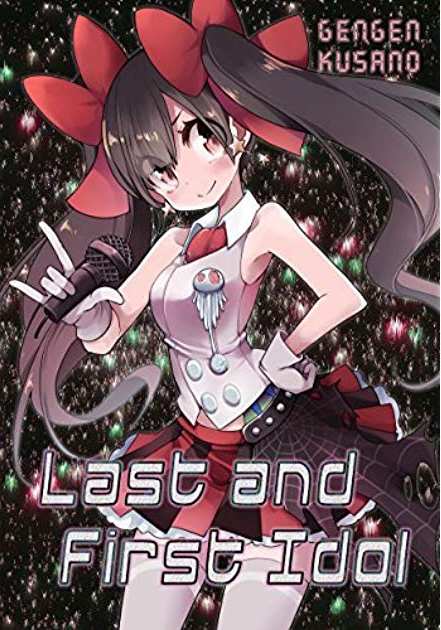
Last and First Idol

Over at All the Anime, I chronicle the controversial debut of Gengen Kusano, who recently snagged his second Seiun Award for science fiction.

“Mere months before Last and First Idol was nominated for the Seiun, it had previously appeared in an amateur press publication called School Idol Fictionally, where its true colours were revealed as a work of Love Live! fan fiction. Kusano’s original took a degree of icky glee at describing the sudden death of the idol Nico Yazawa, a gruesome operation to salvage her organs, and her subsequent transformation into a super-being with godlike powers.”

Route Awakening S05

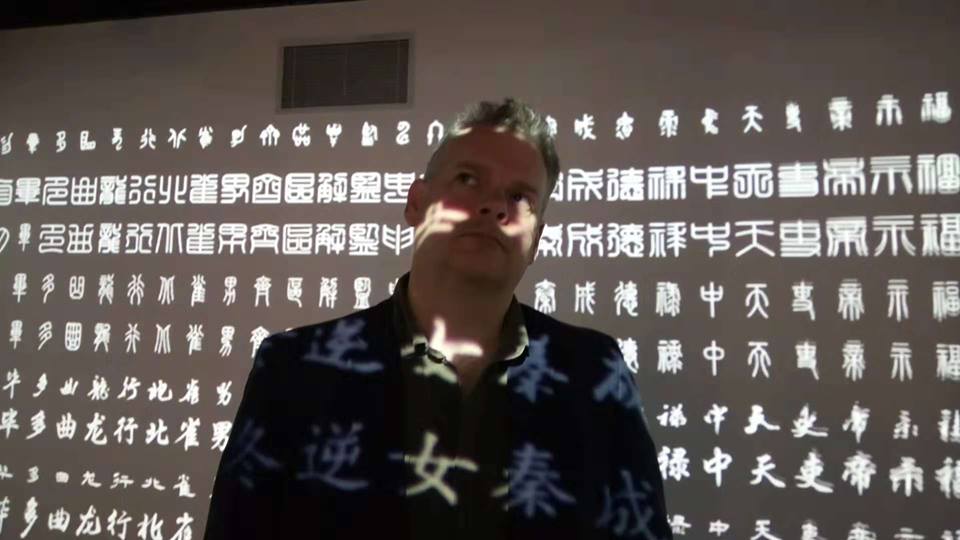
Season five of National Geographic’s Route Awakening begins its broadcast run in China on 23rd August. Other territories to follow soon. But for viewers in China, this will be your chance to see me delving into sacrificial rituals at the Wastes of Yin; oracle bone scripts and divination in the Shang dynasty; the violent art of the Dian kingdom; Nanjing in the middle ages; the golden treasures of a deposed emperor; the immense cathedral-like complex built around a relic of Buddha’s skull; burial customs of the lost Yelang kingdom, and the shipyards of Admiral Zheng He.

British Museum Manga

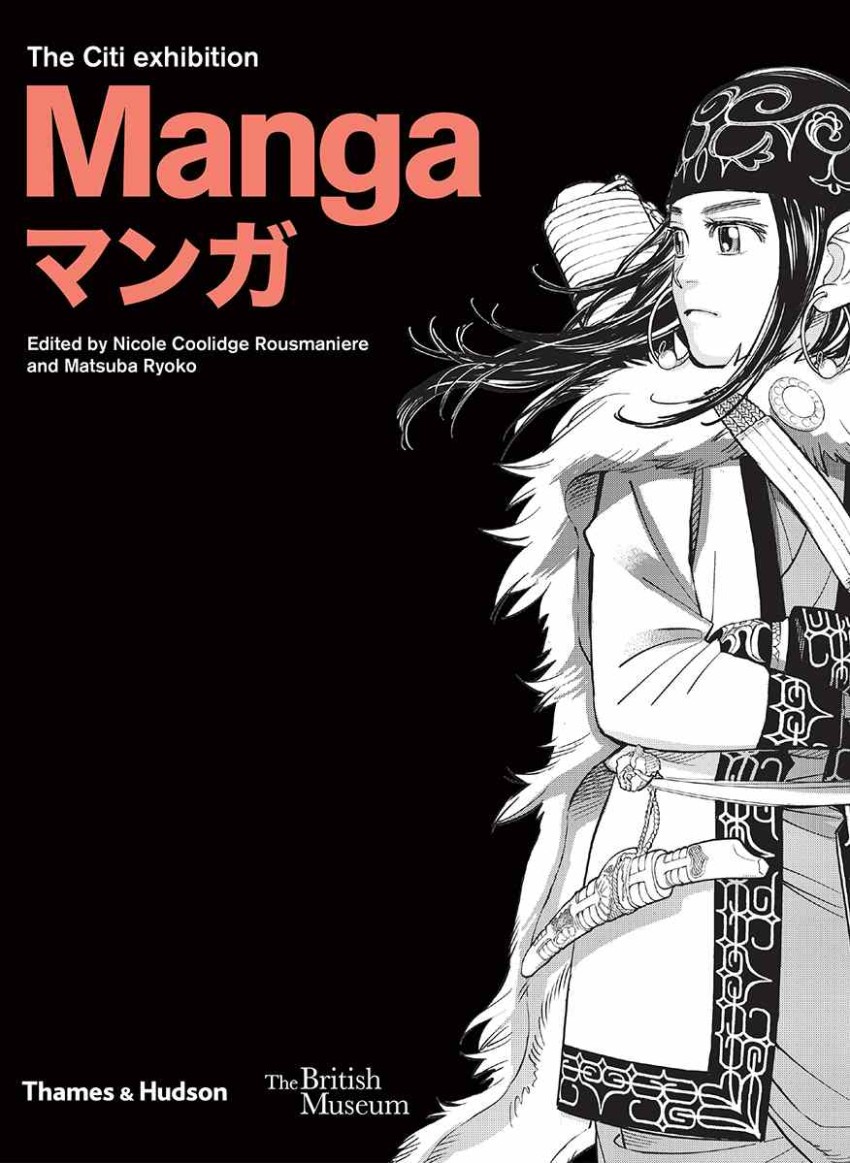
“As the exhibition winds down, its catalogue is going to form much of its historical footprint. On shelves and coffee tables in years to come, this hefty 350-page book is going to transform into a resource and an aide-memoire, a place for people to remember and revisit what they saw. Undoubtedly, it will form the germ of some new fans’ first appreciation of what manga is.”

Over at the All the Anime blog, I examine the heritage and likely legacy of the British Museum Manga exhibition.

Gaijin Nude

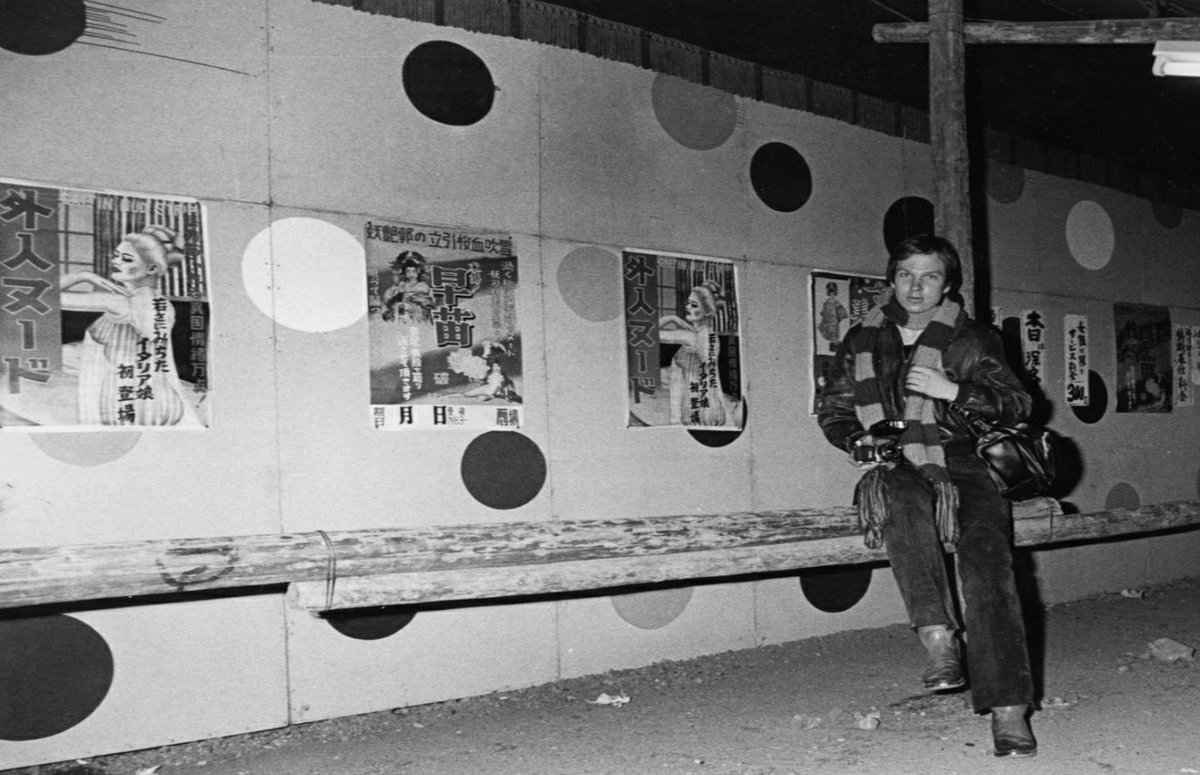
Over at the All the Anime blog, I review Ian Buruma’s snapshot of the literary scene in 1970s Japan: A Tokyo Romance.

“Buruma’s Tokyo tales are a wonderful collage of ghastly poseurs and jocular racists, avant-garde theatrical performances, peep shows and strip clubs, forgotten circus celebrities and lost districts, which he wanders with the same melancholy interest as his literary hero Kafu Nagai. It is a lurid, lost Tokyo before the transforming influences of social media or wi-fi, where one must find books by reaching out and picking them up, and make appointments by speaking to human beings. It is also a world almost as insular as the Shogun’s Japan. Few Japanese, Buruma notes, had the means to leave the country, turning its capital into a side-show of theme-park mockeries of the Other and Far Away. ‘There was something theatrical, even hallucinatory about the cityscape itself, where nothing was understated; representations of products, places, entertainments, restaurants, fashion and so on were everywhere screaming for attention.'”

Miyazakiworld

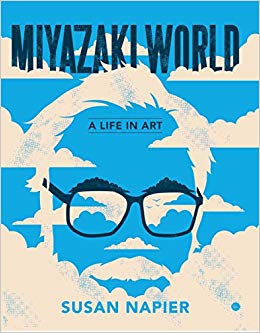
The new issue of Science Fiction Studies is out, including my long review of Susan Napier’s Miyazakiworld: A Life in Art.

“Perfectly judged for the undergraduate reader, Napier’s book offers a commendable balance of analysis and insight, production gossip and historical contexts. Its references diligently cram in signposts for delving deeper into untranslated sources, but not in such a way as to alienate scholars who can only work in English. There is sufficient material here to turn a fan into a critical viewer, but also to inform artistic appreciation of films that are already well-loved. It is sure to become part of the introductory toolkit for many a course on anime, not the least for its nuanced coverage of the life and works of Japanese animation’s most famous creator.”

Notes Towards a Chinatown Museum

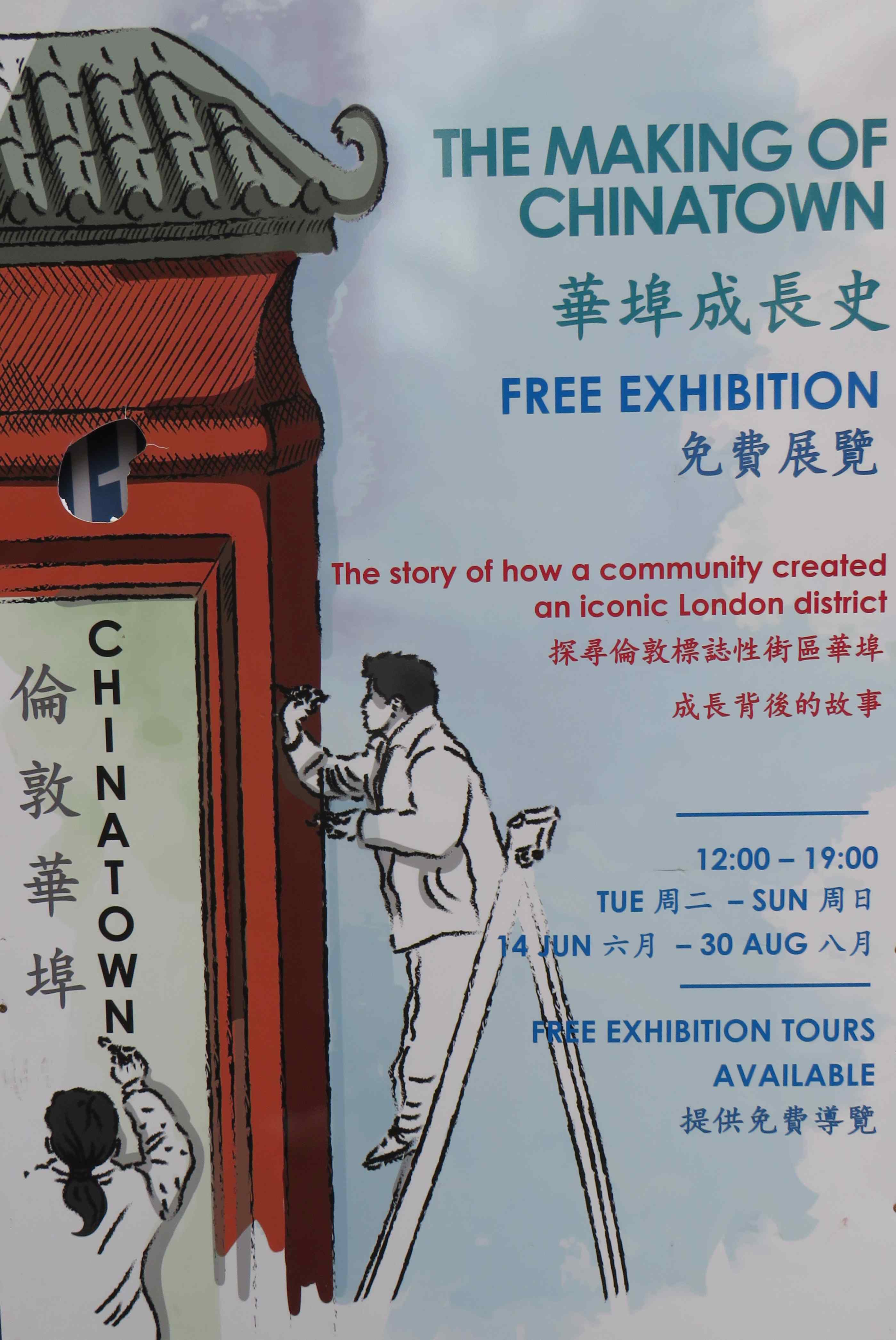
Running without fanfare at the China Exchange in the middle of London’s Chinatown, the Making of Chinatown exhibition aims to tell the story of how an immigrant community could suddenly spring into such a vibrant part of a city’s cultural experience. As the timeline that forms the main part of the exhibit makes clear, the Chinese community centred on Gerrard Street is relatively recent – newspaper clippings as late as 1970 point to the media’s growing awareness that the street was starting to accrete restaurants and stores serving the Cantonese-speaking community.

This exhibition has been a long time coming. When New York has a Museum of the Chinese in America, and both Vancouver and Melbourne have their own richly appointed Chinatown museums, London has been left lagging behind. The temporary exhibit here is necessarily small-scale, concentrating on video archives and scattered photographs, and lacking a lot of material content. There are asides about Limehouse, the original centre for Chinese residents in England, but little about the demonisation of the Chinese in the British imagination in the age of Fu Manchu and Broken Blossoms.

This is a Chinatown museum for the Chinese, specifically the Cantonese who flooded here from Hong Kong during the century and a half of British dominion. But it stops short of celebrating the Chinese in Britain in general – unlike say, the Museum of Arab Americans in Michigan, there is little attempt to engage visitors with the contribution made by Chinese people to British society. Nor does it delve too far into some of the more controversial contemporary issues, such as who actually owns Chinatown, and whether rising rates will make it possible for there to even be a Chinatown in central London within a few years.

A few interactive boxes, seemingly designed for school parties, dare the visitor to open them to find answers to common questions. Does Chinatown look like China? No, comes the informative reply, which explains the fact that most Chinatowns worldwide copy the chop-socky architecture of San Francisco’s 1907 post-earthquake reconstruction, infamously masterminded by two white men who had never been to China themselves.

In an inadvertent bit of post-modern micro-aggression, another box asks: “How do you say ‘hello’ in Chinatown?” I opened it, and it was ominously blank.

The gift shop downstairs is oddly under-stocked, carrying very little of interest that can’t be bought in half a dozen shops in the street outside. It did, however, sell me a lovely book about the Chinese Labor Corps, the “unknown” 140,000 men who were airbrushed from history, but played a vital role in the First World War. Long-term readers of this blog will already know that the Chinese Labor Corps is something of an obsession of mine, and the China Exchange is getting behind a drive to give them a monument of their own in East London – I bought a pin for £2, although that’s still a way away from the £400,000 they need. One hopes that in future, the Chinese presence in Britain will also be celebrated in a more wide-ranging and permanent form, of which this exhibition will turn out to be the first exploratory step.

Jonathan Clements is the author of A Brief History of China. The Making of Chinatown exhibition has now finished at the China Exchange, but will be returning in 2020 to several venues around London, starting with the Westminster Archives from the 14th January, then Beckton Library, Charing Cross Library, Hackney Chinese Community Centre and finally Woolwich library.

Japanese Media Cultures

Over at the All the Anime blog, I review the new collection Japanese Media Cultures in Japan and Abroad — it’s often highly technical, but all the more valuable because it doesn’t demand that you take out a bank loan before accessing it.

Pricing in academic publishing is often a contentious issue in my book reviews. I don’t mind paying £80 for a book, but if I do, it had better be worth it, and if it’s not, I will say so. There are those who take me to task for “forgetting” that academic books are usually bought by libraries rather than members of the public. But libraries have limited funds, too, and librarians could do with fuller and franker appraisals of the books they spend their money on. So you can wait a year or more and wriggle behind an academic paywall to read a journal review of the books I cover. Or you can read what I say about them right now. Or, you know, both, because I’m not a gatekeeper, I’m just a guy who can look over the fence.

The Culprits? (1938)

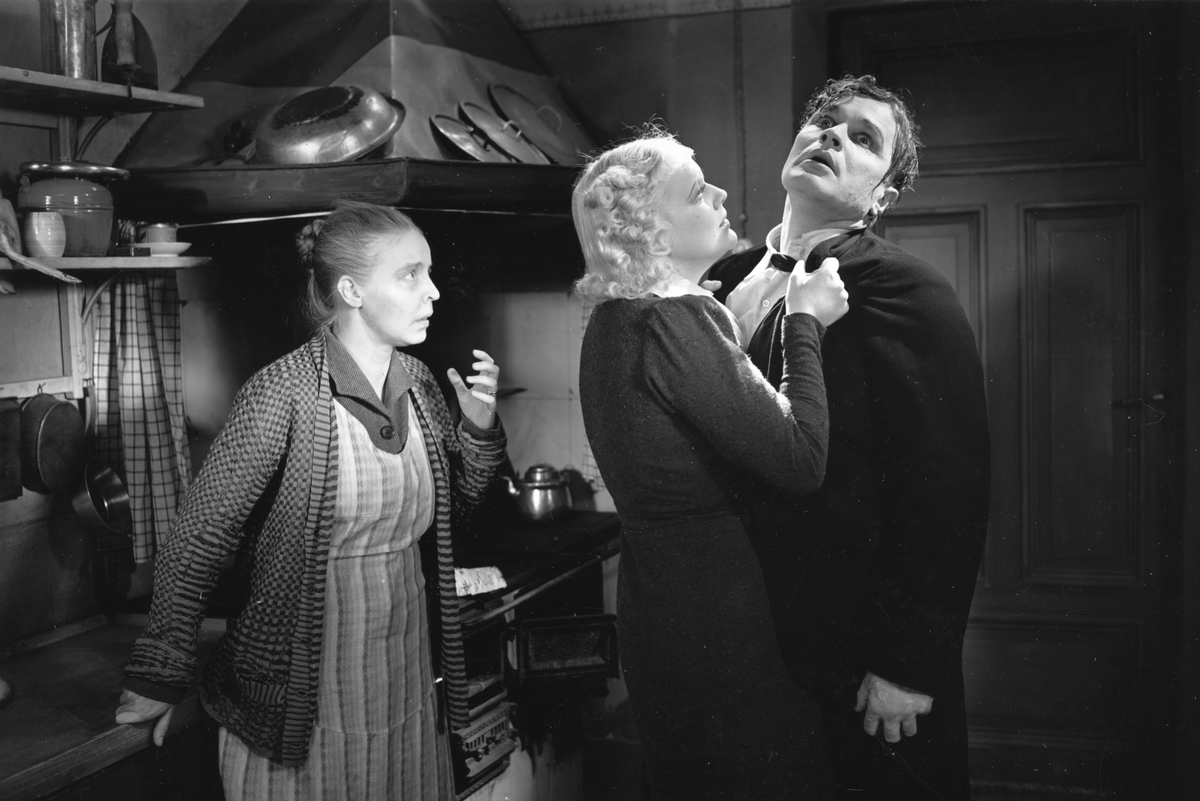
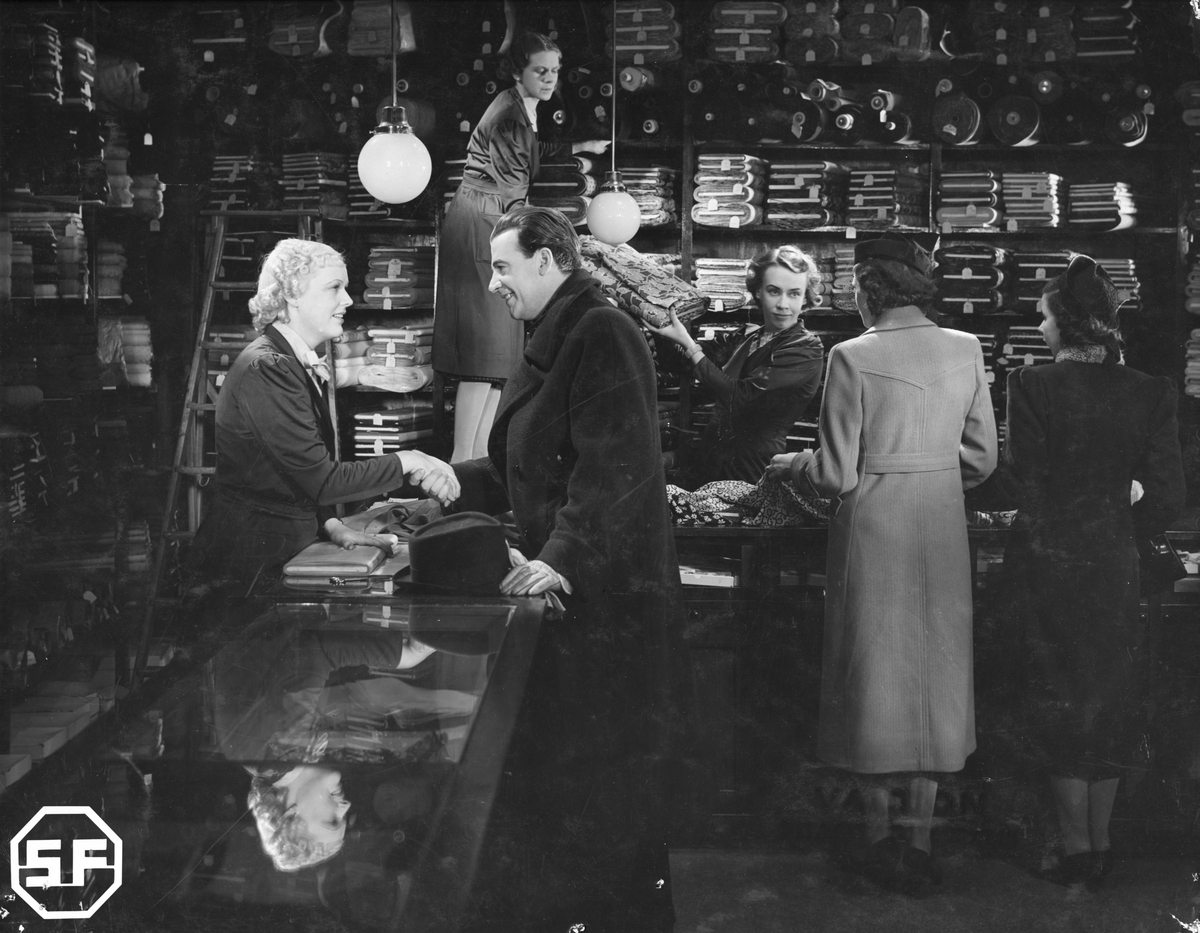
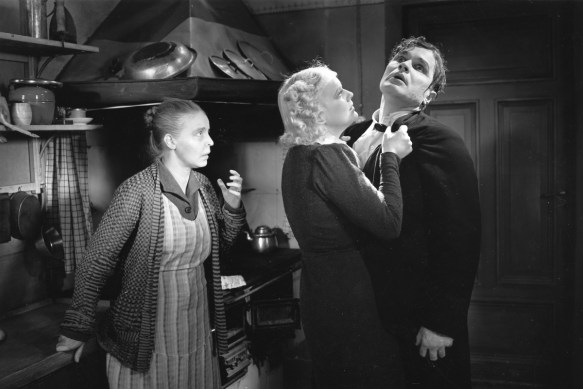
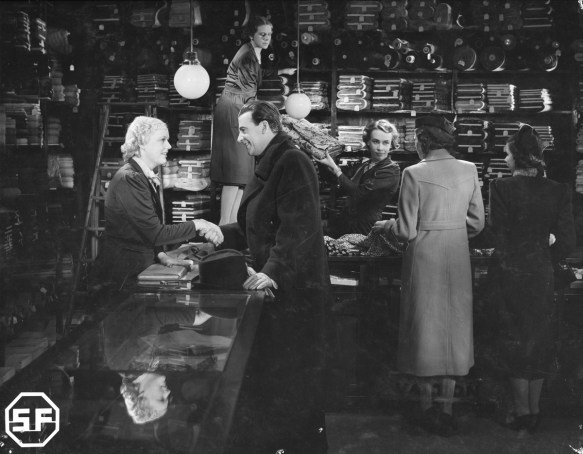
In an unnamed coastal town, college lecturer Aare (Joel Rinne) is sweet on haberdashery assistant Emmi (Kaisu Leppänen), walking the street hand-in-hand, and taking bracing hikes in the woods. You might be forgiven for thinking that you had already walked in on a happy ending, but the townsfolk do not agree. Already in the opening scene, a passer-by scowls at the backs of the loving couple. Aare’s boss at the college hems and haws about “suitable companions”, and the women at a swish dinner party are aggressively flirtatious with a man who is supposedly spoken for, as if they regard him as their rightful property and his paramour as a risible diversion.

Aare has broken the rules, falling in love with a woman on the other side of the class divide, although as with the earlier The House at Roinila (1935), the nuances in behaviour and language are difficult for a foreigner to spot. Much of the storytelling is conveyed by the sets, contrasting the well-appointed society lounges of Aare’s circle with the grim, rooming-house clutter of the bedsit Emmi shares with her time-worn family, including brother Erkki (Eino Kaipianen).

The script for Syllisiäkö? is based on a 1933 play by Toivo Pekkanen, written and directed for the screen by former actor Jorma Nortimo, who makes a notable effort to push into the action, not only with the commonplace and distracting close-ups of his fellow Finnish directors, but with more intimate, over-the-shoulder angles, rather than a locked-off camera recording a play like so many Finnish films of the preceding decade. Although often defeated by the distractingly inexact jiggles of his focus-puller, Nortimo tries for literal kitchen-sink drama, contrasting Erkki scrubbing his face at a basin with Aare relaxing in an honest-to-goodness bath – more of a rarity in Finnish homes, which even today are more likely to use the same household space for a sauna.
The storyline’s 1933 origins are betrayed in part by some odd staging in a bar that suggests that Pekkanen’s original made more of flaunting the rules during Prohibition, although much of the scandal is diminished in a film version made six years after booze was legalised in Finland. In fact, since a fight at a drunken dance is what precipitates Aare’s fall from grace, we might argue that the entire drama somewhat misfires when restaged in an era when being drunk is no longer a crime. The preoccupations of the previous decade are also suggested when, 25 minutes into the film, Emmi suddenly starts singing to her mirror about her predicament, as if this were supposed to be a musical but someone had lost the memo until that moment. Kaarlo Kartio, as usual, criminally underused, turns up in a brief cameo as a shifty sailor selling stolen goods, another allusion that seems more suited to post-war 1920s austerity than the time in which the film is purportedly set.

“He’s a young man, and she’s a nice girl,” shrugs a gentleman at the ball-room, as if to ask if his dining companions if it’s really any of their business. In this case, it’s the womenfolk who tut and scowl about Emmi, although soon after, Emmi is harassed by men who presume she’s a part-time hooker. Putting a brave face on the trouble, she drags Aare away from the waltz to a working-class knees-up, only for the locals to similarly hiss behind their hands about her inappropriate choices.

The Culprits? is a departure from the Suomen Filmiteollisuus company’s contemporary run of a light-hearted comedies, pushing instead for an element of social realism and chin-stroking speculation. Its question mark is an integral part of the title and the poster design, challenging the audience to consider who is truly to blame for the drama that unfolds. Is it the snooty Finnish middle class, themselves unlikely to be more than a generation off the farms, or the sneering shop-girl frenemies who imply that Emmi has ideas above her station? Or is it the lovers themselves, pursuing a doomed romance despite “obvious” warning signs? Pekkanen’s original theatre script was called Siblings, suggesting a focus more on Emmi’s pugnacious brother Erkki (Eino Karpanen), whose confrontation with Aare at a dance makes it into the local newspaper, and takes the scandal public.

Meanwhile, there are a couple of noteworthy names among the faceless students in Aare’s class – a first appearance on camera for future film star Hannes Häyrinen, and a walk-on for Unto Kumpulainen, then a teenage camera assistant, but destined to become a cinematographer himself in years to come.

The Culprits? is a refreshing change from the norm in the chronology of Finnish cinema. Nortimo’s pursuit of realism is also a welcome innovation, not merely in his camerawork but in the presentation of a conflict that is relatively mundane and hence easy to identify with. That is, at least, until the final 20 minutes, when everybody starts to act as if another forgotten memo has been retrieved, telling them that everything is the end of the world, and nothing will ever be the same again, and the likelihood swiftly escalates that someone is going to get stabbed.

Jonathan Clements is the author of An Armchair Traveller’s History of Finland

Women’s Manga etc.

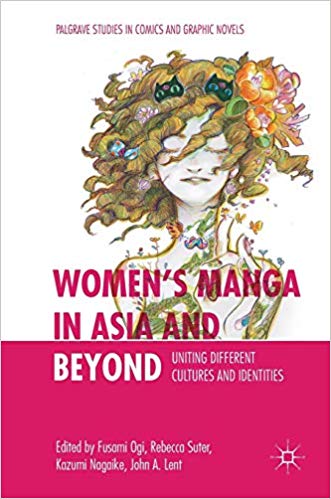
Over at the All the Anime blog, I review Women’s Manga in Asia and Beyond, a collection of academic essays that somehow manages to be less than the some of its parts, not through any fault of the contributors, but seemingly due to an editorial policy that refuses to acknowledge nuances in translation.

“The elision of the words manga and comics is commonplace in Japan, where the language doesn’t really distinguish between them, but definition is vital in English if Anglophone research is going to have any value. As noted by Casey Brienza in Manga in America, there are all sorts of devious applications and contractual loopholes available to someone prepared to agree that “manga can come from anywhere,” but I expect a good deal more rigour in the wording employed by academia. Otherwise, what is it for?”