Everybody on the crew has a job that is as tough as mine, in their own little field, and everybody just gets on with doing it, from Little Fish, the whippet-thin soundman with his little hostess trolley of nobs and dials, to Boomer, who balances his fluffy boom mike on his head, to our angry driver Hooty, who is only happy when honking at any car in the vicinity. We’re still not sure what some of the crew do. The man who took my bag at Jinan station was called Li Tao, but I haven’t seen him since, so I assume he is part of the Ghost Crew. And there is an elegant lady we call Purple, because of her punky hair rinse, whose name tag reveals her job title as GL8. It turns out that she is the driver for the advance team, part of our crew who arrive in every location an hour ahead of any general call-up time, ready to smooth feathers and buy sandwiches.
We all have lanyards bearing a bright yellow laminated card, giving our names and positions. I always keep mine on when we reach a new location, because the security guards have often been told to wave through anyone displaying such credentials, and it saves me being mistaken for an American tourist.
Today we suddenly gained a new Drone Team, the former Drone Team having been fired for crashing their drone into a tree. We catch the ferry across the water to Changdao, Long Island, the first of the island chain that the modern Chinese tourist board has sneakily rebranded as the Isles of the Immortals. They are not the Isles of the Immortals; nobody knows where the Isles of the Immortals actually were, but now everybody with Google Maps thinks I am an idiot when I say this, because clearly they are here, near the Immortals Theme Park, and somewhere on the Immortals Island Cruise.
The ferry takes half an hour, most of which is the three-point turn required to get it out of the harbour. Honestly, I’ve taken longer in the past getting across the QE2 bridge. On the Changdao shoreline, we rustle up a fisherman, Mr Lin, who will poke around some clam pots or something. I don’t know because I am surplus to requirements, and I know the last thing that the director needs is a spare body in the fishing boat getting in the way.
The next crew member to disappear is Hooty, who walks straight into the sharp edge of a restaurant sign at lunch. The director comes out of the toilet to find the room in chaos and blood spattered across the floor, and lets out a long sigh.
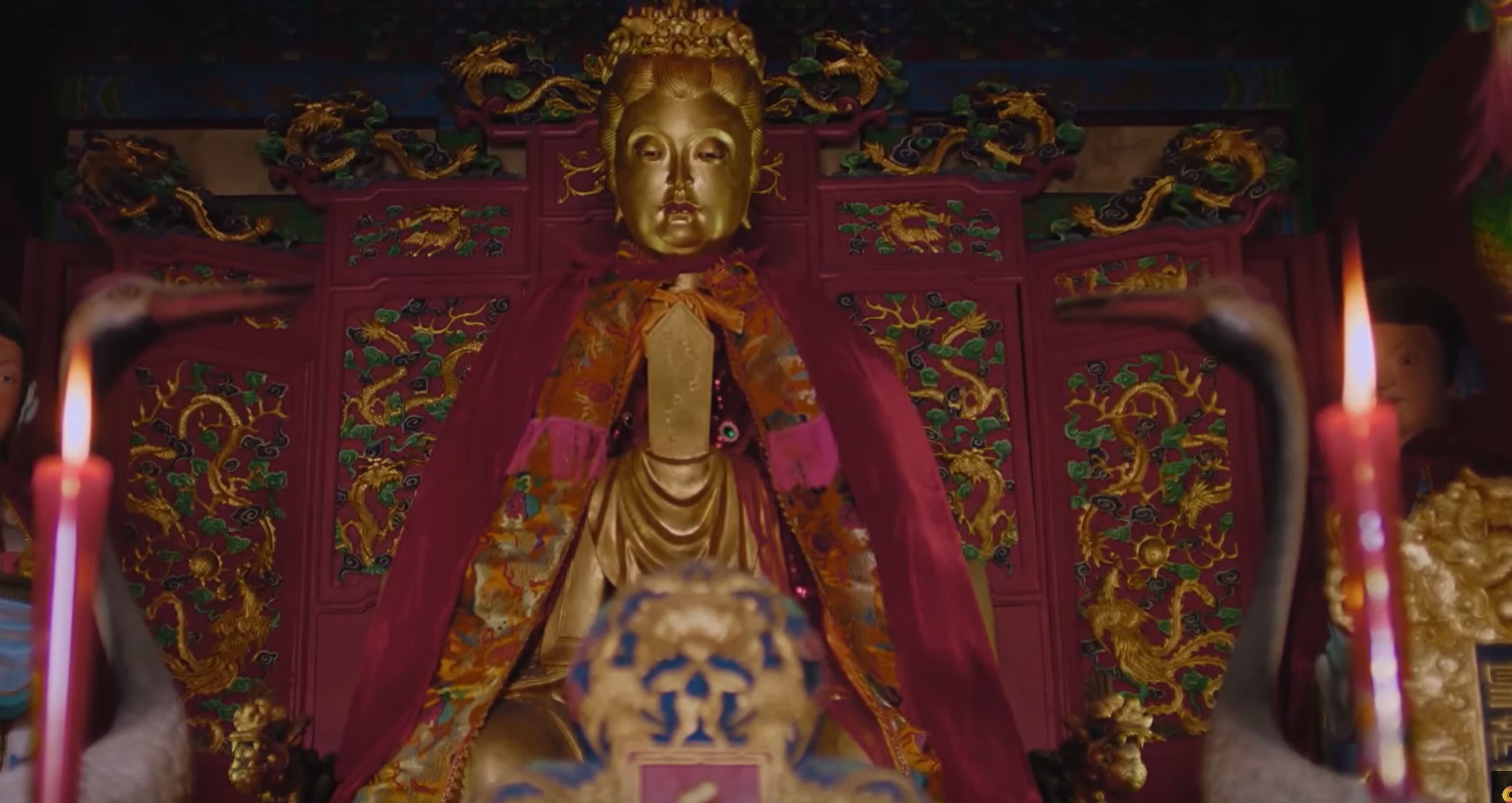
We clamber into three souped-up speedboats for the short, nerve-wracking hop to Shrine Island, home to a temple to Mazu the Goddess of the Sea. It is a dilapidated disappointment, literally signposted as a “third-rate cultural monument”, and lacking the Goddess of the Sea gift shop where I had hoped to spend a bunch of the money still in my wallet.
For a day that began at 0530, I don’t stand on my mark before 1600, when the tired crew finally get around to pointing the cameras at me to ask a couple of questions of Mr Lin the fisherman, like why do you pray to Mazu? I also deliver my 20-second speech about the historical origins of the Goddess of the Sea, which goes like this:
“The legend says that she was a fisherman’s daughter, Lin Moniang, the Silent Girl. The villagers believed that she could heal the sick, see the future and even make it rain, but she seems to have thought her main duty was to protect her brothers’ fishing boats. She would put on a bright red dress, carry a lantern and stand on the clifftops like a human lighthouse, guiding them home at night. One evening, one of the boats didn’t return, and she thought it was her fault. She was last seen wading, weeping into the sea… and then the boat returned, although she never did. Since that day, Chinese sailors and fisherman have prayed to Mazu for protection.”
We’re supposed to record my speech for the end of the show here as well, except we are losing the light, and the speedboat captains want to get home for dinner. So that’s now been bumped to another day, and since we have missed the last ferry back to the mainland tonight, I am typing this to you in a third-rate Chinese hotel room, where the staff complain all the way up the stairs about how heavy our luggage is, even though they’re the ones who have a hotel with no elevator.
0630 call tomorrow, and I am in bed at nine. Such luxury.
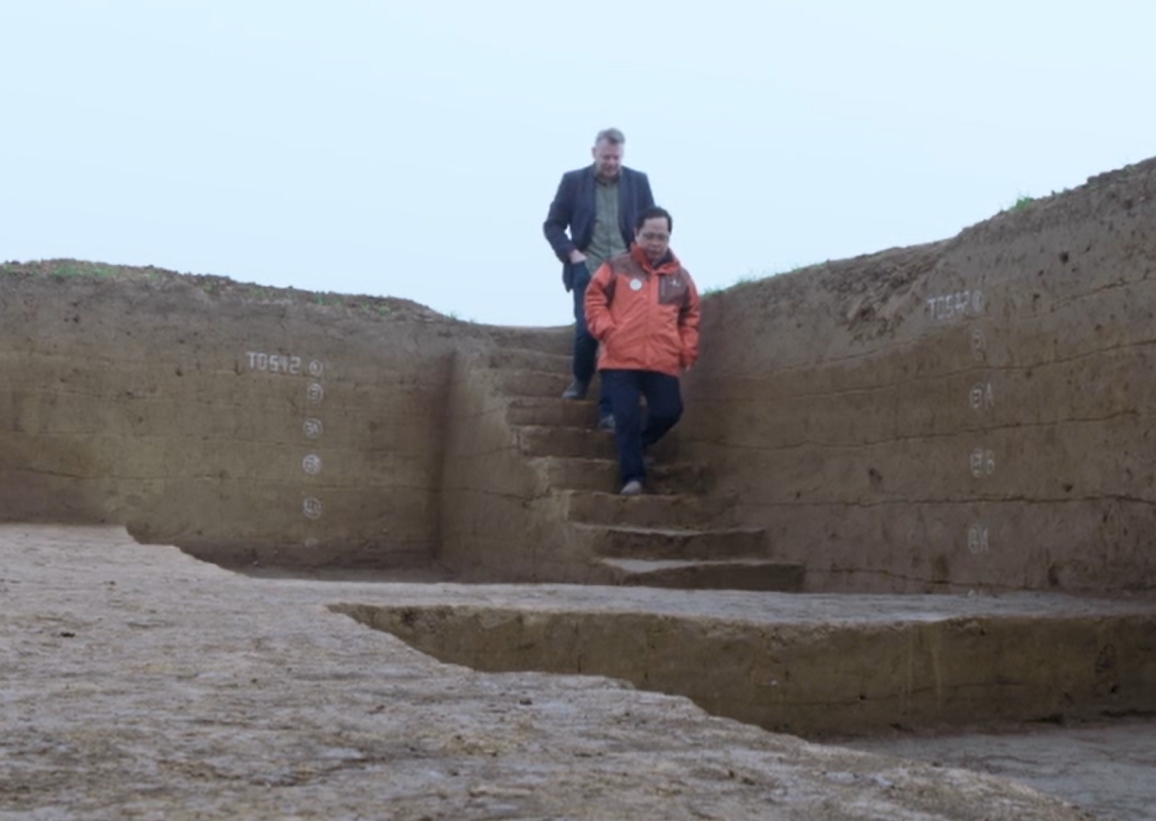
I am driving He Yuling to the dig site, because it gives us the chance to put the car in shot for a few seconds.
“Any problems with grave robbers?” I ask, idly using my term of the week, daomu.
“Oh yes, lots,” he says. “And they’re usually local. Sometimes I wonder with this lot if we’re paying them to dig up something they’ve already worked over on their own time, if you know what I mean.”
The dig site is a pit in a field somewhere on the edge of town. Dr He’s team have been digging it up in sections each year, working through the spring and summer when the earth is soft, and packing up each winter when it hardens. Each year, they pick an area the size of a couple of tennis courts, dig it down ten feet or so to the Shang era, and see what they can find.
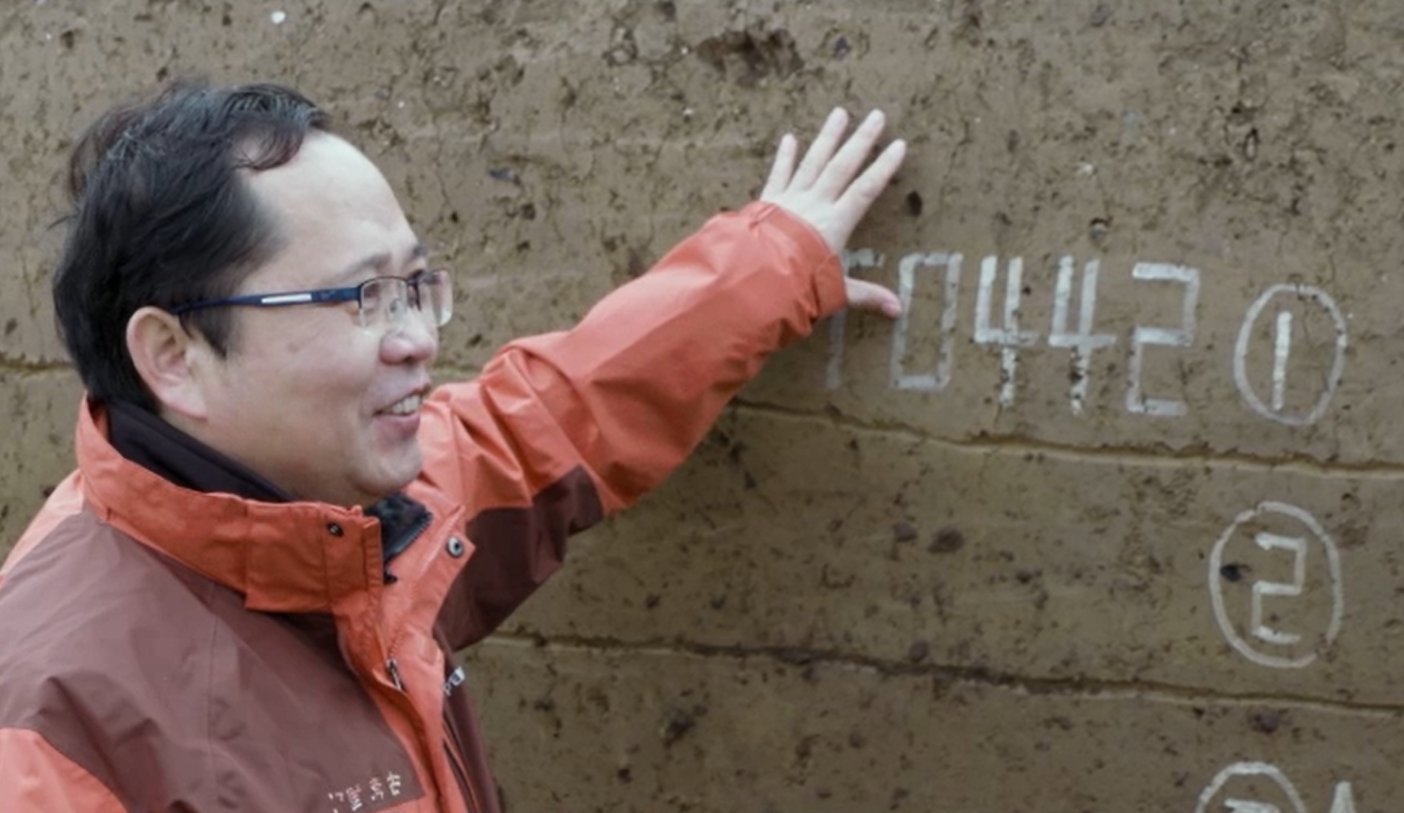
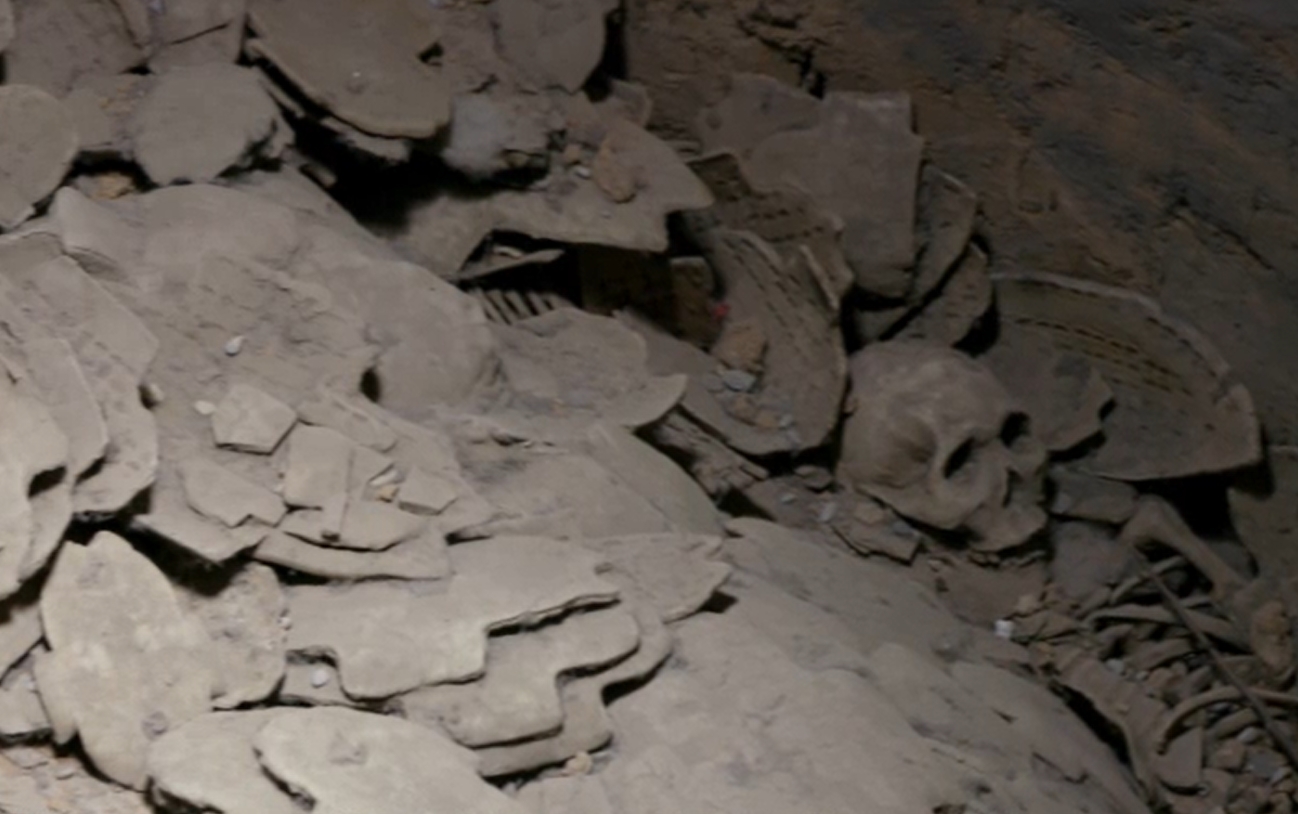
In section T0442, where they are working today, they have found a Song-era grave, which they are obliged to carefully tag, catalogue and investigate before they can poke any deeper in search of anything from the previous three thousand years.
“Archaeology was so much easier thirty years ago,” sighs Dr He. “These days, there’s so much diversification – forensic archaeology, environmental archaeology, social archaeology, animal archaeology… but the one that’s become such a growth area is rescue archaeology. China today has so many new roads, new railway lines, new shopping centres, so of course they are going to run into a grave or a temple or something underground. It’s not like the Terracotta Army site, where they build a museum over it. Most of the time you just have a set amount of time to sift what you can, and then it’s a Starbuck’s.”
T0442 is in the middle of farmland, so the soil will be backfilled once they’re done, and the following year it will be growing cabbages again. The farmers don’t mind because there’s digging work for them on the site.
Dr He is such an easy interviewee. We just rattle through the questions, and his answers usually turn into five-minute rants, usually with a chance for me to interject something so it all seems natural and conversational. We joke about the likelihood of Tang dynasty archaeologists complaining that the Shang dynasty archaeologists are ruining their patch by digging right through it to the earlier strata. He talks about soil colours and Luoyang shovels, and we are done before lunch.
“You can see the level of topsoil,” he says. “The first half metre or so is modern. You find iPhones, computer chips, lots of shihui.”
“Shihui?” I look over at Michelle, the assistant producer from Singapore.
“Semen,” she declares.
“I don’t think that’s likely…” I begin gingerly.
“CEMENT!” shouts the director. “Speak properly, Michelle!”
Jonathan Clements is the author of A Brief History of China. These events featured in Route Awakening S05E02 (2019).
Sancai is the spinach-and-egg colouring to be found in a lot of Tang dynasty pottery. Or at least, it is today. In fact, although sancai as a technique spread as far as Italy in the late Middle Ages, it was over-written in China by later porcelain firing methods with higher temperatures and different glazes. It was practically forgotten in modern China until 1905, when workmen digging railway cuttings near Luoyang started uncovering buckets of the stuff in old tombs.
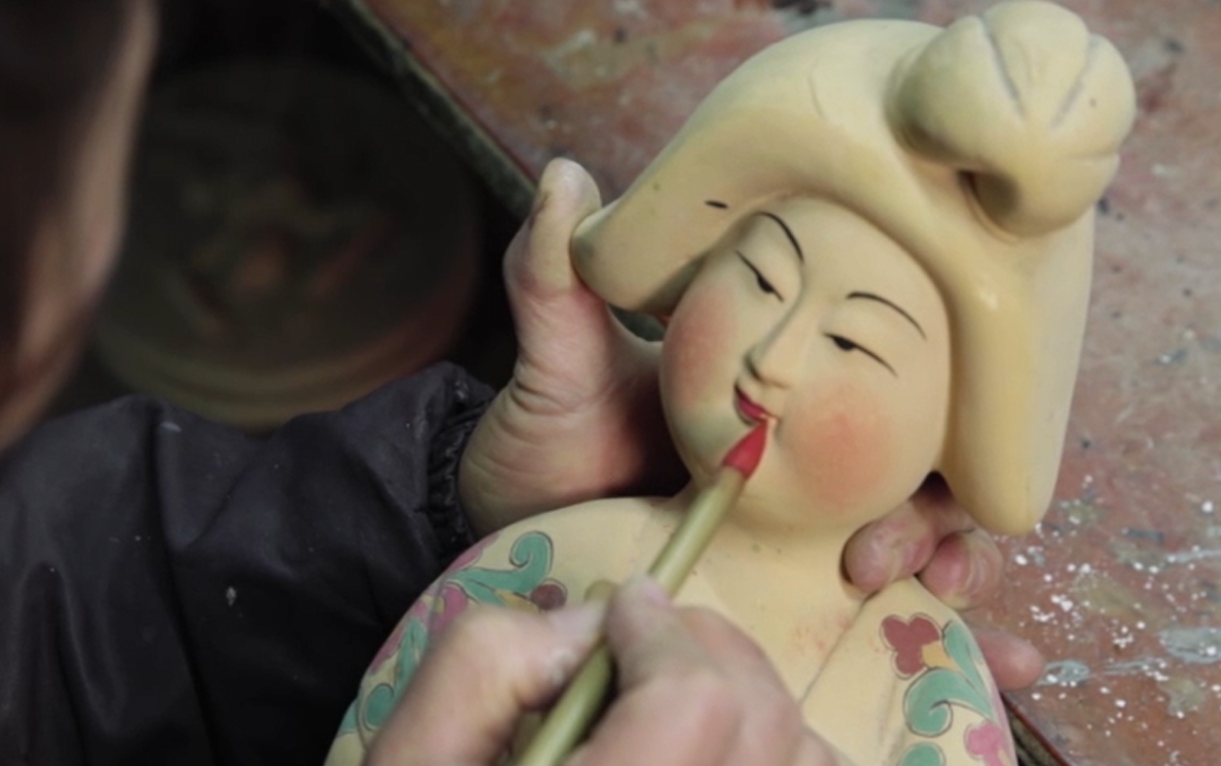
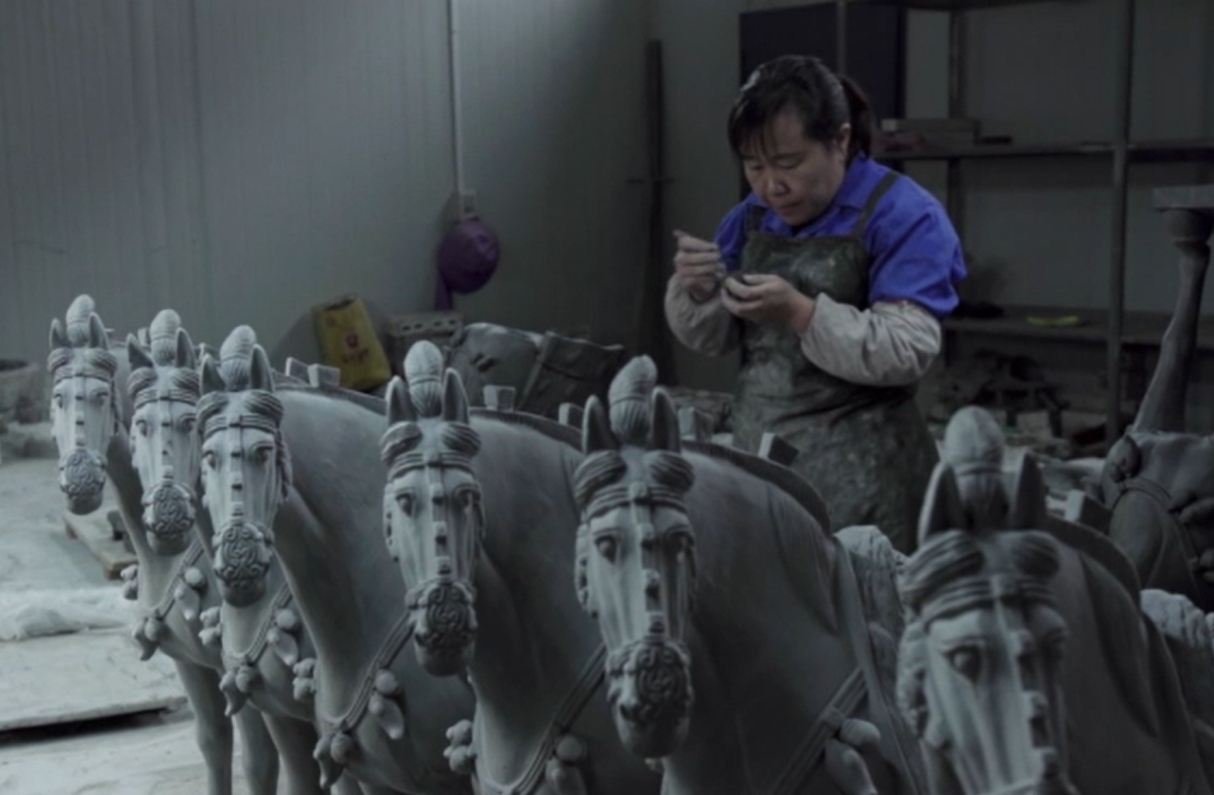
Archaeologists took it to the nearby village of Nanshishan, where they asked local tilers to come up with ways to restore it, leading to a transformation of their lifestyle. Nanshishan is now a centre for modern sancai production, practically an entire village of over a thousand people, devoted to making pottery.
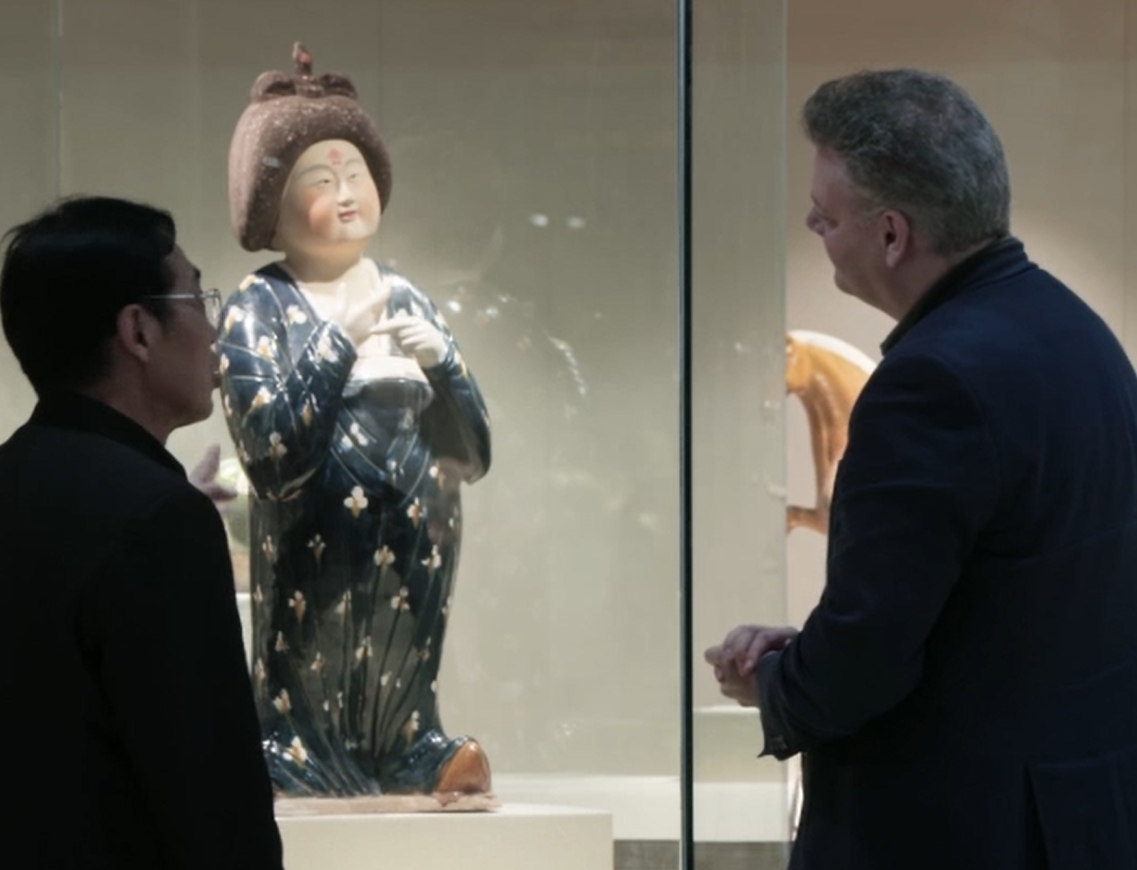
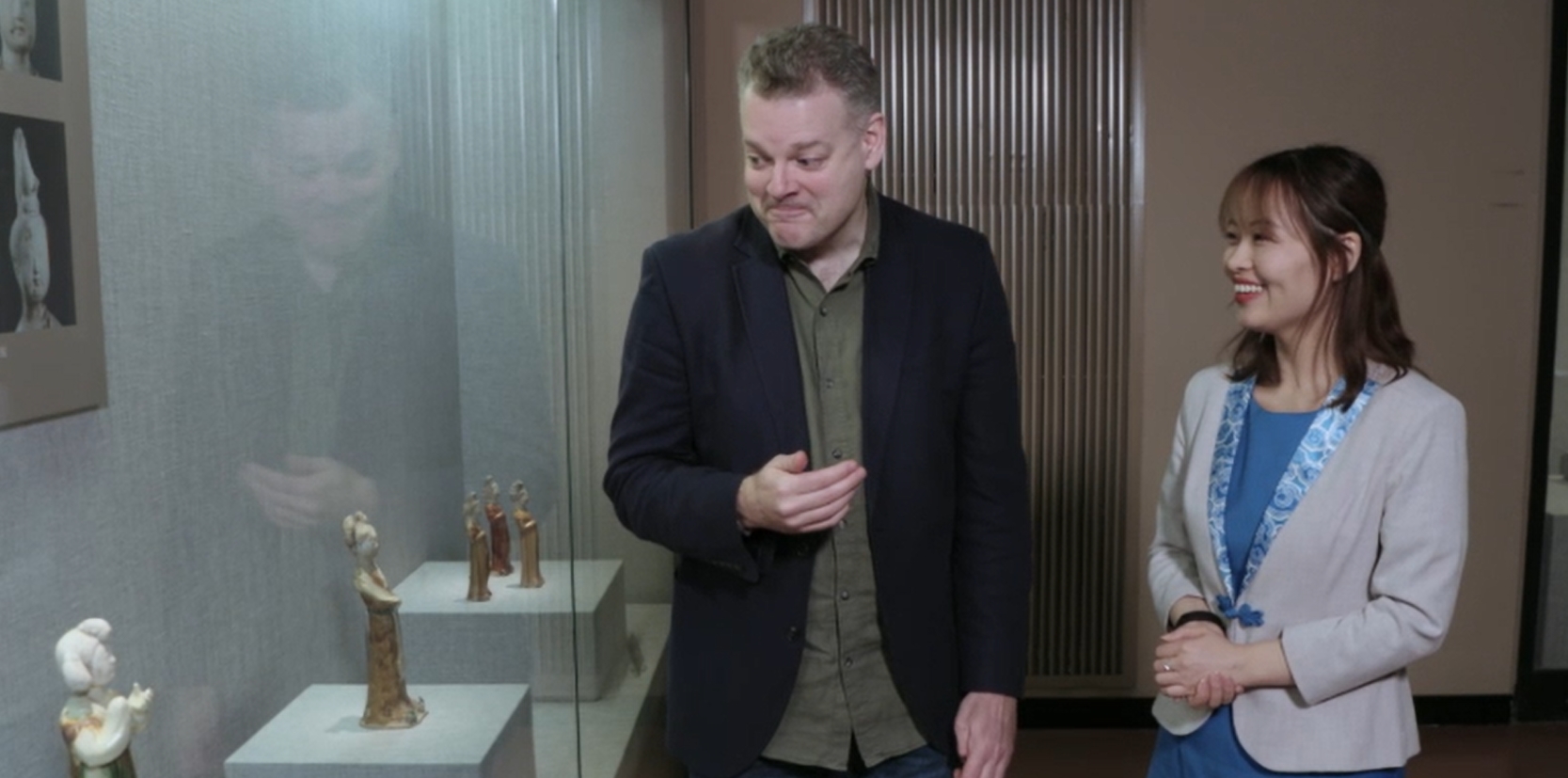
I’ve never liked sancai. Five years coming and going to Xi’an and I have never once been tempted to buy any of it. Horses are a speciality, but I have never thought of getting a sancai horse for my horse-crazy mother. Nor have I ever been all that tempted by a sancai camel or a sancai fat girl (the ideal body shape in the Tang dynasty). Eric the director of photography is not a fan, either.
“I hate it,” he says. “It’s evil. It’s all for dead people. I would NEVER have it in my house.”
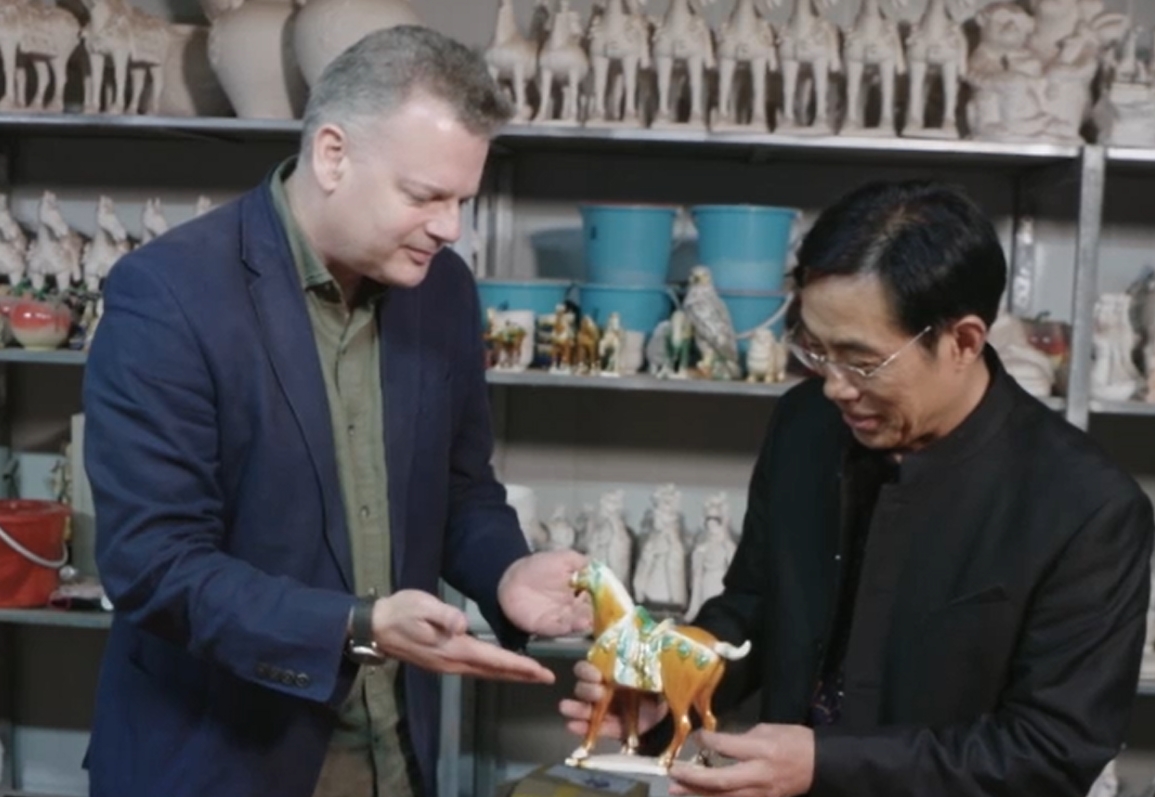
Gao Shuiwang, a relative of the original Gao who became the first restorer, has a swish workshop where they make the sancai. He has a sonorous 40-cigarettes-a-day voice, and is witty and chatty when discussing the question in advance. When he asks what the questions will be, the director jabs me in the ribs, and I say: “The first one, I guess, is what kind of relationship the people of Nanshishan have to the discovery of sancai.” (Wo renwei diyige shi Nanshishan cunmin dui sancai de faxian you shenme guanxi?) He’s ignored me until this point, assuming I am some kind of puppet, and his eyes pop out on stalks when he hears Mandarin coming out of my mouth. After that, things speed up a whole lot, and we are all laughing and joking about the story of sancai since 1905, the problems the villagers had experimenting with glazes and firing temperatures, the health and safety restrictions on wood-burning furnaces, and the difference made by cobalt, newly arrived in the Tang dynasty from Persian merchants along the Silk Road, and vital in the composition of new blues and blacks.
Gŭ – cobalt. A word I learned at six this morning while revising the vocabulary that was likely to come up, lest anyone think this is easy.
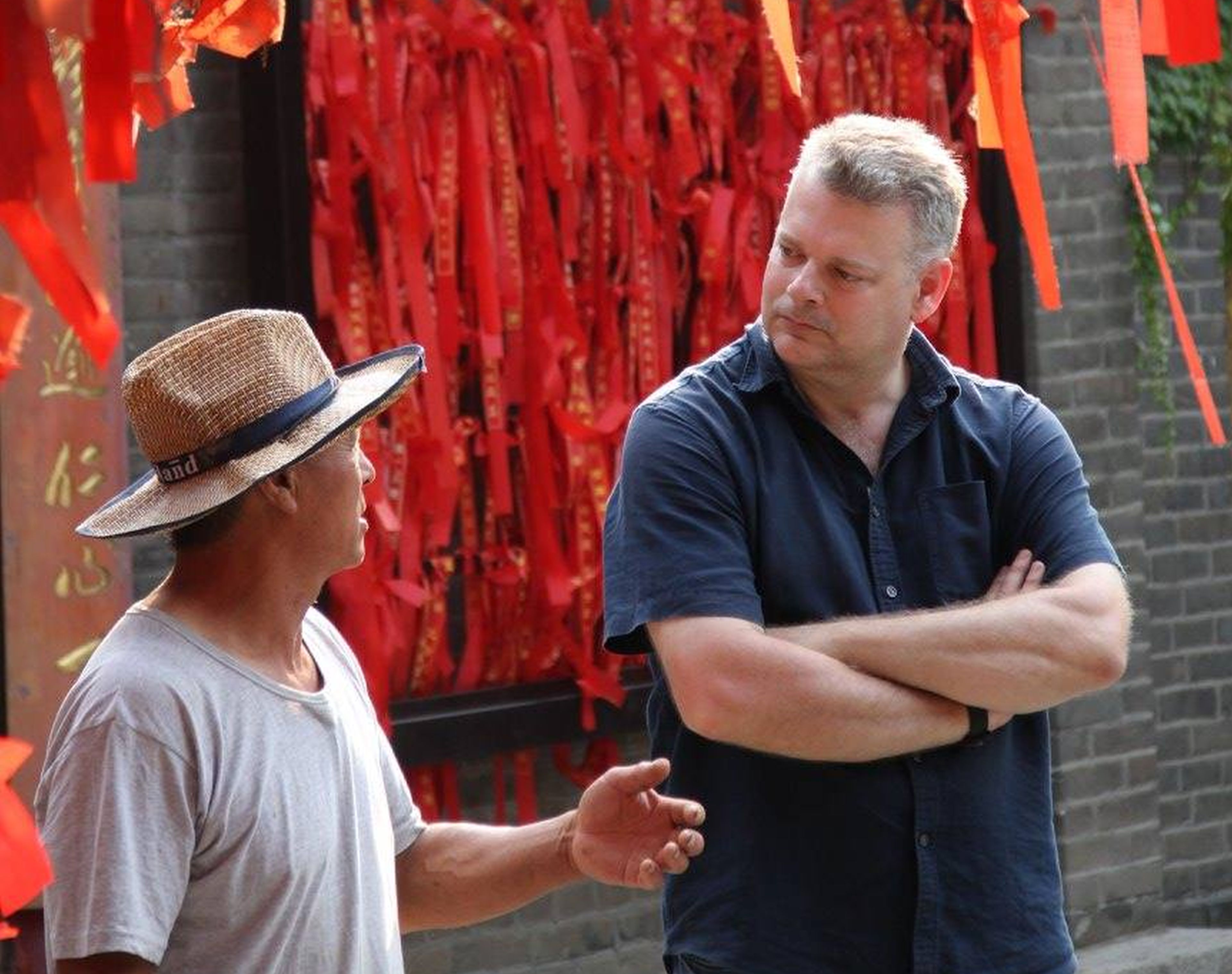
Filming time comes, and suddenly Mr Gao clams up. He assumes a rigid, upright position and starts declaiming at me as if addressing an assembly hall. He thinks that interviews have to be staid and staged, and the director pleads with him to go back to the chatty, smiling, witty man he was only minutes earlier. It takes a while to drag him back out of his shell, and convincing that, yes, it’s okay to have fun. Eventually, we drag it back out of him, I signal for Clarissa the fixer to stand behind me so he has a prettier face to look at while he answers, and before long we are back to normal.
As soon as the interview is declared over, he is back to his previous, bounding self, and the director keeps the camera running in secret while I get him to show me around his favourite exhibits in the gallery, all the better to hear his enthusiasm come through. He then takes me down to his lab, where we see the plain white horses painted with three different kinds of red – all the glazes are oxides, and only change from reddish colours when they are fired in the kiln. Until that point, they all look almost the same.
“It’s a right bugger telling them apart,” says Mr Gao. “You wouldn’t believe the number of times I’ve had a brush for red-which-turns-into-green and gone and put it into the red-which-turns-into-white bowl by mistake.”
Mr Gao is effusive with praise for us for giving him such a good time and a good laugh, and is dismayed we can’t come to dinner. He stops us at the door to announce that he wants to give us a little present. A real sancai horse, like something you’d want in your tomb.
“Eric!” I shout. “Mr Gao has a present for you.”
Jonathan Clements is the author of A Brief History of China. These events featured in Route Awakening S05E01 (2019).
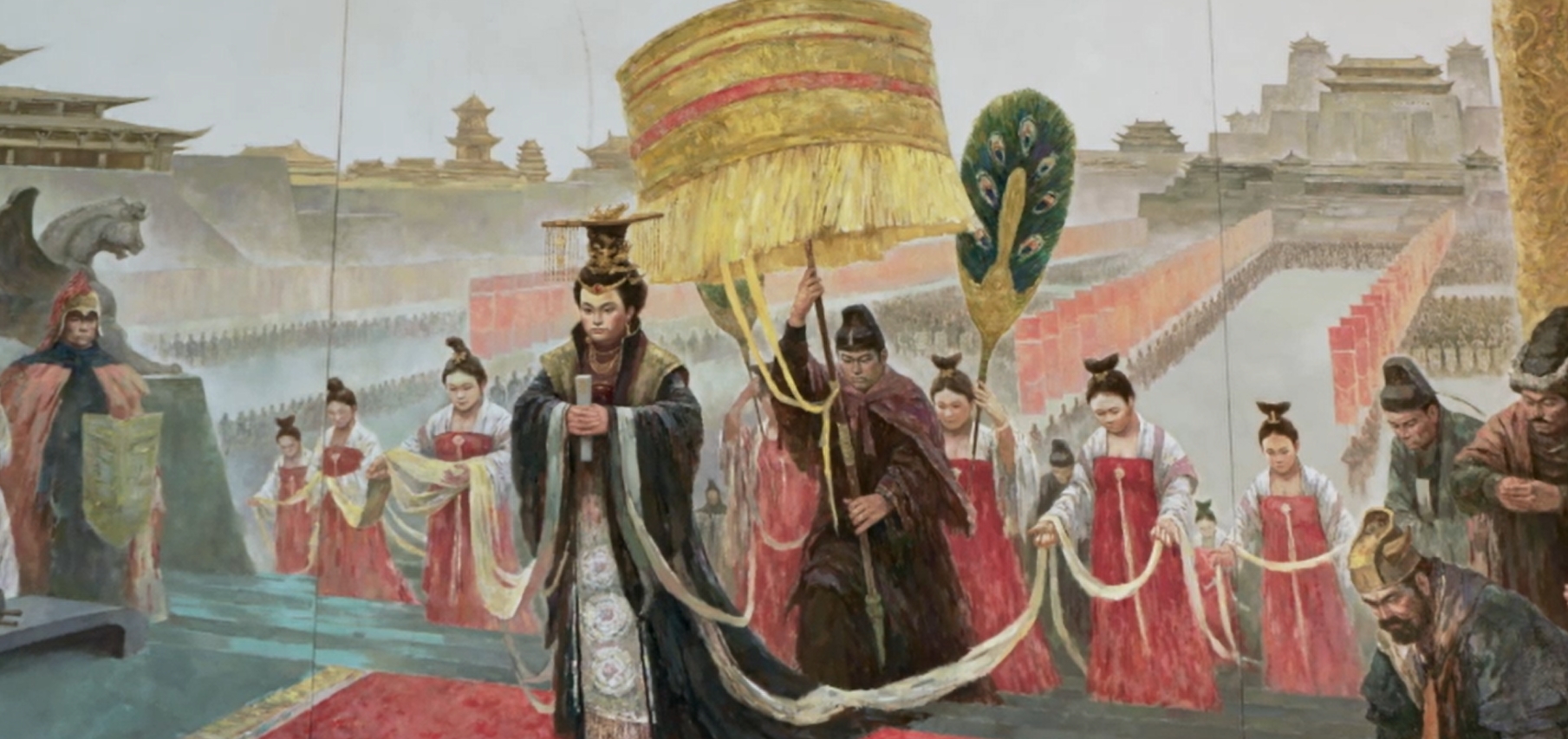
The Luoyang Museum, an inverted ziggurat at the edge of town, deliberately designed to evoke the shape of a ding – the ancient sacred tripods that once marked the capital of the ancient kings. It’s packed with relics, but also with surprisingly cool oil paintings of key moments from ancient Chinese history, painted by a local artist with a real eye for both historical accuracy and alluring, pulp-fiction moments of iconic action. Others might scoff, but I found them to be very helpful in illustrating interesting moments like the coming of the Xiongnu nomads to Luoyang, or the fall of the Shang dynasty, or Empress Wu on tour, which are otherwise conveyed through wandering long halls of pots in cabinets.
Luoyang tourist literature makes a big deal about how it was the capital of “thirteen dynasties”, but that is rather economical with the truth. A lot of the time it was merely one of the capitals of those dynasties, like the Tang, that were obliged to shuttle up and down the Yellow River in order to allow the trees to grow back elsewhere – Xi’an had to be periodically evacuated when it became too difficult to get lumber nearby for building and fuel. Some of the other dynasties for which Luoyang was a capital were relatively minor ones that only laid claim to parts of China during periods of unrest. Still others were historical dead-ends, like the ten years that Wu ruled from Luoyang in her self-proclaimed “Zhou” dynasty. That’s not to say that those dynasties weren’t fascinating in their own right – most of you know all about Wu, but the Northern Wei, whose scandals make Game of Thrones look like the Tellytubbies, were also based here.
But they aren’t the big-picture dynasties like the Song or the Ming or the Qing. Empress Wu’s Luoyang wasn’t actually finished in the Tang dynasty. The Western part of the planned city was never built, the encircling wall never completed, as everything went into decline before they could get there. Regardless, you can’t dig a hole in Luoyang without finding some ancient junk. Two miles from our hotel, workmen digging the foundations for a new shopping mall have just hit into a tomb from the Eastern Han dynasty, and the 24-hour metro construction keeps running into temples and palaces from times gone by.
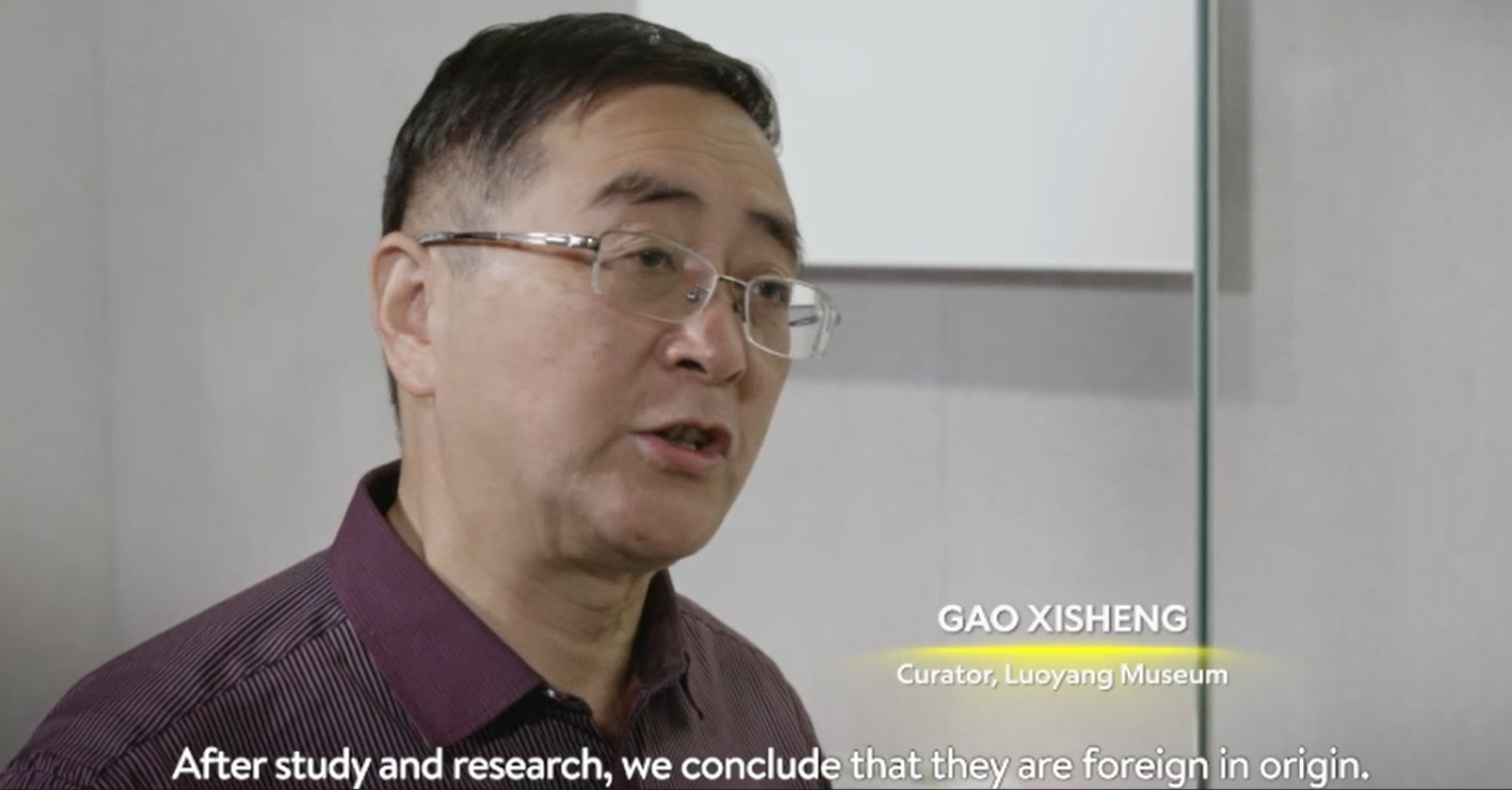
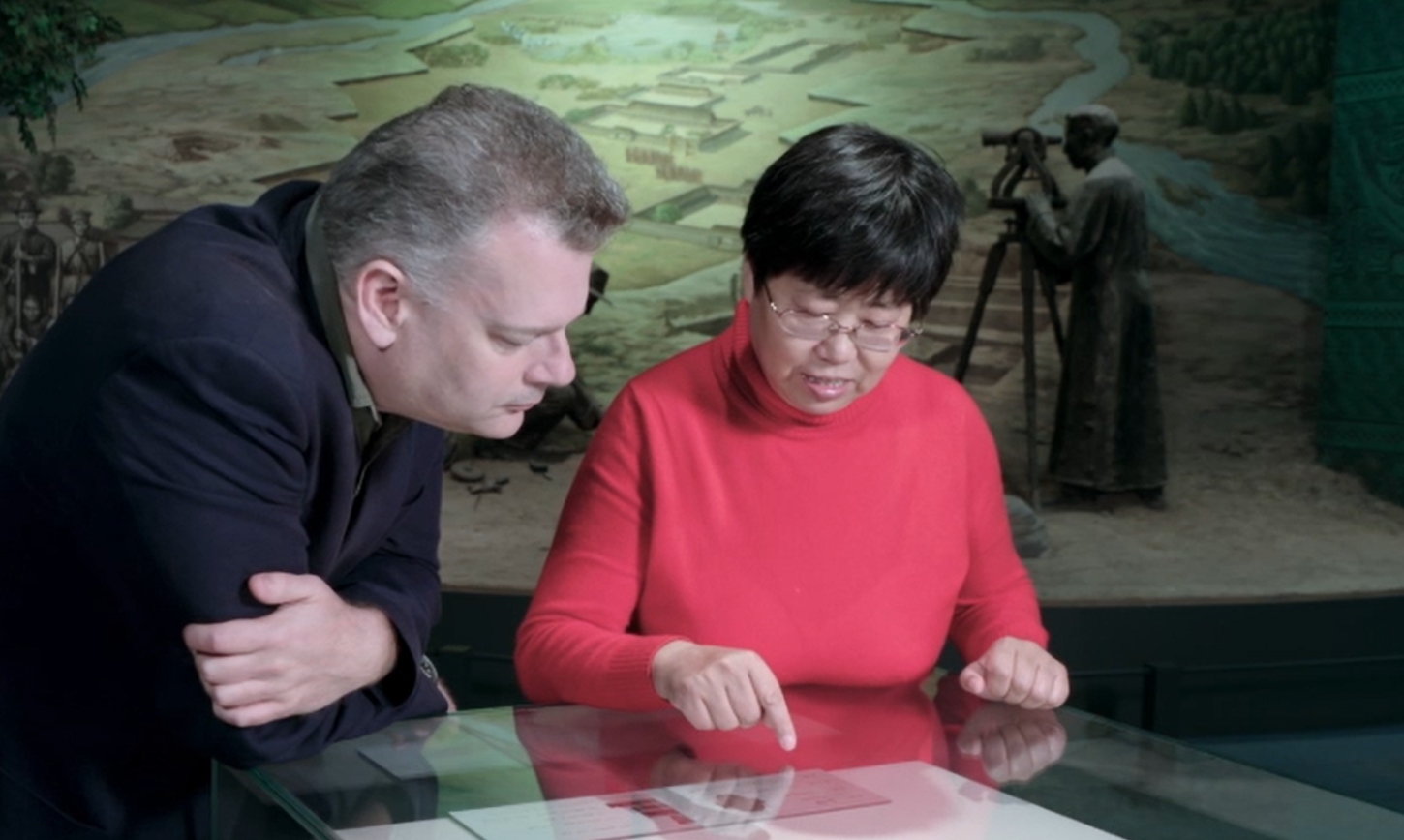
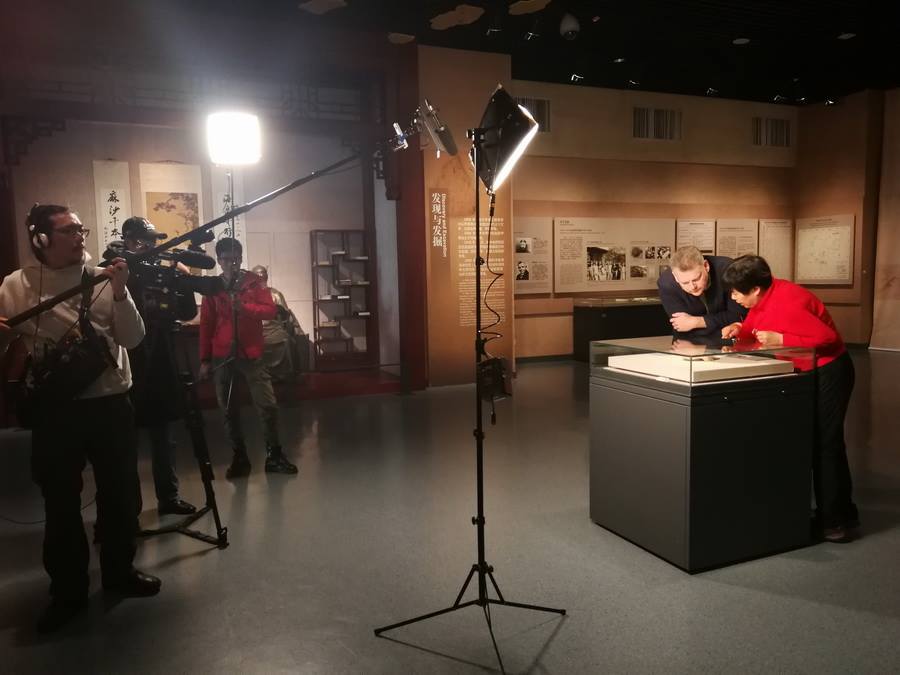
Today I am interviewing Gao Xisheng, the curator, about the arrival of the Sogdians (the Greek-influenced Persians on the very western edge of China), who were the middle men of the Silk Road, and responsible for a lot of the cultural and culinary imports of the cosmopolitan Tang era. My job here is to keep him talking, and to keep his eyes on me, not on the camera; to interject at regular intervals with signals that I understand, which usually take the form of extra questions about fire-worshipping customs.
Mr Gao is very keen on metadata, pointing out that the Sogdian tombs in Xi’an and Luoyang suddenly arrive around the 7th century, as if out of nowhere, thereby demonstrating that as one might expect, Tang China suddenly became the sort of place that could end up with a community of immigrants that stayed around long enough to start dying there. He has similar things to say about the sancai pottery, noting that it was a tiny flash in the historical pan, and is only really found in the Xi’an-Luoyang area, and only in the Tang dynasty. New commodities from along the Silk Road, particularly cobalt from Afghanistan, transformed Chinese pottery with far more interesting blues in the late Middle Ages, causing everybody to give up on crappy brown-spinach-cream combinations.
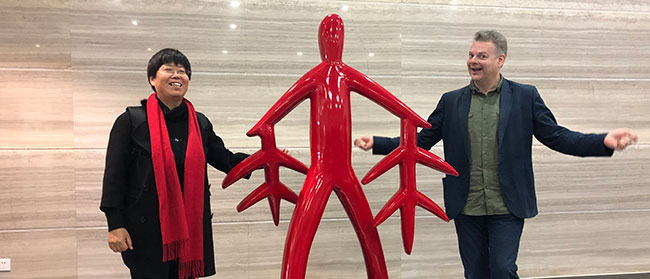
He also points out to me a pattern of turquoise pebbles, once inlaid into a staff or similar symbol of power, now with the wood rotted away, delineating a sinuous pattern in the ground like an elephant’s trunk, topped by an abstract square head. “I mean,” he says, “it might be an elephant’s trunk, but we think it’s probably something much cooler – China’s first dragon.” It’s 3,000 years old, so those are probably fighting words in Anyang, where we are going next week.
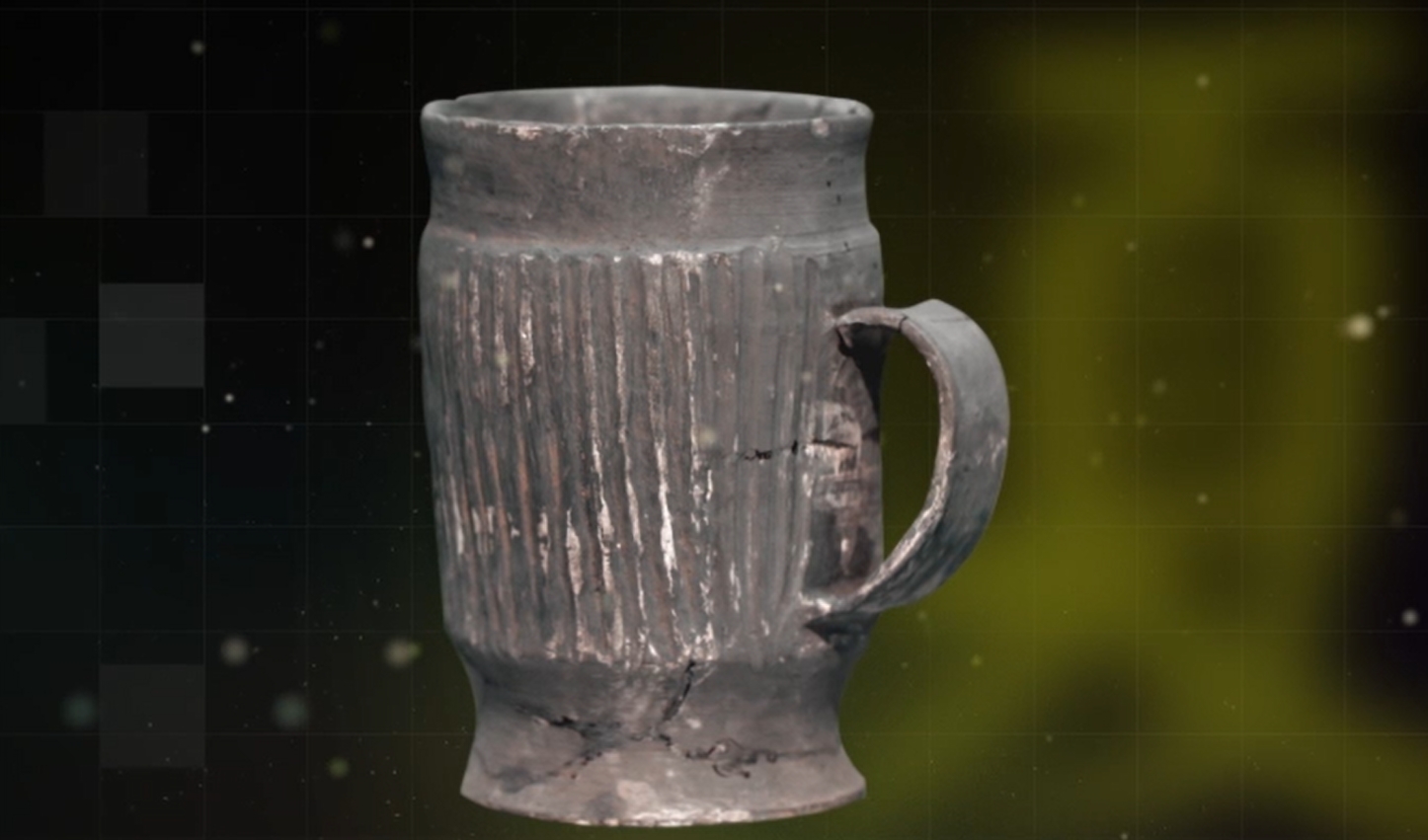
I have developed a sixth sense with interviewees. I can tell the moment I look at them if they are going to be a garbage fire or a fun time, and it’s never about what they know. It’s more about the degree to which they are prepared to say what they don’t know, and thereby allow us to discard pointless questions and spare them the nerves generated by lying and bullshitting on camera. Mr Gao was chatty charm on a stick with me, to the extent that when he showed me an entirely mundane-looking, modern looking mug and told me it was 3,000 years old, I was able to tell him he was trying to fool me, and get a laugh instead of a slap.
“I know,” he says. “It looks like something you might find in Starbucks. But people get fixated on all the weird-shaped ceremonial vessels used by the ancient aristocracy. The common people drank out of mugs. Just like us.”
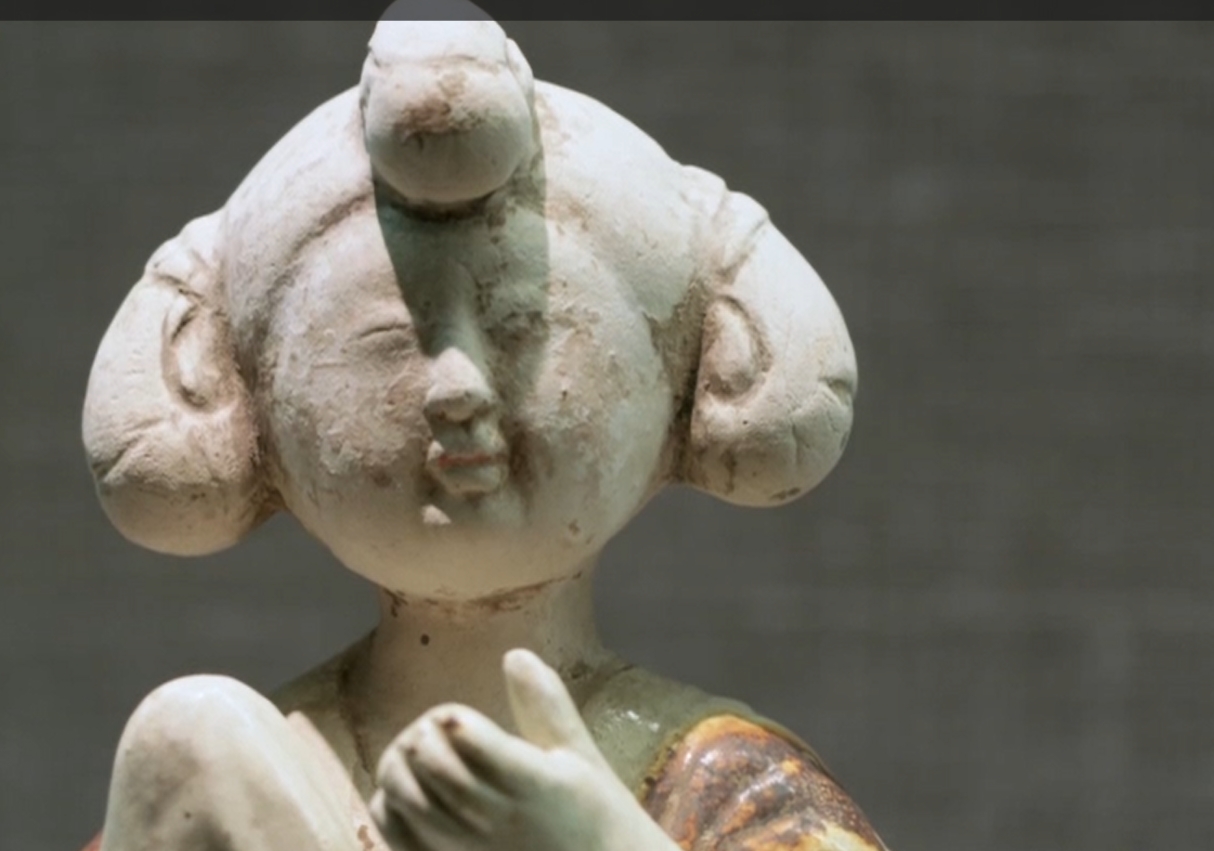
It’s more of the same after lunch with Li Ying, who proves to be a coquettish and chatty historian when engaged about her subject. I get her to talk me through beauty tips for Tang women (always paint red stripes on your face… try to be as fat as possible) as well as elaborate Tang hairstyles like the Parrot, the Cocoon (a swept-up bun modelled on a silk-worm’s) and the Knife. There’s only one that she can’t give me the etymology for, which is the Treasures – a sort of forward-drooping rolled top knot, flanked by two lateral buns.
“The thing is,” I whisper to the director afterwards, “I think it’s a reference to the Three Treasures, pickled and retained by eunuchs to keep themselves whole in the afterlife. In other words, the Treasures hairstyle is a giant stylised cock and balls, resting on a lady’s head.
But it’s all fascinating stuff, not the least because the Luoyang Museum has dated the development of hairstyles, which means to a certain extent, they can roughly gauge the era of tomb decorations simply by the hairstyles on display. There’s even some fun to be had about the Hufu (literally Barbarian Garb) tomboys of Wu’s era, who would exude cool by wearing narrow-sleeved jackets with lapels and trousers.
I won’t lie, it was a gruelling day. It’s taken a while for my Chinese to grind back into action, and I made the rookie error of not sitting down whenever the opportunity arose, thereby ending up on my feet practically all day. The museum was a riot of phones going off, and shouty visitors, nosey passers-by and cacophonous audio-visual displays. A new Chinese habit, of loudly playing phone games or faffing with the internet while having a dump, has turned any nearby toilet into an echo chamber of shitty pop music and beepy bang-bang noises, accompanied by the occasional cough and plopping sound. But I have been earning my money today in subtle ways, such as the moment when the director made me stand beside a statue of a man with a beard, and told me to come up with a 30-second piece to camera about the historical relevance of the Sogdians. I can do that. It’s what I do.
Jonathan Clements is the author of A Brief History of China. These events formed part of Route Awakening S05E01 (2019).
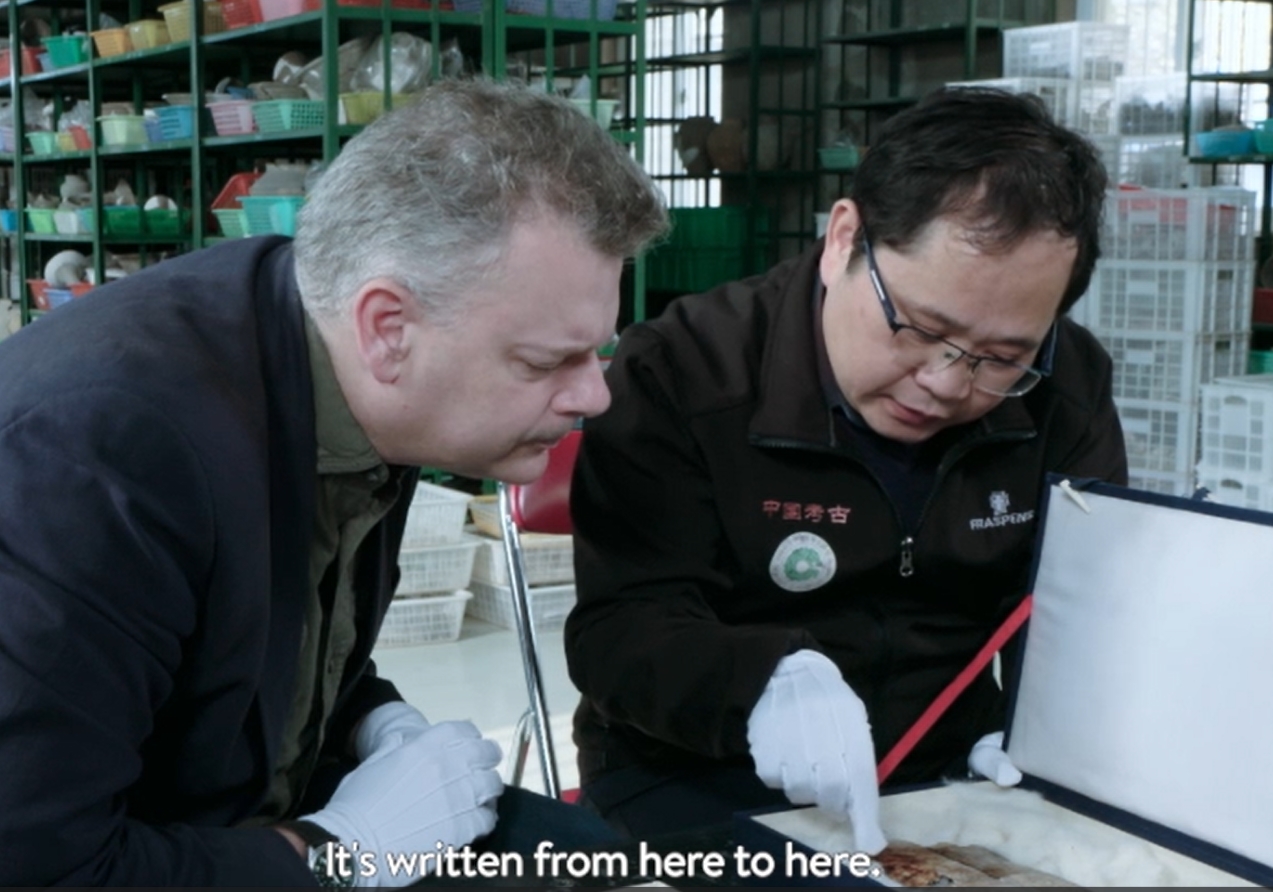
I must be getting good at this. Driving back to the Wastes of Yin, I know more about the site than the crew, because I already shot here once before. So I can direct the car and the van to the right institute, and point out Dr He, because I’ve met him before, and I can tell them that the meeting room is not the ideal place, because there is a warehouse upstairs full of relics that is more photogenic. I can also point out that if they want to get the lens really close to an oracle bone, Dr He has a bunch in a box that he will literally hold up to the camera.
Dr He remembers me from the Chinese chariot shoot a couple of years ago, and so he is immediately at ease and merry. When it comes to the interview, in front of boxes marked HUMAN TEETH, DOG BONES, HUMAN BONES, COW HORNS etc., we rattle through in a single long take. I quiz Dr He about the problems of reassembling oracle bones, and the fun he had tunnelling through a Sui dynasty tomb and a Han dynasty tomb in order to get to the Shang stuff two metres down. He tells me that the size of the turtle plastrons used in divination usually suggest that they came from the river, but some of them were so big that they were liable to be sea turtles, thereby suggesting that the Shang dynasty had trade links as far away as Malaysia.
Of course, that doesn’t mean that there was some Malaysian Marco Polo who travelled all the way to Anyang. These things might have taken decades to drift from village to village until they ended up in the Shang capital. Dr He rattles on non-stop for 45 minutes, which delivers us 90 minutes of footage on two cameras. Time for the pick-ups and then we are out, as if we knew what we were doing.
Turtles are important, says Dr He, because they lived so long, but also as Sarah Allan has argued in The Shape of the Turtle, because they may have signified the shape of the cosmos to the ancient Chinese – a north, south, east and west around a central plain, and in the sky, a big dome overhead.
The Shang people were a bloodthirsty bunch. The Shang dynasty is the most popular topic among Chinese heavy metal groups, because after you hear about all the incest, human sacrifice and torture of the Shang kings, biting the head off a bat looks a bit everyday and soft. The on-site museum has trouble skirting around the fact that their royal graves are full of dead children, chucked in to keep them company in the afterlife, along with dismembered dogs and the usual dead horses, and a special ceremonial axe used for beheading enemies. I’ve read the oracle bones, so I know already about the boiled heads, burned slave-girls and other atrocities littering their tombs.
We finish up in the tomb of Lady Fuhao, the female general who led the armies of the late Shang, wife, or possibly sister, or possibly both to the king Wuding, who entirely by chance turns out to be the guy we know most about because Anyang was the site of oracle bone pits dating from his era. Fuhao’s tomb was miraculously undisturbed; she was buried not only with her signature C-shaped dragon rings and a gaggle of dead slaves, but a collection of bronzes that were already quite ancient when they went into the ground. Some of Fuhao’s bronzes were specifically cast as grave goods (we know this, because they included her posthumous title), but others were seemingly part of what today we would have to call her antique collection.
I felt today that I was really earning my money, and that the crew were really on top form snatching footage, sometimes, when the drone was up, with three cameras running at the same time. What with all the shooting on 4K resolution, as future-proofing against TV channels that might insist on higher quality film in future, we are generating two or three terabytes of data every week. Michelle the assistant producer has to stay up each night uploading it to a server in Hong Kong so the editors can get to work.
The National Museum of Chinese Writing looks like a newly landed alien spaceship, decked out with golden animal totems shining in the sun, and supported by striking red columns, the fabled taotie mythical beast that shows up on so many Shang-era cauldrons. The museum is in Anyang, of course, because Anyang was where archaeologists uncovered vast pits of broken turtle shells, inscribed with questions to the gods for the Shang dynasty rulers – a peek inside their archaic Google history, if you like.
It’s also closed today, so we technically have the place to ourselves, although a bunch of surly cleaners and key-jangling security guards seem keen to ruin any quiet moments that we might have. The director films me walking among the oracle bones, and I manage a couple of relatively long pieces to camera about the story of the discovery of the Wastes of Yin, and how Chinese history got 600 years added to itself practically overnight in 1928 after the discoveries in Anyang proved that the ancient stories were actual history and not a myth.
Ms Han is a happy lady who seems very animated and passionate about oracle bones, and subjects us to a 45-minute salvo of words about the meaning of the 150 most easily identifiable characters. She doesn’t seem to have been interviewed on camera before, and is fretful about “saying the right thing.” We have to explain to her what an interview is, which is to say that I will ask her questions, which she will answer. She seems to think that we will want her to give a one-hour lecture to the camera about her work. No, we insist, I will just ask her about stuff.
On several occasions, Clarissa the fixer has to practically walk her through the answer that we expect before she will deliver it, even though she just delivered it, word-perfect, off camera. Like a lot of Chinese academic interviewees, she has trouble understanding that we are supposed to be having a conversation, and it becomes easier to just mike her up, not tell her the camera is running, and let her talk away without the chance to get nervous. By the end, the director just wants us to walk through the museum gallery talking, but we keep stopping at displays to talk about the origin of the various characters, and the director shouts at us to keep bloody walking instead of finding out about things.
“Jonathan, stop being interested!” she yells from the other end of the gallery.
But I think Ms Han is enjoying herself. After previously saying that she could only fit us in on Monday afternoon, she has suddenly freed up all of tomorrow morning to invite us over to her college to sit in on a class, so I think she is starting to feel like a bit of a celebrity.
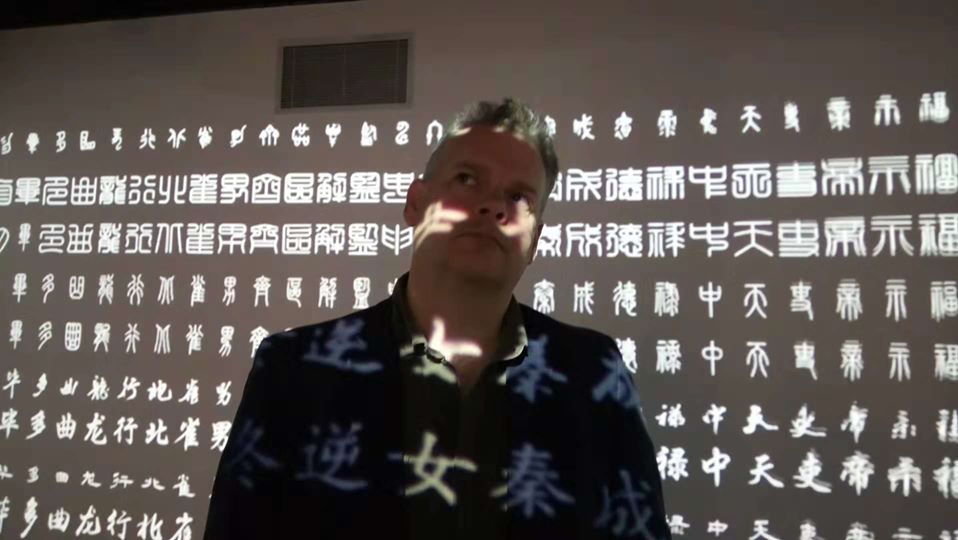
Ms Han’s faculty at Anyang Normal University is built around another museum of Chinese writing, which is far more immersive and engaging than yesterday’s. It’s got all sorts of fun art installations, including a four-wall display of animated characters that can be filmed playing across my face and surrounding me like a veritable sea of words. There are even life-sized statues based on ancient Chinese writing, such as the stick figure holding two oxtails that was the origin of the Chinese word for “dance”.
The Sea of Words, for those not part of the Chinese community, is the name of a famous dictionary of Chinese characters. I have a copy that used to belong to “Uncle” Don Rimmington of the Leeds University Department of East Asian Studies, although I am not sure he knows it ended up with me.
The university also have a little area where students can carve their own oracle bones, leading me to have a nice half-hour with a guy called Zhang, who patiently talks me through the process. He is very excited to see that I am deliberately getting things wrong so that he can correct the way I hold my chisel and the way I hold the bone. Unlike his teacher, Ms Han, he comes to realise that I am doing it to make him look smarter, and not that I am just irredeemably stupid.
Ms Han talks me through the simplest of characters from the Shang dynasty, the most basic 150 of which are simply pictograms.
“The Shang people tried to tag the simple points of difference between similar objects,” she explains. “So what is it that makes a cow different..?”
This is a difficult question to answer in Chinese when I don’t know the word for udders.
“The… nipples?” I suggest.
“No, you stupid boy. Everything has nipples. Cows have horns and a long face. Not like the goat, which has different horns, but still has nipples.”
All right, then. And the horse has a mane and a tail, and a tiger has a stripe. I get her giggling about some of my weirder guesses, and she gets so excited that she starts shouting “NO!” in English every time I get something wrong.
I see in today’s Times that the family of Robert Elegant have placed a notice of his death — frankly I am rather surprised that he doesn’t warrant a larger official obituary. Thrice nominated for the Pulitzer Prize for his Asia reporting, a confidante of both Nixon and Kissinger and the biographer of multiple Communist Party bigwigs, he will be most remembered for his many novels on East Asian historical subjects, particularly the brick-sized Imperial China series, Manchu, Mandarin and Dynasty, that inserted outside observers into the tumultous history of China from the fall of the Ming dynasty up to the rise of the People’s Republic.
He was often described as the author who did for China what James Clavell did for Japan (although that rather ignores Clavell’s multiple China works), and it’s certainly true that there were many times when his was the only China-specific material you could find on the bookshelves at the average WH Smiths. “Fiery, witty, kind and generous in equal measure,” write his family, “he was a loving rather, grandfather, brother and uncle.” One hopes that the various newspapers that carried his acclaimed journalism for so many decades might get around to memorialising him, rather than leaving it to his relatives to wedge in a paid advertisement of his lifelong achievements.
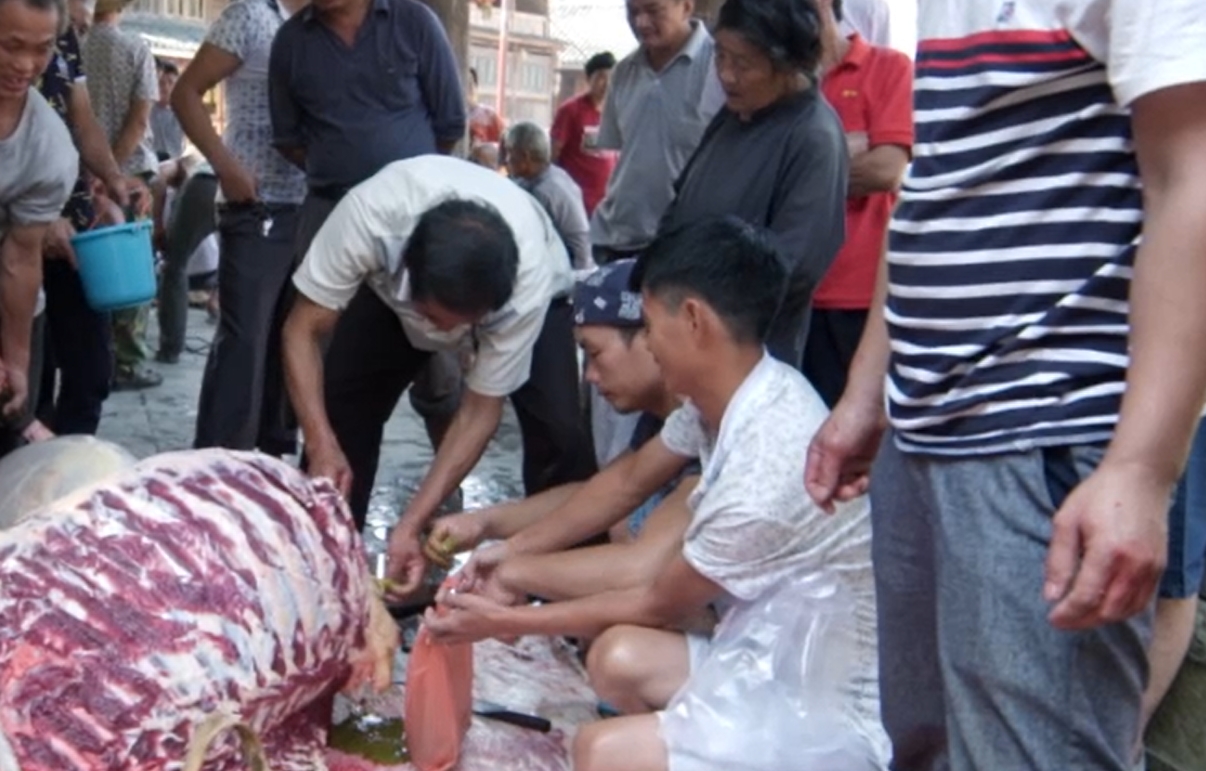
By the time we reach the drum tower, the men underneath are on their second bull. They have slit its throat and are bleeding it from its carotid artery into the skin of its own neck, scooping out cup after cup of warm blood and throwing it into a basin with peppers and coriander. The bull’s feet are tied but still twitching spasmodically, a spray of warm shit spattered across the flagstones. Before long, the men with cleavers have set about the carcass, skinning it and hacking out gobbets of meat. Villagers are waiting nearby with carrier bags, ready to take home something to cook for tomorrow’s festival.
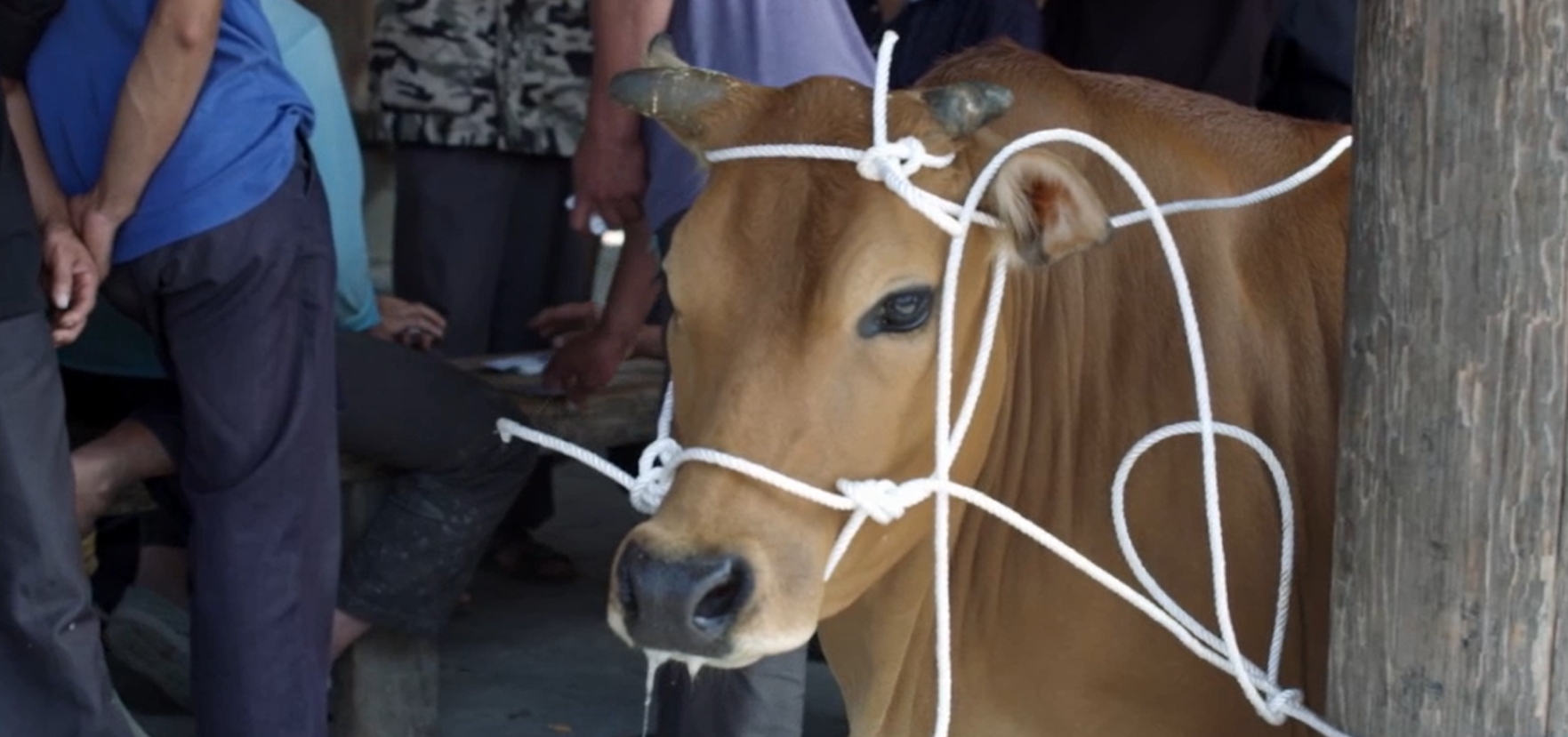
A cow is up next, tied to a pillar for safe-keeping. When her time comes, the men tie her feet to poles so she can’t struggle, and then smack her three times in the top of the head with the back of an axe. This is where we came in, as with the bull from before, her carotid artery is slit and the blood scooped out.
What everyone is really waiting for are the intestines. The Kam, for reasons known only to their selves, regard niubie, the half-digested grass of the cow’s last meal, to be a true delicacy, and they are soon fighting over it. The smell is appalling, but our fixer Pan doesn’t seem to mind, and has managed to grab a fistful of the stuff that will apparently be sufficient to feed seven tomorrow. Lucky us.
The director has unfortunately mixed up the words for intestine and pizzle, and consequently tells Pan’s shocked uncle that she would be interested in nibbling on a bull’s penis, “just for the experience.”
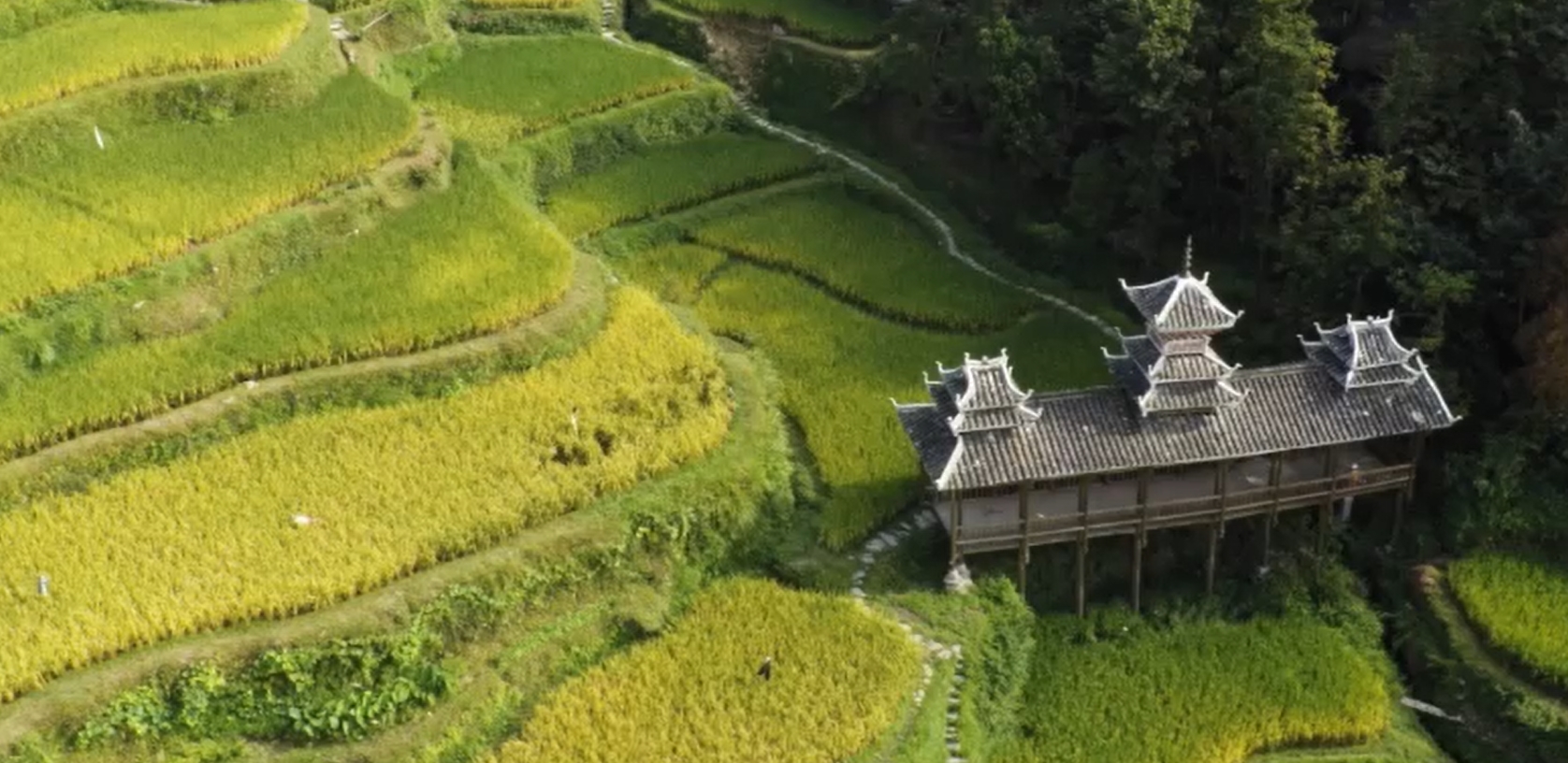
We drive down into Zhaoxing, the largest concentration of Kam people, and their de facto capital – a township that boasts five drum towers and three Wind and Rain bridges. The idea is for me to do a piece to camera about what a quiet sleepy place it is, but although the town is still mercifully traditional in appearance, it is packed with roaming Chinese gawping at everything, as well as a musical garbage truck that insists on barging back and forth along the main street.
Meanwhile, as I am attempting a piece to camera for the tenth time, an old lady half my height rushes up and starts plucking at the hairs on my arm, leading to piece that goes something like this:
“I’m in Zhaoxing, which has been the spiritual and cultural capital of the Kam people for centuries, but today it – OW! – what are you doing? You take as much hair as you like, love, I’ve got plenty. OW!”
She then wipes my body hair from her hands onto my shirt, and starts trying to fish in my pocket, while I go on. By this point, even the cameraman, who pretends that his digital camera is still running film stock and refuses to shoot anything that is not vital to the production, has turned his camera back on while I am molested by this ancient crone. The director claims that the encounter will never make it into the final series, but she said that last year, and ended up using a bunch of my outtakes in the trailer. Thanks to our height difference, it looks like I am being assaulted by an Ewok.
Just back from the British Museum, where I dropped in on the China’s Hidden Century exhibition, the Chinese name of which is “The Late Qing in 100 Objects.” It’s a popularly aimed introduction to the long 19th century, in which the Manchus slowly lost their grip on power, and China was plunged into disasters, wars and ultimately revolution. But rather than concentrate on the more obvious narratives– China’s grasping 17th century expansion in Central Asia, in which the Manchus doubled the size of their empire, or the enslavement, drugging and plundering of the country by foreign imperialists even better at imperialling than the Manchus – it instead concentrates on the material culture and social history of the area. Big events did indeed happen, and do indeed occur at the sidelines here, but China’s Hidden Century is more concerned with the everyday life of the people – the elaborate garments of the Manchu princesses and the actresses that entertained them; a child’s dragon hat; the silly porcelain replicas of ancient Bronze Age artefacts.
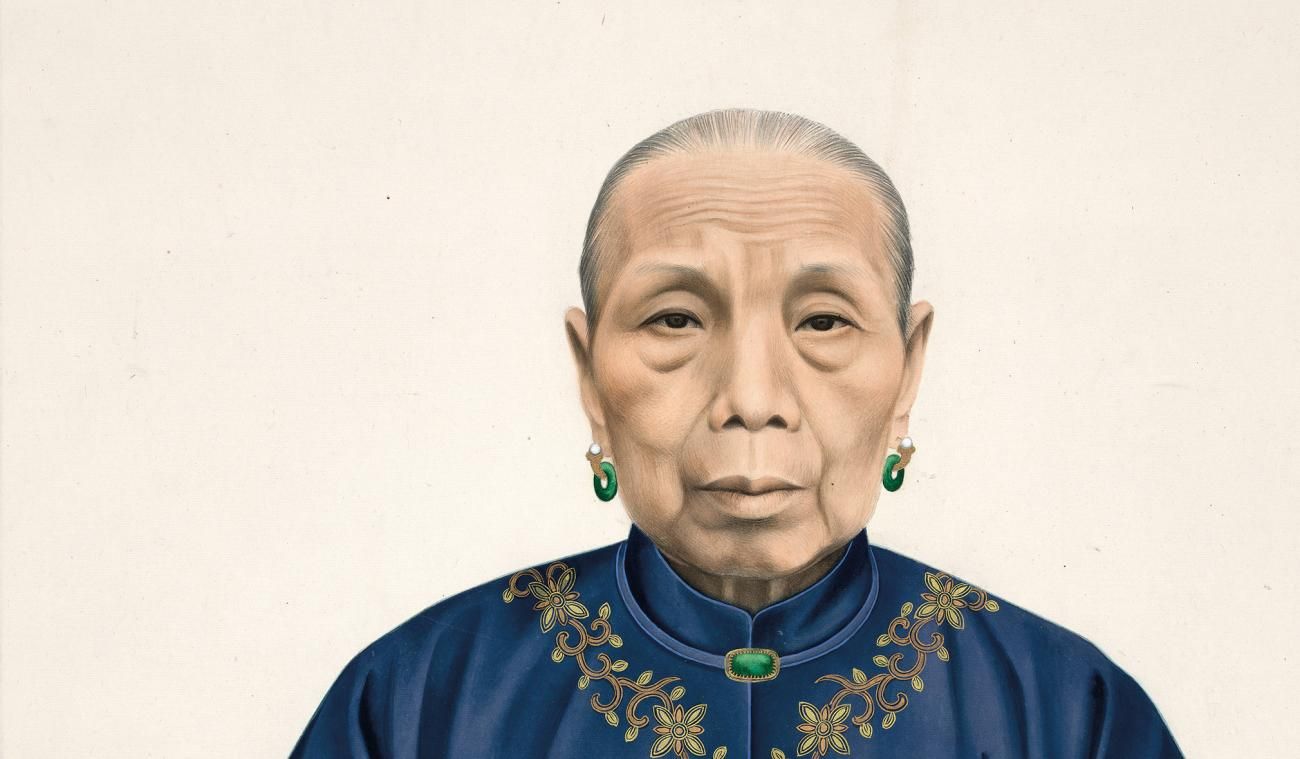
One of the most striking pieces is something many visitors pass by without a second glance: a portrait of a wealthy merchant that at first appears to be a photograph, but turns out to be entirely made of silk threads – an artwork in Suzhou kesi that would have taken months to complete. I once visited a kesi artist in Suzhou, and observed that she spent most of her time snapping at the passing tourists that no, that was NOT ink calligraphy, it was silk. No, that was not a painting, it was silk. And so on.
As the story progresses, the sound picture changes. We first hear background speeches in Manchu, the cant of the ruling class, that segues as the years pass into Mandarin, the lingua franca of the general population. By the final gallery, the words have transformed into Cantonese, reflecting the increasingly southward focus of the drama and events as political and economic forces were felt in China’s far south, where all the foreign contacts were.
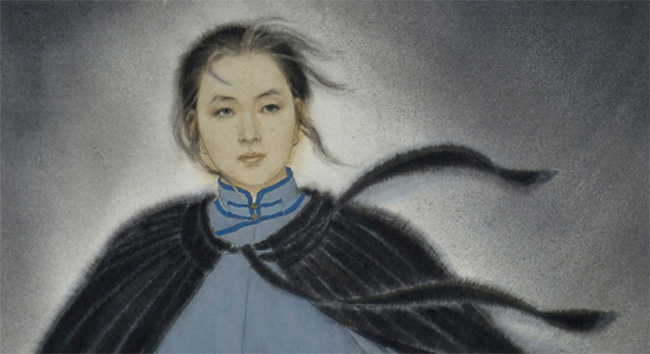
At the very end, just before the doors open to the gift shop, there is triple image of the same woman – dressed in Chinese garb, in Japanese kimono, and man’s clothes with a sword. It is Qiu Jin, the fiercely revolutionary poetess who was arrested and executed in 1907 for plotting a bombing campaign to overthrow the Manchus. She appears here, at the very end, presumably as an indicator of just how much had changed in the previous hundred years, how all the seething princesses and bitchy courtiers were suddenly trumped by a new, ardent kind of woman with a heartfelt desire for radical transformation. The tumultuous 20th century begins here, and that is where the exhibition ends.
I was a trifle baffled by the lack of commentary around the imagery of Qiu Jin, which seemed to be intended (as it was in my own coverage of the late Qing) to be the grand flourish of the early republican movement – a glimpse of just how far China had come during the long century of colonial contacts. It was only when I got out of the museum, and saw the recent storm on Twitter, that I realised what had happened.
Qiu Jin might have originally been the big finish for the exhibition, but the installation that visitors pass through has been eviscerated in the last couple of days, shorn of much of its explanatory signage after the British Museum was called out by Yilin Wang, whose translation of Qiu Jin’s work had been used without permission or attribution in the exhibition materials.
Wang pointed out that the exhibition, which hoovered up £719,000 in funding and charges £18 for admission, had simply harvested her work without asking. The BM swiftly responded by stripping it out of the exhibition proper, and informing her that there was no need to credit her because it was no longer there.
I have been thinking back through the last few times I have been approached for permissions to use my own work. A composer in Ireland wants to read out some of my haiku translations as part of a concert. An actress in Canada wants to include some in an audio book. An Australian exam paper wants to quote from my biography of the First Emperor. In each case, I thanked them for asking and said that they were free to go ahead with no fee required. But that was my decision.
Wang was not consulted, and such rights are the translator/author’s to grant, not the museum’s to take with impunity. What has made matters worse is that while the Qiu Jin materials have been flensed from the exhibition space, they understandably persist in the PDF guide available to visitors and indeed in the £45 exhibition brochure. I might also observe that none of the mob I have seen assembling on Twitter seem to have been to the exhibition themselves, so don’t realise quite how important the Qiu Jin imagery is – as a Manchu-denying terrorist and revolutionary icon, she shows up at the end, when you think it’s all over, with all of the wow-factor of [REDACTED] in the post-credits sequence of Fast X. She’s not a thing you walk past on the way to the gift shop, she’s the big bang at the end.
Which only makes the BM’s response all the more scandalous. “We’ve rubbed out evidence of our mistake, so now we don’t have to acknowledge it” is only something you can get away when the evidence really has gone. It’s not much of an apology, and I suspect that the fees Wang feels entitled to demand, which might have been zero in good faith, or the price of a nice dinner in everyday publishing practice, are now climbing ever higher as the BM doubles down on what we shall charitably call its mistake.
I dare say that Wang has already made more out of the publicity in pre-orders for a forthcoming book than the BM might have ever offered in acknowledgment for the use of a poem in a museum, but that’s not the point. The point is the principle of the thing: that whoever was at the trough for the £719,000 grant didn’t see fit at any point to push any money in the direction of Wang, whose work not only formed a part of the experience of the exhibition, but also seems to me to have been an integral part of its capstone.
Jonathan Clements is the author of A Brief History of China. China’s Middle Century is running now at the British Museum, London.
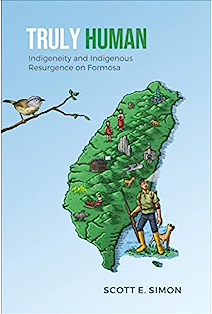
One of the most illuminating moments in Scott Simon’s Truly Human comes with the account of a sister and brother on opposite sides in Taiwanese politics. Igung is protesting against the local cement factory, which is on tribal land. Her brother Kimi thinks that the cement factory is a good thing, because it gives him a job that helps pay for his tribal tattoo website, and the managers are happy to look the other way when he goes hunting, which is otherwise illegal on former Truku territory. Eventually, the sibling stand-off becomes so strident that both of them run for political office on rival tickets, fatefully splitting the local clan vote between two members of the same family.
The title “truly human” derives from the term seediq bale, a native term that can be unpacked in multiple directions. Simon begins his book with a kindly villager who points out that everyone is human, really, including the nice anthropologist. But this gesture of cordial friendship rather ignores that fact that almost all the Taiwanese indigenes have terms for themselves in their own languages that simply mean “people” – and woe betide those non-people from the next valley if they wander onto our hunting grounds. Simon gets a sense of this himself when villagers start feeding him morsels of food, joking that in times past they would be doing so as part of the ritual to welcome his disembodied skull.
In chapters that focus on several crucial terms of indigenous language, Simon investigates how they have been misunderstood by the Taiwanese government. Across seven decades under the Republic of China, indigenous people have shifted in state consciousness from being idle savages, to suspiciously Japanese-speaking yokels, to “mountain compatriots”, to an invisible underclass “passing” as Han Chinese, to a weaponised minority that helps bolster the voting register. Simon is particularly compelling on their voting record, pointing out that contrary to the image fostered by the media, many of them skew “blue” towards conservativism, on the grounds that only the Nationalist (KMT) party is Chinese enough to appease the People’s Republic, and hence keep them out of their hair.
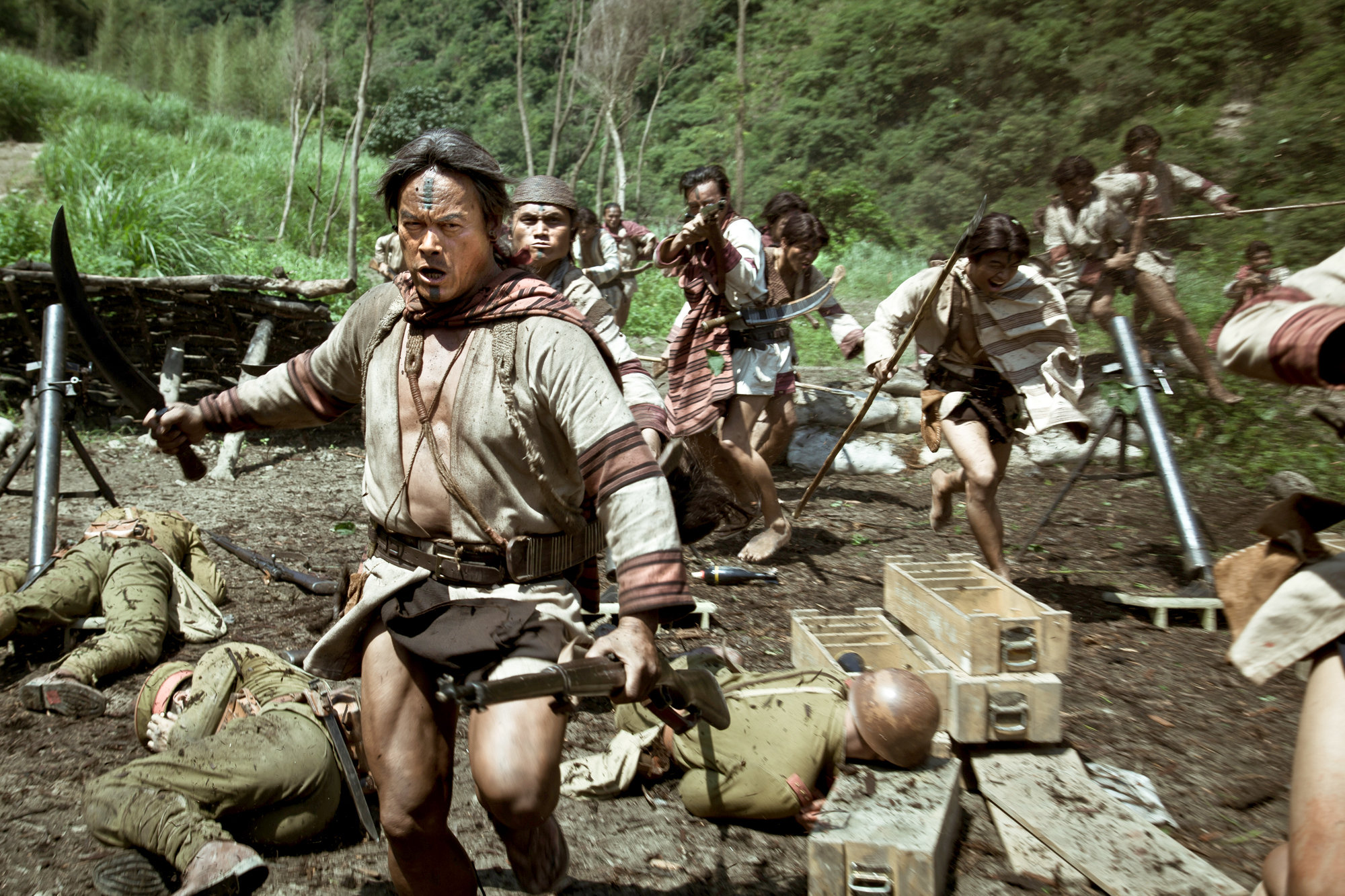
Seediq Bale, of course, was also the title of the 2011 film better known abroad as Warriors of the Rainbow (pictured), an account of the 1930 Musha Incident in which aggrieved tribesmen massacred Japanese colonists at a school sports day. Simon winningly investigates the way that story has spun out, noting for example that being “truly human” for tribal youths meant finding an excuse to be worthy of their ancestors by taking a human head. “It is no longer practised,” observed Simon wryly, “and thus can no longer be directly experienced through participant observation.”
Such a belief is part of the indigenous habitus known in many native languages as gaya – the same set of beliefs and taboos that regulated hunting, tattooing, weaving, marriage customs and funerary rights. Simon is ideally placed to examine what gaya seems to mean, not only for historical Truku and Atayal peoples, but for their modern descendants, one of whom confides in him that it was “really terrible.”
At some level, Simon’s account sits uneasily within the frameworks of academic publishing. So much of this material might have been better presented as a memoir, rather than snippets of fieldwork, leavened with historiographical commentary. But this is a common factor of much writing on indigenous peoples – many of the books on my shelves about Australian Aborigines and Canadian First Nations struggle to defy the tropes and traditions of the Euro-American structures that have been imposed on them. The further to the philosophical left one goes, the more such dialectics turn into endless nit-picking and hand-wringing, but mercifully Simon steps back from a precipice of self-doubt that might have stopped him writing anything at all.
In the process, he refers to Glen Sean Coulthard’s Red Skin, White Masks, which confronts the language of indigenous rights, noting that it is hardly a victory when native people win “concessions” from the state, since the very concept tacitly accepts that those rights were ever the state’s to concede. Simon applies this with particular value to the drawn-out spats over hunting in Taiwan, in which the Republic of China piously turned the Truku homeland into a national park (Taroko Gorge, spelled as per the Japanese mispronunciation) … and then announced it was illegal to hunt there.
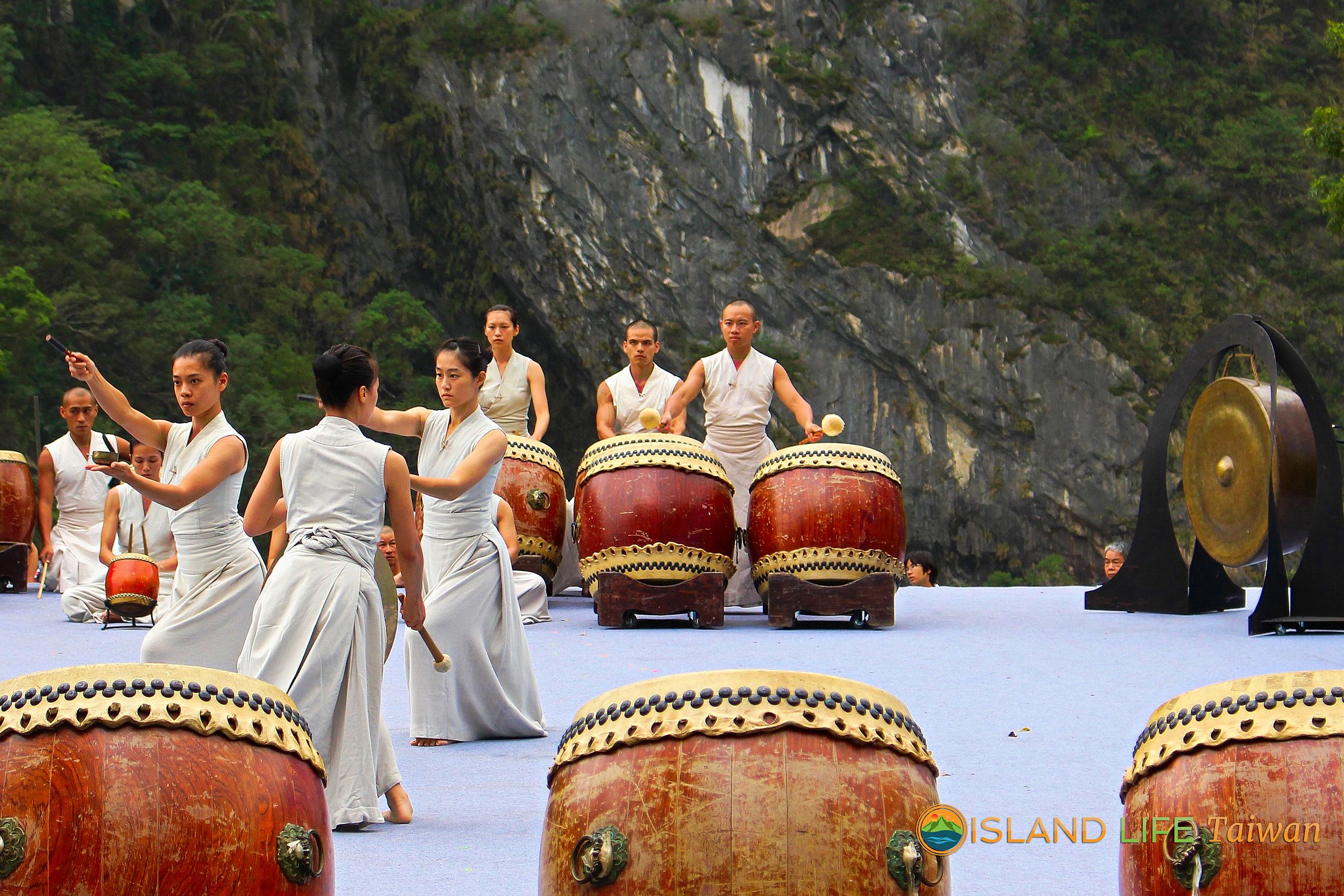
Hunting is of vital importance to the Truku. As with many other indigenous people, it forms not only the basis of acculturation, but also a form of bonding, socialisation, and education – Simon’s accounts of the what he learns from the sounds (bird divination) and smells (there are cobras nearby) of a hunting expedition are a snapshot of thinning native knowledge, lost to a younger generation working in urban convenience stores and on factory assembly lines.
Forbidding the Truku from hunting deprives their menfolk of a rite of passage, emasculating them in the eyes of their potential brides. Nor is it a simple matter of telling the troublesome Truku to just go and hunt somewhere else. As Simon learns, hunting is not merely a matter of wandering through the forests taking pot-shots at deer. It is a matter of careful, long-term husbandry of the local environment – the carving of passages and blinds, even the local year-on-year cultivation of plants that will lure prey to specific spots.
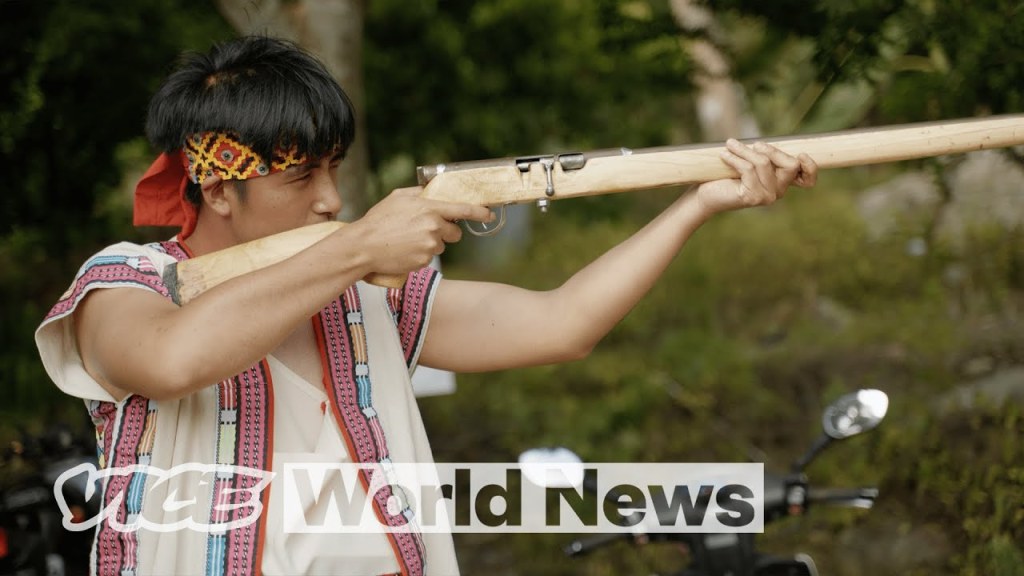
Simon brings up several landmark cases in hunting law, particularly the cause celebre of Talum Sukluman, a 54-year-old Bunun man arrested in 2013 for poaching, but also for using the wrong sort of gun. It’s this latter charge that is the most illustrative, since as Simon points out, indigenous people can go hunting, but only if they use an antiquated and home-made musket design – which, as one tribesman points out, is technologically inferior to the matchlocks that the Dutch carried in 1634! Simon argues that such laws literally force indigenous people to place themselves in physical danger by using jury-rigged explosives.
Talum’s case was finally resolved when he was pardoned by the newly elected president Tsai Ing-wen in 2016. But his freedom did nothing to allay the frustrations and criminal charges brought again uncountable other hunters, nor the fact that many hunting laws were introduced in reaction to dwindling wildlife habitats and populations – a 1990s problem now at least partly resolved by eco-policies and rewilding. In one telling incident, a meeting flies into uproar when told that tourists in Taroko Gorge have complained about the sounds of occasional gunshots – “We are killing squirrels,” shouts an angry Truku tribesman, “not people!”
As a technological determinist, I was particularly won over by the way that Simon relates such issues to the evolution of available weaponry. In the good old days, he suggests, hunting of both heads and hogs was a visceral, dangerous, immediate experience. The colonial-era arrival of better-quality knives increased the efficacy and frequency of what were once “sustainable” once-in-a-life-time expeditions, while improved gun technology turned hunting trips into forest massacres. But it’s the imposition of outsiders’ law that has most transformed local life.
“In the past,” complains one elder, “they would bring back the animal openly, with loud calls of joy, to share the meat with their neighbours. Nowadays they must conceal the animal in a canvas bag, kill it secretly in their home, and share the meat only with the immediate family and most intimate friends.” I was struck by this comment, not merely for the image it presents of thinning tribal traditions, but of the way that criminalising such actions can drive such people into associations with true criminals. It is, after all, the bushmeat (ye-wei) trade that forms one of the cornerstones of organised crime across east and south-east Asia, and which has been implicated in recent years in geopolitical scandals that stretch far above the heads of mere forest hunters, even into the murky origins of the Covid pandemic.
There is much more in Simon’s book – my weightless Kindle copy of which belies a main text of over 400 pages. But I’ll leave you with one of his many illuminating insights into the world and life of Taiwan’s indigenous inhabitants. Much as the French began referring to British football hooligans as “les fuckoffs”, the Atayal and Seediq called the Chinese settlers kmukan (“motherfuckers”) on account of their readiness to refer to the taboo sexual activity of a relative in one of their most common swear-words.



 The Official Schoolgirl Milky Crisis Blog
