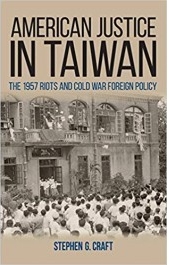
American Justice in Taiwan

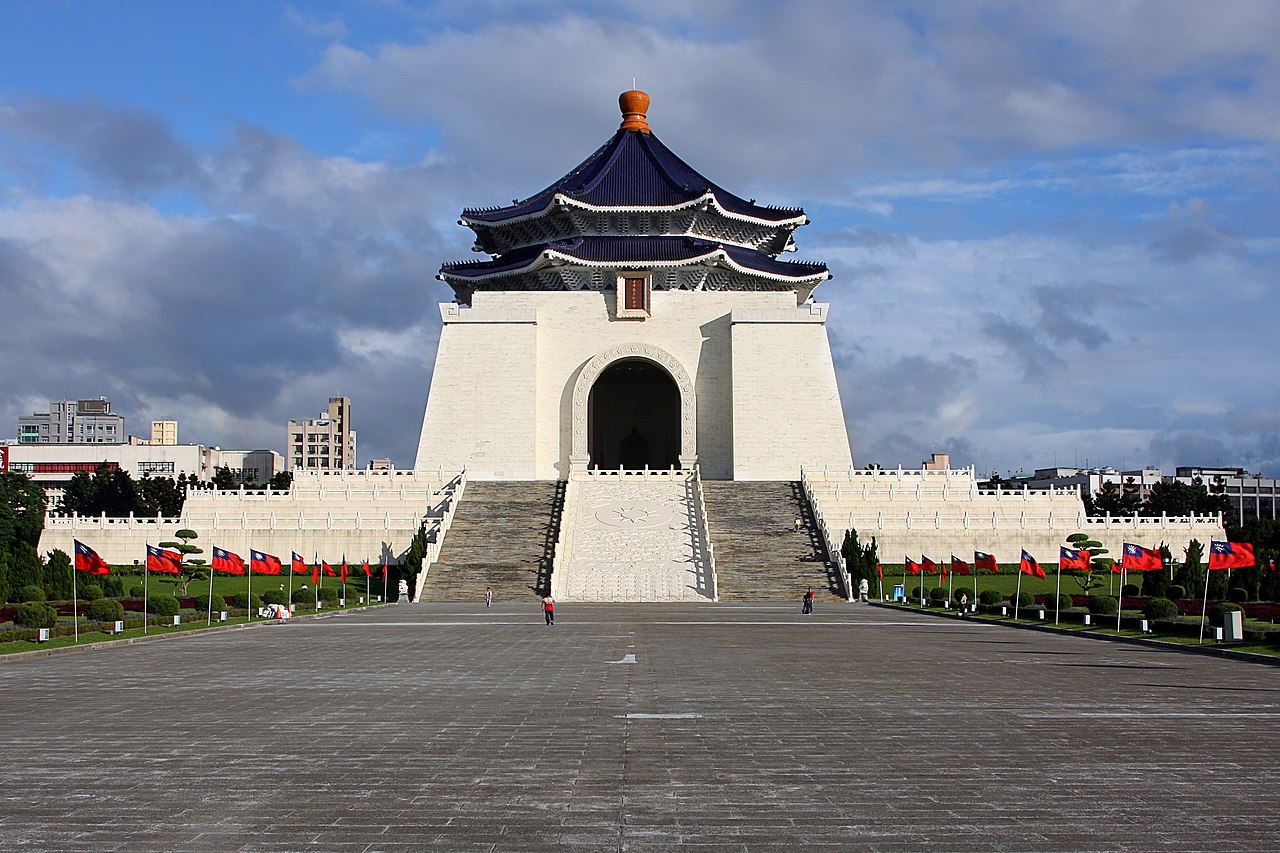
On 24th May 1957, a Chinese widow and her daughter began an angry vigil outside the US embassy in Taipei. Ao Tehua held up a bilingual sign protesting at the decision by a US court martial to find her husband’s killer innocent. Asked to move on, she pointed out that the street outside the embassy was Chinese territory, and it was her right to stand wherever she pleased. By the time a force of twenty-two police officers arrived to persuade her, a mob of 400 onlookers had gathered. A local reporter interviewed the tearful widow on tape, and then broadcast her words through a loudspeaker to an increasingly fractious crowd.

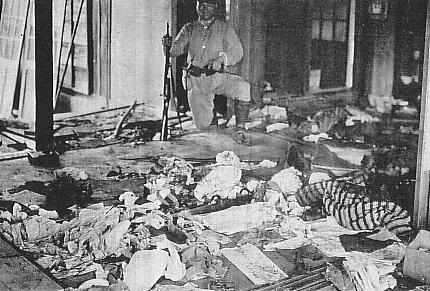
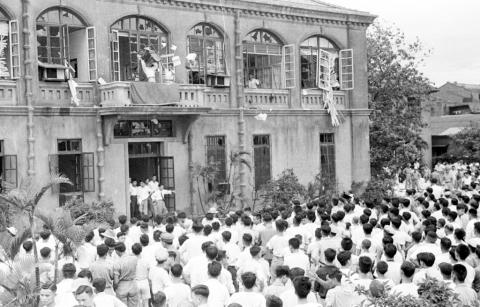
By the afternoon, the crowd had grown to more than 2,000 people, storming the embassy gates. They smashed the windows, ransacked the offices, and patrolled ominously outside the iron door protecting the staff in their panic room. The Stars and Stripes was torn down and shredded, and the flag of the Republic of China raised on the embassy flagpole in its place, to loud cheers from a crowd that now numbered six thousand.
In a moment of gripping cinematic tension, eight men bolted from the embassy through a gauntlet of “clubs, stones [and] fists.” They reached their escape vehicle, a military jeep, only to discover that one of the rioters had stolen the keys. As the mob charged towards them, their Chinese driver tried to hotwire the car with a pair of pliers and the tinfoil from a packet of cigarettes. Police officers started to push the car down the street, at an excruciatingly slow walking-pace, as the driver tried frantically to jump-start the motor. As the rioters caught up with the still-unstarted vehicle, the men reached the safety of evacuation buses, while the crowd yelled at them: “You killed Chinese. We kill you.”

Stephen Craft’s book American Justice in Taiwan is a fascinating snapshot of Cold War politics in Taipei, during the era that the US government vainly attempted to prop up the exiled government of Chiang Kai-shek, in the forlorn hope that it would one day retake the Mainland from Chairman Mao’s Communists. He starts with the shooting that precipitated the embassy attack, a fateful evening two months earlier, when the 41-year-old Master Sergeant Robert Reynolds had rushed out of his house after his wife Clara claimed to have seen a man peeping through the window as she took a shower.

Giving chase in his yard and the street outside, Reynolds apprehended and fatally shot Liu Ziran, an officer in Taiwan’s army and a member of the Institute of Revolutionary Practice. When the authorities arrived, Reynolds confidently admitted to having shot the man whose body was lying in park 200 feet from his house, noting that he had done so in self-defence. That was his next mistake.

In the case of the Reynolds incident, the real issue was a huge disjuncture between Chinese and American legal practice. American law recognised that “a man’s home is his castle” – if Reynolds could prove that the intruder was a threat, he might get away scot-free. Chinese law, however, regarded all violence as a crime that needed to be answered, even if committed in self-defence or without malice. This, observes Craft in an illuminating aside, was why British diplomats were not allowed to drive their own cars in China, as “accidents became incidents.”

So, when Reynolds immediately announced that he had shot the intruder in self-defence, under American law this an argument for his innocence, whereas in China it was an admission of guilt. In similar cross-cultural misunderstandings, the Reynolds inquiry seemed more ready to accept the testimonies of white interviewees, who swore to tell the whole truth, than those of Chinese ones, who were not obliged to swear on a Bible. Following Reynold’s controversial acquittal, it was suggested that he follow Chinese custom in paying compensation to Liu’s family, but his representatives refused, on the grounds that in American eyes it would make him look guilty.
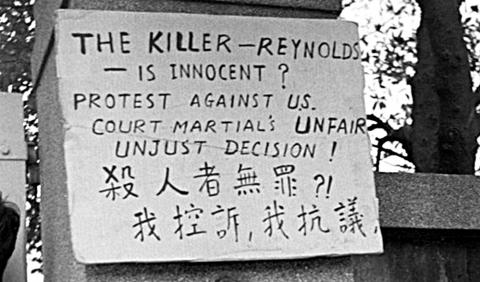
The result was an escalating tension on Taiwan, in which the mob stormed the embassy, and armed military police escorted American children on their school buses, while the authorities warned that “rumour agitation” was a capital offence. And there were rumours galore, enough for a whole mini-series of alternate facts, with claims in the Chinese press that Liu and Reynolds had been secret love-rivals duelling over the same woman. Meanwhile, American intelligence pointed to a number of incredibly suspicious coincidences and happenings, that suggested Ao’s protest sign and the embassy attack itself might have been orchestrated with the help of the secret police, run by Generalissimo Chiang Kai-shek’s own son.

Trying to mollify feelings on both sides, Chiang Kai-shek gave a broadcast in which he called it “one of the most shocking and most regrettable things” that had happened in the last five decades – something of an overstatement, considering that the period included two World Wars. As for the embassy staff, they felt “they have been kicked contemptuously by friends for whom they have risked and spent much.”

Craft’s book is a whodunnit, poking around in Reynold’s testimony, and the forensics of Liu’s death. He delves into gendered arguments in both the court and the press, in which commentators seek to question the evidence on the basis of the attractiveness of Liu’s Chinese wife. Why on Earth, they argued, would he want to look at a naked American woman, particularly the frumpy Clara Reynolds – their words not mine! Why, the very idea was an insult to Chinese womanhood, while the argument in Liu’s defence was an insult to Clara Reynolds.
But Craft also turns the story into an examination of the history of justice for Americans in East Asia, all the way back to the Terranova Incident of 1821, in which a naturalised American sailor killed a boatwoman by throwing a pot at her. He talks through numerous similar moments in the record, where illegal foreign activities have gone lightly punished or even unpunished, as well as similar cases in Japan, which were resolved very differently. For a century, Americans and other foreigners enjoyed the umbrella protection of “extraterritoriality” – the right to be tried by a court of their countrymen, rather than the Chinese. The Americans finally renounced their extraterritorial status in 1943 as part of wartime concessions, only to start re-asserting it in a new form by rushing to claim “diplomatic immunity” every time they needed to. But as Craft notes, in a lovely anecdote, the attitude of the US military was still occasionally tin-eared when it came to local issues.

In February 1957, a visiting American general made the error of asking his Taiwanese hosts why the locals were not celebrating the birthday of George Washington.

“We are not a colony yet,” came the beautifully understated reply.

This is a movie waiting to happen, unravelling from two midnight gunshots in a Taipei suburb, into a consideration of the history of justice itself, the Cold War, and the very real possibility that everyone – Reynolds, Liu, the mob and the embassy staff – were all unwitting pawns in a power-play between Chiang junior and his father the Generalissimo. Craft’s narration expertly zooms in on tiny moments of human interest, like Japanese vagrants scavenging for shell casings on a military shooting range, or junior officers pleading with their jeep drivers to use their horn less into order to make more friends, out to grand pivots in geopolitics. With a winning grasp of historical context, he closes with the October 1957 launch of Sputnik, setting the Soviet Union ahead in the space race, and pushing the US and the Republic of China to entrench even deeper in their reluctant alliance.

Rewarding on many levels, American Justice in Taiwan is a book that offers a sweeping view of thorny issues in international justice, which continue to reverberate today.

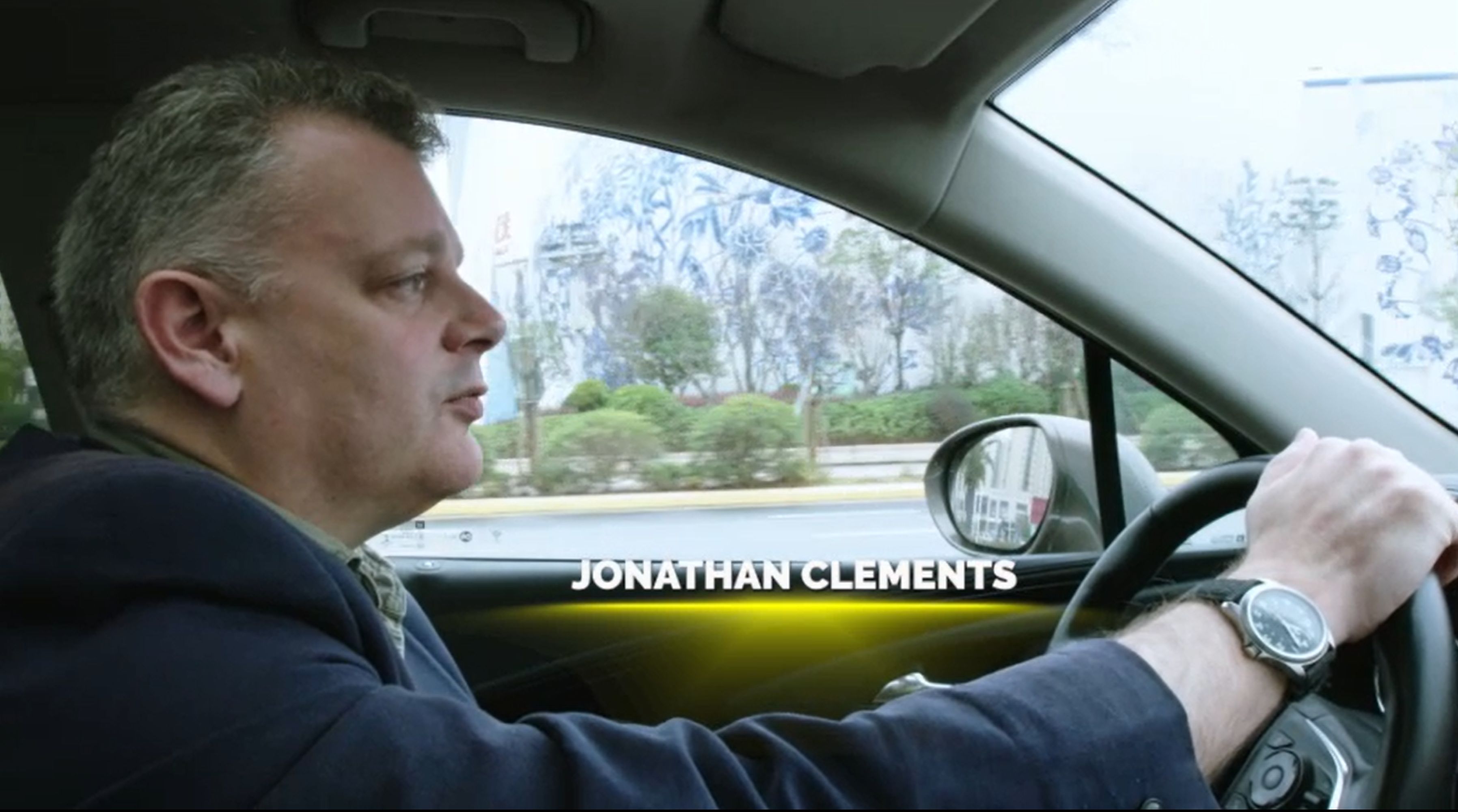
Jonathan Clements is the author of A Brief History of China. American Justice in Taiwan: The 1957 Riots and Cold War Foreign Policy is published by the University Press of Kentucky. Pics from Wikimedia Commons.
Fish Cam

Today, we will log five minutes of footage. The day starts at 0500 and finishes for me at 2200. Every single moment takes a million negotiations, as the English director struggles against jet lag, and the Chinese director, who looks 12 but is actually 34, struggles to continue to make the documentary that he has been unchallenged about for the last few weeks before the foreigners arrived.

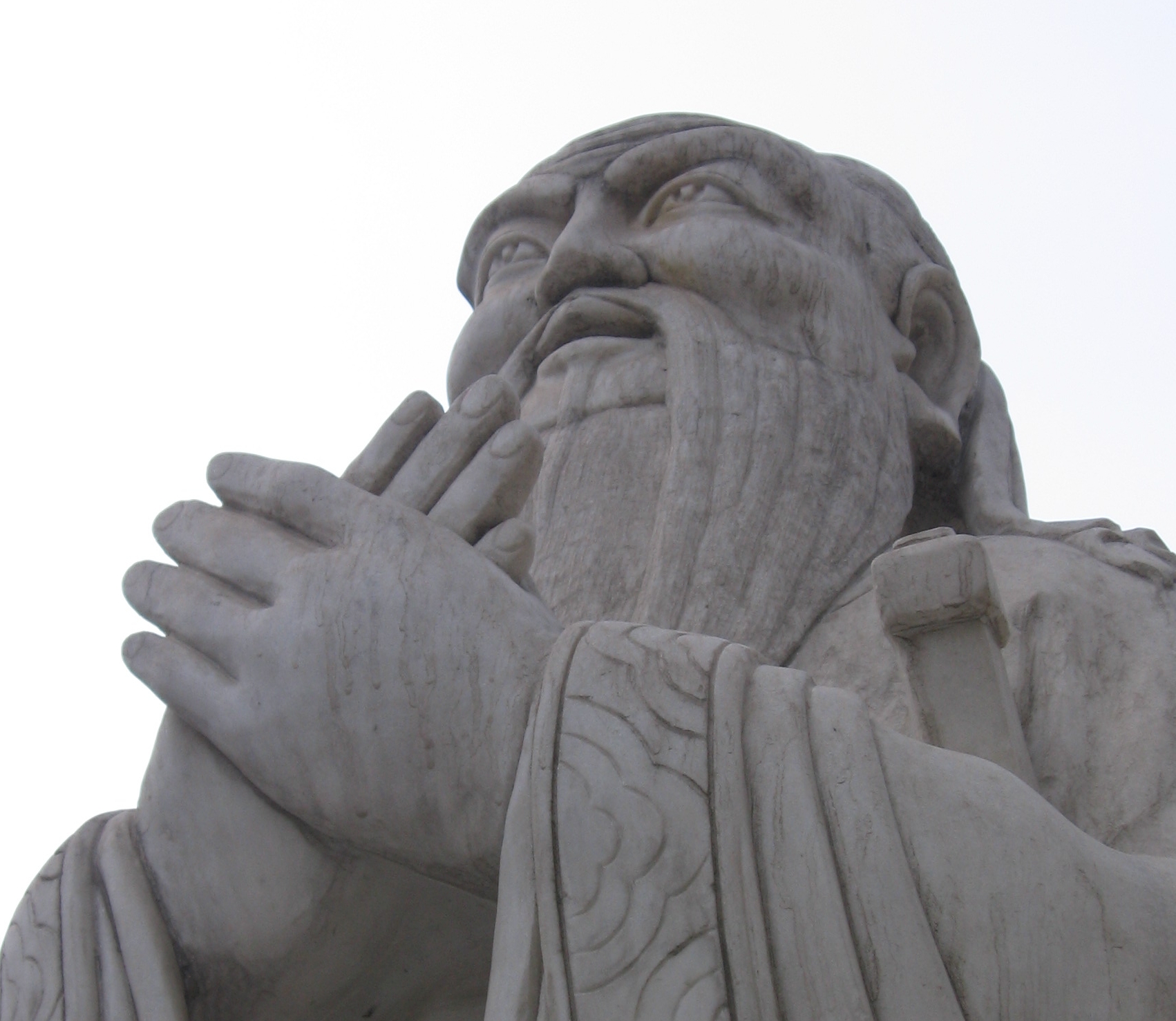
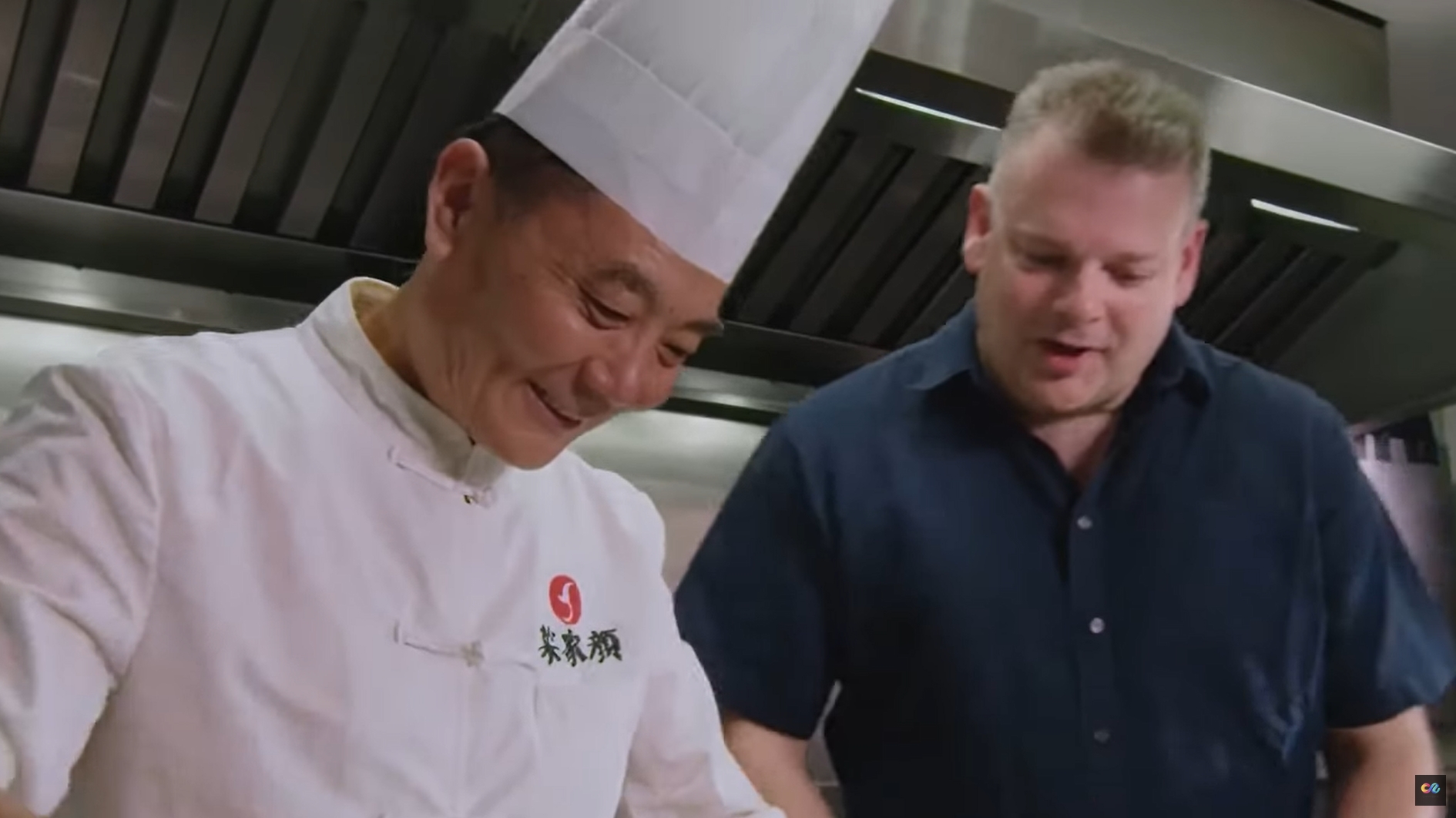
Today, all we have to do is film Yan Weixing, who looks uncannily like George Takei, make a deep-fried sweet and sour fish in his kitchen. But the lights have to come from the van, and the sound man has to mic me up, and then the director wants me to change my shirt, and then the B cameraman needs to change his battery, and the filmic world’s ever true cliché of Hurry up and Wait comes true again and again. I read the entire works of Confucius while waiting for my next call on the sheet, and Mr Yan smokes his way through an entire packet of Nanjing fags.

Meanwhile the Chinese director has his own ideas of what things should be, and really doesn’t want foreigners to interfere. Mr Yan and I are in the kitchen, and he is scraping the scales off a carp and slicing a series of incisions into it before rubbing it with salt. The heat in the kitchen is ridiculously high, and the sweat is pouring off us. He makes a batter for the fish and a delicate sweet and sour sauce. This is Lu-cai, one of the “Eight Great Cuisines of China“, and while Cantonese, and Sichuan and the like have made it abroad, nobody really knows much about the delicate flavours of the land of Confucius. Lu-cai used to be all the rage in Beijing until the 1950s, when Mao’s fetish for chilis and an entrepreneur’s willingness to open a Sichuan restaurant in the capital changed the world of Chinese cooking.

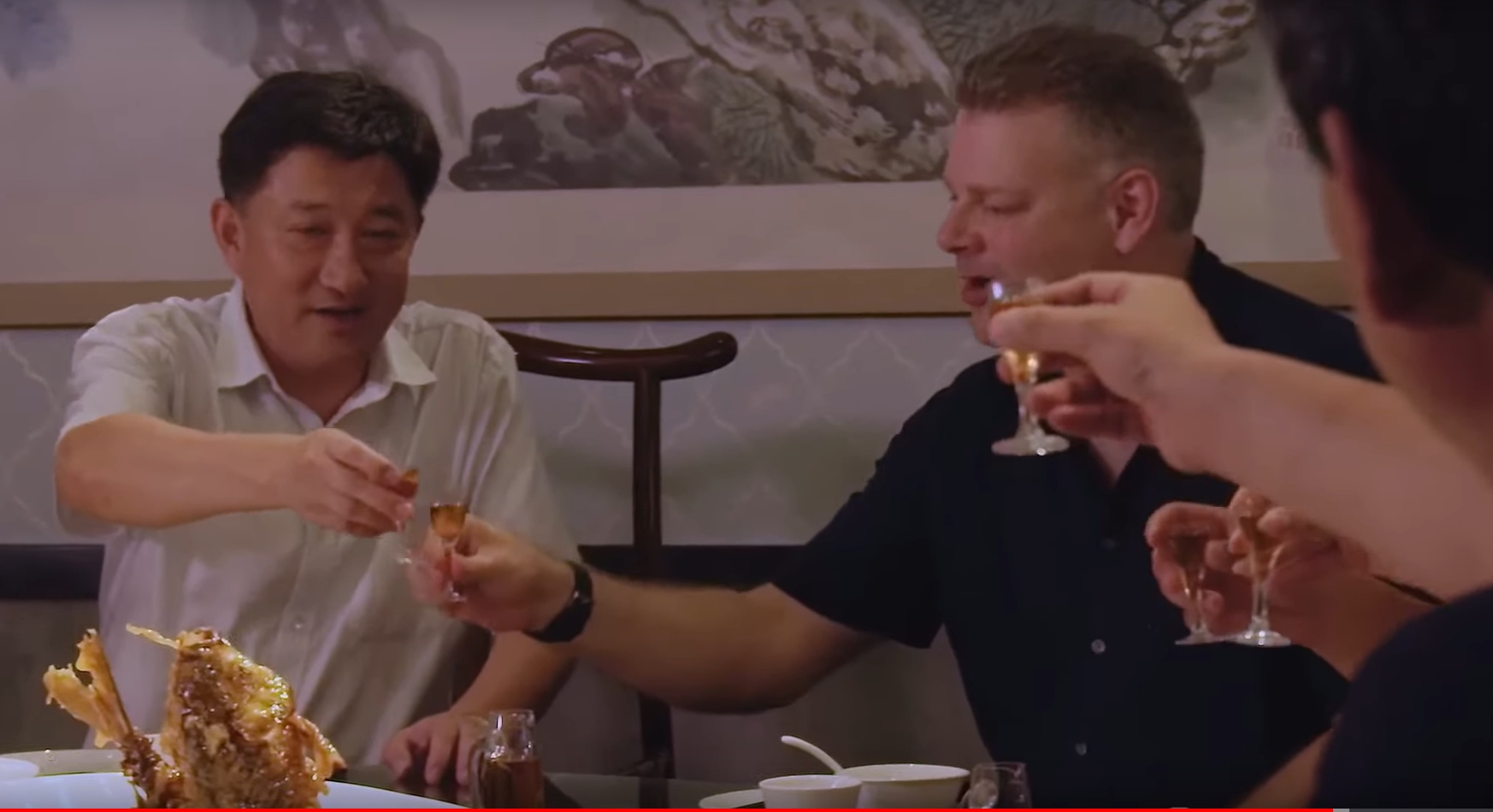
A bunch of diners are waiting for us to bring the fish. They have been waiting for three hours. They want to put a mini GoPro camera on the fish as I bring it into the restaurant so that we get a fish-eye view. I open the door and enter, proclaiming in Chinese to much applause: “Here is your Yellow River Carp!” The director makes me do it another six times. Then we have to do the sitting with the diners, six times. Then me asking about the seating arrangements six times. Then they offer me some Sea Cucumber Liqueur. We need to film it again, six times. I have drunk half a liquidised sea cucumber by this point.

We need to shoot the whole scene again, without lights, because the drone team will shoot it from outside the window in the dark. We have a drone team? Yes, they are three guys who have been sitting outside all day waiting for their moment to shine. We drink more sea cucumber liqueur and the drone crashes into a nearby balcony. But they have the shot.

It is 2200. Tomorrow’s call is 0515. I am in a hotel where prostitutes put business cards under the doors. Tomorrow I will be somewhere else by dinner time.

Jonathan Clements is the author of Confucius: A Biography. These events appeared in Shandong: Land of Confucius (2018).

Tales of the Ticktock Man

The distance from Puli to Hualien is 40 miles as the crow flies. You can drive it in just three hours, although, tellingly, today’s bus and train routes still take seven, edging all the way around the north of Taiwan, rather than making a beeline across the towering central mountains. But there was a time when it was a track unknown to all but a few aboriginal hunters, until one brave Japanese frontiersman, Katsusaburo Kondo, led a surveying party through the jungle.

That, at least, is what Kondo claimed, in a series of 1930s newspaper articles in which he chronicled his experiences among the tribesmen of the Taiwanese hinterland, a life-long association that led him to acquire the nickname “Kondo the Barbarian”. His memoirs have now been published by Camphor Press, a small publishing house that punches way above its weight in Taiwan Studies, responsible for much of the best and most original material in the field in recent years.

In October 1930 a group of Taiwanese Seediq tribesmen infiltrated the sports day at a Japanese-run high school and massacred over 130 Japanese, as well as two Chinese observers who had fatefully decided to cosplay in kimono. The “Musha Incident” became a touchstone of Japanese-aboriginal relations, and would lead to a brief colonial war that claimed hundreds of Seediq lives. The Musha Incident was a shock to the Japanese system, but has also been framed as a form of indigenous apocalypse, as the last generation of Seediq warriors, deprived of their traditional manhood rituals, went hunting for their colonial oppressors in a last, desperate attempt to merit the killers’ tattoos that would entitle them to join their ancestors in the afterlife.

Suppressed for decades under the Kuomintang government, the story of Musha sprang back into life in the 1990s, as the Taiwanese media gained increasing interest in indigenous issues. It was adapted into a comic by a native artist, which itself became a major source for the film Seediq Bale: Warriors of the Rainbow (2011, pictured), an epic action movie that reframed the story along the lines of Braveheart or the Native American “ghost dance” cult.

The Musha Incident, in fact, remains such a huge presence in reports of Taiwan under the Japanese that it still accounts for 10% of all the material published in Japanese relating to the fifty years of colonial rule. Paul Barclay’s new book digs down into one of the ur-texts that inform so many of these stories, the reminiscences of an unreliable narrator who tried to place himself at the centre of the story.

Katsusaburo Kondo is that most dangerous of conmen: an evocative and persuasive writer. He begins his story with the aftermath of the Musha school massacre, when he visits his estranged aboriginal stepdaughter, who confides to him the true reason for the war, before hanging herself in her prison cell. He then leaps back in time to tell the story of his relationship with Taiwan’s indigenous people, as an interpreter, explorer and trader.

In particular, Kondo is keen to insert himself into the narrative of the Fukahori Expedition, an ill-fated platoon murdered by head-hunters in the Taiwanese hinterland. He frames much of his subsequent adventures as a quest to avenge the lost soldiers, and to retrieve their bodies and possessions, finally striking it lucky when he stumbles across their skulls on display in a tribal longhouse. But as Barclay notes in his meticulous annotations, Kondo’s life-long claim that he, too, would have perished on the expedition were it not for a fortunate bout of malaria, was part of his ongoing attempt to appear far more involved than he really was.

The scene of the Musha massacre, 1930.

“Despite… many inconsistencies, falsehoods and implausible claims,” observes Barclay, “Kondo’s writings wedged their way into discourse, by hook or by crook.” However, they are also loaded with tantalising and convincing glimpses of aboriginal culture, including a chilling account of the “guardian of heads” (the crone priestess who welcomes a new skull to the tribal shrine), and a charming anecdote in which an indigenous girl confides to Kondo that her people are “afraid of the Japanese people who tick-tock.”

It takes Kondo a while to realise that she is frightened of his pocket watch, which makes him, too, seem like an otherworldly creature bearing haunted devices. This is catnip to the historian in search of local colour, but Barclay is on hand to warn that it seems suspiciously close to another story told by one of Kondo’s associates, and was quite possibly something that he ripped off. In another part of the tale, he recounts a horrifying attack by several tribal youths, who decide to lynch him for his skull. He fights them off, but is so grievously wounded that he writes his will… except he is “fully healed” within two weeks. Well, which is it?

And yet, and yet, there are moments in Kondo’s story, translated here in full, that are truly illustrative of the stand-off between the aborigines and the Japanese, such as the sight of tribesmen going cap-in-hand to the local police station to plead for meagre parcels of gunpowder and a couple of bullets, merely so they can continue their livelihoods. Kondo tells tales of the Seediq hardening the soles of their feet by walking on hot iron rods, and of the strict lumber merchants whose insistence on unmarred timber is the cause of much misery among tribal log-carriers. Finding a corpse on their mountain mission, he asks his tribal companions if they want to eat it, and they look at him in horror – cannibalism being taboo among them, despite claims to the contrary made by the foreign media. These observations are so mundane, so everyday that they have to be true. Right?

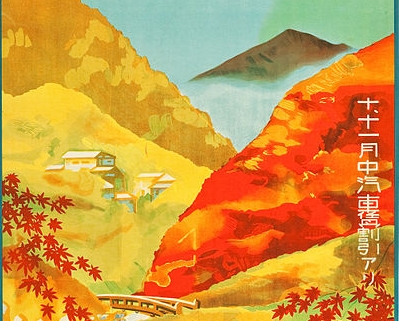
Taiwan as imagined in a 1930s Japanese tourist poster.

With Barclay as our guide, Kondo’s tall tales become an object lesson in text-critical analysis, as we get to grips with the lies he tells others, the lies he tells himself, and some of the truths that are still revealed. His account of his divorce from his common-law wife, in which he delivers a pig’s head and a keg of rice wine to her father, seems faithful to tribal traditions, although one wonders just how happy the former Mrs Kondo was with it – Kondo claims she waves him away with a laugh. Barclay even gently makes Kondo more relevant to modern historians, by redacting some of his hand-waving racist dismissals of everyone as “savages”, replacing his blanket descriptions with more exacting classification of tribes and sub-groups.

Sometimes, one thinks, the tribesmen have the last laugh. Kondo writes sneeringly of a moment on his expedition when he convinces his tribal companions that he has a magical amulet that will turn a single grain of rice into a full belly for each of them. “So simple-minded,” he scoffs when they appear to fall for it. And yet he also tuts in annoyance when they attempt to delay the mission by waiting for a new-born baby to grow up so that its mother is free to accompany them. Kondo decries this as a moment of savage sloth, but one wonders if the tribesmen weren’t concocting an excuse to delay the city boy’s dangerous mission for another season.

Resistance to the Japanese authorities was futile. Barclay has some winning data on the nature of colonial wars, pointing out that the Musha Incident was such an embarrassment to Tokyo that the soldiers who avenged it were handed the most desultory of medals and rewards. Even as the Hague Convention attempted to limit the savagery of modern warfare, colonial campaigns were somehow exempt, subjecting the Seediq to some of the very worst of modern weaponry, including aerial bombardment of their forest hideouts.

Kondo writes vividly of some of the attempts to get the aborigines to understand how pointless it was for them to fight back, with a tribal delegation brought to visit Japan itself to show them the power and might of the Land of the Rising Sun. Put aboard a train for the journey to Keelung, the Seediq scream in fear, protesting at the dizzying speed, pointing in terror at what appears to them to be “dancing trees” beside the tracks. It is a beautiful image, but Barclay points out that while Kondo’s early writings describe the aborigines as brave, hardy trackers and hunters, his later work transforms them into clueless, whiny man-children, reflecting Japan’s own drift towards imperial condescension. In Barclay’s hands, Kondo the Barbarian transforms from an account of the Taiwanese indigenous people to an even more revealing narrative about the Japanese who were writing about them.

Kondo the Barbarian: A Japanese Adventurer and Indigenous Taiwan’s Bloodiest Uprising is published by Camphor Press. Jonathan Clements is the author of A Brief History of China.

Hot Blobs

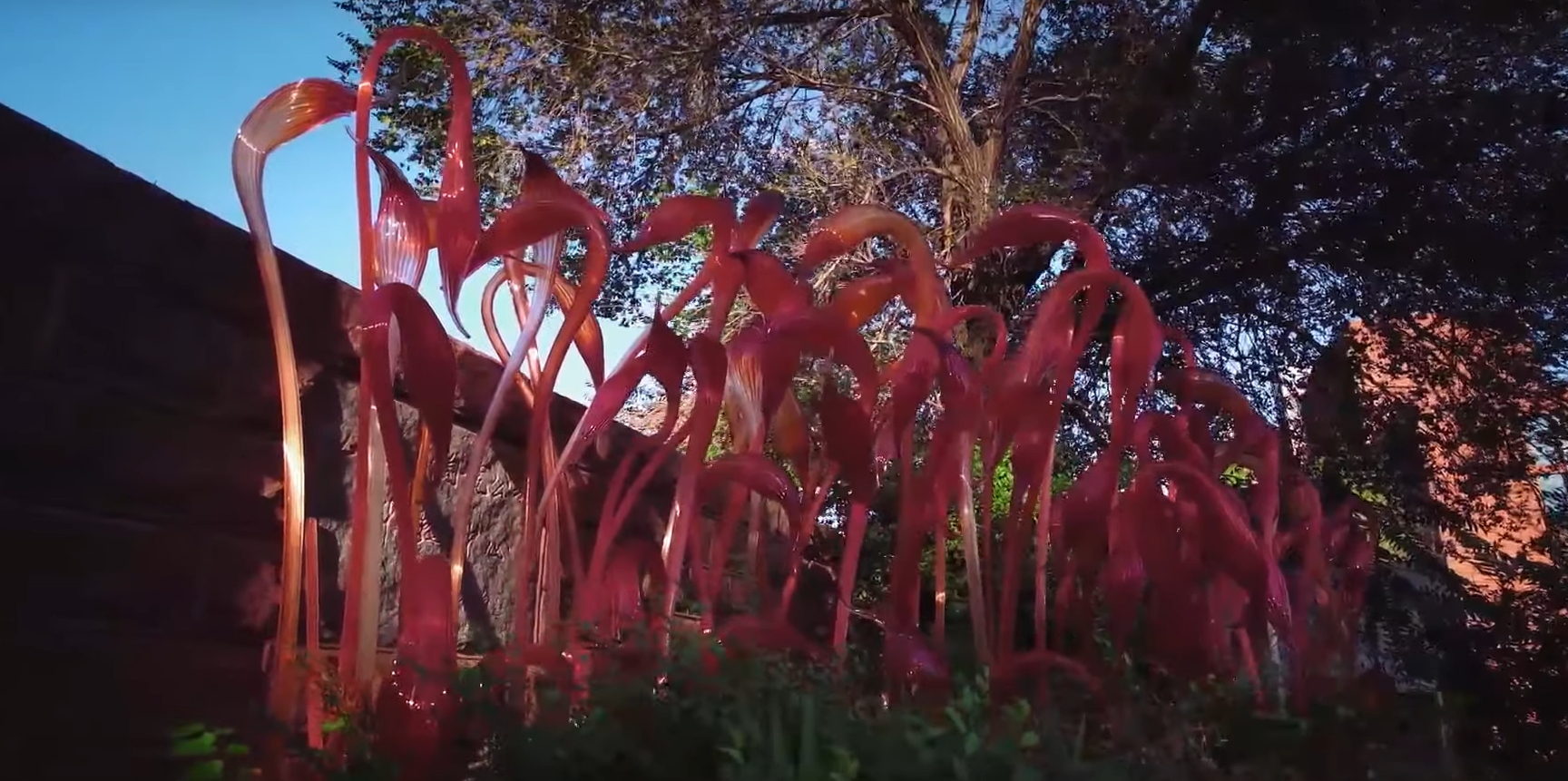
Zibo is famous for glass. It’s where they make the glass vases with paintings on the inside, and the ones with the different coloured coating that’s carved into the outside. The glass flowers that form vast corporate installations, and the horrible little paperweights and dust-collectors beloved of many a mad old lady.

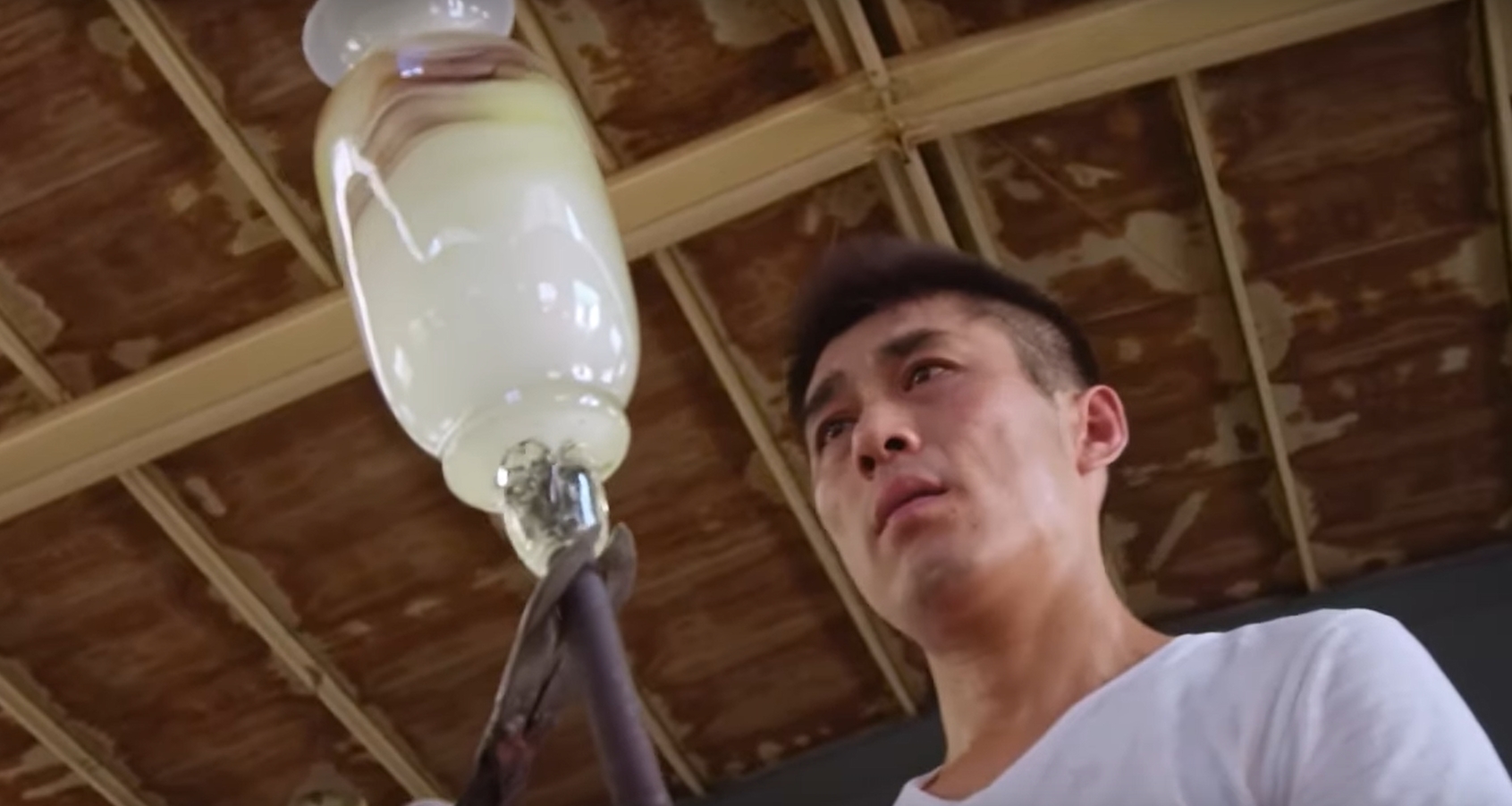
Li Daxi loves glass. He loves its malleability and the speed with which he can put together a vase or a figurine. This wiry, friendly man shoves a metal pole into a furnace at 1400 degrees, withdrawing it with a hot blob at the end, and he sits at a chair made of scaffolding where he can roll the blog and pat it with a trowel, where he can blow into it and tap it.

“Today,” he says, “we’re going to make a fish.” He taps and rolls the first blob, and as it cools to 800 degrees, the white hot gunge congeals to a bright red. Belatedly, I see the signs that hang on each of the furnaces – “Tea”, “Red”, “White Jade.” The true colours only manifest as it cools, but while the red blob is still too hot to touch, he dunks it into another molten bucket marked as Transparent.

I roll the hot blob for him on the scaffold chair while he sets about the clear outer layer with tongs and clippers, teasing it into fins, shaping a fish’s head and poking two little eyes into it. It’s done in less than five minutes, and yours for thirty pounds. He lets me have a go and my first fish looks more like a dinosaur. The second is more like a teapot. The third is a fish.

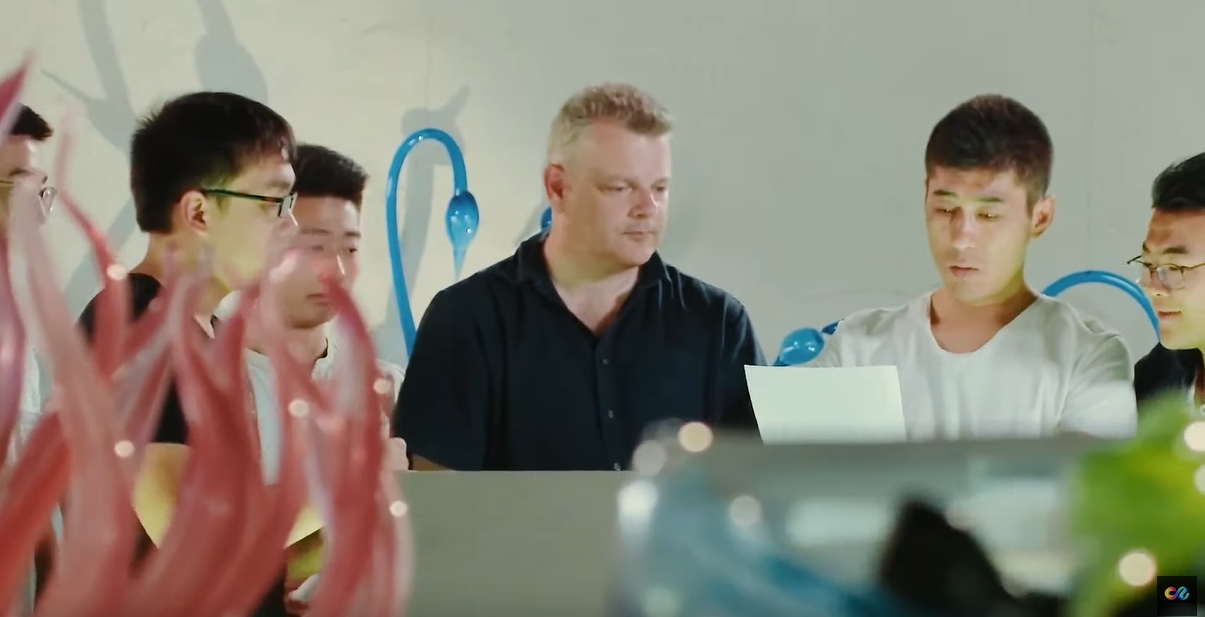
Li Daxi is a certified master of glass, and he leads me around the gallery in the factory, in the company of four eager students. They have been scooped up from the local polytechnic, and arrived unaware that they were going to be on television. It’s only as we stand there waiting for a lens change that I decloak as a Chinese speaker, and they suddenly burst into animated conversation about what this show is, and why we’re here. Belatedly, they realise that Li Daxi’s comments on their hand-drawn designs, and my tin-eared questions about them, are going to be broadcast in 30 countries. Everybody is very excited, and intrigued by the process of television, and boggled to discover that their taxes are being funnelled by their local government into putting a film crew in their factory to make a five-minute advert for it.

“Your job is so hard,” says Li, whose arm I have just watched tan in front of me as he holds his pole in the furnace for slightly too long. “So much standing up, and repeating yourself, and running backwards and forwards.”

But his job is hard, too, as he attests, revealing that the youngest student he has is in his thirties.

What about those nice young men this morning, I ask.

“Oh, they were all designers. They come with ideas for vases and jugs, but they still expect someone else to make them. They come to me and I tell them the handle won’t support the weight, or that the whole thing will have to be exterior-cut or interior-painted, but they won’t do any of that themselves. Nobody wants this job. The heat is incredible, every day. We wear asbestos gloves, we’re throwing around molten glass…”

The day started at 0530. By sunset, we are filming the pick-ups of me arriving at the factory and doing a rushed piece to camera in front of a sunset that we are hoping will pass for a sunrise. Then it’s back indoors after the light fails, to film me and Mr Li looking around the gallery and talking about his favourite pieces. We wrap at 1830, then there’s just time for a rushed dinner before the four-hour drive to Qufu, the home of Confucius.

Jonathan Clements is the author of A Brief History of China. These events appeared in Shandong: The Land of Confucius (2018).

The Dean of Shandong

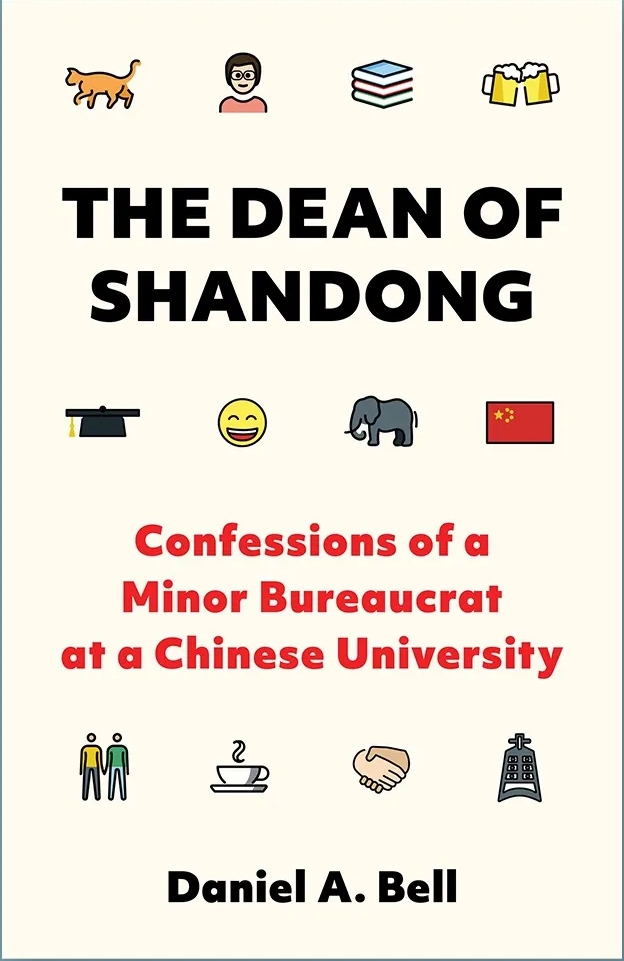
Canadian-born Daniel Bell was appointed as the dean of the School of Political Science and Public Administration at Shandong University from 2017 to 2022, a period characterized by Xi Jinping’s austerity drives and the sudden global shutdown of COVID-19. Freed from academic bondage, he writes up his experiences in The Dean of Shandong: Confessions of a Minor Bureaucrat at a Chinese University.

Now, if you asked me to write up my China experiences (an approach twice made to me by British publishers), you’d get a series of angry rants and raves about supermarkets and tea houses, fake goods and racists, but as a political philosopher in the homeland of Confucius, Bell has many more productive things to say about China and the Chinese. He does, occasionally, fulminate about injustices, most notably the restrictions brought on academic banqueting by anti-corruption laws. But he also has much to say about the drift in China’s political economy from what he calls “Leninist Legalism” into a philosophy that derives much of its foundations from Confucius.

Bell dates the official “Confucianisation” of China to 2008, where the opening ceremony of the Beijing Olympics tried to present Confucius as the cuddly face of modern China, rather than Mao or Marx.

He sniffs out some truly quirky but illuminating areas of Chinese political life, starting with a chapter-long discourse on why Chinese men dye their hair. Bell tracks it all the way back to Spring and Autumn statements on rites and rituals, that suggest that black-haired men, young and vigorous, should run the state, while white hair is a sign that it’s time to put someone out to pasture. That might have played well in the Bronze Age, when life expectancies were so much lower, but today it means that the arrival of grey hairs sends Chinese politicians into a panic.

Speaking as someone whose hair went white while I was in China, this puts a huge number of things in perspective. For the first time in my life, after reading Bell, I seriously considered dyeing my hair, all the better to squeeze a few more years out of my career before I am deferently consigned to the lower table.

As a political philosopher with a deep sympathy for China, Bell has harsh words for the complacent West. He rails against “cuteness” in politics, arguing, much as once did Charlie Brooker with Cassandra-like powers of prophecy, that all those people who voted for Boris Johnson because of his apparent bumbling bonhomie were setting themselves up to be swindled. The culture of “cuteness,” he claims, has had “little social impact” in the world’s happiest countries like Denmark or Finland, only in places trying to hide systemic toxicity.

Bell concedes that the Chinese government apparatus might be a humourless monoculture of dark-suited robots, chosen in secret and unaccountable to the electorate, but he also leans into John Stuart Mill’s comment on “the tyrant of public opinion” – giving the people their say, no matter how ill-informed, is what gave us Brexit and Trump.

He is not an apologist for China, by any means. But he is someone who has tried to accommodate and engage with a one-party state with a very different set of cultural cues and traditions. With wry annoyance, he notes that the more experienced he became in Chinese matters, the less he was asked to comment on them by the Western media. He details his feud with the New York Times over editorial policy, and his banishment from The Guardian after daring to complain about an inflammatory headline added to one of his articles.

The result is a fascinating snapshot of the late 20-teens in Chinese bureaucracy, an era already fading into history, but as Bell argues persuasively, strongly rooted in paradigms that stretch back much, much further into the Chinese past.

Jonathan Clements is the author of A Brief History of China. The Dean of Shandong: Confessions of a Minor Bureaucrat at a Chinese University is available now from Princeton University Press.

Coin Toss

This morning, all I have to say is this: “Because of its proximity to large bodies of water, Nanchang became a vital centre for inland shipping. One of the most important commodities was porcelain, as reflected in the design of this shopping mall. But in recent years, Nanchang has become the focus of a massive archaeological dig that has uncovered one of the most complete finds of Han dynasty relics. I’m going to the provincial museum to find out more.”

The wording is very precise. I cannot make definite pronouncements without two printed sources, so every word is carefully chosen, but it’s carefully chosen by a director from Singapore who has changed her mind three times about the precise speech, even as I am trying to learn it.

If you want a taste of the presenting life, I’ll give you two minutes to memorise the above. But then you need to get in a car and drive down a public street, with cars overtaking from both sides, mopeds illegally flying in the face of the traffic, and gaggles of women in mustard yellow puffa jackets blundering blindly into the road, sometimes at the zebra crossing, sometimes not. And then deliver the speech while operating heavy machinery.

Every time someone beeps a horn, you have to start again. Every time you stop, you have to start again. Every time you overshoot the shopping mall you are supposed to be pointing at, you have to start again, which involves making a semi-legal U-turn and repositioning the car at the other end of the road.

Congratulations, you got it right first time. Except there is no memory card in the audio deck, so you need to go back to the hotel, pick up a memory card, and do it again. And the grips are at the side of the road, wildly gesticulating at you to turn your lights on, because Buick didn’t give you a stand-out red car, but a pointlessly drab brown one and it’s difficult for the B-camera to pick you out from the traffic.

Start again.

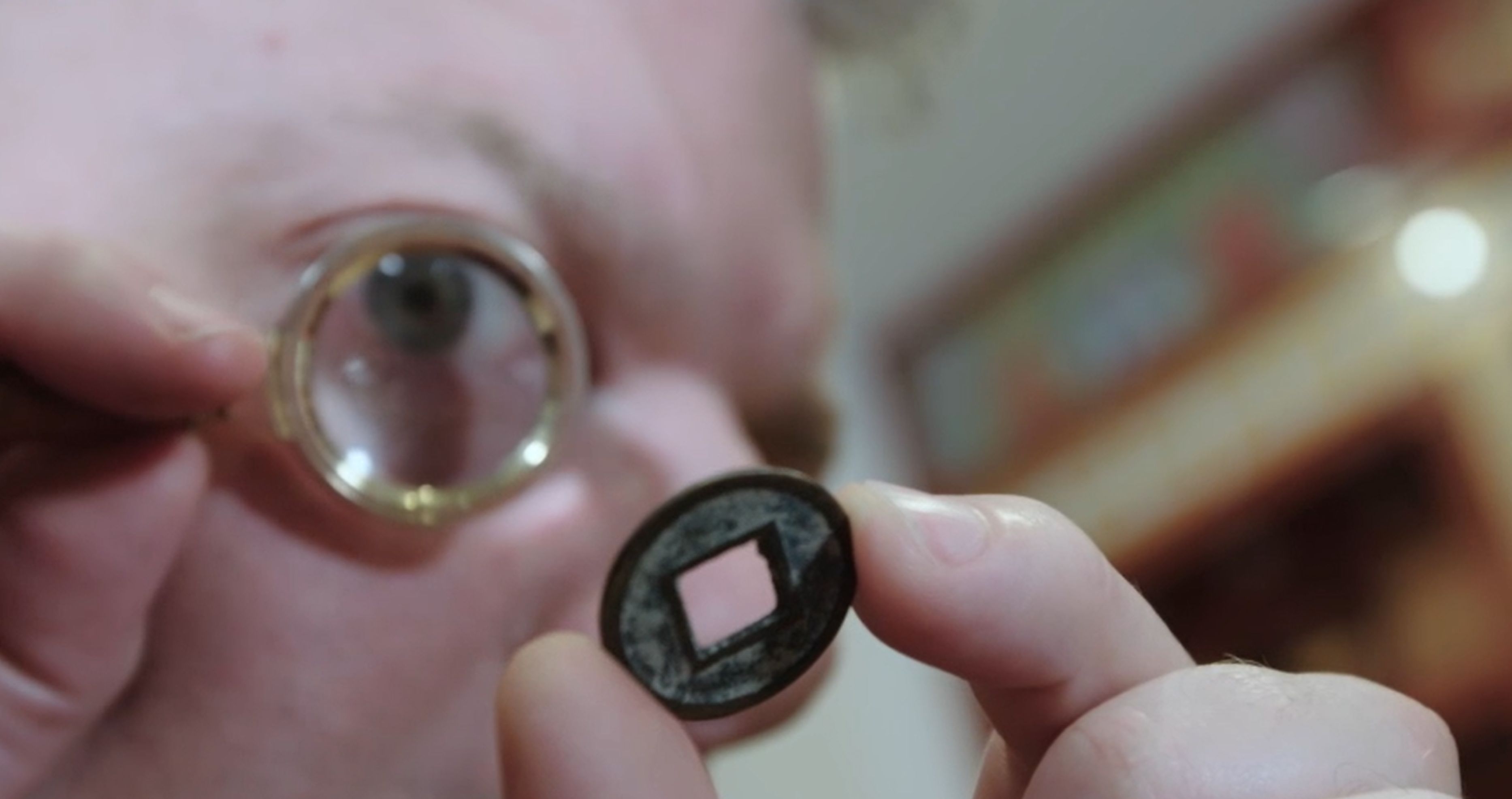
Today’s main event is a trip to the Coin Museum, which is a tough sell. Coins can present fascinating data about past times – they are little nuggets of crystallised history, imparting details of everything from the date something was put in the ground, to the image of an emperor, to the aspirations of that emperor, to the economic conditions at the time it was minted. In some cases, like the Greek heirs of Bactria, numismatics is the only clue we have to the names of the kings and their likely reign periods. But if you fill up room after room with the same bloody things, it is very difficult to make it look like fun on camera.

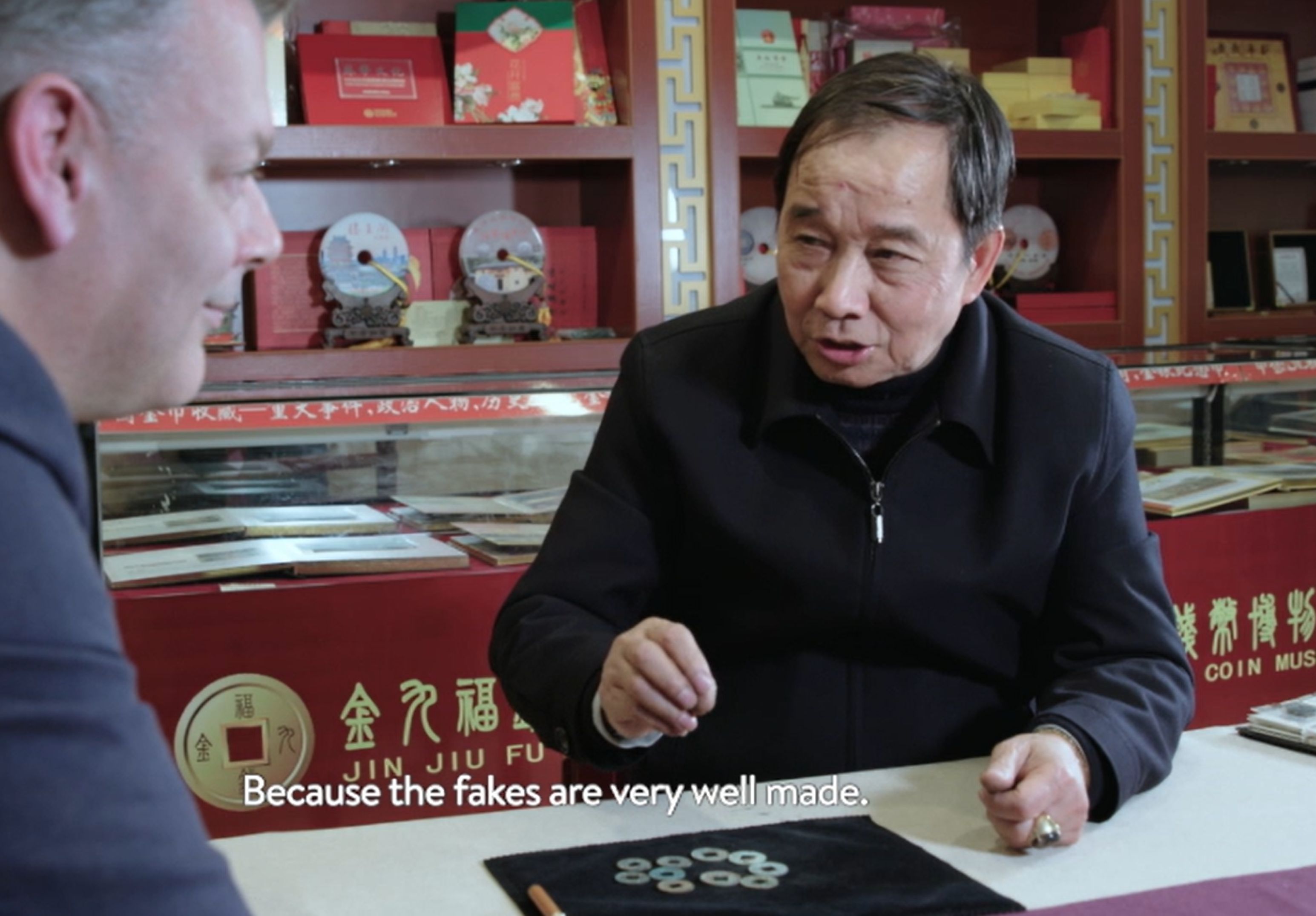
Mr Jin doesn’t pay much attention to me until we are shooting a pre-amble around his museum, and I ask an innocent question about Wang Mang spade money. Like the metadata around a coin, it tells him a bunch of things all at once – that I know who the hell Wang Mang was, which means I understand the politics of the switch between the Eastern and Western Han dynasties, occasioned by a cousin-usurper.

Suddenly, he is much more animated, dragging me over to show me the tiny “goose-eye” coins. I say they remind me of Ancient Greek obols, and I think he is ready to kiss me.

In fact, we have trouble shutting Mr Jin up. He mentions that Jiangxi TV have offered him a 26-episode TV show, called something like Fun With Coins, and the director archly suggests that they asked him a single question and were obliged to split his answer across thirteen hours. From the way he seems chronically unable to hold anything so that the camera can see it, I suspect that he doesn’t really have much of an audience for his coin fetish, and it takes multiple efforts to get him to understand the nature of a drop-in close-up to explain something that he has already said.

It takes some wrangling and multiple explanations, but eventually the director gets him to understand that she wants him to test me by handing me a bunch of genuine and fake coins. So fun is finally had, as I try to work out which coins have been buried in soil with north Chinese acidity, which in soil with south Chinese acidity, and which have been artificially defaced with artificial oxidising agents. Which ones are too thin, or two thick, which ones have unfiled edges, which ones have the characters in the wrong place. I successfully identify three out of five fake coins, although in my defence, after talking for three hours about the Han dynasty, he showed me a haul halfly comprising coins from the post-Han period.

Jonathan Clements is the author of A Brief History of China. These events featured in Route Awakening S05E04 (2019).

Nothing to My Name

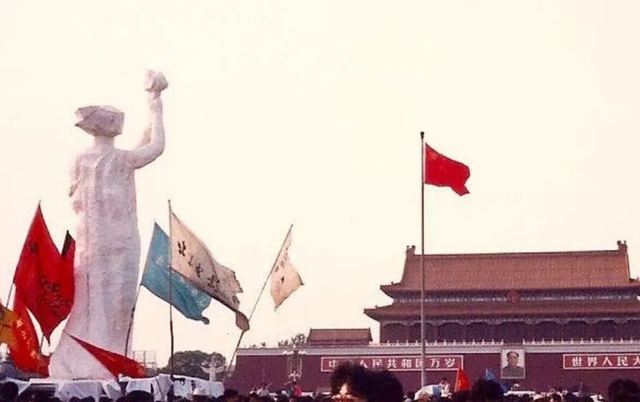
Deng Xiaoping’s reforms created a multi-headed hydra of dissenters, assembling in Tiananmen Square on 4 May 1989 under the guise of mourning a recently departed Party dignitary, but refusing to leave and camping out for a month. Many of the protesters were students who felt that Deng’s reforms had not gone far enough, either in policing corrupt officialdom or in implementing democracy – an always-difficult issue in the People’s Republic, where the rule of the Communist Party was regarded as the ultimate and final implementation of the will of the people. It was this faction that erected the hastily constructed effigy of a “Goddess of Democracy,” holding a torch aloft, defiantly facing the portrait of Mao himself on the front of the Tiananmen gate. But others in the Square were laid-off workers protesting that Deng’s reforms had gone too far, and demanding greater state controls.

Some of the protesters in the square sung ‘The Internationale,’ a Communist anthem establishing them firmly as inheritors and supporters of the ideals of the People’s Republic, but insinuating that perhaps Deng had lost his way. The Chinese lyrics go something like this:

Arise, slaves afflicted by hunger and cold,
Arise, suffering people all over the world!
The blood which fills my chest has boiled over,
We must struggle for truth!
The old world shall be destroyed like fallen petals and splashed water,
Arise, slaves, arise!
Do not say that we have nothing,
We shall be the masters of the world!

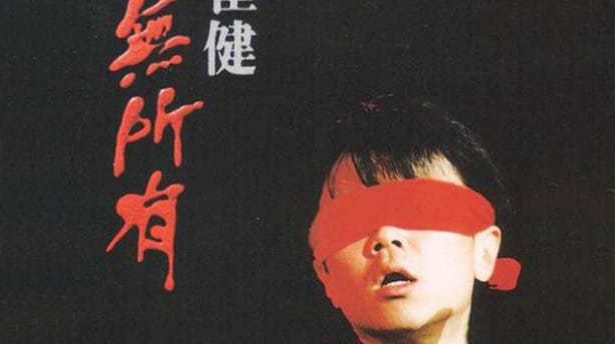
Others, however, found a touchstone in a much more recent song, ‘Nothing to My Name’ (Yi Wu Suoyou) by the pop star Cui Jian, who came to the Square to sing to the crowds, leading to a ban on him performing in Beijing for much of the following decade. Framed as an unrequited love poem, sung by a boy to a girl who spurns his advances, the song evokes a sense of loss and marginalization.

I have asked you endlessly, will you go with me? / But you always laugh at me / I have nothing to my name.

I want to give you my dreams and my freedom / But you always laugh at me / I have nothing to my name.

Its proverbial title contains a double meaning. “Yi Wu Suoyou” contains no subject; it could be a lament that boy is poor, but it could equally be a comment that both of the couple are missing out – on money, on success, on opportunity. He could be complaining that he has nothing to his name, or he could be commenting on their shared situation – neither of them has anything. Both are being swindled by powers beyond their control. But the real provocation, and something that seems to have passed most observers by, is that “yi wu suoyou”, was a direct lift from the Chinese translation of ‘The Internationale’ – “do not say we have nothing” and “nothing to my name” were two sides of the same argument.

Jonathan Clements is the author of A Brief History of China. He spends too much time thinking about song lyrics in a historical context.

Lapsang Souchong

The upheavals of the Manchu invasion are held to be at least partly responsible for an innovation in Chinese tea. Forced to delay their harvest until relatively late in the year, farmers in Wuyi, in Fujian, sped up the packing process for the “small grade” fourth and fifth leaves, lower quality than the three leaves of the first flush, by roasting them over pine-wood fires, inadvertently imparting them with a smoky aftertaste. The locals thought it was awful, but soon found some foreigners to offload it on. This “Lapu Mountain Small Grade” (lapu-shan xiao zhong) retained its southern Chinese pronunciation abroad, as lapsang souchong. Centuries later, it would become Winston Churchill’s favourite tea – although nobody seems to have told him he was drinking the discount option.

From The Emperor’s Feast: A History of China in Twelve Meals, by Jonathan Clements.

The Two Du’s

The torments of a Chinese breakfast – a big band version of Hark the Herald Angels sing, and the constant hilarity that Chinese newsreaders derive from Brexit. Today, Theresa May (Teleisha Mei – Special Thunder Insect Plum) witters away, and Jeremy Corbyn (Jielimi Ke’erbin – Outstanding League Rice Branch Seoul Guest) plainly and clearly calls her a “stupid woman.” The first true words spoken in parliament in months.

We are in Jingzhou, where once was the capital of the ancient kingdom of Chu. Conquered by the First Emperor, its soldiers and surviving nobles came within a hair’s breadth of inheriting the ruins of his short-lived dynasty in the turmoil that followed his death. They lost, of course, to the people of Han, but it was such a close call that the conflict is replayed in every Chinese chess game, in which the sides are named Han and Chu. Nobody knows which one is which until the end.

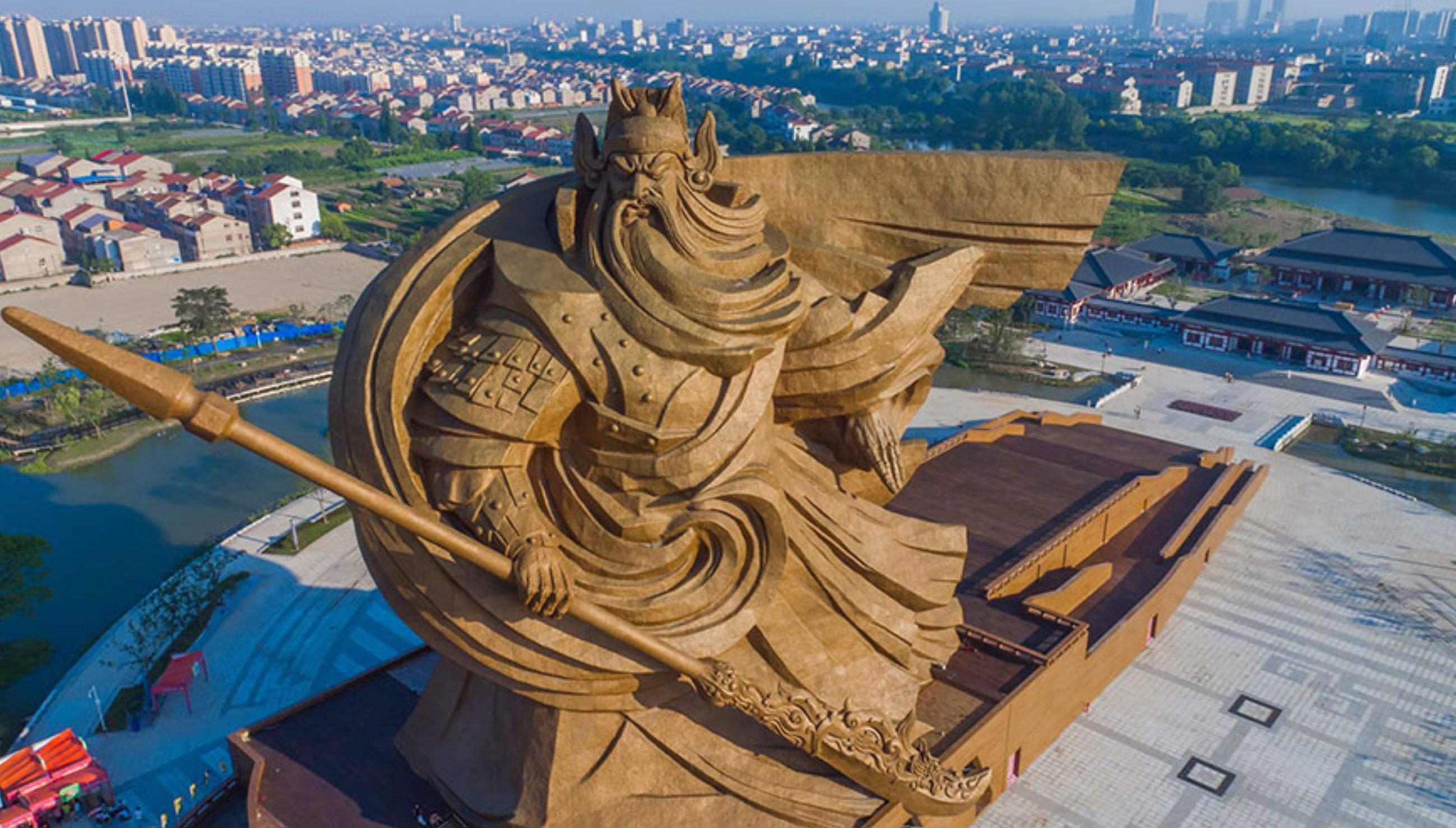
Jingzhou was also a major player in the Three Kingdoms era, and power base of Guang Yu, the red-faced warrior whose life has attracted so many tall tales that he was deified in the middle ages, and is now the Chinese god of war. A massive statue of him, and I mean massive, at 190 feet, looms over the town, wielding his famous Green Dragon Crescent Blade.

I would like to see a bit more of Jingzhou, but we have only stopped here on towards the end of our thousand-mile drive across China. Our fourth episode takes place in Nanchang, six hours to the east, but part of it will involve discussion of antique restoration, here at the national centre for lacquer repair.

They don’t just do lacquer. They also do silk, bamboo and wood, but we’re here to talk about lacquer because that will somehow be the capstone to a storyline that I have yet to film. The institute’s director, chemistry graduate Mr Feng, is oddly cagey about being interviewed, but after lunch suddenly announces that he is ready. He chats to me about Vindolandia, the place on Hadrian’s Wall where archaeologists unearthed letters from Roman soldiers, thanking their mums for sending them warm socks, and talks me through the process of preserving ancient artefacts. The basement of the institute is a shallow swimming pool, used to keep precious items away from oxygen until they are ready to be fixed and dried.

The lacquer restoration is in the hands of the two Du’s, a father and son team of artists, who wasted their lives getting fine art degrees, and then discovered a rich, salaried gravy train repairing and restoring two-thousand-year-old lacquer ware. Their black and red Han dynasty cups, tables and bowls are truly beautiful, and their studio is scattered with replicas that they have knocked up experimentally, to work out precise paint compositions and the number of likely lacquer coats required. One rather nice box turns out to be made from a base of hemp cloth, shaped and then coated with ten layers of lacquer.

Outside, there is a lake like glass, which makes the Buick look good driving along beside it. We film me in the car, talking about how I have come to Jingzhou looking for answers, although since I have come from Nanchang, where we don’t actually go until tomorrow, I am yet to work out what the questions are.

Jonathan Clements is the author of A Brief History of China. These events featured in Route Awakening S05E04 (2019).

Bruce Lee at Golden Harvest

I know sometimes it must look as if I sit around all day doing nothing but Blu-ray commentaries, but that’s not the case. The current flurry of announcements are all things that I did months ago, but they all seem to be happening at once.

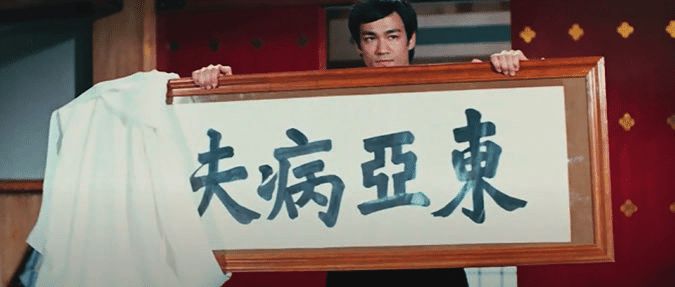
And this week’s is my commentary track for Fist of Fury, included in the forthcoming Arrow box set Bruce Lee at Golden Harvest. For which I can promise you all sorts of unexpected insights, including Chinese history as revealed through men’s fashion, the imperialist messages hidden in a simple advert, and some forensic criticism of a portrait of Sun Yat-sen.