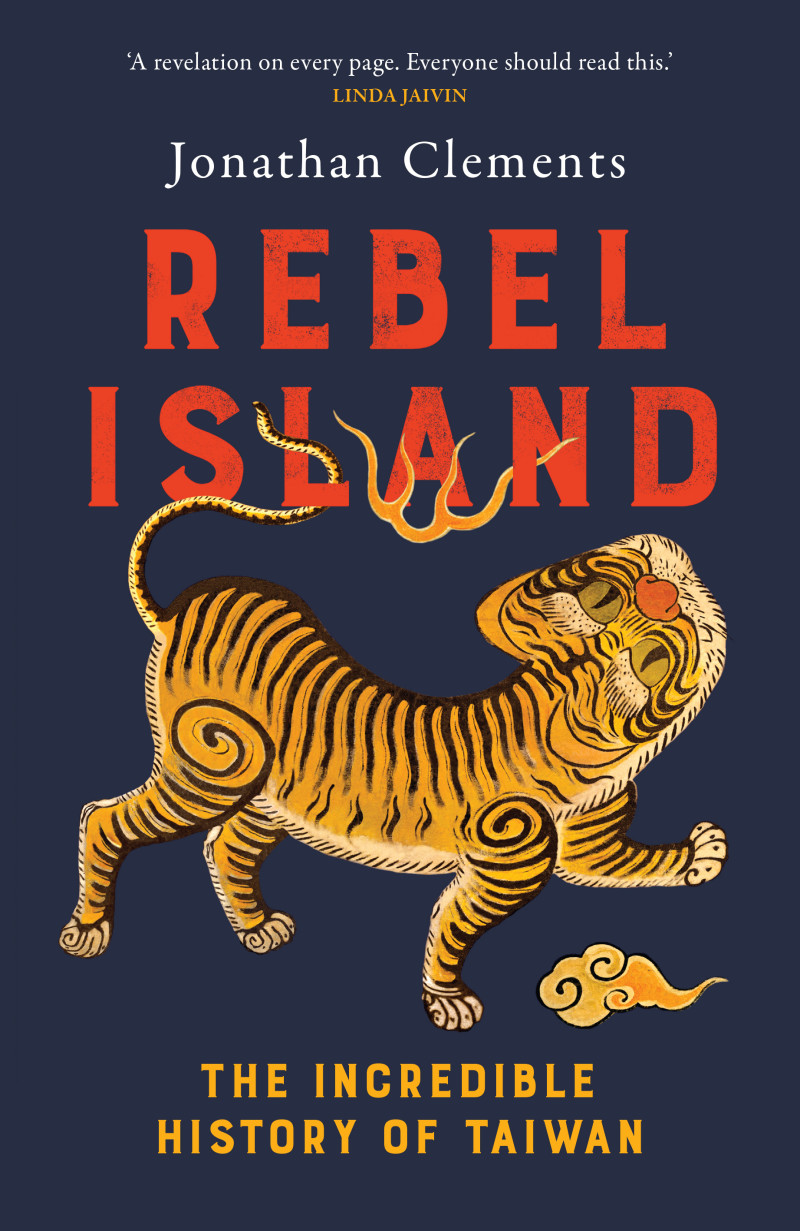
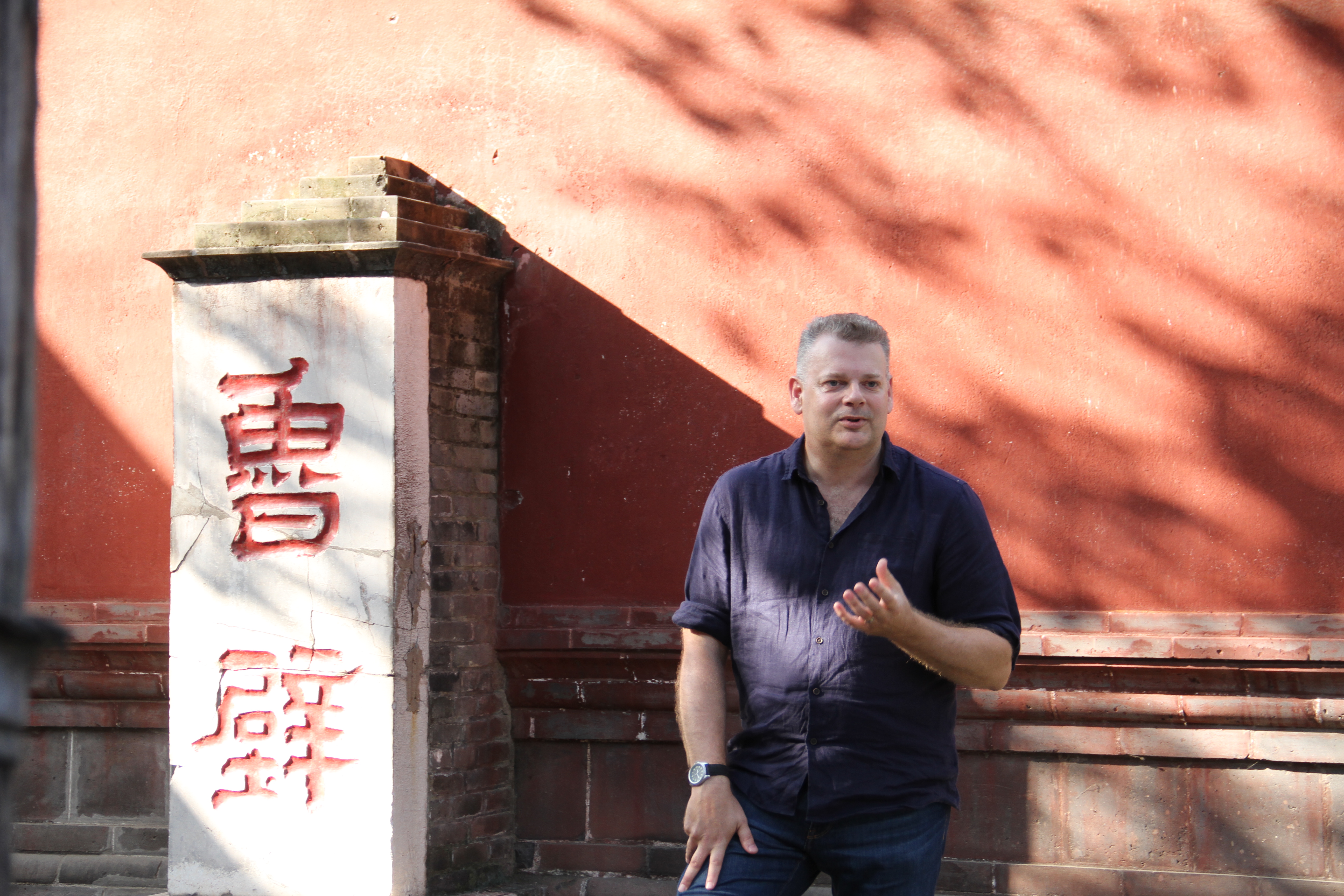
“A revelation on every page. Everyone should read this.” – Linda Jaivin, author of The Shortest History of China
“Rich with fascinating details, Jonathan Clements’ Rebel Island is an engaging introduction to the complicated and astonishing history of Taiwan.” – Shawna Yang Ryan, author of Green Island
“Taiwan has become a stresspoint of global geopolitics, and Jonathan Clements has done the world a favour with his indispensable account of its complex history. This illuminating and endlessly fascinating book can’t help but change the way we see the Taiwanese people and what they have built.” – Clive Hamilton, author of Hidden Hand
“Rebel Island narrates the long arc of Taiwan’s history in vivid prose and with admirable sensitivity to contemporary views regarding the island’s politically charged past. Clements provides an even-handed treatment of controversies old and new, while engaging readers with revealing anecdotes and his trademark wit.” – Paul D. Barclay, author of Kondo the Barbarian
Once dismissed by the Kangxi Emperor as nothing but a ‘ball of mud’, Taiwan has a modern GDP larger than that of Sweden, in a land area smaller than Indiana. It is the last surviving enclave of the Republic of China, a lost colony of Japan, and claimed by Beijing as a rogue province — merely the latest chapters in its long history as a refuge for pirates, rebels, settlers, and outcasts.
Jonathan Clements examines the unique conditions of Taiwan’s archaeology and indigenous history, and its days as a Dutch and Spanish trading post. He delves into its periods as an independent kingdom, Chinese province, and short-lived republic, and the transformations wrought by 50 years as part of the Japanese Empire. He examines the traumatic effects of its role as a lifeboat in 1949 for two million refugees from Communism, and the conflicts emerging after the suspension of four decades of martial law, as its people debate issues of self-determination, independence, and home rule.
On 15th May 2022, a sixty-eight-year-old man turned up late for a church service at the Geneva Presbyterian Church in Laguna Woods, California, and sat through the ceremony conspicuously reading a newspaper at the back. When the service ended, he chained and glued the doors shut. He then pulled out a gun and started shooting into the crowd of aging Taiwanese people, in the middle of a church luncheon. One man, Dr John Cheng, heroically charged the shooter, but was shot dead. Having run out of bullets, the gunman paused to reload, at which point pastor Billy Chang hit him with a chair. Several other attendees then piled onto him, holding him down while he was restrained with an extension cord.
The incident was swiftly over, with one death and five people with gunshot wounds. The shooter was subsequently indicted on 98 federal charges, including murder, attempted murder with intent, weapons charges, transporting explosives (he had brought a bunch of Molotov cocktails) and hate crime.
Media reporting on the incident was confused and multi-faceted. Some outlets justifiably termed it a “hate crime” – an act by an individual who had singled out a group of victims specifically on the basis of their ethnicity or beliefs. But the shooter was himself a “Taiwanese” man, David Chou – born in Taiwan to parents who were refugees from the mainland. He had a master’s degree from an American university, and a former career as a translator. In later life, he had suddenly become an outspoken critic of “Taiwanese people”, referring not to his own kind, who were simply born there, but specifically to those who rejected the notion of themselves as “Chinese”. Earlier that year in Las Vegas, he had unfurled a banner calling for “ERADICATION OF PRO-INDEPENDENCE DEMONS.” Before embarking upon his shooting spree in Orange County, he had posted a manifesto to a Chinese-language newspaper, titled Diary of the Independence-Slaying Angel.
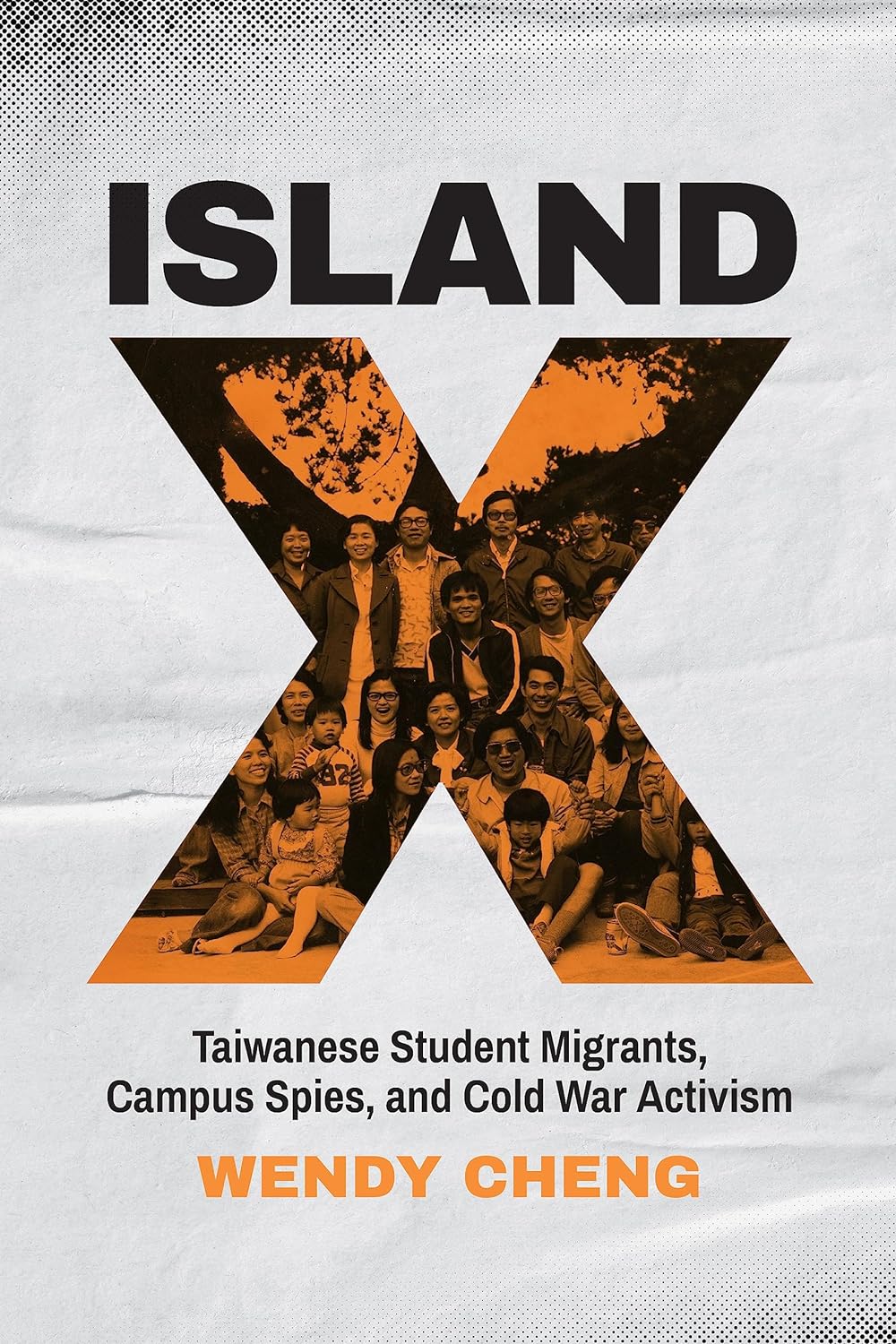
The incident was a shocking example of the way that foreign politics can suddenly manifest overseas, the playing out of decades of East Asian history in what first appears to be yet another crazy guy with a gun on the American news. Chou was, indeed, yet another crazy guy with a gun – but saw himself as the tip of the spear for a struggle that has played out in Taiwan for the last seventy years. As Wendy Cheng argues in her book Island X, it was also nothing new. Since the 1950s, America has been a crucible and a cradle for Taiwanese politics, and a battleground between its factions.
The name “Island X” derives from the codename given to Taiwan in the wartime training programme run by George Kerr, preparing a group of Allied officers for the island’s invasion and takeover. Cheng employs it in a broader sense, discussing the way in which the Nationalist government on Taiwan was so beholden to America that its very education system fatefully funnelled its best students towards the American university system. “English was taught beginning in junior high,” she writes, “and students were taught to ‘specialise in skills needed in the American job market’.”
A 1949 report by the US National Security Council suggested that the “indigenous population has a strong sense of regional autonomy… The Formosans are anti-Chinese, as well as anti-Japanese, and would welcome independence under the protection of the United States or the UN.” However, it went on to point out that fifty years of suppression under the Japanese, as well as the savage purges of the Nationalist government in the late 1940s, has left any potential independence movement rudderless, leaderless and “politically inarticulate.” Intentionally or otherwise, the United States then spent a generation nurturing not only the future leaders of the Taiwanese establishment, but their future opposition.
It was the hope of the American advisers on Taiwan that sending students back to the States would inculcate them with liberal values and support for the Free West. In some cases, this is what happened. In others, a sojourn in the US exposed Taiwanese scholars not only to life in America, but America’s own political turmoil, and the right of Americans to freely speak up about their misgivings. Like many other political movements both within the US and overseas, they were inspired by the United States’ own origin story – as a revolutionary democracy, taking a stand on broad philosophical issues, and demanding release from the bonds of colonial or imperial rule. As one student put it, it gave her “opportunities [to] actually identify myself as Taiwanese.”
They also became painfully aware that the Nationalist government on Taiwan was entirely buttressed by the United States. “They reached the island aboard American transports,” she quotes George Katsiaficas, “and American arms and subsidies enabled them to stay.” Such observations led activists to question the degree to which Taiwan was anything but an American airstrip in the Cold War.
To describe things in cheekily Maoist terms, America itself was in a state of “permanent revolution”, ready to self-correct and self-criticise, amending its own Constitution to reflect changing attitudes, and with a populace not above taking to the streets to protest about civil rights or the war in Vietnam. Many Taiwanese students were caught up in such protests, what Cheng calls a “contradictory but fantastic thing,” only to discover that their involvement in left-wing activism would lead to their cards being marked back home. Cheng’s own father was one such student, told that there would be no professorial job for him when he returned to Taiwan. Effectively blacklisted, he chose to remain in the United States. Another student observed that it took just six to eight hours’ informed conversation after arriving in America for him to cast aside “twenty-four years of Chinese education,” and to become an ardent supporter of Taiwanese independence.
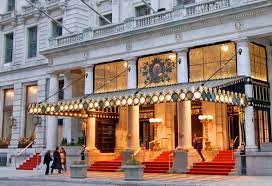
Such activism could take extreme forms on both sides. In 1970, the Taiwan-born PhD student Peter Huang attempted to assassinate Chiang Kai-shek’s son, Chiang Ching-kuo, at the lavish Plaza Hotel in New York. Shoved aside by a bodyguard, he succeeded only in shooting the hotel’s revolving doors, shouting: “LET ME STAND UP LIKE A TAIWANESE!” as he was dragged away.
Cheng’s book chronicles the aftermath of the White Terror on Taiwan, and the undeniable fact that the surveillance and control of Chinese citizens extended far beyond the island itself, under martial law from 1949-87, to the activities of Chinese people abroad, particularly in the United States of America. For if you were a Taiwanese exchange student at an American university in the third quarter of the twentieth century, you were subject to the unwelcome intrusions of a party cadre, not from the Red Book-waving People’s Republic, but from the “free” government of the Republic of China on Taiwan.
These paid informants or “professional students” were the strongmen (and women) of Taiwan’s “Rainbow” project, so named because the word for rainbow, caihong, is also a homonym for “destroy the Reds.” And by “Reds”, they did not merely mean the proportion of students who were taken in by the rhetoric of the PRC – some did indeed embrace the ideals of the mainland regime, even in the midst of the Cultural Revolution – but anyone challenging the one-party rule of the Kuomintang on Taiwan.
In 1971, the American hosts let down their Taiwanese guests in a spectacular fashion, by proposing to hand over the Diaoyu (Senkaku) islands off the coast of Taiwan to Japan. This has famously become one of the few issues that unites both Communist and Republican China, both of which regard the islands as Chinese. Such a betrayal was soon followed by Nixon’s famous visit to China, which set the United States on the path of recognising Beijing, not Taipei, as the rightful government of the country. And it was not merely the Americans who swung towards Beijing – the news propelled a bunch of Taiwanese students in America to give up on Taiwan as well.
Someone participating in the “Protect the Diaoyu Islands” movement, or Bao-Diao turned out to be super-triggering for the Nationalists, who instituted a new “blacker blacklist” that not only barred people from certain jobs or positions in Taiwan, but rendered them stateless. In several case studies, Cheng chronicles the persecution of students on trumped-up charges, their arrests on returning home for having merely participated in a discussion on Taiwanese independence, the removal of their civil rights and the harassment of their families. She also notes a “rash of bombings” in 1979-80 by WUFI, the World United Formosans for Independence, which led to WUFI being added to the State Department’s list of terrorist organisations.
The Taiwanese authorities fought back, also on American soil. In the most infamous incident in 1984, Henry Liu, a naturalised American journalist who had published a biography critical of Chiang Ching-kuo, was murdered in his own driveway in Daly City, California. He was shot by members of the Bamboo Union Triad, who had been working under orders from Taiwanese military intelligence – a fantastic jackpot of dodgy deals, which, as Stephen Solarz noted, amounted to “frightening examples of the long arm of Taiwanese martial law tearing at the fabric of American democracy.”
Cheng’s book is a fascinating exercise in, as she puts it, “locating Taiwanese-Americans in global history”, and reclaiming the lost stories of a generation of activists and students before it fades away and takes it memories with it. One would be forgiven for thinking that the lifting of martial law on Taiwan, and the subsequent swift rise of the Democratic Progressive Party, moved much of the action back to its homeland, but as the murderous act of David Chou demonstrates, there is no “over there” for Americans of Taiwanese origin if they are not safe in their own churches. The tensions in the Taiwan Strait, over whether Taiwan is part of China or a sovereign island, reach far beyond the local, and indeed, still threaten to engulf us all.
Peter Huang’s words as he was dragged out of the Plaza Hotel would become a touchstone of Taiwanese independence activism. Their most conspicuous appearance is in “Supreme Pain for the Tyrant”, by the death metal band Chthonic, which ends with the words “Let me stand up as a Taiwanese” repeated several times, like a mantra of resistance.
Frances has egg in her pants. It turns out that the one our producer took from the pile near the toaster in the hotel was not hard-boiled at all, a fact she only realised when she put it in her pocket and then accidentally sat on it 20 minutes later. She’s washed her clothes in a bucket and is hanging them out to dry in the van. Now we look like a proper Chinese film crew, with laundry drying on the equipment.
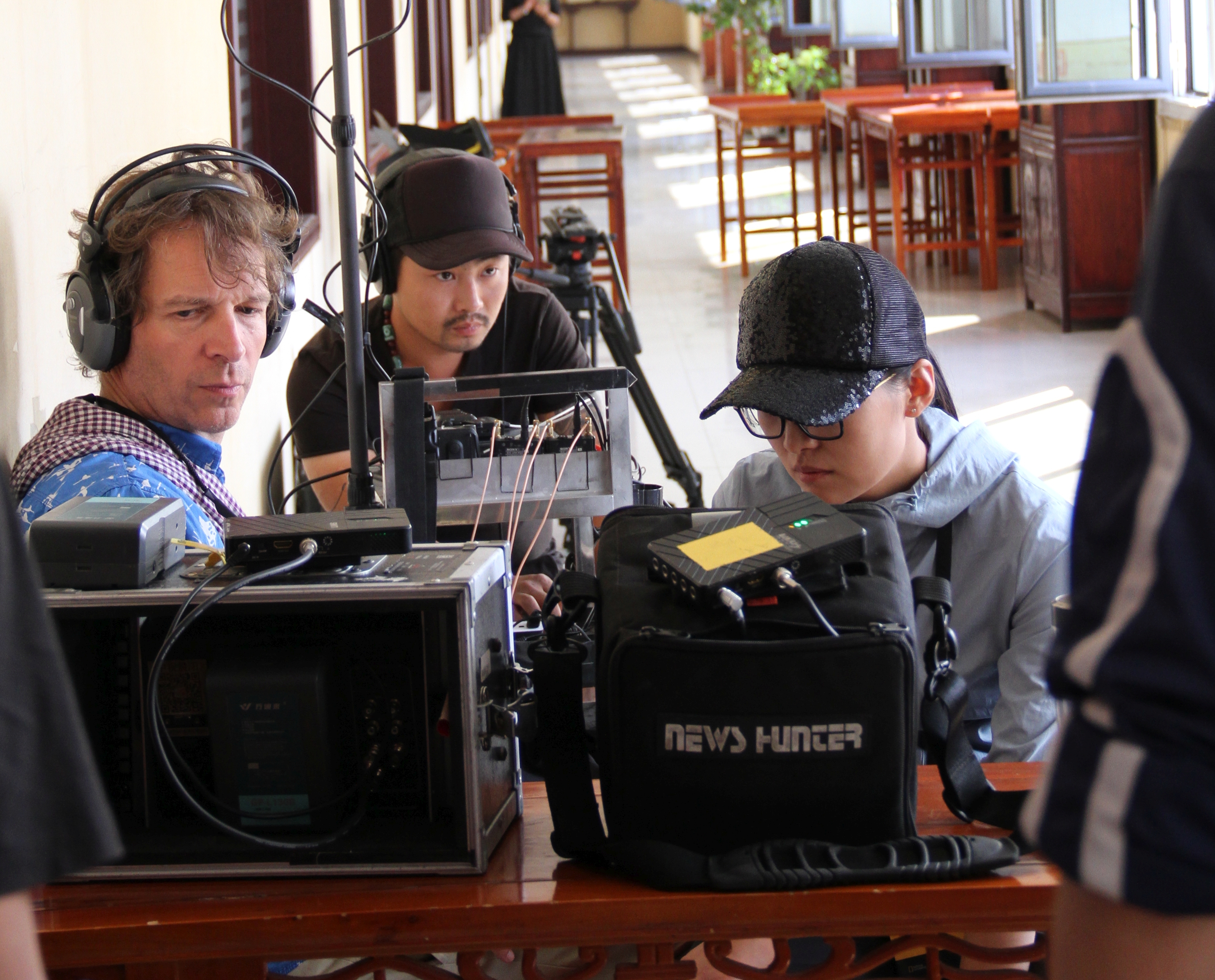
Today we are in Linyi, a town I have never heard of, where there is apparently a standing film set. I was looking forward to doing a walking shot in a traditional Chinese town, only to walk around a corner to reveal that all the buildings are two-dimensional flats, and to reveal the whole crew standing there with their boom mikes and fags. But we have been warned that the film set is infested with professional spanners, who make it their life’s work to wander into shot and then demand reimbursement to leave. So instead we are sticking to the main plan, which is to film Luqin opera.
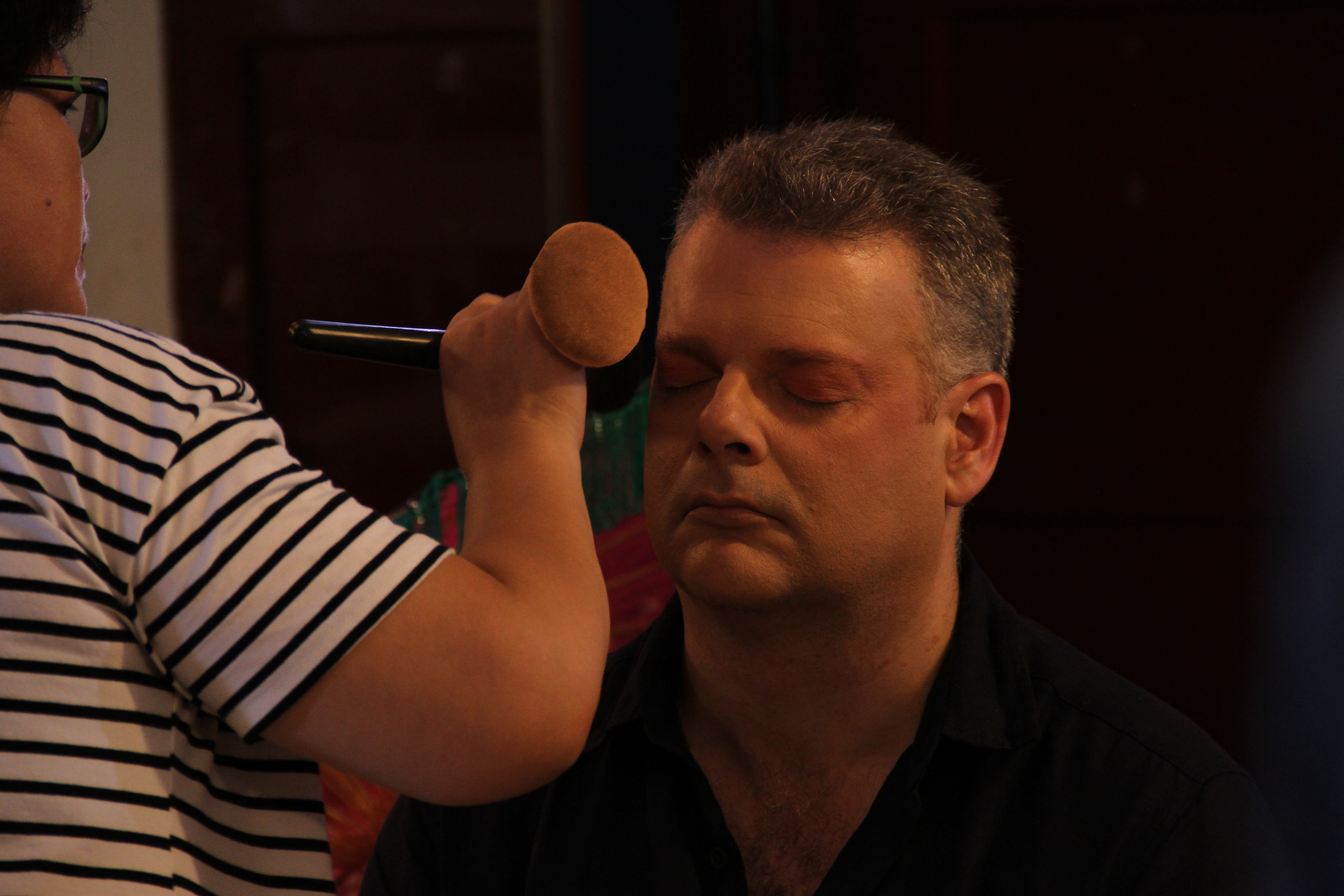
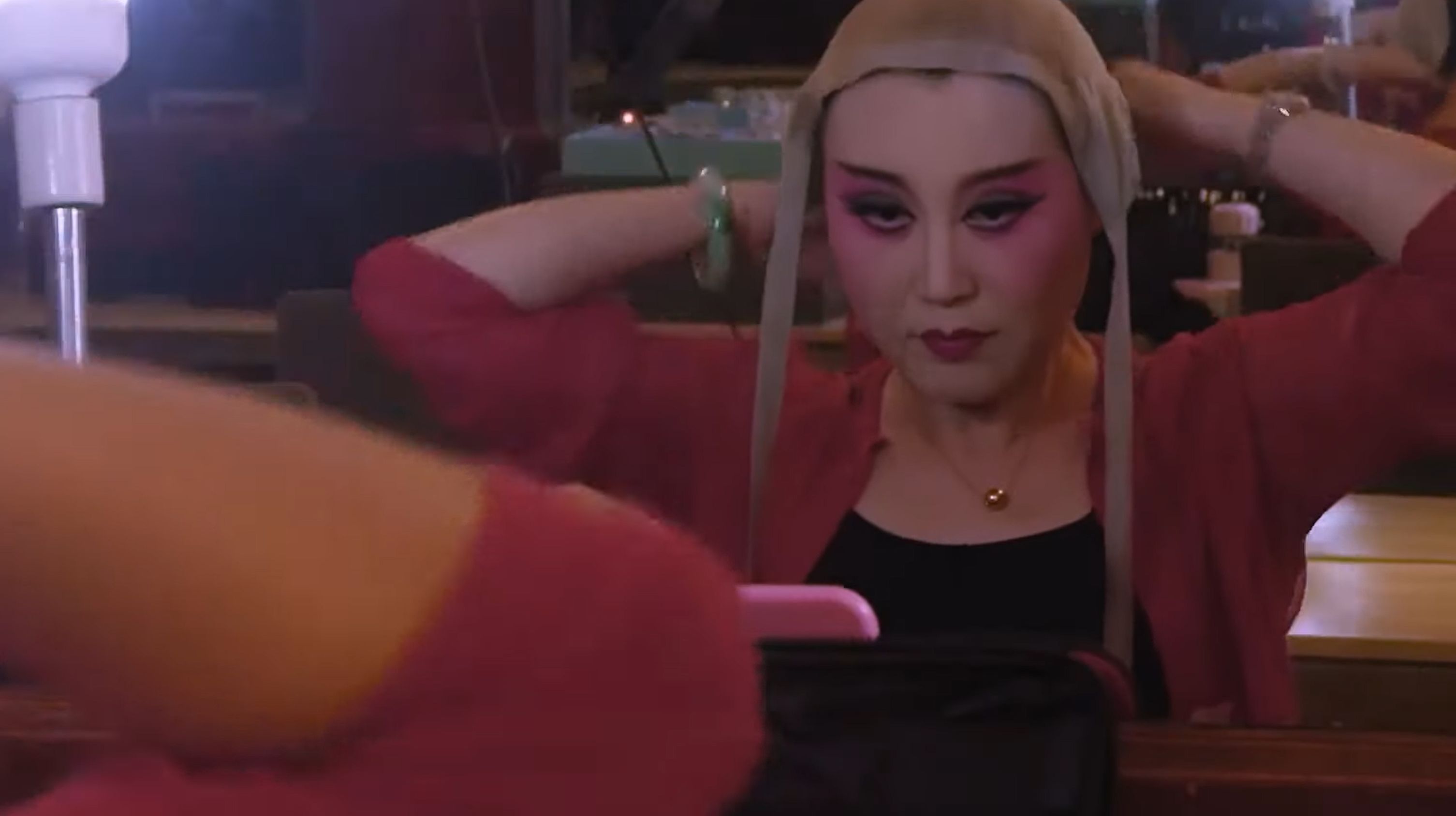
None of us are all that clear about what Luqin opera is. It is something specific to Shandong, but nobody was sober enough last night to Google it. Liu Lili is the perky actress who will explain it all to us, but she doesn’t have a whole lot to say about it, and any goodwill is soon squandered by the crew. I ask her if she has any experience with filming rather than stage acting, and she claims to know the score, but she becomes plainly frustrated when her 90-minute make-up regime is constantly interrupted by lighting changes and backtracks. Nor is she all that keen on putting make-up on me, for that is the sort of job they give to the interns, not the star of the show.
Her dresser arrives at 11 in the morning, striding into the backstage area and asking: “Have you finished yet?” We have barely started, and Miss Liu is already in a strop. I try to draw her out about the pieces of hair she sets on her head, her adornments and her make-up, but she has already retreated into snappy monosyllables.
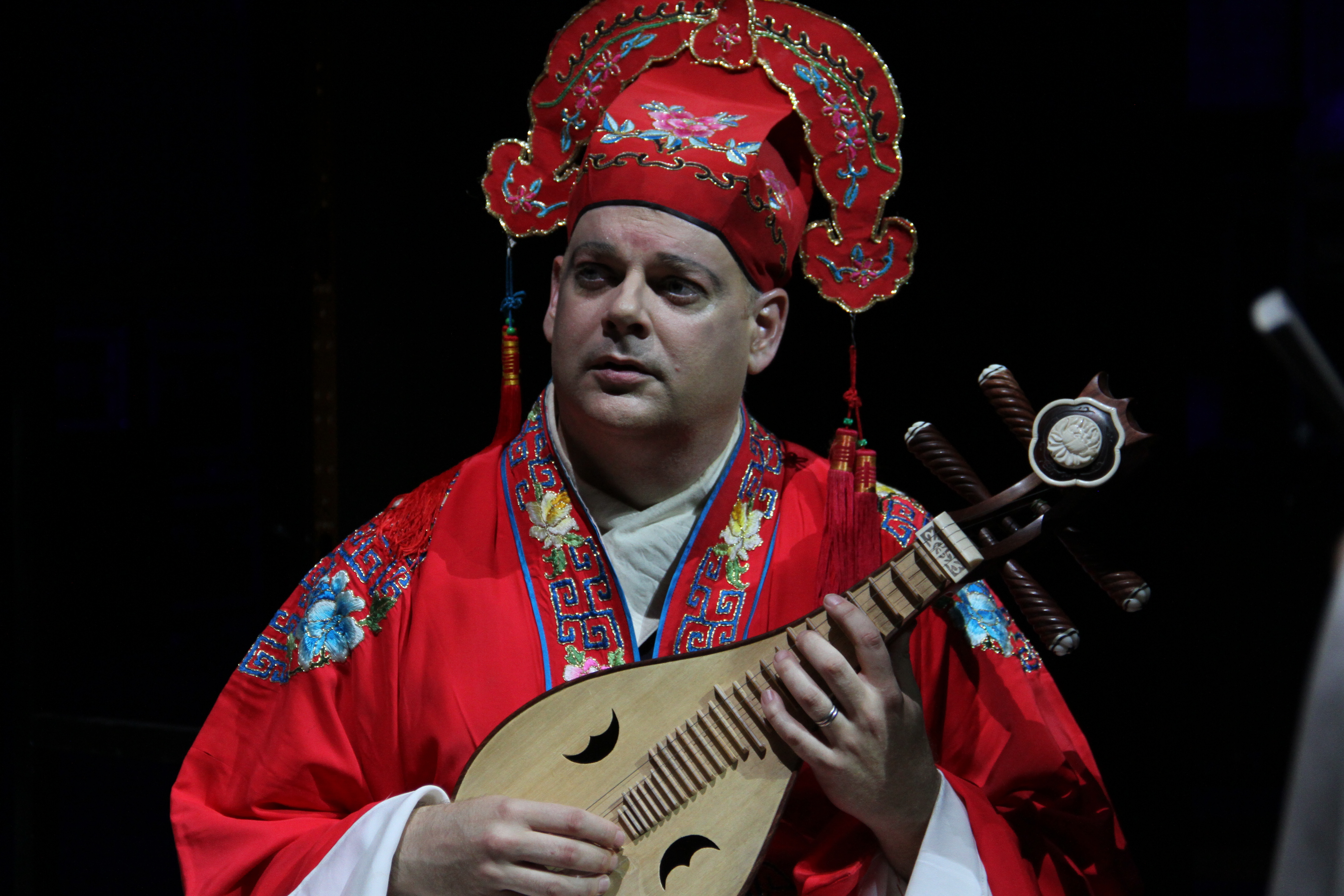
There has been a distinct lack of communication all round. The theatre band arrives ready to play along with Wedding at a Funeral, only to discover that she plans to sing an aria from Meeting My Mother-in-Law. So we have to resort to her miming to a backing track of her own voice as she jauntily rides an imaginary donkey to the tune of an off-key rendition of Knees Up Mother Brown. Then she stuffs me into a bright scarlet scholar’s robe, gets the lippy girl to put on almost all of my make-up, and deigns to be on camera for ten seconds at the end putting the finishing touches to my rouge.
Filming in theatres always seems to go wrong. I blame the clash of two entirely different production regimes in a confined space. The opera troupe have just got back yesterday from a four-province tour, and they are all exhausted. I ask Miss Liu if provincial audiences are well behaved, hoping to hear a diatribe about twats with mobiles, but all I get is an affirmative grunt.
She gives me a line to sing: “Young lady / Thank you for your hospitality / Tiying is a gentleman / Please give him your consent” or something like that. I am able to memorise the line itself and the tune very fast, but once the band get involved there is a whole set of alien meters and pauses that interfere. Sometimes a line begins on the beat. Sometimes it begins half a beat behind it, seemingly at random. The band’s job in Chinese opera is to follow the singers, not the other way around, so a gaggle of musicians with pained expressions struggle to work out where I am going with my lyrics. I keep my eyes fixed on the lady who smacks the little harpy thing with hammers, because she is mouthing along with the words, and I can take a few cues from her.
It’s enough. We get something in the can, which we can stretch with a sarcastic voice-over. I am fighting impossible conditions, done up like Julian Clary in a pair of bathroom curtains, wailing what appears to be two different tunes at once, in Chinese, while two cameramen circle around me and a bunch of musicians make a noise like a piano falling down some stairs.
We chat to the band and Miss Liu introduces the musicians, including the man who plays the Luqin, a supposedly unique instrument in Shandong that looks like a cross between a lute and a mandolin. He hands it to me to twang, and I say to the camera. “I can’t actually play any instruments. You might as well give a computer to a monkey.”
And cut. That’s my last shot of the production. Although the crew are filming tomorrow morning at the Jinan fish market, I am done. Tomorrow, I can put on a clean, non-continuity shirt for the first time in two weeks, and wait for the evening train to Beijing.
There is no soap in the bathroom. I get as much of the make-up off as I can, but it’s difficult around the eyes.
“You’re less Julian Clary now,” says the director. “More Gary Numan.”
Just back from a trip to Hong Kong, Guangzhou [and now Shanghai], where I tested out digital apps and payment systems. In Hong Kong, I only needed cash money on my way home, for the taxi to the Kowloon airport express station and the strangely traditional left luggage office there. The rest of the time I used Apple Pay, my credit cards, and the wonderful Octopus for Visitors, which is a top-uppable travel card that also functions as a payment app in a number of handy situations.
China was the big test, as I hadn’t been for several years, and post-Covid, the country has gone almost entirely cashless. Mercifully, Alipay worked right out of the box, happily beeping at the 7-11 counter at Guangzhou station as I bought myself a coffee on arrival. However, the vast majority of retailers and services favoured WeChat Pay, which also worked straight away. I’d only installed it as an afterthought, but it turned out to be much more useful for me in Guangzhou. Up north in Shanghai, it was Alipay for almost everything. You can find both these apps in the Apple Store or Google Play, and while they won’t work until you are in China, it’s best to get them early just to familiarise yourself where stuff like the Scan QR Code button actually is.
The big disappointment was my Bank of Shanghai virtual debit card, on which I had pinned huge hopes, but which embarked upon a Maoist self-criticism session and suspended itself the moment I tried to use it, claiming to have detected “suspicious behaviour.” This turned out to be “buying a ticket on the metro”, and I couldn’t really afford the day’s wait for an appeal, or indeed work out how to appeal when standing in front of a ticket machine in Guangzhou, so I gave up on it. I had been expecting it to be my default payment method in China, but I ended up not using it at all and getting a full refund. Your mileage may vary, but don’t rely on it.
My Alipay/WeChat digital payment apps worked as local interfaces for several non-Chinese Visa and Mastercards, as well as debit cards, although in one store they failed me and I had to resort to cash, while a crowd huddled around to look at the strange pieces of paper that once bought things, but were now more like museum pieces.
The thing that really did prove vital was my eSIM — a virtual SIM card that could be loaded onto my phone and activated when needed. It allowed me to keep my usual phone number, but to use the internet without breaking the bank. I bought one for Hong Kong and one for China, and they allowed me to save money on data roaming and internet access. I spent just $10 on two gigabytes of data in two countries, whereas my mobile phone provider would have charged me $40 for the same, and data roaming would have gone off the charts. None of the digipay apps work without efficient access so I do recommend it. The company I used was a Canadian outfit called aloSIM, and if you want to give them a go, you and I both get a $3 discount if you use my sign-up code: M74D4V9. I’ve bought eSIMs for Europe as well, and I’ll get myself one for America next time I go.
My top ten do’s and don’ts for for travellers in China in 2024 using digital payments are:
(1) Get Alipay and WeChat on your phone, before you travel. Some of the set-up requires real-name verification, such as an uploaded ID page from your passport, and you don’t want to be doing that in an Arrivals concourse while a line backs up behind you at Pacific Coffee. Likewise for your credit cards and debit cards, some of which will require verification from your provider before they can be installed. When they work, they work just like Apple Pay.
(2) Take some spare old-fashioned money for emergencies. Nobody will have change, but they will have to go and find some if all your apps suddenly fail you for some reason. In Shanghai supermarkets, it was possible to pay in cash at the customer service desk, but since that usually was staffed by a lone human pig-piled by pensioners waving banknotes, you were better off using the digipay-only roboterminals if you could.
(3) Install an eSIM on your phone. If you are travelling to more than one Asian country, I recommend aloSIM’s regional package, which will cover you in 14 countries and save you the bother of toggling your data provider at each border. It will save you a fortune in roaming costs, and is sure to be cheaper than the deal you are offered by your phone provider.
(4) If you want to use Google Maps, Gmail, Facebook, or various other pernicious agents of the capitalist west, they will be blocked in China. You will need to put a Virtual Private Network on your phone that allows you to tunnel around the Great Firewall. I couldn’t possibly comment, but if you want to use ExpressVPN, this link will give you (and me) a free month. But remember to turn it off when you are using the digital payments, otherwise your phone will tell your bank that you are in Singapore while you are buying a jacket in Xi’an, and it will immediately assume foul play.
(5) Make sure your phone is up to date. I clung for years to an iPhone 7 that was perfectly good for my everyday needs, but a lot of these new apps require iPhone X or above. If you are going to China, in particular, you may want to double-check that your old phone is capable of handling some of the new services, and if necessary, do what I did and reluctantly embrace the 2020s with a phone upgrade. I presume there is a similar technology event horizon with older Android phones.
(6) In Hong Kong, it’s much less hassle because Apple Pay and credit cards work normally, as indeed does old-fashioned cash. But the real joy of Hong Kong travelling is the Octopus card, the tourist version of which can be installed on your phone as a handy key to open access to buses, trains, and ferries, and also used to pay in convenience stores and many other retailers. Get it before you arrive, and you can march straight onto the Airport Express without pausing.
(7) When travelling in China, and in many other countries, I swear by Trip.com. I’ve been using it since back when it was called cTrip, and it has a very handy English-language user interface. Make sure your passport details are uploaded beforehand, and you will be able to book train tickets and hotels on the fly. Trip allowed me to reserve a first-class ticket on the high-speed rail to Guangzhou before ticket sales opened; it booked the ticket for me using the ID details it had on file, which meant my passport was my ticket.
(8) Try to use your card providers’ facilities to notify them in advance you will be in China. Mastercard, Aktia, Nordea and Natwest took it all in their stride, but MBNA, despite assurances that everything would be fine, froze my card in a panic while I was trying to buy a cup of tea. All was resolved in a single phone call, but since I was kept on hold for over an hour at a premium rate and long-distance, it was a phone call that cost me £187! In future, I shall just ignore it until I get home, but that’s why you need more than one card linked to your app.
(9) Alipay’s Travel feature allows you to connect directly to the metro services in certain cities, removing the need for, say, a separate Shanghai travel card. I’ll miss my little wallet of different metro cards, but I won’t miss wasting money when tail-end amounts expire: I’m pretty sure that I’m sitting on three Beijing Yikatongs that have gone past their three-year use-by date, forfeiting the cash left on them.
(10) And while this may sound like a statement of the blindingly obvious, do make sure that you are travelling with adequate charging facilities — cables and a power bank for a top-up on the move. If your phone runs out of juice, you’ve effectively lost your wallet, so you can’t afford to be cavalier with the power bars.
“I can make you look taller,” says Tarzan. “I can make you look thinner.”
“Can you make me look more fun?” I ask.
“Almost certainly,” he says, pretending not to notice my Marks & Spencer’s trousers.
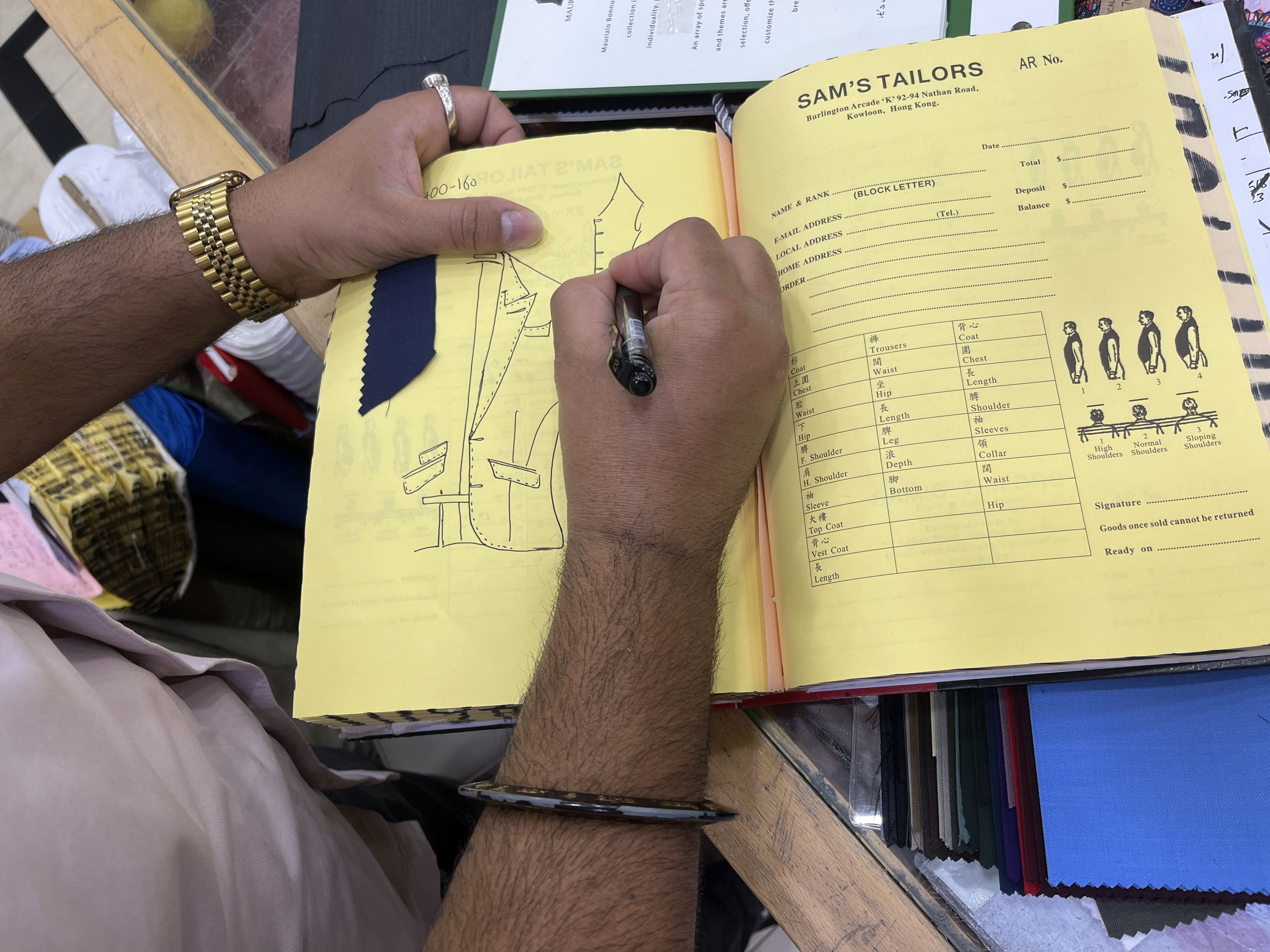
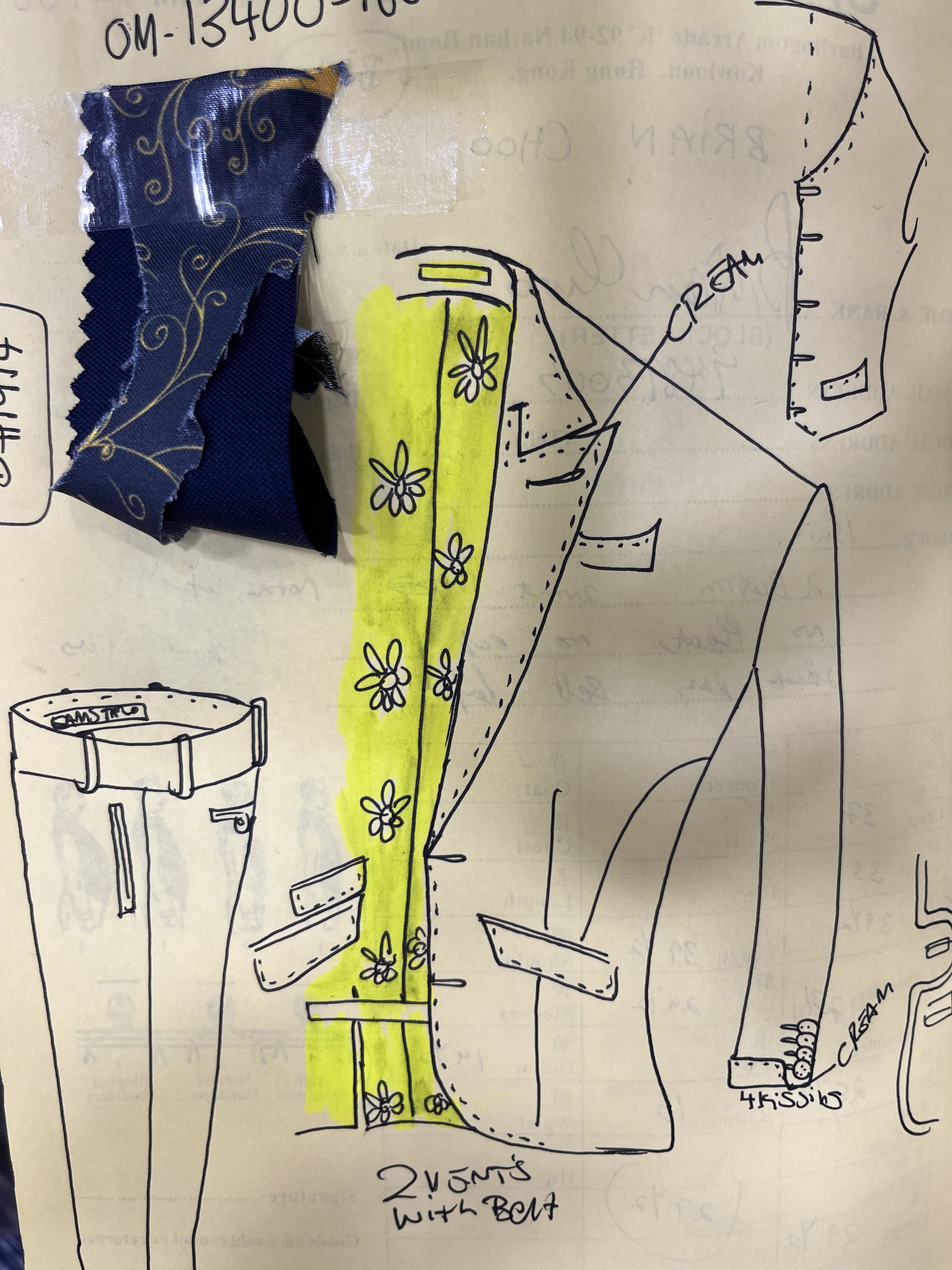
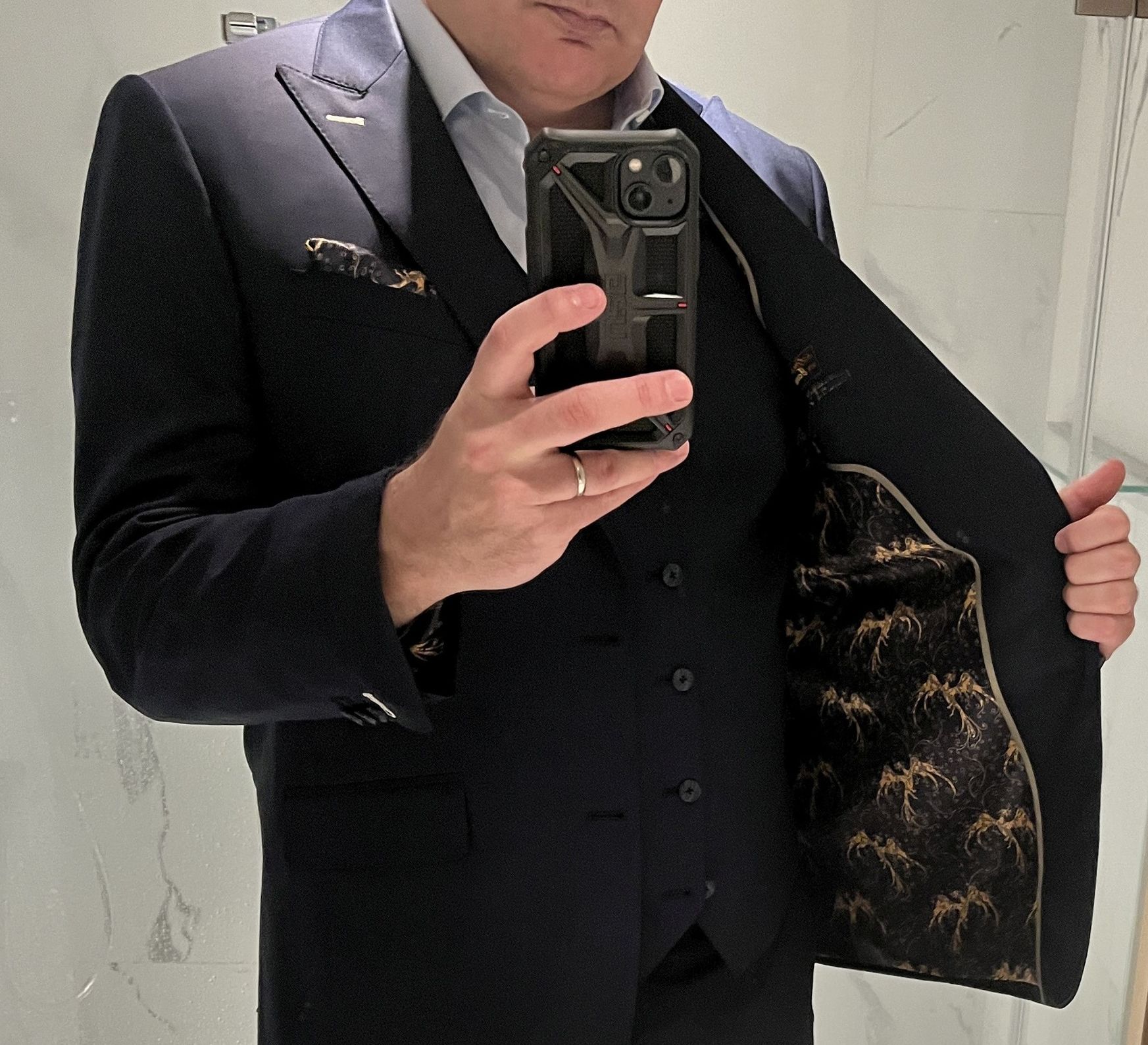
He is already leafing through samples of cloth discarding the plaids and herring-bones that would create a distracting moiré effect on camera. He sketches out a plan for a three-piece suit, with peak collars to draw the eye, and a ticket pocket to… keep a ticket in. When I can’t make up my mind between cufflinks and buttons on the shirt, he offers to do both, like I have become an international plug adapter for wrists.
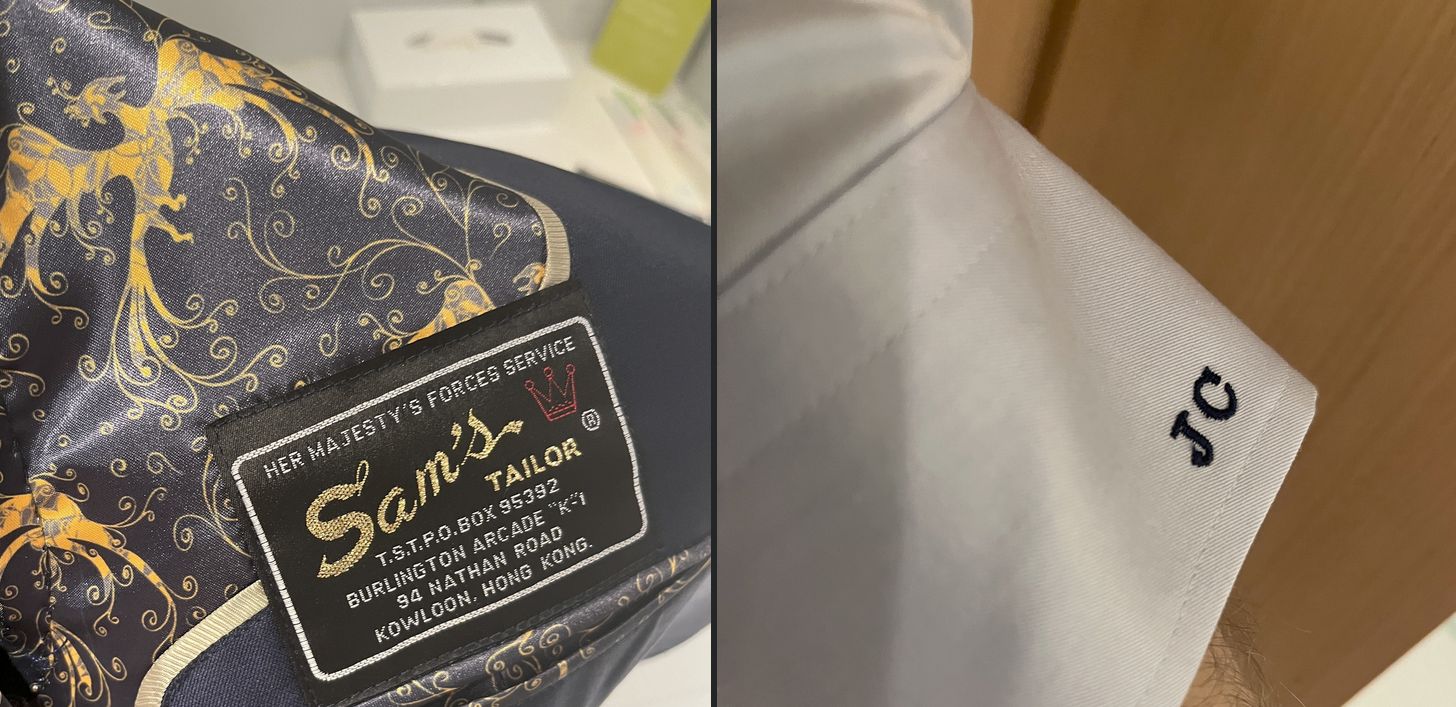
“You can have a little JC monogram,” he adds, “and I think some cream edging on the buttonholes. Thick buttons. Do you want thick buttons?”
“I don’t know,” I say. “Do I?”
“Yes,” says Tarzan. “Now what about the lining?”
“Something Chinesey would be nice,” I say.
“You mean like dragons or something?”
“Yes. Can you do that?”
“I can do anything you want. You’re in charge.” He hands me a scrapbook of wacky silk linings, including the Bitcoin logo, skulls and crossbones, the poster for The Godfather, and some dragons.
“Oh yes,” I say. “Those.”
“You like them now,” says Tarzan. “But will you still feel that way in a few weeks?”
He’s right, the dragons are a bit naff. I keep poking around in the book until I see a pattern called “Queen of Dragons”, which is actually a series of repeating phoenix designs, gold on black.
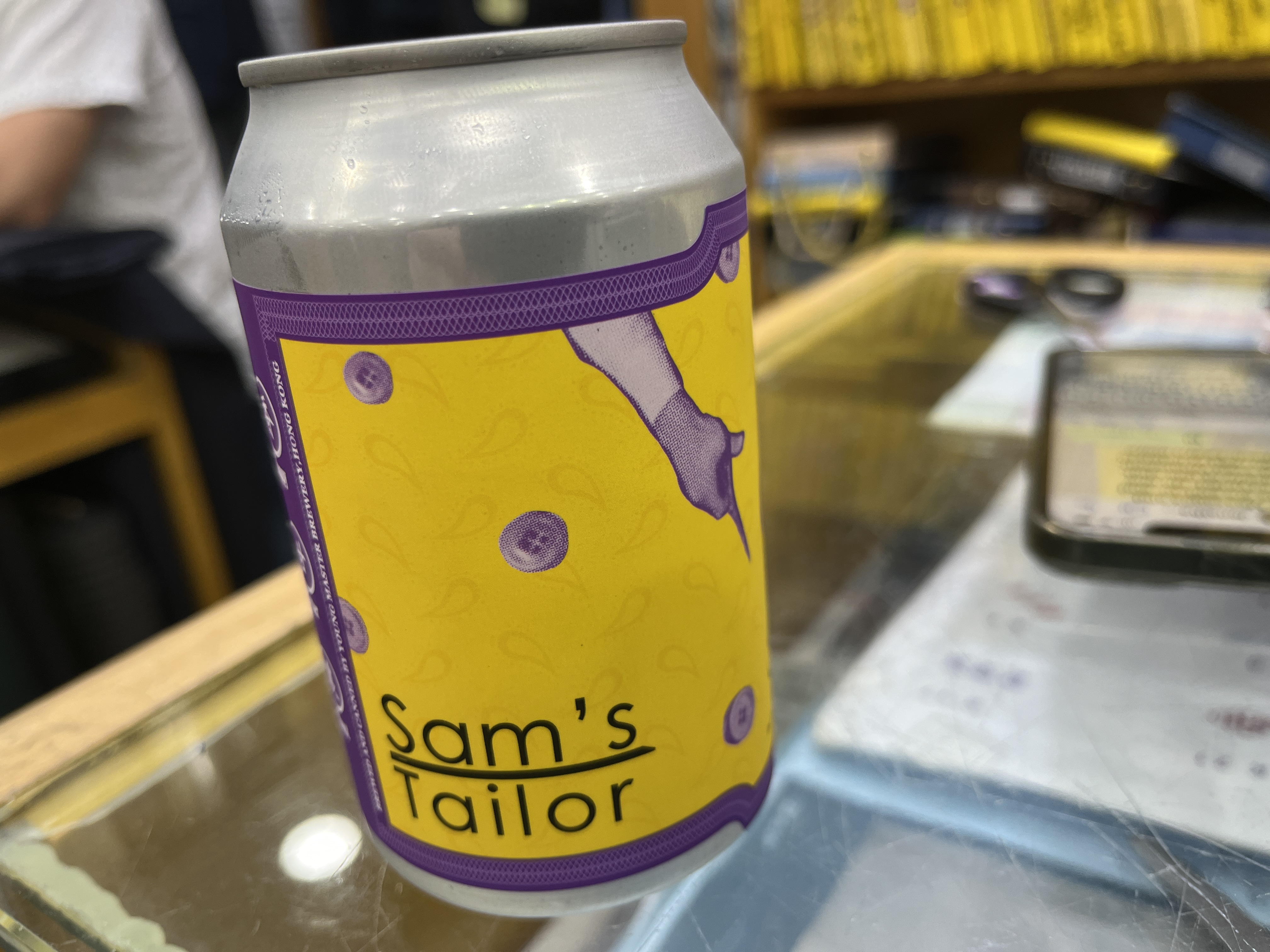
“Thatsh the one,” I say, slurring a bit, because Sam’s Tailor, on Hong Kong’s Nathan Road, also make their own signature beer, and it’s a terrifying imperial IPA with 8.8% ABV. I’ve had three cans while Tarzan is talking through the design, and now I can’t feel my legs.
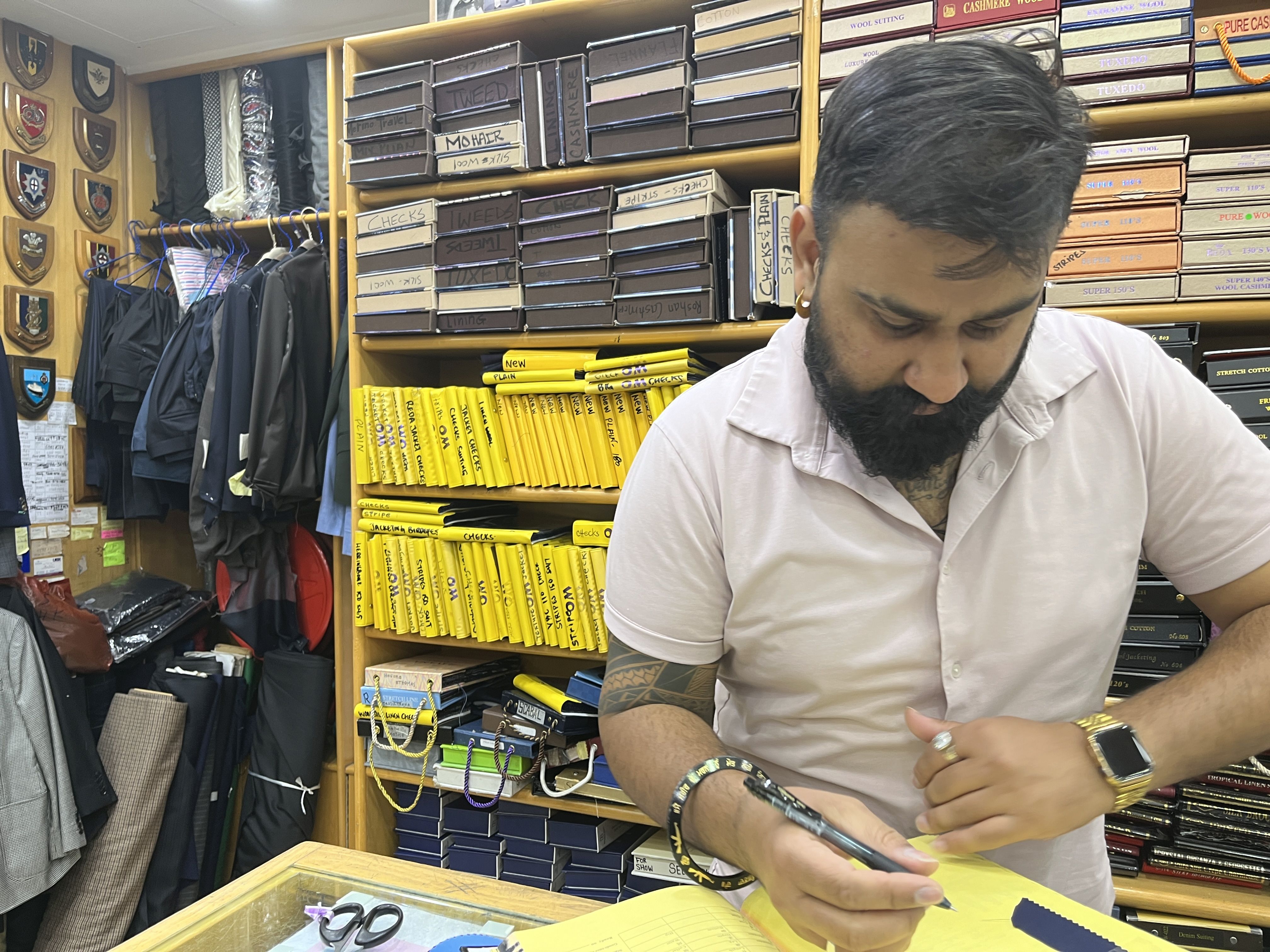
The first-generation founder, Sam Melwani, arrived in Hong Kong in 1952, and worked for another tailor before going it alone in 1957. By the end of the decade, his son Sham tells me, he had cornered the lucrative market in uniforms for the servicemen of the colonial administration. Which explains why the form I am filling in includes a space for my rank. Sham and his brother Manu can still be found lurking on the premises – it’s Manu who hands me what might have been my fourth beer, but by that point I had lost the ability to count. But it’s Manu’s son Roshan who is the modern face of the family business, rocking a waistcoat design that Tarzan has already sold me as “boss-style” (I realise now that he meant his boss), and with a clash of vibrant patterns on a shirt that has elbow patches just to show off.
“We get staff discounts on fabrics,” says Tarzan with a shrug. “We try stuff out.”
“Covid was a disaster for us,” says Roshan. “It used to be there was a queue going out the door. We were so busy. But then we had month after month where nobody was coming.”
I ask about the regulars. Because one of the delights of Sam’s is that they now have all my details on file, and I can literally send a WhatsApp message asking for a two-piece safari suit in Marimekko camo pattern with a purple paisley party shirt, and they will post it to me three days later, possibly just before they call the fashion police.
“Yeah,” says Roshan thoughtfully. “But everybody spent a year indoors. Nobody needed a suit.” Even so, he pursued them on social media. One of the reasons I can reach out to Roshan at seven thousand miles distance is that he has spent the last couple of years perfecting online consultations. If I do ask for that Marimekko safari suit next week, he’ll be there on a digicam trying to discreetly talk me out of it and save me from myself. But if I insist, he will do what I want and let me endure the ridicule.
And business hasn’t picked up?
“Maybe only twenty, thirty per cent of what it was,” says Sham.
Which makes me wonder what chaos there must have been pre-Covid, because when I come back a mere five hours later for my first fitting, the shop is heaving. There’s a picky Frenchman who isn’t sure he wants a suit at all (testing even Roshan’s patience), and a thick-necked man with a crew-cut who seems likely to be a holdover from the military days; a repeat customer dropping in to pick up something new and he’s arrived with three friends of his who all want suits of their own. They’ve never had a tailor before. I’m a bit surprised I got through the first five decades of my life without one myself.
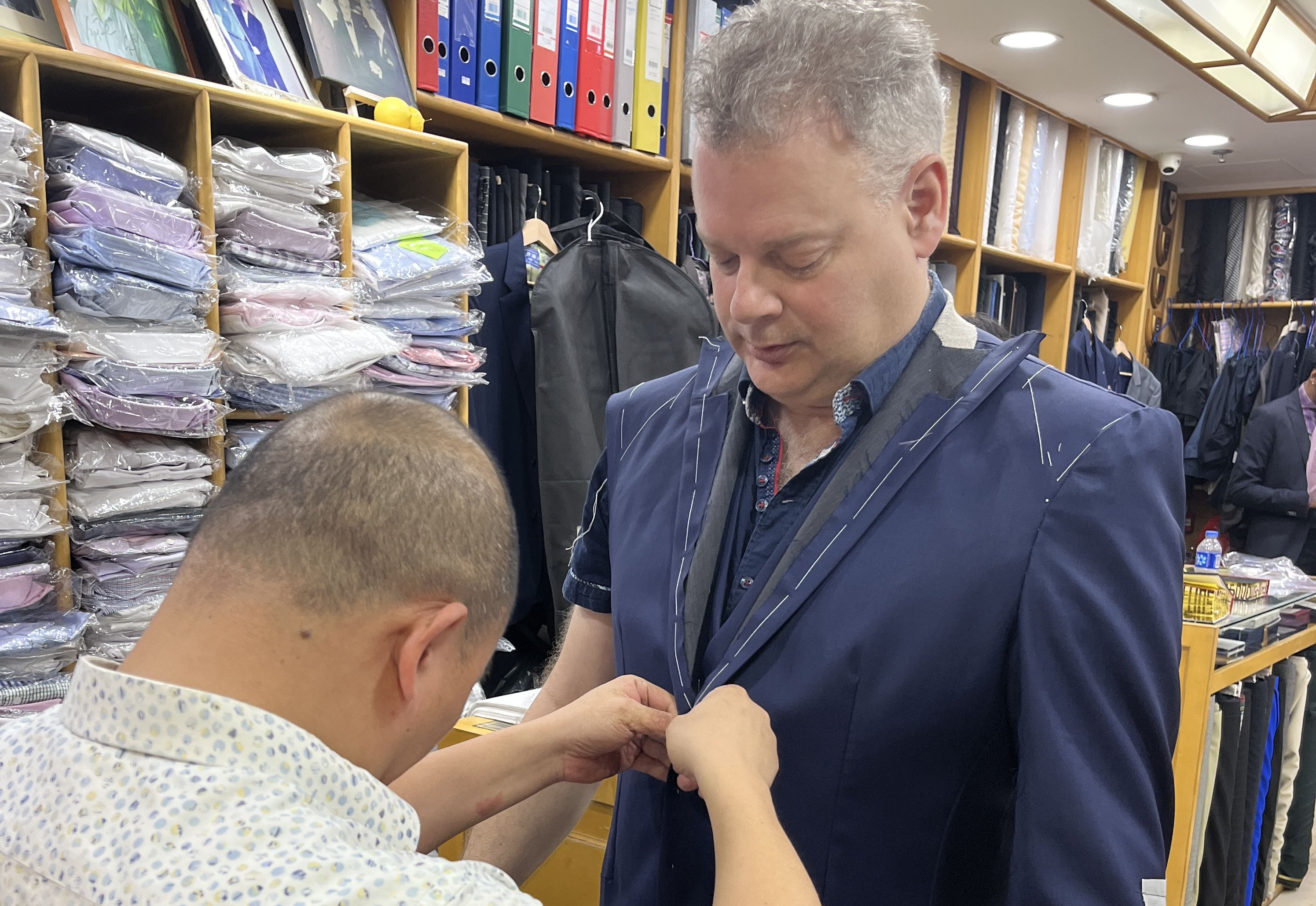
In the last five hours, a Nanjing-born tailor called Mr Zhang has run up the first draft of my suit, and now he wants to stick pins in me to make sure that the cuffs show just enough shirt.
“Can you tell him to stand up straighter,” he mumbles at Manu.
“Tell him yourself,” laughs Manu in perfect Cantonese, “he speaks Mandarin.”
“No, he doesn’t,” says Mr Zhang.
“Yes, I blimmin’ do,” I say in Chinese, and we’re off, with Mr Zhang interrogating me thorough a mouthful of pins about how I could have possibly ended up in Xi’an, and what kind of temperatures I had at home, as that was going to affect the way the suit was built.
“I doubt very much,” I say, “I will ever have a chance to wear this suit at home. It’s probably only going to get outings in Scotland and on telly.”
“Ah yes,” says Tarzan. “The other shirts!” He is intrigued about the mechanics of shooting a television series, and his eyes light up at the thought of a schedule so punishing that I need up to five duplicate shirts for continuity purposes. One on; one off; one in the wash; one supposed to be in the wash but actually held hostage by a chamber maid in Gansu; and one irredeemably spattered with mud from a tribal fish-throwing ritual. I learned my lesson after my first big National Geographic job, where the shirt I wore on day one had to be worn again on days two, three and four, and never quite recovered. And on the Confucius shoot in Shandong, my biggest problem was our sound-man’s lavalier microphone glue, which ruined several mercifully cheap shirts as well as a few sizeable clumps of my chest hair.
I bring Tarzan one of my current crop of shooting shirts, and he sets about it with professional precision, tutting at the sleeves and scowling at the edging, and telling me that a shirt worn tucked out needs to have a certain kind of pointy thing. Tarzan knows his stuff, and if I let him steer me, it will look like I do, and that is surely the nature of good tailoring.
I walked into Sam’s on Wednesday morning. My suit is ready by the Saturday. When I walk back into the office, there is a small crowd admiring it as if it is a painting on the wall.
“I love the gauntlet cuffs,” says one man to me. I mutter something about not knowing what they are but… ooh, that’s what they are. Tarzan insists on putting the waistcoat and jacket on me himself, in order to demonstrate his dual cufflink/buttoned cuffs, the secret band that holds the suit in place, and the way to adjust the waistcoat shape.
The finished item comes complete with carefully stitched piping, a little pen pocket, and the Queen of Dragons motif repeated throughout. The shirts have my initials on the cuffs, and the act of putting them on feels strangely familiar… as if they had been made for me… which they were.
I am similarly happy with the sample shirt for on-camera appearances, and approve two more duplicates on the spot. Tarzan asks Tony the shirt-maker if he can turn them around before I leave tomorrow, and Tony tells him it’s too much of a faff — so they will just send them to me at home. Now I know I can just ask for whatever I want, and they can just make it happen, I fear they may have created a monster.
What if, I ask Tarzan, I come back with my wife? Can they fit her out with whatever she wants?
“Yes, we can,” says Tarzan. “But we can’t turn it around as fast as your suit. Women’s clothes can take one to two weeks. There’s more…. variables.”
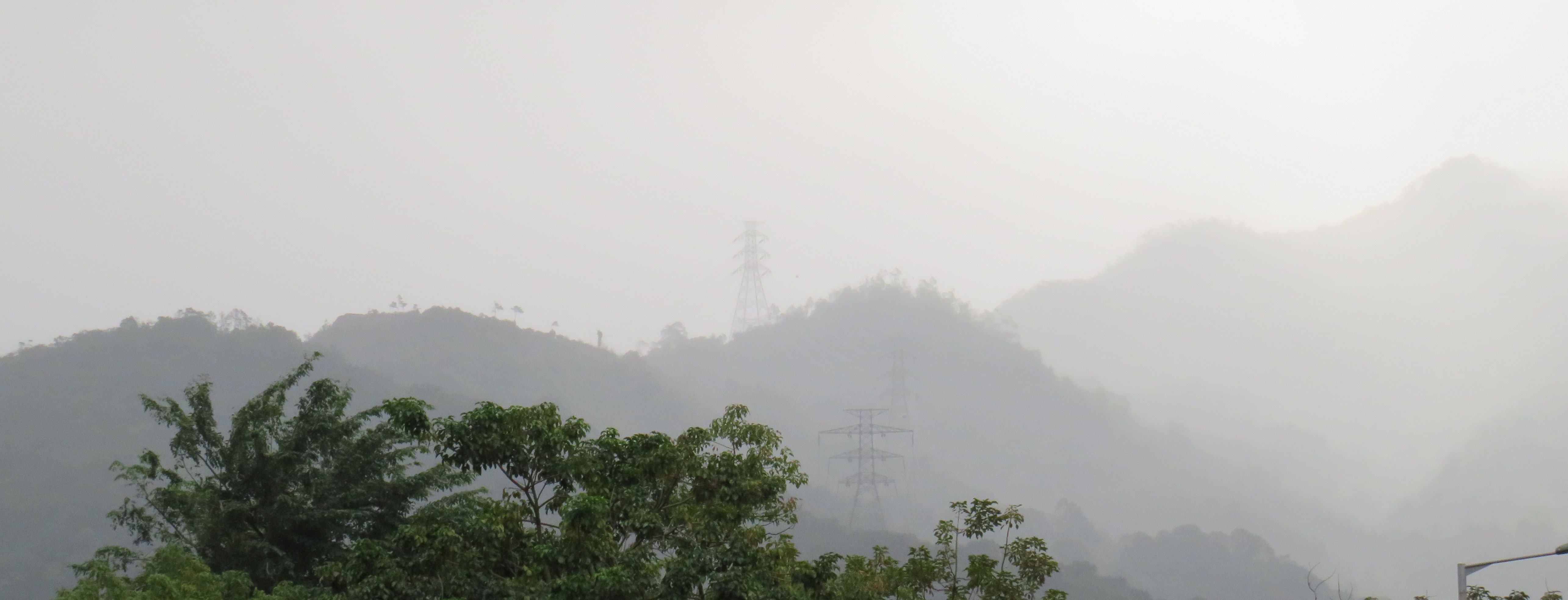
It was an eight-year-old boy, in March 1278, who gave the name to what was then the forested, hilly lands to the north of Hong Kong island. He counted eight hills – today’s Lion Rock, Tate’s Cairn, Unicorn Ridge, Beacon Hill, Crow’s Nest and so on, which today separate the urban coast from the New Territories. There are, he said, eight dragons.
No, said one of the men with him. There are nine. Because the boy was the 17th emperor of the Song dynasty, on the run from the invading Mongols. For as long as his dwindling naval forces kept heading south, for as long as he evaded capture, there was still a Song dynasty, and he was still its emperor. And so nine dragons it was Jiulong, or as pronunciation would have it in these days, and probably in those: Kowloon.
The boy Zhao Shi didn’t live long afterwards, dying of an illness on the run. Even then, he was the commander of a fleet of stolen boats, requisitioned with extreme prejudice from an angry Muslim merchant in Quanzhou, who would take his revenge by embracing the Mongol cause soon after. He was never quite the same after his boat capsized in a storm outside Leizhou, and even his presence in the area of what today is called Hong Kong was a feeble attempt at recuperation for the dying leader of a dying regime, mourning his drowned sister and his lost empire.
His even littler brother would be the last emperor of the Song, famously dragged beneath the waves by his suicidal courtiers as the fleet collapsed at the Battle of Yamen.
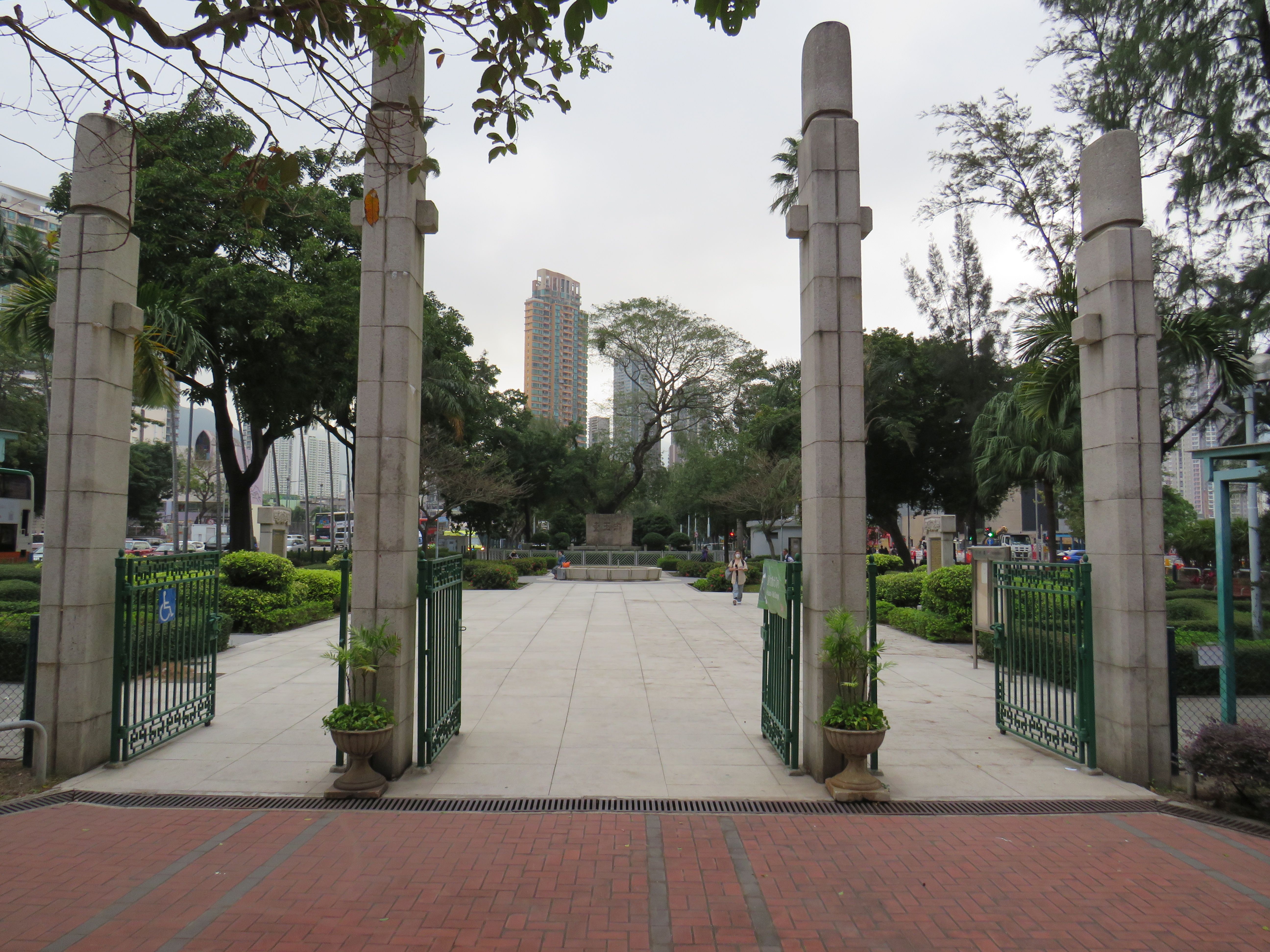
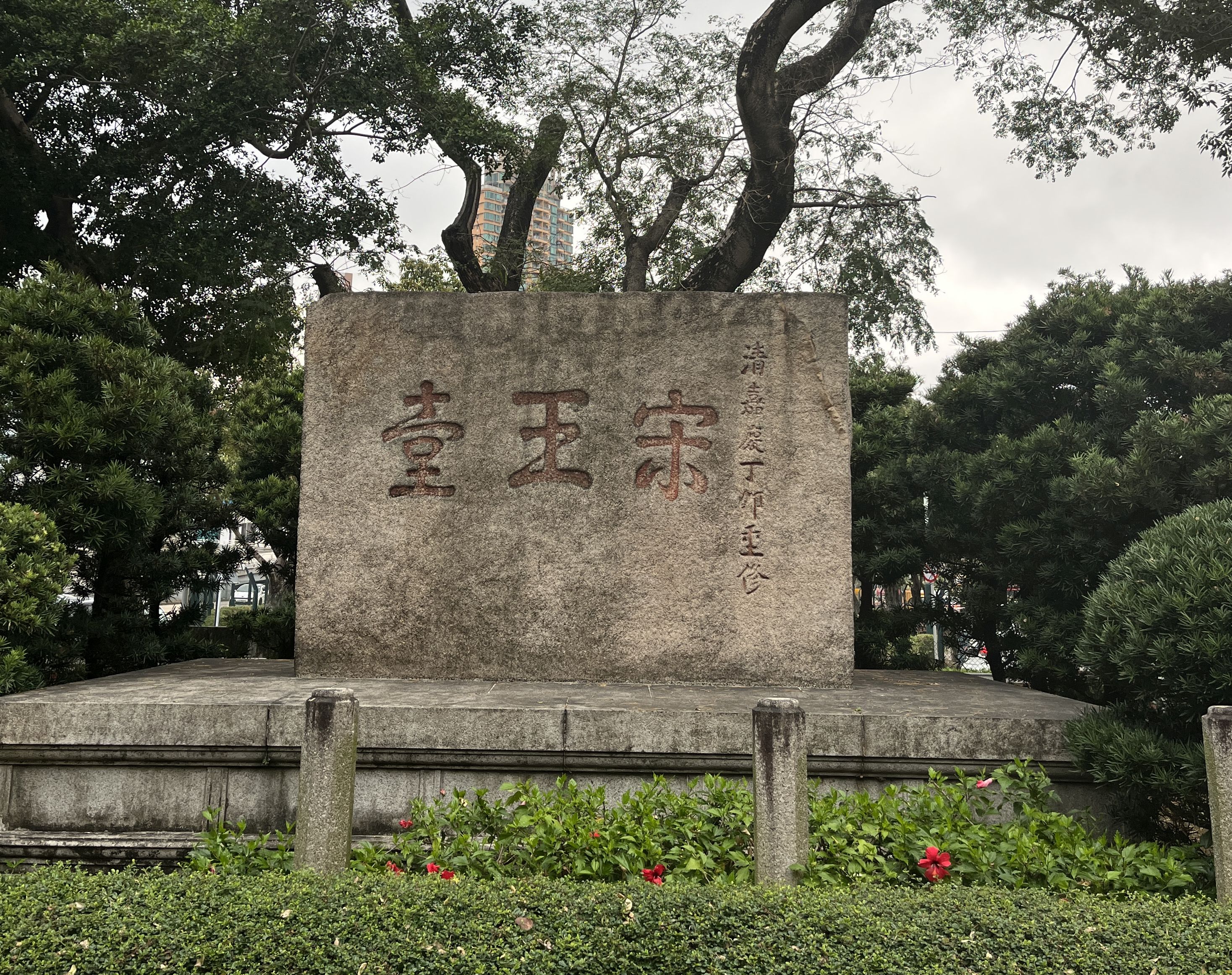
There was a monument in Hong Kong to the presence of the ninth dragon, at what came to be known as his Sacred Hill (sheng shan) – a hundred foot slab of rock, carved with the words Terrace of the Song King (song wang tai). This has made it into Cantonese as Sung Wong Toi – seemingly a deliberate move after the Mongol takeover to describe him as a lowlier royal, as calling him an emperor would have invalidated the mandate of the new rulers. The words for emperor and king are homophones in Cantonese, so possibly the people from the north didn’t realise they were being trolled. Under the British administration, placenames in the area were bullishly renamed Terrace of the Song Emperor, although this made no difference to the locals – see above re: pronunciation. It means that the actual slab has “king” written on it, but the station you get off at to look at it has “emperor”.
The boulder lasted until the 1940s, when the Japanese dynamited it to make extra space for the Kai Tak airfield. In 1945, the bit of the rockface that bore its name was relocated to a little area of parkland nearby. Today, the airfield has gone as well, and it is a sad little park in the middle of a busy road intersection, the air ripe with the stench of the nearby sewage works. But one of the last of the Song once took shelter here beneath a towering rock, and counted dragons in the hills.
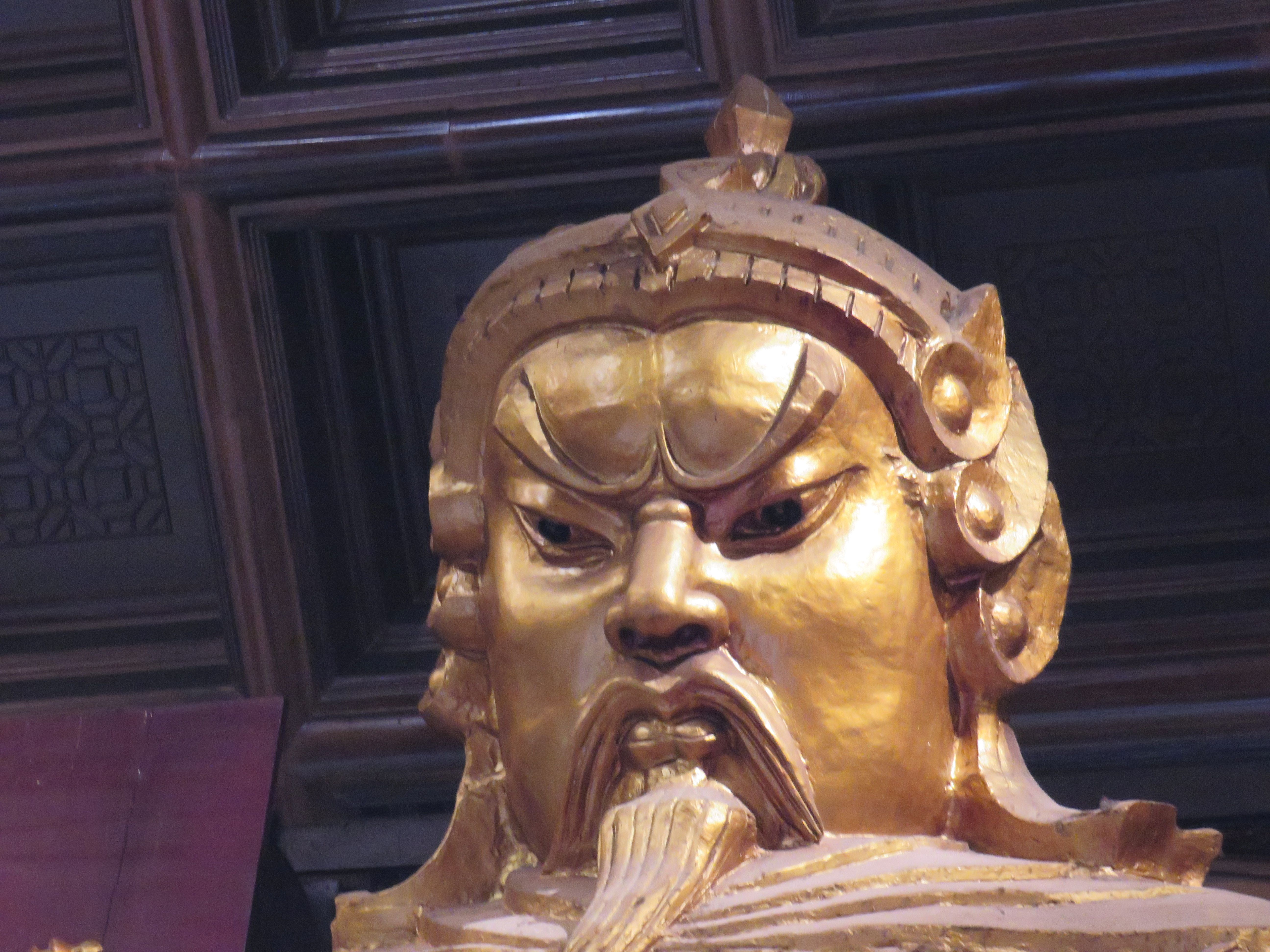
One of his generals and guardians is memorialised a few stops along the metro, at the Che Kung Temple, remembered less for his doomed defence of the boy emperor, and more for scuttlebutt that associated him with the dispelling of plagues, for which he was deified in the Ming dynasty. Visitors to his temple are encouraged to spin ceremonial windmills and beat a ceremonial drum. No plague here today, so presumably it is working.
I don’t know what day it is. Last time I looked, it was Sunday, and now it isn’t. We are only a couple of days away from wrapping, but we have some tough things ahead, mainly in story terms as we try to work out where to fit them. Today is one such question mark, as we are obliged to somehow fill five minutes of screen time with a piece on Heze, a town known only for its peonies.
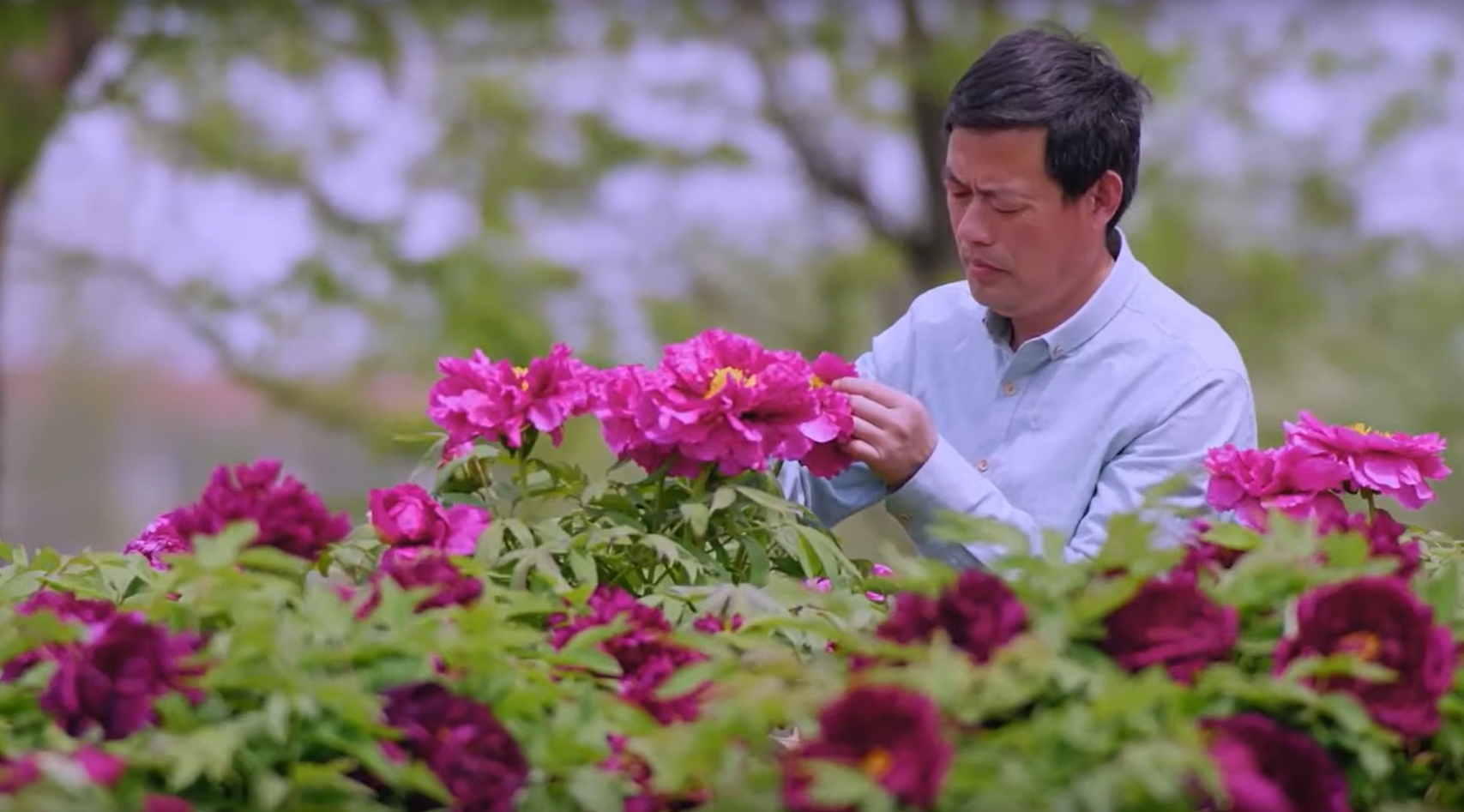
In the time of Confucius, this was the state of Cao, where Confucius had a run-in with local temple heavies who mistook him for a vagrant. But there’s nowhere really appropriate to talk about that, so we are standing in Zhao Xinyong’s shed. He grows flowers there. Then he sells them… it’s hardly fun TV.
“Do you do… anything else?” asks the director warily.
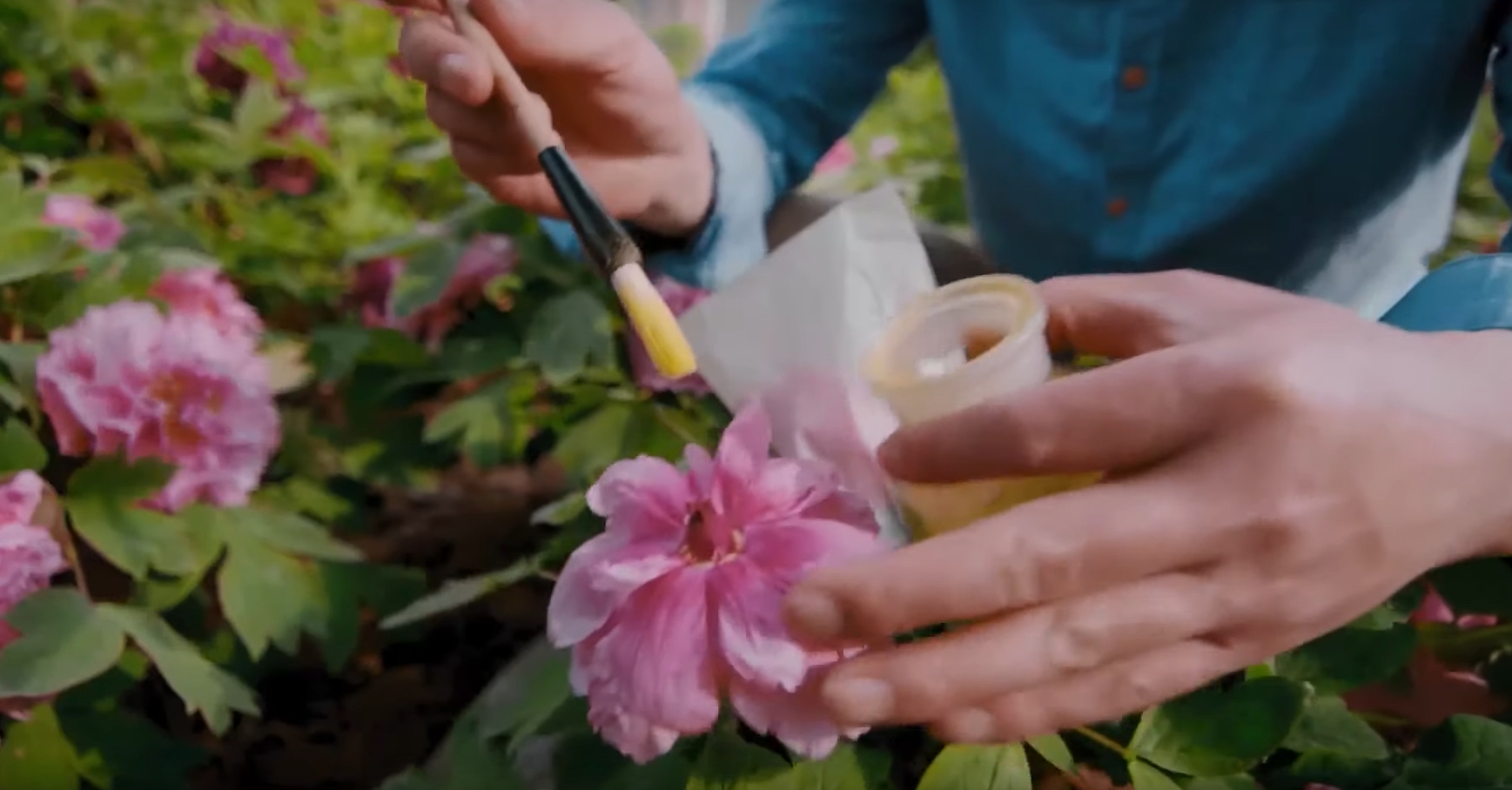
Mr Zhao explains that he plants the peony flowers, then they grow in the greenhouse… and then ten years later they turn out different or the same. Luckily, there is a statue on the grounds of the Peony Fairies from an old folk tale, so I am able to walk around explaining that the first two varieties of peony were born from the unexpected union of two fairies and two brothers from Luoyang. Mr Zhao explains to me how nervous he was when the government assessors turned up after a ten-year wait, and told him that he had indeed created a dozen new varieties of peony.
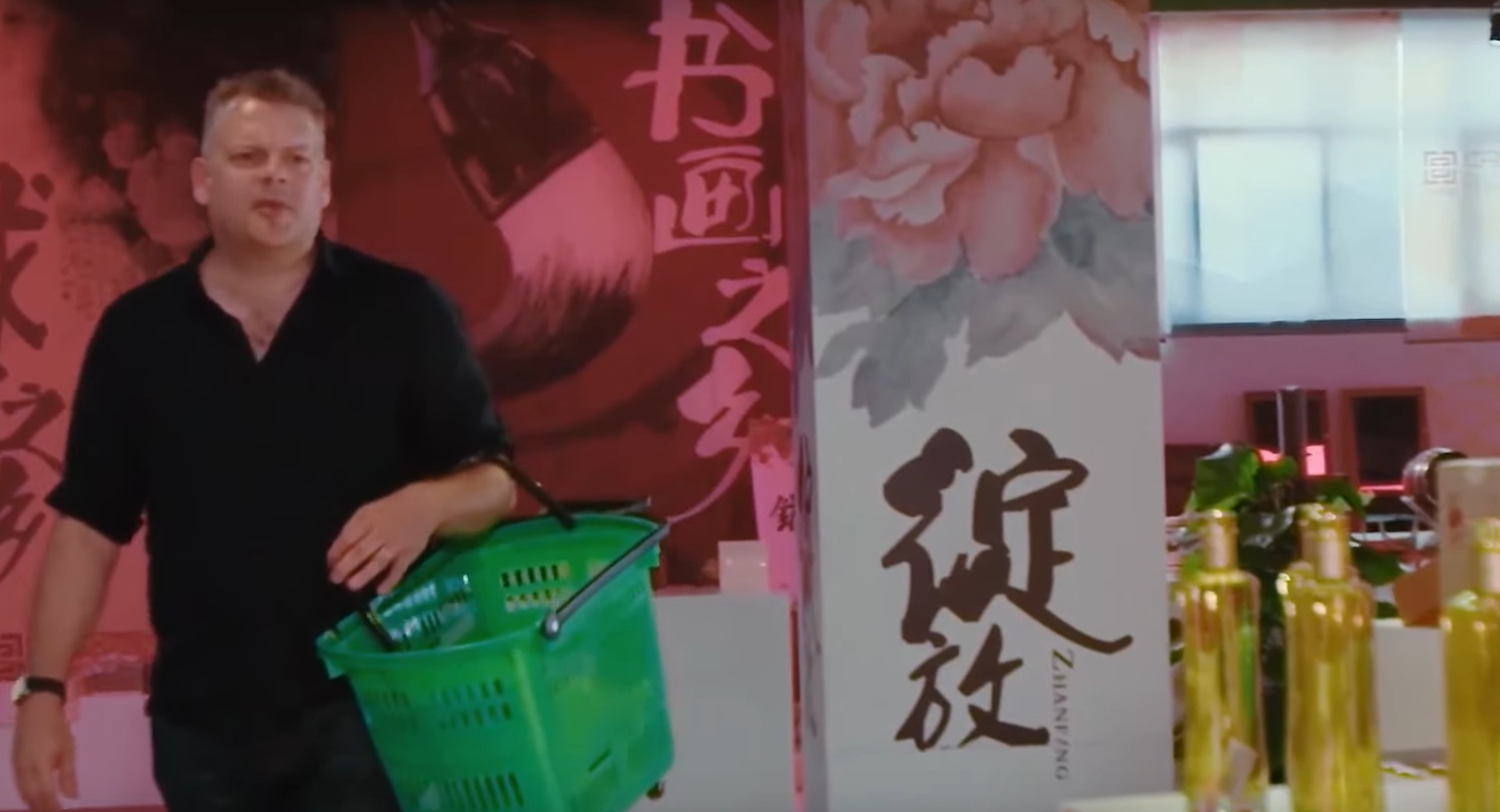
With time to fill – we need to somehow spend five minutes of the show in this city – we head down to the local business centre, where I ransack a display of peony-related products while making sarcastic comments to the camera.
“Ooh, peony tea, good for the prostate. Ooh, peony toothpaste, for people with flowery teeth. Here’s some peony morpholift emulsion. I’m often told that my morphs need lifting, so I will get some of that.”
I end up examining peony-based face masks, and deciding that the one that is “charmingly moist” is probably the best for me. It’ll do. Honour is served; we’ve managed to make a silk purse of the sow’s ear that is Heze, and it should be on to the next destination. Except we are delayed for thirty minutes while the Chinese director has a massive row with Jiuqing the producer in front of the whole crew, which ends with him yelling at her: “I don’t care what van you ride in. You can ride with the gear if you don’t hurry up.”
The problem, as best I can work out, is that we need to be in Taierzhuang tomorrow to film the sing-song girl. Ideally, we should be somewhere else doing something about Chinese opera, but the opera singer is only available the day after tomorrow, so we will have to drive for four hours to get there, and then two hours back the following day. It seems like such a minor issue, but we are only a couple of days away from finishing the shoot, and nerves are fraying.
Partly, this is my fault. The crew are shooting such a punishing schedule because I am only available for two weeks. This places huge pressure on Jiuqing to get everyone moved around the province in time, and it will mean we are further away from the bullet train station on the last day than we really ought to be. Telling Jiuqing to ride with the gear means she will have to spend four hours with the grips, also known as the Garlic Boys because they walk around with a sack of raw garlic to insulate their stomachs against dodgy food. You can imagine how they smell, or perhaps you can’t.
Nobody is impressed. Confucius said: “When you are poor, it is often hard to keep a smiling face. But when you are rich, it costs nothing to be polite.” Which is pretty much how I feel about the director. He will go on to apologise profusely over the next two days for being such an arse, but there was no real reason for him to shout so much at Jiuqing after she has put in so much hard work.
We reach the next location minutes after midnight. It seems to be a charming old town, festooned with red lanterns. But we are all too tired to look around us.
Duan Yanping is waiting at the gate and smiling like a loon. He smiles all the time. I never see him not-smiling, although sometimes he crinkles up his face even more until his eyes are scrunched into little dots. He is the principal of an exclusive private school in Qufu, home town of Confucius, which purports to raise children in the Confucian way. The boarders are as young as five, and I watch them stopping to bow to their teachers as they walk across the playground. Since the teachers are arriving for the day, there’s a whole string of them across the courtyard, and for anyone, child or adult, to get across the open space takes a quarter of an hour, since they keep stopping and bowing at one another.
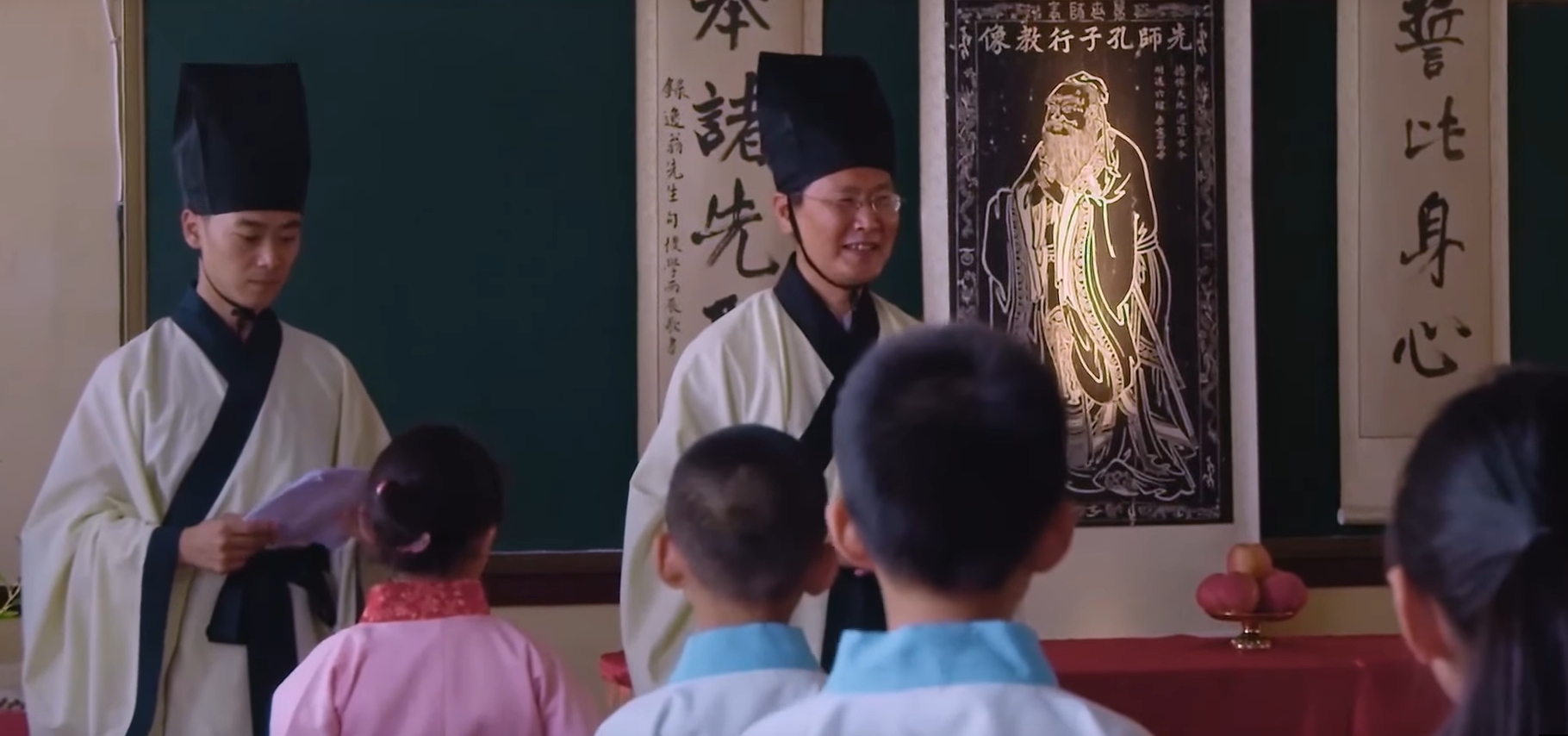
Today we are here for the Opening Brush ceremony, in which a bunch of six year olds will have red dots painted on their foreheads and then commence a series of “Confucian” rituals to mark the beginning of their education. We’ll see about that, as I say to camera: “I’m curious to see how many of these rituals will turn out to come from later dynasties.”
Most of them, as it turns out. The ceremonial presentation of tea to one’s teachers is all very well, but there was no tea in China in the time of Confucius. Nor were there robes in the style demonstrated by the pupils and teachers, all of whom are attired in the fashion of the Song dynasty. Pupils are presented with a pair of dates each as a symbol of the 00 that goes after a person (1) in order to make the top exam mark, but the very nature of this requires Arabic numerals, which didn’t arrive in China until a thousand years after Confucius.
The children are still children. After being exhorted to write their first symbolic character, ren or person, the kids are asked to hold up their papers (paper, also not around in the time of Confucius). The fat kid at the back has got bored and drawn two persons, and then half a wall around them, thereby turning his character into something different. I look up along the long line of diligent students holding up their papers and see: person, person, person, person… MEAT.
The kids plainly love Mr Duan. His constant smiling even puts me at ease, and the only time I see him stern is when he reminds Jiuqing the producer not to bugger about too long changing batteries, because she is effectively asking a bunch of six-year-olds to stand still behind their desks for an hour, while the crew huddle outside in the corridor staring at their monitors.
I ask Mr Duan what he thinks Confucius would make of the ceremony, and he crinkles his face and tells me that he would be most chuffed. I am not so sure. The younger Confucius, certainly, would have been aghast at so many anachronisms and what, to him, would be regarded as foreign customs. The older, wiser Confucius would have appreciated the effort, but still scandalised at the sight of himself worshipped as a sage, and women in the role of teachers. But I decide not to press Mr Duan too much on that point, because he seems so nice. His school teaches the kids all about The Analects, but also a bunch of musical instruments, the Chinese tea ceremony, meditation (which Confucius abhorred), and a number of other subjects which seem to come under a catch-all sense of Chinese classiness. Send your kid to Mr Duan’s school, and he or she will be spat out the other end able to offer a welcome whiff of refinement to any large Chinese gathering, which is likely to otherwise comprise pig farmers playing with their phones.
Confucius’s grave is empty. In fact, nobody knows where Confucius’s actual burial site was. In the Han dynasty, 500 years after his death, a rising trend in Confucianism demanded a place to pay respects, and some bright spark decided that the best thing to do would be to dump a pile of earth next to the grave of his son Top Fish and stick up a memorial tablet there. But if you really wanted to see the spirit of Confucius, Mr Duan’s school has it up and running, warts and all.
We are treated to lunch in the dining hall, only to discover that, true to Confucian principles, no talking is allowed. Jonathan the director and I have an intricate sign-language conversation about the possibilities of getting a drone up above the temple, while Ruby the Interpreter chomps her way through many scallops that she ends up invisible behind a towering midden of shells.
Yu the Chinese director tells a horror story about the last he had to work with a foreign presenter, on some sort of coproduction between CCTV and the BBC. Whoever this man was (the director wouldn’t say), he insisted that his Korean mistress be officially taken on in a sinecure position, and then proceeded to bang her so hard every night that he wasn’t up until ten the next day. He also insisted on clocking off at precisely 6pm, a state of affairs that endured for ten days before he was fired. So, I must look like a properly diligent pro by waking up when told to, and volunteering to work through till late each night as long as the cameramen don’t mind holding their gear up for longer. Jonathan asked me why I do this job…. Incredulously, like only a moron would sign up for it.
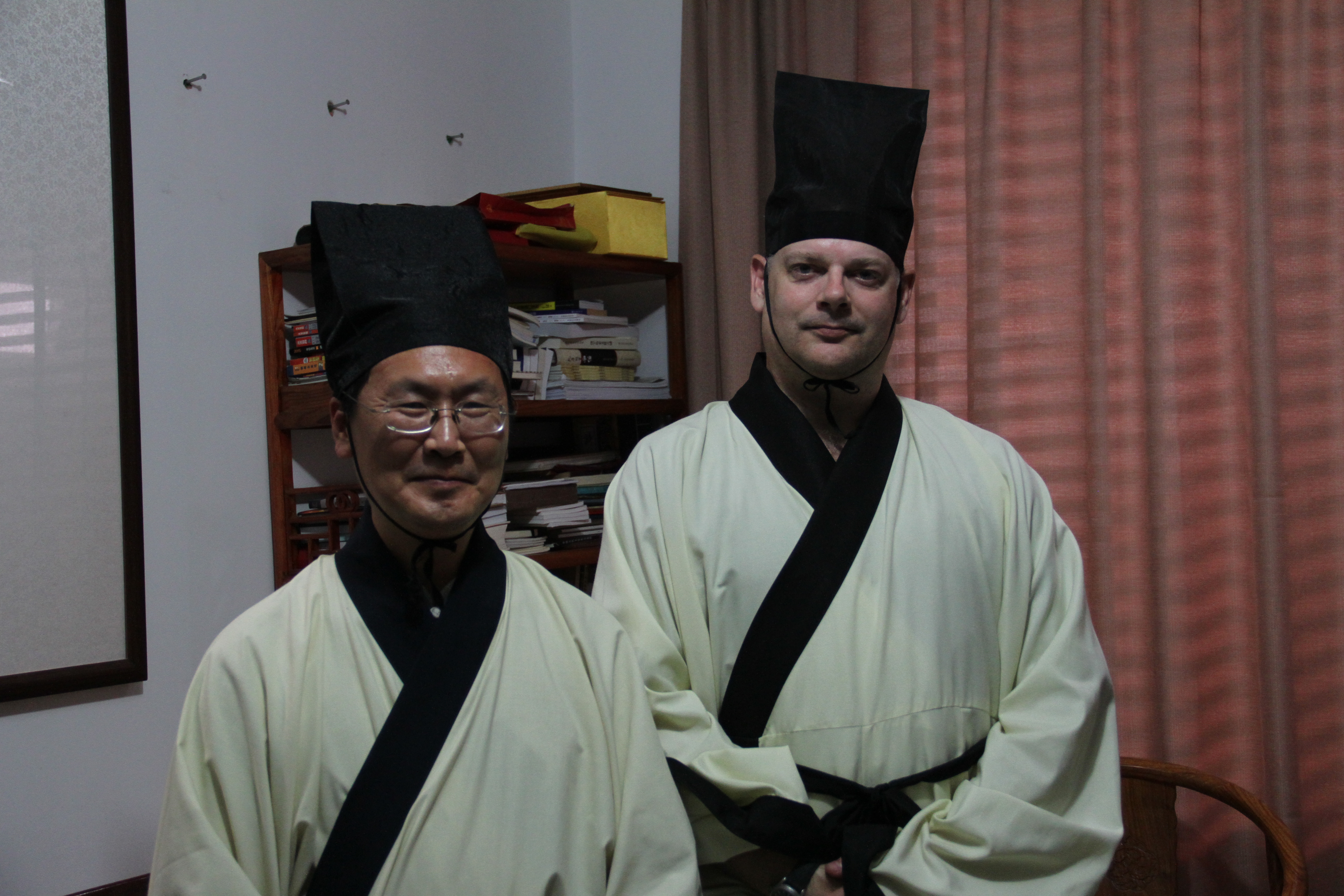
Mr Duan hands me a set of Confucian robes, and we have a fun half-hour trying to tie the strings and put the belt on the right way. I then interview him in the robes, thereby successfully ticking the box for any film shoot that a Clements must be put into a silly hat.
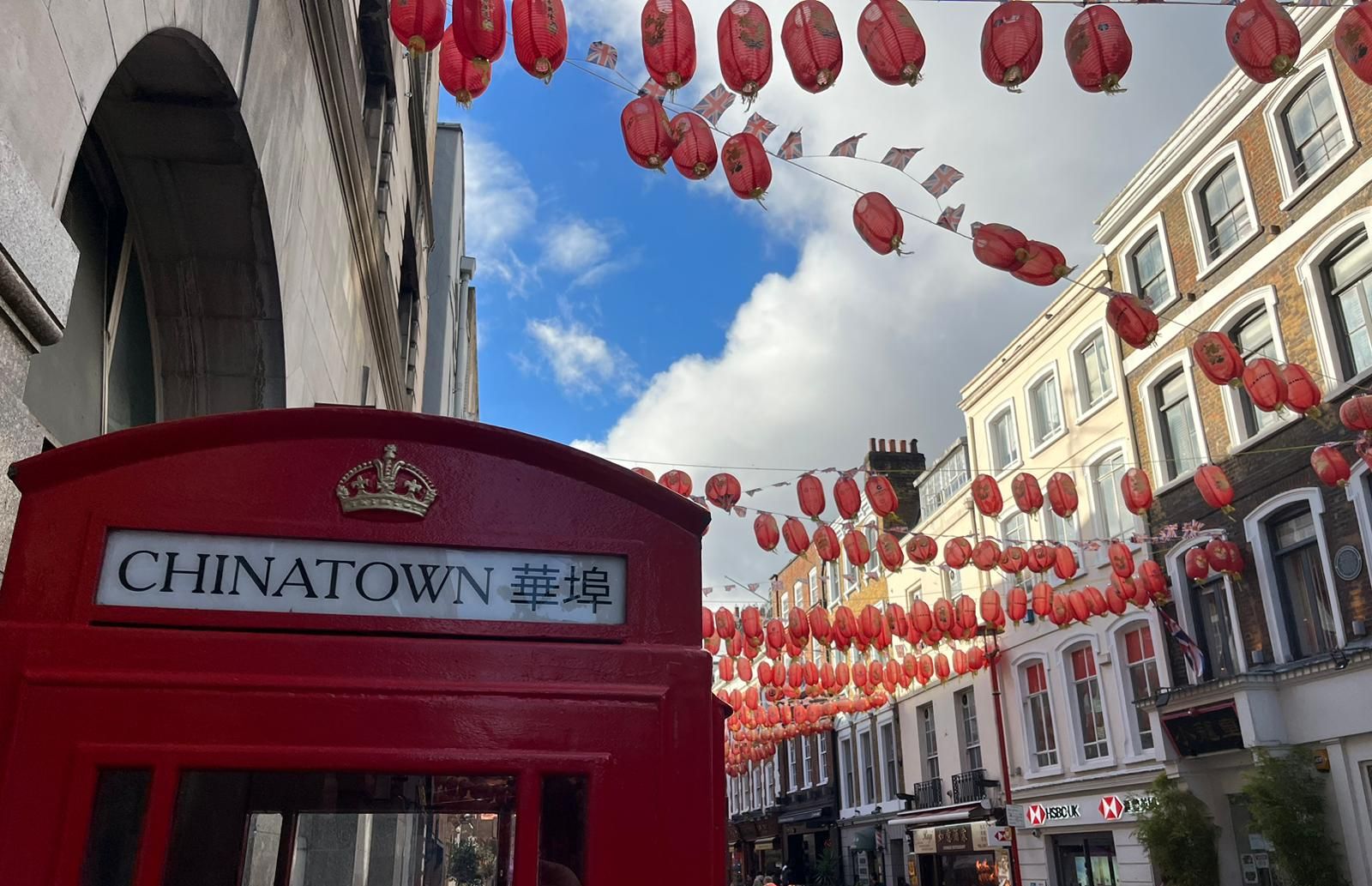
A brief flit through London on my way to Edinburgh for the next phase of Scotland Loves Anime, a blitz through Foyles and Chinatown’s Guanghwa bookshop, and then off to Camden for…
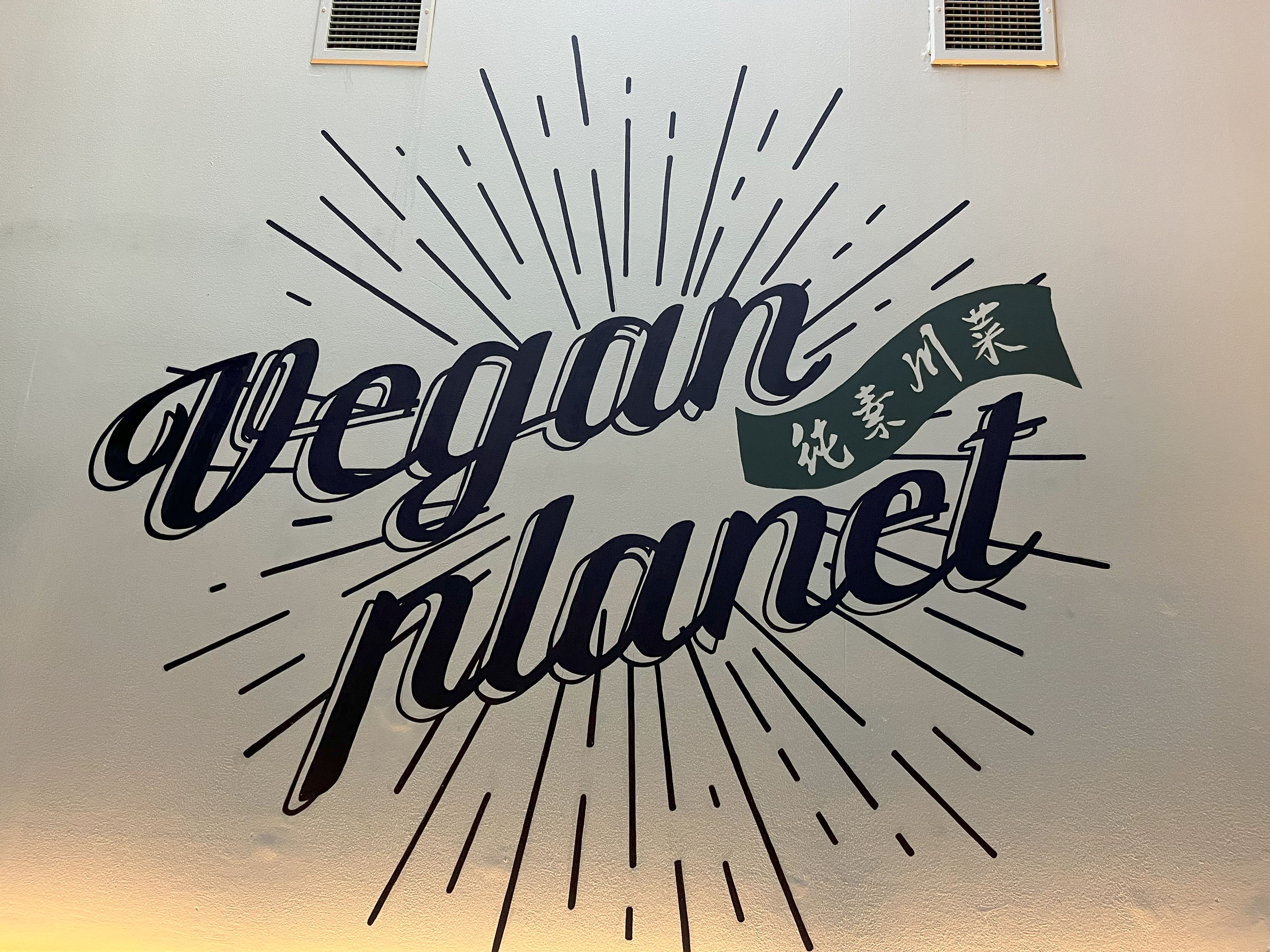
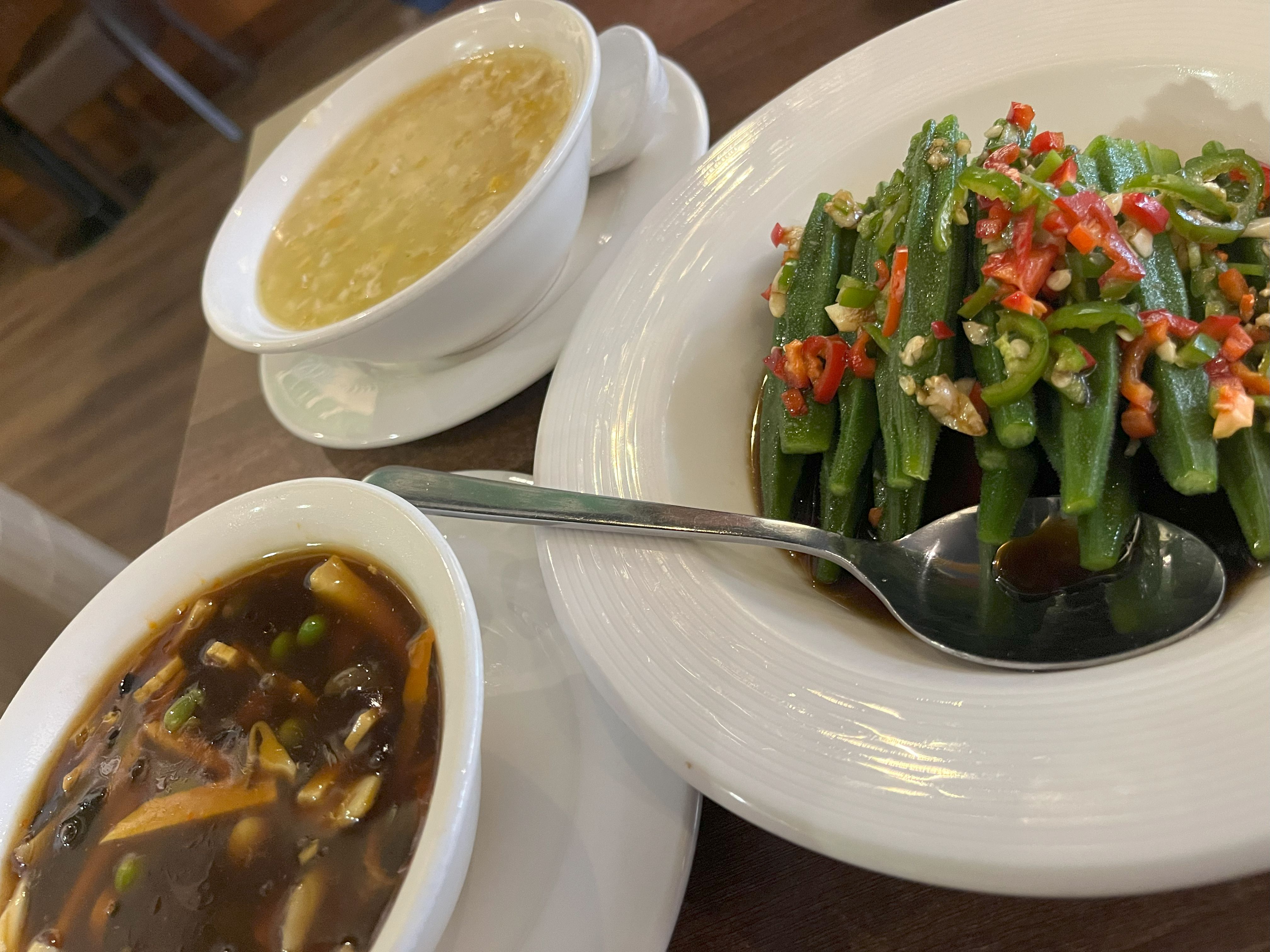
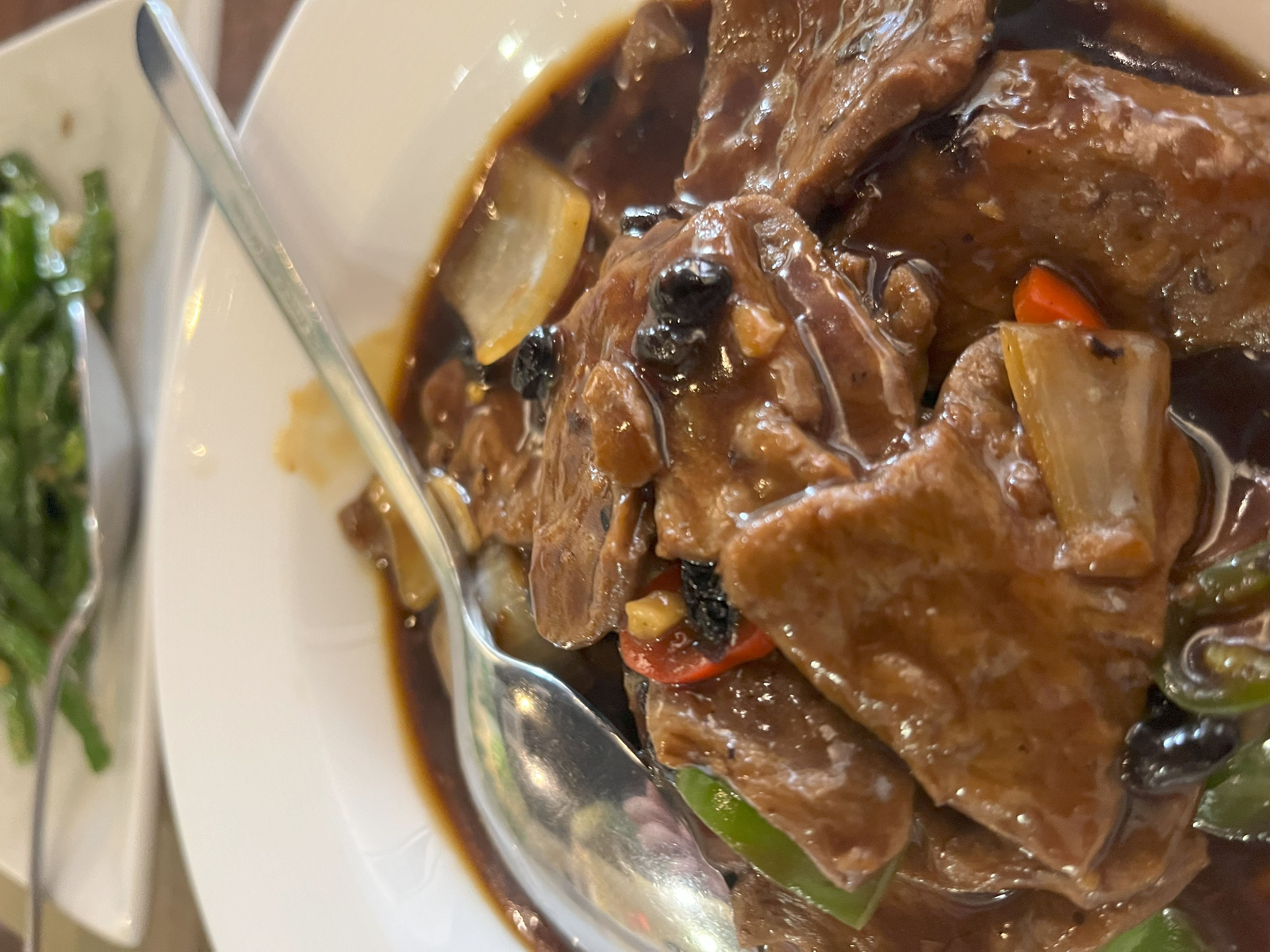
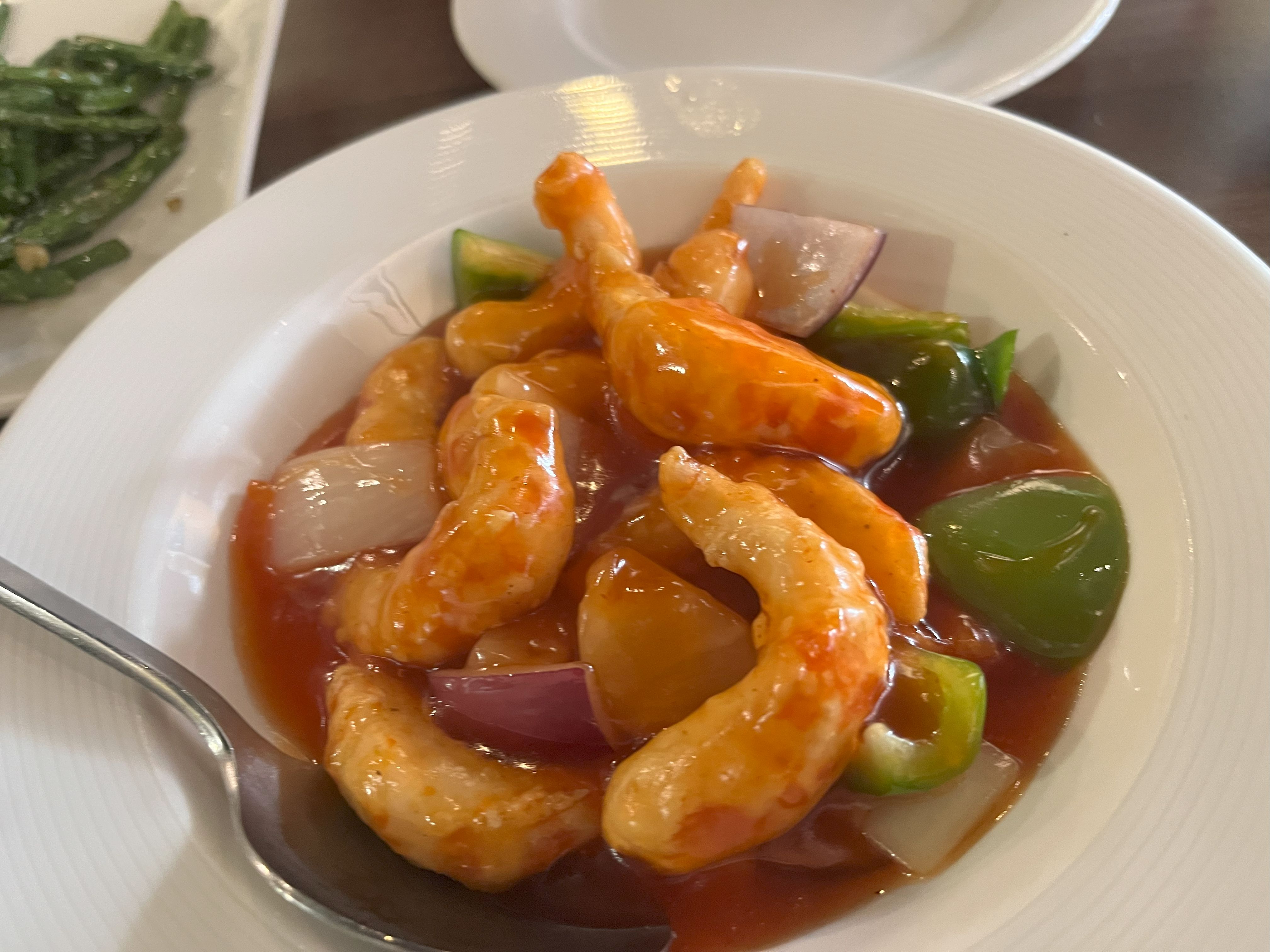
Vegan Planet, the Camden vegan Chinese restaurant I have been waiting to try for years. And I was not disappointed by hot and sour soup, fake beef in black bean sauce, and ersatz sweet and sour prawns.
Absolutely lovely food. Although my dining companion and I were slightly wrong-footed by the absence of milk for the post-prandial coffee. We sort of forgot what vegan meant.
For several days now, Jonathan the director and I have been trying to get a straight answer out of the Chinese about why we aren’t filming on Mount Tai. It is, after all, the most sacred mountain in China, and the site of the ancient ritual in which the First Emperor climbed to heaven and announced to the gods that he had created China. So if one were, say, writing a documentary about Shandong, it might be nice to begin with a nice aerial around the peak soaring above the clouds, with a few stories about how it was the place where China itself was born.
In more recent times, it was the site of a fateful visit by a young-ish Jiang Zemin, who was told by a local soothsayer that he would become an “Emperor”. Since he went on to become the president of China, it has been the site of many a middle-management boondoggle, by politicians hoping to get a similar nod. This has given the municipality of Tai’an, where Mount Tai can be found, ideas above its station, and when our production company came calling to set up a documentary to promote Shandong, the Tai’an government told them to get lost.
Tai’an refused to cooperate, claiming that they needed no further tourists nor foreign patronage, and although we could easily nab some archive footage, our production company has ruled that it would be unfair on the counties that are paying if we included materials from a county that was not. So now we will not even mention them in the documentary.
This is, as Jonathan observes, something of an own goal, since Shandong means “East of the Mountains”, and at least half the time, the Chinese assume that it means East of that Mountain. Take out Mount Tai, and you take out the Shan, leaving only a dong… if that makes sense. “Mount Tai crumbles,” as Confucius once lamented. We have to pretend it isn’t there.
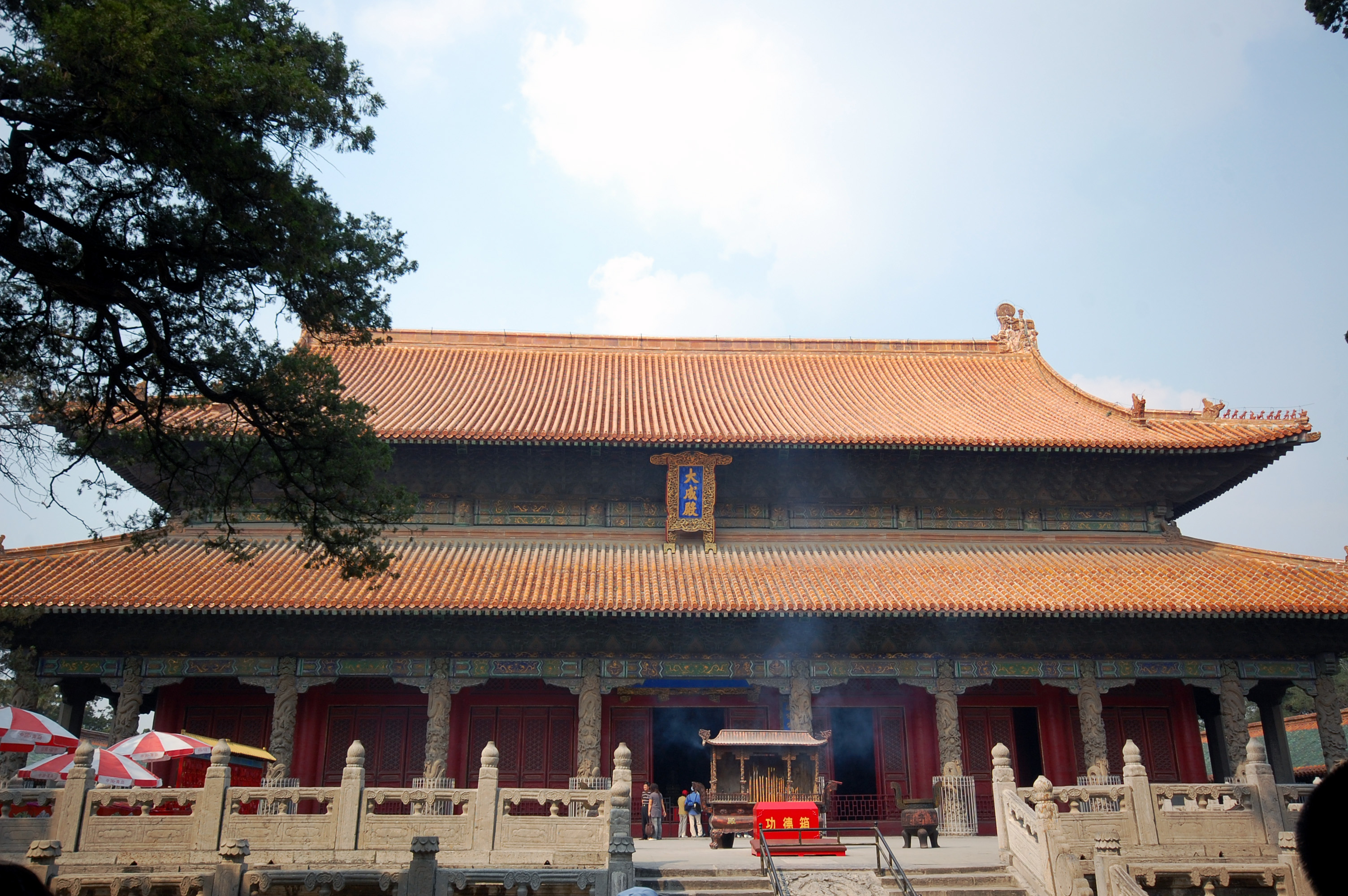
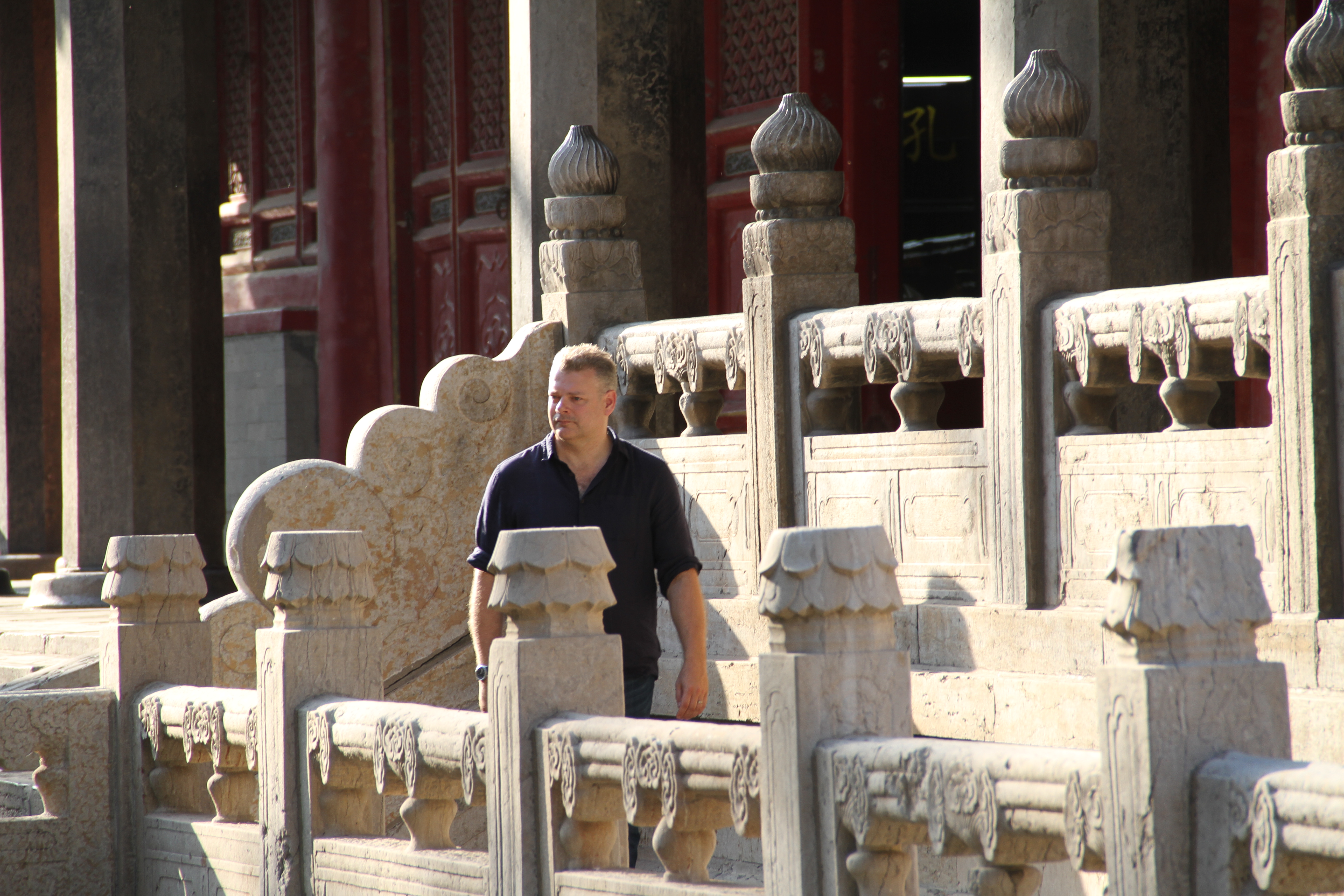
Today we are in Qufu, once the capital of the ancient state of Lu, and the birthplace of Confucius. Here, the main attractions are the Temple of Confucius, the mansion of Confucius’s descendants, and the grave of Confucius himself. It seems to be full of people whose idea of a pilgrimage to the home of China’s most famous philosopher seemingly involves turning up at the front gate, buying a fan and a plastic crossbow, tramping pointlessly around the courtyard for a while taking selfies, then buying some tat in the inner sanctum.
I am quite livid at the sight of hawkers in the very holy of holies trying to push Confucius comics, simplified versions of the Analects, and a bunch of “History of Your Surname” posters at passers-by. Could they really not find a better quality of souvenir?
I find the Lu Wall, and round up the crew to do a piece to camera about the workmen in 154 BC who found copies of the Confucian classics bricked into a wall on that spot. The books found therein are the oldest and most complete version of The Analects, and the ancestors of all modern versions. They had been hidden there in 213 BC by Confucius’s 9th generation descendant, during the First Emperor’s Burning of the Books.
The graves of the Kong family are situated in parkland a mile away. Among the many little hummocks of grass, there is the larger grave mound of Zisi, the grandson of Confucius, and of Top Fish, the son of Confucius. And then there is the grave of Confucius himself, its forward-facing stele a patchwork of fragments held together with steel pins, after the Red Guards tried to destroy it in the Cultural Revolution. There is a scrum of tourists around it, and I sneak into their midst, turning to the camera amid the clamour to say: “People come from all around the world to see the last resting place of Confucius. But guess what, he isn’t here…”