Singapore once grew riches from gambier, nutmeg and rubber – yet today, not a trace remains. Lost Plantations reveals a Singapore few remember – when gambier, nutmeg and rubber covered the land, and fortunes rose on the backs of bold planters and backbreaking labour.
—
I make a couple of sneaky audio cameos in this new documentary from Sitting In Pictures, my former employers on Route Awakening.
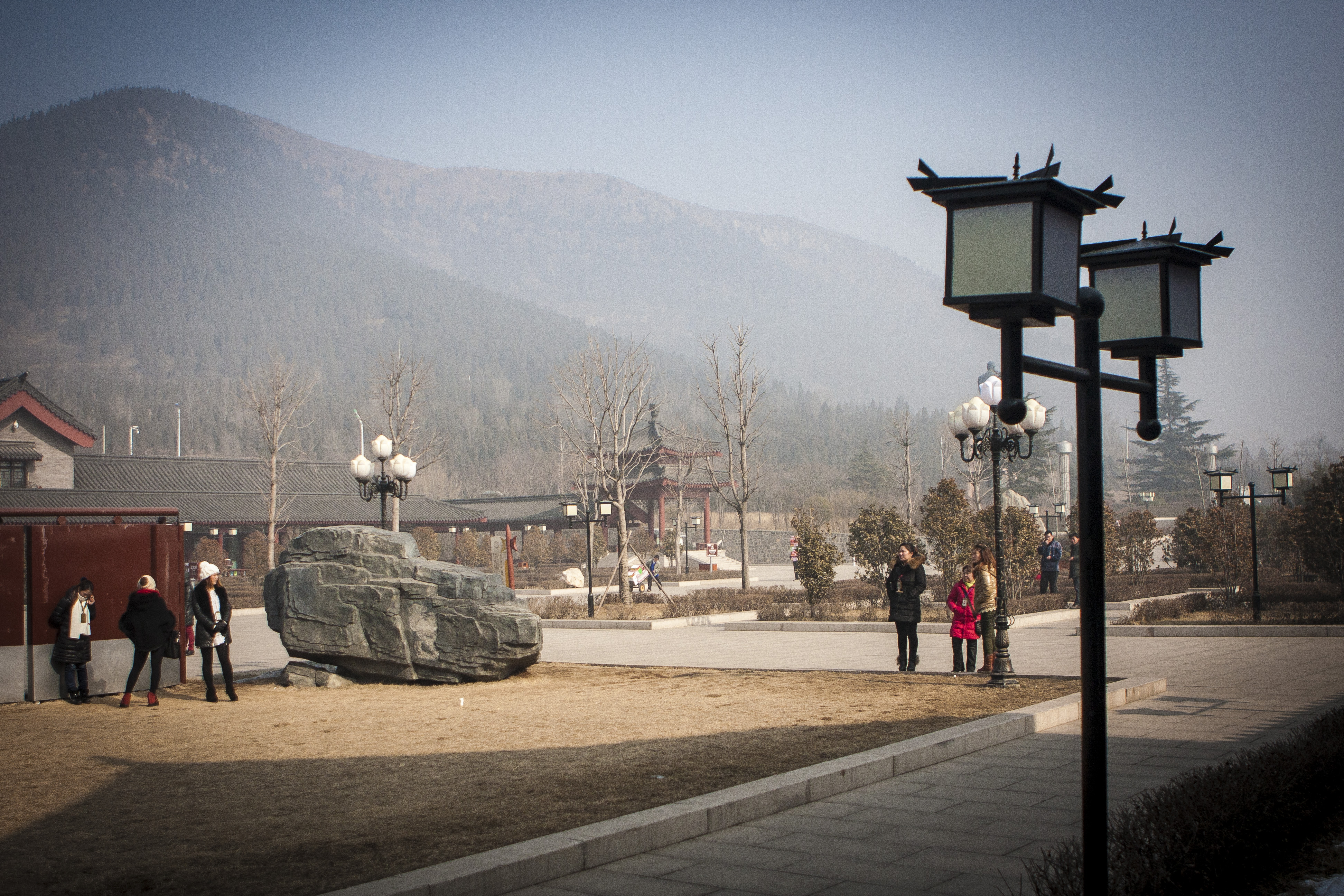
Mr Yuan is the baffled taxi driver I have commissioned to take me to the Shaolin Temple, who cannot believe his luck. Today he will make a whole £30 for driving me there and back from my hotel in Luoyang, although it’s a nail-biting journey for 90 minutes through awful smog, with only twenty feet of visibility. Giant coal trucks, overloaded to double their capacity, loom out of the gloom, along with buses, vans and tuk-tuks little better than tractors. All the vehicles have their hazard lights blinking, and it soon becomes clear that every time we overtake someone, we are on a winding mountain path with little between us and the plummet back into town. It doesn’t feel like we are heading up a mountain, although before long there are patches of snow on the ground.
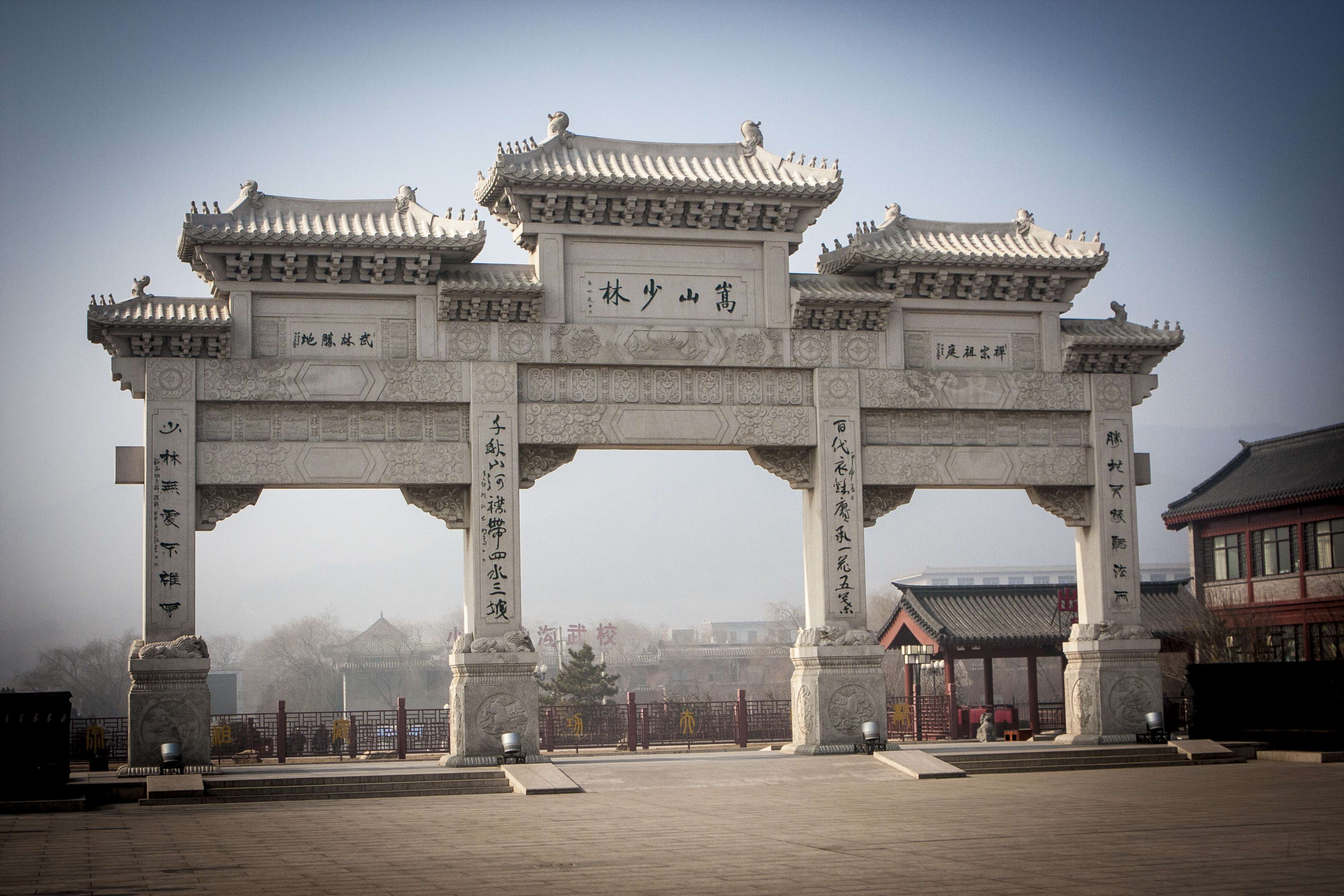
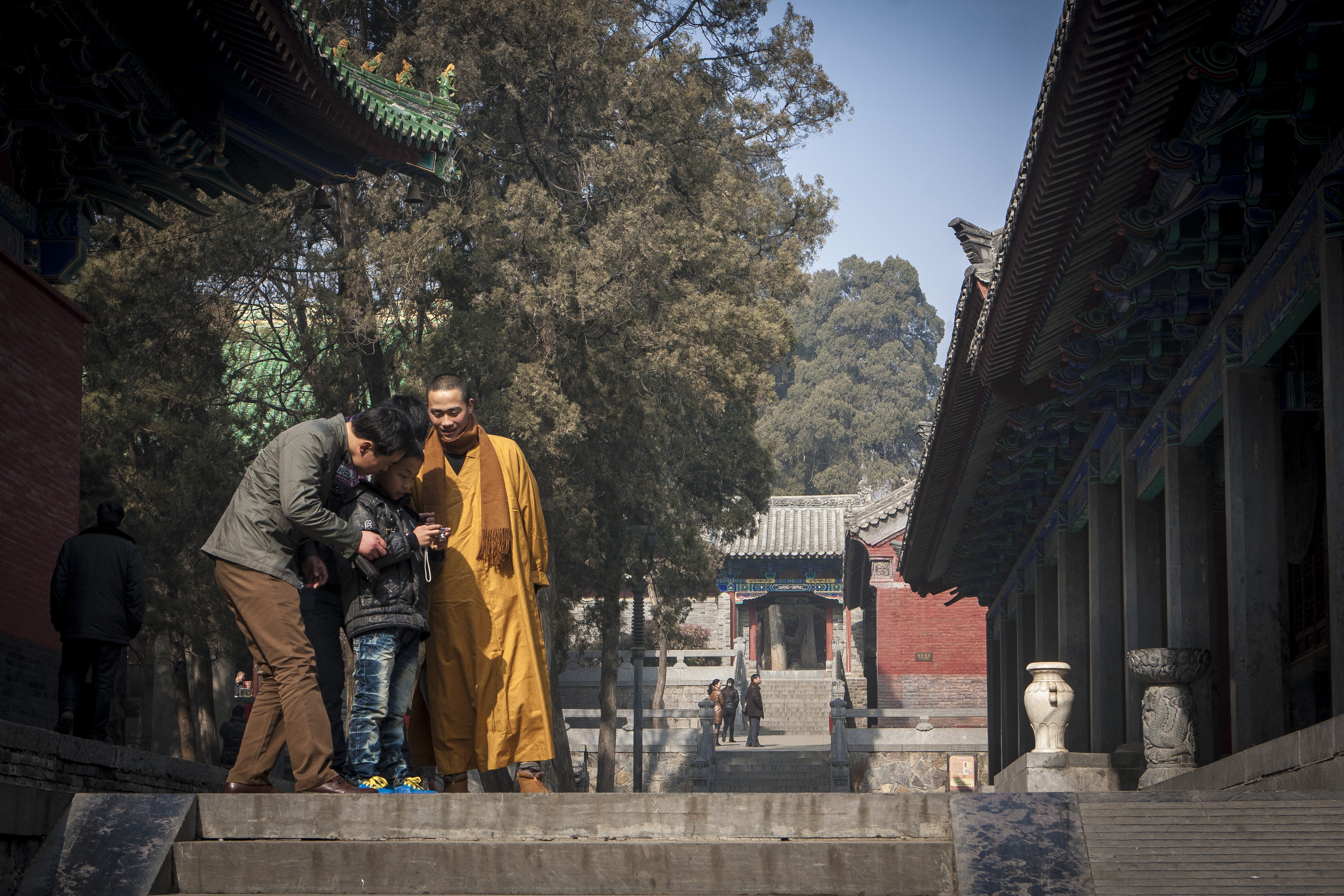
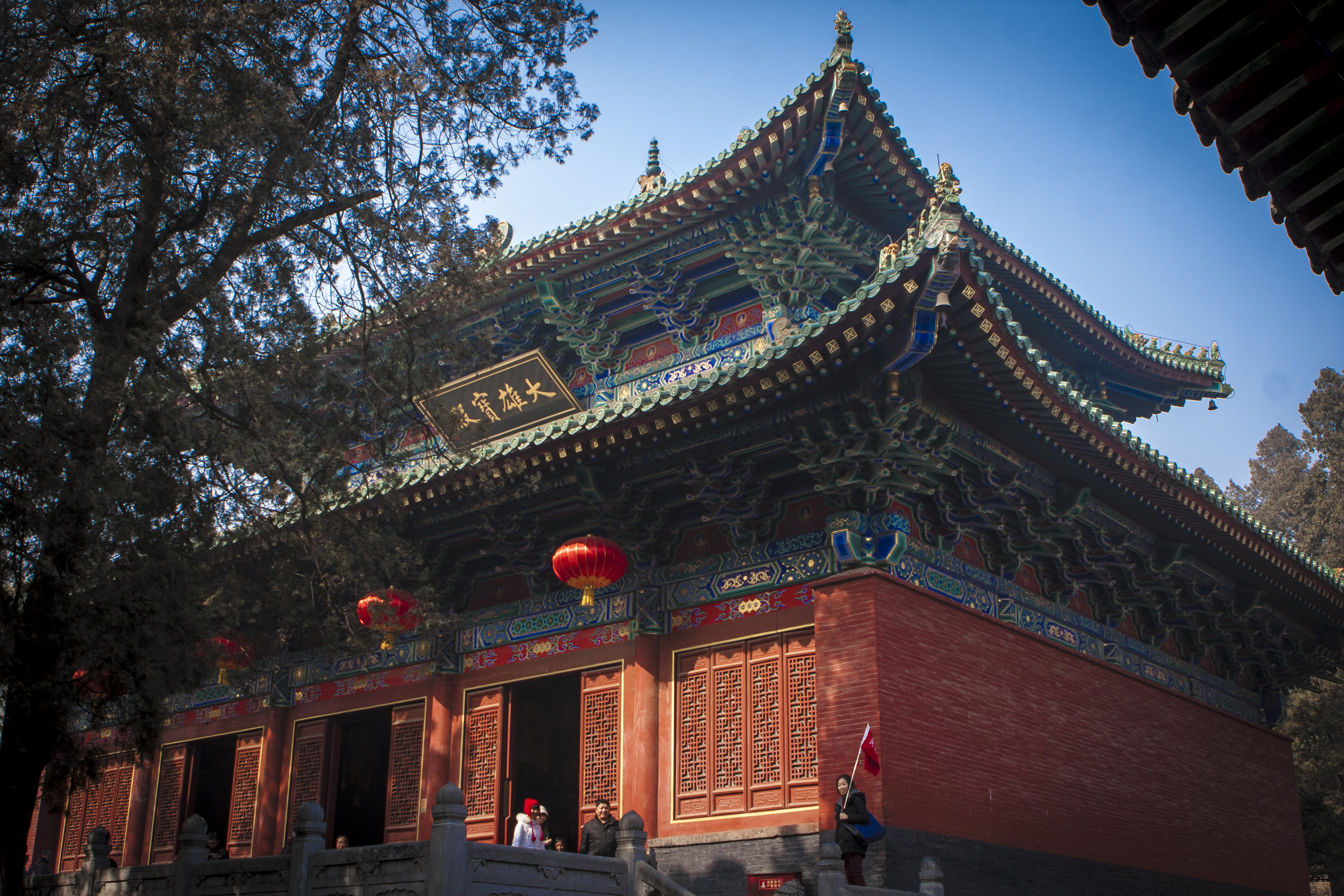
The Shaolin Temple itself is a little above the smog, living in a time warp where it is still the Ming dynasty and where the sky is still blue. Founded in the late 5th century AD by an Indian monk, it has been burned to the ground several times, but always risen from the ashes. Its location was chosen because it is circled by other mountains, which appear to the credulous eye to form a silhouette of a reclining Buddha. Thanks to the fame of Shaolin kung fu, and also of Zen Buddhism, which began here with the monk Bodhidharma, it has a lot of money to spend, and is a massive hilltop complex, attended by kung fu high schools, as well as halls of residence for the 200 remaining monks, and temples and pagodas in memory of great Shaolin achievements.
It is here that Bodhidharma meditated so long in a cave that his shadow literally burned into the wall, and here that his would-be pupil Huike stood stoically outside the cave, waiting to be invited to study.
Bodhidharma had no interest in teaching him, even when he found Huike standing up to his knees in snow.
“I will teach you when it snows red,” he scoffed, only for Huike to pull out a knife and slash his own arm*, spraying the snow with his blood. It is here that the Buddhist phrase, “Standing in snow, the heart is revealed” comes from, which I think ought to be the motto of the Finnish Shorinji Kempo Association. (*English-language documentation says slashes his own arm OFF, one of many places where Shaolin myths get a bit weird).
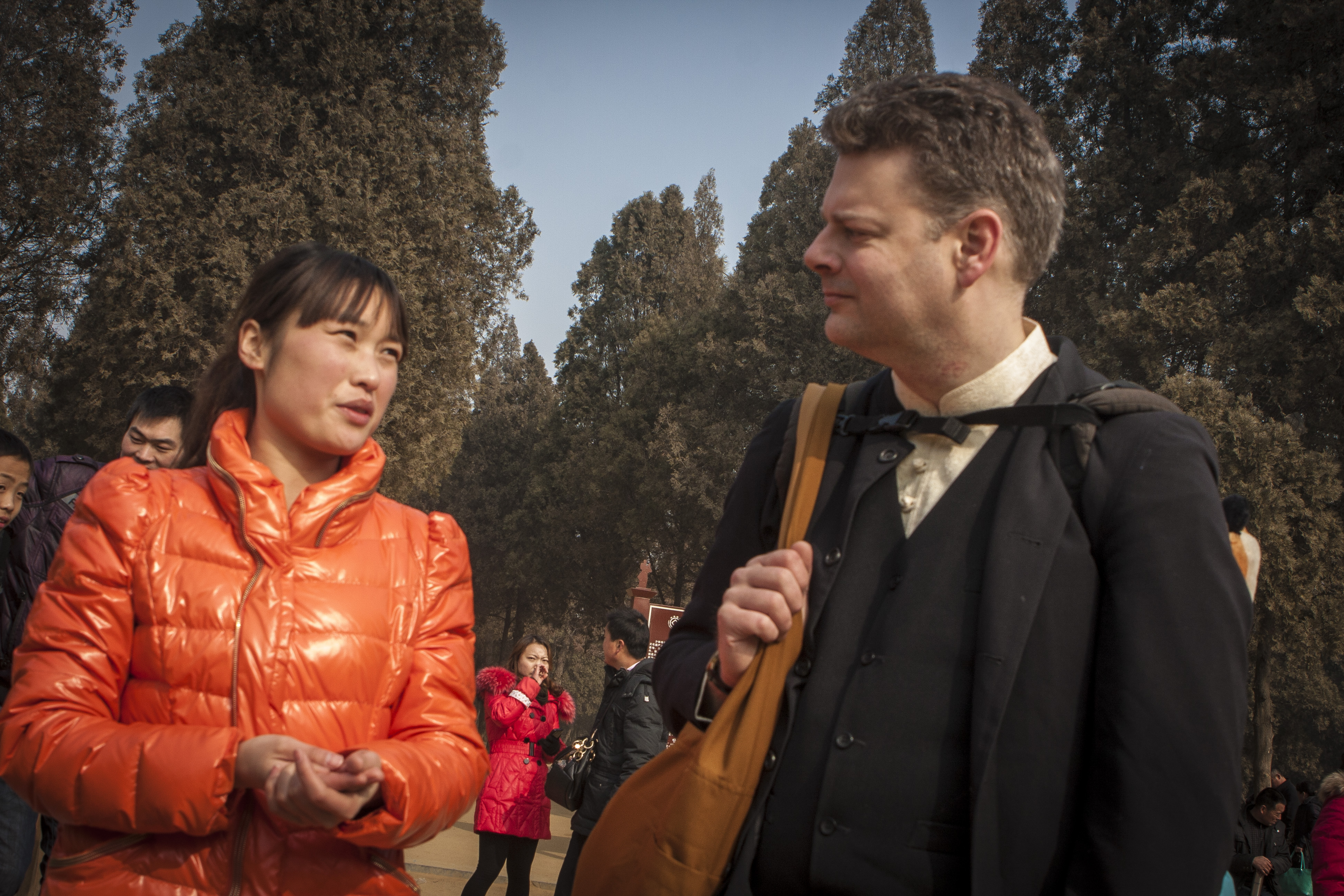
My guide is Lisa Lau (although her business card says Lili Liu), and in keeping with the colour theme of the Shaolin temple, her puffa jacket is a holy orange. Her services are a hefty £30, for which she confesses she usually waits around all week for a single commission. The rest of the time, she works in marketing for the temple.
She talks about of the early life of Tang Taizong, first husband of Empress Wu, who was rescued from captivity as a young man by thirteen Shaolin monks, leading to the long-term association of the monastery with the Tang dynasty’s ruling family. We see a pagoda dedicated to Empress Wu’s mum, and many steles carved with details of Tang history and/or famous donations to the monastery. One is carved with the words So Doshin.
“Oh yes,” says Lisa, “that one’s from Japan.”
We walk on the lucky carved lotuses to the central hall, and see the training ground where the monks have stamped 48 bowl-shaped depressions in the cobbles from constant training, and the “Bachelor Tree” where monks practicing the Two Fingers of Death have poked holes into its bark. I drop in at the Forest of Pagodas, where the remains of dead monks are enshrined in multi-stepped columns, and then head off for the show.
Yes, there’s a show. Monks punching holes in things and each other, slapping around sticks and swords, and bending their legs around their head. Although the monks were very good at what they did, a lot of what they did was conjuring and sleight of hand, and didn’t have a whole lot to do with Shaolin. Nor, to be honest, did five minutes of time-wasting comedy business when audience members were brought up on stage and asked to go through several punchy kicking movements for the entertainment of everyone else.
On the way back, the smog has lifted a little. We rumble slowly through squalid hamlets of shacks and barns, piles of coal and stacks of rags. People in the street are selling mud-caked leeks and oranges. A sleek limousine coming down the mountain ploughs into a three-wheeled pick-up truck and sprays sparks across the road.
“Ooh-hoo!” breathes Mr Yuan, as he swerves around the accident. It is all he says for the whole trip.
Jonathan Clements is the author of A Brief History of the Martial Arts, and the narrator of the commentary track on Arrow Films’ Martial Arts of Shaolin.Photographs by Kati Clements.
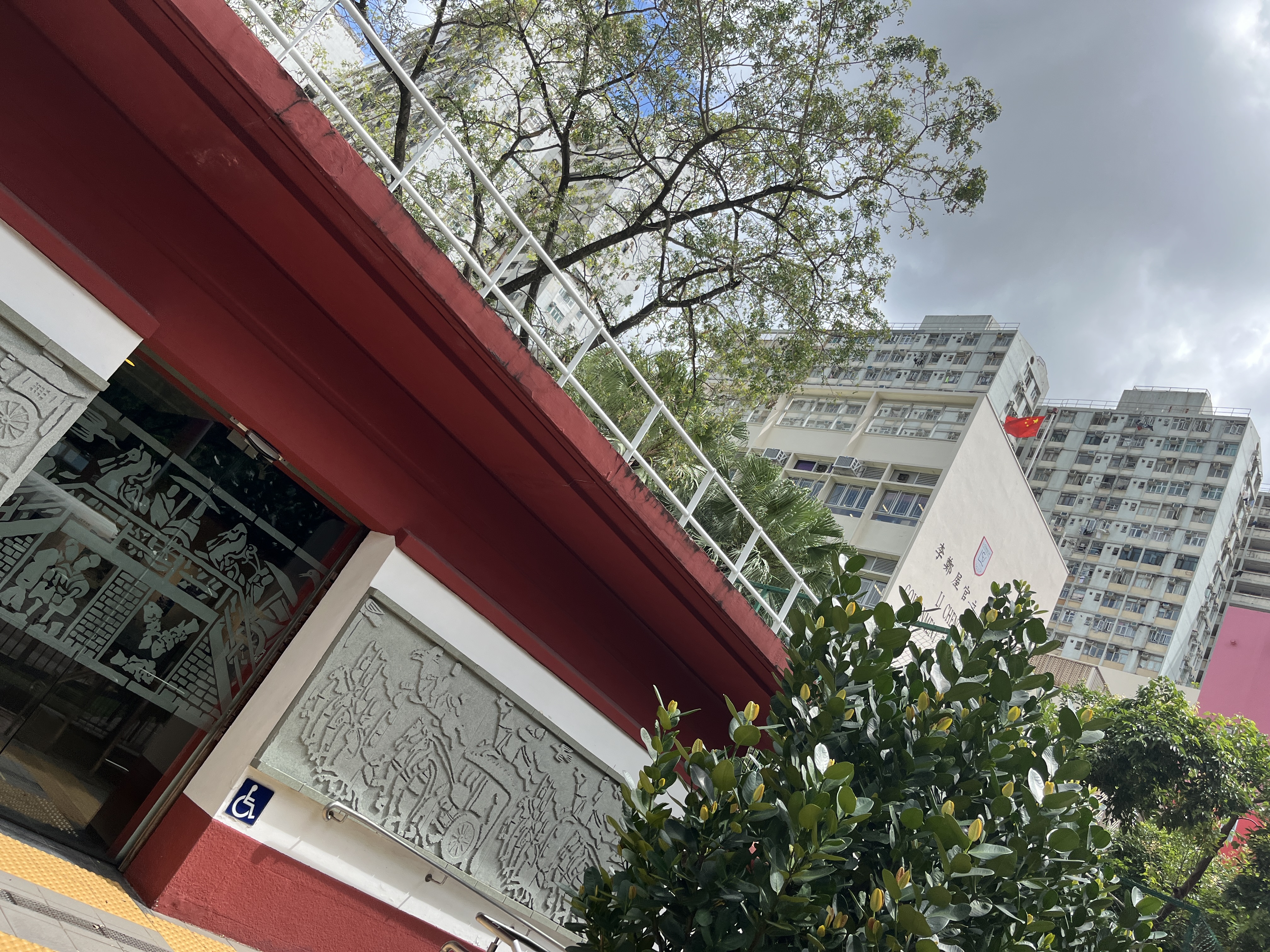
In the 1950s, a fire ripped through the illegal Hakka communities clustered in the hills near Cheung Sha Wan (Long Sands Bay) north of Kowloon. Scrambling to house the displaced locals, the Hong Kong government authorized a rapid resettlement scheme to create massive housing estates in the area. These were austerely functional buildings – shared toilet facilities, and kitchen ranges on the balconies to keep the fires out of the interiors. The local children were schooled on the rooftop. These estates are largely gone now, but in the meantime, they have created their own contribution to Hong Kong history.
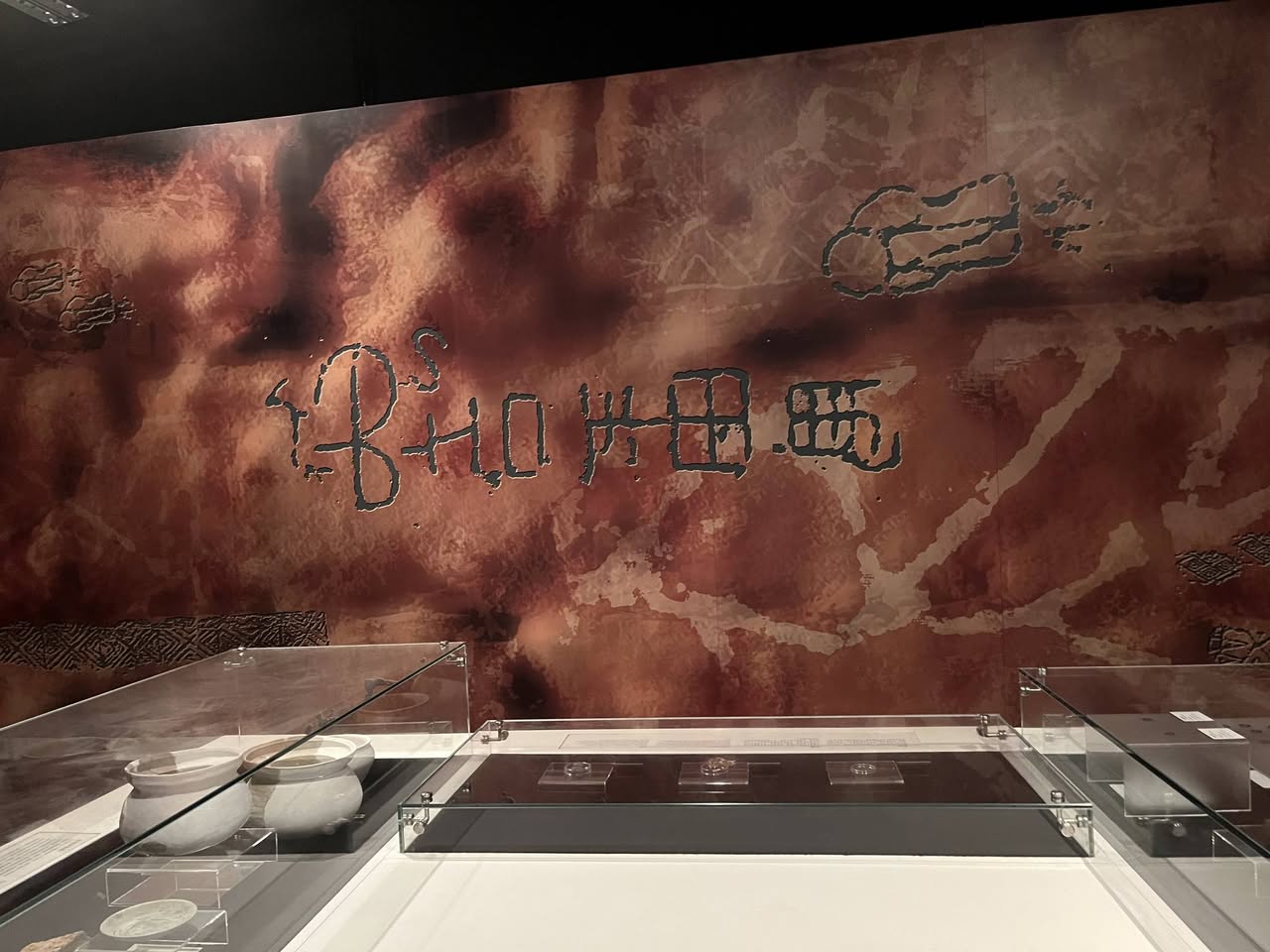
In one area, the “houses of Li and Zheng” (lei cheng uk), builders uncovered a brick tomb as they were laying the foundations. It turned out to be an unprecedented archaeological discovery – a tomb from the end of the Han dynasty, with its grave goods unplundered. The bricks on the wall bore the words GREAT FORTUNE TO PANYU, suggesting that they had been made either in what is now Guangzhou, or by craftsmen dispatched to the area to work on the project. The discovery locked Hong Kong into the orbit of China 1800 years before the present, even though there was perilously little inside the tomb.
Mainly, it contained pottery, and a tiny handful of bronze artefacts. There was no actual body in the tomb – possibly its intended occupant was never even interred there. “There were crowds all around,” comments Michael, one of the archaeologists in the on-site documentary. “Every time we brought something out of the dig, they would all cheer. I think they were having a lot more fun than we were.”
I am the sole visitor on a muggy Monday morning, to the modest little museum that now sits in the shadow of towering skyscrapers. The tomb, ironically, has outlived the emergency housing estate that led to its discovery, and is now an oddity in the middle of an all-new urban development. There is not even a Long Sands Bay any more – when the Lei Cheng Uk tomb was first built, it was on a hilltop by the sea; today, it is a mile inland, largely because of twentieth-century land reclamation projects. Long Sands Bay gives its name to the local metro station, but there is no sea in sight.
Unexpectedly, we have been given access to the site of the Marquis of Haihun’s tomb. The museum there is still a year away from opening, and we are not permitted to film the tomb next door that is still being excavated, but since we are meeting Yang Jun, the propaganda office can’t really say no.
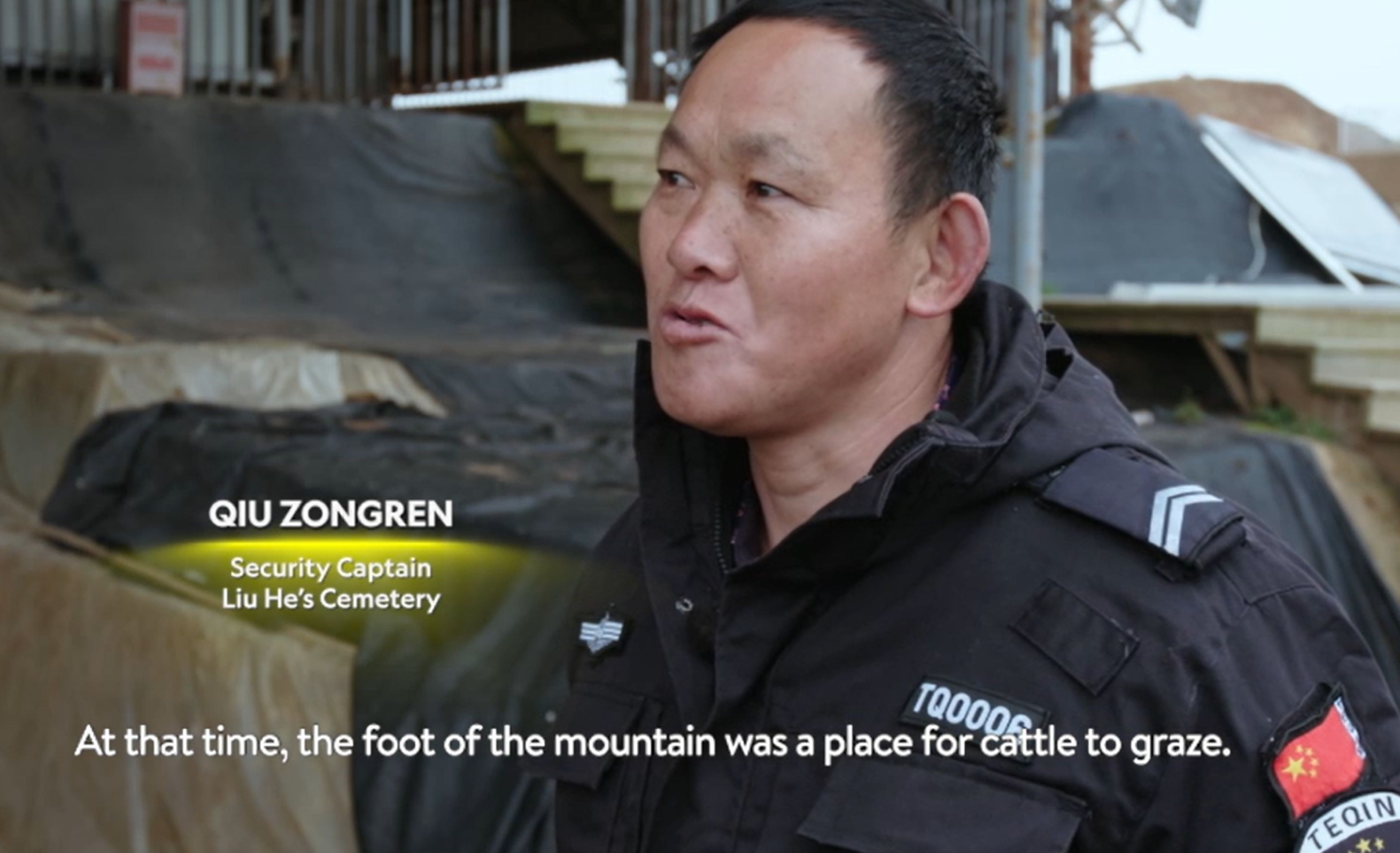
In a windswept Chinese village strewn with inquisitive chickens, we meet Qiu Zongren, the happy security guard who is our morning interviewee. He grew up locally, and was there to witness the find, and ended up becoming a guard on the dig site, so has some handy stories to tell about what the locals made of the tomb.
“Before the discovery, we never went there,” he admits. “Everybody said it was haunted. But then there was a night in 2011 when we saw lights on the hill, and realised that whatever was under the ground, someone was trying to rob it. We didn’t know what to do, so we called Jiangxi Television, and they called the police and the archaeologists. After that, I ended up in the guardhouse on the site all through the dig. I’d come home every night, and my mum and dad would ask me what was going on at work, and I couldn’t tell them. Because we weren’t just bringing up old pots and bits of bronze. We were bringing up so much gold, so it all got classified. We tried to make it all sound as dull as possible. ‘Just a few pots today, mum. Very boring. No gold. Definitely not.’”
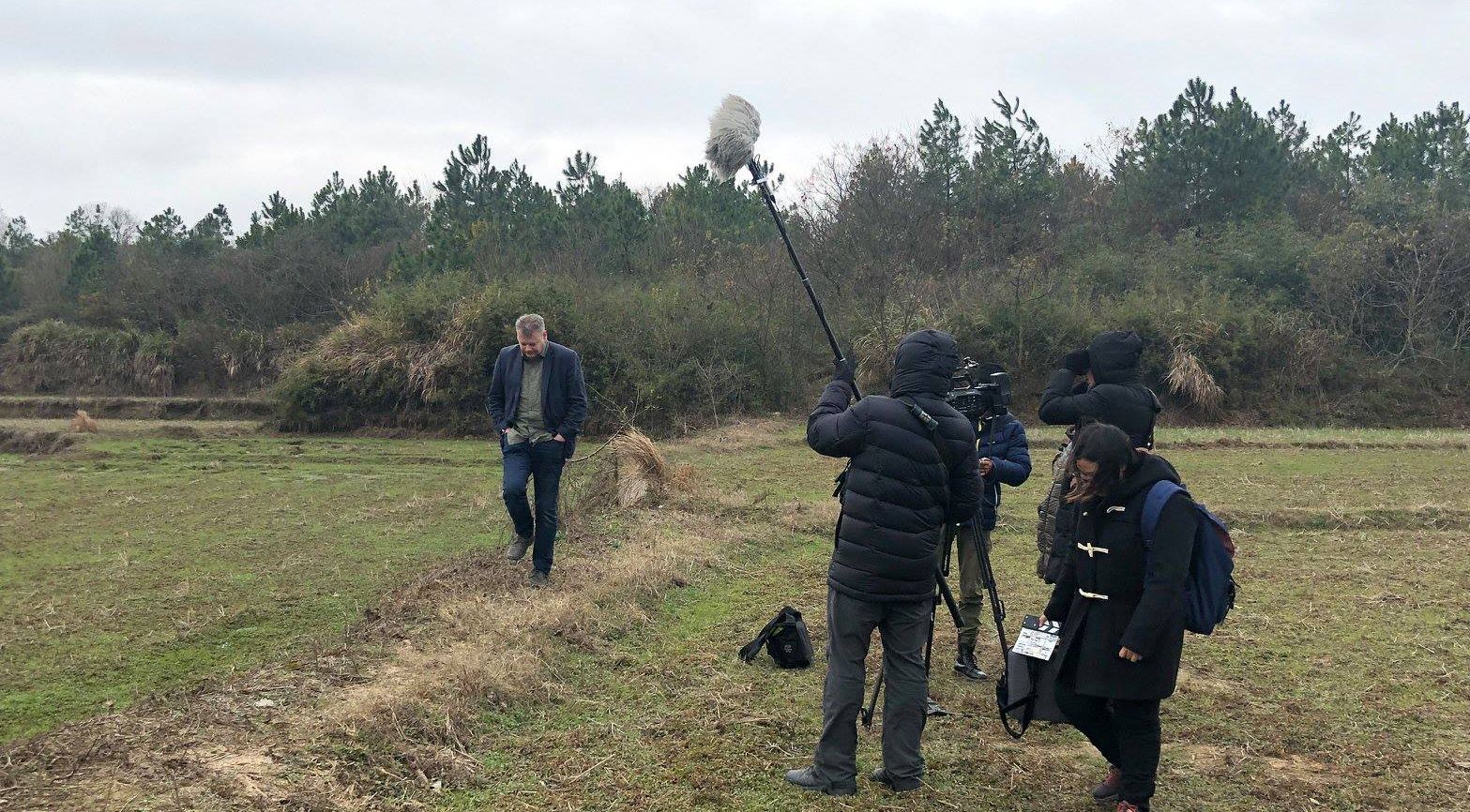
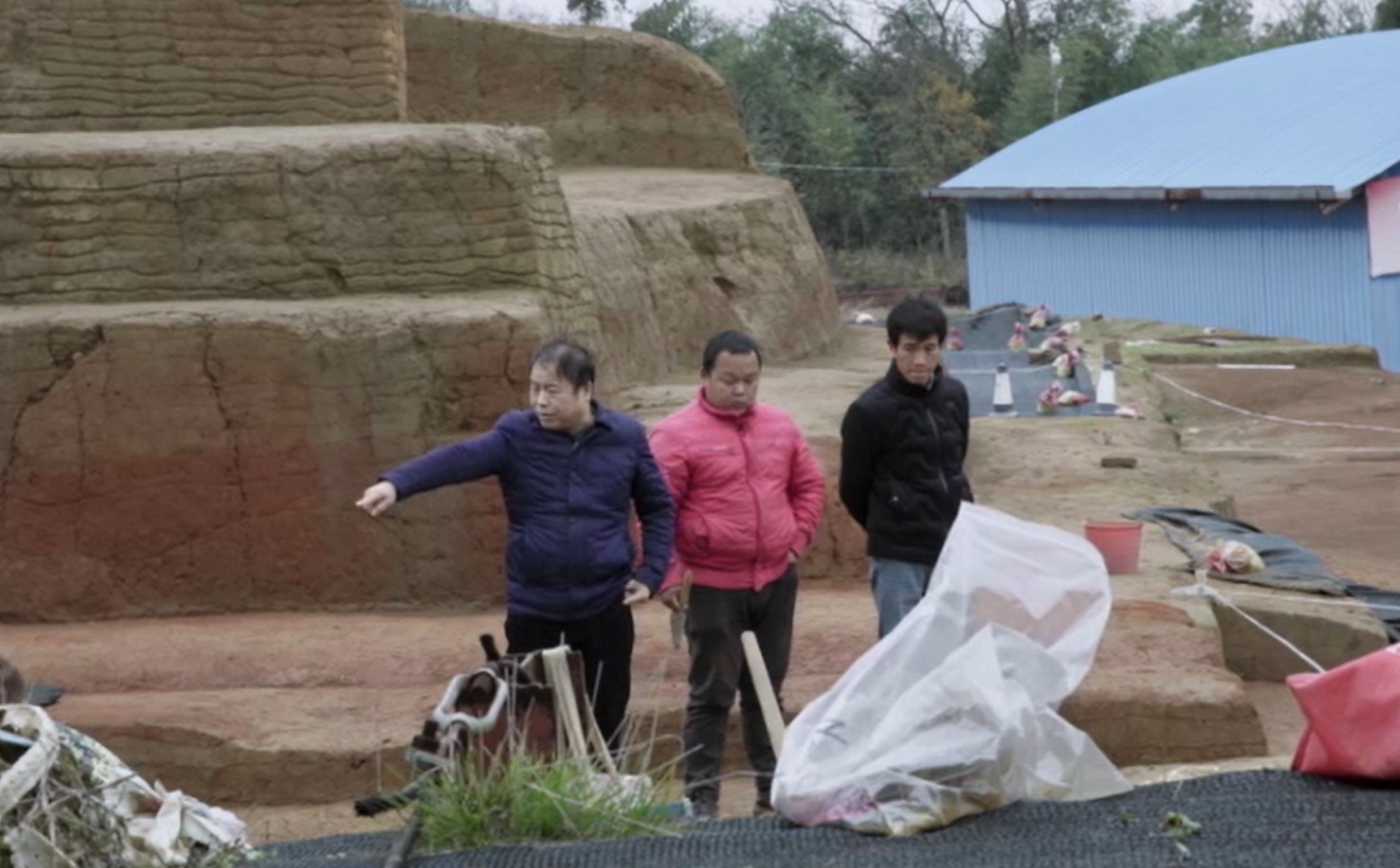
We head off to the rice paddies where the Marquis’s mansion used to be, now only vaguely recognisable by the rammed earth walls that now form a low, wooded hill around the perimeter. It is cold and windy, and I am supposed to sound enthusiastic about standing in a field.
The last event of the shoot is scheduled at the tomb itself, a hole in the ground topped by a garish bright blue Dutch barn.
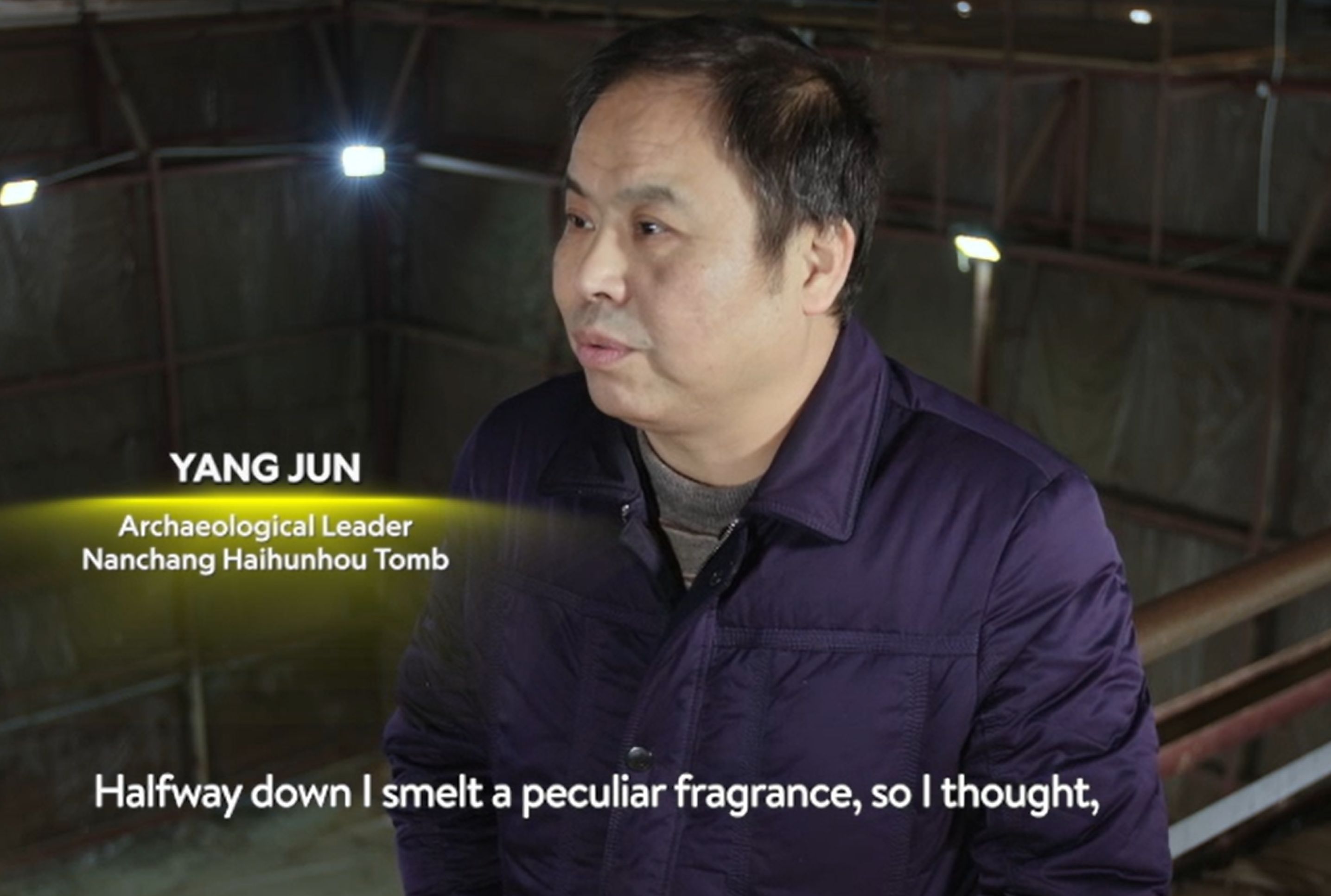
We can hear Yang Jun before we see him, because he is screaming at the technicians at the site of the tomb next to the Marquis’s. I don’t quite follow why he is so angry, but in the ten minutes before we arrive, he has idly ambled over to the new dig site and found them doing something that is apparently terrible. I don’t recognise a lot of the words he is yelling at them, except that something that should have been here is most demonstrably over there instead, and something that should be have been done one way is being done another way, and this has apparently ruined Christmas for someone. The scolding goes on for an embarrassingly long time, until the director herds the crew into a shed and tells them to stop watching. Clarissa the fixer begins to genuinely fret that Yang Jun will have lost his voice by the time we get to his interview.
But he trots down the hill towards us with a beaming smile.
“Did you get that on film?” he asks. “I thought it looked good.”
Er… no, says the director. We were giving you some privacy.
“All right,” he says. “I will go up there and shout at them again.” And before she can demur, he is running back up the hill, calling them a bunch of idiots and demanding to know if they’ve ever worked on an archaeological site before, because it doesn’t look like from where he’s standing, etc… Despite being friendly off-camera, I think he wants to cultivate an image as a tough taskmaster.
Only slightly hoarse, he assembles at the edge of the tomb to talk to me about the events of its discovery, which will inter-cut nicely with the same story heard from Qiu Zongren. You already know the story of the Marquis, so I won’t bore you with it again, except to quote Yang Jun’s explanation of why the tomb was so richly appointed. “Remember that this man started off as the satrap of a whole district in Shandong. Then he was the emperor. Then he was a marquis. And his father was the favourite son of the longest-ruling emperor of the Han dynasty, and one of the more storied beauties in Chinese history. So, yes, we have all those aspects of his life to consider in the grave.”
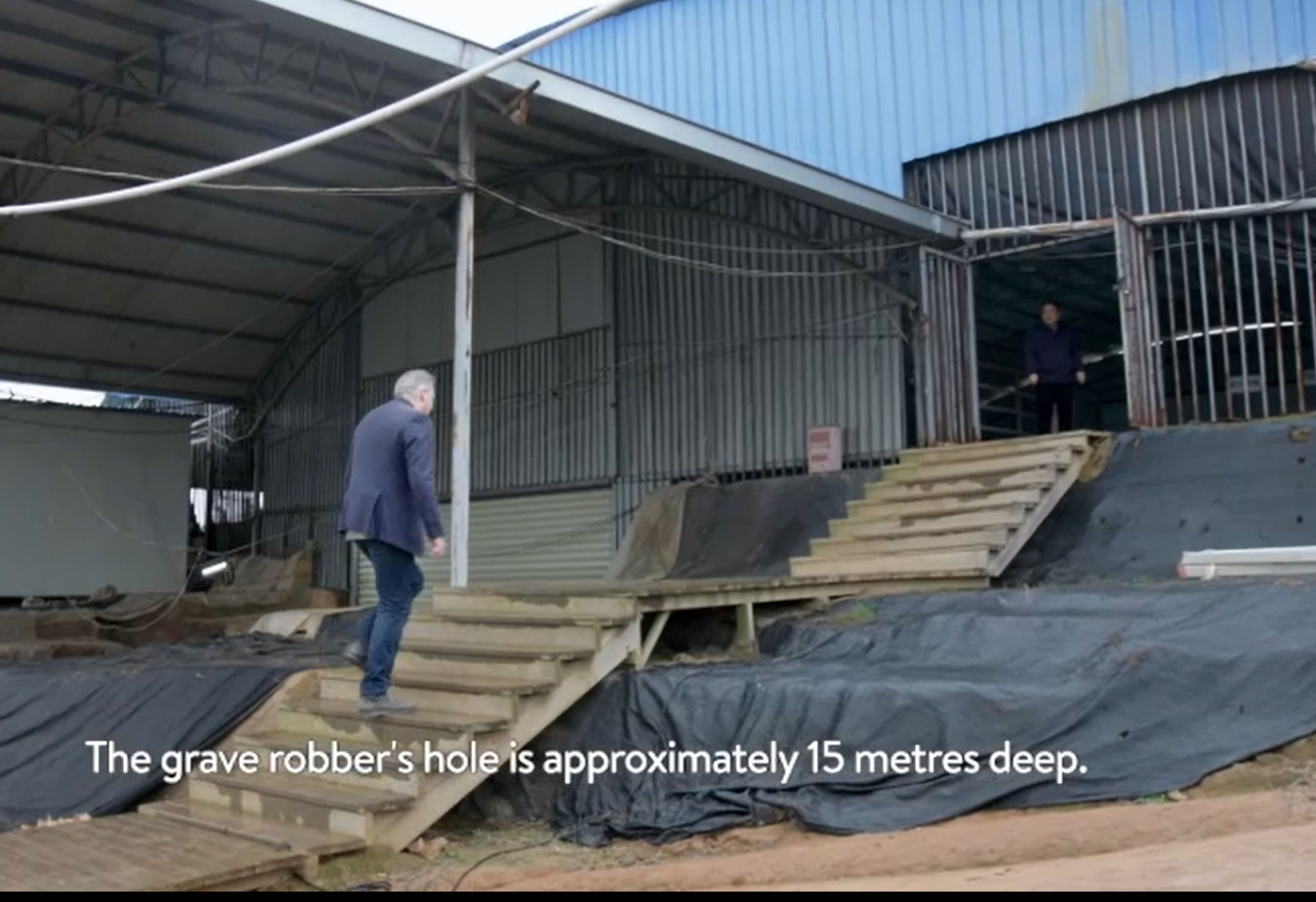
He then leads me into the grave itself, ten metres down on a perilous rammed-earth staircase, covered with slippery polythene. He points out the depression in the ground that marks the point where the grave-robbers had reached, and tells me of how he was lowered in the forbidding hole on a winch, down in the dark, to see what they had found.
“We were lucky,” he says. “Because people have tried to rob this tomb before. But about three hundred years after the death of the Marquis [i.e. around 300 AD] there was a massive earthquake in Jiangxi, and this whole area dropped down below the water table. It flattened the coffin and damaged some of the site, but it also left most of the tomb waterlogged. That put off robbers, and it also preserved the lacquerwork.”
The director and the crew come down to film us at ground zero, but Yang Jun reveals that he is only happy with us being shot from above. If the camera actually goes into the tomb space, it will notice how ratty it all is, and Yang Jun has already had a second eppy of the day after tripping over a pile of dog turds by the ramp. So we all have to head back up to the balcony, by which time it has started raining, drumming on the tin roof until we can barely be heard.
My last shot of the series is “meeting” Yang Jun, bounding up the wooden steps to shake his hand, and him leading me into the upper levels of the grave. As we move out of sight of the camera, I point into the gaping pit of the Marquis of Haihun’s tomb and say: “So, is this your house?”
He laughs, and the director calls cut.
Jonathan Clements is the author of A Brief History of China. These events featured in Route Awakening S05E04 (2019).
There is an edgy staff dynamic at the Nanchang Museum, which has three times the usual number of security guards because of all the gold in it. This makes them jumpy at the best of times, but one also suspects that they are already all too aware that when the new Marquis of Haihun museum opens in the hinterland [it is now open], they will be surplus to requirements. Or rather, they will be offered a chance to keep their jobs, but only if they are prepared to commute an hour each way to what is currently a slum in the countryside.
This helps explain why the curator is so arsey with Clarissa the fixer, initially refusing to cooperate, then only ringing her back with oleaginous solicitude after he gets a bollocking from his boss. But he is still obstructive, refusing to allow us in to film on Monday, when the museum is usually closed to the public. Everywhere else we have shot, the staff have happily let us film on Mondays, when a Chinese museum is blissfully free of people, give or take the occasional cleaners. Clarissa even offered to pay overtime for the security guards if they would come in, but no, the curator would hear nothing of it.
So we are obliged to fit in my pieces to camera around a huddle of bumbling old couples who have inexplicably turned up with their week’s shopping in rustling bags; breathless girls who giggle at the sight of a film crew and insist on repeatedly taking selfies in the camera’s line of sight, and the constant jabber, key-jangling and walkie-talkie interference of the security guards themselves, who seem blissfully unaware that the harder they watch us, the longer we will take.
I only have a few pieces to do today, but each of them has to be carefully tailored to deal with the available information. One is about a boiler uncovered from the tomb, seemingly an object of zero interest, but suggesting that the Han Chinese had alcohol distillation more than a thousand years before it supposedly arrived in China. The fact that a whole film crew has set up next to an unassuming metal drum soon brings throngs of tourists over, crowding to read the signage and trying to work out why we are filming this and not the gold ingots.
Another piece is about a goose-shaped lantern that contains an ingenious smoke absorption chamber. Here, I earn my money by refusing to call it ecologically friendly, as it is still burning carbon, just not filling the room with smoke.
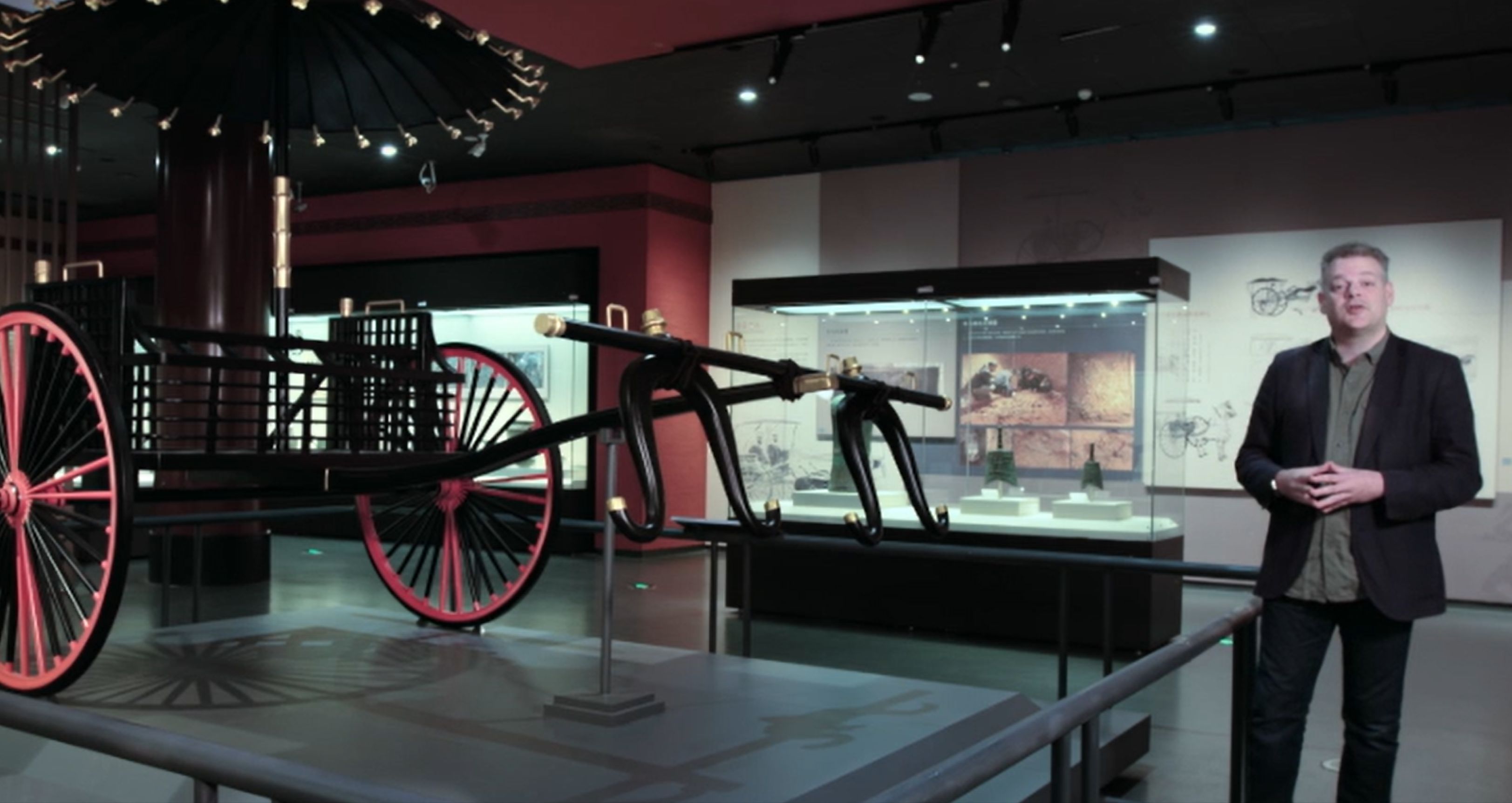
And in a scene that I, and I alone, regard as a hilarious Top Gear parody, I put on my best Clarkson impersonation and discuss the Marquis of Haihun’s pimped-out ride, the Well-Dressed Chariot, a “top-of-the-line sports utility vehicle with gold trimmings, a roaring four horse-power and a built-in drum to annoy the neighbours.” I have to think up this speech on the fly, rehearse it while the director is getting pick-ups elsewhere, and take the assstant producer to one side to photograph the signage for certain terms, so that our Chinese broadcast, when back-translated, matches what the museum says. I pace around the chariot, shuffling the words of my speech to avoid repetitions and redundancies, triple-checking facts and figures and terminology, shadowed by a glaring security guard, who plainly believes that I am just about to vault the fence and hotwire it, presumably driving it away with magic horses. After a while, I decide to see how many times I can walk around the same display before he stops following me. It takes thirty-three circuits.
Today’s interviewee, the archaeologist Yang Jun, hasn’t helped by kiting his arrival time from morning to lunchtime, to afternoon, such that a good two hours of my fee today was earned sitting on a bench reading a book. But when he turns up, he is chubby, happy man, ready to talk about how funny it is for him to revisit the Haihun artefacts, separated from him now by bulletproof glass, whereas when he first saw them he was digging them out of the ground with his bare hands.
You would think that the arrival of the man who, to all intents and purposes, found the Haihun tomb, would cause the museum staff to prick up their ears, lean in for some gossip, or otherwise chill out, but they regard him with the same sneering disdain that they have for everybody else.
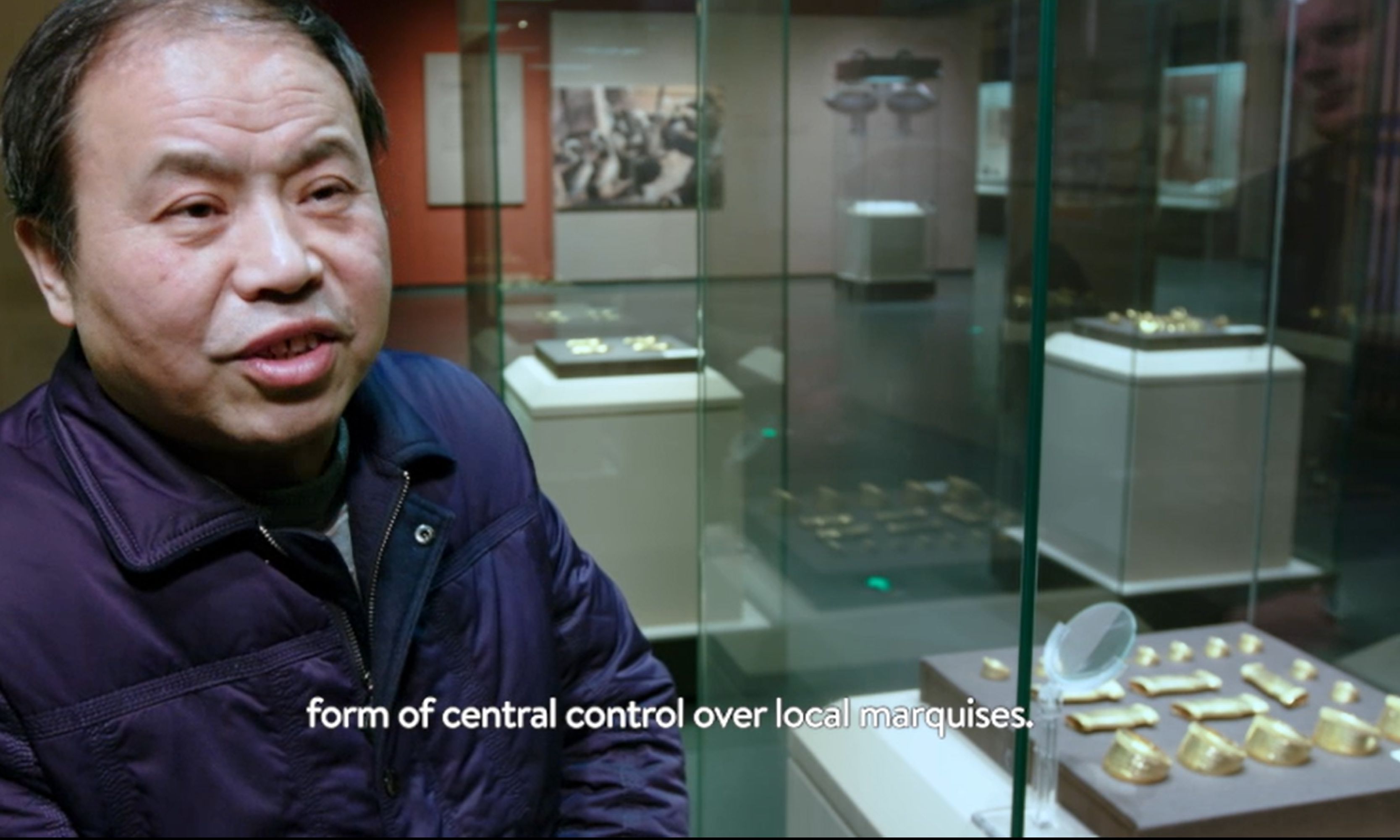
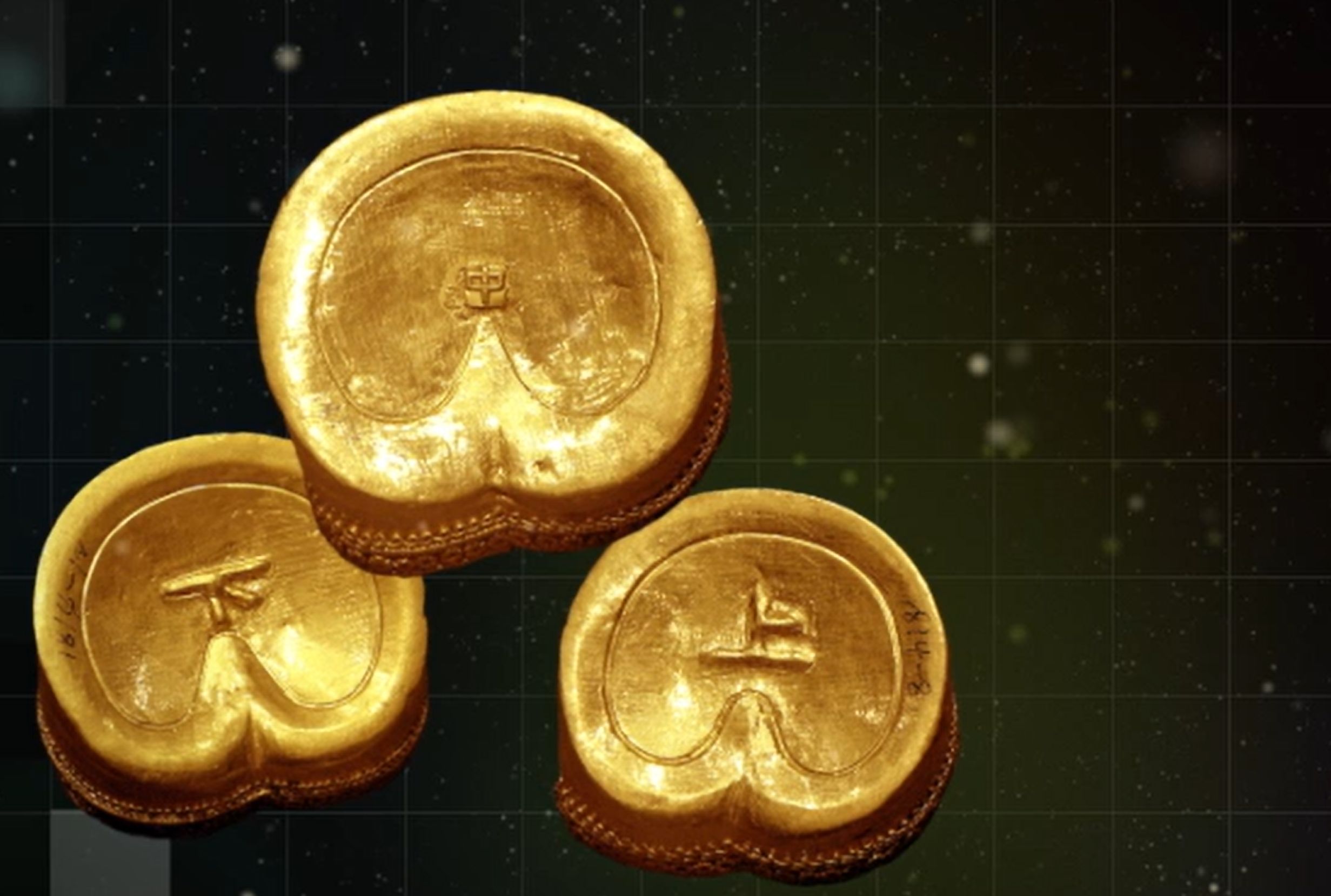
We’re here specifically to talk about the matijin (Horse Hoof Gold), a collection of odd-shaped gold ingots, some filled with Roman glass, that were buried with the Marquis of Haihun. “They weren’t money, as such,” explains Yang Jun, “because he couldn’t spend them. They were imperial gifts, really a reflection not of him, but of his dad, who was the favourite son of the Han Emperor Wudi, and Wudi’s most beloved consort, the Lady Li.” Lady Li was a famous beauty, of whom it was once said that “one look would make a city fall, a second would bring down a kingdom.”
“The thing is that we already know that there was a precipitous decline in the amount of gold in China during the Han dynasty, and I’ve got three theories for that. One is the rise in Buddhist statuary and accoutrements, that hoovered up all the gold around. Another is that trade with Rome was eating away at it.* But the most obvious explanation is that funereal customs changed to the extent that people were buried with their wealth, which the Marquis of Haihun’s grave seems to bear out.”
(*I find this one hard to believe, as the ‘trade with Rome’ was really all about silk going west, and the flow of silver out of Europe into Central Asia. As regular readers of this parish know, there were indeed commodities travelling from the Mediterranean to China, but it’s hard to believe that the Chinese were paying anyone for them in gold).
Although literary finds rarely make for good television, I also bullishly insist on quizzing him about the books found in the tomb. It’s one of those rare moments when the director is sure to dump the footage, but I want to know. Is it true that the tomb includes a copy of the Confucian Analects with the fabled two bonus chapters only found in the state of Qi, and believed lost for the last 1800 years?
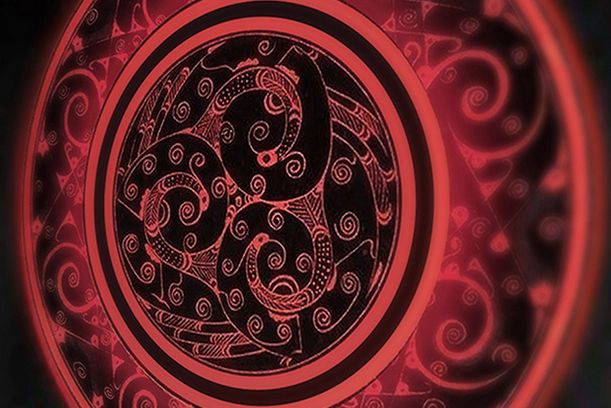
“Oh yes,” says Yang Jun, eyeing me curiously as if I am a hamster that has suddenly started discussing Brecht. “So we’ve got the Qi Analects, which has two ‘new’ chapters of Confucius: they’re called Wen Wang (Asking the King) and Zhidao (The Knowledge). But we’ve also got some classics of the Yellow Emperor that people haven’t read before. But everything you see around you is only a part of the find. The gold might be shiny and impressive, but it’s also relatively easy to get out of the ground and put on display. I think the real treasures will take years to become manifest – the previously unseen books, for example, or all the exquisite lacquerware.”
Ah, there it is. The lacquerware, which when this episode airs will be the thing I go looking for more information on. We’ve finally shot the early scene that will send me off to other places, even though chronologically we have already shot those parts. And tomorrow, in fact, will be our final day of shooting, six weeks and 1,500 miles after we started.
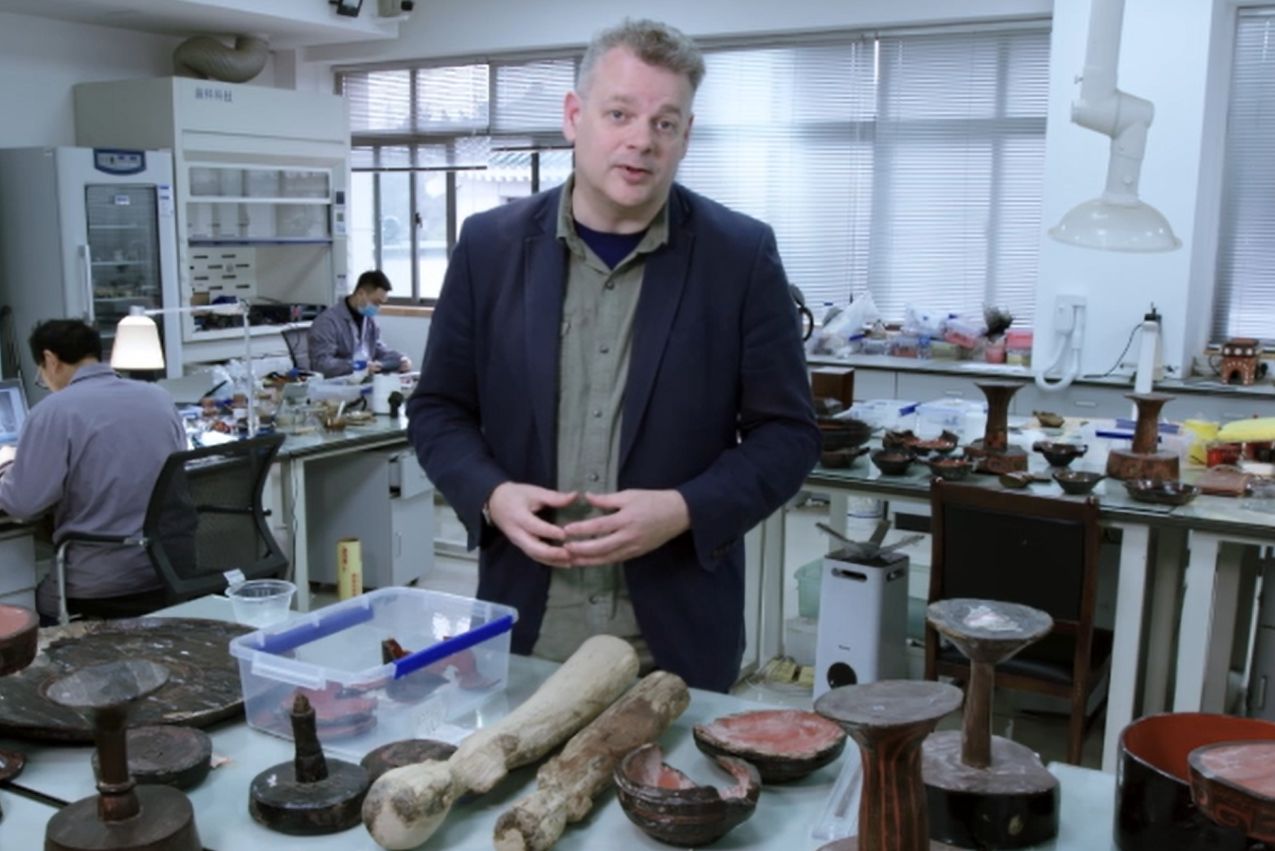
The Chinese are building a posh, modernist museum near the grave site of the Marquis of Haihun. The nearby village has been sinisterly evacuated, the houses already fallen into ruin. The archaeological site is closed to the public, and the museum is just a hole in the ground, but we are here to visit the preservation office, where wood and lacquer items are prepared for restoration.
It’s the closest thing I have ever seen to a prison. A police station stands incongruously in the field outside. The facility itself is a squat white former factory, surrounded by a wall, razor wire and an electric fence. It boasts an inner and outer gate, as well as a guard dog. Inside there are over three hundred motion sensors that beep enthusiastically whenever you try to go out for a wee, as well as uncounted security cameras and a separate echelon of security guards.
“It’s about the gold,” says Xia Huaqing, the head restorer. “Well, sort of. The grave site is famous for all the gold that was found there, so naturally anyone with a criminal intent is going to assume that this place is piled with it. But all the gold’s in the museum.”
Instead. Mr Xia’s facility patiently hosts shelf after shelf, in room after room of lacquer objects. Endless rows of tupperware containers hold goblets, tables and bowls, suspended in a chemical solution that is apparently so toxic that we cannot be in the room with it for more than thirty minutes, even wearing protective gear. Another larger chamber holds the wooden outer slats of Liu He’s sarcophagus, which need to soak for four or five years before they can be allowed to dry… only then will they be ready for restoration.
The longest room, packed with a couple of hundred sealed Tupperware trays that each seem to contain a dozen decayed chopsticks, contains the bamboo slats of the books unearthed from Liu He’s tomb, including the Qi Analects. We are there on the day that one of the archaeologists who uncovered the tomb turns up with two super-watt lamps and a digital camera. Wearing a face mask and googles, his trouser legs wrapped in cling-film against accidental splashes, he straddles each box, trying to get a super high-definition photograph so that his people can start to translate it. I suggest that maybe these two missing chapters from the Analects are the ones that have all the jokes in, but nobody is interested.
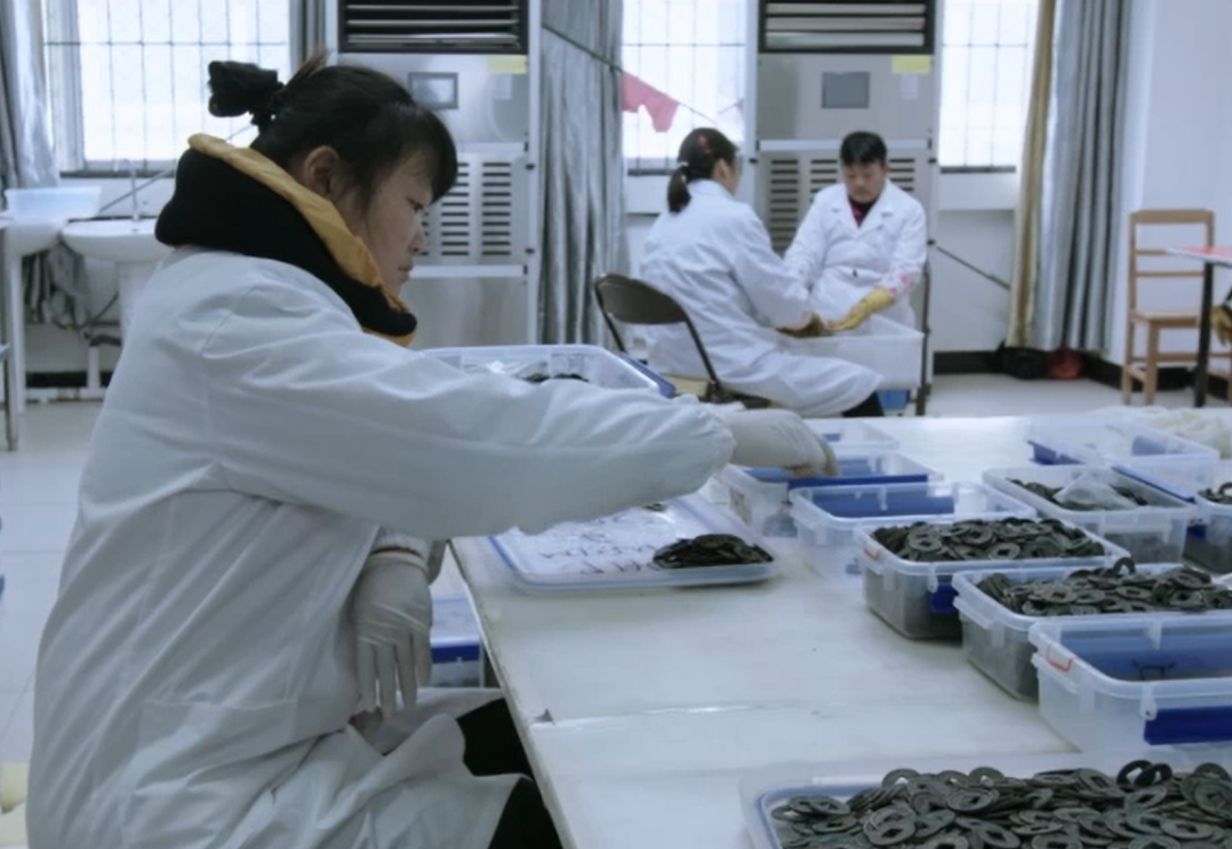
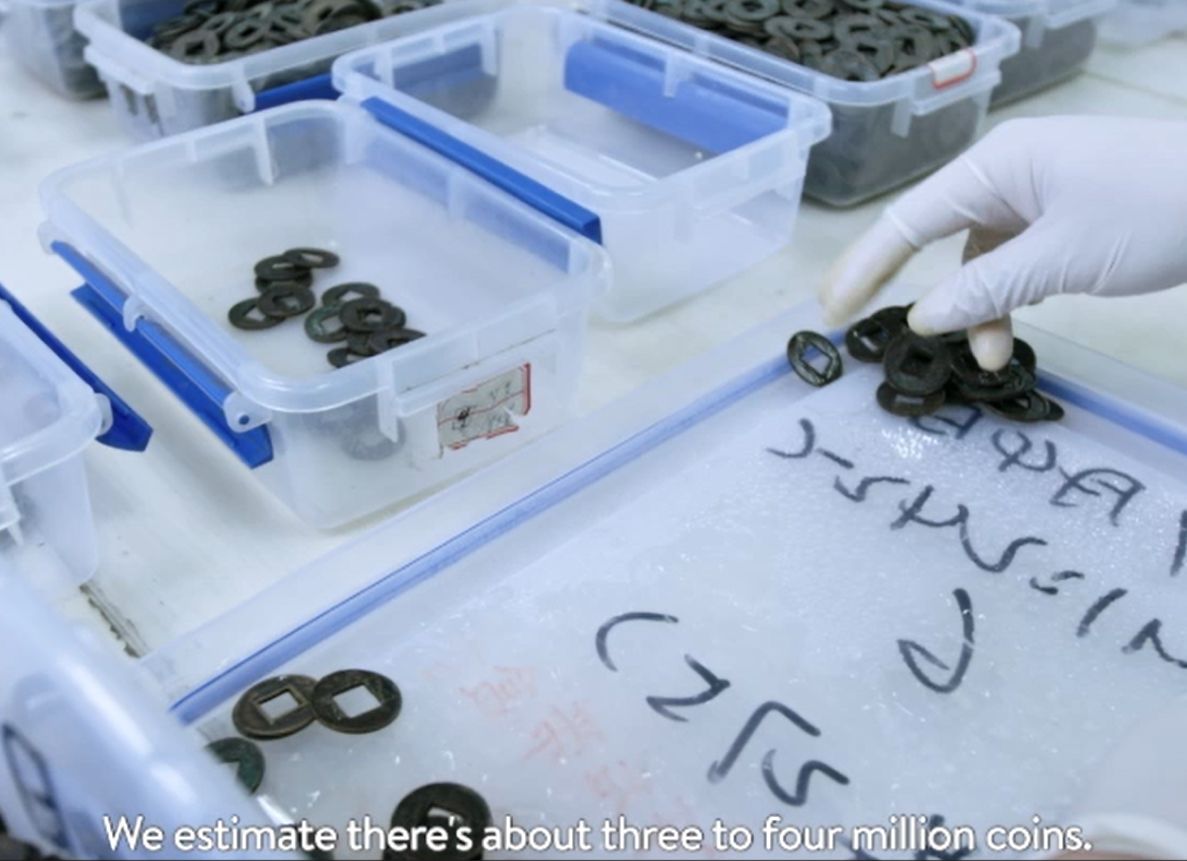
And there are the coins, piles of bronze coins, normally the wuzhuvariety, named for weighing the same as 500 grains of millet. Entirely unassuming, everyday bronze Chinese coins that you see all over the place, except the Marquis of Haihun’s tomb contained at least two million of them. Two stern-faced women sit in little aprons, wearing rubber gloves, grabbing a couple of wuzhu coins from a bucket and giving them a desultory scrape with a hard-bristled brush.
“I see you’ve got a pair of scrubbers on the job,” I say to Mr Xia.
“Oh yes,” he says, “they’re at it all day, every day. In fact, this place is so remote, and the security is so tight, that we usually just come here for a whole week, and just live inside the facility. That’s why we’ve got the little allotment.” Little vegetable patches are all over the ground, and in the most unappetising sight apart from the guard dog’s loose bowels, slices of daikon radish are stretched out all over the basketball court and the bins to dry.
It’s Christmas Eve, and so the crew are squired out to the Shangrila Hotel for a Cantonese meal, which includes a roast piglet, its eyes gouged out and replaced by Satanic glowing lamps. Christmas Day, if my memory serves me correctly, begins in a drunken haze at a karaoke bar, with the director and I murdering Ice Ice Baby while the rest of the crew look on aghast.
Jonathan Clements is the author of A Brief History of China. These events featured in Route Awakening S05E04 (2019), although mercifully not the karaoke.
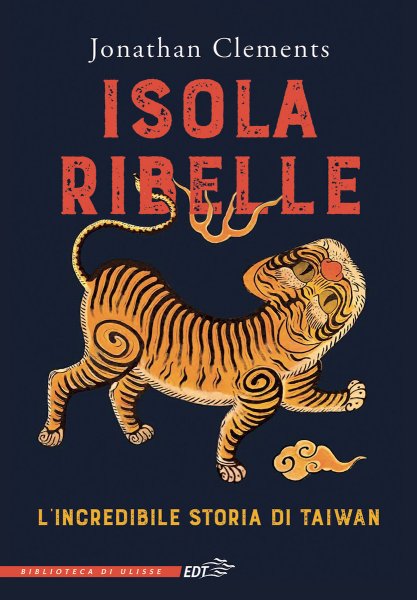
“Among the new politicians voted into office, a stand-out was Freddy Lim Tshiong-tso, a man who might reasonably be described as the Nationalists’ worst nightmare. Born in 1976, and hence growing up with no memory of the martial law era, Lim ceased to follow the KMT party line during his school days, instead becoming an enthusiastic supporter of Taiwanese independence. He initially entered the public eye as the convenor of pro-independence rock concerts, and would eventually serve as the head of Taiwan’s branch of Amnesty International, and a key figure in the Sunflower movement.
“Throughout the late 1990s and the early years of the 21st century, he was also the lead singer of the death-metal band Chthonic, releasing a series of politically charged works, including a concept album about the 1930 Musha Incident (2005, Seediq Bale), allusions to the February 1947 unrest as an earthly manifestation of Hell (2009, Mirror of Retribution), and an album dedicated to the conflicted loyalties of indigenous soldiers serving in the WWII Japanese military (2011, Takasago Army).
“Donning a suit instead of his habitual leathers and tribal face-paint, Lim became one of the founders of the New Power Party, and proved to be enough of a diplomat to shoo away other DPP-leaning candidates in a western Taipei suburban district, where he defeated the KMT incumbent. He then aligned his New Power Party, its emblem in stark Sunflower-yellow, broadly within the ‘Green’ policies of the victorious DPP.”
– excerpted from Rebel Island, by Jonathan Clements.
And now he is Taiwan’s new envoy to the world’s most metal country, Finland.
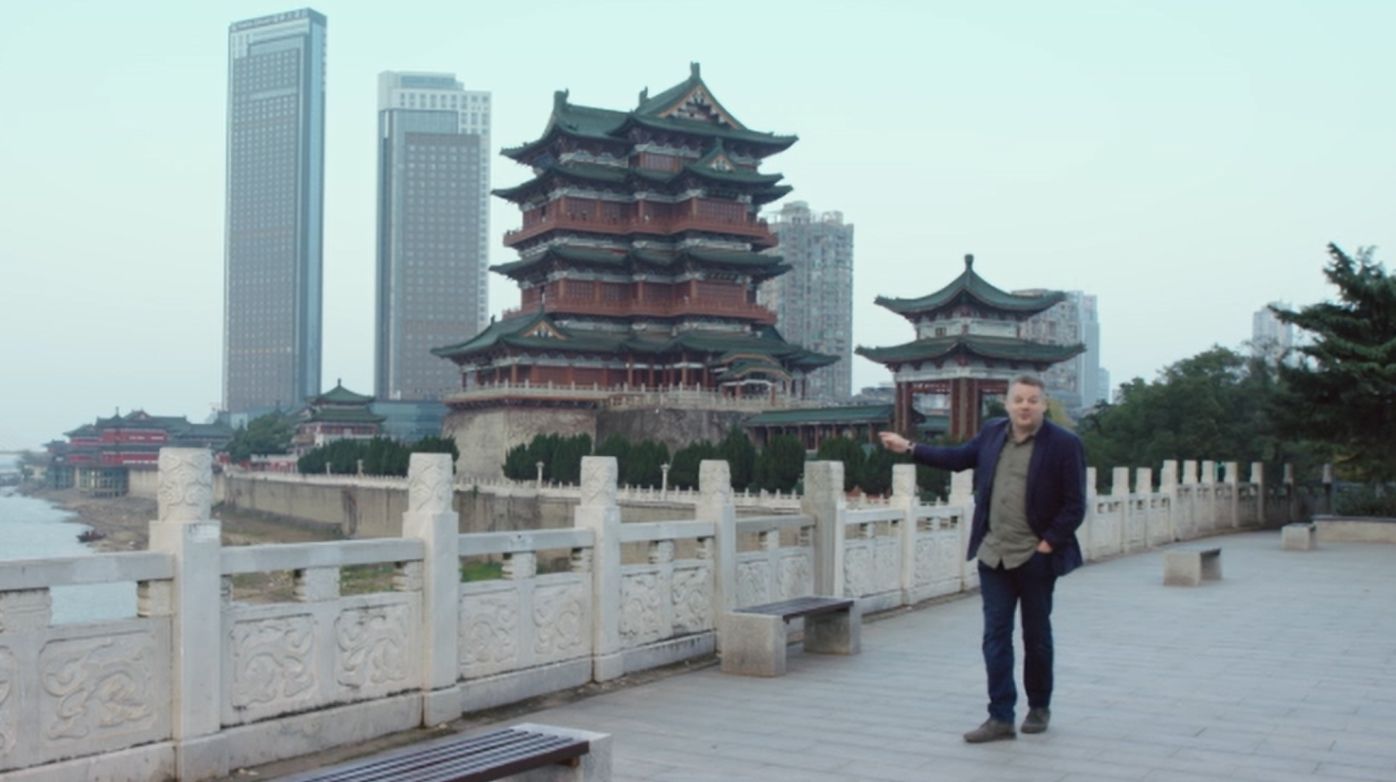
We’re in Nanchang on the trail of Liu He, the grandson of the great Han emperor Wudi. Born in 92BC, when the Han empire still farmed out control of its outlying regions to subordinate kinglets, he inherited his father’s Shandong satrapy when he was still a child. Famously uncouth and uncooperative, he soon turned into a troubled, ridiculously wealthy youth, and was presumably as surprised as the next man when the sudden death of his uncle led to him being crowned emperor at the age of 19.
His reign lasted an impressively short 27 days, during which time he notched up over a thousand infractions, including refusing to weep on command at the sight of the capital, buying a chicken on the way to his uncle’s funeral, and ordering hookers at a roadside tavern. His entourage got the blame for at least some of this, but Liu He seems to have blundered, quite obliviously, into the middle of a power game way beyond him. His dead uncle had only been a year older than him, a puppet for his “chief minister”, the Machiavellian Huo Guang, who had been running things behind the scenes for over a decade; Within weeks of appointing his new boy-emperor, Huo Guang realised he was onto a loser, and asked the “Empress Dowager”, his own fifteen-year-old grand-daughter, to issue a decree that Liu He was unfit for the throne. Armed ministers threatened to stab anyone at the council meeting who disagreed, and Liu He was packed back off to the provinces, a wealthy but powerless teenager.
There it should have ended, although a few years later he was ordered to move to the Yangtze region, modern Nanchang, where he was given the new title of Marquis of Haihun. He ran things there for a couple of years, and was implicated in a new scandal when he admitted to a flunky that he really could have handled things better at court by having Huo Guang beheaded for treason before anything kicked off. For saying so, he was docked 75% of his domain, and reputedly spent a lot of time scowling towards the setting sun, calling everybody back in the capital a bunch of bastards.
When he died, he was still only 33. And that would have been the end of it, until 2011, when grave robbers were caught trying to break into a tomb in Nanchang. Archaeologists took over, eventually announcing that the tomb in question was that of the Marquis of Haihun, that it has been miraculously untouched, and that it contained all sorts of fun stuff, including a copy of Confucius’Analects with two chapters unseen anywhere else.
But there’s something fishy about the Marquis of Haihun story. As I’m sure you have already worked out, he was a pawn in a power-game that had been going on for longer than he had been alive, expected to be a malleable figurehead while the Huo family got on with really running things. But if he was such a playboy and a wastrel, what was he doing reading Confucius? Was it just something he kept lying around to impress the builders, or was he a much more thoughtful person?
At least the Marquis of Haihun outlived his persecutor, Huo Guang. Huo predeceased him by ten years, and his intrigues soon unravelled. He was alleged to have been banging his slave master, a man who repaid the favour by banging Huo’s widow, a woman who was soon accused of having murdered the former empress in order to find a husband for her own daughter. The entire Huo clan was implicated in this scandal, and they were all dead within a couple of years. I’m just saying, why would I watch I’m a Celebrity… when this is going on? And more to the point, if your relatives and in-laws are murdering each other and shagging the staff, what’s the deal with exiling some kid just because he bought a chicken?
It’s taking forever to get permission to film in the museum, but there are all sorts of revelations awaiting, I hope.
Jonathan Clements is the author of A Brief History of China. These events featured in Route Awakening S05E04 (2019).






 The Official Schoolgirl Milky Crisis Blog