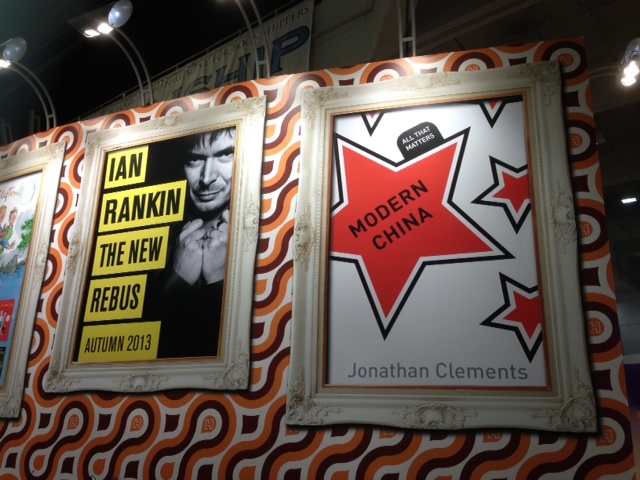
Out now in paperback and on the Kindle, a new introduction to modern Chinese history, from 1949 to today’s headlines.
Jonathan Clements charts the rise of China since the proclamation of the People’s Republic in 1949. Presenting China as the Chinese themselves see it, he explains the key issues of national reconstruction; the Cold War, the Cultural Revolution, and the dizzying spectacle of China’s economic reform. Clements offers a Chinese perspective on such events as the Handover of Hong Kong, and chronicles the historical events that continue to resonate today in Chinese politics, economics, culture and quality of life.
In the year 4341, invaders ransacked the Celestial Empire and placed a child on the Dragon Throne. The last remnants of the Dynasty of Brightness swore to fight them to the death. Their allies were alien creatures with the noses of eagles and the eyes of cats, and giant black-skinned devils from beyond the sea. Their soldiers were former smugglers and pirates, led by the Master of the Seas. His son would burn his scholar’s robes and cast aside his own name to become the embodiment of loyalty. He also became a god. Twice.
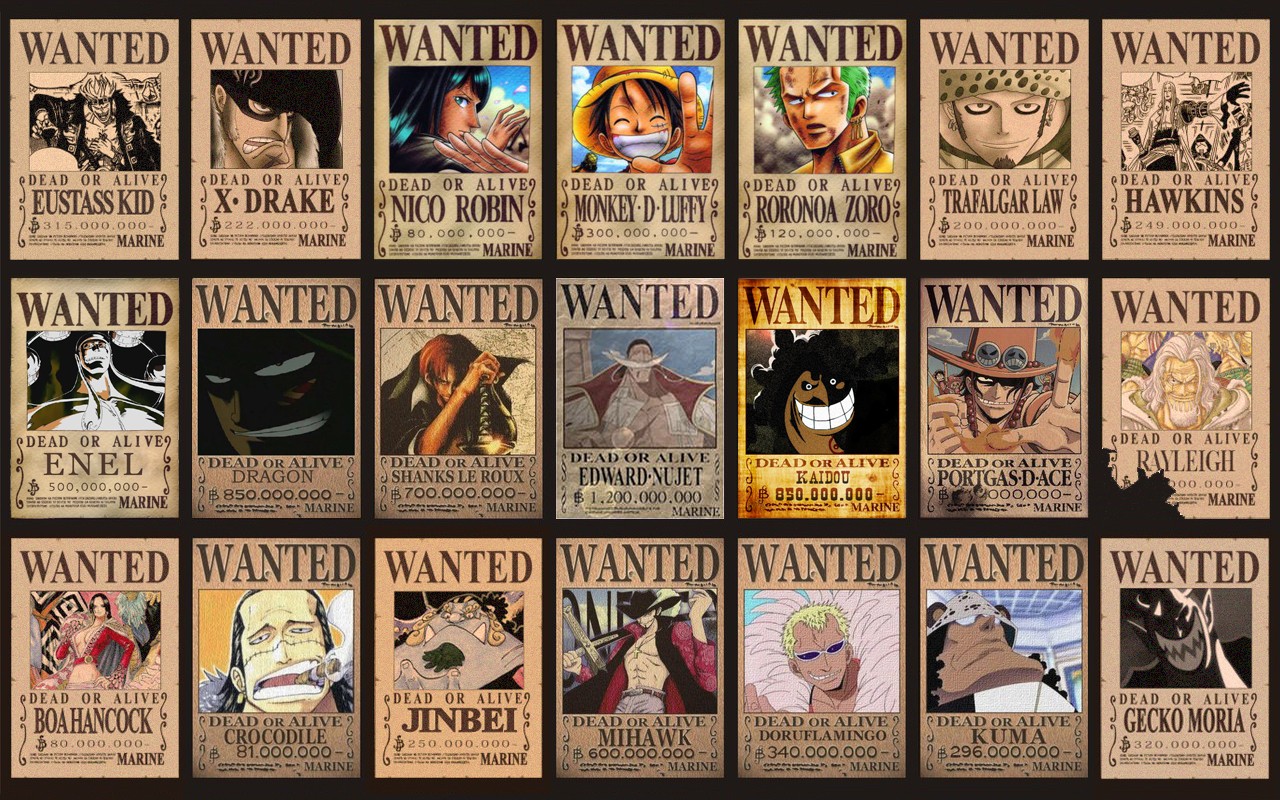
The news that Manga Entertainment have licensed One Piece for the UK brings one of the last unreleased anime greats to these shores. Its absence has been noticeable for the last decade – One Piece is often the tentpole and keystone of foreign anime fandoms. It’s also the real money-spinner, selling in its millions. Although it’s sure not to go quite as wide in Britain, it will certainly bring in some new fans.
I’m at the end of my four-month exile in China, where Japanese animation is largely absent from the mainstream. Effectively banned from broadcast or sales since 2006, the sole showings in legal Chinese stores are the Studio Ghibli catalogue, which sneaks in via Disney. But pirate shops are loaded with shelves of Japanese material, usually spun off legal releases in Hong Kong or Taiwan. And I keep jumping in surprise on the Beijing metro when adverts leap out of the dark to sell me One Piece… the games.
On the streets of Xi’an, the lower-rent hawkers have taken images from One Piece and Dragon Ball Z, mounted them on plywood and cut them into jigsaws. Manga, however, are largely invisible, since much of modern Chinese teenagers’ entertainment is sourced illegally and digitally – I would need to get into their bedrooms to see if they are reading scanlations, and the police won’t let me. But the widespread visibility of those titles in particular suggests a cultural affinity – Dragon Ball had its distant origins as a retelling of the Chinese legend of the Monkey King, and so, too, did One Piece. In other words, even though they are foreign, they don’t feel that way to the Chinese.
The catch-all Chinese title for this is dongman, literally ‘animation and comics’, although suggestively Japanese animation and comics. Dongman shops are all over China, but many concentrate not on anime and manga themselves, but on gaming spin-offs. It’s the games that seem to lead the way here, encouraging Chinese kids to seek out the originals. But when they find them, there is no way of paying for them legally. And so, the great tale of anime pirates gets pirated.
Science fiction is not as easy to find in China as one might think. I never saw a massive “SCI-FI” section in Chinese bookshops, although there were often entire bays dedicated to internet novels and how-to-draw manga books; SF is more often than not still lumped in with children’s fiction. It’s a long story.
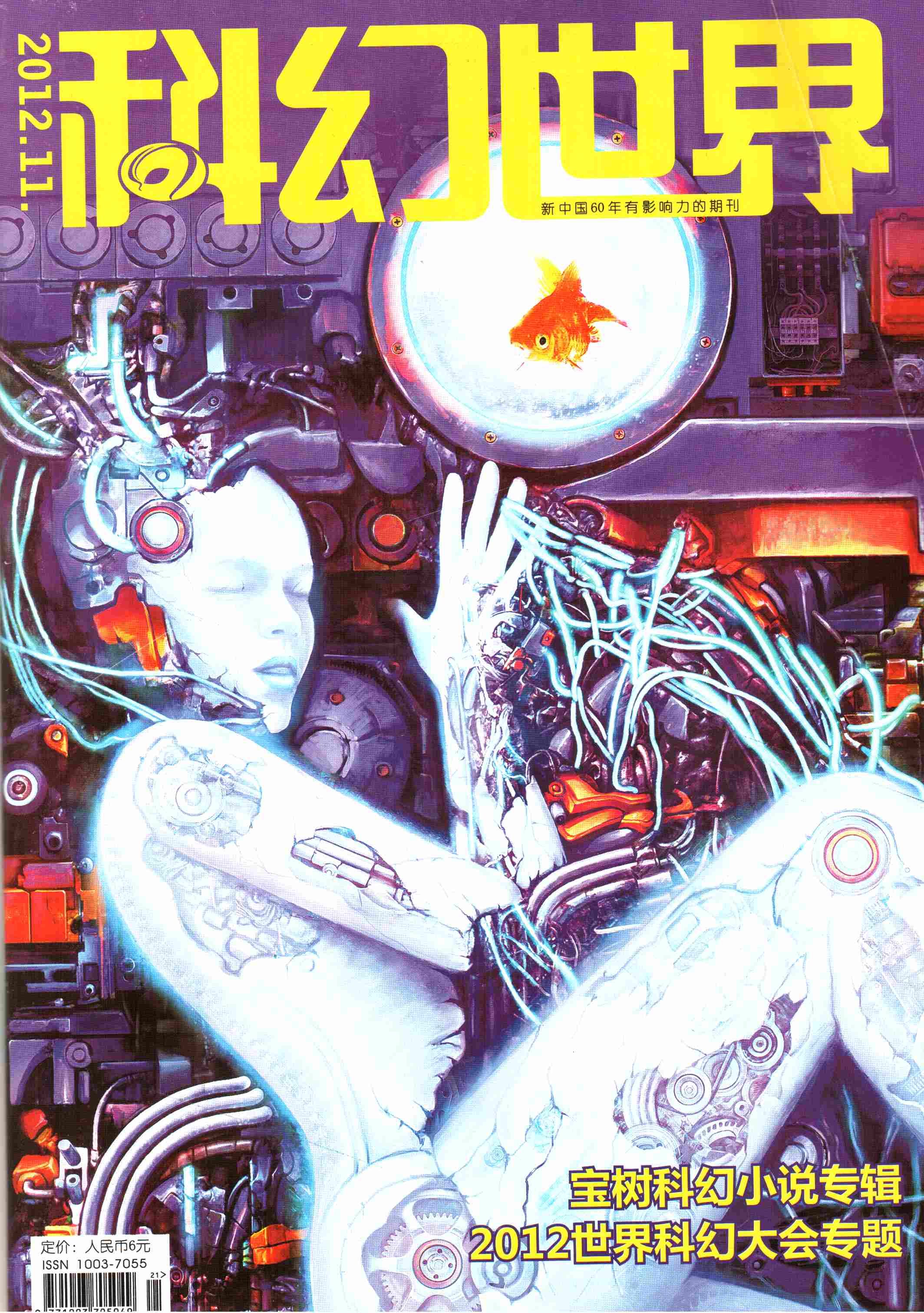
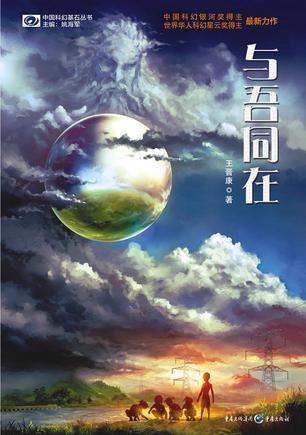
I pestered numerous newsstand vendors in four or five Chinese cities for the latest issue of Kehuan Shijie (“SF World”, pictured), but only struck gold outside the gates of the Beijing University of Astronautics and Aeronautics, where the passing traffic might be reasonably expected to be interested in all that Buck Rogers stuff. Otherwise, science fiction in China, with a readership in the tens of thousands, is still something of a minority interest in the People’s Republic.
Which makes it all the more ironic that I should get back to my office and find in my in-tray two publications that massively increase the footprint of Chinese science fiction abroad. A double-issue of Renditions, published by the Chinese University of Hong Kong, is packed with translations of Chinese SF, including stories by Liu Cixin, Han Song, La La, Zhao Haihong, Chi Hui and Xia Jia. There’s also some intriguing proto-sf such as a piece from 1912 by Xu Zhuodai, as well as an incredible exercise in academic recursion: a translation into English of Lu Xun’s translation into Chinese of a Japanese translation of a story by Anna Louise Strong, showing to what degree Chinese whispers might be reasonably said to have set in.
Fei Dao, another author in Renditions, also shows up in the latest issue of Science Fiction Studies under his real name of Jia Liyuan, with a different hat on as a doctoral candidate in Chinese literature. The new SFS is a China special issue, and includes articles about utopias in Chinese fiction, Chinese SF movies, alien contact and the role played by translation in the spread of the medium, as well as non-fiction essays by Liu Cixin, Han Song and Wu Yan. In my role as a contributing editor to the Encyclopedia of Science Fiction, I was asked to be a peer reviewer on several of the papers in this issue, and I was very impressed with the level of achievement. It’s certainly very salutary, albeit rather odd, to see the amount of work on Chinese SF in English increasingly so exponentially, almost overnight.
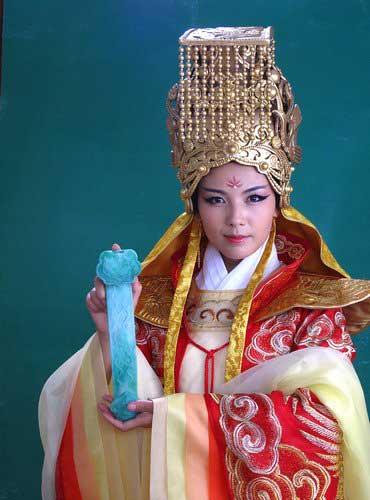
One of the odd obsessions that has occupied me for the last decade is Mazu, the Chinese marine goddess, patron deity of all those in peril on the sea. She began life as a real person, Lin Moniang, a quiet, contemplative Song dynasty girl who used to legendarily stand on Fujian clifftops in thunderstorms, wearing a bright red dress to serve as a human lighthouse to her father and brothers in their fishing boats. Lin Moniang, so the story goes, walked into the sea, sacrificing herself so that her father’s ship could return safely, becoming in the process a personification of the sea itself. Deified by later emperors, her red-clad image can be found everywhere Chinese sailors drop anchor. There are statues to Mazu in China and Malaysia, and two temples to her in San Francisco’s Chinatown. Her most famous devotee was Coxinga, the pirate king of Taiwan, whose life is bracketed by portents of her favour and blessing, and whose island enclave was conquered a generation later by a one-eyed admiral who claimed to see Mazu with his blind eye, standing waist deep in the waters of the Taiwan Strait, and fighting for the Manchus.
In 2010, I stood in the shadow of a massive statue of Mazu in Tainan, as a lone monk chanted an endless sutra, and a replica of Coxinga’s ship was launched from the dockside. In 2009, I climbed a hill in Nagasaki to the temple maintained by Coxinga’s Japanese relatives, where a squat statue of Mazu glowered in the central hall. I keep meaning to write something, when I get the chance, about the Mazu cartoon film, as yet unavailable in English. But I’ve been prompted to mention her today because of the series on Chinese television at the moment, which dives headfirst into Mazu mythology with flying demons, heated debates among the immortals, and sea devils rising from the Taiwan Strait. Oh, to be a commissioning editor at the BBC with a mind to recreate the Monkey madness of years gone by… because Mazu is the series that might just do it.
“There is a tension between the obstructions of getting things done, and the enormous decency and kindness and genuine humor of the people.” – George Bush, 1975
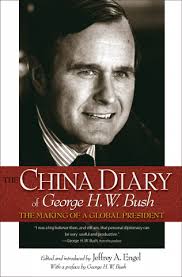
I read a lot of travel books about China, ranging from the sublime to the infuriating, from the clueless observations of disinterested tourists, to the considered memoirs of people who live and work in China for years on end. There’s also a wide range in intent, from simply telling one’s relatives about what one’s been up to, to the first book up for review today, which chronicles the “making of an American president” by publishing his forgotten account of a period spent as Our Man in Beijing.
George Bush Senior’s China Diary is fascinating, as the Party cadre flees America in the wake of Watergate, and volunteers, much to his superiors’ bafflement, for a posting to China, long before the US and China had normalised relations. Bush is hence an ambassador in all but name in the dying days of Chairman Mao, biking around Beijing and attending endless rounds of parties with other diplomats. Barbara Bush, meanwhile, risks causing an international incident at the hair-dressers, where she strikes up a friendly conversation with a woman who turns out to be the Cuban ambassador’s wife.
As a result of his non-official status, Bush represents a global superpower but comes lower down the pecking order than the ambassador of Gabon, and hence must exercise extreme diligence not to be caught out in the cold at photo calls and banquets. What struck me most about his memoirs was how many of the names of his fellow diplomats were familiar to me. Party politics will get you on the diplomatic track, but so will knowing a hell of a lot about the country in question, so I suppose I shouldn’t be surprised to see people like Jan Vixseboxe (Netherlands ambassador) and Ann Paludan (wife to the Danish ambassador), whose work I know better as “scholars”, popping in for tea and caviar.
Bush narrated his diary into a Dictaphone that was transcribed many years later. Jeffrey Engel edits and annotates the messy original by correcting solecisms and adding copious footnotes, sometimes critical of the author himself. Published in 2008, the China Diary is oddly obscure – I only stumbled across it by accident, and was rather surprised that I had never bumped into it before – it’s not on the shelves at the London School of Oriental and African Studies, for example. And it’s not available on the Kindle (time travel footnote: now it is), a device which has hoovered up £400 of my book spending since I succumbed to digital devilry in September.
One of the joys of Kindle access is that it is possible to charge what the market will bear. I enjoyed and greatly appreciated the unique sections of Alan Paul’s Big in China that were about his expat life as a corporate househusband, but rapidly lost interest when he drifted into (for me) tedious reminiscences about his band. This isn’t any fault of the author; it’s plainly something that interests him greatly. Unfortunately, it interests him so much that he stops talking about China in order to talk about guitar strings and music clubs, about which this reader does not give a toss. Don’t get me wrong, Big in China was an enjoyable book, but I would have enjoyed it a lot more if it had cost me a third as much. I might have been similarly put off by Leanna Adams’s Pretty Woman Spitting, but in pragmatically charging me a mere 77p to read her China diary, the author ensured that I finished it with a smile on my face, feeling that my money had been well spent.
Despite conceding that she knows very little about China, and peppering her book with questionable statistics and outright apocrypha, Adams has an eye for detail and character that makes her writing entertaining and worthwhile. She also constructs a proper narrative for herself, turning what could have easily been a series of random diary entries into a character arc of growth, love, loss and learning. Pretty Woman Spitting is a well-written and carefully balanced account of an American woman in China – the title itself is a fair encapsulation of Adams’s innate ability to find drama and poetry in the most mundane of situations.
Sometimes it seems that everyone and his dog has a China memoir about the time they spent trying to pronounce the words for “I NO WANT CHICKEN HEAD” to uncomprehending waiters, but coming back such books after several years evaluating anime industry testimonials, I have come to regard them in a new and indulgent light. Historical researchers will sympathise, perhaps, with having to hunt around in obscure library collections for forgotten, hand-written travel diaries from the distant past, many of which only reach a larger public when a distant descendant or relative edits them for a PhD. The internet and e-Books makes such pieces immediately and widely available in real time, chronicling hundreds of snapshots of life in a fast-changing country. I find it fascinating, as a historian, that I can read such testimonials as reportage, and eavesdrop on the contemporary China experience of total strangers. Rated in such terms, Chris McElwain’s Dispatches from Crazytown is similarly great value: informative about life in Xi’an, and laugh-out-loud funny, at a cost of approximately 15p per chuckle. McElwain, like Adams, arrives in China as a teacher, but approaches his experience with merciless snark. Openly confessing that his book is the ramblings of a “confounded yokel”, he seems to court trouble, initiating a Frisbee competition at the tomb of the First Emperor, and contemplating exactly what he is supposed to do with the live catfish he can buy at the local supermarket. There is a very fine line between hostility and humorous observation, but McElwain keeps resolutely on the right side of it – he loves China, but is unafraid of puncturing its pomposities when the opportunity arises.
In October, after many months of work, the “China” entry in the Encyclopedia of Science Fiction was updated for the third edition. This reflects the fact that almost all the cross-references within the entry are now live, pointing readers in turn at my newly written entries about authors such as Chi Shuchang, Gu Junzheng, Wang Jinkang and Ye Yonglie. It all amounts to a book-length work inside the Encyclopedia, dedicated to an entire culture of often-overlooked authors, not only in the People’s Republic, but also on Taiwan, in Hong Kong and elsewhere in the Chinese diaspora.
It’s been fascinating reading through a century of Chinese stories and biographies, and I’ve uncovered some really interesting creators and works. Moving on now to the “Japan” entries, which I also have to knock into shape. You can see how far I’ve come, and how far there is to go, by looking at the Seiun Awards entry.
My quest to get the Encyclopedia of Science Fiction’s China entries ship-shape continues, with the addition of the latest Galaxy Awards, announced this month, including big wins for Wang Jinkang and Chen Qiufan. Wang gets 10,000 yuan (about £1,000) prize money, which makes a big difference in a country where authors get paid, can you believe it, even worse money than they do in Britain. If Chinese SF is your thing, I also draw your attention to the new, utterly massive entry on Ye Yonglie, which helps tie a lot of the new Chinese material together.
“Xinjiang Hao” is one of my favourite songs. It’s a propaganda ditty from the Mao era, which charmingly recites all the reasons that China’s “new” frontier is a wonderful place. There are run-downs of natural resources, and lists of local fruit and veg. There’s a chorus that always brings a tear to my eye: “Our beautiful fields and gardens, our beloved Home”, and an oddly plaintive, clingy refrain that seems to be actually begging the listener to visit. Here is a rather eurotastic version, featuring some sultry bimbling and a prancing idiot who appears to be trying to play his own leg as a musical instrument.
This is, largely, how Xinjiang looks whenever it’s mentioned on Chinese telly – joyful dances and graceful dark-haired beauties. Back in the time of Empress Wu, her adviser Judge Dee suggested that she steer clear of Asia’s arid heart, thereby leaving it to her enemies to waste their energies crossing its forbidding deserts before they reached her borders. But Wu, and subsequent Chinese rulers, expanded the realm far to the west along the Silk Road, exposing China’s flank to a long, modern, festering border with all those Central Asian republics we tend to lump together as “The Stans”.
The Tree That Bleeds: A Uighur Town on the Edge is a fast read. Despite its 350 pages, some of the chapters are only a paragraph long, although author Nick Holdstock has artfully imposed a seasonal and narrative structure over what clearly began as scattered diary entries from his time in the remote town of Yining. The result is a welcome addition to the English-speaking world’s small supply of books about Xinjiang, China’s landlocked new frontier and place of exile.
Holdstock’s book is unlikely to lead to a flood of tourist trips. Like Mannerheim before him (who was underwhelmed with the place), and Eric Tamm in Mannerheim’s footsteps, he describes a drab, dusty dump you’d have to be mad to visit, with nosy, snotty children, world-weary cab-drivers, and wheeler-dealers selling condemned blackcurrant juice. As for Things to Do, there’s always the cockfights, clamorous karaoke bars and pink-lit brothels. “Anyone wishing to launch a cultural pogrom in Yining,” Holdstock observes, “would be hampered by the shortage of targets.” There are none of Youtube’s pretty Uighur dancers here, nor much in the way of homespun shepherd wisdom. Instead, Holdstock finds squalid slums of crumbling concrete, apples that almost break his teeth, and a drunken, drugged-out population of no-hopers and spivs.
Arguably, one finds what one is looking for. Holdstock’s book is boldly formalist, discussing only what he sees and stumbles across. He doesn’t go out of his way to find natural beauty or local colour; instead he lets Xinjiang dig its own hole. Apologists and propagandists for Xinjiang describe lush green hills populated by gambolling sheep, glittering mosques, happily dancing natives (a recurring stereotype that clearly winds the locals up), and quaint folk traditions. But many foreign observers (well, so far in my reading, all of them) instead outline a tense, jumpy borderland in a permanent stand-off between restless native Uighurs and unwelcome Han colonists.
Holdstock is uncompromisingly even-handed in his treatment not only of the region, but of its contending interest groups of clueless bigots, smug religious fanatics and downtrodden peasantry. Irritated in equal parts by squabbling Muslim factions, undercover Christian missionaries and listless Chinese bureaucrats, Holdstock is a Canute-like figure, teaching English to students with little hope of escape, and railing against the jobsworths who won’t sell him a bus ticket.
He has an ear for the long silences and dispiriting platitudes of stilted intercultural conversations, but also for sudden, unsettling outpourings of emotion, when his Chinese colleagues feel they can open up, and he often wishes they hadn’t. The stir-crazy Holdstock grows so bored with frontier life that he actually looks forward to seeing a horse get butchered, and is frustrated even in this simple ‘pleasure’ by the interfering authorities.With comedic haplessness, he also embarks upon a grand enterprise to expose a kind of international espionage (I won’t spoil it), only to repeatedly shoot himself in the foot regarding contacts, evidence and subterfuge. That’s not to say a whole lot happens – this is not a plot-driven narrative – but it amply, and damningly conveys the loneliness and tedium that is surely a hazard of the job for many teachers, missionaries and diplomats in all the inhospitable corners of the world. If anyone had a romantic idea about Xinjiang (or China, or Cambodia, for that matter, where Holdstock winters for an interlude among stoners and paedos), The Tree That Bleeds tramples it in the dust.
Far too many books about China are tiresome travelogues by chinless Torquils on a gap year, or earnest, uncomprehending Lucindas who think that readers will find their baffled musings endearing. I grew weary long ago of reading about how Daddy’s money and Uncle Jeff’s friend in Hong Kong pulled this string or wangled that boondoggle, all so little Rupert could chortle in a Clapham gastropub about the larks he had in Kunming. I am, to put it bluntly, sick of books about China that brag of the author’s ignorance. But there is none of that with Holdstock, who comes to Xinjiang in the noble, monastic penury of a Voluntary Service Overseas contract, and crucially has served time already in Hunan, thus inoculating him against any large-scale culture shock. Ignorance for Holdstock is not a badge to wear in place of content, but an alluring, whispering shadow over his whole stay, as he attempts to find out exactly what happened in a series of riots (or demonstrations) that were suppressed before his arrival.
Residing in Yining at the time of the Twin Towers attacks, he is drily cynical about the Chinese government’s attitude towards local unrest. There apparently “wasn’t any” until 9/11, when the Bush administration made it fashionable to rebrand reprobates as terrorists. Suddenly, everyone is jumpy about al-Qaeda and the Taliban, whereas previously the Chinese have been diligently saying that all Xinjiang is good for is a sing-song. Holdstock never really finds the answers he is looking for, but The Tree That Bleeds is all about the questions anyway.
I would like to believe that The Tree That Bleeds is subjective and one-sided, despite overwhelming evidence to the contrary. Never having been to Xinjiang myself, I rely for my picture of it on the writings of others, who unanimously depict it as a miserable, god-forsaken place, ever since Marco Polo wrote of its howling winds and haunted sands. There are so few books about Xinjiang (go on, name five. I’ll wait…) that every new addition is welcome and Luath Press, a small Edinburgh outfit I’d never heard of before, is to be commended for taking a risk with Holdstock’s anti-travel book.
But Xinjiang can’t be as awful as he makes it sound… can it? Can it…? One day I shall find out for myself. Until then, I consider myself forewarned and forearmed.

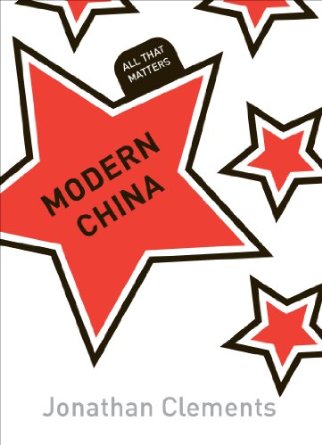 Out now in paperback and on the Kindle, a new introduction to modern Chinese history, from 1949 to today’s headlines.
 One of the joys of Kindle access is that it is possible to charge what the market will bear. I enjoyed and greatly appreciated the unique sections of Alan Paul’s Big in China that were about his expat life as a corporate househusband, but rapidly lost interest when he drifted into (for me) tedious reminiscences about his band. This isn’t any fault of the author; it’s plainly something that interests him greatly. Unfortunately, it interests him so much that he stops talking about China in order to talk about guitar strings and music clubs, about which this reader does not give a toss. Don’t get me wrong,
  contemporary China experience of total strangers. Rated in such terms, Chris McElwain’s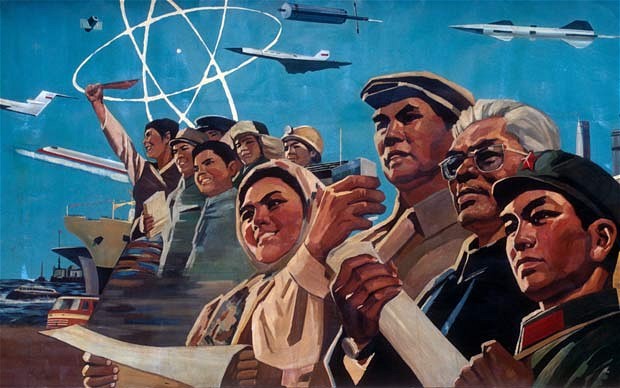
 Holdstock’s book is unlikely to lead to a flood of tourist trips. Like
  The Official Schoolgirl Milky Crisis Blog