Sisu 2 (2025)

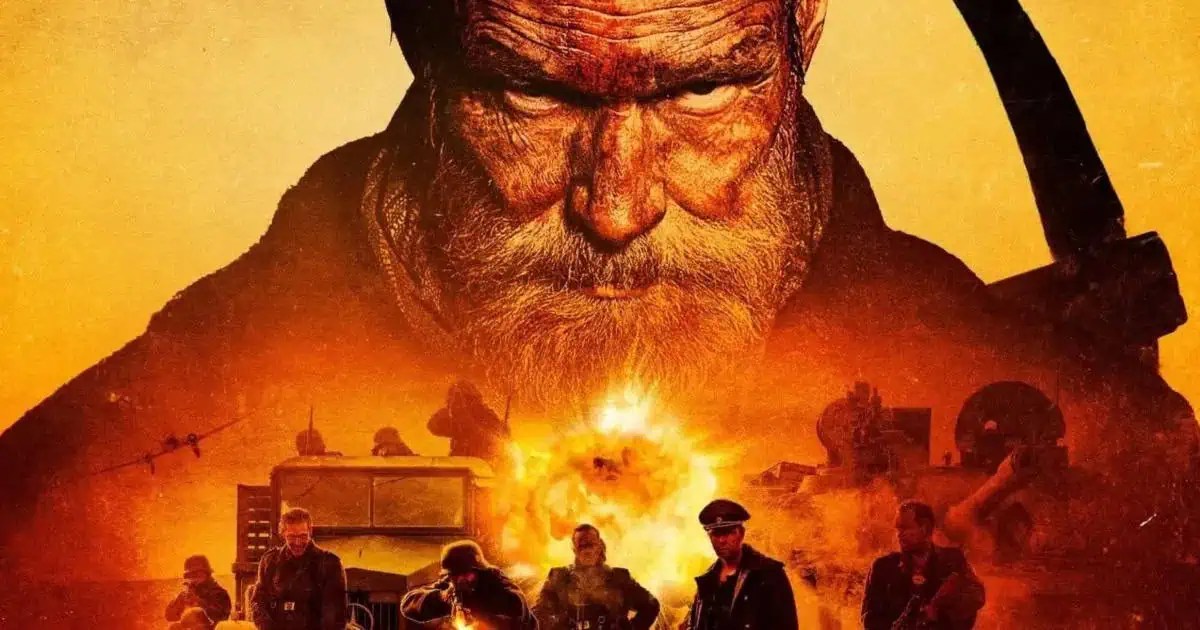
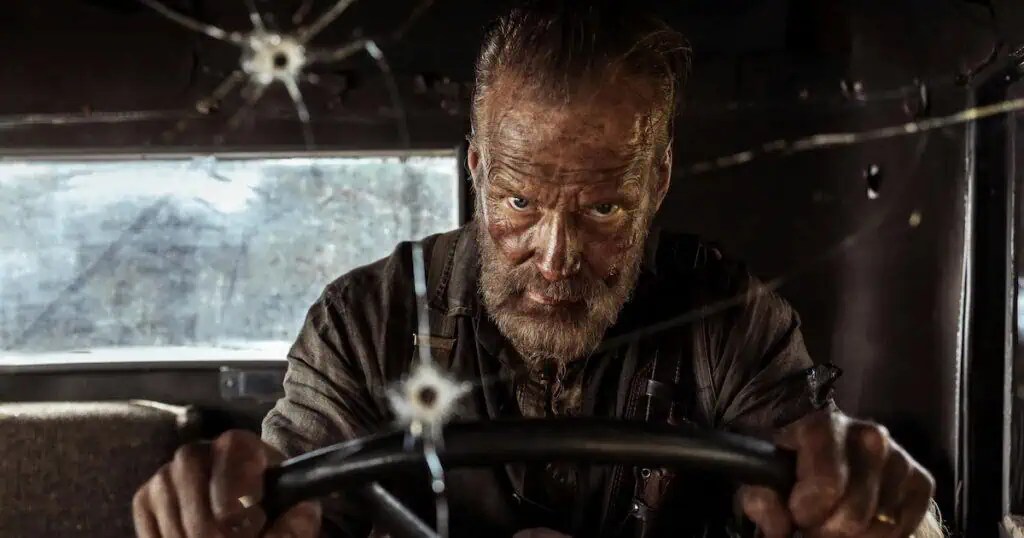
A year after he massacred a bunch of smug Nazis who tried to steal his golden nuggets, retired Finnish commando Aatami Korpi (Jorma Tommila) drives over the newly drawn border with the Soviet Union in to the lost land of Karelia. It is revealed that he is one of the 420,000 Finns who fled Karelia when it was ceded to Russia in 1940, but that he intends to dismantle his old homestead, drive it back to free Finland, and rebuild in memory of his late wife and children.

Oh yes, about that… “Meanwhile, in Siberia” discredited Soviet death squad commander Igor Draganov (Stephen Frame) is sprung from prison and given a mission he can’t refuse. As he is the man whose atrocities drove Korpi to become the unstoppable “immortal” soldier, he should be the man to destroy him. Draganov sets off in pursuit of Korpi, who is doggedly driving a battered old truck across Karelia.

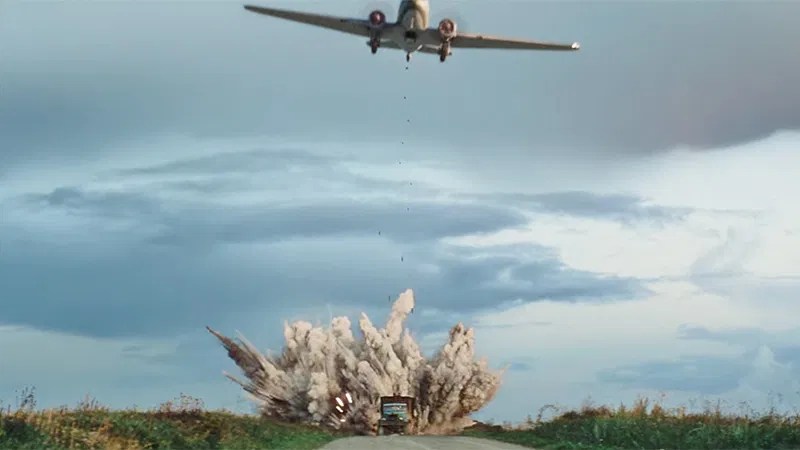
In my review of the first Sisu film, I speculated about the Mad Max: Fury Road and Indiana Jones image board that director Jalmari Helander might have in his office. This time, with Sisu 2: Road to Revenge, I would add a few choice moments from a bunch of other films, including William Friedkin’s truck-in-jeopardy movie Sorcerer, tips of the hat to the original Die Hard, and even Tom & Jerry. This over-the-top saga of Lumber in the Tundra sees Korpi dispatch an entire division of hapless Russian soldiers, with everything from his bare hands, to a handy missile, several useful poles, a bit of bent piping and a winch – I was the lone laugher in the Finnish cinema, while the locals around me seemed to be largely taking notes.

Some of the set-ups prove to be unnecessary dead ends – there’s a whole bit with a puukko knife that goes nowhere, and there are some odd anachronisms, like a Russian banquet that comprises crab sticks and Soave – and I felt that Helander missed a real trick by not featuring an onscreen massacre in which Korpi murders a bunch of Soviets with, say, a hammer and a sickle.

Helander also returns to what I’ve previously called his “Finland of the mind”, not only in terms of redressed Estonian locations, but of the very idea of Karelia as a liminal, thinning fairyland – a place that was once home, but is now seen slowly drowning in red weed. As I have mentioned before on this blog, 12% of the population of Finland were Karelian refugees in the 1940s, and that has translated in modern times to, at a rough guess, one in four of everybody’s grandparents. There is an overwhelming sense of melancholy and loss in Korpi’s return to his former homestead, and a gritty determination to repatriate it far in excess of the passion with which he went after his Nazi tormenters in the first film.

In a moving sequence of a talkoot, Korpi finds himself unexpectedly and briefly among friends. As an immigrant who has also been accepted by Finland after my homeland sold me out, I seemed to be the lone crier in the cinema, too.

Jonathan Clements is the author of A Short History of Finland. Sisu is what keeps him going back to try terrible Finnish Asian-fusion buffets. Sisu 2: Road to Revenge is released in the UK later this month.

The Secret Weapon (1943)

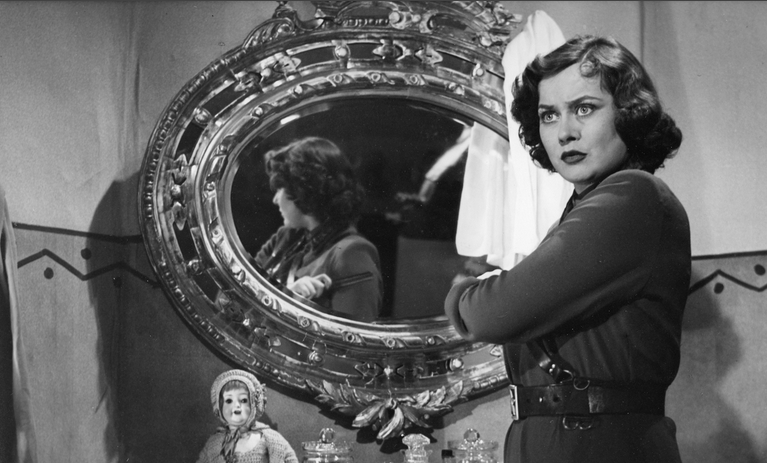
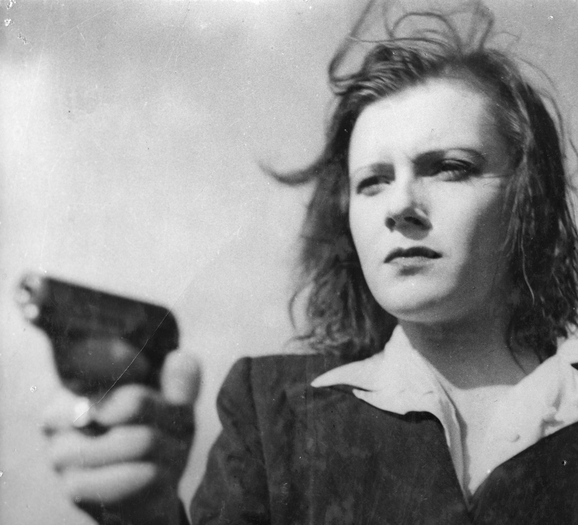
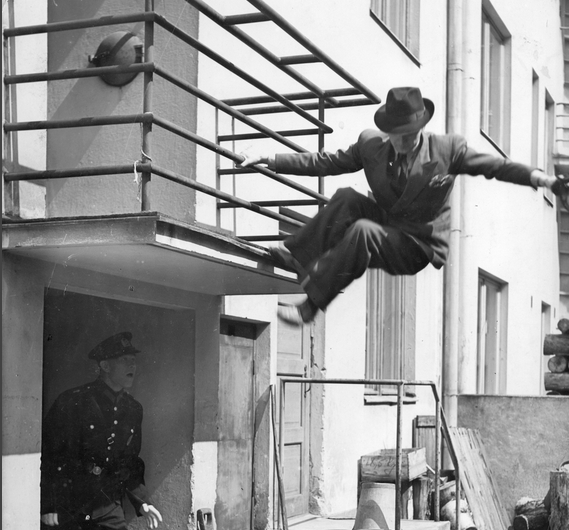
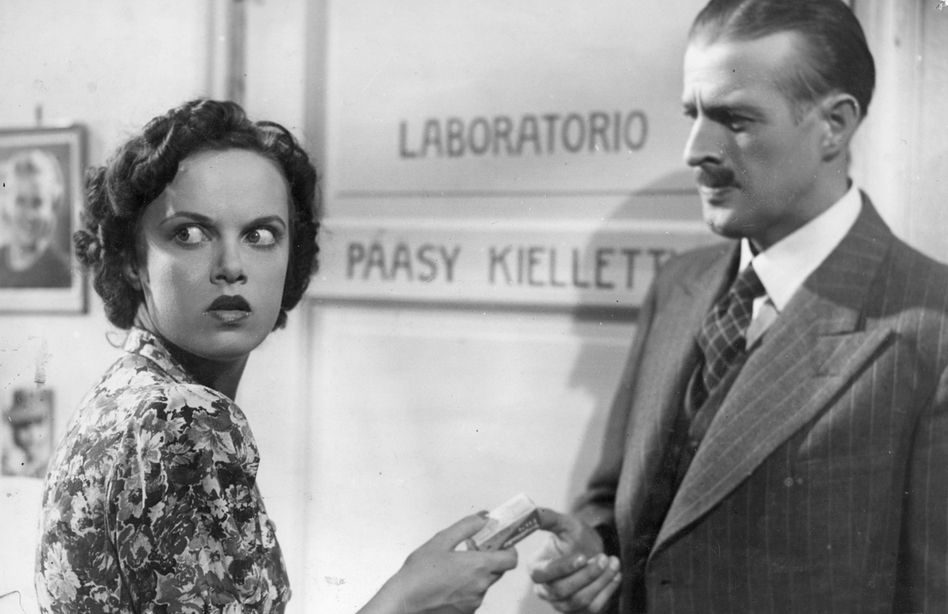
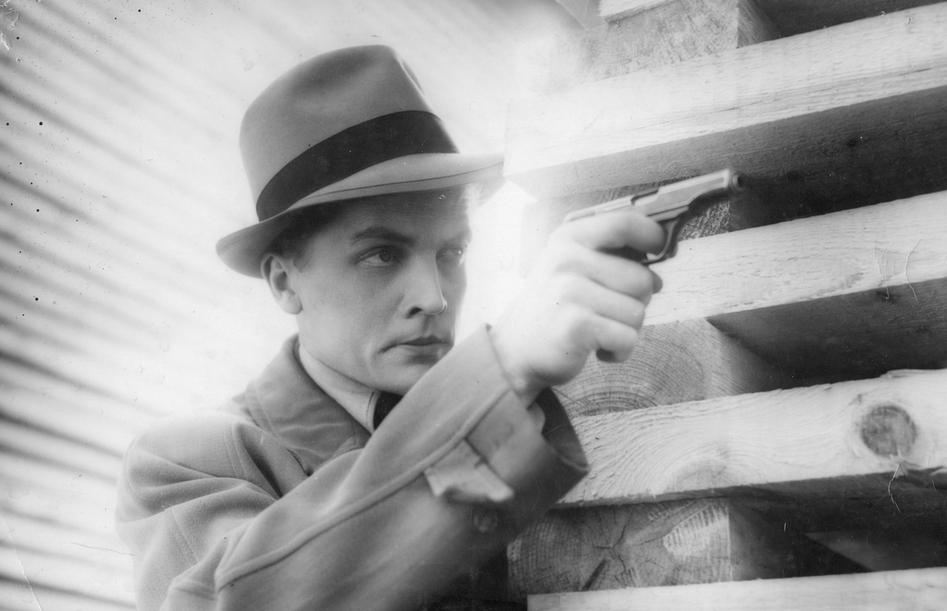
Tanja Bulkova (Eija Karapää) arrives in Finland on a fake British passport, and reports to Mr Rosenberg (Ensio Jouko), a spy-master who operates out of a Helsinki photo shop. Her path crosses repeatedly with Erkki Kari (Joel Asikainen), a newspaper reporter chasing down leads concerning a murder and an arson attempt at the Finnish Wood Export Company. Now calling herself Toini, Tanja is working as a secretary to the industrialist Rautavuori (Arvi Tuomi), from which position she hopes to acquire money, blackmail influence, and access to more factories for her associates to bomb. Unfortunately for her, it doesn’t take long for Erkki to realise that she is the same “English Lady” he took a shine to on the train from Turku, now operating under a different name and with a different hair colour.

There was a new kid in town in January 1943, with the sudden arrival on the scene of Fenno-Filmi, an upstart studio to compete with the big boys. Lauri Pulkilla was a former sound engineer and Theodore Luts was an Estonian-born cinematographer, who had worked for both Suomi-Filmi and Suomen Filmiteollisuus in the 1930s. They were soon joined by Yrjö Norta, another refugee from the majors who had to pay “protection money” to his employers to free him from his existing contract.

Fenno-Filmi had hoped to come up with a stirring war movie for their first production, but were kept waiting for weeks while their application to shoot near the front line sat, unopened, on the desk of Gustaf Mannerheim, who had other things on his mind. Eventually, they pivoted to their second script idea, a spy thriller more ideally suited to low-budget shooting in urban settings. And budgets don’t come much lower than working under austerity conditions in the summer of 1942. Real-world locations saved money on sets, but presented the film-makers with a new logistical problem for moving their equipment around town. They eventually accomplished this with a home-made handcart, which the grips had to wheel manually from street to street to set up each shot.

But what a story. Eija Karapää has a part that most actresses would dream of, or possibly have nightmares about, switching identities and allegiances several times in the film, transitioning in the course of the film from dastardly enemy spy, to long-lost sister, Finnish patriot, double agent and love interest! Meanwhile, a script written with input from a real-world counter-espionage operative shines a light on petty propaganda coups and nuisance operations – many of the espionage and sabotage jobs we see Tanja’s associates carrying out are relatively simple monkey-wrenching, seemingly in the hope that enough spanners thrown into the works of wartime Finland will accumulate to have an adverse effect on national morale and performance.

Salainen Ase was by no means the first film of its kind in Finland – we’ve already seen similar materials on show in The Last Guest (1941) and The Dead Man Falls in Love (1942). But with a cast and crew eager to make their mark, it is a breath of fresh air in this chronological trawl through Finnish cinema history, complete with arty compositions, dastardly deeds and daring, and some wonderful scene-stealers like Liisa Tuomi (previously seen as the lead in The Silver Betrothal Anniversary), who lights up the screen with her flirtatious, sassy scenes as “Olly”, the brisk and cheeky lab assistant at Rosenberg’s photo studio.

If there is anything that hobbles this film with the weight of Finnish cinema tradition, it’s a plot that somehow makes the steely enemy spy also the long-lost sister of one of the heroes, and a narrative arc that has her switching sides and turning on her own people. But the press of the time (and me, right now) were happy to forgive that in the light of the film’s many other redeeming features. Its archive review coverage is full of words like fast-paced, cinematic, fresh, new, action-packed and captivating. “The Secret Weapon does not shine with star names,” wrote the critic for Uusi Suomi, “but it is all the more pleasant to get to know the new faces and to note that there are discoveries among them who probably still have a lot of work to do on the big screen.”

Nobody knew, at the time, that this first movie for Fenno-Filmi would also be its best received. Although the company would go on to make seventeen other movies, none of them would quite capture the shock of all these new faces and new ideas, which surely must have given Suomi-Filmi and Suomen Filmiteollisuus a bit of a wake-up call. The company would be back that October with Mascot (1943) and a month later with another spy thriller, Shadows Over the Isthmus (1943). I can only imagine the panic at the Big Two, where producers had spent many years happily waving through rural melodramas and prim romances. Surely there was at least one meeting about it? Surely the next year’s slate of Finnish movies would be new and exciting…? Right…?

Jonathan Clements is the author of A Short History of Finland. He is watching all the Finnish films so you don’t have to.

The Toilers of Rantasuo (1942)

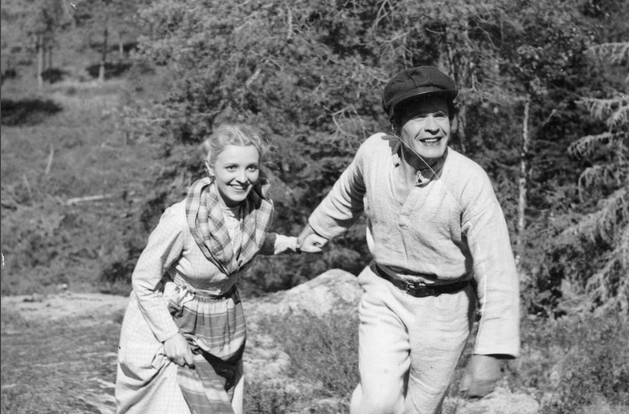
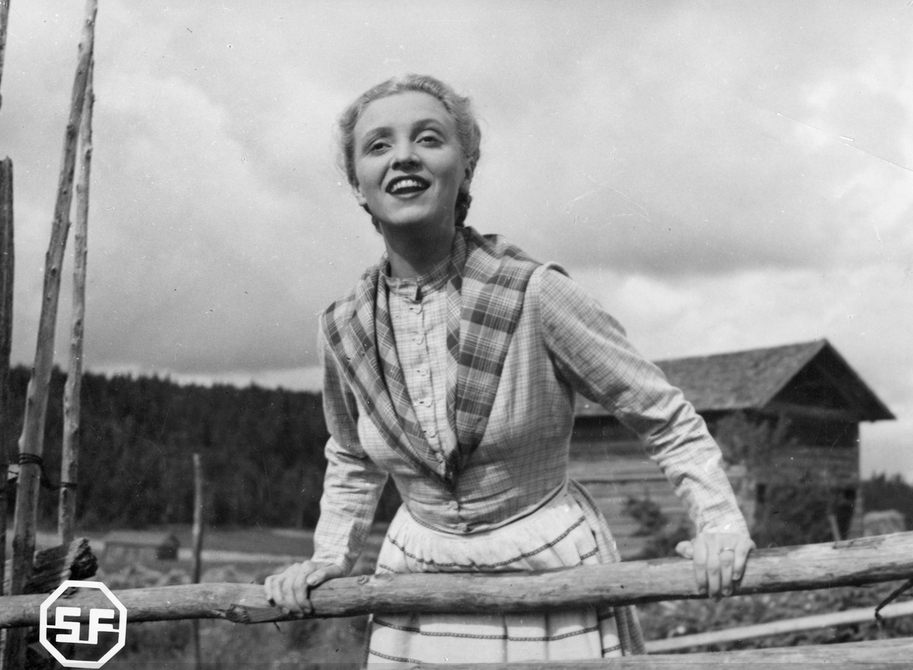
In rural Finland in the 1860s, the young, handsome Taavetti (Eino Kaipainen) takes over his father’s struggling croft, and hopes someday to get himself a wife. He is too proud to sell his prize mare to the landlord Isoaho (Toppo Elonperä) but manages to win the hand of Maija (Ansa Ikonen), a spunky girl from the neighbouring farm at Töyrylä. It later transpires that local boy Jussi (Pentti Viljainen) had rather hoped to marry Maija himself, and regards himself of having been swindled out of a deal that was all but done.

Taavetti and Maija are made an offer they can’t refuse by the logger Veijonen (Veikko Linna), who is prepared to hand them a tidy sum for the lumber from 500 trees on their land. But Veijonen has dastardly deeds in mind, and persuades the locals who witnessed their deal to lie about it. Taavetti ends up getting into a fight over it, and must suffer through a court case in which he is accused of assault and of welching on a deal he never made. He is sentenced to 26 months in prison, where he unexpectedly bonds with his cellmate Antti (Edvin Laine), and becomes an accomplished carpenter.

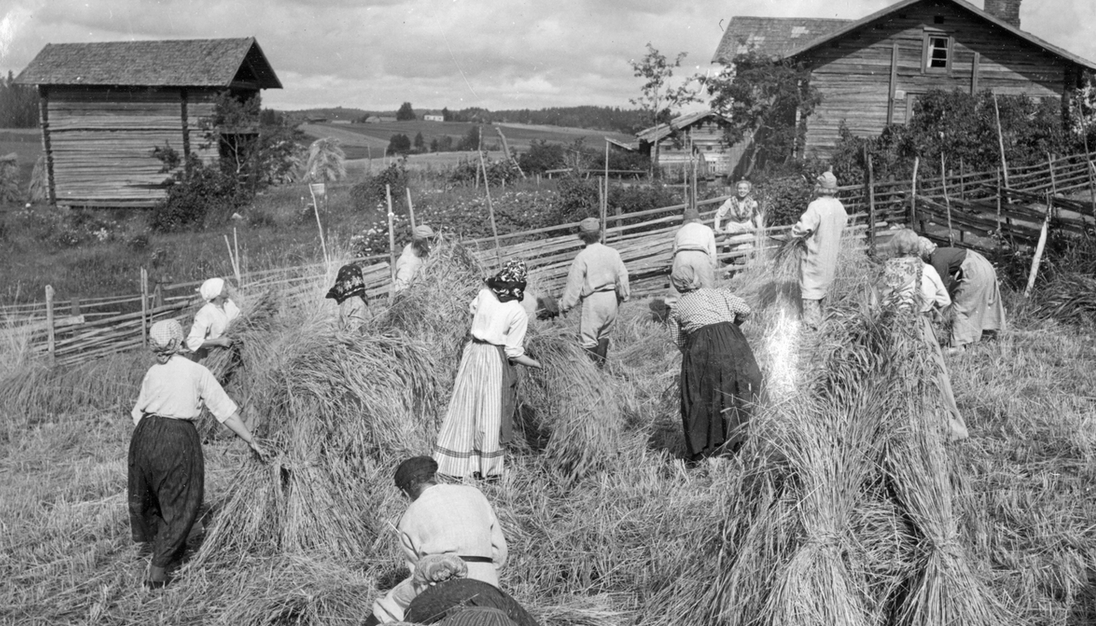
Maija, who is predictably pregnant, struggles with getting in the crops at Rantasuo farm, grateful for the customary shared-harvesting tradition of talkoot, when everybody pitches in. Old Isoaho comes to her rescue when money-lenders try to foreclose on the farm, and when Taavetti finally comes home, having paid his unwarranted debt to society, all is well, the farm is flourishing, Isoaho has got the mare’s foal in payment for his help, and Maija and the child are waiting for him on the porch.

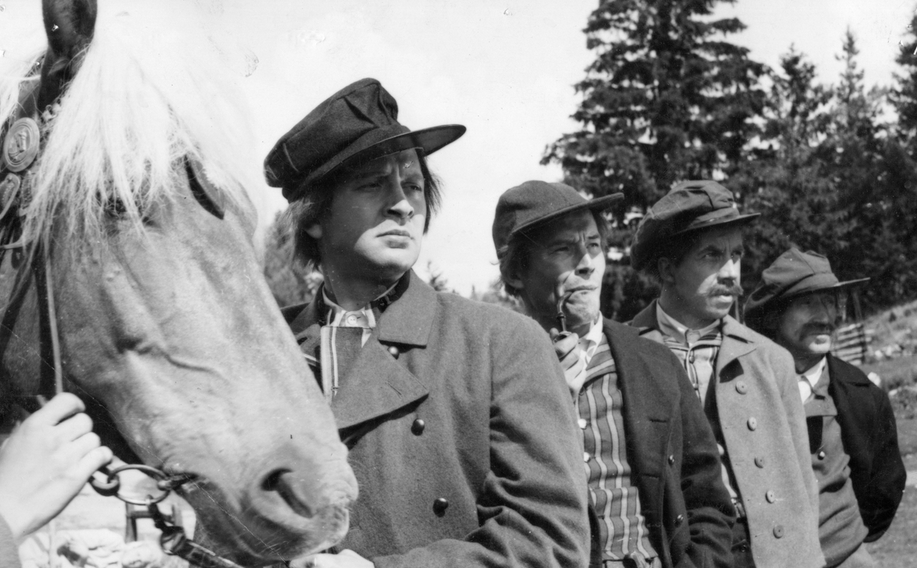
“Finally,” blurted the advertising copy for this adaptation of Urho Karhumäki’s 1923 novel, “we have a film with a strong Finnish spirit, a story of a Finnish forest ranger’s giant battle against vicious nature and malicious mankind – a struggle for which the prize is his own land and his own wife!” There are, after all, many ways to distract a nation at war. Rantasuon raatajat was released on the same day as its studio stablemate That’s How It is, Boys! (1942), but whereas Eino Ketola’s barrack-room comedy made light of war and duty, Toivo Särkkä’s script wades knee-deep into the fertile swamp of nationalism and local pride.

Shatneresque leading man Eino Kaipainen has been here many times before, most notably in Finland, Our Dear Native Land (1940). Here, he is reunited with co-star Ansa Ikonen from The King of Poetry and the Migratory Bird (1940), in an uplifting tale of struggle against adversity that pretends it is about tough times in the Great Famine, but is really all about maintaining a stiff upper lip in the midst of the Continuation War. As Taavetti, Kaipainen is a wronged hero who nevertheless wins through, a model citizen and even a model prisoner, who emerges from incarceration with a new skill and a best friend. Unlike the milksops of many a romantic comedy, he has an unreconstructed masculinity that is unafraid to fight for what he believes in, and a touching faith in the support of his loved ones.

I am particularly taken with the depiction of the talkoot in this film, because such communal mucking-in remains a feature of Finnish life today. They might have all come off the farms two generations ago, but twice yearly in my old street, all the plumbers and computer programmers, schoolteachers and car salesmen still got together to clear the leaves and trim the bushes until we’d filled a massive skip and could sit back for a coffee and a sausage. I once spent a happy day with my neighbour, Seppo, industriously digging a hole, until we were informed by another neighbour that we were supposed to be filling it in. Seppo made time pass, for him at least, by ceaselessly recounting everything he could remember about the songs of Whitney Houston, which was not a lot, because he couldn’t speak English, and I was obliged to translate each one for him. But I digress.

The press loved the film, describing it as a glorious “Christmas gift” from the Suomen Filmiteollisuus studio, and gracefully ignoring the fact that it often played like an obvious retread of Eino Kaipainen’s break-out picture, The Ostrobothnians (1936). At 42, in fact, Kaipainen was now a little long in the tooth to be playing a youthful lead, but he was not yet ready to slip into character work, and his public was not ready to let him. Ansa Ikonen, at 29, can just about get away with it, but the real-world Kaipainen was old enough to be his character’s Dad, and such cragginess can be distracting in a story that is supposedly about two youngsters barely out of their teens.

As ever, it was Paula Talaskivi in the Helsingin Sanomat who was best able to assess the film in both the context of its time, and its likely reception to posterity. “The plot itself,” she wrote, “with its relatively few turns of events and one-dimensional action, is not an exemplary film subject, but as a beautiful, devout film depiction of Finnish rural life, it defends its place well.” In its way, it is just as much as prisoner of its era as That’s How It Is, Boys!, fraught with what now seems to be overblown histrionics and intense passion, which are far more understandable in the context of film-makers and audiences who were facing the beginning of a fifth year of war and uncertainty.

Jonathan Clements is the author of A Short History of Finland. He is watching all the Finnish films so you don’t have to.

That’s How it is, Boys! (1942)

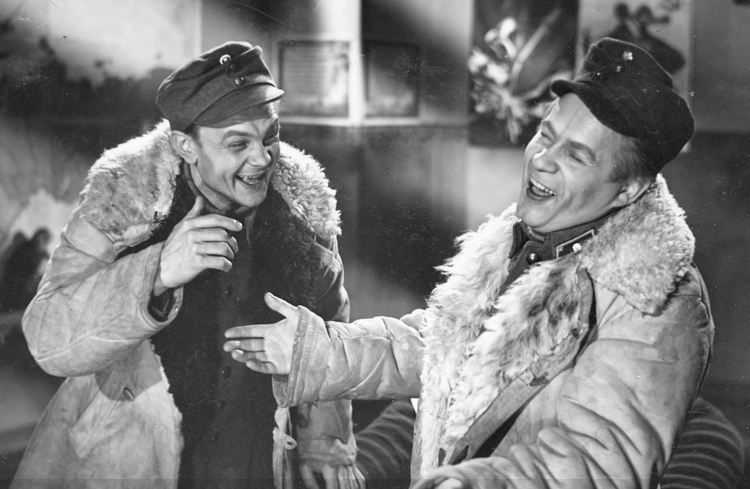
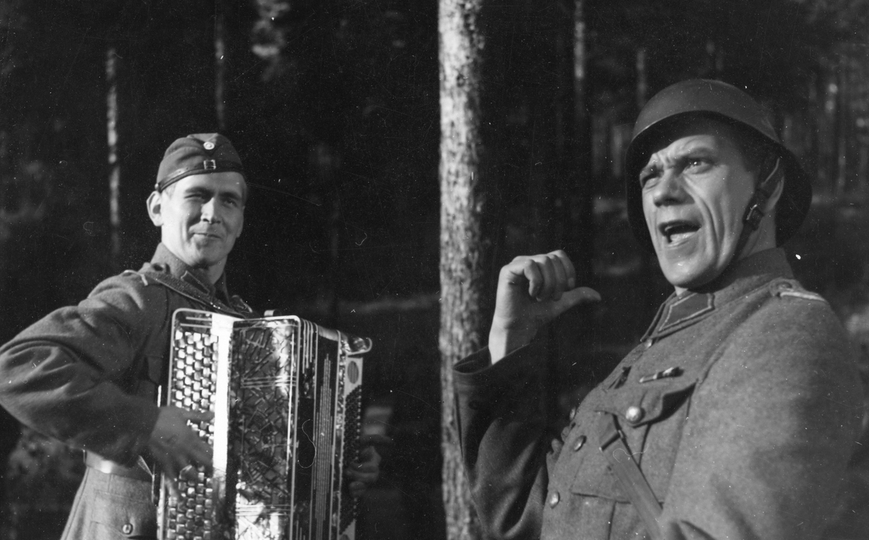
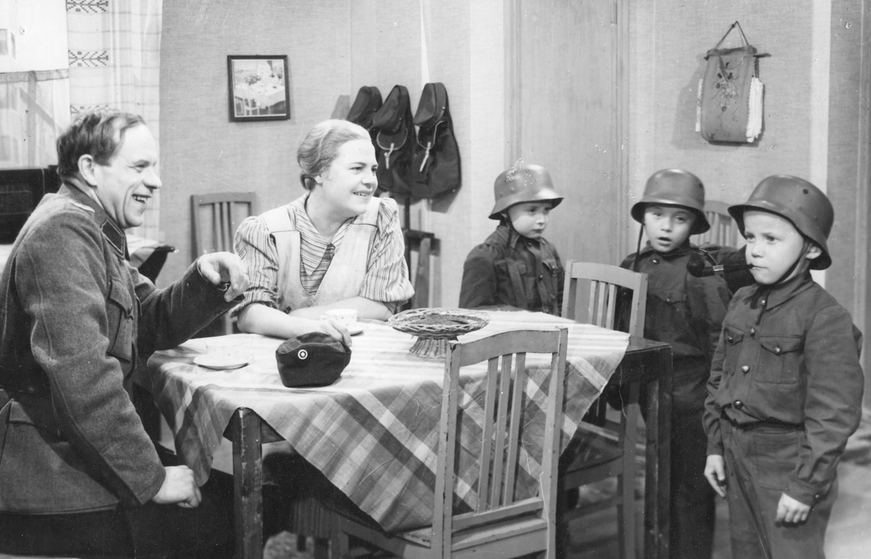
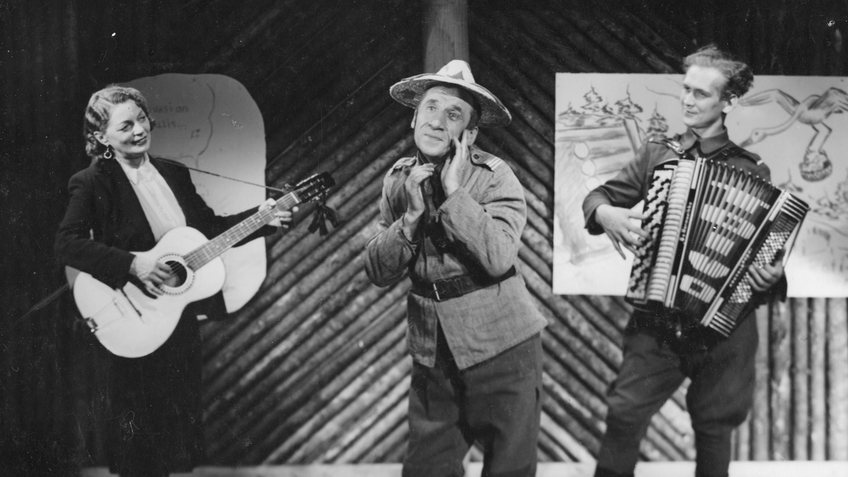
The relentlessly cheerful Corporal Möttönen (Einari Ketola) is wounded in the Winter War, shipping home for a chance to see his wife and three children, who are exhorted to run their home life with military discipline. By the time he returns to the front, he finds himself ordered to be the local liaison for the entertainment troupe – a mismatched band of malingerers, milksops and drama queens. After he improvises a ditty about Päivänkilo (Eero Eloranta), a man who has been excused active service because of his bad tummy, Möttönen is transferred to the entertainment unit itself, where Päivänkilo confesses that he is ashamed of his previous behaviour, and that he wants to be a real soldier.

After another bout of home leave (he always seems to be off again to see the missus and his three aggressively cute children), Möttönen is the master of ceremonies at a massive show, where his ability to improvise and pull replacement performers out of the audience turns it into a roaring success.

This historical blog of Finnish cinema is creaking with the weight of military comedies, including The Regiment’s Tribulation (1938), Kalle Kollala, Cavalryman (1939) and Serenade on a War Trumpet (1939). And the war has been very much on everybody’s mind for the last three years, either openly acknowledged or conspicuously avoided. But Niin se on, pojat is an altogether different phenomenon, sneaking out in the last week of 1942 as a vehicle for a man who had been turned into a star by the war itself.

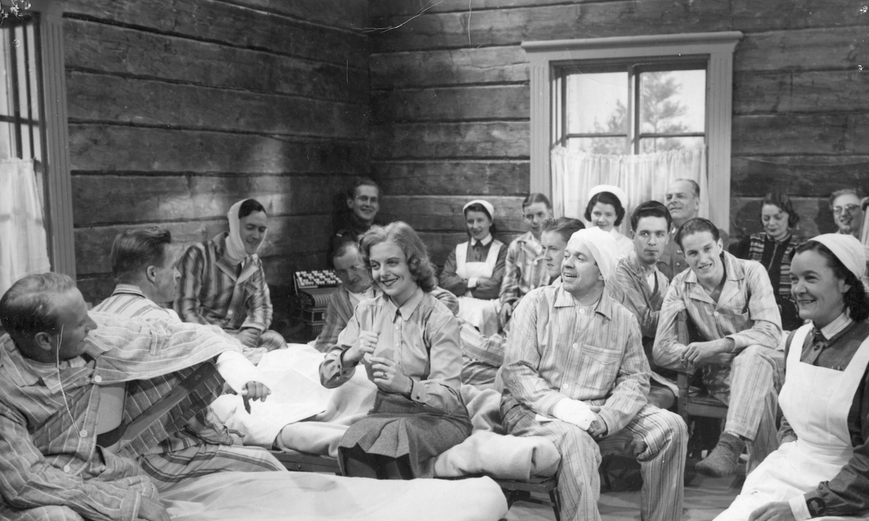
Einar Ketola had appeared in several films we’ve covered, but never in such a big role that he has been worth mentioning before. But in a creative environment in which production was stalled, many forms of entertainment were literally forbidden, and cinemas were obliged to stack their programmes with re-runs of old hits like Lapatossu (1937), Ketola became a sudden star-of-the-moment. In the two years before this film was released, he somehow racked up over a thousand performances, not merely in provincial theatres and dance halls, but at hastily cobbled-together frontline stages and in hospital canteens, where his “wooden-leg” humour was a welcome distraction for wounded veterans. Corporal Möttönen was his most popular character, a good-hearted barrack-room comedian always prepared to see the sunny side, and ready to brush off any setbacks with his breezy catchphrase: “That’s how it is, boys!”

The Finnish press dismissed the film with little more than shrugs, noting that it was a thinly disguised excuse for a variety show in the vein of SF Parade (1940), stitched together with scenes that allowed Ketola to reprise his stand-up material. Some of the big stars of the day lend some weight, including an uncharacteristically smiley Regina Linnanheimo, who shines in a Hawaiian dance number – is she only ever cheerful when she’s in a black wig?

When the writer-star himself was already admitting in interviews that Möttönen was a wartime phenomenon that was unlikely to last long in peace, this film is a fascinating glimpse of a star that shone brightly for a brief moment. “Some watch and listen to him with pleasure,” sighed Olavi Vesterdahl in Aamulehti, “while others find him tedious when they see so much of him at once.”

Some reviewers objected to “tasteless” sequences ridiculing Josef Stalin – content that would become substantially more problematic after 1945. In the tense censorship environment that would cancel several wartime hits in order to avoid offending the Soviet Union, That’s How It Is, Boys! was shorn of ten minutes of footage, not merely regarding Stalin, but also lines in which Möttönen lent his support to the Nazi-inspired notion of a “Greater Finland” – a controversial issue even at the time, since many Finnish soldiers had joined up to defend their country, not invade someone else’s. Its star suffered an even worse fate, kicked out of the actors’ union on the pretext that his performances didn’t really count, and blacklisted from many Finnish theatres, on the grounds that he was a fascist sympathiser, and his presence on a playbill would draw dire consequences. His struggles even continued after retirement in 1969, when his right to a soldier’s pension was tied up for years in the reddest of red-tape delays.

Ketola’s crime, it seems, was being a massive propaganda success during the Continuation War, for which elements within the post-war administration were reluctant to forgive him. The story goes that he didn’t receive his pension until 1976, four years before his death, when President Kekkonen heard about his treatment, and heads rolled at the social security office.

Jonathan Clements is the author of A Short History of Finland. He is watching all the Finnish films so you don’t have to.

Olli Suominen’s Stunt (1942)

As his mother prepares to set off with her newly adopted twins to a country retreat, young Olli Suominen causes an accident in the street and is consumed with guilt. He is propelled into a series of misadventures as he tries to make amends by getting the money together to buy a doll for an injured girl, befriending her brother Jaska (Kalevi Hartti) in the process, and findind a veritable partner in crime. The two boys become mixed up in the case of a missing envelope of money, go on the run to a relocation camp, but eventually are exonerated, and all is well that ends well. In a nod to the wartime austerity that can be seen permeating much of the film, the family maid Hilda (Siiri Angerkoski) announces that they are going to celebrate with real coffee.

After the success of the radio spin-off The Suominen Family (1941), the Suomen Filmiteollisuus studio rushed straight into a sequel, jettisoning any cast members who weren’t immediately available for a reprise, and parachuting in some previously unmentioned relatives or doppelgangers to hang onto the momentum. Considering that child star Lasse Pöysti was 14 when filming started and pushing 16 by the time the premiere arrived, they were lucky that he didn’t visible shoot up like a beanstalk between scenes.

Although filming began on Suomisen Ollin tempaus in May 1941, it was postponed for a year and only resumed in summer 1942. The opening night did not arrive until November 1942, making it a mini time-capsule of life around the outbreak of the Continuation War with the Soviet Union. There is an incredible amount of location work, wandering all over contemporary Helsinki, and filming in several real-life houses.

There is no overt reference to the conflict, but all sorts of incidental details in backgrounds, technology and clothing that make it clear when it was shot. Cars have wood-powered boilers, an allotment plot is referred to as a patriotic duty, and the hospital has visible shrapnel screens over its windows. Much like August Fixes Everything (1941), it also features prominent propaganda regarding the desirability of adopting war orphans, featuring a pair of twins that had, in real life, been adopted by director Orvo Saarikivi and his wife.

In a cunning ruse to make the middle-class Suominens more relatable, the film also focusses on a blue-collar family with the same surname. Jaska Suominen is the same age as Olli, but has already left school; his family grow crops in their yard to scrape up some additional nutrition, and all of the Suominens are in the same boat, no matter what their social position. With a surname that is already, as they say, “as Finnish as a wolverine,” it is a nice touch to add to a universal message. The chemistry between Jaska and Olli was so good that Kalevi Hartta returned in later films, starting with The Little Artists of the Suominen Household (1943), albeit in a different role as Olli’s best friend at school.

The Helsingin Sanomat’s unflappable Paula Talaskivi was won over by a film that she regarded as “almost a perfect match in its genre: a heartwarming, funny, refreshing and warmly presented piece about everyday life in the home of a Finnish family, mainly in the sphere of activity of its young offspring.” Olavi Vesterdahl similarly heaped on the praise in Aamulehti, calling it a “sorrow-buster” [murheentorjuja]. The rest of the Finnish press was similarly rapturous, bigging up the child actors as world class, and thanking the Suomen Filmiteollisuus studio for bringing the country a much-needed pick-me-up. With the hindsight of history, the broadcast of the film on television in 1986 was greeted with considerably greater reserve, as the critic for the Helsingin Sanomat grumbled that the desire to present a united front and a happy country resulted in a movie in which “all the problems solved themselves.”

To my twenty-first century eyes, it does seem awfully slow, with a minute at the beginning lost to an overture over a blank screen, and minute after minute of the Suominen family’s daily life as they faff around the kitchen and dither at the train station. But one imagines that such mundane scenes were a welcome tonic to many Finnish audiences in 1942, rather than the box-ticking filler they may appear to be today, as the director desperately tries to cram characters from the radio play into enough scenes to make them seem to have got their due.

Jonathan Clements is the author of A Short History of Finland. He is watching all the Finnish films so you don’t have to.

Putin on the Ritz

“Oh, how people scoffed at the idea,” Clements reflects. “Young Alexander Stubb, off to study at an American university on a golf scholarship. What possible use could that be? What possible situation could arise in his future political career where being a world-class golfer would suddenly … oh, yes, right.”

Over at the Sydney Morning Herald, Peter Hartcher interviews president Alexander Stubb and “Helsinki resident” (I am not a Helsinki resident) Jonathan Clements about life in Finland. The article is pay-walled, but here’s the full text of my interview, from which only a couple of quotes were used.

Finland is getting a lot of attention as the role model for smaller nations surviving against big, aggressive neighbours. In your view, what are the elements that account for its success to date?

People tend to forget the brinkmanship of the Cold War, when Kekkonen so carefully tiptoed around the big Soviet bear and didn’t do anything to provoke it. As with so many other elements of its international standing, I can’t help but wonder, however, to what extent Finland’s reputation is founded on a uniquely Finnish situation that is difficult to replicate elsewhere. We have fantastic education because of the homogeneity of the student population, and because of the peripheral benefits of a socialist society, like school meals, and good housing, all of which makes all those Chinese researchers coming to “learn from Finland” on a hiding to nothing, because they think they can change what they teach in the classroom and that’ll do it.

Similarly, Finland has a robust series of elements in place to deal with a potential invasion. One is a border region that has *already* been sacrificed to Russia, as if, say, Ukraine had given up its eastern marches in 1945 so they were no longer Ukrainian territory for Russia to covet. Demographically and geographically as well, we have a terrain that will make life difficult for any would-be invader. As demonstrated in the Winter War, there are all sorts of choke points and bottlenecks created by the lakes and forests, hills and swamps, to make life difficult for Putin.

Another is a civil war that has *already* purged the country of Russians to function as a fifth column or excuse to bring in “aid” from over the border.  Unlike Estonia or Ukraine, we don’t have a massive Russian-speaking ethnic minority here: the Finns killed half of them in 1917, and the rest were shooed out of the country and killed by Stalin. Another is an ongoing conscription programme that keeps the land chock full of territorial army soldiers, and a state of constant readiness designed to demonstrate to Russia that an invasion of Finland would make Afghanistan look like a tea party.

Is permanent mistrust of Russia one of the elements?

Yes.  Although for a long time, the classes in the military colleges would try not to specify that the whole thing is aimed at curtailing a Russian advance. They would talk about playbook scenarios in which the aggressor might be anyone. I mean, it could be Sweden, right? Stubb’s comment recently that Finland is perpetually preparing for defence against aggression and that, newsflash, “it’s not Sweden” was a moment in which he finally spoke about the elephant in the room.

I think it’s also worth remembering that Finland and Russia have form going back before the 20th century. Finland was a loyal and enthusiastic member of the Tsar’s empire throughout most of the 19th century, until the Tsar started throwing his weight around and stripping away Finland’s freedoms of government and currency and infrastructure. Finland’s entire nationalist movement was reframed as a response to Russia, and Finland was the only part of imperial Russia not to go Red at the end of it all. “The only thing Putin understands is power,” says Alexander Stubb, but one could have said that of any Russian leader all the way back to Nicholas II.

What about sisu – is it a unique Finnish quality or do other peoples have it by other names (Ukraine, for instance, would seem to have something like it)?

Finland certainly recognises sisu in the Ukrainians. Every nation has got its bloody-minded nutters who just refuse to give up, but I think the Finns always had a reputation in the era of Swedish rule for being the forest folk with their trousers held up with string, who would volunteer for the insane missions. In WW2 of course, that became even more of a thing, and I think it has an individual, but also a national element. That huge Soviet army rolling across the border and the Finns just standing there and saying NOPE. There is a very Ukrainian feel to it.

Your book taught me about the viciousness of the Finnish civil war. It’s amazing that such a divided people was able to unite so successfully against the Soviets in the Winter War. What was their secret?

The best thing to unite a divided country is a big foreign aggressor showing up and giving them a bigger baddy to fight against. It worked for the Chinese against Japan (until it was over), and it worked for the Finns against the Soviet Union. As I point out in my book, you can still see vestiges of the civil war today, particularly at moments like veterans’ day or in particular family dynamics, but Mannerheim very famously said that it didn’t matter what side someone was on in the civil war. It mattered where they stood when the Soviets turned up. I think, however, that papers over something a little less gung-ho, which is that while there are still sympathisers with the civil war Reds in Finland, so many of them were purged.

The Whites killed a bunch of Reds. A bunch of other Reds fled to Russia, where Stalin would eventually kill them, or emigrated overseas, where they formed enclaves of expats as far afield as Michigan and Melbourne. That removed them from the national conversation at home and made integration easier for the ones who were left behind. Or to put it another way, if you were a serious Red, there was a far better chance you didn’t hang around in White Finland to have to take the trouble to integrate.

I had no trouble selling a book about Mannerheim; in fact, my biography of him was snapped up by the Finns so eagerly that the Finnish translation was released a week before the English original. But I wanted to follow it up straight away with an account of the John Grafton incident, which is a story from 1905 about “Red” Finns. Nobody wanted it. Even though Mannerheim is one of my publisher’s best-sellers, they weren’t interested in a story of Red Finland. The readership for it, they said, isn’t there. They’re dead. Or they’ve faded into the population in Australia or America, and don’t want to hear about *that* aspect of the Old Country. I keep trying, but I’ve got nowhere in fifteen years.

Are they similarly united today? Please correct me if I have the wrong impression, but it seems that they currently are fairly unified in the main tenets of their geopolitical outlook – they are resolved to oppose Russia, to support NATO and to endure Trump. Or is that just the superficial impression of a blow-in, non-Finnish-speaking naif?

Yes. And as Stubb put it, it wouldn’t have happened without Putin. Finland went nowhere near NATO for seventy years. It seemed like a stupid idea to antagonise Russia, and the Finns learned the hard way in 1939 that they might be left all on their own to fight a Russian aggressor with little more than “thoughts and prayers” from the rest of the world. After the invasion of Ukraine, the Finns figured they might as well go right ahead, and the sea-change in that attitude took a lot of people, me included, by surprise. I genuinely wondered if there was some sort of Brexitty bunch of *Russian* influencers trying to steer Finland into that decision in order to provoke Russia — a sort of self-inflicted false-flag attack.

But even previously anti-NATO Finns suddenly came around within a matter of months. It was the ideal time to join, they told me. The bases on the Russian side of the border had all been emptied out and sent south. Ukrainian sisu was thinning out the Russian forces on behalf of Finland, hundreds of miles away. The one thing that Ukraine had been lacking, they thought, was a button they could press to throw all the armies of Europe into the country in their immediate and open defence. Joining NATO would be a vital final brick in the wall to keep out Russia, and not even Putin would want to fight a conventional war on two fronts.

I was sad when they shut down the trains to St Petersburg. It was one of the great joys of living in Finland, to be whisked away to Russia in just a couple of hours. But the Russians were even sadder. Thousands of them were pouring onboard to escape Putin’s Russia before the last train; hundreds of them left their cars at Helsinki airport as they raced off elsewhere in Schengen. Someone still leaves flowers at the base of the statue of Alexander II in Helsinki. 

Any observations about Alexander Stubb’s performance in general, and his supposed emergence as a Trump whisperer in particular?

Oh how people scoffed at the idea. Young Alexander Stubb, off to study at an American university on a GOLF scholarship. What possible use could that be? What possible situation could arise in his future political career where being a world class GOLFER would suddenly–? Oh, yes. Right. He speaks perfect English. He went to school in Florida and college in South Carolina, and surely that makes the Americans feel that he is “one of them”. He’s safely on the Finnish right, which helps when Americans get twitchy at the term “social democrat.” He is the inheritor of seventy years of Finnish political history which has involved keeping a straight face when stuck in a conference room with an angry bear. He’s charming, and he’s smart, but like all Finns, he hides his light under a bush, so I imagine that he doesn’t intimidate them.

And I can’t resist asking – do you think it’s the happiest country in the world?

Surveys like that don’t necessarily ask the right questions. It’s not that the Finns are happy, it’s that they have built a nation where it is easier to be satisfied. I pay a lot of tax, but I know where it goes. I don’t have to worry about healthcare, or the transport system, or education. I am nurtured and cherished by a system built by women for women, where childcare is subsidised, home improvement is tax-deductible and Sanna Marin, a check-out girl raised by lesbians, can still get a Masters degree, become prime minister and lead the country through COVID. The Estonian right intended that line of commentary to be an insult, but the Finns are justly proud of it. We have opportunity. You have a better chance of living the American Dream in Finland than you do in America. You bet we are happy about it.

There have been a lot of government cuts lately, and the unions are agitating to prevent Finland becoming just like everywhere else, hence a lot of the recent strikes. I was tutting recently about the graffiti in my town. It’s an epidemic, I said. It’s suddenly come out of nowhere. KIds today, etc etc. 

No, said my Finnish friend. There has always been graffiti here. It’s just in previous years it was gone the next day because the council had a budget to clear it up. Now it stays up for months and months, because of all the cuts.

When Finns complain, they sound so cute. Oh really, your train was four minutes late? Oh really, the neighbours were noisy last night nearby your heavily subsidised council apartment? I was talking to a Finnish surgeon about his rotation at a Helsinki Accident & Emergency department, and he said: “Well, Helsinki is a big city, so there are big city problems. People get into fights. There are drugs. There are accidents.”

What, I asked, was the average waiting time at the A&E.

“I’m sorry,” he said. “My English isn’t so good sometimes. What is this ‘waiting time’?”

Jonathan Clements is the author of A Short History of Finland.

Puck (1942)

Fashionista Liisa Pesonen (Helena Kara) crashes her bike in the street, a happenstance which causes passer-by Raimo Kaarna (Tauno Palo) to offer her a ticket to his concert. She loses her handbag and switches apartments after nuisance calls from an unknown man. At Raimo’s concert, she meets his artist friend Loviisa “Lullan” (Elsa Rantalainen), and the two girls become fast friends.

When Lullan is invited to the Kaarna family mansion to paint a portrait, she insists on bringing Liisa with her, leading to further flirtations with the absent-minded Raimo, and Raimo’s mistrustful mother (Helvi Kaario) to forbid him from getting too close. This, of course, is the only thing that inspires Raimo to look up from his musical scores and consider Liisa as a potential bride.

As if to prove her potential mother-in-law right, Liisa is the centre of an altercation at Mrs Kaarna’s birthday party, when she is accosted by a moustachioed man who has been stalking her around Helsinki. He is revealed as Bisse Holm (Thure Bahne), the “black sheep of the family”, who attempts to blackmail her into stealing 20,000 marks from the family. Raimo scares him off, but Liisa leaves in the night, proclaiming “The street’s where I came from and back there I’ll go.”

Bisse pursues her, but is happily hit by a car and killed, the third road accident in this road accident of a film, and Liisa faints in shock. At the hospital, an anxious Lullan renews her acquaintance with her suitor Dr Oksanen (Yrjö Tuominen), promising to give up her arty life and become a proper wife and mother. Sister Laurila (Aino Lohikoski), who is a nun but also somehow from the Salvation Army, explains that Liisa was a young girl on hard times, impregnated by a seducer, who suffocated her new-born illegitimate child by clutching it too hard to her bosom. Even though this is surely even more reason to banish her out of her sight, this story apparently moves Mrs Kaarna to sympathy, and she welcomes Liisa into the family!

It’s not merely that Puck feels like a pile-up of previous Finnish cinema hits (see, for example, The Mark of Sin, Safety Valve and Kara and Ilmari’s last work at their previous studio, Four Women, and that’s just in the year before); it’s that the crash is still ongoing as the film plays out, with easily enough plot to fuel several different movies. A simple romantic farce about missing theatre tickets and suitor misunderstandings is welded into a mystery about a Woman with a Past, while the synopsis above leaves out a bunch of side quests and mini-dramas that are not really pertinent to the plot. There’s a whole thing about a guy who is killed in a car accident, whose pregnant girlfriend Kirsti (Mirjami Kuosmanen) attempts to kill herself and has to be coaxed back to the world of the living by Liisa. The lovely Ester Toivanen, a favourite of this film blog, shows up in a minor role as Raimo’s sister, and there’s a pointless interlude in which the cast enact a scene from A Midsummer Night’s Dream, which is the origin of Liisa’s nickname and the film’s title. One presumes it was all so complicated that the advertising department didn’t even bother to watch it, since the poster showed a naked woman in a forest, which has nothing to do with the content of the film.

Puck began life as a 1934 novel by Gunnar Widegren, translated from Swedish into Finnish as Prinsessa Pesonen in 1940, and hence presumably being a rare publication event in the midst of war. Writer-director Hannu Leminen’s film adaptation strips out almost every Swedish noun, moving the action from Stockholm to Helsinki and Fennicizing almost all the names, but presumably kept every moment and scene that was crammed into its 296 pages.

The critics of November 1942 damned it with faint praise. “The plot is certainly not tainted by novelty,” carped Olavi Vesterdahl in Aamulehti, “but despite that, there is much in it that makes it a quality entertainment film.” Hufvudsbladet, Helsinki’s Swedish-language newspaper, thought that the whole thing was a breath of fresh air, although I can’t help but think that the critic, Hans Kutter, was putting a positive spin on its Swedish origins, and his assumption that if he didn’t like it, it must have been the sort of thing that appealed to the kidz. He was, however, quite merciless in his criticism of Elsa Rantalainen in the role of Lullan, who “…practically ruined the film with her shrill and tasteless performance.”

The anonymous critic for the Ilta Sanomat was much, much more exacting in his annoyance. “The film is not actually a ‘charming’ depiction of ‘old-fashioned love’,” he wrote, seemingly in answer to the marketing, or possibly even other critics. “It is an atmospheric relic from twenty years ago, an unintentional parody of everything that is artificial and offensive to modern taste, which in my opinion should already be confined to the archives of cinema. We are supposed to be amazed, yet again, by that old, tried-and-tested arsenal of clichéd elements of mundane Finnish cinema – tearful emotion, ridiculous outbursts of the tragicomic, over-acting, pathos that on this occasion would not even befit a weekly newspaper, a confusing backstory that defies even the most elementary psychological coherence, endless, empty chatter, and powerful ‘situational comedy’ sprinkled here and there – that’s the content of this film.”

As this film watchathon lurches on, there are signs of generational tension within the Finnish film business, particularly over issues of adapting novels and plays from decades earlier, and trying to cram them into the situations and morals of the 1940s. Widegren was born in 1886 – Puck feels like a baffled old man’s attempt to tell a story for the younger generation, occasionally forgetting what he is supposed to disapprove of, and often confused and uncomprehending of the degree to which times have changed.

Jonathan Clements is the author of A Short History of Finland. He is watching all the Finnish films, so you don’t have to.

The Silver Betrothal Anniversary (1942)

Teenage firebrand Lotta Koskimaa (Liisa Tuomi) has had enough of Deputy Judge Arvo (Pentti Saares), and deserts him on the dancefloor at her school’s spring ball after he tries to get handsy. She tries to get the local pastor to dance, and the flustered man of God orders her from the school gym. She obeys but cheekily blows him a kiss on the way out.

Arvo slinks off for a second date with trainee dentist Raili Tervola (Lea Joutseno), who happens to have met Lotta’s brother Viljo (Tapio Nurkka) while waiting for him at the restaurant. Raili, too, hectors Arvo over his womanising and leaves him to it.

The Koskimaa family slink off to the countryside for a tense semi-holiday, with Lotta fuming about her school reprimand, and her father Einar (Paavo Jännes) discovering that her behaviour has put his own appointment, as a professor of dentistry, into doubt. Meanwhile, Einar and his wife are experiencing marital difficulties, and even as the love polygon of the younger cast members resolves into a standard Finnish happy ending, they face the prospect that the elder generation is about to split up, even as the eve of their twenty-fifth anniversary approaches.

Hopeakihlajaiset is based on a script by Klaus U. Suomela, which placed second in Suomi-Filmi’s notorious New Writers competition in 1940. As regular readers will know, the winner was The Dead Man Falls in Love (1942), described on this very blog as “ a garbage fire,” so how much worse was the runner-up? I note with interest that Finnish Wikipedia doesn’t even attempt a plot synopsis, possibly because the story is all over the place.

The production manager didn’t want to make it at all, and since the author had submitted it as a play rather than a screenplay, it had to be polished up by Martti Larni before it was even camera-ready. Suomela kited his competition win into a theatrical run for the play as well as a novelisation before the film even appeared – the film’s director Wilho Ilmari had also helmed the run at Helsinki’s National Theatre a year earlier, in which Aku Korhonen played Einar. For some reason, he did not come back for the screen adaptation.

Films of the era had to make a judgement call on whether to reference the war or not – would it be gauche not to mention it, or unwise to assume it would still be ongoing by the time production was complete? Like Ilmari’s previous August Fixes Everything (1942), The Silver Betrothal Anniversary simply pretends that the war isn’t happening at all, and so there are no references to rationing or the draft. Larni’s rewrite at least gets the cast out of the studio, for several location scenes, including Lea Joutseno bursting into song on a sailboat, wringing the most out of the scenery of the Finnish summer. The marine footage, in fact, is the thing that really marks this film out eighty years later, with fantastic shots of Sörnainen harbour and sailing sequences shot off Espoo’s Vapaaniemi. One of the production stills even features the film crew setting about their lunch by the sea, while a warship in fantastic dazzle camouflage lurks sinisterly offshore.

The critics, however, still found something to moan about. After only complaining a couple of weeks earlier that August Fixes Everything was too theatrical, Olavi Vesterdahl in Iltalehti complained that The Silver Betrothal Anniversary was too, well, filmy, citing numerous cut-up techniques and sudden cutaways as disruptions to the telling of what ought to have been a simple story. Meanwhile, Salama Simonen in Uusi Suomi said the exact opposite, that the film played way too much like a stage play that happened to be on camera. The film, certainly, is nothing to write home about, particularly considering the terrible sound quality of some of the school scenes, which were shot on location rather than on a set. But while the critics might have carped about the story, some of the framing of the shots still looks arty and compelling even today.

Screenwriter Martti Larni, previously seen here adapting Over the Border for Suomi-Filmi, is a fascinating figure in Finnish literary history. Although he adapted several screenplays during the 1940s, his real reputation was founded on his biting satires, not only of Finland, but of the United States of America, most notably in The Fourth Vertebrae, about a Finnish conman who finds a ready supply of victims in the Land of the Free. Unbeknownst to Larni, the book was extensively pirated in the Soviet Union, where the authorities were so enamoured by its take-downs that it was given away free at airports. After his brief wartime career in the movies, he would spend several years in the USA, where he eventually became the editor of a Finnish-language journal in Wisconsin, Työväen Osuustoimintalehti (the Worker’s Cooperative Magazine). He also wrote several books about the Finns of North America, including The Fire of Minnesota and A Camera Tour Among the Finns of America. Almost none of his work is available in English, although his books were translated into over 20 other languages.

Wilho Ilmari hoped to make another film, The Vanishing Border, but it was stuck in production hell after the military authorities refused to allow for the filming of scenes near the front line. He sloped off back to the theatre and would not direct another film until Love is Even Quicker Than Piiroinen’s Ram (1950).

Jonathan Clements is the author of A Short History of Finland. He is watching all the Finnish films so that you don’t have to.

Over the Border (1942)

On a visit to see her aunt on the Finnish side of the border, Eliisa Raaska (Irma Seikkula) falls for local boy Mikko Vanhala (the decidedly unboyish Joel Rinne). She would very much like to marry him, but her father (director Wilho Ilmari, sneaking into his own film) refuses to leave his home on the Soviet side, where he is clinging to the memory of his late Ingrian wife. Mikko is unaware that his mother (Emma Väänänen) has promised his hand in marriage to Helka (Senja Lehti), the daughter of the local landowner Meller (Eino Jurkka), in settlement of a debt. But Mikko has already crossed to the Soviet side to ask for Eliisa’s hand, and when she accepts, brings her to his Finnish home.

In Finland, Eliisa meets with a frosty reception, since her presence puts Mikko’s mother back into financial straits. She stomps off to her aunt’s house, while Mikko arranges a loan to pay off the debt. Her father, meanwhile, was lying when he said he would follow her to Finland. Instead, he sets fire to his house and shoots himself. Mikko finds a distraught Eliisa and persuades her to return to Finland with him before the border-crossing loophole is permanently shut down by Soviet soldiers. Their friend, the border guard Gregor (Santeri Karilo), helps them escape by shooting Ivan (Vilho Siivola), the dastardly Soviet officer who covets Eliisa for himself. As Eliisa and Mikko reach safety on the Finnish side, they hear another gunshot, as Gregor takes his own life.

Suomi-Filmi’s big release for autumn 1942 was a film that tapped right into the zeitgeist, an adaptation of Urho Karhumäki’s 1938 novel about life on the Karelian isthmus, where the locals have repeatedly found themselves branded Russian or Finnish, Finnish or Russian, depending on where politicians in distant capitals are drawing lines on a map. With a mordant, contemporary topic and a score by Uuno Klami, Over the Border was Finland’s entry in that year’s “Venice Film Olympics”, where it won a minor medal, which the press regarded as something of a consolation prize.

Over the Border was a deep, vivid and psychologically believable portrayal of humanity,” said the film critic of Uusi Suomi. “There was a real sense of the border in the air.” Meanwhile, Olavi Vesterdahl in Aamulehti thought it was a bit slow and lacking in action, but conceded that it did artfully demonstrate the way in which geopolitical concerns far above the heads of two people on either side of a humble barbed wire fence might suddenly render them unable to cross it – a matter of pregnant meaning to Finns in 1942, who were busily re-taking Karelia from the Russians who had stolen it, and would shortly have to hand it all back again. Deep down in Martti Larni’s script is a repeat of the idea that also surfaced in The Activists (1939), that people were people, and that there were surely good Russians like Gregor, too, although it was heavily implied that the bad ones like Ivan were hounding them to their deaths.

It was, perhaps, too tied to the zeitgeist. Delayed from its original release in April 1942, it enjoyed a brief moment in the sun and on theatre re-runs. When the Continuation War came to an end in 1944 and everybody started tiptoeing around the Russians like they were, well, a thin-skinned super-power with a penchant for false-flag attacks and land-grabs, it was very suddenly whipped out of cinemas, and was not seen again in Finland until the post-perestroika 1990s – compare to similar fates for The Activists and The Great Wrath (1939).

Jonathan Clements is the author of A Short History of Finland. He is watching all the Finnish films so that you don’t have to.

August Fixes Everything (1942)

Despite never making it that far up the promotional ladder, August Kivipaasi (Aku Korhonen) has become a much-loved figure at Nikkari Bank, where he has been a cashier for 25 years. He offers sage advice to the janitor Nuutinen (Anton Soini), who wants to buy himself a cottage in the forest (the Finnish dream), and frets that young Anna (Toini Vartiainen), in demanding that her would-be fiancé Hannes (Hannes Häyränen) scrape up a suitable nest-egg before marriage, will doom him to never marrying at all. August still carries a torch for his colleague Maria (Siiri Angerkoski), but the pair of them never married because he could never quite pronounce that the time is right.

With the tin-eared lack of tact common to management, director Visapää (Thure Bahne) shows up at August’s quarter-century employee celebration to tell him that he and Maria have to be let go in order to clear space for his personal cronies as chief cashiers. As the staff protest, the bank’s chairman Baron von Bergenbohm (Jalmari Rinne), hems and haws, and suggests that a note of thanks for August’s long service should be entered into the general meeting’s minutes, as if that will solve everything.

When it comes to present the bank’s accounts, August refuses to hand them over, claiming that he has been industriously embezzling funds for the last 25 years, in lieu of the raise he was never granted. Accusing upper management of corruption and incompetence, he offers to hand the matter to the police, which will mean all the money is gone for good, or to give half of it back if the bank agrees to his demands.

Hannes and Anna need raises, so they can afford to get married. The bank will loan Nuutinen eight thousand marks so he can have his dream shed. Johanssen the family man (Eero Leväluona) is to get a raise as well, so his kids don’t starve. The bank acquiesces, and August reveals that he was lying about the embezzlement just to get some leverage. He makes a final demand: that Visapää shows up fifteen minutes early each day, instead of an hour late, and all is well.

Hannes and Anna can get married, but with their increased salaries, so can August and Maria, acquiring in the process a ready-mix family in the form of two Winter War orphans. As the cast gathers at Nuutinen’s cottage for a sing-song, Maria warns them not to wait as long as they did to start making a family. “Finland needs many, many children now,” comments Nuutinen, “Girls and boys. So go forth and multiply!”

This was a remake of the Swedish film Blyge Anton (1940), itself based on Alexander Faragó’s play Der Herr Schlögl. It’s not clear when Faragó’s play originally was performed, but by the time it was adapted for the Swedish screen in 1940, the screenwriters had wedged in a reference to a Swedish woman who had served in Finland’s Winter War. The Swedish original was screened in Finland in 1941 as The Poor Groom (Kehno sulhanen), but clearly struck enough of a chord with writer-director Toivo Särkkä for him to buy the rights to make his own adaptation.

Ironically, the Swedes in this version are the bad guys – there are pointedly Swedish names for many of the upper-class twits that August and his angry bankers are striking against. In some fashion, this may reflect Finland’s steady drift towards the left – it was only three years earlier, in Scorned (1939), that an alliance of self-made industrialists took on the corrupt saw-mill bosses. But here, our have-a-go hero is a man of little means, relying purely on his charisma and goodwill to outsmart the bosses – whereas Scorned was critical both of the Swedes and the Reds, August järjestää kaiken is a gentle parable of socialist bargaining.

The Finnish version piles on even more pointed references to the aftermath of the Winter War, and closes with a rendition of several verses of the song “Suomen kevät” (Finnish spring): “Finnish spring has finally arrived / the summer of our north.” However, it omits a controversial verse written in a time of German-inspired desire for lebensraum: “For a peaceful tomorrow / like our ancestors / for the creation of greater Finland / in the land of Kalevala.” For extra timeliness, there is even a moment of self-referential humour, when Anna suggests they could go to the cinema to see Marriage Inc. (1942) – a gag that backfires a little, as it ends up sounding like even the cast wish they were in a different film.

In spite of Aku Korhonen’s enduring status as a much-loved icon of Finnish cinema, the box office receipts for August Fixes Everything were disappointing, and the newspapers chose to make an example of it. The anonymous “O” in the Ilta Sanomat let it have it with both barrels, saying that it: “…very clearly reveals one of the worst stumbling blocks of Finnish film, its incurable dependence on theatre. In fact, is August anything but filmed theatre? That slow tempo of action, those long discussions, explications and moods, gestures and movements, the pathetic, theatrical tone of the dialogue – when will Finnish cinema really free itself from this burden? This critic is also bothered by the film’s constant melodrama, its weighty sentimentality, its heavy-handed didacticism. Undoubtedly, the latest [Suomi Filmiteollisuus] novelty is no achievement. It is a strange mixture of histrionics, farce and melodrama.”

And it’s true. So much of the action revolves around August at his little cashier’s desk, which both frames him and imprisons him. The cast and crew only get out of the bank setting with great difficulty, for a stroll in the park and the grand finale in the countryside. Otherwise, the movie struggles to hide the fact that this is a story that more or less takes place in a single room.

Olavi Vesterdahl in Aamulehti was more forgiving, but also singled out the film’s origins as part of the problem. He wrote that he had never seen Faragó’s play (few people had, and looking at the Swedish sources, I suspect it may have been rushed into screen adaptation before it even made it to the stage), but that he assumed it to have been a farce. As far as Vesterdahl could tell, a light and witty confection had been ruined by attempts to shove in meaningful social commentary and unwelcome pathos. “[A] film that is half farce, half something else vague, somewhere between sentimentality and simpering banality, is a sad revelation. However, many similar films have dulled the taste of our film audience to such an extent that this film will probably sell out like a piece of counterfeit money.”

The regional press was more positive, although much of the commentary in papers like Vaasa and Uusi Aura feel to me like local hacks sitting on the fence because they were afraid they might have missed something. Kauppalehti hit the nail on the head, by describing a substandard script lifted out of the shallows by a reliable performer. “[Aku Korhonen] is undoubtedly our best film comedian, for whom the poverty of the script did not cause any difficulties. He brought his cashier to life down to the last lines and almost all the merits of the film must be attributed to him.”

With 21st-century eyes, this does look awfully like a comedy with the laughs taken out, although there is a touching finale as the main cast gather at Nuutinen’s cottage, for him to boast about his “very own potato barn” (at least, I think he said peruna talo) and for the camera to cut away to his hutch full of rabbits whenever he mentions the need to breed new Finns. Shot on a happy summer day in 1942, even as soldiers were fighting and dying in the Continuation War in Karelia, it represents a bright, and overly optimistic hope that by the time the film reached cinemas that September, the fighting would be over, and the Finns could return to their forest idyll.

Jonathan Clements is the author of A Short History of Finland. He is watching all the Finnish films so that you don’t have to.