 Nobuyuki Tsugata has already published books on the careers of Osamu Tezuka and the pioneering animation of Seitaro Kitayama, as well as broader studies of anime history as a whole. Last year he co-edited Anime-gaku, the first truly successful attempt to discursively construct ‘anime studies’ as an object of knowledge, delineating Japanese animation as a field of academic enquiry in and of itself, rather than as a subset of film, business, culture, media or any other discipline. And while far too many of his international colleagues continue to fritter away their lives in endless studies of What Some Fans I Met Think of Some Anime They’ve Seen, Tsugata continues to soldier on in the dusty archives of anime history and biography, rescuing forgotten sectors of the business, and mounting persuasive arguments that expand the nature of anime as we know it.
As so often happens in the media, artistic heritage is often left in the hands of the people who made it in the first place – usually because nobody else really cares until it’s too late. Japanese animation history is dominated by the twin big-bangs of Toei Animation and Osamu Tezuka’s Mushi Pro, in part because they resulted in works and workflows that can still be found today. What about all those other studios that fell by the wayside or didn’t have a publicity-hungry manager at the helm? What about all those studios that churned out work that never got collated on DVD or shown at film festivals?
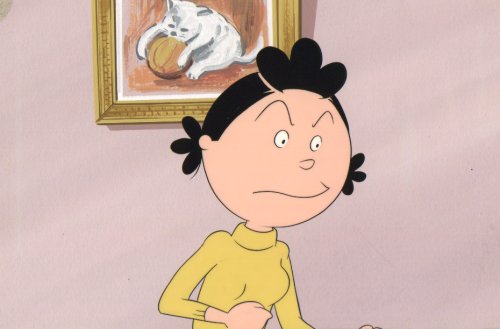 As Tsugata notes in the introduction to his latest Japanese-language book, Before the Dawn of Television Anime, it’s like some areas on the map of anime history are still marked terra incognita. Many people have at least heard of TCJ (Television Corporation of Japan), mainly because this commercial animation company, since renamed Eiken, is still at work today, most famously as the production house that makes the TV series Sazae-san. But TCJ’s advertising past, usually dismissed in a single line before discussion of its TV programming output, was truly massive, amounting to more than 1400 cartoon adverts between 1954 and 1960 (and more than 2200 if you include those live ads for which TCJ provided animated diagrams or titles).
Tsugata’s focus is not merely on forgotten byways of anime history, but also on forgotten geography. Although it is widely known that the Japanese animation industry, along with many other forms of production, relocated to the Kansai region after the devastating Tokyo Earthquake of 1923, Tsugata argues that Kansai remained the centre of Japanese animation for the next three decades, only ceding primacy to Tokyo with the establishment of Toei Animation in 1956. His narrative picks delicately at the Tokyo-centred bias of other Japanese books, pointing out that many landmark events in Japanese media, including, for example, the irresistible rise of Osamu Tezuka, actually ‘happened’ in Kansai. He also notes that Toei’s own press and self-commemoration has largely overshadowed the achievements of Saga Studio, a Kansai start-up, also established in 1956, which played a highly influential role in the first decade of Japanese animated commercials.
Tsugata diligently chronicles the perils of anime historiography. The men and women who churned out thousands of cartoon commercials in Kansai were not part of the academic conversation about what anime was. Hardly anyone has bothered to remember their work, because their work was usually the bit that happened in between the TV shows, and before the main features that anime historians actually bother to write about. This is despite the fact that the Kansai area studios turned an impressive buck, undeniably formed a part of the 1950s zeitgeist, and displayed a mastery and economy of line that must have made animation in the 1950s look considerably less ‘Japanese’ than it did after 1963. Tsugata’s cover includes one such image from several dotted throughout his book: a charming, dynamic layout of a pilot scattering leaflets from his plane, drawn as part of an Osaka Eiga commercial for a local prefectural election.
 Tsugata has never been afraid of doing the legwork, scraping information from wherever he can. In his biography of Seitaro Kitayama, he famously reconstructed part of Kitayama’s 1920s studio output in true Blade Runner style, by enlarging a staff photograph to read the schedule stuck to the wall in the background. For Before the Dawn of Television Anime, he diligently tracks down the surviving industry veterans, now with an average age of seventy, and gathers testimonials that restore much of the Kansai story to narratives of anime history.
These teams, often working out of pokey six-mat rooms and identifiable only by the occasional initials in the corners of their sketches, were responsible for the animation in some of the iconic Japanese adverts of the 20th century, including commercials for Nisshin Cup Noodles, Vick’s Cough Drops and Matsushita Electrics. Some of their works were 90-second narratives, others merely ten instructional seconds inside a commercial filed as “live action”, but with a little animated section explaining how cockroach spray works, or how menthol clears out your tubes. They were also responsible for the creation of iconic characters such as Yanbo and Mabo, the twin tykes who shilled for Yanma Diesel, ubiquitous in the 1960s but forgotten now because they didn’t appear in the kind of anime that gets archived or remembered.
Tsugata’s narrative also fills in a gap in accounts of “art” animation, revealing how art-house animators like the award-winning Renzo Kinoshita actually paid the bills while tinkering with their high-brow creations. Far too many researchers seem to assume that art-house animators spend all day sitting in garrets playing with sandtables, supported by some magical and secret government super-subsidy, whereas many of them, including the Oscar-winning Kunio Kato, have day-jobs that often get left off the resumés that are sent to film festivals. I wish such information was made available more frequently, as it might smack a degree of realism into the aspirations of some arts students. Tsugata does not shy away from it, and reveals that far from working in an adman vacuum, the animators of the Kansai set had strong and often reciprocal connections with big-name animators like Noburo Ofuji and Hakusan Kimura (himself the founder of Osaka Eiga in 1960).
Tsugata finishes with an outline of the vestiges of the old Kansai anime tradition, as kept alive by such companies as today’s Kyoto Animation. He also returns to a subject familiar from some of his earlier books: the little-discussed admission that even the big names in Tokyo were keen on ad revenue to pay the bills. Tsugata has argued before that Toei Animation itself was set up partly in anticipation of the money that could be made from the expansion of commercial Japanese television in the 1950s, and staff from Mushi Pro have admitted that they used to get paid a lot better making adverts with Astro Boy in them, than they did making Astro Boy itself.
His conclusion recalled a passage I had read elsewhere, in the posthumously published memoirs of the animator Soji Ushio, who had once decided to visit the famous canal-side studio building where the renowned Iwao Ashida had made many of the big animated splashes of the 1950s. Instead, when he arrived at the address, the canal had been filled in, the studio itself had been turned into a tatami shop, and there was no sign of the man whose company Ashida Manga Eiga had once been the biggest name in the Japanese animation medium. How soon they forget.
Jonathan Clements is the author of Schoolgirl Milky Crisis: Adventures in the Anime and Manga Trade.

 In the year 4341, invaders ransacked the Celestial Empire and placed a child on the Dragon Throne. The last remnants of the Dynasty of Brightness swore to fight them to the death. Their allies were alien creatures with the noses of eagles and the eyes of cats, and giant black-skinned devils from beyond the sea. Their soldiers were former smugglers and pirates, led by the Master of the Seas. His son would burn his scholar’s robes and cast aside his own name to become the embodiment of loyalty. He also became a god. Twice.

 My book,

 The Official Schoolgirl Milky Crisis Blog