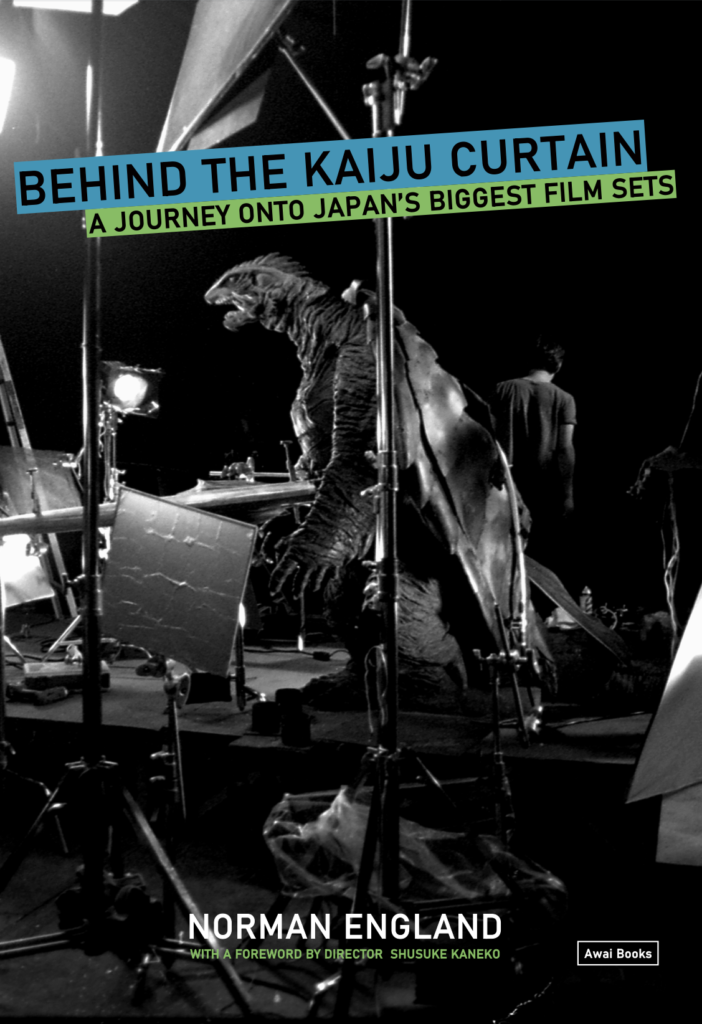
“England the bumptious gaijin transforms into a living culture clash, not only chronicling an excruciating catalogue of faux pas, but also the oddities of Japanese PR through foreign eyes – he is, for example, comically aghast at what passes for a “special event” in Japan, where fans are expected to shell out £100 for a ‘sneak preview’ and a jigsaw. In a world where Japanese production executives are notoriously thin-skinned about absolutely everything, I almost spat out my coffee imagining how one of them might react to the revelation that the bento boxes supplied by Toho apparently all ‘suck ass,’ even if England does put such a review in the mouth of an unidentifiable crewmember.”
Over at All the Anime, I review Norman England’s new memoir of life in the rubber-monster movie business.
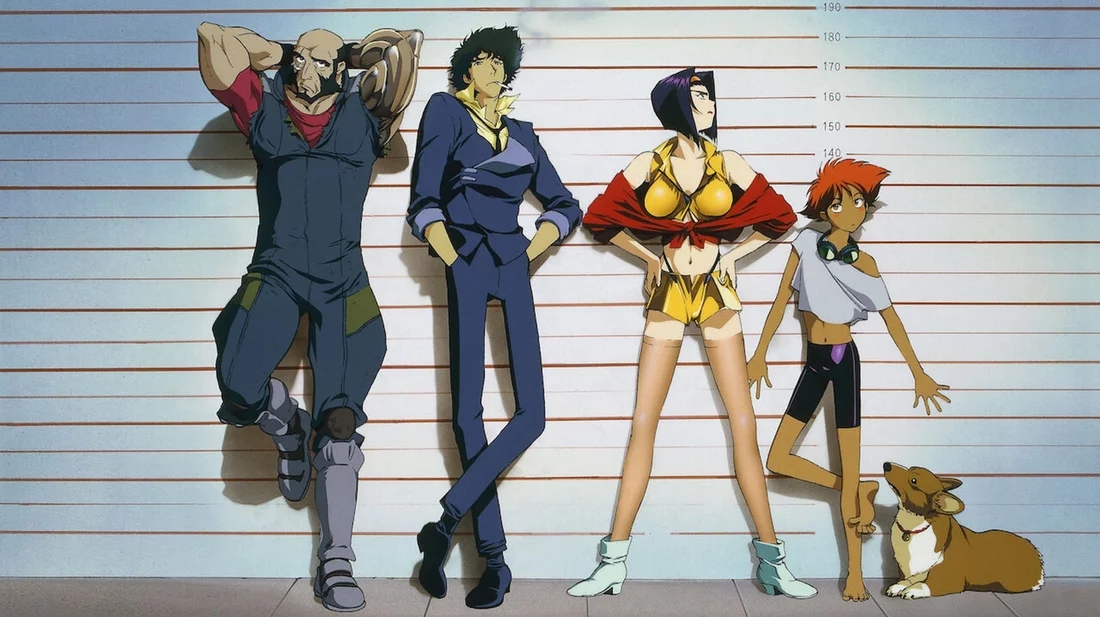
“Evangelion had effectively broken the mold for prime-time TV, and there was a scramble to make some kind of follow-up that did something different,” Clements explains. “Cowboy Bebop went for a sci-fi future without giant robots” — again, defying the conventions of science fiction anime at the time.
Over at Entertainment Weekly, I am one of the talking heads in Tyler Aquilina’s introduction to the Cowboy Bebop anime and its long history with the American mainstream.
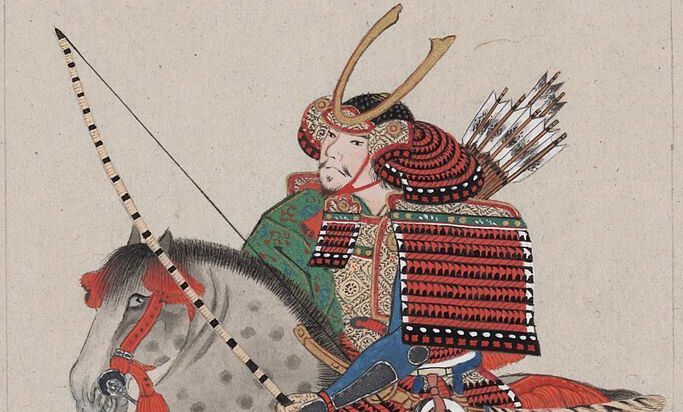
Up now on Noiser podcasts (for free!), A Short History of the Samurai, featuring that Paul McGann as the narrator, and that Jonathan Clements as the talking head. For those who want to know more, of course, there’s always my Brief History of the Samurai (which is £3.99 on the Kindle, so still a bargain).
I actually broke down for a bit while retelling the story of Dannoura, as I usually do, but they very discreetly snipped out me sobbing.
“Two years ago, in my review of Galbraith’s Otaku and the Struggle for Imagination in Japan, I noted that the book finished with a series of slingshot ideas, as if Galbraith had more to say, but had to bow out for now as he approached the edge of his wordcount. His new work from Stockholm University Press seems to be the first of the ‘contingent articulations’” that he promised, continuing his adventures as anime and manga’s self-appointed Danger Man, perpetually poking at the hornets’ nest in search of anthropological understanding.”
Over at All the Anime, I review Patrick W. Galbraith’s newly published anthropology of bishojo games and gamers.
“But worst of all, worse even than the fact that her Dad is now apparently a green-haired man called Gunther, is the fact that she has found herself in a world without books.
“I know that horror. I was once a guest in someone’s home where the sole piece of visible literature, left out on the coffee table to impress visitors, was a Dan Brown novel. So, imagine finding yourself in a world where not even a Dan Brown novel is available, where despite having Swedish-Finnish names, the locals have never heard of a sauna or soap… and did I mention there were no books?”
Over at All the Anime, I write up Miya Kazuki’s novel Ascendance of a Bookworm.
Finland’s first Chinese restaurant opened inside the spy-infested Hotel Torni in Helsinki in 1953. With characteristic Nordic bluntness, the restaurant was called simply “China.” There, claims food historian Ritva Kylli, visitors “eagerly tasted Chinese flavours and practised how to use chopsticks.” By the end of the 1950s, some Chinese influences had crept into Finnish cooking, including restaurants with wax tablecloths, and the usual utensils of Finnish eating – plates and forks and what-have-you, haunted by the presence of a bottle of soy sauce and a jar of chili oil.
“Dishes from the Torni,” she writes, “became familiar in the Finnish home kitchen, most often chop suey, which was known to have been developed in San Francisco, and become known all around the world as a classic dish of Chinese cuisine – everywhere except China.”
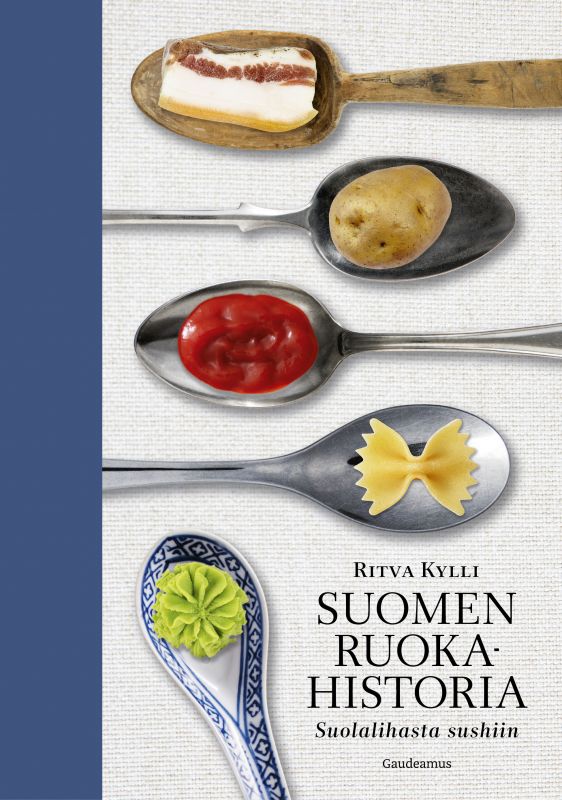
Chinese food is but a sidebar in Kylli’s exhaustive Food History of Finland: From Salted Meat to Sushi [Suomen Ruokahistoria: Suolalihasta sushiin], recently published in Finnish. In it, she charts the development of a national cuisine that has been famously pilloried by other nations – most famously, according to one well-known French politician, the second-worst in the world, after British food. She takes the Finnish palate from its early, bland fumblings with rye bread and dairy products (“Our Finnish cheeses are much praised,” claimed Daniel Juslenius in the 1700s, without a shred of proof), through the introduction of Russian foodways and French bistros, the impact of Prohibition in the 1920s, wartime austerity and the turnabouts of the modern world.
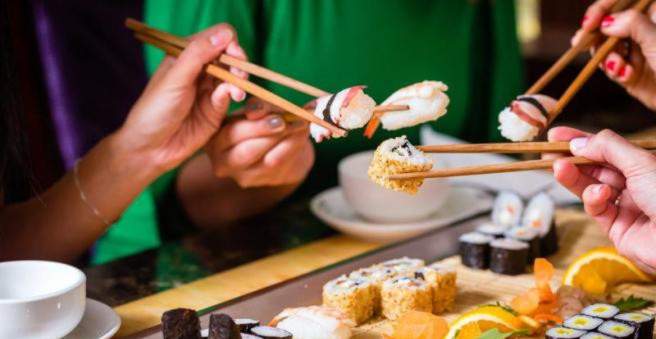
As her title implies, she finishes with another oriental foodstuff, at least nominally. Finns were certainly aware of Japanese food early on – she includes a letter from a baffled diner in Hakodate in north Japan, trying to come to terms with chopsticks and drinking soup from the bowl in the 1920s. But it’s not until 1978 that Kylli uncovers an advert in a Helsinki newspaper for a place calling itself the Yokohama restaurant. Although Kylli tracks a strong upward curve in Japanese food in Finland over the next few decades, it is not really until the 2010s that sushi has become a nationwide phenomenon outside Helsinki, and not because of the Japanese, but the Chinese and the Thais.
Most of the “Japanese” restaurants in Finland are run by Chinese and Thais, ever-ready to exploit the likelihood that Finnish men are sure to stock up on rice and stodge, but Finnish women will jump at the opportunity for a sort of salad that’s also a sort of lunch. For some reason, accountants and the Finnish tax office seem to smile upon “cold” lunches as a tax-deductible expense, further incentivising a bit of fish that hasn’t actually been cooked.
Kylli’s 500-page epic history of food is meticulously referenced and wonderfully detailed, and understandably shies away from the prospect that some Finns might be their own worst enemies when it comes to gastronomy. Once in a Helsinki restaurant that would probably prefer to be unidentified, my recurring inability to remember the word in Finnish for “bowl” led me to switch into Mandarin, and for the manager to suddenly snatch away my plate.
“Oh no!” he said, “Let me make you the good stuff. The buffet’s just the crap we serve the Finns!”
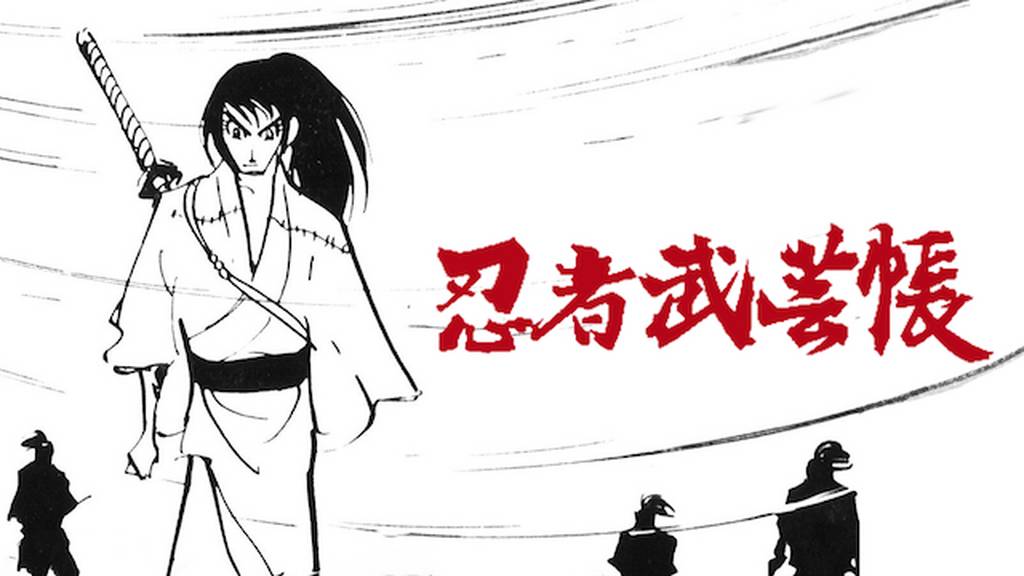
“I had a beggar girl set fire to herself,” he remembered, “becoming a signal beacon in order to warn the warrior who had previously saved her life. Should I only draw the beauty of her spirit? Or the ugliness of a burnt corpse? I chose not to turn away from the dead body.”
Over at All the Anime, I write an obituary for Sanpei Shirato, a key figure in the rise of the ninja, and in manga’s grittiest historical materialism.
Out now on Audible, unabridged editions of my Brief History of Khubilai Khan and Brief History of the Martial Arts. As with the earlier audiobook of my Emperor’s Feast, I insisted on doing the recording myself, because I was getting tired of narrators who couldn’t pronounce any of the words in Chinese or Japanese… or as it turns out in these two, Tibetan, Mongol and Vietnamese as well. Some proper tongue-twisters in these two, as well as my impersonation of a London taxi driver describing the exploits of the Danish karate team.
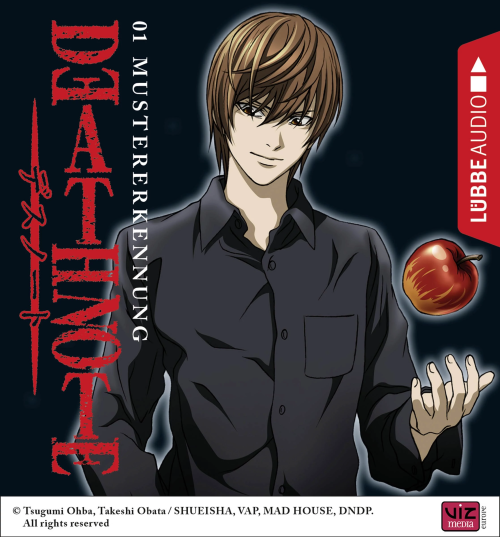
I recently stumbled across someone on the internet who had taken it upon themselves to try to transcribe my Death Note audio drama Pattern Recognition. I figured it would do no harm to put the actual script online for curious readers, rather than lead to the usual drifts in meaning and intent. I’d rather you saw what I actually wrote, rather than what someone thinks I did.
I wrote the 12-part audio adaptation of Death Note in 2017-2018. It was released by Audible in both German and French, and although I was contacted two years ago by an Audible producer looking for casting advice for an English version, I have heard nothing since, so I have no idea what’s going on there. But for those who might be interested in seeing the script for the first episode, here it is. I’m not sure I can get away with posting all twelve, but you get the idea.
This first episode is a good indicator of the changes that I started making to the original in order to reflect a different time and different medium. My Death Note is more of a police procedural than the anime (and yes, it was specifically an adaptation of the anime, not the manga), and also deals with certain changes in technology that would have otherwise ruined some elements of the original story — this is played for laughs in episode two, when Light goes in search of a “pocket television” and has to deal with a salesman determined to give him a smartphone. It also gender-swaps some characters and introduces some new ones, specifically Paula Virilio, the head of Interpol, who is parachuted in to help staple some scenes together, but also to add a stronger female voice to the sound mix.
And we’re back at All the Anime for just one more podcast, as I talk about this year’s festival with Andrew Partridge, the festival director, and Andy Hanley, who managed much of the day-to-day logistics. Although mine was the main face everybody saw on stage and in the pre-recorded director interviews, there were a dozen people working all year behind the scenes to actually get everything done, whereas I was a mere sock puppet, designed to distract the crowds while projectionists were kicking projectors and blowing the dust off hard-drives and all the other arcane things that projectionists do. The SLA staff are usually much more apparent in cinemas, running crowd control in their distinctive red shirts, but were asked to stay away this year on covid grounds.
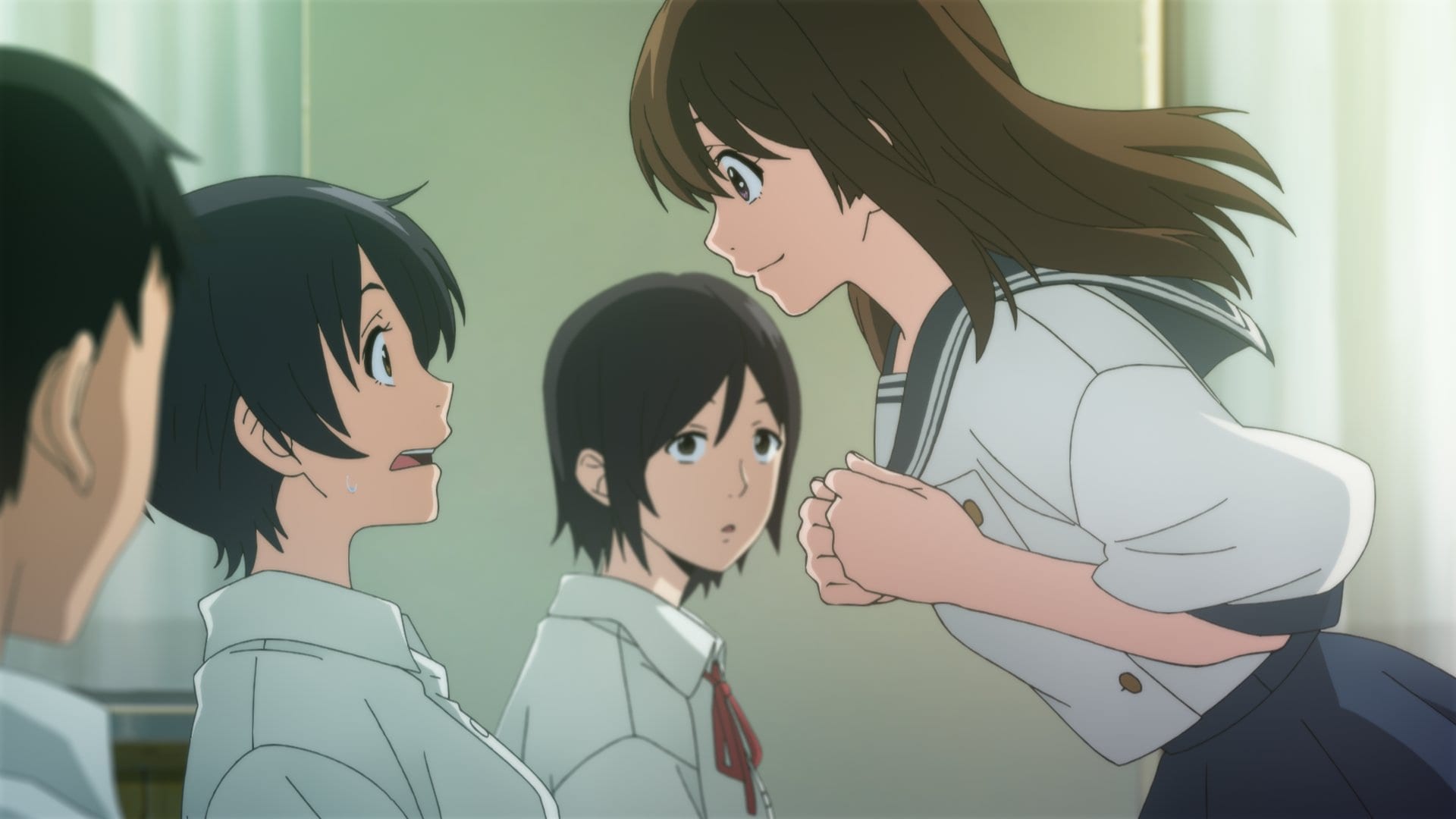
In something of a surprise, the Audience Award at this year’s Scotland Loves Anime goes to Yasuhiro Yoshiura’s Sing a Bit of Harmony, which I have unapologetically described as Ghost in the Shell meets Glee. As noted on Sunday’s podcast about the Golden Partridge award, the jury had serious misgivings about this film, which might also be parsed as Skynet: the Musical, but most punters in Glasgow and Edinburgh absolutely loved it. I, for one, really enjoyed the way that Yoshiura interrogated the tropes of teen anime by repeatedly wrecking them for comedic purposes.




 The Official Schoolgirl Milky Crisis Blog