“Toyota was one of several employees accused of industrial espionage, thought to have ‘stolen’ the idea of Chappy the Space Squirrel from a discarded concept in one of Tezuka’s own shows…”
Show up in the 1920s at a Japanese cinema like the Denkikan (“Electric Pavilion”) in Asakusa, and you might be greeted at the door by a man dressed like Charlie Chaplin, or Rudolph Valentino, or a famous samurai. And when everybody was in their seats, he would bound on the stage to do a stand-up routine about how cinema works, and what’s going on right now in the projection booth, and things to look for in the presentation that was just about to begin…
When the film started, the impresario would add voices to the characters. He would talk through the backstory, point out weird stuff going on, or inject thoughts and speculations. His voice would change depending on who was speaking onscreen. He’d even do the women’s roles. Coupled with the sound of a handful of musicians at the side of the stage, and “silent” film was anything but silent.
The benshi is not a tradition unique to Japanese cinema. In France, in the early days of film, similar impresarios or bonimenteurs would impart the same kind of drama and colour to the first films. But European cinema soon drifted into the use of intertitles and music alone. In Japan, the benshi remained crucial to the movie-going experience for an additional two decades, there to explain foreign movies and add zing to a night at the movies. When Japan’s first dedicated movie magazine published its inaugural issue in 1909, a benshi, not a movie star, was on the cover.
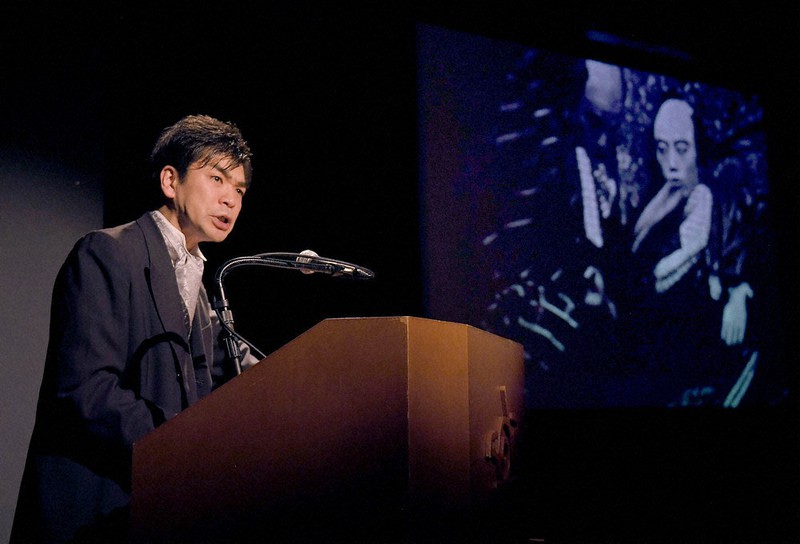
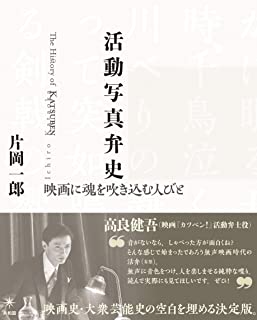
Ichiro Kataoka’s newly published Japanese-language book The History of Katsuben: The People Who Breathed Life into Film is a loving chronicle of the story of the benshi, from their early forerunners in puppet theatre, magic lantern shows and kamishibai, through the evolution of their role from mere MCs to integral parts of a night at the movies. He details their role as curators of content, explaining weird foreign habits or imparting crucial messages or health warnings.
When the USA shut down Japanese immigration in 1924, the benshi boycotted foreign screenings, effectively silencing all American movies in Japan. But as Kataoka notes in his accounts of increasingly fraught arguments over licencing and control, they were also possible agents of subversion. One was caught claiming that a banned movie about the overthrow of the French monarchy was actually a cowboy story about cattle rustlers, incongruously dressed in pompadour wigs and wielding rapiers. A benshi could become a crucial prism for refracting a story and shaping the audience’s experience – the 1926 movie Arirang was presented as a harmless melodrama in Tokyo theatres, but whenever the police were not watching in Korea, local benshi turned it into a piece of anti-Japanese agit-prop and a call for revolution.
They would go on strike again in the 1930s as their role was undercut by talkies – the rise of movie sound would, of course, spell the end for the benshi community, although some would move into related areas. Musei Tokugawa, one of the superstar benshi, would move into voice-acting in the 1930s, lending his voice to the Japanese release of the Chinese cartoon Princess Iron Fan (1941) and subsequently becoming a wartime radio star, chiefly remembered for the long-running serialisation of Eiji Yoshikawa’s novel Musashi.
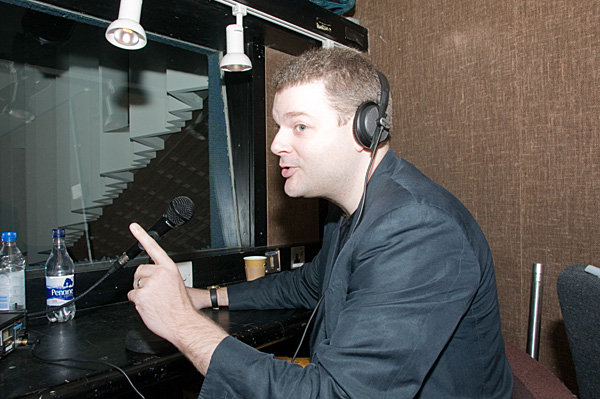
I remain fascinated with the benshi, not only because they are a lost part of the experience of watching movies in the days of old, but because I have often found myself inadvertently entering their world. In 1995, shilling for KO Century Beast Warriors at a convention in Liverpool, I found myself pushed to the front of an auditorium and obliged to narrate onscreen events in the as-yet undubbed first episode – it cost me my voice for several days. For a while around that time, I was also a periodic guest at a friend’s house, where I was called upon to translate, sight-unseen, the latest episode of Evangelion Fedexed straight from Japan. In 2009, I was hired by the Barbican to narrate screenings of the 1963 Astro Boy: Hero of Space, which for reasons never really explained, was not subtitled.
Then again, it was not quite the raw benshi experience. I neither dressed up as Astro Boy nor was visible to the audience. Instead, I was at the back in a sound-proof interpreter’s booth, shutting me off from any immediate sense of which jokes were getting laughs or groans. I’m told, that when the theme tune kicked in at the end and I obliged by singing along, there was a round of applause, although I was the only person in the cinema who didn’t hear it.
Since then, I have come to see my duties at the annual Scotland Loves Anime film festival as somewhat benshi-like. I have never been called upon to breathe life into a silent movie (yet), but I do keep alive the old tradition of maesetsu – a pre-movie introduction in which the presenter steers the audience into things to look for and interesting gossip about the film. Maesetsu was particularly common in the very early days of cinema. By the heyday of the benshi, they were called upon more for nakasetsu – narrating the film itself, and maybe a little bit of business as a master of ceremonies linked different parts of a film programme.
The benshi were a dying breed by the 1930s, forgotten forerunners of what today we call the seiyu – voice actors, a story chronicled elsewhere, particularly in Hisashi Katsuta’s Biographies of Showa-era Voice Actors. But Kataoka’s 500-page history is a fitting commemoration of the men (and sometimes women) who made early films come alive in a hybrid media experience, and includes forty pages of benshi biographies. These, too, are a fascinating glimpse of the lost performers of a forgotten art – figures like Mitsugi Okura, whose steamy narrations of romantic thrillers made him a magnet for groupies, and Yoshiro Sadomi, left so bereft by the rise of the talkie that he and his family committed suicide; Rakuten Nishimura, who travelled to Hawaii to breathe life into movies for the local immigrant community, and Hideo Hanai, who wandered the whole Japanese empire doing the same, or Musei Yamada, one of the few benshi to effectively achieve escape velocity, finding a new career as a film actor in middle-age, and dying in 1972 after several film appearances as an aging samurai.
“But as Karashima discusses, some of Murakami’s work similarly wanders off into little cul-de-sacs, that are quite normal in Japanese fiction but can seem self-indulgent and faffy in English. It might even be the case that the editorial scrutiny brought by a translator might even ‘improve’ his works in their English editions.”
Over at All the Anime, I review David Karashima’s fascinating account of the translation discourse and editorial intrigues that brought Haruki Murakami to the West. Features a cameo appearance by the Swedish Women’s Volleyball Team.
“Amy was a fierce champion for fandom, ever grateful to it for what it had brought her – recognition and love in her fifties, a taste of the stardom that so many in the creative arts reach for but never gain.”
In case you missed it, my obituary at All the Anime for the infectiously giggly Amy Howard Wilson.
“Pover’s narrative of her Tohoku experiences scales out and out like a Christopher Nolan film, beginning with her first frenzied days handing out supplies to tsunami victims, and then the years that followed as she returned to follow up: a day, a month, a decade. The reader experiences her expanding circle of attention almost in real time – when she first sees Oshika, it is a once-picturesque village in ruins, populated by wary victims and feral children. As she gains the deeper time and perspective to look around her, we get to hear about people’s lives and the long history of the community.
“One Month in Tohoku is that most glorious of prospects: a disaster-movie in reverse, beginning with the awful, grandstanding destruction, and then showing us the village rebuilding, names being put to faces, and storylines unfolding.”
Over at All the Anime, I review Caroline Pover’s memoir of disaster relief in the wake of the 2011 tsunami.
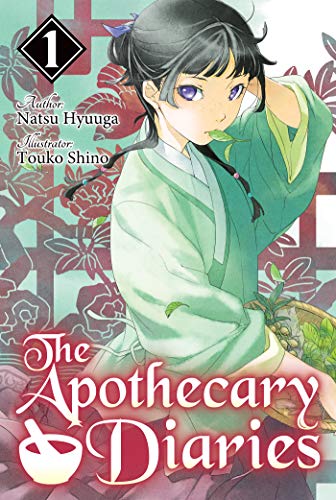
“Maomao is a self-harming teenage wallflower in an institution populated solely by other girls who will literally kill each other over the chance to go to the prom. In that most imperial of Bechdel tests, there is only one man who matters in the whole world, and the women talk about him all the time, but he is literally the master of all he surveys, and anyone who can snare his heart and bear his favourite son and stay alive will be the queen bee.”
Over at All the Anime, I review Natsu Hyuuga’s novel The Apothecary Diaries.
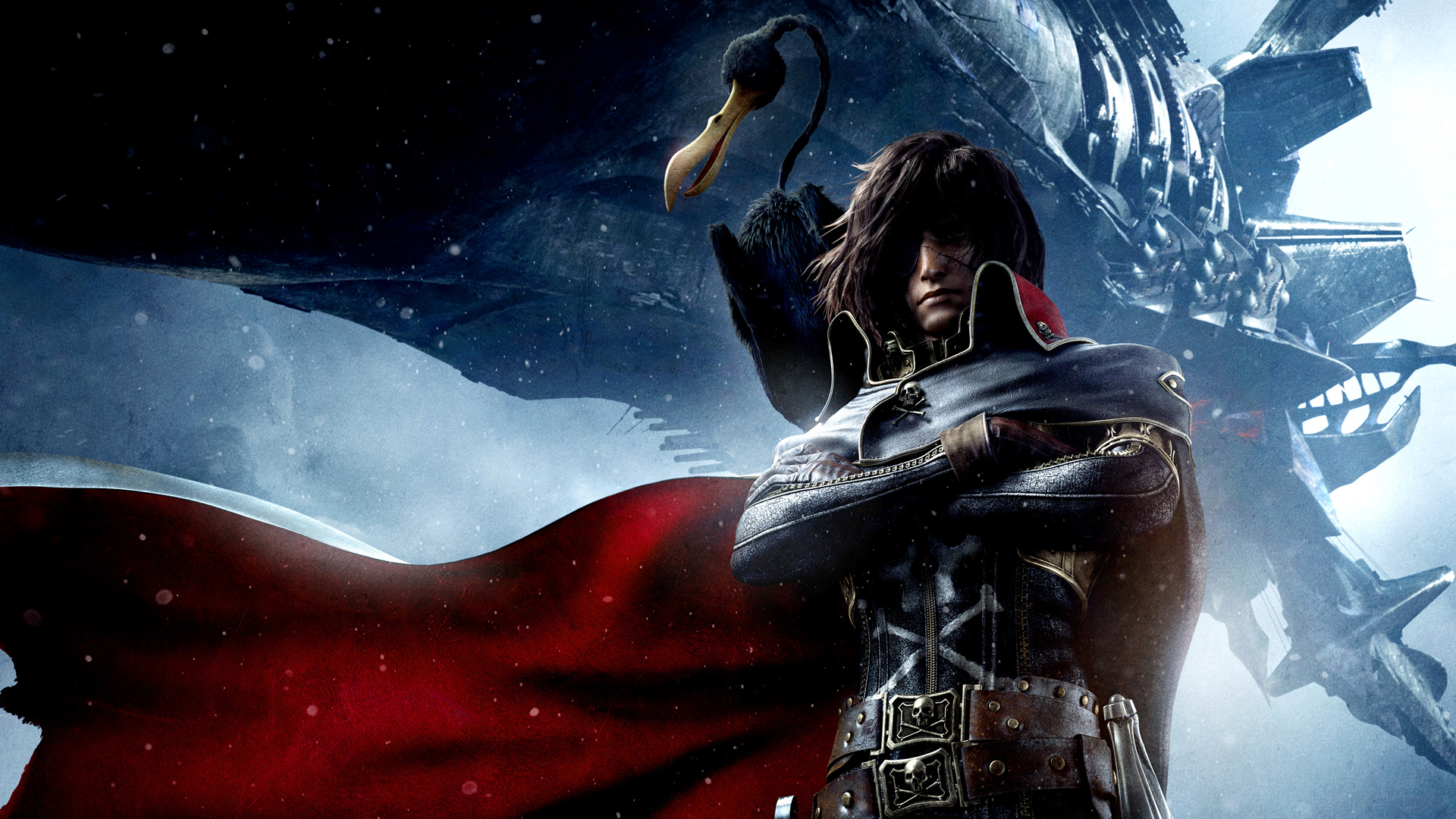
“When it comes to fandom… this was not merely a case of who dressed up as a space pirate in a hotel ballroom, but a more contentious issue of the 1980 ‘civil war’ that played out in conventions between horrified fans of prose SF and an invading horde of anime weebs. “
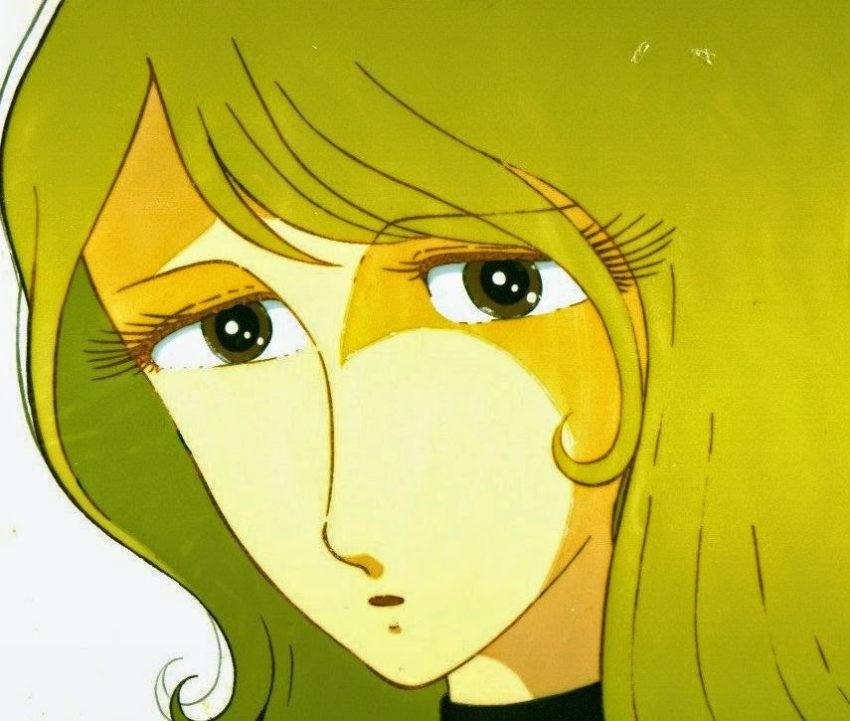
Over at All the Anime, I review a new book about the work and influence of Leiji Matsumoto.
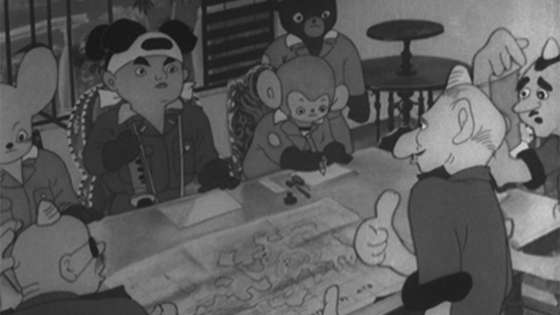
“…a dozen native English speakers were co-opted into the propaganda scheme in December 1944, which happens to be when Sacred Sailors was completed and submitted to the censor. They began broadcasting the Hinomaru Hour later that month. The men read out carefully curated messages from prisoners, performed skits and radio plays, and even songs, including a ditty about ‘the daring young men of the flying Japanese.’ They also did everything they could to subvert their captors’ intentions, including selecting as much British music as possible, because they hoped American servicemen would hate it.”
Over at All the Anime, I discuss the possibility that the first English-language voice-actor in Japanese animation was a prisoner of war.
“‘I am not really familiar with Japanese films,’ [Satoshi Kon] commented in an interview at the time of the film’s release. ‘I think I get more from the combination of memorable films that I saw in my childhood, rather than particular scenes from particular films.’ In other words… Kon’s movie references are a set of impressions of certain movie types – a fantasy of what the films might have been, rather than what they actually were.”
Over at All the Anime, I write about just some of the dozens of movie-history easter eggs in Millennium Actress. Another extract from my long essay in the new Blu-ray release.






 The Official Schoolgirl Milky Crisis Blog