Norio Shioyama 1940-2017

In case you missed it over at the All the Anime blog, my obituary of the character designer and illustrator Norio Shioyama, who died last week.

‘“I wonder if that wasn’t the spirit of the times,” he said. “Everyone was ready to work their hardest, to do their best. The result made Japan the second-largest economy in the world, but I think we lost something. We got colder.’

The Cosplay Lynch-Mob

shinji-1

It was an odd internet scandal even by the standards of our post-truth age. Donald Trump’s press secretary, Sean Spicer, a man whose grasp of the truth makes Comical Ali look like George Washington, was “outed” in January by the Kotaku fan site, whose minions had been trawling his social media posts looking for something to laugh at. They found it, seemingly, on his Twitter feed for 2013, where he had been enthusiastically hash-tagging a Gundam costume he saw at Katsucon.

Could it really be that, in the year that America jumped the shark, the frowning White House press secretary was a recovering anime fan? And if so, could it be that he was That Guy… you know, That Guy?

spicer-twitter-imageNo, I didn’t know That Guy, but enthusiastic chatter soon enlightened me – a man at American conventions of a few years back, who dressed up as pathological whiner Shinji from Evangelion. What better illustration of his oft-repeated catch-phrase, “I Mustn’t Run Away”, than appending it to a picture of Spicer standing before the press corps, unreliably informing them that black was white, that crowds were much more biglier than people remembered, and that Evangelion 4.0 was sure to be released very, very soon?

Anime fandom was awash with giggly glee as they tried to hunt down five-year-old cosplay photographs. High-level nerds were put to work on facial recognition software. Everybody was mobilised to get him… but I didn’t understand what for.

“Wait,” I asked. “If that’s really Spicer dressed as Shinji, why would you laugh at him? Because he’s a cosplayer? Because he likes Japanese cartoons?” Isn’t that shooting all your fellow anime fans in the feet? It seemed like an oddly mean-spirited and self-destructive form of protest, discovering that one’s enemy was a bit like you, and then laughing at him for it.

Spicer and I are the same age, and the world is a small place – it turned out we had a mutual acquaintance. He’d been a hard-core otaku at the same college as Spicer, and reported that he had zero interest in anime in the 1990s. If he were a fan, he was something of a late bloomer, and these days probably had other things on his mind than assuring people they have five minutes until the planet explodes. But fandom should lay off trying to shame itself.

Jonathan Clements is the author of Anime: A History. This article first appeared in NEO #161, 2017.

Robotic Angel

metropolis-7_zpsizomta1yDetective Shunsaku Ban and his nephew-assistant Kenichi arrive in Duke Red’s city of the future on the trail of an organ-trafficking doctor. But the city is coming apart, with Duke Red’s adopted son Rock leading a predatory police force, and the enslaved robot population scapegoated as the cause of all ills. Meanwhile, Tima, an android facsimile of the Duke’s dead daughter, goes on the run, unaware of her true nature.

The 2001 feature Metropolis was a who’s-who of big names from the Japanese animation business, including a superstar writer, a director at the top of his game, and an original story from the renowned “God of Manga.” It was also famously the last great clash of old and new animation techniques, using the traditional cel animation method in conjunction with conspicuous digital animation – thereafter, almost all Japanese animation would be entirely created within computers, whether it had a hand-drawn appearance or not. Such juxtapositions even carried across into the characters themselves, with a cast that faithfully mimicked the cartoonish look of Osamu Tezuka’s original comic, dwarfed and often upstaged by gleaming, realist steampunk backgrounds and machinery.

In Germany, the film is known as Robotic Angel, seemingly because nobody was going to get away with giving it the same name as Fritz Lang’s classic movie. Even in the new English-language release from Eureka Films, the movie is pointedly called Osamu Tezuka’s Metropolis. But this only opens a whole new can of worms.

For starters, much of the film’s plotting and look owes more to Fritz Lang’s Metropolis and its distaff descendant Ridley Scott’s Blade Runner, both touchstones for the film’s famous scriptwriter, Akira-creator Katsuhiro Otomo. Yet neither of those works were known to Osamu Tezuka when he wrote the original Metropolis manga, which he began working on as a teenage boy in the 1930s. His inspiration was a magazine article about the Fritz Lang movie, which he had not seen at the time. In fact, Tezuka was once heard to claim that his sole true inspiration was a sighting merely of the poster for Lang’s film, and his teenage speculations as to what it might have been like. At best, Tezuka’s story and setting were inspired by a handful of stills and a bit of text, but were not as directly related to the Lang film as Otomo’s version could be said to be.

Moreover, it’s become commonplace in writing about movies to assign a possessive credit to the director. Films of all stripes are collaborative ventures, but although there are occasional complaints from the Writers Guild and other interested parties, it’s the directors who most often get to say that a film is “theirs”. But Osamu Tezuka didn’t direct Metropolis. In fact, he’d been dead for a generation when it was made, and left explicit instructions that it should never be filmed. Metropolis was actually helmed by Shigeyuki Hayashi, usually known by his pen-name Rintaro, an animator who got his big break in the 1960s working for Tezuka on the iconic Astro Boy.

Rintaro’s attitude towards Metropolis, although usually spun in the media as an hommage to his beloved mentor, doesn’t have quite the same reputation among many anime professionals. One bitterly observed to me that Tezuka had been crystal clear about his opposition to seeing the story animated. In championing the production, Rintaro was less tipping his hat to Tezuka than flipping him the finger. He even admitted in press interviews that Tezuka “would have hated the film and will probably haunt me as a ghost.” Otomo, too, was heard to say that while Tezuka had been an inspiration to him, he was sure that his cyberpunk stylings would not have found favour with Tezuka, were he to ever see them.

In mitigation, such decisions over literary estates are fraught with what-ifs. Tezuka’s heirs have been superbly adept at preserving his legacy with a number of modern remakes, so it should come as no surprise that Metropolis gets the same treatment as Astro Boy and Kimba the White Lion. As with all estates, there is a question of whether the originator would have ever changed his mind. But the wrangles in the background over “Osamu Tezuka’s” Metropolis will always leave the audience guessing whose Metropolis it really is

Jonathan Clements is the author of Anime: A History. This article first appeared in Geeky Monkey #18, 2017.

The Grafton Affair

johngraftonIt was not lost on the Tsar’s enemies that the Finns were ready for direct action, leading the Japanese secret service to plot a daring act of espionage in 1905, designed to distract the Tsar from the Far East by creating trouble on his doorstep.

The Japanese naval attaché in Stockholm, Motojiro Akashi, was given a million yen in cash, and told to do everything he could to stir up the Finns. Akashi, a lone man ‘worth ten divisions’ in the eyes of the Japanese high command, hatched a plan to undermine Russia by starting a revolution in its most volatile territory. He assembled an unlikely multinational group of agents, led by Konni Zilliacus, a committed revolutionary who acquired an aging tramp steamer, the John Grafton, bought in the name of a Stepney wine merchant and stocked with thousands of rifles, pistols and rounds of ammunition, all bought by agents claiming to represent the King of Siam.

Owing to a misunderstanding with the aforementioned wine merchant, the John Grafton was also loaded with several hundred gallons of wine, which the Finnish crew had already begun to work through by the time the ship was in the North Sea. Zilliacus, meanwhile, unwisely chose this highly stressful secret mission, with his crew unconvincingly disguised as members of the Southampton Yacht Club, to try to give up smoking – leading to an embarrassing set-to with the police in Copenhagen where he was caught trying to break into a tobacconist.

After several more misadventures in the Baltic, the John Grafton eventually reached the Finnish coast, which it located by unceremoniously ramming into it. Trapped in the shallows of Ostrobothnia, the crew began unloading their cargo, only to be surprised by a vessel from the Russian navy. Realising that time was tight, they ran up the red flag, saluted it, and then ran for dear life while a lit fuse sparked the onboard explosives.

The explosion of the John Grafton was heard two counties away. The Tsar’s men inspected its twisted wreckage, and fearfully reported on the conditions of the many hundreds of rifles that had been landed before the explosion. Although the revolutionary mission had been a failure, the mere fact of the existence of the John Grafton, and the possibility that it was only one of many ships, was a source of great concern to the Russian state. However, it had taken care of most of Akashi’s money, and he would soon be run out of Europe after some of his meddling correspondence was made public; he ended up as governor of Taiwan. Konni Zilliacus, meanwhile, fled to England, and would write his memoirs and a cookbook. In one of those odd footnotes of history, his namesake son became the Labour MP for Manchester Gorton.

Extract from An Armchair Traveller’s History of Finland by Jonathan Clements, available now in print and on the Kindle (UK/US).

Munted with the Moomins

drunken-moomins

Tove Jansson was no shrinking violet. She’d made it very clear to the Japanese animators that the policy on her Moomins books was “No Money! No Cars! No Fighting!” That wasn’t clear enough for Tokyo Movie, who let a guy called Hayao Miyazaki put a tank in one episode. It wasn’t the only sore point with Jansson, but it sure didn’t help. Amid much finger-pointing and recriminations, and whispers in the industry that someone had offered a cheaper deal, production on the 1969 Moomin series suddenly shifted to Mushi Pro.

Jansson never knew that many of the underlings and out-sourcing companies remained the same. Noboru Ishiguro, who’d been an inbetweener beforehand, got bumped up to director, and recalled that a number of the staff were self-medicating due to the stress of drawing squashy little Finnish trolls.

One Kanazawa-san was stopped by the police after a particularly boozy night at the studio, and breathalysed.

“Why are you up this late?” asked the policeman.

“We’re animators,” he slurred. “We worked… we finished and I had a glass. We draw… we draw… do you know the Moomins? Like this. Look.” And he dashed off a sketch on a piece of paper.

The policeman was impressed.

“My kid loves the Moomins,” said his fellow officer. “Can you draw one for him?”

All too aware of the threat of a drunk-driving conviction, Kanazawa smilingly complied, only to discover that every cop at the road block now wanted his own Moomin pictures. But eventually, all fan-art desires satisfied, the animators were waved on their way. It was close escape.

A week later, a suitably cowed Kanazawa clocked off at the studio and headed out, without a drink – he had learned his lesson. As was his habit, he offered a lift to a bunch of other animators, and the crowded car set off on the dark streets, only to run into a police roadblock.

An officer approached the car with a torch, and suddenly yelled out.

“They’re here! I’ve found them!”

Kanazawa was confused. He knew his driving wasn’t at fault, but could not help but notice half a dozen policemen running over towards his car.

“What is it?” he asked, butterflies in his stomach.

“Those Moomin drawings were so popular at the police station,” said the lead cop, “that all the other officers wanted ones of their own. We figured you would come back this way some time, so we’ve been waiting for you.”

Kanazawa reddened with anger, and pointedly started up his engine.

“How can I draw when I’m sober?” he growled, driving off into the night.

Jonathan Clements is the author of An Armchair Traveller’s History of Finland. This article first appeared in NEO #160, 2017. This story does not appear in the Adventures in Moominland exhibition, which is running on London’s South Bank until 23rd April.

Media Theory in Japan

Over at the All the Anime blog, I write a review of Marc Steinberg and Alexander Zahlten’s Media Theory in Japan, which is published tomorrow by Duke University Press.

“The chapters they curate… point to numerous Japanese scholars whose ideas are not only unknown in the West, but seemingly unloved in Japan, where too many of their own colleagues cling to the shiny, exotic ideas of foreign theorists.”

The Heart of Darkness

There’s a haiku by Masaoka Shiki that doesn’t get translated all that often, because it ruins people’s image of peaceful, Buddhist Japan: “At the temple / beneath peonies in full bloom / we trample on the face of Christ.” It refers to a common annual sight, nationwide in the samurai era, of locals lining up to walk across a picture of Jesus or Mary, in order to prove that they were not secret Christian believers.

The novelist Shusaku Endo, baptised as a child at his convert mother’s insistence, was fascinated by this cul-de-sac in Japanese history, specifically by the undercover Christians that such ceremonies were designed to root out – men and women so devout in their faith for a foreign religion that they were prepared to die an agonising death rather than step on a holy image. Endo’s work was suffused with a question about his own faith. Would he be as brave as his forebears, or, if ever put on the spot with such high stakes, would he take the easy option and cave in?

Endo’s 1966 novel Silence was pressed into the hands of the famously Catholic Martin Scorsese at a 1990 screening of his controversial movie The Last Temptation of Christ. The director soon resolved to adapt it into a film, intrigued by its deep investigation of the nature of religious faith. The story focusses on two priests sneaking into the closed country of Japan, not only to administer to the Hidden Christians, but also to hunt for a fellow Jesuit who has reputedly gone native. Eventually played, after two decades in pre-production purgatory, by Andrew Garfield and Adam Driver, they search for the missing Liam Neeson, and inevitably fall into the hands of samurai Christian-hunters. Not unlike the similar quest narrative of Apocalypse Now, it’s a journey into the heart of darkness, in search of a phantom figure that might best remain unfound.

Endo’s book, and by association, Scorsese’s film taps into one of the most fascinating stories in Japanese history – the savage suppression of the Christian religion in Japan, and its long aftermath. Christian missionaries found thousands of willing converts in the 16th century, particularly in the south, where communities of believers flourished around the ports that had contact with foreign traders. Nagasaki, in particular, became a Christian enclave, handed over to the Jesuits by a devout local warlord, in gratitude. Gratitude for what? Well, there was all that spiritual awakening, of course, plus the money brought in by the silk trade, and (almost forgot) all those guns brought in from the West.

Gunpowder helped turn the tide in the long civil war that left the Tokugawa clan in charge, but Christian samurai were unluckily to be found largely on the losing side. Thousands of them were packed off for a time-wasting crusade in Korea, and the survivors resettled as farmers in the south. But with the conclusion of the civil war came the end of the political uncertainty that gave Christianity a foothold in the first place. The Tokugawa Shoguns were deeply suspicious of a religion that owed its allegiance to a foreign god-king in Rome, particularly after an angry Spanish captain had boasted that missionaries were merely the vanguard of an insurgency that would eventually be followed by conquering soldiers.

Christianity was hunted down and stamped out. A rebellion in the south, led by a teenage messiah, ended with the massacre of 37,000 Christians. The survivors went underground, worshipping in shadows and caves, hiding their icons inside Buddhist statues, and passing on the Bible by word of mouth. It’s these “Hidden Christian” communities that Silence documents, nests of forbidden believers among the most remote fishing communities, hosting a dwindling number of foreign priests smuggled in from the outside world. As the decades passed, their understanding of religious doctrine grew garbled and confused, but their faith remained strong.

Scorsese’s movie also boasts a who’s-who of big-name Japanese actors, including Tadanobu Asano as a creepy interpreter and Shinya Tsukamoto, director of the cult classic Tetsuo, as one of the Japanese faithful. Snubbed at the Golden Globes, for which it may have been released a few scant weeks too late, it was sneaked out in America late last year in a bid to secure last-minute Oscar nods. By the time you read these words, you will know whether that was a matter of blind faith or not [Time Travel Footnote: Yes, apparently it was].

Jonathan Clements is the author of Christ’s Samurai: The True Story of the Shimabara Rebellion. This article first appeared in Geeky Monkey #17, 2017.

The End of Fantasia

agentaika

There have been some heartfelt eulogies in fandom for Studio Fantasia, which has declared bankruptcy after a generation in the anime business, most notoriously with its micro-skirted spies in Agent Aika and its panty-flashing operatives in Najica Blitz Tactics.

Fantasia itself was born under suspicious circumstances, by staff manning the lifeboats from the foundering Tsuchida Production in 1983. Tsuchida eventually sank in 1986, but to say it went down with all hands would be misleading – by the time it went, it was a name on a filing cabinet, without real estate, equipment or employees, while its former staff were already running Studios Comet and Fantasia.

It’s important when reporting the history of the anime business to understand the difference between a disaster and a simple change in circumstances. Studio Fantasia, from what I can see, appeared to shut down because it was little more than some signatures on paperwork that allowed a guy to get some bank loans. Tomohisa Iizuka, the man who led the exodus from Tsuchida all those years ago, set up a company that in its 2006 heyday was bringing in £2.7 million a year and had 43 employees. But if Iizuka wants to retire, and if there is nobody willing to take on the company and its liabilities… if the company itself has no intellectual property worth preserving, then Fantasia might as well cease to exist on the day that Iizuka puts on his golf shorts and heads out to the country club.

As the director Noboru Ishiguro put it in his memoirs: “It is so easy to create a TV animation subcontractor. That’s because 90% of the cost is labour and hardly any investment is needed. As long as you have money to rent a studio and to buy tables for animators, all you need is people. You could start an animation production company tomorrow. But they go bankrupt quickly, too – just like a pub. Because the production cost is cheap, subcontractors can never make large profits. You’re lucky if you are not making a loss. As soon as you start doing a different job and the efficiency level drops, or an animator quits, the business goes downhill.”

2006 wasn’t just a peak for Fantasia, it was a peak for the entire anime industry. The studio visibly slowed over the following decade, until it was just picking up a few bits of piece-work on a couple of recent shows. It was not, like Studio Ghibli, initiating and owning new content. But it was, like Studio Ghibli, very much the workplace for a group of guys who were looking forward to not having to work anymore. Except the guy who draws knickers, for whom it is still probably still a labour of love.

Then again, never say never. Who would have guessed at the beginning of last year that the “next Hayao Miyazaki” would turn out to be Hayao Miyazaki?

Jonathan Clements is the author of Anime: A History. This article first appeared in NEO #159, 2017.

Nothing Like a Dane

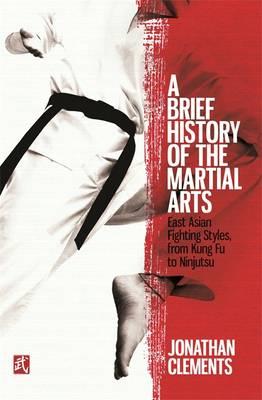
9781472136466‘I had that Danish karate team in the back of my cab once,’ says the driver. He uses the cabbies’ definite article, as if I am supposed to know which Danish karate team he is talking about.

‘They were over for that tournament, and they went out on the town afterwards. They drink a lot, you know? I was surprised. I didn’t think kung fu people liked beer or whatever. But I picked them up at like two in the morning, in their red tracksuits, and I was driving them back to their hotel, and we was all south of the river. In Brixton. And one of them says: “You know what, I want some orange juice. Pull over a second.” And I says: no mate, you don’t want to stop the car in bloody Brixton, not now, not at kicking-out time round all the clubs. And he laughs and says just pull over. So I do. I stops the cab, and all three of them hop out and go into a Seven-Eleven.

‘I just know there’s going to be trouble, and sure enough, there’s three big blokes go in. And one of them is like: give me your money. Give me your money, he says, to this ginger Dane in a tracksuit. Give me your phone and all. And the Danish guy is like: no, leave me alone. And the bloke is like (and he’s a big feller, right?) and he’s like give it to me now or I will eff you up. And the Dane is like: “No. Step away, sir, please.” Polite as you like.

‘So the bloke pulls back to punch him, and POOF! He’s on the ground clutching his head. And the Dane says: really, I am warning you. But he’s like: “GET THE LADS!” And the other two run off to the club, and they are back in flash with half a dozen mates, and they all charge at these Danes.

‘And these are tired, right, but they train for this every day. They don’t even have to think. It’s like BOFF! BOFF! BOFF! Kung fu fighting and they knock them all down. A couple of berks try to get up again, and then it’s BOFF! Stay down. Then they go to pay for their orange juice, and the police turn up.

‘And what do the police see? They see eight or nine big thugs just lying on the ground moaning and hanging on to their arms and that. And these three little Danes having a packet of Wotsits. And the policeman says to me: “Did you see what happened here, sir?”

‘And I says: “Them three blokes are the Danish karate team. And them others just found out what that means!”’

I’ll save you the trouble, dear reader. I Googled this one. I Googled every possible permutation of Brixton and Denmark and karate. When I came up blank, I tried every other Scandinavian country, as well as the Netherlands, on a hunch. I switched the martial arts, just in case it was kung fu or aikido or judo. But despite such an epic account from my story-teller, despite a midnight riot that was sure to have entered the folklore of south London, despite the implied eye-witness experience of the narrator himself, down to the tracksuit colours and omnipotent view of what was said and done a hundred feet away while he was still in his car, there is not a scrap of evidence online of this supposed event. No court hearing, no police report, not even a snickering comment in the local newspaper.

I Googled it in Danish, too, just to be sure.

Nothing.

But that’s the story I heard, word for word. Straight up.

Excerpted from A Brief History of the Martial Arts, by Jonathan Clements.

Getting Away With It

525077130_1280x720

Tetsuko “Alice” Arisugawa (Yu Aoi) is a writer’s daughter, cursed with an over-active imagination. Shunted into a new school by her parents’ divorce, she finds the perfect foil in local truant Hana Arai (Anne Suzuki), a pathological liar who eggs her on into wild conspiracy theories, breathless scandal-mongering and a series of misadventures that grow hilariously out of hand.

A decade after his early success with Hana & Alice, a live-action comedy about two hyper-active schoolgirls who dupe a boy with amnesia, director Shunji Iwai decided to revisit his characters with a prequel about a fateful day that saw them stranded in Tokyo and inadvertently starting a missing-persons hunt. The film’s title, The Case of Hana & Alice, makes it sound like some bloodthirsty murder investigation, a fitting evocation of the leads’ compulsion to read melodrama into everyday situations.

“The thing is,” Iwai laughs, “you can get away with a lot more when you’re a girl. Look at Hana and Alice and the way they behave. In the first movie, they were basically stalkers, telling that poor boy that they had a past together. In this prequel, they are causing all this trouble around the city. They’re kind of… how can I put this? They’re perverts. If I made that story about a man, if I made it about you, for instance, then you’d be locked up.”

It would also have been impossibly expensive as live-action. It wasn’t just a case of redressing Tokyo to look like it was 2004 – the film’s plot demands an absence of social media, as many of its escalating misunderstandings could be halted today by 20 seconds’ Googling. But the original film made stars of its leading ladies, who were not only now out of Iwai’s price range, but pushing 30 and unconvincing as middle-schoolers. Iwai hit on a solution inspired by the films of Ralph Bakshi. He shot the entire film on the run in 30 days, using teenage stand-ins for the stars, and then painting over every frame to make it look like an animated film.

After the guerrilla film-making was done, the touch-up was outsourced to 150 freelancers all around Japan. Iwai denies that he ran the whole post-production process without having to get out of bed, but one can easily imagine him pottering around his living room in a dressing gown, watching as digitised packets flow in and out of his server. The expensive leads were lured back for a single day to record just the voices; their younger onscreen selves moved and emoted like the teens they really were, and digital effects fixed the lighting and scrubbed out buildings and technology that did not exist a decade ago. The result might look on the surface like an animated film, but the use of live actors delivers huge amounts of nuanced data – flinches, tics and micro-expressions that would simply never happen in a cartoon.

The real charm of The Case of Hana & Alice is the compassion that suffuses the film. Two clueless kids, poised on the cusp of adulthood, go AWOL overnight in a big city, but are kept safe by the good deeds of the people they meet, from the taxi driver who waives an unaffordable fare, to the indulgent strangers who put up with their histrionics. There’s not a dark moment in a film that is as confident about its leads’ right to be silly as it is about the surety that all will be well in the end. The Japanese, unsurprisingly, have a word for it: omotenashi, or kindness for the sake of kindness.

The Case of Hana & Alice is also a winning portrayal of the slippery relationship that teens have with the truth, although Iwai himself says the original inspiration came from somewhere much closer to home. “When I started working in the film industry, I was astonished at how many of the people there were bare-faced liars. There are an awful lot of them, like half! It’s very surreal, and that provided a lot of material for Hana.”

Jonathan Clements is the author of Anime: A HistoryThis article first appeared in Geeky Monkey #16, 2016.