Trainspotting

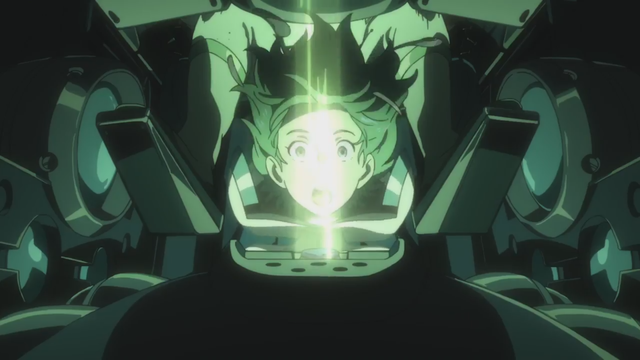
Ahead of the European premiere of Eureka 7: Hi-Evolution 1, director Tomoki Kyoda pokes at his posh-nosh gnocchi with a fork. The Michelin-recommended hotel is a far cry from the Scotland he saw in certain movies, one of which supplied the name of his lead character.

“Originally Renton was a place-holder name I just lifted it from a film I liked. I figured I would go back and change it sometime. But then the production got so integrated into rave music, and people kept calling him Renton. In fact, the working title for a long time was Renton 7. Eureka just kind of stuck.

He confesses to me that he is worried he should admit such things to a Scottish audience. “Won’t they be insulted that I have stolen something from them?” he frets. No, I say, they will love it. This is, after all the same Scotland Loves Anime festival that was once celebrated in a notorious cartoon that pastiched the “Choose Life” speech from Trainspotting, delivered by a figure in a kilt backed up by a Braveheart-era Mel Gibson riding a giant mutant haggis.

Ten years on from Eureka 7’s original airing in Japan, Kyoda is overseeing a film trilogy that re-cuts and augments the original, taking it off in a very different direction, much like the Evangelion movies. Some things, however, remain the same. “In the original, I wanted to give 2D animators the chance to do fighting robots. Everyone only ever wanted 3D work, and I felt that the industry was losing a particular skillset.” A decade later, he is more concerned about the disappearance of a different echelon of talent.

“The thing that amazed me about the Tohoku Earthquake was how little it affected the business. The studios managed to keep running. We outsource so much work these days that Japan can suffer all sorts of issues and just keep rolling. But we rely so heavily on the overseas in-betweeners that we couldn’t function without them. If you want to know what shuts down the Japanese animation industry these days, it’s a national holiday in China.

“So, anyway, the first thing I did when I got to Scotland is I dragged everybody down to Edinburgh. I got them to take my pictures as I ran along Princes Street, and down those steps (they’re not where you think they are, you know), and banged into a car. I went and found that bridge from the film. I was like a Trainspotting tourist.”

“Did you try and score any heroin?” I ask.

“No,” he says.

This article first appeared in NEO 170, 2017. Eureka 7: Hi-Evolution 1 is released in the UK by Anime Limited on 27th August 2018.

None More Black

Late last month Jordan Zakarin from SYFY Wire interviewed me about the representation of ethnic minorities in anime and manga. As ever, only a small part of the interview made it through to the final piece, so here’s our conversation in full.

——————-

JZ: How did the look of anime and manga characters develop in the early years, to what seems to have significant Caucasian traits? What cultural factors led to that?

“Whiteness” is the default position when you are delineating images in ink on a blank page. Culturally, the Japanese regard themselves as homogenous, and even the more significant local “minority” populations, such as the Koreans, Chinese and Ainu, are often physically indistinguishable, particularly when subtler nuances and differences are sacrificed to speed and economy.

In the development of anime, early practitioners were heavily influenced by Disney and the Fleischer brothers. Sometimes they were aping an international art style known to work in foreign markets — Betty Boop, in particular seems like the prototype for a lot of early manga girls — but also an art style known to be suited to the available technology. When you have limited animation budgets, you can’t afford photo-real depictions of human image and movement. Bigger eyes allow for an easier, more simplified depiction of emotions; a small mouth requires less enunciation in speech; rainbow hair colours and wacky styles help distinguish characters at a glance, when a realistic depiction of Japanese people would be much more samey.

Not to mention that fact that the early days of television in Japan were dominated by a tidal wave of foreign imports, that Japan only began to shake out of primetime in the late 1950s. As a result, the sight of white people speaking in fluent (dubbed) Japanese was common on Japanese TV. All these factors combined to make whiteness and the big-eyes/small-mouth look as regular occurences in anime and manga. There were occasional experiments to buck the trend — Giisaburo Sugii’s Tale of Genji, for example, which gave all the characters realistic hair colour (and thereby made them much harder to tell apart), and the titular Akira, whose features were certainly more pronounced and “Asian”.

How did black people get portrayed early on, and how did that change over time? What (broadly speaking) caused any change?

Early on, I’d say that black people were largely invisible or in subaltern roles, much as they were in American television. Japanese people’s experience of black people, if they had any experience at all, was largely derived from what they saw on foreign media, and occasional encounters with American soldiers and sailors.
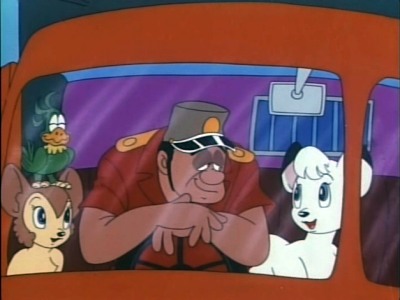
By setting Jungle Emperor (a.k.a. Kimba the White Lion) in Africa, Osamu Tezuka stumbled right into the middle of race issues. By modern standards, his caricatures of black characters in the manga would leave many readers aghast, but he would have been mortified to discover that he had insulted anyone. His black characters were no more or less caricatured than the whites, but he was drawing in a vacuum, unaware and unaffected by American identity politics. That is, of course, until the anime adaptation of his work, which was sold to America in production in 1965. This led to Tezuka being bombarded with directives from the American production end, seemingly borne from a new-found sensitivity towards racial issues in *America*.

Although Kimba was set in Africa, the American directives began with a rule not to show black people, which was soon relaxed after protests from the writers, so it then allowed black people, but ONLY IF THEY WERE NICE! No bad blacks, only bad whites! Later anime, particularly by the 1980s, often featured incidental black characters as reflections of a melting-pot future. Black characters had significant roles in the Macross franchise, for example. Nadia, the leading lady in the steampunk series Secret of Blue Water, was originally designed as significantly darker, but toned down to more of a tan colour in development.

As an aside, in the late 1990s, the critic Maki Watanabe in Animage magazine called out Japanese cartoons for their relentlessly biased portrayal of Muslims and the Middle East. She pointed out that anime in the 1950s and 1960s had been awash with stories from the Arabian Nights, which while orientalist in tone, nevertheless featured middle-eastern characters as protagonists, leading men and heroines. But by the 1990s, influenced by and pandering to the American market, middle eastern characters were universally presented as terrorists and religious fanatics.

How are black people portrayed in anime/manga (in Japan) now?

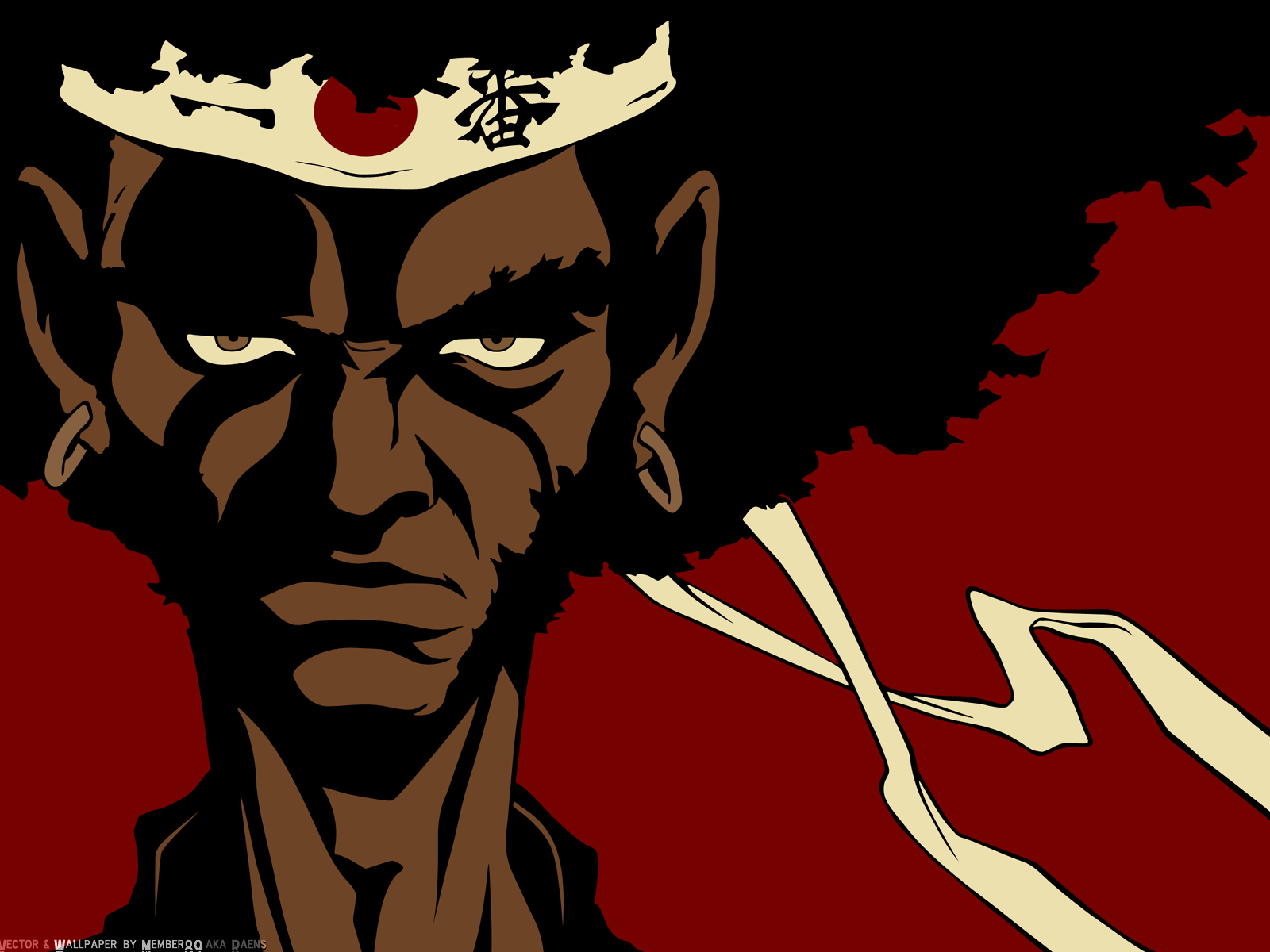
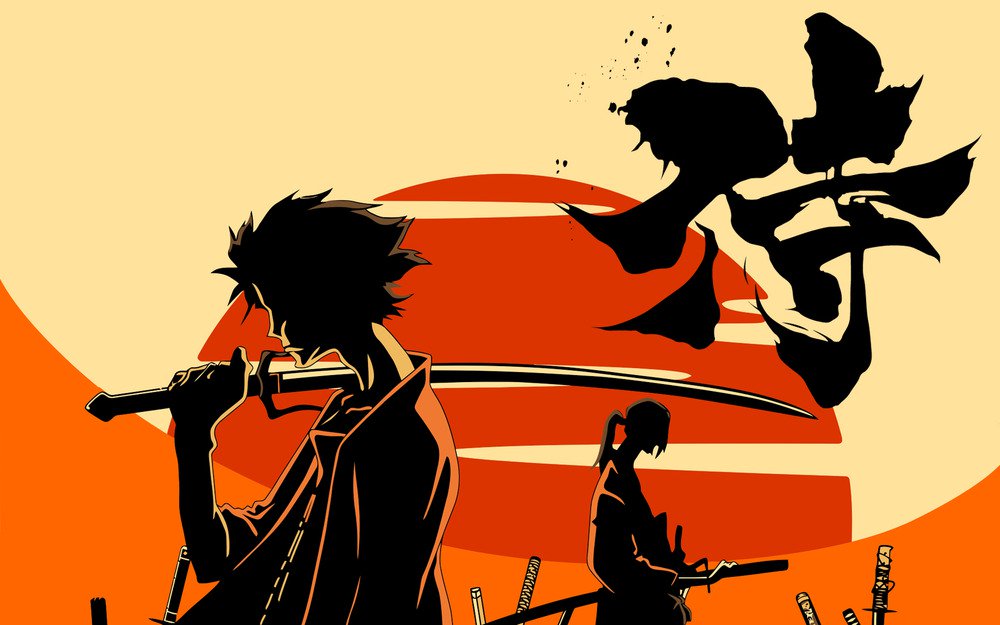
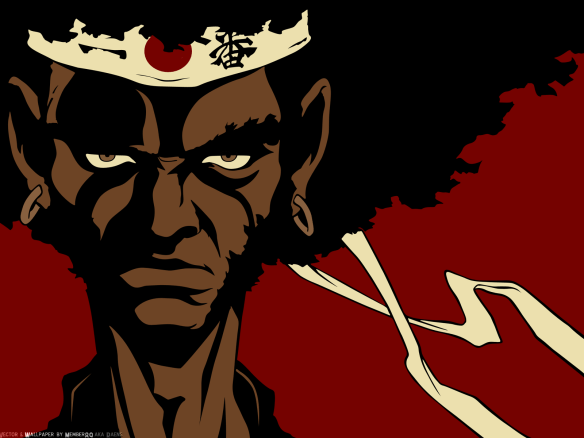
In the sense that Japanese pop culture continues to at least engage in discourse with American pop culture, both cultural imports and work-for-hire for foreign clients have come to reflect changes in America’s own growing awareness of diversity. Black characters are regular occurences in the line-up of team-shows intended for international distribution, and there are shows like Cowboy Bebop and Samurai Champloo that actively reference blaxploitation and hip hop culture. Most notably, of course, we have Afro Samurai, work made for hire by the Japanese for American clients, starring Samuel L. Jackson. How much more black could it be…. and the answer is none… none more black.

I would also add that the rise of digital animation, since 1997, has changed the technical restrictions on the depiction of all forms of blackness. Too much darkness on a cel, be it night-scenes, or skin tones, or shadows, risked cel halation effects because the light from the rostrum camera would accentuate imperfections. This issue was wiped out by the adoption of digital imaging instead of cels, which meant that the turn of the 21st century saw a sudden rise in the number of vampire shows, night scenes, and moody noir. That may well have made it just plain easier to invest in the more realistic depiction of black characters, instead of just giving some characters a deeper tan.

I think, though, it’s fair to say that although there are increasing examples of diversity in anime shows, these often remain the idle speculations of Japanese creatives with a limited experience of other cultures. Some black characters are living, breathing human beings, but others remain hulking, inarticulate gaijin seemingly inspired by something someone’s brother-in-law once said about a G.I. his friend’s friend once saw in Yokohama.

Jonathan Clements is the author of A Brief History of Japan.

Approaching Shinkai

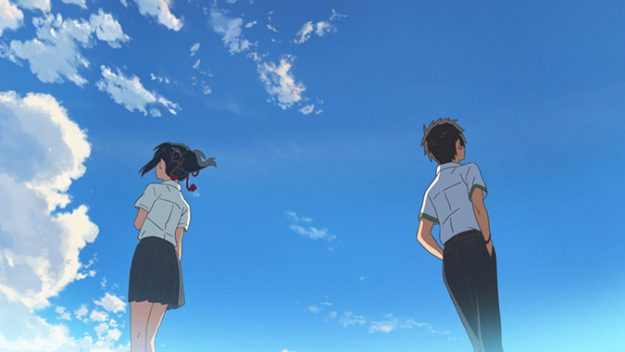
A year ago, Motoko Rich interviewed me as part of the research for an article she was writing for the New York Times about Makoto Shinkai. Only a couple of soundbites made it in, so here is what I said in its entirety.


MR: Are you familiar with Shinkai’s earlier work, and if so, can you describe how he has evolved as a director?

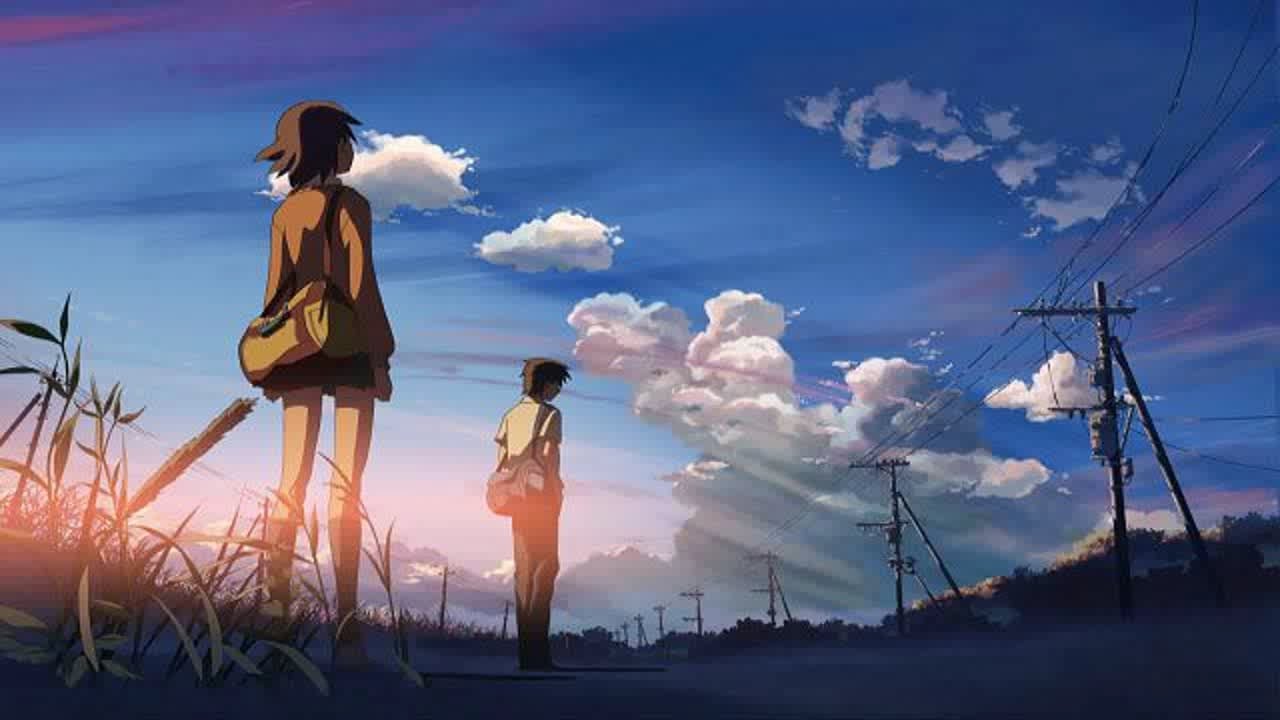
JC: Your Name stands out in Shinkai’s work because it irons out many of the issues that have dogged his earlier work. 5cm/Second, for example, was hampered by a silly logistical issue, which was that it fell a few tantalising minutes short of feature length, and seemed to end with a pop video, as if the director had simply run out of time and money.

Much of Shinkai’s work can be parsed as variations on a theme from Haruki Murakami’s short story “On Meeting the 100% Perfect Woman One Fine April Morning” (“Shigatsu Aru no Hareta Asa ni 100 Percent Onna no Ko ni De’au Koto ni Tsuite”), and Your Name finally delivers the “happy” ending that fans of that story, and indeed of Shinkai’s variations on it, have been waiting for (see my article here).

Nothing is wasted in Your Name, everything has a pay-off. Every odd little observation feeds into the direction of the movie. It’s a proper, mature work from a director whose previous feature length work has been frankly wanting — proof that he has greatness in him.

What would you say are his distinguishing talents?

Shinkai is a master at depicting and investigating the distance between people. On Garden of Words, it is expressed in micro-expressions and gestures, inches on a park bench and the direction someone is facing as an indicator of their true feelings. In 5cm/Second and Voices of a Distant Star, it’s expressed through relativity and interstellar distances, but he excels at allegorising the way that human beings are separated by gulfs of yearning.

He told me that he works by laying down dialog and sound tracks in a digital storyboard and then compliments them with images he finds around the internet before inviting animators in to illustrate his vision. He said he doesn’t consider himself a particularly good illustrator. Do you know if anyone else works that way? How is it different from other well know anime film directors?

I don’t know of anyone who works specifically in that way, but his working method bears a resemblance to ways that image boards work in advertising and marketing. He makes no secret of his interest in a bricolage of real-world inspirations, which, I think, is an admirable way of admitting his own weaknesses as an animator, and then finding a way of making them irrelevant.

Is the “successor to Hayao Miyazaki” label fair?

No, it’s a horrible imposition to dump on the shoulders of a young animator, and nobody really knows what it is supposed to mean. At an exhibition level, in cinemas, it’s the distributors saying “we need someone who can put the same number of audience members in cinemas as that guy who’s been achieving big numbers at the box office from Princess Mononoke to The Wind Rises.” But at a reception level, among the audience themselves, it’s a meaningless term. Miyazaki was a one-off — any animator worth their salt doesn’t want to be the “new” anything, they want to be an original! Shinkai doesn’t even make films for the same audience as Miyazaki — he has a much more adult sensibility, so it’s a fallacy to expect him to suddenly make films with an all-family appeal.

When foreign distributors say they want a “new Miyazaki”, what they are asking for is a guarantee of quality that will allow them to release one animated film a year from Japan that will sell a certain number of copies and garner good reviews. They want that kind of imprimatur and they are hoping that someone — Shinkai, or Mamoru Hosoda, or one of several up-and-coming directors — can fill that role. It doesn’t have a whole lot to do with style or content, it’s really about Blu-ray sales and tickets.

How do you think Your Name will be received in the west? Why was it such a breakthrough blockbuster in Japan?

Your Name will get positive reviews — it’s a great film; it’s a fun film; it’s a thoughtful film. It was well-received in Japan in part because it is undeniably a good film, but also because it tapped directly into an important part of the Japanese zeitgeist since 2011. Japan is full of people who lost someone dear to them; who lost their homes, who lost their families. I think Your Name‘s appeal, almost inadvertently, partly derives from the sense of hope and closure that events later in the film offer a large sector of modern Japanese society. Can’t really say much more without giving away spoilers!

“an exhilarating ride”

Lovely review of my Brief History of Japan from Steve John Powell, up online at Zoom Japan. I’ve never been called “admirably non-judgemental” before!

“…manages to make thousands of years of Japanese history both accessible and enjoyable…an exhilarating ride into the heart of how Japan works, behind the facade of the economic miracle…. this book couldn’t be more timely.”

The Samurai Primer

Quite unexpectedly, the Japan Times has just included my Brief History of the Samurai in a recommended list of essential reading for Japan-lovers. “Clements has a knack for writing suspenseful sure-footed conflict scenes: His recounting of the Korean invasion led by samurai and daimyo Toyotomi Hideyoshi reads like a thriller. If you’re looking for a samurai primer, Clements’ guide will keep you on the hook.”

Hear Me Now

I feature in two podcasts up recently on AlltheAnime. One is the pre-Scotland Loves Anime interview, in which I talk about the politics of hosting Japanese guests, and libel a bunch of industry figures while discussing their peccadilloes. Then, a week later, I appear at the jury chairman in the big jury hoedown, when festival judges Amelia Cook, Rayna Denison and Elliot Page discuss the four films in competition.

Animation in Japan Until 1919

Over at the All the Anime blog, I review Frederick Litten’s book on Animation in Japan Until 1919.

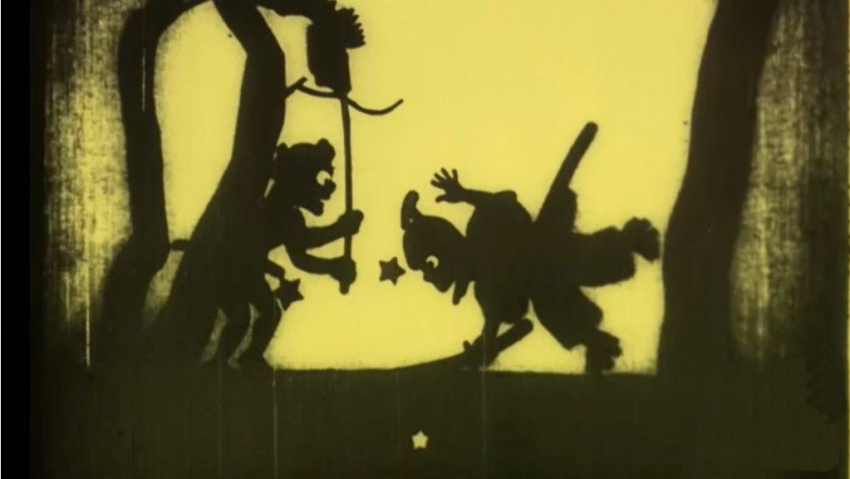
“In 160 closely-argued pages on animation in Japan and animation from Japan, Litten suggests that many scholars have committed an error of historical practice by believing the old-time hype. The 1923 Kanto Earthquake destroyed most of the materials of the early Japanese animation world, which leaves historical memory in the hands of the people with a vested interest in being remembered. Although Nobuyuki Tsugata has done fantastic work in reconstructing the life and films of the pioneer Seitaro Kitayama, Litten accuses Kitayama of ‘blatant self-promotion’, and calls into question much of what Kitayama wrote about his own achievements.”

The Ghosts of Dead Gods

Back from the Worldcon in Helsinki this August, a gathering of science fiction’s great and good. Japanese attendees maintained a strangely low profile at an event that often made me muse upon the thinning of the old guard, and the continuing onrush of the new. While a block of fifty Chinese fans paraded big-name authors, pushed their upcoming Asia-Pacific convention in Beijing and ran a riotous party, the Japanese huddled at a dealers’ table and rarely seemed to venture out. I found myself on two anime-related panels having to apologise for the lack of native speakers, with representatives from the homeland of anime and manga seemingly unwilling to volunteer to talk about it publically. Despite this, two awards were dished out with Japan connections, both sneaking in under Japanese fandom’s radar.

One was for Ada Palmer, sometime historical consultant for Funimation and the founder of the Tezuka in English website, although her accolade here was a John W. Campbell Best Newcomer award for her novel Too Like the Lightning. The other was the Best Graphic Novel Hugo, handed to writer Marjorie Liu and artist Sana Takeda for their ongoing comic series Monstress.

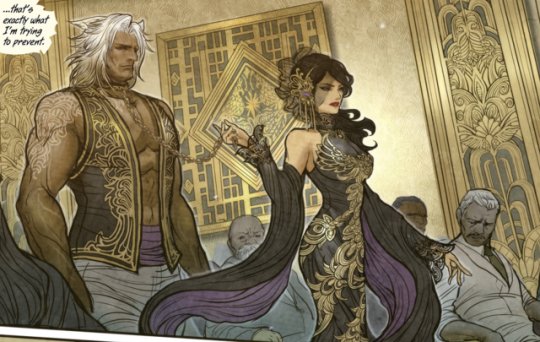
Although drawn in Japan by a Japanese artist, and hence perfectly deserving of a manga tag, Monstress is far better imagined at the forefront of modern “woke” comics, intimately concerned with the powerlessness of slaves and chattels in a colonialist society – what it feels like to be an object in someone else’s world. Trawling through online reviews, I see many readers ascribing a manga sensibility to the artwork. This is news to me – Takeda’s imagery seems to strive to be as un-manga as possible, luxuriating in the availability of a colour palette, thin lines and a sedate panel progression – if it reminded me of anything it was Colleen Doran. One imagines that faced with visceral, violent imagery, some American readers are immediately prompted to pronounce something as “manga” – which is also ironic, considering the reputation that Image Comics already enjoys without any help from across the sea.

The cast are largely women, but Takeda refuses to objectify them. No fan service here – instead these are characters getting on with their various stories, showcasing a cast of widespread ages and grotesqueries, as if Orange is the New Black were suddenly invaded by a coven of steampunk cannibal witches. It’s Liu’s writing that imparts Monstress with its true chills – feral, fearful creatures with magical powers, locked in eternal conflict with predatory, flesh-eating ghouls, constantly fighting to gain control of their own destiny.

Jonathan Clements is the author of Anime: A History. This article previously appeared in NEO 169, 2017.

Fireworks

Over at the All the Anime blog, I review Akiyuki Shinbo’s Fireworks, a remake of a Shunji Iwai TV movie from 1993. “Producer Genki Kawamura expected sparks to fly between the main staff members, particularly since Iwai the original writer-director was sitting in with Shinbo the animator and screenwriter Hitoshi Ohne, himself no stranger to helming his own films. ‘It was very exciting sitting in a script meeting with three directors,’ Kawamura told Japan’s Buzz Feed. ‘Punches could fly at you from any direction.'”