Getting Away With It

525077130_1280x720

Tetsuko “Alice” Arisugawa (Yu Aoi) is a writer’s daughter, cursed with an over-active imagination. Shunted into a new school by her parents’ divorce, she finds the perfect foil in local truant Hana Arai (Anne Suzuki), a pathological liar who eggs her on into wild conspiracy theories, breathless scandal-mongering and a series of misadventures that grow hilariously out of hand.

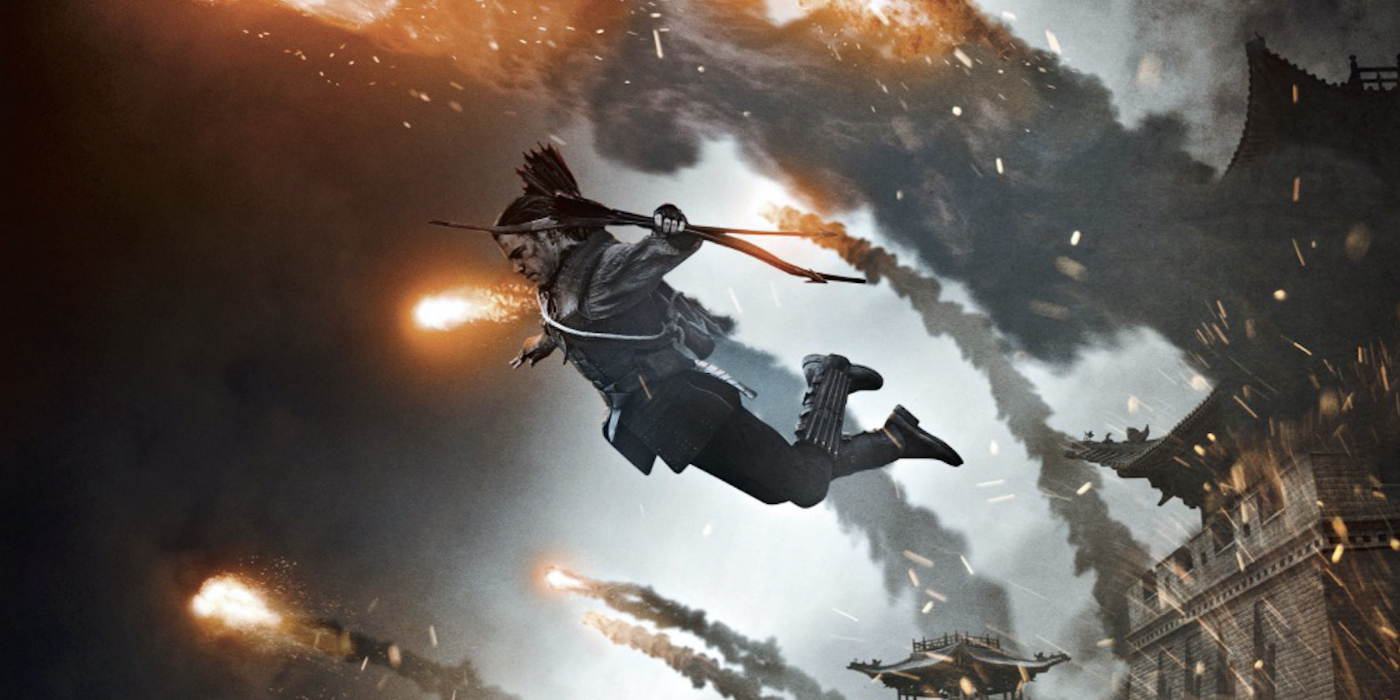
A decade after his early success with Hana & Alice, a live-action comedy about two hyper-active schoolgirls who dupe a boy with amnesia, director Shunji Iwai decided to revisit his characters with a prequel about a fateful day that saw them stranded in Tokyo and inadvertently starting a missing-persons hunt. The film’s title, The Case of Hana & Alice, makes it sound like some bloodthirsty murder investigation, a fitting evocation of the leads’ compulsion to read melodrama into everyday situations.

“The thing is,” Iwai laughs, “you can get away with a lot more when you’re a girl. Look at Hana and Alice and the way they behave. In the first movie, they were basically stalkers, telling that poor boy that they had a past together. In this prequel, they are causing all this trouble around the city. They’re kind of… how can I put this? They’re perverts. If I made that story about a man, if I made it about you, for instance, then you’d be locked up.”

It would also have been impossibly expensive as live-action. It wasn’t just a case of redressing Tokyo to look like it was 2004 – the film’s plot demands an absence of social media, as many of its escalating misunderstandings could be halted today by 20 seconds’ Googling. But the original film made stars of its leading ladies, who were not only now out of Iwai’s price range, but pushing 30 and unconvincing as middle-schoolers. Iwai hit on a solution inspired by the films of Ralph Bakshi. He shot the entire film on the run in 30 days, using teenage stand-ins for the stars, and then painting over every frame to make it look like an animated film.

After the guerrilla film-making was done, the touch-up was outsourced to 150 freelancers all around Japan. Iwai denies that he ran the whole post-production process without having to get out of bed, but one can easily imagine him pottering around his living room in a dressing gown, watching as digitised packets flow in and out of his server. The expensive leads were lured back for a single day to record just the voices; their younger onscreen selves moved and emoted like the teens they really were, and digital effects fixed the lighting and scrubbed out buildings and technology that did not exist a decade ago. The result might look on the surface like an animated film, but the use of live actors delivers huge amounts of nuanced data – flinches, tics and micro-expressions that would simply never happen in a cartoon.

The real charm of The Case of Hana & Alice is the compassion that suffuses the film. Two clueless kids, poised on the cusp of adulthood, go AWOL overnight in a big city, but are kept safe by the good deeds of the people they meet, from the taxi driver who waives an unaffordable fare, to the indulgent strangers who put up with their histrionics. There’s not a dark moment in a film that is as confident about its leads’ right to be silly as it is about the surety that all will be well in the end. The Japanese, unsurprisingly, have a word for it: omotenashi, or kindness for the sake of kindness.

The Case of Hana & Alice is also a winning portrayal of the slippery relationship that teens have with the truth, although Iwai himself says the original inspiration came from somewhere much closer to home. “When I started working in the film industry, I was astonished at how many of the people there were bare-faced liars. There are an awful lot of them, like half! It’s very surreal, and that provided a lot of material for Hana.”

Jonathan Clements is the author of Anime: A HistoryThis article first appeared in Geeky Monkey #16, 2016.
The Walking Dead

world_15_temp-1315894811-4e6ef61b-620x348Some historians argue that there have only been three real ‘slave societies’ in human history: ancient Rome, where one in three human beings was held as property; Brazil, where a young Charles Darwin once noted that the sheer number of slaves had caused the ruling class to collapse into complete indolence; and certain southern states in the USA. I’ve always found this to be a little unfair – the definition of a ‘slave society’ seems to be based on very exacting percentages of slave and free, which rather avoids the point that slavery was everywhere. Even in America, arguments over the history of slavery have been largely reconfigured on racial lines, and avoid mentioning, for example, the ‘white cargo’ of English convicts, forced to work as indentured labourers [one reader has taken me to task for even mentioning this, since it is a favourite meme of white supremacists. All I’m saying is that in history, not all slaves have been African. The Roman republic and empire being a well-known case in point].

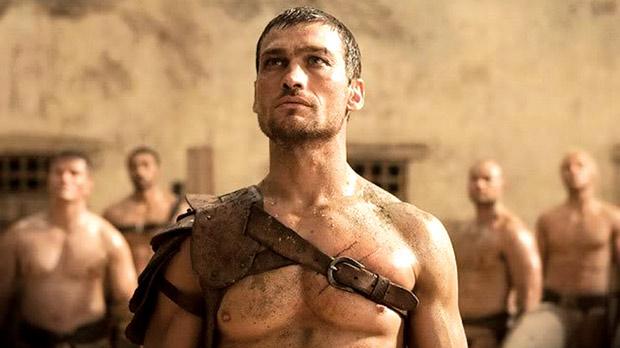
As Gaius Verres argues in Swords & Ashes, Rome’s slaves are its walking dead. For many of them, particularly prisoners of war, their legal position was a hair’s breadth away from being actually dead, postponed at that brink for as long as their master willed it. The Latin word for slaves, servi, contains within it that sense of having been ‘saved’ from the moment of execution – a doom held in suspension indefinitely thereafter. The concept of a slave rebellion in Rome was tantamount to a zombie uprising.

Newly-minted slaves like Spartacus were always trouble. They were surly, uncooperative, and often did not even speak good Latin. Romans placed a much high premium on vernae, those who had been born and raised in captivity. A verna was much more likely to know his place and appreciate what few advantages his slave status offered him to the alternative, which might be not existing at all.

Vernae were also expensive. A properly trained, skilled slave, young enough to have a good few decades of work in him, would cost the equivalent of high-end car or a small apartment today. It’s not all that surprising when one calculates the value of the labour involved – the cooking and the cleaning and the myriad daily household chores that a slave could perform, all in an age without washing machines or vacuum cleaners. Apologists for ancient Rome have used this fact to suggest that slavery was a relatively benign condition, in which disadvantaged or underprivileged people were given a roof over their head and a job to do, with the hope of eventual freedom, and that only a madman would have maltreated such a valuable investment.

Unfortunately, of course, Rome had its fair share of madmen, some of them even in charge. And arguing that a slave cost a lot of money was not guarantee against ill treatment, as the sight of a crashed Ferrari attests today. Some valued family slaves, like Cicero’s own manservant Tiro, might be fortunate enough to end their lives in relative comfort. Others, particularly the men captured in military campaigns, might find themselves toiling in the deadly conditions of the silver mines, or turned into beasts of burden on the vast, slave-run super-farms called latifundia.

Roman law is a fascinating area – so much of it is like our own, but there are entire areas that are simply alien. What of the status postliminium, introduced to deal with those embarrassing moments when a captured Roman soldier is rescued from the enemy? If a soldier is enslaved during a foreign war, but somehow escapes or is rescued, he is welcomed back as if he has literally been raised from the dead. In Swords & Ashes, Cicero argues that this creates a whole series of other problems. If a Roman soldier can be enslaved and then unslaved, then why not everybody else?

It could be worse. In China only a century before the time of Spartacus, the First Emperor had a slave unit called ‘the hidden offices’, comprising men and women so badly mutilated that they were used as glorified motors, shoved into cubby holes to power fans or open doors all day. I tried to write a Dr Who drama about it once, and got booted out the door for being so ghoulish.

But I don’t think it’s ghoulish to confront the ultimate implications of a society that is prepared to treat people as things. In modern times, we replaced slaves with machines, but began once more to replace machines with people. Has slavery really been eradicated or is it now exported, outsourced, globalised to some far-flung region out of everyday sight? Such questions are what keeps the story of Spartacus so alive for us, even two thousand years after he died.

Jonathan Clements is the author of Spartacus: Swords & Ashes. This article originally appeared on the Starburst website in 2012.

Jupiter’s Cock!

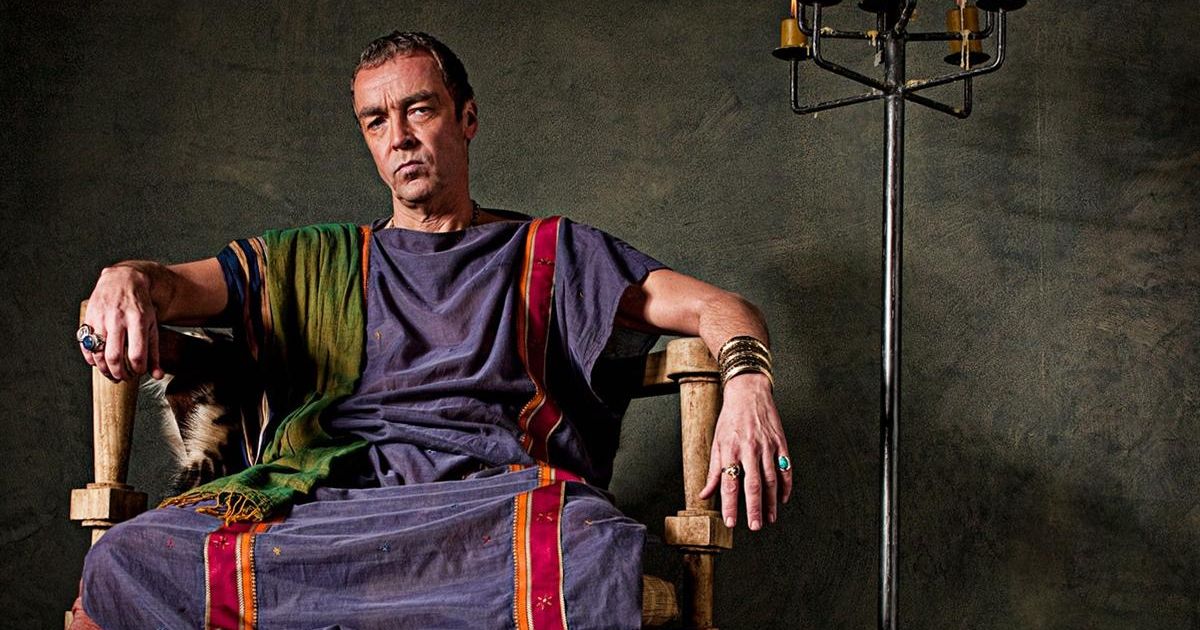
john-hannah-as-batiatus-in-spartacusThe scripts of Spartacus carefully replicate the effect and mood of a language and a culture from two thousand years ago. The elite Romans speak with received pronunciation and poetic metres; lower-class figures like Batiatus pepper their speech with profanities that take the names (and body parts) of the Roman gods in vain. Reflecting the hegemony of Latin, even the slaves speak the same language, but with more recognisable accents from further-flung colonies. And with a straight face –uttering the most boggling of insults and commands, but without a twitch of Anglo-Saxon embarrassment or shame. The Romans are used to speaking their words frankly, to slaves who dare not protest or blush.

Writers have long struggled with the problems of conveying the attitudes and ideas of a different time or place in the same language that readers use to write their shopping lists or shout at their kids. Tolkien invented an entire world in order to justify the authorship of a single sentence in a language that didn’t exist. Numerous science fiction authors have posited the use of an English that is decayed or mutated, each demanding new exercise on the part of the reader before they get a sense of the world they see. The same applies to historical fiction.

Derek Jarman found a way around it by having everyone speak Latin in his film Sebastiane. But even though his actors rose to the task, their argot sounds strange to modern ears. In the most memorable line, a man onscreen calls out “Oi! Oedipe!” The subtitles gleefully translate it as “Hey! Motherfucker!” Roman insults and oaths didn’t draw on vernacular concepts – more often than not, they drew classical allusions, to Hercules and Venus, Vulcan and Jupiter. And their body parts.

In Spartacus, the writers embark upon an extended exercise in capturing the sense of how ancient Romans communicate. Dialogue is as carefully Latinate as possible, to the exclusion of much earthy Anglo-Saxon. No, not the f-word and the c-word, both found in abundance, but little touches like hello, goodbye and thank you, banished from hearing in order to up the sense of a different world. “Gratitude” is itself an anachronism, not found in Latin until long after the time of the Republic, but its use in Spartacus sets a tone throughout, and matched by much other dialogue.

When Glaber (Craig Parker) says: “What promises have you made Batiatus and his faded bitch?” there is a cadence and a rhythm to his words. Even in English, the script conveys the sense of a language carefully conjugated almost into poetry, heavy with alliteration and assonance, even as it launches an insult.

That’s one of the reasons why I leapt at the chance to write the first Spartacus tie-in novel Swords & Ashes, because it was a chance to play with those ideas for a whole book. I get a real kick out of words like miscellanea (a gladiator’s porridge) or spoliarium (the room where they dump the dead). I think it’s sweet that a gladiatorial groupie is called a ludia (literally “schoolie”) or that the gladiators used to call their pre-game warm-up routine numeri (“the numbers”). Such ideas can impart a real sense of time and place by their presence.

There are also some that need to be absent. When my first draft came back from approvals, it was missing three thousand words, most of them “the” and “a”. Latin doesn’t have definite or indefinite articles, and while the producers are happy to have them in the text, they are reluctant to hear them in dialogue. The pseudo-Latinate dialogue of the show is jarring when you first see it on the page, but you soon get used to it. It’s not long before you hear Batiatus bellowing in your ear about wine, women, and the arena. I was very surprised that I was able to last a whole 28 pages before his first outburst of “JUPITER’S COCK!”

Jonathan Clements is the author of Spartacus: Swords and Ashes. This article first appeared at A Temporary Distraction in 2012.