Munted with the Moomins

drunken-moomins

Tove Jansson was no shrinking violet. She’d made it very clear to the Japanese animators that the policy on her Moomins books was “No Money! No Cars! No Fighting!” That wasn’t clear enough for Tokyo Movie, who let a guy called Hayao Miyazaki put a tank in one episode. It wasn’t the only sore point with Jansson, but it sure didn’t help. Amid much finger-pointing and recriminations, and whispers in the industry that someone had offered a cheaper deal, production on the 1969 Moomin series suddenly shifted to Mushi Pro.

Jansson never knew that many of the underlings and out-sourcing companies remained the same. Noboru Ishiguro, who’d been an inbetweener beforehand, got bumped up to director, and recalled that a number of the staff were self-medicating due to the stress of drawing squashy little Finnish trolls.

One Kanazawa-san was stopped by the police after a particularly boozy night at the studio, and breathalysed.

“Why are you up this late?” asked the policeman.

“We’re animators,” he slurred. “We worked… we finished and I had a glass. We draw… we draw… do you know the Moomins? Like this. Look.” And he dashed off a sketch on a piece of paper.

The policeman was impressed.

“My kid loves the Moomins,” said his fellow officer. “Can you draw one for him?”

All too aware of the threat of a drunk-driving conviction, Kanazawa smilingly complied, only to discover that every cop at the road block now wanted his own Moomin pictures. But eventually, all fan-art desires satisfied, the animators were waved on their way. It was close escape.

A week later, a suitably cowed Kanazawa clocked off at the studio and headed out, without a drink – he had learned his lesson. As was his habit, he offered a lift to a bunch of other animators, and the crowded car set off on the dark streets, only to run into a police roadblock.

An officer approached the car with a torch, and suddenly yelled out.

“They’re here! I’ve found them!”

Kanazawa was confused. He knew his driving wasn’t at fault, but could not help but notice half a dozen policemen running over towards his car.

“What is it?” he asked, butterflies in his stomach.

“Those Moomin drawings were so popular at the police station,” said the lead cop, “that all the other officers wanted ones of their own. We figured you would come back this way some time, so we’ve been waiting for you.”

Kanazawa reddened with anger, and pointedly started up his engine.

“How can I draw when I’m sober?” he growled, driving off into the night.

Jonathan Clements is the author of An Armchair Traveller’s History of Finland. This article first appeared in NEO #160, 2017. This story does not appear in the Adventures in Moominland exhibition, which is running on London’s South Bank until 23rd April.

Media Theory in Japan

Over at the All the Anime blog, I write a review of Marc Steinberg and Alexander Zahlten’s Media Theory in Japan, which is published tomorrow by Duke University Press.

“The chapters they curate… point to numerous Japanese scholars whose ideas are not only unknown in the West, but seemingly unloved in Japan, where too many of their own colleagues cling to the shiny, exotic ideas of foreign theorists.”

The Book of Lord Shang

Nobody likes Shang Yang. Since the Han dynasty, the infamous instigator of the Qin state’s brutal, coercive policies has been a bugbear for Chinese historians. It was Lord Shang, so the story goes, who so heartlessly threw away the chivalrous ideals of the Zhou dynasty, masterminding a fascist state on a permanent war footing, an engine of conquest that would eventually roll over the whole of what is now China. Brought down by his own policies and executed by his patron’s vindictive heir, Shang Yang would not live to see the culmination of his ideas a century later: the crowning of his patron’s great-great-great grandson, the ruler of Qin, as the overlord of “All Under Heaven”, the infamous First Emperor.

The Book of Lord Shang has become something of an orphan work in Chinese history. With five chapters lost from its original 29 (including the tantalising “Essentials of Punishment” and “Protecting from Robbers”), it was ignored by most literati for the next millennium, and suffered through being rarely cited nor even competently edited until the late middle ages. When textual critics did eventually get around to reading it, many derided it as, if not a forgery riddled with anachronisms, then as a far-from-adequate summary of the thoughts of Lord Shang – better, perhaps, to simply read of his deeds in The Records of the Historian. Even today, it rarely gets to be published in its own right – instead it’s tacked on to The Art of War or Sima Qian’s biography of the First Emperor. The Qin regime itself enjoys a mixed modern heritage; for the general public, it’s known chiefly for its iconic Terracotta Army. Even some China specialists swallow the party line of the Han dynasty, that Qin was some terrible totalitarian experiment never to be repeated, and Shang its dastardly architect, laughing from beyond the grave at its rise and fall. It is hence welcome indeed to see Yuri Pines’ The Book of Lord Shang: Apologetics of State Power in Early China, which not only presents an excellent translation of Shang’s work, but places it in its broader historical context.

Pines’ clear and rational introduction sets up the environment in which a hundred schools of thought would contend. He points to the fact that iron was gradually worming its way into the technology of what had formerly been a Bronze Age regime. While the sovereigns of the Zhou dynasty whiled away their days in their central capital, their nobles out on the marchlands gained the technology to clear new lands, to dig better wells and make smoother chariot wheels. Iron led to a sudden expansion of people and territory. Meanwhile, on the battlefield, it began to undermine the old rules of engagement. Although it would be centuries before anyone properly capitalised on it, the days of the chariot were over, and with it, the days of limited warfare. The new “Spring and Autumn” era now favoured the foot soldier, and with it, a broader, more meritocratic footing.

For Pines, such technological concerns are vital to understanding the politics of the age. The great sage Confucius, pre-emptive nemesis of Shang’s Legalist ideas, might have complained about the decline in morals and the collapse of the old order, but in Pines’ well-argued thesis, he didn’t realise that his very rise to prominence was itself a symptom of that decline. The old aristocracy had annihilated itself on the battlefield, creating a vacuum that favoured the lower-born “gentleman-scholar”. Meritocracy might have made sense to Confucius, but it also made sense to the beleaguered dukes and marquises of the Spring and Autumn period, who loved the idea of administrators and officials who had no ties to the old noble families, and hence could not lean on their support in palace coups or putsches.

Pines’s Lord Shang sees a bigger picture – not merely the decline of old values, but their substitution with an entirely different worldview. In a prolonged blueprint for social engineering, he wants to militarise every element of the state in order to ensure that there is a loyalty scheme in place to reward otherwise reluctant conscripts. War, for Pines’s Shang, is a “bureaucratic procedure”, in which a general throws overwhelming manpower at any problem, expecting someone among the contending minions to get it right in the hope of a bonus. Money buys ranks and also legal immunity, in a state where the administration is, in theory, happy to take labour, or slave-labour, or the monetary value of slave labour in atonement for any misdeeds. Money talks; a Legalist state is all about the numbers, and Lord Shang regards his population statistics as simple figures on a balance sheet, no more or less important than the holdings in state granaries or the supplies of draft animals. Pines’s book reclaims Lord Shang as an influential and provocative thinker, whose ideas are all too chillingly familiar to the modern world.

Jonathan Clements is the author of The First Emperor of China and The Art of War: A New Translation.

Madahan: A Horse Reaches China

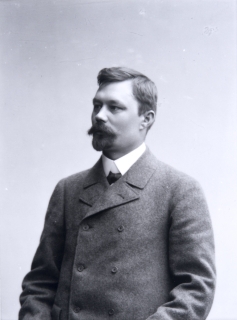
madahanAs if Finland did not already have enough alcoholic beverages themed around its most famous son, Carl Gustaf Mannerheim, the Kallio Brewery forges ahead with a “Tropical Milk IPA” named Madahan. That’s 馬達漢 to you, the Chinese name conferred upon Finland’s future president during his two-year trek across Asia on horseback from 1906-08, in which he pretended to be a Swedish explorer, but was actually a spy for the Russians.

Mannerheim’s Chinese name continues to confuse many Finns. It does not, as he once believed, and as the Madahan label continues to assert, mean “the horse that leaps through the clouds.” It means “the horse reaches China,” a sweetly literal description of Mannerheim’s ride across Asia.

But the Madahan name carries with a bunch of other baggage, much of which eluded Mannerheim during his explorations. The word “ma” literally means “horse”, although it was, and is, also a common Muslim surname in Western China, deriving from the first syllable of the name Mohammed. As a result, several interfering officials tried to get Mannerheim to change it as he travelled, although they didn’t tell him why. Some said that his Chinese surname was “wrong”. In places, it may well have been, since his sneering nemesis, the French explorer Paul Pelliot, may have pranked him by substituting a word meaning “drunk” or “stupid”.

Kallio’s Madahan IPA has a colourful picture of Mannerheim, his moustache grown back after his clean-shaven early months on the road, sitting atop the faithful Philip, who carried him all the way to Beijing.

Jonathan Clements is the author of Mannerheim: President, Soldier, Spy.

The Heart of Darkness

There’s a haiku by Masaoka Shiki that doesn’t get translated all that often, because it ruins people’s image of peaceful, Buddhist Japan: “At the temple / beneath peonies in full bloom / we trample on the face of Christ.” It refers to a common annual sight, nationwide in the samurai era, of locals lining up to walk across a picture of Jesus or Mary, in order to prove that they were not secret Christian believers.

The novelist Shusaku Endo, baptised as a child at his convert mother’s insistence, was fascinated by this cul-de-sac in Japanese history, specifically by the undercover Christians that such ceremonies were designed to root out – men and women so devout in their faith for a foreign religion that they were prepared to die an agonising death rather than step on a holy image. Endo’s work was suffused with a question about his own faith. Would he be as brave as his forebears, or, if ever put on the spot with such high stakes, would he take the easy option and cave in?

Endo’s 1966 novel Silence was pressed into the hands of the famously Catholic Martin Scorsese at a 1990 screening of his controversial movie The Last Temptation of Christ. The director soon resolved to adapt it into a film, intrigued by its deep investigation of the nature of religious faith. The story focusses on two priests sneaking into the closed country of Japan, not only to administer to the Hidden Christians, but also to hunt for a fellow Jesuit who has reputedly gone native. Eventually played, after two decades in pre-production purgatory, by Andrew Garfield and Adam Driver, they search for the missing Liam Neeson, and inevitably fall into the hands of samurai Christian-hunters. Not unlike the similar quest narrative of Apocalypse Now, it’s a journey into the heart of darkness, in search of a phantom figure that might best remain unfound.

Endo’s book, and by association, Scorsese’s film taps into one of the most fascinating stories in Japanese history – the savage suppression of the Christian religion in Japan, and its long aftermath. Christian missionaries found thousands of willing converts in the 16th century, particularly in the south, where communities of believers flourished around the ports that had contact with foreign traders. Nagasaki, in particular, became a Christian enclave, handed over to the Jesuits by a devout local warlord, in gratitude. Gratitude for what? Well, there was all that spiritual awakening, of course, plus the money brought in by the silk trade, and (almost forgot) all those guns brought in from the West.

Gunpowder helped turn the tide in the long civil war that left the Tokugawa clan in charge, but Christian samurai were unluckily to be found largely on the losing side. Thousands of them were packed off for a time-wasting crusade in Korea, and the survivors resettled as farmers in the south. But with the conclusion of the civil war came the end of the political uncertainty that gave Christianity a foothold in the first place. The Tokugawa Shoguns were deeply suspicious of a religion that owed its allegiance to a foreign god-king in Rome, particularly after an angry Spanish captain had boasted that missionaries were merely the vanguard of an insurgency that would eventually be followed by conquering soldiers.

Christianity was hunted down and stamped out. A rebellion in the south, led by a teenage messiah, ended with the massacre of 37,000 Christians. The survivors went underground, worshipping in shadows and caves, hiding their icons inside Buddhist statues, and passing on the Bible by word of mouth. It’s these “Hidden Christian” communities that Silence documents, nests of forbidden believers among the most remote fishing communities, hosting a dwindling number of foreign priests smuggled in from the outside world. As the decades passed, their understanding of religious doctrine grew garbled and confused, but their faith remained strong.

Scorsese’s movie also boasts a who’s-who of big-name Japanese actors, including Tadanobu Asano as a creepy interpreter and Shinya Tsukamoto, director of the cult classic Tetsuo, as one of the Japanese faithful. Snubbed at the Golden Globes, for which it may have been released a few scant weeks too late, it was sneaked out in America late last year in a bid to secure last-minute Oscar nods. By the time you read these words, you will know whether that was a matter of blind faith or not [Time Travel Footnote: Yes, apparently it was].

Jonathan Clements is the author of Christ’s Samurai: The True Story of the Shimabara Rebellion. This article first appeared in Geeky Monkey #17, 2017.

The Attack

The story behind one of Finland’s most famous paintings.

A girl in a white dress is running along the sea shore, attacked by a two-headed eagle. At least, that is what Eetu Isto’s 1899 painting The Attack (Hyökkays) looks like at first glance. Unsurprisingly, this work of Finnish national romanticism comes loaded with heavy-handed symbolism, tied up in the struggles of the people of Finland to free themselves from their Russian overlords.

The girl in question is The Maid of Finland, a female shape suggested by the outline of Finland itself on maps – a girl with a billowing skirt. She is not merely wearing a white dress, but also a blue sash, foreshadowing the Finnish flag. The crest of Finland can be seen on her buckle. The two-headed eagle (Russia, of course) is not actually attacking her, but a hefty book of laws in her hands, symbolising the continuous assault on Finnish freedoms in the 1890s. For nearly a century, the Russian tsars had allowed the grand duchy of Finland relative autonomy; but now Nicholas II seemed intend of stripping Finns of their language, their money and their postal service, along with other rights.

Eino Parmanen, who chronicled the rise of the Finnish nation in his four-volume epic The Book of the Struggles (Taistelujen Kirja), identified a number of subtler cues in the painting. The Maid of Finland is not scared, but shows a demeanour of grim resolve. A lantern of “sacrifice” lies broken on the ground, its flame still sputtering with the fires of resistance. On the horizon, there is a faint glimmer of dawn, in spite of the stormy skies.

5istoEetu Isto (1865-1905) was the youngest of five children, and the only one to attend the newly founded Rauma grammar school near his parents’ farm. After demonstrating an aptitude for art with sketches of the local church, he drifted into a career as a painter and decorator in Helsinki. In 1895, just as the Russian authorities were clamping down on Finnish nationalism, he received a grant to study in Berlin. The money soon ran out, but he spent another four years there, struggling to get recognition as an artist, while working part-time at a menial clerking job. The Attack was the culmination of Isto’s Berlin work, although true to Finnish nationalist fervour, legend has it that he refused to make the finishing touches to the painting until he had brought it back to the land that birthed him.

At the time, the picture still didn’t have a name. It was hung in a house in Kaivopuisto, Helsinki, and shown only to an audience of invited revolutionaries. “The observers,” wrote Eino Parmanen, “stood amazed and in deep affection, many even with tears in their eyes.” Isto solicited suggestions for the title in the visitors’ book, where also-rans included Fantasy, Allegory and Battle, before The Attack was suggested by a friend’s wife.

Would-be revolutionaries with an eye on the picture’s propaganda value were already determined to make copies. It was photographed, and the negatives were used to etch copper plates for heliogravure printing. But the police had already uncovered rumours of an anti-Russian art exhibition somewhere in the city, and Isto was forced to flee his Kaivopuisto hideaway, grabbing the two-metre-high portrait and escaping through the window of the house, running for the docks and safety in Sweden. Copies of the painting, however, were soon in production, trickling in to Finland from printers in both Stockholm and Berlin, including 10,000 smuggled into the country in heavy boxes marked “anatomical preparations”. A policeman actually stopped one crate on the dockside at Turku, demanding to know what could be in such a large and heavy box. He was assured by some nearby students that it contained geological samples. Several other shipments came in along the Finnish smugglers’ coast, where the thousands of islands and inlets afforded local fishermen with multiple opportunities to dodge Russian customs vessels and police inspections. The Attack also spread among American Finns in a postcard format, and somehow made it into Russia itself by 1903, when unknown sympathisers were said to be distributing a version the size of a postage stamp, for secretive supporters to cherish in their pockets.

The original Attack’s seditious status made it impossible for Isto to actually sell. He made 6000 marks by selling 20-mark lottery tickets with the painting as the prize, but the eventual winner, a Helsinki housewife, was so terrified of being caught with it that she sold it back to him. Several of Isto’s other paintings were also subject to censure, not because of his identity as the artist, but because the circles in which he moved tended to be crowded with dissidents, who were themselves often subject to purges. On a visit to Siberia in 1902 to visit a vicar friend administering to Finnish exiles, Isto contracted typhoid fever. His health never quite recovered, and he died in 1905 from pneumonia, shortly before his 40th birthday.

After the Finnish revolution, The Attack ended up in the hands of one Niilo Helander of Heinola, whose widow eventually donated it to the National Museum in Helsinki, where it hangs today.

Jonathan Clements is the author of A Short History of Finland, available now in print and on the Kindle.

The End of Fantasia

agentaika

There have been some heartfelt eulogies in fandom for Studio Fantasia, which has declared bankruptcy after a generation in the anime business, most notoriously with its micro-skirted spies in Agent Aika and its panty-flashing operatives in Najica Blitz Tactics.

Fantasia itself was born under suspicious circumstances, by staff manning the lifeboats from the foundering Tsuchida Production in 1983. Tsuchida eventually sank in 1986, but to say it went down with all hands would be misleading – by the time it went, it was a name on a filing cabinet, without real estate, equipment or employees, while its former staff were already running Studios Comet and Fantasia.

It’s important when reporting the history of the anime business to understand the difference between a disaster and a simple change in circumstances. Studio Fantasia, from what I can see, appeared to shut down because it was little more than some signatures on paperwork that allowed a guy to get some bank loans. Tomohisa Iizuka, the man who led the exodus from Tsuchida all those years ago, set up a company that in its 2006 heyday was bringing in £2.7 million a year and had 43 employees. But if Iizuka wants to retire, and if there is nobody willing to take on the company and its liabilities… if the company itself has no intellectual property worth preserving, then Fantasia might as well cease to exist on the day that Iizuka puts on his golf shorts and heads out to the country club.

As the director Noboru Ishiguro put it in his memoirs: “It is so easy to create a TV animation subcontractor. That’s because 90% of the cost is labour and hardly any investment is needed. As long as you have money to rent a studio and to buy tables for animators, all you need is people. You could start an animation production company tomorrow. But they go bankrupt quickly, too – just like a pub. Because the production cost is cheap, subcontractors can never make large profits. You’re lucky if you are not making a loss. As soon as you start doing a different job and the efficiency level drops, or an animator quits, the business goes downhill.”

2006 wasn’t just a peak for Fantasia, it was a peak for the entire anime industry. The studio visibly slowed over the following decade, until it was just picking up a few bits of piece-work on a couple of recent shows. It was not, like Studio Ghibli, initiating and owning new content. But it was, like Studio Ghibli, very much the workplace for a group of guys who were looking forward to not having to work anymore. Except the guy who draws knickers, for whom it is still probably still a labour of love.

Then again, never say never. Who would have guessed at the beginning of last year that the “next Hayao Miyazaki” would turn out to be Hayao Miyazaki?

Jonathan Clements is the author of Anime: A History. This article first appeared in NEO #159, 2017.

Empress Wu and Historiography

wu1

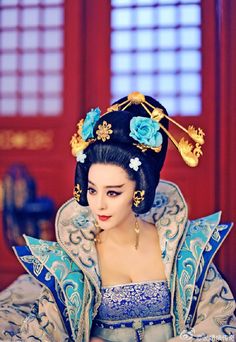
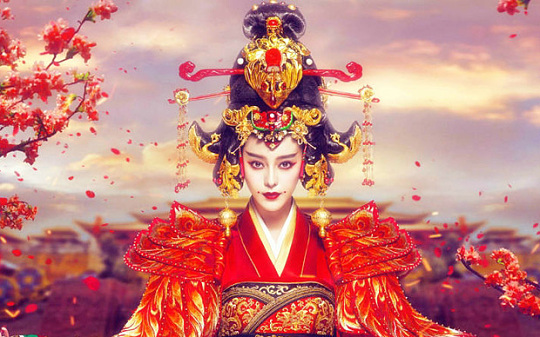
Michelle Lam, a student in Australia, emails me with a bunch of questions about conducting historical research on infamous bad-girl Empress Wu. I’ve asked her if I can repeat the interview here…

Michelle Lam: Why did you choose to write a book about Wu Zetian?

Jonathan Clements: My editor had seen that Wu was cropping up on a lot of women-in-history curricula, but that nobody really knew anything about her. She asked me what a book about Wu would be like, and I said that it would be too obscene to read out in public. “Excellent,” she said…

Did you experience any difficulties accessing evidence?

No, the evidence is easy to find. We’ve got evidence coming out of our ears, along with reams of noise. The Old Book of Tang and The New Book of Tang are only a click away if you can read Chinese. There’s a surprising amount of material that survives from the 7th century. Wu’s always been a popular subject, although in recent years, books about her have gone through the roof. I don’t rate a lot of the new Chinese stuff from the last decade, though, as most of it’s just cash-ins, except Meng Man’s work. She’s good.

How much of the evidence was biased?

All of it. Everybody had an agenda when writing about Wu. She’s striking a blow for women. She’s an evil witch-queen whose children despised her. She was a living god who ruled over a golden age. She was the most beautiful woman who ever lived. She was a murderous bitch who staged a palace coup. Take your pick.

wu2How hard was it to discern the truth from evidence that was evidently biased?

There are plenty of issues blocking our path to understanding Wu. There’s a distance of 1300 years, there’s the lost materials that we don’t even know existed in the first place. There’s the ridiculous spin and propaganda of her own regime, and the regimes that replaced her, which seem awfully keen on “alternative facts”. These are common errors of historical practice, and they’re certainly there with Wu’s historiography.

You talk about how hard it is to discern the truth from “evidence that was evidently biased”, but it’s much harder discerning the truth from evidence that seems completely on the level. There is an easy temptation to cherry-pick the best material, not in terms of its persuasiveness, but in terms of how it matches what we call “the mode of emplotment.” Which is to say, most historians want to tell a story with a convenient beginning, middle and end – is it a comedy? Is it a tragedy? Is it a tale full of ironic modern parallels? You can’t cling to a doubtful source or a later interpolation, just because it makes a good story. That’s fine if you’re writing a novel or a bodice-ripper TV show, but not a good enough reason if one is claiming to be a historian.

I found myself using some arcane methods with Wu, such as investigating the “content of the form”, whereby you can work out information by how something is said, or even by what is not said. This method is called abduction, searching for what isn’t there, and, for example, it was what I used when analysing that fantastic speech against Wu, issued in the name of a rebel prince.

“She entered the gate through deception, and all fell before her moth brows. She whispered slander from behind her sleeves, and swayed her master with her vixen flirting. She trampled on the pheasant regalia of the empress, and entrapped her prince in incest. With the heart of a serpent and the nature of a wolf, she gathered sycophants to her cause, and brought destruction to the just.”

And so on. The point with that proclamation is that it doesn’t mention some of the most infamous accusations levelled against Wu by later writers. If you were trying to take down an opponent, you would be sure to mention the most scandalous accusations against them, but Luo Binwang, who wrote those words, doesn’t seem to be aware of them. So we find ourselves in the odd position of using the words of Wu’s enemies to work out which of her alleged crimes didn’t happen. We’re essentially using them as witnesses for the defence.

Do you think your identity and personal opinions played a part in how you presented Wu Zetian in your book?

Certainly. I was once derided by another author for not being Chinese enough or female enough to understand her. Only a Chinese woman could possibly get it, she claimed, entirely unaware or uncaring of how sexist and racist that made her sound. It’s the sort of thing someone says when their identity turns out to be their sole qualification, and it’s a poor substitute for actual knowledge and research.

I would like to think that my personal opinions were less relevant in the construction of the book than my awareness of other people’s. It’s important, I think, to bear in mind that many Chinese historians were misogynists, determined to prove that women should not be given positions of power. This isn’t merely a matter of being bigots, sometimes it also reflects later times with different subtexts, such as periods of Mongol or Manchu rule, when women traditionally wielded more power, and the Han Chinese establishment never liked it. Then there are the later Wu historians determined to establish a parallel with the wife of Chairman Mao, or with Hillary Clinton, and the many, many TV writers determined to present her as some sort of innocent Cinderella or knife-wielding psychopath.

wu3

Do you think you were influenced by any external factors whilst writing the book?

Maybe. I know that while I was writing it, I was surprised at the number of conversations I found myself having with women who thought she sounded awesome, and who wanted to know what the cushions were like in the palace. “Write the cushions!” one of them said. She wanted to know what make-up Wu wore, and what her dresses were like, and what food was on the table. These aren’t the immediate concerns of the traditional historian, but they really should be, because history isn’t just about stuff that happened. It’s about the touch and smells and sounds of another world.

What are your personal thoughts on Wu Zetian? What do you think of her as a ruler? What do you think of her as a person?

I was doing an interview with Radio Four when the book came out (you can still find it online but it’s in a dinosaur format that’s difficult to convert), and the presenter suddenly stopped and said: “You really admire her, don’t you?” What I find most incredible about her is the fact that she got to where she was from nothing. When she started in the palace, she was little better than a chambermaid, and yet she was somehow able to run the country for decades. As a ruler, not only in her own right, but behind Gaozong’s throne, she presided over the height of the Tang dynasty. If a male emperor behaved like Wu, nobody would have batted an eyelid, so I see little reason to say that China suffered under her watch. As a person it is harder to say. The few reliable quotes from her lifetime make her sound like she was pretty insufferable. But who wouldn’t be…?

If there was anything you could have done differently whilst researching her person, what would it be?

There are so many rich resources for the Tang dynasty, and if I’d had, say, another month, I could have spent more time poking around the Chinese sources. But I must have been pretty satisfied with the book the way it was, because when we did the second edition recently, the only real changes I made were to update the media references, and for the Chinese-language edition, a new foreword.

Empress Wu is published by Albert Bridge Books.

Nothing Like a Dane

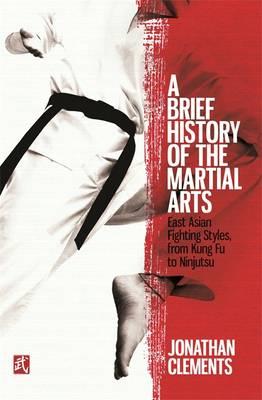
9781472136466‘I had that Danish karate team in the back of my cab once,’ says the driver. He uses the cabbies’ definite article, as if I am supposed to know which Danish karate team he is talking about.

‘They were over for that tournament, and they went out on the town afterwards. They drink a lot, you know? I was surprised. I didn’t think kung fu people liked beer or whatever. But I picked them up at like two in the morning, in their red tracksuits, and I was driving them back to their hotel, and we was all south of the river. In Brixton. And one of them says: “You know what, I want some orange juice. Pull over a second.” And I says: no mate, you don’t want to stop the car in bloody Brixton, not now, not at kicking-out time round all the clubs. And he laughs and says just pull over. So I do. I stops the cab, and all three of them hop out and go into a Seven-Eleven.

‘I just know there’s going to be trouble, and sure enough, there’s three big blokes go in. And one of them is like: give me your money. Give me your money, he says, to this ginger Dane in a tracksuit. Give me your phone and all. And the Danish guy is like: no, leave me alone. And the bloke is like (and he’s a big feller, right?) and he’s like give it to me now or I will eff you up. And the Dane is like: “No. Step away, sir, please.” Polite as you like.

‘So the bloke pulls back to punch him, and POOF! He’s on the ground clutching his head. And the Dane says: really, I am warning you. But he’s like: “GET THE LADS!” And the other two run off to the club, and they are back in flash with half a dozen mates, and they all charge at these Danes.

‘And these are tired, right, but they train for this every day. They don’t even have to think. It’s like BOFF! BOFF! BOFF! Kung fu fighting and they knock them all down. A couple of berks try to get up again, and then it’s BOFF! Stay down. Then they go to pay for their orange juice, and the police turn up.

‘And what do the police see? They see eight or nine big thugs just lying on the ground moaning and hanging on to their arms and that. And these three little Danes having a packet of Wotsits. And the policeman says to me: “Did you see what happened here, sir?”

‘And I says: “Them three blokes are the Danish karate team. And them others just found out what that means!”’

I’ll save you the trouble, dear reader. I Googled this one. I Googled every possible permutation of Brixton and Denmark and karate. When I came up blank, I tried every other Scandinavian country, as well as the Netherlands, on a hunch. I switched the martial arts, just in case it was kung fu or aikido or judo. But despite such an epic account from my story-teller, despite a midnight riot that was sure to have entered the folklore of south London, despite the implied eye-witness experience of the narrator himself, down to the tracksuit colours and omnipotent view of what was said and done a hundred feet away while he was still in his car, there is not a scrap of evidence online of this supposed event. No court hearing, no police report, not even a snickering comment in the local newspaper.

I Googled it in Danish, too, just to be sure.

Nothing.

But that’s the story I heard, word for word. Straight up.

Excerpted from A Brief History of the Martial Arts, by Jonathan Clements.

Immortal Beloved

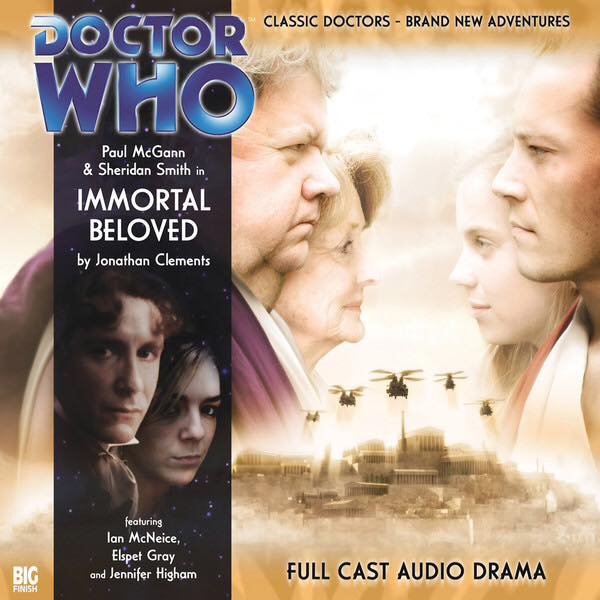
immortal-belovedThe Dr Who Guide alerts me to the fact that my radio play Immortal Beloved was broadcast on BBC7 on this day ten years ago. So in its honour, I post up the text of the interview that Kenny Smith did with me for Finished Product magazine.

KS: Firstly, was the finished story the one you always intended to go with? Or did you have other story ideas? Were you asked to submit an outline, and how detailed was it?

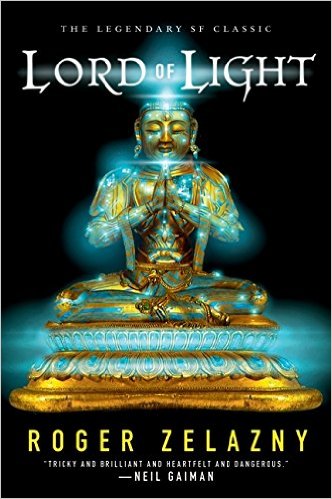
The story actually started out very differently, around 2002, as a Strontium Dog script. Toby Longworth asked me if I’d write something with Sanjeev Bhaskar in mind, so I had a character called Vishnu Patel, a six-armed mutant from Bradford, and his sexy associate Carly. The idea was that they’d set off a time grenade on their ship as the Strontium Dogs were getting ready to capture it. Suddenly, the ship was gone, but the formerly barren planet below was covered with city lights. At which point the bounty hunters would realise that their prey had gone so far back in time that they had founded an entire civilisation on the planet, and set themselves up as its divine rulers, an idea lifted from Roger Zelazny’s Lord of Light. The bounty hunters go down to apprehend them, and have to face the issue of the person they’re arresting being the nth generation clone of the person they were chasing. Then there would have been all sorts of arguments about statutes of limitations, and time travel and culpability.

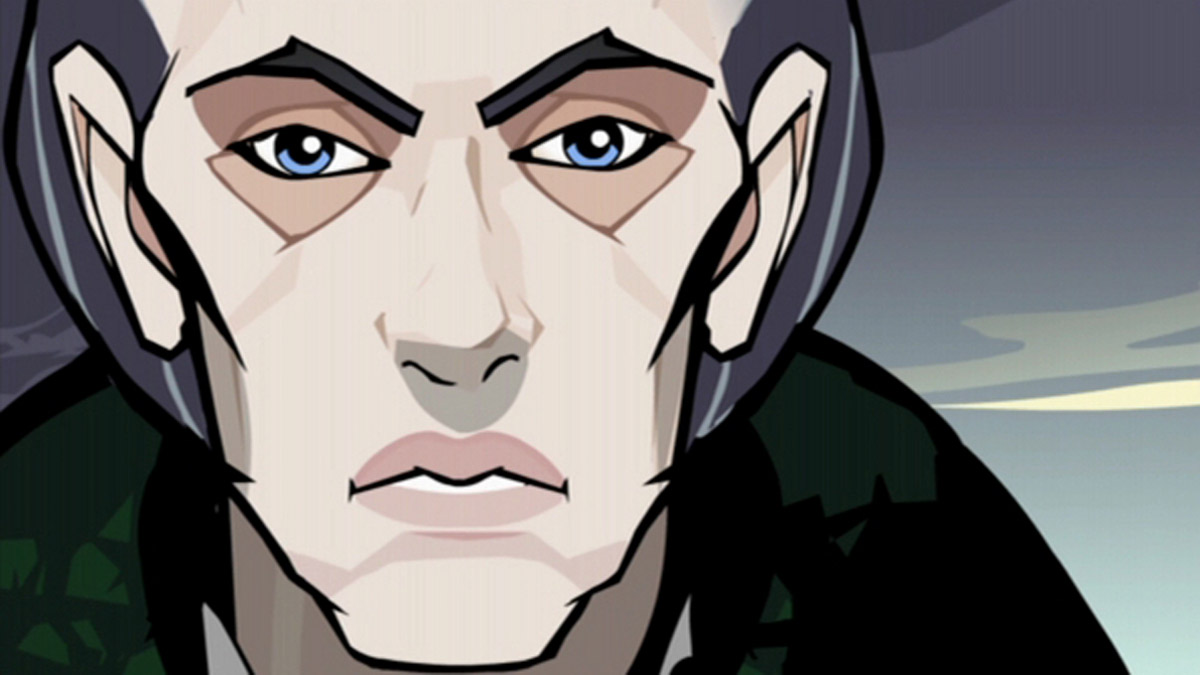
But anyway, Strontium Dog was cancelled, and I was asked to pitch something for the short-lived Richard E. Grant animated Doctor Who. I retooled the story but kept its original title, which back then was Kingmaker. That actually made it a long way through the process before that, too, was cancelled.
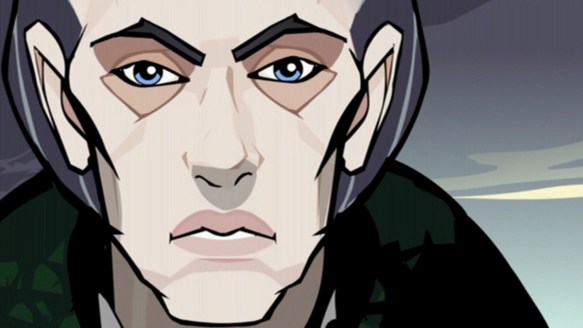
doctorwho-screamoftheshalka218 months later, the BBC’s option on Kingmaker ran out, and I was asked if I’d do something for the McGanns. Time was really of the essence, because everything had to be done in ten minutes flat, or something daft. So I said to Big Finish, look, I’ve got Kingmaker here, the BBC have already approved it. That’s going to go through a lot faster. So we went with that, under a working title of Sins of the Father. I gave [script editor] Alan Barnes some alternate titles, including Karma Police, Together Forever, and Immortal Beloved.

Of course, you can imagine, the outline was nicely matured by that point. It was about 3500 words long, for a script that needed to be 10,000 words total. So it was very well worked out by that point.

There was originally a lot more in there about cybernetic implants as well, in order to match with the Master, who featured in the Richard E. Grant scripts as a travelling companion.
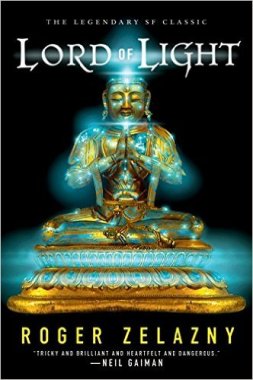
51ijm9-tel-_sx330_bo1204203200_There are still elements of the original, such as when Zeus threatens to kill a different Lucie every day for a hundred years, and a Lord of Light moment, when Hera remembers that Poseidon’s original name was Jeffrey.

Life and death are strong themes in the Sympathy for the Devil and Immortal Beloved – are these themes that you’re interested in exploring?

I’m more interested in what makes us who we are. Same in Sympathy for the Devil. Take the characters out of the situations you remember them in, and what do they do? The Doctor is still the Doctor, the Brigadier is still ultimately his ally, the Master is still a sneaky git. The Ke Le Divisions are supposed to be non-human, like clones, but they still end up with feelings, and those feelings backfire.

In Immortal Beloved, I wanted to ask questions about cloning. I don’t know the answers, but I like asking the questions. I love the idea of these clones turning into their parents, of being able to see them at two stages in their lives simultaneously, and wondering which one is the real person.

Jason Haigh-Ellery jumped on this one right away. I heard that back when it was still Kingmaker, he was already telling people that he was going to direct it, and even threatening to make it as a Big Finish with another Doctor if the BBC didn’t commission it as a Richard E. Grant. I don’t know why he was so enthusiastic about this one in particular, but he was supporting it for two years before it actually went into production! He wouldn’t let the idea drop, he really fought for it.

How did you find writing for a new Doctor/companion team? Were you given much in the way of pointers for Lucie (played by Sheridan Smith)? Did she turn out the way you’d hoped?

This one was great because Lucie is so bolshie. Her dialogue just writes itself, taking the piss out the Doctor all the time, referring to him as her assistant, ridiculing his navigation skills. The perfect Lucie line is actually in Jonathan Morris’s Max Warp, when she calls the TARDIS a shed. I just wrote her as everyone’s annoying big sister walking in while you’re trying to watch Doctor Who and ridiculing everything. So yes, she was perfect. Note-perfect, exactly as I imagined her.

What did you think of the finished story?

I thought it was great. I was rather irked that the BBC announcer said it was set in Ancient Greece, which it wasn’t. I actually had a very nice email from someone at BBC7 telling me who was responsible “just so you know we’re not a bunch of monkeys.” It turned out that the culprit was much closer to home at BF towers. I was present for the ceremonial flaying and keelhauling.

mv5bmtuxndg4mzm3mf5bml5banbnxkftztywmdexntk2-_v1_sx640_sy720_Weren’t the cast great!

Ian McNeice! You can’t do better than that. Frankly, I wrote it for him, without even realising it. I had Baron Harkonnen in mind as Zeus, without knowing that Ian had played Baron Harkonnen in the Sci Fi channel Dune.

One day my grandfather fell off a ladder and knocked himself out. My grandmother found him and thought he was dead. She grabbed him and said: “No! You can’t go! Not yet! I’m not ready!” I put a lot of that into the lines Elspet Gray had to say as Hera, particularly her scene in the garden. My grandmother said to me shortly before she died: “Jonathan, don’t get old. Don’t get old.” It was so mournful and heartfelt, but I remember thinking at the time, do I have a choice…? All that’s in Hera’s lines, and I think Elspet managed it very well.

Was it how you imagined it to be?

Yes, although Ganymede was a bit of a surprise, since he wasn’t in my script when I delivered it.

I believe that the ending was slightly different – Sarati was ‘poisoned’, to simulate death, thanks to the Doctor. As a result, Kalkin stabbed Zeus. How did the change come about? Are you happy with the revised change?

Yeah, the ending was different when I thought I was writing a 100-minute story. The only real difficulty with Immortal Beloved was slicing it down from 100 minutes for Richard E. Grant to 50 minutes for Paul McGann. Your question implies that was done for me, but I’m pretty sure that I wrote the Sararti stabbing scene myself. So it was all about timing — obviously the poison business was another Romeo and Juliet reference that got edged out. I thought it worked fine without it in the end, but something had to go when 50% of the content was being cut.

How much fun did you have coming up with alternative names for everyday things, like helicopters, etc? Was it a real challenge to get something mythological sounding for things like a decontamination chamber? Did you come up with any more that were cut or changed?

The “magic wand” business was something that had been floating around my head for 20 years, ever since I read the D&D Dungeon Master’s Guide. Look at what it says about the “charges” and powers of magic wands, and rods, and staves. It’s describing firearms: pistols, carbines and rifles. I thought that was so cool. So, I guess that’s my way of saying that it wasn’t my idea at all, but Gary Gygax’s.

I think other people had more fun with it than I did. The “ether trumpet” was someone else’s line. Nick Briggs, perhaps, or it could have been Alan, I suppose. It is the funniest line in the play, and I am now obliged to tell everyone I didn’t write it.

The notion of cloned Lucies being tortured is quite scary – copies of yourself dying in different ways, without you even knowing it. Do you like implied horror like that?

Actually I can’t stand horror. I find it too horrific. I am paid to have an over-active imagination, and horror tends to scare me! I think it’s an excellent way of reversing the standard questions about stem cells and cloning, though. You lose your arm, but there is a magical way of giving you a new arm… except somewhere, there is a copy of you who’s just had his arm hacked off… I think *that* is horrific.

How did you find writing for the McGann Doctor? I felt you had him down to a T – plenty of enthusiasm, but with a serious streak. Did you listen to many of the other Big Finish releases, or did you just write a generic Doctor that you remembered from childhood, as Rob Shearman did?

Is that what Rob did? Oh, bless! I suppose I did, too. There wasn’t a lot to go on with McGann because you only have the one TV outing. I listened to Chimes of Midnight, but more because it was Rob’s not because it was McGann.

To be honest, it’s Lucie that I write for with the McGanns. I find it easier to write the Doctor’s loving exasperation with her, than I do to write the Doctor himself. Lucie thinks of herself as the heroine in her own little show, and I write it that way, and then I put the Doctor’s reaction in later — his reaction being the actual plot and everything. There’s an element of that in Immortal Beloved where she introduces the Doctor as her “bumbling assistant.”

I  have to say, I only heard Brave New Town yesterday, and Sheridan Smith nails it. She nails every line. At her very worst, she does exactly what I wanted. At her best, she takes it and does something I never even thought of. You can’t ask for more than that, can you?

Big Finish don’t let you write “generic” Doctors, though. Briggs will throw something back at you and say: “That won’t work, it’s too Sixth Doctor.” You can actually give him words, single words, and he will tell you if a particular Doctor would use them or not. So whatever Rob thought he was doing, it will have been distinctively McGann by the third draft!

Anything you’d go back and change if you could?

There’s a line that someone altered that I wish they hadn’t, but there’s also a line that someone altered which made me look a lot smarter than I really am, so I figure we’d better call it quits.

If you could be reincarnated in another body, whose would you go for?

Ooh, Jason Haigh-Ellery’s. All that money, all those women, all that power…

Immortal Beloved is available on CD and download from Big Finish.