Empress Wu Zetian (624-705 AD) was the only woman to be the sovereign ruler of imperial China. A teenage concubine of the Tang Emperor Taizong, she seduced his son while the emperor lay dying. Recalled from a nunnery as part of an intricate court power-game, she caused the deaths of two lady rivals, before securing her enthronement as the Emperor Gaozong’s consort. She ruled in the name of her husband and two eldest sons, presiding over the pinnacle of the Silk Road, before proclaiming herself the founder of a new dynasty.
Worshipped as the Sage Mother of Mankind and reviled as the Treacherous Fox, she was deposed aged 79, after angry courtiers murdered her two young lovers. The subject of countless books, plays, and films, Empress Wu remains a feminist icon and a bugbear of Chinese conservatism. Jonathan Clements weighs the evidence of her life and legacy: so charismatic that she could rise from nothing to the height of medieval power, so hated that her own children left her tombstone blank.
Seventeen years after it was first published, my biography of Empress Wu gets an audiobook release, read by Kathleen Li.
There is a poem on the wall of Shanghai’s Jewish Refugee Museum that stopped me in my tracks. It was written by Dan Pagis (1930-1986).
In the last room in our house At the edge of a wondrously curled cloud A Chinese rider raced by on his horse Out of breath – embroidered in silk. And now, when I no longer know whether He dissolved in the cloud or burned down with the house I realise we were both wrong and that We were one, each embroidered on the other.
Shanghai comes into its own when it is directly involved in the story being told. Which is why I urge visitors not to go in search of the all-China generic galleries to be found at the massive museum in the city centre, but to look for those places where Shanghai celebrates itself. There is, for example, the charming Shanghai City Museum, which remains the only real reason to visit the Oriental Pearl Tower in Pudong. Readers of this blog will already be aware of my enthusiasm for the Longhua Martyrs Cemetery, which enumerates the many Party-approved heroes and heroines who fought to make Shanghai what it is today.
Shanghai’s Jewish Refugee Museum is another fascinating place, a monument to a phenomenon that supposedly came and went long, long ago. It is a surprisingly lavish venue chronicling the lives of 13,732 exiles from Nazi Germany as they tried to make the best of life in Shanghai, one of the few places in the world that offered them sanctuary.
Pictures are not permitted in the museum interior, possibly as a result of the same trepidation that requires all visitors to leave their cigarette lighters at the entrance. But the story told inside, like that in the Martyrs Cemetery, manages the difficult task of taking a tale of misery and misfortune, and reframing it as a celebration and commemoration. There is some treatment of the Jews already present in the International Settlement, where, as regular readers will already know, a thriving community of Russian émigrés tried to make do and mend after fleeing the 1917 Revolution. But the museum’s primary interest is in the years between 1938, when the first Jewish refugees arrived from Germany, and 1956, the year in which the last of them disembarked for new lives in Australia, Canada and multiple other places.
In a diverse mix of dioramas, video footage and exhibits, the museum tells the tale of the sudden ferment of Jewish and European friendships, feuds and families, the new careers and businesses that sprang up to serve this sudden influx of newcomers, and the long, long tail of their associations and connections. Permitted visa-free entry to Shanghai after most other places around the world had refused them access, the Jews soon had to contend with the city’s Occupation by the Japanese, which led to the creation of the Shanghai Ghetto in 1943. The end of the war in 1945 soon pivoted into a Civil War between the Communists and Nationalist Chinese, while the last of the Jews scrambled to find safe passage to another country.
A sign at the door exhorts anyone with family connections to Shanghai’s Jews to make themselves known to the curators – and clearly there have been several cases where visitors have become exhibits, captured on film discussing their grandmother’s wedding dress or the day they ran the gauntlet of Japanese military police.
Sometimes, one gets a sense of real happiness in a museum. It is very rare, but every now and then, the narrative on display becomes a descant of jubilation – I have felt it before only rarely, most memorably at the Norway’s Resistance Museum in Oslo. The Jewish Refugee Museum veritably beams with pride at the way that materialist, money-grubbing Shanghai suddenly flung open its doors to a foreign people in need, and at the many hundreds of strangers who come to its doors eight decades later, to announce that their ancestors still speak fondly not only of violin concertos on the Roy Roof Garden and pastrami at Horn’s Snack Bar, but also of the way that China became so intimately and briefly part of their lives, leaving them each embroidered on the other.
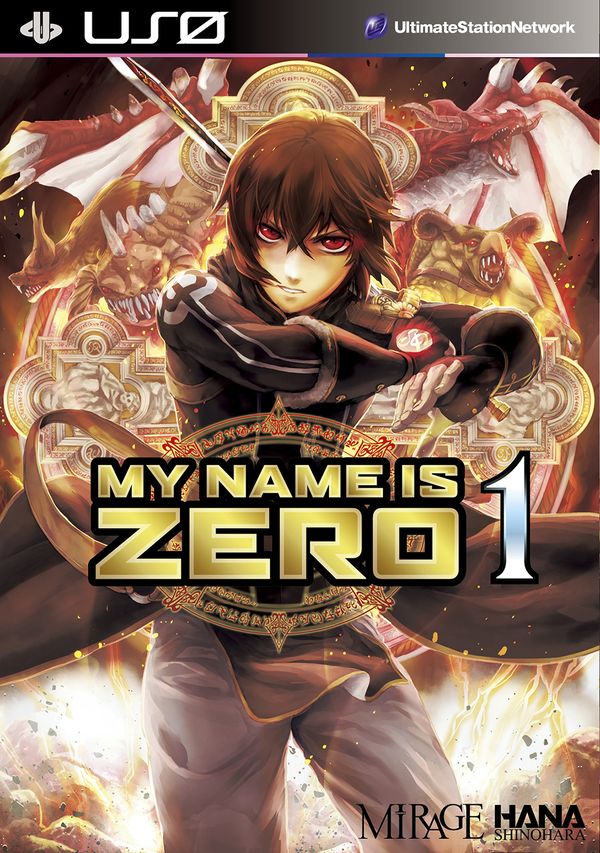
Kanzaki Rei is an avid gamer, but his debts are mounting up as the expensive medical treatments for his sister don’t come cheap… in a fit of desperation he follows a link in a mysterious email promising help only to find him transported into the dangerous world of his favourite videogame. For each boss he kills he earns money, keeping his sister safe, but he risks death with each confrontation!
Out tomorrow from Titan Manga, according to the trades, volume one of Hana Shinohara’sMy Name is Zero, translated by Motoko Tamamuro and me.
“What we actually know about him could be written on the back of a beer mat.”
There’s been some kind of hooha in the gaming world regarding the appearance of Yasuke, the “African samurai” in the new Assassin’s Creed. Five years ago, on the All the Anime blog, I wrote up the work of historical reconstruction that was likely to have inspired his appearance.
Detail of Ye Yushan’s sculpture “Liberation and Development”
Just around the corner from the tourist-magnet Longhua Temple is one Shanghai’s most exciting museums – a facility dedicated to framing the story of China’s Revolution in terms of its relationship to Shanghai itself, where so many of the fights, protests and strikes that defined it took place.
The Longhua Martyrs Cemetery makes fantastic use of its space and location, built over the site of the former prison and execution ground where so many Communist martyrs were created. The site has, at some point, been both a holding area for the Nationalist Kuomintang government and a detention centre for the Japanese invaders in World War Two. Twin walls, carved with the names of victims of the Kuomintang, snake around the gardens, leading off from the main entranceway, which is dominated by chunky statues not of individual revolutionaries, but of the spirit of Revolution itself, represented not only by soldiers, but by nurses and mothers, students and musicians.
The path towards the museum
The museum itself tracks the rise of the People’s Republic of China through its early stops and starts, including relative obscurities such as the Rebellion of the Small Swords Society, in which part of Shanghai turned into a Triad enclave, mysteriously joined by European supporters, or the activities of the Su Bao (Jiangsu Daily), a newspaper shut down by the imperial authorities in 1903 for daring to question the rule of the Emperor. The story of the Su Bao is told through the life of its star writer Zou Rong, whose pamphlet The Revolutionary Army was the cause of the newspaper’s downfall. Zou himself died in prison in 1905 and was awarded a posthumous general’s rank by Sun Yat-sen. He is depicted here in a lush oil painting, as a “Soldier of the Revolutionary Army”, wielding a pen instead of a sword.
“Zou Rong, a Soldier of the Revolutionary Army” by Zhao Qi
Zou’s story is only the first of dozens of vignettes that anchor the stories of China’s revolutionaries in context and commemoration. There are dioramas and relics, photographs and statues, video-on-demand testimony and even a looped ballet video, each telling the story of a particular individual’s role in lifting China out of its “Century of Humiliation.” It was a humbling and immersive experience, easily one of the best museums I have visited in China, on a par with Changchun’s Museum of the War of Chinese People’s Resistance Against Japanese Aggression.
Detail of “Nanjing Road, May 30th Incident” by Jin Shanshi
I soon ran into the exhibit on Zhang Tailei, whose statue so struck me in the pantheon of revolutionaries outside Guangzhou Martyr’s Park last December, but also many other similar incidents in which “failed” protests helped China’s revolutionary movements gain momentum and popular support. One absolutely massive widescreen oil painting celebrates the May 30th Movement, a series of protests and strikes in Shanghai that led to the “Shanghai Massacre” of 1925, in which nine protestors on Nanjing Road were shot and killed by members of the Municipal Police.
Detail of “Nanjing Road, May 30th Incident” by Jin Shanshi
I was particularly taken with the works of the artist Chen Jian, who has supplied a series of tableaux for the museum, some of them about specified individual subjects, others about more general themes. Chen’s work includes a moody, cramped depiction of Communists studying in their prison cell, and the beautifully modernist “The Arrestee”, in which two plainclothes police officers lead an unrepentant Communist to a prison van. The picture is suffused with an unsettling physicality, as one of the officers seems to be leaning into his task, as if he is having to bodily drag a prisoner who stands confident with the gravity of being on the right side of history.
“The Arrestee” by Chen Jian
Other artists tackle the problematic history of the Longhua Cemetery as the location of White Terror firing squads, such as Wang Shaolun’s “On the Execution Field”, in which a diverse collection of Chinese subjects wait glumly for their imminent deaths.
“On the Execution Field” by Wang Shaolun
In one of the most moving exhibits, the museum relates the story of Cai Bozhen and Wu Zhongwen, who were married in the prison van that took them to their deaths, a soaringly romantic revolutionary story that has already been immortalised in a movie, for which extra drama was piled on with “The Internationale” substituting for the Wedding March.
Cai Bozhen and Wu Zhongwen
Revolution, for the museum, is a state of grace towards which China groped during its Century of Humiliation, and then fought to maintain in the years that followed. There would be scope here, in a truly comprehensive installation, for an entire extra gallery about the Chinese who lost their lives in some of wrong-turns of the subsequent Chinese state, like the Great Leap Forward and the Cultural Revolution, but such discussions are characteristically muted.
Instead, it favours the idea of revolutionary spirit as something that burned in the hearts of the characters whose stories are told in the exhibits, and should be nurtured and encouraged in everyone. Pointing out that it presumably also flourished in at least some of the millions of people who were starved, beaten or executed during Maoist purges and social experiments in the 1950s and 1960s would ruin the brilliantly told story of a past that marches ever onwards towards a utopian present.
Detail of “Shanghai Small-Swords Society’s Uprising” by Wang Duchen, Wang Ducai et al.
Nor does the museum have much time or space for those revolutionaries who were inconveniently Nationalist. The Nationalist authorities, with whom the Communists themselves fought from 1911 to 1949 (and technically still fight today on Taiwan), might equally lay claim to be the inheritors of the Small Swords Society or the Su Bao, but their contribution is downplayed here. That, perhaps, is only to be expected in Shanghai of all places, where Chiang Kai-shek authorised vicious putsches against Communists, many victims of which died on these very premises.
Detail of “Shanghai Campaign” by Chen Jian
Instead, the museum’s narrative of the martyrs of the Revolution continues into the 1950s and beyond, with tales of derring-do on numerous Cold War battlefields, and selfless sacrifices by soldiers, firemen and other public servants.
“The Vision” by Li Peng
The visitor is guided out past one final giant oil painting, “The Vision” by Li Peng, which looks down on the contemporary Pudong cityscape from a vantage point somewhere high above the Bund. This, it seems to say, is what you now have, because of their sacrifices.
As the visitor heads towards the exit, past the classrooms and library, there is one final exhibit. The museum doesn’t have anything so gauche as a gift shop, but it does have a wall of free bookmarks, filed chronologically. Each bears the image and description of a Martyr of the Revolution, encouraging the visitor to take a piece of Revolution home with them. I couldn’t find any of my newfound favourites on the day, so I settled for Qiu Jin.
The Longhua Martyrs Cemetery and its attendant museum are gold-star examples of the new “Red Tourism”, and an absolutely fascinating example of “the story people tell themselves about themselves.” It is easily the most interesting place I have visited in Shanghai, not least because it finds a way to put Shanghai itself front and centre in the story of the birth of modern China.
Minding its own business on the eastern side of Kowloon Park is Hong Kong’s Avenue of Comic Stars – a parade of statues of iconic figures from the local comics scene, winningly presented along with plaques detailing their backstories, their creators’ biographies, and QR codes where the interested passer-by can find out more. It is palpably more fun and informative than the much more famous Avenue of [Movie] Stars on the Tsim Sha Tsui waterfront, which is much less forgiving of anyone who needs reminding who people are.
So there’s characters I immediately recognize, like Ma Wing-shing’s Cloud (from the story usually referred to today by the title of its film adaptation, Storm Riders), along with one’s I don’t, like James Khoo’s Dragonlord, and ones I really should, like the slightly cartoony version of Bruce Lee as drawn by the comics artist Vincent Kwong.
The statues range from the hyper-real anime-influenced heroes of many a game tie-in, to the more cartoonish local figures like Wang Xiao Hu from Tiger & Dragon Heroes, and the buck-toothed spinster Sau Nga Chun. A long mural nearby includes a slew of other artists’ work, including Wong shui-pan’s comics adaptation of John Woo’s A Better Tomorrow, complete with a cartoon Chow Yun-fat, and Mark Tin-kit’s Tao Zero.
The entire installation is a fantastic introduction to the world of Cantonese comics, although I was not quite superheroic enough to withstand the June sunshine for long enough to take it all in. I’ll be going back when there are more clouds over Cloud.
We were supposed to be in Kunming for lunch time, but a rockslide in the mountains caused us to take a four-hour detour, and we didn’t reach our hotel until 20:00. So, no chance for my plans to see the Flying Tigers Museum in town. Our final stop on the road trip was a ramshackle yellow hut, stuck behind a new shopping mall. Its paint was peeling and its plaster falling off, it was being used as a shed, but it is one of a handful of surviving French station-houses from a century ago.
My PTC (piece to camera) went as follows: “The French didn’t have a toehold in the Chinese hinterland, but they did have a colony in what is now Vietnam, and built this railroad from there to the capital of Yunnan, to exploit the local resources. This is one of only a handful of surviving station-houses, but it’s practically inaccessible, and largely forgotten.” I had three chances to say it, although one was blown by the arrival of a train. The director has two cuts to work with – hopefully the light is right on one of them, and there is no noise pollution.
I earn my money not by saying these words, but through the hundreds of little arguments I have with the director about the order the words come in. Each PTC is written on the spot, but I have to fight over tiny nuances of meaning, so that we don’t get into trouble with Standards & Practices for saying something unverifiable, or waste our footage by saying something on camera that turns out to be wrong.
So I’m there saying we have to say “Chinese hinterland”, because the French did have a toehold in Fujian and Shanghai. We have to say “what is now Vietnam” because Vietnam did not exist as a political entity at the time, and if we say Indochine, some viewers won’t know what that is. We have to say “capital of Yunnan” because nobody has heard of Kunming, but we will have already explained where Yunnan is in the episode. We have to say “the local resources” because we can’t remember what they are, except for tin, and we know there was more than tin. We say a “handful” because we only have one source that names them as three stations, and S&P insist on two sources or we can’t state any facts at all.
And we say “largely forgotten” because the Chinese will moan if we tell the truth, which is that they have left it entirely derelict because the achievements of the colonial era mean nothing to them, even as they reinvent the wheel, with a new railway line running parallel to the one that has already been there for a hundred years. Maybe I earn my money after all, because I had less than five minutes to thrash all of the above out, and less than five more to get it on camera before we were back in the bus.
Jonathan Clements is the author of A Brief History of China. These events appeared in Route Awakening S02E01 (2016).
No, you probably weren’t expecting a picture from Dune to grace the inner pages of NEO magazine. But it’s been on my mind a lot recently, because of the backstory, largely obscured in Denis Villeneuve’s version, of the Butlerian Jihad, an ancient war against artificial intelligences, inspired by the quote in the Dune universe’s pimped-up bible: “Thou shalt not make a machine in the likeness of the human mind.”
Artificial intelligence, or to be more correct, machine learning, is already seeping into many aspects of our lives, including anime. In this very magazine, (NEO #227), we reported on Yuhei Sakuragi’s reliance on “human fallback” to prompt his crowd animations into better realism, and on the developments at Mantra (NEO #231) to create an automated manga translator. Japanese animators are testing A.I. to replace inbetweeners, Midjourney has already drawn a whole comic for ROOTPORT, and now streamers are “testing” A.I. subtitling.
The thing is, the streaming world is already knee-deep in machine translation, whether the streamers admit it (or know it) or not. Time and again, watching mainstream telly, I’ve winced at auto-generated subs from English, that mishear dialogue and have gone uncorrected. Someone, no doubt, is being paid to edit such errors, but they, like the now-replaced human translators who have been ditched, isn’t being paid enough to give things more than a cursory glance. When even YouTube and Subtitle Edit have auto-translation options, who can blame a media corporation from wondering whether this will help them cut even more corners? As this column predicted in NEO #215, the expansion of streaming threatened to overwhelm human translators, making robot assistance an inevitability.
I remain resolutely analogue for now… until the day that my translation clients stop paying me a living wage, and I resort to robot minions.
Now, you might think this all sounds a little paranoid. It seems churlish to complain about robot labour when so many aspects of our lives are already delegated to machines. If you met your spouse through a match on Bumble; if you bought an anime Blu-ray that was recommended to you by an Amazon algorithm; if your last holiday was booked and steered by a travel app like Trip, then machines are already helping out in your daily life. Yesterday in the supermarket, I realised I didn’t know the local word for sourdough bread, and pulled out my phone to ask Siri.
“I don’t speak Finnish,” said Siri, apologetically. Which makes Finland the ideal place for humanity’s last stand.
Jonathan Clements is the author of Anime: A History. This article appeared in NEO #240, 2024.
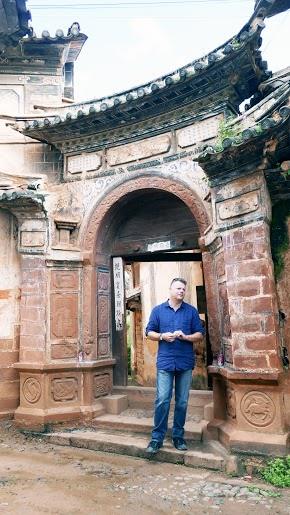
We are now in Xizhou, near Dali, in an area that is largely Bai, and which has somehow embraced heritage in a way entirely unlike the rest of China – I have not seen a skyscraper for two days. Closer to the coast, “heritage” seems to mean that everywhere gets a shopping mall and a car park, and a bunch of hawkers selling plastic machine-guns. But out here, it means that the old architecture is retained, with acre upon acre of quaint pointy-gabled houses, temples and taverns.
Green foothills loom above us on all sides – they will eventually merge into the Himalayas. This is the locus of the old Tea-Horse Route, a lesser-known trade network that sent tea into Tibet to buy ponies for the Chinese market. Salt, tea and trinkets would cross over the mountains into Burma, often carried by porters lugging their own weight or more, singing a song that went:
Six steps up and rest
Seven steps down and rest
Eleven steps flat and rest
You’re stupid if you don’t rest.
I’ve heard that someone would bang a gong at the end of each verse, signalling the next brief stop. Two hours’ drive into the mountains bring us to Shaxi, once the centre of the Tea-Horse network, now a slightly-touristed heritage town, selling wood carvings and Yunnan coffee. The place is plainly on the backpacker trail, and boasts an untold number of boutique cafes, tea houses and restaurants. Lunch is dry-fried beef in crisped mint leaves, Yunnan ham in tofu and goji berries, and tasteless mushroom fronds harvested with a sickle from the nearby canal.
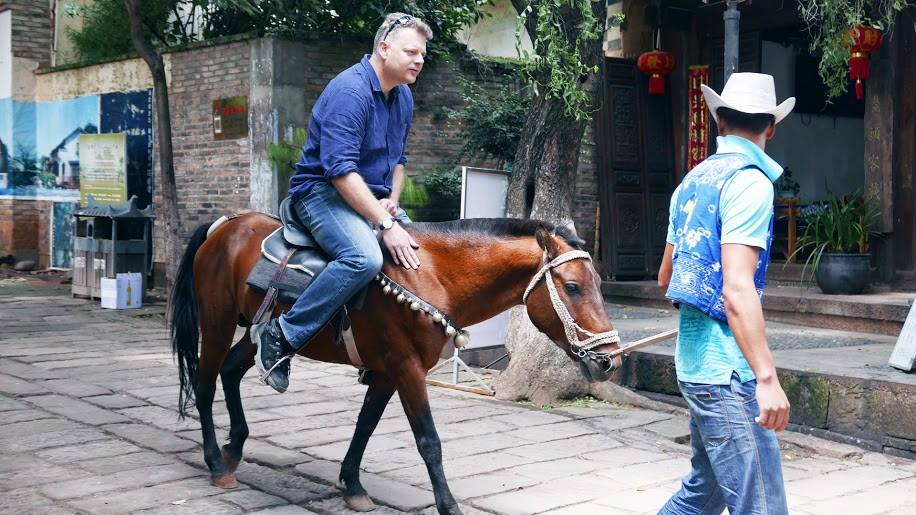
My job is to walk around town reiterating what I’ve just told you, until two Bai dressed like Marlboro Men trot past on ponies. A price is swiftly agreed, and I am hoisted up onto Zhitu (Red Rabbit), an uncomplaining little horse supposedly descended from the pack animals of the old trading routes, so that I can continue my explanation while riding along. I look ridiculous, like a gorilla perched on a sausage dog. I am taught how to say whoah in Bai, which turns out to be waah, something I would probably end up saying anyway if Red Rabbit were to bolt. But we walk through three iterations – a wide-shot, a close-up and a safety, and he doesn’t throw me, and I clamber down and tell him he is a good little horse before I kiss him goodbye.
“Why did you do that!?” asks the aghast director.
“I’m British,” I explain. “We only show affection to dogs and horses.”
Jonathan Clements is the author of A Brief History of China. These events appeared in Route Awakening S02E01 (2016).
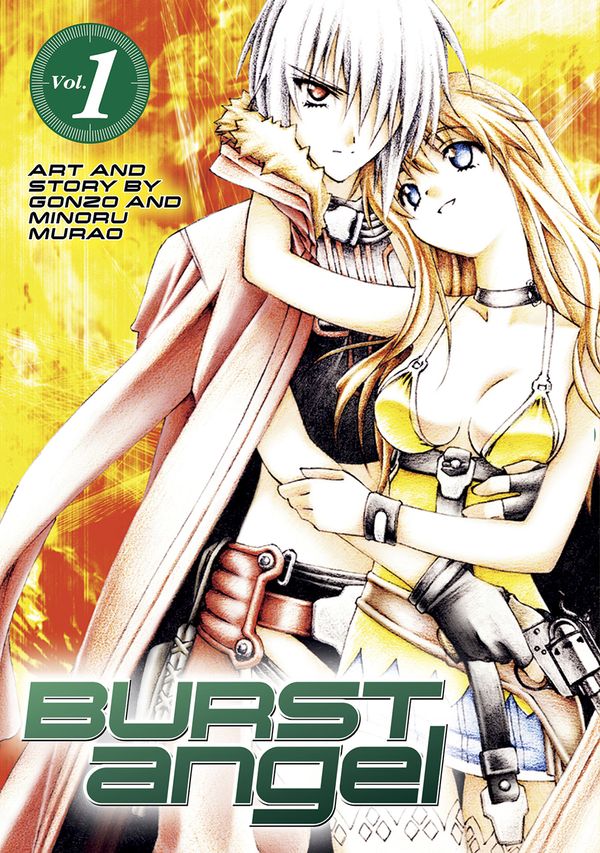
Culinary student Takeru’s life takes a sudden turn when he crosses paths with Jo, an ace sharpshooter, and the kind-hearted Meg. The dynamic duo run a ‘Jack of all trades’ service, which sees them thwart criminals, recover stolen treasures, and battle formidable opponents to pay the bills. Takeru is inspired by his new friends and finds courage in the face of adversity, proving that overcoming fears can lead to unexpected heroism.
Out tomorrow, according to the trades at least, the first volume of Minoru Murao’s manga adaptation of the fan-favourite anime Burst Angel. Motoko Tamamuro and I worked on the translation of the English script.




 The Official Schoolgirl Milky Crisis Blog