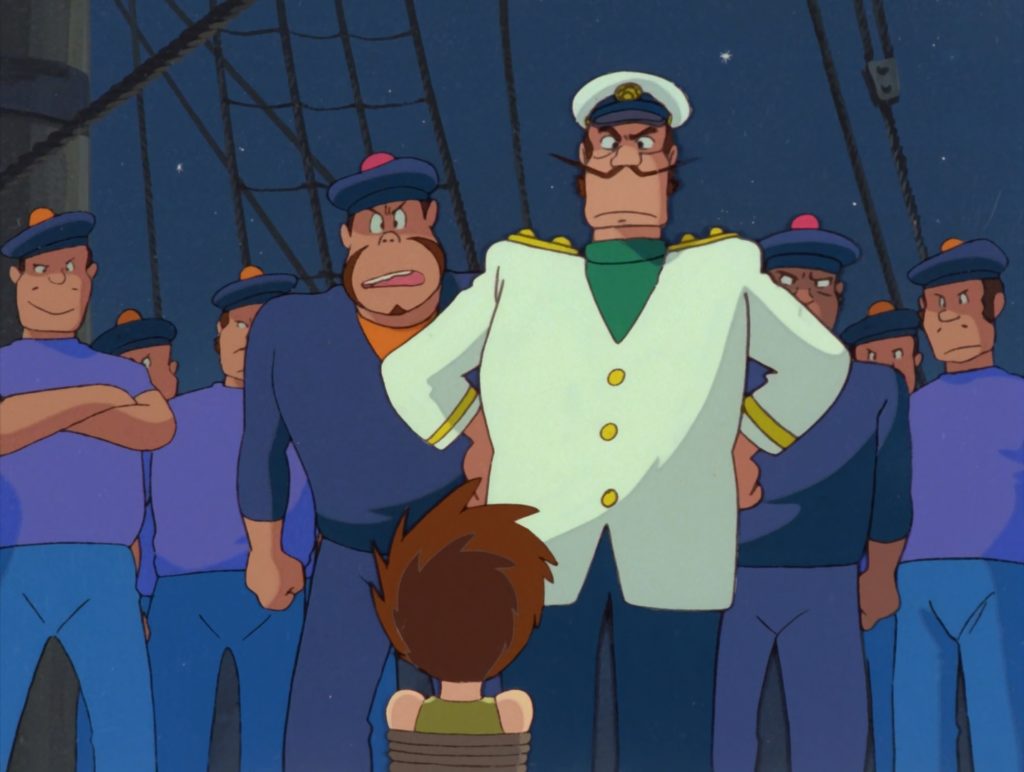
“Fritz becomes actively involved in espionage, scuttling a freighter to block the Panama Canal and hobble the US naval response. It is Fritz’s execution by the vengeful Americans that leads to an outright declaration of war by Germany. Japan frees India from British oppression, in part owing to the Nitahara-class aerial warships able to cross the Himalayas in a surprise attack…”
In a tongue-in-cheek reminiscence, Yasuhiko Tan, the NHK producer who greenlit Future Boy Conan over dozens of other possible projects, wrote of his interest in the show as if it were a deluded romance. Bewitched by the charms of the original offer, and over-awed by the appearance of the pilot episode, he alluded to the progress of his “relationship” as he continued to throw support behind a project that fell behind and became too big to fail, only to snatch disappointing ratings on broadcast.
“These days,” he wrote to Conan as if it were a fondly remembered ex, “people talk about you like you are the great anime masterpiece, but back then, your reputation, to be honest, wasn’t so good. The audience share didn’t meet up with people’s expectations, and I heard all sorts of stories. You know how difficult it is to hear bad things about the one you love, don’t you?”
Over at All the Anime, there’s an extract from Future Boy Conan: Miyazaki’s Directorial Debut, the book I’ve written with Andrew Osmond to accompany the UK release of the 1978 TV series.
Over at the History Hack podcast, I talk to Alex and Zack about the role of music and songs in the rise and fall of the Japanese Empire, drawing on my new book, Japan at War in the Pacific.
Some of the songs mentioned include “Miya-san, Miya-san“, the revolutionary anthem of the Meiji Restoration, and “Miya-sama, Miya-sama“, its surprise reappearance in Gilbert & Sullivan’s The Mikado, as well as “Myriad Enemies“, the stirring naval march that spent decades drumming the idea of “shattering like a jewel” into the minds of young recruits, and “Qing Lai“, the song about Chinese conjurors that the Japanese Imperial Army bulk-bought in thousands and scattered all over China six months after the Rape of Nanjing in a misguided effort in cultural outreach.
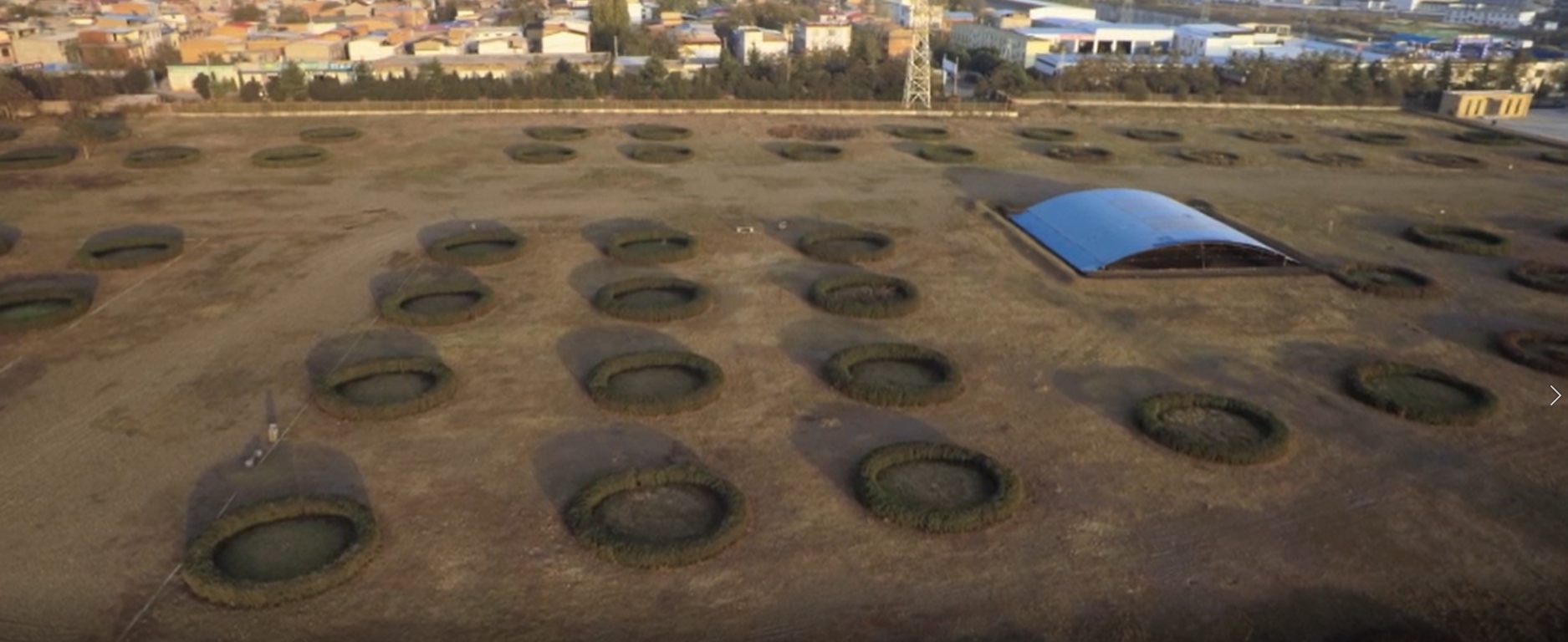
In the Sui dynasty (581–618), the suburb of Huiluo was half a mile north of the Luoyang city walls, where the Sui’s founder ordered his subjects to sink a granary pit, nine metres deep, sufficient to hold half a tonne of grain. Over the next nine months, workers dug 300 of them across an area that today spans several city blocks, storing wheat, millet and beans for the people. It was an incredible achievement in engineering, a real example of the kind of long-term planning that should have allowed the Sui to endure for generations…. except, as you might have noticed, the granaries were outside the city walls, and reflected an unwarranted confidence that there would be no civil unrest.
In the civil war that toppled the Sui, a rebel general realised that he had no need to attack Luoyang. He could simply seize its massive food supply and wait for the starving city to surrender. As the Tang dynasty shifted back to a new capital in Xi’an, the strategically vulnerable Huiluo granary pits, each of them the size of a house, were abandoned.
Wang Ju, the affable chief archaeologist at Huiluo, shows me where silt and sediment washed in over the years that followed. The roofs collapsed, and at some point in the next few centuries people forgot they were there. He and his associates excavated five or six of the granary pits, and turned the area around several dozen others into parkland, with the location of each granary marked by a little round hedge. But a few years ago, work stopped, and the exhibition hall at the site remains closed to visitors. It is difficult, in an age of Terracotta Warriors and over-the-top reconstructions of ancient carnivals, to get tourists all that interested in a bunch of holes in the ground.
We climb down the crumbling earth steps into the bottom of one of the pits for him to show me layers of sediment and the traces of the old granary lining, which is where I noticed a manhole-sized circle of discoloured earth.
“Oh, that,” he laughs. “That’s where the tomb raiders tried to get in.”
They used a Luoyang shovel, a semi-circular trowel on the end of a long pole, pushed into the earth to take core samples. Push one into the ground anywhere around Luoyang, and you may luck into an old grave or buried temple. The poor chancers in Huiluo found what they thought was the side of a tomb, and wasted a night or two digging down to find nothing but an empty pit.
“And the thing is,” says Wang, “they didn’t do it that long ago. You can see where the earth is different in the tunnel. Rain washed sediment in, but it did it much more recently, maybe only thirty years ago. So they were probably digging their way in around 1970 or 1980. These tomb raiders, they’re kids. They’re always young and stupid, like 19 or 20, and think they are on to a good thing that’s going to make them rich. They can dig down nine metres in just three or four hours, working by hand, in shifts. And we’re archaeologists, we can get forensic on them very quickly – we can dig out the tunnel and work out who they are from what they leave behind – cigarette packets or particular beer cans.
“And they didn’t find anything because there’s nothing here, which is probably why we never got any funding to open the others, and why we still haven’t opened this museum, five years after it was built. Nobody wants to come and look at empty pits.
“It was worse in the old times. You wouldn’t believe the stuff we’ve dug up elsewhere. There was a tomb in Xi’an where they found a tomb robber crushed under a stone near the head of the tunnel. I reckon they brought in a new guy, found something really valuable, and killed him on the way out so there was more to go around. I mean, we’re talking about grave-robbers here. They’re hardly stand-up people.”
I find myself thinking that Wang might have more luck with his exhibit if he made more of the people who tried to rob it. There are a lot of tomb raider stories about, particularly in Xi’an and Luoyang, both of which functioned as capitals during the Tang dynasty (618–907), the pinnacle of China’s high middle ages, when, for a time at least, the nation was rich, the people were happy, and the culture was suffused with innovations and ideas from along the Silk Road.
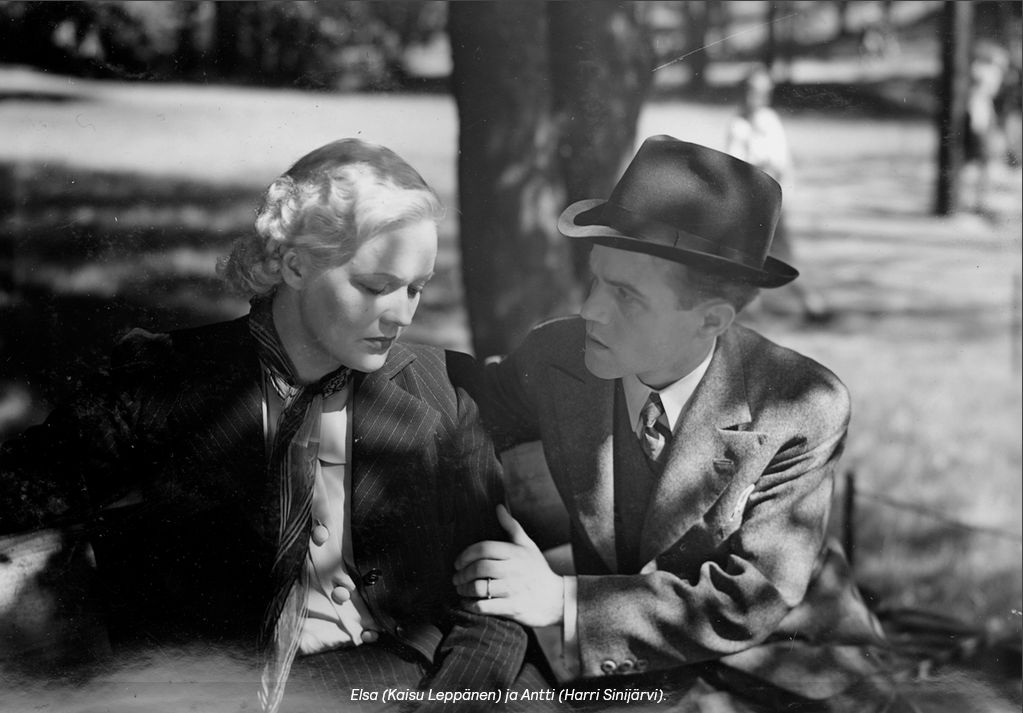
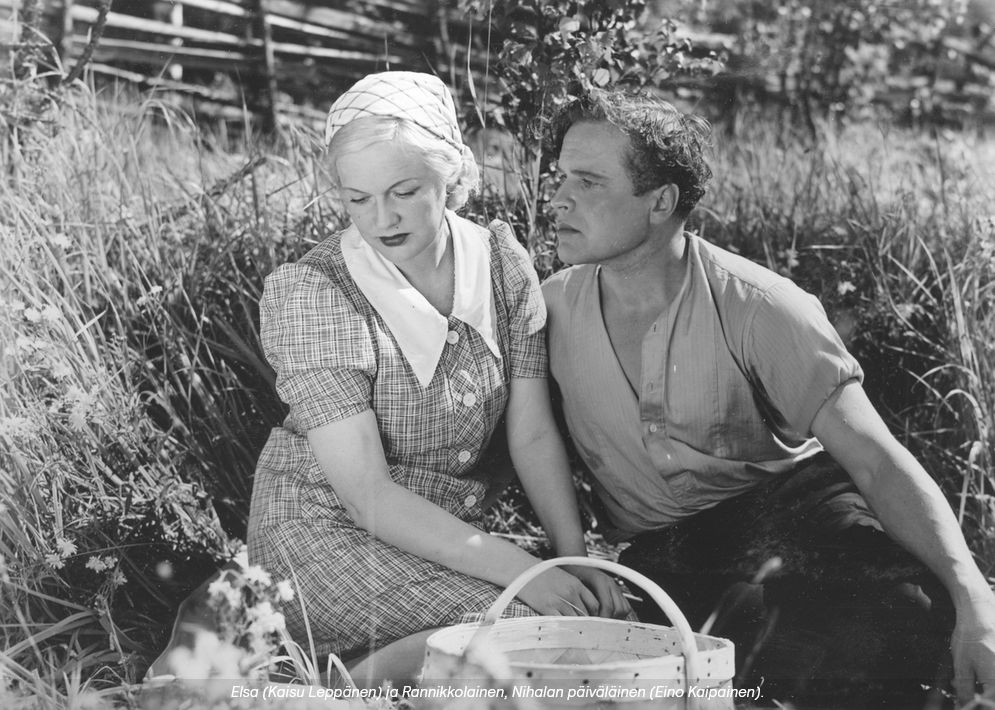
Laundry-worker Elsa (Kaisu Leppänen) marries Antti (Harry Sinijärvi) after a whirlwind one-day courtship, only to suffer for three years of constant failures to have a child together. Increasingly obsessed over getting pregnant, she goes away to the countryside to stay with Antti’s sister Katri (Lilli Sairio), only to enter into a torrid and ultimately fertile romance with local labourer Rannikkolainen (the ever-smoldering Eino Kaipainen). Protesting that she still loves her husband, but cannot keep away from Rannikkolainen’s rugged charms, she continues their affair, despite words of warning from Katri that village gossips are talking about her.
When the ailing Antti comes to visit, Elsa confesses to Rannikkolainen that she is pregnant, but that her child “…is neither yours nor my husband’s. The child is mine.” After Elsa chooses to return to the city with her husband, a heartbroken Rannikkolainen begins a relationship with Kaisu (Regina Linnanheimo), a local girl who has carried a torch for him for years. Elsa, meanwhile, confesses to her dying husband that she is pregnant, and asks for his forgiveness. She returns to the countryside in search of Rannikkolainen, but he has already agreed to marry Kaisu. Accepting her fate, Elsa congratulates Kaisu and returns to the city and her job in the laundry, asking her infant son not to judge her.
Well, that escalated quickly. Drawing on Helvi Hämälainen’s 1937 novel The Empty Embrace (Tyhjä syli), scenarist Arvi Kivimaa delivers a surprisingly progressive account of what was sure to be a recurring social issue in post-war times – a spate of unwed and/or widowed mothers recalling the scandals and tragedies seen before in The Women of Niskavuori (1938), Green Gold (1939) and God’s Judgement (1939). The early scenes of this Suomen Filmiteollisuus film are particularly good on the drudgery of blue-collar work, as Elsa, her biological clock ticking like timpani, pouts and sighs her way around the grim, back-breaking work of washing Finnish bedsheets in the days before washing machines. But as the script makes clear, she is not desperate – she rejects the advances of the handsy chauffeur Nieminen (Ossi Elstelä), so it’s not like she is ready to plight her troth with the first man to blow in her ear.
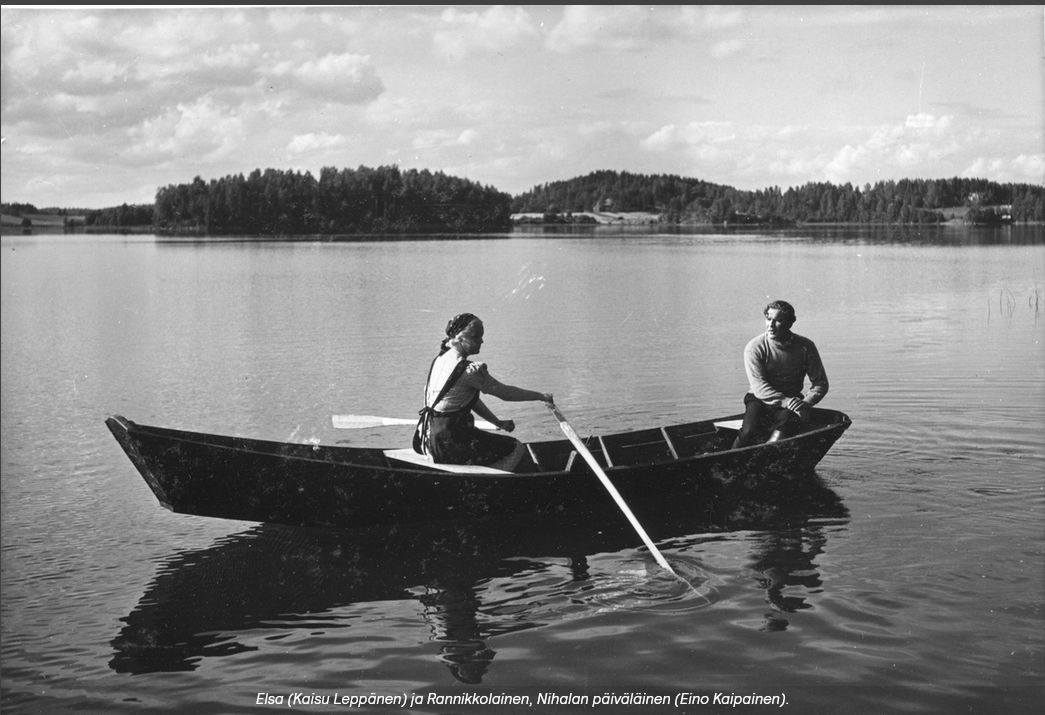
Not that Antti is a dreamboat hero, sweeping her off her feet. When he proposes to her, with the twin, thin rings of Finnish tradition (one for engagement, the other to be added at the wedding itself) she acts as if he has just run over her cat, and, somewhat gauchely, immediately starts wittering about how this her chance to have a child. In a charmingly Finnish moment, when her fellow washerwomen see that she has got engaged, they line up to shake her hand enthusiastically, bellowing their congratulations – no squeals and squees here. In fact, the no-nonsense, go-getting strength of Finnish women is a constantly recurring theme in this film, showing up in all manner of set-ups, such as the time that Elsa bodily ejects a drunken, abusive man from a tenement, and where she, with her powerful washerwoman’s arms, elects to row a boat on the lake, leaving even the manly Rannikkolainen to meekly hold the tiller.
Actor-turned-director Jorma Nortimo concentrates conspicuously on the joys of the Finnish countryside, as if delivering a celebration of all that is wholesome and good about agrarian life, almost as if suggesting that the sickly Antti was an urban, modern failure – a dud who would have died on Elsa sooner or later anyway, and that Rannikkolainen is something of a noble savage, part-Heathcliff, part-Mellors, doing his bit for posterity by helping to make little Finns. He is helped greatly in this by the casting, since Eino Kaipainen had been a Shatner-esque leading man for years, while Harry Sinijärvi had only appeared in two previous films, and is hence something of a non-entity. Kaipainen, in fact, is so magnetic on-screen that he even manages to get a smile out of Regina Linnanheimo, who as previously noted on this blog, usually looks like she is chewing a wasp. He first appears, driving a horse-drawn milk cart standing up, like a Ben Hur of the Finnish countryside, and is no less gropey with her than the city-man she had previously rebuffed.
Nortimo, meanwhile, tries every trick in the book to inject the film with symbolism and subtleties, such as a scene in which Elsa is filmed through the mesh of a fisherman’s net, as if she, too, is entrapped by her circumstances, or where Elsa and Rannikkolainen’s embrace is shot in silhouette, criss-crossed by telling barbed wire. There are some lovely stills kicking around from this production, suffused with the light of a forgotten Finnish summer, the exteriors presumably held off until the very last days of shooting, in order to make the most of June-July, and have the film ready for its release in September 1940.
The Finnish press of the time was guardedly positive about a “sensitive subject”, although the Swedish-language newspapers seemed to latch onto it as a quintessentially “Finnish” theme, as if only Finnish country bumpkins got up to this sort of thing, and Swedes would never dream of it.
As a parent, one of the surprising things about my daily life is how many cartoons I end up having to sit through. I know, right? The irony. And I’m wondering what it is that is the cartoon of choice among the kids at Mamoru Hosoda’s house.
“Oh,” he says, “they are mad for PAW Patrol. It’s PAW Patrol all the time at our place.”
Blimey, I say to the director of Summer Wars and Belle, that must be awful.
“Oh no, it’s great,” he says graciously. “All these little dogs and it’s kind of like a sentai show. They love it.”
I personally can’t imagine the horror of being a world-class animator, who comes home after a tiring day making films to discover that your kids are obsessed with Canadian cartoon dogs, but Hosoda is determined not to be That Kind of Animator.
“I don’t make a big deal about being The Guy Who Made the Films,” he says, despite literally being the guy who made the films. “I did take my daughter to see Belle at the cinema, and there was one of those UFO Catcher machines at the cinema, which had Belle dolls in it. She was keen enough on the film to ask me to win her one. I must have put three thousand yen [£20] into that machine!”
At this point, I have to point out to him that he wrote and directed Belle and owned all the licences. If he wanted a box of Belle dolls dropped on his doorstep that night, he only had to make a phone call.
“Yes,” he says shyly, “but I’m not the kind of guy who says I directed the film. I’m the kind of Dad who wants his daughter to see him win something.”
It’s a lovely little window into his character, and into how sweetly he puts family ahead of work. But with the sight of both Belle and PAW Patrol: The Movie on the Oscars Best Animated Feature longlist, will there be a ceremonial burning of doggie merchandise at the Hosoda home?
“I think if my kids were voting members of the Academy, they would be voting for PAW Patrol without a second thought,” he grimaces. “But luckily, they’re not.”
[Peace was preserved when neither film made the shortlist] Jonathan Clements is the author of Anime: A History. This article first appeared in NEO #217, 2022.
Anime in the UK: the History, Cultural Context, and Evolution of UK Anime Fandom by Leah Holmes is the culmination of over a decade’s work, an M.Phil thesis that covers 30+ years, most crucially of the 1990s, before the internet singularity so vastly increased the amount of data (and noise) available. A super-fun read for anyone who was there, and something of an eye-opener, I expect, for anyone who wasn’t.
“Echoing the rhetoric and “cancel culture” of the 2010s, with such disruptions to the status quo as #MeToo and Black Lives Matter, Amstell offers a conceptual breakthrough: that it is not veganism that is odd, trendy or cranky, but ‘carnism’ – a shared delusion of humanity that meat-eating was acceptable, with no consideration of the ethical implications.”
It’s Saturday, so we must be in Weihai, a city I have hoped to visit for 20 years. It was formerly Weihaiwei – The Guard Against the Majestic Sea, site of an ancient fort that warned against Japanese pirates, and a redoubt for the Qing dynasty navy. It was where Admiral Ding Ruchang stood up to the Japanese invaders even though he knew he stood no chance, and went to his death by imperial command, proclaiming to his sailors: “Fight on, though your swords be broken.” Later on, it became a forgotten backwater of the British Navy, the summer anchorage for their Asian fleet, mourned by its magistrate, Reginald Johnston, former tutor of the Last Emperor, as the “Cinderella of the Empire.”
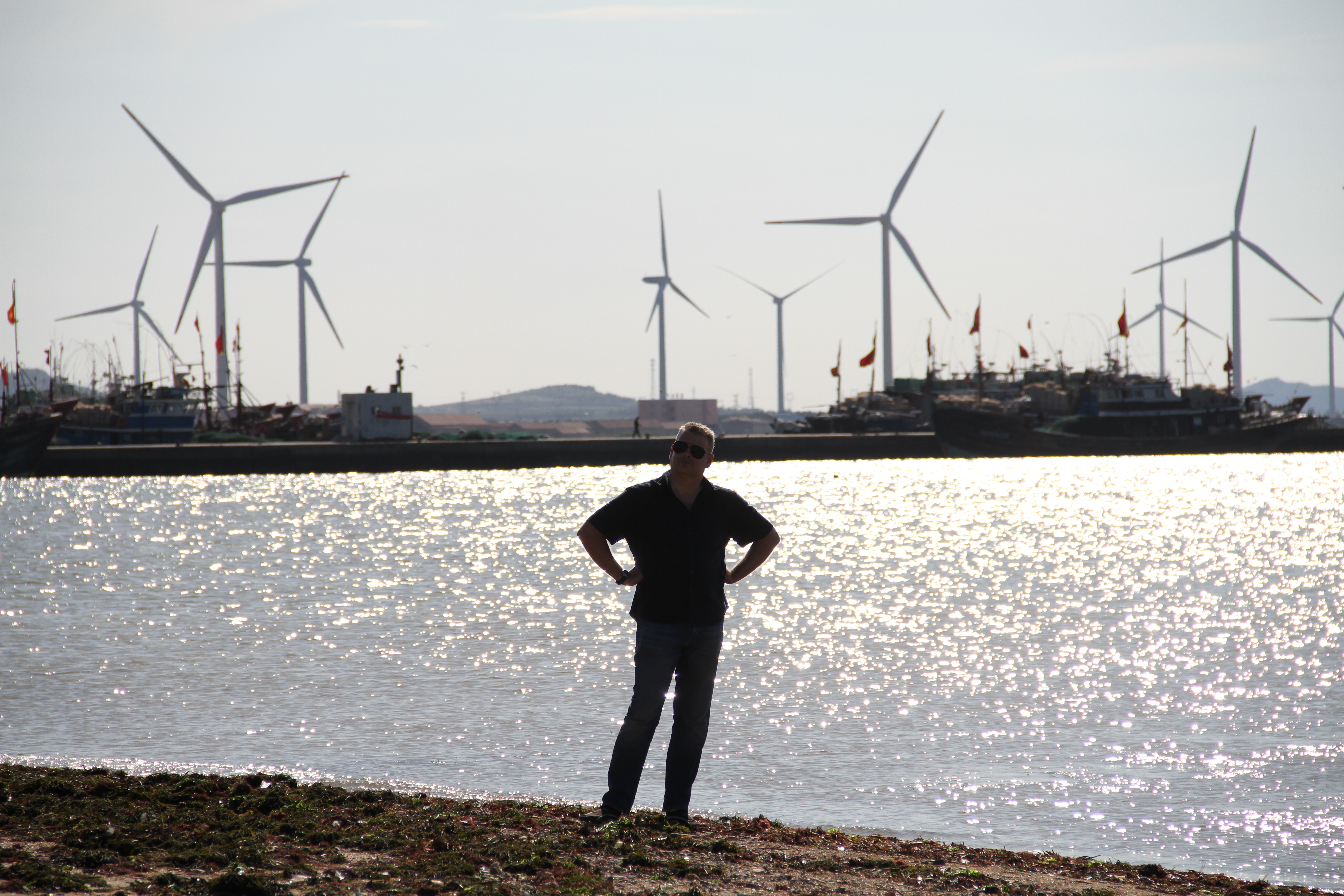
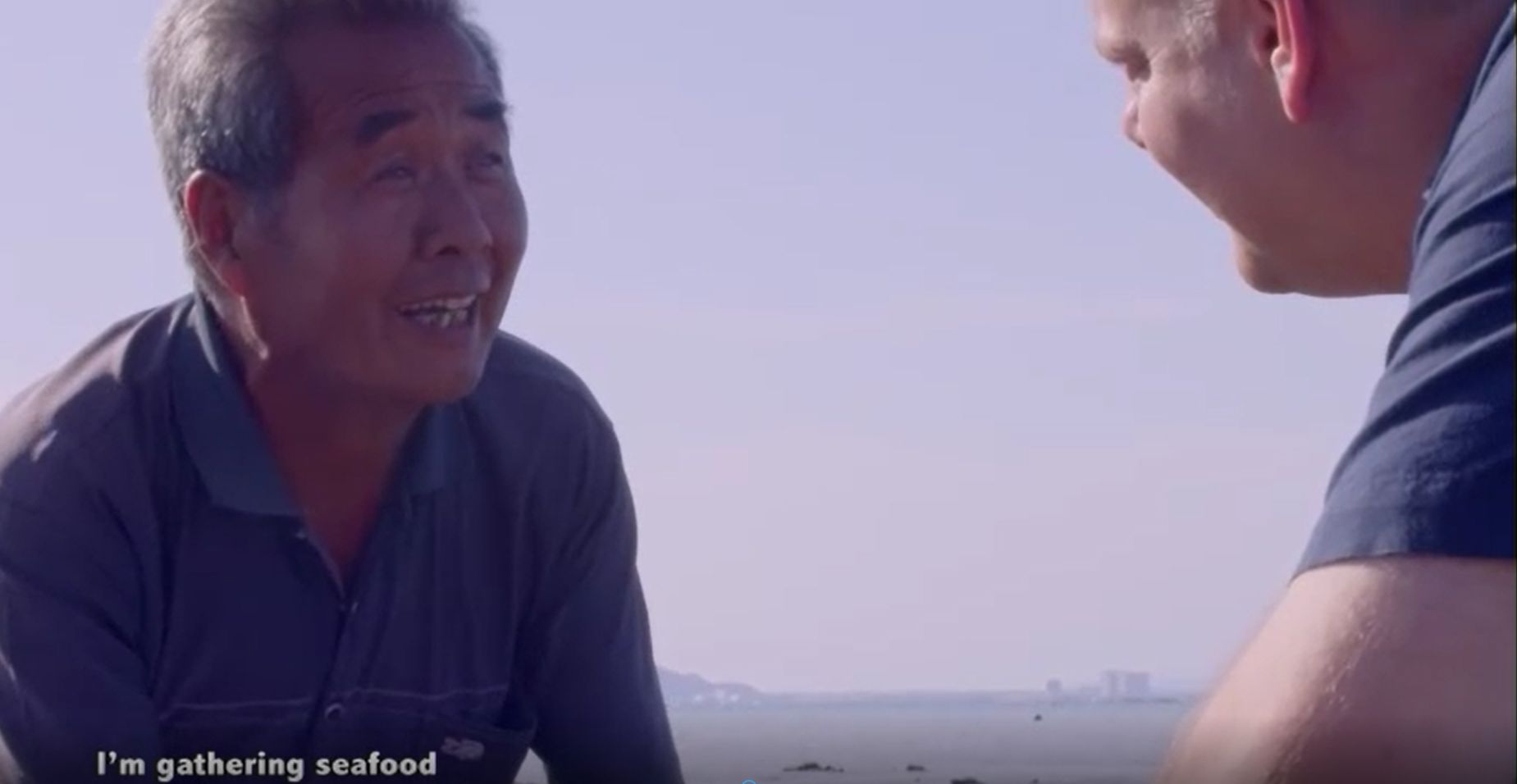
But I’m not seeing any of that, because we are out on a spit of land dotted with wind turbines, looking at seaweed. The village here is full of little thatched cottages, their roofs made of dried sea grass. Mr Wang the brown-skinned village elder hugs me like an old friend, and shows me the piles that look suspiciously like hay, but actually comprise marine produce.
“We used to just grab it from the beach,” he says, “but there isn’t any left anymore, so we have to buy it from people who demolish old cottages. I honestly don’t know how we are going to repair our roofs when we run out of recycled stuff.”
He is desperately proud of his thatching, proclaiming that it is warm in winter and cool in summer, wonderfully waterproof and even fireproof. When I tell him that can’t possibly be true, he pulls out his lighter and sets fire to a few strands, which resolutely refuse to burn.
Frances is supposed to be interpreting for the other Jonathan (the director), but has trouble following Mr Wang’s Rongcheng accent, a form of Chinese with harder tones and simplified vowels, suitable for shouting from ship to ship. Oddly, it doesn’t trouble me at all, and makes no more or less sense than any other Chinese, and it has echoes of the classical forms and southern dialects. He doesn’t say jia for house, he says gya. He says gyu instead of jiu for old. Instead of Nihao for hello, he says Niho. I don’t regard any of these shifts as particularly earth-shattering, but for Frances, who is from Taiwan, he might as well be speaking Martian.
I explain that I often can only pick out a couple of words from a fast Chinese sentence and have to fill in the blanks on the fly, so it really makes little difference to me what someone’s accent is.
“That’s kind of how I listen to you and Jonathan talk.” she admits. “All these British terms are very hard. I keep having to wonder, what is a bollocks? What makes someone a muppet? And is it good if they are having a larf?”
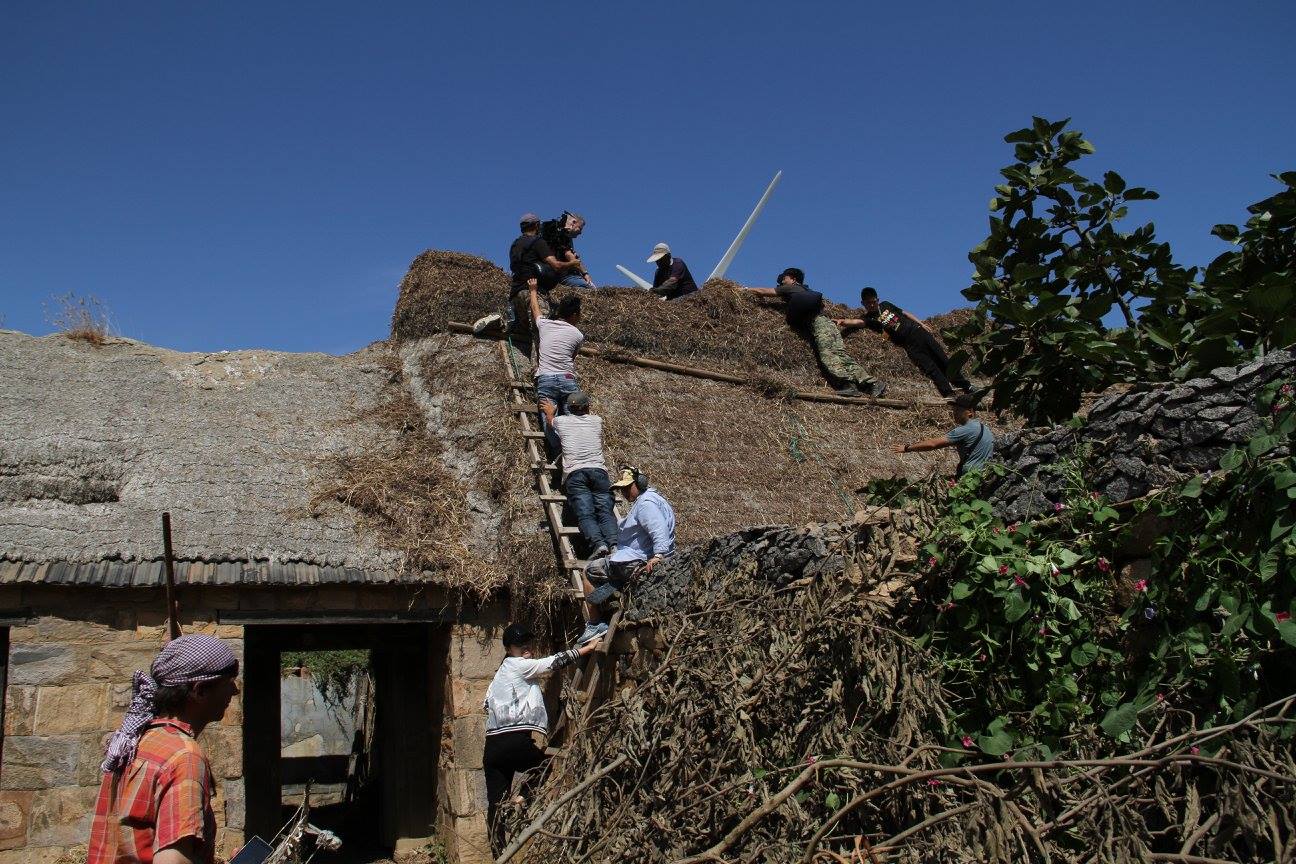
I am going to have to climb a rickety ladder onto a rooftop in order to do something practical. Wang, who is in his seventies, refuses to come up, but is filmed standing at ground level snickering at my incompetence. Jonathan’s colleague, Yu the Chinese director is deeply fretful that making me climb onto the roof of a cottage is beyond the call of duty, but I explain that it is precisely the duty that I have, and eagerly climb up the roof to perch on the apex with a deeply sun-tanned old man in a baseball cap with a super-extended brim to hold off the hot sun.
“Who the hell are you?” he asks, and Frances shouts up that I am a foreigner come to learn about his culture. Thatching a Chinese roof with seaweed turns out to be rather easy, as you simply stretch it out into parallel lines and then jam it into the roof with your body weight – a resource I have in abundance. We laugh on the roof together as the drone circles us, and I ask him if he even stops to admire the view – the long lines of wind turbines, and the sea that reaches all the way to Korea. Oh yes, he says, although I can’t stop for a fag up here. Don’t listen to Wang. This stuff isn’t as fireproof as he thinks.
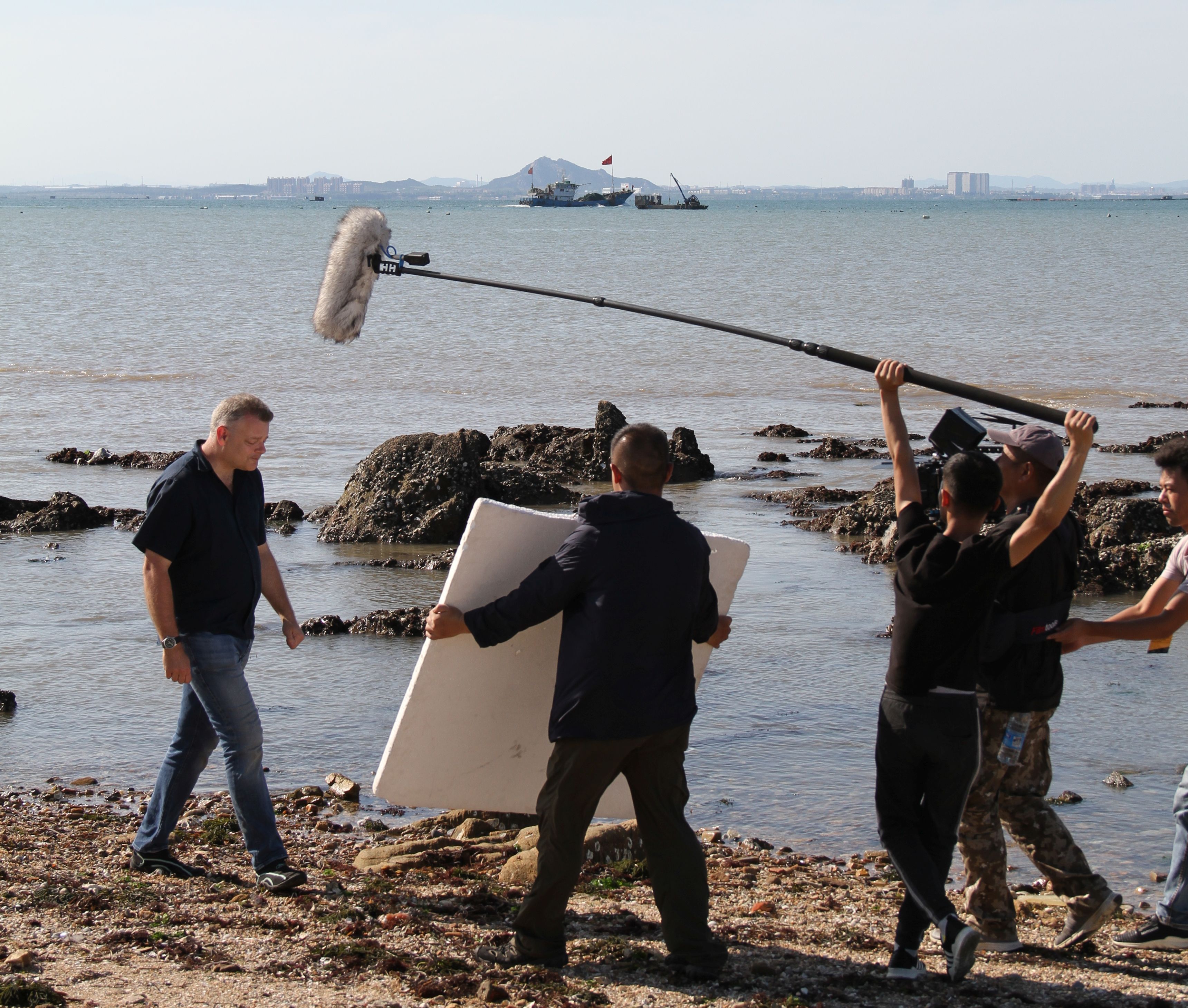
The Chinese director acts like I have been juggling chainsaws for the good of the production, but in truth I have been in far less danger on the rooftop than the crew, who are hanging by their fingertips – the A and B cameramen are only prevented from tumbling off by their assistants holding their belts, and Boomer the Boom Mike is perched on a ledge like a monkey.
“Here, try some of this,” says the unnamed roofer, passing around some strands of the sea grass. “Seriously, just lick it.”
Me and the B Cameraman gingerly tongue the hundred-year-old seaweed, requisitioned from a demolished cottage somewhere else in the bay.
“See. It’s still salty. After a century!” he proclaims.
Lunch is an open-air seafood banquet with Mr Shouty, a man whose entire life has been spent yelling up at the topmast on fishing boats, and who seems to have no volume control. But he is beaming when his wife and daughter put the food on the table and I proclaim it in all truth to be the best sea food I have had in my life. There are whole crabs, clams and oysters, freshly gathered that morning, and fish caught with a line. Speaking as someone who often cannot tackle seafood without retching, it is a revelation, even better than the food I had in Hainan. The crew have helped me by loading me up with baijiu beforehand, on the assumption that if there is anything dodgy about the seafood, the alcohol will kill it. We sneak some more firewater into our glasses whenever the crew change their batteries, and Ruby the Interpreter looks on longingly – she is obsessed with clams and mussels, and if left unsupervised, can often found behind an entire midden of empty shells.
We end the day on a nearby beach, where I deliver a speech about what Shandong must have meant to the people of Confucius’s day. Chinese civilisation was centred on the Yellow River valley, which must have made the coastline seem like a magical place, the end of the world, where there was nothing to see towards the east but ocean. It was on a beach like this, I suggest, that the First Emperor met the Daoist priest who suggested to him that if he had conquered the world of the living, the new frontier was surely to conquer death itself, an experiment that he could invest in by sending a fleet of ships into the rising sun, in search of the isles of the immortals.
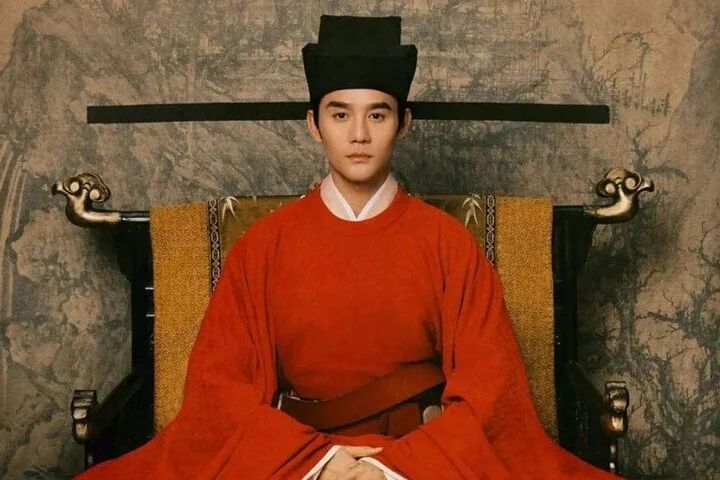
Wang Zengyu has a historian’s frustration with the media, irked beyond words by some of the liberties taken by authors who think “ancient China” just means a few thees and thous. “Few producers,” he fumes, “bother to pay attention to historical facts and detailed nuances of a specific historical period, so that a large number of productions are so carelessly made that they simply drive historians crazy.”
Wang is credited last on the cover, but appears to be the prime mover behind this superb collection of essays about all aspects of life in China’s Middle Ages. A Social History of Middle-Period China: The Song, Liao, Western Xia and Jin Dynasties is an incredible 700+-page guide to marriage customs, rituals, forms of address, food, hairstyles… pretty much any topic you care to consider. It is a veritable Dungeon Master’s Guide for anyone seeking to plunge into recreating the world not only of the Song dynasty, but of the several other polities that jostled for supremacy in the area we now call China.
Because Wang his co-authors refuse to take the shilling of the grand narrative of one dynasty following another, and argue that the Tibetans, the “Savages” of the south, the Jurchen invaders and the Tangut neighbours all had just as much a claim of being part of Chinese history as the better-remembered Song dynasty. Separate sections outline the wide diversity in China between the 9th and 12th centuries and it’s all brilliantly, cogently translated into English by Bang Qianzhu. The result is one of those books that makes me wish I was writing about the Song dynasty, because I’d have all the local colour at my fingertips.






 The Official Schoolgirl Milky Crisis Blog