For viewers in the US, I believe I am on William Shatner’s UnXplained tomorrow (S03E14), talking about the mysteries of the tomb of the First Emperor of China.

For viewers in the US, I believe I am on William Shatner’s UnXplained tomorrow (S03E14), talking about the mysteries of the tomb of the First Emperor of China.

In January 1942 Japan deployed paratroopers in battle for the first time during the Battle of Manado. Horiuchi Toyoaki, a flamboyant, bearded officer nicknamed “The Octopus” for his love of and promotion of gymnastics in the Navy, led a strike force of 507 parachutists, dropping behind enemy lines to seize the Dutch forces’ airfield and seaplane base. In a tactic that would have surely attracted more notice had it not been overshadowed by the parachute achievement, a sea-plane landed on an inland lake, allowing an anti-tank unit to penetrate deep into enemy territory.
The idea of soldiers bodily hurling themselves out of a flying machine into the middle of enemy territory had an electric effect on the Japanese public. The Yomiuri Shinbun dubbed them the “Divine Sky Warriors” (Sora no Shinpei), prompting a journalist at the rival Mainichi Shinbun to write a poem about the romance of their achievement. Before long, “Divine Sky Warriors” had been set to music, broadcast on the radio and released as a gramophone record, becoming a nationwide hit.
In the great sky, bluer than blue
It is as if, suddenly a hundred thousand white roses bloom
Behold! Parachutes descend from the sky.
Behold! Parachutes conquering the sky.
The parachute is the most glorious flower in the world.
On its purest white, our soldiers regret not the spilling of red blood.
The divine soldiers, so young that they still look like children, are repeatedly likened to blossoms fluttering in the sky, descending from the heavens, to magically reclaim territory held in enemy hands.

In something of a low blow, the Army fought back by rushing out a propaganda movie, Divine Sky Warriors (1942, Sora no Shinpei) a documentary about the training of an Army paratrooper unit that not only presented close-up imagery of technology and procedures that the Navy still proclaimed to be classified, but blatantly used “Divine Sky Warriors” as its theme tune, as if to imply that the achievement on Manado had been an Army operation. The Ministry of Education, keen to distract the population from increasing Japanese losses in the war at sea, gave the film a cultural award, and decreed that it should be compulsorily screened in every cinema in the country.
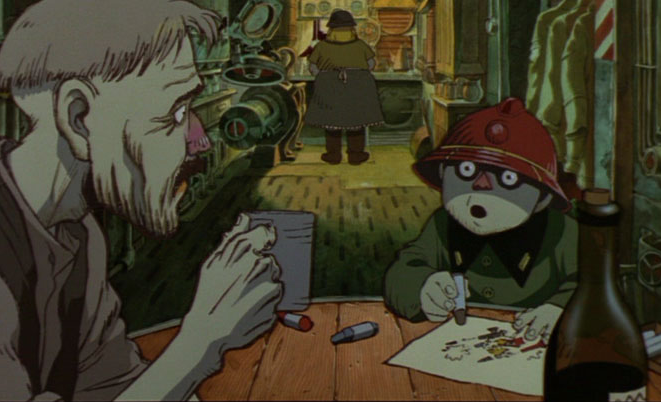
In response to the insult, the Navy retaliated with cartoons – Momotarō’s Sea Eagles (1943, Momotarō no Umiwashi), celebrating the contribution of Navy pilots to the victory at Pearl Harbor, and Japan’s first ever feature-length animation, Momotarō’s Divine Sea Warriors (1945, Momotarō, Umi no Shinpei), a.k.a. Momotarō, Sacred Sailors.
An extract from Japan at War in the Pacific: The Rise and Fall of the Japanese Empire in Asia (1868-1945) by Jonathan Clements.

Much of Japan’s economy was bolstered by sales of a single commodity – silk. From the 1890s, when the US overtook France as the main export market, a huge proportion of Japan’s foreign currency earnings derived from the export of raw silk and related products to the United States. Fully 10% of Japan’s arable land was taken up with mulberry orchards to feed silk worms, while by 1929, the United States accounted for 95% of Japan’s silk trade, and the silk trade accounted for up to 54% of all Japan’s exports. The introduction of Coco Chanel’s “Little Black Dress” in 1926 was not merely a revolution in fashion, but in international commerce, delivering a sharp blow to Japan’s export prospects, which had previously relied on intricate and bulky gowns. So, too, was the widening availability of rayon, an artificial fibre perfected in 1924 and soon undercutting silk on the market. The onset of a global depression, which impacted the United States in 1929, had a predictable effect on the sales of luxury items, including silk clothing, causing Japan’s silk exports to the US to plummet during the 1930s to a mere eighth of their former level. Only the rise of the silk stocking, a mass-production item after the invention of all-in-one knitting machine, offered any respite to Japan’s troubled export market.
While the battles of Kalkhin Gol were still raging in 1939, a far quieter, but arguably even more destructive blow was struck against Japan in New York, where the new wonder-fiber nylon was unveiled at the World’s Fair. Nylon would soon be offering a cheap alternative to silk stockings, which, in the decades since women’s dresses began to use less material and ruffles, had become the main use for Japanese silk. The arrival of nylon spelled disaster for Japan’s own industrial calculations, suggesting that the silk-stocking industry, Japan’s last big source of export revenue, was about to take a tumble. Without the $100 million per year that Japan earned from silk exports to the United States, the nation would have to rely solely on its dwindling gold reserves, and whatever revenue it could scrape from the drugs levies of Manchukuo.

How much longer could Japan afford to fight its China war? US analysts believed that Japan might still have enough gold reserves to push on for another two years. After that, it was confidently predicted, Japan would be out of money, and out of time… sometime in the autumn of 1941.
But the US was also heavily reliant on the Japanese for certain commodities – silk, for example, was not simply a luxury item, but also a crucial component in the manufacture of American parachutes. With China in a state of crisis, the best sources for it were Japan and Manchukuo! Fortunately for the US, there was enough raw silk stockpiled in the US already to adequately equip 200,000 parachutists, although there were still concerns that the US might run short of the coarse spun silk required in munitions’ igniter cloth and lacing for artillery. Already in 1940, the supply of waste silk from Japan had become suspiciously thin – it was believed that the Japanese were stockpiling their own silk. The most crucial of the US needs for silk was for use in naval cartridge cloth – the material used in powder bags for large-calibre ships’ guns. This need was met by massive purchases from China, often of the off-cuts from Japanese-owned mills.
An extract from Japan at War in the Pacific: The Rise and Fall of the Japanese Empire in Asia (1868-1945) by Jonathan Clements.

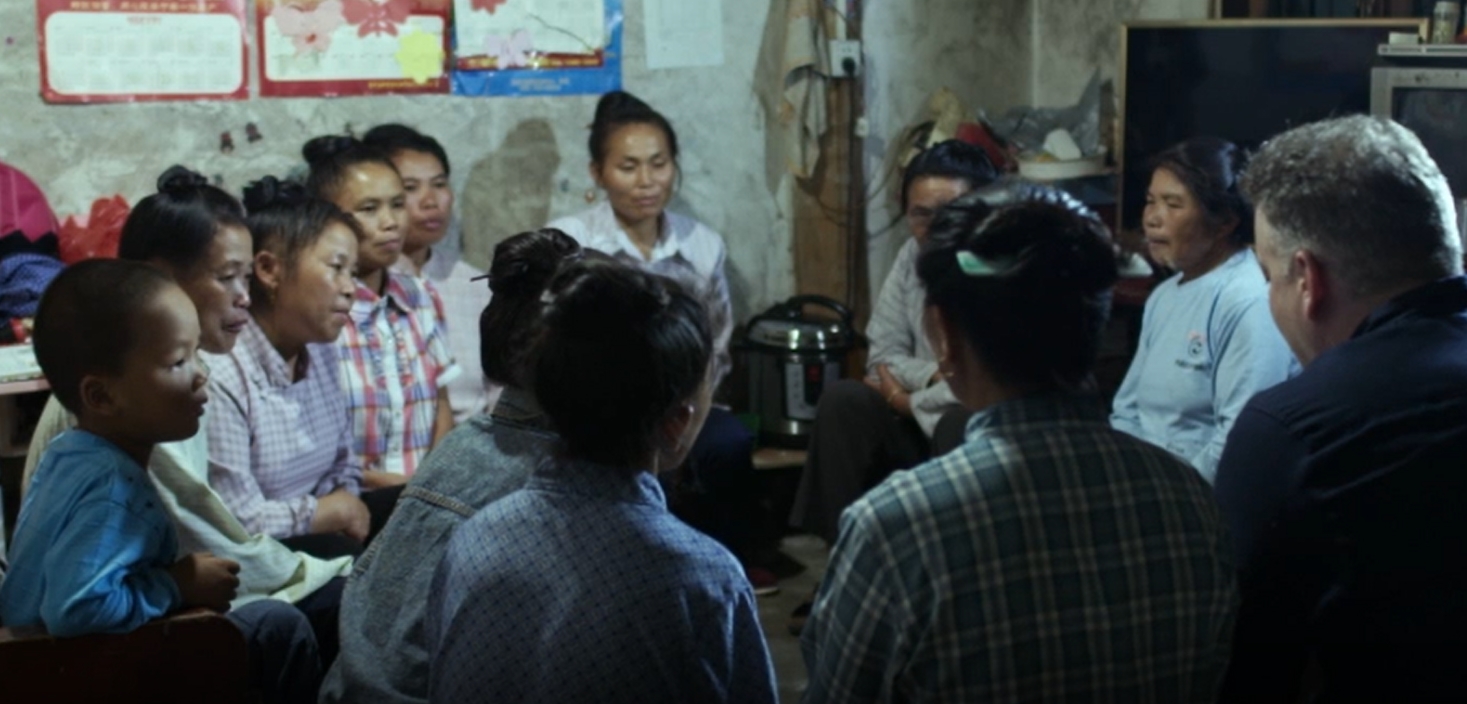
The mist has descended again, which means I can’t actually see Ox-Head Mountain, even as we’re driving up it. The pagoda swirls into existence out of the fog, next to a vast lotus-shaped dome that looks like a planetarium crossed with an airport. This is the resting place of a holy relic, a fragment of Buddha’s skull, embedded with gem-like sarira crystals. It was found inside the Porcelain Tower, but has been moved here, an hour outside Nanjing, for political reasons that nobody can really explain.
The Skull Relic Palace is not a temple. The guides keep telling us this, and the guy from Propaganda keeps telling us this, along with exhortations not to talk about Buddhism or film any Buddhists. Buddhists, however, are difficult to spot, because all the staff wear robes designed to evoke the Buddhist priesthood, many of them are glum tour guides who march sulkily with their hands clasped together, as if they would rather be doing jazz hands. Our liaison pouts all the way through lunch because we choose the Buddhist (vegetarian) canteen rather than the place where she can have nuggets. She gets me the Arhat noodles, having decided on very little evidence that I am a Buddhist who disapproves of eating in the meat-eaters’ canteen. I’m not, of course, it’s just that when visiting a Buddhist temple, I tend to go for the vegetarian option because I am curious what they do with tofu and mushrooms.
Ox-Head Mountain is a “Tourist Park” where people can experience Buddhist culture, architecture and iconography, although the visitors seem oddly divided between clueless, racist pig farmers in a coach party (“It’s Thursday so it must be Buddhist relics”) and super-devout, actual Buddhists. This, of course, is not my first Buddhist rodeo, so I know how to flash gang-signs to passing monks, and not to get in the way of pilgrim processions.

The inner sanctum is amazing, and the closest thing I have ever seen to a Buddhist cathedral, a “Thousand-Buddha Hall” chased in gold, with apsara nymphs curling through the heavens while various boddhisatvas sit on lotuses and do whatever it is that boddhisatvas do.
The director tells me to do a piece to camera, and I immediately observe that I find it ironic that, in Nanjing, the very city where Bodhidharma began to argue that material attachments were all bollocks, and that there were no scriptures, and no Buddhas, the very beginnings of what we now call Zen, that something so material, and so worldly should have been created.
This is not, she scolds, the place to start talking about Zen. I argue that it was literally the place to start talking about Zen, but some tourist board has snatched Buddha’s skull from the Porcelain Tower, driven it to a theme park in the middle of the mountains, and is now charging God knows how much to make visitors walk around it in circles before leaving through the gift shop. Where, incidentally, I found nothing worth buying, even though I am well aware of the ready market back home for scarves with swastikas on them, little Buddhist statues, big Buddhist statues, and other such paraphernalia.
Instead, I have to walk a delicate line between ridiculing the place for selling the chance to almost see a bit of bone, and ridiculing the builders for missing the point of Buddhism by a mile, but it was ever thus. Instead i focus on something that both Party and devout can agree on — the immense, game-changing influence that Buddhist culture has had on Chinese history for two thousand years. Denying it would be historical madness.
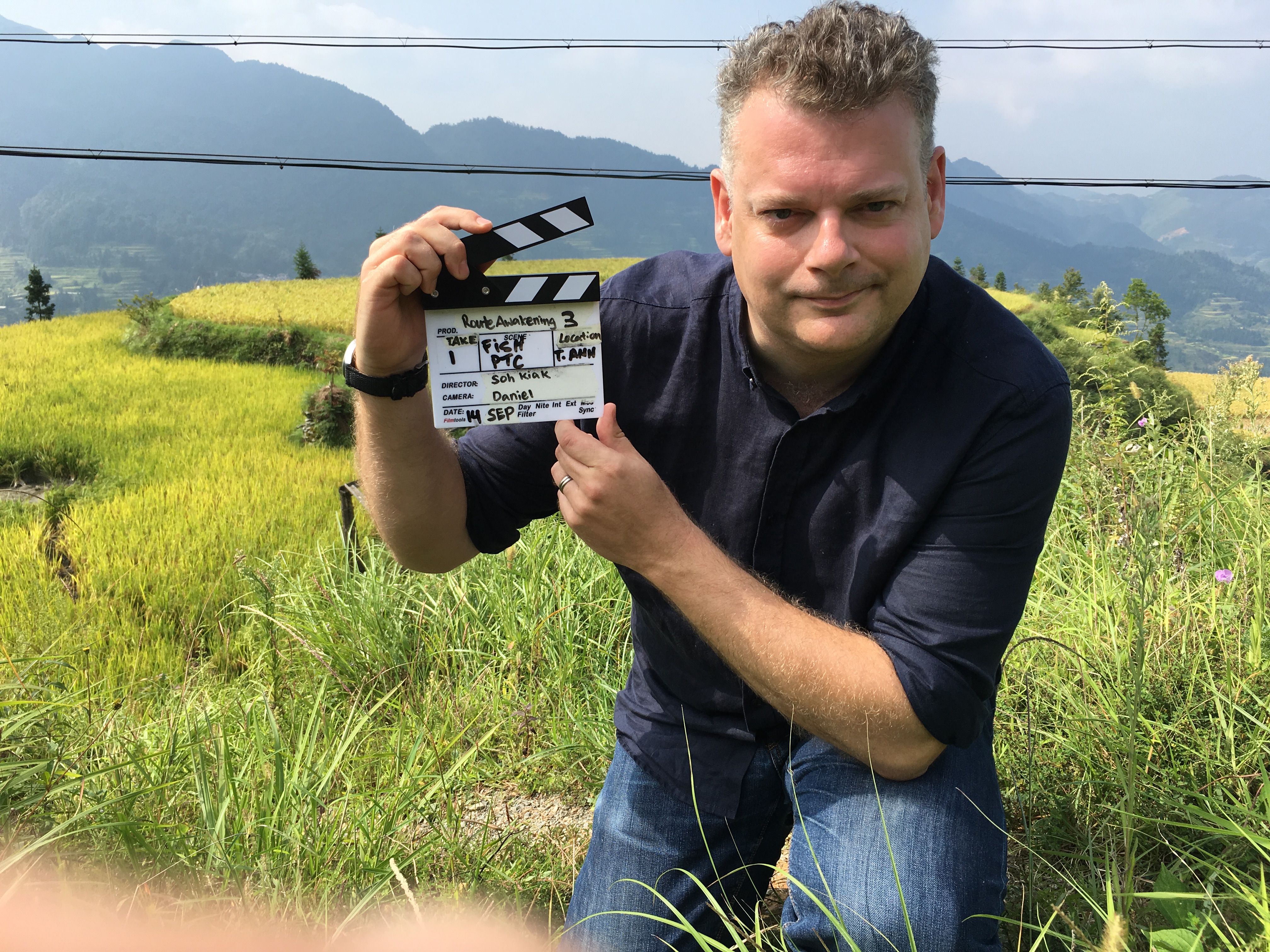
Jonathan Clements is the author of The Emperor’s Feast: A History of China in Twelve Meals. These events featured in Route Awakening S05E06 (2019).

On 2nd February 1940, a frail old man rose to his feet in the Japanese Diet and commenced a ninety-minute speech. Saitō Takao was seventy-one years old, an obscure politician who only occasionally spoke out on controversial issues, leading to one cartoonist to call him “the Lord of the Mice.” But today, he could reasonably be said to have had enough. Saitō was no pacifist – he was a conservative, broadly supportive of Japan’s expansion into Korea and Manchuria. The problem was, he began, that the stated aim of securing Japan’s resources and materials had been accomplished. He simply couldn’t see the point of the latest adventures in China, which were a costly and endless money pit.
Saitō’s problem was with a revolving-door of governments that seemed to think that their responsibilities were discharged by resigning at the first sign of trouble. A million Japanese men had been sent overseas; a million more faced the same fate. A hundred thousand Japanese had died, and all for what? Saitō took apart the government’s directives and policies, pointing out that they were riddled with contradictions. How could they claim to support China, while also trying to undermine it with rival regimes? Were they going to save China by destroying it? Is this what they meant by the “New Order in Asia,” some misguided rip-off of what Hitler was doing to Europe? How could the Prime Minister embark on a costly war in Asia, while also promising that he would demand no indemnity from the Chinese if they surrendered – who was going to pay for all this?

“If we ignore this reality, or camouflage it with the words ‘holy war,'” he said, “pointlessly neglecting the people’s sacrifices for an array of elusive pretexts such as ‘international justice’ or a ‘moral foreign policy,’ or ‘co-existence and co-prosperity’ or ‘world peace,’ and thereby lose a rare opportunity and thereby end up ruining the great state plan of the century… today’s politicians will commit a crime that we cannot compensate for with our deaths.”
Saitō had witnessed the Army coming to his own district near Kobe, and ripping up the local railway tracks, taking them away for some unspecified industrial venture in South-East Asia. How was this helping the Japanese? In what possible situation could the Japanese be compensated for the sacrifices they had already been called upon to make?
He conceded that there were exceptions: not all Japanese were being crushed by austerity. There were “boom firms” that were making a killing supplying the war effort, gobbling up military contracts.
“I do not understand the cause of this war,” he said. “I do not understand why we are at war. I do not know. Do you gentlemen know? If you have it figured out, then explain it to me.”
Saitō was heckled throughout by his fellow politicians, and much of the latter part of his speech was cut from the official record at the instigation of the Army’s observer in the council chamber. Politicians and the press derided him as a blasphemer against Japan’s “holy war,” and he received death threats and hate mail. He resigned from his party and was ejected from the Diet – his speech marked the moment when any further criticism of Japanese militarism was purged from the government.
And yet, there were still glimmerings of hope. Among the letters calling for him to do Japan a favor and kill himself, accusing him of being anti-war or anti-military, or even of being a British or American stooge, there were letters of support, thanking him for standing up for the common Japanese people. Despite a smear campaign in the media, he would later win re-election as an independent, although the Diet he re-entered was little more than an echo chamber for propaganda by that point.

At one point in his speech, Saitō referred to his belief that the China Incident was the largest war that Japan had fought with China in 2,600 years. His choice of numbering was quite deliberate, since the year 1940 in the Christian calendar had been determined by the Japanese government to mark a momentous occasion – the 2,600th anniversary of the legendary coronation of Japan’s first-ever ruler, the Emperor Jinmu. Jinmu’s very existence was a matter of unsubstantiated myth, while the dating of his enthronement to 660 BCE was the vague pronunciation of a medieval chronicle, but ever since 1873, his achievements had been celebrated in National Foundation Day, which fell on 11th February. This, in turn, might sound at first like harmless legend, except it had already been used as a further argument for the superiority of the Japanese race. Ōkawa Shūmei (1886–1957), a former South Manchuria Railway employee, now a university professor, only released in 1939 after serving time in prison for his involvement in some of the attempted coups of the 1930s, had written a much-reprinted book arguing that since Japan was the oldest state in the world, it was its destiny to rule it.

1940 was hence a year of grand ceremonial importance to Japan’s state Shintō religion. On New Year’s Day, the people not only of Japan, but also of Japan’s empire overseas, had been ordered to bow, at precisely 9am, in the direction of the imperial palace in Tokyo, and to shout: “Long Live His Majesty the Emperor.” There was no possible way that anyone could claim not to know their duty – the directive was printed in newspapers and broadcast on the radio. It was also written into neighbourhood round-robin newsletters, which could not be passed on between households until the head of each family had affixed his seal. This was merely the first of a dozen timed mass rituals that would unite the Japanese in 1940, including moments of silence to mark Army Day, Navy Day and the anniversary of the Marco Polo Bridge Incident, and the twice-annual days when the Emperor conducted ceremonies for the war dead at the Yasukuni Shrine.
The state broadcasting corporation, NHK, held a competition to come up with a “national song” to mark the occasion. Masuda Yoshio beat 18,000 contenders with his stirring lyrics for “The Year 2600” (Kigen Nisen Roppyaku-nen), which were set to music by Mori Yoshihachirō, and began with a reference to the Golden Kite of Japanese legend, which blinded the enemies of the Japanese, and settled on the bow of the legendary Emperor Jinmu.
Our bodies receive the divine light of the glory of Japan
Shining from the Golden Kite
We pray at the dawn of the Year 2600
A hundred million breasts swell with pride.
Standing firm on the jubilant earth
We await the imperial decree in the Year 2600
The clouds clear after the founding of our nation
Growing up in a fractious world Our gratitude burns with a clean flame, in the Year 2600.
The conflict in China, however, had been limping along for almost a decade, leading several satirists to come up with parody versions. Some of the most enduring refashioned Masuda’s lyrics so that instead of declaring the divine providence of the Japanese Empire, they complained about the rising prices of cigarettes – not the free Onshino packs handed out to military men, but the everyday brands on sale to the general public. These included the super-cheap Golden Bat (Kinshi) brand produced by Mitsui, renamed Golden Kite in 1940 to reflect rising patriotic fervor. At the former price of 4 sen a packet, smokers had previously been able to buy 500 cigarettes for just one yen.
[A pack of] Golden Kites is 15 sen
It’s 30 for a pack of Glorys.
These days, prices are going up
In the year 2600
100 million people weep.
An extract from Japan at War in the Pacific: The Rise and Fall of the Japanese Empire in Asia (1868-1945) by Jonathan Clements.

A surprise Fedex delivery tonight — the book that is likely to ruffle a lot of feathers, a history of Japan for the era of Brexit and Trump.
‘I was drawn to see different parallels, not only to the sight of a nation readily destroying itself while moderates looked on aghast, of robber barons making a killing while the weak suffered, of oligarchs and billionaires rushing through new laws while hoping to remain beyond their reach, and of political opportunists ready to use extremist violence to either assert or combat “the will of the people,” but also of a movement that sought to reclaim the agency and power of an entire race from its oppressors.’

“He doesn’t need perfect. He just needs you.”
Over at the Encyclopedia of Science Fiction I write up The Adam Project.
“The relatively simple changewar plot of The Adam Project thinly disguises a much deeper and more heartfelt investigation of family ties, grief and generational friction, to which the genre elements play second fiddle.”

“This is the story of a girl / Who cried a river and drowned the whole world.” Over at the Encyclopedia of Science Fiction, I write up the delightfully absurdist Everything Everywhere All At Once, which repeatedly quotes the Nine Days song “Absolutely (About A Girl)”, but also comes loaded with references steeped in the Chinese language.
“The film subtly celebrates its liminal place between cultures, specifically those of Anglo movie-goers and bilingual Asian-Americans, each a wainscot society of the other. Its alternative title, displayed onscreen in untranslated Chinese, is Ma de duochong yuzhou, literally “The Multiverses of Mother”, but also a Mandarin pun meaning “F*cking Multiverses.”

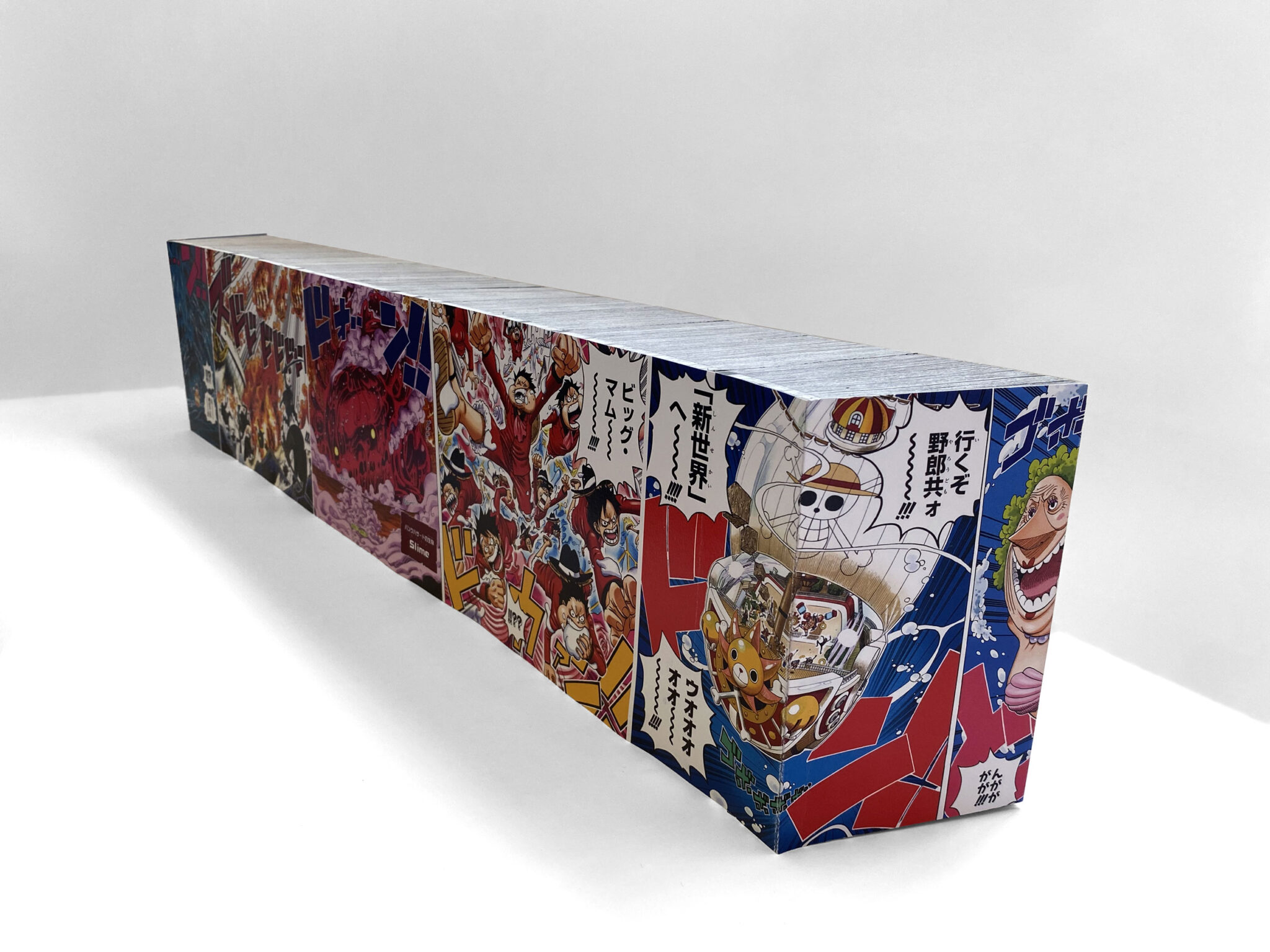
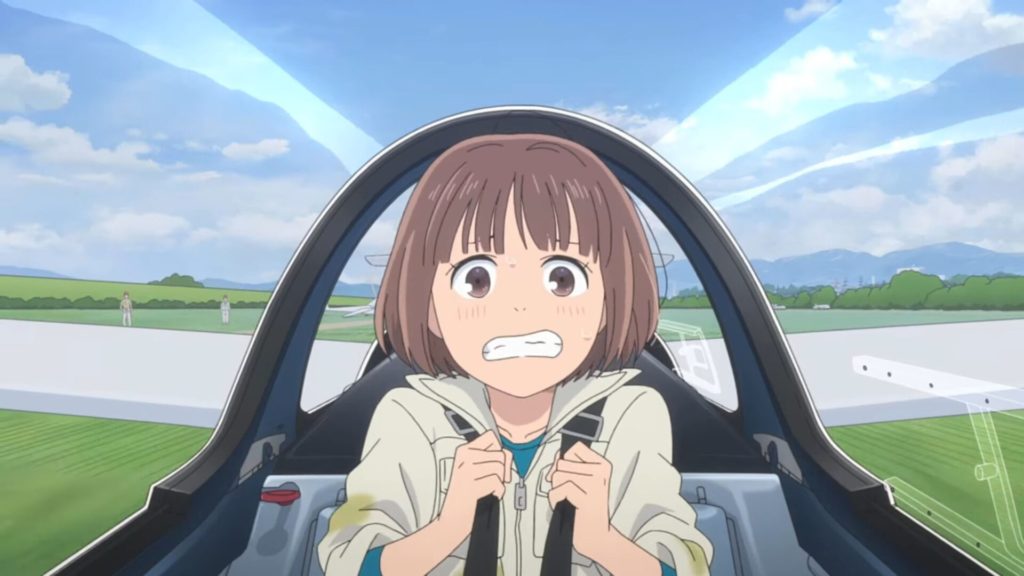
“Animeta is a fascinating worm’s-eye view of the animation business in Japan, happy to spend a chapter literally focussing on the way to draw a line, drawing the reader into the physicality of working in an anime company. Hanamura covers everything from finger cramps to the studio canteen, the differing ranks of various workgroups, all in the process of assembling a cartoon from the first pencil to paper to the final broadcast product. It is no surprise to me that the book has become mandatory reading at Studio Trigger, recommended to new staff as a glimpse of the horrors that lie ahead.”
Over at All the Anime, I review Yaso Hanamura’s manga about the anime business.

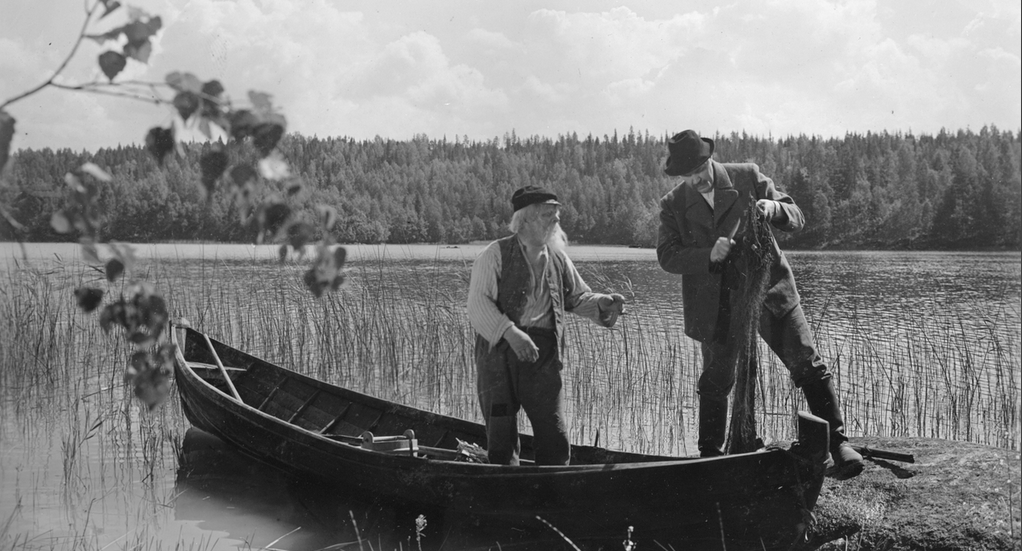
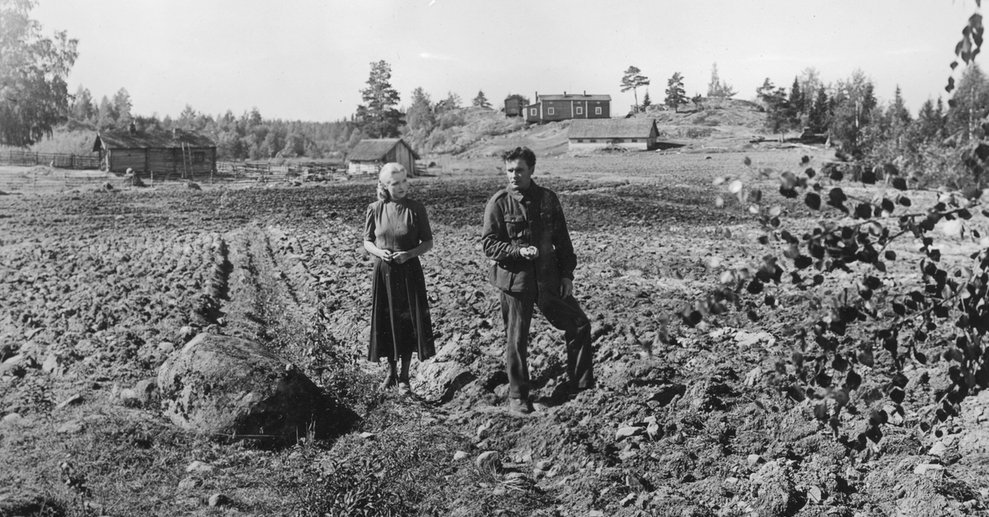
Teenage orphan Sirkka (Sirkka Salonen) meets local rich boy Aarne (Kille Oksanen) when he almost runs her over with his horse. The couple begin a flirtation that leads to a relationship, in which Aarne risks his family name by forging cheques in the name of his elder brother in order to help cover Sirkka’s family debts. When Sirkka inevitably becomes pregnant (this happens so often in Finnish films that one is surprised anyone cares any more), Aarne fights with his brother and leaves the manor. Sirkka gives birth to a son, but the boy is stolen by a gipsy (no, really – Evald Terho in a nameless and off-handedly racist role) in revenge for the poor treatment he received at the manor house. Kirsti (Kirsti Hurme), her former rival for the attentions of Aarne, piles on her troubles by accusing her of having murdered Aarne, for which she goes to prison for six years.
Returning in disgrace to her home town, Sirkka gets work back at the manor house as a maid for Aarne’s elder brother Urho (Kyösti Erämaa), who has always believed that she was framed. Her innocence is finally proven when Aarne shows up in a motor car, announcing that he has merely been away working hard, and the lovers are reunited. Meanwhile, the dying gipsy tells his adopted son (Timo Jokinen) to seek charity at the nearby manor, where the boy is identified by a distinctive birthmark, and reunited with his real parents.
Based on a Swedish film from 1933, itself based on Henning Ohlson’s play Hälsingar (1922), Unelma karjamajalla was already a creature out of time by the time it had its September 1940 premiere, notably not in That Fancy Helsinki, but out in the provinces in Kuopio, Lahti and Pori. This was not a production from the majors, but from the relatively small Tarmo-Filmi company, but it was one of the first movies to make into cinemas after the Winter War, and hence seems to have been unjustly praised by movie critics starved of content. Olavi Vesterdahl in Aamulehti called it “content with the old customary style, and this is perhaps its strongest point.”
Eighty-two years later, the most striking thing about this film is the naturalism of its low-budget exteriors, as director Teuvo Talio snaps windswept location work among the farms of Nurmijärvi and Hämeenlinna, and shoots a tense scene by a ravine as Sirkka Salonen (a former beauty queen in her only feature role) rescues a fallen lamb, accompanied by Bach’s “Toccata & Fugue”. There is also the powerful shadow of class differences. Sirkka Salonen and Kirsti Hurme are fierce, strong presences on the screen when they are bickering with each other, but shapeshift into downcast, timid wallflowers when addressed by the lord of the manor.
Hurme in particular is a striking femme fatale, stealing the show in a role that would propel her out of the theatre and into a brief but remarkable movie career, poached in 1941 by Suomi-Filmi, and effectively becoming the forces’ sweetheart of the Continuation War – her public appearances for the troops were apparently very popular. She appeared in numerous vampy roles over the war years, fading briefly from the public eye after marrying her first husband in 1944, and almost completely after marrying her second, the industrialist Leo Martin, in 1951.
Jonathan Clements is the author of An Armchair Traveller’s History of Finland. He is watching all the Finnish films so you don’t have to.