Eurovision Shouty I-Spy 2016

nice hat

Godspeed, you funky Belgians! We’re back for the game of the year, the Eurovision Song Contest hosted in 2016 by Sweden, the country that never fails to be insufferably smug about winning all the time. And this year, it’s being broadcast in the USA: let’s see Trump put a wall around that.

We’ve already had to say goodbye to Bosnia-Hercegovina’s bacofoil cellist, Moldova’s break-dancing astronaut, Belarus’s naked wolf fondling, and Greece’s inexplicable claim to be the “land of the rising sun”. Categories still resting this year include readily identifiable mullet dresses, and our popular dubstep dance-off, although I am pleased to report that Buddha Jazz Hands is back.

Step One: you will probably need to be quite drunk. Step Two: The following sights will be seen during this Saturday’s Eurovision Song Contest. Can you see them first? Remember to shout it out. Party hosts will need to keep score of who gets what first, or otherwise dish out the forfeits to those that aren’t quick enough. As ever, there is more than one key change, and plenty of orbital cleavage, but this year you have to be quick to catch the subtlest of bimbles. Keep your eyes (or ears) open for any of the following. And when you notice it, SHOUT IT OUT!

In no particular order, in Saturday’s final you should look out for:

  • CAPE!
  • Princess Ardala and the Buck Rogers Backing Dancers
  • giant spinning twosome hoop
  • whistling chorus
  • Lyrics: “Your smell on me”
  • glow in the dark violin
  • standing on a giant clock
  • silver disco shorts
  • tuck your shirt in, you scruffy oik!
  • woman wearing a tent
  • glowing garters
  • Misheard lyrics: “massive balls weighing down the people all around”
  • Subtle Message: “WHAT COLOR IS YOUR LIFE?”
  • Lyrics: “I can feel my ship capsizing.”
  • pointless walk to a new microphone
  • holographic self-replicating clone backing dancers
  • POINTING!
  • sparkly fingerless Goth gloves
  • mid-air somersault
  • he’s got wings!
  • giant pink G
  • howling
  • sitting on a sparkly slab
  • Farah Fawcett hair (quite a few)
  • pointless time-wasting pause
  • Lyrics: “The monsters in my head.”
  • Winking
  • panda on her head
  • he’s fallen into his own vortex!
  • inadvisable bandy-legs dance
  • KEY CHANGE! (every time you hear one)
  • band in a cage
  • Bimbling*
  • ORBITAL CLEAVAGE**
  • pink ponytail
  • FLAME ON! (every time there’s pyrotechnics)
  • Lyrics: “Beep Beep Beep.”
  • he’s climbing the magic steps
  • Buddha Jazz Hands***
  • COSTUME CHANGE

(*swaying one’s head from side to side in a snakey fashion)

(**ostentatious cleavage sufficient to see from a satellite in orbit, which, according to Eurovision bra consultant Tom Clancy, requires a minimum of C-cup)

(***the dancers all pile behind the singer in a line and then fling their arms out, creating a multi-limbed oriental deity-look)

Apologies to American readers, who will have to just imagine what the world’s biggest, gayest song contest is like. Just imagine, for one day every year, Europe gets to behave the way that Japan does all the time.


Belgium, man. Belgium.
Isao Tomita 1932-2016

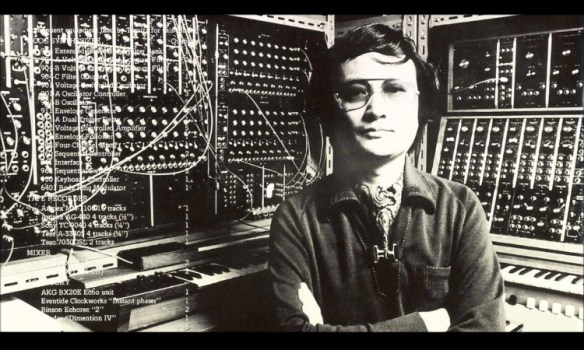
tomita-studioOver at All the Anime, I write an obituary for electronica pioneer Isao Tomita, who also composed the theme song to Tezuka’s Jungle Emperor.
“The 15-track Jungle Emperor album would become the first anime-themed LP, selling 100,000 copies – generating lucrative royalties for Tomita, but also for the unknown lyricist.  The main suspect was animation director Eiichi Yamamoto, leading to further arguments about whether he had written the words during a working day, thereby forfeiting his royalties to the company, or during one of the 250 hours of unpaid overtime he had clocked. Eventually, Mushi’s managers ruled in favour of themselves, fearful of setting a precedent.”

Occupert

occupied3

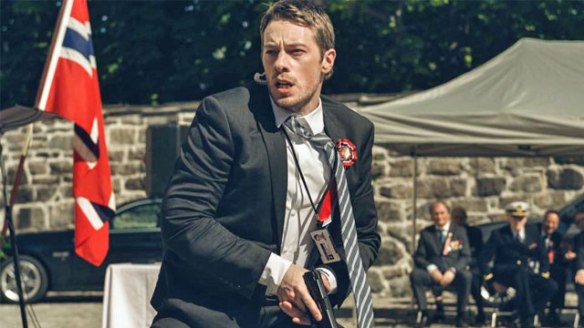
Over at the Science Fiction Encyclopedia, I sneak away from my usual China and Japan entries to write up the Norwegian thriller Occupert (Occupied), in which the perfidious European Union colludes with the nasty Russians to invade Norway.

“…if the narrative of similar Anglophone sf is one of good versus evil and open conflict, Occupert draws instead on a national experience of quisling collaboration, the thinning of everyday comforts and freedoms, and the slow but sure assembly of an effective resistance…”

Right-Hand Man

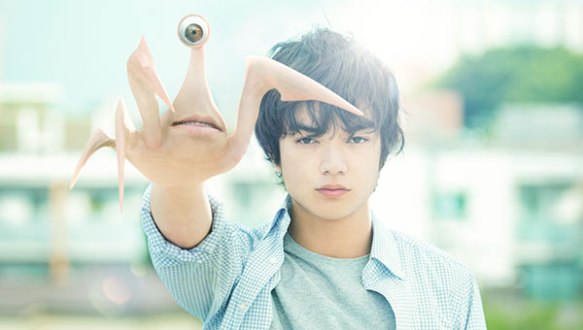
parasyte-the-movieThe Earth is under attack. Alien parasites have wormed their way into the brains of uncountable human beings, everybody from policemen to school teachers to noodle sellers. Teenager loser Shinichi (Shota Sometani) knows this because of a fatal flaw in the alien scheme – they can’t crawl in through your ears if you’re wearing headphones. Instead, his attacker Migi (Sadao Abe) misses Shinichi’s brain at the fateful moment and takes over his right hand, bonding them together for life.
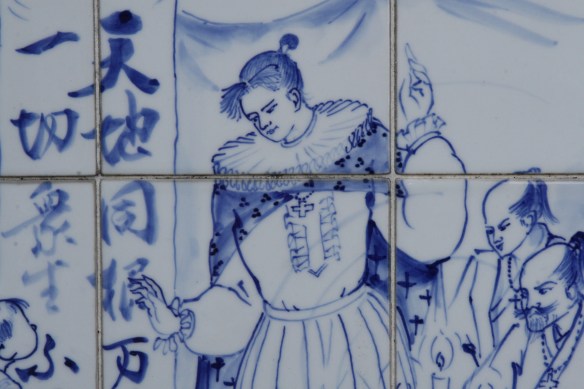

Shinichi now has a wise-cracking alien attached to his arm, curious about world affairs, human relationships, and genitals. But he also has an ally in the war with the aliens, since Migi’s botched takeover turns him into a pro-human fifth columnist. Shinichi must somehow find out the aliens’ plans, without alerting the suspicions of his school teacher Miss Tamiya (Eri Fukatsu), whose blank-faced stare is sure-fire evidence that she has already had her brain eaten.

Japan’s first riff on Invasion of the Body Snatchers came in the form of the as-yet untranslated Beautiful Star by the infamously loopy novelist Yukio Mishima, in which a group of fanatical nerds became convinced that they are Venusian agents tasked with starting a nuclear war. The same period, the 1960s, also saw the granddaddy of all tales of alien symbiosis, when the dying alien Ultraman fused himself inextricably with a passing human, kicking off an ongoing franchise of transforming heroes fighting rubber monsters. By the 1970s, Japanese children’s telly was awash with the likes of School in Peril, in which teenage angst found new outlets in missions to defy scheming adults who turned out to be alien stooges.

In 1988 when the manga artist Hitoshi Iwaaki published the first chapter of Kiseiju (Parasyte – the misspelling is a deliberate imitation of a similar twist in the original Japanese), his story was a knowing homage to such childhood chillers. But running in Afternoon, a comic magazine for adults, Parasyte injected heavy doses of body-horror and paranoia. In gleeful, blood-spattered imitation of John Carpenter’s The Thing, Iwaaki’s aliens let rip with visceral, fanged transformations, like weaponised Salvador Dali paintings duking it out for control of the Earth. But it was also witty. Migi’s oddball friendship with Shinichi was genuinely charming, and their encounters with the humourless alien invaders inevitably creepy or inadvertently funny.

The original Parasyte manga finished in 1995, fading from public view for the oddest of reasons. For several years, the remake rights were purportedly in the hands of James Cameron. The Titanic director’s interest in manga is well-documented, but in the case of Parasyte, the rights acquisition may have been part of a complex legal issue, acquiring it to prevent ambulance-chasing lawsuits about the similarities between its shape-shifting aliens and the abilities of the T2000 in Terminator 2. There were certainly moments in the manga that bore a coincidental resemblance to iconic scenes in Cameron’s 1991 movie, and as a result, Parasyte stayed out of other media for over 20 years. Despite winning awards in comic form and bagging itself a Seiun (Japan’s Hugo award) for best science fiction, it didn’t make the obvious jump to anime or feature film until 2014, when it suddenly exploded into both formats. This delay has done it no harm at all, not the least in its evocations of modern terrorism – Shinichi is a double agent inside a sleeper cell, committed to preventing atrocities on his home turf.

As if two movies were not enough, Parasyte was also adapted as animation – arguably a medium more suited to the sudden outbreaks of alien shape-shifting. But Takashi Yamazaki’s live-action version also benefits from a generation of falling prices in digital effects, allowing him to inject heavy doses of rubber-bodied violence. It doesn’t always work, with the nature of Migi’s host leading Shinichi to literally hold his assailants at arm’s length, but most of the time, talky scenes of threats and scheming convincingly erupt into savage collisions of snapping flesh, often part-hidden in the shadows or obscured on scratchy CCTV.

Jonathan Clements is the author of Anime: A History. This article first appeared in Geeky Monkey #7, 2016.

And a child shall lead them…

IMG_6356

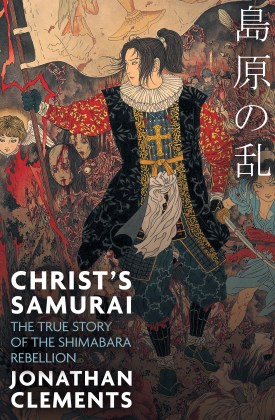
Over at All the Anime, Andrew Osmond writes a long piece about my new book, Christ’s Samurai.

“And they had a hero, a Japanese Christian guru called Jerome Amakusa. Clements picks his way through the legends, stressing how little we know of Jerome with any certainty. According to some accounts, he was a strikingly beautiful teenage boy, ‘an eerie, white-robed child messiah.'”

Watching Paint Dry

landscape-1448043247-screen-shot-2015-11-20-at-18

This issue, we observe disgruntled film-maker Charlie Lyne, trolling the British Board of Film Classification by submitting a ten-hour movie of drying paint. Since the BBFC is obliged to scrutinise every second of every film sent to them, Lyne solicited online donations to send the censors the longest possible sequence of nothing, and to pay the boggling £7/minute fee required for all submissions. Paint Drying was passed on 26th January with the comment “no material likely to offend or harm.”

I’m not going to get into the ins and outs and the rationales for the existence of the BBFC – there’s a letters page for that, get stuck in. Instead, I want to talk to you about Lyne’s reasons for this Situationist protest in the first place: the tax on creativity he had to pay just to release a movie. Although nobody ever thanks me for pointing out how small the anime world is, we live in a world now where some releases underperform to the extent that their audience would literally fill a single cinema. When there is a likelihood, or even a mere risk, that a DVD will only sell a few hundred copies, the producers have to make some tough decisions about how much financial exposure they want.

Sure, I hear you say, but that’s the price of doing business. If someone’s forked out £5,000 for the rights to Schoolgirl Milky Crisis, they might as well have another grand on top to pay for the certificate, otherwise they shouldn’t be in the game in the first place. But for many anime, the BBFC fee is the last straw that kills off any extras.

Although this is rarely discussed among fans, extras also have to be certificated. That 30-minute making-of you wanted to see? That’ll cost over £300 just to get a BBFC nod. That feature commentary track you want to hear? That still has to be certificated at £7 a minute, even though it’s just some guy (usually me) talking about the thing you’ve already seen. I strongly suspect that the reason for the recent proliferation of art-books and sleeve notes in Anime Ltd releases like Sword Art Online and Durarara!! is because the £700 fee for certifying a feature commentary track feels like a protection racket. Someone could probably mount a legal challenge, arguing that a commentary was “educational” and hence exempt, but someone would still have to pay the lawyers to fight that corner.

But spare a thought for the BBFC, having to literally sit and watch paint dry for ten hours. They had to watch Legend of the Overfiend. Haven’t they suffered enough?

Jonathan Clements is the author of Anime: A History. This article first appeared in NEO 148, 2016.

Christ’s Samurai

Christ's Samurai coverIn 1638, the ruler of Japan ordered a crusade against his own subjects, a holocaust upon the men, women and children of a doomsday cult.
The sect was said to harbour dark designs to overthrow the government. Its teachers used a dead language that was impenetrable to all but the innermost circle. Its priests preached love and kindness, but helped local warlords acquire firearms. They encouraged believers to cast aside their earthly allegiances and swear loyalty to a foreign god-emperor, before seeking paradise in terrible martyrdoms.

The cult was in open revolt, led, it was said, by a boy sorcerer. Farmers claiming to have the blessing of an alien god had bested trained samurai in combat and proclaimed that fires in the sky would soon bring about the end of the world. The Shogun called old soldiers out of retirement for one last battle before peace could be declared in Japan. For there to be an end to war, he said, the Christians would have to die.

This is a true story.

Christ’s Samurai: The True Story of the Shimabara Rebellion, is released on 7th April 2016 (and here in the US).

Gangsters vs Vampires

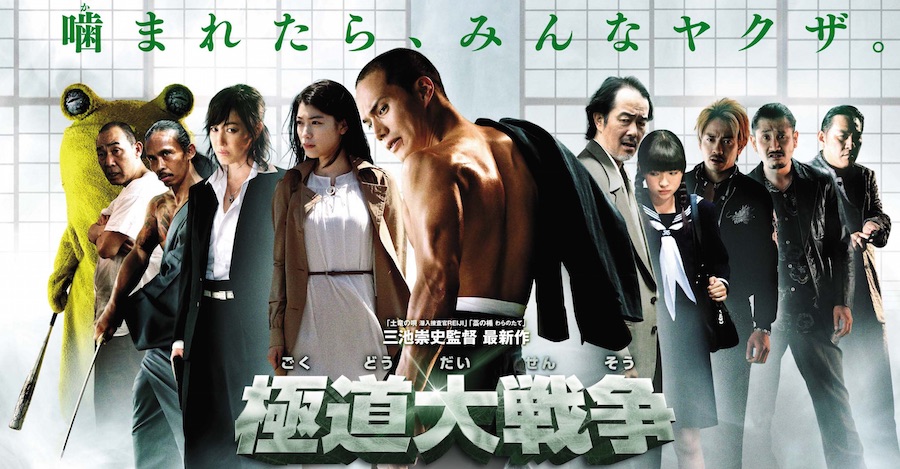
yakuza-apocalypseIn a Japan flailing through the recession, mob boss Kamiura (Lily Franky) faces surprise competition from a bunch of new arrivals, including a water demon and a violent anime fan. Dying from his wounds, Kamiura bites his lieutenant Kageyama (Hayato Ichihara), passing on his vampire powers (yes, forgot to mention that) in a turf war that soon escalates into a Yakuza Apocalypse.

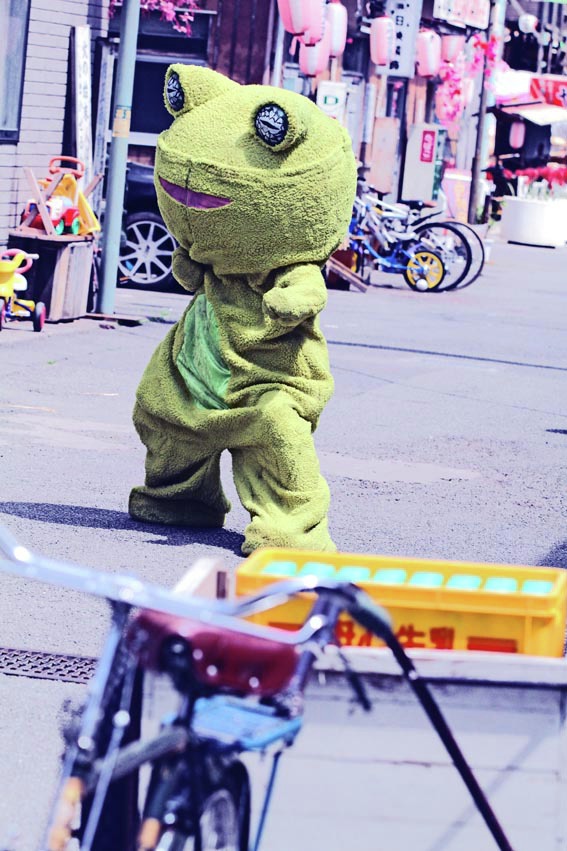
The enemy calls in “The Modern Monster” – a martial artist in a ridiculous frog costume, who steals the whole movie – and battle ensues, played for laughs but not scrimping on the athleticism and acrobatics. It’s aided in this by the presence of Yayan Ruhian of The Force Awakens in the role of Kyoken (“Mad Dog”, same name as his character in The Raid), but also by off-screen efforts by an insane cameraman who seems to want to wade into the middle of all the fight scenes.

Time to test your geek credentials, since any Japanese movie buff reading the above synopsis is sure to say: “This sounds like a Takashi Miike film.” And indeed it is, with all the hallmarks of this most notorious and beloved director, from a visceral, kitchen-sink-inclusive plot to the gory stand-offs and the social commentary. These yakuza (gangsters) are literal blood-suckers, draining the vitality from small-town Japan, while clinging to a ridiculously po-faced and archaic honour system like something out of a kung fu movie.

yakuza-apocalypse 2Organised crime has been an integral part of the Japanese movie world for a century, both on and off-screen. Isolde Standish, in A New History of Japanese Cinema, has no qualms about pointing out that one well-known studio was actually founded by gangsters, and there are many blood-curdling stories about the poaching and nobbling of stars, the abuses of hopefuls on a many a casting couch, and the super powers of mob accountants in burying money in supposed box office flops, or generating “hits” by intimidation and threats

It should come as no surprise that there should be an entire sub-genre of films in which such mobsters are the heroes, depicted as the last guardians of the samurai ethic by a movie machine that is literally terrified of the real-life versions. And this only makes director Takashi Miike’s satire all the more biting and brave, as he depicts yakuza protagonists as woefully stupid, belligerent poseurs, knifing each other over who gets to call himself the king of a particular street corner

Some of Miike’s snootier champions object to the popular image of him as a crazy scatter-gun creative, but even they have to admit that a man who has sometimes managed to notch up four or five movies in a single year can’t produce good work all the time. Legendarily, Miike just loves to work. He is addicted to making movies, and rarely stops long enough to read his worst reviews. There is a certain irony that the very accessibility, insanity and prolixity of Miike’s early work made him a darling of schlocky horror magazines and hungry young media academics. While some award-winning, worthy Japanese movies struggled to find foreign distributors, Miike’s B-movies and gross-outs often found themselves bundled in package deals or nestling somewhere in a bargain bin. This had the odd effect of putting him on the radar of a bunch of film students scouring Blockbuster Video for something to write about, and turning him into a much-discussed auteur

And while there are some truly awful films on his resumé, he has managed to pack several lifetimes of movie-making experience into his career, including some real gems. Every now and then, he creates a work of enduring appeal, like the grotesque stalker drama Audition or the horror musical The Happiness of the Katakuris. He also managed to make what is, to my mind, one of the best Japanese movies of the last decade, the gritty, intense samurai drama Thirteen Assassins

Miike loves to divide the critics, and Yakuza Apocalypse is no exception, lauded by The Daily Telegraph for its “demented brilliance,” but damned by The Hollywood Reporter as “numbingly idiotic.” Knowing Miike, he’ll want to put both reviews on the poster.

Jonathan Clements is the author of Modern Japan: All That Matters.This article first appeared in Geeky Monkey #5, 2016.

Flowers of Edo

sarusuberi_sp_intro2_p3

Hokusai was the most famous print artist in 19th century Japan. He drew the iconic Great Wave Off Kanagawa, the Views of Mount Fuji and the Stations of the Tokaido Road. He celebrated the celebrities of the kabuki stage and even kicked off the beginnings of tentacle porn. In 1814, he published the first of a long-running series of “how-to-draw” manuals and art references, known as the Manga (Sketchbooks) and eventually lending their name to comics from Japan. And… he had help.

As Hokusai got older, there are stories that he suffered from palsy and infirmity. There are rumours in the Japanese art world that he was practically unable to hold a brush by his final years, and yet somehow kept churning out masterpieces. Word on the street, but rarely admitted in the auction houses, is that for the last years of his life, much of his work was ghosted by his daughter O-ei.

Keiichi Hara’s Miss Hokusai is not a biopic. There is far too little known about the historical O-ei for that to work, and barely a dozen of her acknowledged art pieces remaining. But this itself has inspired numerous fictional accounts, from Katherine Govier’s novel The Print-Maker’s Daughter to numerous untranslated Japanese novels, and an award-winning manga by Hinako Sugiura. It’s this latter work that is the basis for Hara’s film – the director is the world’s biggest Sugiura fan, and deeply in love with the creator’s unique perspective on life in 19th century Japan.

“I wanted to be fresh,” Hara told me at the UK premiere. “Sugiura wrote about the common people; about the townsfolk, artisans and prostitutes. Japanese media is full of depictions of the Edo period, but Sugiura’s manga told me things I had never seen anywhere else.” And his animated film is packed with incidental detail – the bumping of boats under the Sumida river bridge, the chaos caused by the fires that were poetically known as “the flowers of Edo”, even the sensation of stepping in a samurai-era dog turd.

“Of course, we wanted to use Hokusai’s prints as reference material,” notes Hara. “But 19th century prints were not intentionally realist. They play tricks with perspective and proportions. They aren’t blueprints for evoking the period. Sometimes, you still have to go with your imagination.”

fuse-1

The same might easily be said of the other anime Edo-period piece recently released, Masayuki Miyaji’s Fuse: Memoirs of the Hunter Girl. Despite being demonstrably more irreverent and playing havoc with fantasy elements, false colours and bawdy backgrounds, Miyaji’s film is just as much a celebration of the same city that would be renamed Tokyo, “East Capital” in 1868. Miyaji’s movie is an Edo of the mind, conceived as a commemoration of the 90th anniversary of a famous Japanese literary magazine, and stumbling joyously through a number of different literary modes. It is a retelling and a re-imagining of The Hakkenden, a samurai serial novel first published in 1814, the same year as Hokusai’s infamous Manga, but the film is actually based on a modern “light novel” by Kazuki Sakuraba – one of the notoriously throwaway potboilers popular with modern commuter kids on their iPhones.

The Yoshiwara pleasure quarter looms large in both movies. In Miss Hokusai, it is a place of shadows, the inspiration for O-ei’s most famous surviving picture. In Fuse it is a vibrant, dingy ghetto, ringed by a sewer but aspiring to be a bawdy Disneyland. The historically faithful Hinako Sugiura would have had conniptions if she saw Miyaji’s centrepiece, an entirely unhistorical clock tower in the shape of a woman’s torso, with a skirt that spins and lifts as the chimes strike the hour. But it is arguably just as evocative of the Yoshiwara as Miss Hokusai’s studious recreation.

Fuse is a faithful retelling of the fantasies of the Edo period, when merchants and samurai sat down to read lurid novels about lycanthropic dog-warriors, wandering swordsmen, and geisha with hearts of gold. Its colours are eye-bogglingly vivid, its characters calculatedly larger than life, sometimes threatening to cotton on that they are ciphers in a story being written by an aging samurai trying to pay the bills. Or are they? There are suggestions in Fuse that the real story is being written by his bespectacled, geeky grand-daughter…

This article first appeared in Geeky Monkey #6, 2016. Jonathan Clements is the author of A Brief History of the Samurai.

So What’s New…?

gits new

So there’s a new Ghost in the Shell film, spun off from ARISE. It’s called Ghost in the Shell: The New Movie. Just remember, someone had a meeting about that, and that’s the title they brain-stormed. Someone got paid to say: “We’ve got a title that everyone’s going to sit up and take notice of. It’s Ghost in the Shell. And it’s NEW!”

Seriously, did nobody in the room raise a hand and point out that the last Ghost in the Shell film was also new when it came out? And so was the one before that.

Maybe you missed it at last year’s Scotland Loves Anime, because you, like a number of other punters, thought it was the old new Ghost in the Shell until it was too late. And not just the punters; some journalists also confused this new film with the last time a Ghost in the Shell film was new, and used the wrong stills in their coverage. This new film will only be the new film until a new new film comes along, and then it will be the old new film.

Is there method in the madness? Quite possibly, what with a live-action Ghost in the Shell movie also coming soon. Internet search engines are sure to confuse this new film with Scarlet Johansson’s. Who knows, maybe the distributors will end up like those sneaky bastards who released Ralph Bakshi’s Lord of the Rings cartoon with an all-typography cover just before Christmas, hoping to fool shoppers at the checkout that they were snagging Peter Jackson’s. In movie distribution, such sleights-of-hand are called “spoilers”, not the least because they’re going to ruin someone’s day, possibly yours.

Meanwhile, Makoto Shinkai’s latest film Your Name (Kimi no Na wa…) just happens to have the same title in Japanese as a radio series that was a massive hit in the 1950s, and adapted for television in the 1960s and the 1990s. When the Japanese publicity kicks off, it’s going to trend through the roof on social media with three different generations of tweeters, all of them crossly telling each other that it’s nothing to do with the show they loved from their youth. Someone, somewhere in a Tokyo cocktail bar will be patting herself on the back about how high the title is trending, even though half of the hits will be noise.

Ah, I hear you say, there’s no such thing as bad publicity. Does it really matter how these people get the public talking about their movies? It matters to me, because in five years time when the perpetrators of these crimes are back selling soap powder or brushes, I’ll still be here, dealing with angry letters from people who’ve bought the wrong DVD, or who missed a cinema screening.

Jonathan Clements is the author of Anime: A History. This article first appeared in NEO #147, 2016.