What Next?

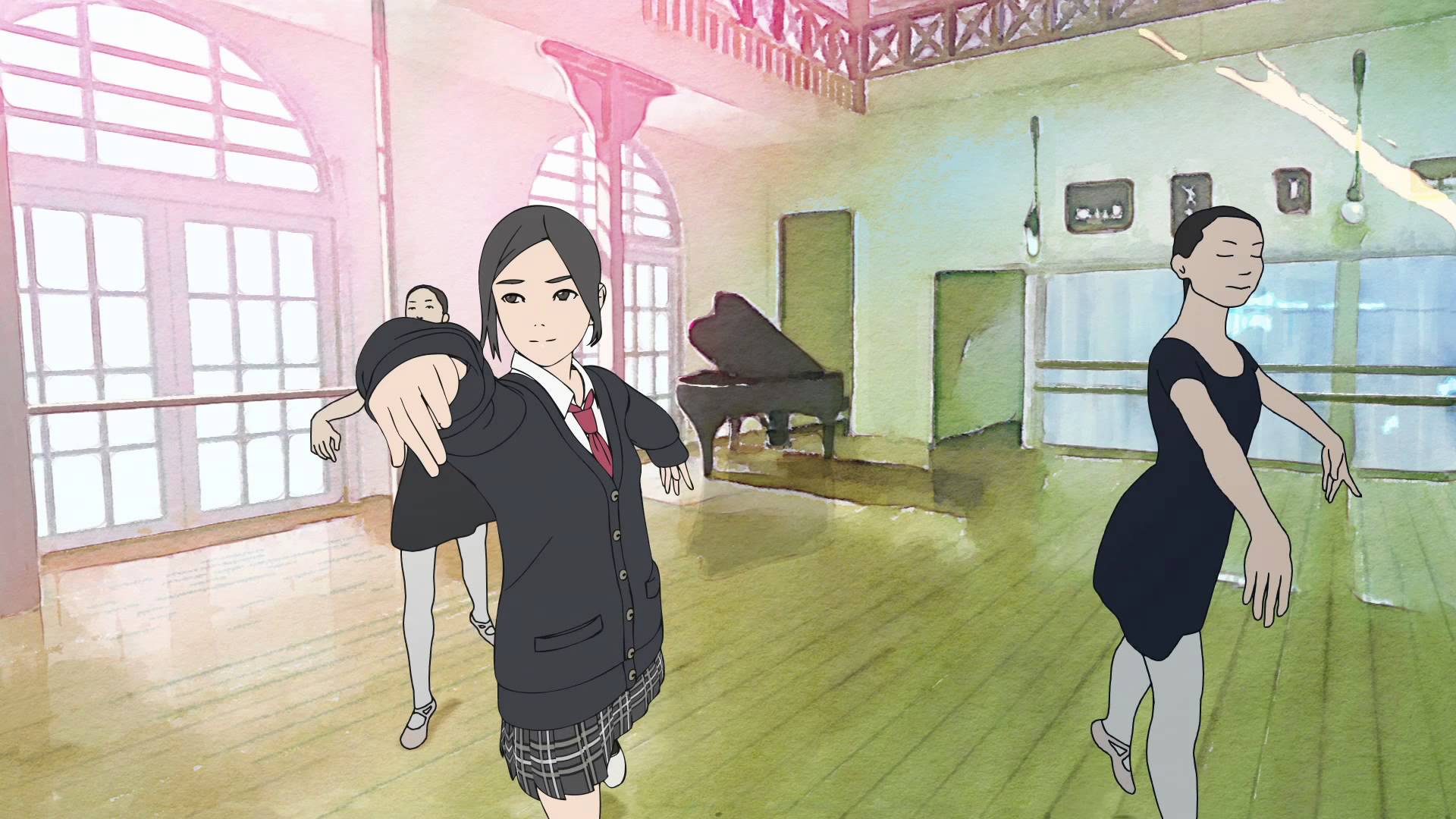
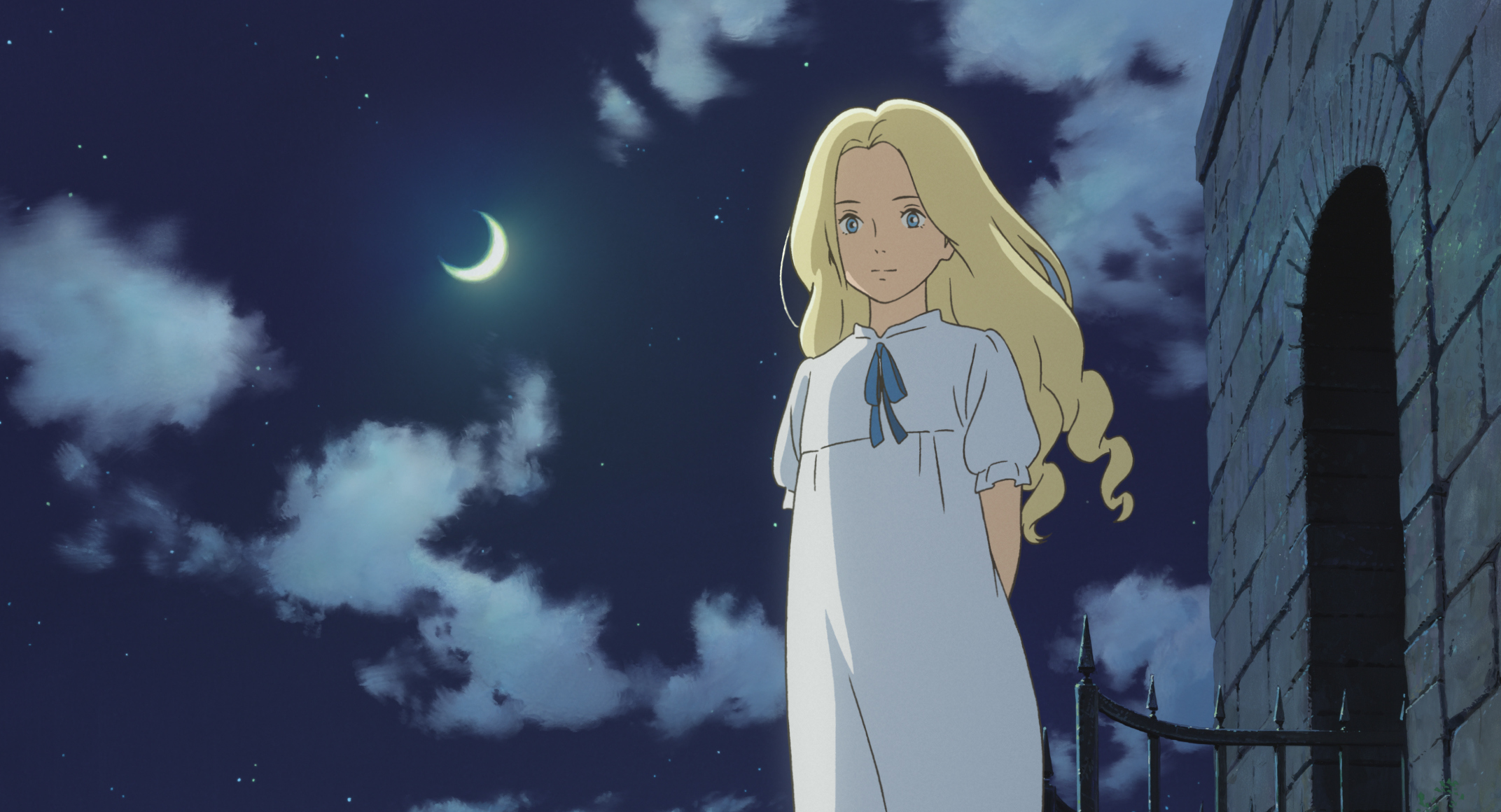
marnie_hires_6There were two notable absences from the screenings at this year’s Scotland Love Anime – or rather, two notable presences at the London Film Festival. Hiromasa Yonebayashi’s When Marnie was There, the last feature film from Studio Ghibli, and The Boy and the Beast, the latest feature from Mamoru Hosoda, both made it onto the LFF roster instead. You might call this a victory all round – Hosoda’s films are often snatched by the LFF ahead of SLA, thereby leaving a slot in Scotland for less mainstream fare, as well as guaranteeing that Hosoda doesn’t sweep the Scottish Judges Award every year. But London’s programmers, as they are wont to do, are also snatching the most commercial and audience-friendly Japanese animated features. What are they going to programme next year?

Almost everybody in the anime business is tired of the “next Miyazaki” argument, in part because there can be no such thing. Hayao Miyazaki was a one-off, as was the synergy formed by his partnership with Isao Takahata and Toshio Suzuki. Moreover, the conditions that made their Studio Ghibli such a world-beater were also, in themselves, unique. The putative successors to Miyazaki are competing in an environment that is worlds away from the situation that saw Princess Mononoke rise to fame.

But concerns about who might be anime’s new poster-child aren’t just about the search for a new creative force. They are also all about money. For a Japanese movie to break even at the domestic box office, it has to be in the top twenty films released that year – a benchmark that only Studio Ghibli and a couple of long-running franchises (your Pokémon, your One Piece) could ever manage. A Studio Ghibli film (let’s be honest, a Miyazaki film), was a blue-chip investment, guaranteed to put bums on seats in Japan, and to monetise in foreign sales. Nobody else in Japan currently comes close, and that doesn’t just affect the likely enjoyment of family audiences. It affects festival programmers looking for something Japanese for their slates; it affects retailers planning how many feet of shelves to give to anime; and it affects distributors allotting budgets to those weird Japanese cartoons we keep hearing about. With Ghibli removed from the equation, the investment value of the entire anime medium drops by a significant factor, forcing everybody – distributors, retailers, and cinema owners, to work a lot harder to keep it in the public eye. So do your bit: go and see a Japanese animated film in a cinema this year… It’ll show up on someone’s balance sheet, and might make all the difference.

Jonathan Clements is the author of Anime: A History. This article first appeared in NEO #143, 2015.
Harem Scare ‘Em

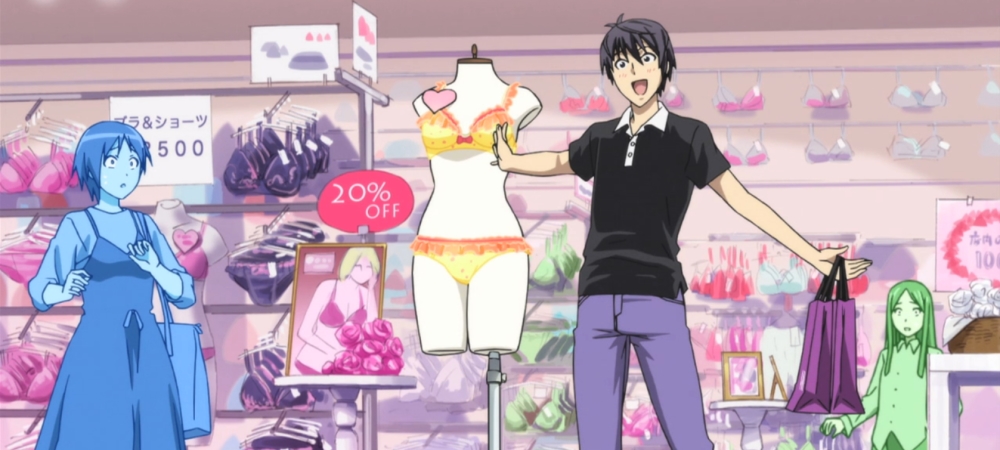
32243-ComicArtAsst_3Yuki Aito is living the dream… in a way. His comic Haji Café has become a hit, dragging his art career from a hobby into a full-on profession. Like many a manga artist before him, he’s discovering the hard way that a weekly schedule never lets up, taking on a bunch of assistants to help him grind out the pages. But because he’s a self-acknowledged pervert, obsessed with knickers, he has only hired pretty teenage girls.

Even if you’re not an anime or manga fan, you’re probably familiar with the look of the “harem show” – a romantic comedy that places a single hapless boy in the company of a whole gang of pretty women, every one of them girlfriend material. The genre has been visible in Japan for the last 20 years, serving the anyone-will-do desperation of horny teenage boys, with just a dash of wish fulfilment. These fantasy women aren’t just beautiful and theoretically available for Yuki, they are also comics fans like him.

Should he plump for Sahoto, the hard-working artist who cherishes a dream of being a comics creator all on her own? Or should he go for Rinna, the talentless assistant hired only for her looks, and the fact that she is a fan of his work? Maybe he should chance his arm with Sena, the pathologically childish teenager who nurses a hidden sadistic streak? Or perhaps he should return to his past with his old schoolmate Mihari, once a childhood crush, now a hard-nosed editor at his manga publisher?

The Comic Artist and His Assistants is based on a manga about creating manga, one of a burgeoning sub-genre of self-referential titles that have also seen tales of wacky sci-fi shop-owners, convention costumers as the heroes of their own show, and a chronicle of behind-the-scenes shenanigans at an animation studio. For everyone who keeps hearing that anime and manga are taking the world by storm, it’s a gentle reminder that some of anime’s appeal actually stems from its ability to go small: narrow-casting to niche audiences such as, in this case, boys who like drawing comics and ogling girls, and who don’t see anything creepy in the very obvious exploitation of workplace power. Original creator “Hiroyuki” first found fame with a manga about creating amateur manga, and now he’s gone pro in every sense.

As you may have noticed, it’s all about Yuki’s choice, his options and his desires. The women in The Comic Artist and His Assistants are less characters than they are gaming objects, clusters of attributes and quirks – this one’s got small tits, that one’s got blonde hair, that one’s too weak to open an ink pot. There are plenty of anime and manga for a female audience (and this column will get to them soon enough), but this month’s offering is resolutely chauvinist, deriving much of its humour from putting the girls in embarrassing situations and subjecting them to sexual harassment (boob-grabbing now counts as “research”).

Takeshi Furuta’s animated adaptation seems to instinctively know that its one-note perving is going to be difficult to sustain. Consequently, its episodes clock in at a quick 15 minutes each, just long enough to set up a pantomime situation of ooer-missus innuendo, and to slap our priapic protagonist with some sort of half-hearted retribution. One typical episode focuses creepily on Yuki stuck in an elevator with the childlike Sena, as she reveals that she is desperate to go to the toilet. The show takes evident pleasure, like Yuki himself, in the prospect of her humiliation, turning their dilemma into a comedy of manners when he offers her an empty bottle to piss in.

This isn’t a show with morals as such, although every now and then it pays lip service to the idea that Yuki needs to grow up before he can achieve his true potential, and, it is implied, bag himself a girlfriend for real. But personal growth was not the message of Hiroyuki’s original, nor should we expect it to be. This is an anime show about wobbly bits and cat-calls, pulling girls’ pigtails and peering down their dresses. You will also learn the Japanese for knickers, which is pantsu.

Jonathan Clements is the author of Modern Japan: All That Matters.This article first appeared in Geeky Monkey #1, 2015.

Podcastery

3518686_1399254412953.75res_400_300I appear in my role as the Scotland Loves Anime jury chairman in this month’s All the Anime Podcast, in which we discuss the four features in competition: Miss Hokusai, The Case of Hana & Alice, Expelled from Paradise and Empire of Corpses. For anyone interested in the kind of dialogue that goes on behind the scenes at a film festival, it should be quite illuminating.

Since Anime News Network’s Justin Sevakis was one of this year’s judges, talk then turns to his career behind the scenes in US anime distribution, most notably the hellish life of a hentai trailer maker, with reference to the notorious Night Shift Nurses (pictured). As a result, this podcast is most definitely Not Suitable For Work, unless you work at at anime company — trigger warnings for necrophilia, scatology and incest, and that’s just the guests, everything from the Golden Partridge to the Golden Shower.

New Bottles for Old Wine

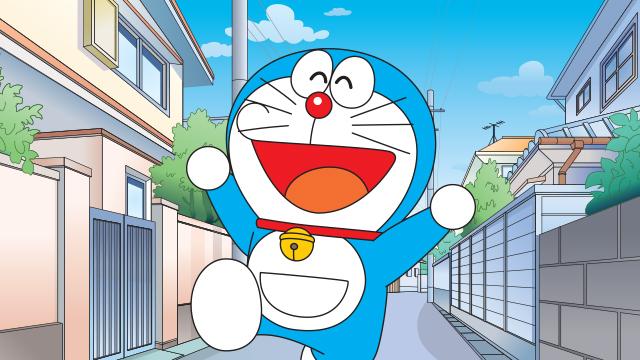
Doreamon_is_HappyThis autumn sees two iconic anime serials finally reaching the British public – Doraemon, screened on the kids’ channel Boomerang, and the original Gundam, coming from Anime Ltd.

Doraemon is such a popular figure in East Asia that he has sneaked under the radar to entertain kids in Korea and China, many of whom still don’t know he’s Japanese. Despite being a hapless, accident-prone robot cat, he is much beloved, and the centre of a merchandise industry that keeps his owners very well-off. Gundam, meanwhile, is a show about children dragged into a conflict in space using majestic bipedal war machines. It is a vital influence on much anime in the last 40 years, not merely in terms of straightforward imitations, but of entire studios and franchises conceived in reaction to it. Although that’s less important to its owners than the vast numbers of robot toys they hope to sell you.

Doraemon’s appearance on UK TV is not that of a 42-year-old show – it’s starting with episodes that were first broadcast in 2005. But the classic Gundam on offer really is the first series from 1979. It’s older than most NEO readers.

As an anime historian, I am very pleased to see these shows turning up – both are vital to understanding the business of the last 40 years. As a consumer, I can’t help but wonder if both are less about Japanese culture going global, and more about a recession-hit Japan, desperately scrabbling in its bins for any off-cuts it hasn’t sold yet. As this column has noted in the past, there’s a lot of Japanese government boondoggle money available, but only to people who already have something to sell.

There has been much talk recently about exporting media. A cynic might suggest that this is less about a breathless passion for Cool Japan, and more about a bunch of companies sitting on intellectual property that has been paid for and isn’t doing anything. Somewhere in Tokyo, someone in a suit has been pointing at a chart and enthusing about “new” markets. To an accountant, the money that Gundam or Doraemon have racked up in Japan looks like a cash-cow waiting to be milked. If x million people pay for these shows in their home territory, then surely there are y billion people waiting overseas to pay for them?

Are there? It’s a gamble for the foreign distributors, although the Japanese rights-holders are largely playing with other people’s money, or perhaps misguidedly equating their own nostalgia with a niche in overseas markets. Who really stands to lose if these “new” releases turn out not to wow modern British audiences the way they wowed the Japanese all those years ago?

Jonathan Clements is the author of Anime: A History. This article first appeared in NEO 142, 2015.

Scotland Loves Anime 2015

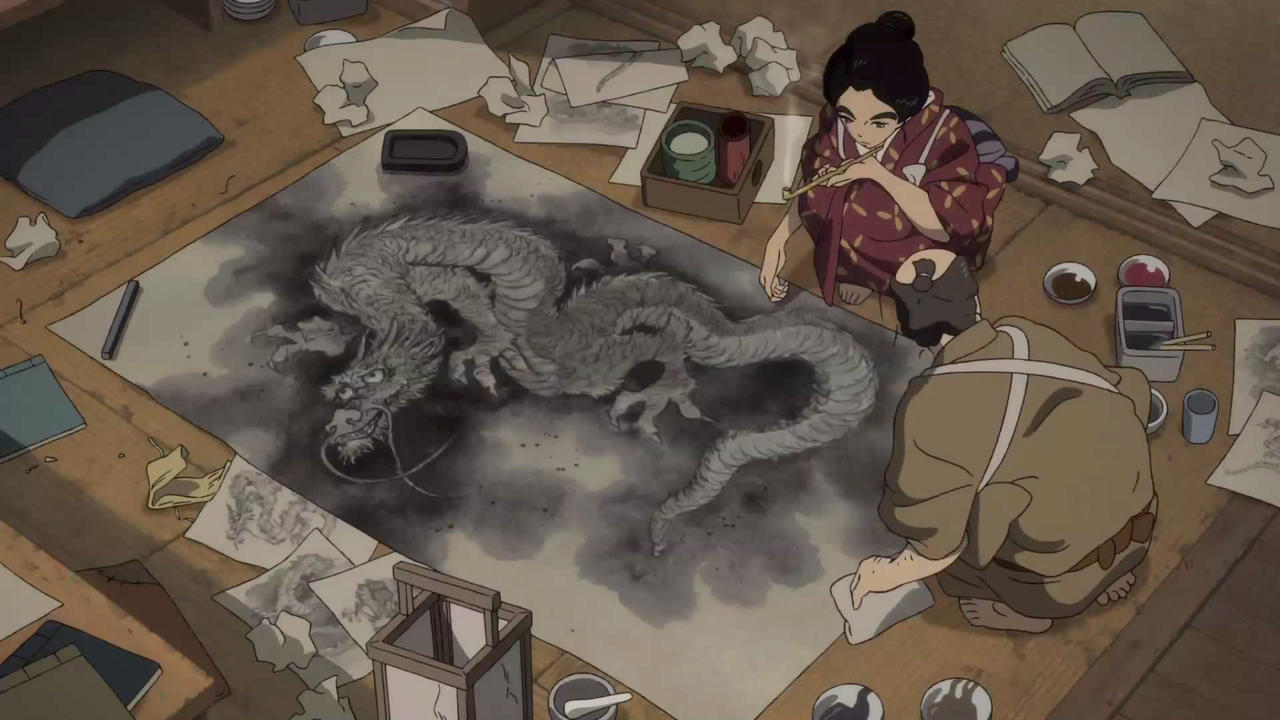
miss-hokusaiPacking my suitcase for this year’s Scotland Loves Anime, which begins on Friday in Glasgow. Keiichi Hara is in town to introduce the UK premiere of his Miss Hokusai, while I shall be fronting the UK premiere of Ryotaro Makihara’s Empire of Corpses, the steampunk epic based on the novel by Project Itoh and Toh Enjoe. I’m also looking forward to Production I.G’s latest Ghost in the Shell (another UK premiere) and the studio’s own self-inflicted competition over the same genre ground in Psycho-Pass: The Movie (which is, in case you hadn’t guessed, a UK premiere).

Behind the scenes, I shall be speaking about the state of the anime industry, both at the Edinburgh Education Day and in a pop-up lecture in Nottingham next Monday. I shall also be chairing the jury in Edinburgh as four opinion-formers argue over the conferral of this year’s Golden Partridge Judges’ Award. Shunji Iwai has a film in competition, and almost everybody is liable to be distracted by the Attack on Titan quadruple-bill (two anime movies and two live-action), but I’ll make sure the jury is in the right place at the right time.

Holy Ghosts

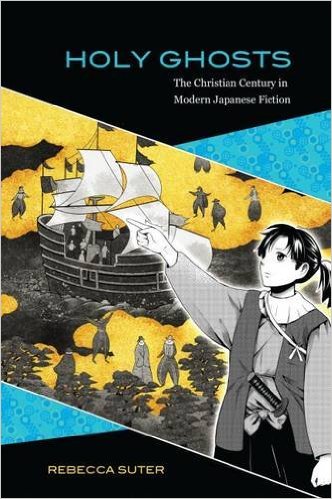
suterMy review of Rebecca Suter’s Holy Ghosts: The Christian Century in Modern Japanese Fiction, is up now on the All the Anime blog.

“[The book] does not shy away from Endo and his ilk, but as her beautiful and striking choice of cover image makes plain, she is not afraid of digging around in the maze of manga and anime in search of new and exciting comparisons.”

Little Drummer Girl

Ricchantainakaritsu3045420119201200You might not recognise Satomi Satou in the street, but you have heard her voice. She’s probably got the most attention in the UK as Wendy Marvell, the 12-year-old dragon slayer in Fairy Tail, but Satou has played literally scores of anime roles since her 2009 debut in Kamichama Karin. A lot of them have been kids – she has the kind of voice that still sounds childlike, which is prized like gold-dust in anime voice acting, because producers can get a junior performance from someone without having to worry about making the kids stay up late for that 2am recording session.

She was also Ritsu Tainaka, the short-haired, forgetful drummer in K-On, an anime series about an afterschool rock band. She’s taken the usual anime starlet route of idol-singing and public appearances, so the K-On songs have stayed with her repertoire, alongside her own songs – her solo singing career has taken off in the last year… Now she’s graduated to full-on pop star status, with her very own stalker, 39-year-old Jun Yasumoto from Osaka, arrested on 25th July by the police because he threatened to hurt her at her next concert. On Twitter.

I’m guessing this is why the Japanese media seem to have thrown innocent-until-proven-guilty out the window, and are happy to report his identity before he’s even made it in front of a judge. While Twitter might feel like you’re thumbing around with your phone and mouthing off to your mates, it can be inconveniently public and traceable if you are planning on, you know, making any death threats in a cheap real-life knock-off of Perfect Blue.

Another day, another nutter giving anime fans a bad name, although this one is going to have extra traction over here. Back when the movie was debuting in the UK, I went ten rounds with one of K-On’s producers over the amount of access to the director. We practically had a three-day fight about it, with me demanding Q&A’s with actual questions and actual answers, and him trying to micro-manage every single moment. He wanted every event to be little more than a curtain call with a homily, and had conniptions at the thought of members of the audience actually being able to interact with the guests. I said he was over-reacting and paranoid. Now I’m looking at my inbox every couple of minutes, wondering when I’m going to get the “I told you so” email.

I shall continue trying to make anime events actual events rather than glorified identity parades, but really, fandom, you don’t make it easy for me. Or for Satomi Satou.

Jonathan Clements is the author of Anime: A History. This article first appeared in NEO 141, 2015.

Parks and Recreation

ikiru2News arrives from Okinawa that a retired artist has donated 300 million yen (that’s £1.5 million) to the Zenda Forest Park in Kumejima, Okinawa, to make a Children’s Interaction Centre. He even designed it for them! What a kind old man, like that guy in Akira Kurosawa’s Ikiru, who devotes his twilight years to getting some swings in the local playground. It helps that the philanthropist in question is Hayao Miyazaki, and it should come as no surprise that the Zenda park is getting something of a reputation as a home away from home for displaced refugees from the Fukushima disaster.

So Miyazaki gets to do some more for the kids, and to return to his trademark ecological themes in a new way. One wonders, perhaps, if the park’s layout might be expected to have a bit of input from his son, Goro, a former landscape gardener whose career in anime has hardly set the world on fire.

Miyazaki’s interest in parks and playgrounds has been a recurring feature of recent years. His recently-translated Turning Point devotes more space to discussing the Studio Ghibli crèche than to his latest movie, as Miyazaki exhorts his fellow animators to observe the film’s target audience in their natural habitat. But his studio has also got a park of its own, the famous Studio Ghibli Museum in Mitaka, which generates a movie’s worth of income every year.

How does it manage it? Firstly, it carefully kettles its customers, insisting on pre-booked entries to ensure that the staff are neither left short-handed nor idle. Then it promises exclusive experiences, including Ghibli short films that can only be seen at the museum. Then there’s the restaurant and the gift shop… but it’s a much classier affair than your average theme park. Miyazaki and his fellow designers put incredible effort into visualising the experience from a child’s eye view, with pathways that make it possible to wander but never to get lost, and little easter-eggs visible only if you are meter high.

The Ghibli Museum and the plans for Zenda demonstrate only too well that Miyazaki truly is one of a kind. You won’t get that sort of treatment from the people who brought you Transformers.

Jonathan Clements is the author of Anime: A History (UK/US). This article first appeared in NEO #140, 2015.