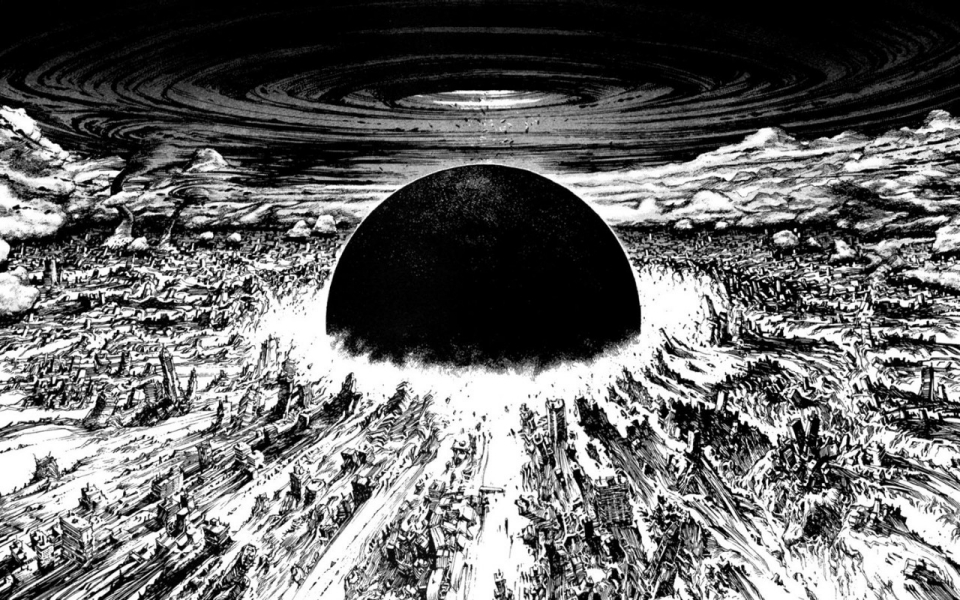
 Al Jazeera America asked me to write about the atom bomb in Japanese culture for their website.
Manga and the Bomb
Reply

Al Jazeera America asked me to write about the atom bomb in Japanese culture for their website.
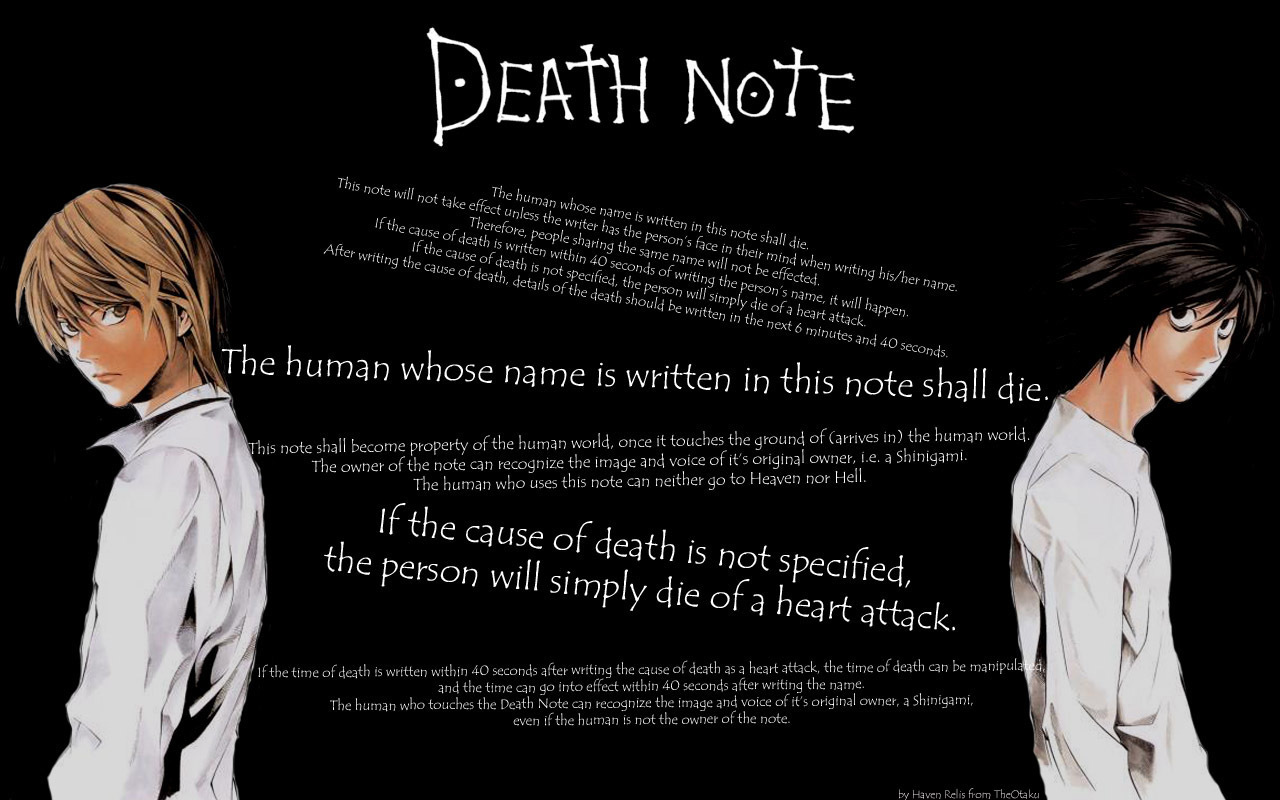 I’m on the BBC World Service discussing the latest backlash against Death Note, and the love-hate relationship between Chinese fans and Japanese products. More on the story here.
 May’s entertainment was provided by David Clarke, an author who used the Freedom of Information Act to wrest a report from the Metropolitan Police with the title of UFO New Religious Movements and the Millennium. In it, anti-terrorism officers were cautioned about the rise of conspiracy theories and wacky cults, centred around dangerous foreign imports like Star Trek and The X-Files: “it is not being suggested that the production companies are intentionally attempting to ferment trouble,” said the report, in annoyingly reasonable language. “However [they] know what psychological buttons to press to excite interest in their products. Obviously this is not sinister in itself. What is of concern is the devotion certain groups and individuals ascribe to the contents of these programmes….”
Clarke knows what buttons to press, too (he has a book on the way), since fandom’s dudgeon was most certainly raised. I, for one, am flattered that a bunch of nerds in Spock-ears presented an equivalent danger to, say, the fanatical suicide-bombers who blew themselves up on the London Tube. Imagine the unspeakable carnage if they got all Prime Directive on people… but there is method in the apparent madness.
It’s not clear exactly when the dossier was prepared, but Clarke suggests it was around 1997, after the suicide of 39 members of the Heaven’s Gate religious cult in San Diego. Heaven’s Gate’s use of terminology from Star Trek is widely reported; less well-known is the presence of stacks of anime VHS tapes at the site of their “Away Team” deaths.
 Heaven’s Gate were convinced that the world was shortly about to be “cleansed”, and humanity was going to be wiped away by the impact of some dreadful angelic apocalypse. Shortly before they drank a fatal mix of phenobarbitol and vodka, 39 people had been watching Neon Genesis Evangelion. I know this because the FBI wasted no time in tracking down the pedlars of such apocalyptic propaganda, and demanding they explain the plot to them. And, Evangelion being a tough one to describe at the best of times, ADV Films volunteered the services of the only person they thought could do the job. That would be me, at five in the morning in London, woken up by what at first I took to be a prank call.
Evangelion is “apocalyptic” because it draws upon Christian eschatology. It did not inspire Heaven’s Gate so much as offer them comforting reflections of their own delusions. The FBI worked that out soon enough, and went away happy that anime fans weren’t about to go on the rampage, but it wouldn’t surprise me, when the full text of the dossier is made available, to discover those pesky Japanese cartoons are also listed as potential threats to civil society. Again. Thank God they didn’t know about Queen’s Blade…
Jonathan Clements is the author of Anime: A History (UK/US). This article first appeared in NEO 139, 2015.
 One of the big hits of recent anime seasons has been Shirobako (literally ‘White Box’), a show that shoe-horns an off-the-peg cast of perky graduates like refugees from K-On into the heady world of anime production. Shirobako is a workplace drama, but also a knowing parody of life in the anime industry, often with recognisable caricatures of well-known figures, and depictions, just the right side of actionable, of notorious incidents from business legend.
Shirobako successfully conveys the awful daily grind of working on Japanese animation. Entire scenes crawl past of people in messy, cluttered offices shouting each other about file numbers and storyboard pages, and losing the plot about frame counts. Despite occasional cutaways to the flights of fantasy they are working on, life in the fictional “Musashino Animation” company is largely seen to be a dull and stressful slog, with little obvious reward.
There is much of interest about the division of skills on anime productions. Artists go in at the bottom, but have a chance of getting swiftly promoted. Computer geeks get to faff with CG, but have to fight against unrealistic expectations of their technology. And the wannabe voice-actress is soon waiting tables at a restaurant…
Ironically, in the real world, she’d be the one on the highest wages. A study published by the Japan Animation Creators Association (JaniCA) claimed that the mean entry-level salary for new animators is (and has been since at least 2009) just £6,000 a year, with an average working day of 11 hours. Inbetweeners in Japan are competing directly with Chinese labourers who are submitting comparable work across the internet from a place with lower costs of living. If they don’t prove themselves worthwhile, they remain stuck on paupers’ wages, which have not gone up in five years. Put another way, the people who make your favourite anime can start on salaries as low as 65p an hour.
One wonders how the real-world versions of the breathless, gamine girls in Shirobako would come across if they couldn’t afford soap powder or, well, soap. It’s difficult to imagine these conditions lasting for much longer before there simply aren’t any Japanese animators in Japanese animation. Which means more producers and directors coming in sideways from other professions, not up through the ranks, and commanding a staff in a foreign country through Skype and shouting. Has anime, which always was regarded as a cheap option in the first place, successfully priced itself out of its own market?
Jonathan Clements is the author of Anime: A History (UK/US). This article first appeared in NEO #138, 2015.
 Posted on the BBC website on April Fool’s Day, and hence not attracting any attention until it turned out to be serious, was the news that China’s State Administration of Press, Publication, Radio, Film and Television had declared war on “borderline pornographic” Japanese cartoons such as Blood C, Highschool of the Dead, and Terror in Resonance. SAPPRFT promises to draw up a blacklist of proscribed Japanese cartoons, all the more to save Chinese streaming sites the trouble of licensing them.
Even in China, the news was greeted with a degree of hilarity. SAPPRFT, after all, was the same body that tried to ban time travel (fortunately only on TV, my time machine is still legal). But as the Qianzhen news site in south China pointed out, SAPPRFT was making the perennial error that has dogged anime all over the world for the last 30 years, confusing cartoons for adults with cartoons for children, and then making the false assumption that children would be watching them.
It’s Japan that’s really in SAPPRFT’s sights. Anime was dragged off-air in China in 2006, where it was proving far too popular. Anime continued to sneak in on video, since apparently Ghibli films didn’t count as evil cartoons. Then, a survey in 2008 concluded that 75% of Chinese undergraduates were watching anime on their computers. Television might have been stamped out, but anime continued to find an audience in pirate editions and on streaming sites. And consider that percentage for a moment: China generates seven million graduates every year – that’s a big audience.
Streaming sites didn’t count as television, so now they are on the hit list, not the least because of the titles listed in the SAPPRFT press release, only Terror in Resonance appears to have any legal presence in the People’s Republic – it’s got bombs going off in Tokyo, sure to entertain the kids. As for Blood C and Highschool of the Dead, both were released in Hong Kong and Taiwan – in other words, they are sneaking in across the border, unhelpfully subtitled in Chinese by the running dogs of capitalism. Long-term readers may remember a similarly absurd situation a few years ago, when Death Note was “banned” in northeast China, despite not actually being legally available there in the first place.
What’s going to happen? Nothing. Servers at Chinese universities will continue to host terabytes of torrented foreign media. Chinese fans will continue to watch anime on their computers, just now without paying a penny to Japan. And distributors everywhere are doing cartwheels at the thought of being able to say that their anime titles are now “banned in China.” Nothing will bump up audiences more than the idea that the cartoon they’re watching can excite such ire.
One wonders, however, if SAPPRFT has bothered to check the credits on Highschool of the Dead and Blood C, which feature listings for companies such as Xuyang and Xing Yue Animation, both based in Jiangsu province. That’s right: the horrible foreign cartoons that SAPPRFT is targeting were partly made in China.
Jonathan Clements is the author of Anime: A History (UK/US). This article first appeared in NEO #137, 2015.
[Time travel footnote: and here’s me in the LA Times, explaining why Attack on Titan qualifies as “pornographic”]
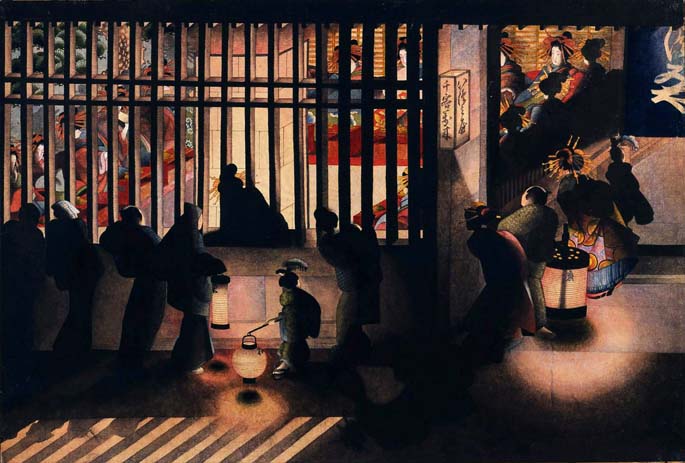 My article on the strange case of Hokusai’s daughter, an artist in her own right who has been largely airburshed from the historical record, partly with her own collusion, is now up on the Anime Ltd website. It’s a fascinating story of art and attribution, with strong resonances in the modern anime business.
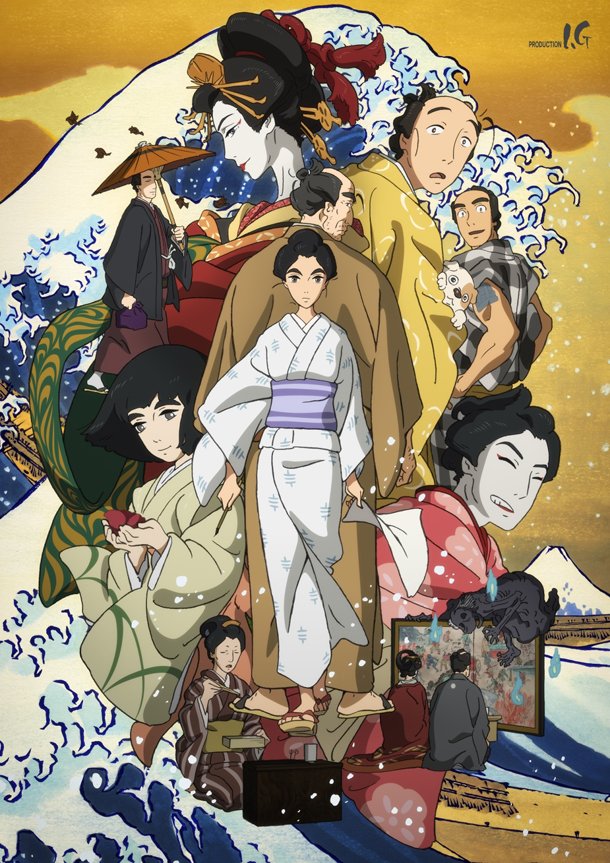
 The idea of rekishi-gyaru (history girls) has come up before in a few Manga Snapshot columns – a supposed market sector of young, educated women who are as nerdy about historical drama as Naruto fans are about ninja. The latest anime from Production I.G seems squarely aimed at them, as well as a whole world of overseas anime lovers and Japanophiles.
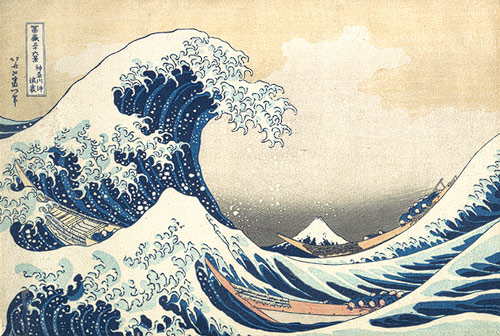
9th May sees the Japanese premiere of Miss Hokusai, which charts the life and times of Oei, the artist who laboured tirelessly as an assistant and sometime replacement for her famous father. Hokusai père was the printmaker who created the iconic Great Wave Off Kanagawa as well as the tentacular picture usually known as The Dream of the Fisherman’s Wife (now gracing Peggy’s office in the final episodes of Mad Men), and the sketchbooks or doodlings that eventually lent their name to the entire medium we now call manga.
Based on an obscure 1980s comic by Hinako Sugiura, Miss Hokusai looms in on “her-story”, that ever-growing genre that highlights forgotten ladies. The question always remains just how much of Hokusai’s work was actually done by his daughter – letters remain extant in which he states his pricing policy, and notes that clients can have him for one fee, or Oei at a discount… not unlike the way that late-period Studio Ghibli started choosing its directors!
 But Miss Hokusai is also a clear entry in the new scramble for superiority left by the shuttering of that very same Ghibli. With Hayao Miyazaki retired (again) and Isao Takahata unlikely to ever make another film, the race is on for the anime high ground. Take my word for it, all around the world there are distributors who have made a tidy profit on Ghibli movies for the last decade, who have suddenly seen their cash cow put out to pasture. Where are they going to find their once-a-year classy film to draw in the twittering classes and pad out film festivals with something quirky and Japanese? Where’s their annual dip into the fan market and mainstream cross-over?
For those who thought the whole thing was a two-horse race between the consistently excellent Mamoru Hosoda and the randomly brilliant Makoto Shinkai, Miss Hokusai’s director Keiichi Hara has turned out to be a surprise contender – leaping out of journeyman work on Crayon Shin-chan with the acclaimed Colourful, and now this considered, self-consciously classy evocation of Tokugawa period glamour. Worthy and classy, Miss Hokusai is a dream come true for distributors and exhibitors, and hopefully for audiences, too. But this is going to be a long contest before the winner is declared.
Jonathan Clements is the author of Anime: A History. This article first appeared in NEO #136, 2015.
 Mere hours before April Fools’ Day, and hence confusing a bunch of foreign pundits, the Japanese contents conglomerate Bandai-Namco announced that it was “opening up” the rights to a number of its classic games titles. From here on, anyone wanting to make a cellphone variant of Pacman, or a sequel to Dig Dug, is welcome to get stuck in, without any of the miseries of, you know, paying for a licence, or dealing with licensors.
Although Bandai-Namco is promising not to subject anyone to the extensive colonic investigation that is “licensing”, it still expects everyone to register for a perfunctory rubber stamp of approval. It promises to wave everything through unless it’s dodgy, so no chance of Pacman Porno. It also expects a rake-off of a few percent from any revenue generated, and a percentage of any ad-buys. This offer currently only applies to creators in Japan – foreigners can’t be trusted yet. What on Earth is Bandai-Namco playing at?
This new announcement is an intriguing, and seemingly rather business-savvy extension of the pre-existing rights market, where intellectual property owners expect to cream off around 5% from any licensed merchandise. That Nigerian Astro Boy remake? 5% to Tezuka Pro. That Indian version of Star of the Giants? 5% to TMS. That Overfiend plushie? Go away, that’s my idea.
With a bunch of forgotten titles, like Tower of Druaga and Sky Kid, Bandai-Namco is opening the have-a-go floodgates. Let a hundred flowers bloom! Want to make an animated series based on Galaxian? Be their guest! A Battle City-inspired line of clothing? Go right ahead. After all, what’s the risk? These are corporate-owned titles that the company plainly couldn’t give away for the last 20 years… so now they are literally giving them away. As long as you fill in the correct paperwork and give them their cut, they won’t sue you.
And if a project fails, Bandai-Namco has lost nothing. Just as Amazon will carry almost any self-published Kindle book, on the understanding that even if it only sells 100 copies (which is, believe it or not, the average), the company hasn’t had to work for that money and still gets a cut. Or look at another way. Bandai-Namco has just solicited every company in the creative sector to work for it, for free, while it creams off a stipend. Everybody else will be watching this one very closely. The moment there’s a success story, expect to be pig-piled by imitators.
Jonathan Clements is the author of Anime: A History, and the co-author of The Anime Encyclopedia: A Century of Japanese Animation.
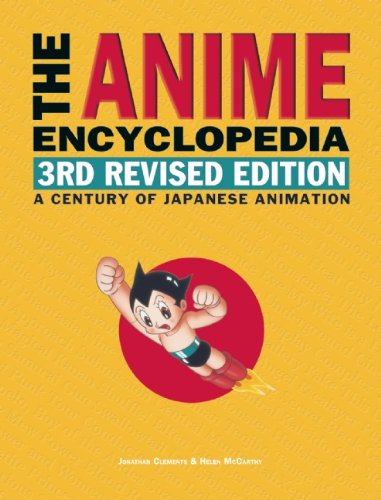 Over in the Swiss newspaper Le Temps, Jonas Pulver inadvertently coins the superhero identities Helen McCarthy and I would use if we were fighting crime. I’m Concis, she’s Tentaculaire.
“…l’encyclopédie est aussi une excellente porte d’entrée sur l’environnement médiatique du Japon, à l’image du fonctionnement complexe du sponsoring et de la publicité, de l’intertextualité des œuvres, ou de l’influence des groupes de fans. Concis et tentaculaire, The Anime Encyclopedia se lit par sauts de puce, en se laissant porter d’un article à l’autre au gré des affinités thématiques. Le plaisir de la redécouverte y flirte avec l’inédit.”
 It can’t have been the best of days for the 73-year-old Katsuhisa Ezaki, president of Ezaki Glico Foods, when he opened his mail to discover an apparent blast from the past. A correspondent signing himself Monster #28 was demanding 50 million yen, lest he make good on a threat to poison the company’s food products on supermarket shelves.
This was not the first time this had happened. Back when Ezaki was in his 40s, he was kidnapped by masked men and held hostage in a warehouse while the criminals tried to extort money for his release. The following month, a man calling himself “The Fiend with 21 Faces” threatened to poison Glico’s food products, which include Japanese staples like Pocky and Pretz. Nobody was ever brought to justice, although there was a flurry of media activity around a suspicious “Fox-Eyed Man”.
For something that is supposed to be a light-hearted news source on Japanese media, this column seems to spend an inordinate amount of time reporting on murders, scandals, thefts and other criminal activities. But they often seem to dovetail with the anime world, not least in this case – the original 1980s scandal was the inspiration for the Laughing Man storyline in Ghost in the Shell: Stand Alone Complex…
…and it seems, the Laughing Man storyline itself was the inspiration for this 2014 reboot. This time, the police were smarter, staked out the money-drop, and arrested a man on 1st December 2014 who turned out to be a film producer fallen on hard times. His name was initially made public, but has since been scrubbed from the Internet, seemingly in tardy recognition of a presumption of innocence until proven guilty – although, you know, being caught red-handed with the money is going to be a tough break.
So let me phrase this as a lawyer will no doubt have to: if you’d been associated closely with the Japanese cartoon world, if your company was on the skids and your forays into other media had failed, would you consider rifling through your anime collection in search of ideas for money-making schemes? And if so, what anime would you rip off? Budding criminals, write in to NEO and let us (and the police) know your plans…
Jonathan Clements is the author of Anime: A History, and the co-author of The Anime Encyclopedia: A Century of Japanese Animation. This article first appeared in NEO 133, 2014.
 The Official Schoolgirl Milky Crisis Blog