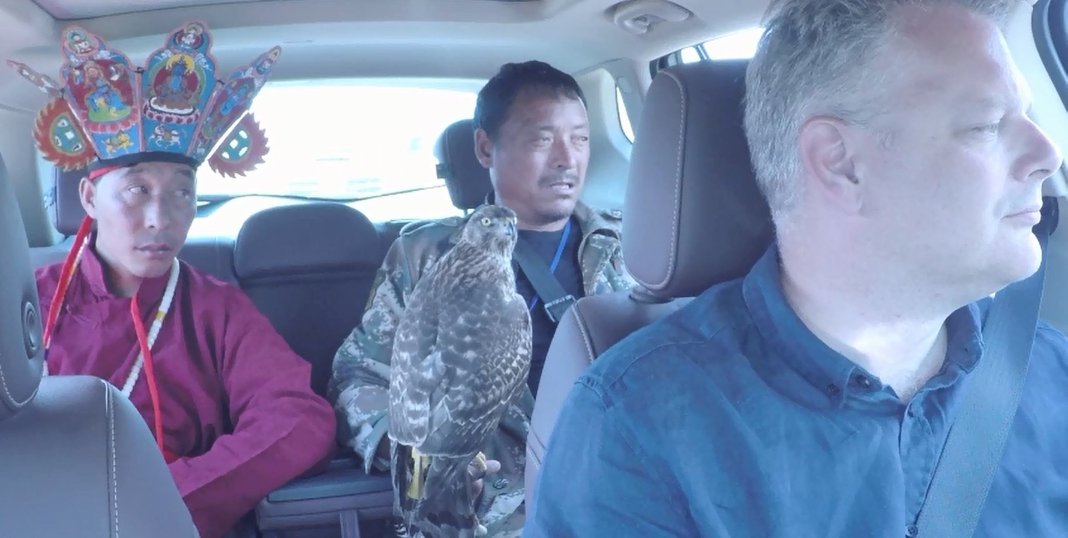
Mr He has nut-brown skin, burned like the Tibetans by the hot sun in the thin air of the Himalayan foothills. He is wearing the ankle-length scarlet robes of a Dongba shaman, and a five pointed cardboard crown decorated with visceral images of deities and animal spirits. There is a long necklace of coloured beads around his neck. He carries a sprig of mountain fir, a tambourine-like shamanic drum, a necklace made of bones and an ancient book of Naxi spells, written in tribal hieroglyphs. He is sitting in the back of the Buick, next to another Mr He, who is also nut-brown but with a dark, piratic moustache, clad from head to foot in army surplus camo gear. He is wearing a single leather glove, and perched on it is a hawk… which is also in the back of the car, occasionally flapping its wings in the shaman’s face.
Mickey is crammed into the passenger seat with all his sound gear, including a large fluffy boom mike that the hawk keeps mistaking for an otter. Luckily for us, there wasn’t enough room in the car for the three hunting dogs, because it already feels like I am driving down a bumpy mountain path with the cast of a Fellini film in the back. All we really need is a couple of dwarves and a pantomime horse’s head protruding from the sunroof. The glassy lake beneath us is called Yuhu, and we bump and jostle along a track that is usually reserved for ponies and quadbikes. It is the oddest and least enthusiastic session of carpool karaoke yet devised, as Mickey starts to sing Bohemian Rhapsody.
Just as a confusing week with the Kam was ultimately saved by a mud fight, our lacklustre showing with the Naxi is pinning all its hopes on a day on the mountain heaths with a bunch of falconers. Mack the fixer has asked Big Li to fix something up, and Big Li has reached outside the Li circle to the He family, who have rustled up some men with birds of prey and Swiss army knives, and a wizard. The idea is for the Dongba shaman to perform a ceremony to the gods of mountains and hunting, and for us to then go looking for pheasants among the rock-strewn meadows beneath the snow-capped peak of Jade Snow Mountain — original inspiration for Shangri-La and alleged home to the many couples from Naxi history who have committed double-suicide rather than submit to the pressure to marry their cousins.
But somewhere in all the fixers fixing with other fixers, something has been lost in translation. We wanted the hawking party for the whole day, preferably with a menagerie of spare pheasants we could release into the meadows for their own little version of the Hunger Games if the wild ones wouldn’t cooperate. For some reason, the bunch of dodgy-looking Naxi have shown up armed with little more than excuses. The hawk isn’t hungry enough. There are too many people on the hillside. The hawk is scared of Mickey’s boom mike. And they have only turned up with two spare pheasant-like birds as possible prey.
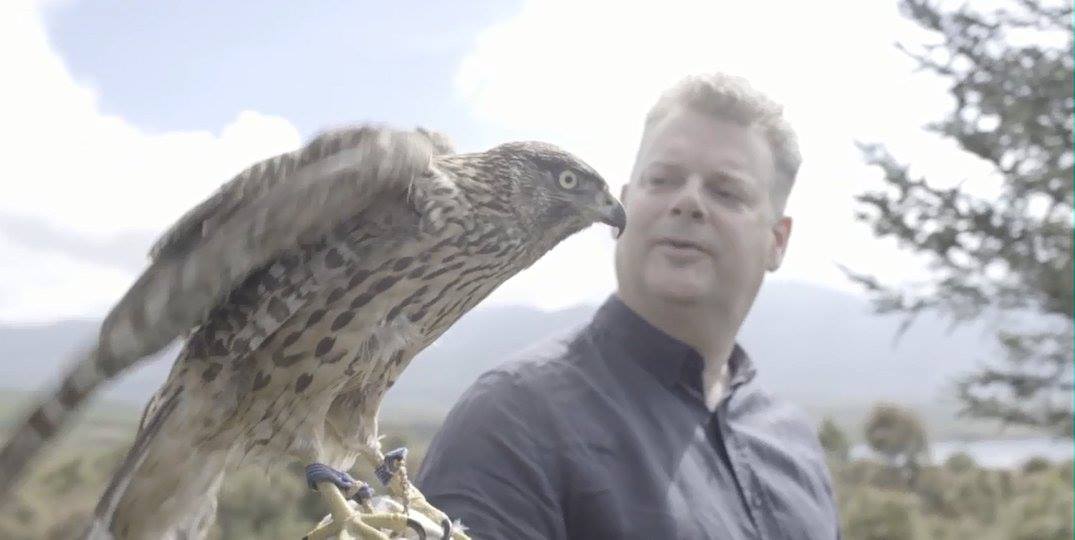
The hawk resolutely flies in precisely the opposite direction from any wild birds that the dogs faithfully root out, and is literally unable to grab a pheasant when one is held up in front of it. The director glumly gets some footage of me holding it (its talons remarkably gentle on my wrist, as if it is afraid of leaving a mark), and of Mr He the army-fatigues guy blowing his whistle and largely failing to get it to return. After half an hour, the pheasants have caught more prey than the hawk, and He the Hawker has resorted to using his GPS locator, which beeps angrily whenever it works out where the transponder on the back of the eagle is.
Daniel the cameraman is in a filthy mood. The director says it is because he has a cold, but I suspect it’s because of the crushing weight of wasted opportunity. Today’s set-up, if the fixer’s fixer’s fixer had got his ducks in a row, would have offered any cameraman a shot at an international award — wizards in the forest, and hawks coming out of the sky. But the prey won’t run, and the hawk won’t hunt, and the rare moments when there’s some action or chasing, Daniel invariably has the wrong lens on his camera, or ends up focussing on the wizard having a fag behind a tree. Then the hawkers reveal that this last half hour is all they have scheduled. Far from spending the day on the mountain, they have another hawking party to go to, and are ready to pack up and run off, observing with something of a hungry glint in their eyes that maybe we can come up with something better the day after tomorrow. The hawk has been so hapless at chasing the pheasants that we still have both of them alive, staring at us with what only can be described as avian sneers. We have barely seconds of footage, which causes Sohkiak to suggest that before the hunters go, we set up a scene where I drive the Buick across the mountainous landscape, with a camera stuck to the front of the car for a good view of our mad passengers.
The hunters all bugger off to a more interesting hunt somewhere else, and we are left with the Dongba shaman. He is as friendly as any wizard might be when offered a week’s wages to set fire to some twigs on a hillside, and gamely talks me through the career path of an exorcist and sometime children’s entertainer. He lights a pile of fir branches and intones dour prayers in Naxi to the gods of the mountain. He is much too polite to suggest that we might have avoided a lot of palaver if he had asked the gods’ permission before we started chasing a couple of pheasants around a lake, and that in terms of prioritising wizardry, we might have got what we deserved.
“Hong Kong is so crowded already. Where do ghosts live?”
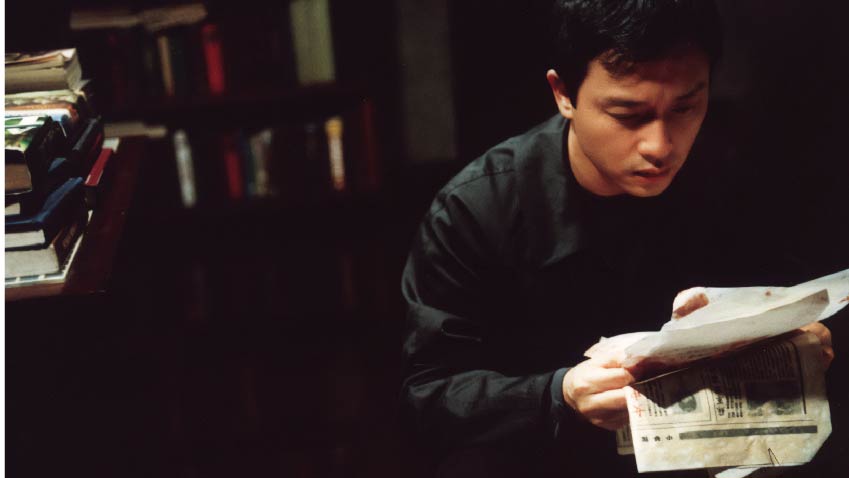
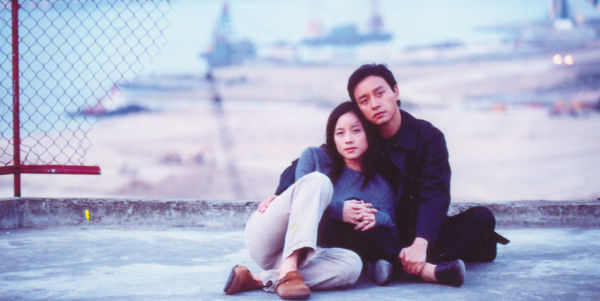
Asian psychiatrists learn their trade in English. Like Dr Jim Law (Leslie Cheung) in Inner Senses, the books on their shelves are in a foreign language, as are their lessons and interactions with their peers. They have a scientific, westernised outlook that differs from the countrymen they often treat. Jim takes this to extremes, reducing even happiness to simple terms of chemical secretions.
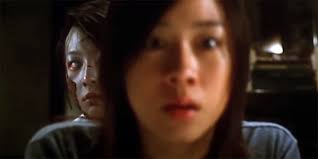
His patients, like the audience for Inner Senses, are steeped in folklore and movies, such as Dracula and the Legend of Sleepy Hollow, with which Jim taunts his fellow psychologists at a conference. When Yan (Karena Lam) says “I see ghosts”, her words echo not only The Sixth Sense, but also its Asian imitators, particularly The Eye.
Inner Senses is concerned with the spinning of tales and the active imagination. Yan only seems to see ghosts after she hears scary stories; she is primed to believe. A failed writer who must subsist as a translator, she retains a writer’s readiness to be spooked and inspired by what goes on around her. And yet Jim tells stories, too. In their first meeting, he lies about his belief in ghosts, and helps her construct an alibi for her attendance, ostensibly to placate her cousin, but actually to lure her back for further sessions.
Inner Senses teases its audience with false trails of movie folklore. Its early moments invoke Dark Water or The Amityville Horror with creepy scenes of house-buying. Jim alludes to a wartime graveyard below his building – an Asian variant on the old “Indian Burial Ground” cliché. Even the leads’ first meeting seems contrived along B-movie horror lines, with a new patient dumped on Jim by a vacationing psychologist. But there is a reason for everything, and the bad lie of Jim’s fellow doctor is the white lie of Chinese match-making – even though he risks breaking the rules of psychiatry by encouraging a relationship with a patient, the deceptive doctor is still doing what he can to set up his wife’s cousin with a suitable spouse.
Inner Senses places so much value on stories because its leading man believes in the power of suggestion. It is not spirits that bother Jim, but the people who believe in them, for their hysteria can be contagious. Jim speaks like a psychologist, but also like a filmmaker, of inspirations and memories that write and draw themselves. Part of his planned therapy involves a video camera, the chance for Yan to exorcise demons by proving they aren’t real on film.
There are two films within Inner Senses. Its first hour relates the case of Yan, before turning on the case of her therapist – Jim’s own inner Scully telling him that there must be a perfectly rational explanation. But his inner Mulder wants to believe that there are ghosts, for such a romantic decision would mean that Yan was sane, making her more of a potential mate.
But even the calm, rational Dr Jim Law has skeletons in his closet, and whether he believes in ghosts or not, he is certainly being haunted by something, something not from the spiritual world at all. Inner Senses takes an hour to set up Jim’s relentless rationality, and then confronts him with a terror born of the mundane world. Despite its obvious parallels to Sixth Sense, it is part of a psychological horror tradition that goes back to The Shining and beyond, of men who haunt themselves.
If one is truly mad, one is often too mad to tell. Therapists pity the mild or worsening cases, aware that they are losing their minds but unable to stop it. Leslie Cheung himself wrote of “experiencing emotional difficulties” in his personal life during and after the filming of Inner Senses. Shortly after his haunted performance in this movie garnered him a Best Actor nomination in the Hong Kong Film Awards, Cheung went into the 24th floor café of the Mandarin Oriental Hotel and asked for a notepad. He wrote a brief message thanking his own psychotherapist for his efforts, but complaining of a year of suffering. He then jumped from the balcony to his death.
Jonathan Clements is the author of A Brief History of China. This article originally appeared in the sleeve notes to the Tartan Video release of Inner Senses.
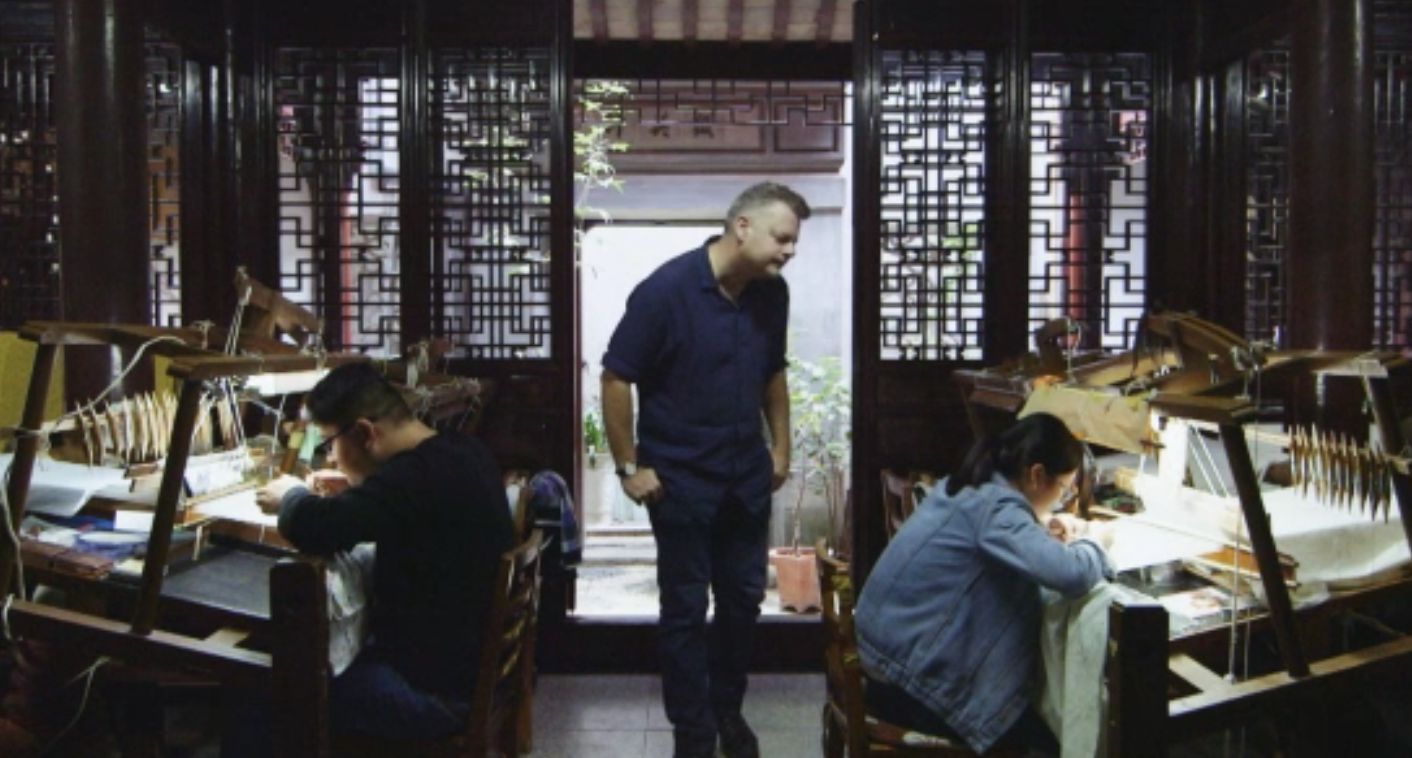
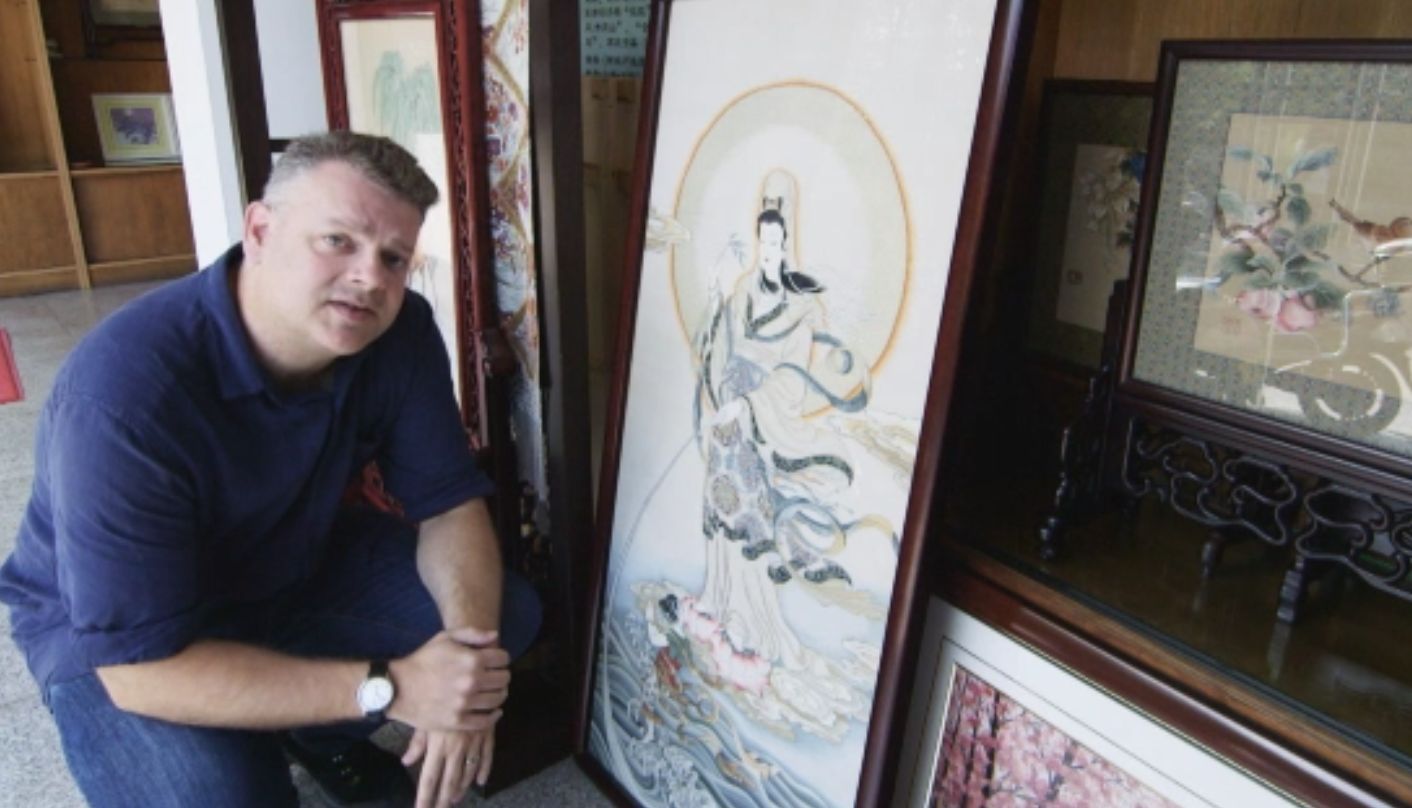
Mr Wang’s studio is literally next door to our hotel, which gives everybody a lie-in. I start to wish, however, that I had never got out of bed, since Mr Wang’s studio appears to specialise in pictures of pets. Why UNESCO accorded him intangible cultural heritage, I’ll never know, because his output seems to include funny pandas, twee scenes of traditional mountains-and-water, and the silk-weave equivalent of a painting of two dogs playing billiards.
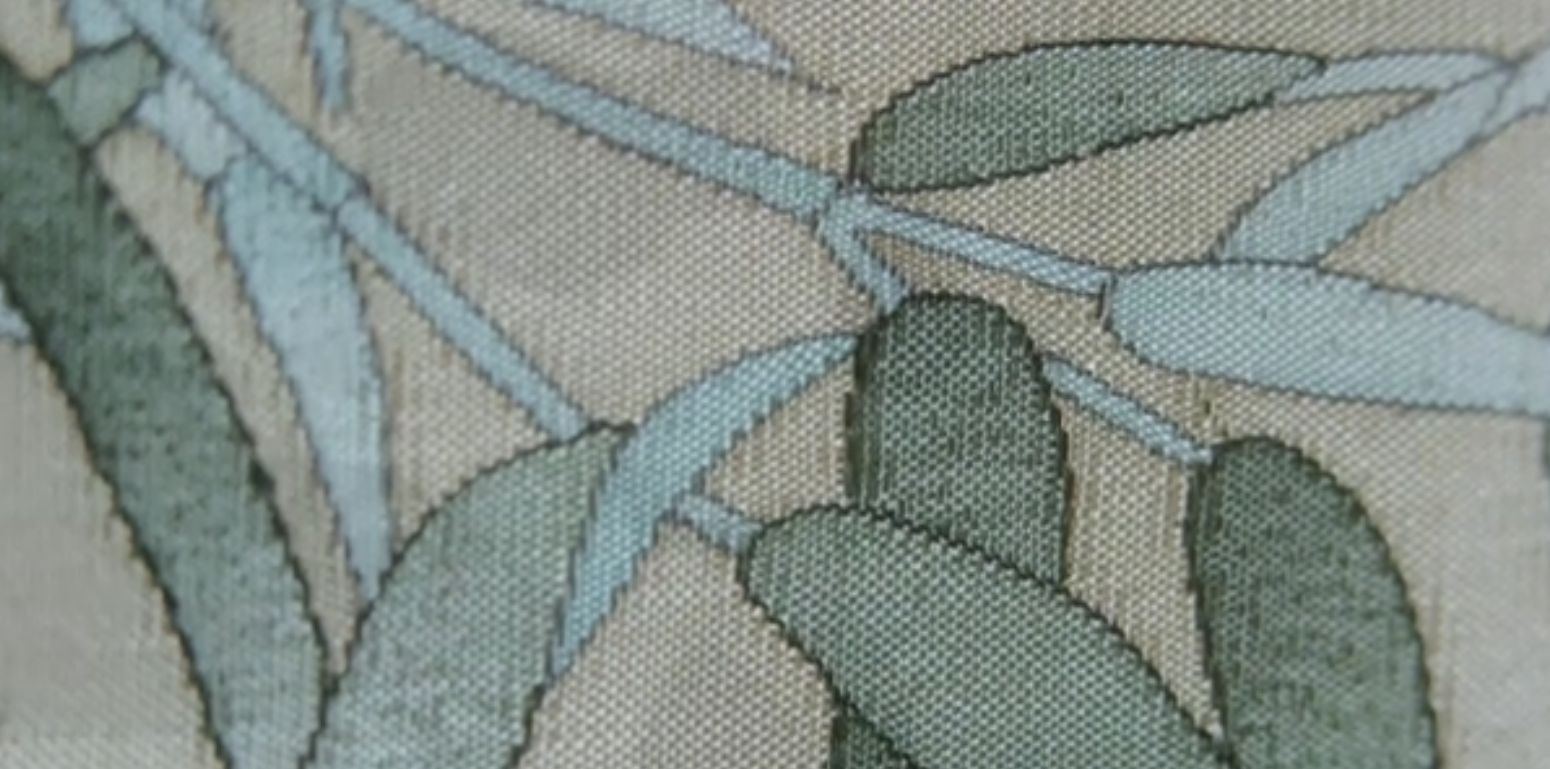
The people in Mr Wang’s studio are heartily sick of film crews, and would really much prefer to be left to get on with their work. Mr Wang makes himself scarce when we arrive, thereby depriving us of the chance to interview anyone but his flunkies. But they tsk and tut and bend over their looms as I wander around them, enthusing to camera about the not-particularly-lost art of kesi, in a single 45-second speech that I manage to get right more often than not.
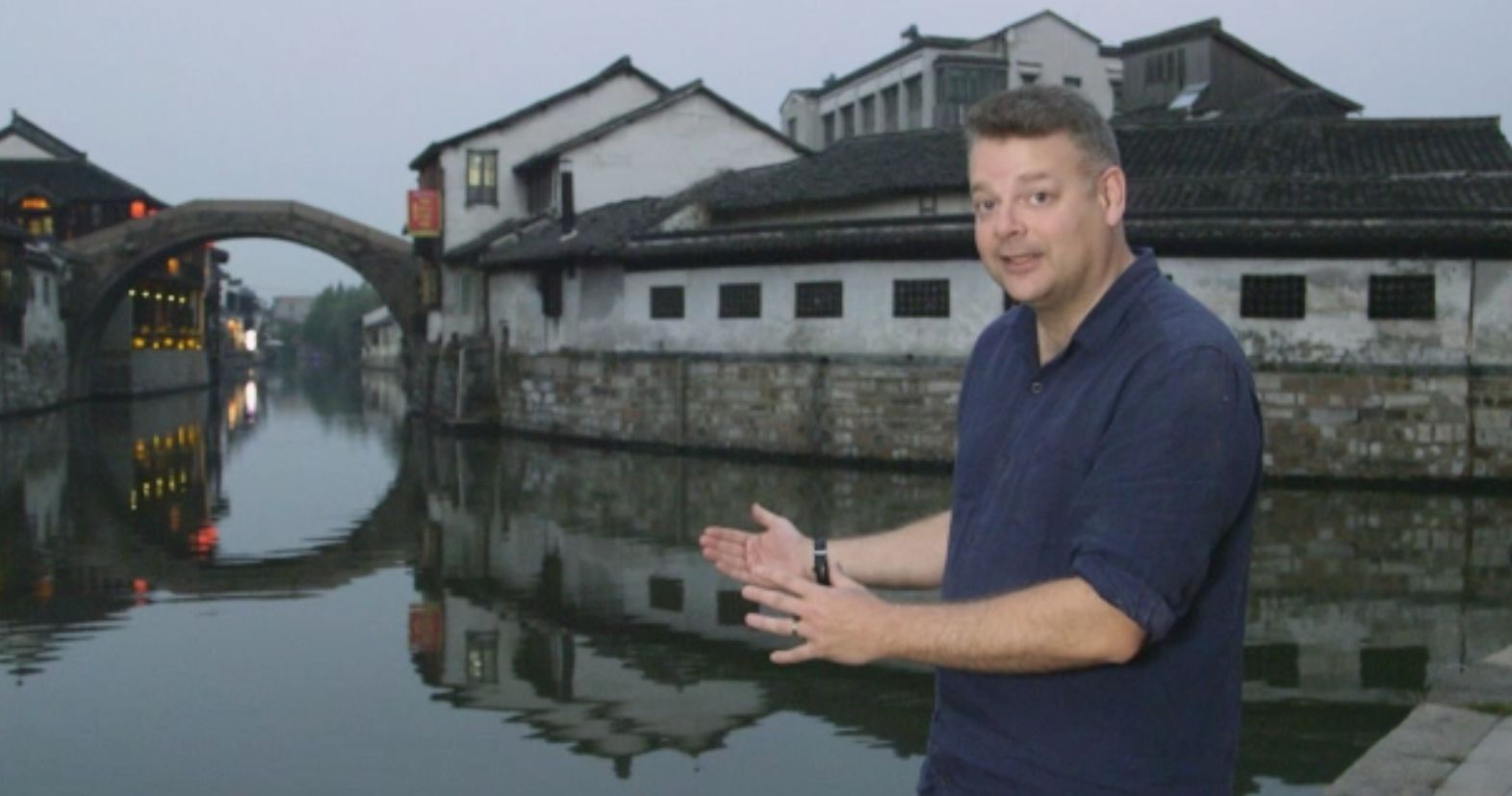
We drop in on a dye factory for more B-rolls, and then stop off at a water-town to send up the drone to get pictures of little pagodas and winding, flagstoned streets. This particular one, Shantang, stretches along either side of a seven-mile stretch of canal, and is infested with pushy rickshaw drivers and people who want to shout hello and/or stand behind the camera peering into the viewfinder.
The day finishes up back in Suzhou proper, next to another picturesque canal populated by fan shops, ice cream parlours and dumpling shops. We’ve come to see Chen Yingqin, a lady whose kesi is way, way better than Mr Wang’s. She seems to spend most of her time telling clueless customers in her shop that, no, the “watercolour” on the wall is not a watercolour at all, but actually an image composed of thousands of silk threads. She also does calligraphy, replicating everything from the pressure of the ink brush to little imperfections in the characters. I ask about one picture, of a Chinese landscape, and she confesses that it took her nine months.
The prices reflect this. A square embroidered image of a single Chinese character, (Chan, which is to say, what the Japanese call Zen), the size of an LP, retails at a steep £3000. She also makes wallets at £100 a throw, and similar luxury goods for the super-rich.
A neatly “printed” series of characters on gold silk is recognisable to me from the simple layout, even before I get close enough to read it, or its title.
“Is that the Heart Sutra?” I ask.
“Yes,” she says, flabbergasted. “I am slightly disconcerted that you know that.”
She is giggly and vivacious in her interview, which makes a nice change from stage-struck old men, and seems genuinely sorry to see us go. She even laughs along when the producer and I have a fight about the statue on the mantelpiece, with her maintaining that it is Guanyin, the Goddess of Mercy, and me maintaining that it is Buddha himself.
“If it’s Guanyin,” I protest, “then where are her tits?”
Apparently it is Buddha. Although Guanyin is also Buddha. It’s complicated.
At a loose end in Shanghai, I dropped by the site of the first congress of the Communist Party of China, a nondescript building at what used to be 106 Rue Wantz in the French Concession. A small museum inside chronicles the various individuals and events that literally got that Party started, although most of the Chinese visitors were keener to have their photograph taken by the entirely everyday front door with its “106” nameplate.
I was more excited by the presence of a bona fide First Congress of the Communist Party of China gift shop, where I shopped in a frenzy for my First Congress of the Communist Party of China umbrella, my First Congress of the Communist Party of China pen, my First Congress of the Communist Party of China tote bags, and my First Congress of the Communist Party of China fridge magnet. There was even an I’ve Been to the First Congress of the Communist Party of China frame outside, where I had my photograph taken, loaded with First Congress of the Communist Party of China swag, while Chinese onlookers giggled nervously and said: “Heehee, foreigner.”
For author Lin Chunfeng, I am one of millions of people taking part in the subject of his new book, Red Tourism in China: Commodification of Propaganda. I have always been interested in some of the big Communist displays of statuary and commemoration, such as the Martyrs Cemetery in Shanghai and the Martyrs Park in Guangzhou, but Lin’s book examines such sites as part of a growing and, in some sense, relatively recent phenomenon, as the Communist Party attempts to merge the disparate disciplines of education, propaganda, national cohesion and social harmony. Today, Red Tourism is a massive component of Chinese leisure travel, amounting to 540 million visits a year, or 20% of all domestic Chinese tourism. To put this in context, private investment in tourist experiences in Mao’s old base at Yan’an has topped 50 billion yuan, ten times the amount spent to build Shanghai Disneyland.
Not every venture is a resounding success. Lin recounts the folly of the great golden “Mega Mao” that was erected by an earnest entrepreneur in Henan province in 2016, only to be pulled down at the orders of the authorities shortly before it was completed. The precise reason is unclear – possibly, the Trumpish extreme of the golden Mao was too much even for garish Chinese pop culture, with social media commentators archly commenting on its evocation of Shelley’s Ozymandias. Others pointed to the bitter irony of a statue glorifying the Sun in Our Hearts in the province that arguably suffered the most at the hands of his social experiments. The truth probably lies somewhere in between, tied up in complex issues over patriotic land use and the unsanctioned rezoning of an agricultural area.
A large chunk of Lin’s book is taken up with a discussion of the history and culture of tourism and propaganda in China. He points out that ancient progressions by emperors and princes around the country were often ostensibly undertaken as acts of religious pilgrimage, although the “long, grand journey of the monarch to the ceremony site was often just as propagandistic as the ritual ceremonies for legitimating monarchical power.” And Lin points out that it’s not just the monarchs who are putting on a performance. “Tourism at the grassroots,” he suggests, “has gone mostly unmentioned in both historical records and modern retellings, or at the most, framed as celebrations of holidays along with other rituals and ceremonies that somehow involved travel.”
In part, this performance of pilgrimage can be laid at the feet of Confucianism, which Lin terms an “anti-leisure” philosophy that early tourist companies in China had to wilfully fight among the middle classes, convincing them travel for fun was both desirable and appropriate. Paramount among such entrepreneurs was Chen Guangfu (1881-1976), the Ivy-league alumnus who founded China’s first locally run travel agency back in his native Shanghai, the China Travel Service (CTS). It was Chen who came up with the idea of giving away 20,000 travel pamphlets at the 1933 Chicago World’s Fair, hiring the journalist Edgar Snow to knock up five different accounts of travel tips, framed as anti-Japanese polemics.
After the end of WW2, tourism was first pushed by a professor from the Department of Foreign Relations of the University of Politics, who argued that it was “not merely a form of education, but a very important part of education in general.” Here, Lin tracks the interests in education and propaganda (a word that he carefully argues has nowhere near as negative an implication in China as it does in the West) of both the Communists and Nationalists, particularly when it came to promoting the commemoration of the war against the Japanese, and pointedly celebrating 1950s China as a melting pot of multiple ethnic groups. Lin identifies some of the mass movements of the Cultural Revolution as a prototype of today’s “Red Tourism”, noting the swift declaration of the Great Rally – a series of sites with revolutionary importance, which no true Red Guard should miss out on. Such fanatic pilgrimages of the Party faithful were eventually shut down by the Party itself in 1967, after several people suffocated on overcrowded trains on their way to lay wreaths at sites like Yan’an and Jinggangshan.
As China “opened up” following the death of Mao, tourism was one of the first topics on the mind of the reformer Deng Xiaoping, who had his beady eye on the potential of a permanently renewable resource of American hard currency. “If each foreign tourist would spend $1000 in China,” he argued in 1978, “with a total of 10 million tourists visiting China every year, China could earn $10 billion.” But Deng’s vision, of course, was a more traditional form of leisure travel – the Great Wall (which was soon opened to visitors on multiple locations), the Terracotta Army, the Forbidden City and whatnot. For many foreigners, the experience of China would be a once-in-a-lifetime whistlestop fortnight of bussing, banquets and an overload of temples.
Official endorsement of tourism as a patriotic and educational Party phenomenon, would not come until 1991, two years after the Tiananmen Square protests caused the authorities to question if modern youth was on-message. Lin smartly relates it to a generational conflict, not only over a young China that had not experienced the formative conflicts, but of the “Little Emperors” born after the instigation of the One-Child Policy, regarded by some sectors as snooty snowflakes with no recollection of true hardship. The actual term Red Tourism (hongse lüyou) is first seen in a magazine article in 1996.
Lin has some great number-crunching on the economics of Red Tourism, which is often counter-intuitive or unexpected. He notes that many sites are piously free-entry, which disincentivises everyday tour guides from bringing their groups there in search of the usual rake-off. Conversely, a suitably high-level Redness in local sites can hoist the local economy way above its expected height –bringing in amenities usually reserved for much higher-tier cities. Apparently, the average Baskin-Robbins franchisee will not get out of bed for a third-tier city, unless it is guaranteed to have a regular influx of middle-class tourists. Tutting over his noodles in Yan’an, Lin observes that they have cost him three times as much as they would in the major metropolis at Baoji.
Lin’s chief case study is the city of Yan’an, the site of Mao’s 1930s guerrilla resistance, once favoured because it was remote, inhospitable and inaccessible. Now it is a mecca of Red Tourism, blessed by ultra-modern transport links – starting in 2025, it will be just 2.5 hours from Xi’an by bullet train – where the economic impact leisure travel has outstripped agriculture in the local economy. As is true all over China, out-of-work farmers form a huge labour pool for the tourist trade, which is one of the reasons why female soldiery is over-represented in the local re-enactment shows.
And what shows! Lin zooms in on Yan’an Defence, an explosive military spectacular re-enacting life in the Communist bolthole, interrupted by a sudden assault by Nationalist bombers. Originally performed four times a day to appreciative and occasionally fearful crowds, it was one of the lynchpins of the Yan’an experience, unwisely boasting in its advertising of featuring “real guns and real bullets” – one of which killed a performer in 2010. Lin gets to see Yan’an Defence at the height of its glory days; today, apparently, it is only put on once a day, with a reduced complement of “one horse and three donkeys.”
A similar celebration of the Battle of Taierzhuang requires so much explosives per performance that it cannot possibly operate without government contacts. Lin reports on multiple daily onstage injuries for the performers, who must wade through the pyrotechnics of 800 blanks and 80 explosions per show, rattling their eardrums and scorching their costumes. In 2014, preparations for a re-enactment of the Liaoshen Campaign are marred by an unscheduled explosion which claims the lives of two pyro-technicians, two workers, and three Party officials who happened to be walking past.
Lin’s reporting is not only a captivating glimpse of the lives of such performers, often uneducated, unemployed surplus labourers, exposed to the elements, replaying traumatic military actions several times a day without holidays or injury pay. He also delves into the way that such disasters were “handled” through the use of “soft news” (ruanwen), paid newspaper content that is now largely discouraged in China, although certain Chinese institutions are happy to throw money at it overseas, outside the Party’s jurisdiction.
In such remote areas, Lin smartly follows the money, investigating the way in which the authorities will happily help foster a Red Tourism site as long as their grants return double the investment. They will hand over a million dollars for Famous Pond Mao Once Looked At experience – not as frivolous as it sounds; such a site is one of the barrel-scraping 82 locations in the Chairman’s Shaoshan birthplace – but only if they see two million returned in the form of local infrastructure, transport links, job creation and businesses.
Lin’s book is an engaging introduction to the topic of Red Tourism, and presents a long view of it, dropping back in on his Yan’an case study to observe how it evolves over the years. This is a much overlooked element of so many studies in tourism, which tend to regard each phenomenon as fixed and unchanging. He returns late in the book to sample Golden Yan’an, a new “old” town built on expropriated farmland, and seemingly offering employment to the former farmers by getting them to dress up in a multi-faceted Chinese history experience.
Lin points out the economic issues that are associated with this, as policy wonks neglect to mention to the farmers that the very prosperity they are promised is fated to push up local prices, and devalue the compensation they received for their land, as well as the wages they might earn working on the site. He also has a stern critical eye for Golden Yan’an as a modular experience, with one street evoking the Song dynasty, and another the Qing, while a third recreates the era of Yan’an as a revolutionary headquarters. Shrewdly, Lin points out the difference that the visitors themselves can bring as participants, noting the contrast between an almost deserted street populated by pious statues, versus a vibrant marketplace thronging with cosplaying visitors.
It’s difficult to get the visitors to provide their own entertainment, of course, but sometimes it pays dividends. In its heyday, Yan’an Defence would even charge visitors $2 to dress up as revolutionaries and cower from the bullets onstage, rather than in the bleachers. In a perfect world, the visitors can bring their own passion – one of the most moving sites I have visited outside China is Ellis Island in New York, not for the museum to be found there, but for the emotional reaction of the many visitors, confronted with the fact that they are standing on the very spot where their ancestors became Americans.
In the case of Lijiang, famously lampooned by Chen Qiufan as a site of ersatz memories, I have witnessed its rapid transformation from ancient town into classy shopping mall, and as the initial franchises pulled out, into a glorified theme park like everywhere else, that charges an admission fee to the town itself, as if admitting there is nothing worth buying there. But even then, there are hacks and subversions. In 2017, I heard that Lijiang had become the hook-up capital of China, with travelling swingers cheerfully buying their three-day town admission, uncaring about the lack of night-time entertainment, because they were lighting up dating apps like a Christmas tree and meeting each other for sordid orgies. So, at least, I was told by a girl in a bobble hat, halfway up a mountain in Guizhou. Is it still true, seven years on? A lot can change in the world of Chinese tourism.
Two-hour drive out into the hinterland to Chenlu, the heart of the Chinese ceramics industry for the last two thousand years. This valley dotted with chimneys once had a solid square mile of little kilns churning out pottery for the Tang and Song dynasties. Master Wang Zhanjun, a crew-cut slowly transforming into an afro, shows me around his showroom, and the walk-in kiln where he still fires pots in the traditional method. He talks us through the glazes and the temperatures and their fluctuating fortunes, as well as the stories behind several “trick” items that we see on sale in the Xi’an Muslim quarter all the time.
One is the Phoenix Chirping Kettle, said to have been invented to make one of Empress Wu’s dreams come true. It has been designed so that the wine inside it makes a whistling noise when it comes out, which is apparently cause for marvelling in the Tang dynasty.
Another is a wine jug designed to protect Tang princelings from poisoners. Anything poured in the top goes into a reservoir. The wine that actually comes from the spout is secretly filled from the bottom, thereby stopping one’s enemies from topping one up with something toxic. Still another is a “magic” jug that has to be filled from the bottom rather than the top – the result of an intricate maze of internal bulkheads.
The best has to be the Justice Cup, a green receptacle with a dragon’s head rearing inside it. Thanks to something to do with science, a certain amount of liquid will stay inside it, even though there is a hole at the bottom — as the “Pythagorean Cup”, it was a well-known party trick in Ancient Greece. But a single drop over a prescribed maximum, and the entire contents will flow out through the bottom. The cup was said to have been presented to the Tang prince Li Mao by his father, the Xuanzong Emperor, at his wedding to the beautiful Yang Yuhuan. Xuanzong asked the bride what she thought the cup meant, and she replied that it had to be something to do with all things in moderation, lest overindulgence lead to the loss of all.
This is particularly ironic, since the Xuanzong Emperor ended up forcing Li Mao to divorce Yang Yuhuan, who as Yang Guifei, became his mistress, consort and eventual wrecker of the Tang Empire. No, before you ask, still no takers for The Song of Everlasting Sorrow, my book on the subject that has been failing to attract any publisher’s interest for over a decade now. Its time will come; there is no hurry. For my part, I spent much of the day scaring the producers with stories of the atrocities of Empress Wu, which amounts to some small revenge on them for all the times they have talked about their bowel movements at breakfast.
Jonathan Clements is the author of A Brief History of China. These events featured in Route Awakening S02E06 (2016).
“Clements writes accessible narrative histories of East Asia designed for a general readership. In this book, his informative accounts of time and place are interleaved with human interest stories written in a no-nonsense style to provide a bird’s-eye view of the challenging terrain that is Taiwan’s past.”
China history heavyweight Antonia Finnane writes a long and appreciative piece for Inside Story about my book Rebel Island. I am fangirling a bit.
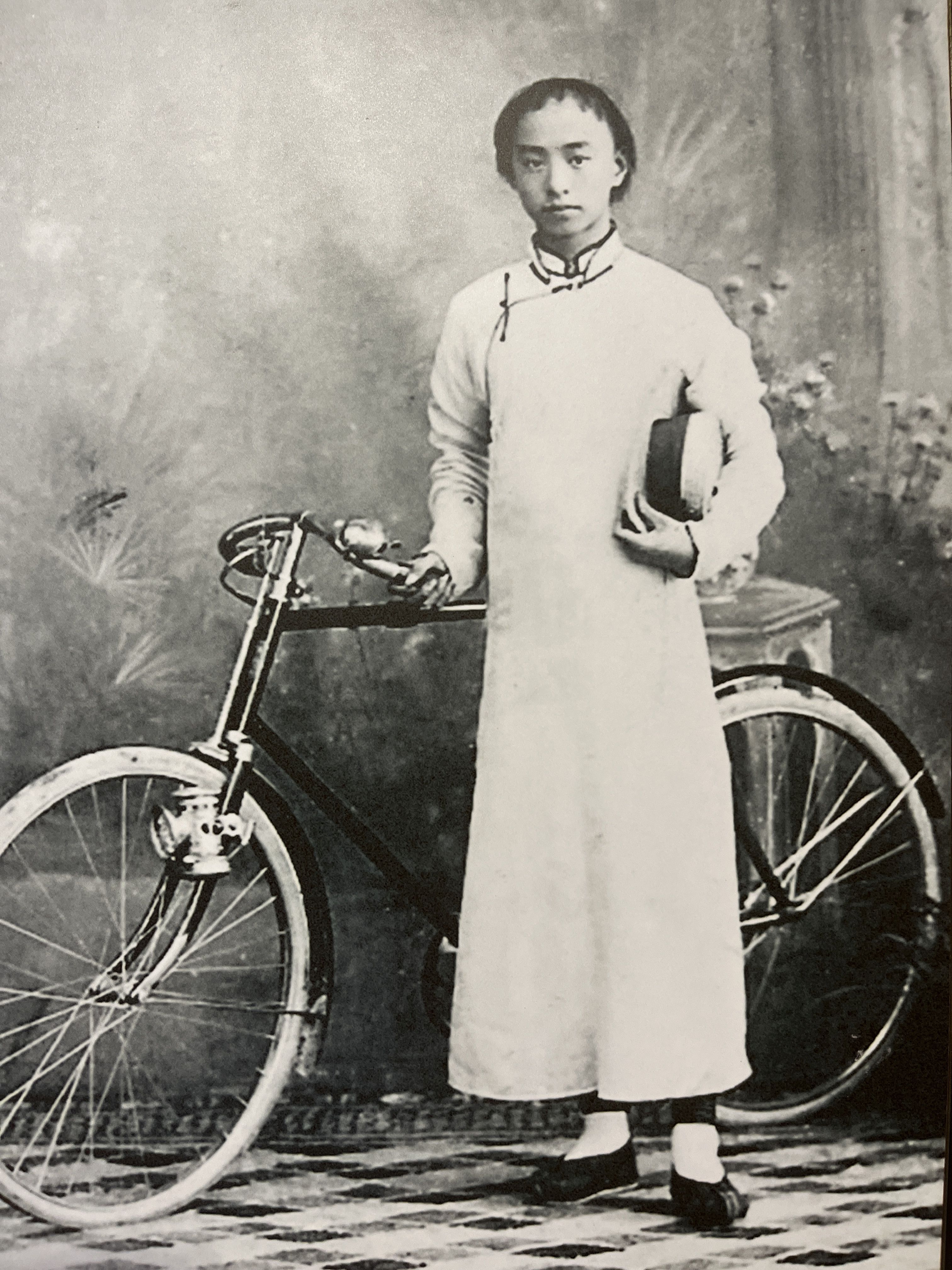
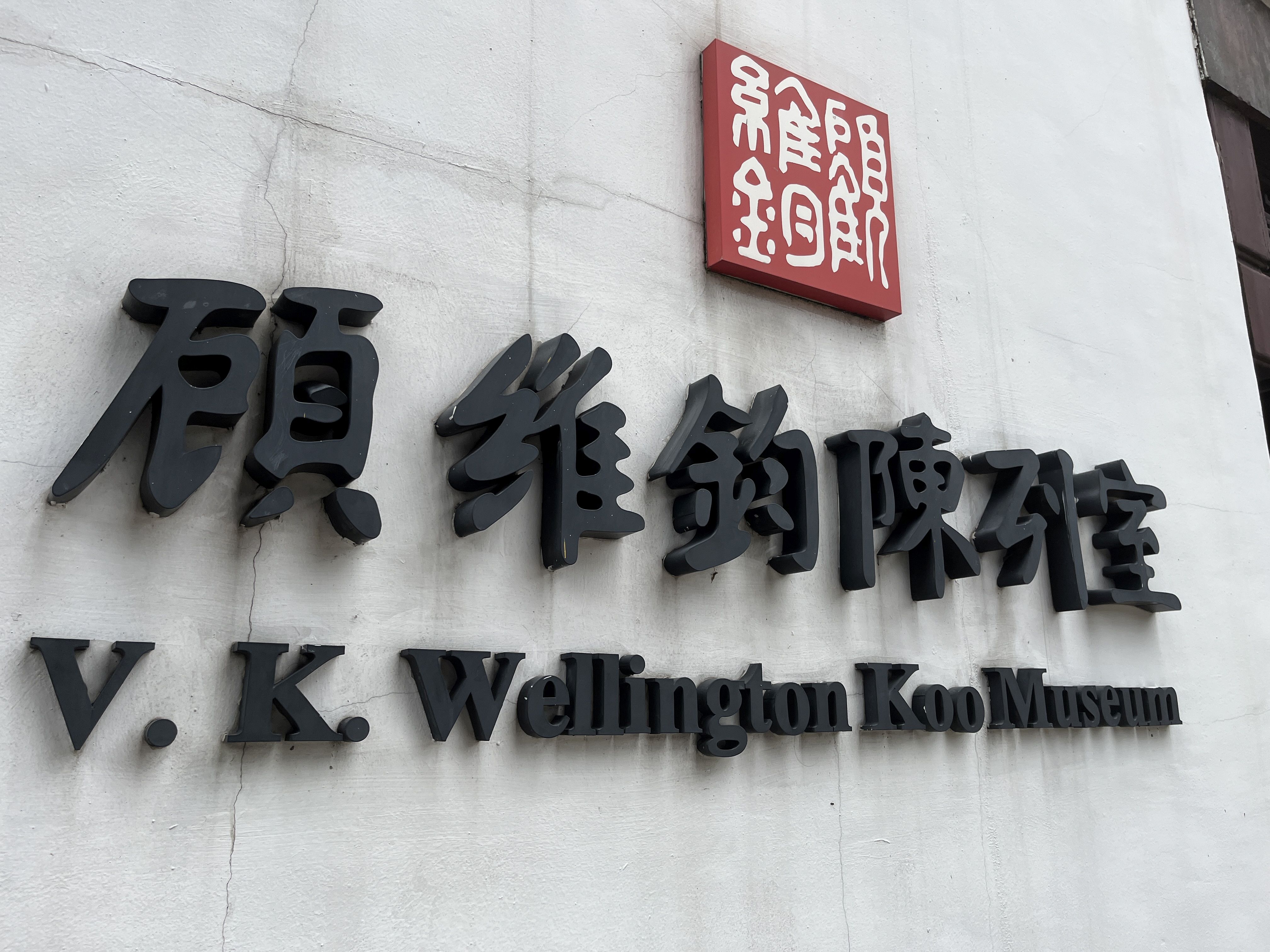
One of the earliest pictures in the Wellington Koo Museum has an innocence to it that belies its importance. It shows our hero as a young teenager clad in a Manchu robe, clutching a straw boater and proudly leaning on his bicycle. This is the young Koo, a student at Shanghai’s Anglo-Chinese School, at precisely the time that his lifelong interest in justice was about to begin. For it was on that bicycle that Koo rode off to school, and on that bicycle that he was stopped and fined for riding on the pavement, whereas the English boy riding just ahead of him was waved through without a word. It was the young Koo’s first encounter with extraterritoriality, that weird concept that permitted foreigners in Qing China to be treated and tried under their own laws, rather than those of the Chinese among whom they dwelled.
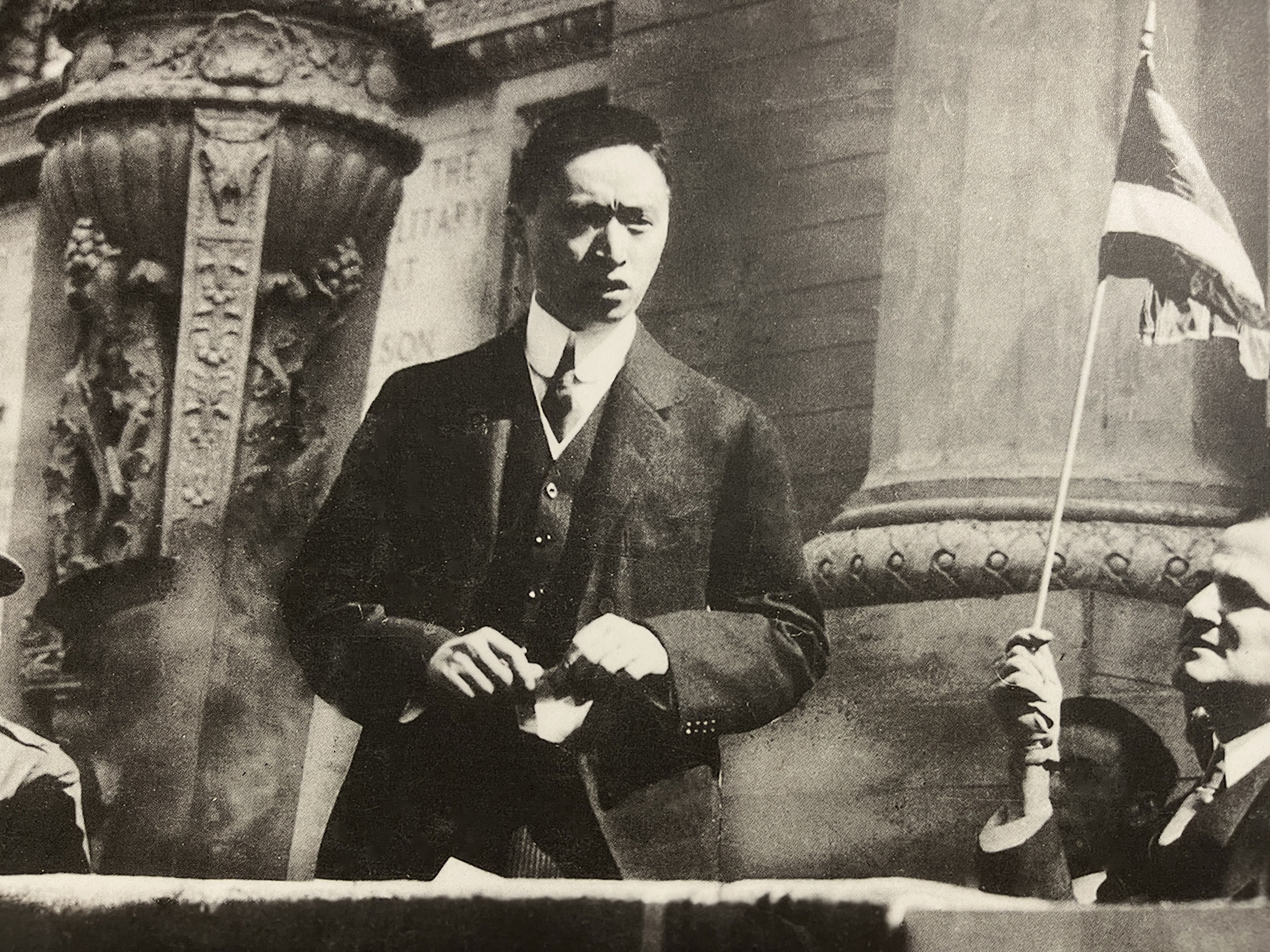
The encounter would propel Koo far away from home, to St John’s College in Shanghai and ultimately to Columbia University in New York, where his PhD thesis on “The Status of Aliens in China” would make him the first Chinese subject to earn a doctorate in the United States. He would return to his native China to become the English secretary to the ill-fated warlord and would-be emperor Yuan Shikai. With the end of the Great War in 1918, Koo travelled to put China’s case at the Paris Peace Conference. Despite technically being outranked by the delegation leader, his eloquence and youth propelled him into the public eye, in several forceful speeches in which he argued, unsuccessfully, that the German colony of Shandong should be returned to the Chinese, and not its Japanese occupiers. When Koo’s argument was rejected, he famously refused to sign the Treaty of Versailles on China’s behalf. It was, he would argue in later life, a turning point in history. If the victorious powers had done right by Shandong, Koo believed, China’s liberals would never have embraced the temptations offered by Communism, and the history of the twentieth century might have been very different.
Koo would become China’s representative to the League of Nations, and soon the Chinese ambassador to the United States. In the stormy 1920s, he served on several occasions as China’s prime minister or acting premier, and had to flee for his life from an angry warlord, relying with cringeworthy irony on the very extraterritoriality that he had fought so hard to dismantle by seeking sanctuary with the British at Weihaiwei. He briefly enjoyed a period as a wanted man with a Nationalist bounty on his head, before another warlord, the infamous Zhang Zuolin, intervened on his behalf and had him restored to his diplomatic career.
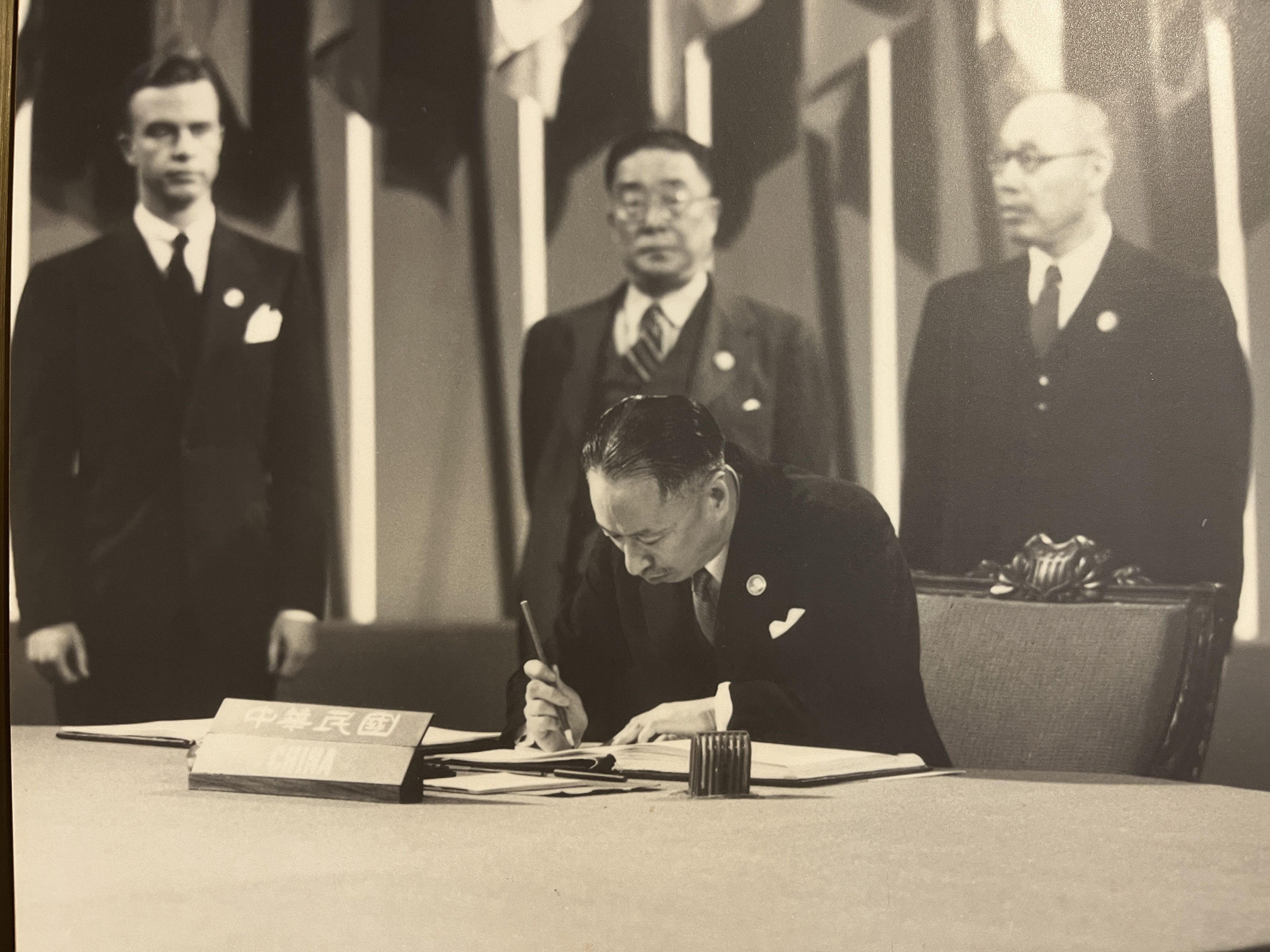
During World War Two, Koo served as the Chinese ambassador to the United Kingdom, where he initially arrived to find himself facing openly hostile opposition. His reputation preceded him as an advocate of China’s rights to self-determination, and he received short shrift when he dared to suggest that the British might want to send reinforcements to Hong Kong in case of a Japanese attack. It was in his tenure, however, that the British came to increasingly rely on Chinese help in the war effort, and it was in his presence that a 1943 treaty was signed in which Britain revoked all extraterritorial rights in China. He would also get to sign another document of great personal value to him, when he put his name on the San Francisco Treaty that formally defined the conditions of the Japanese surrender. His signature was also the first to grace the charter of the newly founded United Nations.
Koo supposedly retired in 1956, only to embark upon a second career as a judge in the international court of justice in The Hague. He would rise to the rank of its vice-president before his second, and more permanent retirement in 1967.
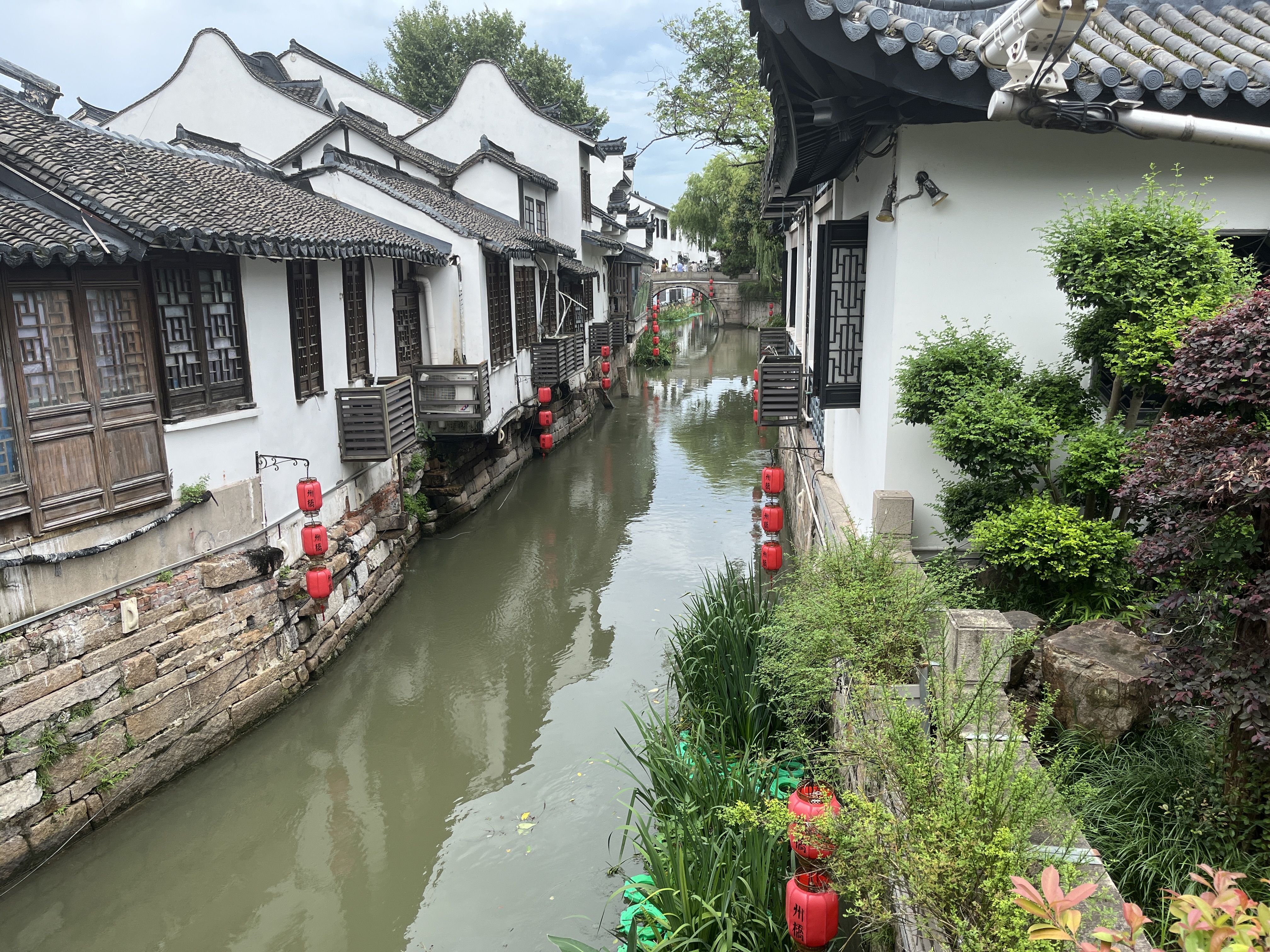
All of which brings me to Jiading, a sleepy water-town criss-crossed by canals, so far out in the Shanghai suburbs that it is at the very end of the number 11 metro line. Jiading was Koo’s birthplace in 1888, when it was still a separate county from Shanghai proper, and his museum sprawls across a converted local temple, which it shares with another museum to the politician Hu Juewen, another local boy. But it’s Koo who has the real pulling power as a local hero – somehow present at some of the most important moments of the twentieth century, and blessed with a biting wit and a powerful eloquence in both English and Chinese.
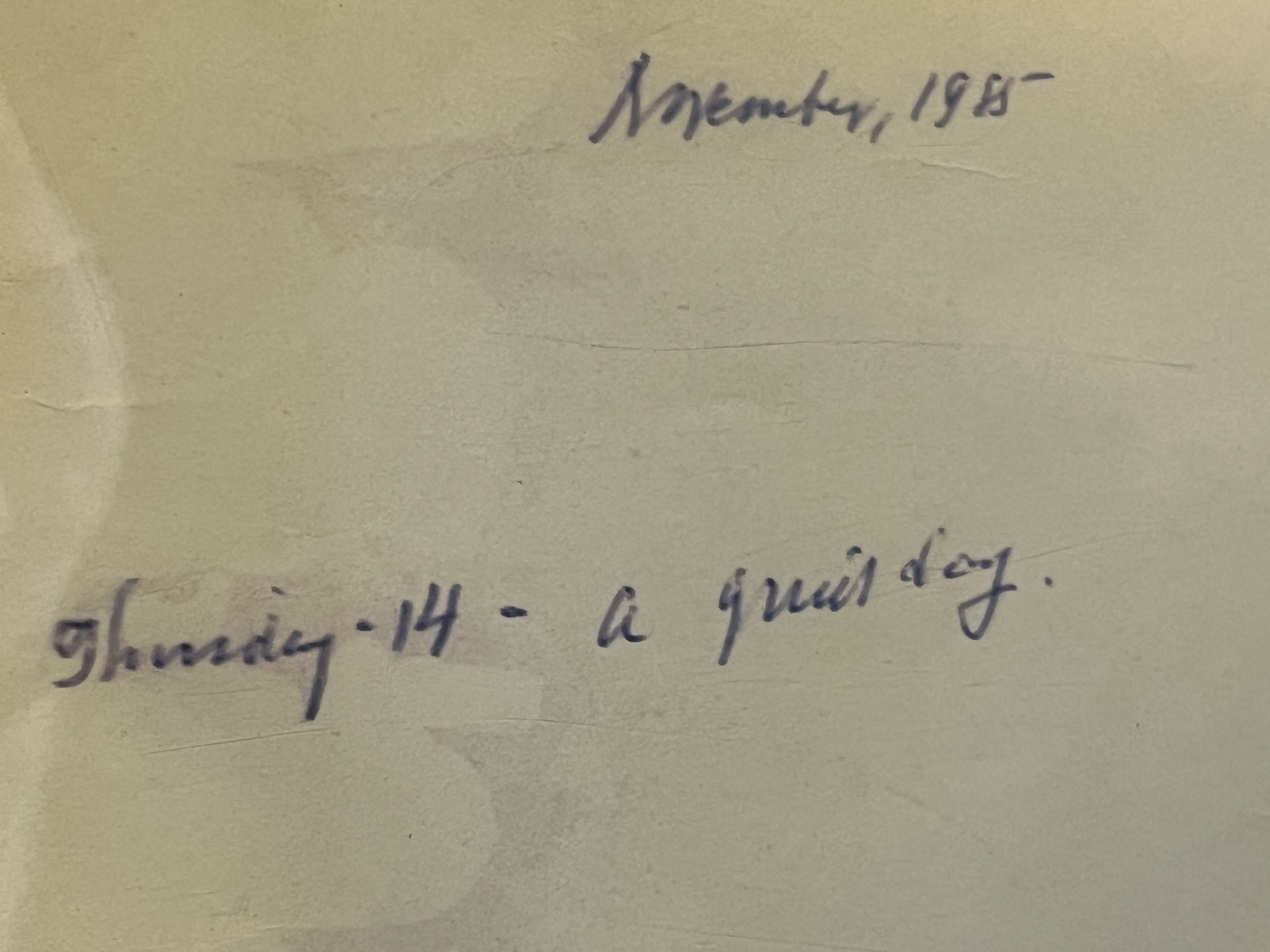
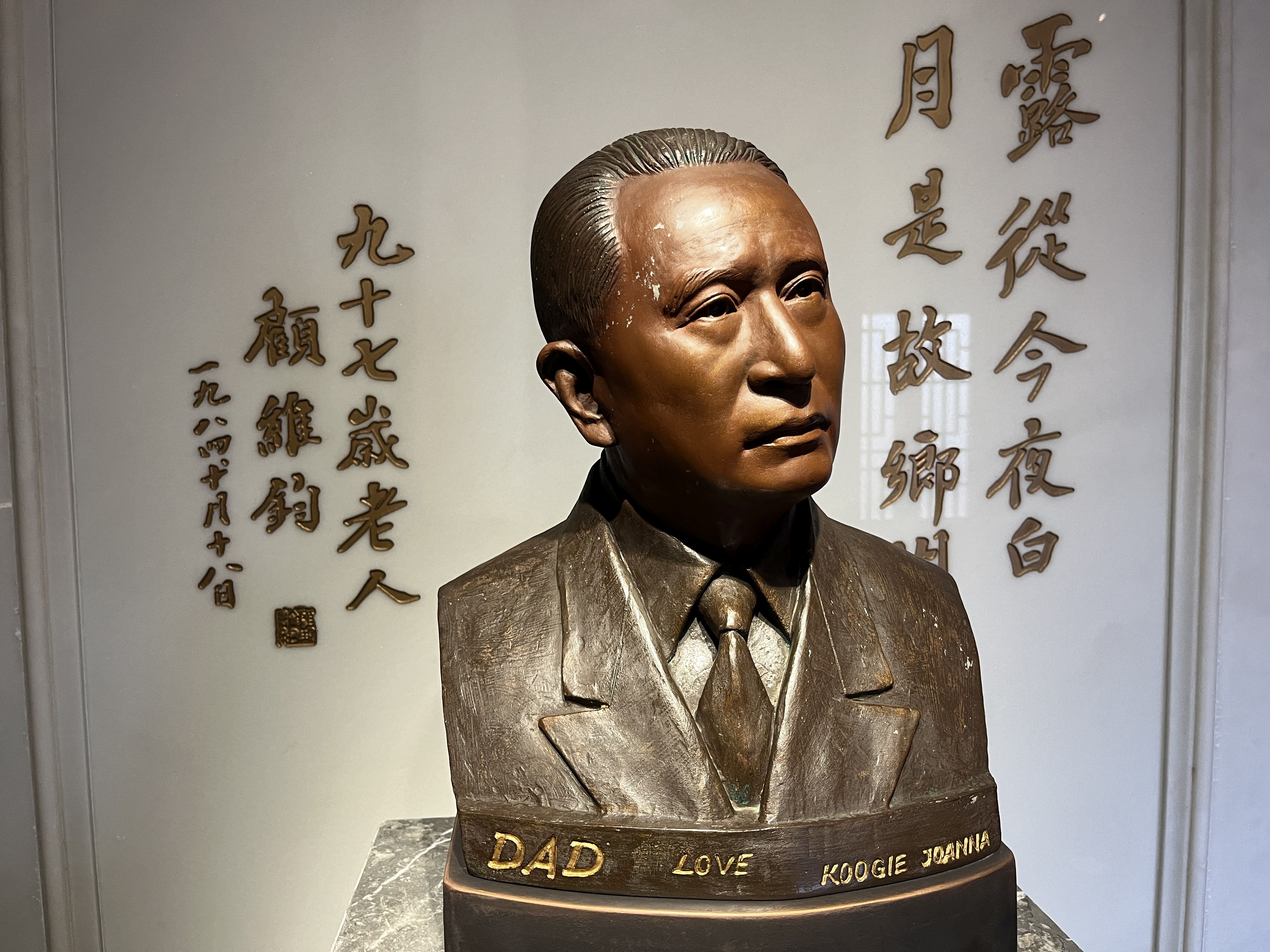
Funded and maintained, at least in part, by Koo’s own descendants, the museum is a fitting tribute to Jiading’s most famous son. Its familial connections have allowed for some intimate and unexpected touches, including gifts exchanged among members of the Koo family, and gallery celebrating the bit of his life that so many biographers gloss over, the long years of his happy retirement. The materials end with Koo’s personal diary, left open at its final entry on the day he died.
I found myself thinking that Wellington Koo would make a fantastic subject for a book, although of course, I have already written one about him, available in both English and Chinese, that was scandalously not included in the big cabinet of Koo-ology near the exit. But Jiading’s Wellington Koo Museum told me a bunch of things I didn’t know about my hero, or possibly a bunch of things that I once knew and since forgot in the fifteen years since I wrote my book. One wonders, as with the similar secretarial exploits of Wang Jingwei, how many of the famous quotes from certain historical figures (in Koo’s case, Yuan Shikai; in Wang’s, Sun Yat-sen) were actually the work of their more eloquent assistants.
There has already been a Wellington Koo movie – My 1919, which rather floridly dramatises the events of the Paris Peace Conference. But there are many more elements of his life that would lend themselves just as readily to a mini-series, putting its protagonist right in the middle of some of the most iconic moments of the twentieth century. The museum in Jiading that bears his name functions as a walk-in producer’s pitch, showing just how exciting and momentous a life Wellington Koo managed to lead.
Empress Wu Zetian (624-705 AD) was the only woman to be the sovereign ruler of imperial China. A teenage concubine of the Tang Emperor Taizong, she seduced his son while the emperor lay dying. Recalled from a nunnery as part of an intricate court power-game, she caused the deaths of two lady rivals, before securing her enthronement as the Emperor Gaozong’s consort. She ruled in the name of her husband and two eldest sons, presiding over the pinnacle of the Silk Road, before proclaiming herself the founder of a new dynasty.
Worshipped as the Sage Mother of Mankind and reviled as the Treacherous Fox, she was deposed aged 79, after angry courtiers murdered her two young lovers. The subject of countless books, plays, and films, Empress Wu remains a feminist icon and a bugbear of Chinese conservatism. Jonathan Clements weighs the evidence of her life and legacy: so charismatic that she could rise from nothing to the height of medieval power, so hated that her own children left her tombstone blank.
Seventeen years after it was first published, my biography of Empress Wu gets an audiobook release, read by Kathleen Li.
There is a poem on the wall of Shanghai’s Jewish Refugee Museum that stopped me in my tracks. It was written by Dan Pagis (1930-1986).
In the last room in our house At the edge of a wondrously curled cloud A Chinese rider raced by on his horse Out of breath – embroidered in silk. And now, when I no longer know whether He dissolved in the cloud or burned down with the house I realise we were both wrong and that We were one, each embroidered on the other.
Shanghai comes into its own when it is directly involved in the story being told. Which is why I urge visitors not to go in search of the all-China generic galleries to be found at the massive museum in the city centre, but to look for those places where Shanghai celebrates itself. There is, for example, the charming Shanghai City Museum, which remains the only real reason to visit the Oriental Pearl Tower in Pudong. Readers of this blog will already be aware of my enthusiasm for the Longhua Martyrs Cemetery, which enumerates the many Party-approved heroes and heroines who fought to make Shanghai what it is today.
Shanghai’s Jewish Refugee Museum is another fascinating place, a monument to a phenomenon that supposedly came and went long, long ago. It is a surprisingly lavish venue chronicling the lives of 13,732 exiles from Nazi Germany as they tried to make the best of life in Shanghai, one of the few places in the world that offered them sanctuary.
Pictures are not permitted in the museum interior, possibly as a result of the same trepidation that requires all visitors to leave their cigarette lighters at the entrance. But the story told inside, like that in the Martyrs Cemetery, manages the difficult task of taking a tale of misery and misfortune, and reframing it as a celebration and commemoration. There is some treatment of the Jews already present in the International Settlement, where, as regular readers will already know, a thriving community of Russian émigrés tried to make do and mend after fleeing the 1917 Revolution. But the museum’s primary interest is in the years between 1938, when the first Jewish refugees arrived from Germany, and 1956, the year in which the last of them disembarked for new lives in Australia, Canada and multiple other places.
In a diverse mix of dioramas, video footage and exhibits, the museum tells the tale of the sudden ferment of Jewish and European friendships, feuds and families, the new careers and businesses that sprang up to serve this sudden influx of newcomers, and the long, long tail of their associations and connections. Permitted visa-free entry to Shanghai after most other places around the world had refused them access, the Jews soon had to contend with the city’s Occupation by the Japanese, which led to the creation of the Shanghai Ghetto in 1943. The end of the war in 1945 soon pivoted into a Civil War between the Communists and Nationalist Chinese, while the last of the Jews scrambled to find safe passage to another country.
A sign at the door exhorts anyone with family connections to Shanghai’s Jews to make themselves known to the curators – and clearly there have been several cases where visitors have become exhibits, captured on film discussing their grandmother’s wedding dress or the day they ran the gauntlet of Japanese military police.
Sometimes, one gets a sense of real happiness in a museum. It is very rare, but every now and then, the narrative on display becomes a descant of jubilation – I have felt it before only rarely, most memorably at the Norway’s Resistance Museum in Oslo. The Jewish Refugee Museum veritably beams with pride at the way that materialist, money-grubbing Shanghai suddenly flung open its doors to a foreign people in need, and at the many hundreds of strangers who come to its doors eight decades later, to announce that their ancestors still speak fondly not only of violin concertos on the Roy Roof Garden and pastrami at Horn’s Snack Bar, but also of the way that China became so intimately and briefly part of their lives, leaving them each embroidered on the other.
Detail of Ye Yushan’s sculpture “Liberation and Development”
Just around the corner from the tourist-magnet Longhua Temple is one Shanghai’s most exciting museums – a facility dedicated to framing the story of China’s Revolution in terms of its relationship to Shanghai itself, where so many of the fights, protests and strikes that defined it took place.
The Longhua Martyrs Cemetery makes fantastic use of its space and location, built over the site of the former prison and execution ground where so many Communist martyrs were created. The site has, at some point, been both a holding area for the Nationalist Kuomintang government and a detention centre for the Japanese invaders in World War Two. Twin walls, carved with the names of victims of the Kuomintang, snake around the gardens, leading off from the main entranceway, which is dominated by chunky statues not of individual revolutionaries, but of the spirit of Revolution itself, represented not only by soldiers, but by nurses and mothers, students and musicians.
The path towards the museum
The museum itself tracks the rise of the People’s Republic of China through its early stops and starts, including relative obscurities such as the Rebellion of the Small Swords Society, in which part of Shanghai turned into a Triad enclave, mysteriously joined by European supporters, or the activities of the Su Bao (Jiangsu Daily), a newspaper shut down by the imperial authorities in 1903 for daring to question the rule of the Emperor. The story of the Su Bao is told through the life of its star writer Zou Rong, whose pamphlet The Revolutionary Army was the cause of the newspaper’s downfall. Zou himself died in prison in 1905 and was awarded a posthumous general’s rank by Sun Yat-sen. He is depicted here in a lush oil painting, as a “Soldier of the Revolutionary Army”, wielding a pen instead of a sword.
“Zou Rong, a Soldier of the Revolutionary Army” by Zhao Qi
Zou’s story is only the first of dozens of vignettes that anchor the stories of China’s revolutionaries in context and commemoration. There are dioramas and relics, photographs and statues, video-on-demand testimony and even a looped ballet video, each telling the story of a particular individual’s role in lifting China out of its “Century of Humiliation.” It was a humbling and immersive experience, easily one of the best museums I have visited in China, on a par with Changchun’s Museum of the War of Chinese People’s Resistance Against Japanese Aggression.
Detail of “Nanjing Road, May 30th Incident” by Jin Shanshi
I soon ran into the exhibit on Zhang Tailei, whose statue so struck me in the pantheon of revolutionaries outside Guangzhou Martyr’s Park last December, but also many other similar incidents in which “failed” protests helped China’s revolutionary movements gain momentum and popular support. One absolutely massive widescreen oil painting celebrates the May 30th Movement, a series of protests and strikes in Shanghai that led to the “Shanghai Massacre” of 1925, in which nine protestors on Nanjing Road were shot and killed by members of the Municipal Police.
Detail of “Nanjing Road, May 30th Incident” by Jin Shanshi
I was particularly taken with the works of the artist Chen Jian, who has supplied a series of tableaux for the museum, some of them about specified individual subjects, others about more general themes. Chen’s work includes a moody, cramped depiction of Communists studying in their prison cell, and the beautifully modernist “The Arrestee”, in which two plainclothes police officers lead an unrepentant Communist to a prison van. The picture is suffused with an unsettling physicality, as one of the officers seems to be leaning into his task, as if he is having to bodily drag a prisoner who stands confident with the gravity of being on the right side of history.
“The Arrestee” by Chen Jian
Other artists tackle the problematic history of the Longhua Cemetery as the location of White Terror firing squads, such as Wang Shaolun’s “On the Execution Field”, in which a diverse collection of Chinese subjects wait glumly for their imminent deaths.
“On the Execution Field” by Wang Shaolun
In one of the most moving exhibits, the museum relates the story of Cai Bozhen and Wu Zhongwen, who were married in the prison van that took them to their deaths, a soaringly romantic revolutionary story that has already been immortalised in a movie, for which extra drama was piled on with “The Internationale” substituting for the Wedding March.
Cai Bozhen and Wu Zhongwen
Revolution, for the museum, is a state of grace towards which China groped during its Century of Humiliation, and then fought to maintain in the years that followed. There would be scope here, in a truly comprehensive installation, for an entire extra gallery about the Chinese who lost their lives in some of wrong-turns of the subsequent Chinese state, like the Great Leap Forward and the Cultural Revolution, but such discussions are characteristically muted.
Instead, it favours the idea of revolutionary spirit as something that burned in the hearts of the characters whose stories are told in the exhibits, and should be nurtured and encouraged in everyone. Pointing out that it presumably also flourished in at least some of the millions of people who were starved, beaten or executed during Maoist purges and social experiments in the 1950s and 1960s would ruin the brilliantly told story of a past that marches ever onwards towards a utopian present.
Detail of “Shanghai Small-Swords Society’s Uprising” by Wang Duchen, Wang Ducai et al.
Nor does the museum have much time or space for those revolutionaries who were inconveniently Nationalist. The Nationalist authorities, with whom the Communists themselves fought from 1911 to 1949 (and technically still fight today on Taiwan), might equally lay claim to be the inheritors of the Small Swords Society or the Su Bao, but their contribution is downplayed here. That, perhaps, is only to be expected in Shanghai of all places, where Chiang Kai-shek authorised vicious putsches against Communists, many victims of which died on these very premises.
Detail of “Shanghai Campaign” by Chen Jian
Instead, the museum’s narrative of the martyrs of the Revolution continues into the 1950s and beyond, with tales of derring-do on numerous Cold War battlefields, and selfless sacrifices by soldiers, firemen and other public servants.
“The Vision” by Li Peng
The visitor is guided out past one final giant oil painting, “The Vision” by Li Peng, which looks down on the contemporary Pudong cityscape from a vantage point somewhere high above the Bund. This, it seems to say, is what you now have, because of their sacrifices.
As the visitor heads towards the exit, past the classrooms and library, there is one final exhibit. The museum doesn’t have anything so gauche as a gift shop, but it does have a wall of free bookmarks, filed chronologically. Each bears the image and description of a Martyr of the Revolution, encouraging the visitor to take a piece of Revolution home with them. I couldn’t find any of my newfound favourites on the day, so I settled for Qiu Jin.
The Longhua Martyrs Cemetery and its attendant museum are gold-star examples of the new “Red Tourism”, and an absolutely fascinating example of “the story people tell themselves about themselves.” It is easily the most interesting place I have visited in Shanghai, not least because it finds a way to put Shanghai itself front and centre in the story of the birth of modern China.






 The Official Schoolgirl Milky Crisis Blog