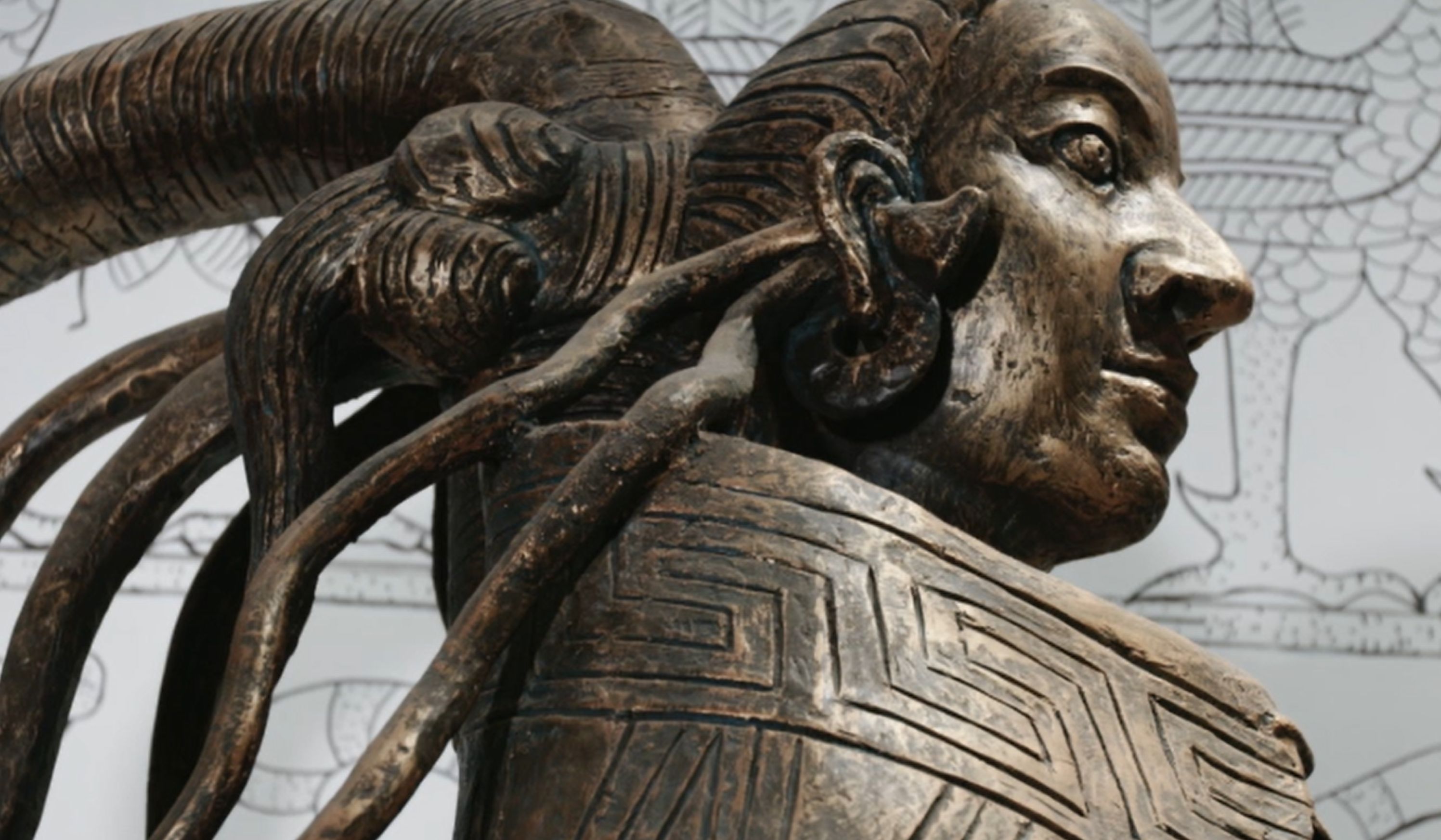
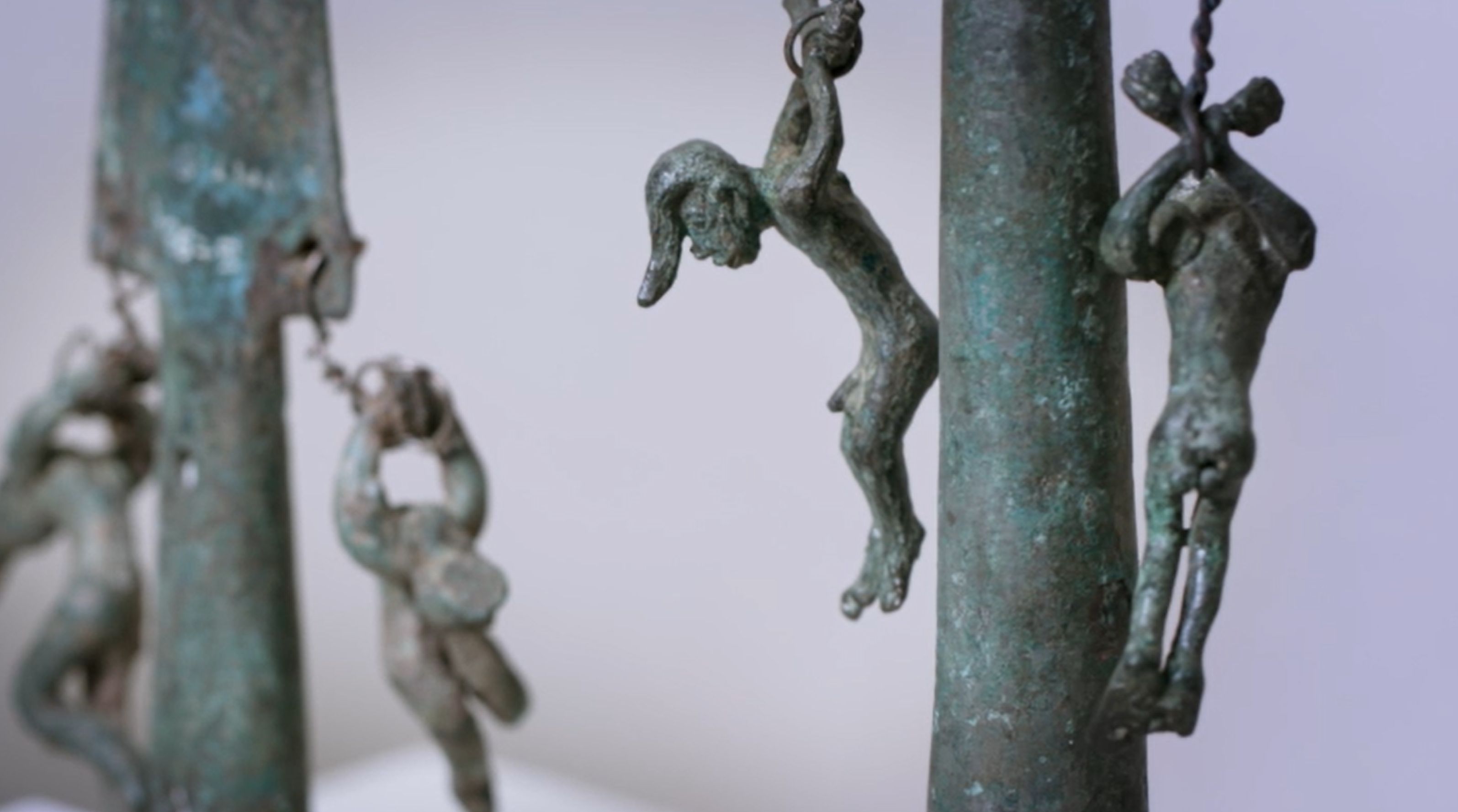
Let’s Do the Show Right Here

An 0545 start, up for breakfast and in the van for the two-hour drive to Weinan, the home town of Xi Jinping’s dad. For this reason, this city in the middle of nowhere has an incredibly swish hotel, in which every room looks like a suite. I have another robot bathroom with automatic, motion-sensitive lights, and two complimentary condoms, courtesy of the Weinan Health & Safety Initiative. What on earth do they imagine goes on this hotel? Not a lot tonight, because the film crew will be the only people staying.

Our merry band of nine (the crew and two drivers) has now swelled to eleven, since the guy from the Buick dealership (our sponsors) has decided to bring his parents along. Christ knows what he must have said to them when he got home yesterday, but presumably they were very excited to sample the glamour. It’s a ridiculously unprofessional thing to do, and makes us look like a convoy of muppets.

They are underfoot all morning, soon as bored as only a spare wheel on a film location can be, and largely have to be left at a remote farmhouse while the rest of us shuttle backwards and forwards on a mountain road through fields of corn.

The morning is dedicated to getting shots of me driving the Buick up hairpin turns on mountain roads – a disastrous prospect remedied by getting the driver to do all the hard work, and me to do all the bits that are straight lines and close-ups. We are in the foothills of the Qinling mountains, in sight of Huashan, with the peaks in the misty distance, and endless fields of ripening corn. It’s going to look great, although we still manage to attract eleven dicks on mopeds who stand around pointing at us and asking what we are doing.

Mickey the Mic is the sound man, so spends all day with eight kilos of recording equipment strapped to his front like a cybernetic beer-gut. You can tell which one he is, because his regulation-issue floppy sunhat has holes cut in the brim for his headphones. He is Singaporean, with the odd lilt that makes him sound Indian lah, and has the Singaporean habit of injecting the Chinese particle denoting a change in circumstance into the end of any sentence where it would be relevant. I have started to pick up the pidgin English of the crew, and was heard at one point today saying: “Soon be dark lah.”

Mickey is also the drone man, which means that he swaps his sound rig for a complex remote-control tray, with which he joysticks our robot team member Yuneec Q500 Typhoon, a squat, sleek metal dragonfly with four rotors and a gimbal-mounted camera with a 16-gigabyte memory card. Unfortunately, its batteries only last for ten minutes at a time, which means the crew need to be absolutely, totally sure where everybody is, and that the shot is ready, before they send the Typhoon into the air. It can hover with almost perfect stillness if the wind is low, and even has a nifty function called Follow Me, whereby it will zip along at a pre-set distance from whoever is holding a thumb-operated remote-control beacon.

This is how we pay the bills. Buick are fronting the cost for the entire series, as long as their vehicles get 30 seconds of screen time in each episode, which apparently still works out cheaper for them than making an actual TV commercial. We’ve given their car advert-level exposure as it roars up the mountain road and skids around corners, occasionally with me at the wheel, occasionally with my stunt double while I duck in the back seat with a walkie-talkie, yelling instructions in Chinese.

We are up in the hills to see Master Wei Jinquan, who performs Huaxian Shadow Plays. I am dreading it, but he turns out to be very chatty and a perfect interviewee, ready to rattle on without pause for five minutes after the most minimal of prompting. He is the nth generation of his family to make, paint and perform shadow puppetry and lives in a village that was once home to dozens of performers. Today, it is a cluster of huts populated almost solely by the elderly and their grandchildren – the adult generation having migrated to the city to work.

We talk for an hour on his roof terrace in the sun, and then he leads me down to his workshop, where he attempts to teach me how to cut the translucent cowhide that makes the puppets. The hide has the look and consistency of an A4 sheet of human fingernail, and he tuts and fusses over me while I hold the knife wrong, put it at the wrong angle, and fail to move the leather (you move the leather, not the knife) on the wooden palette. The crew are all snickering as he calls me a moron, and I protest to the camera that every time he instructs me, he adds an “and one more thing…” that I could have done with knowing before I start. I am also mic’ed up and able to mutter asides regarding my fear that he is going to stab me with his awl if I get it wrong again. It should be quite funny, and only two days in, we are already establishing a general tone of arch sarcasm that I think I can probably keep up.

At one point, the crew are repositioning the camera to zoom in on my hands at work, so I attempt to explain to him what’s going to happen.

“Now I’m going to do it wrong again,” I warn him.

“Well, you don’t seem capable of doing it any other way,” he mutters.

For me, the great relief is that I am able to function fully in Mandarin all day without holding up a professional film crew, although I am probably operating right at my ceiling of competence. It doesn’t help that I keep forgetting the word for shadow puppet, which is pi’ying. The clock sneaks towards six, and I realise that we are done for the day, suffusing me with a great sense of relief and tiredness, and what appears to be ten or fifteen minutes of material for the final edit – a good haul for a day in which we banked maybe three hours of footage.

Then it turns out that there has been a miscommunication. He hasn’t realised that we are staying the night in Weinan, and thought we would be filming a performance at a Xi’an theatre tomorrow. No, says the director, we will film you here tomorrow. But if she wants it traditional, it has to be at night, and by tomorrow night we will be on our way to the airport. Reluctantly, she decides to stay and shoot a performance in the village, which means waiting until after dark while Master Wei’s teammates set up the travelling theatre in the car park in front of his house.

The local villagers come out to gawp, and a gaggle of little girls sit in a line on a log for a while, looking cute until one of them initiates a farting competition. Others lurch and stamp around the car park, trying to catch crickets in their hands. Alvin the cameraman sets up the back-up camera to shoot in time-lapse, as four old men lash together a rickety series of trestles to create a giant punch-and-judy shed, faced by a white cloth the size of a very large widescreen television. They all clamber inside, with screechy Chinese instruments and gongs, with Master Wei sitting at the centre, his puppets at the ready. They then start clattering out a wailing Chinese song, and the shadows start moving, with the story of Pigsy Eats Some Watermelons, and some martial arts thing about two generals and a comedy horse fighting each other until someone dies.

Alvin clambers into the staging area to film among the team as they perform, and so we get the same play from two different angles. Reaction shots, however, are all going to be mine, because the crowd seems indifferent. The little girls are soon ignoring the play and instead crowding around each other to take selfies of themselves not-watching the play. A boy on roller skates trips over the power cable, and a small sausage dog starts eating someone’s discarded snotrag. Master Wei finishes to no applause, which seems to be how these things are done, and the crowd melts away back to their shacks.

Jonathan Clements is the author of A Brief History of China. These events featured in Route Awakening S02E05 (2016).
The Distracted Diner

Thomas David DuBois’ deceptively chatty introduction to China in Seven Banquets artfully digests a bunch of important food-studies concepts for the general reader, including the nature of sources, the metadata of meals, and precedents in the study of foodways. Before giving examples from China, he dazzles the reader with a bunch of examples that are liable to be closer to home, including Irish folklore that prevented butchers from obtaining meat from cows that were away with the fairies (i.e. “mad”), and an old working-man’s stipulation that labourers should not be fed something so common as lobster for lunch… this was back when lobsters weren’t so scarce.

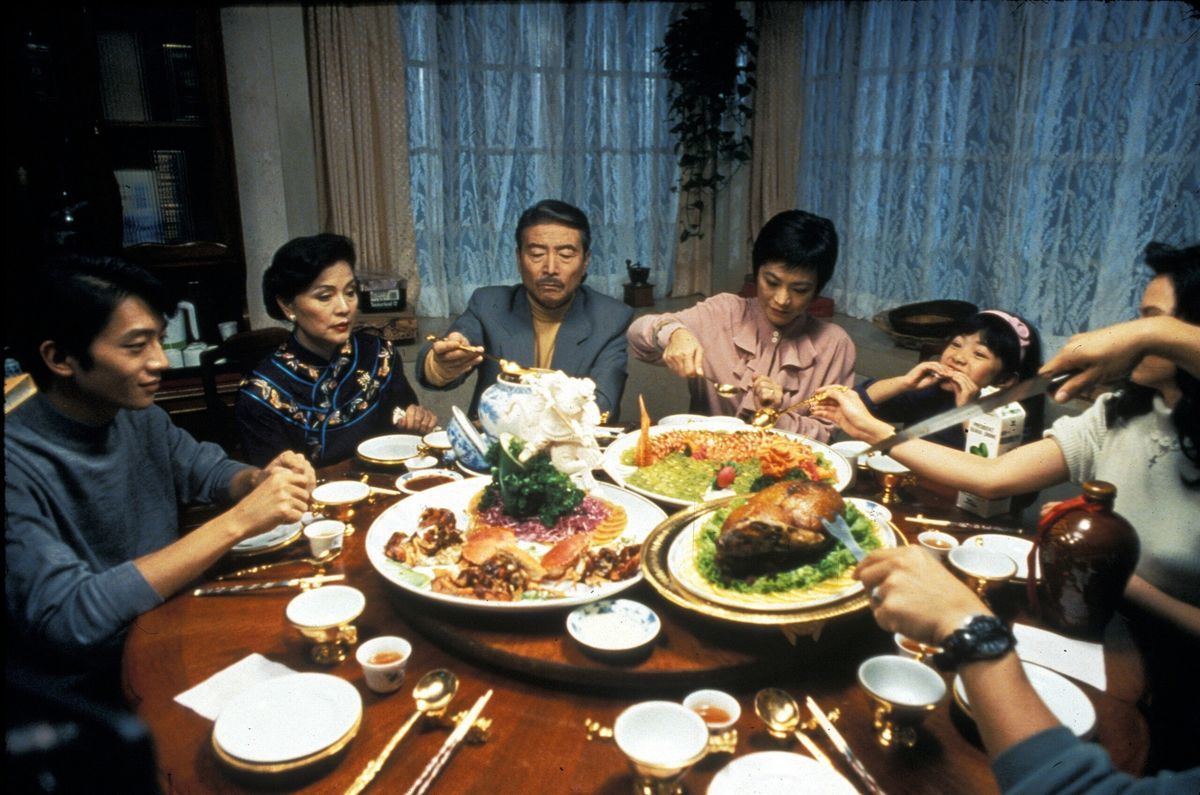
With only seven meals to distil the 5000-year span of Chinese history, DuBois takes what I suspect to be a tutorial delight in using different research methods. Sure, anyone can take a recipe from a Ming dynasty cookbook, but DuBois wants to investigate where the ingredients came from, and which ones were new. He pokes around the foods seen on display in Ang Lee’s film Eat Drink Man Woman to illustrate what constituted a home-cooked meal in the yuppie 1990s, and in a lovely 21st century touch, deconstructs the menu for a modern phone-based hotpot restaurant.

DuBois even gets his hands dirty with forensic archaeology, trying to recreate Zhou dynasty booze in his home with some millet, barley and mold. I would have liked to have seen more of such experimentation, along the lines of Serra and Tunberg’s Viking cookbook, in which our earnest academic tries to get to grips with ancient cooking methods, and is forced to confront ancient standards in taste.

DuBois is particularly good at reading between the lines, with abductive analyses of everything that’s missing from cookbooks and recipes. He points out, for example, the basic processes that are omitted from classical texts, because it is assumed that the average reader already knows them, as well as the rudiments that have to be reintroduced in the 1980s for housewives who have never had a chance to learn. He also luxuriates in the many processes and techniques that today we farm out to third parties – a traditional Chinese cook might make their own pickles and ferment their own sauces, transforming the nature and time-stamp of food preparation in all sorts of ways.

For his second chapter, he jumps ten centuries ahead, to a China reeling from the impact of Silk Road contacts – tea-drinking Buddhists, dairy-loving Persian traders, and new food stuffs from the barbarian West, as well as a shoreline that introduced a diversity of new seafoods, and even exotica like romaine lettuce, arriving from Japan and hence still known today as Woju – i.e. lettuce from the land of the dwarves of Wa. He also points to the absolutely revolutionary impact of fast-growing rice in the Song dynasty, doubling or even tripling the annual output of Chinese farms.

When it comes to the “Columbian Exchange” – which is to say, the transformative Ming dynasty, when new crops flowed into China from the New World – DuBois reminisces about his student days in north China, where he was forced to subsist on a diet of maize-based porridges and derivatives. He notes how corn remained a largely foreign element in cookbooks, but still became an integral part of the Chinese diet, flung into local recipes to create enduring hybrids like the baba cakes of Guizhou and Yunnan.

DuBois makes welcome statistical forays into Chinese recipes, observing, for example, that the ingredients for a particular Manchu dish would amount to a vanishingly small amount of spice per diner by the time it was eventually served. It is a recurring theme in his history – that today’s chili- or pepper-heavy dishes, our salty fast food and sugary snacks, would be almost entirely alien to many of our forebears, and possibly even inedible to them.

As he enters modern times, DuBois alludes to the “culture war” as China was exposed to European ways and technologies, such as the sudden spread of canned condensed milk after its invention in the 1850s, introducing a particular kind of sweetened dairy product to far-flung places that had never seen it before. Chinese authors scoff that foreign food is “raw and primitive” and that even the most lavish meal at Buckingham Palace pales in comparison to a “budget banquet” in Shanghai. DuBois takes an entertaining detour through the 1925 book Secrets of Western Cooking, which tries to educate Chinese chefs about exotica like cold salads, bread pudding and fried chicken.

He mentions the desire of Chinese arrivistes to be seen in Western restaurants, even if they found the food unpleasant – a comment which suddenly instilled in me a powerful memory of winter 1991, when my students at the China Trust bank in Taipei decided to give me a send-off by taking me out for an expensive meal at an American steakhouse, and I was forced to smile wanly through the very opposite of the kind of food I liked, looking longingly across the street at a Sichuan restaurant.

Feigning ignorance of the concept of the Chicken Kiev (or these days, Kyiv), DuBois recounts the preparation of one at Beijing’s Moscow Restaurant as it must have looked to incredulous Chinese eyes, wastefully packing a chicken breast around a puck of butter, and repeatedly frying and rebreading it. He observes that butter in the 1950s was only available to foreign customers at the Friendship store, rendering a home-cooked version of the meal as likely as a sprinkling of moon dust.

As China opens up, DuBois is present in person to remember some of the anecdotes that might have otherwise been lost to history. He recalls, in his student days, the national excitement over the opening of a Nestlé factory in north China, and the subsequent migration all over the country of unopened tins of powdered milk, repeatedly gifted and regifted as prestige items with no obvious use. For DuBois, the continued success of McDonald’s in China is partly due to a sense of nostalgia among the grown-up “Little Emperors” for whom a childhood trip to the newly arrived Golden Arches was a rare and welcome treat.

After China joins the WTO in 2000, DuBois identifies a “firehose” of exports, indirectly changing local foodways by putting more money in everybody’s pockets. He also identifies some of the perils of industrialised food production and franchising, and has a refreshingly cynical eye when it comes to certain legal clampdowns. He scoffs at the possibility that street markets might be shut down for reasons of food safety – far more likely that it’s hard to get them to pay tax. He adopts a novel business-based approached to the famous duck restaurant Quanjude, discussing not its signature meal, but the catastrophic attempt to grow it into a franchise big enough to float on the Shenzhen stock market. The whole point of Quanjude was that it was bespoke; you couldn’t just open one in every town like a Pizza Hut and expect to keep the same quality or cachet. I was also fascinated to read about the business models of the Luckin coffee bars, which charged exorbitant prices on the premises, but actually functioned as home delivery points, offering coffee to your door so cheaply that it was cheaper to order one than make one yourself, with the bonus feeling that you were getting something at a high discount. Even then, seven years after being founded, Luckin still isn’t in profit.

In the 2020s, DuBois has plenty to say about modern trends, such as the waimai custom of ordering out, and the army of delivery drivers that has sprouted up to support it. There is a melancholy cast to the recipes in his penultimate chapter, which lack the verve of days past and instead favour sad little hacks to pimp up a Cup Noodle, and the concept of the “distracted diner”, who is too busy gazing at her phone to pay much attention to the food anyway.

He mounts an impassioned defence of the hotpot as a dish to savour outside the home – DuBois argues that they belong in restaurants, because of the ridiculous faff of having to get all the ingredients yourself. He supports his thesis with a potted history of the Haidiliao chain, which not only industrialised “chefless kitchen” hotpot meals at franchises all over China, but even diversified abroad – I was quite boggled, walking along London’s Piccadilly one day, to find the local branch advertising for a ”Noodle Dancer.” Today, Haidilao will even come to your house, and pick up the hotpot when you’re done.

He finishes by looking into his crystal ball at what Chinese meals might look like a decade hence, steered by food security, food safety and green concerns. He points to the highlighting of “Green Biomanufacturing” as a key R&D issue in the last Five-Year Plan; localised hydroponics, and A.I. steering algorithms that condense big data on everything from weather patterns to football matches to predict which food products need to be ordered on a daily Just-in-Time system. DuBois foresees the ultimate end of waimai trends – the removal of kitchens entirely from newly built apartments, by architects desperate to save space.

Inspired by the sight of Russian economic trends post-Ukraine, DuBois imagines supplies sourced entirely from friendly nations, and familiar retail sites thinly rebranded as patriotic chains with names like “Rising China”, even if they still have the old McDonald’s interior designs. As China’s surveillance society even begins to invade eating habits, he wonders if some futuristic café will greet each arrival with a personalised menu, based in part on what its algorithms have decided the customer needs after what he was up to last night, and what he had for breakfast this morning. With a perceptive science fictional eye, DuBois imagines sitting down to a meal made with “freshly printed shrimp.”

Jonathan Clements is the author of The Emperor’s Feast: A History of China in Twelve Meals. China in Seven Banquets: A Flavourful History by Thomas David DuBois, is published by Reaktion Books.

Whalebone Wang

In January 1946, a crew of Chinese military engineers arrived in Nanjing at a fortified concrete-domed grave near the mausoleum of the Founding Father of the Republic of China, Sun Yat-sen. The smaller grave commemorated Wang Jingwei (1883-1944), who served for the last four years of his life as the head of state of the Reorganised National Government of the Republic of China. They packed 150 kilograms of explosive into the concrete dome and blew it apart; the body of Wang was removed and incinerated, his ashes scattered anonymously, all possibility of a commemorative site annihilated. But as noted by author Zhiyi Yang in her recent book on Wang’s complex life, “coerced forgetting begets remembrance in the form of haunting.” Wang Jingwei’s ghost has haunted Chinese history ever since.

Wang’s Reorganised National Government (RNG) was a puppet state of the Japanese – a thin veil over the fact that the Japanese military had overrun huge parts of China during the Pacific War. Now, with Japan’s defeat and control of China restored to Chiang Kai-shek’s Nationalists, Wang was an unwelcome reminder of collaboration and betrayal, a national traitor who deserved no memorial.

This was not how things started out. In his twenties, Wang had been sent abroad by the Qing imperial government as one of the bright young hopefuls for the twentieth century. Studying in Japan, he had come to see his imperial sponsors as part of the problem, and became a committed revolutionary. In 1905 he changed his given name from Zhaoming to Jingwei, in reference to the a mythical creature also celebrated in the poetry of Qiu Jin, a Canute-like bird devoted to holding back the sea one pebble at a time.

Although already widely respected as a writer and orator on republican issues, Wang’s most conspicuous revolutionary act was a plot to assassinate Prince Chun, the regent for the under-age “Last Emperor”. Wang happily pleaded guilty, using the dock as a pulpit for his beliefs. He was sentenced to life imprisonment in 1910, but released a year later as part of a general amnesty.

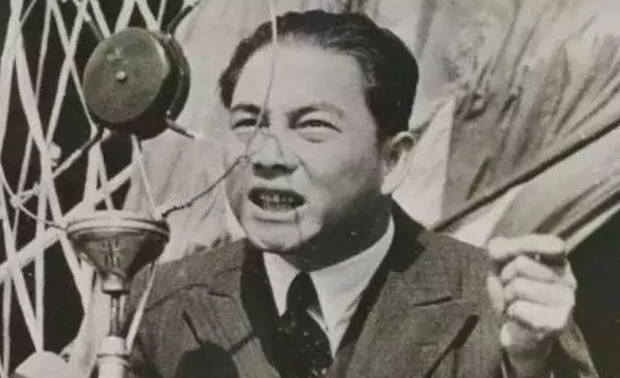
Wang refused to participate in the rival Chinese delegations at the Paris Peace Conference of 1919, instead fuming from the sidelines as the victorious powers refused to hand the German colony of Shandong back to China, despite the entreaties of the delegate Wellington Koo. Recalled to China in 1920 by Sun Yat-sen, he became a key figure in the struggling new republican government. Widely recognised as the most accomplished and eloquent public speaker of his era, he ghosted many of Sun’s speeches and proclamations, imparting classical allusions and winning turns of phrase to much of the documentation that even today forms the basis of “Sun Yat-sen Thought.”

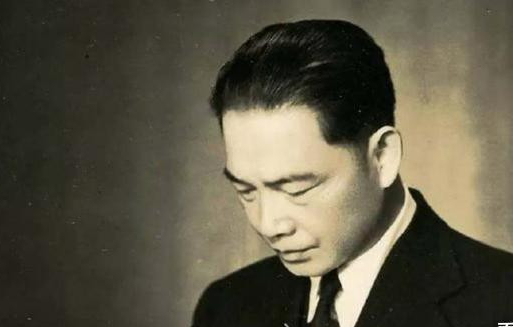
With Sun’s death, Wang became the centre of one of the two factions contending for his legacy. His biggest rival was Chiang Kai-shek, the military leader devoted to stamping out Communists, while Wang cautiously tried to cooperate with them. Their struggle reached ludicrous heights of proclaiming different capitals of China, with Chiang raising the flag in Nanjing, while Wang attempted to run the country from Wuhan. Throughout the early 1930s, Chiang and Wang were comically unsuited allies within the Republican government, eternally disagreeing about the best way to solve China’s internal and external problems. While Chiang resolutely pursued military expenditure to fight coming battles, Wang arguably pursued diplomacy to keep the battles from happening at all, leading to his appearance on the cover of Time magazine in April 1935. Dubbing him with the unhelpful sobriquet “Whalebone Wang”, time called him the “versatile and brilliant Premier of China,” saddled with the awful difficulties of domestic instability and Japanese aggression.

In November the same year, Chiang Kai-shek beckoned Wang aside at a government photo-call and announced he was leaving. The constant to-ing and fro-ing was a shambles, he said, and risked turning into a security hazard. Chiang’s instincts told him to retreat to an anteroom until everything was in place, and he advised Wang to do the same. Wang refused, and was subsequently shot three times by a would-be assassin, meaning that, as Yang comments wryly, he “literally took the bullet for Chiang.”

Yang’s book zeroes in on an overlooked element in Wang’s life – his poetry. She argues that posterity, in the hands of his Communist enemies and his Nationalist rivals – universally writes him off as a collaborator and a traitor, whereas his poems tell a different story. Repeatedly, Wang’s poems refer to the tense geopolitical stand-off of the Song dynasty, when northern China was over-run with invaders, while the emperors in the south pursued a generations-long policy of appeasement. Wang also compares himself to the assassin Jing Ke, whose daring suicide mission was China’s last hope of holding off the First Emperor.

She points to clues in Wang’s writings that he saw collaboration with the Japanese invaders as a necessary evil, and his stance as the head of state of the Reorganised National Government as a temporary measure that would save Chinese lives. But she also points to the many signs that Wang was left swindled and heart-broken by his attempts at diplomacy, particularly with regard to the broken promises of the Japanese leader Konoe Fumimaro, who twice resigned from government in order to avoid having to follow through on treaties and deals, leaving Wang at the mercy of his militarist successor, General Tojo. Throughout the four years of Wang’s reign, he was irritable and often tearful at public occasions, tormented by his enduring injuries and his ongoing betrayals.

Wang died before the end of the war, railing against the Communists as a “Trojan horse” within China, suggesting that working with them would be like “quenching thirst by drinking poison.” Nor did he have any love for Chiang Kai-shek, whose scorched-earth military tactics, in his view, brought death and destructions to millions of innocent Chinese.

Yang suggests that if Wang had been executed in 1910, he would have been remembered as a martyr of the revolution. If he had died from the assassin’s bullets in 1935, he would have been a lauded statesman. Instead, he has become a mere footnote to the Second World War, the quisling who handed half of China over to the invaders. She picks through Wang’s poetic self-identification as a “fallen leaf” (a common analogy for patriotic rebels), but also the criticism of his peers. It’s all very well, noted the politician Liang Hongzhi, that he likens himself to Jing Ke, the would-be assassin who arrived in the king of Qin’s court with an offer to hand over his nation’s lands. But that was only a feint – there was a dagger hidden in the map, with which Jing Ke intended to kill his enemy. Liang remonstrated with a poem of his own: “Today the map has been unrolled / yet a dagger there hides not.”

At the end of the war. Chiang’s Nationalist government put Wang’s RNG on trial – Yang notes that while only 177 Nazis were ever tried for war crimes in Europe, some 50,000 people were purged by the Nationalists. Wang’s fiery wife Chen Bijun, a Malaysian millionaire’s daughter who had plighted her troth to him on the eve of his attempted assassination of Prince Chun, remained defiant in court. She damned Chiang Kai-shek’s military men for losing half of China to Japan in the first place and placing her husband in an impossible position. She also raked over the coals of one of Wang’s particular demands – that it was vital for China to rise up on its own, and stand to its own defence, not to go cap in hand to the British and Americans like Chiang.

With the judge angrily banging his gavel to shut down applause in the court, Chen was marched away to life imprisonment, signing autographs on her way out of the building. In 1952, she was offered amnesty if she would denounce her husband, but she refused.

Seven years later, the 67-year-old Chen woke in the night in her hospital bed and proclaimed that her husband was a beautiful man, who loved her for her mind, and not her looks. She died the next day.

Jonathan Clements is the author of A Brief History of China and Japan at War in the Pacific. Zhiyi Yang’s Poetry, History, Memory: Wang Jingwei and China in Dark Times is published by the University of Michigan Press.

Guangzhou Martyrs’ Park

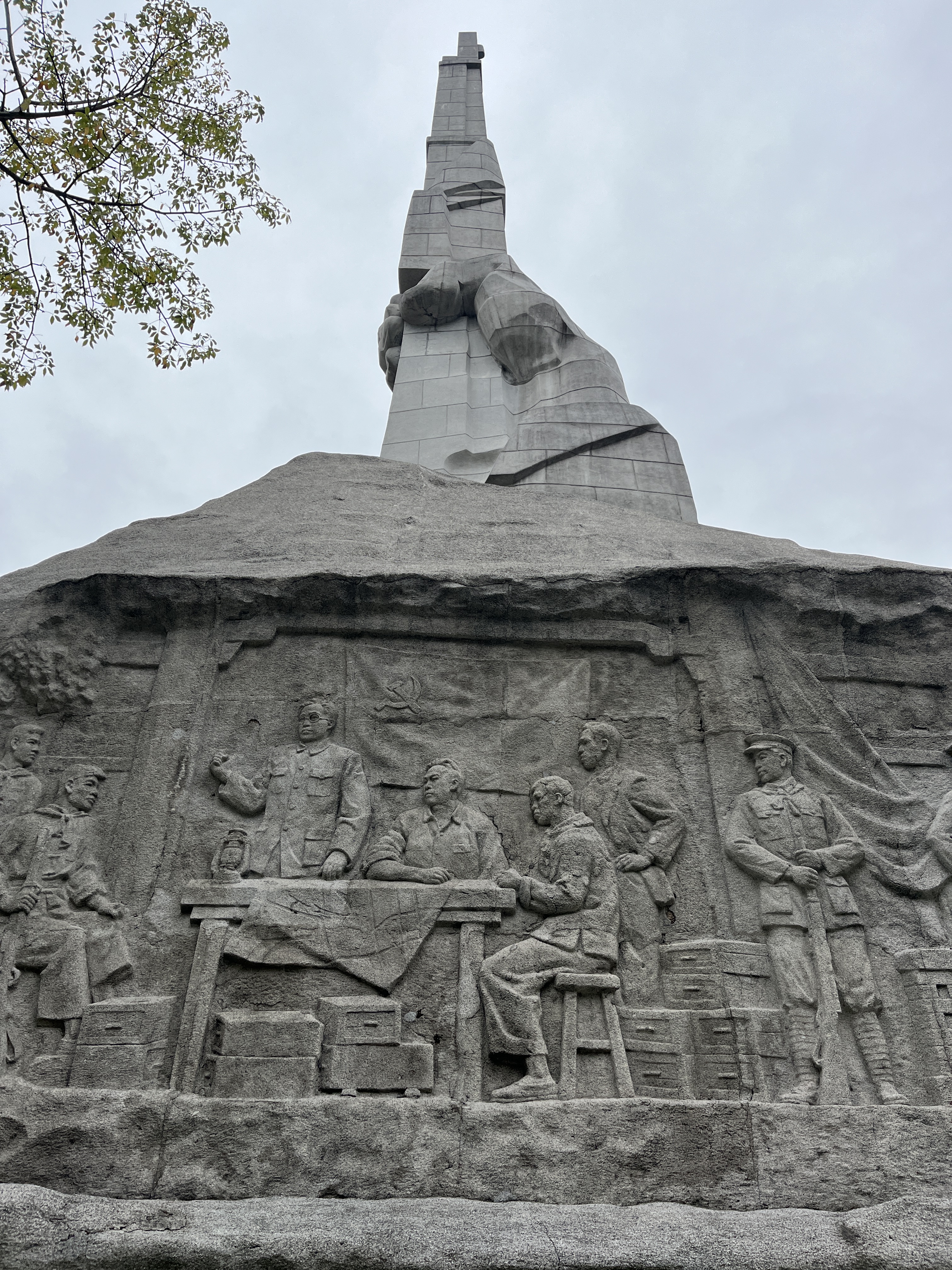
In Guangzhou last December to test out the new digital payment apps, I decided to visit the Martyrs’ Memorial Garden, built shortly before China’s alliance with the Soviet Union turned sour in the late 1950s, and commemorating the men and women who died in the preamble to the revolution. The park is scattered with memorials and pavilions, and dominated by a giant fist clutching a rifle, which looms over a mass grave of the dead from the Guangzhou Uprising of 1927.

Communist historiography recounts numerous squibs and wrong directions, momentary protests or strikes that threaten to break out into revolts. Each one is regarded with wistful indulgence, as a sort of stuttering of the starter-motor on regime change, before things eventually caught and the People’s Republic could start bootstrapping itself into existence. The Guangzhou Uprising was one of the last cul-de-sacs in revolutionary history – an ill-fated rebellion that fell apart soon after it started, mainly because it was ordered by overseas advisers who refused to listen to reason.

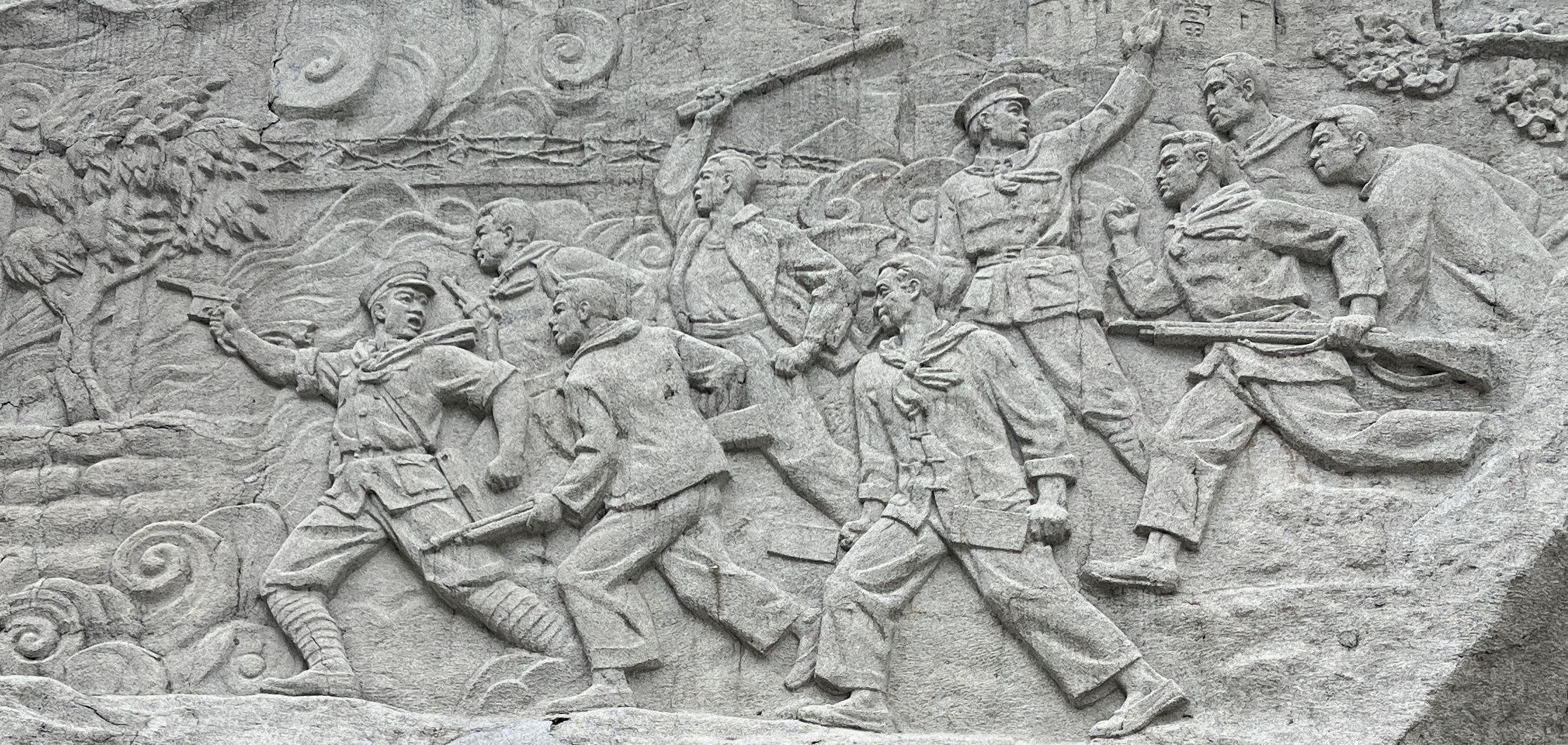
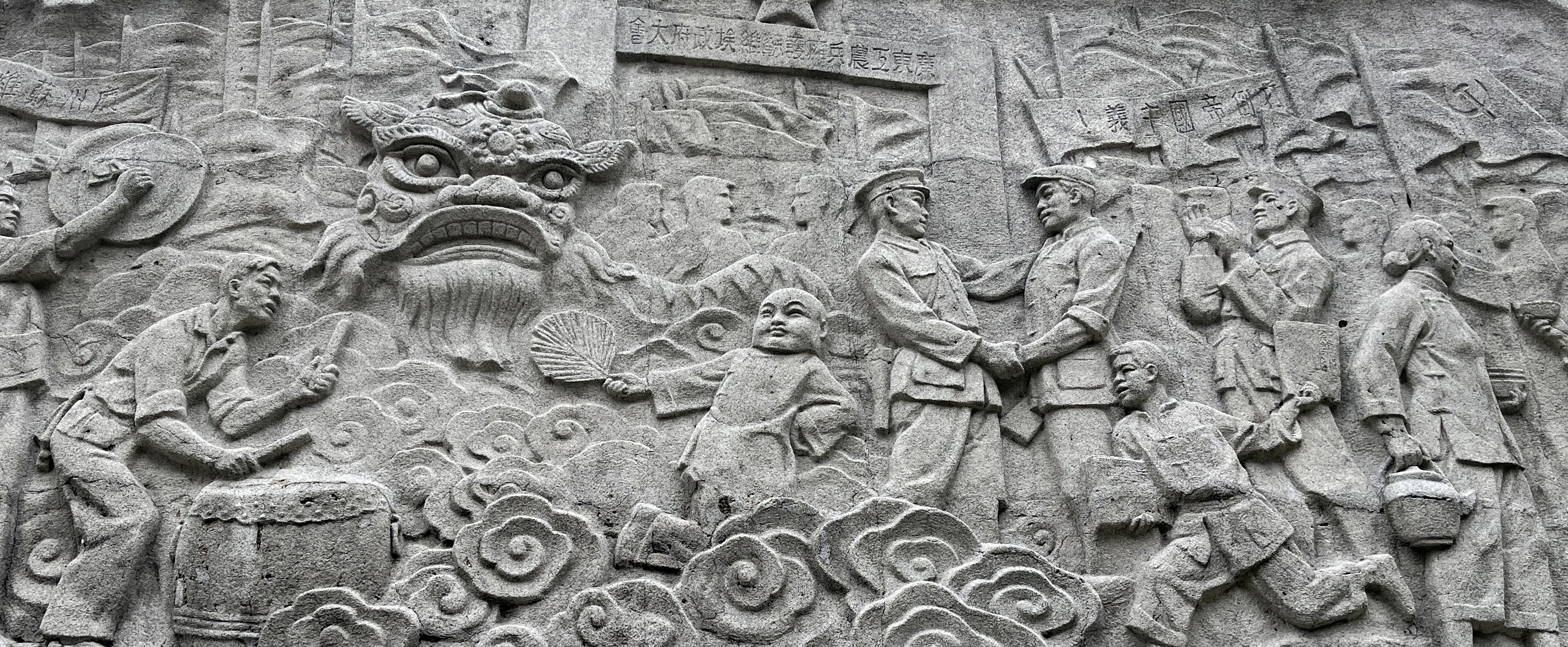
The carvings around the monument depict the initial battles of the revolt, tellingly with some of the soldiers armed with little more than meat cleavers and rocks. A moving sequence shows the brief and (as it turned out, misguided) celebrations, with the rebels congratulating themselves on the formation of the Guangzhou Soviet (the “Canton Commune”).

It was, however, terribly short lived. The rebellion had kicked off at the urging of foreign agents among local Communists, who had pressured them into proceeding with little guarantee of assistance. In spite of the protests of local commanders, who cautioned waiting a while longer for better men and materials, the rebellion only succeeded for the brief few hours that no retaliation was forthcoming. Zhang Tailei, the leader of the rebels, was killed as he drove in a car with a German Comintern agent, Heinz Neumann. His Canton Commune did not survive long after him, disbanding before a massive advance of six divisions of National Revolutionary Army soldiers.

Zhang’s statue is one of the most striking in the set that lines the square in front of the park. His left hand clutches at his breast, seemingly to staunch a gushing wound, as he whirls to face an unseen foe, snatching his gun from its holster. I stumbled upon this pantheon of state-approved heroes on my way to the metro station, and stopped to take pictures of them and their memorial plaques, while police officers in a nearby van ate their packed lunches and stared at me quizzically. I am a sucker for Chinese public statuary, and always curious who gets memorialised and why in public spaces; these ones seem to have been technically outside the park grounds because some of them lived to fight another day.

Labour leader Chen Yu is depicted toting a Mauser, and sporting a doubled Chinese jacket, seemingly against the cold – I, too, was there on a December day, and wearing two jackets at once as I took his photograph in 2023. At the time the memorial garden was built in 1957, Chen had gone on to find fame far up the Communist Party ranks, as the Minister for the Coal Mining Industry, and was just about to be made governor of Guangdong Province, so you can bet he got a good pose.

Ye Ting, the former Kuomintang officer who was forced to carry the can for the failed uprising, is celebrated in a much staider position, in his uniform. He would eventually be rehabilitated in time for the war against the Japanese, only to be imprisoned by his own people. He died shortly after his release in 1946, in a “plane crash” long believed to have been ordered by Chiang Kai-shek to prevent him returning to the service of the Communist Party.

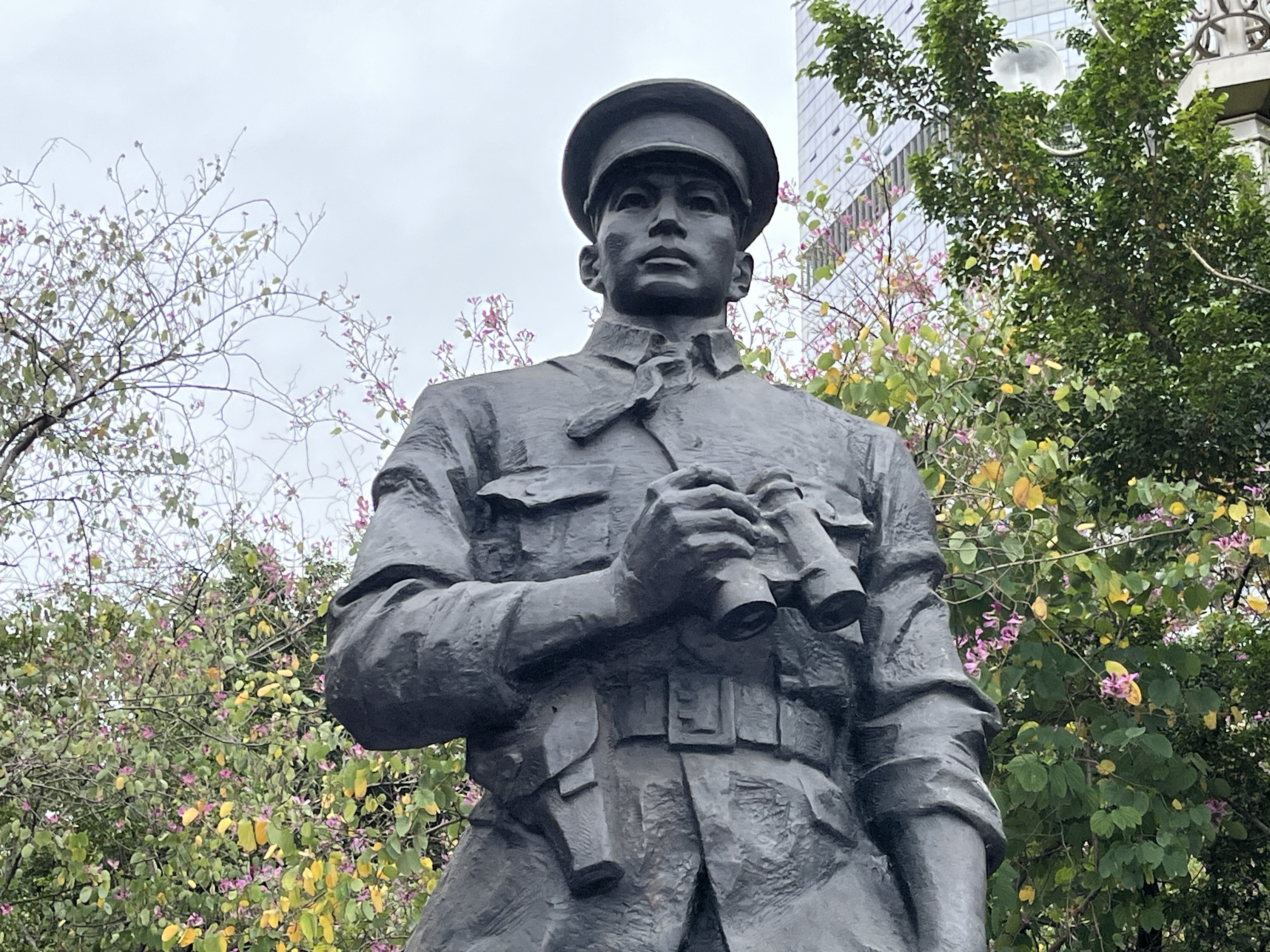
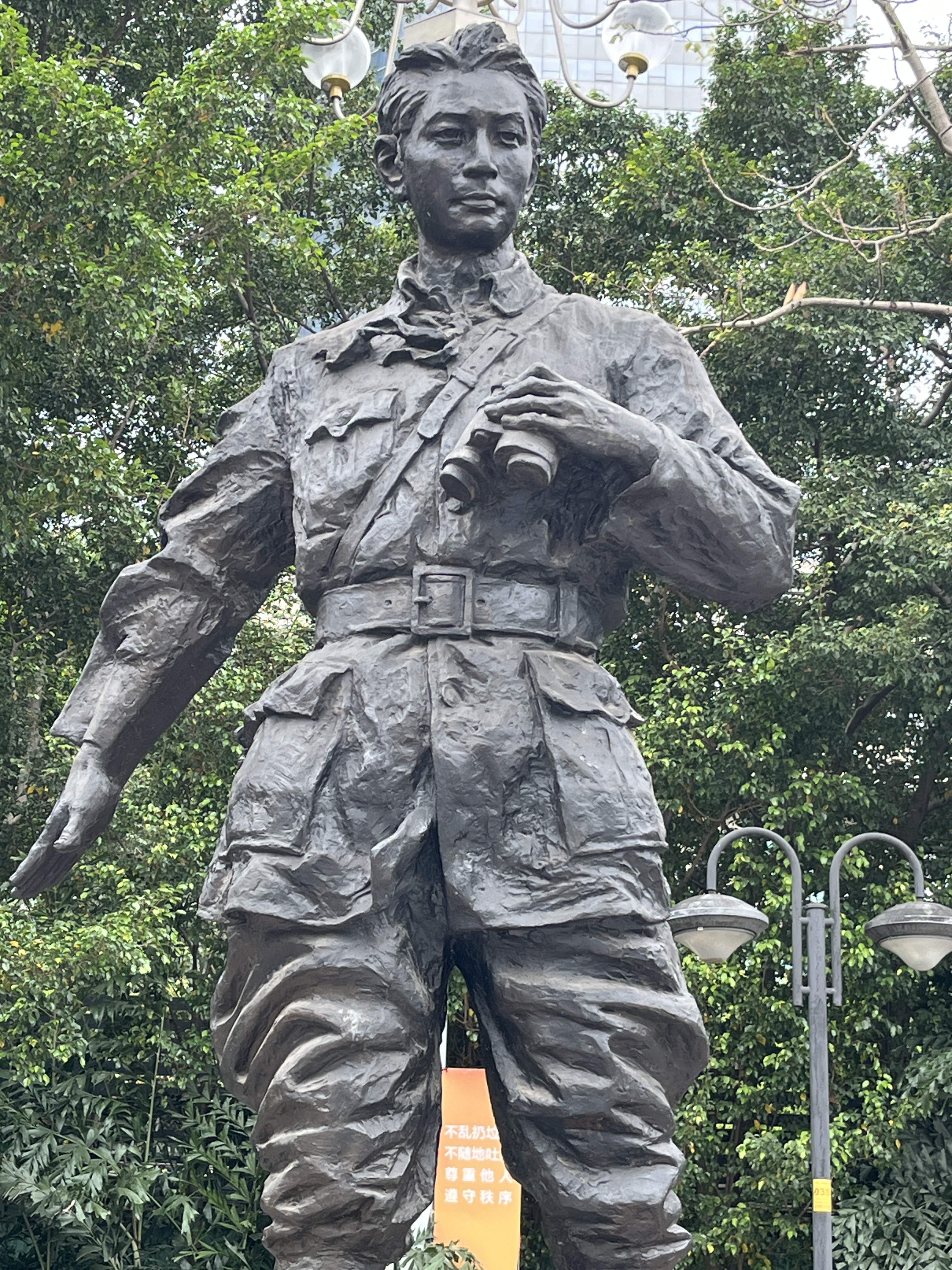
Zhao Zixuan, another military officer, is depicted in a surprisingly demure fashion, his hand on his binoculars. A more sensationalist sculptor might have preferred to show him doing what made him famous in the uprising, which was the manufacture and deployment of most of the rebels’ home-made explosives. Most famously, in a stand-off against entrenched gunmen in the local police station, he flung burning planks doused with kerosene into the building in order to flush his enemies out. He would die the following year, single-handedly covering the retreat of his own men with a machine gun, after another failed uprising in Haifeng.

Nie Rongzhen is another military man depicted with his binoculars in hand, seemingly to emphasise his command role, both in the uprising and in his subsequent career. He would go on to lead a vanguard regiment on the Long March, would be a major participant in the Hundred Regiments Offensive of the war against Japan, and would eventually become the head of China’s nuclear weapons programme.

Zhang Tailei’s short-lived successor as the leader of the Guangzhou Uprising was Yang Yin, whose statue shows him handcuffed and defiant. Betrayed in Shanghai, he was arrested, tortured and executed in 1929.

Uniquely among the statues, Yun Daiying looks rather smug and pleased with himself. At half past three in the morning, literally before the dawn of the Guangzhou Soviet, he was appointed its Secretary-General. After its fall, he would go on to become the editor of the Communist Party magazine Red Flag, a copy of which he seems to be clutching under his arm. He died in prison in 1930, in the words of his state encomium, “a drop of water in the long river of our struggle, a river that contains millions of such droplets.”

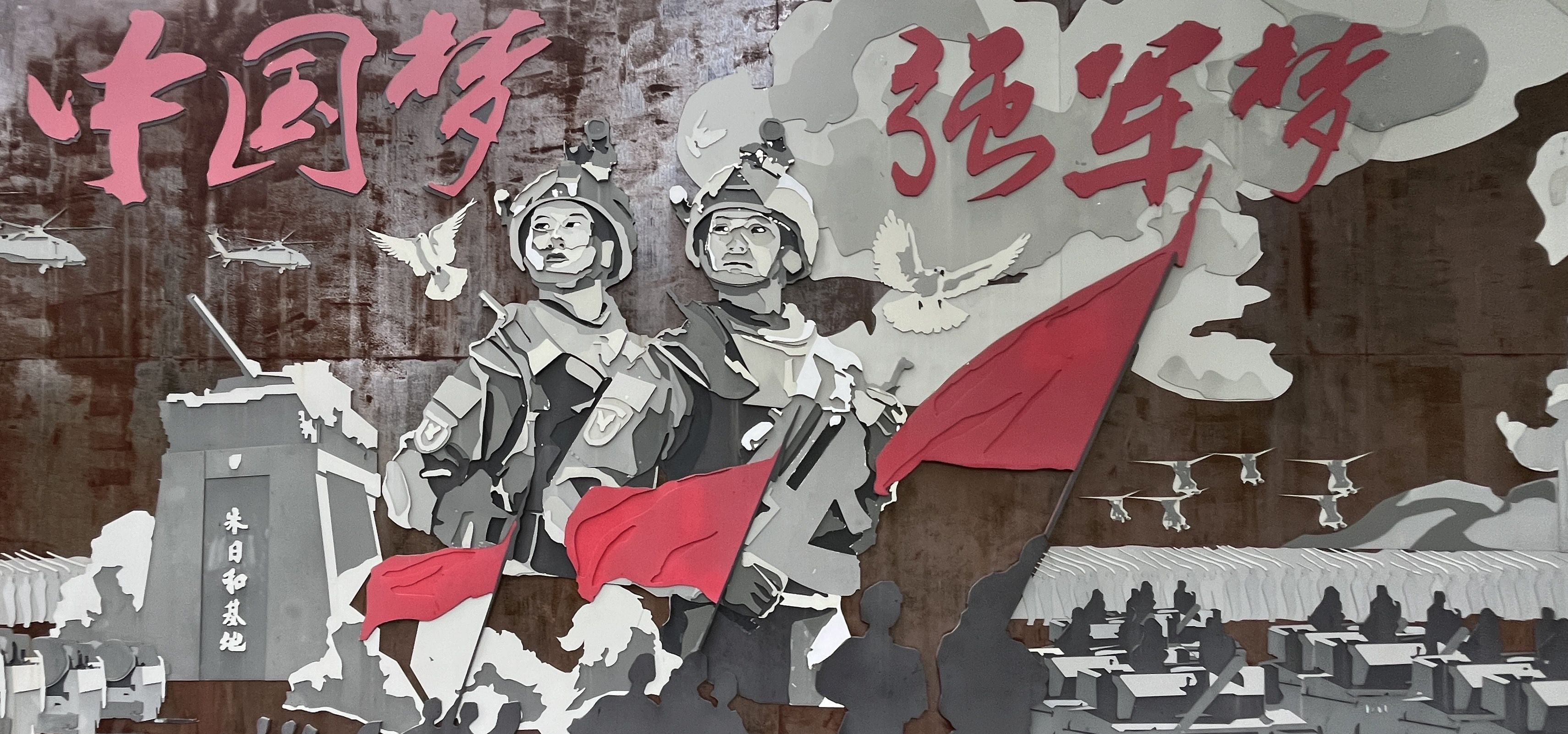
I found the Martyrs’ Memorial Garden to be a fascinating place – its tranquillity enforced by signage urging visitors to respect it as a war grave, and not to mess around at a site of national mourning. I’d hoped to drop into the Museum of Revolutionary History within the grounds, but it seemed to be in the middle of some sort of makeover on the day I dropped by. The Martyrs’ Memorial Garden does seem to be constantly upgraded and polished, most recently with a three-dimensional wall installation that deliberately linked the dead to the living, with a slogan evoking Xi Jinping’s speeches: “The Chinese Dream, A Strong Military.”

Jonathan Clements is the author of A Brief History of China. The Guangzhou Martyrs’ Memorial Garden has its own station (“Martyrs’ Park”) on line one of the Guangzhou Metro.

The Great Wild Goose Chase

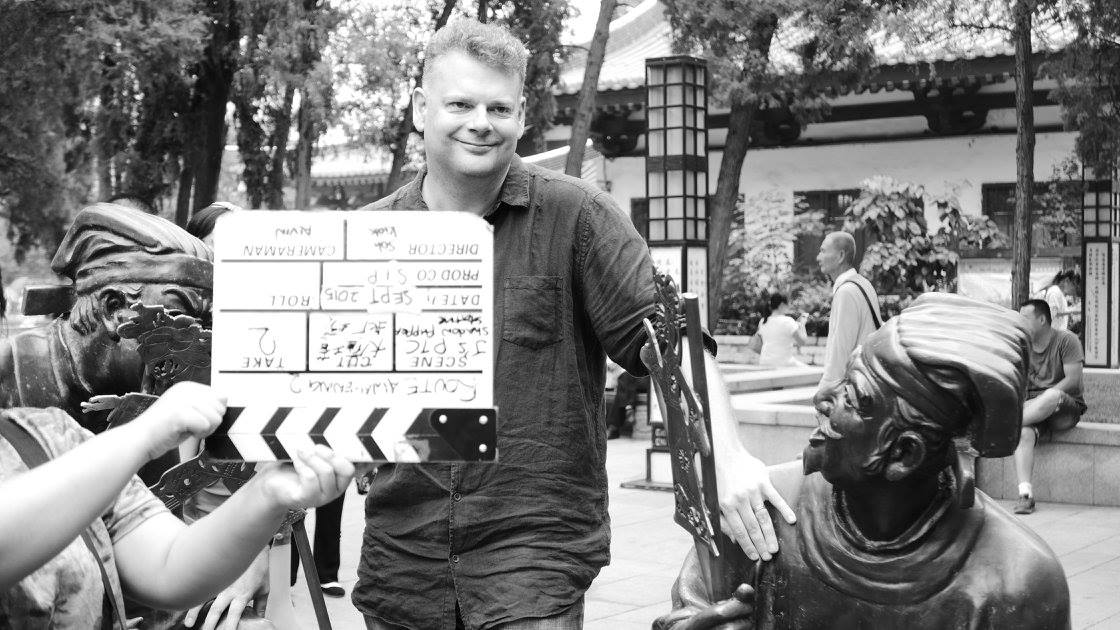
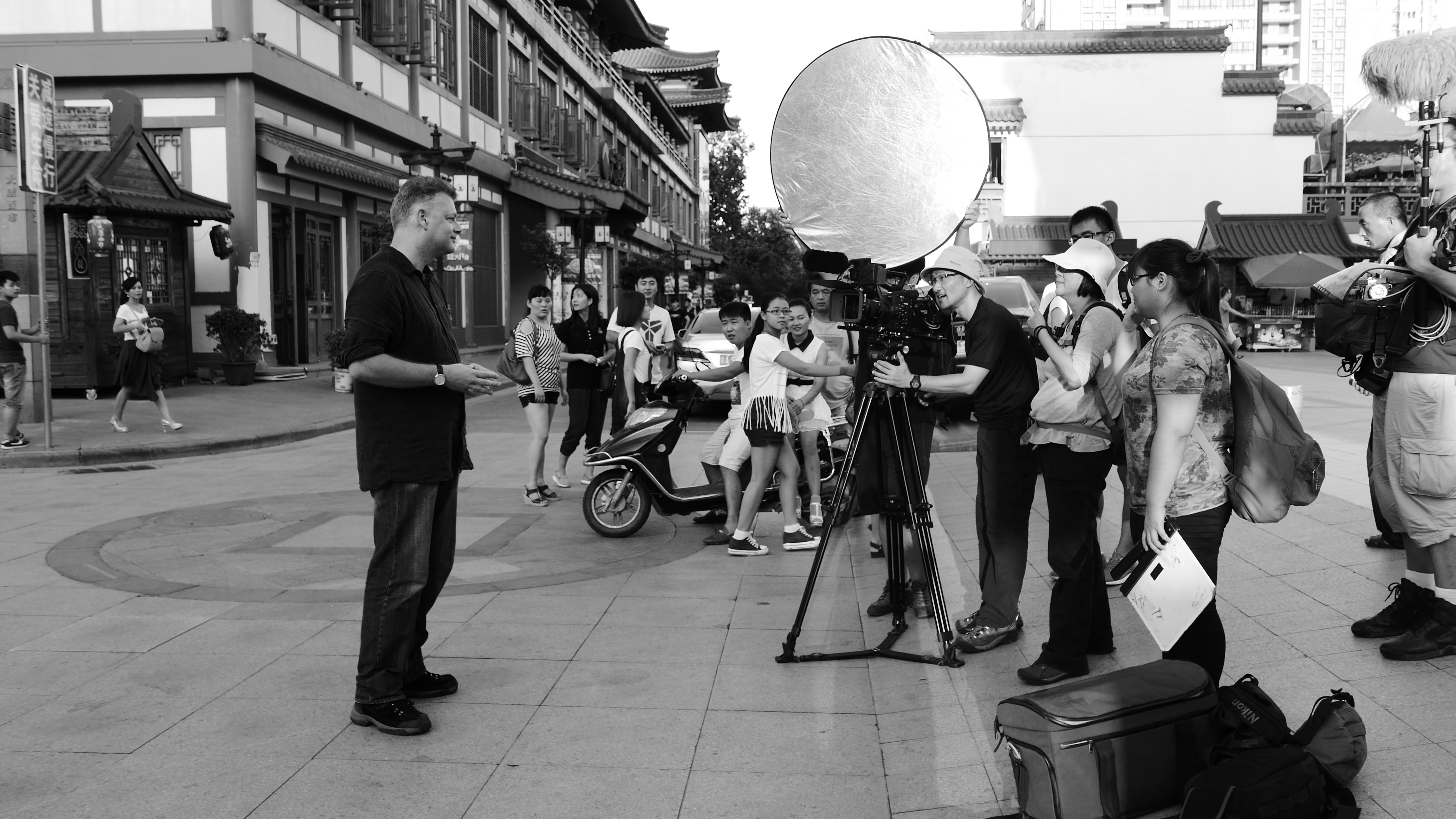
We have a van that could seat twelve, but the rear four sets are folded up for all the gear. There are nine of us today. Two drivers (one with a loaner Buick for the beauty shots), the director, the cameraman, the sound-and-drone guy, the grip, the girl with a clipboard and the fixer. Oh, and me – nearly forgot. I am the “talent”, and my talent is having to say precisely the right words, in precisely the right order, in the sole 20-second window I am liable to get in the midst of a quarter-hour’s faffery. This is harder than it sounds, because it is 77 degrees in the shade, I have to wear oddly warm clothes to fit the continuity, our very presence draws crowds of people who are both noisy and distracting, and everything I say has to be written on the fly, but also factually accurate, and verifiable by two sources – those sources not to include online editable wikis. Otherwise, anything I say can be questioned by National Geographic S&P (Standards and Practices) back in Washington, and the footage will be useless. There is no space for an umm or an err… I cannot get any proper nouns even slightly wrong. I can’t repeat any words in any given speech.

Out to the long road south of the Great Wild Goose Pagoda, so we can do some shots of the Buick driving around past Chinesey things. The car we are using in on loan from the Xi’an dealership, so we have a driver wearing my shirt just in case the clothes are visible through the window, driving through all the fiddly bits. All I have to do is drive in a straight line from one point to another on two occasions, so they can get footage of me at the wheel in a built-up area.

As the crew start to set up, the security guards assemble. First a passing lady with a red armband. Then two men with walkie talkies and red armbands. Then three men with pressure hoses, washing the nearby statues, also with armbands. One of them stands right in front of the camera, calmly and without rancour. He won’t get out of the way until he sees our pass. We don’t have one, and when the fixer rings through to the tourist office who is supposed to have given us one, they don’t know who she is. We waste nearly an hour while she faffs with them, while the red armband stands in our way. Eventually, she returns with a signed form, and he pretends to have forgotten that we are there, walking away talking to an imaginary interlocutor on his phone.

Up to the Great Wild Goose Pagoda itself for me to do a 20-second piece to camera about how it was built as a repository for Tripitaka’s Buddhist scrolls. This takes two hours, because the camera has to be set up, the sound checked, the area cleared, the script agreed upon, and then a bunch of arseholes with mopeds and plastic machine guns cleared out of the way. Our new-found filming liaison, a specky woman in a mauve blouse, frets that by walking from the south side of the tower to the north side, we have effectively walked out of her jurisdiction, and so might face more red armbands at any moment. Meanwhile, crowds of people assemble nearby, pointing their iPhones at us and trying to work out if I am someone famous.

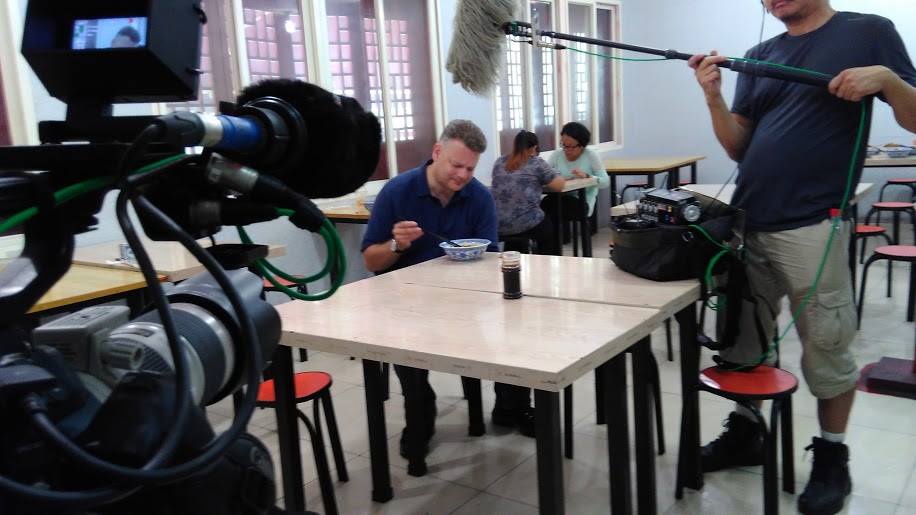
Up to the Muslim Quarter for biang biang noodles for lunch. We luck into a relatively deserted Muslim restaurant where I can talk to camera about the history of this particular dish – international as it is, with American chilis and tomatoes, carrots and cumin from westwards on the silk road, noodles made from wheat, etc. The restaurant staff are also not camera-shy at all, and keen to let the cameraman film them at work. It is a national holiday, so outside it is utter chaos. But we get lots of footage in the can.

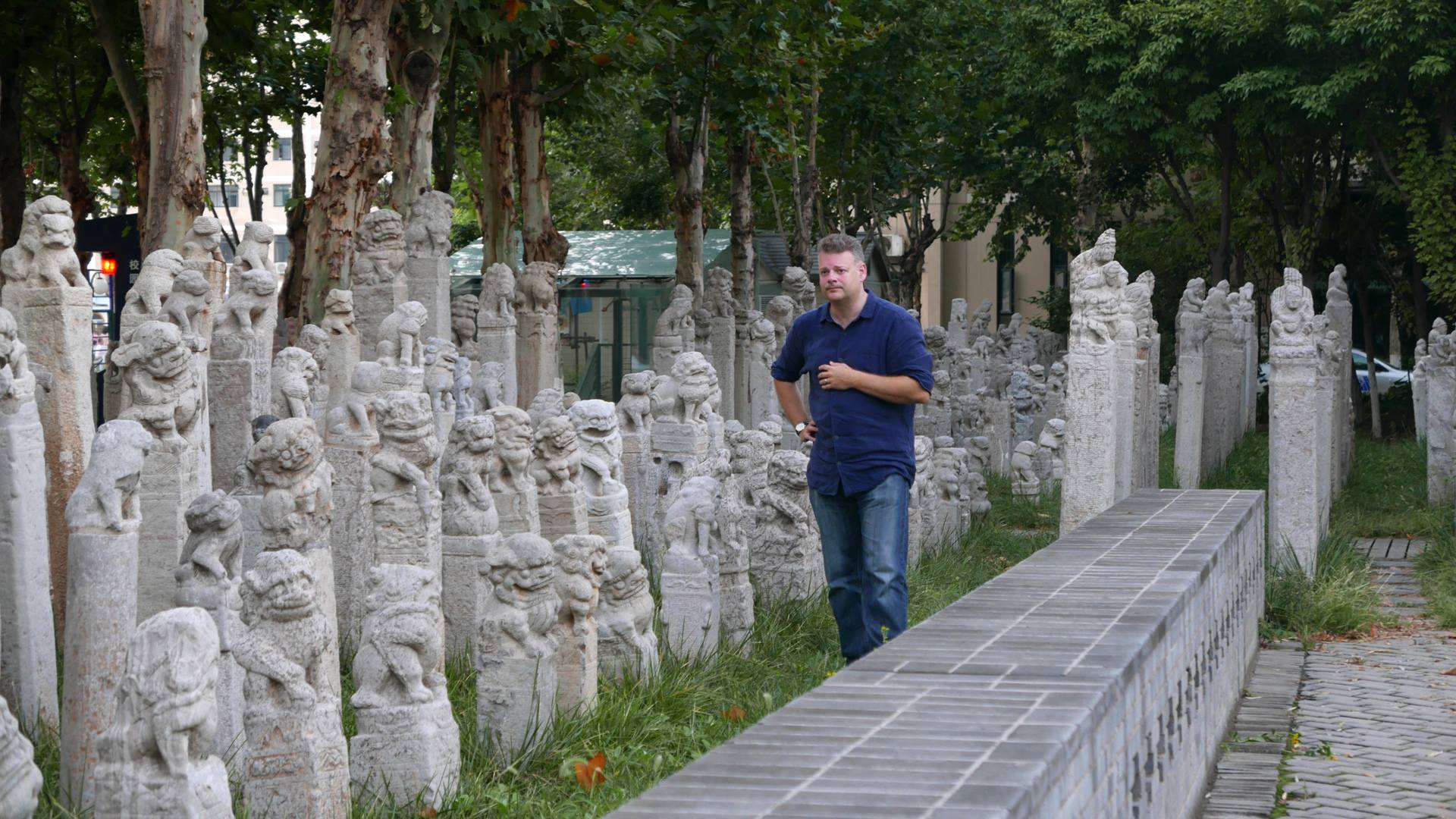
Then the Tang Western Market for me to talk about the origin of the Silk Road, and finishing up at the Forest of Lions on the campus of the Xi’an College of Fine Arts. Or is it the Arts University? Or is it the Xi’an University of the Arts? Got to get it right, and got to get it right before the light goes, and before that old lady behind me throws bread to the ducks, or we need to change a camera battery, or before someone’s car alarm goes off.

At the end of the day, I ask the director how much footage we have got of the 132 minutes we need. She thinks maybe 60 seconds. But it was our first day, the crowds were distracting, and we lost an hour to battery hunts and an hour to official interference. It could be worse, and tomorrow should be better. Although tomorrow may be a different story, because I will be in a town I have never been before, talking about puppets.

Jonathan Clements is the author of A Brief History of China. These events featured in season two of Route Awakening (2016).

Voices in the Night

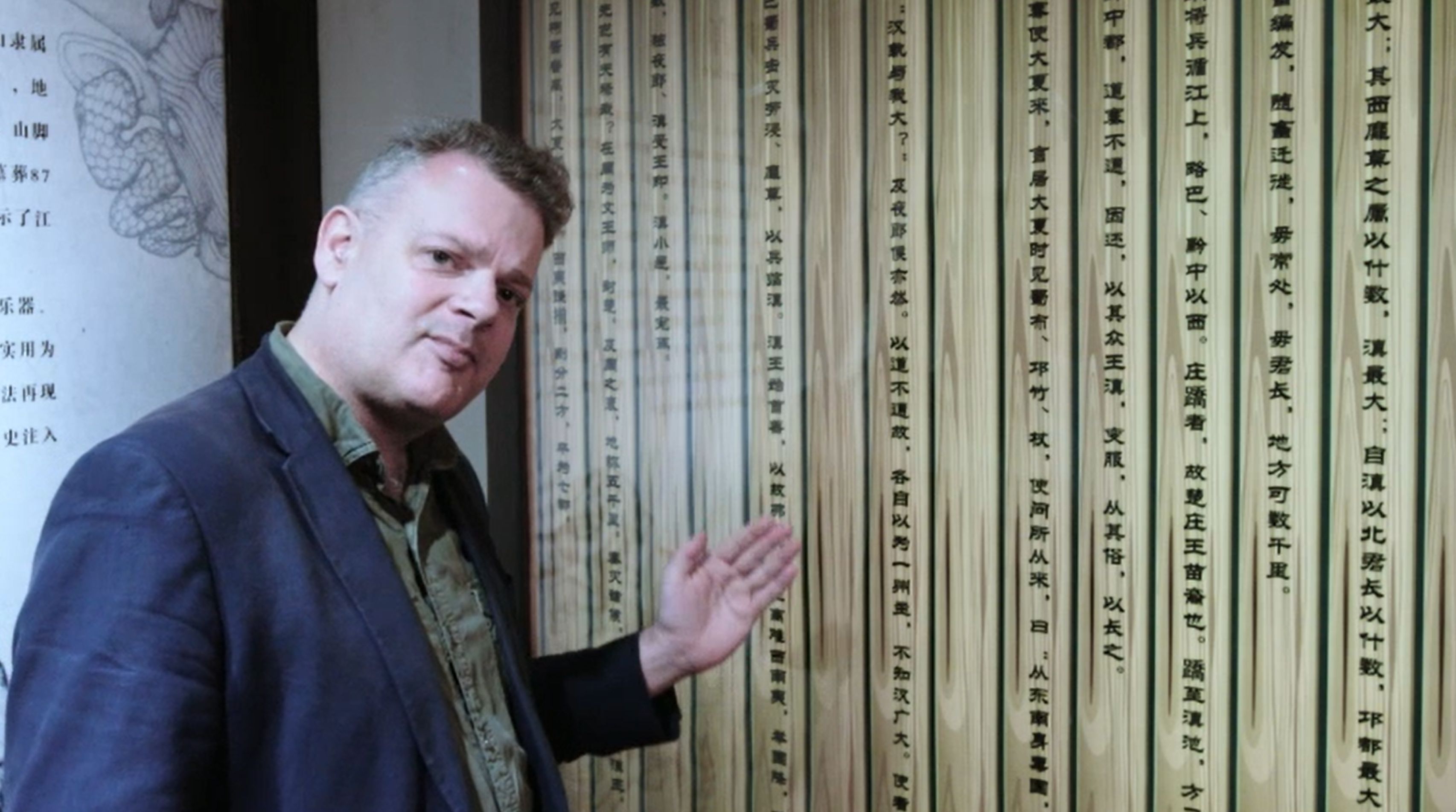
On the wall in the Yuxi Bronze Museum is a giant set of bamboo strips, engraved with classical Chinese. This is where I earn my money.

Aha,” I say to the camera, “here we’ve got the entire text of the chapter of the Grand Scribe’s Records about the ‘south-western barbarians’. It starts with a geographical description of the region, the names of the tribes (see, here’s the Dian), and the lay of the land, and then it goes into the story of their first contact with the Chinese. Here we get the emissaries turning up from the Han Emperor, and a fantastic question from the Dian king, when he asks the ambassadors: ‘Is this Han realm bigger than mine?’ He really had no idea who he was dealing with, but when he finally submitted to the Han emperor, here it is, he is bestowed with a ‘royal seal’.”

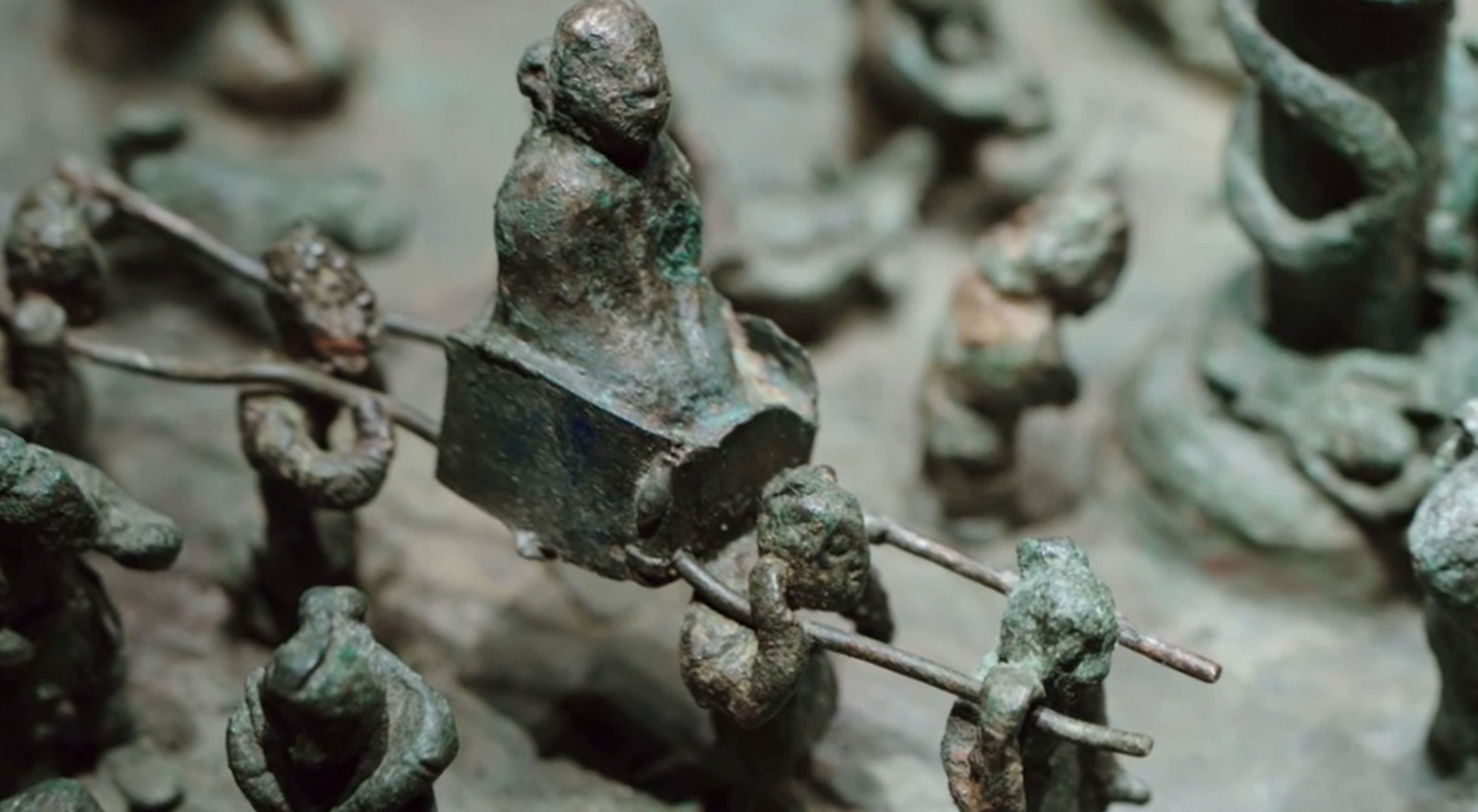
It’s a good morning in the bronze museum, where the staff stare open-mouthed in amazement as the foreign film crew completely ignores most of their exhibits, and concentrates on the stuff they consider boring – the bamboo strips carved with Chinese, and a naff-seeming diorama of life in Dian times. Except it’s not naff, I point out. Every single element of it has been drawn directly from the bronzes we have been examining. We have seen (and filmed) the original artefacts that informed the diorama’s hunting scene, its battle scene, and the scene of human sacrifice underway on a nearby hilltop.

Lunch is a fish hotpot cooked on hot stones, with Yunnan rice, which is like normal rice but comes with fried potatoes and bits of bacon. The director allows us fifteen minutes to descend like jackals on a nearby pottery shop, where I spend all the money I have earned this morning buying a new tea set, rice bowls and two cups decorated with the Heart Sutra. I think, between us, we manage to spend about £300, which makes the owner’s day, as she only opened ten minutes beforehand.

In the afternoon, we head out to a pokey village at the bottom of a mountain, where the locals inexplicably worship a mermaid goddess, whose pert baps seem to have been designed by a sculptor who has never seen a woman’s chest in real life. A cluster of pensioners, sunning themselves in the marketplace, soon drift over like zombies to see what the film crew is up to, but they are incredibly friendly, and our cameraman gets a lovely shot of me talking to three wizened old men about topless mermaids.

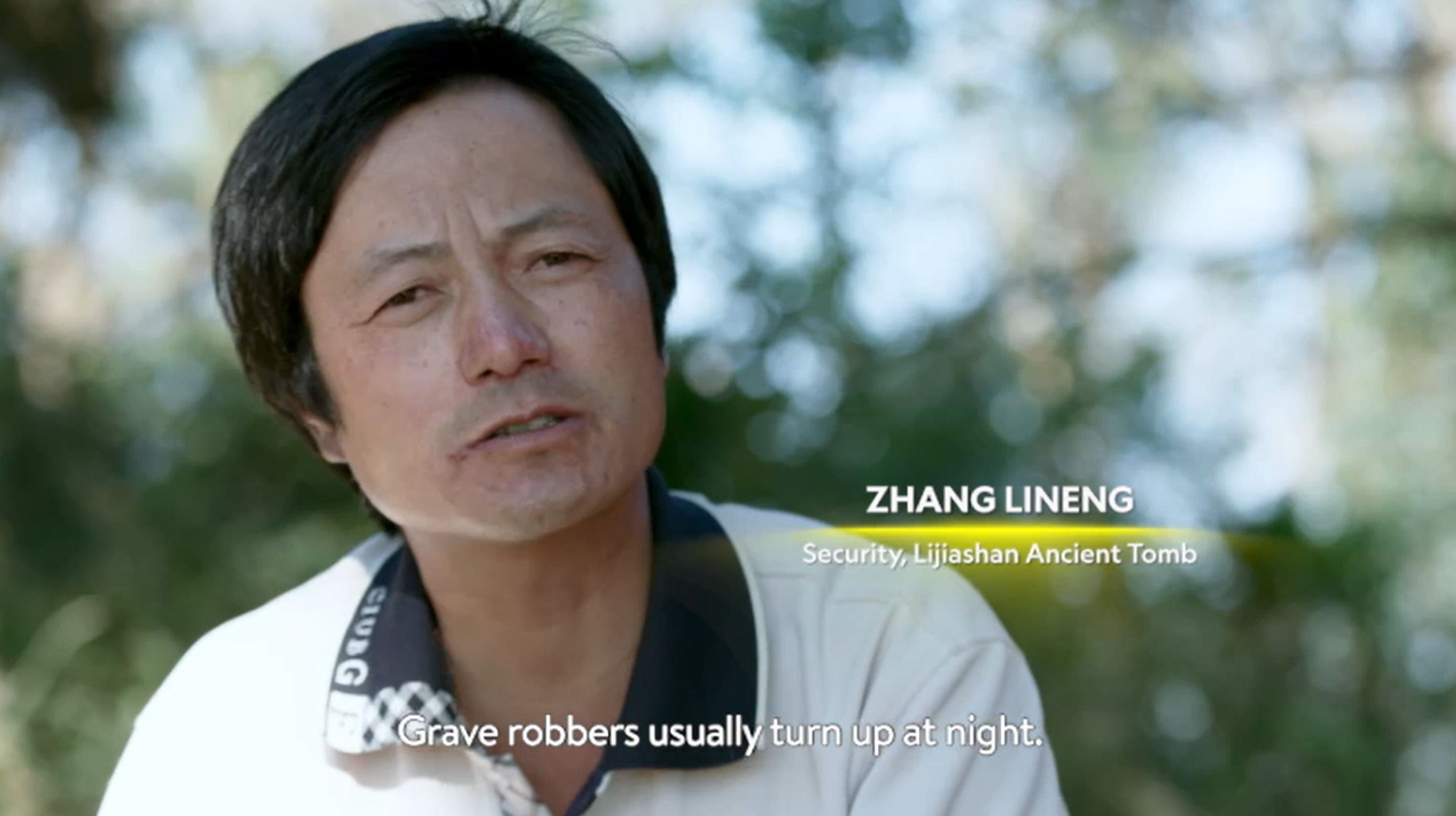
We are here to climb Lijiashan, the mountain where some eighty Dian kingdom graves were unearthed. It involves a wheezing ascent up endless steps, to a small guardhouse where we find Zhang Lineng, the watchman.

A huge part of my job, and something I am embracing with greater fervour as time goes by, lies in putting the interviewees at ease. Mr Zhang didn’t even know he was an interviewee before we showed up, and I am the first foreigner he has ever met. But I bound in and introduce myself, and get him chatting about his life.

Our fixer and Clicky the Propaganda Guy, who is still lurking around, protest that the man’s Chinese is unintelligible, and that we might need an interpreter. But he makes perfect sense to me, no more or less than anyone else. This has happened before, in Shandong, where Chinese people found locals difficult to understand, but I found them no harder to understand than anyone else. The local accent fiendishly replaces all H’s with F’s, and occasionally drifts towards Cantonese, but that’s it.

So he takes me around the pit where the Famous (not that famous) Cow Tiger Table was unearthed, and reminisces about how strange it was to the local villagers, like him, when their hilltop was suddenly deemed so important that the People’s Liberation Army sent an armed detachment to guard it.

Mr Zhang is a rare kind of interviewee, because he is a Michael Wood sort of choice – not an archaeologist or a historian, but a random man of the people who happens to work near the site. So while it’s not quite the usual National Geographic experience, it is oddly entertaining. He reminisces about how weird it was when he was a boy, and truckloads of archaeologists started turning up at the village at the bottom of the mountain, and how was there, literally standing at the side of Pit 69, when they unearthed a bronze cowrie shell container, decorated with dancing Central Asian shamans. He also reveals that the grave contained two bodies, a woman and a murdered slave girl, but that the coffin the archaeologists found was inexplicably thrown away.

I ask him about life as a security guard.

“It was tough in the early days. The thing that’s made the biggest difference is the phone. If there are robbers on the site, I can call for back-up. I can call the police. Or someone who sees something suspicious can just call me. Life is a lot easier now.”

I ask if things get creepy up on the mountain alone at night.

“Well, down in the village people say that sometimes they can hear fighting. Swords clashing together and people screaming in a language they don’t understand. There was one night when I heard a real commotion outside, but when I came out to look, nobody was there.”

Clicky the Propaganda Guy is gesticulating wildly, calling a time-out on something he really doesn’t want discussed on camera. Second-hand local myths are one thing, but a self-reported experience of the supernatural will not be allowed on television in China.

At which point, the director slaps me in the face.

She had seen a mosquito on my cheek, and took extreme action in a split-second, lest it suck my blood and leave a lump on my face sure to ruin the next week’s filming. Her palm lands with an impressively loud whack, and oblivious to the reason why, all Mr Zhang sees is a small Chinese woman beating up the presenter.

“Wow,” he says. “You have a tough job.”

Our pocket drone struggles like the Little Engine That Could against the high winds on the mountain top. There is just time to rush back to the Bronze Museum, which now has the sun on its façade, to shoot the opening shot of me entering. Except the museum has closed five minutes early and the staff have scarpered, so we have to cheat by placing the camera on the other side of the street, and having me walk across the road as if it is the path leading up to the door. But we have to wait first for a marching column of soldiers to pass by. They stare at me warily, until I give the Communist Party salute, at which point they all start giggling and saluting back.

Jonathan Clements is the author of A Brief History of China. These events featured in Route Awakening S05E05 (2019).

Man of Bronze

Up at 0630 for the two-hour drive around the lake to the village where Yang Shaohua has his gallery and workshop. I blunder in late, thanks to having the wrong address, and find him holding court around a posh tea table, chuffing on a water pipe like a giant bronze bong.
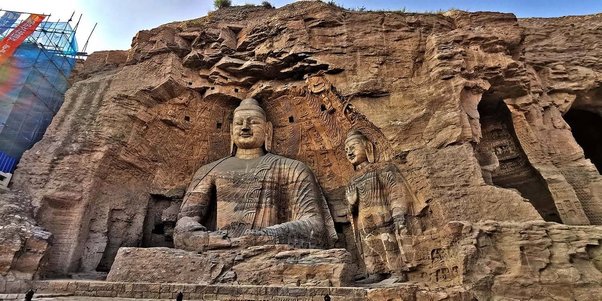
Mr Yang is handsome and charming, knowledgeable and talented. I know that sounds like me buttering up some Party bigwig, but he knows the bronze-casting process so well that he can give a ten-minute speech in answer to a simple question about how it’s done. He knows everything from the chemical formulae to the metallurgy mix, and he doesn’t just cast the bronze, but carves the models and draws the original concept artwork. He is also a great host, faffing with his tea paraphernalia while the crew smokes fags in his gallery, so much so, that we seem to lose over an hour during the day to tea.

Mr Yang is responsible for a lot of the statues I have marvelled at in Chinese public spaces, including the giant golden phoenix in front of the Yunnan Provincial Museum. He tells me about the three-metre Mother of Dragons he made for a temple to the Baiyi people’s famous rain goddess, and his biggest-ever Buddha, a ten-metre effigy for a temple somewhere. At the moment, he is working on soldiers for the Songshan military memorial, although when he leads me into the modelling room, I am surprised to find four life-sized clay men standing to attention in puttees, pith helmets and Hitler moustaches.

“They are Japanese devils,” he explains. “They get a lot of Japanese tourists there, so I suppose it does no harm to give them something to take a selfie with.” The Japanese soldiers all have real shoelaces and stitching, because it’s easier to do that and let the wax mould take an impression from the real thing, than it is to painstakingly carve them.

Since he is an official Intangible National Treasure, the Propaganda Bureau are all over this one like a rash. A beaming woman in clacking heels keeps ruining the sound recording, while her minion with a clicky camera keeps wandering into the background of every shot.

“A cameraman,” mutters our director, “of all people, should know not to ruin someone else’s shot.” She is particularly annoyed because Propaganda are insisting on “entertaining” us at a lunch banquet, which gives us only an hour to shoot our interview before we are dragged off to a restaurant with eleven other people, and forced to make small talk with a bunch of local officials only there for the free boondoggle, who manage to piss me off from the get-go by asking me if I can use chopsticks.

Bearing in mind that I had walked into the room, introduced myself in Mandarin, and embarked upon a conversation about Bronze Age culture in south-west China, I think my “of course” was an object lesson in tact. The last thing I want is chili fish-head soup for lunch, and the last thing our director needs is an hour ripped out of her shooting schedule a mere hour after we started.

Mr Yang, in the meantime, is having a whale of a time talking to us about his work, which often involves reproductions of Dian Kingdom artefacts. The museum people, in fact, have so much trust in him that they have let him digitally scan all the Dian Kingdom finds, and he does a roaring trade in replicas of the Famous (not that famous) Cow and Tiger Table.

He warms to me right away when I correctly identify a taotie totem beast on a replica Shang cauldron, and immediately ask him if a stylised goat was made for Yuexiu park in Guangzhou. I am, in fact, able to tell him that I have seen several of his statues in various parts of China.

“Do you need a bronze bust of yourself?” he asks. “I can knock one up for £3,000.”

No, I say. Nobody is interested in seeing my bust.

It’s not the easiest of days, because shooting in a foundry next to a building site is a non-stop cacophony that plays havoc with the sound. Nor do we have footage of several parts of the process, including the all-important molten bronze bit – we are trusting Mr Yang to send us something shot with his phone. It doesn’t help that the gallery has three mangy guard dogs who have industriously shat everywhere. But Mr Yang shows me how to pour wax into the mould to make my very own Famous (not that famous) Cow and Tiger Table.

The wax is then wrapped in clay, and the clay mould thus formed is heated until the wax flows away, leaving space for the molten bronze.

“Of course,” he says, “back in the old times they used beeswax, but these days we use the industrial variety.”

The word for honey in Old Chinese is an Indo-European import, mjit (as in mead), implying that honey husbandry, like chariots, is something that came into China with foreign settlers sometime in the Bronze Age. And that means that the Bronze Age itself could also very likely have been something imposed on the Chinese by foreign invaders – mysterious elites like those Dian warriors.

“Oh, I’m not surprised,” says Clicky the Cameraman from Propaganda, as we sit around the tea table for yet another break. “I mean, there’s a whole foreign city under the water of the lake here. They found it when they were laying cables for the power plant, and the government banned anyone from investigating further.”

The underwater city in Fuxian Lake was supposedly carbon-dated to 250 BC, around the time of the Dian Kingdom, but our director refuses to believe it. She suspects that the whole thing was a hoax thought up by local students to promote tourism in the region. “Not really,” claims Clicky from Propaganda. “The reason there hasn’t been any news about it since 2007 is that we’ve put a blanket ban on talking about it.”

Mr Yang doesn’t want us to leave. He lures us back to the tea table for another cup, and then points out that because we have a two-hour drive home and it’s already six, we might as well stay in town for dinner.

“I know of a lovely place nearby that does traditional peasant food,” he promises. It’s only when we are standing outside that he proudly announces: “The specialties are fish-head soup and tripe.”

Jonathan Clements is the author of A Brief History of China. These events featured in Route Awakening S05E03 (2019).

Braidhead Caitiffs

A weeping young emperor is escorted to his palanquin by a stern-faced warlord, on the grounds that there are “bandits everywhere.” The warlord in question has already burned another prince alive, and the “bandits” are his own, sinister men.

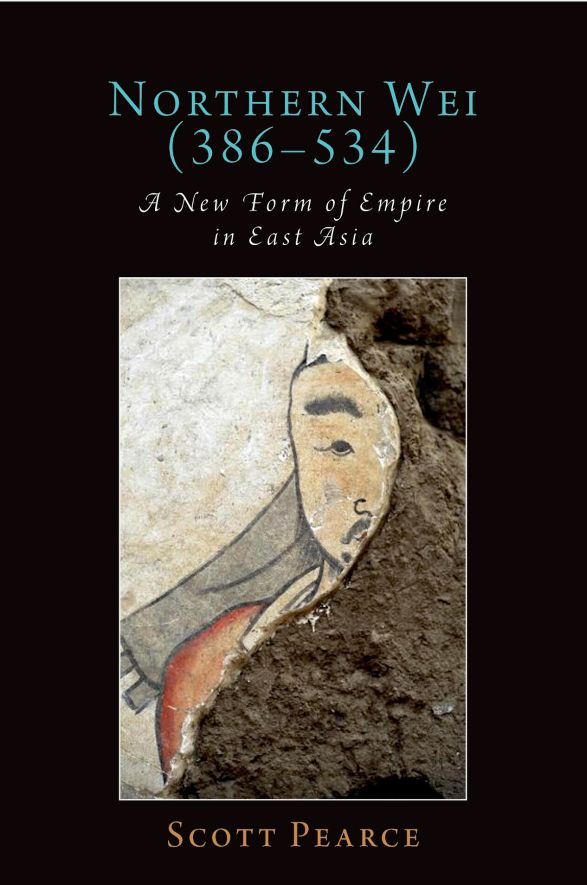
For two hundred years from the fourth to the sixth century AD, northern China was over-run by a group of nomads. Much like many others in Chinese history, they leeched off the locals, established themselves as the new aristocracy, and soon began to squabble about whether to hang onto their “barbarian” ways or go completely native. By the end of their reign, they had moved in to the former capital of the Eastern Han dynasty, filling it with newfangled Buddhist temples and statuary. Their “Northern Wei” dynasty, in only ruling part of China, is one of those that are often edged out of histories, despite its idiosyncratic and original works of art and culture, and its larger-than-life rulers, who stick out in Chinese museums like an alien invasion.

Dzyip-yip-ken, for example, the “crimson lord” stands six feet six inches, with hair that trails on the ground. He’s by no means the weirdest character in Scott Pearce’s delightful new book, The Northern Wei: A New Form of Empire in East Asia.

A nomad ruler claims to be the son of a maiden who descended from heaven in a glowing chariot. Discredited nobles live in fear of being assigned to the Wuhuan, a “vanguard suicide unit” that defends the border. A war band gains a new leader when they sacrifice a horse to a dragon, and the fearsome beast transforms into a young boy.

Pearce is gleefully aware that his diligently referenced and entirely accurate account of the dynasty that ruled north China from 386 to 534 AD reads more like a fantasy novel, noting on one occasion that he is describing “a tableau that seems scripted for a B-movie.”

“The brutality,” Pearce writes, “the barbarism of this age is almost unspeakable.” A minister “solves” a refugee crisis by drowning 8,000 people. A court lady smuggles an infant crown prince out of a harem massacre by shoving him down her trousers. An emperor is driven mad by the Daoist potions he is drinking as an aphrodisiac. Another manages the remarkable feat of siring over a dozen sons on a dozen women before dying, presumably of exhaustion, at just 23. A fallen minister is taken to his place of execution in a caged carriage, and before he dies, is urinated on by an entire company of guardsmen.

The world Pearce describes is joyously alien, where people have names like Bjij, Xae-ljen and Jijlej of the Bulwukku. They called themselves the Taghbach, although the term, like all the others, was elided and sanitised by Chinese historians, turning them into the Tuoba. Spears trail “toad streamers”, and prospective empresses must demonstrate their ability to forge a golden statue. Baffled Chinese chroniclers attempt to make sense of spats, vendettas and blow-ups between the aristocracy, which often lapse into Taghbach slang, while the Taghbach themselves prey upon the people of northern China like a coterie of elegant vampires. The Northern Wei was a regime that turned China upside down, often scandalously privileging the role of women in its society. It was, notably, the era that gave us The Ballad of Mulan, and which began to establish the rise to prominence of women as leaders and political actors. Two centuries later, its legacy would turn into the backlash against the “transgressive typologies” of an era of women in power.

At the start of the era, the Taghbach are dismissive of Chinese ways. One scoffs: “Try putting on Han silks and then riding around on your horses through the brush and brambles.” But as the regime wears on, the “braidhead caitiffs” (as they were called by their southern enemies) are slowly assimilated into Chinese ways. They are lured into Chinese customs, take Chinese wives, and eventually, with their original capital at Datong creaking at the seams and unsustainably large, relocate off the steppes to Luoyang, the former capital of China.

On the way, they pack local culture with new and unusual differences, some of which would endure ever after. As attested to by their magnificent statues and carvings at Luoyang and Datong, they fervently embraced the foreign religion of Buddhism, (founding, for example, the Shaolin Monastery) jamming it so deep into Chinese culture that it never left. Pearce notes many other influences, including the increasing presence of women in social and political life. He points out that imagery of Han dynasty banqueting shows womenfolk peeking in from a balcony while the men enjoy themselves. By the Dark Ages, the ladies were dining in their own separate chamber. But it’s under the Northern Wei that women come to control the feast – overseeing the menu and the food, and even leading the diners in song.

As for the Northern Wei, it fizzles out in a cataclysm of bed-hoppings and stabbings, as the shadowy families behind the scenes fight to put one of their own on the throne in a time of climate crisis, interpreted by soothsayers as heavenly displeasure, manifesting in droughts, diseases and crop failures. Marital politics dominates the court, in a “complexity that is perhaps wearisome for the modern reader” writes Pearce, who is entirely sorry-not-sorry about a history book that ends with an Empress Dowager proclaiming that her hostile teenage son’s newborn daughter is really a boy, and therefore the new emperor… before grudgingly changing her mind.

It actually gets even crazier after that. For Pearce, this amounts to a book-length prologue to his 1987 Princeton doctoral thesis, The Yü-wen Regime in Sixth Century China – which outlines the even more bonkers rise and fall of the short-lived successor dynasty, the Northern Zhou, but that is another story…

“The city had been destroyed before,” he writes of the glorious Luoyang, “and would of course be destroyed again.”

Jonathan Clements is the author of A Brief History of China. The Northern Wei: A New Form of Empire in East Asia is published by Oxford University Press.

Predators

I’m finding it a little bit difficult to breathe. Kunming is a mile above sea level, which makes itself felt in the time it takes to boil water, the dryness of the air, and the fact that I am out of breath after racing up a flight of stairs. But it is a wonderfully clean city, there are lot more pretty girls here than in most other parts of China (our director says the boys are good-looking, too), and the people are oddly friendly. At one point today we were mobbed by ten policemen, who had not been informed that we would be filming outside the museum, but they were all very polite and smiley, and once our credentials were proven, bent over backwards to help us, stopping the traffic and even giving our sound man and his gear a lift to the entrance.

The new Yunnan Provincial Museum glows red-gold in the sunrise. It has been designed, supposedly, to resemble the famous Yunnan Stone Forest. But it is packed with materials from the culture that once flourished on the shores of Lake Dian, which had largely faded from view by the end of the Han dynasty.

Nothing survives of the Dian people but the stories about them in the Grand Scribe’s Records, and whatever has been pulled out of their graves. And with the caveat that the graves reflect the lives and attitudes of the ruling elite, it shouldn’t surprise us if their artefacts come across as a bit, well, cruel. The Dian kingdom, at the time it was assimilated into the empire of the Han Chinese, was home to a peaceful race of cattle herdsmen, ruled over by an equestrian elite who seemed to take an odd pleasure in depictions of violence.

Their shell kettles (cowrie shells were money) come decorated with intricate battle scenes, featuring captives being dragged away for sale, victims pleading for their lives, and a wounded man crawling from the battlefield, unaware that a mounted cavalryman is bearing down on him. In one of the tableaux, an enemy soldier appears to have the upper hand, not seeing the man on the other side of the battlefield taking aim with one of those new-fangled crossbows.

The glee in which the Dian seemed to take in the suffering of others is repeated throughout their artefacts. Twin spearheads feature decorations of dangling slaves, hanging by their wrists. Belt buckles feature scenes of boars fighting panthers, and lions locked in combat. The most famous Dian artefact is a low bronze ritual table in the shape of a cow being mauled by a tiger, and yet still standing protectively over its calf.

Several archaeologists have suggested that the Cow and Tiger Table is loaded with symbolism – that the cow represents the locals, while the tiger stands for their horrid overlords, and the calf for local traditions that refuse to be snuffed out. The rulers of Dian, it has been suggested, were originally a band of Scythians, pushed out of Central Asia around 200 BC, who lorded it over the locals in Yunnan until the Chinese turned up to turn the tables.

The Dian themselves disappeared from history around the time that the Grand Scribe’s Records wrote them up. They were invaded by warriors from Chu in the late Warring States Period, and the victorious general was just about to report home when Chu fell to the First Emperor. Rather than return to an uncertain future, he turned his army around and settled by the Expansive Lake (Dian), and his soldiers soon faded into the local population, whose former style favoured dreadlocked horsemen, barefoot in all statuary and carving, tattooed with writhing snakes. They enjoyed what UNESCO still describes as the most biologically diverse region in the world, spanning the upper reaches of the Yangtze (here known as the Golden Sands), the Mekong (here known as the Lancang) and the Salween (here simply called Nu, the Angry River). Since the Red River, which goes all the way to Hanoi, also rises here, the Dian kingdom sat the crossroads of several major cultures, trading with the Shu and Ba kingdoms of Sichuan, with what is now Vietnam, and towards the west.

Fan Haitao, who set up the Dian gallery in the Yunnan Provincial Museum, takes me through a small selection of the foreign objects dug up locally, including a buckle representing a winged lion (lions, winged or otherwise, being unknown in China back at that time) seemingly from Persia or Afghanistan, agate beads from Pakistan, and glass from India.

“Our biggest find,” he reveals, “was at a place called Yangfutou, which was under the flight path of the Flying Tigers.” The American mercenary airmen, famously posted to Yunnan to make life miserable for the Japanese, used to fly over a low hill near their base, and observe that it was a nice place to be buried. Yangfutou was turned into a graveyard for the Flying Tigers, which was when diggers started to unearth strange objects. It was not, however, until 1999, that Yangfutou revealed its greatest treasure, the grave of a forgotten Dian nobleman, complete with cowrie shell moneybags, bronze drums, and fiendishly decorated weaponry.

“The grave was under the water table,” he tells me, “so it was completely waterlogged. This meant that we didn’t just get the bronze, but some wooden pieces and the lacquerwork ancestors.” He points at a series of animal-headed dildos, the word “ancestor” also meaning “penis” in Chinese.

So, I ask innocently, what were they used for?

“I think,” he says carefully, “they had a… ritual quality.”

Why are they so small, I ask, pointing at the largest one, which is truly massive. But we can’t use the footage, because the crew was giggling so much at the look on his face.

Jonathan Clements is the author of A Brief History of China. These events featured in Route Awakening S05E03 (2019).