Conglomerate acquires fancy company. Conglomerate incorporates app in its own tech. Conglomerate announces most employees of the original app are now surplus to requirements. It’s hardly news to anyone, or even to NEO readers who may remember similar nights of the long knives over at Manga Entertainment, sorry, Funimation, sorry Crunchyroll. But last month’s announcement that Amazon would be shedding 18,000 jobs, including a bunch of executions in corporate and technology, and notably 75% of the employees at its ComiXology division.
Amazon is looking to streamline its operations, and that apparently means ankling its ComiXology staff in a three-step purge. Behind the scenes, the writing has been on the wall for the last year, ever since the ComiXology comics-reader app, acquired by Amazon 2014, was integrated within the Kindle software in February 2022, much to the ire of many long-term readers.
This is all part of a series of retrenchments and reconsiderations in the digital market, as the bosses who’ve thrown all that money at acquisitions try to work out how to make them pay. We’ve seen whispers of it elsewhere – Amazon, for example, has already shuttered its Japanese anime “studio” because it realised that it could just subcontract pre-existing studios instead of luring them into an expensive building and handing out pens. And Netflix, of course, has been trying to get its head around a business model that amounts to a worldwide pyramid scheme that has to have new members signing on to justify the ever-expanding budgets. Now, it’s looking at offering reduced-fee subscriptions with ads (in my view, a backward step that makes it just like any other channel), and trying to reduce the number of people leeching off relatives’ and friends’ accounts.
As for ComiXology, it was a massive success story in the comics market, particularly since the inauguration in 2016 of ComiXology Unlimited, which offered thousands of comics and manga to subscribers. But what Amazon really wanted was a success for ComiXology Originals, a 2018 initiative to create new comics that Amazon owned. The margins are lower on offering access to other people’s products, and that’s why, now that it’s covered by Kindle, Amazon is edging so many of the comics tech specialists out of its staff. Until, that is, some widget stops working and it have to lure them back at freelance rates.
Jonathan Clements is the author of Anime: A History. This article first appeared in NEO #228, 2023.
Out now from Arrow, Sonny Chiba’s Street Fighter trilogy on Blu-ray, featuring me talking all over the commentary track for the middle one. Includes details about the writing careers of bit-part supporting cast members, comments on the politics of martial arts, and the difference between karate and kempo.
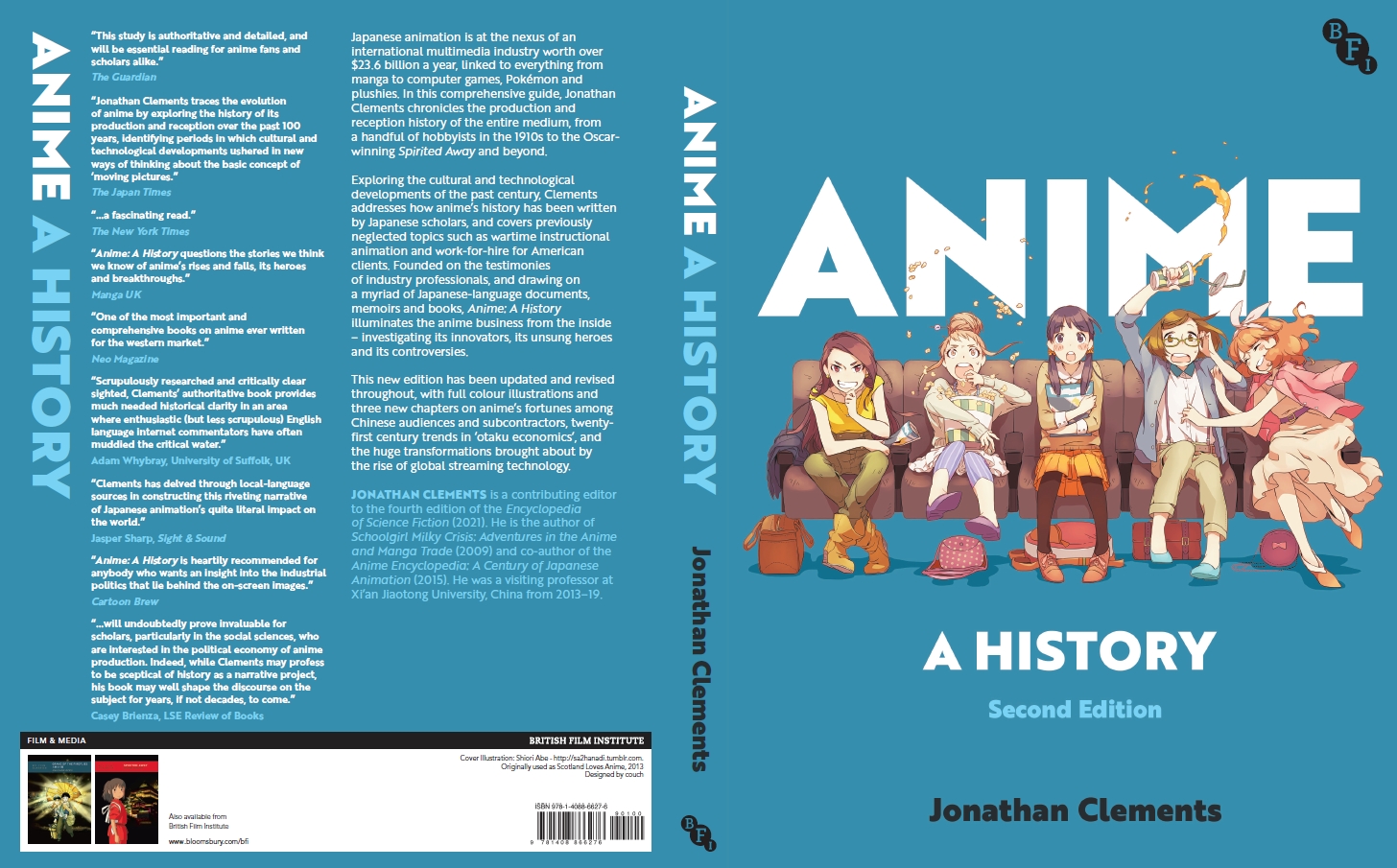
“This new edition has been revised and updated throughout, with full colour illustrations and new chapters addressing the rising economic power of otaku subcultures, the development of anime in China, and the transformation of distribution and exhibition accompanying the dominance of Netflix and other globalised streaming platforms.”
“I would really like to work with people who understand music,” he once said. “Film directors can just cut out a couple of frames to make things fit, but I have to rearrange an entire song if they do that. One director could cut out an entire scene, just after I’d finished writing the music for it.”
Over at All the Anime, my obituary for the composer Ryuichi Sakamoto.
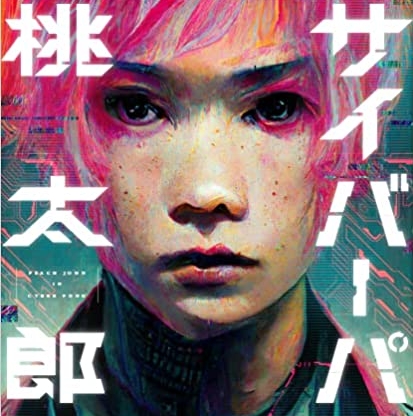
“Even Rootport’s afterword account of working with Midjourney is now a historical document in the rapid pace of AI development. His experience, his achievements and his complaints all relate to a version of Midjourney that was superseded last autumn. In the time it has taken his book to make it to the bookstores, the AI has evolved another generation.”
Over at All the Anime, I write up Cyberpunk Peach John, the “first manga drawn by an A.I.”
Two years after Japan seized Taiwan from imperial China in 1895, the government in Tokyo had started to wonder if it was worth the hassle. The local people were notoriously difficult to control; the anti-Japanese resistance continued to bubble away in the hinterland, and the infrastructure was a mess. Some wag in the Japanese parliament even made the modest proposal that, all things considered, Japan had been sold a lemon, and should probably consider off-loading the whole thing for a bargain price on the first mug to come along… probably France.
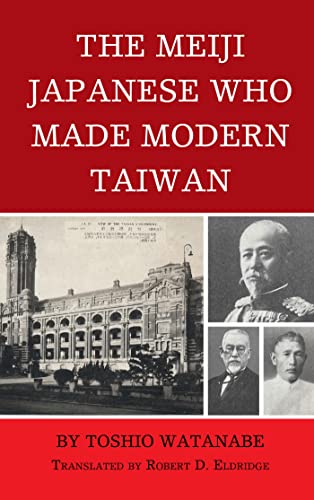
Toshio Watanabe’s The Meiji Japanese Who Made Modern Taiwan is a study of those Japanese engineers, politicians and scientists who refused to give up, turning Japan’s newly acquired colony into a testing ground for some of the grand schemes that would later be unrolled all across the Japanese empire.
Watanabe zooms in on Shinpei Goto, the administrator whose thoughtful approach to researching his new posting led to the commissioning of invaluable, multi-part scientific surveys, including a 4000-page report on tribal traditions among the indigenous inhabitants – often the first time such matters had been documented. It was Goto who dragged the island out of almost a decade of infrastructural decay, setting up the Bank of Taiwan to disburse investment funds for roads and railways, and declaring a Twenty-Year Plan to make the island a net contributor to the imperial Japanese economy.
Watanabe focuses on several linked elements of Japanese colonial development in Taiwan, particularly the creation of a new strain of rice, optimised not only for local conditions, but also for the Japanese palate. The result was a strain named for the ancient Chinese isles of the immortals, Penglai Rice (a.k.a. Horai Rice or Ponrai Rice), and Watanabe takes the story of this miracle crop out of both Taiwan and the Meiji era, to demonstrate its wide-ranging impact overseas, particularly in India in the 1950s. Even today, it and its descendants represent up to 93% of all the rice grown in Taiwan – Watanabe’s chapter on Horai Rice scales way, way out, making a bold claim to it as the saviour of millions of twentieth-century lives. This has, however, done some damage to crop diversity on the island – a fact alluded to in Crook and Hung’s Culinary History of Taipei, which notes the extinction of certain other rice strains in the wild.
But the crop was only half the story. Watanabe also delves into the history of the fields where it grew, particularly the plains between Chiayi and Tainan, the agricultural capabilities of which were multiplied a hundred-fold during the Japanese colonial era. For this, we have to thank a Japanese hydraulic engineer, Yoichi Hatta, who designed an irrigation system covering hundreds of square miles, holding back floodwaters and saving them to re-use in dry spells, to turn the Chia-Nan plain from a farming disaster-area into a rice-producing power-house with three crops a year.
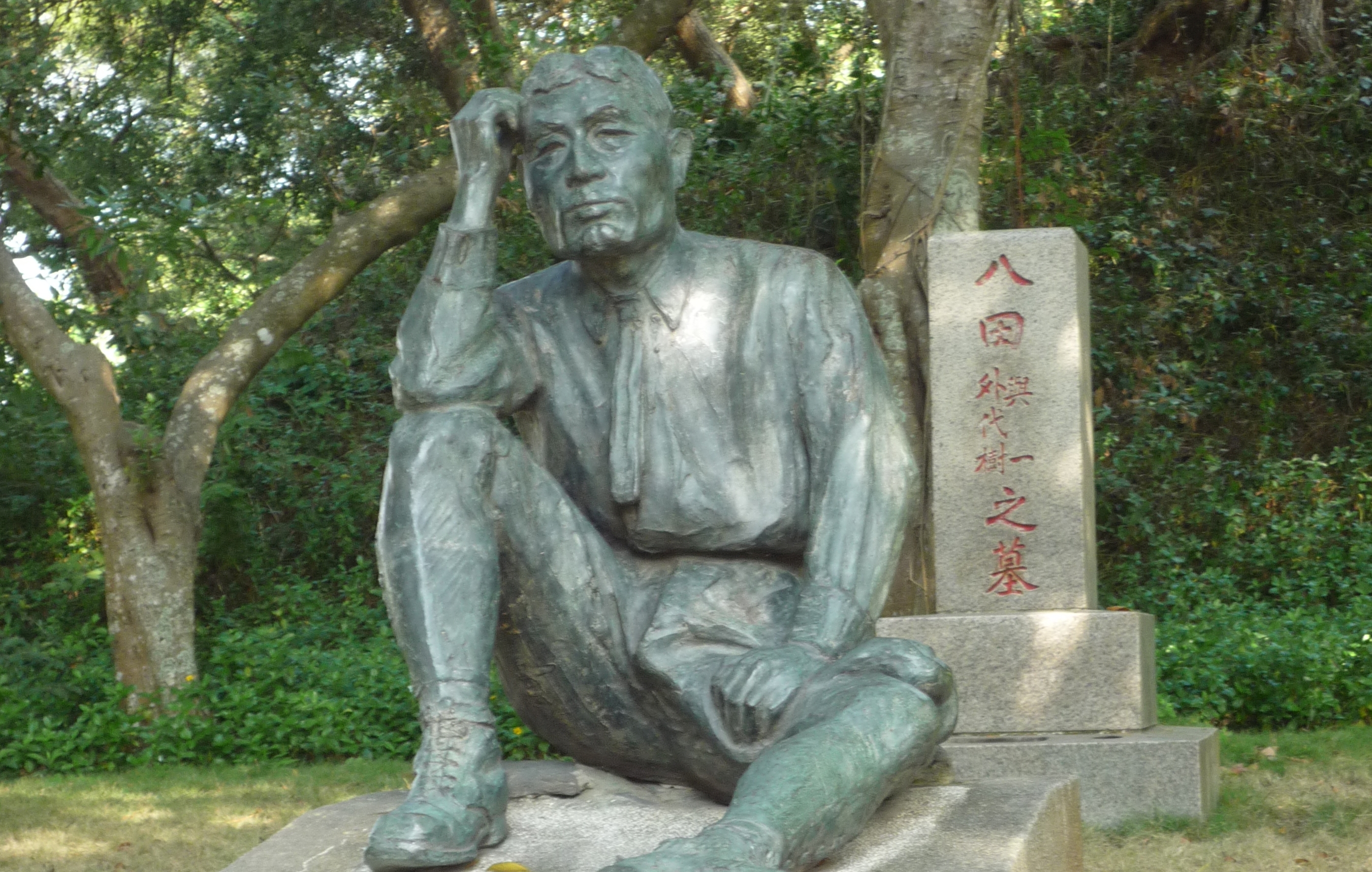
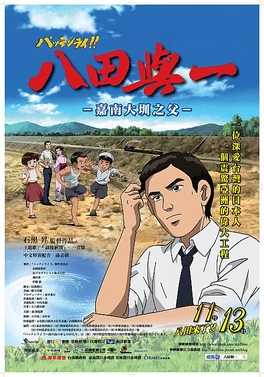
Hatta was justly celebrated as one of the icons of Japanese Taiwan, and enjoyed a vibrant afterlife, particularly at the turn of the the 21st century, when a Japanese prime minister, Yoshiro Mori, turned out to come from the same part of Japan. The result was a veritable Taiwan-Japan love-in, with diplomatic visits, high-level glad-handing, and even the release of a worthy-minded dramatization of his life, Noboru Ishiguro’s animated film Batian Lai – well, Batian Lai (“Here Comes Hatta”), is how I translated the title in the Anime Encyclopedia, but the Japanese original Patten Rai, has a stab at replicating the way his name would have been pronounced by the actual Hokkien-speaking locals. The anime film concentrates on Hatta’s obsession with the irrigation system, and his pride and joy, the Wushantou Dam, which for six years in the 1930s was the largest in the world. Hatta’s most recent appearance in the media was in 2017, when a crazed politician in search of clickbait decapitated his commemorative statue at his gravesite beside the dam.
After Japan lost Taiwan in 1945, the new Kuomintang government adopted a scorched-earth policy towards the fifty years of Japanese rule. They played up colonial atrocities (of which there were many), deported thousands of Taiwan-born “Japanese”, banned the Japanese language from public life, and did everything they could to wipe out the Japanese colonial legacy. Watanabe’s book is a celebration of the oft-forgotten achievements of Taiwan’s Japanese era, although in pushing to recognise the achievements of the Japanese, he might occasionally have forgotten the Taiwanese who did much of the hard labour, and the occasional European who might have helped a little bit, such as William Kinnimond Burton, the Scottish engineer who designed many of the island’s Meiji-era sanitation systems.
But Watanabe’s book is more interested, naturally, in the Japanese, whose lives he describes with empathy and occasional melodrama. Nowhere is this more obvious than in the tragic end to Hatta’s story, when he dies aboard the Taiyo Maru, a ship torpedoed by an American submarine. His body lies in the water for a week, in which time the flesh is so picked clean by marine scavengers that he can only be identified by his clothes and personal effects.
His wife, Toyoki Hatta, held on until the 15th August 1945. On hearing the news of Japan’s surrender on the radio, she calmly walked through the rain to the Wushantou Dam, took off her shoes, and threw herself into the waters.
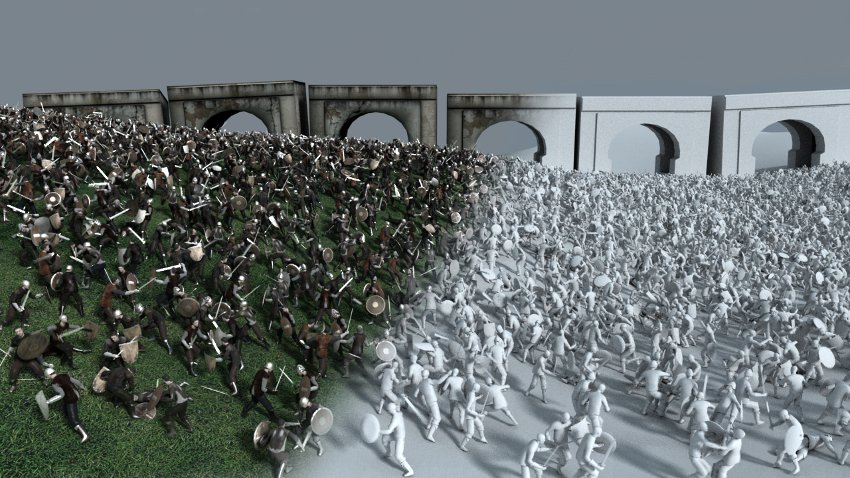
It’s been more than twenty years since Peter Jackson’s Lord of the Rings trilogy used the newly made Multiple Agent Simulation System in Virtual Environment (MASSIVE) software to create and animated armies of orcs and elves. MASSIVE famously took much of the misery out of big battle scenes, generating thousands of sprites that would battle among themselves. Well, they were supposed to. Early prototypes had trouble getting the sprites to fight each other – they had to literally make them more stupid and foolhardy before they’d get into it.
Regardless, MASSIVE had plenty of other obvious uses, and as processing power ramped up, would be purloined by Mamoru Hosoda to generate schools of self-aware fish in Mirai. Soon after, Yuhei Sakuragi would use similar “deep learning” algorithms to get the crowd scenes in his Relative Worlds to effectively animate themselves.
Such applications were just the tip of the iceberg. As demonstrated recently by Dwango’s Yuichi Yagi, now we have A.I. software packages that can be trusted to generate the in-between animation that goes between key frames, putting a big chunk of the animation business out of work. A.I. software like DALL·E 2 can now take a photograph and turn it into a 3D environment, or take a portrait and make it come to life. It can even guess what might be off-screen or out of frame, like predictive text, but for images. When faced with such leaps in abilities, it’s not hard to see that the next generation of animation labourers could be reduced to “human fallback” – the supervisor minions who pop their heads in every now and then to click an approval or reject a bodged model, based on a Stable Diffusion scraping of Every Anime Ever Made.
But how long will we have to wait before A.I. worms its way into other areas? Surely there’s already enough content to process, and expectations low enough in certain genres, for an A.I script writer to plot out an entire anime show? Feed a hundred light novels into a hopper, and see if the Plototron 3000 comes up with a world-beating idea for… I don’t know, a teenager in another world with a sentient smartphone.
I’m not one of the doomsayers, yet. Yuhei Sakuragi estimated that human fallback was required on almost half the working hours of his deep-learning scenes. “The conclusion was that you should probably aim for 50 or 60 per cent of completion, then shape it with human hands afterwards,” he said. Computer animation itself was once decried as a poison that would destroy anime… instead it made it anew, and gave us unexpected talents like Makoto Shinkai.
Jonathan Clements is the author of Anime: A History. This article first appeared in NEO #227, 2023.A month after this article first appeared Rootport’s Cyberpunk Peach John was hailed as the “first manga drawn by an A.I.”
“Basically, if you’re just drawing stuff, there’s no particular inconvenience. I could have a meeting on the phone and send stuff off by courier. There was no producer to worry about because all we had to do was draw. It was fine. But once you start working as a character designer, suddenly you find that you can’t just ask: ‘What about this?” So after I’d finished GaoGaiGar, Betterman and Brigadoon, I thought it was time to go to the source and actually move to Tokyo. So that’s what I did.”
Over at All the Anime, I write an obituary for Code Geass designer Takahiro Kimura.
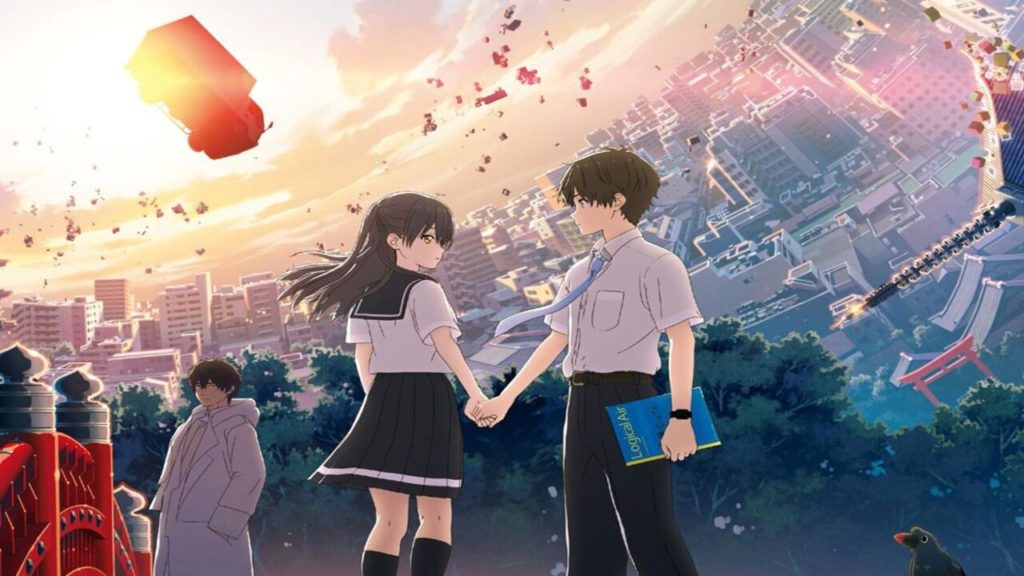
“Kyoto has been successfully digitised; 2027 has been ingested to such a degree that it can be run in Naomi’s own future as a simulation indistinguishable from the real world itself. In effect, his whole world has been carefully saved and archived, which is good news for his future self, because Ruri Ichigyo, the girl he fancies, is fated to be put in a life-threatening coma in just a few weeks.”
Over at All the Anime, I write up Tomohiko Ito’s Hello World.
“In a medium notorious for shots and beauty-passes that go on for way too long in order to amortise the costs of set construction, Hori’s camerawork is brisk and choppy, never outstaying his welcome in any particular scene, deftly creating the illusion that he is snatching his footage on the fly, not painstakingly building it one frame at a time, paltry seconds of motion taking hours to create.”
Over at All the Anime, I watch Takahide Hori’s stop-motion future feature Junk Head.






 The Official Schoolgirl Milky Crisis Blog