They Met on a Swing (1943)

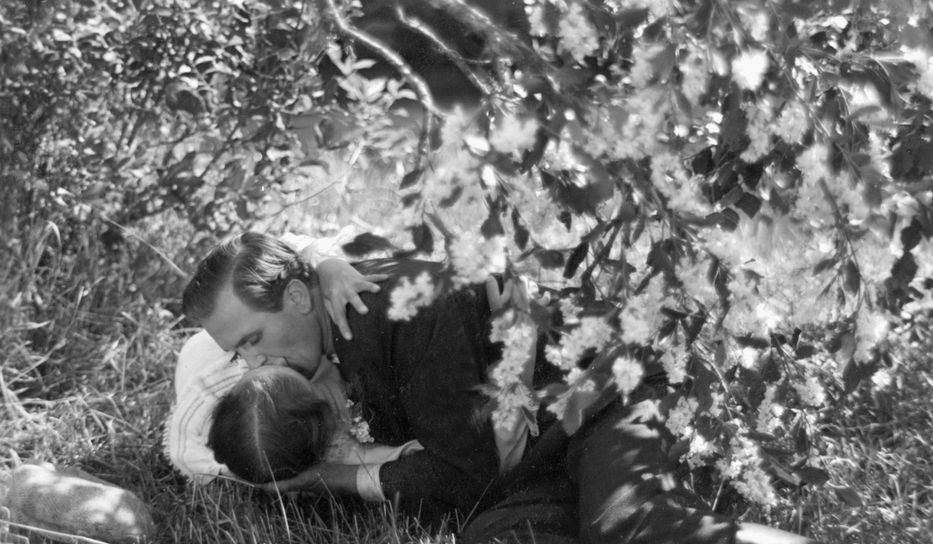
Star-crossed lovers Aliina (the ever-radiant Irma Seikkula) and Jalmari (Olavi Reimas) are separated by Aliina’s stern father Mr Jarvela (Väinö Sola), who thinks that his daughter can do better than a miller’s son. Sure enough, Aliina soon gains a new suitor in the form of the elderly widower Elias (Edvin Laine), a man from the next village who has pots of cash.

Realising that she is pregnant, Aliina gives in to Elias’s entreaties. Working at a distant saw mill, Jalmari hears that Aliina has got married and had a son, and returns, despondent to his home district, where he gets a job at Elias’s mill. There, he must fight off the predatory minx Kerttu (the relentlessly sassy Kirsi Hurme, in highly unconvincing braids), as well as the flirty Maija-Liisa (Tuire Orri), who is only chasing him to make her boyfriend jealous.
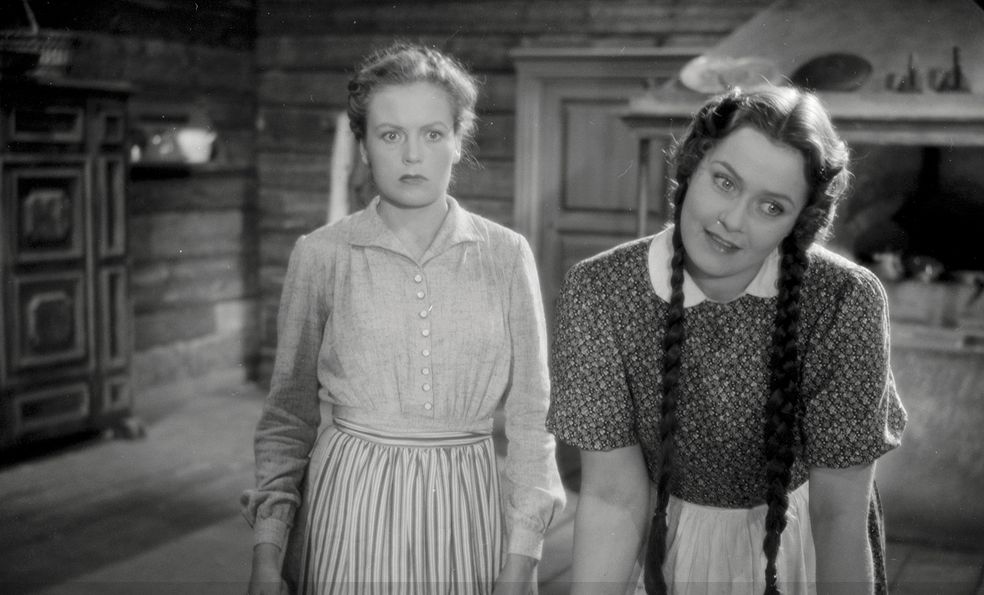
But it’s Aliina who he truly loves, and he begins seeing her again in secret. The jilted Kerttu tells her boyfriend to reveal the affair to Elias, to get Jalmari fired and take his job. A broken-hearted, vengeful Elias finds the lovers inside the mill’s wheelhouse, and locks them in, hoping to drown them when he opens the sluice gate. But his scheme is thwarted when Kerttu realises the consequences of her actions and organises a rescue.

Elias banishes his wayward wife, granting her only wish – a little cottage with Jalmari and their child. His sister Etla (Anni Aitto) offers words of comfort that are an inversion of the ending of The Women of Niskavuori (1938), telling him: “The young are young, the old must give way. The law of life is merciless. The harvest will increase. Then even the quiet hum of the old mill will continue.”
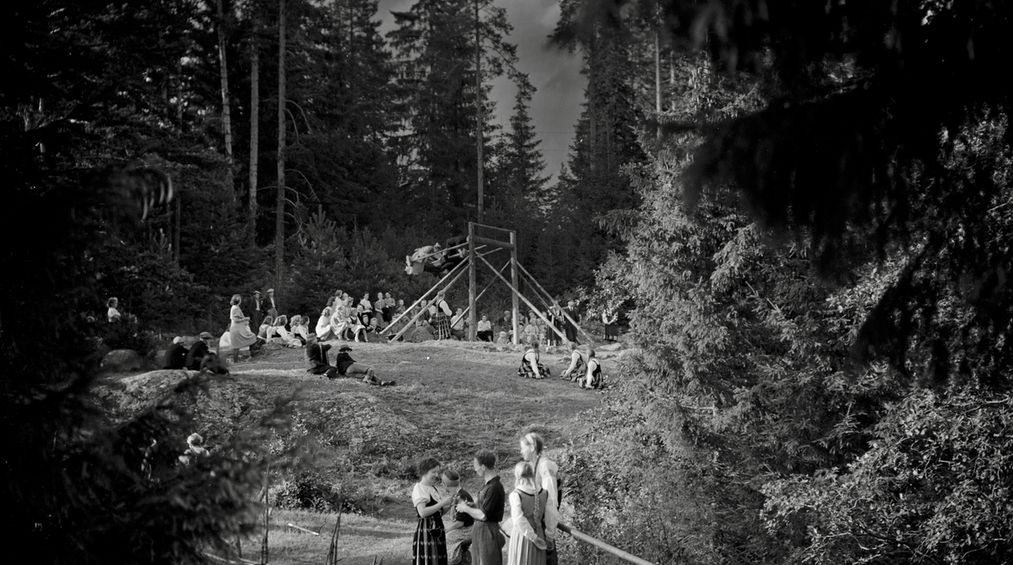
You would think that the Finns would have had enough of the rural-woman-with-illegitimate-child-reunited-with-true-love cliché, but this adaptation of Lauri Haarla’s 1942 stage play Keinu-morsian adds another one to the pile, despite its similarity to his earlier Scorned (1939) and God’s Storm (1940). Martti Larni’s script expands the original with a few action-packed exteriors of farm life and a funfair, but Suomen Filmiteollisuus hedged its bets by premiering the film in rural cinemas, ahead of its “first” night in That Fancy Helsinki.

Haarla finished the original script “while air-raid sirens were wailing in Helsinki”, and some of the press at the time noticed the palliative effect of a pastoral drama when audiences had other problems they wanted to forget. Despite panning the film as a waste of time, Paula Talaskivi in the Helsingin Sanomat noted: “Eino Heino’s camera has captured within its frame the rural views that constantly captivate my eyes and the brightness of summer nature.”
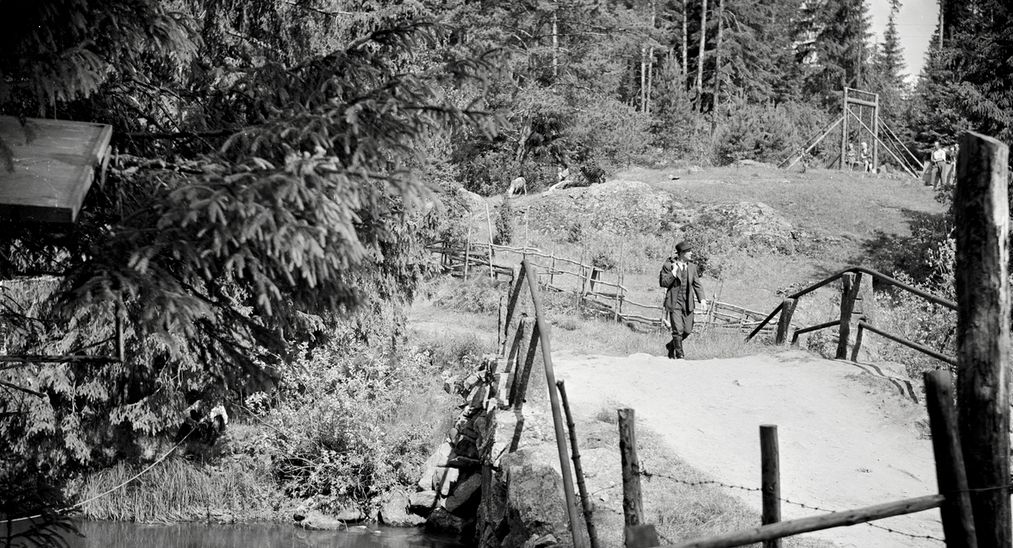
Eight decades on, the camerawork remains the most striking thing about it, including an opening shot in which the happy lovers on a swing remain static while the entire world spins around them. The forest scenes, too, are shot in natural Finnish light, with the skies ablaze but the foregrounds often shrouded in shadow because of the low sun. Lakes are shot with painterly indulgence, and dockside scenes bustle with documentary urgency. Then and now, Valentin Vaala’s film plays like a keepsake of a past that had already gone, and yet which looms so largely in the family backgrounds of many Finns, for whom the lakes and forests of their ancestry are never all that far away.

Jonathan Clements is the author of A Short History of Finland. He is watching all the Finnish films so you don’t have to.


Eurovision Shouty I-Spy 2026

It’s 2026, the year of pointy shoulders, the year of a man painted silver, standing inside a Darth Vader silhouette, singing that he wants more. The year in which Britain sings in German, and in which hosts Austria’s “My Lovely Horse” entry to avoid winning again includes a man with a blue star on his face, and people with animal heads. And in which Finland is the bookies’ favourite, because they’ve got a blonde playing the violin and a man singing inside a burning sauna.

Step One: you will probably need to be quite drunk. Step Two: The following sights and sounds will occur during this Saturday’s Eurovision Song Contest. Can you spot them first? Remember to shout it out. As ever, there is more than one key change, and plenty of orbital cleavage. Keep your eyes (or ears) open for any of the following. And when you notice it, SHOUT IT OUT! Points can be scored all through the contest, on and off stage, including during the voting and in the greenroom, and there are quite a few to look for in the background video, too.

  • Golden glittery piano
  • Sudden angel wings
  • Starting upside down
  • Number 373 (it’s an area code)
  • FLAME ON! (every time there’s flames)
  • Giant opera singer
  • Glowing white spaghetti
  • Singing in a face mask
  • KEY CHANGE!
  • Hands make a heart
  • SWORD!
  • The slowmo backing dancers
  • COSTUME CHANGE
  • Lyrics: “You’re in my head, my heart, my body part.”
  • Neon gazebo
  • Scooter!
  • The Matrix backing dancers
  • Hands through the stage!
  • Onstage knitting
  • Singing to a pocket watch
  • Danes in a box
  • Greek statue comes to life
  • Fireman’s pole
  • Singing inside a giant gemstone
  • Backflip
  • Suddenly she’s wearing shades
  • WINKING!
  • A white witch hovering off the ground
  • Chair dancing
  • Imaginary bouzouki solo
  • Onstage Bacofoil box
  • One Thigh-high
  • Bimbling*
  • Orbital cleavage**
  • Buddha Jazz Hands***

Someone says “Jaja Dingdong!” — An oldie but a goodie, liable to crop up during the voting.

Greece awards 12 points to Cyprus / Former Yugoslavian Republic awards 12 points to Former Yugoslavian Republic.

(*swaying one’s head from side to side in a snakey fashion)
(**ostentatious cleavage sufficient to see from a satellite in orbit, which, according to Eurovision bra consultant Tom Clancy, requires a minimum of C-cup)

(***the dancers all pile behind the singer in a line and then fling their arms out, creating a multi-limbed oriental deity-look)

Let the bangaranga begin.

Credits Roll into the Sea

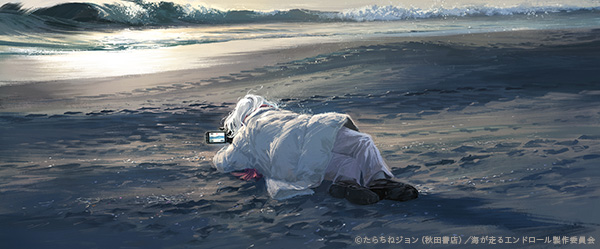
[Credits Roll into the Sea] has a lovely high concept, of a woman who believes that she has no story, but really wants to make one happen before she dies. The title of John Tarachine’s manga has a pun concealed within it. The “Umi” could mean ocean, but here it is also the name of our heroine, Umiko, a 65-year-old widow who is seized, after a lifetime of movie-watching, with the inspiration that she wants to make a film before she dies. Tarachine’s manga is a lovely evocation of the creative arts and the creative mind, starting with a woman who has never done anything before, immediately thrown off by the need to actually have an idea. Not even knowing what kind of film she wants to make, she heads off to the cinema to watch The Old Man and the Sea, where she runs into the androgynous and occasionally cross-dressing film student Kai Hamauchi.

The encounter with Kai introduces Umiko to a whole world of people just waiting for success in the arts, and to the fact that nobody is going to hand her a producer’s title on a plate. A producer needs to find the money, have the idea, sort out the script, find the actors, scout the locations… suddenly Umiko’s twilight years are vibrantly busy, and the whole thing is a touching memorial to her late husband, whom she first met on a date to the movies.

Repeatedly, Tarachine pokes around the fine line in media mogulship between getting stuff done and just goofing off. Is Umiko a dabbling dilettante or a producer in waiting? Is she having a cheesecake in a café with her mate, or is she investigating the possibility of a funding proposition? Is she off on a pointless daytrip with Kai, or is she scouting a location? One day, this might all turn into a movie… or nothing. It’s a lovely investigation of the literal glamour of movie magic.

Extracted from my Manga Snapshot article on Mystery Bonita magazine, from NEO #224, 2022. Credits Roll into the Sea will be released as an animated feature in 2027.

Koji Suzuki (1957-2026)

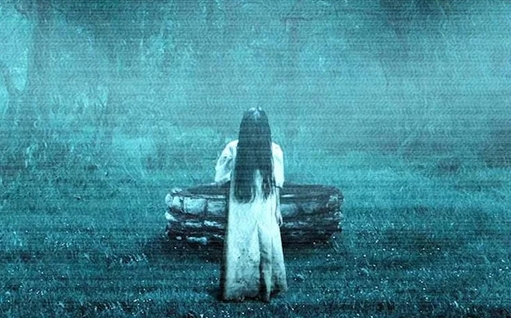
“His first novel, Paradise, is a ‘genetic’ romance, in which two star-crossed prehistoric lovers are separated by the Bering Strait, only for their distant descendants in the nineteenth and twentieth centuries to be reunited by some strange attraction and hereditary memory. However, it was with Ring, a supernatural detective drama, that Suzuki first found true success. Combining an eerie sense of the time abyss of the Japanese countryside, in which modern comforts are written only lightly over centuries of tradition and secrets, with one of fiction’s most perfect basilisks, it posits a ‘haunted’ scrap of film that will strike its viewer dead unless it is shown to another, hence passing on the ‘curse’.”

From my entry in the Encyclopedia of Science Fiction on the author Koji Suzuki, who died last Friday.

The Illiterate’s Guide

Fittingly on David Attenborough’s 100th birthday, I stumble across a podcast that latches onto the “history as a calendar year” analogy that I stole from Life on Earth.

It even comes with a bunch of nifty, and I am guessing, A.I.-generated infographics to summarise the book. But who are these anonymous podcasters? Could this be the first review of my work delivered by robots?