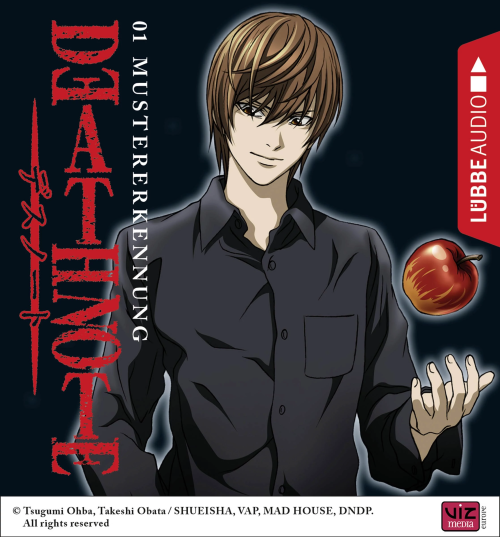
I recently stumbled across someone on the internet who had taken it upon themselves to try to transcribe my Death Note audio drama Pattern Recognition. I figured it would do no harm to put the actual script online for curious readers, rather than lead to the usual drifts in meaning and intent. I’d rather you saw what I actually wrote, rather than what someone thinks I did.
I wrote the 12-part audio adaptation of Death Note in 2017-2018. It was released by Audible in both German and French, and although I was contacted two years ago by an Audible producer looking for casting advice for an English version, I have heard nothing since, so I have no idea what’s going on there. But for those who might be interested in seeing the script for the first episode, here it is. I’m not sure I can get away with posting all twelve, but you get the idea.
This first episode is a good indicator of the changes that I started making to the original in order to reflect a different time and different medium. My Death Note is more of a police procedural than the anime (and yes, it was specifically an adaptation of the anime, not the manga), and also deals with certain changes in technology that would have otherwise ruined some elements of the original story — this is played for laughs in episode two, when Light goes in search of a “pocket television” and has to deal with a salesman determined to give him a smartphone. It also gender-swaps some characters and introduces some new ones, specifically Paula Virilio, the head of Interpol, who is parachuted in to help staple some scenes together, but also to add a stronger female voice to the sound mix.
And we’re back at All the Anime for just one more podcast, as I talk about this year’s festival with Andrew Partridge, the festival director, and Andy Hanley, who managed much of the day-to-day logistics. Although mine was the main face everybody saw on stage and in the pre-recorded director interviews, there were a dozen people working all year behind the scenes to actually get everything done, whereas I was a mere sock puppet, designed to distract the crowds while projectionists were kicking projectors and blowing the dust off hard-drives and all the other arcane things that projectionists do. The SLA staff are usually much more apparent in cinemas, running crowd control in their distinctive red shirts, but were asked to stay away this year on covid grounds.
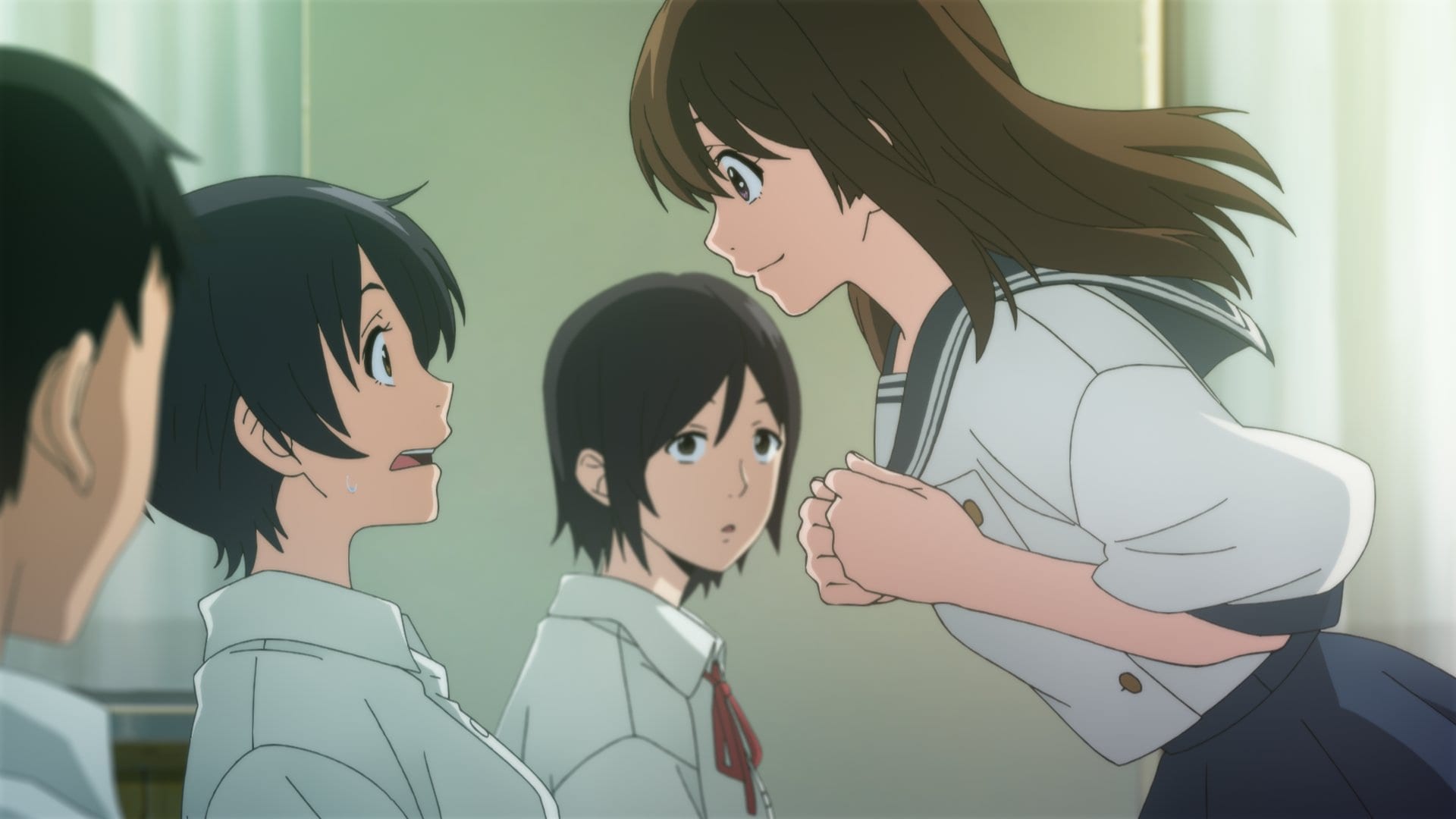
In something of a surprise, the Audience Award at this year’s Scotland Loves Anime goes to Yasuhiro Yoshiura’s Sing a Bit of Harmony, which I have unapologetically described as Ghost in the Shell meets Glee. As noted on Sunday’s podcast about the Golden Partridge award, the jury had serious misgivings about this film, which might also be parsed as Skynet: the Musical, but most punters in Glasgow and Edinburgh absolutely loved it. I, for one, really enjoyed the way that Yoshiura interrogated the tropes of teen anime by repeatedly wrecking them for comedic purposes.
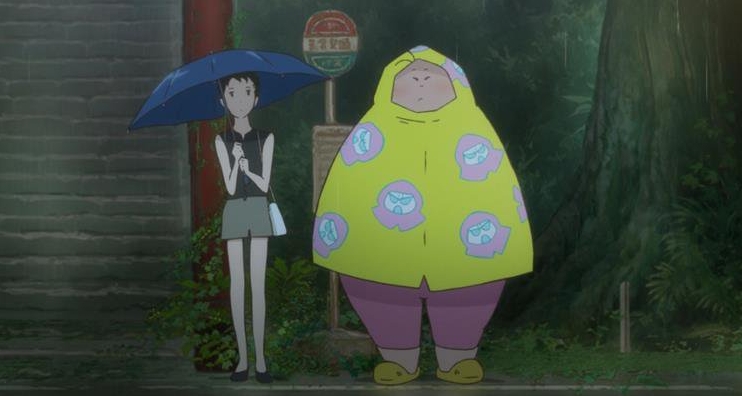
“After a tie in the first-round voting between two films, votes swung 5:1 for Fortune Favours Lady Nikuko, for its density of plot and incident, the heart and realism with which it addressed its blue-collar environment, and its quirky willingness to indulge in flights of animated fancy. The jury felt that, of all the works in competition this year, it best succeeded at being the film it was trying to be.”
This year’s Scotland Loves Anime jury prize, the “Golden Partridge”, controversially went not to the favourite, Mamoru Hosoda’s Belle, but to the slice-of-life dramedy, Ayumu Watanabe’s Fortune Favours Lady Nikuko. Over at All the Anime, the new podcast features Meghan Ellis, Claire Forrest and Suzanne Reilly discussing their deliberations in depth.
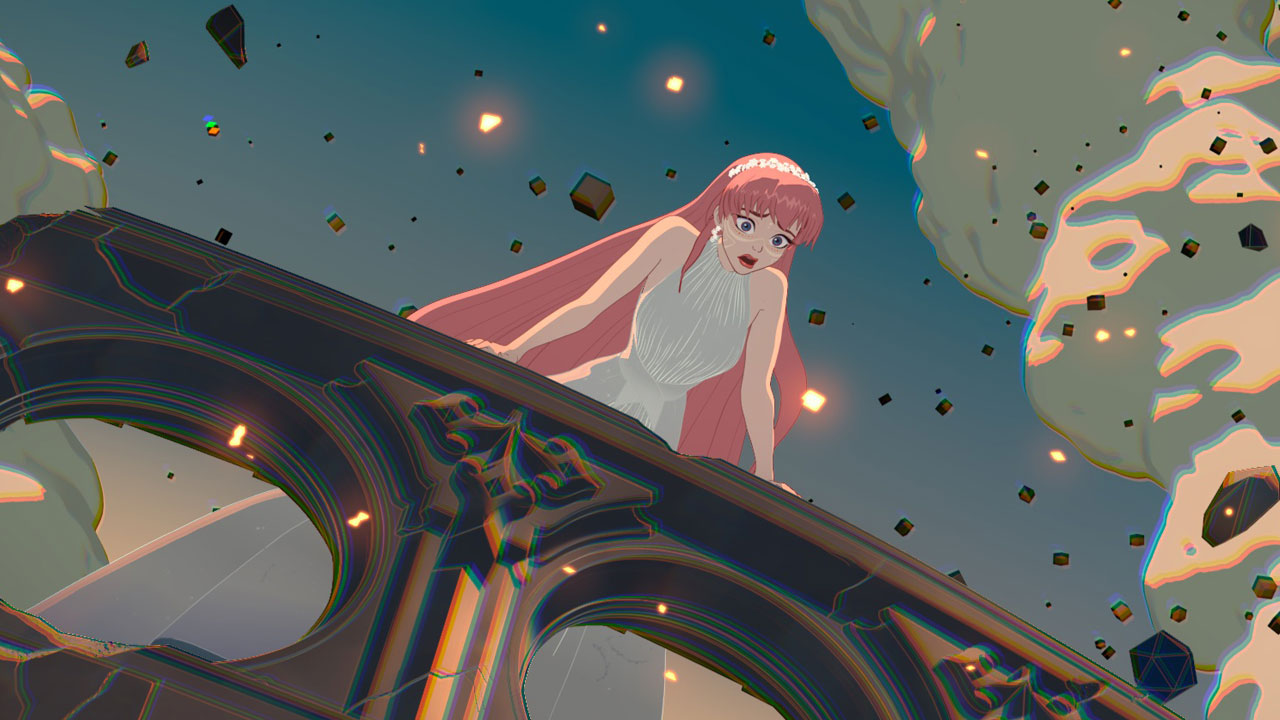
Gutted I can’t be at the UK premiere of Mamoru Hosoda’s Belle at the London Film Festival tomorrow, although I will be at its Edinburgh screening next week in both personal and avatar form, interviewing the director via Zoom for the post-film Q&A. Topics include animating under covid conditions, the importance of Disney’s Beauty & the Beast in his own artistic inspirations, and what kind of crappy cartoons a world-class animator’s kids force him to watch at home.
“Hosoda’s own mother died shortly before he completed Summer Wars, after a long illness that lasted for eight years. Her shadow loomed over his next film, Wolf Children, and indeed over Mirai, which examined the degree to which a child could relate to a dead grandparent. Belle, too, obsesses over a lost mother, but also over the opportunities of a digital age.”
This weekend I am mainly here, introducing a bunch of films, wrangling a jury, and shovelling my face with Sichuan food. Today alone it was four films with the jury, and introducing another four for the punters.
The Glasgow Film Theatre is playing host to another Scotland Loves Anime after a year’s imposed covid lockout. Tomorrow I have a podcast to record, three more films to introduce, and then a sleeper to the south to shoot a pilot. Apart from that, not too busy.
“Saito would ultimately produce manga versions of Live and Let Die, On Her Majesty’s Secret Service, Thunderball and The Man with the Golden Gun. His work on Bond would inform and inspire his most famous creation, a globe-trotting, ruthless assassin named in part for his high-school teacher: Duke Togo, codenamed Golgo 13.”
Over at All the Anime, I write up the life of Takao Saito.
“So much of what we know today about 1960s anime – anecdotes, scandals, gossip and all – derives from Yamamoto’s book. It is Yamamoto we have to thank not only for the assessment of Mushi as a ‘dangerous business model,’ but for ample evidence as to why.”
Over at All the Anime, my obituary for the writer and director Eiichi Yamamoto.
Japanese Cinema in the Digital Age deftly avoids the error of many other works on the subject, by realising that ‘digital’ technology does not merely apply to production. Digitisation has affected everything from the ease with which cinemas can add extra screens, to the access of fans to obscure movies, to, well, me telling you this. If you are reading this, you are two clicks away from buying Mitsuyo Wada-Marciano’s book for yourself, an immense change to modern consumption, whereas previous generations would have had to resort to a long tramp down to the library or bookstore.
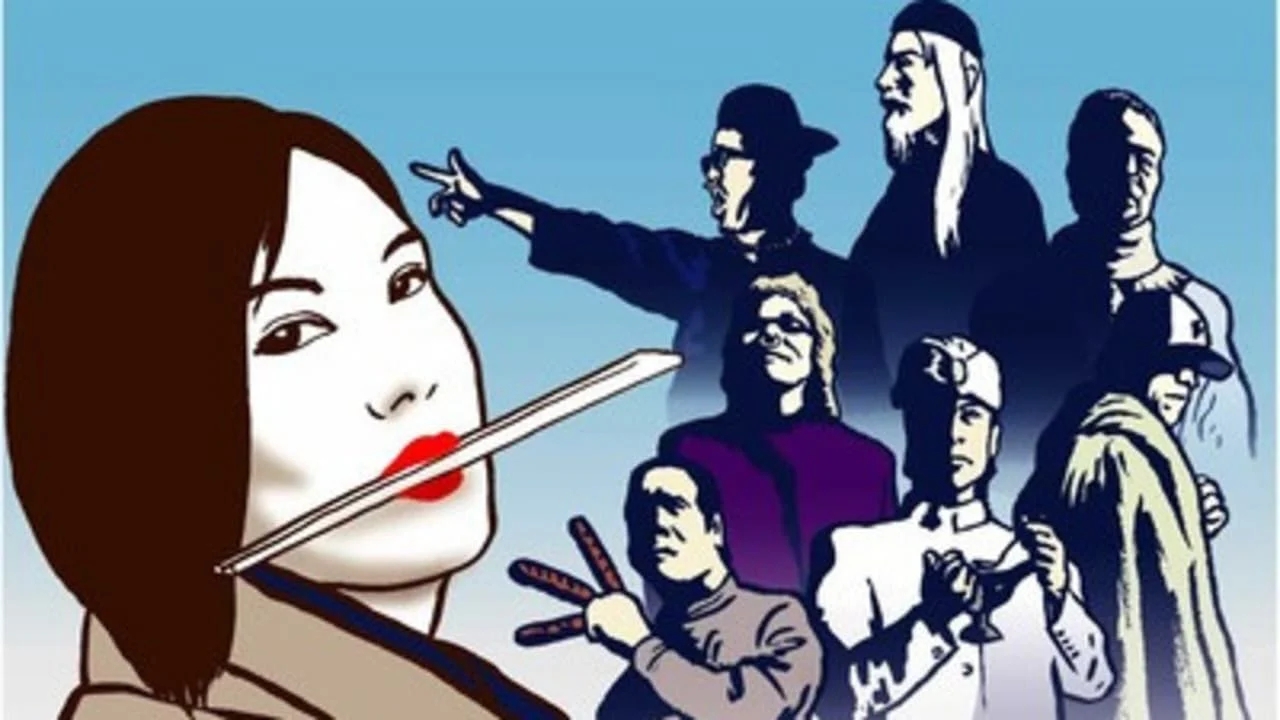
One of her five chapters is devoted entirely to Japanese animation, in recognition of its vital role in taking Japanese culture to the rest of the world. She fixes her focus on several intriguing creators, in particular Makoto Shinkai, whose Voices of a Distant Star, made in his lounge, distributed by internet mail order, is surely the epitome of the digital transformation. But she also examines Koji Yamamura, the Oscar-nominated animator whose short films constantly re-assert a ‘Japanese’ quality, seemingly with an eye on the international market, as well as Mamoru Oshii, not for his big-name anime movies like Sky Crawlers, but for his experimental hybrid film Amazing Lives of the Fast-Food Grifters.
Wada-Marciano is intrigued by the modern buzzword ‘transnational’, but unlike many of her colleagues, she does not blindly accept it as an example of a Japanese culture taking the world by storm, but rather as an element within a global culture. This attitude is particularly noteworthy in her other chapters, in which she delves into Japanese film abroad, including an entire chapter on J-horror, and its relationship to the rise of the DVD. Here, she engages with the simple fact that so-called V-cinema broke the log-jam of films awaiting a theatrical release, freeing young creators to experiment in what used to be called B-movies, but also confronting consumers with alternate entertainments. Some, she points out, such as the chilling Ring, were arguably even better viewed in your home, on the TV, where some of the more iconic moments might have had a greater, more immediate impact. More importantly for anime, DVD allowed what she calls a preservation of ‘cultural authenticity’, allowing for the presence of Japanese-language tracks, even on DVDs that would largely be watched by dub fans.
If I have any quibbles about the book, it is that it is merely the opening preamble of a much larger, longer argument for the impact of digitisation. Wada-Marciano makes a strong case for considering ‘industrial strategies’ rather than the usual guff about fan receptions and subcultures, but seemingly lacks the space to truly dive feet-first into what that might mean. In the case of anime, for example, digitisation has been part of industrial discourse since as early as 1974, when Toei first began consultations on a computerised production system. Digital storage, computerised camera tracking, Avid editing and scanned images have all formed a major part of anime’s development, as has the sudden immediacy afforded to overseas subcontractors by the invention of the ISDN, and the simple ability of online fans to gripe, moan and proselytise to each other about new shows. Most notable among such omissions is any mention of Celsys, the company whose RETAS Pro animation software has become an industry standard, and arguably as influential a template for style and art as Tezuka’s limited animation revolution in the 1960s. Nor is there much discussion of what Ramon Lobato calls the ‘informal economies’ of piracy and torrenting, which have had a world-shattering, and possibly terminal effect on Japanese cultural production, even as they carry it to more viewers.
But it’s unfair to dwell on the things that aren’t in a book when there is so much of value between its pages, not the least its insightful discussion of the live-action Initial D movie, a ‘Chinese’ film made in Japan for the largely Cantonese-speaking overseas market, based on a Japanese manga and anime, but tied just as heavily into the consumption of customisable cars for boy-racers. If that’s not ‘transnational’, I don’t know what is.
Jonathan Clements is the author of Anime: A History. This review first appeared on the now-defunct Manga Entertainment blog in September 2013.
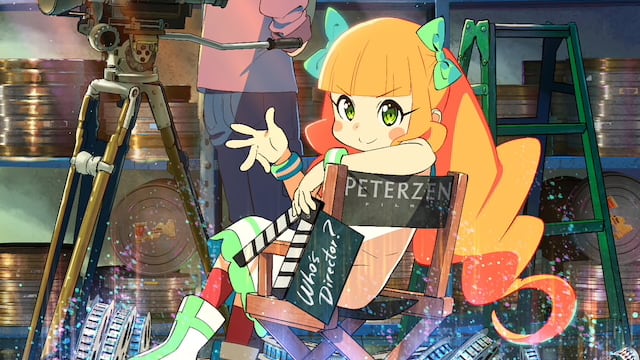
“Unlike Shirobako, which prides itself on a realistic depiction of the nuts and bolts of making an animated film, Pompo is more interested in creating the impression of working on live-action movies. It approaches film-making with a relentless, infectious optimism, almost as if a bunch of downtrodden, underpaid Japanese animators have fixated on Nyallywood as an idealised dream factory, where true talent wins through, the show-runners (well, most of them) can spot a rookie’s potential in the raw and train them for success, and everybody gets their just desserts.”
Over at All the Anime, I write up Pompo the Cinephile, a film that glorifies B-movies, from the man who made that thing about the robot sharks.
Time was, back in the eighties, when anime cels were literally regarded as industrial waste. Some, it was true, were “banked” to use on later episodes of the same show, but when a show was over, they were thrown away. Thanks to increasingly strict laws on plastics and polymers, they had to be expensively disposed of, leading to one notorious incident in which a studio was caught burying their old cels in a hole in the backyard.
Anime cels were pointless fragments of an image, the building blocks of filming, their purpose fulfilled the moment they were composited together and photographed to make a particular frame of actual animation. When Carl Macek asked for all the old cels from Akira, the film-makers gleefully threw them into a shipping container and packed them off to California, as if they’d just sold him London Bridge. But Macek also ran an art gallery, and he saw the value of cels as industrial artwork, and as freebies he could give away with the Akira VHS, in order to encourage people not to settle for pirate copies.
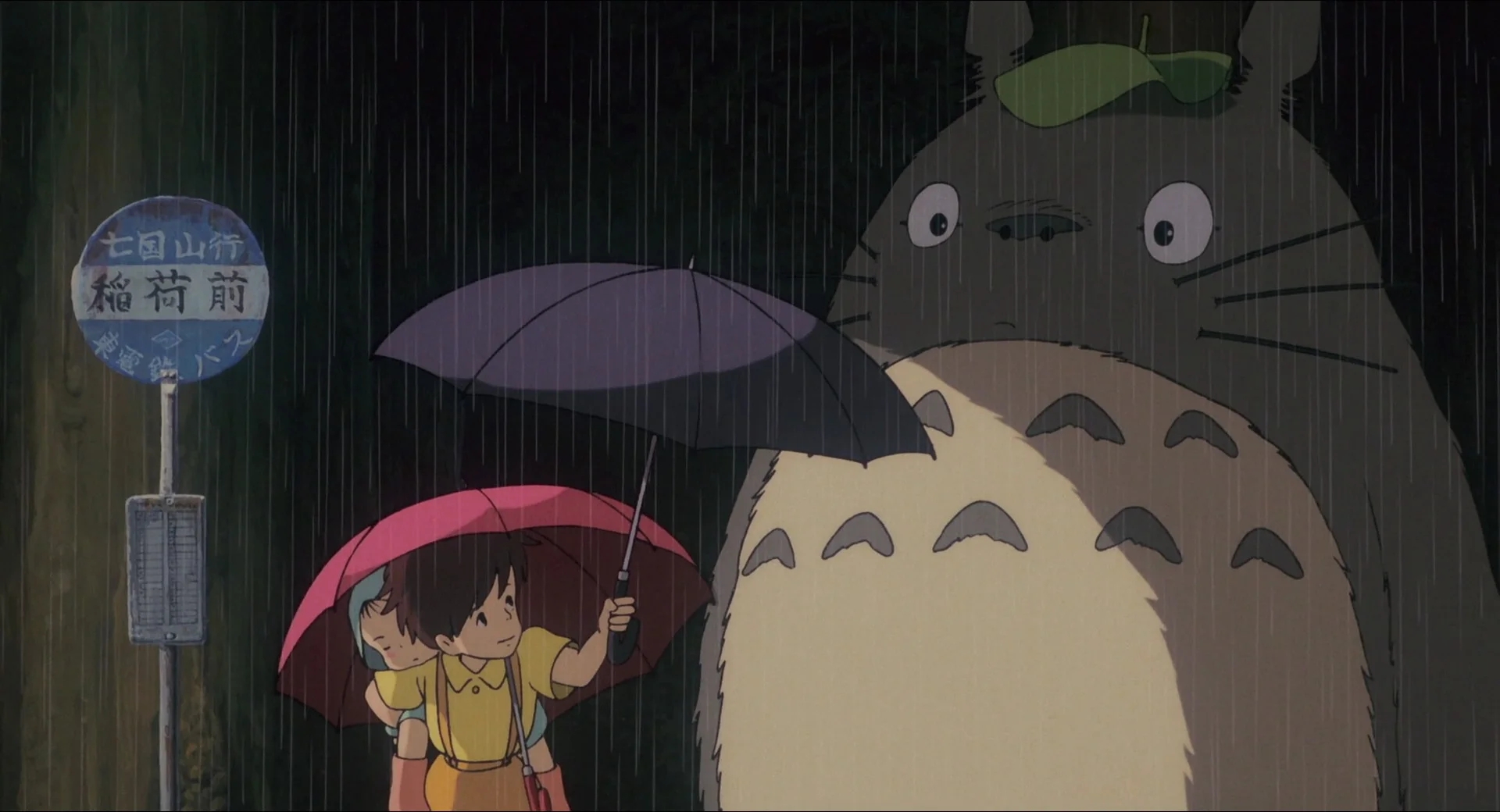
And so, there is a certain irony in this month’s news that an anime cel, which would have once been something the studio literally couldn’t give away, has sold for a record-breaking price of 26.4 million yen – that’s £173,625.00 to you.
The online auction in Japan became headline news for the smug-factor it is sure to instil in any fan with a couple of souvenir cels. But, of course, it’s never that simple. Because the cel in question is an image from My Neighbour Totoro, and Miyazaki is such a notorious control freak that it, like all the other cels, is liable to be touched by his own hand. Heritage Auctions (HA.com) have hosted a number of similarly high-value sales in the last few weeks, including other iconic images from Akira and Studio Ghibli works – all titles sure to be known in the mainstream and to retain their value.
Then again, there’s another irony, since this month’s anime news also features a spat over at Mappa regarding the super-low pay now being offered to animators as the studio scrambles for as much of that Netflix dosh as possible. Yesteryear’s anime is being valued ever higher. Today’s barely pays a living wage.
Jonathan Clements is the author of Anime: A History. This article first appeared in NEO #211, 2021.




 The Official Schoolgirl Milky Crisis Blog