The Seeds of Anime

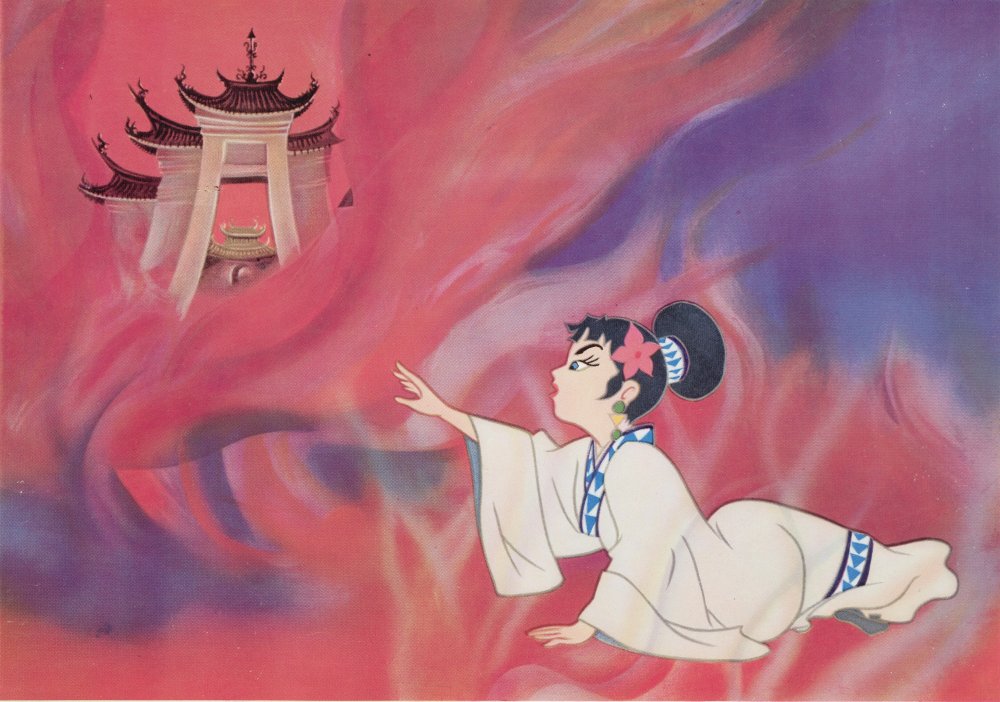
“Whereas Japanese animators had thrived during World War II on contracts for propaganda and instructional films, the immediate post-war period saw severe contraction in the industry. Female labourers conspicuously disappear from the story of Japanese animation in the 1940s as the menfolk returned home. Competition in the labour market was heightened not only by the return of demobbed soldiers and colonists from overseas, but by the influx of former employees of the Man’ei studio, in what had been Japanese-occupied Manchuria. The leading artists of wartime animation suffered attacks from two sides, as propagandists working in the field of ‘incitement to war’, and hence liable to prosecution, but also as suspected leftists as the Cold War began to bite.”

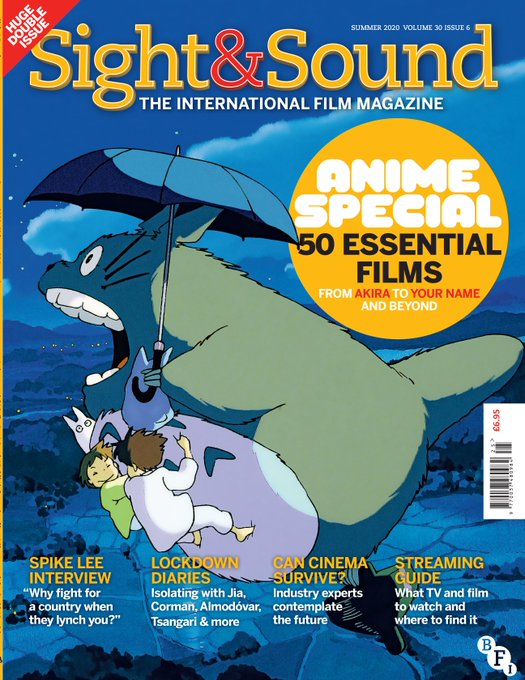
My recent article for Sight & Sound magazine about the post-war development of the Japanese animation industry has been put up on the magazine’s website.

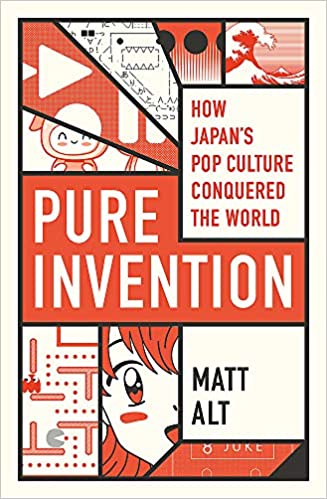
Pure Invention

“This is a wonderful book, exuberant and joyful, full of love for Japan but a deep appreciation of the sorts of links that get left out of popular accounts – political economies, human-interest stories and technological determinism. We do not merely get to experience the Sony Walkman through the eyes of its designers and the company chairman who just wanted to listen to music in public, but also through the eyes of Steve Jobs, who is fascinated by its miniaturisation and utility, and the ears of William Gibson, who discovers a “strange grandeur” to Vancouver as he walks around his city with a new and personalised soundtrack.”

Over at All the Anime, I review Matt Alt’s Pure Invention, a book about the material culture and stories behind some of the inventions that changed our times: the Walkman, the Game Boy, the karaoke machine, and anime…

Hideyuki Kikuchi

“…”it recounts the efforts of Earth’s vampire aristocracy to repel an alien invasion, revealing at least some of the back-story to what appears to be Kikuchi’s magnum opus, a millennia-spanning conflict between Dracula and Cthulhu, glimpsed in mere fragments across a time abyss that only appears vast to mere mortals.”

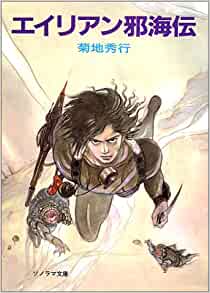
“It surely did the franchise no harm that its unifying surtitle, written in a syllabary unintelligible to American lawyers as the word eirian, leapt out from bookshelves at passers-by who might have assumed it was a tie to the film Alien (1979). Yoshitaka Amano’s cover artwork might also be complicit in this subtle fakery, depicting the schooboy hero as an occasional lookalike of the actress Sigourney Weaver…”

Over at the Encyclopedia of Science Fiction, I contribute a monstrously huge entry on the work of Hideyuki Kikuchi, creator of Wicked City, A Wind Named Amnesia, Vampire Hunter D, and many more.

Royal Space Force

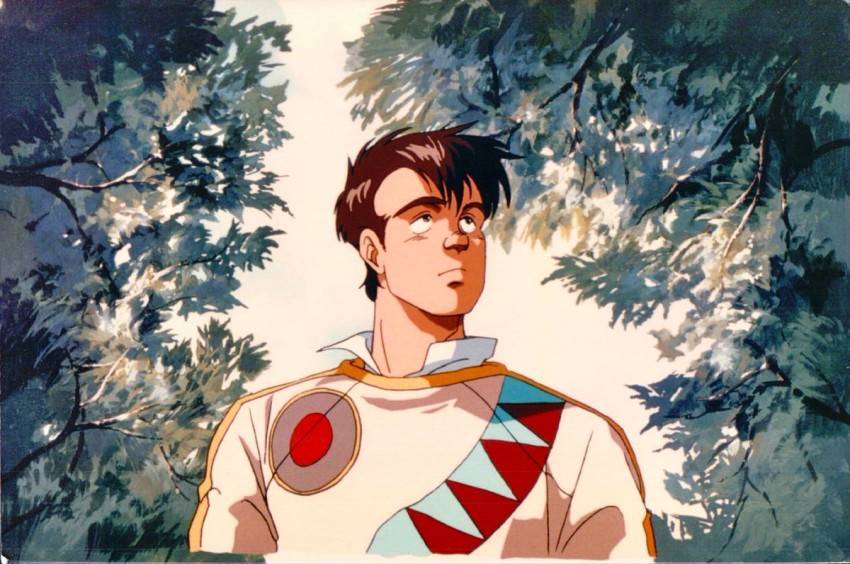
“Hideaki Anno had proudly showed the pilot footage to Hayao Miyazaki, who hated it. Miyazaki told him that on the basis of the material in the trailer, the film would have to be three hours long to cram everything in…

“Miyazaki would later say that the Gainax boys had swindled Bandai, putting together a pilot that was palpably influenced by his own Nausicaä, and then ditching much of the look of the material for something completely different, as soon as they had money in their hands. That’s not how Gainax described it, with [Hiroyuki] Yamaga… explaining in great depth how he had spent a year carefully considering and reconsidering how the film should look, stripping away anything that felt too much like it resembled any fore-runners in the field. What this meant, of course, was by the time the time Gainax got to work on their project, the only promise it was still delivering on was the promise to be like nothing else.”

Over on the All the Anime blog, I write about the behind-the-scenes shenanigans on The Wings of Honneamise.

Sight & Sound

Out today, the latest issue of Sight & Sound magazine, an anime special featuring my article on the seeds of the anime business in the post-war period.

I have been a subscriber to Sight & Sound for over thirty years, but this is the first time I have actually appeared in their print edition as a paid contributor. Although I have written rants to their letters page on a couple of occasions, once memorably about the correct way to translate the theme song of Kekko Kamen.

The Japanese Cinema Book

“Ni Yan… writes a ground-breaking chapter on Japanese cinema in occupied Shanghai…. Stephanie de Boer writes thrillingly about Sino-Japanese tie-ups in the Cold War world, and Ryan Cook practically made me fall off my chair in surprise with his chapter on remakes and adaptations, which included discussion of A Warm Misty Night (1967), nothing less than a Japanese remake of Casablanca.”

Over at All the Anime, I review Bloomsbury’s comprehensive Japanese Cinema Book.

The Metabolist Imagination

Over on All the Anime, I review William O. Gardner’s new book on the Japanese architects who dreamed of a brave new world in the 1960s, whose ideas informed so much of the science fiction of the years that followed.

“Gardner, for example, finds it ‘striking’ that so many of the mecha shows of the 1970s, starting with Mazinger Z and culminating in the iconic Gundam, should seem to allude so closely to Metabolist ideas of ‘cyborg architecture’ – a machine-based enhancement of human potential that was one of the central ideas of the movement. He points, most obviously, to Katsuhiro Otomo’s Neo-Tokyo in Akira, based on the architect Kenzo Tange’s Plan for Tokyo (1960), which proposed building into and onto Tokyo Bay – an idea subsequently riffed on by Patlabor and Ghost in the Shell.”

*Not* Big in Japan

“Why is that giant robot skipping…?” I return to the All the Anime podcast for another time-wasting podcast about (among other things) — the reasons for corporate pseudonyms in the anime business, why nobody likes Swedes, the politics of reindeer herding, “southern softies” from Helsinki, anime that are more popular outside Japan than in it, and, as ever, why I love Gunbuster.

APPROX TIME CODES FOR THIS EPISODE –

00:00 – 02:34, Intro.
02:35 – 07:53, An update on life in Finland during lockdown, the politics of reindeer herders
07:54 – 19:31, Jonathan on the re-recording of Gunbuster, then discussion about Diebuster too.
19:32 – 31:25, Who is (or isn’t) Hajime Yatate? A look at how this pseudonym came about and its impact on the industry to this day.
31:26 – 41:48, (continued from the section above) Have there been any more examples of blowback by a creative because they lost a credit to a studio?
41:49 – 56:15, Discussion on titles being more popular outside of Japan but also how a title may be presented to be perceived larger than it is.
56:16 – 1:02:53, (Continued from section above) The crucial missing component in the foreign attention pattern: China.
1:02:54 – 1:11:48, The Chinese animation industry as it is now.
1:11:49 – 1:15:13 [END], Show close.