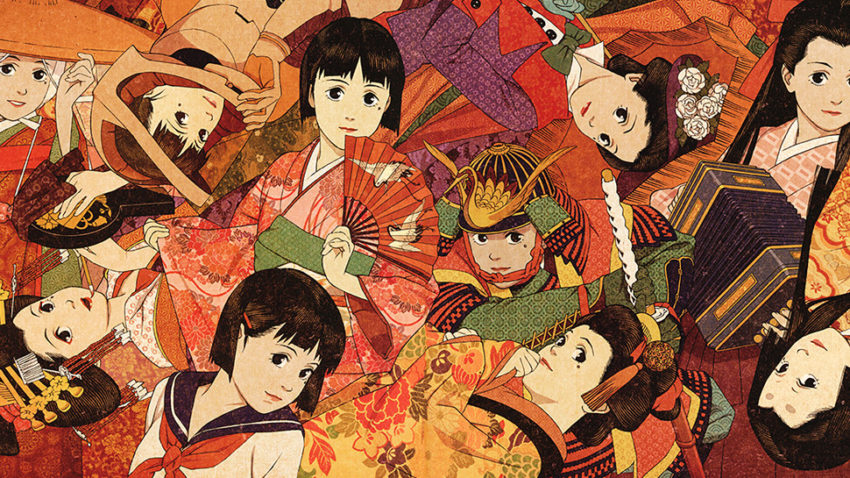
“‘I am not really familiar with Japanese films,’ [Satoshi Kon] commented in an interview at the time of the film’s release. ‘I think I get more from the combination of memorable films that I saw in my childhood, rather than particular scenes from particular films.’ In other words… Kon’s movie references are a set of impressions of certain movie types – a fantasy of what the films might have been, rather than what they actually were.”
Over at All the Anime, I write about just some of the dozens of movie-history easter eggs in Millennium Actress. Another extract from my long essay in the new Blu-ray release.
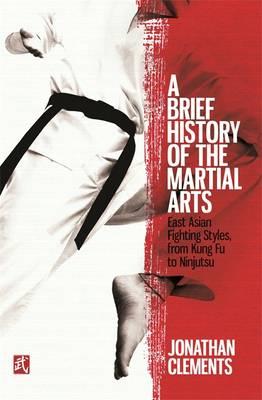
“If I had to pick a single general martial arts history book in English, I would recommend A Brief History of the Martial Arts by Dr. Jonathan Clements.” Over at the Martial History Team blog, my book gets a nod in their “Best General Martial Arts Histories in English” category.
“This is the book I recommend if you want a single volume on martial arts history based on sound evidence and sourced research,” wrote Richard Bejtlich in his review of the book last month. “I highlighted so many sentences in my Kindle edition that I ran over Amazon’s limit! …it’s an absolute steal and would make a great gift for any martial artist.”
“The 1990s saw the retirement of the generation that had created post-war entertainment. In the anime world, multiple studios were merging, folding or changing ownership as the surviving founders and primary shareholders cashed in their chips and went off to play golf. A new generation of bright young things, including Kon himself, was taking over – either with a sense of sympathy and respect for the old guard (like the character Genya) or with a blithe dismissal of them (like his cameraman Kyoji Ida).”
Over at All the Anime, I write about Satoshi Kon’s Millennium Actress as a point in time within movie history. This is an excerpt from a much longer piece I wrote as part of the Blu-ray booklet.
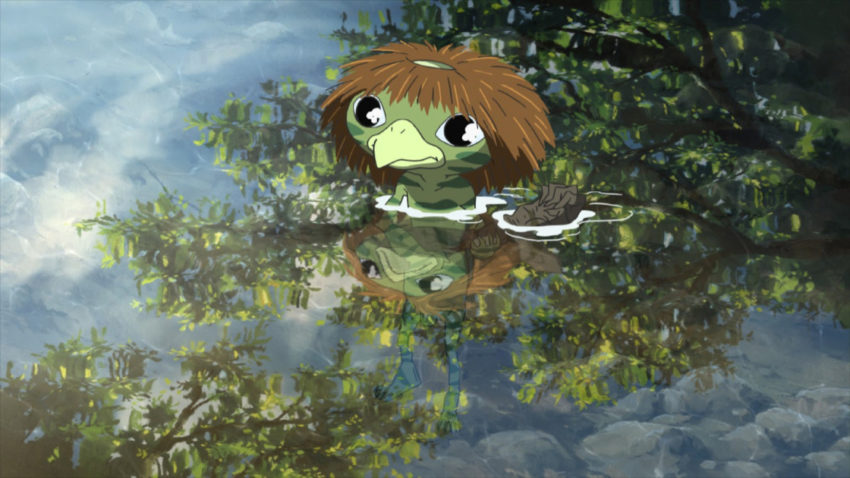
“Flickering at the edges of Hara’s script treatment is a melancholy consideration of how much has been lost of the Japanese past. Recalling similar musings in Isao Takahata’s Pom Poko (1994), Coo the kappa is a part of priceless Japanese heritage, hounded out of his natural habitat, orphaned by monstrous humans, and hunted through the streets with a price on his head.”
Over at All the Anime, I write up Keiichi Hara’s overlooked Summer Days with Coo.
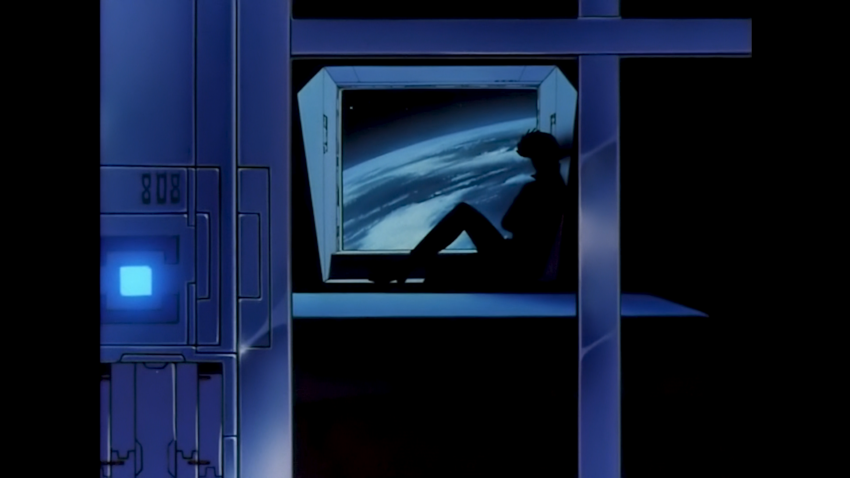
“From the opening shot, in which the camera pulls back from the view in Sengoku’s orbital prison cell, the production is marked out unmistakeably as a work by director Yoshiaki Kawajiri, much beloved by foreign audiences in the 1990s for his moodily lit, flashily shot works of urban gothic, and who would go on to make the fan-favourite Ninja Scroll.”
Over at All the Anime, I write up Yoshiaki Kawajiri’s fan-favourite Cyber City Oedo 808. Pretty sure this is the largest and most comprehensive article anyone’s ever written on this, and this is but the prelude to the 50-page book that Anime Limited are including in their forthcoming Blu-ray collection. For more details, check out Andy Hanley’s wonderful one-hour documentary here.
“This is not merely a book about the Heart Sutra. It’s about the stories that grew up around it, its journey through human civilisation like a self-replicating meme, a scrap of wisdom whispering in temples, shopping malls and movies. It includes the tale of Xuanzang, the monk who ducked out of 7th-century China on an impossibly long journey through the desert and over the mountains in search of Buddhist scriptures. It’s the story of the story about Xuanzang, not merely the historical reality of his life in the Chinese capital translating his hoard of sacred texts, but of the novel written about him by Wu Cheng-en.”
Over at All the Anime, I review Frederik L. Schodt’s latest book, which starts with a car crash and ends with Buddhist robots and John Lennon.
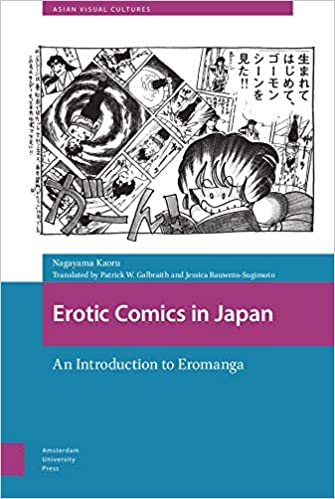
“The book is a translation not only of Nagayama’s original 2006 book, but of its 2014 re-issue, which added an extra chapter on, among other things, the controversially restrictive Bill 156. Opposition to this 2010 piece of legislation was entertainingly diverse, as were its targets. In one incident that ably demonstrated the dangerously broad remit of its crusade against ‘harmful’ works, one Japanese politician tried to use it to ban Winnie the Pooh.”
Over at All the Anime, I review Kaoru Nagayama’s forthcoming Erotic Comics in Japan, with time out for bra engineering, censored canoes and vanilla smut.
I’ve just caught Mike Toole’s terrifying Dubs That Time Forgot panel at Cloud Matsuri (which everybody should definitely watch through their fingers), and discovered that he has been telling people all over Christendom that I was the ADR director of the UK version of KO Century Beast Warriors. Worse still, Anime News Network’s database seems to be backing up this claim! I have sent a message to correct them so that such slanders may cease.
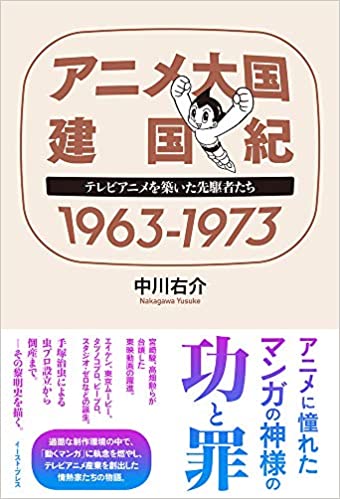
Out now in Japanese, Yusuke Nakagawa’s book Foundation of the Anime Nation 1963–1973: The Pioneers Who Built TV Anime is a welcome narrative not only of the revolution in TV production that led to Astro Boy in 1963, but of the rise and fall of the industry in its first phase. Created under false pretences, with some hand-waving accountancy voodoo that was never going to stand up to harsh scrutiny, anime on television enjoyed a brief boom-time as the number of available channels expanded, but then settled into a lingering downward spiral of reduced advertising returns and shrinking budgets, before the onset of a recession caused some vital corrections in course and planning.
Nakagawa’s book helpfully breaks down the decade into annual segments, beginning each with a chart illustrating who exactly is doing what – which anime are on television at the same time, and which studios are at work on rival products.
Although the book’s title promises a tight focus on television between the years 1963 and 1973, Nakagawa begins with the black-and-white propaganda cartoons of the 1940s, and the gradual accretion of Japan’s animation community in the 1950s. Nor does he ignore the very real influence of feature film animation in the same period, such as the bragging about Toei’s first colour feature, Hakujaden (1958), and the “first Tezuka anime”, which is to say, the Toei feature Alakazam the Great, for which Tezuka was a storyboarder. The film studios are very much a part of the history of TV, in part because, as detailed at length by Nobuyuki Tsugata, they hoped to cash in on advertising contracts, but also because they trained many of the animators who would then defect to TV.
The story of how Tezuka was tempted by his Toei experience to go it alone in the anime world is already well-known, not only in Japanese but also in English. The real value of Nakagawa’s book comes from when he pulls focus away from Tezuka, and looks at the activities in context in the other start-up studios that try to compete with him, such as Studio Zero, a reconfiguration of the community from the manga creators’ dormitory, the Tokiwa-so, or Tokyo Movie, a bunch of puppeteers trying to retrain in animation as it becomes the Next Big Thing. He brings in unexpected influences, such as the coterie of young SF authors whose script workshop formed a major resource for TCJ, makers of Tetsujin 28-go, a.k.a. Gigantor.
Piece by piece, we see elements of modern anime forming – the first female protagonist; the first giant robot, the first anime not to be based on a pre-existing property. The first merchandising spin-offs… all arise in real-time, their potential and impact often unnoticed by the people around them. Nakagawa also zooms in on several moments of crisis, such as the “Midoro Swamp Incident”, when Tezuka gave his staff a week off, contracted an episode of Astro Boy out to the fledgling Studio Zero, and came back to discover they had produced work so bad that he wanted it destroyed. There’s the Toei Lock-in Incident, when managers tried to freeze out union agitators, and a discussion of Just What the Hell Happened between Tezuka and his business manager Yoshinobu Nishizaki in the 1970s – did Nishizaki rip Tezuka off, or was he the fall-guy for an intricate scheme to keep Tezuka’s properties afloat behind a shell company?
Frustratingly, there are no citations, merely a bibliography at the back which gives little indication of which source supplied which nugget of information. So when Nakagawa calls Tezuka’s apprentice piece Tales From a Street Corner “unanimated anime” (ugokanai anime), it’s not clear to me if he is (fairly) assessing it as a piece that looked far better in books and newspapers than on screen, or if he is appropriating Eiichi Yamamoto’s term from several years later, used to describe the low frame-count on Yamamoto’s own Tragedy of Belladonna, made on a shoestring after Tezuka had robbed the kitty to bolster financial shortfalls elsewhere.
If you are a researcher hoping to delve deeper into such industrial matters, Nakagawa’s book offers a handy precis of particular moments in history, and a useful overview of how the landscape looked on a year-by-year basis. Its bibliography functions as a useful checklist of particular topics in the history of anime, but only for those scholars ticking through it to make sure they already have the sources themselves. Nor does Nakagawa’s reading seem to have included anything not in Japanese – Fred Ladd’s own account of the localisation of Astro Boy, for example, might have added a few more details and an additional perspective.






 The Official Schoolgirl Milky Crisis Blog