Game-Changers

Up now at the Encyclopedia of Science Fiction, an entire nest of articles about the women who transformed manga in the 1970s, including large entries on Moto Hagio and Keiko Takemiya, and a general piece on their Year 24 Group. As an additional bonus, there’s also a piece on Sachiko Kashiwaba, the fantasist whose work was infamously proclaimed as an “inspiration” for Hayao Miyazaki’s Spirited Away.

Tokyo Tower

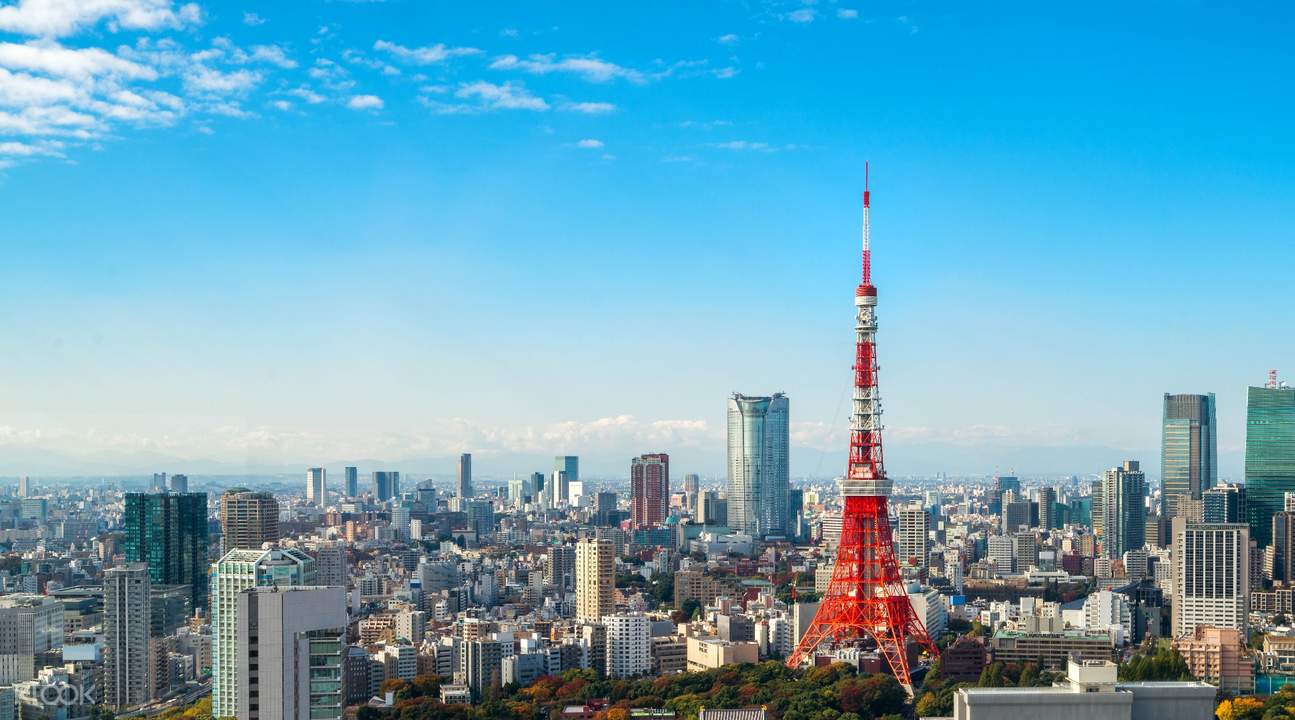
Television arrived in Japan in 1953. The technology would transform the city’s skyline. The original transmitter of NHK, Japan’s national public broadcaster, was inadequate to cover the entire Kantō region, and rival firms soon popped up with their own broadcast requirements. In order to avoid peppering the entire city with antennae, a consortium of channels and developers pooled their resources to create one massive broadcasting tower with a footprint that would reach all the way to the mountains. Modelled at least superficially on the Eiffel Tower in Paris, Tokyo Tower was originally intended to be taller than New York’s Empire State Building, although resources and requirements eventually dictated a slightly shorter height of 332.9 metres.

Work began on the tower in 1957 – the 2005–12 film series Always: Sunset on Third Street would later use the sight of the tower under construction as a background evocation of life in the post-Occupation period. Tokyo Tower became a symbol of Japan’s reconstruction, rising from the ashes of the war-torn city, asserting Japan’s greatness in the post-war world, and doing so by quite literally repurposing the trash of the old world order – a full third of the steel used in its construction came from hundreds of scrapped US tanks from the Korean War. It was completed in 1958, proclaimed as the tallest freestanding tower in the world, at least for a while, and painted in a bold orange-and-white colour scheme for safety purposes.

“The fact that the Tokyo Tower is a cultural landmark building,’ writes the author Patrick Macias, ‘speaks volumes about the lack of cultural landmark buildings in Tokyo.” It was always intended to have a dual function as a tourist site, although the prospect of having an observation deck a bit higher than the surrounding buildings would diminish in appeal as the years passed. Today, it seems faintly ludicrous to be excited about the prospect of being a few floors up when you’ve arrived in Tokyo in a jumbo jet. The Foot Town shopping complex beneath lures visitors to stay longer with restaurants and several museums, but, to be brutally frank, the Tower never quite achieved the status abroad that its investors had hoped for. Tourist brochures heralding Japan abroad tended to plump for stereotypical scenes depicting natural beauty or evoking the samurai. If they wanted to go modern, they would go for Mount Fuji, foregrounded by a rushing bullet train. The only place that Tokyo Tower achieved significant recognition was among the legions of movie fans who would see it regularly trashed, bent and stomped on by the likes of Godzilla, Mothra and Mechani-Kong. This is particularly ironic, since at least part of the will to destroy the tower on the part of 1960s film-makers surely stemmed from its role serving the competition, broadcasting the TV programmes that were luring audiences away from cinemas.

From An Armchair Traveller’s History of Tokyo, by Jonathan Clements, available now in the UK and the US.


Monkey Punch (1937-2019)

Over at the All the Anime blog, my obituary for Kazuhiko Kato.

“The editor said to me – ‘It’s hard to tell whether your art was done by a Japanese or a foreigner, so let’s create a pen-name that is indistinguishable by nationality.’ And after a lot of discussion in the editor’s room, they came up with MONKEY PUNCH.” Which was nicely inconspicuous.

Tokyo Shoe Shine Boy

The singer Akatsuki Teruko summed up the Occupation era with her 1951 song Tokyo Shoe Shine Boy, an upbeat ditty with a downtrodden message about a Japan that was still in thrall to American dominance. The titular shoeshine boy is getting on with his work, doing his earnest best to make every scrap of leather sparkle, while musing:

That lady that I like
Hasn’t turned up yet today
But perhaps she’ll come back
Even if it’s rainy or windy.

The girl in question appears to have business elsewhere, as a later verse reveals:

That lady in red shoes
Is she back walking around Ginza today
With gifts of chocolate
Chewing gum and Coca Cola?

With its recognisable foreign words and its frisky rhythm, Tokyo Shoeshine Boy was a hit in the dance halls – but it is also a flatly hopeless elegy, loaded with subtle clues, starting with the slang term for a Ginza promenade, Gin-bura. As the novelist Tanizaki Junichirō once archly observed, only a country hick would use such a phrase. That poor migrant labourer has nothing to offer her – he literally couldn’t even shine her red shoes with his boot-black polish, nor can he pile her with presents like GI-issue chocolate and chewing gum, or take her for an exotic Coke in swanky Ginza. ‘I’m sure she’ll come back tomorrow,’ he says brightly. ‘Someday we’ll go out dancing together.’ It is a triumph of Japanese melancholy, never once letting its enthusiasm slip, even though any listener can plainly hear what has happened. The song makes background appearances in two films – listen closely and you’ll hear it evoking the pop culture of the Korean War in M*A*S*H, and playing incongruously during a terrorist attack in Akira.

From An Armchair Traveller’s History of Tokyo, by Jonathan Clements, available now in the UK and the US.
Statue of Limitations

Just a couple more years, and Bandai accountants might have thrown away all the relevant documentation, allowing two former employees to get away with deceptively simple crime. But someone got a surprise when checking over old invoices, leading at least one man to get caught cooking the books at the Japanese company most famous for Gundam.

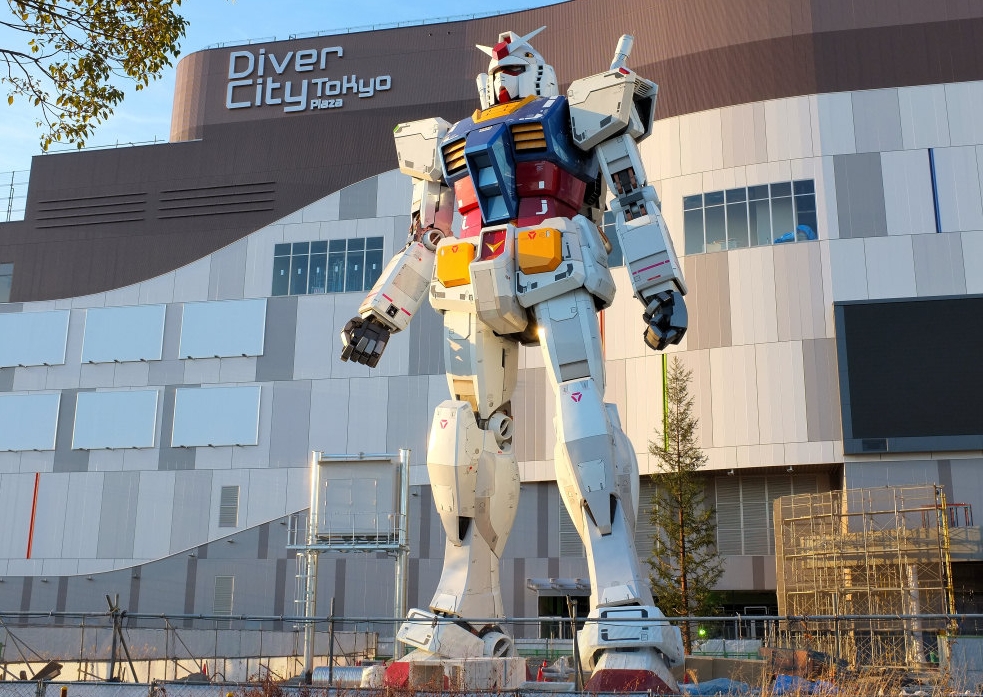
I say “at least one”, because so far among the accused, only Takashi Utazu (44) has pleaded guilty to the charges, which include talking up the costs of installing the giant Gundam statue in Odaiba in 2013, and pocketing the surplus. LED lighting, which should have cost 10 million yen, was billed to the company at 20 million, leaving Utazu and his alleged accomplice with almost £70,000 in pure profit. And that’s only one incident in a four-year scam, thought to have netted the embezzlers a total of 200 million yen (£1.4 million).

Because of the sheer size and volume of certain franchises, toy companies have to deal with sums an order of magnitude above what simple folk like you and I are used to. A few years ago, when the Japanese government was dickering about the expense of the much-mooted National Media Arts Centre, it was a Bandai staffer who put everybody in their place by pointing out that the sums under discussion cost no more than a single new theme-park ride. It’s very easy, said another, to spend a million dollars. He meant that when you’re dealing with numbers this big, the overheads of simply making enough toys for something to stand a chance of becoming a bestseller turn into phone-number sized entries on a spreadsheet. Bandai won’t miss a few thousand, right?

Well, wrong. Their bean-counters are super-powered, transforming maths robots, and the dating on these reports makes me think that someone flagged up something fishy, seemingly in projects connected to another employee – a man who is currently continuing to protest his innocence, even though he was fired in October 2017 over the audit findings. There’s a statute of limitations on financial reporting – in Japan as in the UK, companies aren’t obliged to hold on to records for longer than seven years. So the thieves might have got away with it, if it weren’t for those meddling accountants.

Jonathan Clements is the author of Anime: A History. This article first appeared in NEO #186, 2019.


Tabito’s Party

It was the party to end all parties. Otomo no Tabito, the governor-general of Dazaifu had invited thirty-one bigwigs from all over Kyushu to a fete in his garden, scheduled to be held a fortnight before reigetsu, the “auspicious moon” that marked the second month of the lunar calendar. The year was 730 AD. People came from as far away as Satsuma and Tsushima. The plum blossoms were just starting to open, there was mist on the mountains and the first signs of life were stirring – new butterflies had hatched from their cocoons, and old geese returning from their winter retreats.

Pleasantly sozzled, the vice-governor Lord Ki came up with a poem of welcome, suggesting that it was a nice night to welcome the plums – likely a reference not only to the flowers in the garden, but to the booze everyone was knocking back. His junior assistant, Mr Ono, answered with a poem of his own, pleading with the blossoms not to fall and scatter. Don’t forget the willows, said Mr Awata, another junior, again in verse form, creating a chain in which every guest threw in his own variation on a theme. It was a decidedly Chinese affair, redolent of the contemporary drunken poet Li Bai, conceived in apparent imitation of similar festivities in Chang-an, the distant capital of China’s Tang dynasty. There was a lot of talk of flowers, but also of the transience of life and the joys of booze. Later verses, fuelled by more wine, drifted a little towards the maudlin. The penultimate poem, from the secretary Mr Kadobe, spoke wistfully of the blossoms staying forever to delight the girl he loved… a rather tardy acknowledgement that only men’s voices were being heard, and that maybe they could all find something better to do than sitting around talking to other blokes. The women, presumably, were off somewhere having a party of their own, with limbo dancing and pillow-fights.

Tabito himself spoke in the middle, wondering if he could see scattering petals or flurries of late snow. But once the verse cycle was complete, he seems to have spoken up again, appending several other verses as closing remarks. The guests had tried to keep things light, but Tabito’s final words alluded to his advancing years, and his annoyance at a career that had seen him promoted away from life in Nara to a provincial posting. You could keep your wine, he said. You can keep your thoughts of Daoist immortality treatments. No booze or magic potion will make me feel young again. Only seeing the capital will do that for me. “To see [the capital] / That will cure this villainous old age / And give me my youth again.”

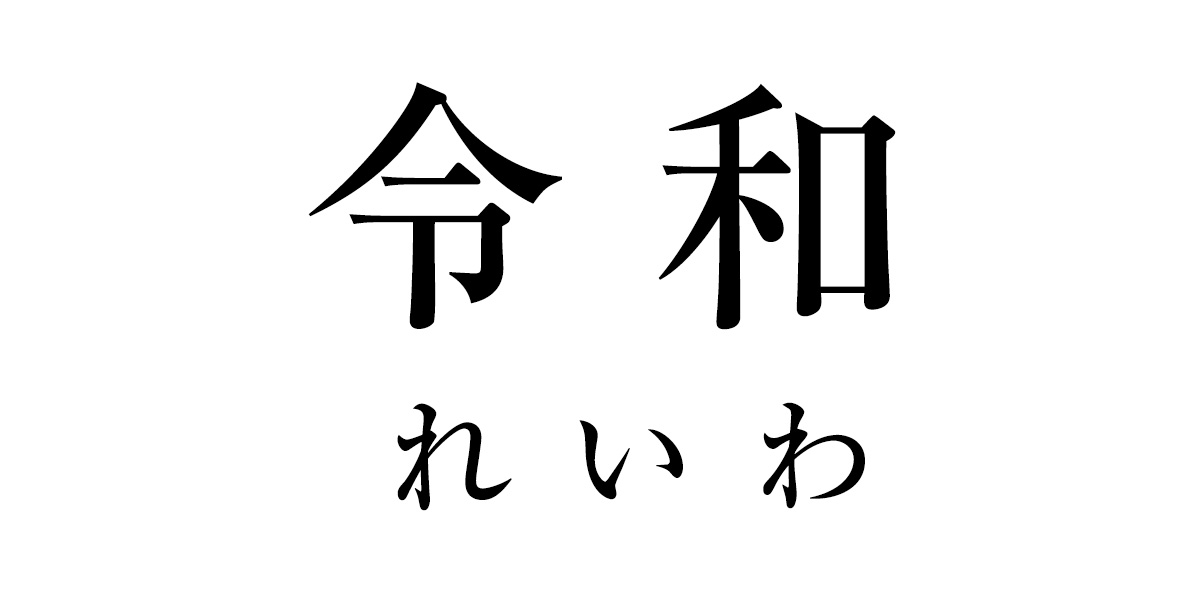
Otomo no Tabito died the following year, in his mid-sixties. The cycle of verse from his big party was preserved for long enough to end up a generation later in one of the poetry selections in the Manyoshu (Collection of Ten Thousand Leaves). It came accompanied by a preface written in literary Chinese, which set the scene with the fateful line (taken here from Edwin Cranston’s translation in A Waka Anthology: “It is now the choice month of early spring; the weather is fine, the wind is soft.” One thousand, two hundred and eighty-nine years later, the two characters rei and wa would be lifted from that phrase, and used to name the reign of the new Japanese emperor, Naruhito, in 2019.

Jonathan Clements is the author of A Brief History of Japan.

Animated Encounters

Over at the All the Anime blog, I review Daisy Yan Du’s new book about the inspiration and influences of Chinese animated films, which includes substantial detail on cross-pollination with Japan.

“Du’s concentration on Chinese animation in an international context is a rewarding account not only of films released, but of unexpected influences and projects that never happened. She regards the Wan brothers’ Princess Iron Fan (1943), for example, as’“far more influential in wartime Japan than in wartime China,’ but also reports that when Japanese animators came to Shanghai in 1988 looking for subcontractors on the Saiyuki TV anime, the Shanghai Animation Studio refused to work on it, because the Japanese version of the legend of the Monkey King deviated too far from acceptable norms.”

Money for Nothing

Hayao Miyazaki’s fluffy forest spirit Totoro has been around in China for thirty years, sneaking in through Taiwanese or Hong Kong DVDs, or stowing away in kids’ luggage on return trips from Japan. But his first official cinema outing in the People’s Republic did not come about until December 2018, when he suddenly burst out on 3,000 screens.

Interpreting the numbers, Totoro had a fantastic opening weekend, making $12.9 million and beaten only by Aquaman. But by the end of its second week in Chinese cinemas, its takings had slumped 75%. I’m writing this article on New Year’s Eve 2018, as Totoro’s total Chinese box office takings edge over the $20 million mark.

You might not think that $20 million is a lot of money, especially considering that half of that money stays with the Chinese distributors and exhibitors, and fair old chunk probably went on marketing. But Studio Ghibli certainly hasn’t lost any money by belatedly releasing its much-loved classic in China. In fact, it’s easy to forget that Totoro only made $5 million on its original Japanese release, and that was on a double bill with Grave of the Fireflies. Thirty years on, this is money for nothing. The Chinese box office last month counts for 80% of Totoro’s global lifetime theatrical takings!

But as long-time readers will know, movie accounting is often not about those numbers at all. It’s about a bunch of other issues, including the fact that the Japanese 2012 Blu-ray of Totoro created an all-new, cleaned-up pin-sharp copy of the film, ready for duplicating on 3,000 hard-drives to open on 3,000 Chinese screens. It’s about the fact that, unlike creaky old TV shows or low-budget video fare, movies have a much longer shelf-life, and a period piece like Totoro, with a rural setting and a feel-good tone, seems tailor-made for the Chinese provinces.

Meanwhile, with the suspension of the One-Child Policy, there are suddenly twice as many Chinese children to form a market. Children’s entertainment, along with clothing and toys, is a surging new growth area in modern China. Even considering the vast piracy of Ghibli products over the last few years – and I have never seen a Chinese video pirate who isn’t selling Totoro, usually a knock-off of the Taiwanese dub – there’s a whole new generation of Chinese kids who have never seen it, who now get to see it in cinemas, ahead of a roll-out of other Ghibli products. And is someone eyeing up the blueprints for Japan’s new Ghibli theme park, and wondering if they could transplant something similar to Shanghai Disneyland…?

[Since this article was published, the Chinese box office takings for Totoro climbed to $25.75 million]

Jonathan Clements is the author of Anime: A History. This article first appeared in NEO #185, 2019.