Death By Committee

sword-art-online-oculus-rift-virtual-realityJust for a day I would like to live my life like an anime production committee member. I shall tell the postman that I don’t approve of the way he opened the gate. I shall refuse to pay for a CD in a shop until the owner guarantees that he will end piracy on the internet. And I shall change my mind about the food I want to order in a restaurant, but only after I have already eaten it.

Such ideas are brought on by the revelation in a Manga UK podcast that the Sword Art Online DVD cover design has to change mid-series, because the Japanese licensors at Aniplex didn’t like the version that had gone out with the first disc – a version that they themselves had already approved. So Manga Entertainment is now left in the bizarre situation of having to change subsequent printings, leaving fans of the show with mismatched covers.

Collectors, if such creatures still exist, will be ecstatic to know that the art on the first pressing of SAO is never to be repeated. Fans who just want matching spines now face the prospect of having to contact Manga Entertainment at some future date to get replacements sent to them, which someone will have to pay for. Unless, that is, the SAO committee has another brainfart and changes its mind again.

Committees are supposed to make life easier. They are supposed to manage the franchises for everybody’s benefit. Since the 1970s, they have functioned as the executive bodies of intellectual property managing its hopefully long afterlife once it’s finished on Japanese telly.

One wonders about the make-up of the average committee. I like to think of a few disinterested lawyers, someone’s well-meaning widow, and the producer’s ex-girlfriend. One almost wishes for the devil-may-care days of the 1980s, when the Japanese didn’t really give a toss what happened to their material abroad. Now, can it be that they care too much? How many cooks are fussing over this particular broth for them to actually reverse their previous decision? At one point, one wonders, can someone stand up on the committee and recommend that their fellow members get a clue? If they can’t get their own product right, what are they for?

Jonathan Clements is the author of Anime: A History. This article first appeared in NEO #122, 2014.

Your Country Needs Geeks Like You

ob2Just when life looks grim for slacker Shinichi Kano, he discovers that his love of anime, manga and games is a fast-track to a new career. Earth has opened a magic portal to a parallel universe, and now it needs cultural ambassadors to jump into a fantasy world and sell the locals… stuff! Walkmans and iPads, Nintendo consoles and cartoon serials about demon warriors, anything they will buy.

Shinichi is packed off to the magical Eldant Empire. Imagine some hipster salesman wandering around the set of Game of Thrones, trying to interest Queen Cersei in Viagra, and offering Tywin Lannister a better lock for his toilet door. But it’s a dream come true for the average sci-fi nerd, dropping in on a world of slave-girls and stirring swordplay, but still being able to pop home.

The anime series Outbreak Company beautifully captures a very modern sensibility. Look around any classroom of bleary-eyed teenagers, and you will see a bunch of kids who, only the night before, were leading armies of orcs, rescuing kidnapped princesses, and slaughtering legions of zombies… in their bedrooms. Fantasy worlds have made increasing demands on our time, sneaking out of books and films and into our daily lives, our games consoles, conversations and even our phones. And there is, indeed, money to be made. As the spoof advert that begins Outbreak Company makes clear, there is a chance, however slim, that geekish interests can actually turn into a geekish career.

This is only partly true. Take anime itself, for example, where the creation of such shows is a notorious grind, underpaid and unappreciated, and where hard-core fans are given short shrift by producers whose eyes are always on the bottom line.

But Outbreak Company is also a playful retelling of Japan’s own desperate desire to sell its culture to other countries. In the middle of a recession in 2005, the prime minister Taro Aso began a long-term effort to push “Cool Japan” abroad, and to recognise Japanese films, books and games as major exports. You’ve got it; you sell it; you’ve still got it! Some of these initiatives have spearheaded Japanese culture into foreign territories, and, presumably, inspired Ichiro Sakaki to write the seven-volume book series on which this anime is based.

So although your average Japanese salaryman hasn’t quite met a half-elf maid like the anime’s Myucel, or introduced someone like child-queen Petralka III to Japanese comics, they’ve probably done something very similar when trying to push sushi in Sao Paulo, and noodles in Neasden. There is a sense that when Shinichi arrives in this fantasy realm of dragons and accordions, he is like a Japanese tourist staring goggle-eyed at the weirdness of the mysterious West. Nor does Outbreak Company shy away from the fact that much of Shinichi’s sales pitch is offloading a load of junk – the anime equivalent of selling mirrors and beads to clueless natives.

The people of Earth are also busily interfering in the politics of Eldant, from do-gooders trying to bring an end to slavery to military personnel with secret agendas. What starts out as a celebration of fan culture and good-natured bridge-building soon takes a darker turn, as Shinichi is confronted with the economic side-effects of colonialism, and the prospect that cultures can exchange the bad along with the good. His trips to Eldant broaden his mind as he encounters a different way of life, but also leads him to appreciate the world he has left behind.

Commendably, Outbreak Company is not one long allegory for gap-year tourism. Instead, it starts off funny and satirical, and becomes increasingly wary of motivations for such initiatives. As well it might – only last year, the Chinese press in the real world accused the Japanese of trying to win them over by getting them to love the fluffy blue robot cat Doraemon. With ever louder sabre rattling in the South China Seas, some Chinese pundits began complaining that Japanese “soft power” – manga, anime, and games – was functioning as a form of insidious propaganda, and concealing their plans for world domination. Now, there’s an idea for an anime series.

Jonathan Clements is the author of Modern Japan: All That Matters. This article first appeared in Geeky Monkey #2, 2015.

How Tokyo Changed The World

82

I am interviewed in the Emirates in-flight magazine, talking about Japanese inventions that are actually useful:

“For demographic and geographic reasons – a high population and very little flat land for building – the Japanese were generations ahead of the rest of the world in terms of having to cope with living piled on top of one another,” says Dr Jonathan Clements, author of Modern Japan: All That Matters.

“This has led to a greater interest, in terms of design and technology, in being able to isolate oneself from the people around you. The Walkman was originally designed so that the boss of Sony, Akio Morita, could listen to music on a plane. Can you imagine air travel today without it? The Walkman then kicked off a revolution in fitness, but miniaturisation and falling costs have also been instrumental in the migration of TV sets from lounges to bedrooms, and the diversification of media into narrowcasting, whereby different people can watch the TV programmes or videos that they want, even in the same house.”

What Next?

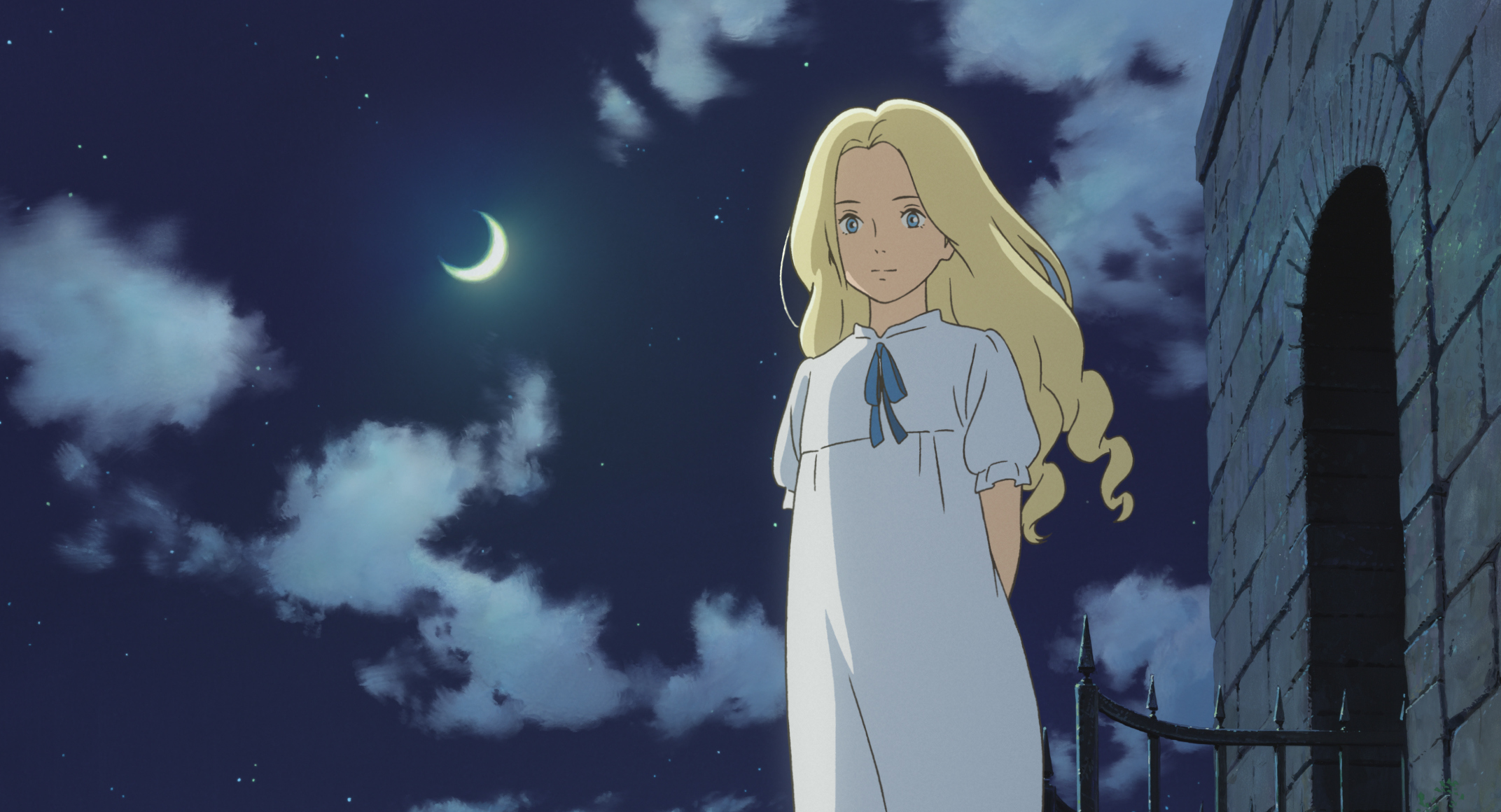
marnie_hires_6There were two notable absences from the screenings at this year’s Scotland Love Anime – or rather, two notable presences at the London Film Festival. Hiromasa Yonebayashi’s When Marnie was There, the last feature film from Studio Ghibli, and The Boy and the Beast, the latest feature from Mamoru Hosoda, both made it onto the LFF roster instead. You might call this a victory all round – Hosoda’s films are often snatched by the LFF ahead of SLA, thereby leaving a slot in Scotland for less mainstream fare, as well as guaranteeing that Hosoda doesn’t sweep the Scottish Judges Award every year. But London’s programmers, as they are wont to do, are also snatching the most commercial and audience-friendly Japanese animated features. What are they going to programme next year?

Almost everybody in the anime business is tired of the “next Miyazaki” argument, in part because there can be no such thing. Hayao Miyazaki was a one-off, as was the synergy formed by his partnership with Isao Takahata and Toshio Suzuki. Moreover, the conditions that made their Studio Ghibli such a world-beater were also, in themselves, unique. The putative successors to Miyazaki are competing in an environment that is worlds away from the situation that saw Princess Mononoke rise to fame.

But concerns about who might be anime’s new poster-child aren’t just about the search for a new creative force. They are also all about money. For a Japanese movie to break even at the domestic box office, it has to be in the top twenty films released that year – a benchmark that only Studio Ghibli and a couple of long-running franchises (your Pokémon, your One Piece) could ever manage. A Studio Ghibli film (let’s be honest, a Miyazaki film), was a blue-chip investment, guaranteed to put bums on seats in Japan, and to monetise in foreign sales. Nobody else in Japan currently comes close, and that doesn’t just affect the likely enjoyment of family audiences. It affects festival programmers looking for something Japanese for their slates; it affects retailers planning how many feet of shelves to give to anime; and it affects distributors allotting budgets to those weird Japanese cartoons we keep hearing about. With Ghibli removed from the equation, the investment value of the entire anime medium drops by a significant factor, forcing everybody – distributors, retailers, and cinema owners, to work a lot harder to keep it in the public eye. So do your bit: go and see a Japanese animated film in a cinema this year… It’ll show up on someone’s balance sheet, and might make all the difference.

Jonathan Clements is the author of Anime: A History. This article first appeared in NEO #143, 2015.

Harem Scare ‘Em

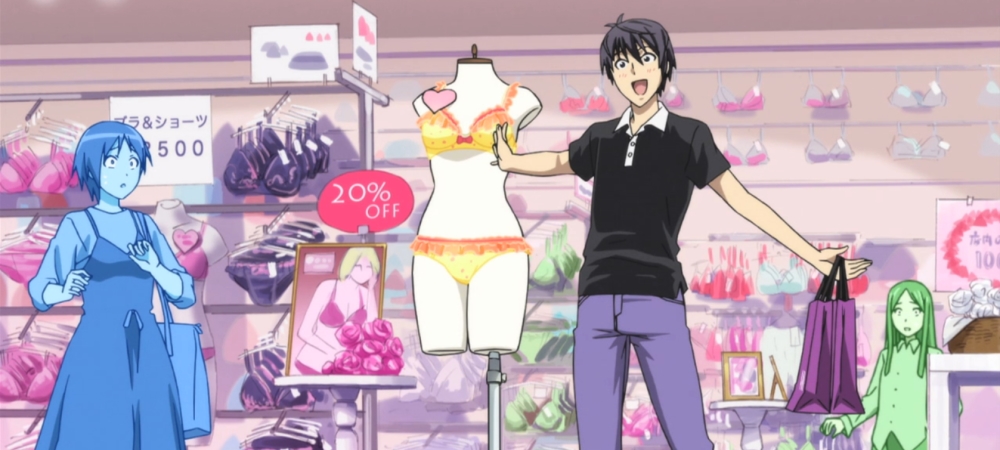
32243-ComicArtAsst_3Yuki Aito is living the dream… in a way. His comic Haji Café has become a hit, dragging his art career from a hobby into a full-on profession. Like many a manga artist before him, he’s discovering the hard way that a weekly schedule never lets up, taking on a bunch of assistants to help him grind out the pages. But because he’s a self-acknowledged pervert, obsessed with knickers, he has only hired pretty teenage girls.

Even if you’re not an anime or manga fan, you’re probably familiar with the look of the “harem show” – a romantic comedy that places a single hapless boy in the company of a whole gang of pretty women, every one of them girlfriend material. The genre has been visible in Japan for the last 20 years, serving the anyone-will-do desperation of horny teenage boys, with just a dash of wish fulfilment. These fantasy women aren’t just beautiful and theoretically available for Yuki, they are also comics fans like him.

Should he plump for Sahoto, the hard-working artist who cherishes a dream of being a comics creator all on her own? Or should he go for Rinna, the talentless assistant hired only for her looks, and the fact that she is a fan of his work? Maybe he should chance his arm with Sena, the pathologically childish teenager who nurses a hidden sadistic streak? Or perhaps he should return to his past with his old schoolmate Mihari, once a childhood crush, now a hard-nosed editor at his manga publisher?

The Comic Artist and His Assistants is based on a manga about creating manga, one of a burgeoning sub-genre of self-referential titles that have also seen tales of wacky sci-fi shop-owners, convention costumers as the heroes of their own show, and a chronicle of behind-the-scenes shenanigans at an animation studio. For everyone who keeps hearing that anime and manga are taking the world by storm, it’s a gentle reminder that some of anime’s appeal actually stems from its ability to go small: narrow-casting to niche audiences such as, in this case, boys who like drawing comics and ogling girls, and who don’t see anything creepy in the very obvious exploitation of workplace power. Original creator “Hiroyuki” first found fame with a manga about creating amateur manga, and now he’s gone pro in every sense.

As you may have noticed, it’s all about Yuki’s choice, his options and his desires. The women in The Comic Artist and His Assistants are less characters than they are gaming objects, clusters of attributes and quirks – this one’s got small tits, that one’s got blonde hair, that one’s too weak to open an ink pot. There are plenty of anime and manga for a female audience (and this column will get to them soon enough), but this month’s offering is resolutely chauvinist, deriving much of its humour from putting the girls in embarrassing situations and subjecting them to sexual harassment (boob-grabbing now counts as “research”).

Takeshi Furuta’s animated adaptation seems to instinctively know that its one-note perving is going to be difficult to sustain. Consequently, its episodes clock in at a quick 15 minutes each, just long enough to set up a pantomime situation of ooer-missus innuendo, and to slap our priapic protagonist with some sort of half-hearted retribution. One typical episode focuses creepily on Yuki stuck in an elevator with the childlike Sena, as she reveals that she is desperate to go to the toilet. The show takes evident pleasure, like Yuki himself, in the prospect of her humiliation, turning their dilemma into a comedy of manners when he offers her an empty bottle to piss in.

This isn’t a show with morals as such, although every now and then it pays lip service to the idea that Yuki needs to grow up before he can achieve his true potential, and, it is implied, bag himself a girlfriend for real. But personal growth was not the message of Hiroyuki’s original, nor should we expect it to be. This is an anime show about wobbly bits and cat-calls, pulling girls’ pigtails and peering down their dresses. You will also learn the Japanese for knickers, which is pantsu.

Jonathan Clements is the author of Modern Japan: All That Matters.This article first appeared in Geeky Monkey #1, 2015.

New Bottles for Old Wine

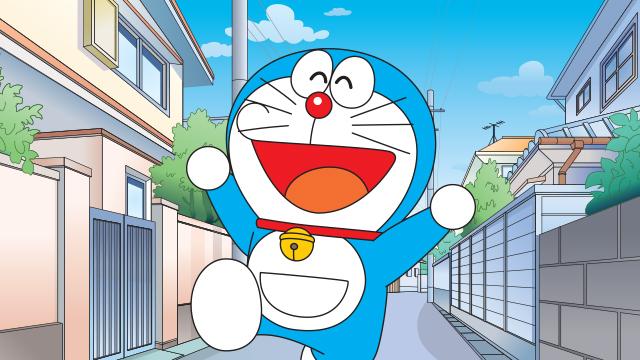
Doreamon_is_HappyThis autumn sees two iconic anime serials finally reaching the British public – Doraemon, screened on the kids’ channel Boomerang, and the original Gundam, coming from Anime Ltd.

Doraemon is such a popular figure in East Asia that he has sneaked under the radar to entertain kids in Korea and China, many of whom still don’t know he’s Japanese. Despite being a hapless, accident-prone robot cat, he is much beloved, and the centre of a merchandise industry that keeps his owners very well-off. Gundam, meanwhile, is a show about children dragged into a conflict in space using majestic bipedal war machines. It is a vital influence on much anime in the last 40 years, not merely in terms of straightforward imitations, but of entire studios and franchises conceived in reaction to it. Although that’s less important to its owners than the vast numbers of robot toys they hope to sell you.

Doraemon’s appearance on UK TV is not that of a 42-year-old show – it’s starting with episodes that were first broadcast in 2005. But the classic Gundam on offer really is the first series from 1979. It’s older than most NEO readers.

As an anime historian, I am very pleased to see these shows turning up – both are vital to understanding the business of the last 40 years. As a consumer, I can’t help but wonder if both are less about Japanese culture going global, and more about a recession-hit Japan, desperately scrabbling in its bins for any off-cuts it hasn’t sold yet. As this column has noted in the past, there’s a lot of Japanese government boondoggle money available, but only to people who already have something to sell.

There has been much talk recently about exporting media. A cynic might suggest that this is less about a breathless passion for Cool Japan, and more about a bunch of companies sitting on intellectual property that has been paid for and isn’t doing anything. Somewhere in Tokyo, someone in a suit has been pointing at a chart and enthusing about “new” markets. To an accountant, the money that Gundam or Doraemon have racked up in Japan looks like a cash-cow waiting to be milked. If x million people pay for these shows in their home territory, then surely there are y billion people waiting overseas to pay for them?

Are there? It’s a gamble for the foreign distributors, although the Japanese rights-holders are largely playing with other people’s money, or perhaps misguidedly equating their own nostalgia with a niche in overseas markets. Who really stands to lose if these “new” releases turn out not to wow modern British audiences the way they wowed the Japanese all those years ago?

Jonathan Clements is the author of Anime: A History. This article first appeared in NEO 142, 2015.

Scotland Loves Anime 2015

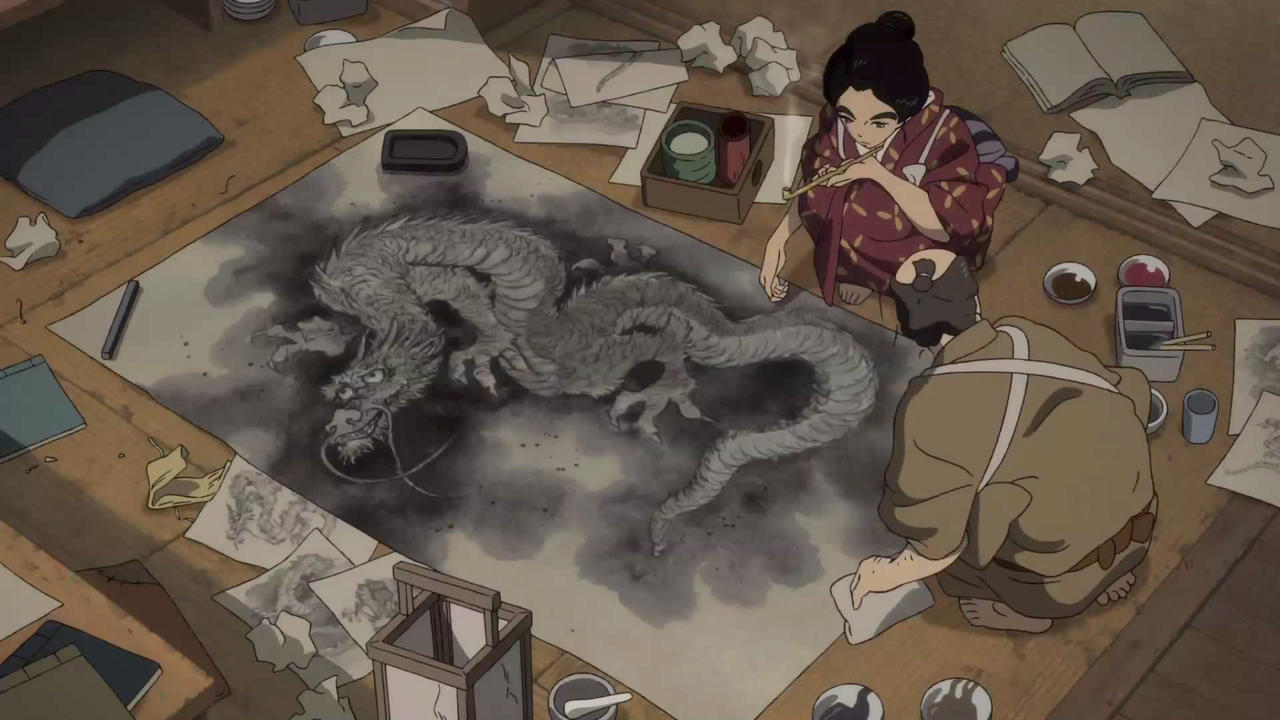
miss-hokusaiPacking my suitcase for this year’s Scotland Loves Anime, which begins on Friday in Glasgow. Keiichi Hara is in town to introduce the UK premiere of his Miss Hokusai, while I shall be fronting the UK premiere of Ryotaro Makihara’s Empire of Corpses, the steampunk epic based on the novel by Project Itoh and Toh Enjoe. I’m also looking forward to Production I.G’s latest Ghost in the Shell (another UK premiere) and the studio’s own self-inflicted competition over the same genre ground in Psycho-Pass: The Movie (which is, in case you hadn’t guessed, a UK premiere).

Behind the scenes, I shall be speaking about the state of the anime industry, both at the Edinburgh Education Day and in a pop-up lecture in Nottingham next Monday. I shall also be chairing the jury in Edinburgh as four opinion-formers argue over the conferral of this year’s Golden Partridge Judges’ Award. Shunji Iwai has a film in competition, and almost everybody is liable to be distracted by the Attack on Titan quadruple-bill (two anime movies and two live-action), but I’ll make sure the jury is in the right place at the right time.