The Mouths of Hell

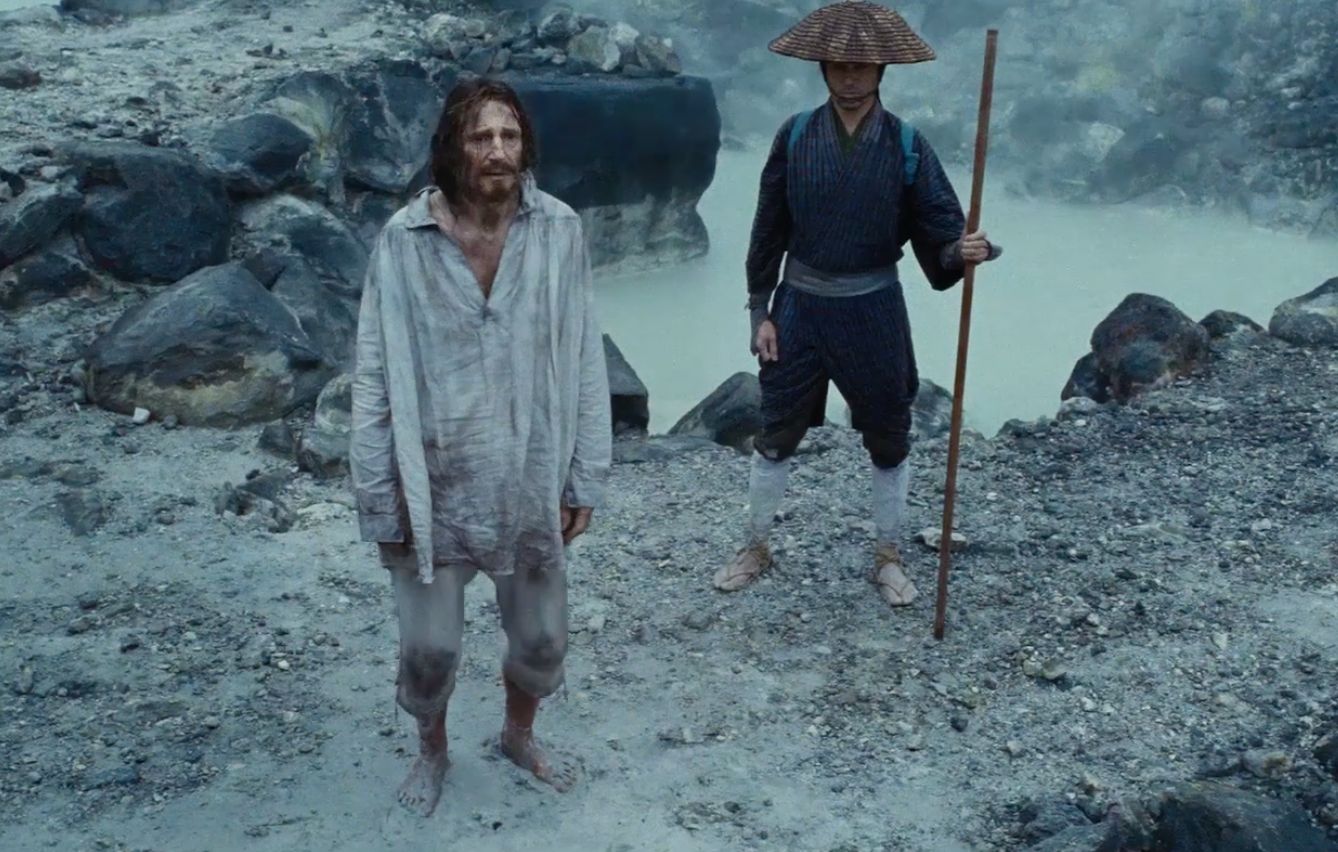
silence2“Two Leagues from Nagasaki there’s a High towering Mountain called Unzen, and on the Top three or four vast Lakes with boiling sulphurous Waters, heated by subterraneous Fires. These Waters break out sometimes in wide Openings and Gapings of the Earth, with whole Mountains of Flames, called by the Japanese the Mouths of Hell… or Infernal Waters. These wide Openings happen only once in Eighteen Years, but then it overflows like a Deluge, with whole Torrents of stinking Waters, mixed with Sulphur and Brimstone, insomuch as one can’t look upon them without Horror. The Waters smoke and boil as if they stood upon a hot Fire, and make so hideous a Noise that we may properly compare them with the Lakes of Brimstone and Fire mentioned in the Apocalypse. For the rest, the Waters are so hot… that the least Drop penetrates to the Bone.”

Crasset — History of the Church of Japan, 1707.

Eighteen Christians, four of them found among the local baron Matsukura’s own subordinates, were taken in procession up the slopes of Unzen to the boiling lakes. One, gazing upon a Mouth of Hell, brightly opined that for him it would be the Gateway into Paradise. Another shouted praises to Jesu Cristo and hurled himself into the lake, much to the annoyance of another Christian, Paul Uchibori, who warned the others that they were there to be martyred, not to commit the sin of suicide. Thereafter, the Christians were thrown one-by-one into the waters of Unzen, all except Paul, who was vengefully dipped headfirst several times.

It was not the last time that Old Matsukura’s men would climb Unzen with a party of martyrs. One of Matsukura’s own officers turned himself in at Shimabara, claiming that he had gone into hiding in Fukae, but had realised that his lord would get into trouble with the Shogun if it was found out that he had allowed a Christian to escape. After making this incredible confession, he was duly sent up the mountain with another group of Christians, whereupon Old Matsukura’s men attempted to get some better results.

Simply killing the Christians had been proven unproductive, particularly since so many of them went uncomplaining or even gratefully to their deaths. Instead, Matsukura’s men tried to prolong their agony, dipping them in and out of the lakes, splashing them repeatedly with scalding water, and even slicing gashes into their flesh, to increase the pain. When none of this had any appreciable affect, they resorted to a far crueller method. They separated one John Chizaburo from the survivors, and allowed him to sit down and rest for a while. They then told the survivors that the man had been allowed to sit down because he had agreed to cast aside his Christian faith.
Christ's Samurai coverIt was calculated to wound the believers at a spiritual level and almost worked, but for John Chizaburo unhelpfully bellowing: ‘I declare before you all, that I live and die a Christian.’

Eventually, the torturers gave up, tied the survivors together and doused them in scalding water until they died. The pitiful corpses, which ‘appeared as if they had been flayed alive,’ were then weighted with stones and dumped in the lake, in an attempt to discourage other Christians from filching holy relics.

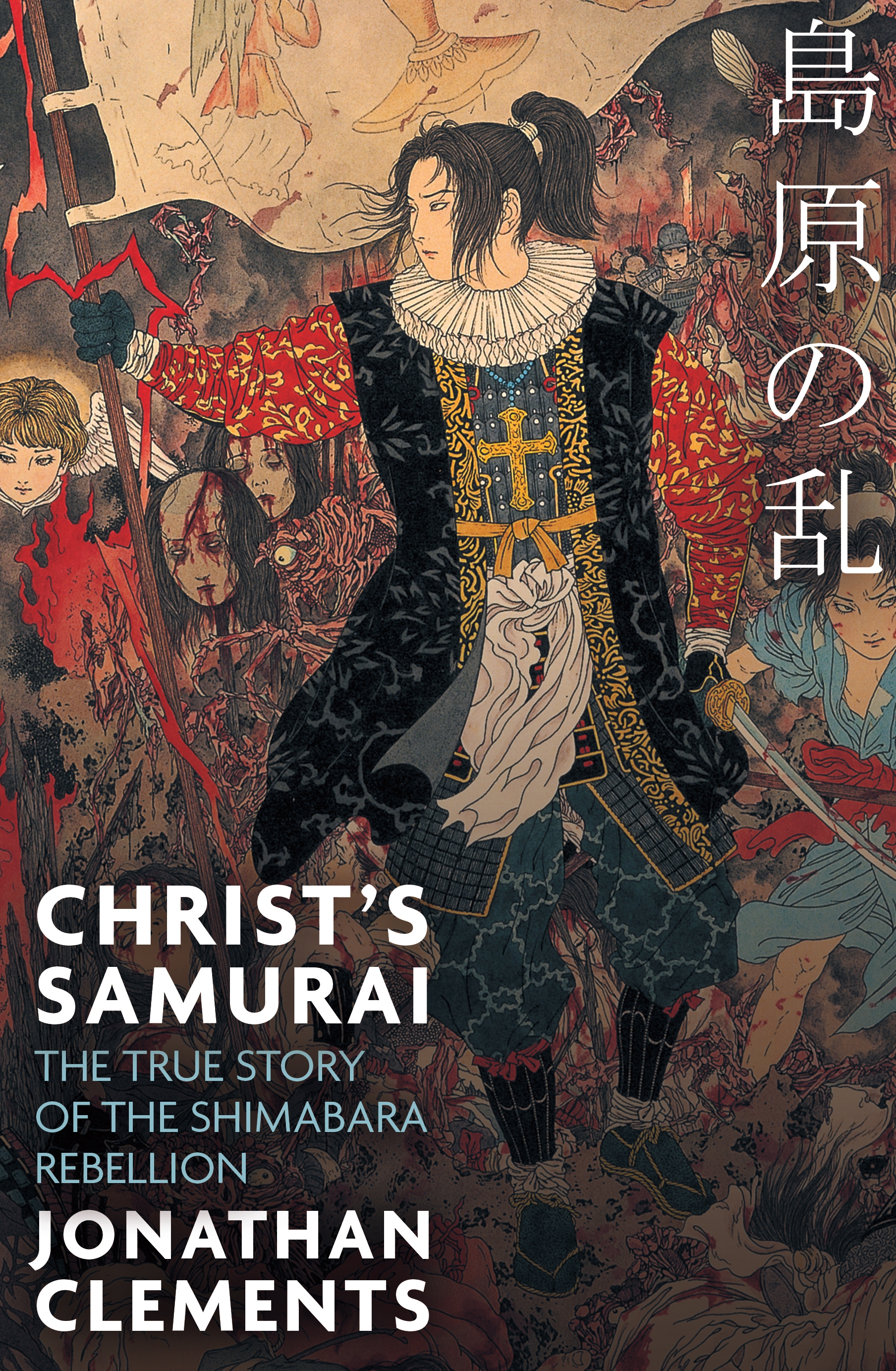
Excerpted from Christ’s Samurai: The True Story of the Shimabara Rebellion by Jonathan Clements.
Excess Baggage

kiki1

October’s cause celebre, as reported by Justin McCurry in The Guardian, involved a Japanese train conductor announcing to his passengers that their travel was being inconvenienced due to an excess number of foreigners on his train. He was reported by a Japanese passenger and swiftly reprimanded, but there’s more to this particular story than meets the eye. The clues can be found in the timing of the incident, Monday morning, and the location: on the Nankai express to Kansai International Airport.

The conductor had heard a Japanese passenger at an earlier station effing and blinding about the trouble being caused by “foreigners”, and sought to explain to the rest of the train what was going on. It’s clear to me that the problem was not the foreigners per se, but their luggage.

Japanese trains don’t have a whole lot of space. There’s the usual overhead shelf big enough for a rucksack or a carry-on, but extremely limited space for the kind of trunk-with-wheels favoured by the average foreign tourist. The reason for this is that no sane Japanese person carries their luggage any further than they have to. Ever since the 1970s, they have used a takuhaibin service, which picks up your luggage from your hotel or home and spirits it away to your next destination by the next morning. If I’m shuttling from Tokyo to Kyoto, say, then the freight cost is about £10, and my suitcase is waiting for me at the next hotel. I save more than that by not having to get a taxi to the train station, and I don’t end up clogging an entire carriage of angry commuters. The only place I expect to see big luggage is on the dedicated Kansai airport train, the Haruka.

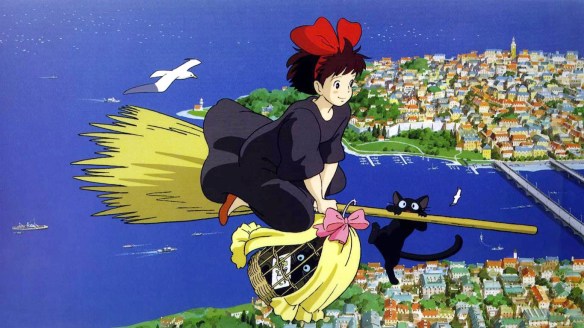
More popularly, takuhaibin is known as takkyubin, but this latter term is actually a trademark of the Yamato Transport service, recognisable by its iconic logo of a black cat carrying a kitten, and best known to anime fans by the co-option of its name in the Japanese title of Kiki’s Delivery Service – the company was even a sponsor of Studio Ghibli’s charming film about a witch who goes into haulage. So if you are going to Japan any time soon, do look into takuhaibin services at the airport or your hotel, you’ll save yourself lugging a suitcase across town, and buy into a bit of anime history into the bargain.

Jonathan Clements is the author of Anime: A History. This article first appeared in NEO 157, 2016.

A New Type of Bomb

akira1

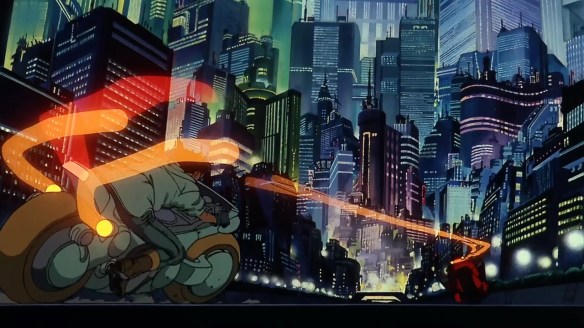
It always began on the day after tomorrow. In the original manga, in its translations, and even in the film itself, the opening sequence of “a new type of bomb” wrecking central Tokyo was assigned the date at which the audience was supposedly sitting down to watch it. And then it would leap ahead a generation. The kids have run wild on the streets. The government is secretly funding the terrorists. New religious cults have sprung to life. There are riots, and in a gang fight out in the old town, a bunch of rude boy-racers accidentally run into an escaped guinea pig from a secret military project.

Katsuhiro Otomo’s Akira came heavily loaded with local allusions which flew over the heads of many English-speaking fans. The very words “new type of bomb” recalled those of Emperor Hirohito in his infamous surrender speech from 1945. But Akira’s Japan was most strongly rooted in Otomo’s youth, when the wide-eyed country boy came to the big city of Tokyo to earn his fortune. He found a city struggling to recover from the aftermath of an apocalyptic war yet still mired in scandals, war-crime revelations and revolutionary fervour. A giant crater sits at the heart of Otomo’s Tokyo, like the suppurating cesspool that forms the structuring absence of Akira Kurosawa’s break-out movie Drunken Angel (1948). The children of Otomo’s Japan have been transformed by the war’s aftermath – brash, irresolute and feckless, cruising the city on motorbikes and spouting an unintelligible argot thick with ze’s and zo’s, two emphatic particles unknown outside Tokyo gangs. I fondly remember showing Akira to a Japanese class at Leeds University in 1991, and Dr Penny Francks sticking her head around the door, listening for a few moments, and observing: “I can’t understand a word!”

The anti-hero Kaneda is all mouth and trousers, a street thug whose passing interest in revolution is soon deconstructed as merely an excuse to pick up girls. But it’s he and his outlaw bikers who inadvertently stumble upon (in fact, crash into) a secret plot to restore pre-war weapons programmes and human experimentation – the Akira project that attempts to harness and release the creative energy of the universe. In Japanese, it is written with katakana, a writing system that makes it sound like a foreign acronym – A.K.I.R.A.

Behind the scenes, Akira was an awful albatross of a movie project, with spiralling budgets and onscreen experimentation that left its producers panicking about the likelihood of it ever earning its money back. But the result was an apprentice piece of enduring power – a post-holocaust sci-fi epic that featured discordant gamelan music and Noh-influenced chanting, a cartoon that featured biker gangs throwing hand grenades and arguing about the origin of the universe, an animation that featured naturalist afterimages from passing headlights, and realistically curling smoke from cigarettes. To put matters in perspective, in 1989, the Hugo Award shortlist for Best Dramatic Presentation included Willow, Big and Alien Nation, and the winner was Who Framed Roger Rabbit? For a substantial subset of avant-garde science fiction fandom, Akira was a harbinger of a radical new sub-genre. For an audience that luxuriated in the “Japanesquerie” of the cyberpunk movement, the arrival of science fiction from Japan itself had a markedly alien frisson.

One of the unsung heroes in bringing Akira to the West was the curator and producer Carl Macek, who persuaded the Japanese to hand over all their art materials. An entire shipping container of cels and backgrounds, regarded by the film-makers as industrial waste, was sent to America, where Macek turned it into an asset. He framed iconic moments to sell as art, and headed off video pirates by offering a free piece of the original film to anyone who bought a legitimate copy.

As the film approaches its 30th anniversary, and indeed, the year in which both it and Blade Runner were set, it has become a standard bearer for Japanese animation. It may be difficult to remember in an age where Hayao Miyazaki dominates so much of the discourse of animation, but there was a time when Akira was the benchmark for everything that made anime cool. 28 years after its premiere, shined up for Blu-ray, it’s still pretty damn good-looking.

Jonathan Clements is the author of Anime: A History. Akira is released on Blu-ray by Manga Entertainment/Animatsu. This article first appeared in Geeky Monkey #15, 2016.

The Spoliarium

p1150413Starz were playing their cards very close to their chests about events in the Spartacus: Vengeance TV series. You don’t need a spoiler warning to know the broad historical details. You can get those right now in Plutarch and Appian, Florus and Frontinus. But as for the character details, they weren’t telling until long after my book would need to be delivered. It was too risky to set the first Spartacus novel anywhere near the second season. Instead, it would have to slot somewhere in the first season.

But thanks to those advanced spoilers from the likes of Plutarch, I also knew that while there would still be a couple of upcoming gladiatorial events onscreen, Spartacus’ days in the arena were over. This book could be the last chance to get back to the blood and sand, and show a gladiator’s life in intricate detail.

So I decided that I would make sure that Spartacus: Swords & Ashes included a fly-on-the-wall view of a whole day at the games, showing all those elements that never quite make it onto television. The crappy, low-rent animal-baitings before lunch-time. The midday executions. The clowns and the clean-up men. The doomed slaves who refuse to cooperate and the crowds that behave contrary to expectations. Behind the scenes, the trumpeters who have to knock up fanfares on command, and the stage manager trying to keep it entertaining, the food sellers and the groupies. And the end of it all, the man with a knife who cuts up the dead for dog-meat.

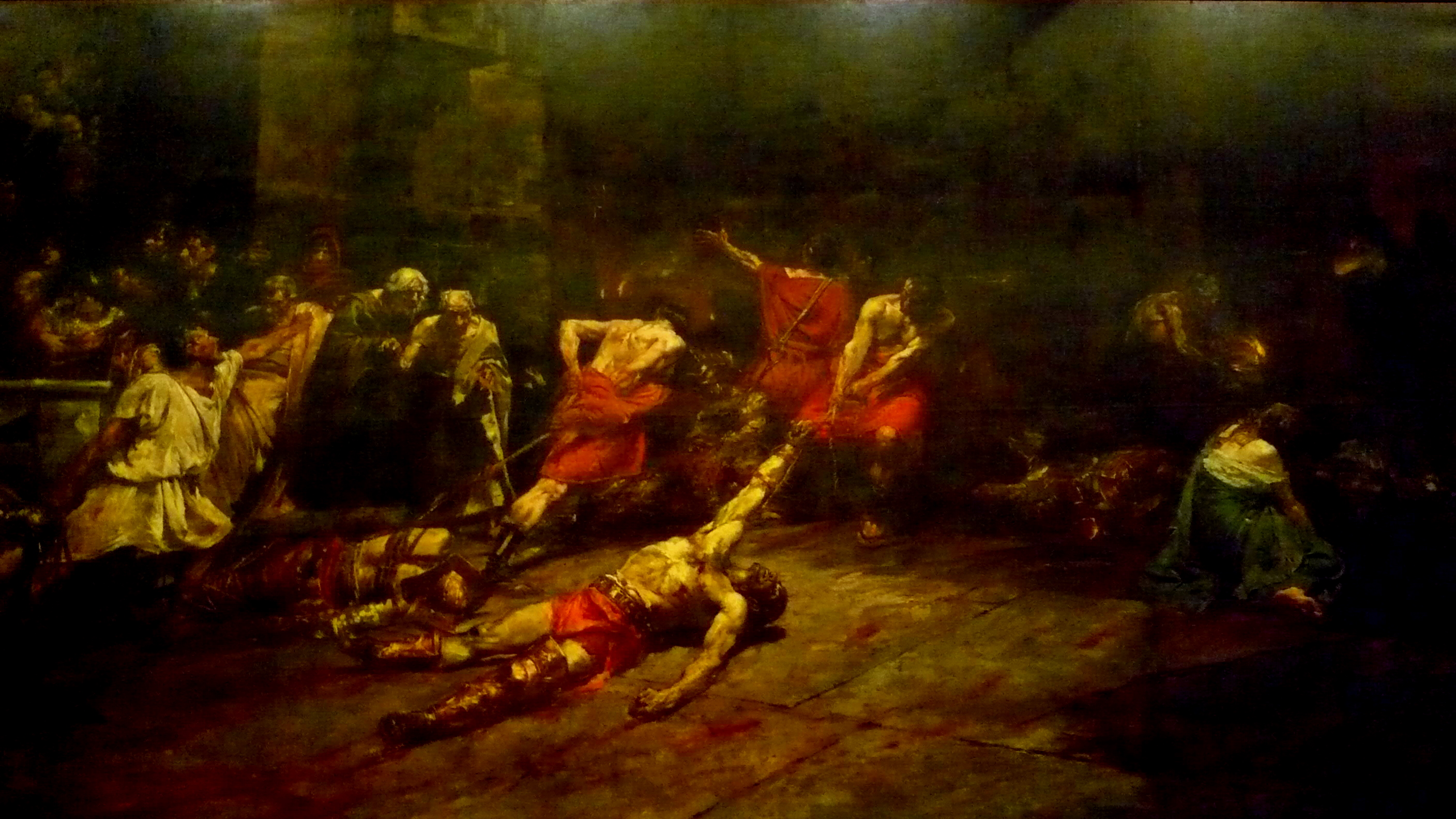
There’s a famous 1884 painting by the Filipino artist Juan Luna, The Spoliarium, which presents a deliberately shabby, unglamorous perspective on gladiatorial games. There’s no roaring crowd here, no flash of arms or glittering prizes. Instead, dead carcasses are dragged out of sight, while a woman weeps over a lost love, and hunched, covetous old men stare indifferently at the slaves who died to entertain them. The picture stands today in pride of place at the entrance to the National Museum of the Philippines, dominating an entire wall, confronting every visitor with the sight of the dark underside of absolute power.

This is what Spartacus is really about: the true costs of the garish free entertainment of bread and circuses, themselves doled out to Roman citizens to buy their votes and support for foreign wars and domestic corruption. Spartacus remains famous today because he stood up to the terrible state of a world in which one in three human beings is a slave with no rights. It’s why the story has become such a touchstone of rebellion, and why it still has such resonances two thousand years after it was first told.

I originally wrote this article for SF Review in 2012 as part of the press coverage for my novel Spartacus: Swords & Ashes. Since the original page is now full of cobwebs, I repost the article here.

Play All

9780300218091The concept of binge-watching is nothing new to readers of this column – indeed, it was first introduced here in NEO #26, ten years ago, where it was lifted from 1990s US TV fandom. It came into its own in 2013, when Netflix’s new paradigm of dumping entire serials online on a single day encouraged even mainstream viewers to get into the habit, and in 2015, the concept was hailed as the word of the year by the Collins English Dictionary.

I first noticed binge-watching implicit in the style of Gantz, an anime series with four-episode arcs, dumped onto late-night schedules in Japan where it seemed to be begging its audience to watch it in longer chunks. The serial format, it seemed to me, was merely a conceit. Gantz was long-form story-telling, pretending to be a TV show just to keep investors happy.

TV critic Clive James has also stumbled across the world of binge-viewing. Housebound and believing that he only had a few months to live, he kept himself busy with DVD box sets. With his life-threatening leukaemia happily in apparent remission, he has been unable to resist writing up his experience in Play All: A Binge-Watcher’s Notebook, a book-length meditation on a “new critical language” to cope with a new form of media consumption.

“I wondered briefly what Theodor Adorno would have said on the subject of American schoolgirl detectives,” he notes regrading Veronica Mars, “but after watching a few episodes I realised that I didn’t give a damn what Theodor Adorno would have said.”

There is something sweet about James’ tardy arrival at conclusions that will be familiar to almost any anime fan. Like much of his recent writing, it has an elegiac quality, as if he expects every page to be his last, and as he struggles to correct solecisms from his past. Spanning the rise of quality TV from The Sopranos to Game of Thrones, Play All is not a simple collection of reviews. Rather, like J. Hoberman’s similar Film After Film, it uses a number of representative works to build a unified account of a modern medium.

Sadly, James has nothing to say in this book about Japan. His snarky love of the country’s television was a defining trope of his 1980s heyday. I wished for a moment in this lovely book where he would roll his eyes like old times, offered a pained grin and say: “Meanwhile, in Japan…” Because in the era of anime box sets, I would have loved to see what he made of Gantz, or Attack on Titan, or…

Jonathan Clements is the author of Anime: A History. This article first appeared in NEO #156, 2016.

Smoke and Mirrors

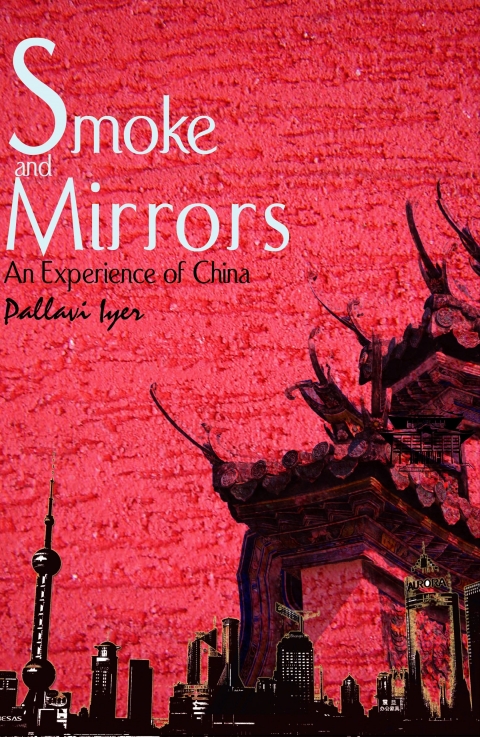
pallavi-7304-166191724_stdWhen Pallavi Aiyar first arrives in Beijing, she is a baffled plus-one, trailing reluctantly behind her future husband. After serving time as an English teacher to an eager but snooty class of yuppie students, she falls into journalism, writing for The Hindu. Just as her tales of Beijing street life exhaust the possibilities of quirky neighbours and intercultural misunderstandings, she is suddenly propelled into a new narrative, speeding off with business delegations, reporting on politicians and pushing herself further afield in search of new stories in Smoke and Mirrors: An Experience of China.

Writing primarily for an Indian readership, Aiyar’s touchstones for Chinese history are a refreshing world away from most other China hands’. She visits the Shaolin Temple and the White Horse Temple, centres of early Buddhism back in the Silk Road days when the Chinese still regarded it as a foreign, Indian import. She lampoons the culture clash of Chinese banquets, where hosts honouring their guests with sea slugs and chicken feet are baffled by the dietary requirements of teetotal vegetarians. She approaches “unique” issues with even-handed objectivity, pointing out that there are provinces in India with far worse boy-girl birth ratios, even without a one-child policy. And she offers the Indian version of everybody’s Beijing traffic horror stories, pointing out that, to visitors from Delhi, Chinese roads are impressively calm and peaceful.

img-1-small480Books about Beijing are ten-a-penny and often sadly samey, but Aiyar is unafraid to go that extra mile. Many, myself included, have reported on the presence of a Bad English Hotline before the Olympics, designed to hunt down the worst mistakes on signage. But Aiyar is the writer who actually calls up to report an error, only to discover that the woman on the other end of the phone doesn’t speak English.

Every decade produces at least one kick-arse account that has an angle valuable enough to work as historical reportage, and Smoke and Mirrors deserves to be shelved alongside Michael Meyer’s Last Days of Old Beijing, for offering important anecdotal details of the first half of the first decade of the 21st century, from SARS to the preparations for the Olympics.

This is an immensely valuable perspective, dragging the reader off from traditional journalistic angles, which, as Aiyar herself points out, are usually white, western ones. She has since turned the tables in similar fashion on Europe itself, which she approaches with occidentalist glee in New Old World, and brought insightful comparisons in her account of the smogs of Beijing and Delhi in Choked. Since she is now based in Tokyo, Japan is sure to follow.

Jonathan Clements is the author of The Armchair Traveller’s History of Beijing. Smoke & Mirrors: An Experience of China is published by Fourth Estate. See Clements and Aiyar in conversation at Mumbai’s 2016 Times Litfest here.

“History writing at its best” — Fortean Times

Christ's Samurai coverIn 1638, the ruler of Japan ordered a crusade against his own subjects, a holocaust upon the men, women and children of a doomsday cult.

The sect was said to harbour dark designs to overthrow the government. Its teachers used a dead language that was impenetrable to all but the innermost circle. Its priests preached love and kindness, but helped local warlords acquire firearms. They encouraged believers to cast aside their earthly allegiances and swear loyalty to a foreign god-emperor, before seeking paradise in terrible martyrdoms.

The cult was in open revolt, led, it was said, by a boy sorcerer. Farmers claiming to have the blessing of an alien god had bested trained samurai in combat and proclaimed that fires in the sky would soon bring about the end of the world. The Shogun called old soldiers out of retirement for one last battle before peace could be declared in Japan. For there to be an end to war, he said, the Christians would have to die.

The shocking true story behind Martin Scorsese’s film Silence.

“A concise and lucid account of a unique period in Japan’s history” — Japan Times

“History writing at its best” — Fortean Times

Christ’s Samurai: The True Story of the Shimabara Rebellion, is available now in the UK (and here in the US). Read extracts here and here.

The Allure of Gravure

agnes lum.jpgCommon to many Japanese magazines for the teenage male, Young Gangan features a “gravure” section – photo-sets of demure Japanese girls, posing in a sequence of fashions with occasional gormless texts.

As the name implies, gravure in Japan began with the conceit of amateur photography, giving new camera owners an excuse for titillating “research”. My recollections of early gravure are of rather sweet virtual dates, such as a pipe-smokers’ magazine from the mid-1970s that featured a photo-set of a rather prim, refreshingly plain young lady, sitting earnestly across a dinner table, perching on a couch, and lurking coquettishly near a lamp-post: the fantasy being simply that of her company, her attention, and presumably, her lack of complaint about the smell of smoke.

Later, racier magazines would go all the way, lurching from the public realm into the bedroom, with the virtual companion whipping off her clothes in a sealed bonus section. The game-changer for 1970s gravure, however, was the Hawaiian-born Agnes Lum (pictured), who parleyed her early appearances in Japanese magazines into a singing and modelling career. The fiercely attractive Lum was notable for her magnificent boobs, a feature less prominent in the Japanese girls of the day, which soon lured her photographers away from urban fashion shoots and into the realm of swimwear, all the better to show them off. This, in turn, incentivised beach locations, and it was not long before the expense and exoticism of teen photo-shoots began to spiral upwards. Wouldn’t you rather put a weekend in Hawaii on expenses? The male population’s panting obsession with a pneumatic, bikini-clad foreigner was soon satirised by manga creator Rumiko Takahashi in Urusei Yatsura and its iconic Lum-chan, a green-haired, sexually aggressive devil girl in a tiger-skin two-piece.

By the 1980s, a gravure appearance was commonplace for aspiring actress-model-whatevers, particularly among would-be idol singers. Such photo-sets are ten-a-penny in Japan, and have been largely unchanged for decades. One wishes, Viz-style, for a magazine that offers a little subversion – interfering passers-by, for example, a cameraman whose lack of ability becomes comically, rather than merely irritatingly incompetent, or a model who dresses like an Australian’s nightmare. Instead, they have merely limped along, sustained, one imagines, less from reader support than by the ever-present interest of music promoters in snatching page-space for their starlets, and by photographers’ desires to charge for weekend getaways with young soubrettes.

lumBut the U-rated images in Young Gangan are notable for how low-rent they seem: Rina Ikoma is pictured in someone’s back garden beneath a drab grey sky; Hinako Kitano has at least gone somewhere with a pool, although she oddly jumps in while keeping her clothes on. Then, she stands in the street and throws around a baseball. Don’t play in the street, Hinako! This is that most innocuous of “girlfriend experiences”, the simple presence of a female making eye contact, although also discreetly whispering that her new album is in shops now. It’s all about the male gaze, although the gaze one can’t help imagining is usually that of Alan Partridge, fumbling ineptly with a Canon 5D.

Jonathan Clements is the author of Anime: A History. This article first appeared in NEO #156, 2016, as a sidebar to a Manga Snapshot article on Young Gangan magazine.

The Beliefs of the Hidden Christians

img_5777

In the legends of Japan’s Hidden Christians, we can see the preservation of the Christian faith, seemingly by word of mouth, in the utmost secrecy, throughout the centuries of the Shōgun’s persecutions. The Kirishitan ‘Bible’, as written down by one group in the 19th century, begins with the creation of the world by Deus. The first man is called Adan, created on the seventh day along with the first woman, Ewa.

Lucifer (Yusuheru), another of the creations of Deus, demands that Adan and Ewa should worship him, as he is similar to their creator. Deus admonishes all three of them, and tells them not to eat a particular fruit in the land of Koroteru (Portuguese: hortelo – ‘garden’). However, Ewa is swindled into tasting the forbidden fruit, and as a result, she and Adan are cursed for four hundred years. The children of Ewa are sentenced to live on the Earth and worship unworthy gods, until a future date when Deus will send a messenger to show them the way back to heaven. Lucifer is transformed into a demonic form, and placed in the sky as the God of Thunder.

Much of the rest of the Old Testament is then skipped over, in favour of the story of Jesus. Mary becomes pregnant by swallowing a butterfly, and spurns the advances of a covetous king in the Philippines. Mary gives birth in a stable, and three days later she is allowed into the innkeeper’s house for a bath. Re-using the same bathwater, as is usual in Japan, the innkeeper’s son, who suffers from a skin disease, is miraculously cured after touching the same waters as the infant messiah.

The kings of Turkey, Mexico and France come to offer their congratulations on the birth of Jesus (in a stable), but they tell their story to King Herodes (Yorōtetsu), who orders the massacre of all children – his two henchmen are named as Pontia and Pilate. Fleeing to Egypt across the river Baptism, Jesus and Mary are protected by local farmers, whose crops magically grow as soon as they are sown; farmers who refused to help them are stuck with barren fields. The young Jesus argues over matters of religious doctrine with Buddhist priests, before he is betrayed by Judas (Judatsu), executed and then brought back from the dead.

Sacrament, in the belief system of at least one cell of Hidden Christians, is not a thing but a person – a teacher sent by Deus to educate Jesus. Judas is punished for his betrayal by transforming into a tengu – a Japanese demon. These creatures will return to tempt believers during seven years of bumper crops – the last chance for heathens to convert to the true faith.

It is impossible to tell how much of the story of Amakusa Shiro lies buried within the legends of the Hidden Christians. There are Biblical analogies or understandable errors for almost every element, but some are still tantalisingly similar to reportage of the Rebellion. At the end of the world, say some Hidden Christian legends ‘…a great fireball will descend. Winds will roar, torrential rains fall and insects plague the earth. All kinds of human negligence will be visible.’

Christ's Samurai cover smallSoon after, the world itself shall be consumed in fire, leading to times so desperate that animals and birds will beg to be eaten by Christians, so that at least some small part of them might survive the apocalypse. Finally, Deus will return to the Earth and sit in judgement upon humanity. Those on his right, the Christian believers, will all become ‘buddhas’, and live eternally. Those on his left, the unbelievers, will be kicked down into hell along with the tengu.

Book extract from Christ’s Samurai: The True Story of the Shimabara Rebellion by Jonathan Clements.