Out of the Silence

silence-andrew-garfield

But for the paltry handful of Dutch traders, kept cooped up like zoo animals at Dejima, Japan was closed to the West. A Shōgunate inscription said it all: ‘For the future, let none, so long as the Sun illuminates the world, presume to sail to Japan, not even in quality of ambassadors, and this declaration never to be revoked on pain of death.’

Japan remained closed in such a manner for more than two centuries, until modern powers, with modern colonial ambitions, began to bang on the gates of seclusion. After centuries in control, the power of the military aristocracy began to wane. It was eventually brought down by the arrival of foreign powers, when the Shōgun, supposedly appointed as a Great Barbarian-Suppressing General, proved unfit for purpose. Not only did the Shōgun fail to keep out American, British and French warships; he proved unable to assert his authority against foreign merchants and priests. Christians were still forbidden from missionary activity in Japan, but by the later half of the 19th century, the growing community of foreign merchants and industrialists in Nagasaki was allowed to have its own bishop. The rules, however, were strict – he was not supposed to talk to the Japanese, only to meet the religious needs of his fellow foreigners, at the newly completed Ōura Catholic Church in Nagasaki’s Glover Hills district.

Shortly after midnight on 17th March 1865, barely a month after the church was completed, Father Bernard Petitjean heard a timid knock on his door. He opened it to find a group of over a dozen Japanese people, peering at him curiously. Petitjean was equally curious himself, as his presence in Nagasaki was barely tolerated by the authorities.

‘May I ask,’ said a young man after a while, ‘if you owe allegiance to the great chief of the kingdom of Rome?’

The baffled Petitjean hemmed and hawed through his beard, and carefully said that Pope Pius IX was probably who they had in mind.

‘Have you no children?’ asked the same man.

Petitjean was used to strange questions and his missionary gears, although somewhat rusty after months without preaching to unbelievers, began to grind back into action.

‘Christians and others are the children that God has given me,’ he replied. ‘Other children I cannot have. The priest must, like the first apostles in Japan, remain all his life unmarried.’

Just when Petitjean thought that the meeting could not turn any more surreal, the Japanese bowed low to the ground, chattering excitedly. A woman among them attempted to make things clearer.

‘The heart of all of us here is the same as yours,’ she said, explaining that the delegation had come to visit him from a nearby village. ‘At home, everybody is the same as we are. They have the same hearts as we.’

Father Petitjean was speechless. He could not believe what he was hearing, and truly doubted that the people who had knocked on his door knew the implications of what they were suggesting. One of the women then said something that made Petitjean’s heart leap.

‘Where,’ she asked in Japanese, ‘is the statue of Santa Maruya?

For two centuries, scattered enclaves of Kirishitan had continued to worship Deus, despite the Shōgunate’s prohibitions. In urban areas and major population centres, it was impossible to be a believer. But out on the periphery, in remote fishing villages and island farmsteads, Christianity clung to life. These ‘Hidden Christians’ (Kakure Kirishitan) adapted Buddhist rosaries for their own purposes. When called upon to tread upon the image of Christ, they duly obeyed to mislead the government inquisitor, and then sneaked off to confess their sin to a sympathetic fellow, who would absolve them. They pretended to worship Kannon, the Buddhist ‘Goddess of Mercy’, but gave the deity features suspiciously like that of the Virgin Mary. It was the virgin Maruya to the hidden Christians – the name gaining a vowel shift to bring it into line with the secret Christian symbol, the maru, or circle. When the mere possession of a crucifix was liable to land an entire village in deadly danger, the hidden Christians found new ways to hide their symbols. Huddled around a table in their hiding place, the Kirishitan would form a cross made of coins on the floor – a symbol that could be removed with a sweep of the hand. Christian icons were hidden in phony table bases, or in a false back to a household shrine. The city of Nagasaki, under direct government control, supposedly had no Christian presence at all, although it somehow gained four shrines to Matsu, the Chinese Goddess of the Sea, and several more to Kannon, the Goddess of Mercy.

Christ's Samurai cover smallWith the Jesuit books burned or rendered illegible by the absence of those who could read Roman letters, there was no longer a way to preserve the words of the original missionaries. Transmission of the religion proceeded solely by word of mouth, from generation to generation in isolated communities, and inevitably there were strange drifts in meaning. In some places, Christianity became little more than a cult of ancestor worship, where the ancestors who were revered were secretly remembered as Christian believers.

Book extract from Christ’s Samurai: The True Story of the Shimabara Rebellion, by Jonathan Clements.

The Have-a-Go Hero

your-name-680It’s a familiar set-up for fans of anime director Makoto Shinkai. In his latest, Your Name, a boy and a girl have never met, but are still intimately connected by a mysterious switching of their personalities.

Shinkai often writes about distance – sometimes the micro-gestures that define how two people feel about each other when they are sitting on a bench; sometimes the time-lag between the sending of a phone message and its reception. But that’s not what made Makoto Shinkai famous. He became the poster boy for an entire generation of animation fans because his debut video release, Voices from a Distant Star, was made single-handed.

Or was it? Although he used off-the-shelf software, it helped that he could liberate the most expensive pro tools from his day-job at a computer games company. And by the time the public saw it, it had been buffed up with an injection of cash and manpower from Shinkai’s new patrons. But print the legend: Voices was an anime hit, made by a computer nerd in his living room!

Shinkai bypassed the usual route to an animation career, but that didn’t come without a price. He was propelled into movies, even though he had no apprenticeship in running a studio, and no experience in writing long. Hopeful hype rashly proclaimed him as the next Miyazaki, a ludicrous assertion to make about 31-year-old first-time feature director. His first full-length feature, The Place Promised in Our Early Days, was unremarkable, leading him to drift back into shorts amid whispers that he might have peaked too early. His next work, 5cm Per Second was a far more accomplished, emotionally compelling work, but comprised three linked shorts that fell seven tantalising minutes short of feature length.

Forget the Miyazaki comparison. Shinkai has much more in common with Charlotte Church (no, bear with me…!), an undeniable talent, successful at a perilously young age, and forced to learn the ropes of a more mature career path while trapped in the public eye. Shinkai has literally not had the time to make the mistakes and discover the skills that other animators hone over a decade. His particular style is often born from the things he never got around to learning, like photo-real backgrounds suffused with wondrous sunsets and dappled lighting effects to obscure the fact they’ve been ripped off from real photos.

your-nameIn the first flush of his success in 2008, he ducked out of the industry for several months and became an English student in London. His idle days spent mooching around the British Museum, he said, helped inspire his second feature Journey to Agartha. But Journey to Agartha was something of a flop – a bloated, half-hearted fantasy epic that evoked a meeting of accountants trying desperately to reverse-engineer the appeal of the retiring Hayao Miyazaki.

Shinkai’s follow-up was a bold return to his fannish roots, the 40-minute Garden of Words, about a student and a teacher who play truant in a Tokyo park. Garden of Words was a triumph – a thoughtful, bittersweet platonic romance, distributed in a bespoke, small-cinema format in which, more often than not, the director himself was in attendance, ready to sell you a signed DVD on your way out. At the time of its release, as its box office swiftly climbed, he gingerly told me that it was liable to steer his future productions. Money-men were sure to determine that his next movie should be another romance, not sci-fi. The fantasy elements in Your Name are liable to have been smuggled in by the back door.

Now in his forties, Shinkai continues to live in the glare of publicity, now as the first Japanese animator to be in competition at the London Film Festival. But he also has something of the geek made good about him, barricading himself in his hotel room to complete the next instalment of the novelisation of his own movie, and using his clout as a film maker to fulfil the occasional nerdy dream. I asked him why he had cast Fumi Hirano, the actress who played devil-girl Lum in Urusei Yatsura, as the lead’s mother in Garden of Words.

“Well,” he blushed. “I’d always fancied her…”

Jonathan Clements is the author of Anime: A History. Your Name opens throughout the UK on 24th November. This article first appeared in Geeky Monkey #14, 2016.

Mumbai or Bust

14713693_1158904380866678_5724866101080070797_n
I’m off to India in December as a guest of the Times LitFest, where this year’s theme is “That Man Woman Thing, exploring the relationship, or lack of it, across time, place, space, profession, family, and oh yes, literature.” I expect I shall be mainly pushing the Indian edition of my Silk Road book, which is yours for a mere 196 rupees. Although considering the topic, I expect Empress Wu will come up a bit, too. Apparently,  my schedule so far is:
  • Saturday 3rd Dec, 11:45am to 12:45pm 
  • The East is Read 
  • Two Asia analysts unravel the inscrutable. Jonathan Clements with Pallavi Aiyar.
  • Sunday 4th Dec, 1:30pm to 2:30pm 
  • Wanderlit – Three travel writers explore the craft 
  • Alexander Frater, Jonathan Clements, and William Dalrymple in conversation.

Hear Me Now

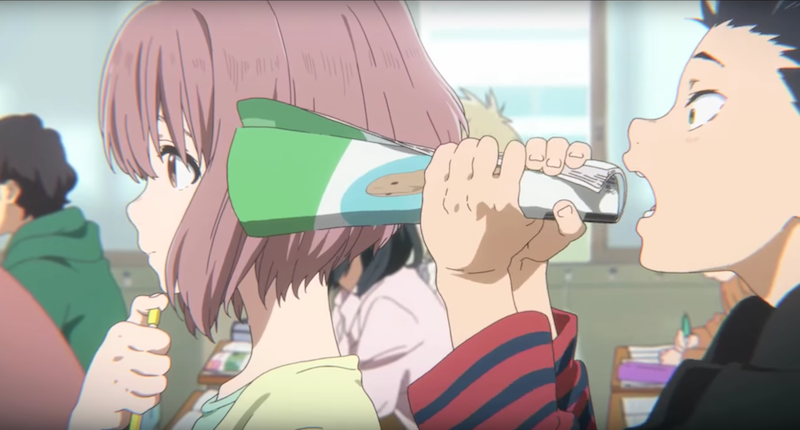
silent-voiceOver at All the Anime on their monthly podcast, I appear in my role as jury chairman on the awards committee for Scotland Loves Anime, in discussion with members of this year’s panel: Eric Beckman from Gkids and the New York International Children’s Film Festival, Anna Francis from the distributor National Amusements, and Miles Thomas from Crunchyroll. The fourth and final juror, Shelley Page from DreamWorks, was off climbing a hill in Edinburgh.

Discussion includes the four films under consideration: Kingsglaive, Momotaro — Sacred Sailors, A Silent Voice and Your Name, alongside the likely damage that Mods can cause to international sales, the rise and rise of Makoto Shinkai and the tropes of “disability” drama.

Listeners with an interest in what goes on behind the scenes at film festivals can also check out podcasts from earlier years. Highlights include Justin Sevakis and a NSFW digression on hentai in 2015, Gemma Cox on writing about women in anime in 2014, and Hugh David on film and video restoration in 2013.

Trickle-Down Memories

only-yesterday-isao-takahataBased on a manga by Hotaru Okamoto and Yuko Tone, Only Yesterday was a gentle, soft-focus account of an office lady’s return from the big city to the country hometown she has all but forgotten. Taeko Okajima may not realise it yet, but she is facing a big decision, between town and country or career and domesticity. Is her Yamagata birthplace really a horrid, isolated dump in the sticks, or is it the idyllic, rural home she has always wanted?

Isao Takahata’s movie adaptation touched a nerve in 1991 Japan. It found its audience among urban yuppies, who were also wondering if their hectic careers were costing them something more soulful. It was a film suffused with nostalgia for the toys and telly of the 1960s, the stumbling steps of growing up, and the self-doubt of a twenty-something singleton. In one iconic moment, cheeky village children wave a wooden post behind the two leads. Two names scrawled beneath a stylised umbrella is the Japanese equivalent of a heart with an arrow through it – the supporting cast turns out to be a little bit ahead of the principals in realising that they are appearing in a romantic movie. It was a delightful, small film, but one that was soon overlooked in an age of increasing demands for box office gigantism.

Takahata’s adaptation added much new material; in fact, the entire framing story of the adult Taeko was his own creation – the original manga was solely concerned with her childhood. It’s her adult appearance that can be seen in much of the film’s publicity and stills, unsurprising since that’s what seemed to lure in most of the Japanese audiences, many of them similarly only a generation separated from their rural origins. They came in their droves, earning Only Yesterday 1.87 billion yen at the box office, and trouncing Godfather III in Japanese cinemas.

only-yesterday-trailer-123015But Only Yesterday is not merely a matter of nostalgia for the 1960s. The sharp-eyed, mathematically-minded anime watcher might notice that while Taeko’s childhood occurs in 1966, her adult return to her village is set in 1982. Takahata’s film, made just as Japan’s economy began to slump into its long recession, was hence not only an evocation of the sights and sounds of the 1960s, but also of the early 1980s.

He could, like his colleague Miyazaki with My Neighbour Totoro, have simply fudged his dates a little, setting it in a vague general period. Instead, Takahata seems to have deliberately plumped for 1982, allowing for a second wave of nostalgia among teenage Japanese film-goers, allowing them to look back on their childhoods, too. This decision, of course, also neatly ensured that his heroine was on the very cusp of what was then regarded as marriageability, just past the fateful “Christmas-cake” age of 25. Some, most notably Helen McCarthy in the Anime Encyclopedia, have criticised this subtext for fixating on a ticking-clock nuptial time-bomb, but it was very much an element of its time, and seemed to chime with many of the viewers who flocked to it. Released in the UK this year in a Blu-ray dub, the film is now 25 years old – creating yet another nostalgic framing device.

The first time Isao Takahata and Hayao Miyazaki went head to head, Miyazaki was the underdog. Miyazaki was the guy who had accepted a challenge to make a children’s movie entirely free of conflict. His producer and friend, Toshio Suzuki, was so convinced that the resulting movie would be a flop that he insisted on putting it on a Studio Ghibli double bill with Takahata’s heart-rending war drama, The Grave of the Fireflies. That way, he reasoned, Takahata’s movie would pack in the compulsory block-bookings from school outings, and the kids could take or leave Miyazaki’s mad My Neighbour Totoro.

only-6The rest, as they say, is history. Totoro became one of the best-loved movies in animation history, so in demand all around Japan that there weren’t enough prints of Grave of the Fireflies to accompany it. Grave remains a classic of Japanese cinema, but it’s not what you would ever call a “feel-good movie.” Takahata followed up with the touching eco-comedy Pom Poko, about racoons with magic testicles, and that, too, was number one at the Japanese box office. But being number one was no longer enough!

Set the box office figures for Ghibli films on a graph, and Miyazaki and Takahata were practically neck and neck until 1997. Only Yesterday’s takings stopped just short of two billion yen; Miyazaki’s Porco Rosso just over it. But in 1997, Miyazaki’s Princess Mononoke rocketed ahead, kicking off his run as a world-beating box-office winner. Takahata’s 1999 movie My Neighbours the Yamadas did reasonable numbers by the standards of the previous decade, but were considered a flop in the era of Ghibli blockbusters.

It is deeply, deeply unfair to consider Takahata as an also-ran of the anime business. The senior of the pair, he was instrumental in Miyazaki’s training and career, and a vital contributor to the success of all of “Miyazaki’s” movies. Each would work as a foil to the other on their various projects, right up to their final films. In any film industry that had not seen the exponential takings of Miyazaki’s later movies, Takahata would have been a national treasure. But Miyazaki’s early 21st century success has swamped his colleague’s profile abroad. I still run into movie buffs who do not even know Studio Ghibli has more than one director. Meanwhile, mainstream publications that only cover one anime a year plump for the one their readers will have heard of, rather than his long-term collaborator.

In 2013, things came full circle. Toshio Suzuki hatched a plot to release Takahata’s last film on the same bill as Miyazaki’s, thereby allowing the under-earning mentor to piggy-back on the sure-fire box office of his student. But Takahata didn’t finish his heavily stylised Princess Kaguya in time, and it was left to fend for itself, earning relatively meagre ticket sales. Now approaching his 71st birthday, Takahata is unlikely to complete another feature film as director, although he hopefully has many years ahead of him to write some quirky, romantic memoirs of his own.

Jonathan Clements is the author of Anime: A History. This article originally appeared as two separate pieces in Geeky Monkey #13 and NEO #155, 2016.

A Brief History of the Martial Arts

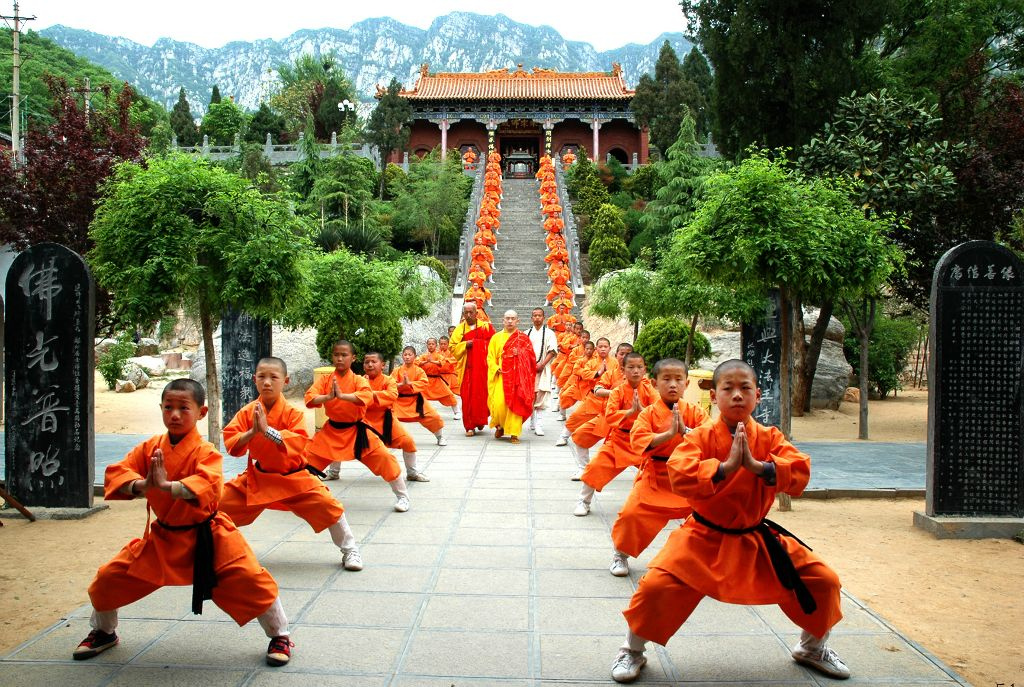
7587595896_db1a919508_bOver at the Anime Limited blog, Paul Jacques reviews my Brief History of the Martial Arts: “A Brief History of the Martial Arts walks a path between academic facts and a cracking good yarn; both enlightening and entertaining whilst trying to separate the fact from the fiction. Openly fictional accounts also contribute to the narrative, such as the legends of The Water Margin and Journey to the West… those of a scholarly persuasion will find a gold mine in its exhaustive links to further reading. But just about anyone who is interested in the martial arts, real or fictional, will find page after page of fascinating histories and stories.”

This is not a Brexit

brexit-1462470589paa

Soon after the Brexit vote, I was knee-deep in a pit of Chinese corpses. That’s not because of Brexit, you understand; that’s my job, making a documentary about human sacrifice in the Shang dynasty. But the cameraman’s phone kept going off with sales offers from British companies, spamming the techies of the film world with their chance to snap up cameras and lenses, RAM cards and drones while the pound was weak.

I cling to the belief that common sense will win out, and that the politicians who lied about the appeal of Brexit are just as liable to lie about their willingness to go through with it. In the meantime, while I’m waiting for all those promised new hospitals to open, and all those immigrants to be kicked out (goodbye doctors, nurses, any chance of a good plumber…), and while I am watching the architects run away from the mess they have created, and Theresa May rising to unelected power like some Cthulhu of Conservatism, I’m wondering about the impact on anime.

Fortunately, as far as most licensing contracts go, the United Kingdom is rarely regarded as “part of Europe”. It is already either treated as a separate entity, or attached like a sixth finger to deals involving the rest of the English-speaking world. For acquisitions agents sitting down at meetings in Cannes, Los Angeles or Tokyo, political divisions are less relevant than DVD and Blu-ray region coding, or online lockout.

Well, in all respects except one – money. Since last month’s issue of NEO, the pound has dropped 10% in value [now 13% –JC], which means all deals currently under discussion are going to cost UK companies a tenth more. Companies are unlikely to pass that cost on to you, so something that costs £18.99 in the high street will still cost £18.99 next month.

But that money has to come from somewhere, and I predict it is going to start to show in the autumn season, not in terms of things you can see, but things you can’t. Companies like Funimation, paying in dollars for world English-language rights, probably won’t even blink. The damage will be felt by those smaller distributors with a UK-only footprint, having to pay extra cash not only for the rights to the anime in the first place, but for the pressing of the discs, currently done in Austria or Poland, and hence payable in euros.

Faced with mounting bills, even without an official date on Brexiting, they will drop whatever tenth title looks the least appealing. They simply won’t pick it up, and you won’t ever find it for sale. They will also think twice about re-pressing any other shows that go out of print. Anything that’s say, six years old, approaching the end of its licence, and unlikely to shift more than a few hundred more copies, will suddenly become entirely unavailable. All of which means, in the short term, buy any old shows you’ve been putting off, before they disappear from the shelves. And in the long-term: you’ll probably need a year’s supply of baked beans and a shotgun.

Jonathan Clements is the author of Anime: A History. This article originally appeared in NEO #154, 2016.

Resurrection Men

template-backgrounds-projectitoh

Information wants to be free. Despite the public failure of Dr Frankenstein’s experiments with reanimated cadavers, his technology spreads like wildfire. When the mathematician Charles Babbage invents “necroware” that can turn a corpse into a servant, the British Empire is transformed through an entire underclass of zombie workers. John Watson, a young doctor, is recruited by “M” from the secret service to track down Frankenstein’s missing papers, in the hope that he can unravel the last mystery – how to bring back a human soul along with a body…

Satoshi Ito was the darling of Japanese science fiction in the early 21st century. Born in 1974, he shot to fame in 2007 with his novel Genocidal Organ, in which terrorists get their hands on nuclear weapons, plunging the free world into a downward spiral of restrictive surveillance. It was voted the book of the decade by Japanese fandom, and swiftly led to Ito’s work-for-hire novelising the video game Metal Gear Solid 4: Guns of the Patriots. His next original splash was Harmony, which concentrated on the hunger strikers who protested against a self-proclaimed utopia. But only two years after his debut novel, Ito was already mortally ill, repeatedly hospitalised with cancer. His obsession with medical technology in Harmony hence took on a new, grim relevance, as did the handful of pages from his last idea… left behind after his untimely death, aged just 34, in 2009.

Empire of Corpses was lightning in a bottle – an industrial revolution founded not on slave labour, but on reanimated corpses, pushed every post-colonial button in modern fiction, along with a “Great Game” stand-off between British and Russian agents in the killing grounds of the Middle East. It had everything: espionage, exotic locations, steampunk stylings, and a league of extraordinary gentlemen ripped from the pages of history and adventure – we see the newly minted Dr Watson receive the injuries in Afghanistan that he would later grumble about to a more famous sleuthing companion. And he’s only the first of a whole host of figures who pile into the narrative like a who’s-who of the 19th century, including the Brothers Karamazov (working undercover for the Tsar), Thomas Edison and Ulysses S. Grant.

Ito’s publishers wouldn’t let it die. They commissioned his friend Toh Enjoe, a very different novelist, to finish the work in progress, and the collaboration beyond the grave would go on to win a Seiun Award (Japan’s Hugo) in 2013. All three of Ito’s novel-length works went into production as animated features – partly, one suspects because of his undeniable popularity, although a cynic might suggest that the best possible original creator in the eyes of an anime producer is one who is too dead to answer back. Empire of Corpses was the first of the three to reach cinemas – rumours persist that it was rushed through in order to take a slot vacated by a more troubled production. That, at least would explain some of its problems, since it looks fantastic, sounds like a dream come true, but ultimately shambles like creature born from several great ideas, sewn together but not quite quickened with the spark of life.

It’s difficult to know where the problem lies for Empire of Corpses – right from its publication in novel form, there was always the concern that Toh Enjoe took the narrative far from the original creator’s intentions. It starts so well, but you can almost feel the moment 20 minutes in when the original pages ran out, and Toh started to wing it. His rescue job on Ito’s notes won a Seiun Award in Japan, although we’ll never know how much of that was a sympathy vote for the dead co-author. Three further writers are credited with bringing the film to the screen, and it’s they, we might assume, who sat around brainstorming and decided that what the main female lead Hadaly Lilith needed was a really big pair of boobs. Her pneumatic shuffling through the movie detracts from a storyline that otherwise takes itself very seriously indeed, but which lumbers uneasily from fiercely argued anti-colonialism, to a subtle gay romance, to a somewhat illogical zombie drama (suddenly, biting people makes them undead), to the origin story for an entirely different series, only revealed in a post-credits sting. The final act, in particular, gets bogged down in a Japanese interlude and an explosion-happy finale, a big finish seemingly hobbled by the twin golems of budget and time.

Jonathan Clements is the author of Anime: A History. This article first appeared in Geeky Monkey #12, 2016.

Computer Says No

Jonathan Clements asks: is Sibyl faulty?

psychopass-coverAs part of the research for the PSYCHO-PASS anime film, director Naoyoshi Shiotani trained with Tamura Tactical Gear, a company that offers military re-enactments. “I asked them what was never done in movies,” he recalls, “and they told me that hardly anyone ever shows the wounded getting treated. I thought that was a brilliant idea.” It’s precisely the sort of attention to counter-intuitive detail that has made PSYCHO-PASS one of the anime hits of recent memory.
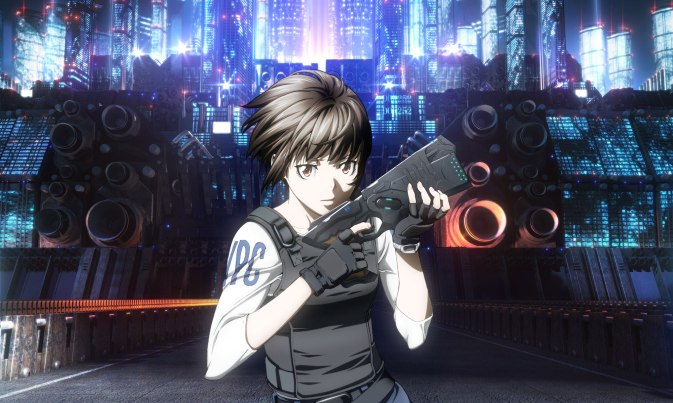
In the year 2113, Japan is kept safe by the Sibyl system, a super-powerful computer that uses on-the-spot brain scans to determine how likely someone is to even think of committing a crime. Anyone with criminal leanings can be terminated or imprisoned before they do wrong, except for a few “latent” criminals who are employed as enforcers to do the establishment’s dirty work. What could possibly go wrong? Well, as it turns out, everything, from deluded criminals whose psychological profile shows up as normal, to innocent people who inadvertently show signs of criminal tendencies. And that’s assuming that the system itself isn’t faulty or open to corruption. What happens when Amazon stops recommending things you might like, and rings the police instead to grass you up for liking too many films about terrorists?

“Intelligent people do not fit in,” warns writer Gen Urobuchi. “Because in that world knowledge is not regarded as something that makes people happy, so those who devote themselves to knowledge are criminals and drop-outs from the career track. The Sibyl society is a utopia where people become happy by putting a lid on knowledge.”

If that all sounds a uncomfortably prophetic about our post-truth, Brexit-obsessed world, PSYCHO-PASS is rooted firmly in the “If this goes on…” school of sci-fi, positing a world where big data is increasingly used to control the citizenry. Far from creating a safe and happy society, the concentration on pre-crime has led to a paranoid and fearful dystopia, where people are tarred with the brush of criminality not because of what they have done, but what a computer thinks they might. The series reflects a healthy scepticism about the reliability of statistical tests – a particular bugbear in Japan, where school examinations are often ridiculed for squeezing out originality of thought in favour of rote learning.

The reasoning behind the scenes at animation studio Production I.G is liable to be tied up in both the success and limitations of their former cash cow: the Ghost in the Shell franchise (affectionately known in fandom as GiTS). Ever since the 1995 movie, GiTS has periodically rebooted as a TV series, as spin-off movies and video works, the rights in its ownership becoming increasingly tangled. With the oncoming splash of the live-action Hollywood GiTS movie, starring Scarlett Johansson, the intellectual property is liable to become even more convoluted. Meanwhile, GiTS is based on a manga from the 1980s, arguably a whole generation behind the times. For a long while, Production I.G has injected fresh new sci-fi ideas into the franchise, but someone must have surely asked: why don’t we just invent our own?

The name to watch behind the scenes is supervising director Katsuyuki Motohiro, a man with only an oblique relationship to the anime world. The director of the live-action TV and cinema smash Bayside Shakedown, Motohiro is a master at crafting thoughtful policiers, and brings to the table a healthy disrespect for anime trends. It was him, one suspects, who was largely to be credited with the production’s stated “anti-moe” policy, refusing to fetishise cute female characters as a sop to an imagined audience of emotionally stunted fanboys. The result is leading lady Akane Tsunemori, who believes in the system even though she is confronted with its many flaws.

A PSYCHO-PASS animated feature went into production alongside the second TV season, offering a new plot in which the “successful” Sibyl system is experimentally installed in a South-East Asian country. Writers Gen Urobuchi and Makoto Fukami welcomed the chance to showcase how an idea that almost makes sense in strait-laced, conservative Japan could go right off the rails in an unstable dictatorship where all sides have better access to firearms. They also observed that Motohiro was on hand to push them in unexpected directions, such as forcing the cast to speak English even in the Japanese release, and insisting on a puzzle introduced in the first act. “He said,” remembers Urobuchi, “that if you want the audience to sit there for two hours, you have to offer them a mystery at the start.”

Jonathan Clements is the author of Anime: A History. This article first appeared in Geeky Monkey #11, 2016.

Sacred Sailors

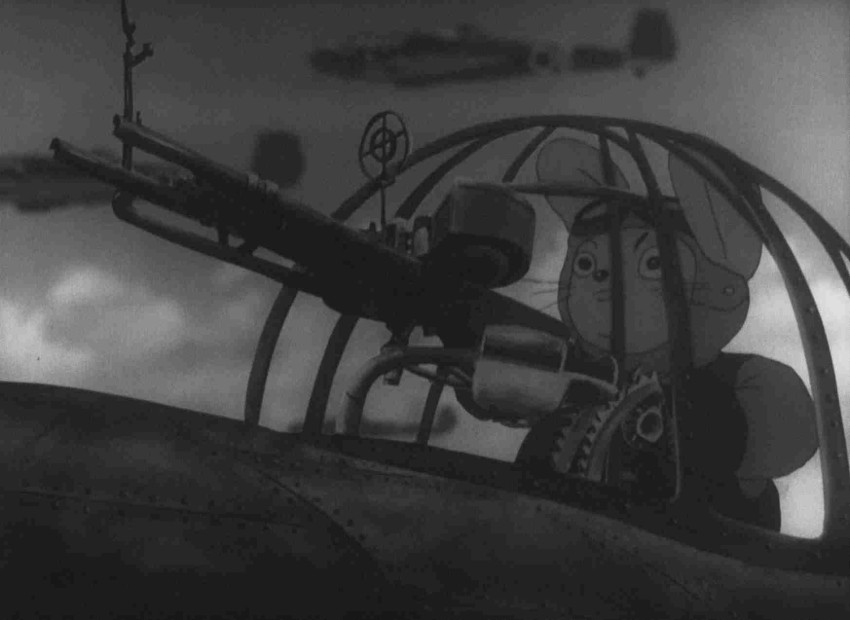
momotaro_still_page3_4-850x620Over at the All the Anime blog, I write an introduction to the wartime propaganda movie Momotaro, Sacred Sailors (i.e. Momotaro’s Divine Sea Warriors), which is receiving its belated UK premiere at Scotland Loves Anime next month.

“Japan’s first animated feature was a masterpiece of propaganda film-making, uncompromising in the bile it directed at the enemy, romantic in its evocation of home and hearth and of imperial Japan’s Pan-Asian aspirations, and still unsettling today in its depiction of the mindset of the Japanese military. Its survival to reach modern audiences is itself an adventure story in which it somehow evades bombing raids, burial, shredding and bonfires, emerging from hiding after almost 40 years to offer modern audiences a horrifying glimpse of a very different world.”