Soups You, Sir

Have you seen that quirky new Japanese film? The one that goes full-on geek about some silly little pastime – brass bands, or sumo wrestling, or candy selling, or cosplay – or that gets truly, madly deeply into a completely mundane profession, like funeral directors, or bus drivers or…? Amid the samurai and the sex kittens, it sometimes seems like every festival season has some earnest little Japanese comedy, making the best of a small budget by focusing with incisive high resolution on some tiny piece of the modern world.

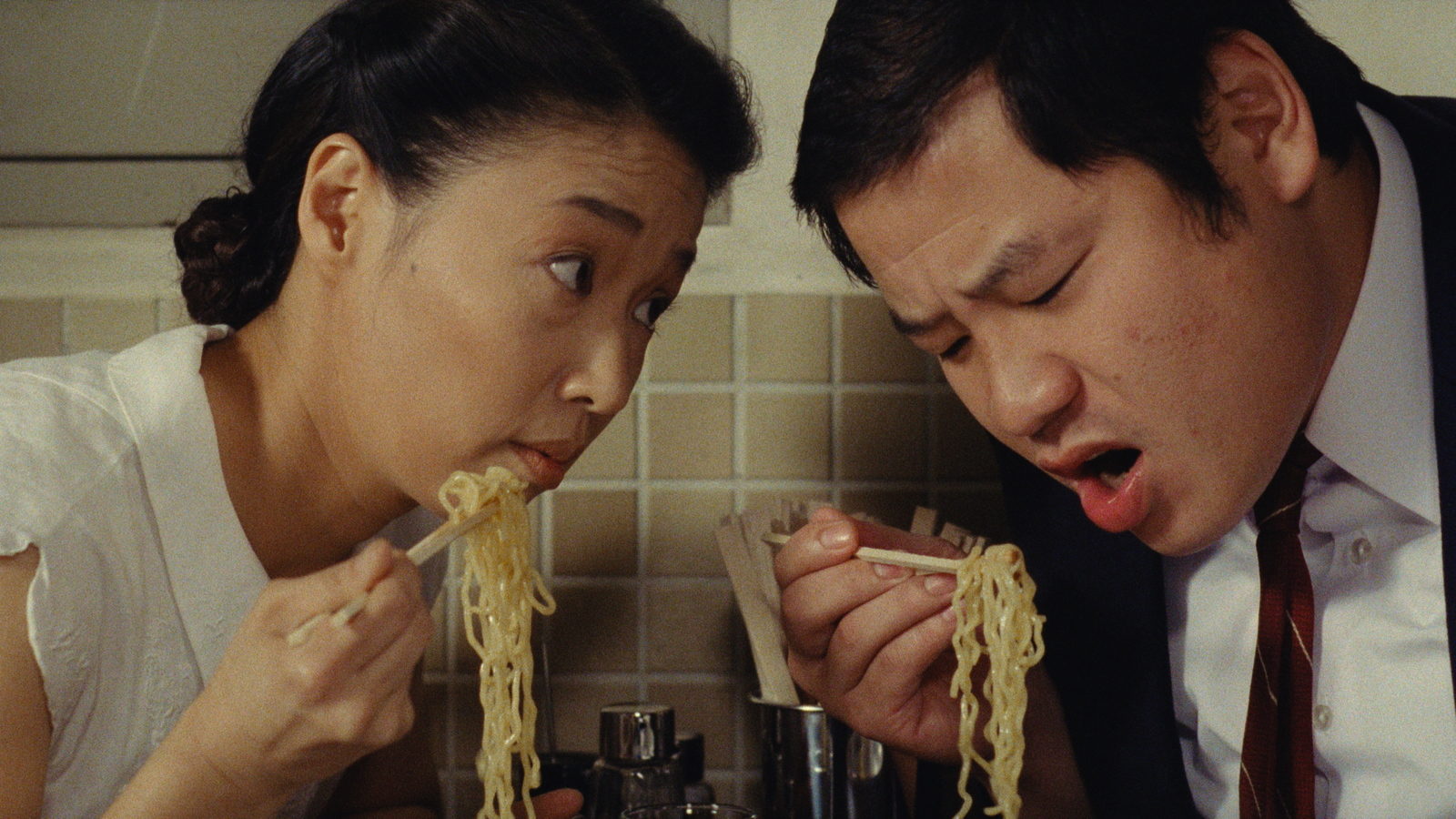
Juzo Itami’s Tampopo (1985) was the granddaddy of them all, mashing the workplace drama into the comedy sketch show and the Zen pursuit of perfection. Turn on your TV any weeknight in Japan, and you will see a dozen serials that seem to riff on it – valorising the dedication of obscure professions, or enthusing about food… or both. Its blue-collar truck-driver hero Goro (Tsutomu Yamazaki) rides into town like some bygone cowboy, taking local widow Tampopo (Nobuko Miyamoto) under his wing as she tries to master the art of cooking noodles. He and his swiftly assembled cabal of hangers-on gamely mansplain the nature of proper fast food in a series of test-runs and side-quests, while background characters, largely middle-class buffoons, blunder through a series of unrelated vignettes and satires about epicurean culture, taste and table manners.

It’s hard to remember, when piss-poor chain-restaurant ramen are to be had on every British high street, that there was once a time when Japanese noodles were an exotic foreign import for cinemagoers. Supposedly an evolution of Chinese noodles, but actually a post-war development that combined American food-aid wheat with Asian ingredients, these combinations of broth, noodles and optional toppings were a wonder for 1980s audiences to behold. It is, ironically, unlikely that many foreign cinemagoers appreciated how un-Japanese a film Tampopo could be, conceived by its director as a pastiche on numerous American genres, from Westerns to gangster movies to romance.

Three decades on, Tampopo is not merely an entertaining comedy about food and foodies. It is also now a time-capsule glimpse of a golden age, when a pre-recessionary Japan swum in so much money that it snapped up van Goghs, took over American corporations, and propelled its newly monied middle class into the world of fine wines, foreign cuisines and hipster menus. In that sense, its oddball cast were everymen a few steps behind the times, concentrating instead with pure-hearted nationalistic fervour on hearty, homespun local food: a proper meal, done properly. The titular heroine is a woman on the way up, aspiring to an honest day’s pay for a good job done well. Even as ramen was on the way up in the West, some feared it was on the way out in Japan, crowded out by spaghetti carbonara and burgers. Fortunately, rumours of its demise were greatly exaggerated.

And what a cast! Ken Watanabe, future star of The Last Samurai, is seen here as a gormless truck-driver sidekick. Koji Yakusho, future star of Thirteen Assassins, is a mad-eyed gangster who harangues the audience about consideration for others. His scenes are the ones that linger longest in the mind, not the least for their witty eroticism as he swaps an egg yolk mouth-to-mouth with his mistress (Fukumi Kuroda) or tries to discuss a secret recipe for sausages in the middle of a gunfight.

Tampopo remains a joy to watch for the Japan nerd. It’s not just the little cameos, like Lady Snowblood director Toshiya Fujita as a man with a sore tooth, it’s the dozens of little asides and nods to the rich tapestry of Japanese culture, from the pearl-divers who once formed an entire subset of soft-core erotica, to the domestication of foreign food (or some might say today, cultural appropriation) as the original Chinesey café name of Lai Lai is replaced by Tampopo’s own. Itami uses food as a keyword for examining Japanese life and customs from top to bottom, foreshadowing today’s wacky scholars who try and tell the history of the world through clocks or condiments. His masterpiece remains a film that leaves every viewer hungry.

Jonathan Clements is the author of The Emperor’s Feast: A History of China in Twelve Meals. This article was originally written for Geeky Monkey #23, although the magazine was cancelled from underneath it.

Xi’an to the Max

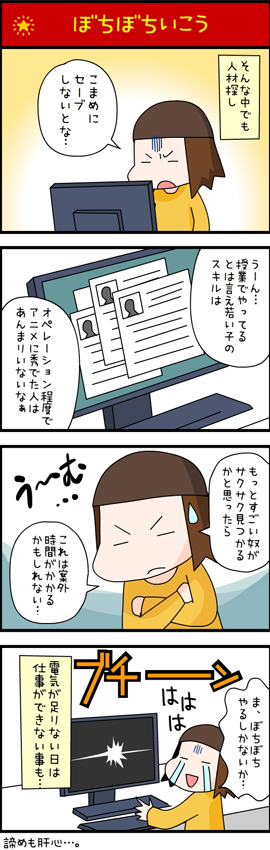
Despite periodically depicting herself as a square-jawed manga hero, “Tommy” Hino is apparently a woman, usually self-identifying as a drab, androgynous drudge in a skull-cap, weeping copiously and cartoonishly at the prospect of being posted to China. Linked to a blog that has found a fond following in Japan, Hino’s work seems to have laboured under a number of different titles. Some iterations of it have a subtitle implying “survival tips” for Japanese animators, others draw upon the blog’s title of Giri Giri Xi’an, perhaps best translated as Xi’an to the Max. The actual title of her collected four-panel strips, however, is the much more histrionic Nande Watashi ga Chugoku ni!? Or if you prefer: What am I doing in China!?

Hino seems to have largely swallowed the line, common to surprisingly many urban Chinese, that her adopted town of Xi’an is some sort of second-tier backwater and not, say, the former capital of China for over a thousand years, rich in historical artefacts and sites. Apart from a predictable genuflection in the direction of the Terracotta Army, Hino’s exploration of Xi’an culture is hence largely limited to foodie expeditions among the noodle shacks and dumpling parlours, and a foray among the fake handbags of the city’s Muslim Quarter.

But this is because she is there to work, not see the sights. She coquettishly uses anonymising initials for the companies and ateliers she works at as a Flash animator, but uses recognisable cartoon characters – there is not a whole lot of effort expended at concealing the identity of Pleasant Goat, one of the most iconic characters in modern Chinese animation.

Hino’s chirpy account lists a number of issues affecting the animator who wishes to work in China, not merely universal issues of acclimatisation and culture shock, but more specific problems like the sudden blocking of internet access, and her hosts’ pig-headed refusal to understand that she cannot wave a magic wand and make cartoons “like anime, but cheaper.”

More entertainingly for the animation scholar, even though Japanese animation has been integral to the Chinese industry for decades, Hino arrives in China at a time when local media are puffed up with anti-Japanese nationalism, Japanese cartoons are banished from Chinese airwaves, and even streaming sites are subject to purges of unwelcome Japanese cartoons. At a time when openly importing anime can literally damage a Chinese citizen’s credit rating, China’s “dongman” community of fans of animation and cartoons is faithfully presented as a mixed bag of furtive true-otaku and a far larger, rather gormless herd of comics fans who don’t really know what manga is.  As an artist, Hino is comically boggled at the locals’ apparent satisfaction with ghastly pseudomanga that proclaim themselves as “Japanese style” but are just plain bad.

It is fascinating to see a creative struggle with such a contradictory status, hired for her skills in a medium that is respected by the artisans, but proscribed by the authorities, for an audience that is largely ignorant of the issues in play. As alluded to by Zhang Huiling in her study Animation Plus, China has placed itself in the odd situation of striving to emulate Japanese successes, while constantly trying to shut out and deny the existence of such successes in the first place. Hino finds herself at the sharp end of such tensions, but gamely pushes a mouse around in her garret so that the Chinese animation business can pat itself on the back at how it’s beating Japan at its own game.

Jonathan Clements is the author of Anime: A History.

Finns in America

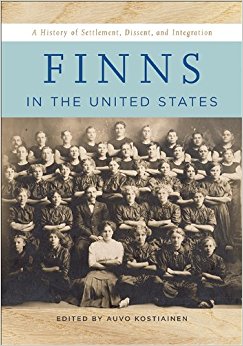
Blissfully devoid of jargon or academic cant, Auvo Kostiainen’s collection Finns in the United States: A History of Settlement, Dissent and Immigration offers a rich, inspiring account of an entire cultural enclave, from the largely Finnish population of “Swedes” who founded a 17th century colony in Delaware, through to the 600,000 modern Americans who claim Finnish ancestry. How much is left of their Finnishness after multiple generations of transformation and miscegenation? What would they make of their genetic homeland, if they ever went there, and what would a modern-day Finn make of them?

One look at the Finnfest 2017 programme makes it clear that Americans of Finnish descent (a group that includes Matt Damon and Christine Lahti) are proud of their heritage. Should you be in the Minneapolis area this September, you’ll get the heavy metal cellists Apocalyptica, a barrel of quintessentially Finnish pea soup, a symposium on saunas, a Finnish-language play, lectures on ecology and forestry, an appearance by Santa Claus and even Finnish author Sofi Oksanen. Kostiainen’s book, however, offers detailed accounts of the many paths and roads-less-travelled that led to the existence of such an event – the struggling miners and loggers of the late 19th and early 20th century; the migrants who actually gave up on the US and returned home as failures; the deported criminals and lauded local heroes. I thought I knew my way around books about Finns, but the references to be found here have quadrupled my personal reading list.

In a controversial court case in 1908, Finns were accused of being “Mongolian”, and hence subject to anti-Asiatic immigration restrictions. They were, grudgingly, eventually granted status as whites, but in a confusion that co-opted socialist movements of the early twentieth century and mixed it with anti-Native American prejudices, were often still reviled as “Red Finns”.

The term, of course, strictly applied to those who had fled the Finnish civil war, where Mannerheim and the victorious White Finns had pushed would-be Soviets out of the country. Many such revolutionaries ended up among the mining towns of Minnesota and Michigan, where the red dust from the copper added yet another nuance. Finns became instrumental in the temperance, cooperative and labour movements of the Depression era, but also saw their identity eroded after 1924, when quotas suddenly shut down substantial migration.

Until 1924, Finnish-speaking culture, particularly in the Great Lakes region, was kept alive by a constant stream of new arrivals from the Old Country. Second generation American Finns kept up their language skills by working as waitresses in Finnish-speaking canteens, or alongside newly arrived miners from Europe. The golden rule of cultural assimilation, that it’s the third generation that loses the former mother tongue, was postponed and kited for decades, fed by local Finnish-language newspapers and amateur dramatic societies, and a local publishing niche that clung quaintly to old-world vocabulary. The poet Kalle Koski wrote in 1894 about the dangers of racial mixing, conjuring the image of a Finnish girl who falls for a wieras airis, a beautifully archaic clash of old-world spelling and migrant slang – “a foreign Irish.” Such cross-cultural romances bred entirely new and alien phenomena, such as Finnish Catholics, a virtual impossibility back in Europe, where the Reformation had seen Catholicism hounded from the country centuries earlier.

Six thousand American Finns returned to Europe in the 1930s, lured to Soviet Karelia by promises of a socialist utopia. Finns in America struggled to brand themselves as Good Americans, assimilating swiftly into the local population, with only traces of their old culture remaining – Laestadian splinter groups, an obsession with log cabins… a few names or twangs in regional accents. In the 1950s, Finns fighting the cultural dominance of St Patrick’s Day concocted St Urho’s Day, a rival celebration purportedly marking the banishment of a plague of grasshoppers from Finland’s entirely fictional vineyards. The grim, joyless image it evokes, of scowling matrons pointedly sipping grape juice while beered-up young drunks threaten to stab each other at a sausage barbecue, is a fitting coda to Kostiainen’s superb study, which embraces not only the echoes of both good and bad from the old country, but also their inevitable thinning in a new world.

Jonathan Clements is the author of An Armchair Traveller’s History of Finland.

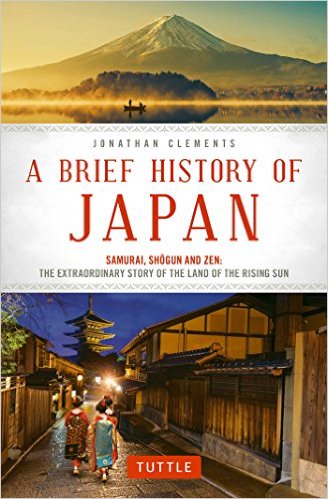
A Brief History of Japan

51zwcdv1xl-_sx326_bo1204203200_My new book is out on 1st August on Amazon UK and Amazon US.

Stretching for 3000 kilometres and encompassing almost 7000 islands, Japan has the fourth largest GDP and the tenth largest population in the world. Japan is a country of paradoxes, a modern nation steeped in ancient traditions; a democracy with an emperor as head of state; a famously safe society built on 108 volcanoes and an active earthquake zone. Despite a reputation for sprawling cities and cutting-edge technology, 73% of its land comprises uninhabited mountains and forests.

First revealed to the West in the Travels of Marco Polo, Japan was the legendary faraway land defended by the fearsome Kamikaze storm, and ruled by a divine sovereign. It was the terminus of the Silk Road and the edge of the known world, a fictional construct for European arts and crafts, and an enduring symbol of the mysterious east. In recent times, it became the powerhouse of global industry, a nexus of pop culture and a harbinger of post-industrial decline. This fascinating book tells the story of the people of Japan, from ancient teenage priest-queens to teeming hordes of salarymen, a nation that once sought to conquer China, yet also shut itself away for two centuries in self-imposed seclusion.

Advance praise for A Brief History of Japan:

“Writing a brief history of a land as ancient and complicated as Japan is no easy task. It requires not only superb language and research skills, but the ability to synthesize and organize vast amounts of information, and to make cross-cultural comparisons from a truly global perspective. It also requires a certain intellectual fearlessness. Luckily, with Jonathan Clements, readers are in the hands of a master. His crackling prose, sharp wit, and learned insights make Japan’s history truly come alive.” –  Frederik L. Schodt, author of America and the Four Japans: Friend, Foe, Model, Mirror

“Perfect for travelers or students new to Japan. A wonderfully fun, interesting, and informative introduction to Japanese history. Clements blends culture, politics, military, economics… all with wit and humor that both carry you forward and make the topic real.” – Mark Zachary Taylor, author of The Politics of Innovation

“With a lightness of touch but seriousness of purpose, Clements negotiates the complexities of Japanese history in this compact book. The result is an accessible, persuasive and reliable introduction.” – Ellis Tinios, Honorary Lecturer in East Asian History, University of Leeds

The Hawking Index

We live in an age with unparalleled potential for big data. I nearly wrote “access to big data”, but in fact, a lot of that information is proprietary and only shared within the corporations that own it. Most notoriously, Amazon was able to use Kindle data to work out not only who was buying what, but who was actually reading it. The company was able to announce that Donna Tartt’s The Goldfinch was the least-finished book of recent times, abandoned partway by 55% of the people who paid to read it.

The mathematician Jordan Ellenberg proposed a “Hawking Index”, named for the author of the much-bought, little-read Brief History of Time, listing all the books that failed to get any reader love. It was one of those jokey news items that closed out the day, and little has been heard of it since.

But that big data is still churning. When the online streaming giants started up, there was a veritable scramble for content. Companies sitting on a reasonable backlist of anime found themselves offloading digital rights by volume, because what mattered to the early-bird marketers wasn’t quality, it was quantity. Join our service, they would proclaim, because we have five hundred anime titles! Of course, most of those titles would be stuff like King of Bandits Jing, which nobody really watched, and which had previously only monetised when the warehouse storing the DVDs was burned down during the London riots and the owners got to claim on the insurance.

But that didn’t matter. Never mind the quality, feel the width… until you fast forward a couple of years, and companies like Netflix know exactly what people watch and what they don’t. They know now that nobody is actually impressed by King of Bandits Jing, and see no reason to hang onto it. They’ll just keep Attack on Titan, thank you.

But now Netflix is even dropping their blue-chip titles. Remember: Netflix is a channel, not an archive. Quite controversially, last month it even dropped Buffy the Vampire Slayer, because Netflix is no longer in the old-show game. It wants to make new shows. Good news for new anime that Netflix is prepared to commission, but bad news for anime companies that evaded due diligence for a few years. And bad news for you, if you wanted to watch a less-loved show and didn’t bother to buy the DVD.

Jonathan Clements is the author of Anime: A History. This article first appeared in NEO #164, 2017.

Trolled by the Finns

It was only a matter of time before the Finnish embassy in Tokyo came up with a mascot character. And what did they choose? An Angry Bird? A heavy-metal corpse? An open-source penguin? No, they came up with Fintan, a somewhat simple seven-year-old boy, dressed in a lion costume, whose gormless presence somehow helped propel the embassy Twitter feed to 130,000 followers, making it the “tenth most followed diplomatic mission Twitter account.” You hear that? Better than eleventh. In your face, Burkina Faso! Fintan has been infesting the embassy social media for five years, but this year, as the Finnish republic celebrates its centennial, he branches out into animation.

“Our aim through these short anime is to increase the interest of the Japanese public towards Finland, and convey the message that Finns are innovative but also easy-going and easy-to-approach people, who don’t take themselves too seriously”, said Markus Kokko, Counsellor, Press and Culture of the Embassy of Finland in Tokyo.

In Kenji Itoso’s first short episode, Fintan goes to an air-guitar competition and a cellphone-throwing competition, before sitting in a sauna for a while. The “plot” for this and episodes yet to come were the result of an open competition by the embassy in Tokyo, so I guess we should be glad that the public didn’t demand it be called The Adventures of Finny McFinnface. Coming soon from the British embassy, perhaps: the wacky animated adventures of Brekshit the incontinent, immigrant-hating bulldog?

And yet, Finland already has a good showing in Japanese animation. Lucy Heartfilia from Fairy Tail, sometimes seen wearing a Finnish flag made out of boobs, could easily be an ambassador for the country. The Moomins already are, to such an extent that there’s always summer work for Japanese-speakers if they want to dress up as troll-things in the Moominland Theme Park. Meanwhile, in Hetalia, the character of Finland is depicted as being in an oddly creepy relationship with Sweden… also true to life.

Hopefully Fintan’s later adventures will be more adventurous. Things that the Japanese would lap up like crazy about Finland: liquorice-flavour vodka, tar-flavoured ice cream, 58 words for frozen precipitation, the Winter War, the world’s 16th highest rate of gun-ownership, the Northern Lights, Topless Thursdays, and the time a Japanese secret agent sent a bunch of drunken sailors with a ship full of guns and ammo to start a Finnish revolution and distract the Russians from the Far East. Now there’s an anime…

I’m sorry: I made Topless Thursdays up, but there’s still time, Finland.

Jonathan Clements is the author of An Armchair Traveller’s History of Finland. This article first appeared in NEO #163, 2017.

The Road to Beijing’s History

IMG_1411

In An Armchair Traveller’s History of Beijing British author and historian Jonathan Clements conveys a brief account of the history of Beijing from prehistory to our contemporary age – through its fluctuating fortunes under a dozen dynasties. From Mongolian chiefs and the glorious Ming emperors, whose tombs can still be found on Beijing’s outskirts, the book gives us the opportunity to experience Chinese history itself. The book also emphasises the city’s precarious heritage in the 21st century as modern construction wiped out vast chunks of the old city to pave way for residential areas for twenty million people.

Whether you are a Sinophile, or you simply want to find out more about this city that has been presented in Western media more for its soaring levels of pollution than its rich culture and complex history, come and join us at London’s Asia House on Tuesday, 18th July when Jonathan Clements will be sharing his insights about the past and present of Beijing through the pages of his book published by Haus Publishing.

Tickets on sale here.

Animation Plus

Animation Plus: Research on Transformation and Upgrading of China’s Animation Industry was published a year ago by the Social Science Academic Press, and has received a telling ZERO reviews on Amazon China. That, I would suggest, is palpably part of the problem – despite its immense leaps in recent years, people find it hard to get invested, emotionally or otherwise, in Chinese animation, including the Chinese themselves. Author Zhang Huiling has a background in both journalism and broadcast media, and has approached China’s underperforming industry armed with charts, facts and figures. But despite her diligent and extremely useful compilation of data, is anyone paying attention?

Her study is packed with admirably hard information, detailing the recent history of Chinese animation, as well as some intriguing elements of its statistical composition, including episode counts, genre percentages and studio locations. She deals with China largely as a sealed system, large enough to create winning franchises without recourse to foreign sales, although this is precisely why Chinese animation so rarely exports well.

To a certain extent, Zhang is both rediscovering the wheel and pretending she can’t see the cart. Much of her book is an extended argument about the crucial role of intellectual property – what the Japanese call contents – in forming a firm foundation for exploitation in multiple media, including animation. But in doing so, she runs right into the middle of a political minefield in which Chinese animation refuses to discuss the existence of Japanese competitors. Japanese animation, as noted on this blog on multiple occasions is not only a vital patron of the Chinese arts, but also a rival worth watching. Zhang acknowledges this with a final chapter devoted to the successes of Toei Animation in Tokyo, but one can’t help but wonder if the timidity with which she raises this topic undermines her own argument. It’s not her fault if “Japan” is a dirty word in modern Chinese academic discourse, but an understanding of Japan’s success is vital for seeing both where the Chinese animation industry may have gone wrong, and indeed where it has the potential to do right.

An intriguing section of her book breaks down animation around the world, suggesting that certain territories have fundamentally different production and finance trees for their cartoon production. I’m not sure I agree with her flowcharts all the time – the Japanese one, for example, contains a solecism that has not been true for fifty years – but it is fascinating to see how Zhang the external observer explains the functions of the “American”, the “British”, the “Canadian” or, say, the “German” system. Zhang delivers in spades her subtitle’s promise of “research on transformation” of China’s animation industry, but I am not persuaded that her conclusions say anything that hasn’t been said before regarding its “upgrade”. As suggested by Rolf Giesen, among many others, the fundamental issue facing Chinese animation is not something that can be solved with financial voodoo or marketing magic. It requires an overhaul at the very foundations, arguably nothing to do with Chinese animation at all, but lodged more squarely in the creation of the intellectual property itself. For as long as the Chinese animation industry is dominated by bean-counters, managers, and political meddling in content, it will never create the kind of intellectual property to support the sort of world-beating franchise that Zhang demands. Her book, however, is a treasure trove of useful information that other researchers will be sure to draw upon.

Jonathan Clements is the author of Anime: A History.